A Daily History of Holes, Dots, Lines, Science, History, Math, Physics, Art, the Unintentional Absurd, Architecture, Maps, Data Visualization, Blank and Missing Things, and so on. |1.6 million words, 7500 images, 4.9 million hits| Press & appearances in The Times, Le Figaro, Mensa, The Economist, The Guardian, Discovery News, Slate, Le Monde, Sci American Blogs, Le Pont, and many other places… 5000+ total posts since 2008.

Category: Future Punk

  • Steampunk Air Travel, 1843

    JF Ptak Science Books   Quick Post

    “Let no man seek / Henceforth to be foretold what shall befall / Him or his children.Milton,” Paradise Lost XI, 770-72

    George Cruikshank–the gifted English cartoonist/satirist/caricaturist and social commentator–was readying his viewers to some hyperspeculative dreams on the possibilities of near-in-time powered flight.  Steampunk air travel is so commonplace in the near future that there are departure stations on building-tops   

    The etching in question, illustrating “Air-um Scare-um Travelling” appeared in the Comic Almanack (1843), and outlines a clear and hopeful image of future travel.  The ads show that there are frequent flights to far-away places, including Mont Blanc and Beijing.  

    It is interesting that the future is tempered somewhat by including an exploding airship at bottom left–so the future may be wondrous and exciting, though not without its dangers.  


  • Early Robots as Explosive Anthropomorphs

    JF Ptak Science Books   Quick Post

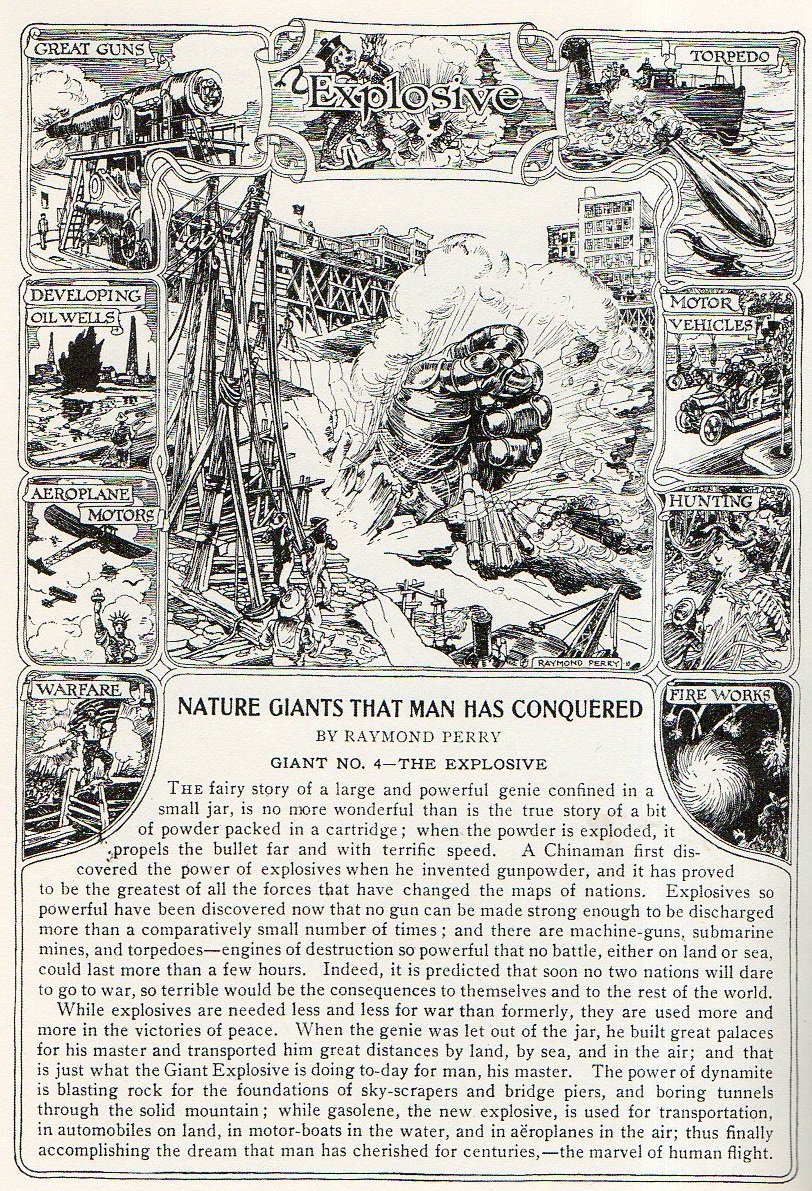
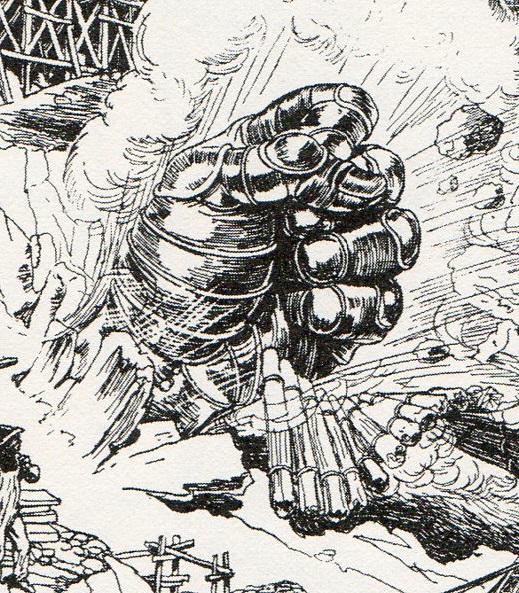
    I have been collecting images of mechanical men/robots pre-singularity antiquarian-quaint displays of advanced technical humans.  This is an unusual one that may or may not fit this, though there is a suggestion of MassiveMan in the gigantic metallic fist, which is supposed to show a successful combat of people over nature via the advancing bliss of explosives.  I’d just like to post this here before I lose it…

    Nature giants262

    Which is a detail from St. Nicholas magazine, 1911:

    Nature giants261


  • FootPunk–Heavy Metal Skates, 1880

    JF Ptak Science Books                                                  Futre Punk series  &   Daily Dose from Dr. Odd series

    SciAm July 24 d

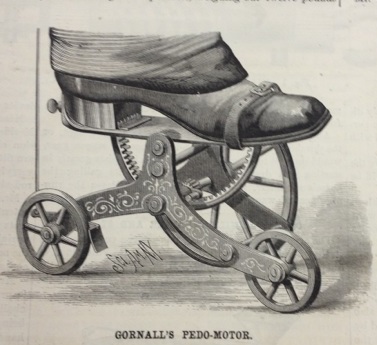
    Somewhere between walking and bicycles Mr. Richard Gornall found a mechanical need to fill what may or may not be an imaginary gap.  He invented or suggested the Gornall Pedo Motor, which appeared in the pages of The Scientific American  on February 14, 1880 (page 107), along with a great wood engraving.  Gornall said that his invention, which “accelerates the motion of walking”, would “occupy the immediate position between the roller skate and the veliocepede”.  The walking heel-toe motion was supposed to transfer power via a rotary drive to the rear wheel, thus creating in a way a mechanically powered roller skate.  The invention sounds not-so-great, but the image is certainly pretty.  

    ·Posted by :

    ·in:


  • An Early Steam-Driven Robotic Society-Scrubber (1829)

    JF Ptak Science Books  Post 2183           History of the Future series

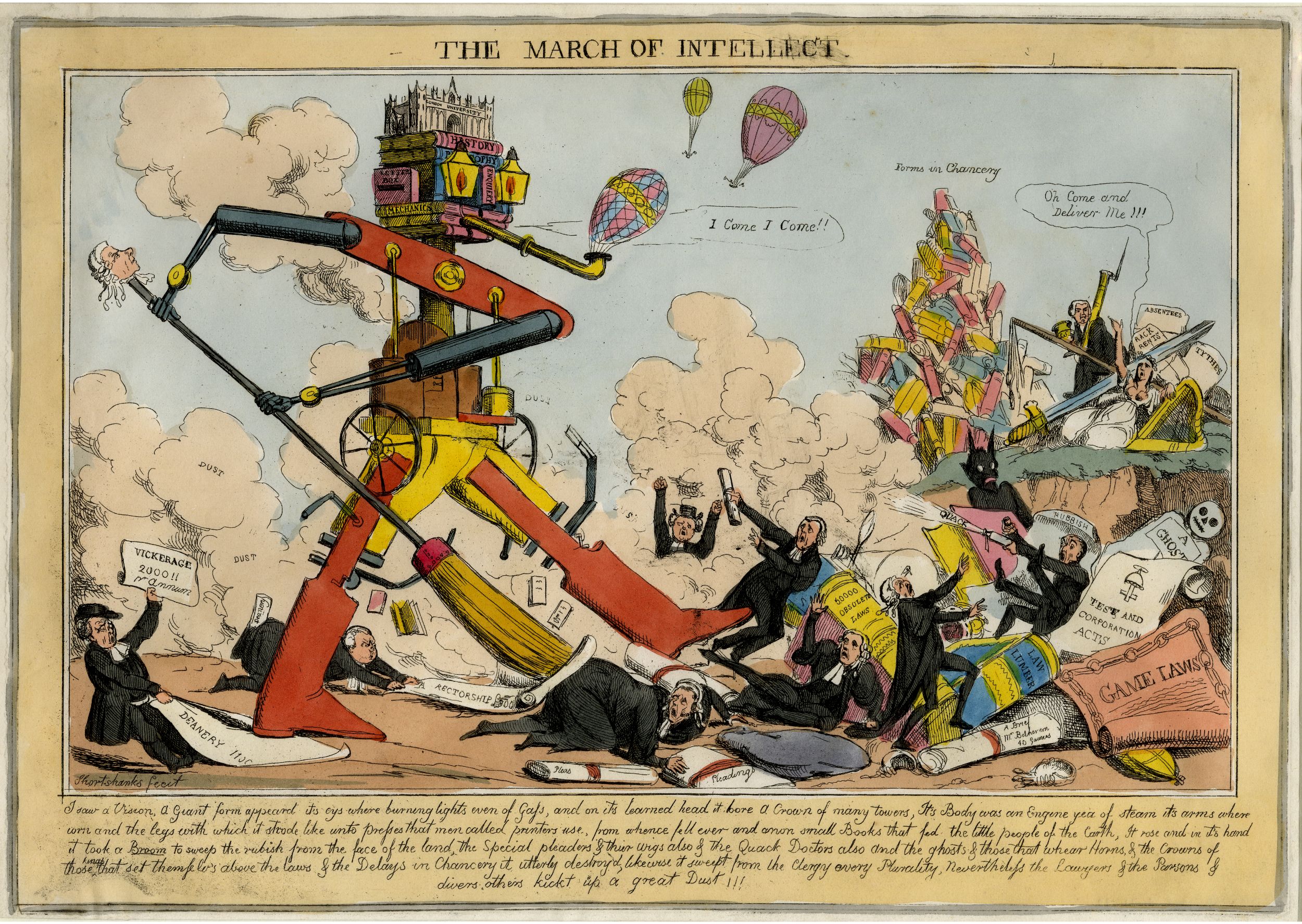
    I’ve addressed the ideas of early mechanical men elsewhere in this blog (just enter “robot” in the site search box at left and you’ll find two or three dozen related posts on the subject), but failed to include this very fine and early example by William Heath in his March of Intellect series (printed from 1825-1829).  

    Steam man heath

    He was particularly bitter about what he saw as an aristocracy of official ruination, and created an unusual steam-driven mechanical man with a book-driven intellect that swept up the great “rubbish” and “dust” of society.  At the top of this early robot (preceding the invention of the term by about 100 years) was a pile of books with a “crown of many towers”, which was London University, beneath which was a set of gas-light eyes, iron arms, and legs made of printer’s tools, sweeping away useless and insulting lawyers and jurists and their legal wigs and obsolete and repetitive rules, medical quacks, and the dust of other official abuses, “sweeping rubbish from the land”. 

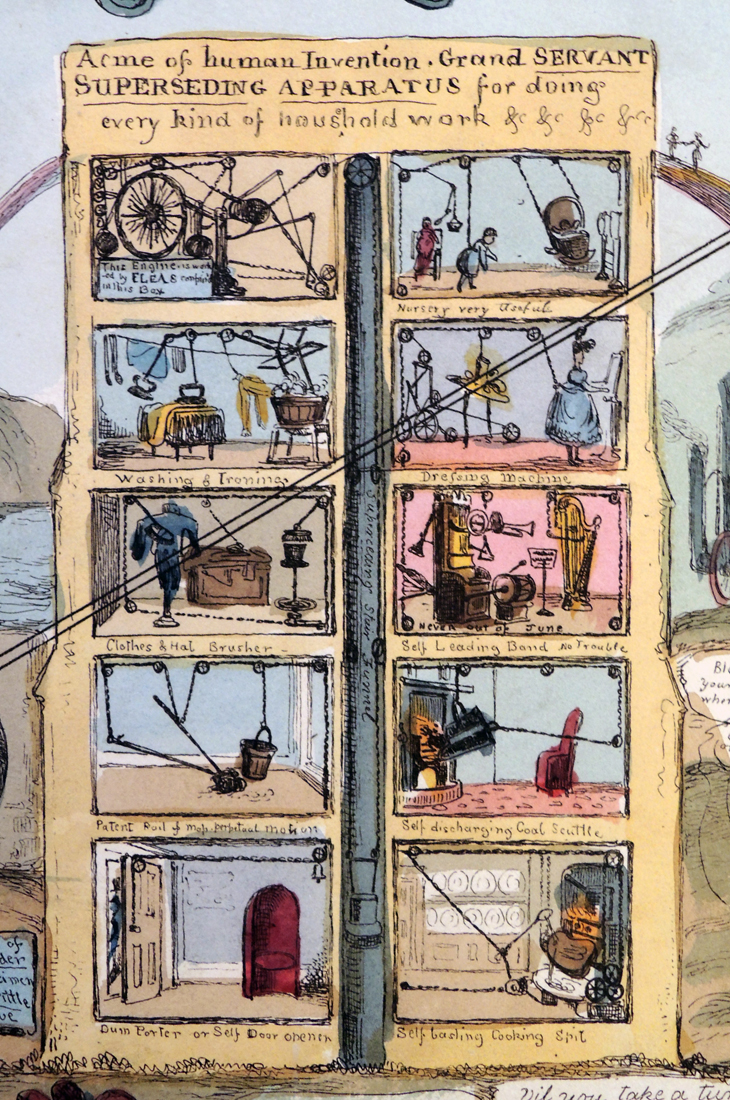
    Another near-robotic image by Heath is his pre-Rube Goldberg automatic house, a central feature in the March of the Intellect No.2 (1829) which features fantastic flying machines hovering and screaming past the house. 

    Heath march of intellect 3

    [Source:  Graphic Arts Collection, Princeton University libraries, here]

    It isn’t a robot unless you consider the entire house as a host for all of the things going on inside itself, and then you have something else entirely.  


  • The Pulpy Flying TubePunk of TomorrowLand

    JF Ptak Science Books   Post 2166

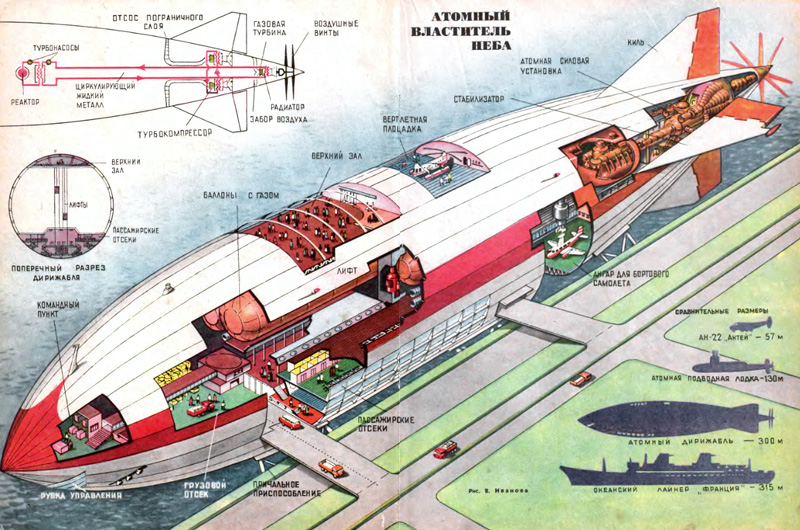
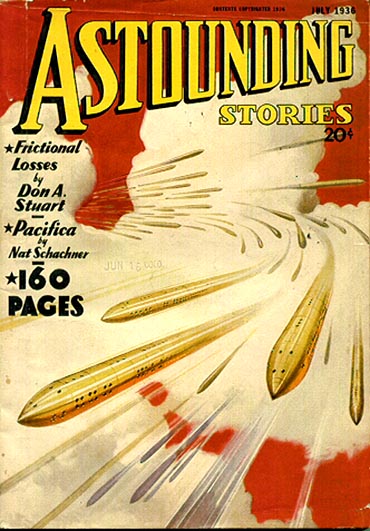
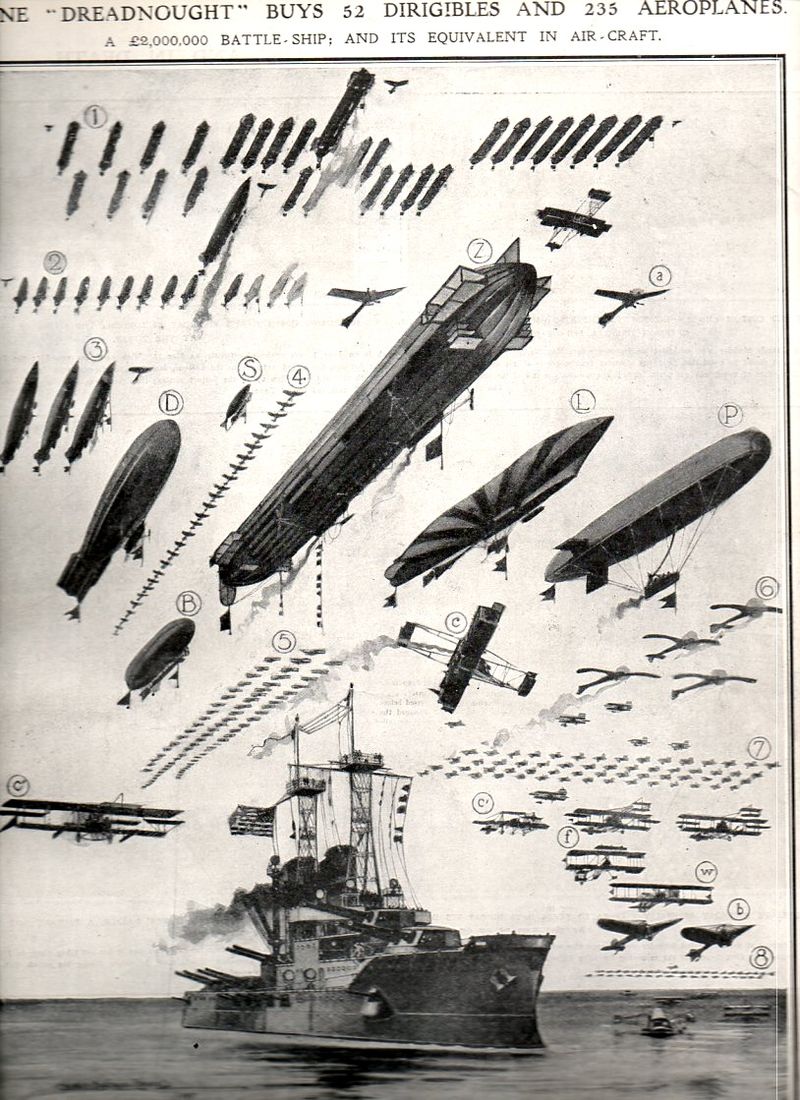
    Following this blog’s series on the History of Holes and the History of Dots will be a new series:  the History of Tubes, the first note of which is on the flying tubes of TomorrowWorld. Today’s installment is a simple picture post:

    http://www.dailygalaxy.com/photos/uncategorized/2007/07/17/science_fiction_science_fact.jpg
    [Source: http://www.dailygalaxy.com/photos/uncategorized/2007/07/17/science_fiction_science_fact.jpg] 

    [34754tutfgjdgdf.jpg]
     
    [Source: http://lh6.ggpht.com/_hVOW2U7K4-M/ST2rP9fpFfI/AAAAAAAAugY/u95RIMSHH9g/s1600/34754tutfgjdgdf.jpg] 
     

    http://androvillans.files.wordpress.com/2011/04/b2-astounding_science_fiction_1938071.jpg

    [Source:”http://androvillans.files.wordpress.com/2011/ 4/b2-astounding_science_fiction_1938071.jpg]

     
    https://historyofideasblog.com/a/6a00d83542d51e69e2012875ea3636970c-pi
     
     
    https://historyofideasblog.com/a/6a00d83542d51e69e2014e8870b10b970d-800wi

    [Source: http://static.flickr.com/100/258214584_3ce3697ab2.jpg] 


    [Source:http://static.flickr.com/59/188844208_60a18e94d7.jpg]

    [tow_1940summer.jpg]

    [Source:http://lh5.ggpht.com/abramsv/R4fcwUKUlTI/AAAAAAAADBI/Xu7s8ESZMyM/s1600/tow_1940summer.jpg]


    https://historyofideasblog.com/a/6a00d83542d51e69e20147e33be223970b-800wi


  • Bizarro-World and the Scourge of Extra-Earths

    JF Ptak Science Books   Post 2143


    Bizarroworld2

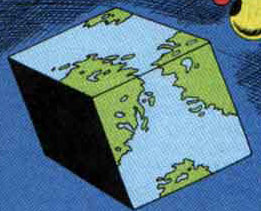
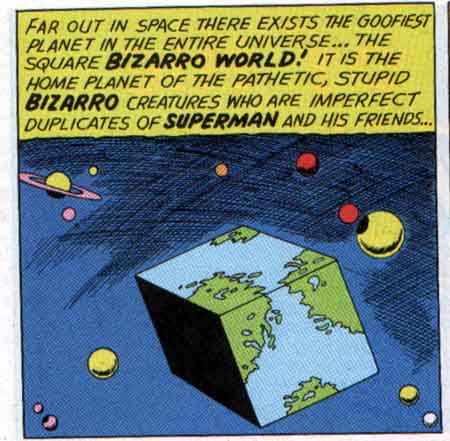
    Nothing quite says “bizarro” like the bizarre1–and there has been plenty of that on this blog.  There have been a number of places that I have identified as Bizarro Worlds, but so far it seems that the only self-proclaimed Bizarro World is this one, from the Superman2 comic book–a place that was the opposite of the Superman-y traits that made Superman Superman.  Somehow to equate bizarreness on this world everything appeared as geometrical shapes with basically no sphere or rounded edges.  (How Braque or Picasso and company would have reacted to this is unclear.) 

    Bizarroworld

    It is evident that Bizarro World inhabits a place in the universe that allows for bizarre things to happen, a sort of bizarrograviation, that also allows for shadow to be cast in space without regard to light source. 

    It is a lovely to addition–if only by this brief note, to a continuing series on Extra-Earths.  This is an Earth, and it is Extra, hence:  Extra Earth.   Some of the other Extra-Earth posts include:

    —Extra-Earth Humano-Alien Souls From Outer Space Repopulate Earth-Hell!!(??),

    —Mondo Bizarro, Science Afflictions and the Dubious Mind—Bad Science, Part 1. NYC in Space (?!)

    —The Battle of the Extra Earths: Mini-Extra-Earth Vs. Full-Sized-Standard-Earth (?)

    and some others, all quite findable on this blog via the Google search at left. 

    I’ve just noticed that these Extra-Earth posts share something else that few of the other 2500+ posts on this site do not:  extra exclamation points!

    And to end, I should point out that this is not the first time I’ve encountered a square Earth, bizarro or not:

    Earth strnage cubed earth


    Notes

    1.  “Bizarre”, via the OED: At variance with recognized ideas of taste, departing from ordinary style or usage; eccentric, extravagant, whimsical, strange, odd, fantastic

    • a1648   Ld. Herbert Life,   Her attire seemed as bizare as her person.
    • 1668   Dryden Secret-love Pref. sig. a1,   The ornament of Writing, which is greater, more various and bizarre in Poesie than in any other kind.

    Bizarre quality

    • 1741–70   Lett. Mrs. Carter (1808) 207   The bizarreries which arise from the mixture of good and bad which makes up the composition of most folks.
    • 1828   Scott Tapestr. Chamb.,   Rich in all the bizarrerie of the Elizabethan school.
    • 1844   Foreign Q. Rev. 33 60   Bizarreries.
    • 1858   W. Bagehot Lit. Stud. II. 194   The bizarrerie of Mr. Dickens’s genius.

    2.  “Superman” in the OED:

    A. “In Nietzschean thought (also with capital initial): an ideal superior man of the future who transcends conventional Christian morality to create and impose his own values; = Übermensch n.   More generally: a man of extraordinary power or ability; a superior being. Cf. superwoman n.In later use sometimes influenced by sense 2”

    • 1894   Forum May 302   The ‘cosmic, super-man’ of the future.
    • 1903   G. B. Shaw Man & Superman 196   We have been driven to Proletarian Democracy by the failure of all the alternative systems; for these depended on the existence of Supermen acting as despots or oligarchs.
    • 1909   T. Common tr. F. Nietzsche Thus spake Zarathustra ii. xxvi. 108   Never yet hath there been a Superman. Naked have I seen both of them, the greatest man and the smallest man… Verily, even the greatest found I—all-too-human!
    • 1925   H. V. Morton Heart of London 110   Above the kneeling priests is the Pharaoh, that ancient superman.
    • 1969   G. Jackson Let. 28 Dec. in Soledad Brother (1971) 179   How could there be a benevolent superman controlling a world like this.
    • 2008   K. Hawkins Talk of Town 241   Poor Nick. He’s determined to be a superman and resist emotional entanglements that could cloud his judgment.
    • 2010   M. G. Kendrick Heroic Ideal ix. 161   The Zarathustrian vision of a post-Christian faith rooted in the real world and dedicated to the creation of the superman, inspired a whole generation of radical Russian artists and Marxists.

    B. “With capital initial. (The name of) an almost invincible superhero having the power to fly and typically depicted wearing a tight blue suit with a red cape; a person likened to this superhero.The character first appeared in 1938 in a U.S. comic strip by writer Jerry Siegel (1914–96) and artist Joe Shuster (1914–92) and has since been the subject of radio and television series, as well as numerous films.”

    • 1938   Action Comics June 1   So was created..Superman! champion of the oppressed, the physical marvel who had sworn to devote his existence to helping those in need!
    • 1940   Time 26 Feb. 44/3   Last week Superman took to the air in earnest, as a three-a-week serial.
    • 1958   Times Lit. Suppl. 1 Apr. p. xx/4   The impression remains of a sense of values associated with ‘Superman’ and American comics.
    • 1968   S. Ellin Valentine Estate iii. iv. 142   ‘How the hell did he come to miss me?’.. ‘You’re Superman,’ the first man answered. ‘Bullets bounce off you.’
    • 1980   F. Weldon Puffball 77   ‘Now it’s our turn.’ ‘I don’t want it to be,’ she said, as if he, like Superman, could turn the world the other way.
    • 1995   FourFourTwo Oct. 135/1   Presenting Shearer as a goalscoring Superman seems a bit OTT.
     

  • Bubbles of Cubist and Steampunk Dada Futures from 1812

    JF Ptak Science Books   Post 2105

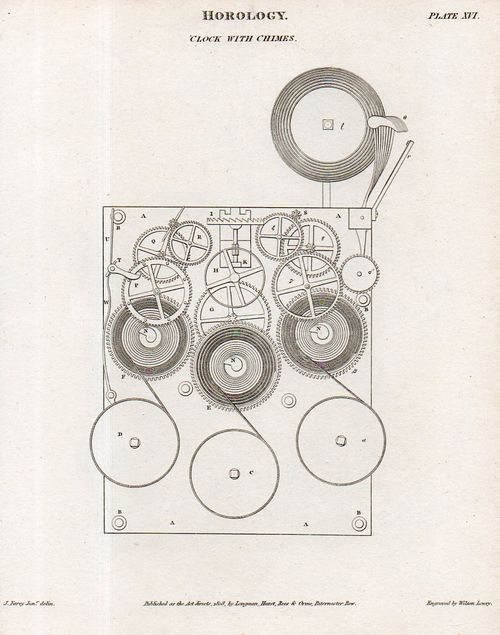
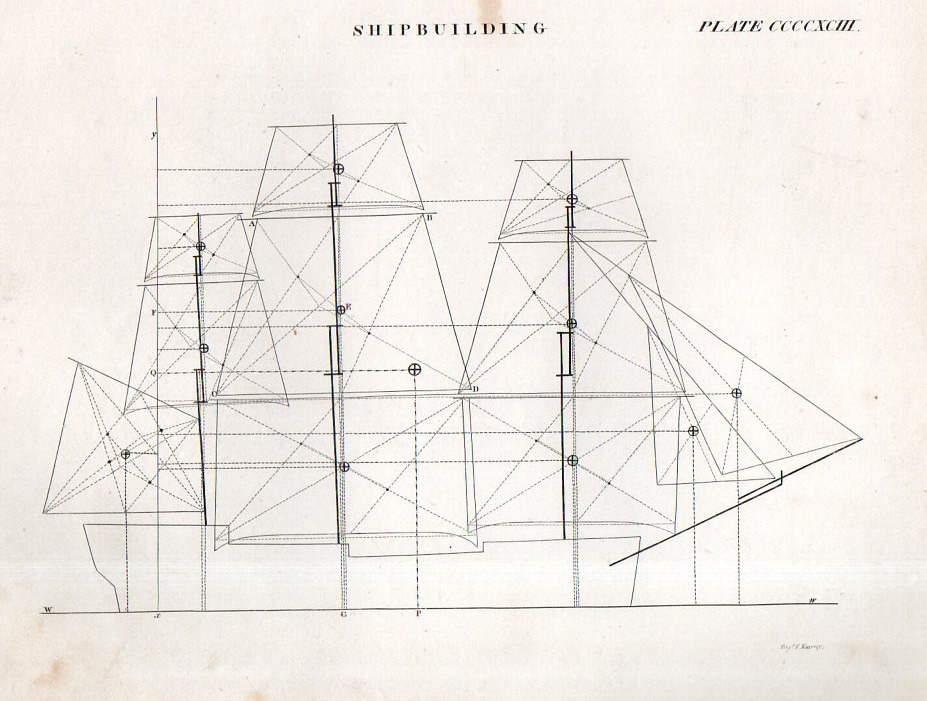
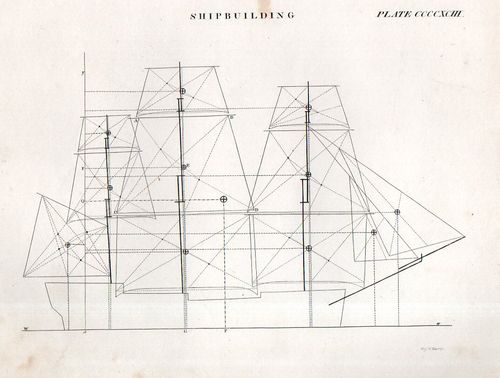
    I think that a pre-proto-neo-antiquarian or whatever Cubist representational form is very clear in the 1812 engraving, which was a relatively simple formulaic presentation of ship/sail construction found in Rhees’ Encyclopedia.  “Clear” of course to someone here in the print’s future, seeing what that form could actually become apart from showing the naval necessaries.  But it always puzzles me how an image like this could appear and someone didn’t take the next step and turn the thing into “art” of some sort.  That would all happen soon enough, the loosening of form and its representation via impressionistic and geometrical ways–Mr. Turner was already 37 years old when this print was published, and on his way (at least intellectually) to his magnificent Romantic career. 
    Cubist653

    Why wasn’t this art in 1812, aside from people not being quite ready for it?  Maybe there is no other “thing” apart from that.  It would take nearly another hundred years before the representational form of say a ship was lessened and stripped away, softened , modified, rubbed, erased, into something that is the object but really isn’t.

    Perhaps what we have here is a peep (like with Durer’s geometric man) into the future at modern art, a dissonance between abstraction and realism.  There is a regeneration of form taking place in this image, but it is only something on its way to creating a more idiomatic engineering representation of naval needs, and not a new art form–that would have to wait for Braque and Gris and Leger and Delauny and Villon and Picabia and Duchamp and the rest.  So this pre-non-Cubist engraving is not a key to a new vocabulary of vision–it is just a drawing of ship’s sails. 

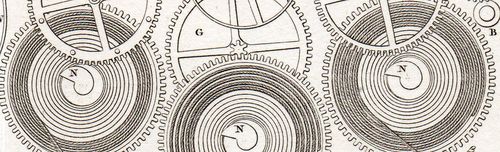
    Here’s another example of pre-modern art peeping out from the pages of this same encyclopedia, this one being a Prehistoric Rayograph, or a proto-non-photographic example of Man Ray, but from 1810 (and which I wrote about here):
    Cubist-Dadaist655

    Which is a detail from:

    Cubist-Dadaist654

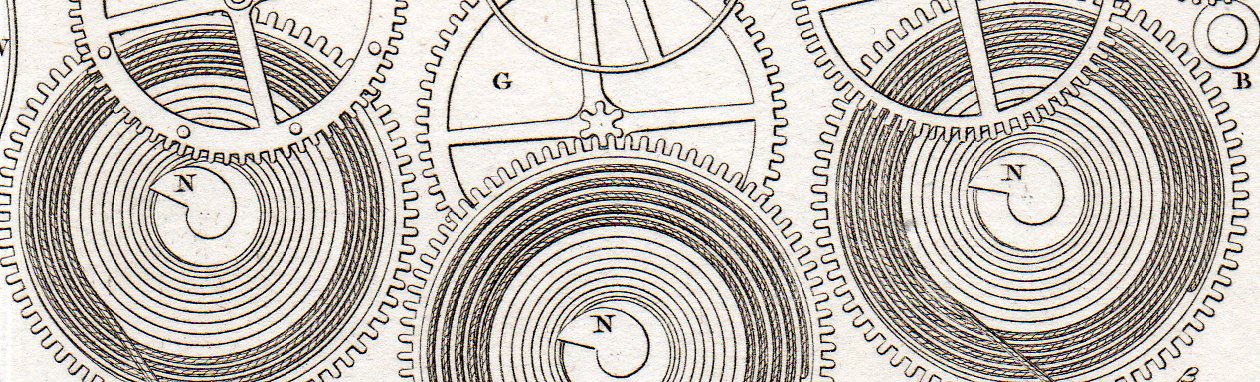
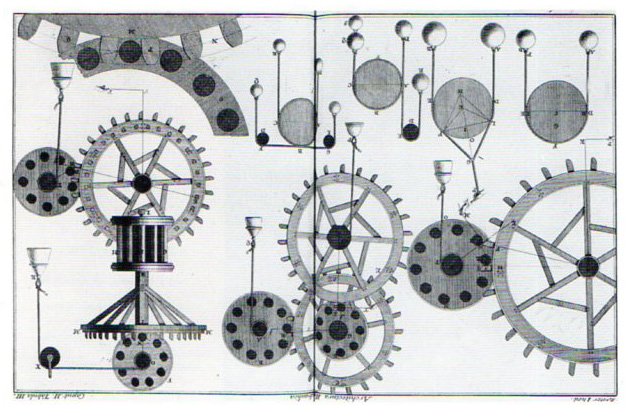
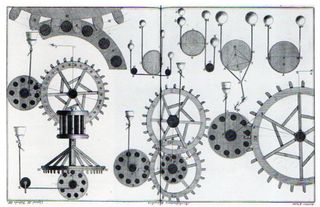
    The engraving below is another fine example of futuristic bubbles, this one a possible example of Steampunk Dada, and appears innocently (and beautifully, and importantly) in Architectura Hydraulica (1740),
    and titled “Demonstration of Friction”.  I’ve simply inverted it and
    removed some of the numerical notation–and then, suddenly, it becomes a
    sort of Steampunk Balloon Machine–a lovely collection of small
    balloons lifting large wheels and cogs, assembling some sort of
    something in mid-air, demonstrating very little friction, of lightness
    and airiness.
    Belidor upside down

    Seems to me that if you look hard enough that these examples are, well, kind of everywhere.  They just aren’t yet what they could’ve been.

    Notes:

    Here’s another example:  Geology of Images: Finding Pre-biotic, Neo-Dadaist Images in Antique Astronomy Prints (here)

  • Robot Man, 1915

    JF Ptak Science Books      Quick Post   
     
    Follow Me on Pinterest

    Robot man437

    The Burroughs Adding Machine company did about as much as anyone to objectify the worker in America during the 1880-1915 period, making the worker a part of a machine within the machine. In a way it was like creating the Ford assembly line for people sitting down. 

    The company was founded on the work of William S. Burroughs’ grandfather, William Seward Burroughs (1857-1898 and native son of Rochester, NY), who created a mechanical calculator to help him add long columns of numbers in his job as a bank clerk. American Arithmometer Company was founded by him and others in 1886, later evolving into Burroughs Adding Machine Company (1904), Burroughs Corporation (1953), and then into Unisys (combining with Sperry Univac in 1986) before sliding away.

    In any event the adding machine connected millions of people to a mechanizing process of what had previously been a mental operation–the flywheel in the side of the head of the clerk/accountant in this add for Technical World (More Fascinating than Fiction) for August 1915 wasn’t too terribly far from the truth. Interesting that on the other side of the head of this fellow, behind the other ear, is a pencil. 

    Robot man438


  • A Few Mechanical Men–Anthropomorphic SteamPunk

    JF Ptak Science Books    Quick Post

    In 1893 George Moore unrolled his papers and derived this wonderful mechanical man, a gas-fired steam-boiler-driven, half-horsepower, six-foot tall 5-mph dromedary.  It was made of “heavy tin”, had spikes on its heels for added traction, a  fire-funnel surrounded by water and connected in some way to a small but powerful motor.  The exhaust of course would exit through the nostrils. Or, in another version, the exhaust would come out via the machine’s cigar.


    Mechanical man steam george moore
    Earlier than this very striking machine came the 7’9″ steam man proposed by Zadick P. Deddrick.  The patent for the invention was granted in 1868, and was made to haul a rockaway carriage, the machine dressed as a man so as to not frighten horses int he street.  http://www.davidbuckley.net/DB/HistoryMakers/1868DederickSteamMan.htm


  • SteamPunk Inventions, a Farce from 1853


    JF Ptak Science Books   Quick Post

    Steampunk inventions984

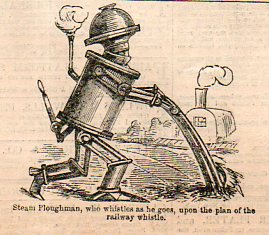
    I found these images browsing through The Illustrated London News for April (date obscured) 1853.  In my experience seeing articulated, steam-driven robots in the mid-19th century is pretty unusual. There’s an earlier image (from about 1849) that shows a robot like the one pictured above, though it was actually a man in a robot suit, a person driving a machine–the image above of “the Stream Ploughman”  is clearly a stand-alone robot, as we can see through the thigh area, though it does have human attributes, like a semi-face and the capacity to whistler while it worked.

    Other posts on early robots in this blog include: Mall-Mortuary Faces on Patent Drawings of Robots, 1936-1976; The Edenless World, the First Female Robot;  Endless Eve, 1936; Durer’s Beautiful Monsters, for example.

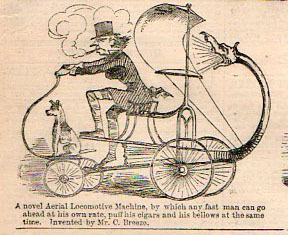
    The caption may idetify this as an airship, but there are no signs here of ho wthis thing would get aloft. And I have no idea what the dog is doing there.

    Steampunk inventions990