A Daily History of Holes, Dots, Lines, Science, History, Math, Physics, Art, the Unintentional Absurd, Architecture, Maps, Data Visualization, Blank and Missing Things, and so on. |1.6 million words, 7500 images, 4.9 million hits| Press & appearances in The Times, Le Figaro, Mensa, The Economist, The Guardian, Discovery News, Slate, Le Monde, Sci American Blogs, Le Pont, and many other places… 5000+ total posts since 2008.

Category: Future, History of the

  • An Early Steam-Driven Robotic Society-Scrubber (1829)

    JF Ptak Science Books  Post 2183           History of the Future series

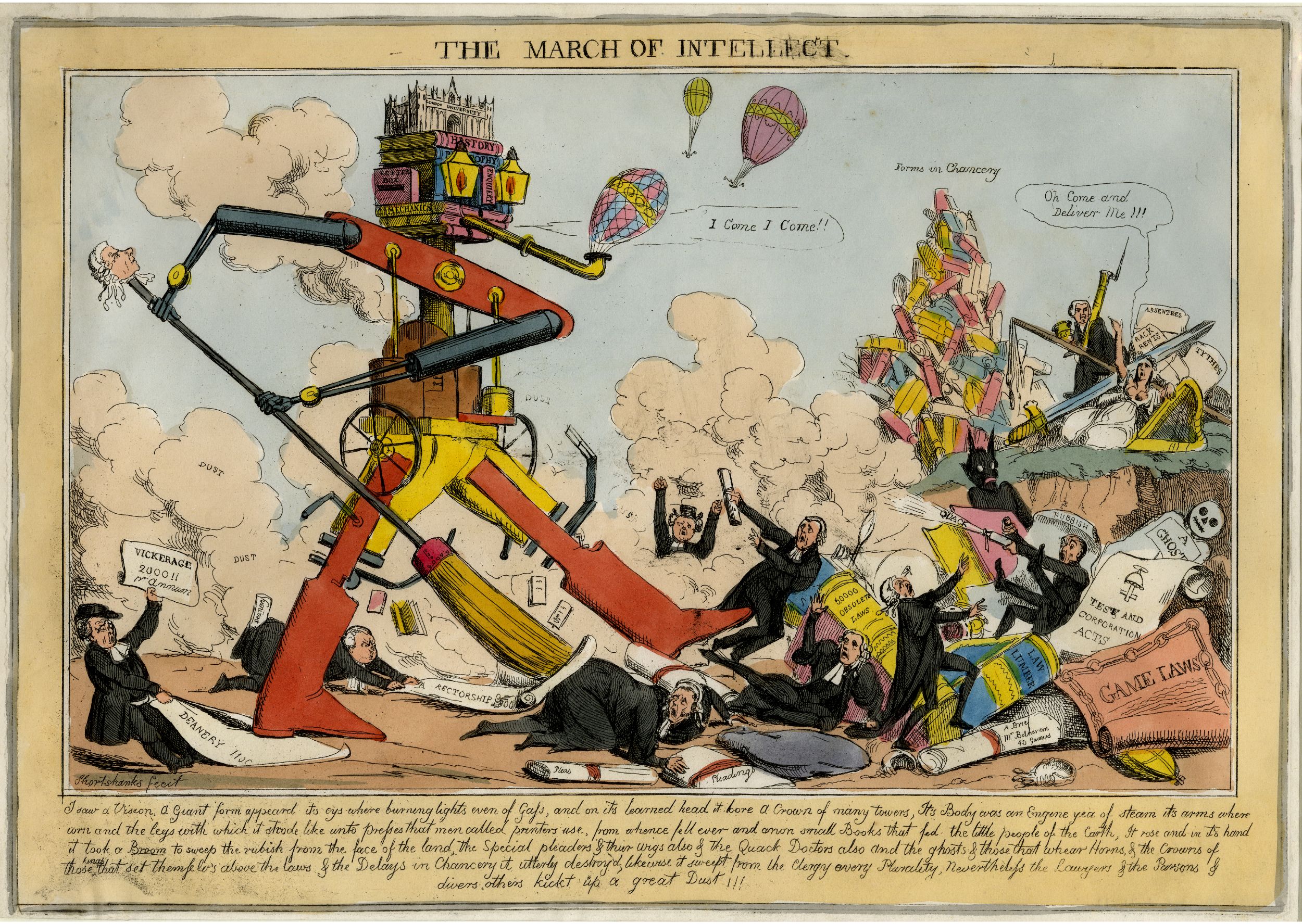
    I’ve addressed the ideas of early mechanical men elsewhere in this blog (just enter “robot” in the site search box at left and you’ll find two or three dozen related posts on the subject), but failed to include this very fine and early example by William Heath in his March of Intellect series (printed from 1825-1829).  
    Steam man heath

    He was particularly bitter about what he saw as an aristocracy of official ruination, and created an unusual steam-driven mechanical man with a book-driven intellect that swept up the great “rubbish” and “dust” of society.  At the top of this early robot (preceding the invention of the term by about 100 years) was a pile of books with a “crown of many towers”, which was London University, beneath which was a set of gas-light eyes, iron arms, and legs made of printer’s tools, sweeping away useless and insulting lawyers and jurists and their legal wigs and obsolete and repetitive rules, medical quacks, and the dust of other official abuses, “sweeping rubbish from the land”. 

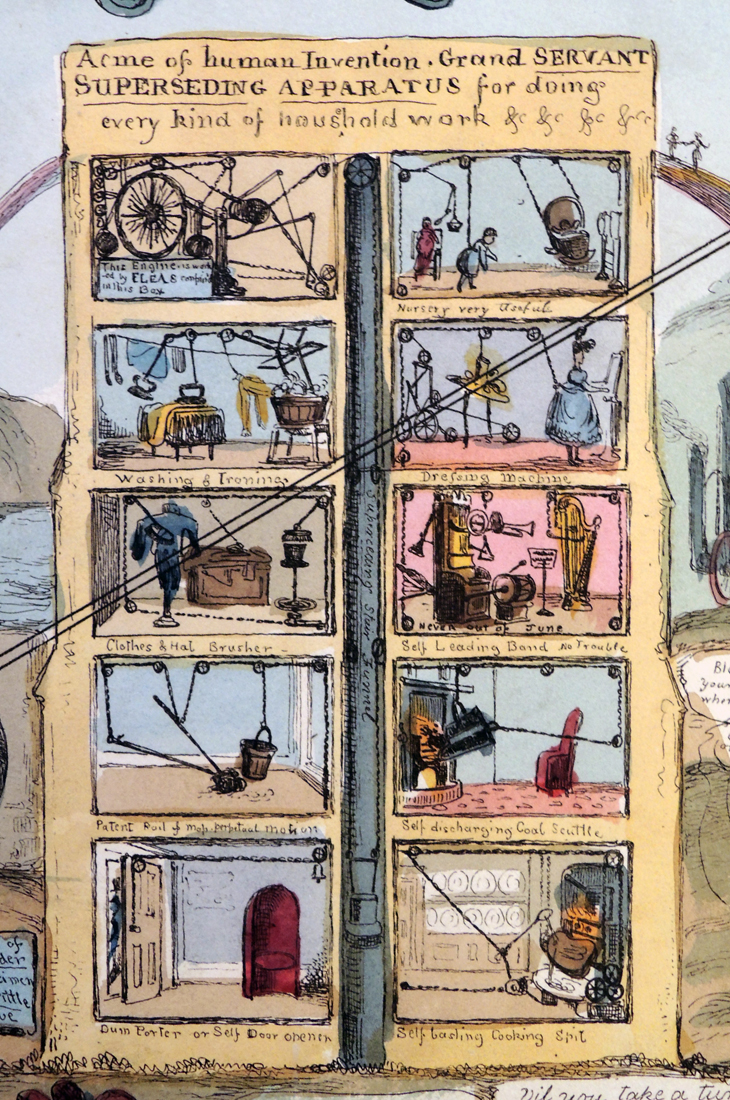
    Another near-robotic image by Heath is his pre-Rube Goldberg automatic house, a central feature in the March of the Intellect No.2 (1829) which features fantastic flying machines hovering and screaming past the house. 
    Heath march of intellect 3

    [Source:  Graphic Arts Collection, Princeton University libraries, here]

    It isn’t a robot unless you consider the entire house as a host for all of the things going on inside itself, and then you have something else entirely.  

  • The Future of the Library, 1883–or, Paradise without Heaven

    JF Ptak Science Books   Quick Post
    Bush memex
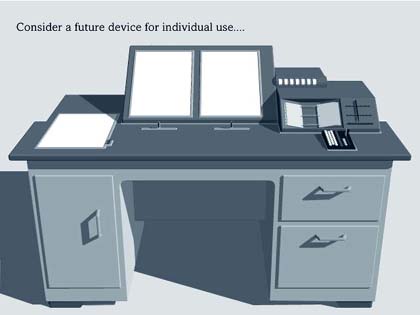
    [Image: work station for Vannevar Bush’s visionary Memex machine, the grandfather of the intertubeweba nd hypertext. Source: http://etec.ctlt.ubc.ca/510wiki/Hypertext]

    Many have considered books and paradise and the ways to a great library and the correct books to read (and not read).  Seneca was convinced of the efficacy of book on a shelf and their being much like a family, and Erasmus and others believing in books as libraries within themselves but without walls, and of course Borges and the infinity of books exceeding the size of the universe, perhaps having him come to the conclusion that hi sheaven would be a book.  Thee are jusst a few examples of many–very few of all o fthese writers looked into the future at the book and the library.  There was Kurt Lasswitz’s 1901 novel The Universal Library (a source of inspiration for Borges’ later work, The Library of Babel which was written in 1941); there was H.G. Wells’ The Idea of a Permanent World Encyclopaedia and then the great Memex idea by the grandfather of the internet, Vannevar Bush, in As We May Think  which was published in The Atlantic in 1945. And of course Ray Bradbury’s Fahrenheit 451 and  Libraries of the Future by J.C.R. Licklider (1965) are also standouts.  Perhaps though the tandout in the practical and possible vision of teh future library was painted by Charles Cutter in 1883.


  • Electronic Beds, Odors, and Other Futuristic Grotesques, 1945

    JF Ptak Science Books   (Expanding an ealier post #610 from 2010)

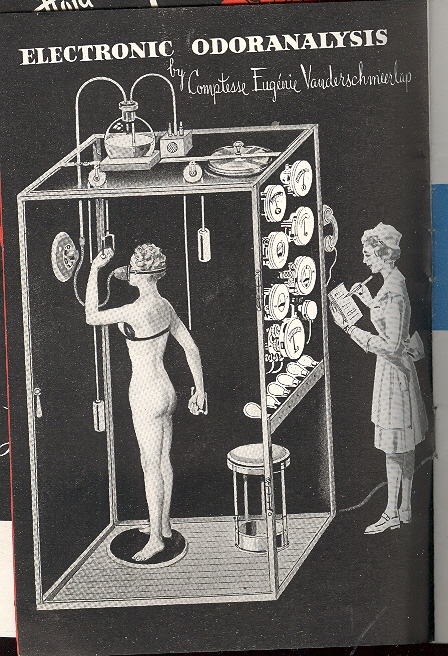
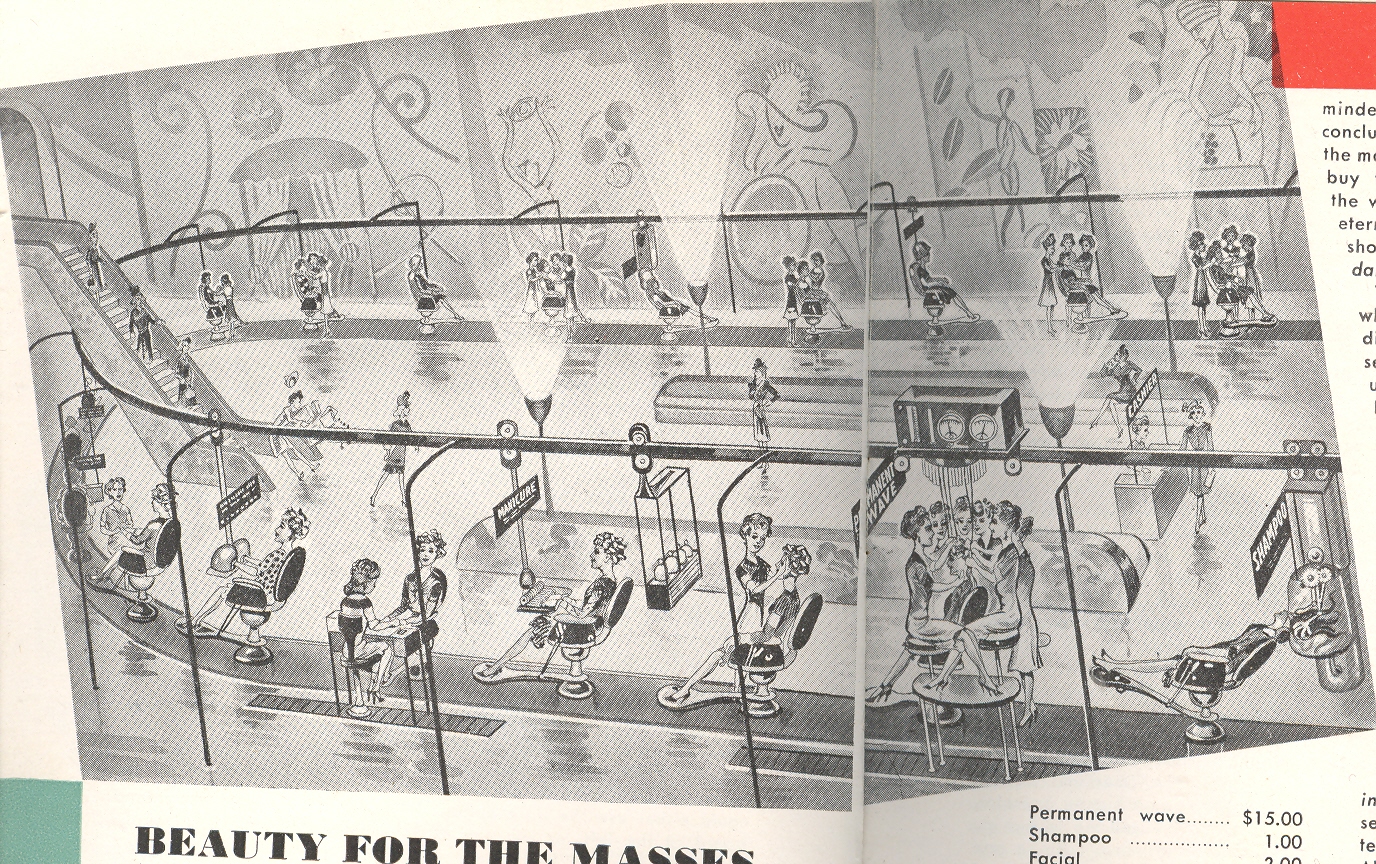
    I am very attracted to the innocence and softly bizarre category of my store’s Naïve Surreal Collection, like this little pamphlet that came out New York in 1945.   The titles in this category are odd but still understandable, and the “what the ____!” response to the subtle ones isn’t quite so high and the exclamation points not so many as in the cases of the Naive Surreal titles. 

    Blog--may 11--odd 005

    Bizarre is just that, certainly not hiding behind any lesser or ambiguous title–it seems to be a parody of  small magazines and their advertising sponsors,  and copyrighted by the very far-reaching Hugo Gernsback, who in 1926 started the first magazine dedicated to the genre of science fiction (Amazing Stories) and for whom the World Science Fiction Society’s annual award for Science Fiction Achievement is named (the “Hugo”).  Gernsback evidently had a taste for cheeky parody, producing similar magazines to this called Quip, Forecast, Jolliers, Tame and Newspeep.

    I guess that this was deeply weird for mass-production publication, and it was probably funny–now it is just weird, odd, and somewhat discomforting–a successful and intentional reach for being part of the Naive Surreal right from the start.


    Blog--may 11--odd 008


  • Experimental Visual License

    JF Ptak Science Books   Quick Post

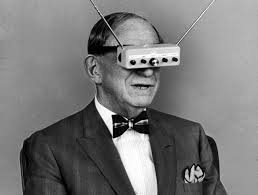
    Gernsback[Hugo Gernsback with his TV glasses, 1963]

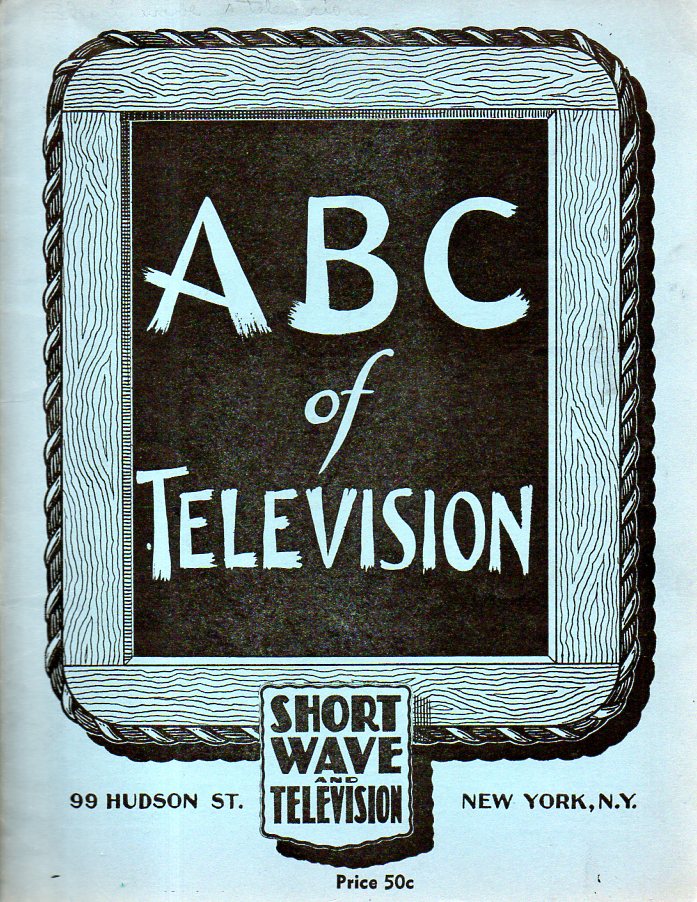
    The “Experimental Visual License” is a very nice turn-of-phrase, and it occurs in a technical and less poetic sense in this nteresting and nicely designed pamphlet from the earliest days of popular commentary on the new medium of television.  The ABC of Television was published in 1937 by the exceptional and extremely busy Hugo Gernsback (1884-1967, basically the inventor of the SciFi magazine) in his Short Wave & Television journal.

    Television abc477

    The pamphlet includes technical basics (“fundamentals of scanning”, “mechanical systems”, “Cathode ray emission”, transmitter operation”) as well as some popular and necessary information, like “when will we have television” and a list of television stations.  

    Just for the record, this publication lists 25 active stations, including low wattage stations like W2XAX, the Atlantic Broadcasting Company, in NYC at 50 Watts–there were 9 broadcasters with 150 Watts or less of the 25 listed. There’s also a list of nine other “discontinued” television stations (“experimental visual licenses and permits discontinued or expired”), which is where that phrase crackles into life.  


  • Tik-Tok of the Intertube // How Many Triangles are in the Web?

    JF Ptak Science Books   Quick Post

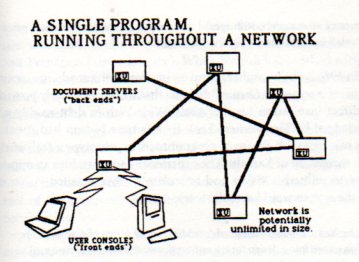
    Ted Nelson had a lot of ideas about computers, though not that many are remembered today, in spite of a bunch of them being pretty smart. (He coined the words “hypertext” and maybe “hyperlink”, for example.)  In any event there’s this little diagram of the possibilities of his “world wide network”, which I think no doubt is one of the earliest “maps” of the yet-to-exist internet. 

    Nelson dreams065

    [Picture source:  Ted Nelson, Dream Machines (1974) via Alex Wright, Glut, Mastering Information Through the Ages (2007), p 215.] 

    It is also interesting to see that the frontis illustration for his book uses Tik-tok, a metal/machine character from a series of books by (Oz) L. Frank Baum, this one Tik-tok of Oz (1914).


  • The Pulpy Flying TubePunk of TomorrowLand

    JF Ptak Science Books   Post 2166

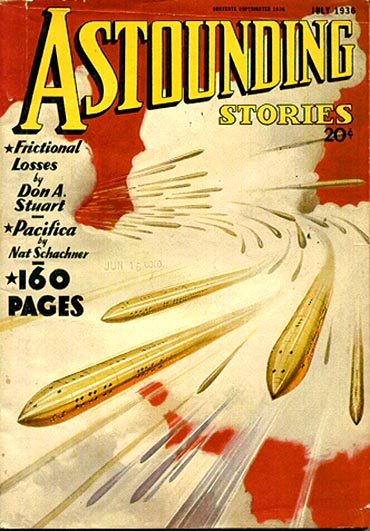
    Following this blog’s series on the History of Holes and the History of Dots will be a new series:  the History of Tubes, the first note of which is on the flying tubes of TomorrowWorld. Today’s installment is a simple picture post:

    http://www.dailygalaxy.com/photos/uncategorized/2007/07/17/science_fiction_science_fact.jpg
    [Source: http://www.dailygalaxy.com/photos/uncategorized/2007/07/17/science_fiction_science_fact.jpg] 

    [34754tutfgjdgdf.jpg]
     
    [Source: http://lh6.ggpht.com/_hVOW2U7K4-M/ST2rP9fpFfI/AAAAAAAAugY/u95RIMSHH9g/s1600/34754tutfgjdgdf.jpg] 
     

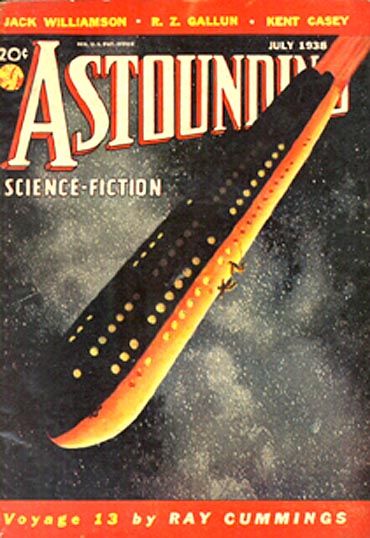
    http://androvillans.files.wordpress.com/2011/04/b2-astounding_science_fiction_1938071.jpg

    [Source:”http://androvillans.files.wordpress.com/2011/ 4/b2-astounding_science_fiction_1938071.jpg]

     
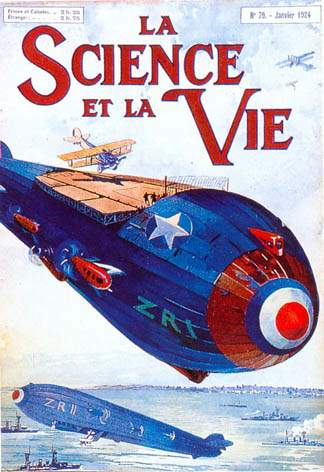
    https://historyofideasblog.com/a/6a00d83542d51e69e2012875ea3636970c-pi
     
     
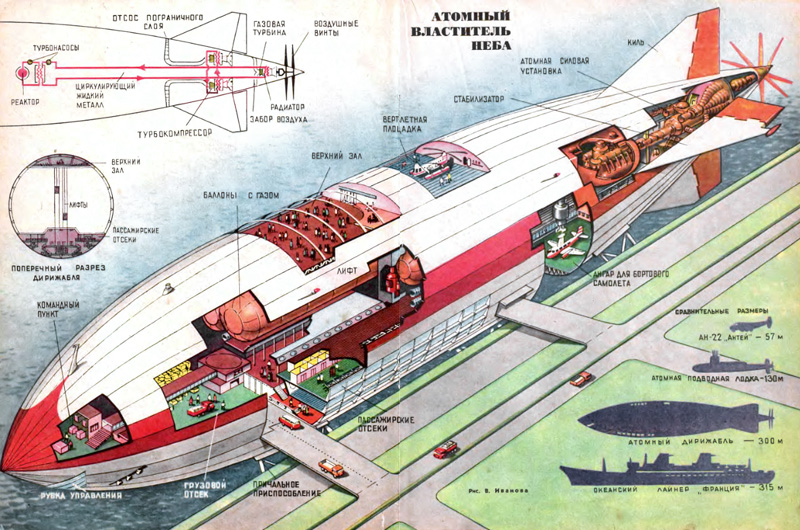
    https://historyofideasblog.com/a/6a00d83542d51e69e2014e8870b10b970d-800wi

    [Source: http://static.flickr.com/100/258214584_3ce3697ab2.jpg] 


    [Source:http://static.flickr.com/59/188844208_60a18e94d7.jpg]

    [tow_1940summer.jpg]

    [Source:http://lh5.ggpht.com/abramsv/R4fcwUKUlTI/AAAAAAAADBI/Xu7s8ESZMyM/s1600/tow_1940summer.jpg]


    https://historyofideasblog.com/a/6a00d83542d51e69e20147e33be223970b-800wi


  • A View of the Future in the Depression–the Movies, 1932

    JF Ptak Science Books   Quick Post

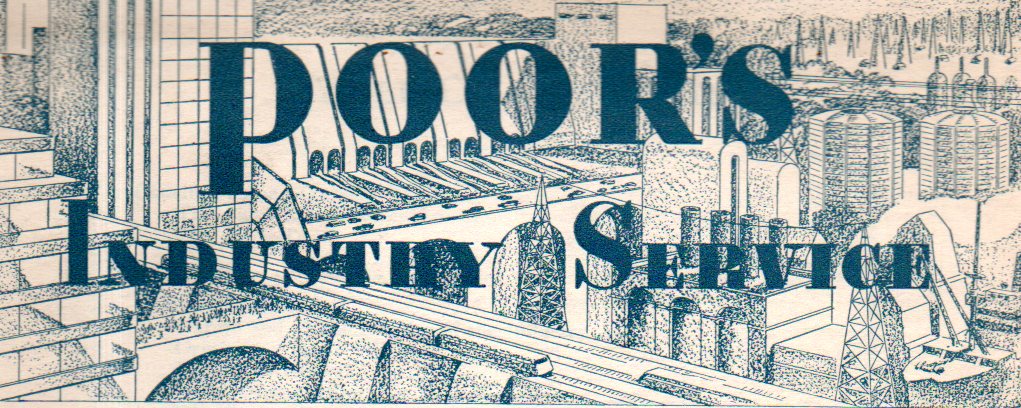
    It is interesting that  a reporting agency like Poor’s Industry Service would have such a provocative cover illustration when reporting on the not-so-good economic news of 1932.

    Poors025Poor’s presented the city of the future as the standard banner for their report on the motion picture industry.  The city is massive, a portrait of concrete masses, especially seen in the dam or terminal in the immediate background, and also in the assembly of conical buildings at rear right.  Very impressive, especially considering it was the fourth year of the Depression. 

    Their report on the film industry was crisp and fairly bitter, carrying on about risky behavior and out-and-out mismanagement, leading most of the studios into loses and the industry in general to a plunge in composite net earnings and common dividends–a poor year.  In any even I was interested in the illustration, which seems an unlikely place to find such a severely International Style vision of the future.

    And the full cover:


  • The Similarity of a 16th c Cactus and a 19th c Futuristic NYC

    JF Ptak Science Books  Quick Post  
    Follow Me on Pinterest


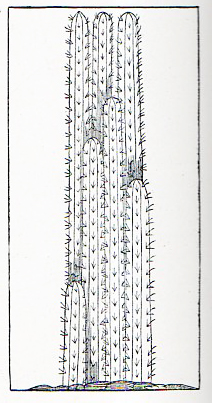
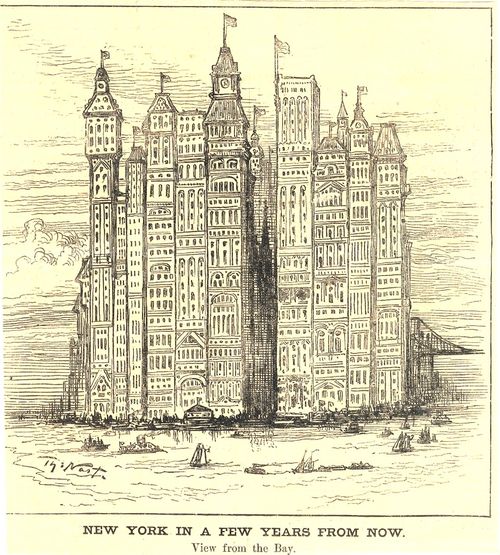
    Cactus818The future is everywhere and nowhere, hidden and obvious, localized and distant; and sometimes it is there when it really isn’t, and vice versa.  This image of the future is the last of these descriptions, though perhaps not even that, because it is a peep at a peep into the future, a reference to a reference.

    First, the cactus, seen here, from G.B. Ramusio’s (1485-1557)  Navigationi et Viaggi, printed in Venice in 1565 (and finally in three volumes, links to which are below).  Ramusio was a geographer and largely a scholar/reader/armchair-traveler, who collected travel accounts of explorers and published them together–the first such effort of its kind. 

    The second image works better if you squint somewhat while looking at the cactus–it comes from the great and slightly problematic Thomas Nast, the Harper’s Weekly social/graphic warrior.  The image appeared in 1881, and depicts New York City in the near future, he result of newly-advanced building techniques, including the elevator (and importantly!) the elevator safety brake, which allowed the construction of buildings to great and fabulous heights.  Nast saw a little bit of overeager sky-scraping in it, and pictured variegated but probably dark future from the architectural commotion. 

    Nast skyscrapper

    I’m well aware of this being an enormous stretch, but I couldn’t think of anything else to get these two images together on a single post.  (Original article here for the Nast.)

    Notes:

    Full text for the Ramusio volumes from the Internet Archives site:


  • The Mile-High Half-Vertical-Airport, 1935

    JF Ptak Science Books    Post 2134 
    Follow Me on Pinterest


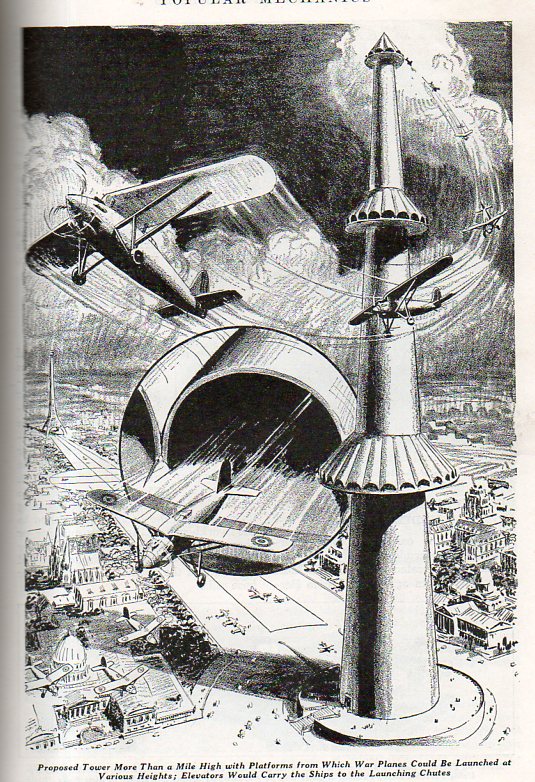
    Airport vertical794[Source: Popular Mechanics, June 1935, p 891.]

    In the history of Mile High Things I doubt there are many entries for airports–or half-airports.  This if not highly questionable structure inverted the horizontal concept of airport into something else, or at least changed the take-off into quite something different while leaving the landing strips the same. (This is the “half-vertical” part of the title to this post; “half-vertical” doesn’t mean “horizontal”, though I like that idea.) The new method of getting a plane into the air was straightforwardly breathtaking:  haul the plane up one mile in an elevator and drop it through one of the “launching chutes”. After everything is said and done, this is one idea that really didn’t need to be three-dimensional.

    There was a ride something like this on Coney Island that was very popular for years, a parachute ride where folks were hoisted skyward in a seat on a parachute and then dropped–a much better idea than this mile-high monster.

    Here are a few other examples of Mile-High/Long Bits that are posts in this blog:


  • Ecclesiasticism and the History of the Future

    JF Ptak Science Books   Post 2128  
    Follow Me on Pinterest

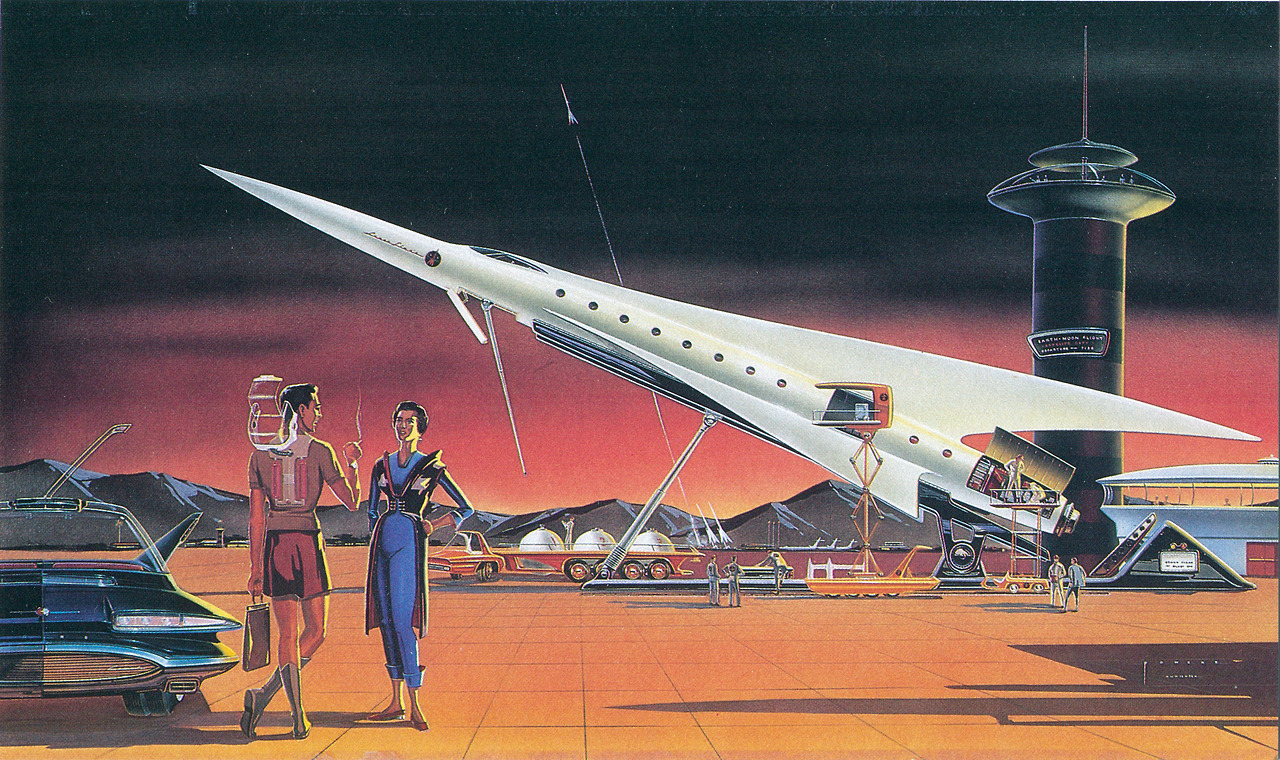
    FUTURE JIM POWERS
    There are different types of mystery as any quick look at Medieval legacies will tell you.  Some are mysterious mysteries never meant to be understood outside of obliqueness given their allegorically ambiguity, and some are just, well, different, but answerable. 

    The history of the future lends itself a little to the Ecclesiastical (or first) sort of mystery as just described–sometimes, anyway.  Sometimes looking at an imagined future drawn years ago for a period of time that has already passed may lend itself to some fair-game comedy.  But getting things “right” as a futurist/illustrator may be quite beyond the point, as with the example above, drawn by Jim Powers.

    Being furiously correct was not the point Powers was trying to achieve.  TO me he was drawing to a certain deep sight, presenting an allegory of possibility, trying to excite some interest in speculation in someone by elements of what he was drawing, not in the overall image.

    In the alphabet of ‘RAMAS, perhaps the most famous of them all is futurama, which (real or imagined) is part of the continuum of motoramas version of raceoram’s spaceorama.  It was in this envelope of futurama that Jim Powers worked his mysteries in a series of images for Life in the Year 2000, laboring away at insight in the mid-1950’s.  Surely he could0 not have believed in these rocket-stuffed ultra-streamlined mega-finned interplanetary autos would come into being in five decades, but I’m pretty sure that he believed that somewhere in the details of his work were useful bits/ideas for someone else.  Surely he did not think that the overall vision was more significant than the sum of all of his very interesting parts.