A Daily History of Holes, Dots, Lines, Science, History, Math, Physics, Art, the Unintentional Absurd, Architecture, Maps, Data Visualization, Blank and Missing Things, and so on. |1.6 million words, 7500 images, 4.9 million hits| Press & appearances in The Times, Le Figaro, Mensa, The Economist, The Guardian, Discovery News, Slate, Le Monde, Sci American Blogs, Le Pont, and many other places… 5000+ total posts since 2008.

Category: Brevity and Complexity

  • A Big Popular Statement on How Small Small Is (1883)

    JF Ptak Science Books   Post 2259

    In three issues1 of Nature (London) magazine in 1883, William Thomson (Lord Kelvin)–polymath of a great and inquisitive mind–tried to establish a good reference point for the size of atoms, mainly to establish that their size while being incredibly small were not unimaginably so, and that even objects of this minor magnitude could be approximated and studied.  And he did so with great ease and in a popular general-audience sort of way.

    All told, this was a very good piece of thinking, especially referencing the estimates of Niels Bohr 30 years later, publishing in the Philosophical Magazine (volume 26, pp 1-25, 1913) and calculating the size of an atom at .5 x -10 meters. And even though Thomson is talking about his estimates in terms opf science in a post-Dalton and post-Mendeleyeev world, he is also pre-Stoney, and Roentgen and Curie and Soddy and everyone else, especially pre-atomic-nucleus, and pre-proton (1919/20 with Rutherford and Moseley) and pre-neutron (Chadwick 1932), which are smaller still than the atom. Way smaller.  It is difficult to put into understandable terms on how “small” that small is:  the atomic nucleus is sort of 1/10,000th of the atom, and a proton or neutron smaller still, and then the quark smaller than that, until perhaps it becomes a Seussian exercise with future discoveries showing that after everything is said and done that it is turtles all the way down.  

    But Thomson managed to put an understandable assessment on a very difficult visualization, talking in terms of an atom being “1/10,000,000 or from 1/10,000,000 to 1/100,000,000 of a centimetre in diameter”, or 1×10⁻⁷meters, which is just about the size of a cell nucleus or DNA; that’s in the neighborhood, especially if you look at the smaller number which is 10-8 meters, which starts to close in on the size of the massive carbon atom (10-10), but sorta not so close to the electron (10-12) , or carbon atom nucleus (10-14) or proton (10-15).  Small, hazy stuff indeed, filled with nothing.  On the other hand, if you proceeded in a space vehicle 1014 meters from Earth our Solar System would appear as just another fuzzy splotch in the sky.  1016 meters is about a light year, and then it would taken 10,000 of those “just” to get slightly outside our galaxy.  And then there’s the rest.  

    In any event, Thomson did okay. And as it turns out (as I just now learned) there was an earlier Nature article in 1870 (the inaugural year of the journal) by its editor Norman Lockyer who estimated the size of atoms at just about the Thomson scale.  

    "FOUR lines of argument founded on observation have 
    led to the conclusion that atoms or molecules are 
    not inconceivably, not immeasurably small. I u;e the 
    words " inconceivably" and "immeasurably" advisedly. 
    That which is measurable is not inconceivable, and there- 
    fore the two words put together constitute a tautology. 
    We leave inconceivableness in fact to metaphysicians. 
    Nothing that we can measure is inconceivably large or 
    inconceivably small in physical science. It may be diffi- 
    cult to understand the numbers expressing the magnitude, 
    but whether it be very large or very small there is nothing 
    inconceivable in the nature of the thing because of its 
    greatness or smallness, or in our views and appreciation 
    and numerical expression of the magnitude. The general 
    result of the four lines of reasoning to which I have re- 
    ferred, founded respectively on the undulatory theory of 
    light, on the phenomena of contact electricity, on capil- 
    lary attraction, and on the kinetic theory of gases, agrees 
    in showing that the atoms or molecules of ordinary matter 
    must be something like the 1/10,000,000, or from the 
    1/10,000 000 to the 1/100000,000 of a centimetre in dia- 
    meter."--Thomson, below. 

    Notes:

    1. William Thomson,  The Size of Atoms, I pp 203-205, June 28, 1883; Size of Atoms II, pp 250-254, July 12, 1883; Size of Atoms III, pp 274-278, July 19, 1883, earlier presented before the Royal Institution, beginning February 2, 1883.
     

  • How to be a Hobo (1946)

    JF Ptak Science Books

    Hobos lingo title344

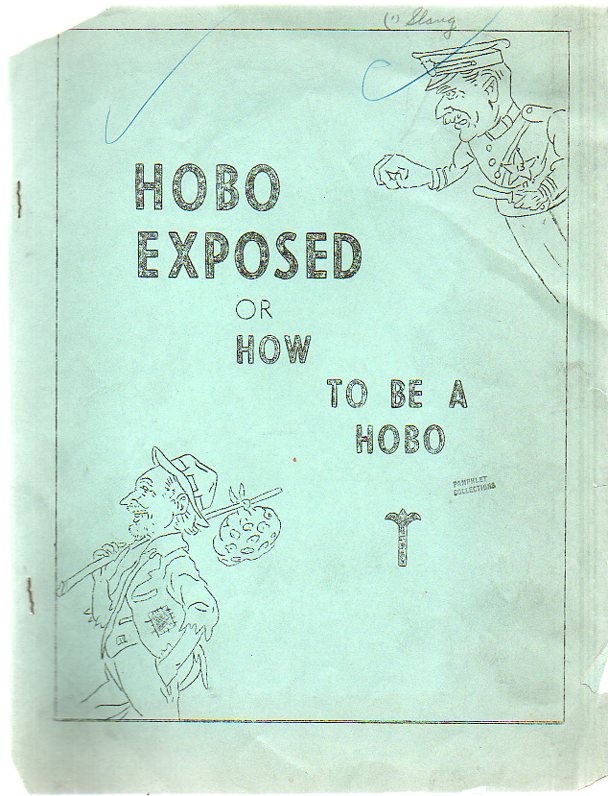
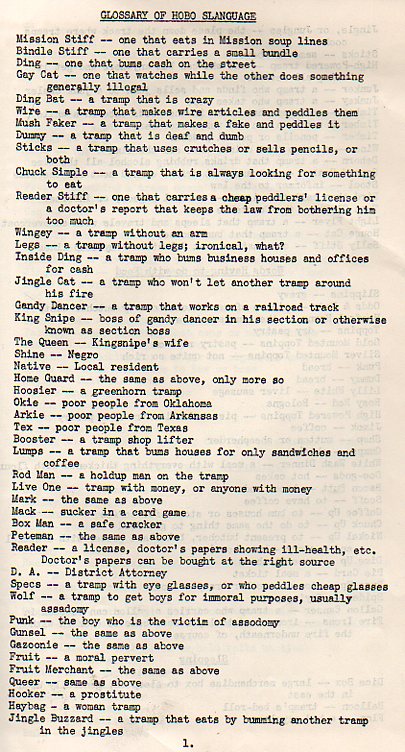
    Hobo Exposed, or How to be a Hobo, a pamphlet  with no claim for a writer but copyrighted by “Kelly’s Specialities” in 1946,  is dedicated to Sun Down Slim, Boston Blackie, Sticks Red and Commissary Blackie. It gets right to the point of my principal interest in the work, the Hobo Slanguage.  The collection here is not quite as road-elegant as other collections from the Hobo Kings–not that it is less “regal”, just more common and less imaginative. 

    For example, “Wingey” is the name for a hobo without an arm; “Sticks” is a tramp who sues a crutch; “Legs”, well, you know.  On the other hand I find “grouch bag” (which was a bag of Bull Durham tobacco worn around the neck, which was either valuable enough to be worn that way to keep people out of your pockets or you just didn’t have any pockets), “hogger” (a railroad engineer), “dice box” ( a large discarded merchandise box to sleep in), “slippins” (gravy), “canned heater” (an unfortunate tramp who drinks sterno), “Jingle Buzzard” (a tramp who begs food from other tramps), the “lump bum” (a hobo who bums food and stuff from another hobo), the “chuck bum” (as above but bumming meat), the “mush faker” (who counterfeited laundry soap and sold greasy/fat white powder-like material door-to-door,  and so on.

    There are many others–here’s a further sample:

    Hobos lingo a341

     There are useful bits beyond the Hobo lingo–essentially this is what the pamphlet is really all about.  There is info on how to jump a train moving 10 mph, what train lantern arms and signal whistles meant, how to make your own bed down (“glim”), the best use of newspapers in keeping warm and sanitary, and other such interesting ideas.

    The author figures that to start tramping you should go hungry for three days, and get plenty hungry, and then the following ten days, half-hungry.  After two weeks you should have your pride behind you…and you will be on your way to full-fledged trampdom…”

    ·Posted by :

    ·in:


  • Bad Poetry Yields Good Results in the Celebration of the “Atom-Molecule”, 1874

    JF Ptak Science Books  Quick Post

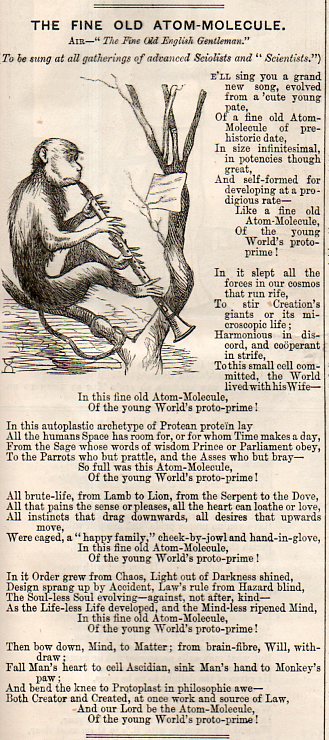
    Browsing  the 1874 volume of the London Punch an interesting but truly bad poem slid from the page. The poem certainly suffers from itself, but there are interesting insights, and poetics aside there’s some good thinking going on in spite of a probably-very-quick composition time.

    For example, the first line of this stanza “In this autoplastic archetype of Protean protein lay” is a real tooth-popper, but it does dig down into some interesting turf:

    All the humans Space has room for, or for whom Time makes a day,

    From the Sage whose words of wisdom Prince or Parliament obey,

    To the Parrots who but prattle, and the Asses who but bray–

          So full was this Atom-Molecule,

          Of the young World’s proto-prime!

    Atom molecule696
    The poem wobbles and wrangles within its own very tight and bumpy twists (”  Of the young world’s proto-prime!”) though the essence of existence does seep through:

    In it slept all the forces in our cosmos that run rife,

    To stir Creation’s giants or its microscopic life;

    Harmonious in discord, and cooperant in strife,

    To this small cell committed, the World lived with his Wife–

          In this fine old Atom-Molecule,

          Of the young world’s proto-prime!

    It is a curious work which I liked in the end, or at least I liked it as a vehicle to get you to another place: 

    In it Order grew from Chaos, Light out of Darkness shined,

    Design sprang up by Accident, Law’s rule from Hazard blind,

    The Soul-less Soul evolving–against, not after, kind–

    As the Life-less Life developed, and the Mind-less ripened Mind,

          In this fine old Atom-Molecule,

          Of the young World’s proto-prime.


  • A Note on Sharp Turns

    JF Ptak Science Books   Quick Post

    THere is just something very offputting about sharp turns made by unusual things in unnatural settings, a sort of unwanted geometry applied to unneccesary objects found in cringing and chaffing places. 

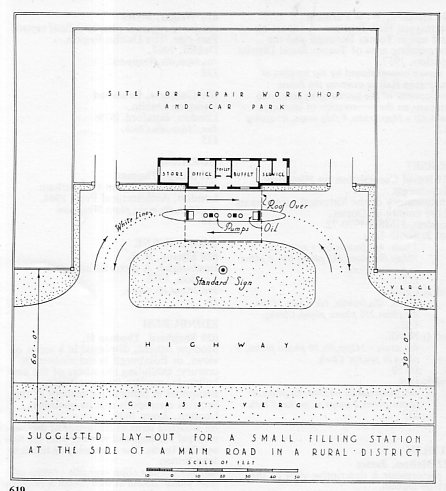
    For example–this image of a ship steaming in for a roudn of reapirs as though it was coming into a first-decade strip mall seems to have a frightful sesnse of wrongness to it.  Not to mention that it seems a little impossible for the ship to have made those four turns to get in/out of the “car park”. 

    Devon657[Source: W.H. THomspon, Devon. A Survey of its Coast, Moors, and Rivers with some Suggestions for their Preservation, London, 1922.]

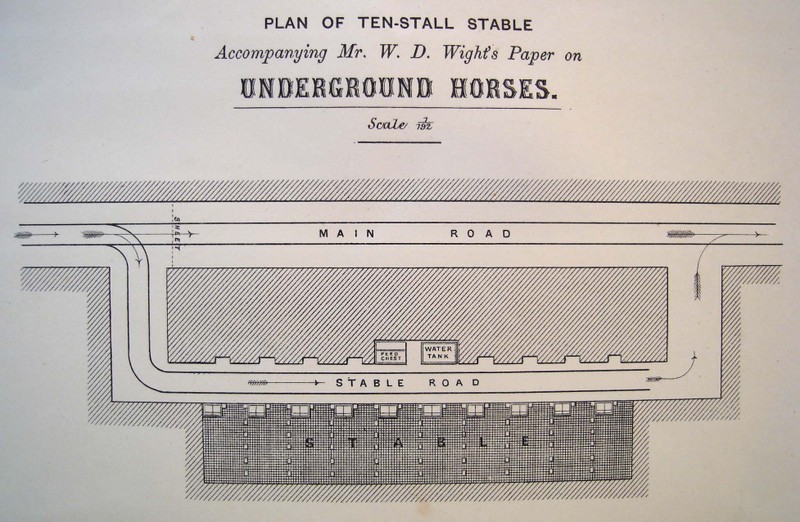
    This reminds me very much of an earlier sharp turn found in an 1875 engineer’s drawing (“Plan of
    Ten-Stall Stable….for W.D. Wight’s paper on Underground Horses”)–and
    yes indeed these were horses kept underground, used for hauling the
    heavier wagons (on tracks) of whatever, brought out to these larger
    chambers by men doing the same work with lighter loads in smaller areas.  (There’s more on this in an earlier post on this blog, here.)

    Underground horsdes
    Obviously there is nothing but everything else in the very wide world of the history of sharp turns–these two just happened to come together fo rme, and looked very similar in their own ways. 


    ·Posted by :

    ·in:


  • Unusual Jobs Department: Gum Scrapers of 1916

    JF Ptak Science Books   Quick Post

    In the long term, there are no unusual jobs– it is only the labeling of the action that makes it “unusual”, especially when it comes to something like a paid occupation, and that the “payment” part is supporting someone’s life.  (Some jobs are harder than others, and then there are jobs harder than almost all others, and then there are the jobs that may be the hardest–and that is a completely different story from being “odd”. See this old post “The Worst Job of the 19th Century? Tongue-Pullers, Nipple-Pinchers & Anal Tobacco Blowers Try to Revive the Dead”, here.)

    I remember  thinking this precise thought about oddness when walking through the airport in Helsinki somewhere in the past and seeing an old woman on her hands and knees scrubbing away at the tile of the large concourse with a small brush.  It was “odd” for a moment, and then not so. She was diligently working at her job, and her job just happened to be on her hands and knees. (And in my opinion that is really the only way to clean a floor–the walking around with a mop or fancy hardwood cleaning machine just won’t do.)

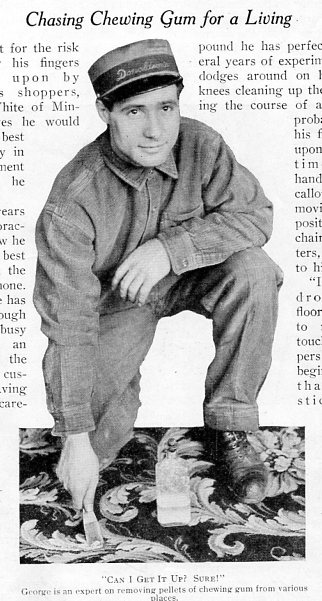
    Which brings me to this article on Minneapolis’ George White, who was a professional bubble gum scaper. “White chases the trodden sticky pellets [“quids’] from morning to night” says the writer of Illustrated World‘s “Little Oddities of Life” columnist in their August 1916 issue. 

    Gum647

    Mr. White took his job seriously, devising his own solutions to loosen the gum, and his own brush. 

    And of course he wore a cap. 

    Just because someone is a scraper doesn’t make them a scrapper–not that there’s anything wrong with that, either.

    ·Posted by :

    ·in:


  • A Remarkable Confederate POW Newspaper, 1865

    JF Ptak Science Books   Post 2060    
    Follow Me on Pinterest

    Prison times 5
    [My thanks to Rebecca Onion at Slate Vault for finding and surfacing this incredible document]

    “One of the most remarkable productions of Fort Delaware was the
    Prison Times, a newspaper published in April, 1865, by Capt. Geo. S.
    Thomas, 64th Georgia Regiment, and Lieut. A. Harris, 32d Florida. It was
    written in a small but very clear handwriting by Capt. J. W. Hibbs, of the
    13th Virginia Cavalry [sic], who proved himself a most expert
    penman.” –from Edward R. Rich, Comrades! page 120, a small but dense 167-page book printed in Easton, Maryland, and published by S.E. Whitman, in1898, containing his recollections of his experiences in the Union prison.


    Prison times 1
    [Source: the Library of Congress, here.]

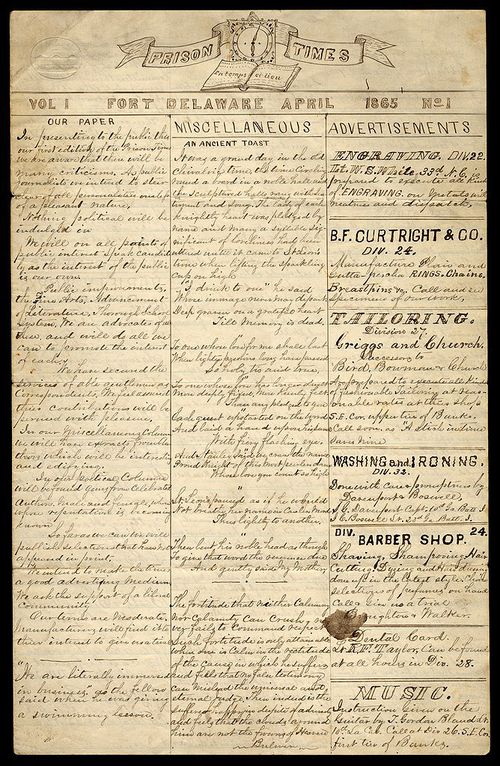
    The Prison Times was a hand-written, four-page newspaper produced by Confederate prisoners in April 1865 in the Union prison at Fort Delaware on Pea Patch Island in the Delaware River.  It was a short lived effort, the war ending just weeks after the paper appeared1. As a matter of fact the editors hoped that the newspaper effort would not have to last very much longer, longing for the end of the war and to return home:

    “Trusting that the difficulties of conducting an enterprise of
    this kind under the circumstances are duly appreciated by an intelligent
    public, we send forth this our first number hoping that ere we can have
    time to issue many numbers our prison times will be discontinued forever
    and our patrons and ourselves be far away in our
    loved Sunny South.”

    Prison times 6
    It is a remarkable document, enlisting the hope for normalcy of the 33,000 (or so) prisoners2.  The newspaper made a statement of intent (and to avoid political
    discussion), and displayed useful information like barracks directors
    and a short piece on “our prison world”.  There were also interesting
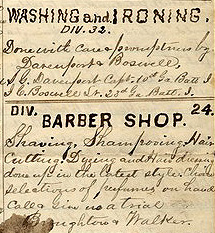
    short advertisements which were apparently real:  folks placed their
    services into play in the newspaper for engraving, jewelry (rings,
    chains, gutta percha), tailoring, washing & ironing, barbers,
    dental, music instructions, and shoe-making.  There were also a few
    short notices for debating and chess clubs, as well as a few pieces of
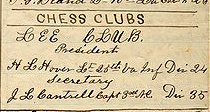
    poetry.  Overall, there was a lot of information packed into four 12×8″ pages, an effort that showed that in this town-sized prison that there were definitely some forms of society and commerce taking place.   


    ·Posted by :

    ·in:

    —

  • A Work of High Beauty–an Architecture of Thought, 1944

    JF Ptak Science Books   Quick Post  Follow Me on Pinterest

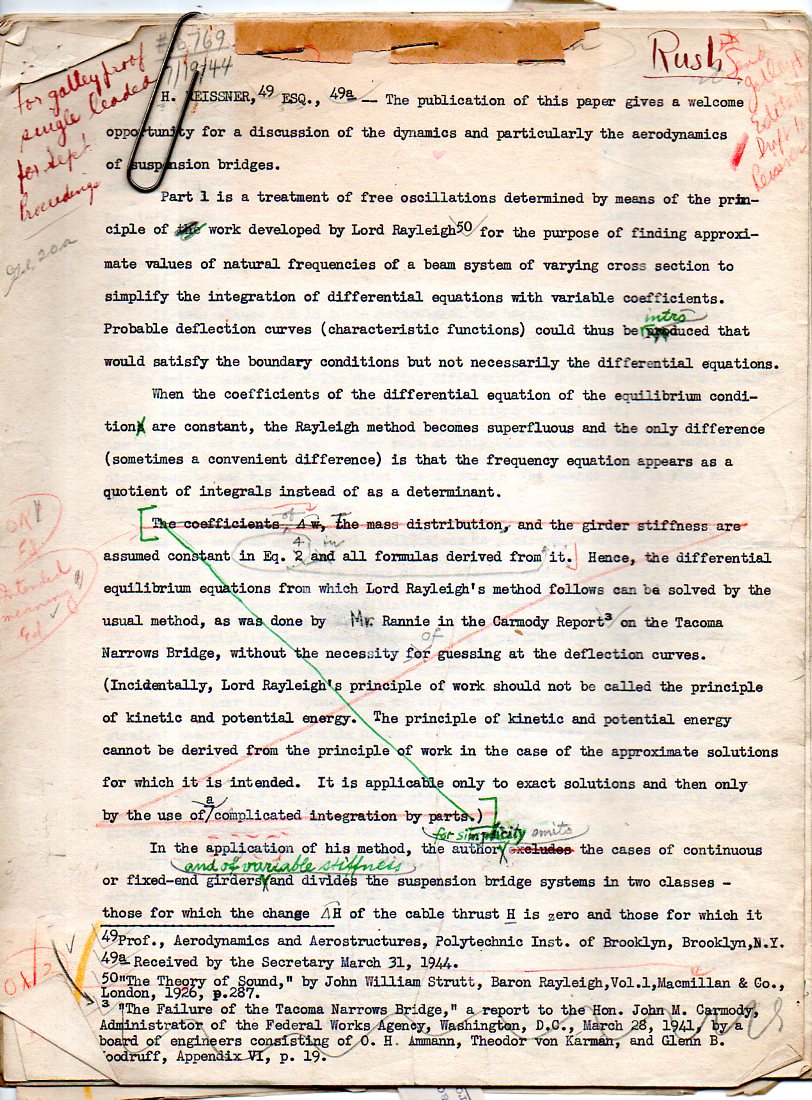
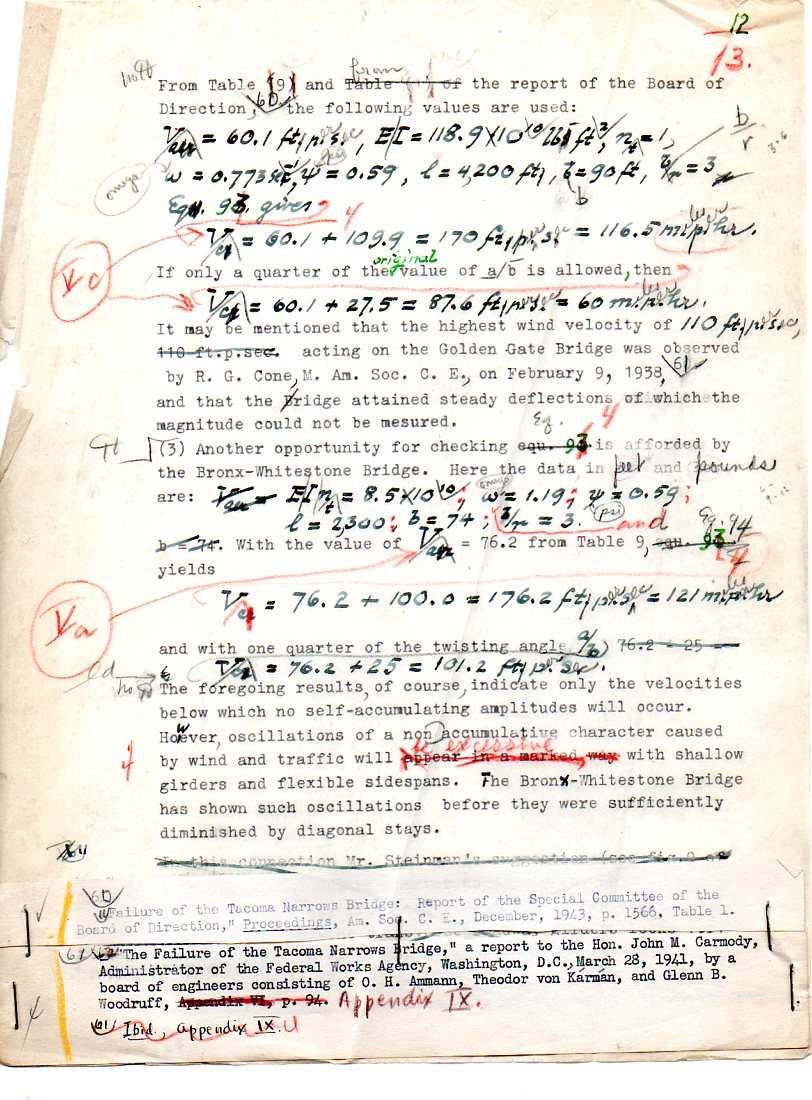
    I don’t often have a chance to purchase manuscripts by significant scientists in their edited state, back from the journal to which they were being submitted.  This is the case with the material below, a paper written by Dr. Hans J. Reissner in 1944. It is a remarkable thing to look at, a precise and elegant archaeology of thinking, a sort of synesthesic display of thinking on different levels.  It is a beautiful thing:

    Reissner draft271
    [Hans J. Reissner (1874-1967) was a leading German pioneer in aeronautics and aeronautical engineering and mathematical physics. He was appointed to the chair vacated by Arnold Sommerfeld at the Technische Hochschul at Aachen, where he established the aerodynamics laboratory and designed the great experimental wind tunnel at Aachen where he was the second director (after T. von Karman). He went on to the University of Berlin where he remained until 1938, when he left Germany for the United States. Reissner held a chair at the Illinois Institute of Technology and in 1944 joined the faculty at Brooklyn Polytechnic Institute.  Van Karman spoke very highly of Reissner and attributed his work in aerodynamics to be as important as those advances made by Prandtl (see von Karman’s Wind and Beyond). Reissner was also celebrated with two anniversary volumes of Applied MAthematiics for his 60th and 75th birthdays (in 1934 and 1949).]
    Reissner draftb277

    ·Posted by :

    ·in:


  • A History of Antiquarian Water: Line Segments

    JF Ptak Science Books   Follow Me on PinterestPost 2022

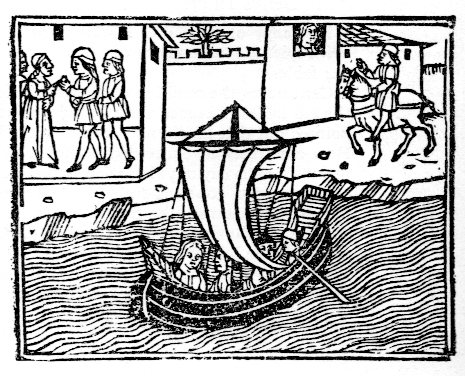
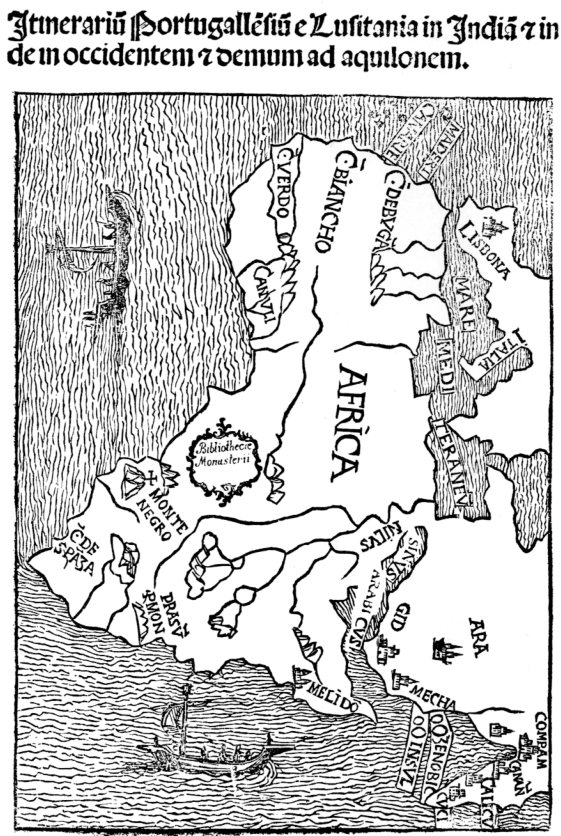
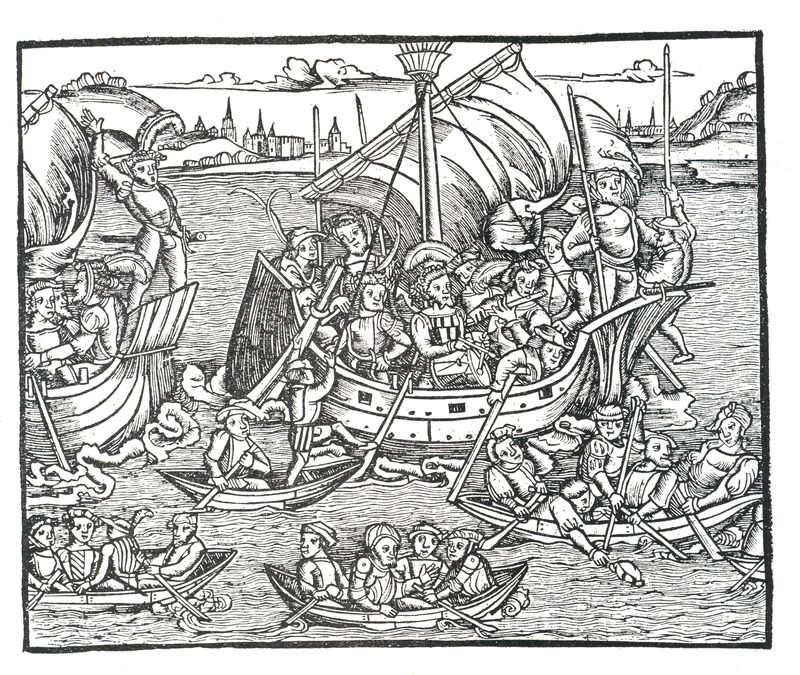
    Images of rivers and oceans in 16th century maps can be beautifully-rendered objects.  Water can appear as lines thick and languid, curling and wavy, sparse, tentative, adventurous, willing, dashed, timid.  Cold. Mostly cold, and full of loneliness and foreboding.  And sometimes the sea is just a blank–it is more common to see blank skies in engravings and woodcuts before, say, the 1540’s, but the blankness is usually covered by rhumb lines and compass roses and lines of longitude and latitude, compared to the blankness of blank skies, where there is usually nothing to spare us from the blank.

    Today I’d like to have a look at the strong and long lines delineating activity in water as the first part of a short series of posts looking at the design of the representation of water by lines.  Then, when the lines are done, we’ll take a look at dots. 

    This example occurs in Masuccio Salernitano’s (Tommaso Guadati, fl. c. 1476) Novellino, published in Venice by Bartholomeo Zanni in 1510, a tall book of a Decameron-ish flavor, with 50 stories told in five sections, mostly of a waning erotic nature.  The lines here are long and very languid. I also like the face in the window. 

    Water masuccio267This complex of lines illustrates the map of Africa found in Montalboddo Fracan’s Itinerarium Portugallensium, which was about the earliest published collection of Spanish and Portugese travel and exploration relating to the New World.  The work was exceptional and very significant–and very popular, going through fifteen editions in 22 years to 1528. 
    Water africa266

    Titus Livius (59 BCE-17 ACE), better known to the English-speaking world as Livy, was a superior among superiors of Roman historians, writing on the history of his city and country.  His work, Romische Historie…,published in Mainz by Johann Schoeffler 1450 years later in 1514, was one of the most beautifully illustrated books ever produced in that city. This is a considerable statement, as Mainz was the birthplace/hotbed of moveable type printing, being home to Johann Gutenberg and a number of other early presses. 

    Water Livy Punic

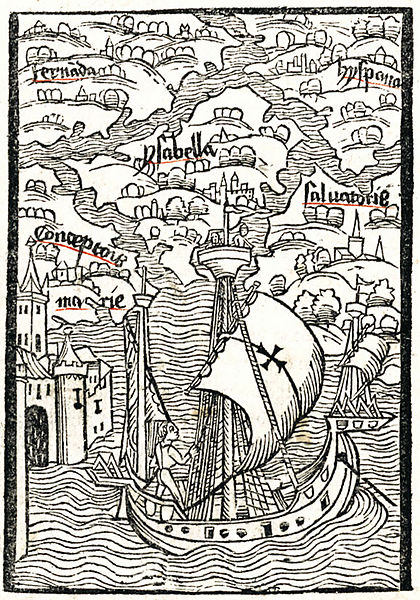
    One of the most famous printed water scenes is from the (numerous) editions of Christopher Columbus’ letter describing his voyage to the New World. It was written (or at least finished)  soon after his arrival in Lisbon 4 May 1493, almost exactly 520 years ago, and quickly found its way into print. This image (depicting Hispaniola and Isabella) was printed in Basel in 1494, and served to illustrate the somewhat hopeful and inflated description of what he found on his new voyage.

    Water Collbus Basel

    [Source: Wiki, here.]

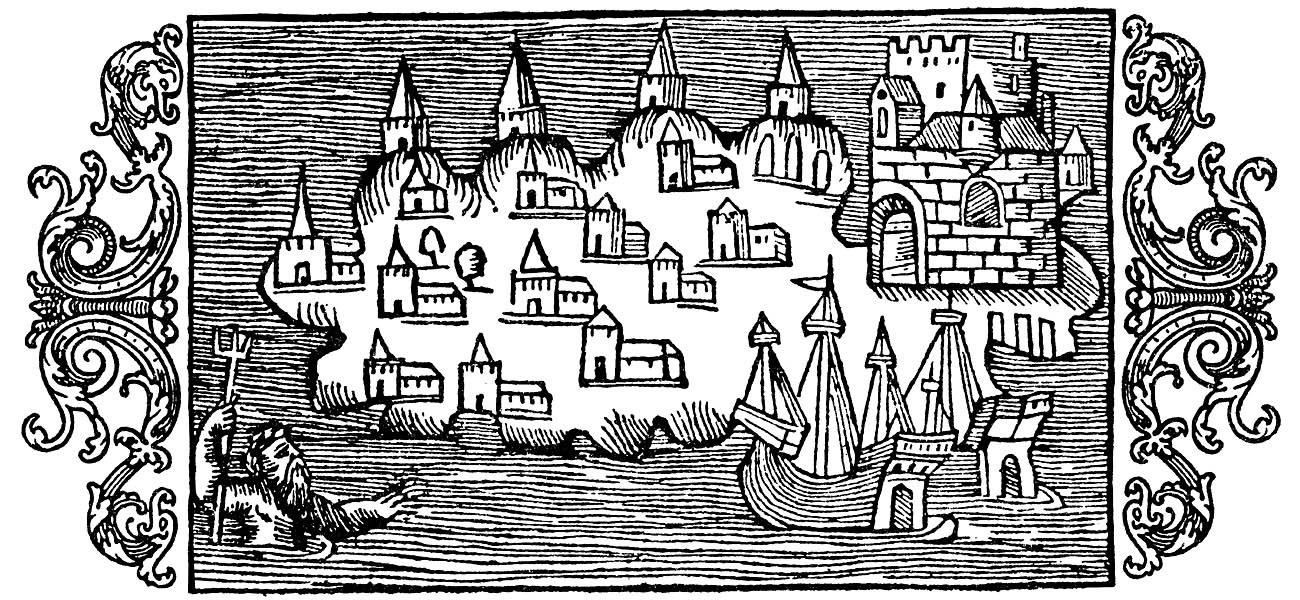
    This image from the mid-16th century is found in the fantastic work on the history of Scandanavia (and etc.) in Olaus Magnus’ Histotria di gentibus septentrionale (“History of the Northern Peoples”, 1555).

    Water Magnus[Image source: http://www.avrosys.nu/prints/index.htm]

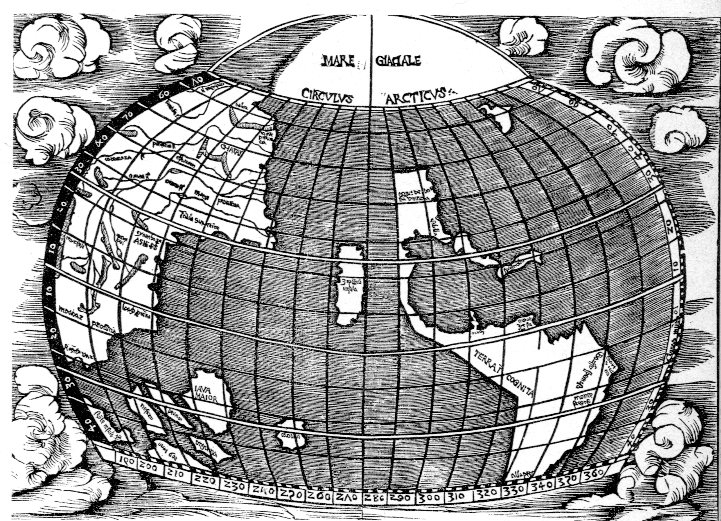
    The seas in the map of the Western Hemisphere in Joannes de Stobnicza’s Introductio in Ptholemei Cosmographium (Cracow, 1512, and widely believed to be copied or at least very heavily inspired by the Martin Waldseemueller’s 1507 map of the world) are very tightly drawn, neatly unifrom, and lovely, as wesee below).  This recitation could go on for quite some time, but this gets the point across on heavy lines.  Next stop: dots. 

    Water strob268


  • Found Art in Antique Books and Writing to the Future, 1808

    JF Ptak Science Books  Quick Post

    Follow Me on Pinterest

    Found art list d232

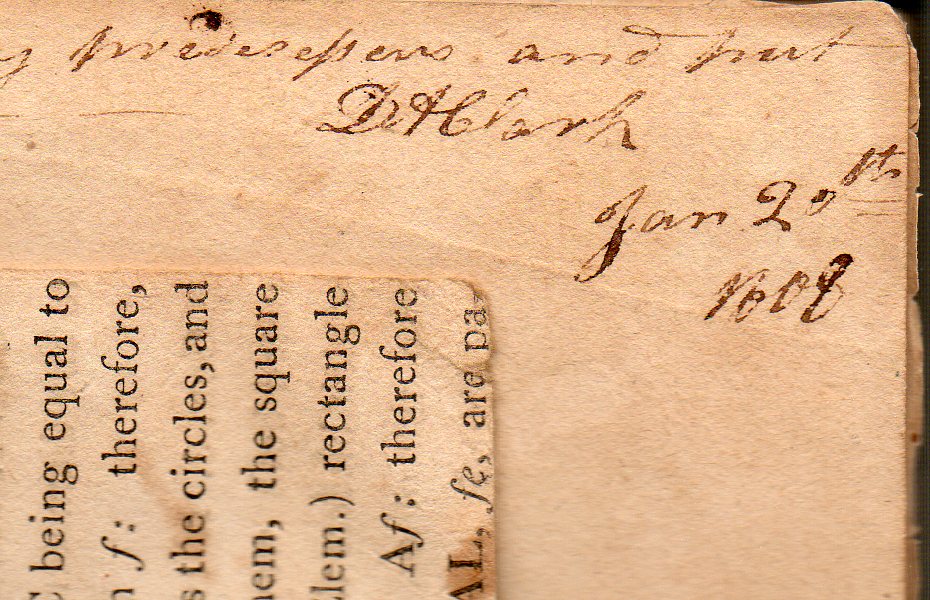
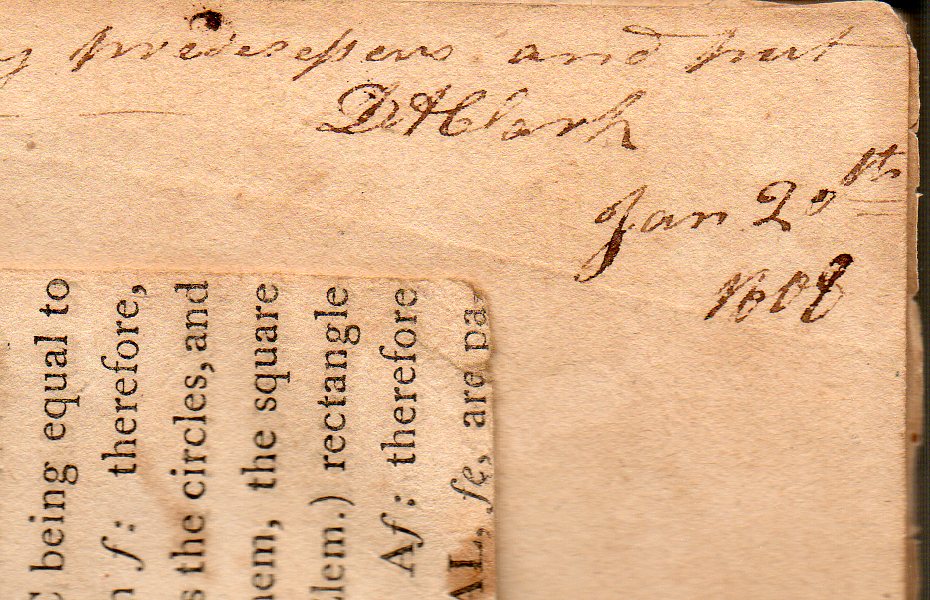
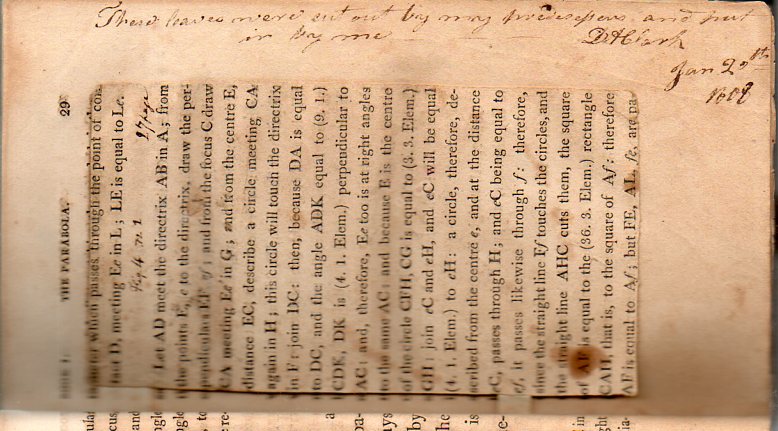
    • “These leaves were cut out by my predecesor and put/ in by me.  D.H. Clark, January 20, 1808”,  detail, inscribed on page 29 of Simson’s Elements, 1808.

    There was a leaf missing in Mr. Clark’s book–the leaf for page 27/28–some of which he salvaged and placed back into the book on tabs, which you can see at the side of the book.  He also did not want to have any future owner of this book to think ill of him for having disfigured it.

    The text is by Dr. Robert Simson, and called Elements of the Conic Sections, and was printed in New York in 1804. It was owned at some earlier point by Joseph Cheetham (“Princeton”), and then by L(ewis) D. Bevier (“bought of Cheetham”) and then probably by Clark. They were all at Princeton College, and all associated with the bachelor of arts class of 1806 (though Cheetham seems to have graduated some years later). 

    I am the owner of the book today, some 200 years later, and I hear Mr. Clark.  Somehow the page got loose Mr. Clark put it back. The end. 

    Found art list d232

    There is also a bit of found poetry in that bit of text:

    Being equal to

    therefore

    the circles, and

    the square rectangle

    therefore

    are.

    Found art list d231

    ·Posted by :

    ·in:


  • Dr. Johnson’s Definition of Letters, A-Z

    JF Ptak Science Books   Quick Post  #426

    I hear Jeremy Brett–as the ultimate Sherlock Holmes–reading this in my head.

    The energy of Dr. Johnson must have been heroic–had to have been.  In addition to all of his other work, he sat down and wrote a dictionary–the first of its kind for the English language: A Dictionary of the English Language, which was printed in 1755.

    Samuel johnson2
    I’ve collected what he had to say about the letters of the alphabet, which is in itself a small and remarkable thing of sweep and brevity.  He sites the “labial” P, the “canine “R”, the unhappy hissing of S, the “note of aspiration” in H, and so on, in a forceful march to recording the language.  His book is a work of high beauty. 

    All of the material below comes from the JohnsonDictionaryOnline site, here.

    ~ A ~

    A, The first letter of the European alphabets, has, in the English language, three different sounds, which may be termed the broad, open, and slender.

    The broad sound resembling that of the German a is found, in many of our monosyllables, as all, wall, malt, falt; in which a is pronounced as au in cause, or aw in law. Many of these words were anciently written with au, as sault, waulk; which happens to be still retained in fault. This
    was probably the ancient sound of the Saxons, since it is almost uniformly preserved in the rustic pronunciation, and the Northern dialects, as maun for man, haund for hand.