A Daily History of Holes, Dots, Lines, Science, History, Math, Physics, Art, the Unintentional Absurd, Architecture, Maps, Data Visualization, Blank and Missing Things, and so on. |1.6 million words, 7500 images, 4.9 million hits| Press & appearances in The Times, Le Figaro, Mensa, The Economist, The Guardian, Discovery News, Slate, Le Monde, Sci American Blogs, Le Pont, and many other places… 5000+ total posts since 2008.

Category: Atlas of Dead Ideas

  • Every U.S. Doctor Questioned About (Their) Cigarette Habits, 1946 (?)

    JF Ptak Science Books   Quick Post

    Seriously now–“every”?

    Every Doctor076Every doctor in private practice, unquestioned about their smoking habits, and happily the ones that answered positively selected Camel Cigs are their cig of choice. 

    Every Doctor075

     This ad comes from my own run of LIFE magazine and dates from January 7, 1946. It was a a massive campaign, begun at least by 1946 and establishing the tag about “More Doctors smoke Camels than any other cigarette!”, and is widely viewed as one of the most successful campaigns of any cigarette ever undertaken, which means it probably killed more people than did any other advertising campaign. This means too that more doctors were dying of smoking-related cancers, too, than by any other cigarette brand. 

    Plus, all that unfiltered tarry smoke makes the doctor a delight to smell, as well, especially if they were smoking through coffee grinds, in spite of that white rounds coat.  

    See the fine Stanford Collection of ciggie ads, here. 

    ·Posted by :

    ·in:

    —

  • The Proposed Balloon Car of 1859

    JF Ptak Science Books   Quick Post      The Atlas of Dead Ideas series

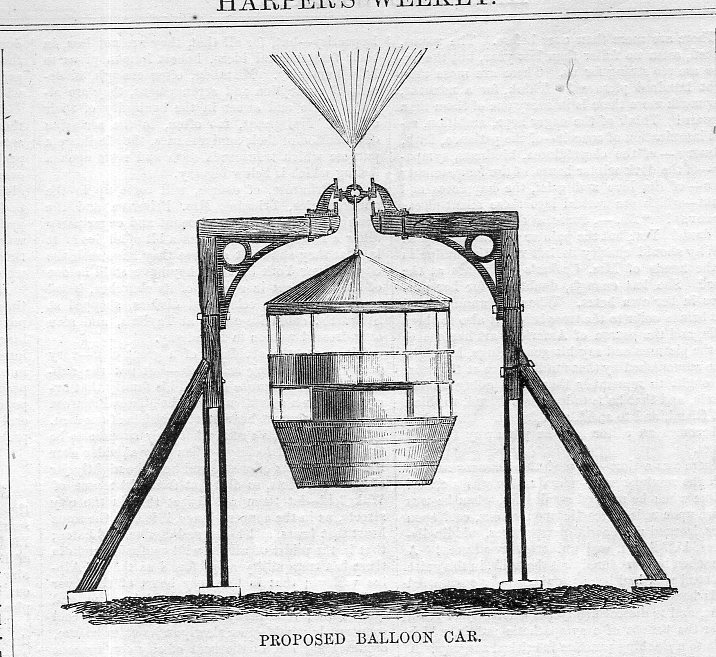
    Balloon tramway054

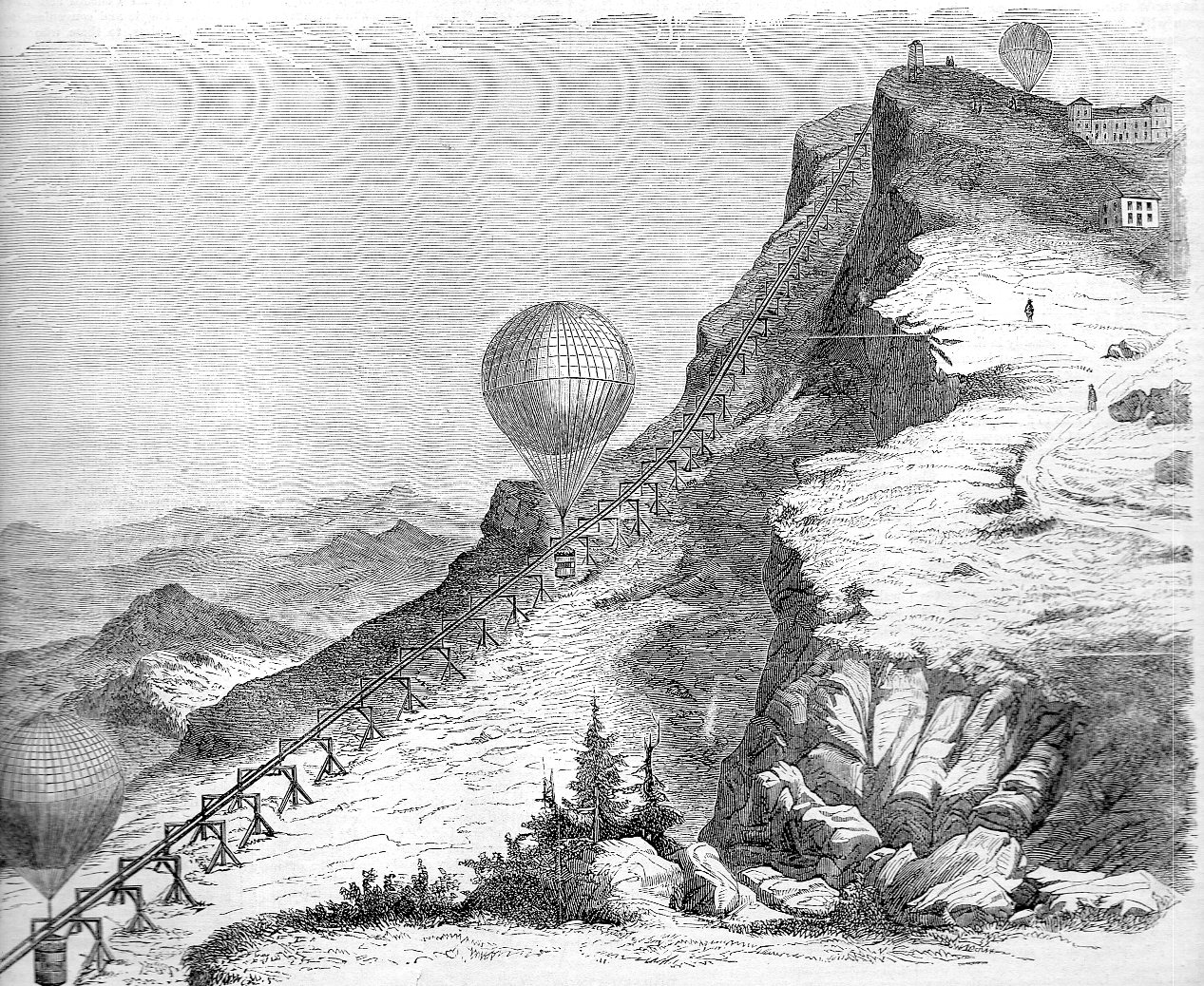
    Harper’s Weekly published an account of a proposed mountain tramway for Mount Rhigi, In Switzerland, almost two years and two weeks before the beginning of the U.S. Civil War.  The author of the report seemed not to hope so much that this would be the inauguration of land air-ships, but that  it would be “an important step toward the final perfection of a [flying] air-ship”.

    If nothing else the engraving of the perspective of the tram car is precise, and light, and lovely.

    Balloon tramway052

    [Source: Harper’s Weekly, April 30, 1859.]


  • Hitler, the Booze Weapon, and a Bizarre Prohibition Myopia, 1943

    JF Ptak Science Books   Post 2464

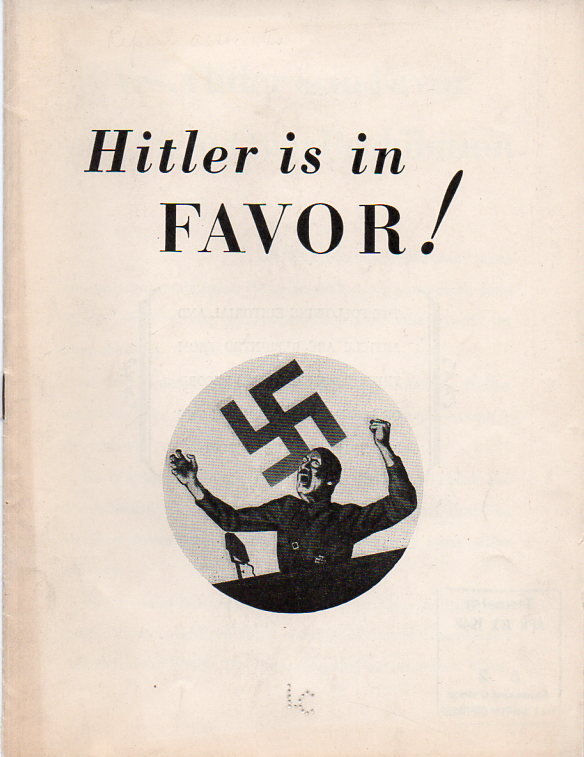
    Until today I had never considered the idea of alcohol as a propagandistic weapon in war until I read Hitler is in Favor (1943), a slim pamphlet that turns out to be an anti-anti-Prohibition statement from the Repeal Associates (of Washington D.C.). The statement “Hitler is in favor” seemed more an interogatory or than a declarative, and the issue of what he was in favor of seemed to be pretty open-ended.  Alcohol was not on the suspect list.  

    Hitler is in favor!984

    From what I can tell the pamphlet is a declaration against an earlier pamphlet written by R(overt) Hercod (b. 1876), who was a prominent international figure on the prohibition scene, general secretary  of the International Bureau Against Alcoholism (Laussane, Switzerland), and also active in organizations like the Swiss Total Abstinence Federation and other such groups. He wrote (necessarily) on the evils of alcohol and the need for the reintroduction of prohibition, while recognizing that Hitler was against alcohol, and trying to distance his views from those.

    This however is not achieved in high relief. 

    For example in 1939 Hercod observes in a pamphlet purchased and distributed by the Board of Temperance of the Methodist Church that “(Hitler) knew Prohibition was a good issue for starting up trouble” by trying to cause a wider division between wet/dry forces in the U.S., which I’ve never heard of before as a tool in the Nazi propaganda toolbox.  

    Things get more problematic for the Hercod pamphlet, as the author of Hitler is in Favor points out the “Dr. Hercod has a kind word for Nazi sterilization law, although agreeing that it cannot have much effect in bringing about temperance”.  This sterilization law must have been a subset of other sterilization laws in Germany, this one being the sterilization of “serious cases” of alcoholics which could prove to be a “danger…for the race”. 

    Hercod identifies the German government in 1938 and 1939 as “benevolent”, at least in regards to its participation in organizations like the International Temperance Union, which seems to be an extreme example of single-issue politics.

    Another positive influence seen by Hercod is in Hitler Youth, where even though they “are not required o take a pledge of abstinence…they are expected to abstain from alcohol and tobacco…”

    Then this nugget:  “As to the future of alcohol in German, Dr. Hercod does not believe such a drastic step as prohibition is in the offing”.  

    The sterilization part is a very sobering insistence that this weird intellectual effort is not without its fair share of bizarre, real-life implications, and that there was an overall positive if not foggy interpretation of National Socialism, with everything weighed in terms of prohibition.

    But then the stiffener comes at close of the pamphlet–an incredible statement made in 1939 that no doubt demanded the consumption of an obscuring potion by the writer. The anonymous author notes that Hercod relates “how active German Jews were in temperance movements) in 1939, but then “without promulgation, so far as we know of any special decree to this effect, the Jews disappeared from the temperance societies (when the authorities took control of these societies) where they had often occupied an important place”.  

    In the pursuit of an alcohol-free world Hercod overlooks the Nazi plan for the Jewish-free world.  Being in neighboring Switzerland it seems impossible that Hercod could have missed the previous six years of bitter race laws instituted in Germany (including the Nuremberg Race Laws of 1935), but it seems as though he did.  He also does not seem to have been affected by the Austrian Anschluss, either. Or any of the other Hitler stuff that wasn’t playing out so nicely in 1939.  (I can only assume that all this was written before September, 1939, but…)

    And so that is the end of the tour of this very brief but deeply troubling nine-page pamphlet.  It is  difficult to understand the thinking that makes such extreme disgusting myopia possible, though I think it is helpful to surface such a brew as this to appreciate a part of the low wavelength thinking that contributes to making monstrous social licensing possible. 


  • A Prison for the Dead–a Trial for the Departed, 897

    JF Ptak Science Books   Post 2438

    Biographies and histories and other sorts of lit can essentially place a dead person on trial, to a degree, but generally not so far in that there are legal ramifications. As much as can be written and presented against a person their body will not be dug up and place in prison, though this does have a certain Borges/Chinese Hell Scroll quality to it. If it was the case that people could be dug up and brought to the legal bar, I guess that everyone would opt out for cremation, unless that was made illegal. It seems half-a-miracle that with the threat of eternal damnation in the minds of billions of people, that there is no threat to the consequences of ill-spent life in death.

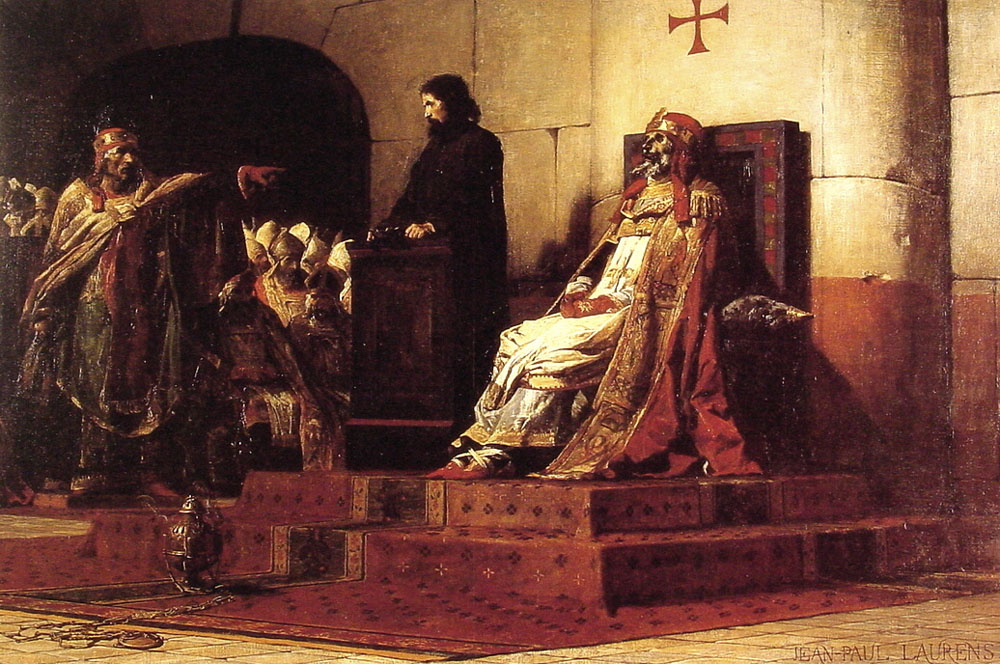
    Cadaver synodDepiction of the synod by Jean-Paul Laurens, 1870. Source: Wikicommons.

    There is a very famous case of this, however, and at a very high level.

    The weird and fanatical–and fatal–issue of the Cadaver Synod of 897 is the case in point. A probably-unbalanced Pope Stephen VI decided upon retribution of his predecessor Pope Formosus, and for various reasons (examined in many place, but a decent article on the matter is found in Wiki, here) had his positively-dead corpse exhumed and brought in for trial. The poor dead pontiff was dressed up in pope-finery and placed on a throne, and was heaped with insult and perfidy at the end of which came a guilty verdict. His appointments as pope were annulled, plus other stuff, and he was taken to the Tiber and tossed in, though it would have been more interesting for the pope to have been imprisoned. 

    It was an action that made Pope Stephen very seriously unpopular, which led relatively quickly to his being deposed, and then imprisoned, and then to being strangled to death in prison, all of which happened in less than a year’s time.

    A new synod was called the debunked and refuted the Cadaver Synod, and the finding and records of which were overturned and burned. Formosus’ body was evidently recovered (and recovered enough to have been reported doing miraculous/miracle-making things) and returned to its original place of burial.

    Also the possibility of bringing dead people to court was discarded.

    Given the Human Condition it might be possible that there would be more dead people in prison than in the ground–depending on the possible payoff of dead litigation.  Given the new fascination with zombies, I guess that dead prisons are possible, at least in tv land. 


  • Hounds for Hunting Escaped Slaves: “Negro Dogs”

    JF Ptak Science Books   Quick Post

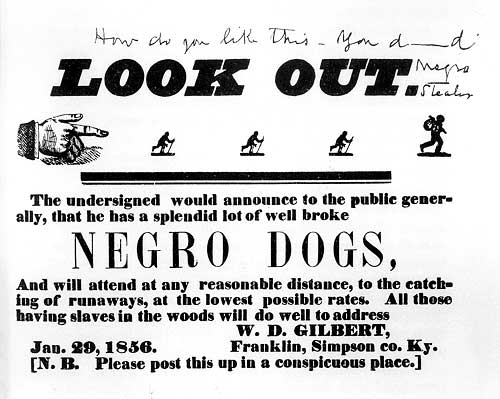
    Negro dogs

    [Source: http://historymatters.gmu.edu/d/6736/]


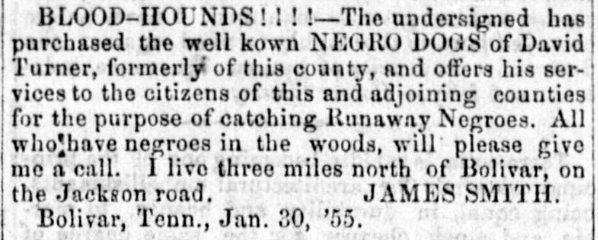
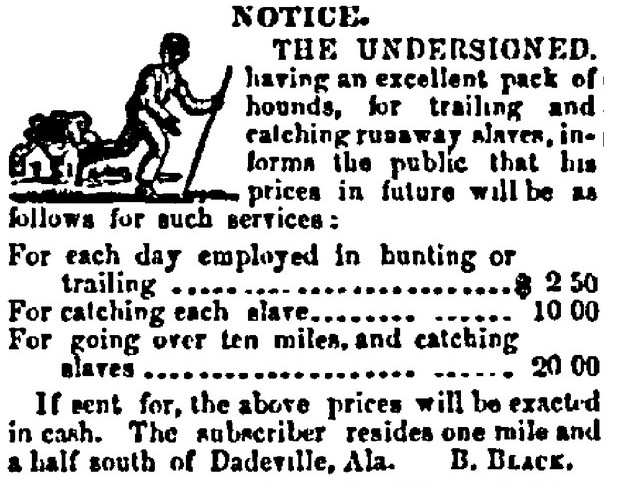
    In spite of many years of reading I have never before today come across the term “Negro Dogs”. I found this mention on my twitter feed via Liam Hogan (University of Limerick, here), who posted the following ad for the sale of “Negro Dogs” for “the purpose of catching Runaway Negroes”.  “All who have negroes [sic] in the woods, will please give me a call”.  

    Negro hounds

    Negro dogs 3

    [Source]  “This ad was originally published in the Dadeville Banner (Alabama), and was republished in Frederick Douglass’ Paper, April 8, 1859.”

    Notes:

    See:  From Dog Law Reporter, the fascinating article  “Dogs in the Economy and Operation of the Peculiar Institution: Evidence from Slave State Case Law”, here: http://doglawreporter.blogspot.com/2012/02/dogs-in-economy-and-operation-of.html

    A worthwhile appraisal of the “Negro Dog” can be seen a BlackVoices, here. 

    ·Posted by :

    ·in:

    —

  • Deadly Dead Ideas: the U.S. Thinks About the Great War, 1915

    JF Ptak Science Books   Quick Post

    Hollow square790

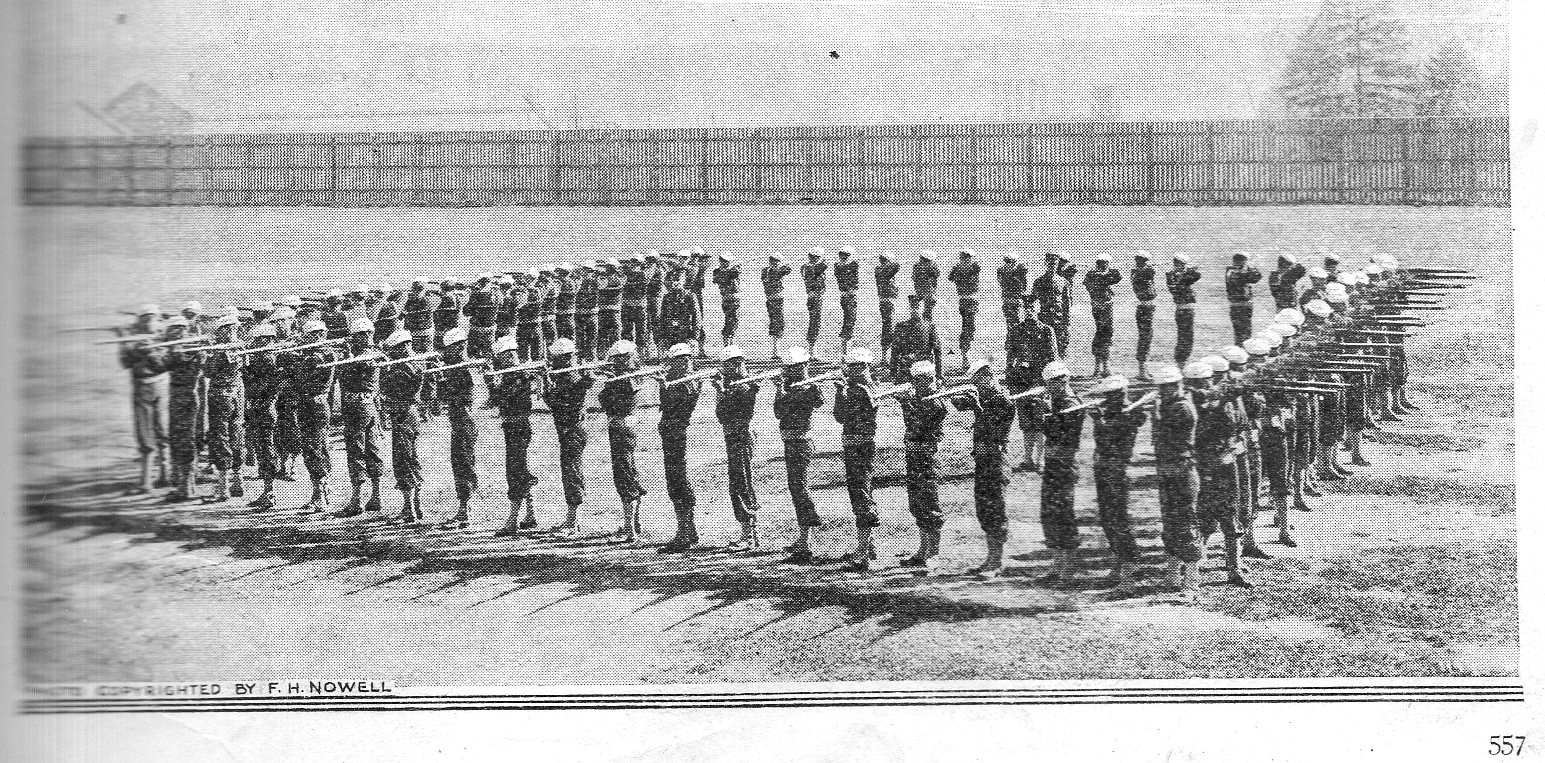
    My browsing came to a sudden halt when seeing this small inset photo in an article in Popular Mechanics for October 1915.  “My Four Years in the Navy” was a fairly long feature piece, and it showed a series of rather crowded images of life at sea with overtones of “readiness” should something happen to bring the U.S. into the year-old WWI.  It was the picture at the bottom of p. 567 that gives you great pause–first of all, the sailors are armed and on land, but they’re also forming a “hollow square”, a defensive position used when a large force attacks a smaller one.  The tactic has been around at least since Roman times and used steadily through the early 19th century (especially it seems during the Napoleonic Wars), but it gradually wore away from the face of battle, and was hardly employed in the late 19th c, except against irregular forces (like against warriors in the Zulu Wars). What made it an antique notion was the machine gun, and tank–mostly though it was rapid-fire assault weapons the crushed the square, the collection and stacking of soldiers close together (and in layers) made them easy targets to an opponent with such weapons).  Nobody was using this technique in the Great War, but there they were, these poor sailors, demonstrating the formation to fight against hundred-year-old ghosts.  The U.S. was nowhere near being ready to fight in WWI in 1915.  


  • Tiny Sky Nets for Attacking Aircraft, 1925

    JF Ptak Science Books   Quick Post   Atlas of Dead Ideas series

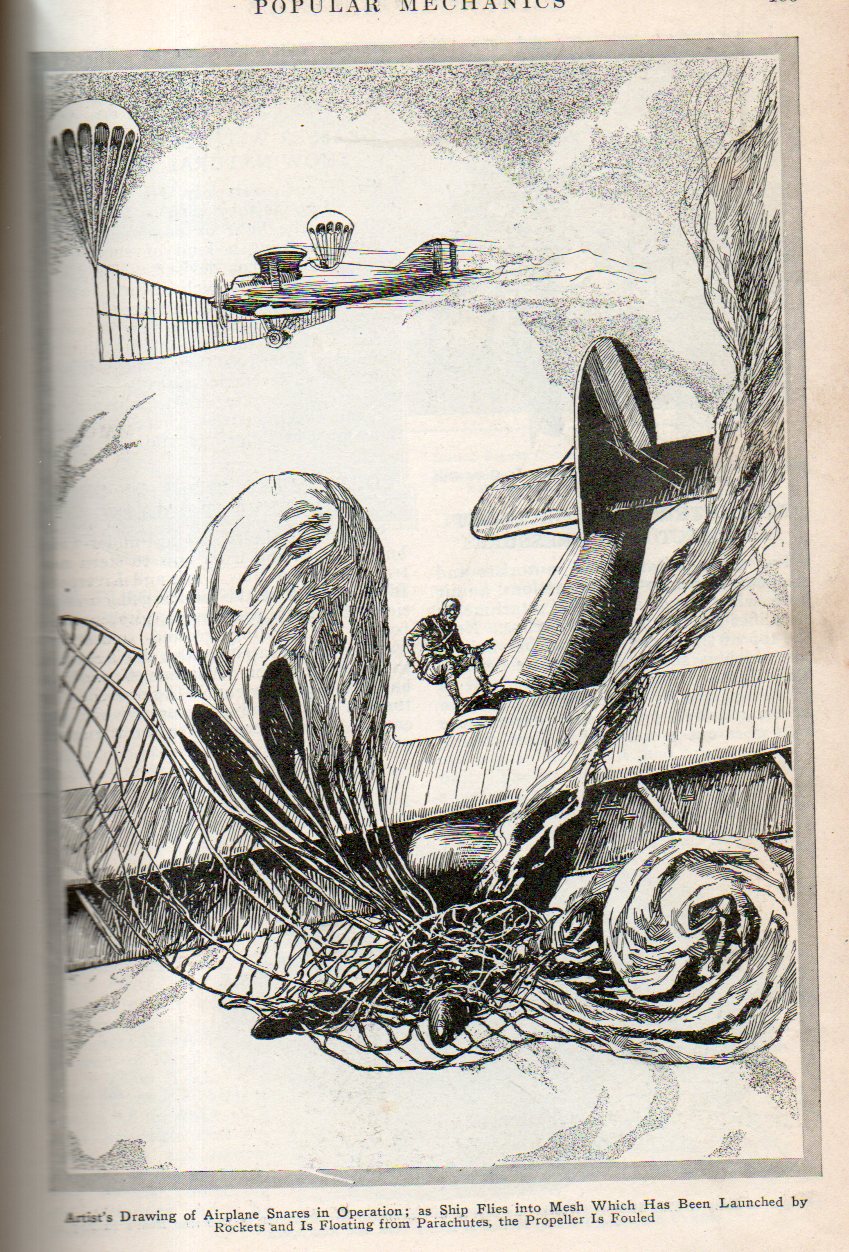
    “Nets Launched on Rockets to Snare Airplanes” ran the header on this article from Popular Mechanics (volume 44, July 1925). “Nets fastened between parachutes and shot high into the air with shells or rockets are being tested by anti-aircraft branches of the Japanese army and navy as snares for airplanes…”  Evidently the plan was to locate the approaching plane and fire these things in their vicinity and hope for the aircraft to find and run into that speck of net occupying .00001% of the sky.  

    Airplane snare738


  • G. Washington Hunts His Lost Property: Miss Oney Judge

    JF Ptak Science Books   Post 2401

    George Washington was the first president of the United States, and so the first to own slaves while president–he was the first of 12 presidents who were slave-owners, and the first of eight to own slaves while serving in that office. (All of paper currency  celebrates celebratory people who also owned slaves–the $1, $2, $10, $20, $50, and $100; all but Lincoln.)

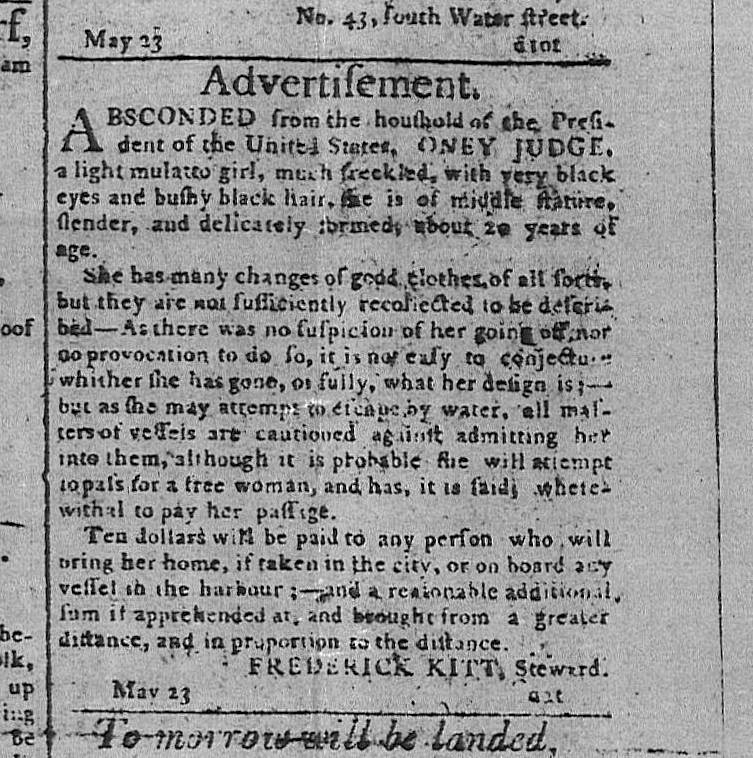
    After he served his terms as president, and two years before his death, Washington suffered a property loss.  Martha Washington’s personal servant fled, escaped, headed north, to freedom. President Washington wanted his property returned:
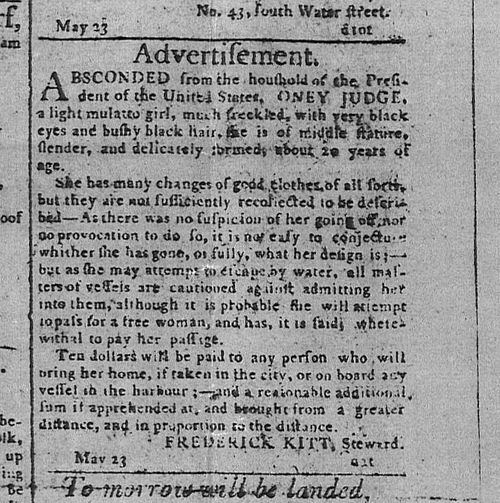
    Oney_Judge_Runaway_Ad

    [Originally in  The Pennsylvania Gazette, Philadelphia, Pennsylvania, May 24, 1796. Image source: Wikipedia.  The full text1 transcribed in below in Notes.]

    The ad was evidently placed by Frederick Kitt, who was a long-time steward of the Washington household, and it fell to him to look after the return of Ms. Judge.

    The Founding Father found the Founding Fathers law on his side, of course–it was right in there constitution, Article IV, Section 3. (“No Person held to Service or Labour in one State, under the Laws thereof, escaping into another, shall, in Consequence of any Law or Regulation therein, be discharged from such Service or Labour, but shall be delivered up on Claim of the Party to whom such Service or Labour may be due.)  Article IV section 3 was toothless for a while, until the machinery of enforcement was provided in the Fugitive Slave Act of 1793. which made it possible for slave catchers to proceed across all state lines in the hunt for escaped slaves, and made it a federal crime to assist a fugitive slave, among other things, but particularly ensuring that an escaped slave would remain a slave, always.

    Miss Judge was the baby of her enslaved mother [name?] and an indentured servant; even though the indentured servant was a free man, the mother was not, and the law stated that any fruits and/or labors or babies etc. coming from a slave is the property of the slave’s owner.  

    Miss Olney was actually the property of Martha Washington, who inherited 84 “dower” slaves from her first husband–this meant that the slaves were her’s to own but not to sell.  When Martha married George in 1759 they gathered their slaves together but separately, adding significantly to the slave population at the estate (a number that would grow to more than 300 by the time of Washington’s death 40 years later).  Washington freed his slaves after death, in his (1797) will; Martha kept her’s until she died in 1802, at which point her property was distributed to Custis heirs.  

    Oney Judge on the other hand made her way to New Hampshire, where she settled and married Mr. Jack Staines. She spent the rest of her life (she was 26 when she fled and lived to 1848, aged 75) as not-a-slave but unfortunately not-free, either.  

    Washington suffered another major loss–his prized cook, Hercules, took of from Mt. Vernon in 1798 and evidently met happiness in Philadelphia.  Washington wanted that property returned, too2.  

    Notes

    1.  “Advertisement. ABSCONDED from the houshold [sic] of the President of the United States, ONEY JUDGE, a light mulatto girl, much freckled, with very black eyes and bushy black hair. She is of middle stature, slender, and delicately formed, about 20 years of age. She has many changes of good clothes of all sorts, but they are not sufficiently recollected to be described—As there was no suspicion of her going off, nor no provocation to do so, it is not easy to conjecture whither she has gone, or fully, what her design is;—but as she may attempt to escape by water, all matters of vessels are cautioned against admitting her into them, although it is probable she will attempt to pass as a free woman, and has, it is said, wherewithal to pay her passage. Ten dollars will be paid to any person who will bring her home, if taken in the city, or on board any vessel in the harbour;—and a reasonable additional sum if apprehended at, and brought from a greater distance, and in proportion to the distance. FREDERICK KITT, Steward. May 23

    2. Letter from George Washington to Frederick Kitt, January 10, 1798:

    “Mr Kitt

    We have never heard of Herculas our Cook since he left this; but little doubt remains in my mind of his having gone to Philadelphia, and may yet be found there, if proper measures were employed to discover (unsuspectedly, so as not to alarm him) where his haunts are.

    If you could accomplish this for me, it would render me an acceptable service as I neither have, nor can get a good Cook to hire, and am disinclined to hold another slave by purchase.

    If by indirect enquiries of those who know Herculas, you should learn that he is in the City, inform Colo. Clemt Biddle thereof, and he will, I hope, take proper measures to have him apprehended at the moment one of the Packets for Alexandria is about to Sale, and put him therein, to be conveyed hither; and will pay any expence which may be incurred in the execution of this business; which must be managed with address to give it a chance of Success—for if Herculas was to get the least hint of the design he would elude all your vigilance. I wish you well and am Your friend &ca”

    [Source:   http://founders.archives.gov/documents/Washington/06-01-02-0019#GEWN-06-01-02-0019-fn-0002]
     

    ·Posted by :

    ·in:


  • Rules of Civility, 1931: “Applause Should Never Continue to the Point Where if is Insulting”

    JF Ptak Science Books    Quick Post

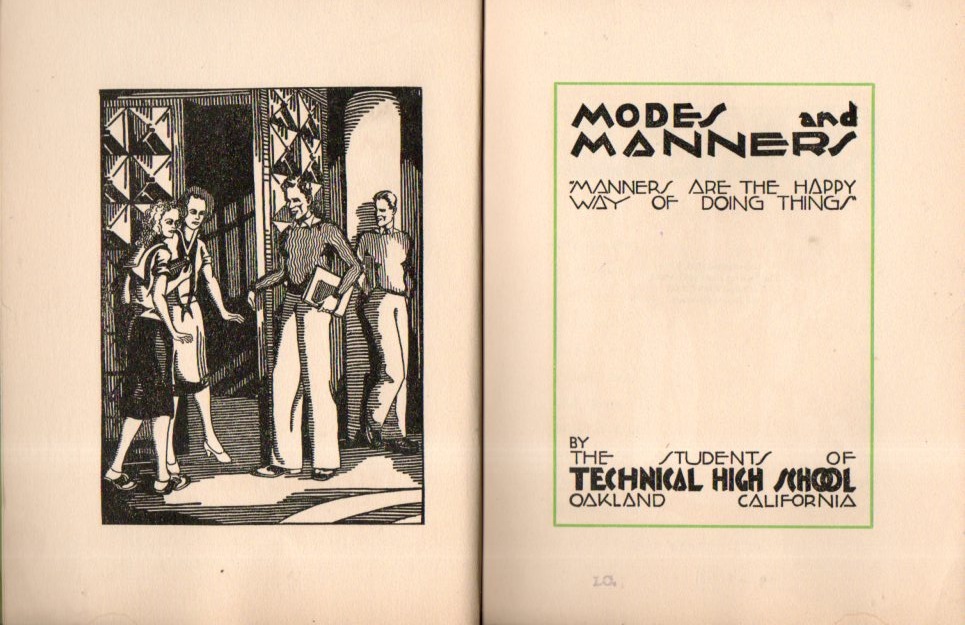
    This is a guidance book for possible social behavior for high school students, published by the students of the Technical High School, Oakland, California, 1931.  There are many suggestions that place ladies in cellophane and are pretty restrictive, but there’s a lot of good stuff, too–for one thing I’ve never understood males wearing hats indoors, which in this manual is of course strictly verbotten. This is a very well design booklet (pocket-sized, on good paper, a good production)  especially since it was designed and printed by high school kids.  

    Modes and MAnners642finished

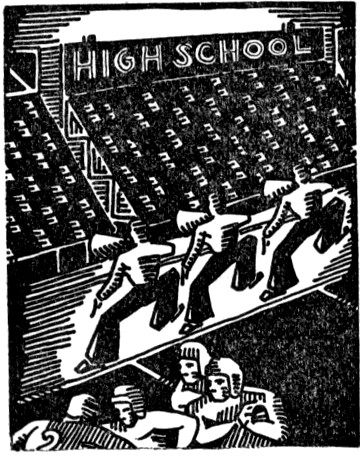
    Here are some manners for sporting events, most of which would be nice to see practiced today, which I think makes me seem decrepit and creaking–still, these are good rules for kids (and more so for adults making $150,000 or whatever for each of their professional sports appearances) to if not abide then at least have in their minds:

     “Applause Should Never Continue to the Point Where if is Insulting”

    “If the poor player plays his best, he should make no excuses”

    “Take victory calmly, with a pleased but not superior air, and avoid boasting. This, more than anything, will mark one as a good winner.’

    “Always give the opponent the benefit of the doubt.”

    “Decisions of officials should never be questioned by the bleachers”

    “Endeavor to ‘save his face’ if your opponent plays poorly”

     Also the illustrations (which in the book are only 3/4″ high) are quite good:

    Modes and MAnners643 finished


    ·Posted by :

    ·in:


  • Radio Signals from Mars, 1924

    JF Ptak Science Books    Quick Post

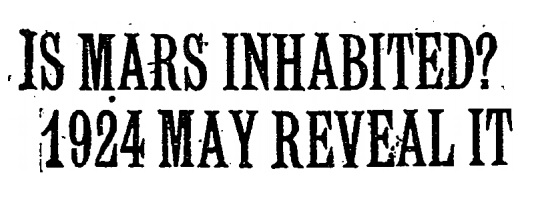
    Mars 1924[New York Times, September 18, 1921, here]

    And so there came a time in 1923 and 1924 when it was determined that when the Earth next came into closest proximity with Mars (closest in opposition for a century) that efforts would be made to determine whether or not there was anyone around on that planet.  The idea of the radio being a powerful-enough instrument to be used in such a way was initiated in 1896 by Tesla, and soon followed at the turn of the century with support for the idea by Marconi  and Kelvin. (This interest was perhaps ignited after both Tesla and Marconi detected unexpected and steady signals that they thought were extraterrestrial but which were in fact ionospheric radiation–and of course there was Percival Lowell and his self-derived belief in Martian intelligence as described by the thought that there were canals on the surface of Mars.  

    This was a massive-idea  effort:  a U.S. government initiative demanded five minutes of radio silence per hour over a 36-hour period in the vast hope that transmitters closed down that if there were any radio signals being directed towards the Earth from Mars that they could be more easily detectable.  

    This was the magnificent “National Radio Silence Day”.  And it was extraordinary that i twas supposed to affect every radio in the country.

    William F. Friedman, the Chief of the Code Section in the office of the Chief Signal Officer of the Army, was on the job and ready to decipher any messages that might need deciphering, which was some very hopeful thinking–not only was it hypothesized that there might be life but that it was also sufficiently advanced from some semi-primordial goo  as to have a technology capable of interplanetary communication, and that a code expert might be able to read anything that came in.  
     
    Additionally that  New York Times article from 1921 described the proposals for the construction of a 60′ (720″) reflecting telescope–an absolutely enormous thing for the time, and for now, considering that the largest reflecting telescope yet built is 420″ (Gran Telescopio Canarias (GTC)), and that is a segmented scope, whereas this 720″ mirror-monster would have been one big piece of glass.  
     
    But the country as a whole deserves a bit of credit for being so interested in the possibly of communicating with extraterrestrials that it was willing to let a main source of information and entertainment be interrupted for science, and that so many people had a hand in this. It was possibly one of the largest public experiments in the history of experimentation in the United States, and was also one of the earliest SETI attempts to search for intelligent extraterrestrial life.  

    ·Posted by :

    ·in:

    —