A Daily History of Holes, Dots, Lines, Science, History, Math, Physics, Art, the Unintentional Absurd, Architecture, Maps, Data Visualization, Blank and Missing Things, and so on. |1.6 million words, 7500 images, 4.9 million hits| Press & appearances in The Times, Le Figaro, Mensa, The Economist, The Guardian, Discovery News, Slate, Le Monde, Sci American Blogs, Le Pont, and many other places… 5000+ total posts since 2008.

Author: JF Ptak

  • Android Artists (1785 and 1903)

    JF Ptak Science Books  Post 2777
    Jacquet-Droz 1903This is a very short post on a much more involved issue, but for right now I just want to scribble out this note in the sand.

    While looking for the Wright Brothers not-appearing in the Scientific American in 1903 and 1904 and 1905 and 1906 and 1907 I found in the May 3, 1903 issue  “The Jacquet-Droz Androids”. It was seeing the word “androids” that was so unusual–usually when you see references to the great machines built by Pierre and Henri-Louis  Jacquet-Dros1 you nearly always seem the inventions as “automatons2” or “automata”. This time, it was “android”. 

    “Android3” as it turns out is pretty old as a word, though I do not know how common its usage was, though just weighing that against decades of reading it seems to my experience not to pop up very much at all before WWI.  

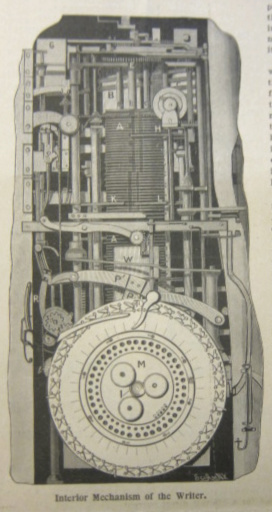
    This gets us to the truncated history part. The Jacquet-Droz machines were built during a relatively short period, 1768-1774 or so. One of the machines was called “The Draughtsman”, which had the capacity to render at least several different drawings. This would make them among the earliest machines to ever produce art. The “android”–which was about half-life size and quite human-like–sits at a small desk and renders its creations, looking like a mechanical artist. In fact the machine had a very sophisticated cam-based memory, which to some extent meant that the machine was “programmed”, and so becomes the first (?) computer-generated artworks4. 

    What distinguishes this article in Scientific American further is that it reproduces the artwork of “The Draughtsman”.  The question here then is when are these android drawings first reproduced? There were many exhibitions of the Jacquet-Droz creations over the years, and the popular portrayal so far as I can recall has been the machine itself and then a small reveal of the mechanism. Were the drawings reproduced in the 18th century? Right now, I just don’t know. I did do a search under “Jacquet-Droz” in Gallica over thousands of publications and at first blush there (1) seems to be not many hits and (2) none that I have seen have any illustrations. Also even though the machines of Jacuet-Droz and, say, Maillardet’s writing/drawing machine (le Jeune artiste”) were popular in the late 18th and early 19th c, they seem to not have been so afterwards. One source says that Maillardet falls completely off the RADAR in 1833 and resurfaces only in 1928.  
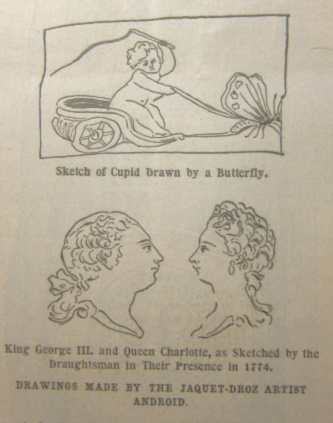
    Jacquet-Droz _2_

    This all makes for an intriguing question. Right now though all I can really say is that the end-date for the range of possible first-publication dates for Jacquet-Droz is 1903.

    Notes:

    1.  “Constructed between 1768 and 1774 by Pierre Jaquet-Droz, his son Henri-Louis (1752-1791), and Jean-Frédéric Leschot (1746-1824), the automata include The Writer (made of 6000 pieces), The Musician (2500 pieces), and The Draughtsman (2000 pieces). Pierre Jaquet-Droz (French: [ʒakɛ dʁo]; 1721–1790) was a watchmaker of the late eighteenth century. He lived in Paris, London, and Geneva, where he designed and built animated dolls, or automata, to help his firm sell watches and mechanical birds.”–Wikipedia

    2.  From the Oxford English Dictionary: “Automatons. A moving device having a concealed mechanism, so it appears to operate spontaneously. Frequently (and in earliest use) in figurative and similative contexts. Now chiefly hist.Originally denoting various functional instruments including clocks, watches, etc., as well as moving mechanical devices made in imitation of human beings; later (from the early 19th cent.) usually restricted to figures simulating the action of living beings and widely regarded as toys or curiosities, as clockwork statues or animals, images striking the hours on timepieces, etc.”

    • 1616   W. Cornwallis Essayes Certaine Paradoxes sig. G3   The soule doth quicken and giue life to the body, the body like an Automaton, doth moue and carry it selfe and the soule.
    • 1660   H. More Explan. Grand Myst. Godliness ii. iii. 37   God will not let the great Automaton of the Universe be so imperfect.
    • 1742   J. T. Desaguliers tr. M. Vaucauson (title)    An Account of the Mechanism of an Automaton or Image Playing on the German Flute.
    • 1784   P. Thicknesse Speaking Figure 5   That an Automaton can be made to move the Chessmen properly, as a sagacious player,..is..utterly impossible.
    • 1790   J. Imison School of Arts (ed. 2) 284   Those automata..do by little interstices, or strokes, measure out long portions of time.
    • 1815   Scott Guy Mannering I. xx. 315   Sprawling out his leg, and bending his back like an automaton.
    • 1821   New Monthly Mag. 1 443   Archytas’ flying dove..is another of the ancient automata… It was made of wood

    3.  Citations of “android” in the Oxford English Dictionary:

    • 1728   E. Chambers Cycl. (at cited word),   Albertus Magnus, is recorded as having made an Androides.
    • 1819   Pantologia (new ed.) (at cited word),   M. de Kempelen..constructed an androides capable of playing at chess.
    • 1847   J. Craig New Universal Dict.   Android
    • 1951   C. D. Simak Time & Again (1956) i. 1   Human gossip as well as android and robot gossip.
    • 1958   Spectator 19 Sept. 379/1   Today SF must be more than a blood-and-sex day~dream spattered with words like androids (robots made of flesh and bone).

    4.  Another long history is that of computer generated art. Suffice to say here that the very earliest period of this genre begins probably with Ben Laposky’s “Oscillons” in 1952 where he manipulated electronic waves in an oscilloscope to produce interesting and complex figures. 


  • Fantasia of the Air–Cops, Booze, Marriage, and a Monkey. (1890)

    JF Ptak Science Books  Post 2776

    Well, not quite a fantasia, but more like a “fanciful/fantastical/imaginary” collection of  “flying objects” (“objets volants de fantaisie”), a whimsical look at the very near future (or so) of airship flight in 1890. This future seems to make room for everyone in the air, and celebrated by a collection of worldwide nationalities on the ground. There really isn’t a title for it,  and the print is indexed according to the posters/signs adorning the floating businesses and municipal pleasantries.  According to the excellent French library  site “Galica” the print is catalogued as “Sanatoir aérien du docteur Farceur, bureau volant de mariage, police aérienne [objets volants de fantaisie]”, which is entirely unpoetic and slightly galling given the subject matter, and merely describes some of the objects in the print. The only part of the title that hints at the delightful subject matter is the “police aerienne”, which would in spite of its clumsiness at least raise an eyebrow of just about any overworked research mole:

    Sanatoir_aérien_du_docteur_Farceur_[...]_btv1b53024091c (1)

    [Image source: Galica https://gallica.bnf.fr/ark:/12148/btv1b53024091c/f1.item]

    What vision of the future of aviation doesn’t include two flying doggies and a monkey? This one does. At top right we have part of the title, a marquee for a floating sanitarium run by “Dr. Farceur”, which is probably some very light wordplay implicating a medical jester. There’s the police station, marriage chapel, a hook-up joint (sounding better as a “ballon de rendez-vous”), and a bar/cafe/restaurant. The law is there directing traffic and making an arrest; there are two ships, one a warship with a skull-and-bones and the other probably not; there’s a pamphleteer literally dropping his suggestions, some ladies with attaches, and a long-shoe Flaneur. Belting it all together is some sort of chorus line, though these ladies aren’t attached to any flying thing save for the wings on their backs. All in all, this is a fine and pleasing work, full of action, and probably not so impressed with the actual future of human flight.  


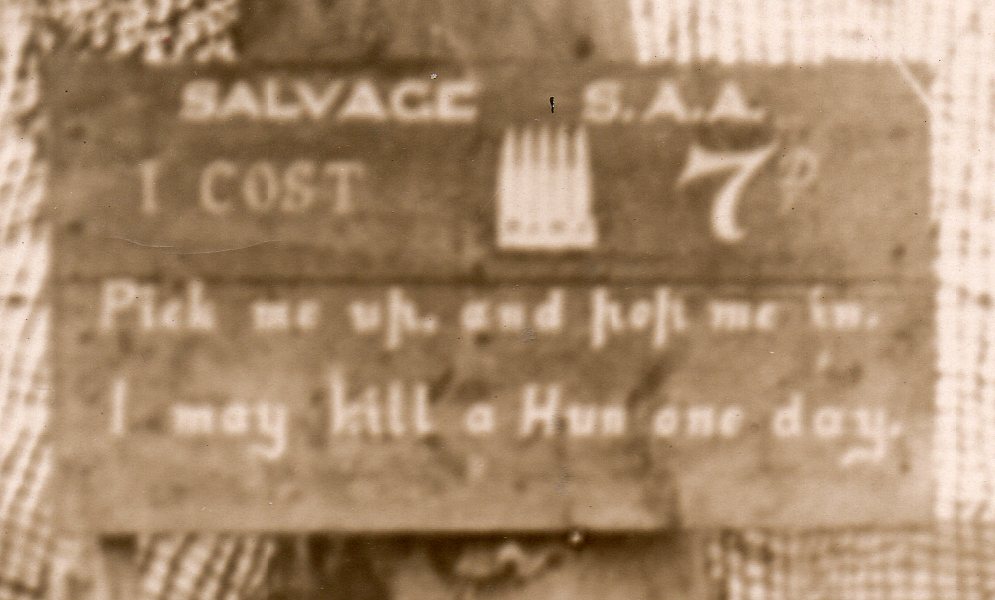
  • “Pick Me Up and Pop Me In, I May Kill a Hun One Day” (1918)

    JF Ptak Science Books  Quick Post

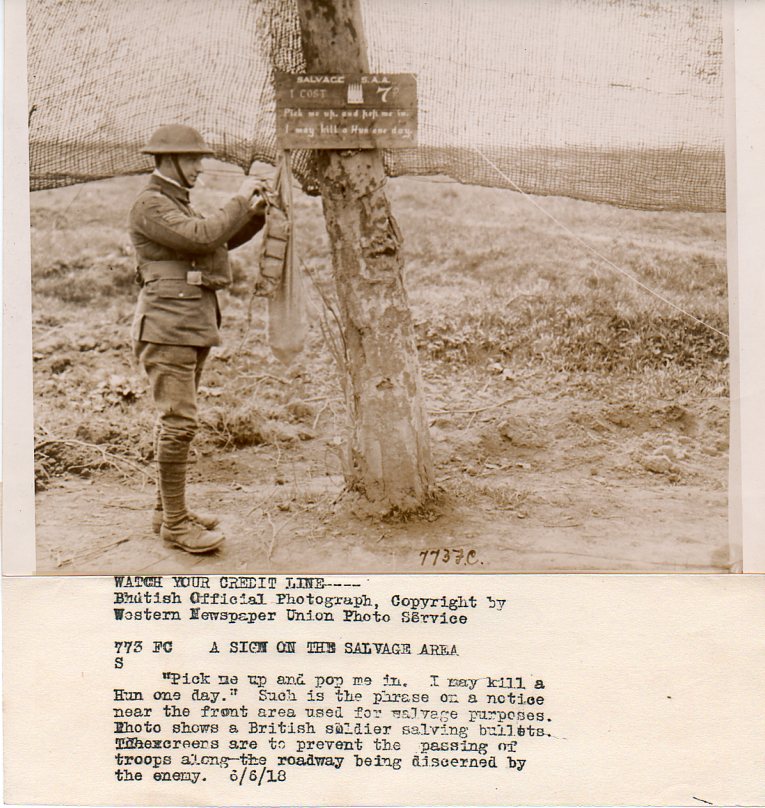
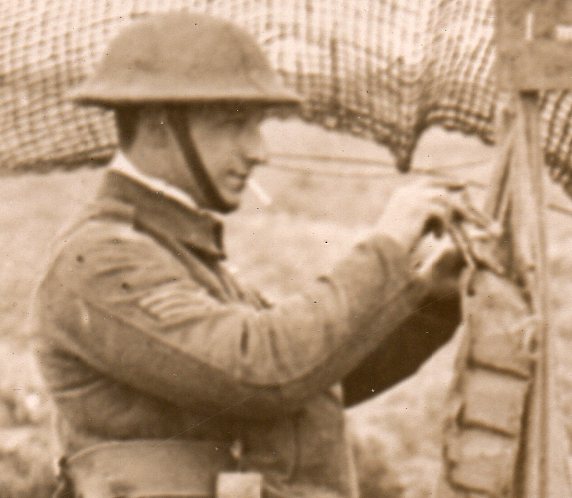
    A little went a long way, sometimes, in collecting the ends and bits of a campaign or a retiring column or from the attics and basements of village houses, or in scrapyards or dustbins or abandoned yards and buildings. Scrap has sometimes contributed greatly to major war efforts; and sometimes it has contributed just a few hundred rounds of ammunition, gathered from the sick or dying or forces on the move, that have told the tale of change in battle.  When you can only carry so much in a campaign where shooting can be an endless process, you can by definition never really carry enough ammunition when you’re already carrying enough of everything else.

    WWI--salvage719 
    WWI--salvageb720

    WWI--salvagec721

    ·Posted by :

    ·in:


  • Pioneering Effort on a Circular-Winged Aircraft (1909)

    JF Ptak Science Books  Quick Post

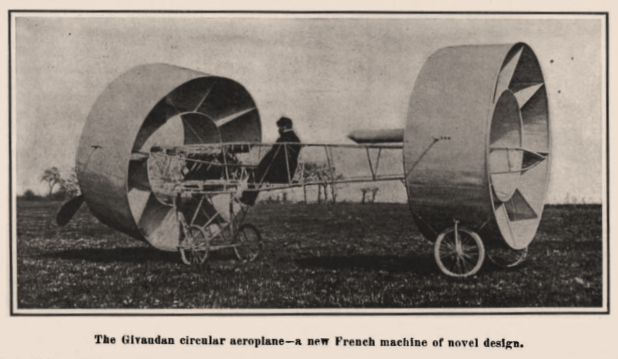
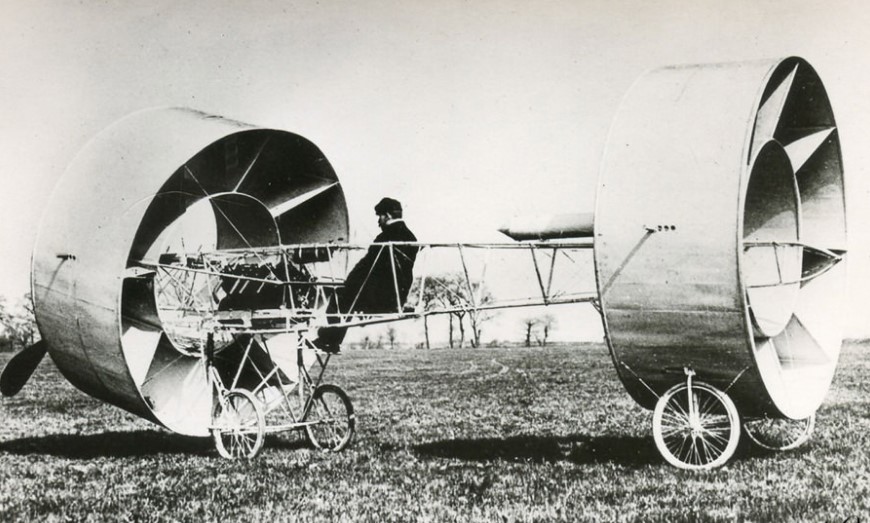
    Claude Auguste Joseph Givaudan’s  handiwork was presented in the June 5, 1909 issue of Scientific American as part of a longer article on the history of human heavier-than-air motorized flight. The image is, well, engrossing.  It is both pretty and then not so much in a double-ended sausagey kind of way, wanting to look the role of a new age aircraft but winding up looking clunky and breakable and heavily unflyable. The “Vermorel” was a step towards flight, but a step in the not-right direction, though it does seem to be among the first circular wing planes attempted. Sometimes you don’t know something is wrong until you know it, and then the information can be useful in the History of Wrong Things. Givaudin (1872-1945) was an excellent candidate for this sort of pioneering work, having an expertise in chemical engineering and machine work in general, working across many fields, not the least of which was making motorized bicycles (motorcycles) at the turn of the century. He just didn’t have the proper insight for flying, evidently, though people would return to his circular wing numerous times over the decades.

    Sci Am 1909 Givaud aircraft

    The barrels fore and aft were fitted with wings that were supposed to catch the wind produced by the 7.8′ propeller (which is barely visible up front) and lift the plane into the air. The (air)craft had no rudders and was going to depend on the movable front barrel for control, but at first glance nothing seems to have come of it except for showing others what was not successful. But it seems that there was something that developed: Givaudan seems to have developed among the first (air-cooled) V-8 engines in a plane, which he evidently developed as much as a decade earlier. 

    It also seems that there is no published record of an attempted flight of this aircraft.  He did continue in his aeronautical/aviation work, and was heavily involved with the development of the machine and the science for forty+ years until his death n 1945 (in October, long enough to see the end of WWII).

    Here’s another version of this image, this one clearer and sharper, from a French photographic postcard of the time. The engine is more distinct here:

    Givaudan _2_

    [Image source: http://www.cpa-bastille91.com/histoire-de-laviation-en-1909-le-givaudan/]


  • Washington D.C. Smothered in Salt (1908)

    JF Ptak Science Books  Quick Post

    SAlt

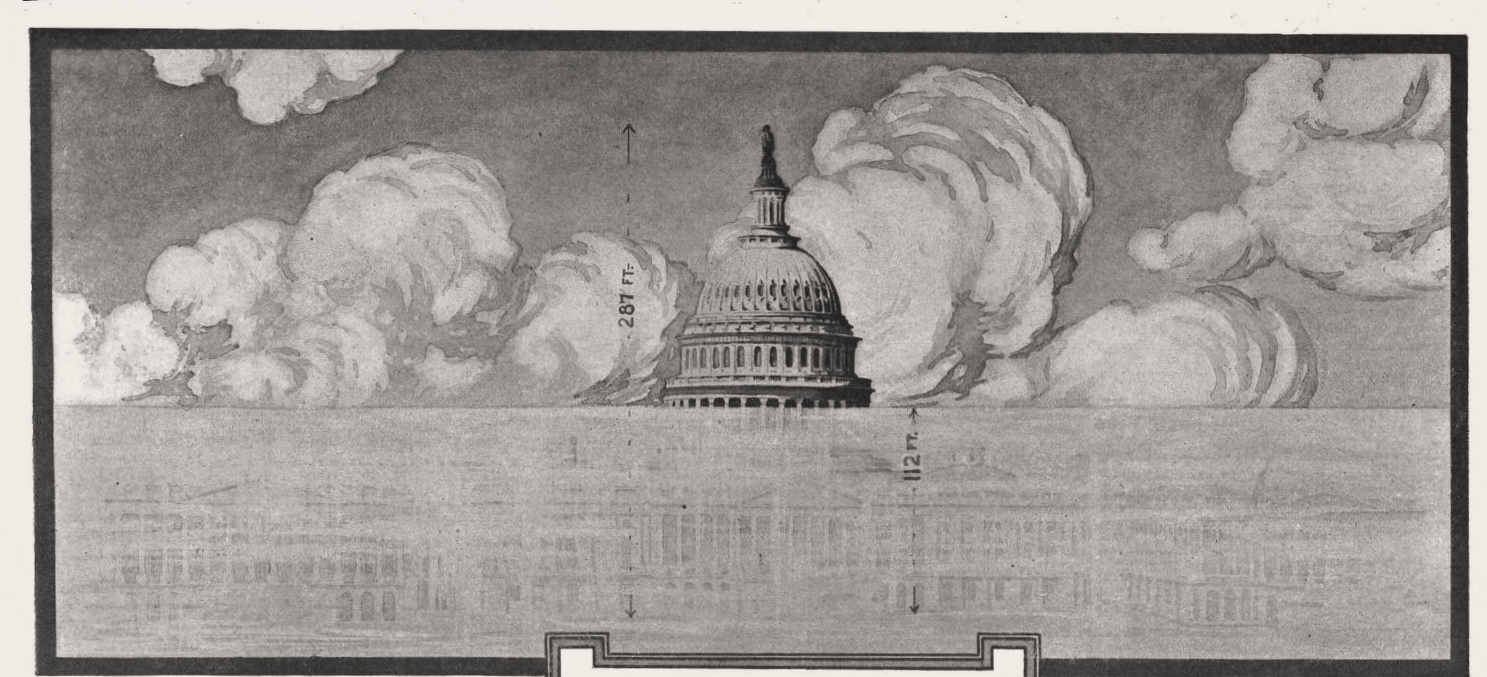
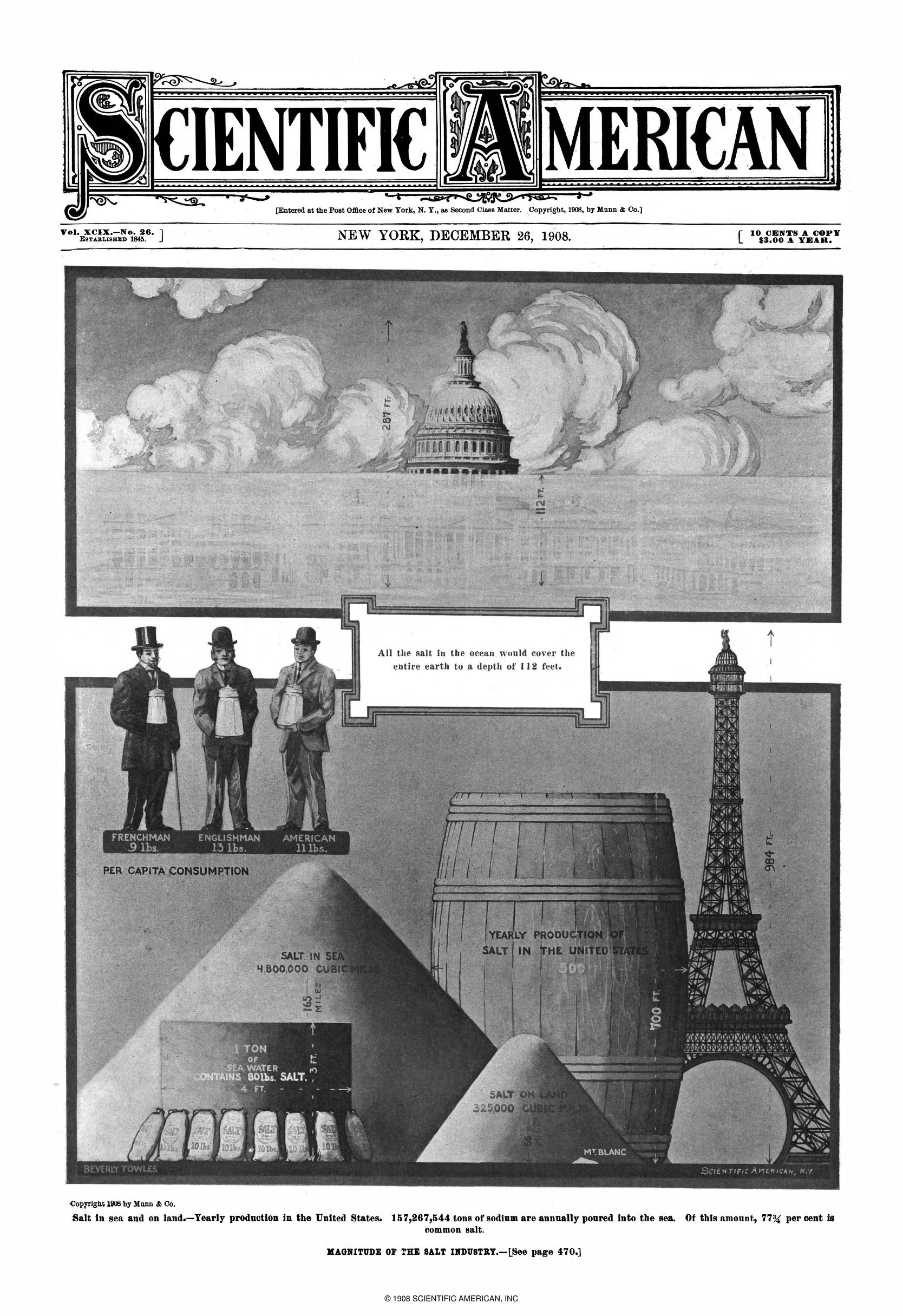
    This is a simple integrative and comparative display of information that has a decided and unexpected twist to it. The graphic is on salt and salt production, and appears in the Scientific American in December 1908, and it is in the top frame that I find the extracurricular attraction. Here we see the representation of what one part of the world–Capitol Hill in Washington D.C.–would look like it if all the oceans in the world were dehydrated:  the globe would be covered by 112 feet of salt. When I think of salt I can come up with the curative and ceremonial uses of it, plus as a wound disinfectant, an exchange unit, being the “salt of the earth”, and so on. But when I see the dome of the Capitol building being smothered by salt it becomes very Old Testament-y to me: Lot’s wife, putting salt in a wound, and of course the big one, salting your defeated enemy’s  lands to ruin their soil and force them to move on.  Anyway, that’s just me–the image puts me in a very J.G. Ballard/Drowned World  frame of mind. The rest of the graphic is pretty good, measuring salt production with an Eiffel-towered-sized barrel; but it is the D.C. image that is the most striking thing about this think-piece. Sci Am 1908  Salt in the sky


  • The Sun in Type (1909)

    JF Ptak Science Books   Quick Post

    Typewriter Sun 1909This is a small 1.5″ ad that appeared in a premier issue of Scientific American, June 11, 1909. It is tiny and attractive, a sunburst design for a Sun typewriter, the text claiming that it wasn’t sold door-to-door but via paper advertising to save costs in production and delivery, offering it for what was then a discounted price of $40. That 40 bucks is equal to about $1000 now according to the inflation calculator at the Bureau of Labor Statistics site–better though perhaps to think of it in terms of monthly/yearly income: laborers earned about $300-$600 a year in 1910, whereas an engineer or accountant would make between $2000 and $5000 a year; that would make the machine somewhat expensive at about a week’s salary or less, but affordable.

    The address says to apply at 317 Broadway–the building is still there and a fine structure it is; presently the address is broken up on the ground floor and shared by a booze shop and pizza place, sandwiched by a 7-Eleven and a McDonald.

    (I say “premier” issue of the SA because the cover is dedicated to the Wright Brothers, the first such honor paid them by the magazine in over five years of mounting successes following their huge accomplishment at Kill Devil in December 1903. A fine acknowledging article appeared in 1908, but there’s precious little in the way of support to the brothers in the magazine between 1904 and 1908. This issue ended that drought.)


    ·Posted by :

    ·in:


  • WWI Parade of Snow, 1917/1918

    JF Ptak Science Books   Post 2775

    WWI Snow PArade _5_

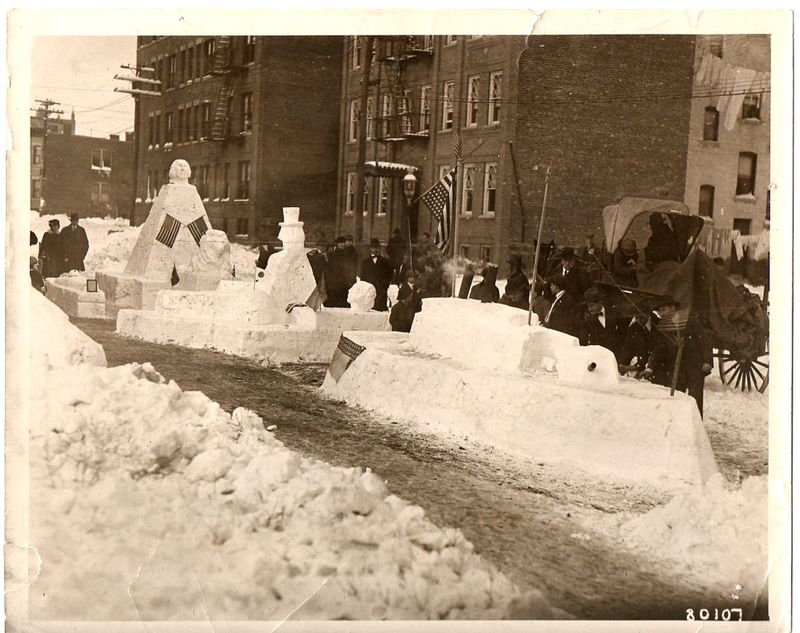
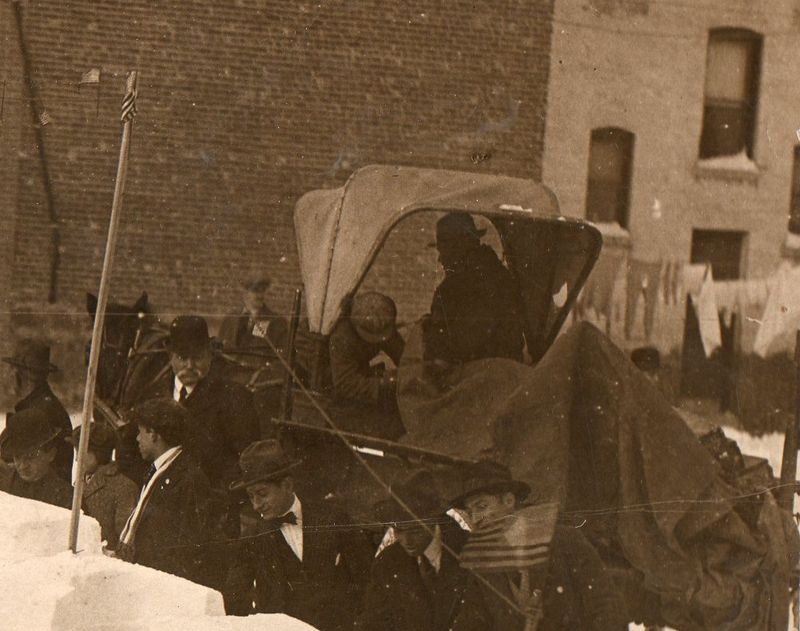
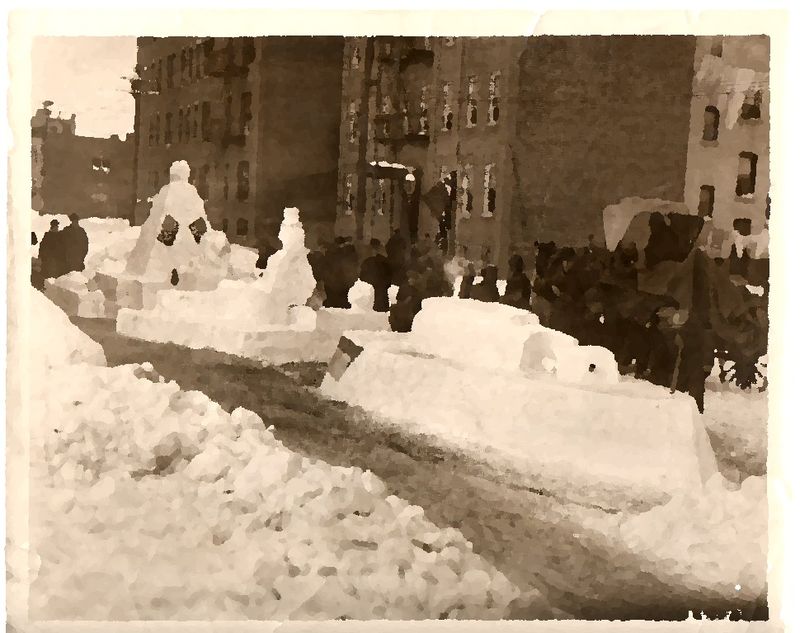
    This news photo service image–stamped “Hearst-Pathe News Agency” on the back–is from the winter of 1917/1918 and shows a patriotic snow parade somewhere in the United States.  The snow looks prodigious, judging from the piles in the foreground and also the accumulated snow on the windowsills, and I imagine that all of the snow floats were sculpted mainly out of exiting snow in the street.  It is a delightful scene, to me, and hosts a variety of smaller, lovely images in vignette. 


    WWI Snow PArade _5_


    The man in shadow and sleeping figure (boy) in the buggy complement the white-mustachioed bowler-wearing man to the left; the men looking on in the foreground are interesting, too–plus there’s that laundry in the background.  Given that the laundry is out (and wasn’t just left out during the storm) and that no one seems to be particularly bundled up against cold, I’m going to guess that there was a break in the weather that pushed the temperature higher than normal, with almost everyone taking advantage of the warm snap, as people do everywhere, all the time.  I also like the tiny American flag on the tall pole at left.

    ·Posted by :

    ·in:


  • The Metropolitan Life Tower as a Unit of Measurement: (Air)Ships and 1700′-Tall Corn Cobs in the Skyline, Part 7 (1909)

    JF Ptak Science Books  Quick Post

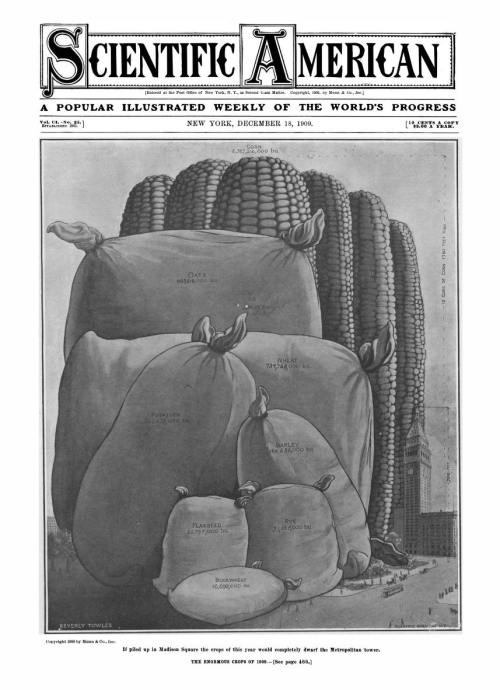
    • This is a slight deviation from the Ships in the Skyline series: the first difference is that the “ship” is an airship; the second is that in the next example there is no “ship” at all, though the enormous sacks of agricultural goods pictured there are measured against the Metropolitan Life Tower, the standard of measurement used in the first example.

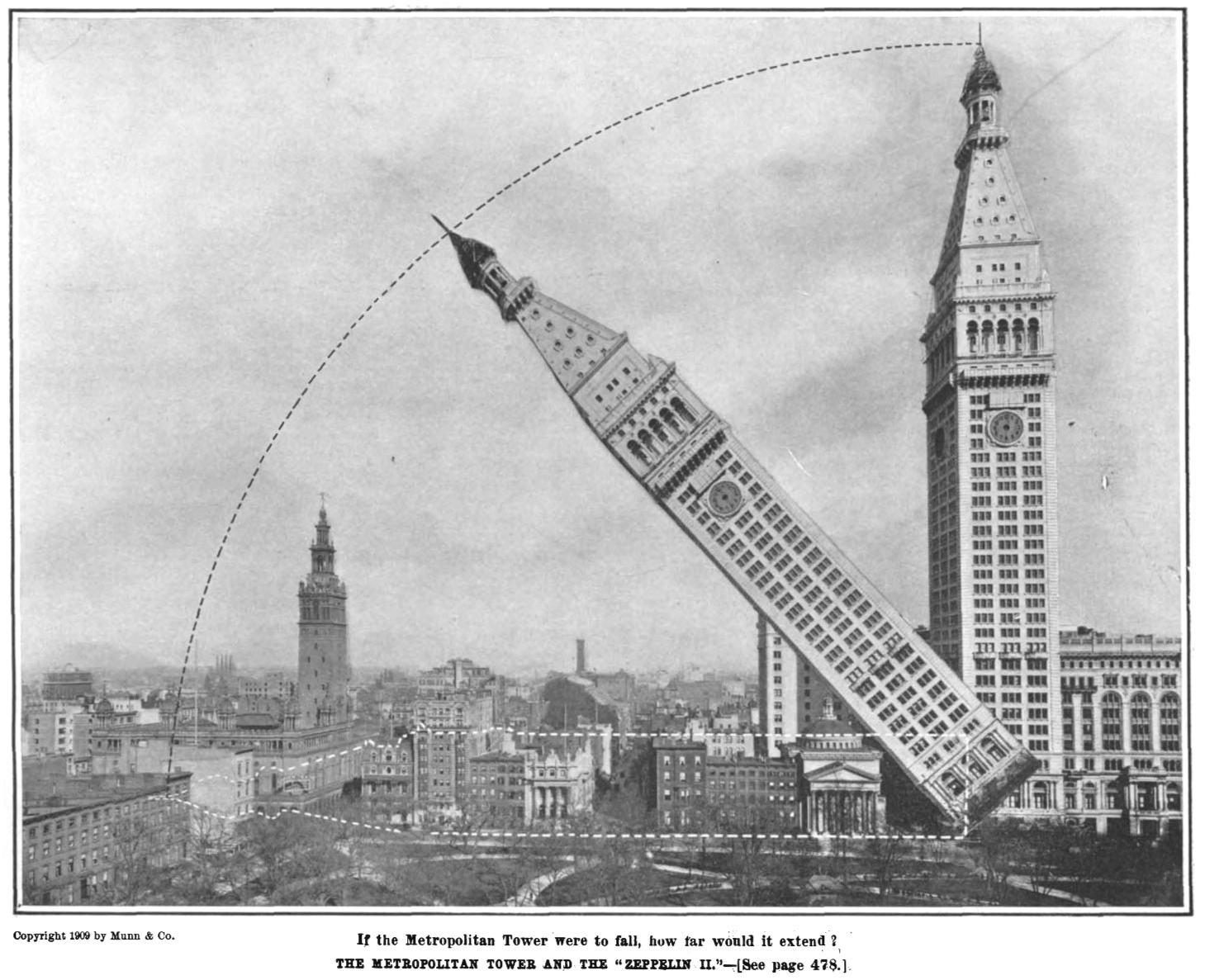
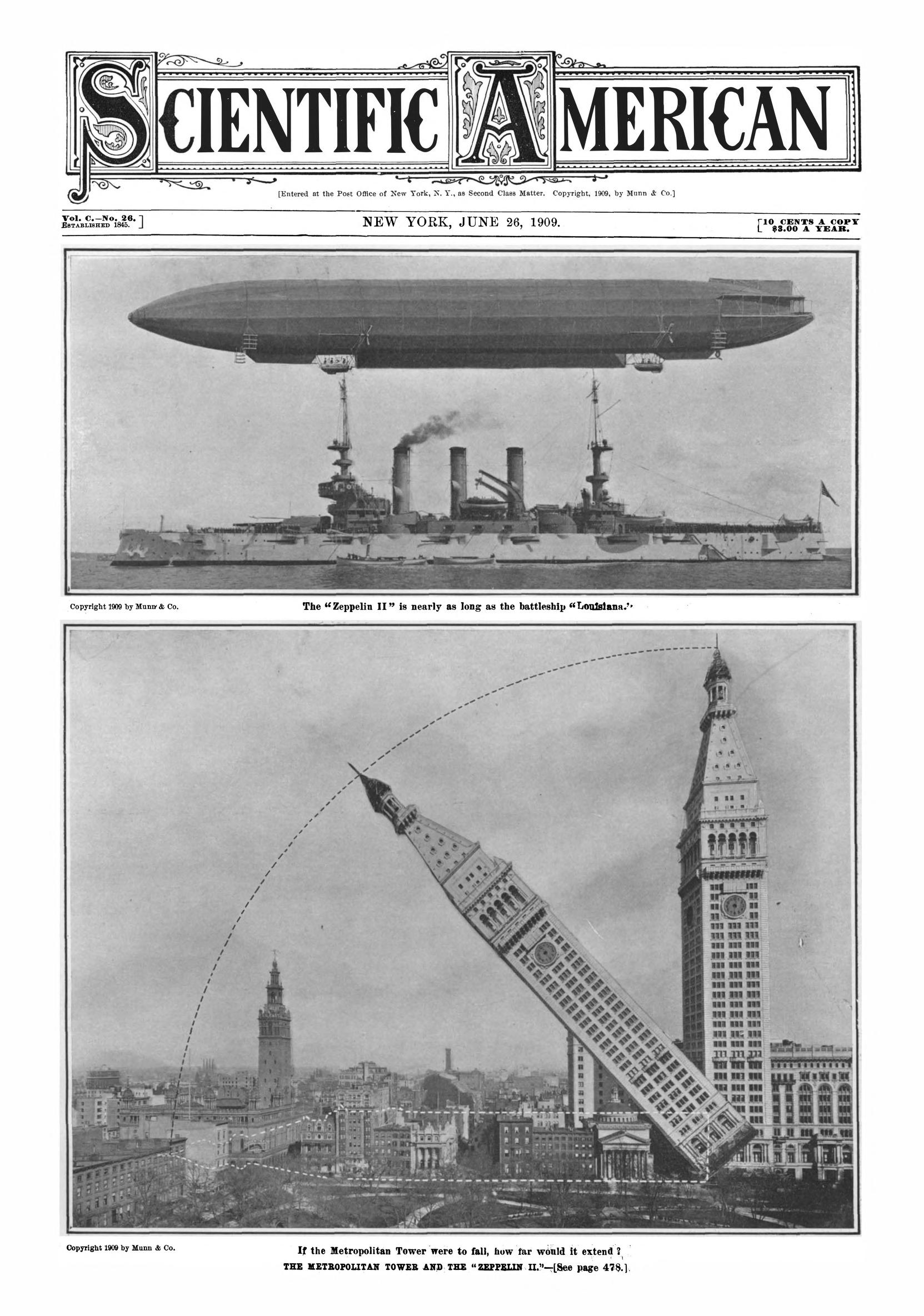
    This is another segment in the series of measuring newly-constructed monster ships against familiar architectural objects–like the Woolworth Building, Eiffel Tower, the Hoover Dam, and such–to use for a sense of perspective in judging the size of the naval wonders.  In this example, found in Scientific American (June 26, 1909) reckons another sort of ship–an airship–and in this case, it is the Zeppelin ZII being measured against the newly familiar Metropolitan Life Tower, which was just finished that year. (Unfortunately, the Zeppelin met with disaster, crashing jus tweeks prior to the publication of this image.) The Met Life building stood 700′ feet tall and was the world’s tallest from 1909-1913, when it was superseded  by the Woolworth Building. (Interestingly the Met Life was patterned after the companie of St. Mark’s Basilica in Venice (323′) which at about a thousand years old was patterned after the older-still St. Mercuriale.) The Zeppelin was 436′ long, which was an enormous flying machine in 1909, and more than 60% of the length of the laid-down tallest skyscraper.

    Here’s a variation on this measured comparison, an image category that I’m pretty sure I’ve not seen before–laying down a tall building:

    Sci Am 1909 Zepp in the skyline

    This is a detail from the front page:

    Sci Am 1909 Zepp in the skylineIn any event, this is a terrific image. 

    And as long as we’re at it, here’s another data visualization from the same year of Scientific American, this one again using the Met Tower to compare the amount of barley, flaxseed, rye, buckwheat, potatoes, wheat, oats, and corn produced in the U.S., the output collected in gargantuan city-crushing burlap sacks and 1700′-tall corn cobs: 

    Sci Am 1909 MEauring Things

    The image was irresistible!


  • The Wright Brothers at the Bottom of the Pile? (1909)

    JF Ptak Science Books  Post 2774

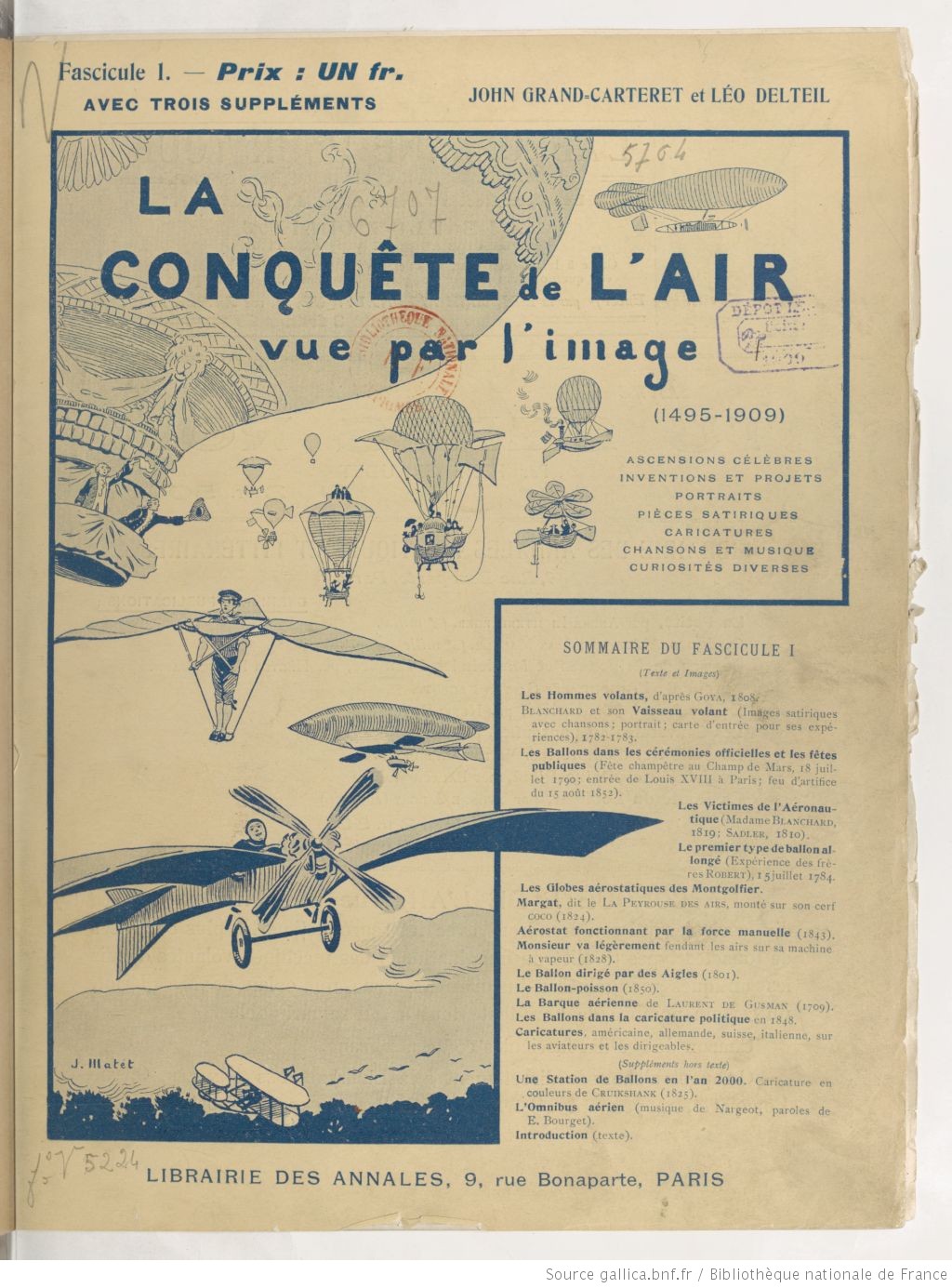
    Here’s a busy title page of an interesting fairly early aviation work published in 1909 by John Grand-Carterett  and Leo Delteil, La conquête de l’air vue par l’image (1495-1909) : ascensions célèbres, … The funny thing about all of the flying machines on the cover is that the Wright machine is way down on the bottom, and small.

    Aviation conquest of the air 1909The other thing about the Wright flyer: it fits in very comfortably with the only birds that are depicted o the cover. The brothers figured out that it was easy to get into the air; the hard part was staying there. And what kept you in the air was maneuvering the wings to control your flight—that was a mega-important realization, the inspiration for which came from watching birds in flight for some years on end. Anyway the French establishment in general was antagonistic to the Wrights, many people not believing that the Wrights had actually flown, and considered them fakers.

    The French in general were leading the field in flight in Europe, but in the year that this publication appeared, they still were nowhere near where the Wrights had been in 1902/3. The Wrights worked mostly privately with only a couple of skilled hands, accepting money from no one, financing everything from their bike shop. (In the end the brothers spent just slightly under $1000 to finance their entire undertaking, from theory to powered flight, including shipping and travel, to the end of 1903. Their counterparts in France for the most part were of some sort of money, and did not have to work a demanding job to finance their pursuit. Ion any event when the brothers were turned down again by the U.S. Army for a sale of their aircraft, they left in 1908 to pursue sales on the continent.

    Perhaps it was their secrecy which led to the French discontent, perhaps it was the relative nothingness that greeted their enormous accomplishment in the U.S. And perhaps that is why in 1909 their flyer is depicted as a smallish thing at the bottom of a page.

    The thing is that it was in 1908 that the Wrights became truly famous, finally showing their flyer before large crowds, and showing absolutely that their work was far superior to others in the field, that their aircraft was more maneuverable, and more dependable, and their flying skills were unsurpassed. Wilbur famously performed at Le Mans in France to help secure European contracts, and Orville at Ft. Myer for a performance for the U.S. Army. (Orville’s flight was successful enough, though one resulted in a crash that killed his passenger and severely injured him.) So this in hand in 1908, why are the Wrights featured in such a lowly position? Perhaps the cover design was contracted and completed before all of the 1908 successes? I don’t know—its just annoying that they are down there at the bottom of the page, when in fact they delivered a working Magna Carter to aviation.


    ·Posted by :

    ·in:


  • An Episode in the History of Mud: Heavy and Stuck in 1918

    JF Ptak Science Books  Quick Post

    What is this man smiling about?

    WWI steamroller full

    [Source: from the store’s WWI news service photo collection, 500 strong!]

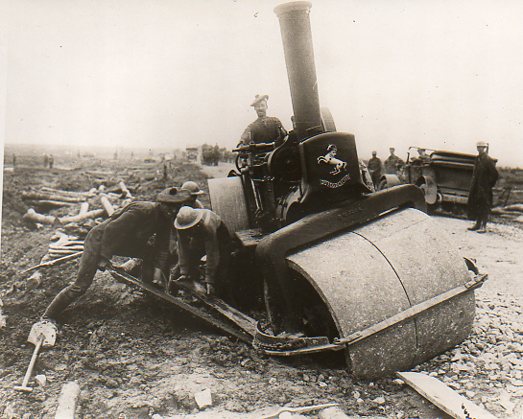
    He’s satisfied or at least amused with his place there in the steamroller, rather than his soldier brothers who were trying (impossibly) to leverage the beast out of a shell-made muck hole. The guys on foot appear to  have had a comic sense of what their task was supposed to be. 

    ·Posted by :

    ·in: