A Daily History of Holes, Dots, Lines, Science, History, Math, Physics, Art, the Unintentional Absurd, Architecture, Maps, Data Visualization, Blank and Missing Things, and so on. |1.6 million words, 7500 images, 4.9 million hits| Press & appearances in The Times, Le Figaro, Mensa, The Economist, The Guardian, Discovery News, Slate, Le Monde, Sci American Blogs, Le Pont, and many other places… 5000+ total posts since 2008.

Category: World War II

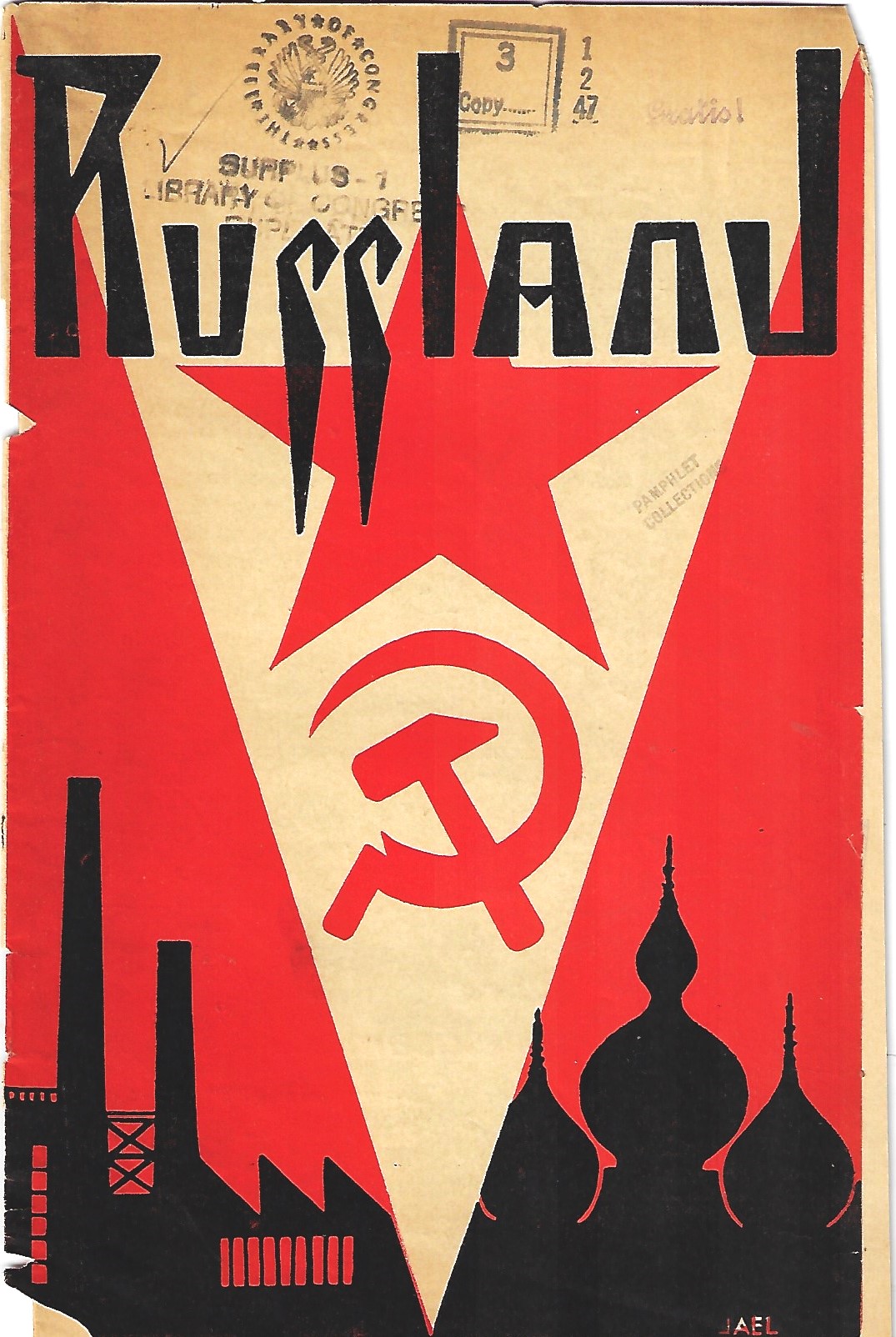
  • Russland (Nazi Propaganda, 1936)

    JF Ptak Science Books  Post 2822

    This is a nasty piece of Nazi anti-Soviet/Communist propaganda, published as #43 in a series called “Silvaniadruck” in 1936. It is a nonstop attack on the Soviet system and also on the Russian people. The pamphlet is only 24 pages long but it certainly feels like more, especially if you could weigh vindictiveness and diatribe. It is composed of 12 sections ranging from the new economic policy of the country, to the right of the Soviet citizen, religion, family, church, and education, and the period of 1918-1921, though the sections I wanted to try to read and share were on the Famines (“der Hunger”) and the “Terror.“

    Books covers russland


  • The Fluttering Wings of Destruction: the Who-What-When-Why-How Pamphlet of Nazi Propaganda, 1930.

    JF Ptak Science Books
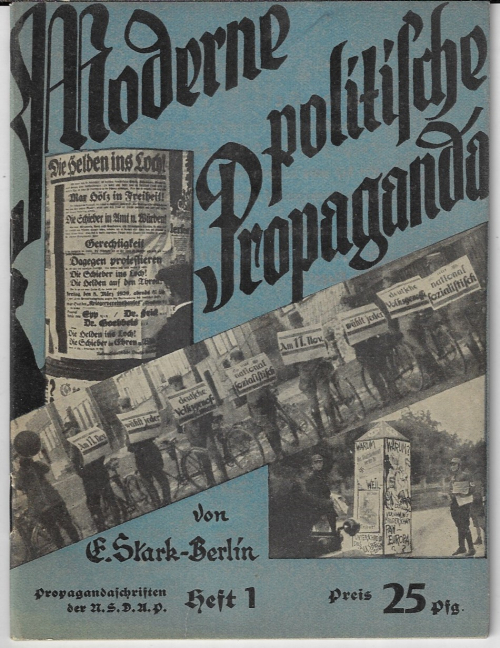
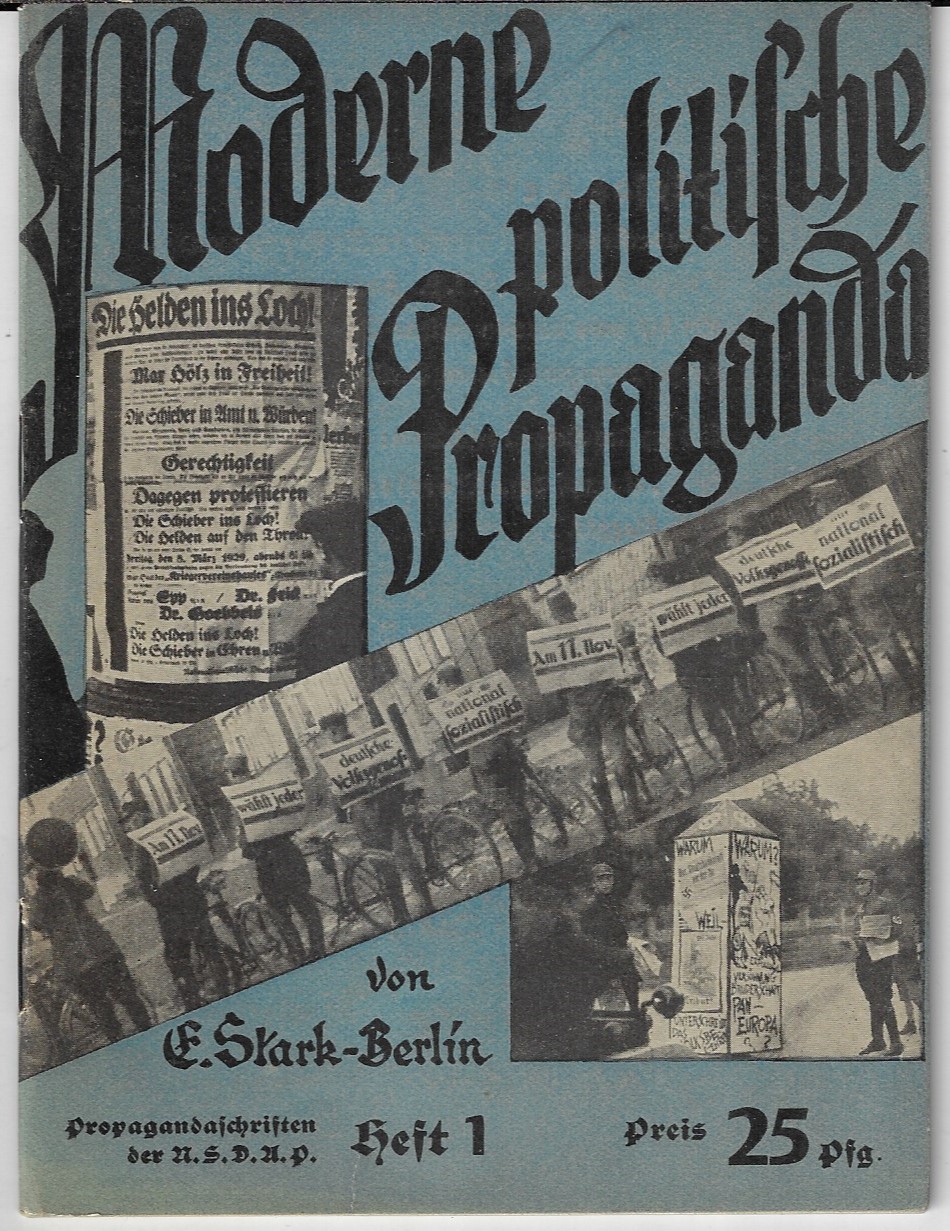
    Books covers nazi propagandaThis compact 24-page 25-pfennig 1930 work by Gabriel Stark and Heinrich Himmler was one of the earliest pieces produced by the Nazis on how to best expose the public to National Socialism, and given its size and near-free price, it was meant to be distributed far and wide. (There was an earlier and leaner work published by the NSDAP and written by Georg Strasser and Himmler,  Propaganda Abteilung, in 1927, and which was a basic how-to booklet.) It developed the need for propaganda as well as the motivation of it, plus there’s a lot of practical discussion on how to best get their message across to different sorts of crowds.

    The pamphlet is divided into sections on spreading propaganda by the spoken word, written word, mass marches, and “cultural gatherings”, and subdivides each section accordingly. For the written word, for example, there is a longish discussion of advertising, putting displays on rooftops, [placing posters along railway lines, postcards, banners, letter-writing, stamps, advertisements, and movies and slide shows. (There is also a warning that it was illegal to use windows, streets, buildings and such to paste placards and posters on.) Each one of these has a short section on their philosophy and use, as with sticker placement (“Not much needs to be said about the effectiveness of stickers. Their task is to be a constant reminder to the indifferent and to gradually unsettle them…”)

    The section on flyers states: “flyers in various colors, but with identical slogans, some with caricatures, spread through entire city districts are effective”. And “The leaflet should contain a brief, easily understandable idea.” For example:

    • Against Marxism and Reaction / the National Socialists!
    • For Freedom and Bread / the National Socialists!
    • Your greeting / Heil Hitler!
    • Down with the Party Corpses! / Power to the National Socialists!
    • The NSDAP has the welfare of the city in mind.

    And of course you may get help with slogans by sending a letter to the propaganda department.

    Here’s another bit: “All flyers, leaflets, posters, and so on that are posted should be attached in a way that makes them difficult to remove.” Not only that, but these things shouldn’t be delivered in a vacuum: “Leaflets, free newspapers, and brochures should be distributed only in such places where it is likely that they will be read immediately.” And while flyers and leaflets were highly useful, “Posters, despite their considerable cost, are the best form of propaganda, and in relation to their cost”.

    The pamphlet extols the reader to demand/request the NSDAP newspaper basically wherever printed material was sold: “Each party member must ask for our newspapers in all restaurants, railway stations, newspaper kiosks, and so on.”

    I can’t do much more work on this thing—I think I’ve provided enough info for you to understand the background of the NSDAP method of spreading their propaganda.

    Lastly, here are a few more examples of the Starke/Hinnler observations:

    • “The other way to chose meeting themes is to find sensational events, scandals of the Jews or Marxists, in particular events that can be summarized in three or four words.”
    • “Meeting protection should be assured either by a sufficient number of local or neighboring S.A. men”
    • “Attendance by party members is both expected and tactically necessary, given the opponents.”
    • “ Each meeting is to be closed by the chairman with a “Heil” to National Socialism and our … Hitler”
    • “Singing a song at the conclusion of a meeting makes sense only if this can be done well.”
    • “Choruses supported by a trumpet are effective. Several short, compelling sentences, repeated often, have a strong effect on a meeting. Be sure they have practiced, and are not in an awkward position.”

    ·Posted by :

    ·in:


  • A Nasty Piece of Propaganda from French Collaborationists (1943)

    JF Ptak Science Books   Quick Post

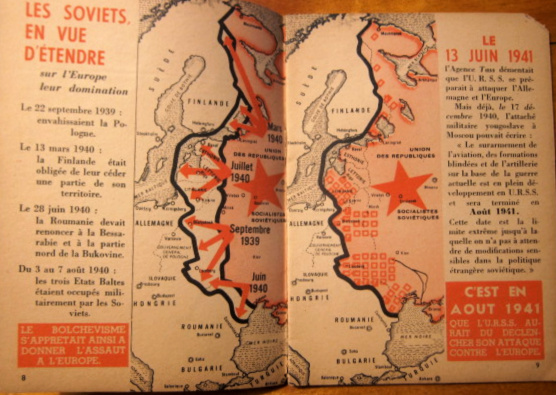
    The offending pamphlet here is a celebration of the invasion of the Soviet Union by Germany, a “two year anniversary” of the beginning of “Operation Barbarossa”. The author(s) presented the new front in WWII as a “joined” effort on the part of European nations to rid the world of the Bolshevik threat. (The title of the work: Toute l’Europe contre le Bolchevisme, 2eme Anniversaire which was published by CEA, the Centre d’Etude Antibolchéviquethe (Anti-Bolshevik Studies organization), a French organization running with Nazi funding.)

    The pamphlet of course fails to mention the turning of the tide against the Germans, especially with the defeat and destruction of von Paulus and the 6th Army at Stalingrad in January/February 1943, the failure of the Caucasus push, and so on. Then again, this is a piece of propaganda, and facts can be conveniently excluded whenever necessary.  A few pages later by the way there is the introduction of Bolshevism being the invention of “International Judaism” and other anti-Semitic lies that was an attempt to perpetuate the fiction of the Nazis and the Allies working together to defeat Stalin and his Jewish co-conspirators in quest of world domination.. Besides the text supporting this stab-in-the-heart thinking is a horrible caricature of “international Jewry” combining with Bolshevism and Freemasonry (?) as a force out to capture the world. 

    Events antithetical to this propaganda were excluded–I did check out some of the numbers for the battle represented below (like Smolensk and Vizma (Moscow) and those are correct…these battles were mainly fought in 1941/early 1942 at which point the Nazi offensive was still going forward, so there’s not much from 1943. So numbers and events that supported the crucially insane claims of the pamphlet were used; everything else was ignored or re-packaged with false data and employed. 

    Maps Propaganda Barbarossa _2_


  • What to Do When the Bombs (and Gas) Come(s)–Austria, 1935.

    JF Ptak Science Books  (Earlier post corrected).

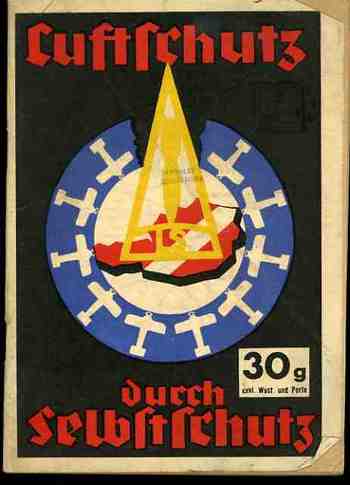
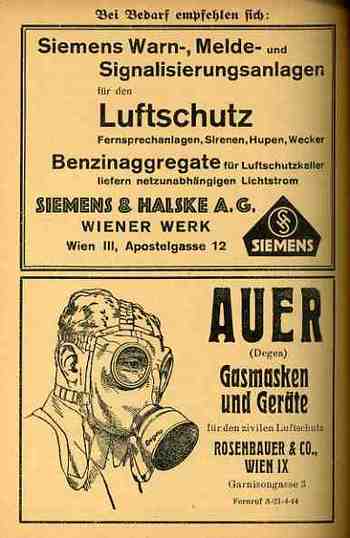
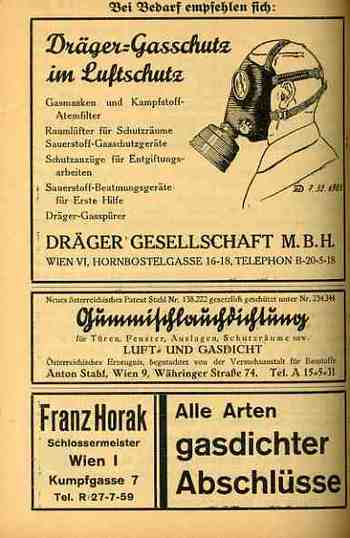
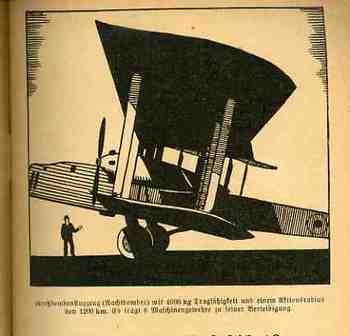
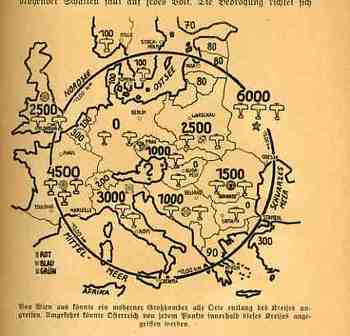
    1ebay_oct_4nazi_prop747 This is another in a series of posts about the use of maps and images in propaganda, principally concentrating in the 1930’s and 1940’s.  This pamphlet, Luftschutz durch Selbstschutz Schtz fuer jedermann bei Fliegerangrissen), was published by the Luftschutzbund and written by Hugo Noll in Vienna in 1935.  The title page claims that this is the 4th (augmented) edition, with the print run already above 30,000 (which you can either believe or not (is there anyone who starts their program out as version 1.0?)) 
    1ebay_oct_4nazi_prop745

    The pamphlet begins right at the beginning–the cover shows Austria in red, surrounded by airplanes of its enemies, with a bomb coming down into the heart of the country in a yellow triangle (which resembles a flame).  The striking design begs to be picked up by anyone who sees it–as I did, as a person here in its future; I’m sure that it must’ve been very provocative to its target audience.  It gets immediately into the idea of Austria being surrounded by nations who wish do it harm by air.  Another map in the text is more detailed and shows exactly where the threat was coming from–as you can see the threat was coming perhaps from everywhere, except Germany, which as the map indicates had no aircraft in its air force. Austria of course would be annexed in the Anschluss of 12 March 1938, just three years later.   

    1ebay_oct_4nazi_mask748_2
    The main body of the text is a series of warnings about what to do when the bombs come; the rest of it has to do with preparing yourself and your household from attack, which means that there’s allot of digging and canning and putting away water and fire retardant.  In general the population was getting very stirred up about the sure-to-arrive but survivable Apocalypse.  
    .
    1ebay_oct_4nazi_mask750_3

    1ebay_oct_4nazi_prop746_2


  • A Map of Japanese Intentions for Conquest Extending to Hawaii–1933

    JF Ptak Science Books  Post 2812

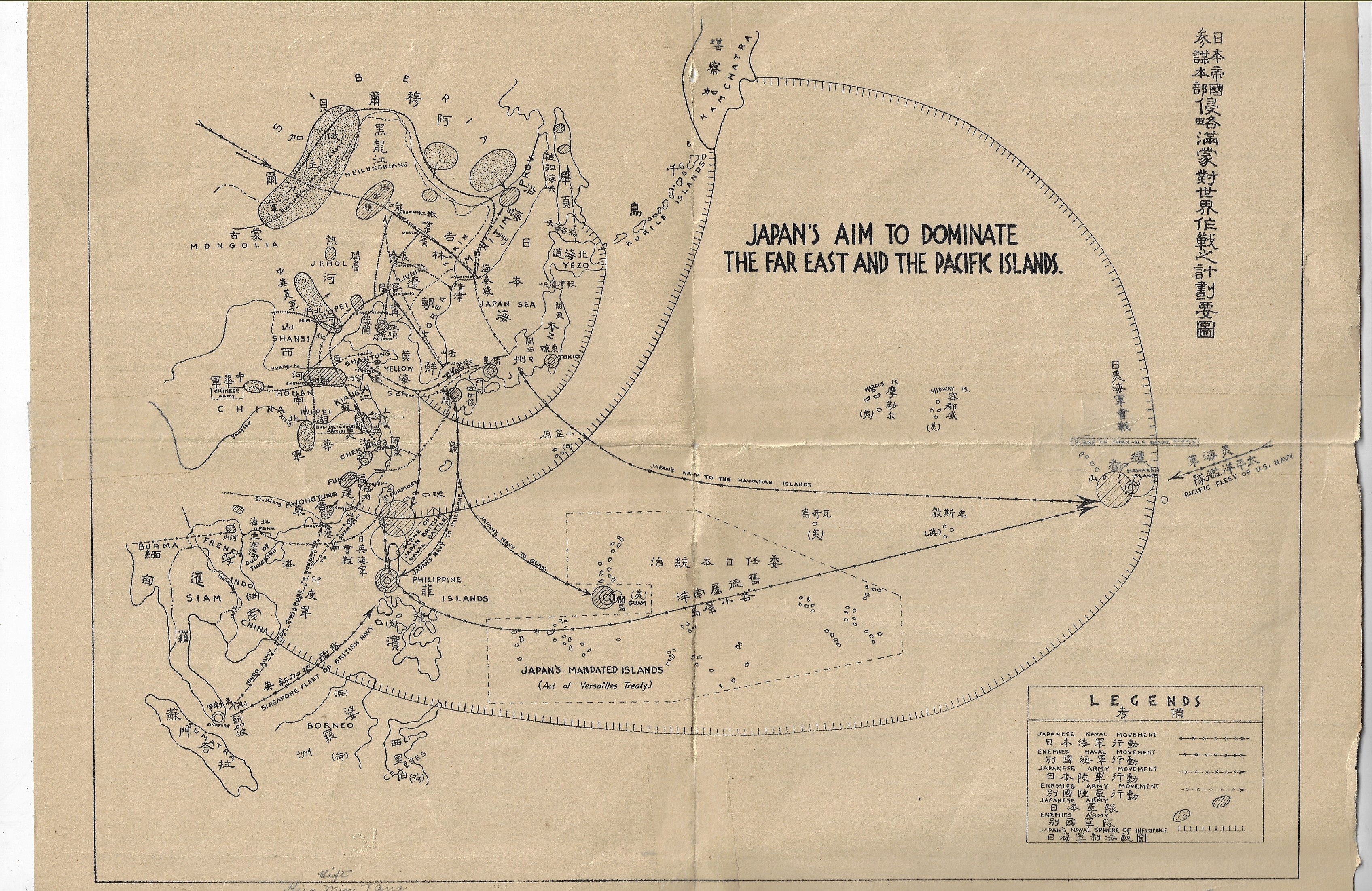
    I do not unfortunately have much information on this very interesting (and to me unexpected) map, nor do I know very much about the history of Japanese militarism and planning 1925-1935–I do though want to at least post/share it for interested parties. As you can see, the expected sphere of influence to be maintained by the Japanese in the near future extended to Pearl Harbor, Manchuria, and as far south as the northern Celebes.  What is remarkable is that this map was published no later than 1933. If you read the text of the pamphlet (below) you will note that was seen that Japan planned on world domination ten years hence (ca. 1943). The map:

    Maps Japan conquest map

    A Plan of Japan’s Proposed Military and Naval Conquest as Revealed in the Strategic Map appears no later than 1933. The single-sheet folded pamphlet contains two pages of text along with the middle two sheets of the map, “Japan’s Aim to Dominate the Far East and Pacific Islands”. The document was part of a very large collection I bought of the Library of Congress, and according to the pencil notes on the pamphlet it was sent to the L.C. by the “Kuo Min Tang” on May 13, 1933.  (It was curious to see the KMT referred to as though it was someone’s name, rather than a political party begun in the People’s Republic of China in 1894.)

    This is a piece of anti-Japanese propaganda coming from the KMT, and it is published by the Chinese National Salvation Publicity Bureau (844 Stockton Street, which looks today like it is the Sun Yat-Sen Memorial Hall) in San Francisco,  After all, the Japanese had been savaging around in China on and off since the First Sino-Japanese War at the end of the century, and then again heating things up in the early ‘thirties with the Japanese-instigated the Shanghai War and the invasion of Manchuria–the Chinese no doubt were seeking allies wherever they could them.  

    There are a lot of lines of conquest on this map, encompassing nearly all of South East Asia.  The largest sphere of “influence” extends all the way to the Hawaiian Islands, where the Japanese would take the islands by a “naval battle” with the U.S.  

    I’ve checked WorldCat for other copies and found only one mention–same thing for the internet.  


  • Great Images Found in “Popular Mechanics”, 1942

    JF Ptak Science Books  Quick Post/Annual Image Series

    I’ve posted many times on interesting  images that I’ve found in many different journals, my favorite and most commonly used sources being Scientific American (1845-1920), Journal of the Franklin Institute (1828-1960), Popular Mechanics (1920-1950), Science and Invention (1920-1940), Popular Science (1880-1920), and that sort, though I prefer those listed as I have them here and they’re a delight to browse…you learn something every time you open the volume. While saving and naming a scanned image just now, dropping it into place according to publication/year, it occurred to me that I could create a simple series of posts on selected images per given year by journal/magazine. This would give the images some context (or at least more so than as stand-alones) and it would also be very easy to do since the work is already done. 

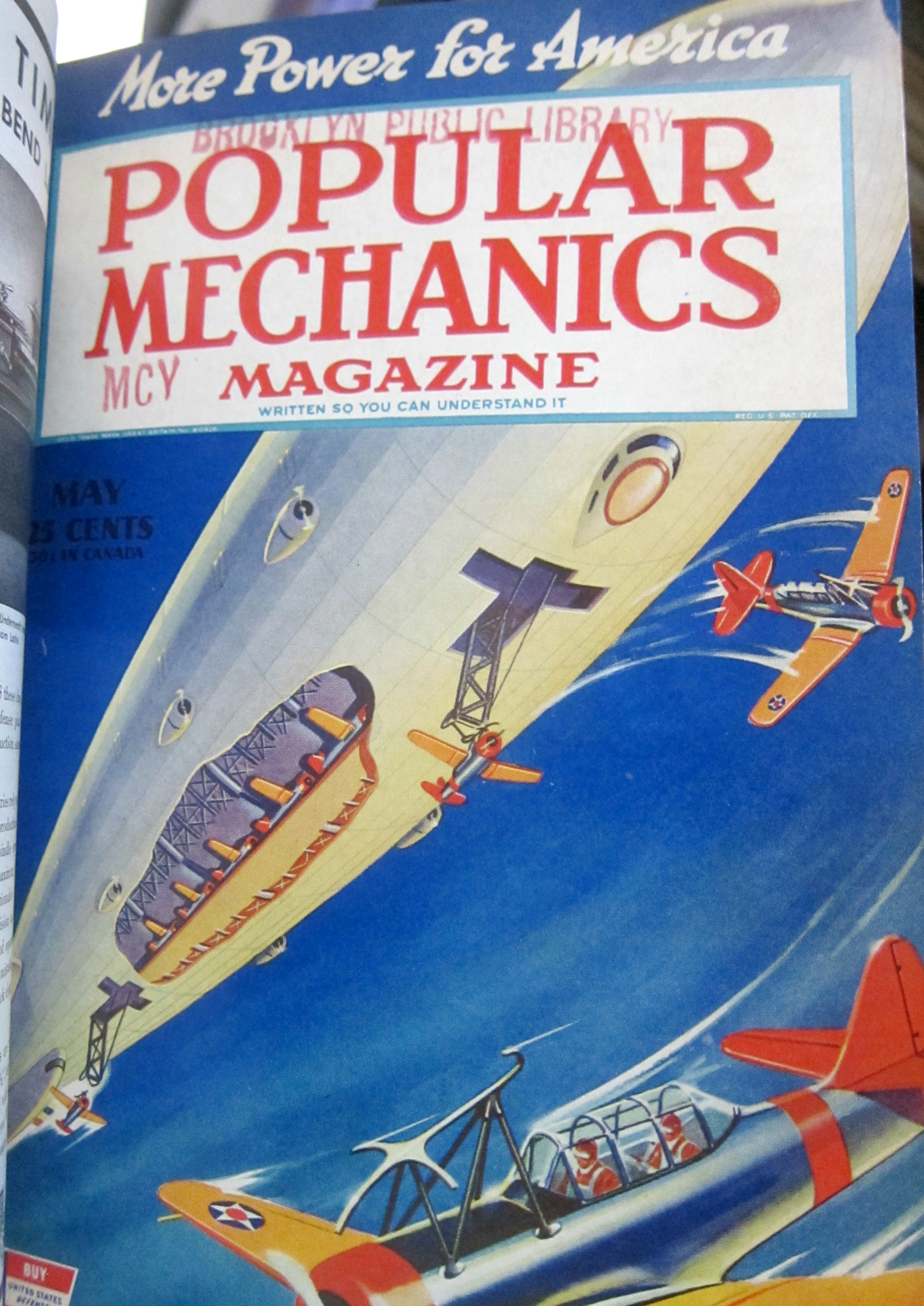
    The first of the series will be for Popular Mechanics, January-June, 1942. The volume is heavily war-related, and offhand I’d say the general impression is that most of that is defensive (coastal defense, air raid wardens, gas masks) than offensive (attack plans, fighter planes, warships, etc.).  Here’s a sample:

    Pop Mech 1942 invasion scenario


  • “Told by some nice computors of national glory” and the “Cumputor” (1951)

    JF Ptak Science Books  Quick Post

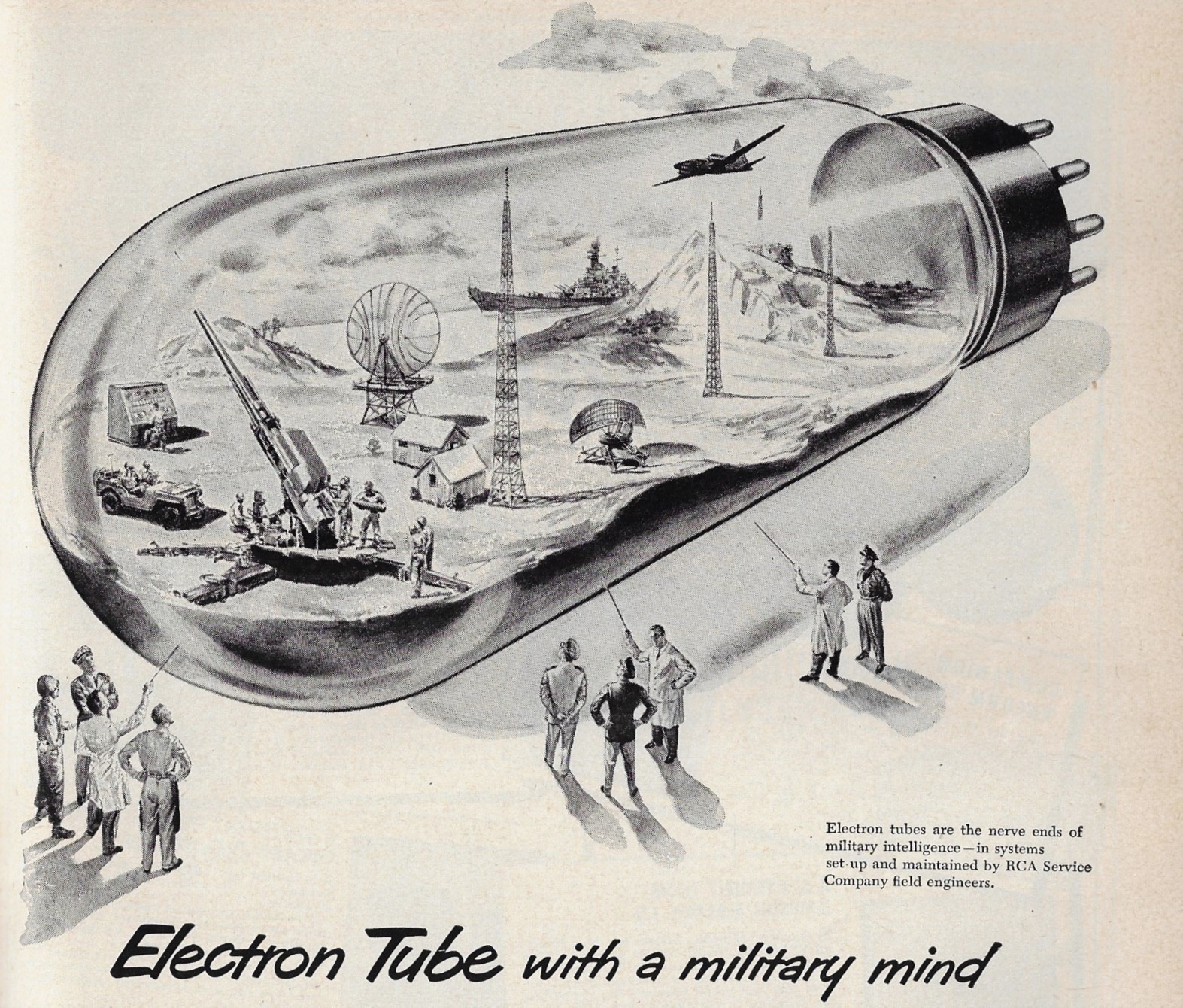
    Here’s a terrific little ad that appeared for RCA electronics in the November 1951 issue of Radio & Television News (“the Radio-Electronic Engineering edition”).  The main article of interest–and what brought me to this journal in the beginning–was the two-page story “Analogue Cumputors [sic] Solve Complex Problems” about the differential analyzer (the Bush machine I reckon), thermal analyzer, and electric differential analyzer  at UCLA, and which was the main title and illustration on the cover of the magazine.
    Tube military

    I could not find “cumputor” in the OED, though I did find “computor” (as a person who computes or calculates) which came into recorded being in 1669. (“Told by some nice computors of national glory”, H. Walpole Let. 18 June in Corr. (1954) XVIII. 463.) “Computer” occurs a little earlier in 1613, found in another very quotable quote: “I haue read the truest computer of Times, and the best Arithmetician that euer breathed, and he reduceth thy dayes into a short number.”, (‘R. B.’ Yong Mans Gleanings). 

    This is a short article of only a few pages and a lot of pictures, but that spelling of “cumputor” does not occur in the article, though the word “computer” does. Apparently “cumputor” is a simple typo on the cover of the magazine.


  • The First Half of 1933 from “The Nation”: Hitler’s Menace and a Future Forecast

    JF Ptak Science Books   Post 2804

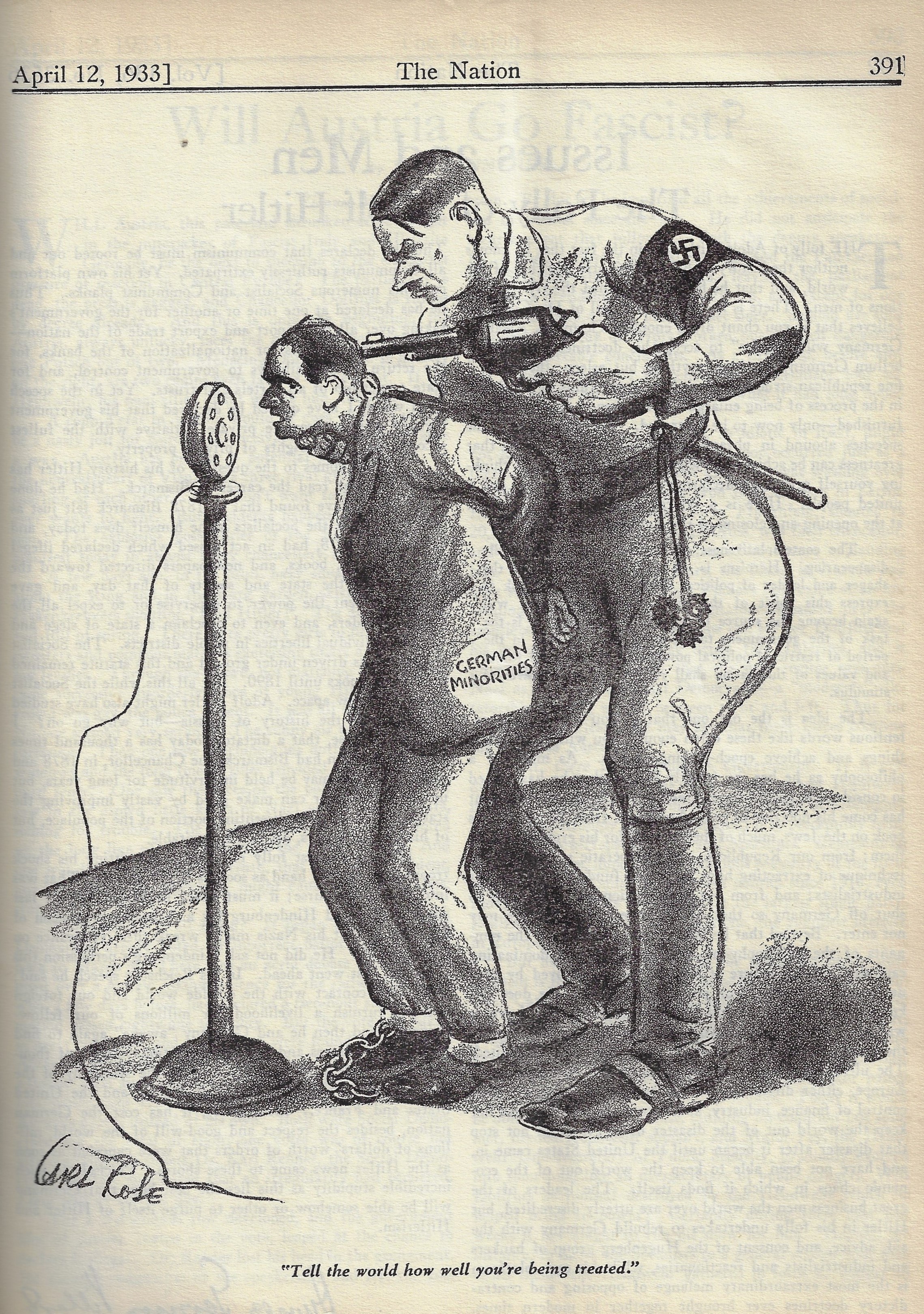
    Nation 1933 Hitler minorities cartoonThe first six months of 1933 were extraordinary, and the progress and decline of civilization could be followed very closely by reading the January-June volume of the great political and arts magazine, The Nation. The magazine’s home quarters was at 20 Vesey Street—right across the very narrow street from the long and skinny graveyard of Trinity Church—and is generally considered one of finest Liberal/Left publication of the first half of the 20th century.

    These six months were furious—just as FDR was inaugurated March 4 and began the spectacular 100 Days (rising from his inscrutable state in the months between the election and inauguration to a man of spectacular action and vision), the Japanese ran amok in Manchuria, and of course Hitler and the Nazis were very busy establishing the apparatus for the ending of the German Republic and beginning the practice for killing and exterminating millions. (Hitler was appointed Chancellor January 30; the “Protection of the German People” act of February 4 which enabled Nazi censorship; then the Reichstag Fire Decree in which Hindenburg suspended the constitution on February 28; followed by the opening of Dachau on March 15, the Aryan Law on April 7, the vast Book Burning on May 10, and deeper into the abyss.)

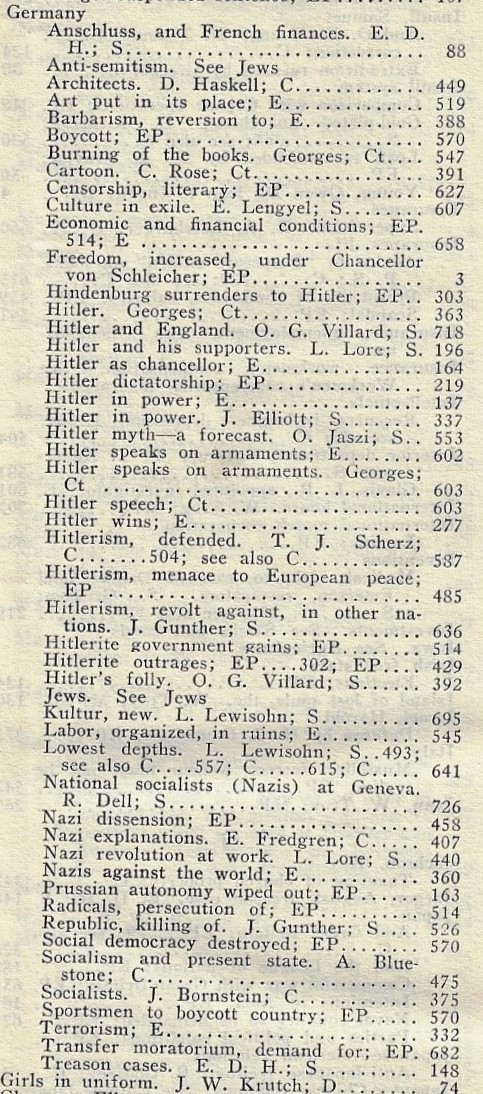
    The Nation reports on almost all of that—and quickly, as well. For example the political cartoon of the naked and puckering Nazis attending their book burning appeared in the May 17 issue, the first available after May 10 event. As a matter of fact, the coverage of Hitler and the Nazis was pervasive–as it should have been–throughout the volume, as a look at the table of contents will tell:

    Nation 1933 table of contents

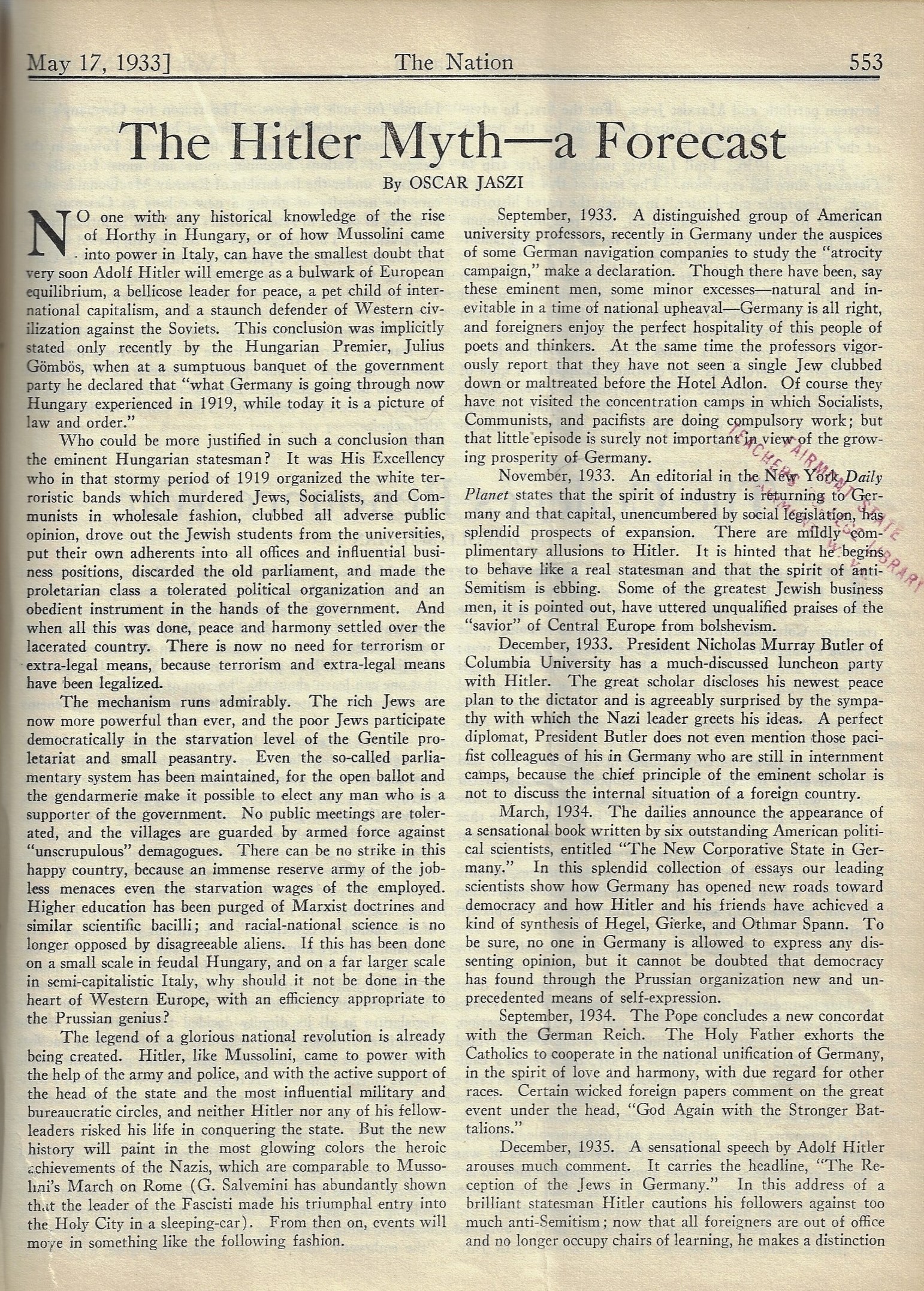
    In this great coverage there’s the following interesting piece by Oscar Jaszi (May 17, as with the book burning cartoon below) in which he facetiously inspects the possibilities of the near-future of the Nazis, including a bit on the removal of three-quarters of all of the concentration camps in 1937–this last part is interesting because Dachau was the first KZ opened just weeks before this article appeared; no doubt the author was expecting more, and he was of course mega-tragically correct:

    Nation 1933 Forecast

    ·Posted by :

    ·in:


  • From the Department of Hopes and Dreams: the Red Cross, St. John, and POWs (WWII)

    JF Ptak Science Books   Post 2798

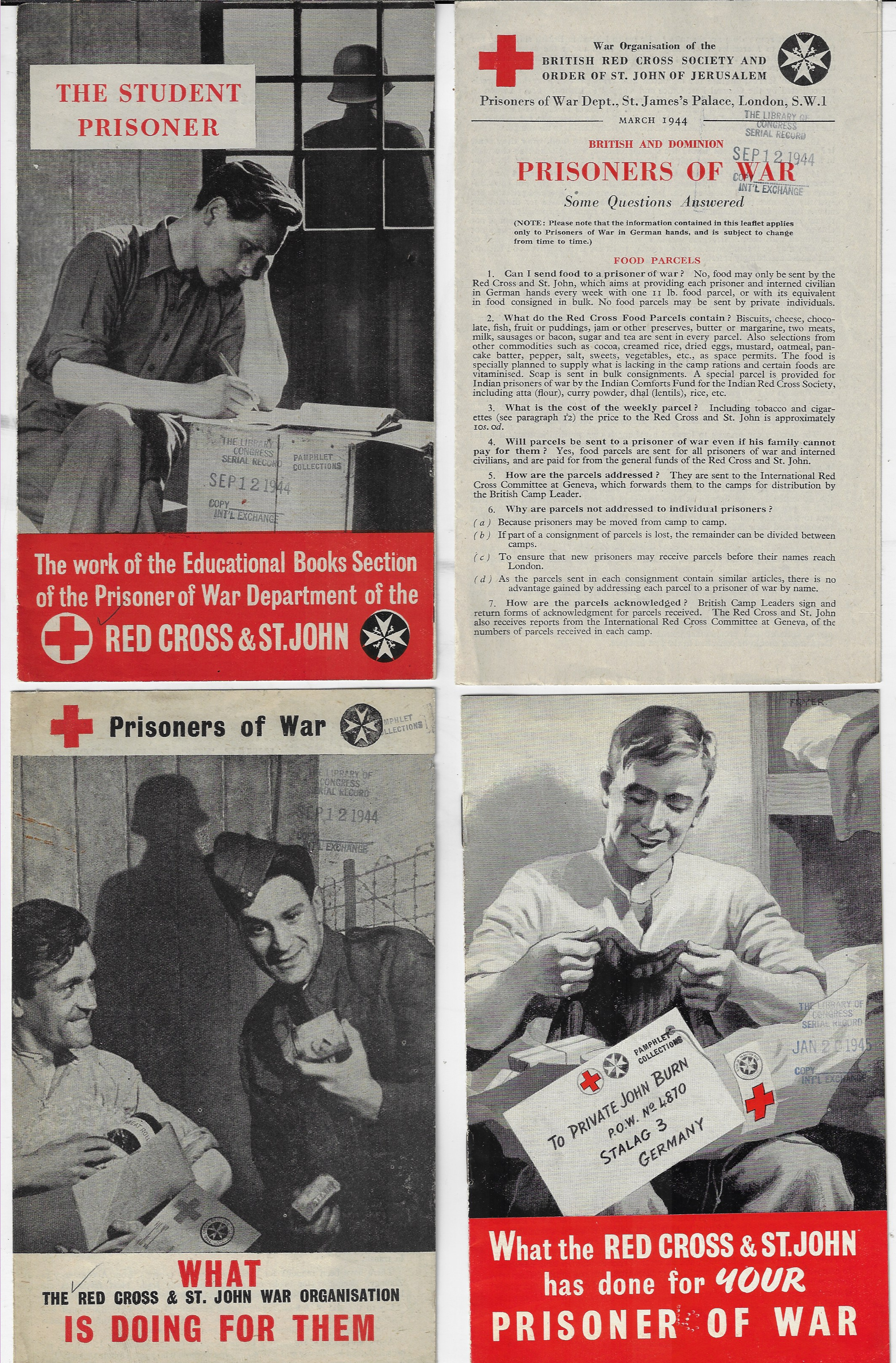
    I assembled a little collection of WWII Red Cross and St. John charity pamphlets–what they all share is a sense unity, duty, perseverance, and hope. They are all published between 1942 and 1944, the majority coming in the summer of 1943–a wicked bad time for the Allies, perhaps the worst time since the Nazi onslaught of Europe. Five of these pamphlets directly addressed trying to help the prisoners of war held by Nazi Germany, and portrayed some healthy and sustaining images of the possibilities of POW life, as well as what would seem to be a high chance of delivery all manner of goods to the prisoners to make their time behind barbed wire somewhat more bearable. (Several of these short pamphlets are reproduced below, while the covers of four of them follow):

    Red Cross POW _1_ (1)


  • An ABC of Bombing (ca. 1940)

    JF Ptak Science Books     Post 2795

    I’ve written on this blog on some odd alphabets, and I’m certainly aware of some unusual alphabet books (like the alphabet of acronyms for some of FDR’s social creations and an alphabet book for socially conscience city planning ca. 1940), and there are endless alphabet books for young people learning how to read, but I don’t remember ever seeing an ABC book for bombing.  Actually, its ABCs for after the bombing:

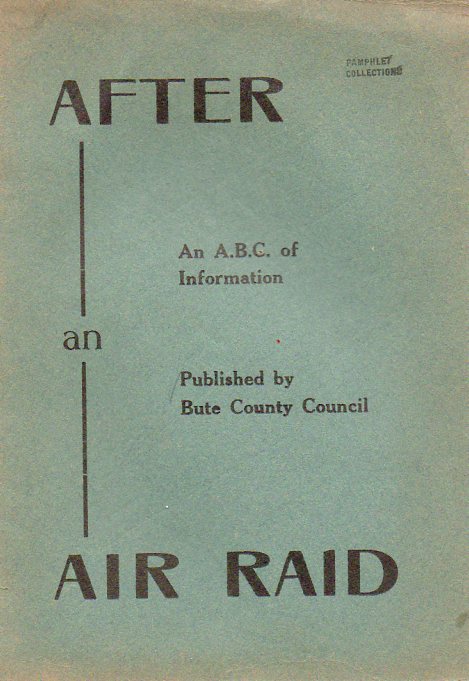
    Air raid884 After the Air Raid, an A,B,C, of Information,by the Bute County Council,  was published around 1940.  This was printed in the town of Rothesay (by the “Rothesay Express”), which places publication in Scotland (though the Bute that I know is a county in North Carolina, 275 miles from where I sit–an old, 1760’s-founded county, up near the border of Virginia, closing in on the coat…its not-for-nothing that they call my part of the state “the Southern Highlands”, what with the huge influx of Scots/Irish coming into this area in the 18th 19th centuries).  It’s a curious publication, not the least of which is the unlikely place of its origin. 

    Another curious thing is that no other copy of this slight publication shows up in WorldCat/First Search–not only that, but there are precious few publications that are found in the 1940-1950 era with “after” and “air raid” in their titles. (The few I found are below.)

    The six-page pamphlet manages to cover 15 letters of the alphabet, plus a question mark at the end, for questions.

    The entries are very economical, tidy, and well written:

    “Money.
    If you are in need as a result of enemy action, you should explain your circumstances to the Assistance Board Officer who, if satisfied with your case, will help you.”

    “Orphans
    Notification should be sent to the Information Centre of any children who have become orphans as a result of air raids.”

    “Tools
    You may obtain a grant to replace tools which are essential to your work, apply to Employment Exchange for assistance.”   

    Very matter-of-fact.  I should think that if you needed to consult a work like this after having been bombed, that you’d want your information compact and direct.

    ·Posted by :

    ·in: