A Daily History of Holes, Dots, Lines, Science, History, Math, Physics, Art, the Unintentional Absurd, Architecture, Maps, Data Visualization, Blank and Missing Things, and so on. |1.6 million words, 7500 images, 4.9 million hits| Press & appearances in The Times, Le Figaro, Mensa, The Economist, The Guardian, Discovery News, Slate, Le Monde, Sci American Blogs, Le Pont, and many other places… 5000+ total posts since 2008.

Category: World War I

  • Munitions Train, France, 1918

    JF Ptak Science Books  Quick Post    

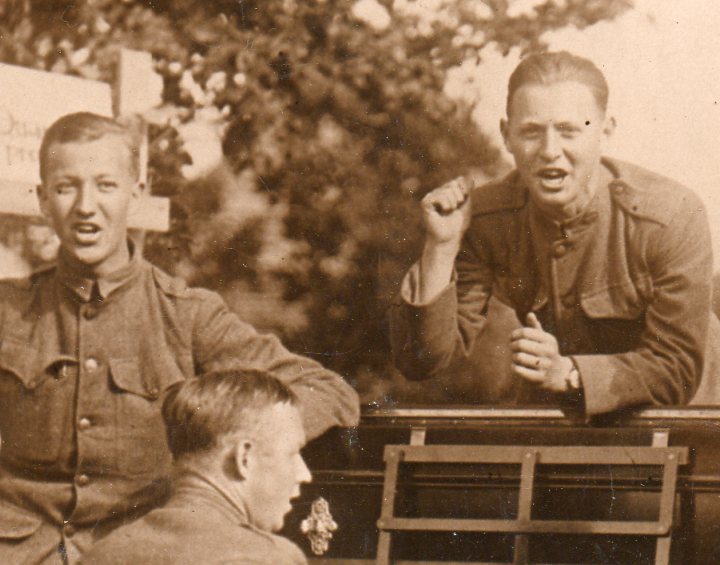
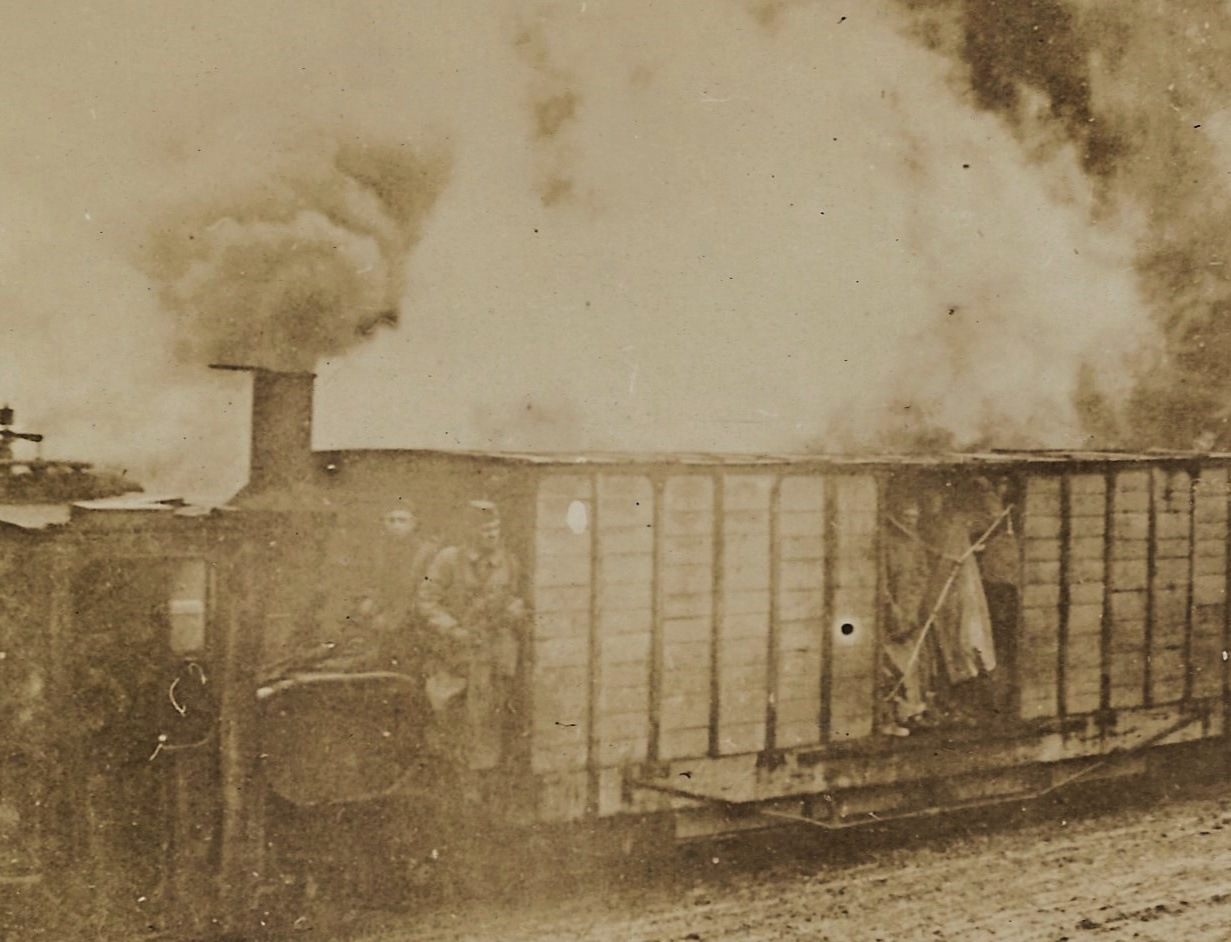
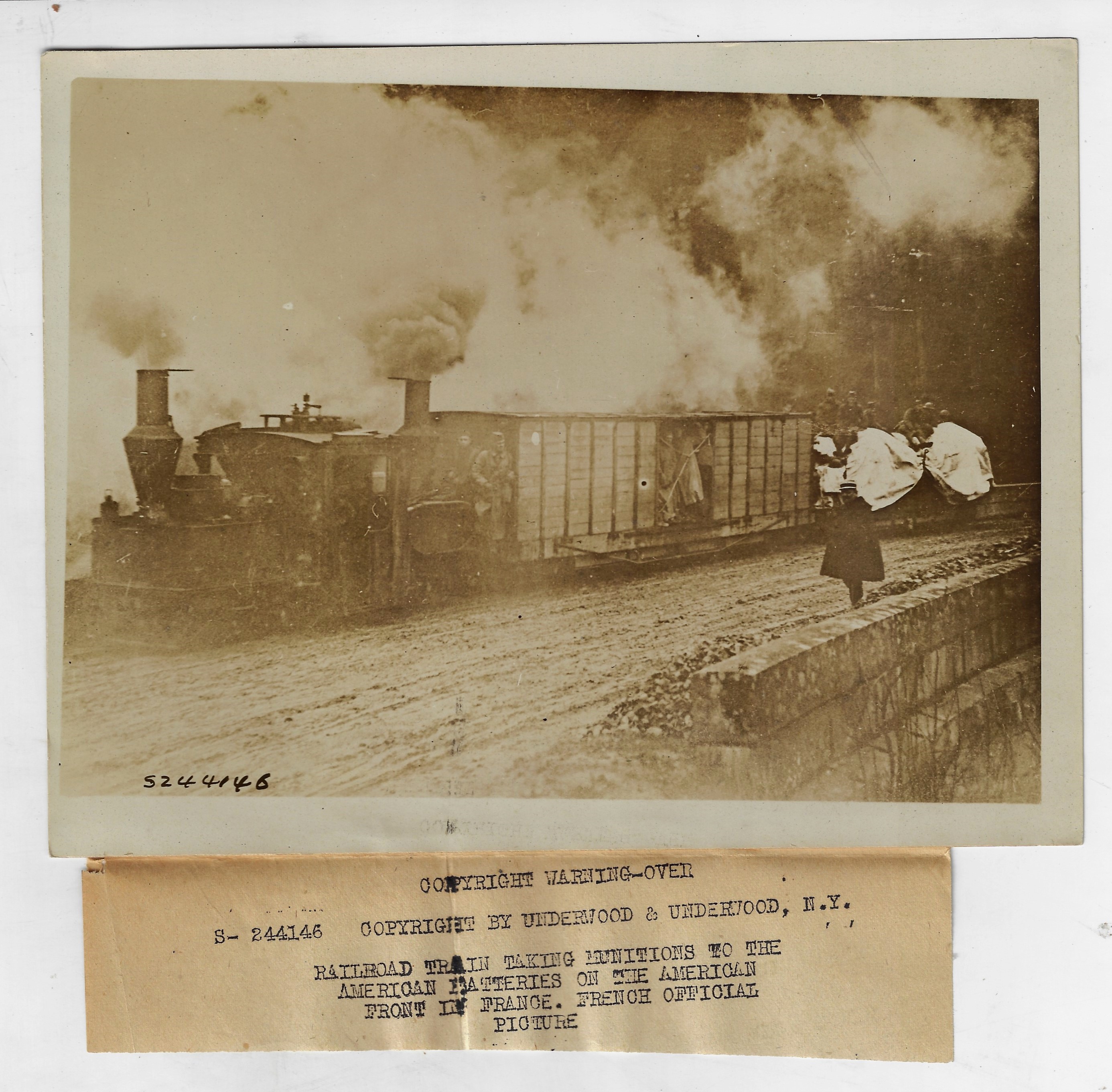
    This is a New Photo Service image by Underwood & Underwood of a laboring narrow gauge train making its way along to the front with two cars full of munition and men, on its way to U.S. batteries at the front in France, 1918.  

    (The original wasn’t robust enough to pull much detail in the faces of the troops in the railway car doorway…I also couldn’t tell what they were standing on…)WWI Photos train munitions_detail_
    WWI Photos train munitions_detail_

    ·Posted by :

    ·in:

    —

  • Found Portraits: Camouflage at the Front, 1918

    JF Ptak Science Books   Quick Post

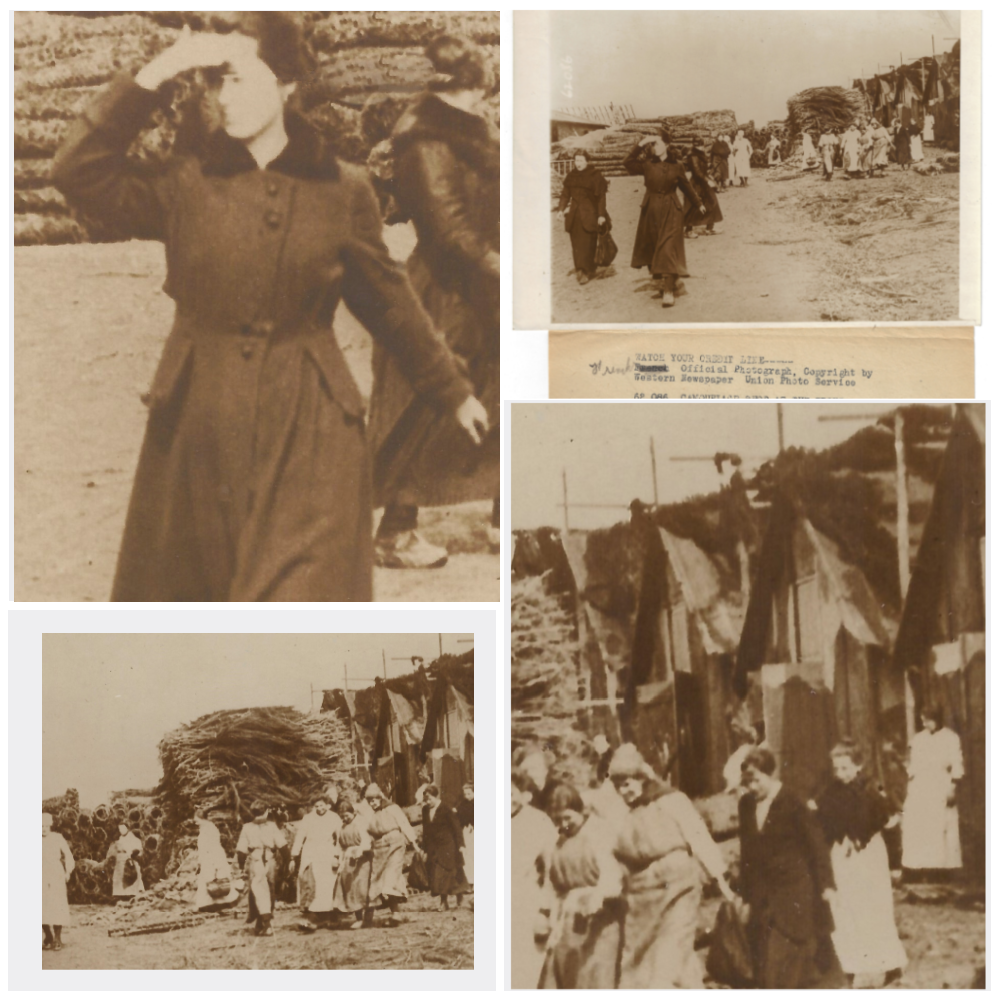
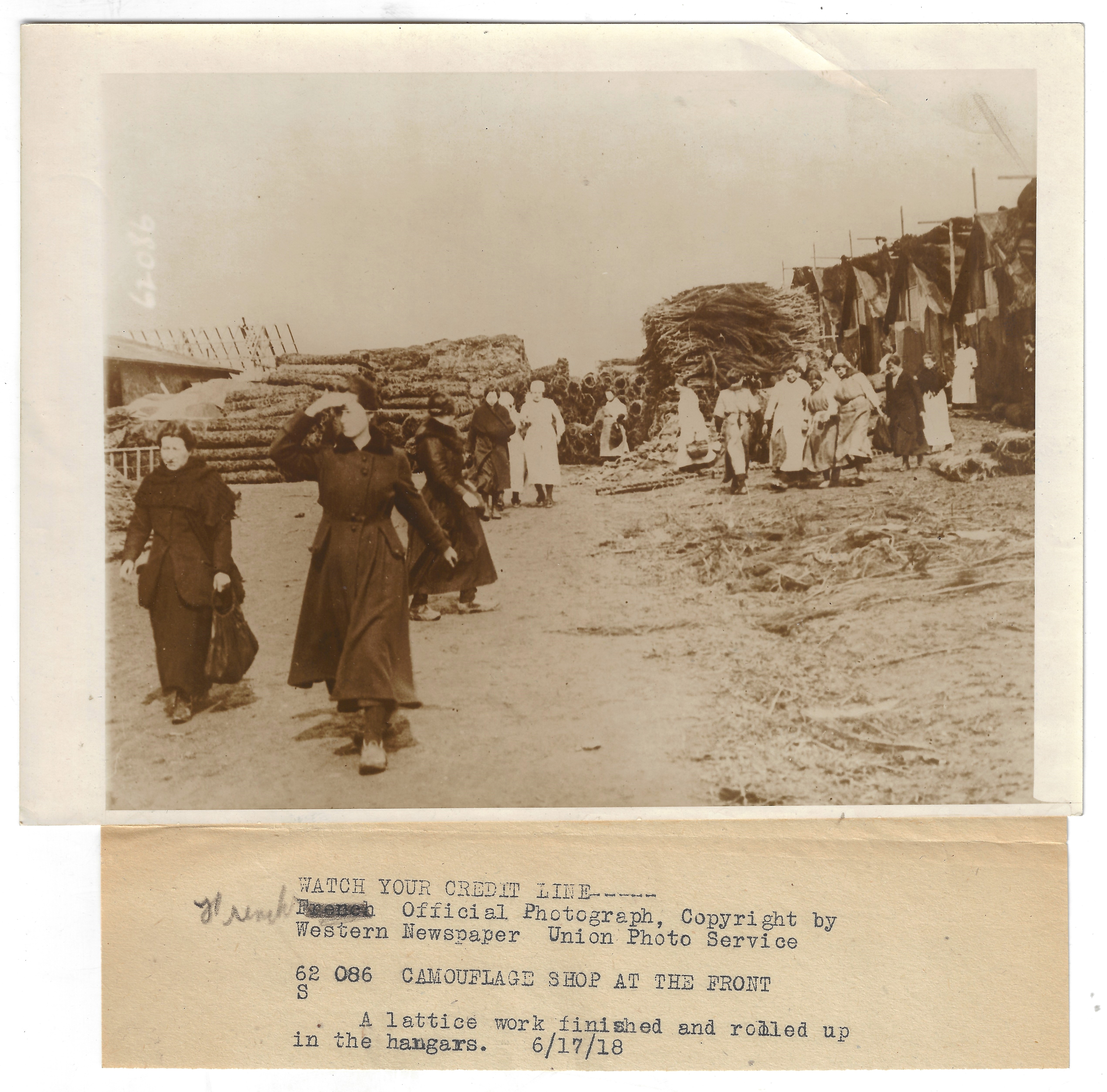
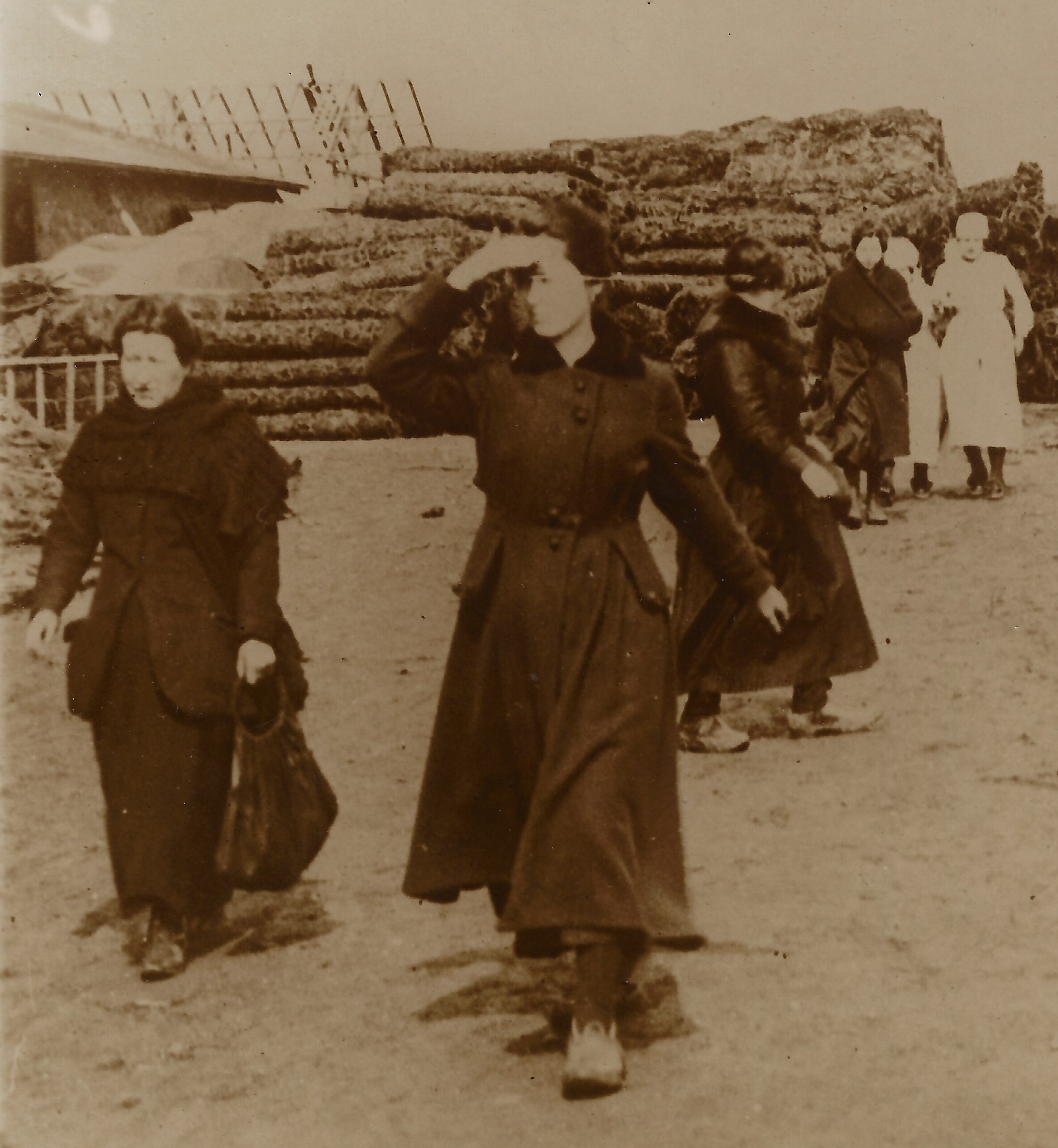
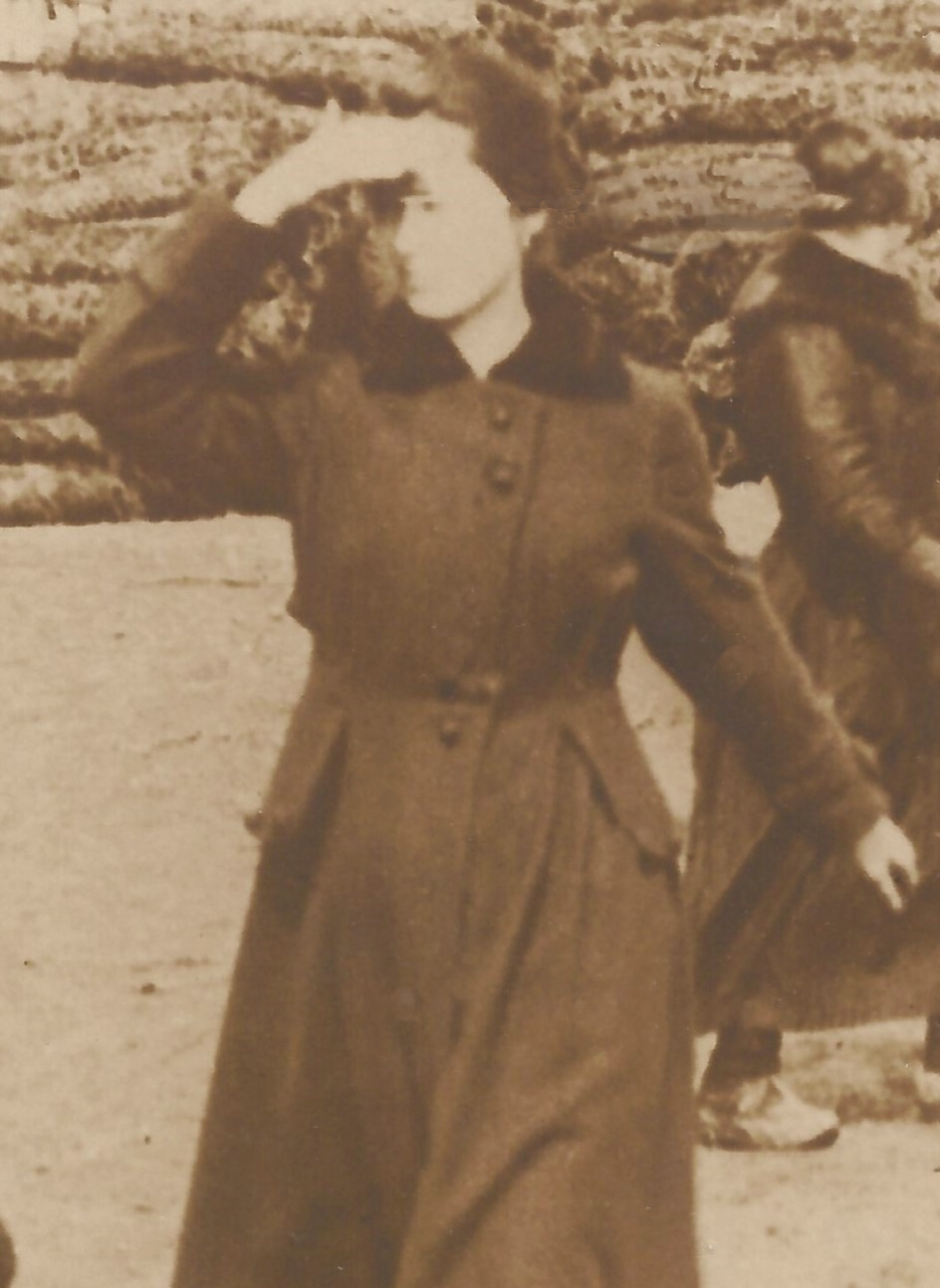
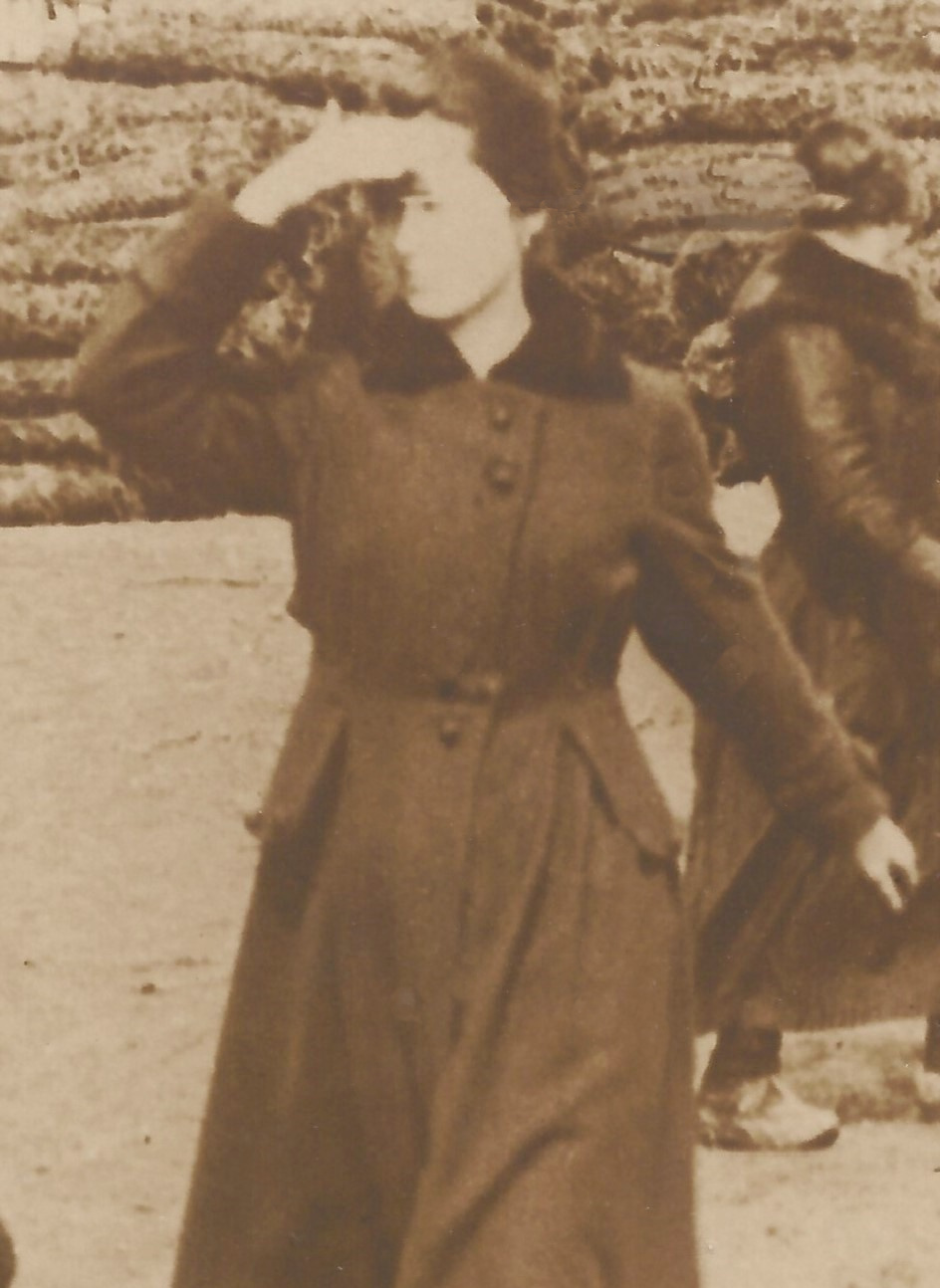
    WWI Photos camouflage detail _5_Just a few days ago I made a post here about camouflage (“Art & Artists as Wartime Magi–Making Things Disappear, 1918”, and now comes another, a WWI news service photo, “Camouflage Shop at the Front”.  Camouflage imagery has been relatively scarce in my experience with WWI photographs, particularly one like this, with women workers at the front (“A lattice work finished and rolled up in the hangars, 6/17/18”), shown at shift change or lunch break. Women were heavily involved in the production of camouflage during WWI (as with the U.S. Women’s reserve Camouflage Corps), with some netting and uniform designs being produced in domestic settings and then sent to the front. 

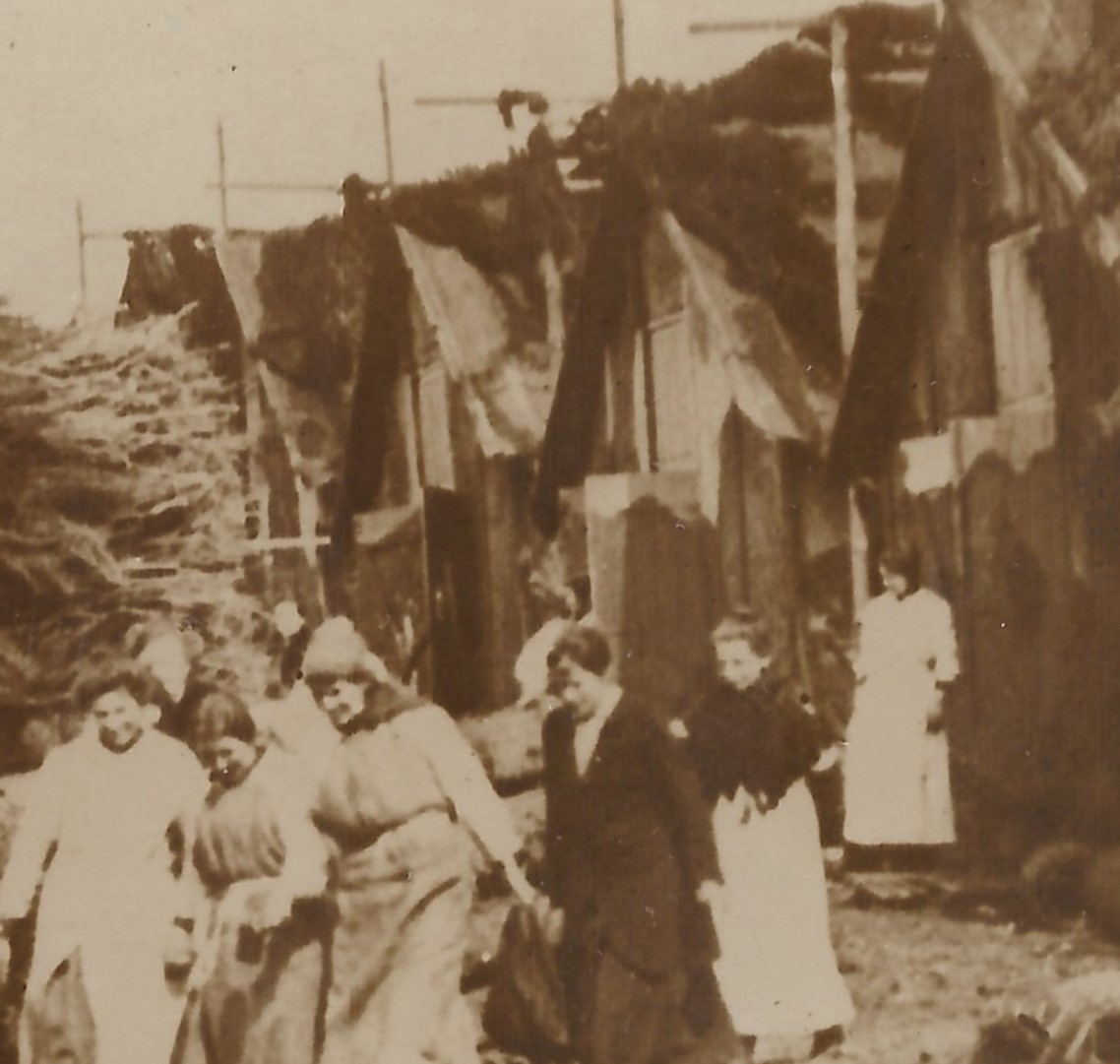
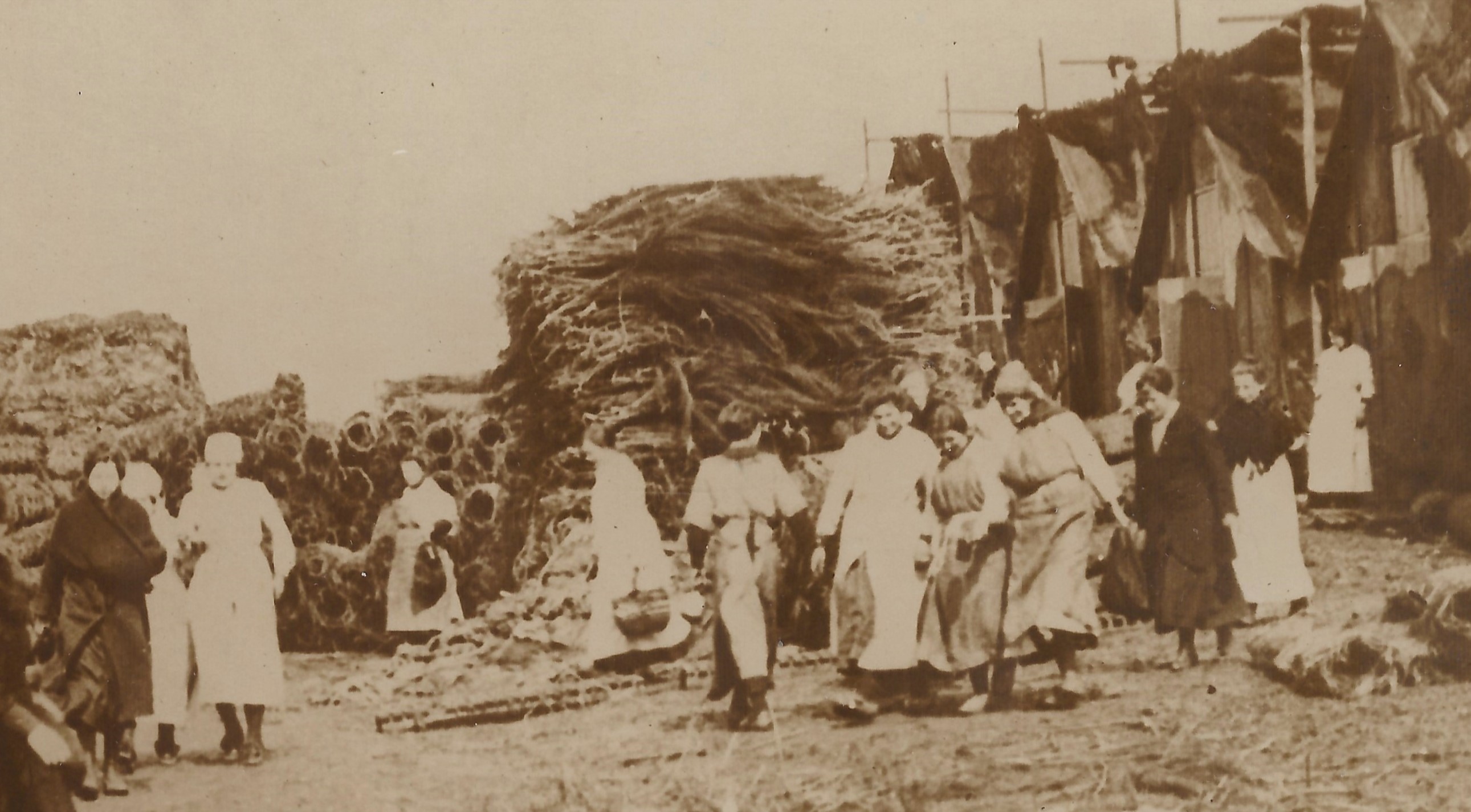
    What draws me in here, in this photo, is the woman at front-left: she seems tallish and ramrod-straight…and I like the long swing of her left arm. I imagine that it is lunch since there are no shadows to speak of and it was obviously sunny, and at some point of the 17th day of June 1918, these workers were on their way to a break. (I suspect that the date wasn’t very accurate for when the photo was made, as everyone here is wearing pretty heavy clothing for June, somewhere in north-eastern France or Belgium.  They were constructing camouflage made of rags and natural bits, piles of which you can see in the detail. The “hangars” are small ganged huts covered by camouflage netting.

    In any event I share this as I don’t easily see another example online quite like this one. 

    Collage of the full image and detail:WWI Photos camouflage  collage

    The full image, along with the suggested caption to be used on publication (supplied by the photo news agency):

    WWI Photos camouflage detail _2_

    The hangars:

    WWI Photos camouflage detail _2_Camouflage bits:

    WWI Photos camouflage detail _2_
    WWI Photos camouflage detail _2_

    ·Posted by :

    ·in:

    — —

  • Art & Artists as Wartime Magi–Making Things Disappear, 1918.

    JF Ptak Science Books   Quick Post

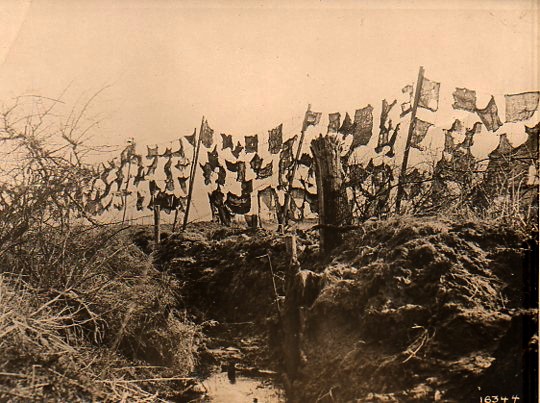
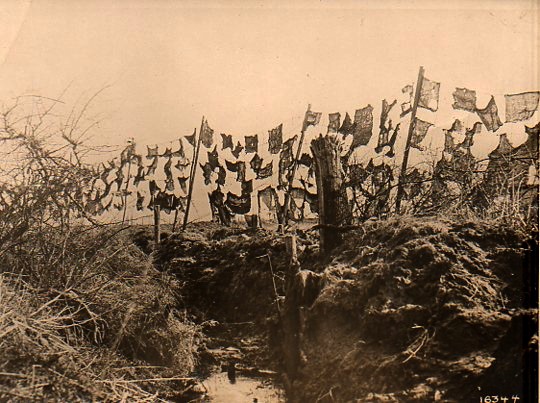
    Its a little difficult to think of Ellsworth Kelly, Jacques Villon, Grant Wood, Laslo Moholy-Nagy and Thomas Hart Benton as painters-for-war.  But its true, and true for many of hundreds of other artists in the 1915-1918 era. Its not as though they were in the trenches gunning down the enemy or lobbing hand grenades into the swirling gun smoke. They werecamofleurs, camouflage1 experts, artists employed as magicians, Wartime Magi, employed/drafted to make ships and such disappear. 
    WWI Photos camouflage _1_

    Ever since it was (sort of) first noticed in 1915 that designs odd to the environment, stark geometric patterns and such, were capable of fooling the eye, people with  design capacity were pressed into service, rendering offensive and defensive instruments of war optically semi-impervious with variations of the then-five-year-old modern nonrepresentational art. That must’ve been a very odd position to wake up to every morning. 

    WWI Photos camouflage _2_

    Of course the idea of camouflage in the animal world is probably 250 million years old–animals and insects have been blending into their environment for eons, and I’m sure too that early hominids did their fair share of walking behind brush.  But the idea of hiding great amalgamations of very heavy metal with paint is really quite modern.

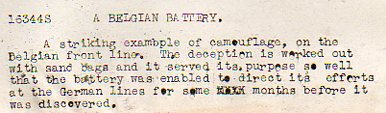
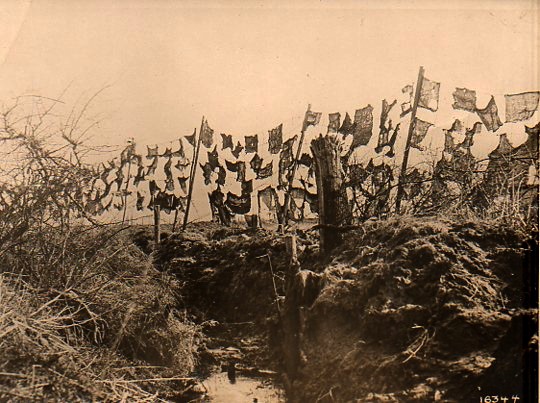
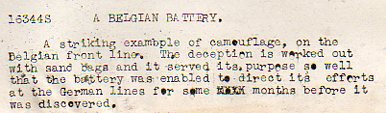
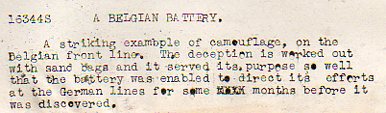
    In this photograph, the camouflage is more a more futuristic conception of art than the abstract and cubist approaches that were taken during the war, this looking more like assemblages of found material more than anything else.  And, according to the text that accompanied the photograph (which comes from 1918, from the Underwood & Underwood news photo service agency), the camouflage–empty sandbags thrown on a barbed wire fence) successfully concealed a gunnery emplacement for months on end. 
    Notes

    1. A fine bibliography on camouflage appears here, at Leonardo Online.

    • The definition of “camouflage” from the Oxford English Dictionary shows that it is a young word, in English:
    • (n) The disguising of any objects used in war, such as camps, guns, ships, by means of paint, smoke-screens, shrubbery, etc., in such a way as to conceal it from the enemy; also, the disguise used in this way; freq. attrib.
    • 1917    Daily Mail 25 May 4/4   The act of hiding anything from your enemy is termed ‘camouflage’.
    • 1917    Daily Mail 16 July 5/3   The King paid a visit to what is called a camouflage factory.

    • 1922    C. E. Montague Disenchantment viii. 108   A French aerodrome across which the French camouflage painters had simply painted a great white high-road.
    ·Posted by :

    ·in:

    — —

  • Beauty and Confusion in the Details: Grenade-Throwing and Rifle Practice (1918)

    JF Ptak Science Books   Quick Post

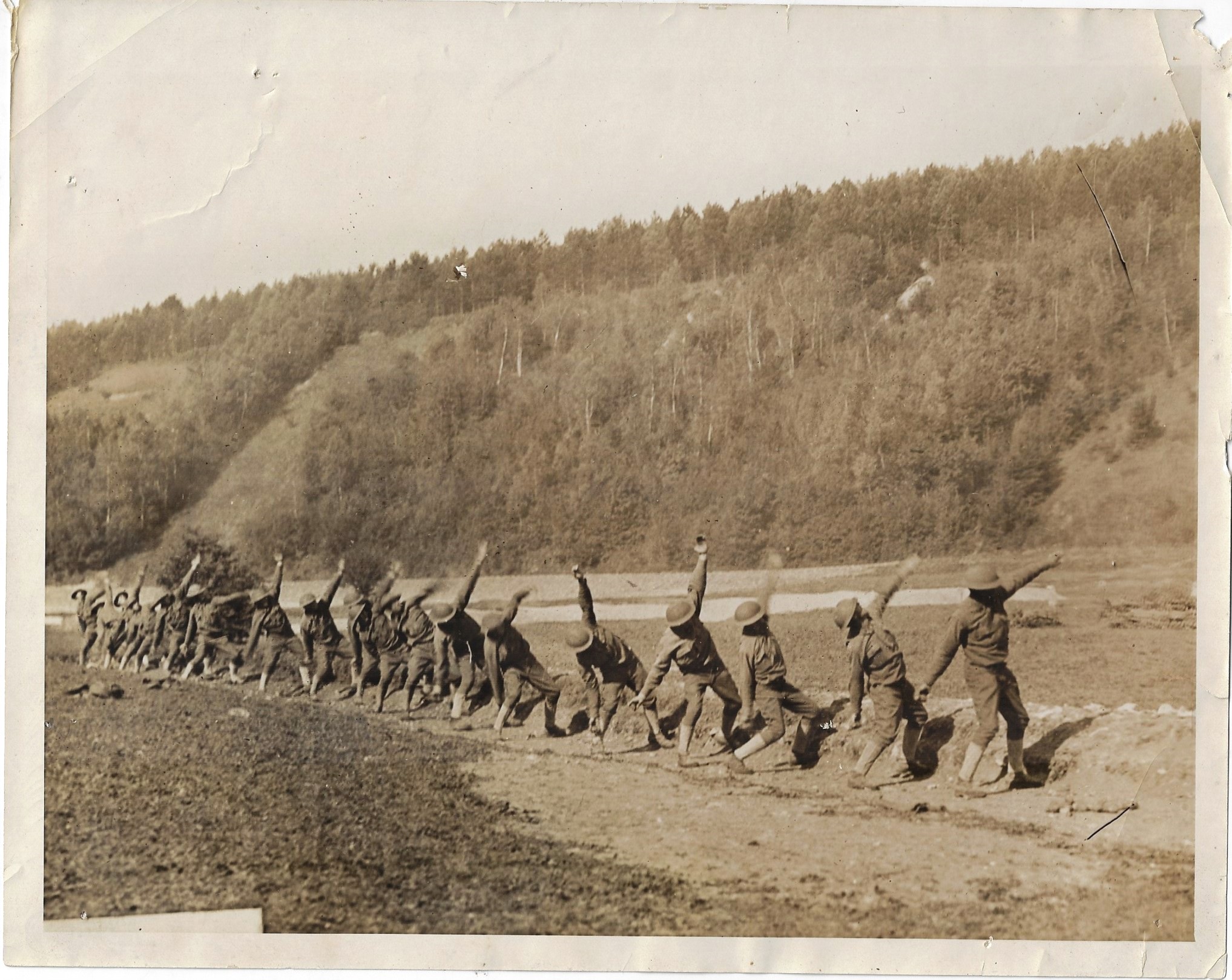
    Here are another couple of enjoyable, interesting, and somewhat endlessly mine-able images from an archive of WWI news photo service agencies, all of which are from 1918.  Photographs were made by pools of photographers working for several different photographic news agencies. The content of the images were generally secured and approved by the Committee for Public Information (CPI), which came into existence by executive order under President Woodrow Wilson on April 13, 1917, and which was charged with the task of wining the hearts and minds of the people of the U.S., to gain public support for the war and for American participation.  

    The way that many newspapers obtained the war images that they published in their papers was via a semi-centralized pool of war images.  The newspaper would request, say, a photo of German prisoners, and would contact one of these photographic agencies—for example, say, the Central News Photo Service of 26-28 Beaver Street, NYC—and purchase the rights for republication, and then print it in the newspaper along with the story.  In almost every case the photo would be accompanied by a caption mimeographed onto an attached piece of cheap paper, or have the information stamped on the reverse.

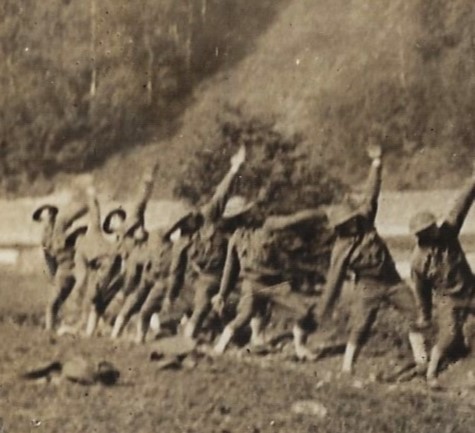
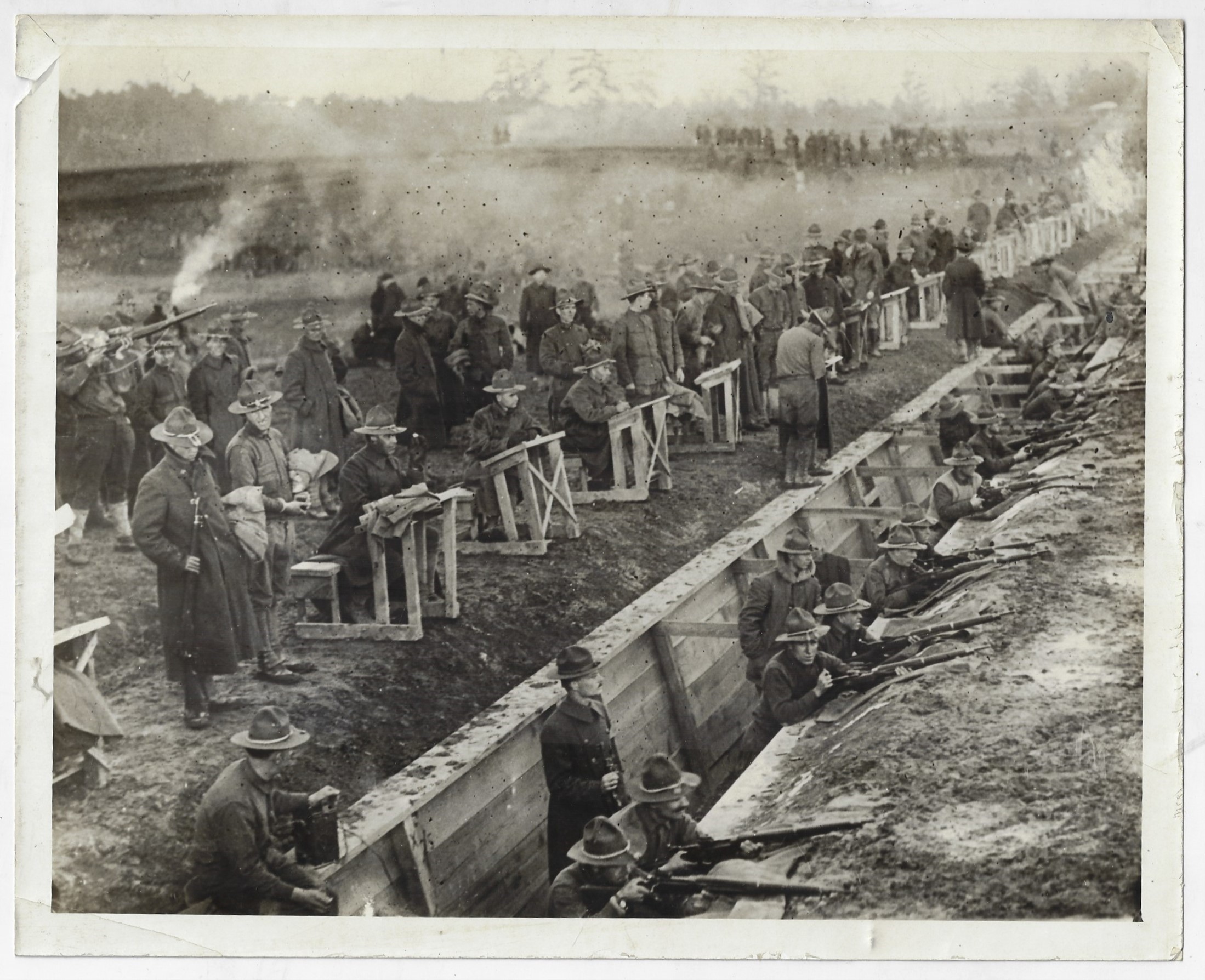
    I’d like to share the following two images of U.S. soldiers practicing their trade–the top features grenade throwing, and the bottom shows a pit at a rifle range.  The Doughboys heaving the grenades were doing so according to plans and design, and in spite of its apparent awkwardness, must’ve worked well. The detail image is challenging for sure, the soldiers seeming to be just about entangled among themselves. 

    WWI photos hand grenade

    asns

    WWI Photos hand grenades _2_

    The scene in the rifle pit seems more orderly if not somewhat  more distressed:

    WWI Photos rifle practice

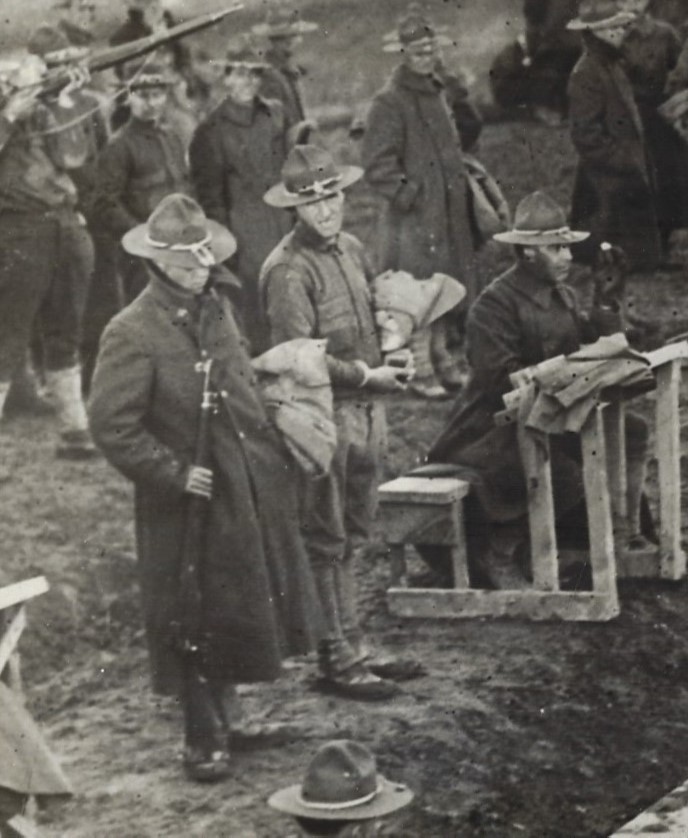
    And as usual with these large group photos, there are many smaller fine images waiting in the detail:

    WWI Photos rifle practice

    ·Posted by :

    ·in:

    —

  • The Domestic Front, WWI (1918)

    JF Ptak Science Books  Quick Post

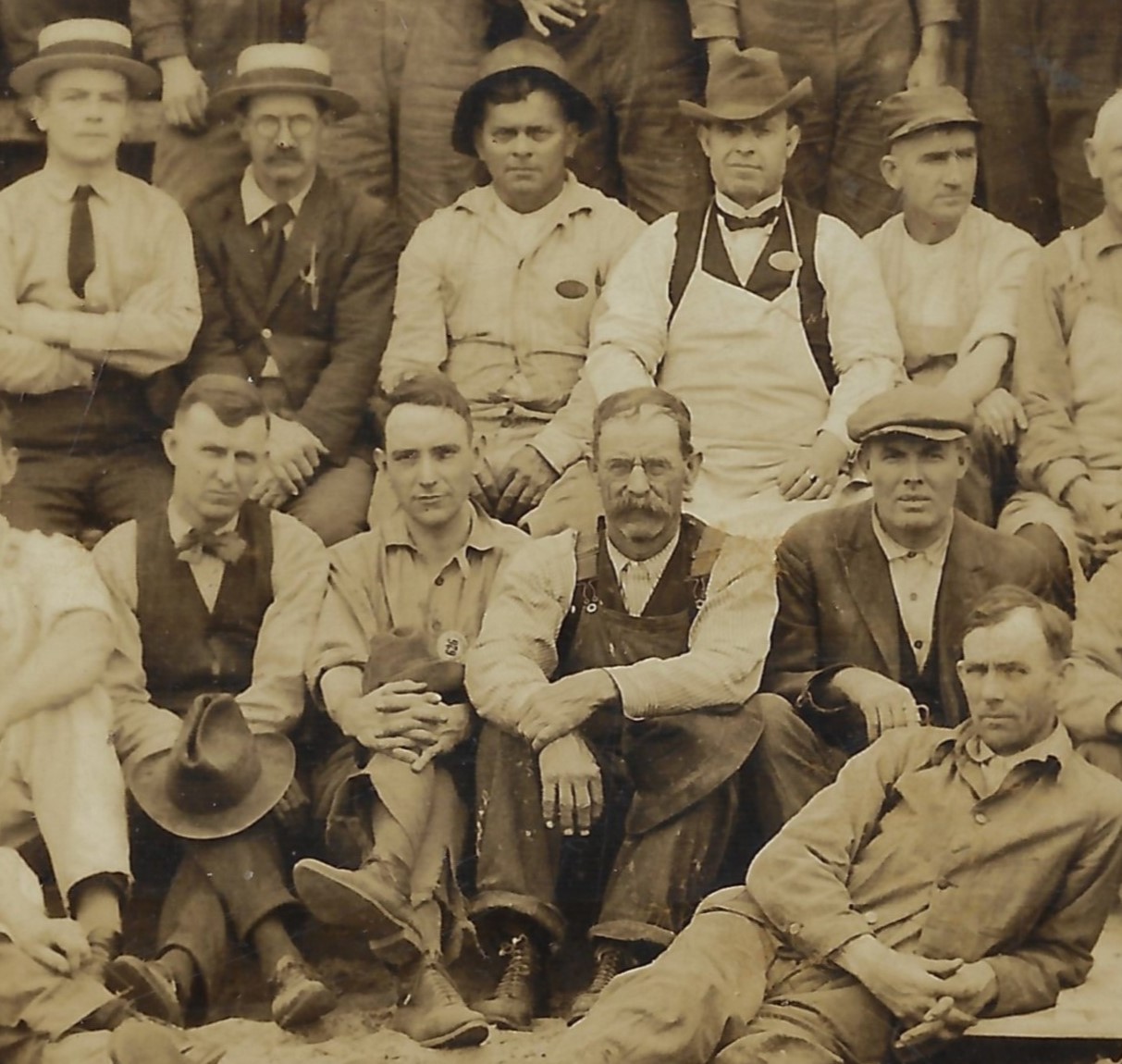
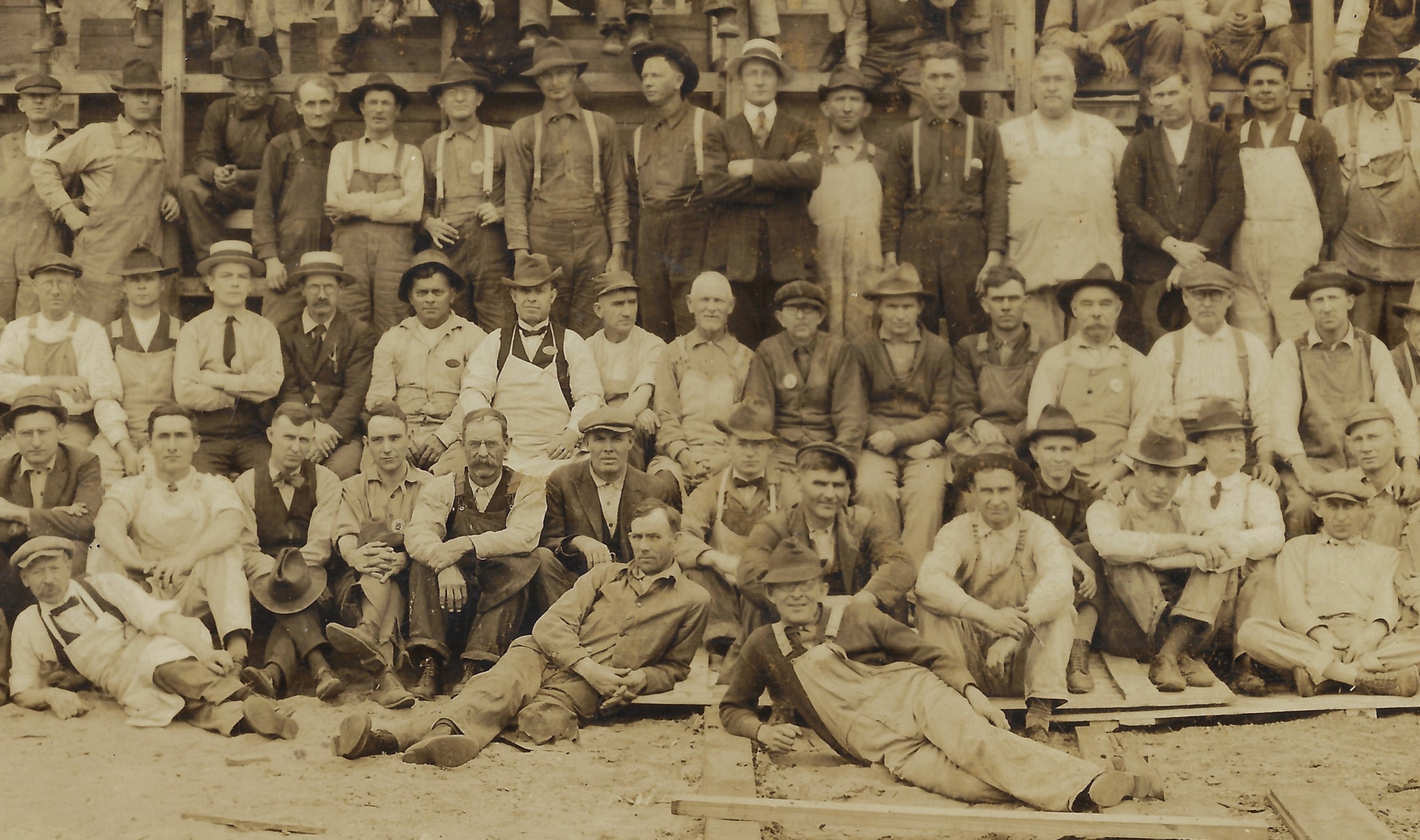
    This is yet another fantastic image from the small (800-item) News Photo Service archive here.  I’d say only 15% of it focused on the domestic end of the war, and there were very few posed images of them–this was an entirely unusual image, so far as this archive is concerned.  Every face a story, here, and I don’t have any doubt that someone could dive into this photograph and make up a character for each one of these men, none of whom are identified. Id like to say that this was a woodshop for aeroplanes, as that is how the image struck me on first exposure, but I have no proof of that. That said, identified or not, this is a terrific photo.  

    WWI Photos Group Large Aero _1_


    WWI Photos group large aero 3

    ·Posted by :

    ·in:

    —

  • A Double Dose of Dirigibles

    JF Ptak Science Books   Quick Post

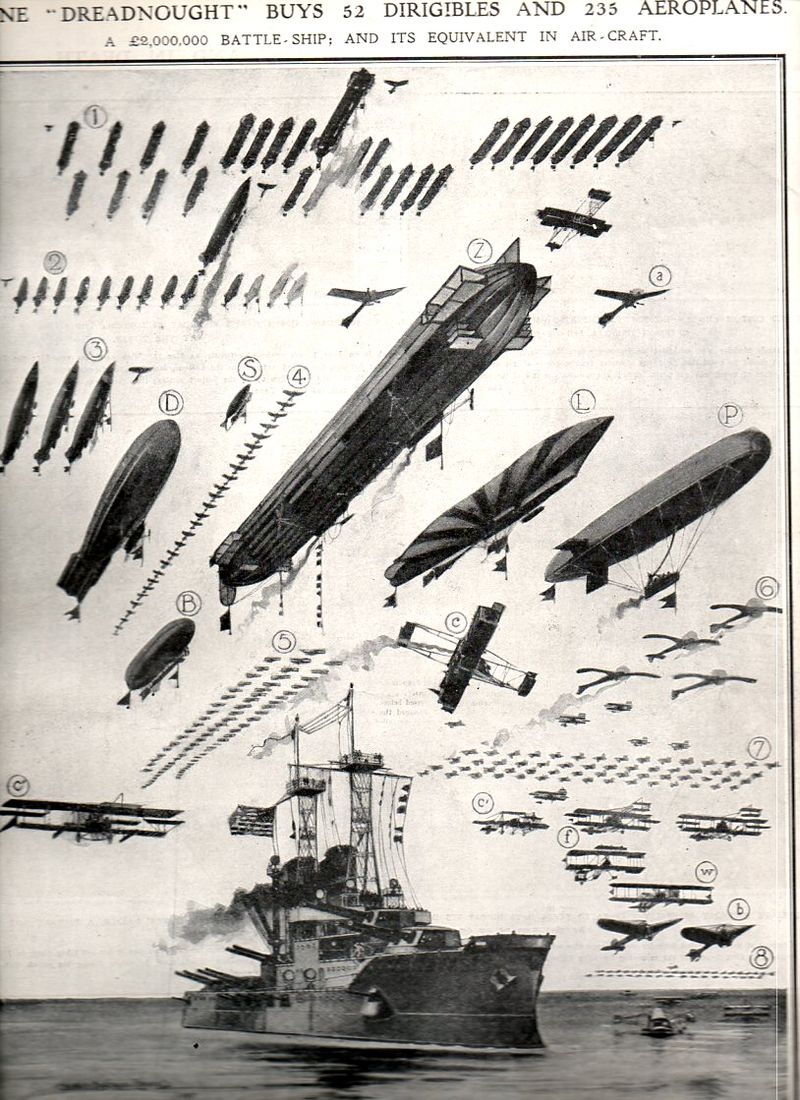
    There’s nothing quite so satisfying as seeing a representation of quantitative data where the graphical displays are flying.  “One Dreadnought Buys 52 Dirigibles and 235 Aeroplanes” is a full-page diagram appearing in the 3 June 1911 issue of the Illustrated London News , making a very strong point that in the new age of aviation the 2 million pounds it would cost to produce one battleship could also (or rather) buy a lot of aircraft. 

    You may notice that the ship is flying a U.S. flag–this is because the graphic appear a month or so earlier in the U. S. publication Scientific American, and the ILN is simply reprinting the info  In any event the image enumerates U.S. and international aircraft, making for a lovely representation of a broad range of airplanes filling up the same sky. 


    Dirigibles and dreadnoughts _3_


  • Camouflage on the Belgian Front, 1915

    JF Ptak Science Books   Quick Post

    Its a little difficult to think of Ellsworth Kelly, Jacques Villon, Grant Wood, Laslo Moholy-Nagy and Thomas Hart Benton as painters-for-war.  But its true, and true for many of hundreds of other artists in the 1915-1918 era. Its not as though they were in the trenches gunning down the enemy or lobbing hand grenades into the swirling gunsmoke. They were camofleurs, camouflage1 experts, artists employed as magicians, Wartime Magi, employed/drafted to make ships and such disappear. 

    World War I photos--Camouflage291

    Ever since it was (sort of) first noticed in 1915 that designs odd to the environment, stark geometric patterns and such, were capable of fooling the eye, people with  design capacity were pressed into service, rendering offensive and defensive instruments of war optically semi-impervious with variations of the then-five-year-old modern nonrepresentational art. That must’ve been a very odd position to wake up to every morning. 

    Of course the idea of camouflage in the animal world is probably 250 million years old–animals and insects have been blending into their environment for eons, and I’m sure too that early hominids did their fair share of walking behind brush.  But the idea of hiding great amalgamations of very heavy metal with paint is really quite modern.

    In this photograph the camouflage is more a more futuristic conception of art than the abstract and cubist approaches that were taken during the war, this looking more like assemblages of found material more than anything else.  And, according to the text that accompanied the photograph (which comes from 1918, from the Underwood & Underwood news photo service agency), the camouflage–empty sandbags thrown on a barbed wire fence) successfully concealed a gunnery emplacement for months on end. 

    World War I photos--Camouflage det292 

    Notes

    1. A fine bibliography on camouflage appears here, at Leonardo Online.

    The definition of “camouflage” from the Oxford English Dictionary shows that it is a young word, in English:
    “(n) The disguising of any objects used in war, such as camps, guns, ships, by means of paint, smoke-screens, shrubbery, etc., in such a way as to conceal it from the enemy; also, the disguise used in this way; freq. attrib.


    1917    Daily Mail 25 May 4/4   The act of hiding anything from your enemy is termed ‘camouflage’.
    1917    Daily Mail 16 July 5/3   The King paid a visit to what is called a camouflage factory.
    1922    C. E. Montague Disenchantment viii. 108   A French aerodrome across which the French camouflage painters had simply painted a great white high-road.
     

    ·Posted by :

    ·in:


  • A Field-Constructed Piano, November 1918.

    JF Ptak Science Books  Quick Post

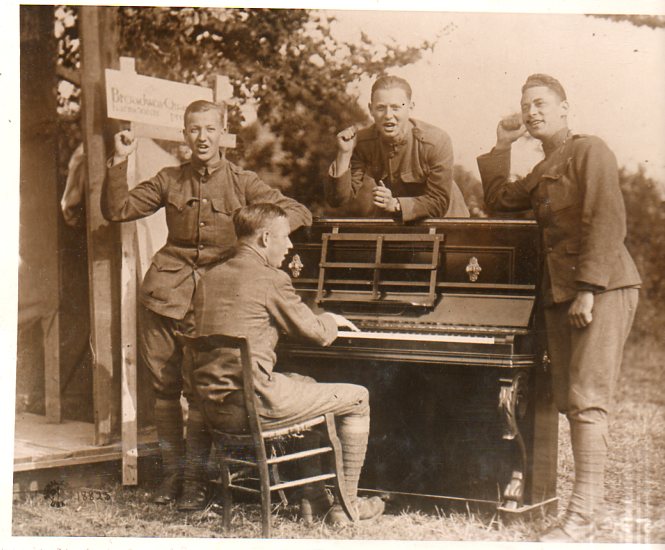
    This fine image was made for distribution to newspapers and magazines, and was printed 2 November 1918–just nine days before the armistice–and shows the “Broadway Quartet” as they rehearse “I’m Only a Buck Private” for a behind-the-lines show for U.S. servicemen, somewhere in France.  The note with the image (from the Western Newspaper Union) says that the staging used for their shows came from found wood, bits of flooring, and camouflage netting torn into pieces.  

    WWI  piano250
    WWI  piano251


    ·Posted by :

    ·in:


  • Christmas Mail, December 1917

    JF Ptak Science Books  Quick Post

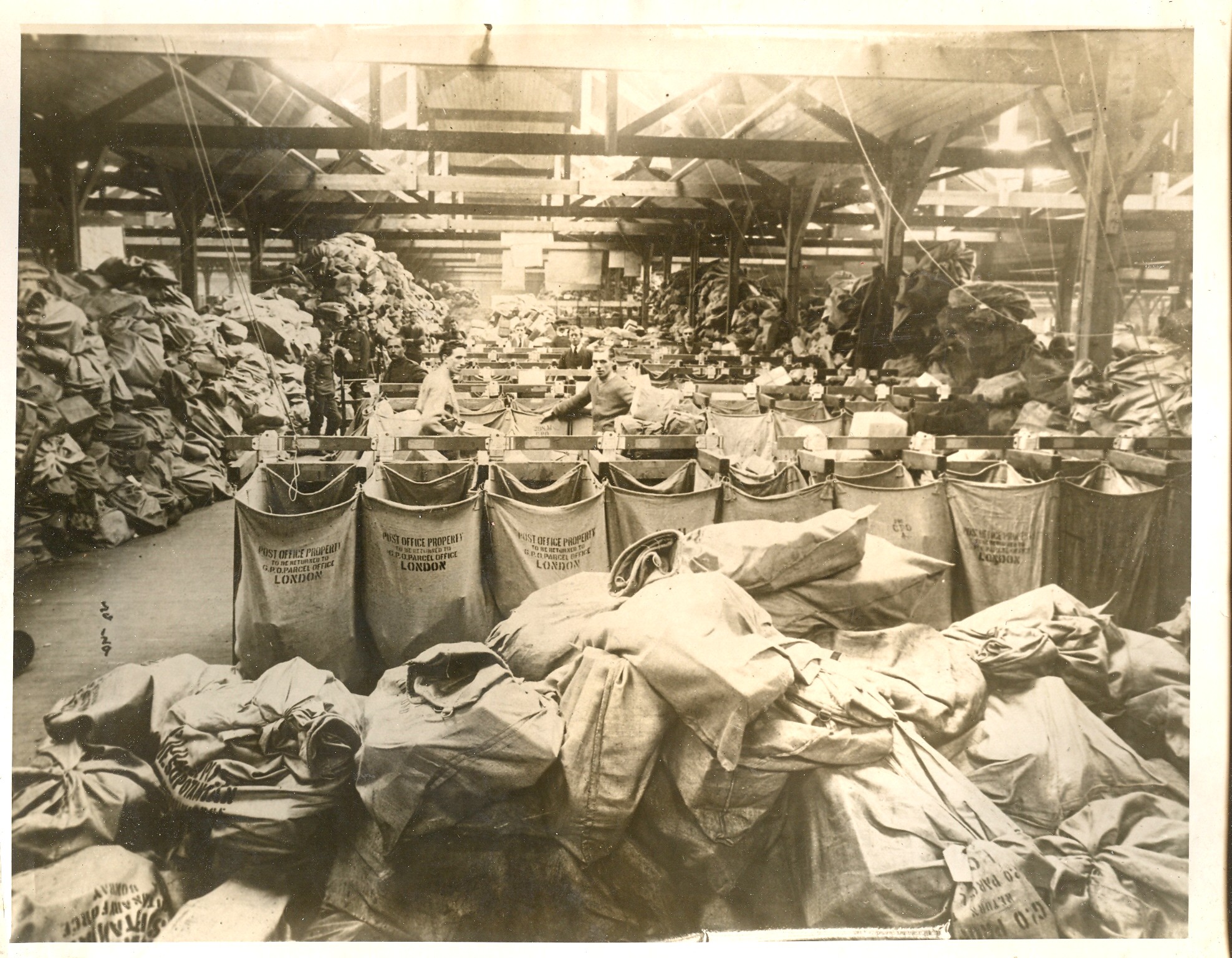
    This is the U.S. Army mail depot at Regents Park, London, braced for and under siege by  Christmastime mail in 1917. It strikes me that there may be a million items in this photo–at this time in the war there were something like 35 million people in the services for all countries dedicated to the war effort, which is approximately half the number that served in total.  If these letters in this picture were bodies, I reckon that there would be five more rooms like this necessary to tell the visual picture of the war dead and wounded.  This aside, I initially focused on the guy in the rear with the white shirt and tie, standing there pretty much overwhelmed by the task of moving all of that stuff…and perhaps with the idea that much of the mound would wind up being undeliverable because the recipient was killed.  I wonder if that mail was returned, or not?

    WWI photo Xmas mail

    ·Posted by :

    ·in:

    —

  • A Guide to German Trenches and Aircraft, 1915

    JF Ptak Science Books   Quick Post

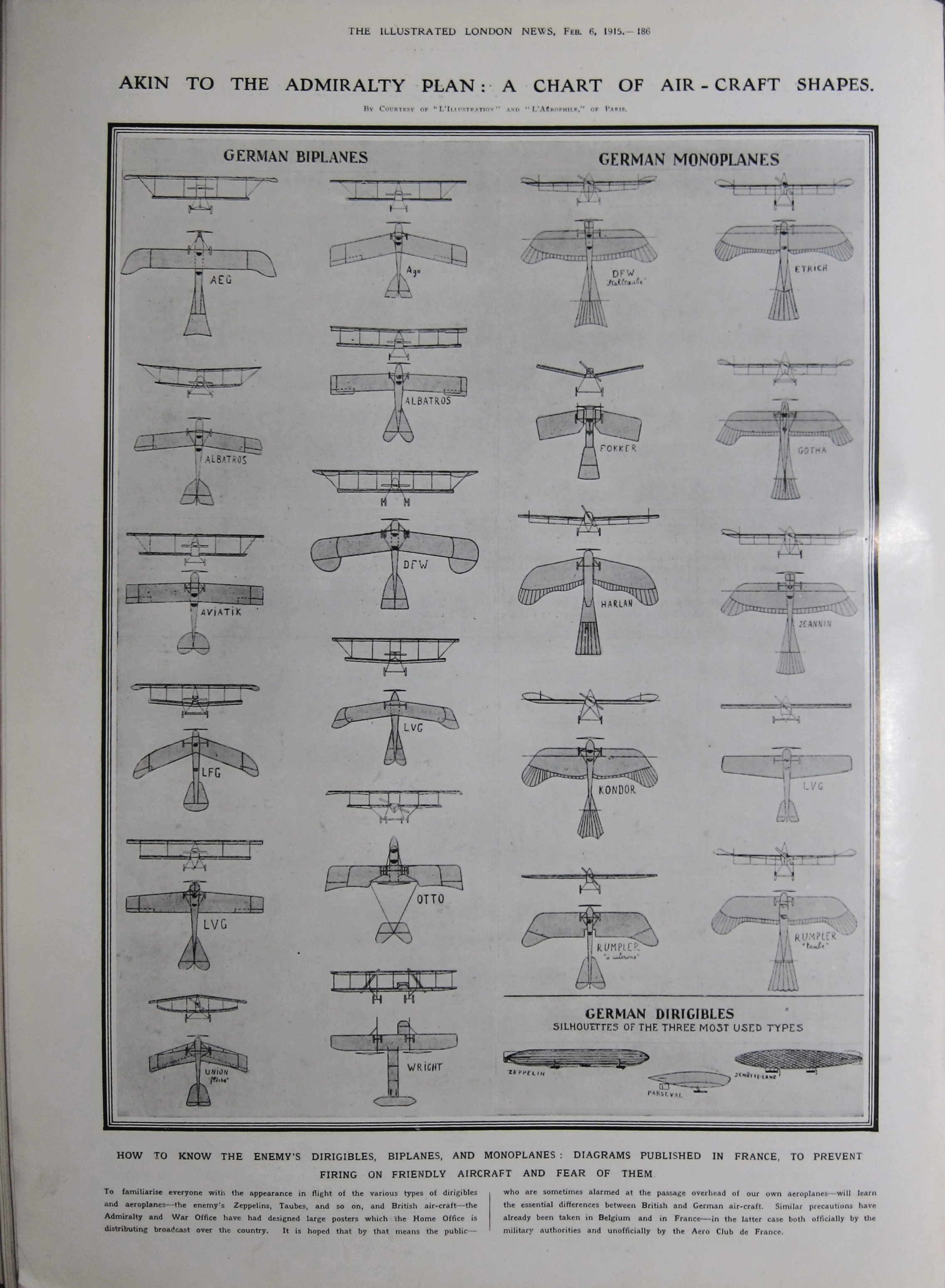
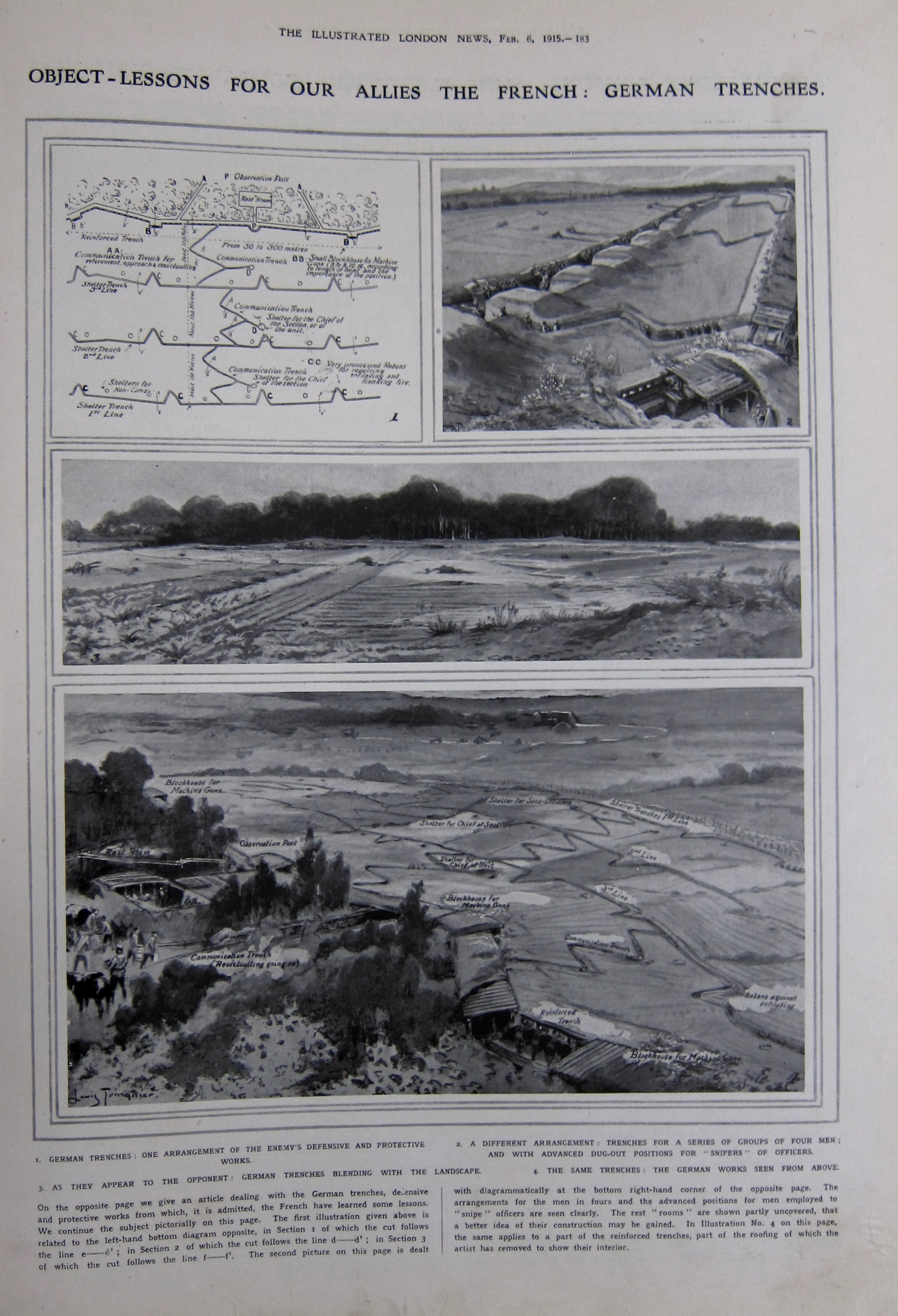
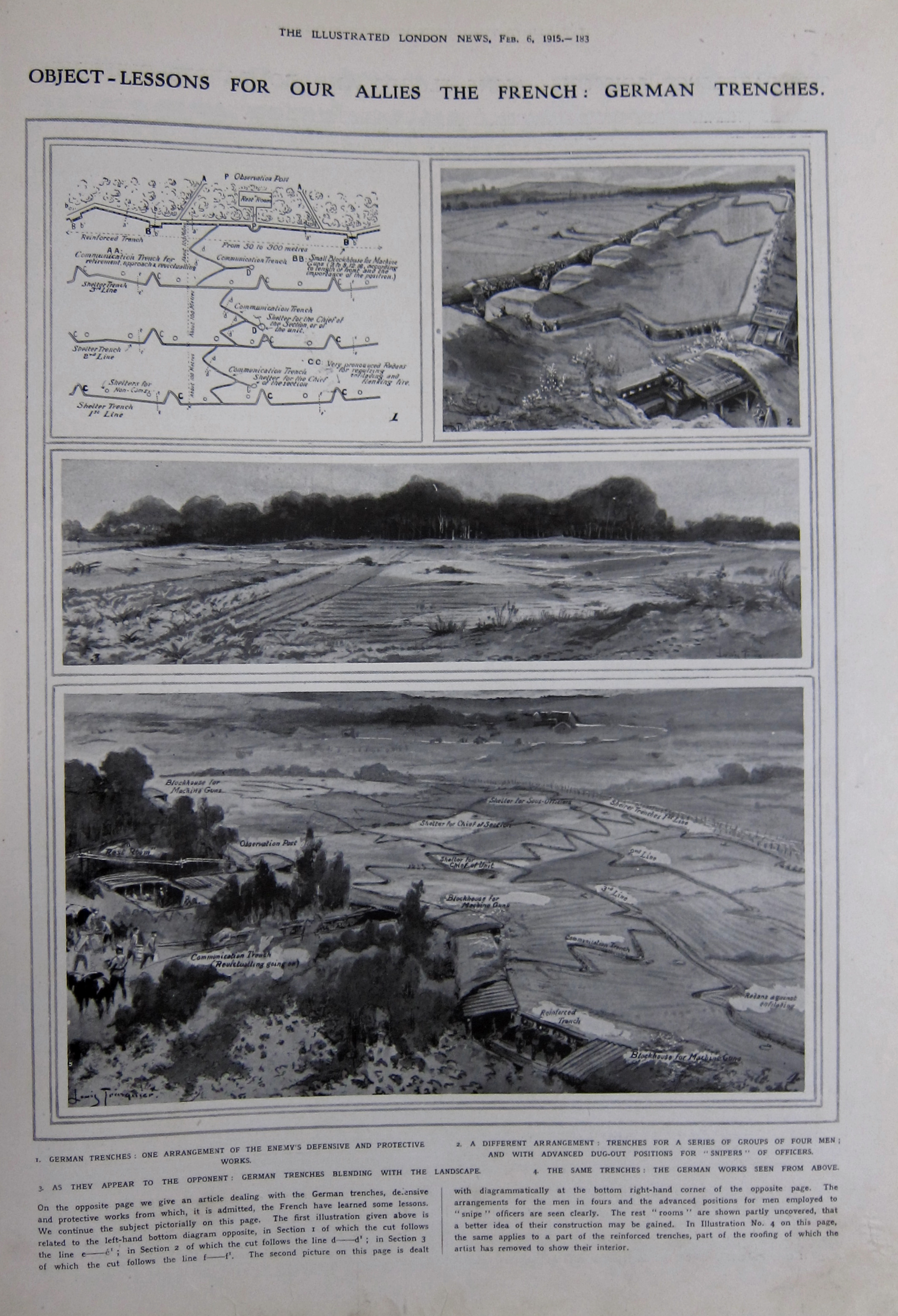
    WWI was into its sixth (of fifty-one) months of war when these helpful graphics appeared in the pages of the Illustrated London News on Feb 6, 1915.  Distinguishing trenches was interesting though not very essential, and certainly not as potentially useful to the broad population as the sheet identifying German aircraft. This image is a version of a poster that was distributed far and wide in Great Britain and France teaching ordinary citizens the differences between airplanes of friend and foe. There were a large number of designs of aircraft,especially so when you threw the British and French planes into the mix. It certainly would’ve been a bit involved at first to make these distinctions, though if your survival depended on perhaps knowing the differences in all of these aircraft then no doubt the learning curve would flatten out. It is also remarkable that all of these developments in aviation come just a dozen years after the Wright brothers first made their powered flight at Kill Devil Hills.  

    • Both images are clickable and greatly expandable.

    WWI German aircraft 1915

    WWI German trenches


    ·Posted by :

    ·in:

    —