A Daily History of Holes, Dots, Lines, Science, History, Math, Physics, Art, the Unintentional Absurd, Architecture, Maps, Data Visualization, Blank and Missing Things, and so on. |1.6 million words, 7500 images, 4.9 million hits| Press & appearances in The Times, Le Figaro, Mensa, The Economist, The Guardian, Discovery News, Slate, Le Monde, Sci American Blogs, Le Pont, and many other places… 5000+ total posts since 2008.

Category: World War I

  • The Belgian Collector of Life (1918)

    JF Ptak Science Books  Quick Post

    This is an excellent example of appreciating images in context.  The photograph seemed line an ordinary image of a soldier peering through a periscope on action ahead of his trench, in some miserable battlefield, somewhere in Europe, 1918.  The image is the product of a photographic pool, the photographers working in semi-unison to produce acceptable images to be used in publications illustrating the war.  The images could not be too terribly graphic, and must not relate any useful military intelligence–they would pass through the hands of very active censors whose job it was to slightly inform the reading public and to also keep morale high, a difficult balancing act.
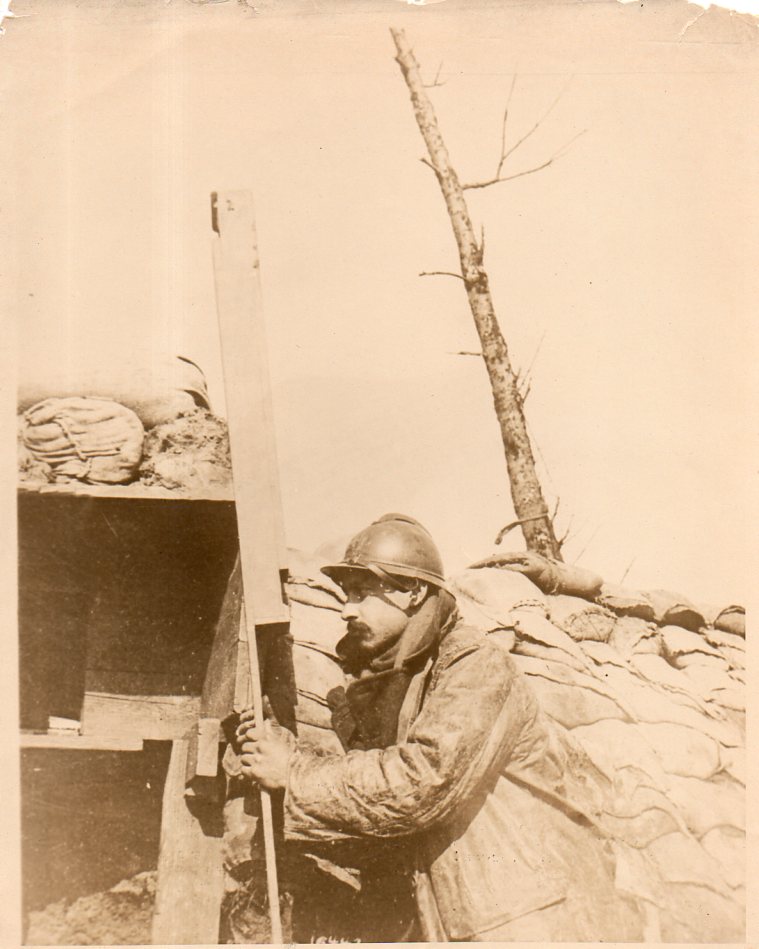
    WWI Sniper198

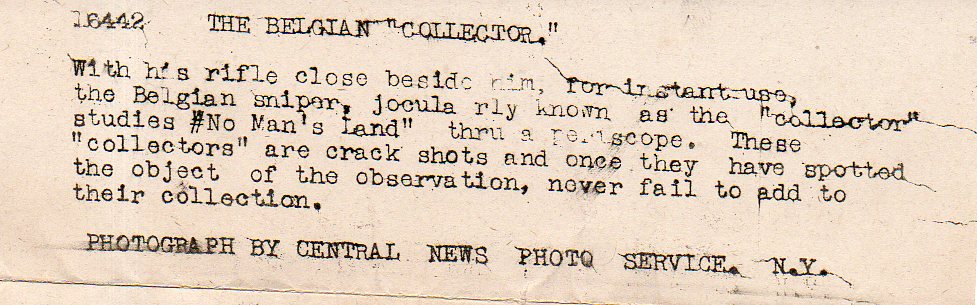
    And so this is what I thought–until I turned the image over–and saw that it was stamped “Photo by Central News Photo Service”, and was accompanied by a typed caption (below), the bit of text that was to be the standardized caption for this photograph when and if it was used by a magazine or newspaper.

    The title is “The Belgian Collector”. 

    I was surprised to read that the Belgian collector was a sharpshooter. He would scan the field looking for any unfortunate enough to spend a moment of thoughtless to leave themselves exposed for one brief moment.  In that moment the exposed soldier could/would die, collected. 

    In a  sense, “collect” like “John Fowles The Collector, only killing them with a rifle.

    But that was his job. And it was war. And if he was on your side, then you’d want him there.  

    “The Collector” title was chilling, and poetical.  
    WWI Sniper det199


    ·Posted by :

    ·in:


  • Mail Call, War’s End, 1918

    JF Ptak Science Books   Quick Post

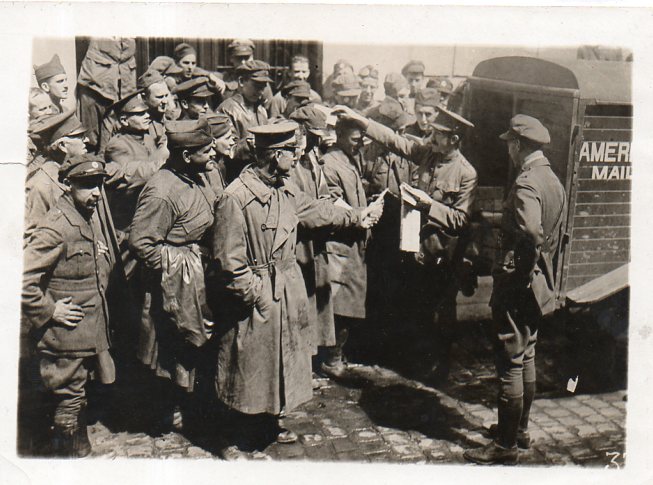
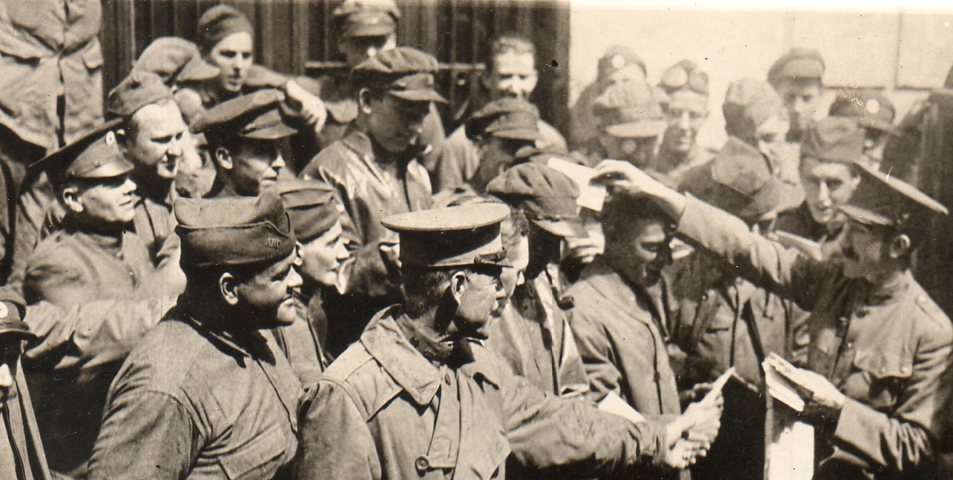
    Yes, this was undoubtedly a posed shot to some degree, but these U.S. soldiers were still very serious about getting their mail. This is a new photo service image made by a pool of photographers whose work was passed by a censor before being distributed1.  The photo was made in the closing weeks of the War in 1918.  On the back of the photo is stamped:  “What a letter from home means in France/Group of American Red Cross chauffeurs in Paris at mail distribution at their garage”, and “Bureau Publicity Lake Div. American Red Cross, for release October 2”.


    WWI Photo Mail167


    WWI Photo Mail168

    ·Posted by :

    ·in:


  • Books as War Booty, 1918

    JF Ptak Science Books   Quick Post

    In the vast caches of loot taken during the course of war I suspect books have ranked somewhere in the middle of stolen stuff–no doubt some fine libraries have disappeared, though I can’t offhand say how many fine libraries emerged from the slaughterhouse.  This photograph–a wartime news photo service image–is one of the few that I have seen depicting the capture of stolen books. 

    WWI photos--looted books111

    ·Posted by :

    ·in:


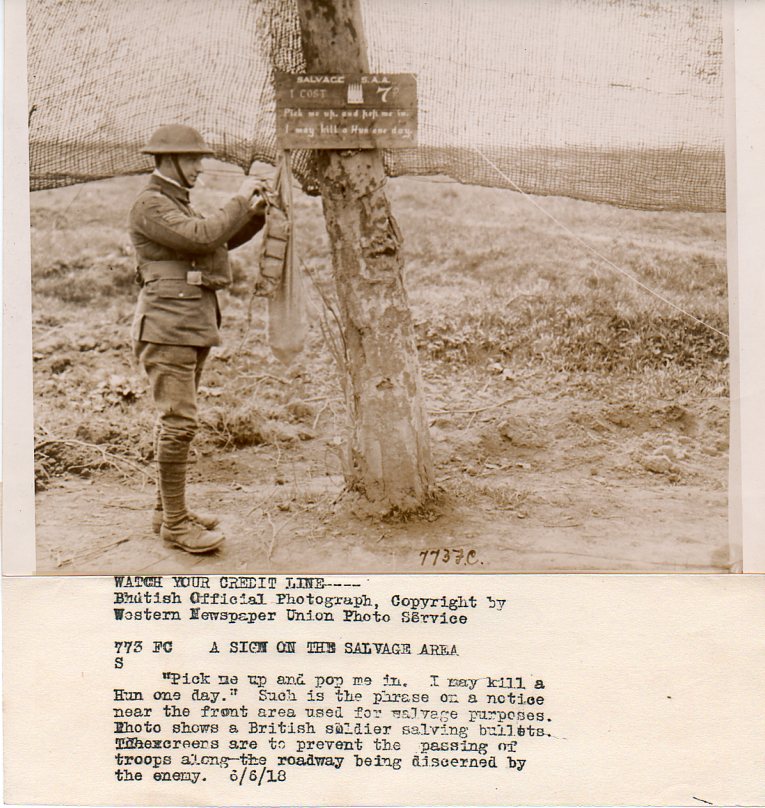
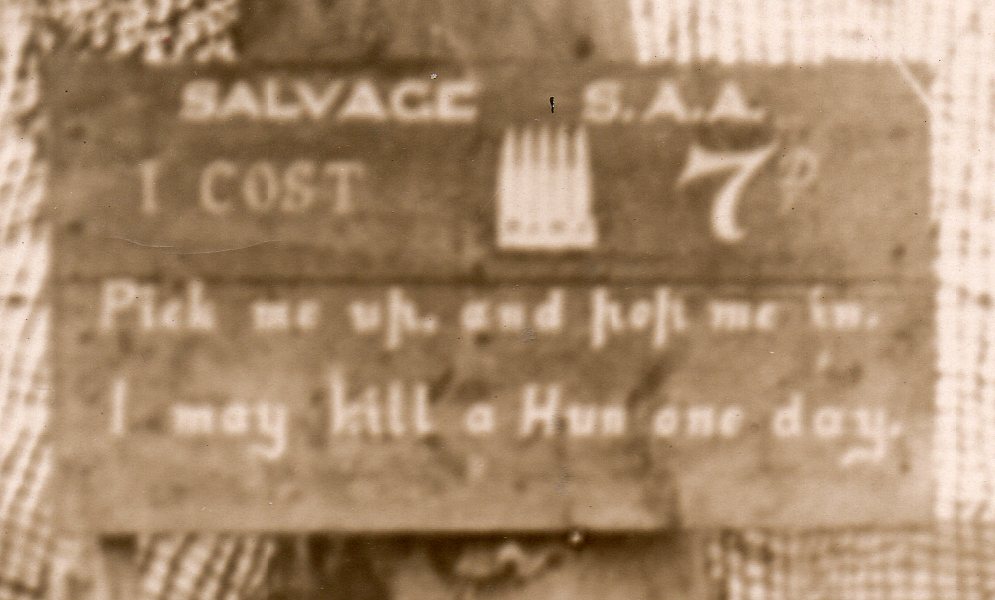
  • “Pick Me Up and Pop Me In, I May Kill a Hun One Day” (1918)

    JF Ptak Science Books  Quick Post

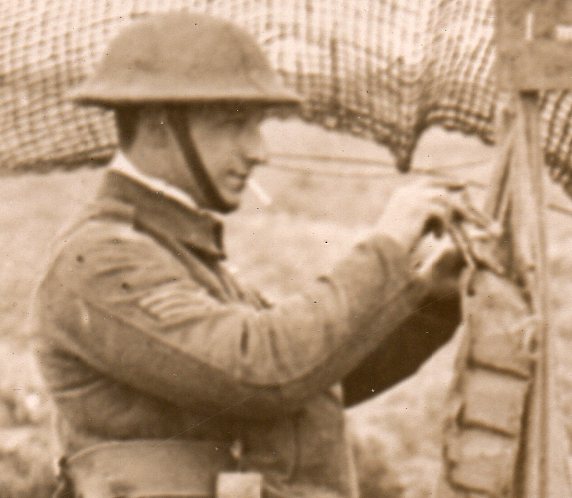
    A little went a long way, sometimes, in collecting the ends and bits of a campaign or a retiring column or from the attics and basements of village houses, or in scrapyards or dustbins or abandoned yards and buildings. Scrap has sometimes contributed greatly to major war efforts; and sometimes it has contributed just a few hundred rounds of ammunition, gathered from the sick or dying or forces on the move, that have told the tale of change in battle.  When you can only carry so much in a campaign where shooting can be an endless process, you can by definition never really carry enough ammunition when you’re already carrying enough of everything else.

    WWI--salvage719 
    WWI--salvageb720

    WWI--salvagec721

    ·Posted by :

    ·in:


  • WWI Parade of Snow, 1917/1918

    JF Ptak Science Books   Post 2775

    WWI Snow PArade _5_

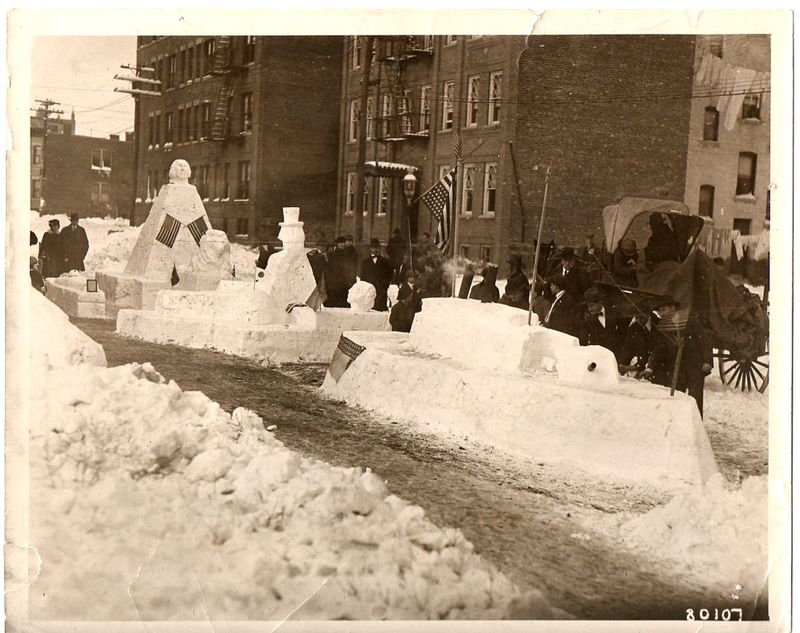
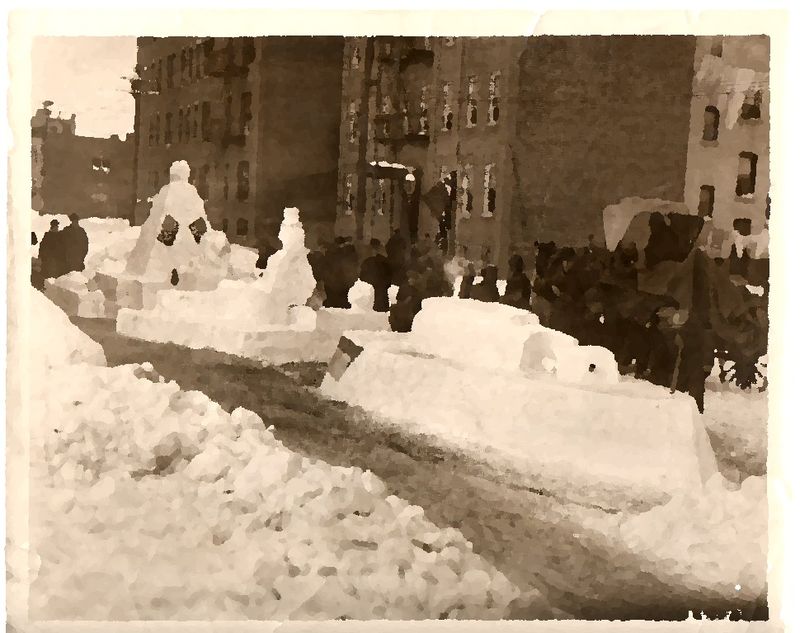
    This news photo service image–stamped “Hearst-Pathe News Agency” on the back–is from the winter of 1917/1918 and shows a patriotic snow parade somewhere in the United States.  The snow looks prodigious, judging from the piles in the foreground and also the accumulated snow on the windowsills, and I imagine that all of the snow floats were sculpted mainly out of exiting snow in the street.  It is a delightful scene, to me, and hosts a variety of smaller, lovely images in vignette. 


    WWI Snow PArade _5_


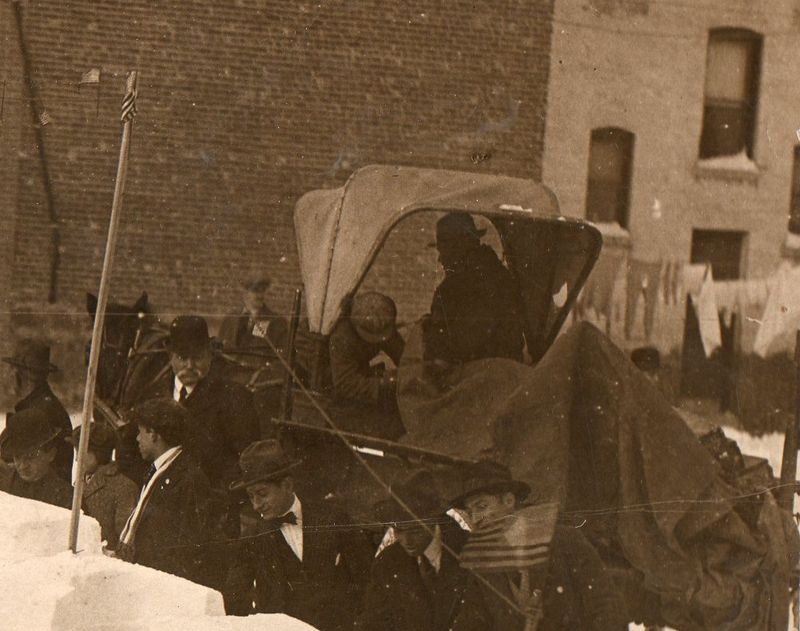
    The man in shadow and sleeping figure (boy) in the buggy complement the white-mustachioed bowler-wearing man to the left; the men looking on in the foreground are interesting, too–plus there’s that laundry in the background.  Given that the laundry is out (and wasn’t just left out during the storm) and that no one seems to be particularly bundled up against cold, I’m going to guess that there was a break in the weather that pushed the temperature higher than normal, with almost everyone taking advantage of the warm snap, as people do everywhere, all the time.  I also like the tiny American flag on the tall pole at left.

    ·Posted by :

    ·in:


  • An Episode in the History of Mud: Heavy and Stuck in 1918

    JF Ptak Science Books  Quick Post

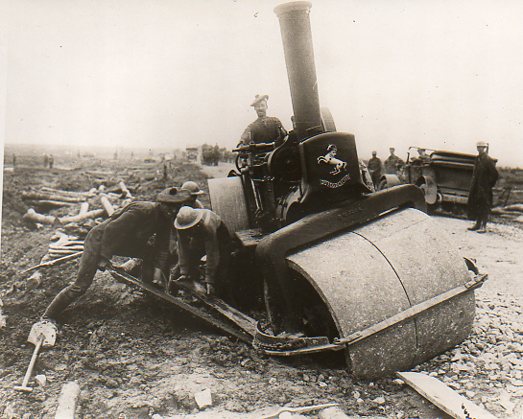
    What is this man smiling about?

    WWI steamroller full

    [Source: from the store’s WWI news service photo collection, 500 strong!]

    He’s satisfied or at least amused with his place there in the steamroller, rather than his soldier brothers who were trying (impossibly) to leverage the beast out of a shell-made muck hole. The guys on foot appear to  have had a comic sense of what their task was supposed to be. 

    ·Posted by :

    ·in:


  • Christmas Mail, 1917

    JF Ptak Science Books  Quick Post

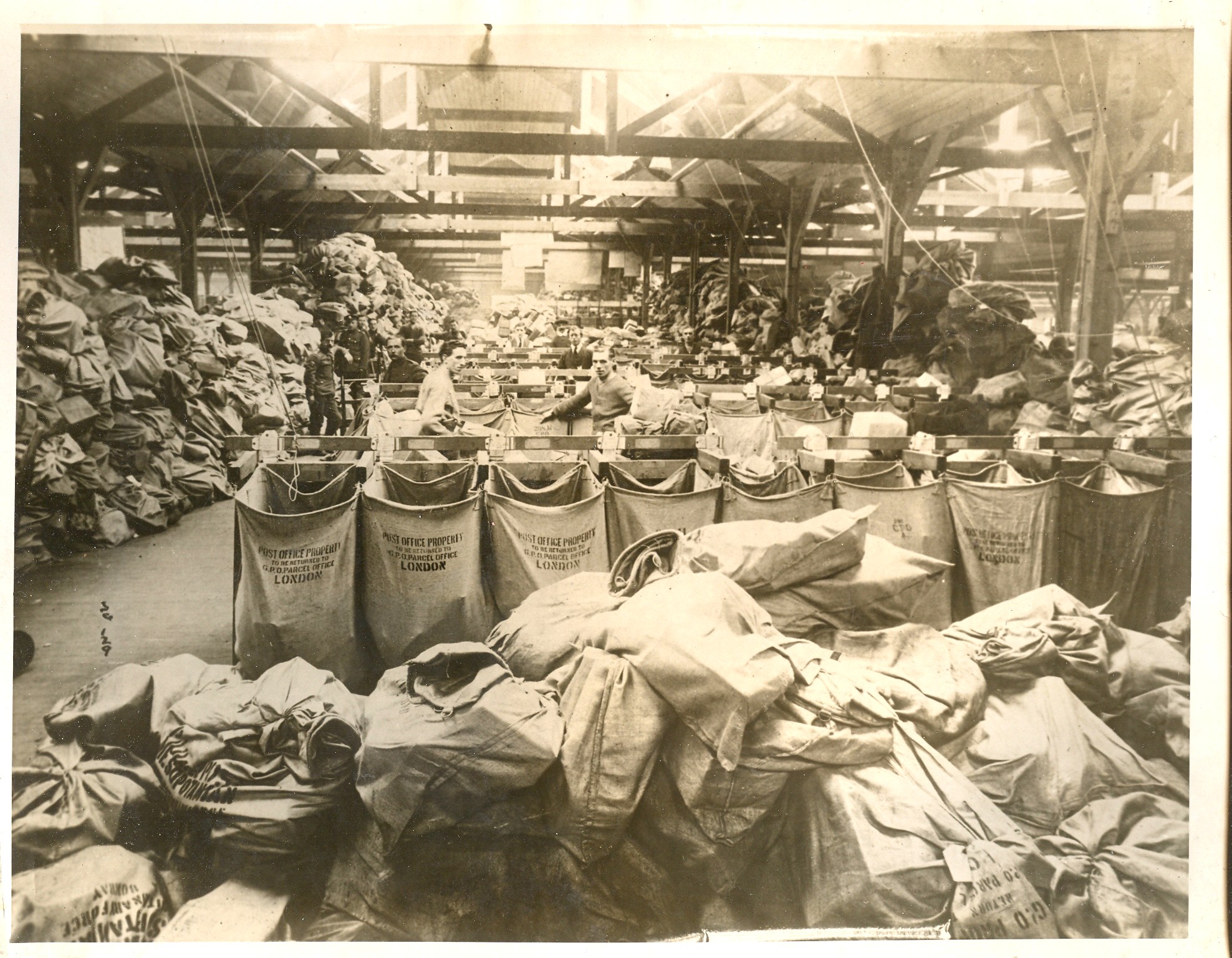
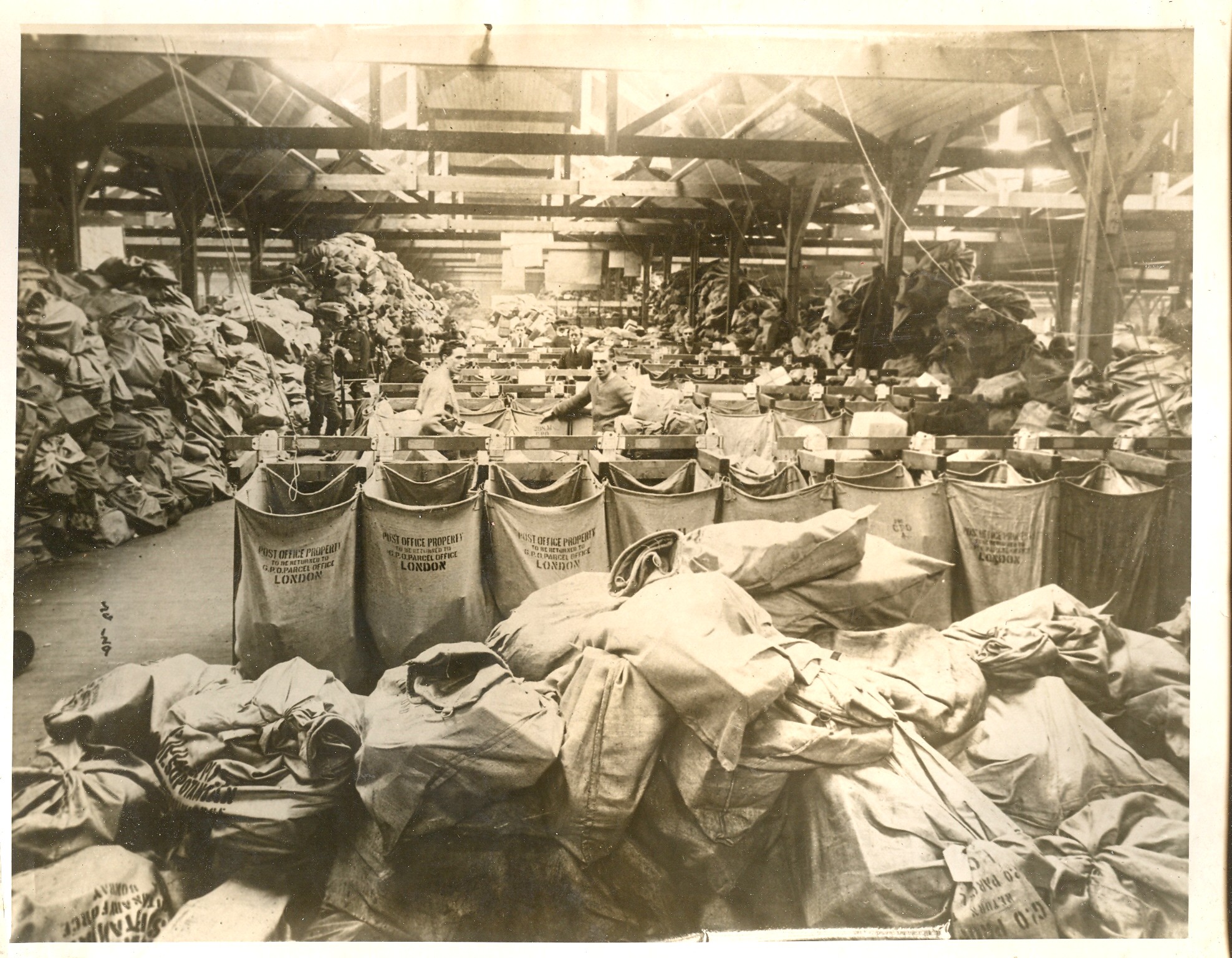
    This is the U.S. Army mail depot at Regents Park, London, braced for and under siege by  Christmastime mail in 1917. It strikes me that there may be a million items in this photo–at this time in the war there were something like 35 million people in the services for all countries dedicated to the war effort, which is approximately half the number that served in total.  If these letters in this picture were bodies, I reckon that there would be five more rooms like this necessary to tell the visual picture of the war dead and wounded.  This aside, I initially focused on the guy in the rear with the white shirt and tie, standing there pretty much overwhelmed by the task of moving all of that stuff…and perhaps with the idea that much of the mound would wind up being undeliverable because the recipient was killed.  I wonder if that mail was returned, or not?

    WWI Photo Christmas Mail


    WWI photo Xmas mail

    ·Posted by :

    ·in:


  • Business-end of German Artillery (1918)

    JF Ptak Science Books  Quick Post

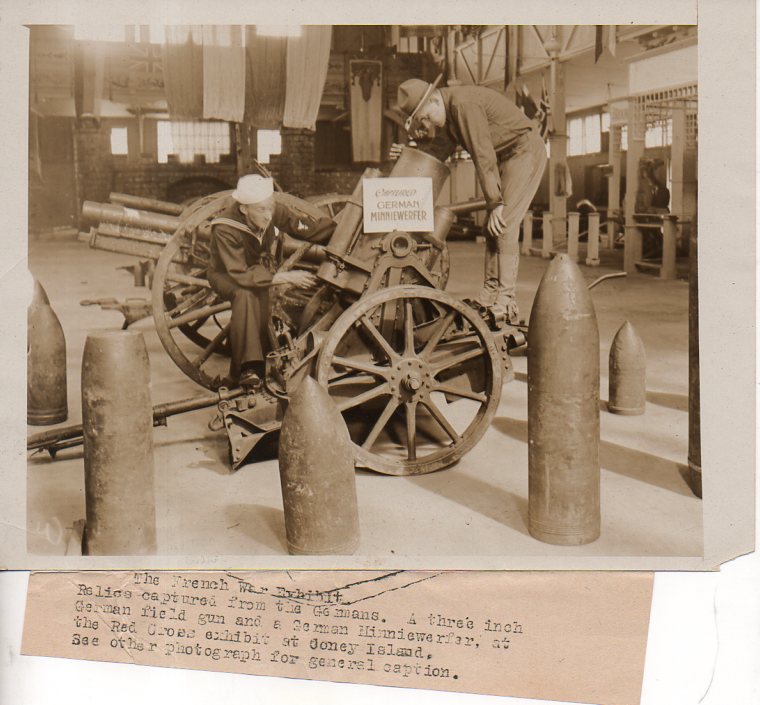
    The American soldier in this new service photo is having a good hard look at the business end of a captured German Minenwerfer (“mine launcher”, which was a short-range mortar), .a three-inch field gun used to devastating effects throughout the war.  We are told via the supplied typed caption that the display was installed on Coney Island (Brooklyn) as part of a Red Cross fund-raising exhibit. WWI Photo Captured German artilleryh177

    ·Posted by :

    ·in:


  • A Great Panoramic Photo of Battlefield Action, WWI (1918)

    JF Ptak Science Books   Quick Post

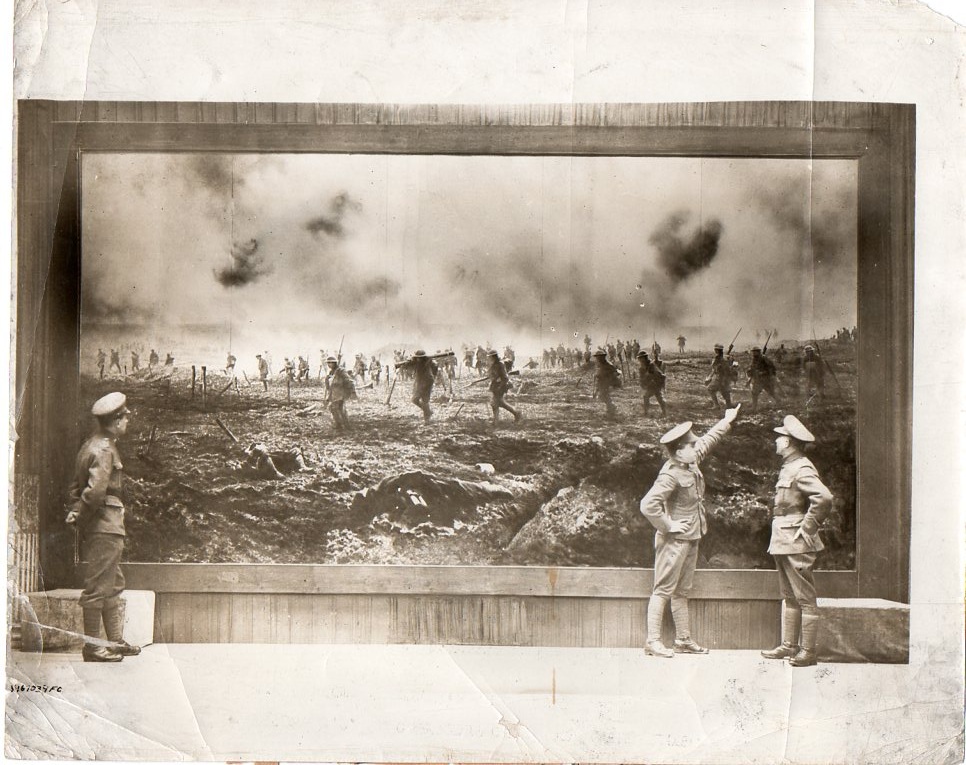
    WWI Photos Big Pano075

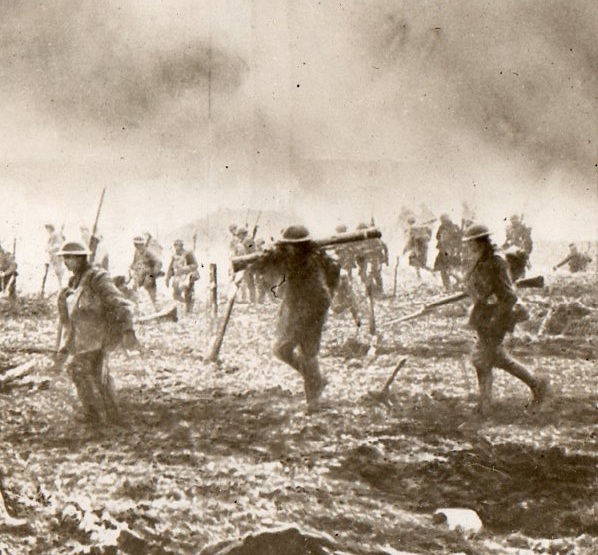
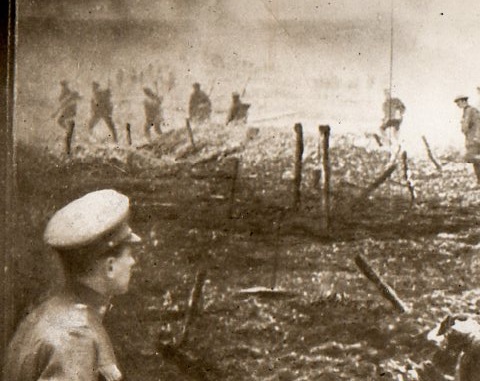
    I recall, I think, that this was the largest photograph of war printed during World War I, looking to be something on the order of 8 x 16 feet or so.  This photo of the photo was printed by Underwood & Underwood, and stamped “British Official Photograph”, and printed at some time in 1918.  It seems that this is an actual battle scene, which was a very uncommon thing among war photographs for the Great War–more so for this group of photographs (News Photo Service)  produced by pool photographers for equal distribution among subscribing newspapers and periodicals. Actual combat photos distributed by the News Photo Service agencies were not a high priority, unless they depicted routed or retreating or being-defeated Germans–it was not a popularly-distributed subject, mainly for propagandist purposes.

    WWI Photos Big Pano074

    I expect that this photo would’ve given the view a you-are-there effect, as the main characters in the composition were about life-sized–an attempt of slice-of-life experience.  There is a surprising amount of foreground in this picture, though.

    WWI Photos Big Pano076


    ·Posted by :

    ·in:


  • Pigeon Heroes of WWI

    JF Ptak Science Books   Quick Post

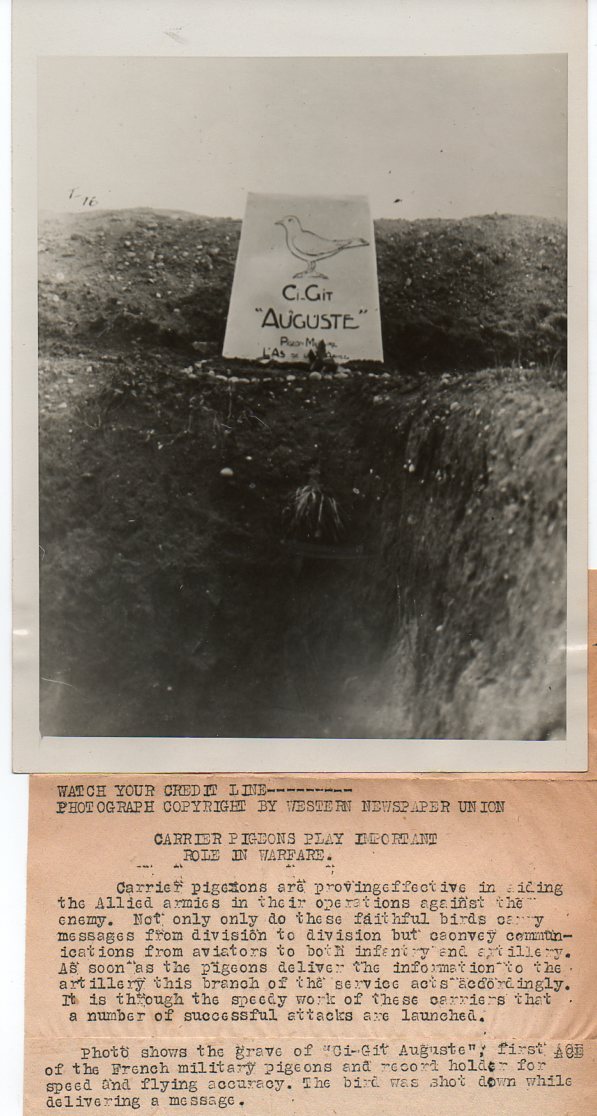
    Here’s a series of three photographs relating to carrier pigeons in WWI.  The first is a magnificent photograph of a memorial to a carrier pigeon named Auguste, a famous flyer who evidently performed invaluable services time after time, a bird of splendid behavior whose actions no doubt saved the lives of many soldiers, and who was shot down by German troops in commission of an assignment.  Auguste’s comrades constructed this makeshift memorial in the trenches for the heroic animal.

    WWI--pigeon714

    And another photograph that told the story of the pigeon in very plain  language:

    ·Posted by :

    ·in: