A Daily History of Holes, Dots, Lines, Science, History, Math, Physics, Art, the Unintentional Absurd, Architecture, Maps, Data Visualization, Blank and Missing Things, and so on. |1.6 million words, 7500 images, 4.9 million hits| Press & appearances in The Times, Le Figaro, Mensa, The Economist, The Guardian, Discovery News, Slate, Le Monde, Sci American Blogs, Le Pont, and many other places… 5000+ total posts since 2008.

Category: Technology, History of

  • Giant Planes of the Hopeful Future, 1928

    JF Ptak Science Books    Quick Post

    AIRPLANE GIANT964

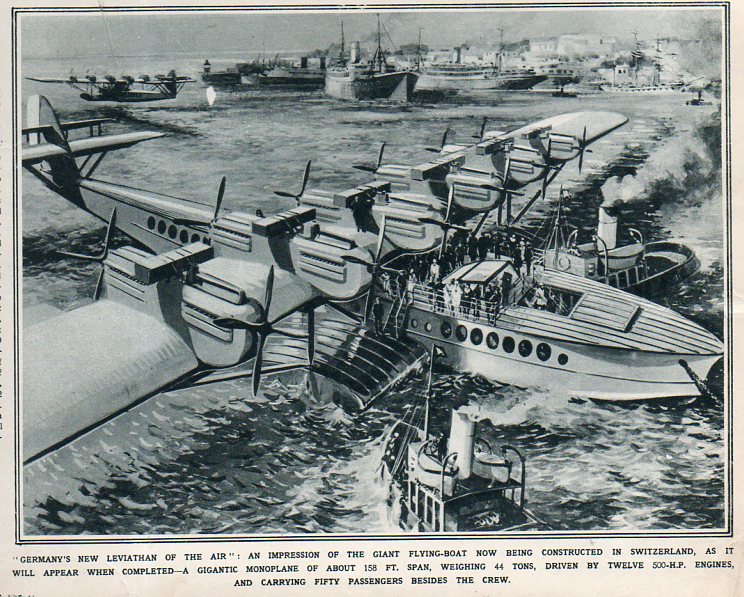
    This mammoth German aircraft appeared in the pages of the Illustrated London News on 31 March 1928,a sneak-peak into the future. It may have been a shock to British aviation sensibilities–it was supposed to dwarf the largest such plane that the Brits had (the Calcutta) : 158′ to 93′ wingspan; 44 tons to 9 fully loaded wright; engine power, 6000hp to 1500hp, with  twelve very impressive 500 hp fore-and-aft engines.  

    The plane made an appearance in real-life in the air in July 1929 as the Dornier Do X,  the largest and heaviest flying boat in history, with pretty much the stats that appeared on it a year earlier. (Stuff happens) and the Dornier is broken up for scrap by 1937.  

    • Specs (via Wiki):  “Crew, 10-14; capacity, 66-100 passengers; length, 40 m[13] (131 ft 4 in); wingspan, 48 m[13] (157 ft 5 in); height, 10.25 m (33 ft 7 in); wing area, 450 m2 (4,844 ft2); empty weight,  28,250 kg[13] (62,280 lb); max takeoff weight, 56,000 kg (123,460 lb); powerplant, 12 × Curtiss Conqueror water-cooled V12, 455 kW (610 hp) each; maximum speed, 211 km/h (131 mph; cruise speed, 175 km/h (109 mph); range, 1,700 km (1,056 mi); service ceiling, 3200 m (10498 ft); wing loading, 94 kg/m2 (19.3 lb/sq ft) (at 46 tons weight).”


  • A Transatlantic Flying Wing/Boat, 1927

    JF Ptak Science Books  Quick Post

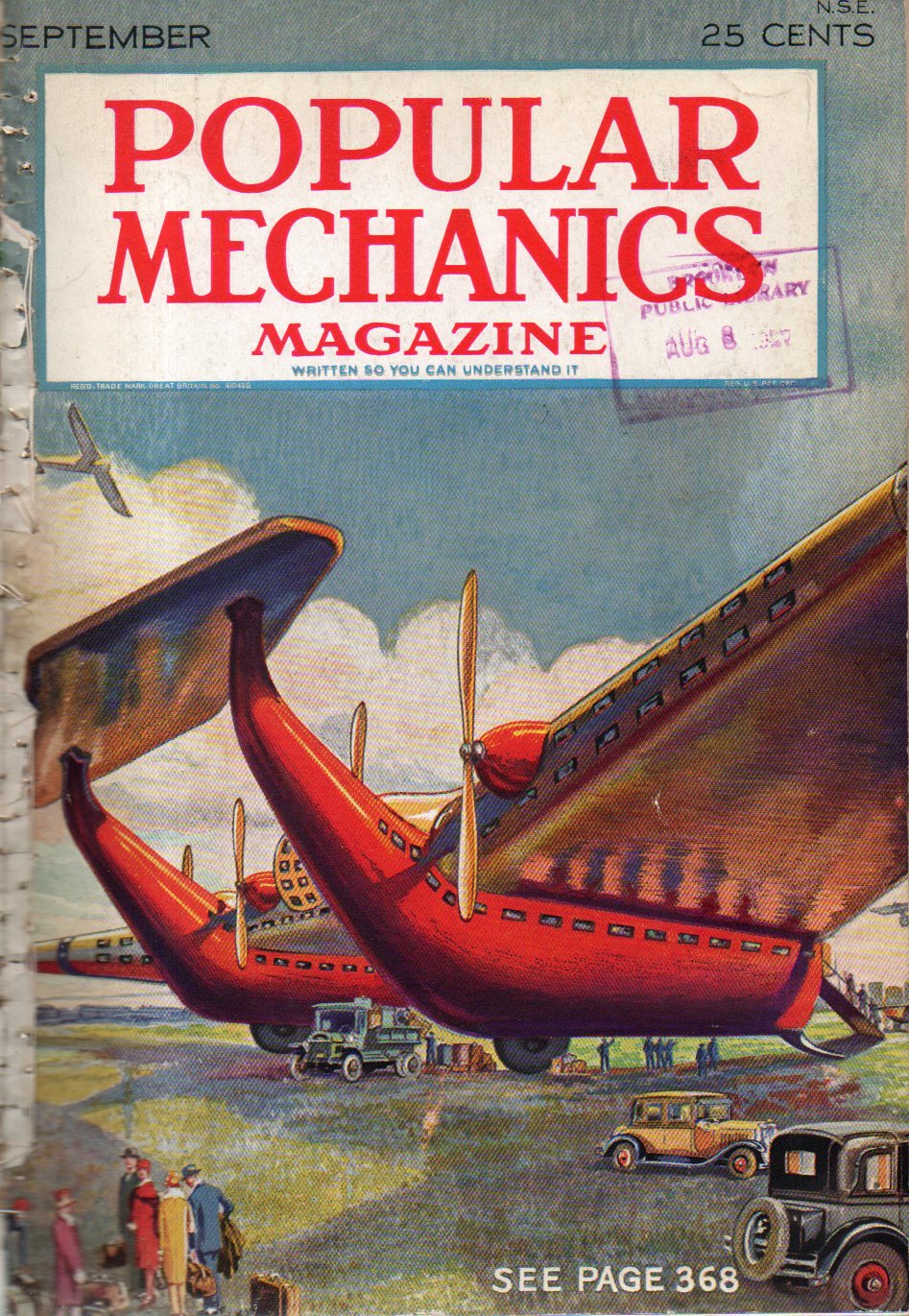
    The beautiful aircraft was being built primarily on high hopes and a sleepless night, but that’s okay. This was a vision for a transatlantic aircraft, and appeared int he September 1927 issue of Popular Mechanics, and was an interesting and in some ways remarkable insight to the coming prospects of long-distance passenger flight. The Wright flight was only 24 years before this, and the Lindbergh solo crossing of the Atlantic occurred just a few months prior to this publication, an event which no doubt added fire to the speculation of future transatlantic flights. The artist imagines a massive aircraft with a 400′ wingspan, the wings offering room enough for sleeping quarters for the passengers.  The Transatlatic flight was technically difficult, and outside of crossings by the Graf Zeppelin and the Hindenburg in the late 1920’s, passenger service really wasn’t instituted on any large scale until after WWII.  There were crossings by aircraft in the early 1930’s, but there (as with the famous flight by Dornier in the DO-X seaplane in 1931) the majority of those flights were over the ocean to South America, and then continued to North America. A notable exception is the Yankee Clipper. which was a luxury flight (carrying 74 and sleeping 36) and which was a massive aircraft, though the real plane’s wingspan was less than half (at 150′) of the visioneered aircraft below.  In any event, recognition is in order to the designer who thought about flight in this manner just 10 weeks1 after Charles Lindbergh made his NYC-Paris flight.

    Airplane flying wing029


    A newsreel of the parade held in Lindbergh’s honor in NYC on June 13, 1927 showing the enormous reception of the new world-wide hero:

    Notes:

    1. The September issue of Popular Mechanics would have been issued in early August (as we can see in the stamp on the cover, this issue being received by the Brooklyn Public Library August 8.


  • When a Little Bit of the Future Got To WWI

    JF Ptak Science Books  Post 2600

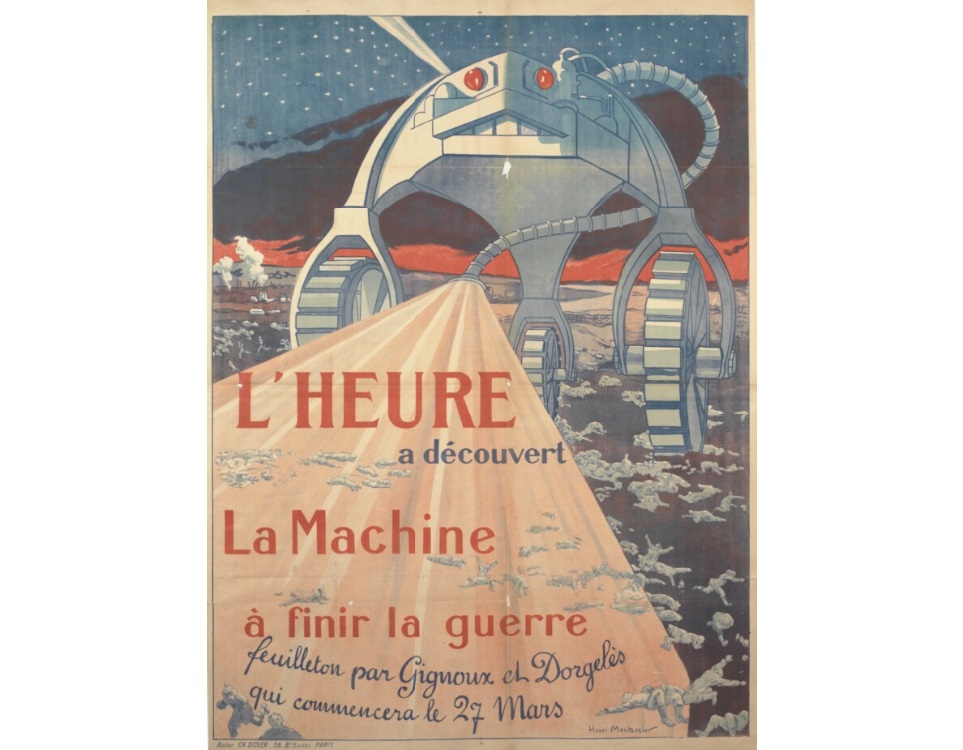
    The hope for technological advancement to hasten the end of the war were much discussed during WWI–the dreams and aspirations sometimes winding up in a serialized fashion in magazines such as l’Heure, seen below.  The promise of the magazine “The Hour” was to reveal the nature of a machine discovered that would bring an end to the war.  It was highly fanciful, this machine, and highly effective, as we can see by the large field littered with German soldiers, done in by a death ray/spray of some sort. The whole of it looks more like a Wells’ Martian creation than anything else. 

    WWI IWM future war

    [Image source: Imperial War Museum, http://www.iwm.org.uk/collections/item/object/19414]

    And long as I am here and the reference is at hand, I  would like to point out this terrific link to the very interesting La Guerre Infernale by Pierre Giffard, and with illustrations by the iconic A. Robida:

    Rhobida guerre infernal

    [Source, with a set of all of the illustrations is found here:  http://www.merveilleuxscientifique.fr/auteurs/robida-alfred-la-guerre-infernale/]

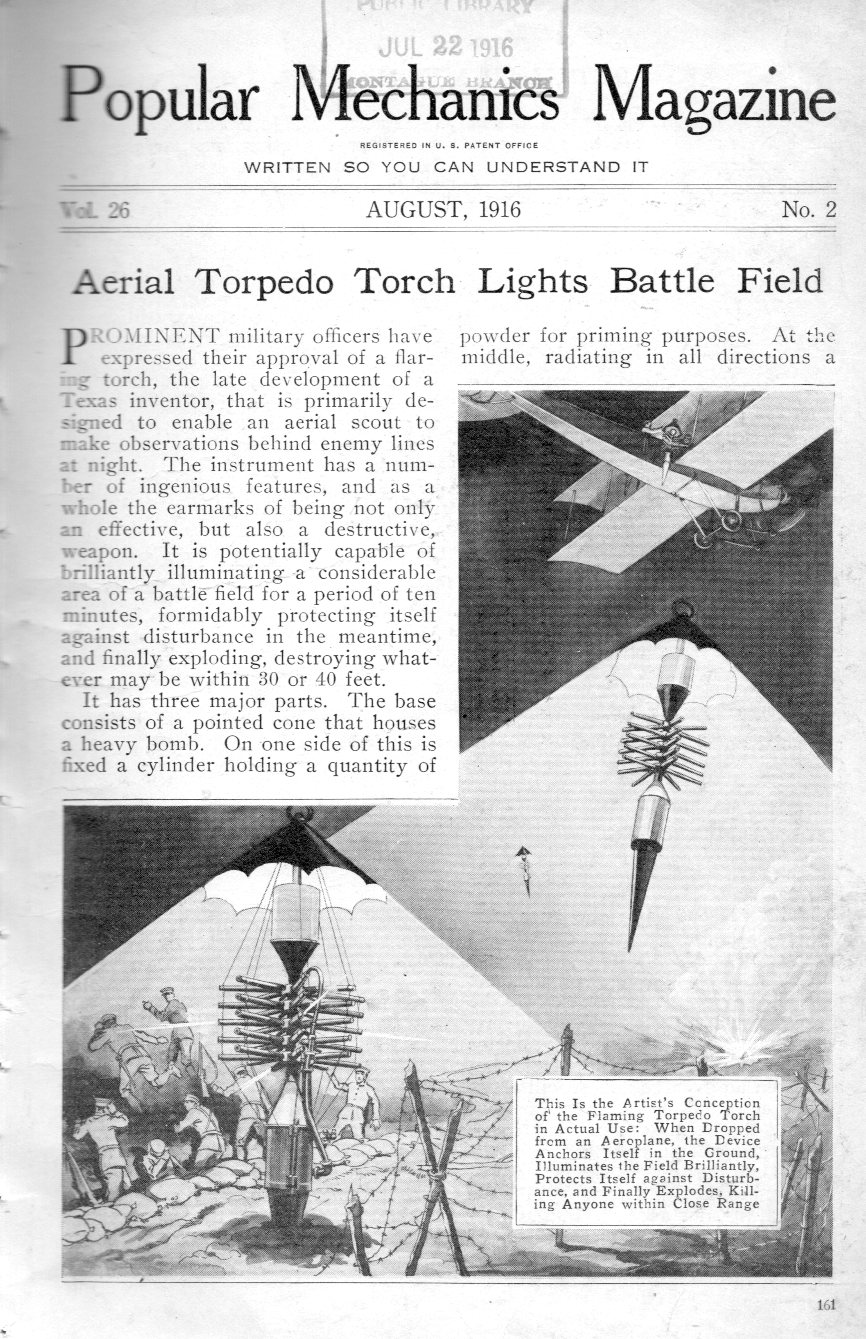
    But what I really wanted to talk about was on the much smaller and real level, particularly this exploration of battlefield lighting, found in the August 1916 issue of Popular Mechanics Magazine.  It was one of the technological advances in this war that brought something that worked better and much more simple than that displayed in the magazine–the “simple” flare gun, also known in England as the Very pistol. It was new to war (along with such things as the tank, military applications of barbed wire, depth charges, flamethrowers, and such) and it was of course very effective. And deadly. And protective. It illuminated a field of battle, particularly Dead Man’s Land, that stretch of land between the two offensive lines that was a meeting place of death, cluttered with bodies, spoiled earth, water-filled craters, barbed wire, waste, and so on–and it was sometimes into this sort of field that an attack would be made under cover of darkness, and it was the Very pistol that would be fired to illuminate the attackers, who would suffer greatly from it.  In any event, it was a far better response to a need than the aerial torpedo torch.  


    Aerial torpedo torch067


  • The Pistol in Air-to-Air Combat (1914)

    JF Ptak Science Books  Post 2588

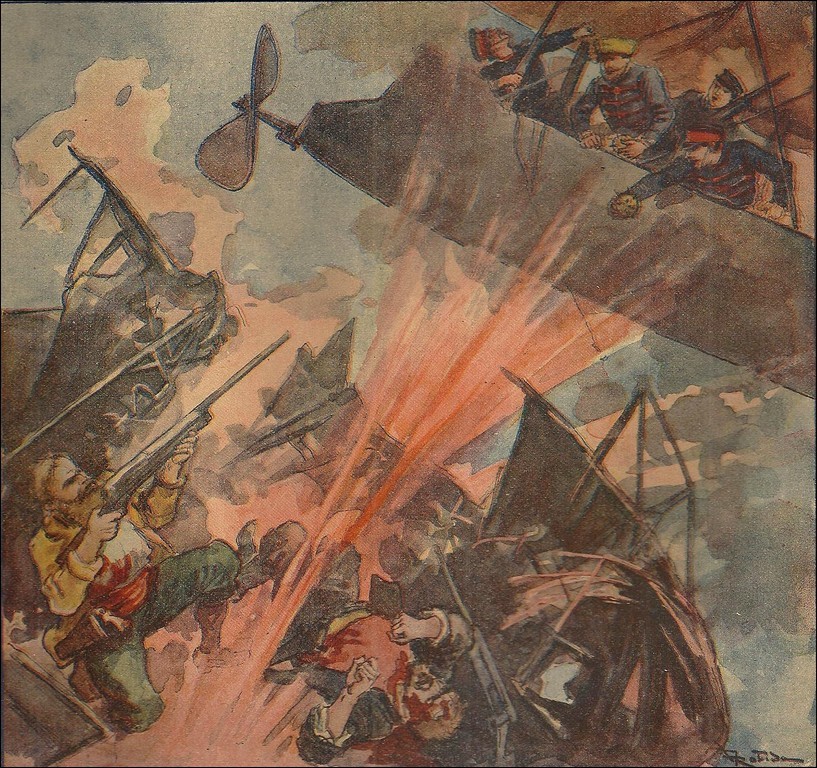
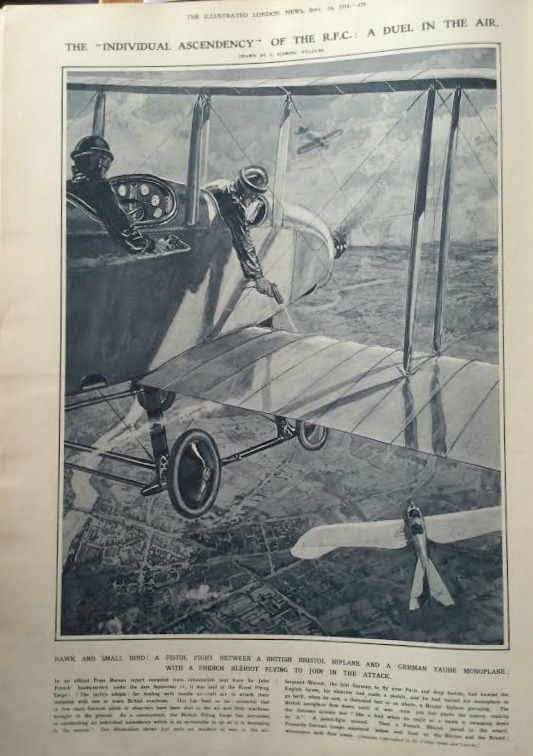
    Air combat 1914The news of the Wright Brothers and their historic powered flight in December 1903 was a monumental deal, though the report of the success was buried in middle of the Scientific American issue that first covered it.  Eleven years later heavier-than-air powered aircraft went from being from non-existent but with potential/possibility to machines used in war.  It took eight years from the Wright plane for an aircraft to be used in combat dropping bombs on people, a role that would of course be exploded beyond all recognition just a few years later. During the first few months of WWI aircraft were used but mostly for surveillance and mapping–aerial combat existed, sort of, though without any firepower. The first air victories were results of aircraft ramming one another (the first seems to have been August 25, 1914), while the first instance of one plane shooting down another didn’t occur until the war was in its second month, a French plane shooting down a German aircraft with a machine gun and a rifle.1

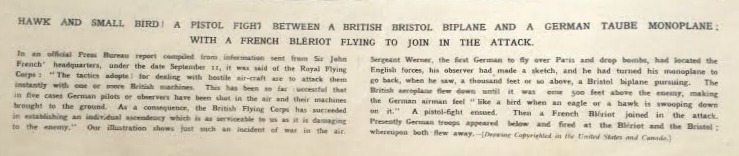
    These notes are simple background for the image that I found in The Illustrated London News (September 19, 1914)  showing aerial combat between a British Bristol and a German Taube.  What is striking of course is that the Royal Flying Corps aircraft was attacking with the co-pilot firing a pistol at the German plane–a little unexpected. The description of the image identifies the pilot of the German aircraft (“Sergeant Werner, the first German to fly over Paris and drop bombs”) and that he had been on a reconnaissance flight mapping allied positions–how that information was known I do not know.  In any event the British aircraft pursued the German and nearly had it within rights–that is until German soldiers on the ground returned fire on the British aircraft, forcing it to retire.  

    Air combat 1914 b

    Luckily I own the war years for the ILN and I do believe that this was the first image in that journal showing air-to-air combat. The ILN does have earlier images showing the first bombing raids from aircraft and also of air-to-ground machine gun attacks, but at this point this may be the first of its kind. It all seems very removed–quaint,even–given how quickly things developed over the next year.  

    Notes

    1. “On October 5, 1914, Sergeant Joseph Frantz and Corporal Louis Quénault of Escadrille VB24 scored the first air-to-air kill (not involving ramming – see Pyotr Nesterov) of the war, shooting down a German Aviatik B.II with machine gun fire. Quénault fired two 48-round magazines at the Germans. The Germans returned fire with rifles. When the Frenchman’s 8 mm Hotchkiss M1909 machine gun jammed, he successfully returned fire with his rifle. Oberleutnant Fritz von Zangen and Sergeant Wilhelm Schlichting of FFA 18 fell to their deaths. This is believed to be the first air-to-air kill in any war.”–a good Wikipedia contribution on the Voisin III, here: https://en.wikipedia.org/wiki/Voisin_III

  • Floating Transoceanic Airport Network, 1930’s

    JF Ptak Science Books  

    [My apologies for the formatting issues on this–Typepad wouldn’t allow me to get rid of the italics and bold]

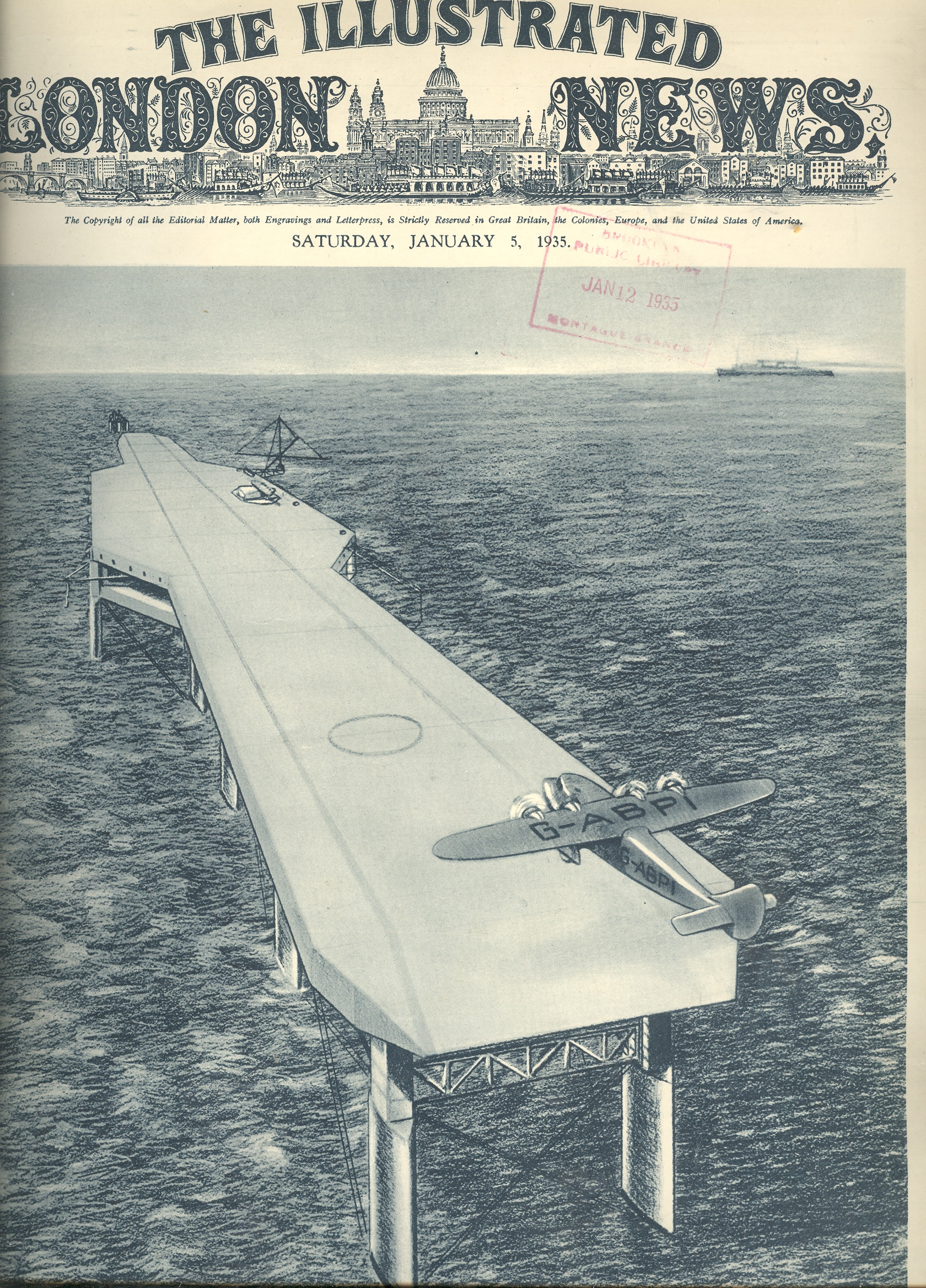
    This short shelf-lived idea was that of Edward R. Armstrong (1880-1955), who in 1927  first published his plan for a series of ocean-moored 1200’x200’ floating platforms standing 100′ above the waves for refueling and whatnot for transcontinental flights.  These five-acre stations—named the “Langley” in honor of Samuel Pierpont Langley1— would be placed every 375 miles across the ocean.  Or perhaps there would be just five of these floating emplacements–the data changes. It doesn’t look like a very practical (or good) idea, but Armstrong received a $750,000 piece of development change from du Pont and GM, which was major dollars in 1929. 


    Blog jan 9 sea airport

  • An “Air Garage” Airport Skyscraper, 1927

    JF Ptak Science Books  Quick Post

    Air garage028


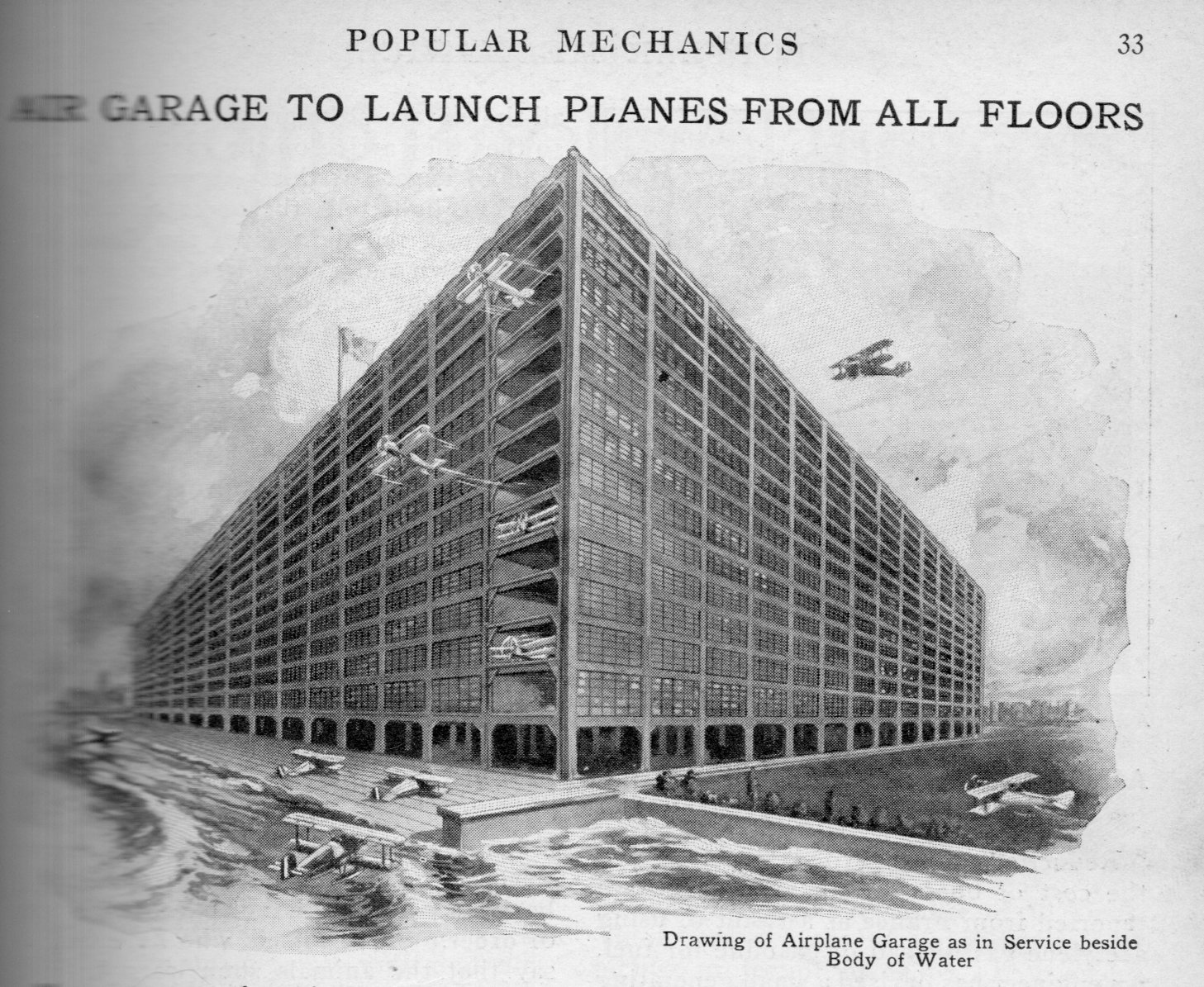
    There were a number of interesting/unusual/bizarro ideas for air travel int he heady aeroplane decade of the 1920’s (search for “airport” in the google search box at right to find some of this blog’s posts on the subject). This one appeared in Popular Mechanics for July, 1927–a 14-story “Air Garage” that would serve to launch 14 planes from its 14 floors, times four, I guess.  I reckon that the interior of each floor would function like a garage/taxi/pre-flight area, and the planes would use the areas closest to the exterior of the structure as a runway. No doubt the writer was envisioning the need for this as the popularity of the airplane was, well, soaring, and the vision may have inched the airplane close to the ubiquity of the Model A.  I commend the writer for thinking Big.  


  • A Bicycle-Wheel-Framed Gyroscopic Experimental Aircraft, 1911

    JF Ptak Science Books  Quick Post

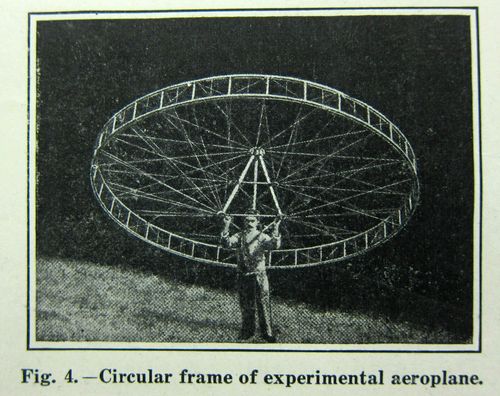
    Capt. Paul-Nicholas Lucas-Girardville of the Military Aviation Park, Vincennes, an interesting inventor and early aviator  (and author of a  Étude sur la navigation aérienne in 1899)  came up with this idea for a “gyroscopic” aeroplane, or flying machine. Initially I thought that there was no gyroscopic action and that the idea was being used for static stability, as a different body for the aircraft. But as it turns out there was some sort of gyroscope being employed here, though I do not understand how it functioned–I have to say though that it seems like an interesting experiment, especially given how early this came in the history of airplanes.  In any event, I bumped into this evocative photo in the pages of the June 22, 1911 issue of Scientific American Supplement and thought to share them.  

    Aviation gyroscope 3

    [Source for the two images, above and below: Scientific American Supplement, July 22, 1911   For the full text of the article in a raw-ish OCR format, see: http://www.scientificamerican.com/article/abstracts-from-current-periodicals-1911-07-22/]


  • Jane Austen and the Evasion of Submarines

    JF Ptak Science Books  Quick Post

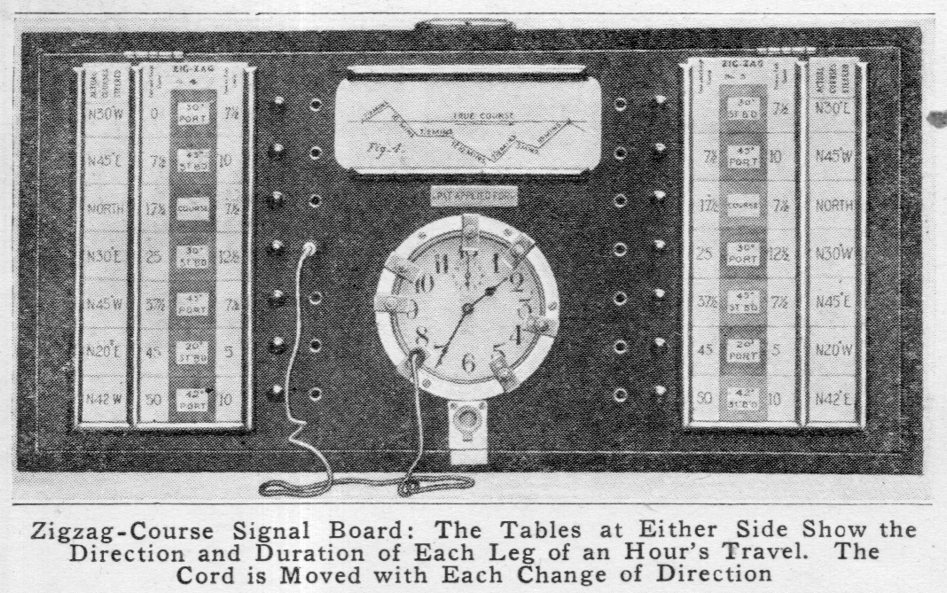
     “The little zigzags of embarrassment.”– J. Austen Emma I. xv. 282, 1816

    Zig zag027

    Well, these be not zigzags of embarrassment, but zigzags of necessity, and the means for keeping track of them.  And too there’s nothing in Jane Austen to relate to submarines and their evasion except for an appearance of the word “zigzag”, which is actually a fairly old word in English (coming from the French “sigsak”), reaching down into the very early 18th century.  It is older than the word “submarine” as it is used to describe an underwater vessel, and curiously in light of Ms. Austen it appears in print very close to the date of Emma, in 18281. And so the course of a ship could be documented for those in control of her, keeping track of the true destination in spite of all the zigs and zgas made to confuse and elude a German sub.  This is another example of an empire controlled with string, as we have previously seen here in the use of long collections of string that kept track of the British rail. String isn’t as simple as it seems.  

    • This short article appeared in Popular Mechanics, March, 1918, page 484. 

  • The Cabinet of Curiosity at Eddystone

    JF Ptak Science Books  Post 2599

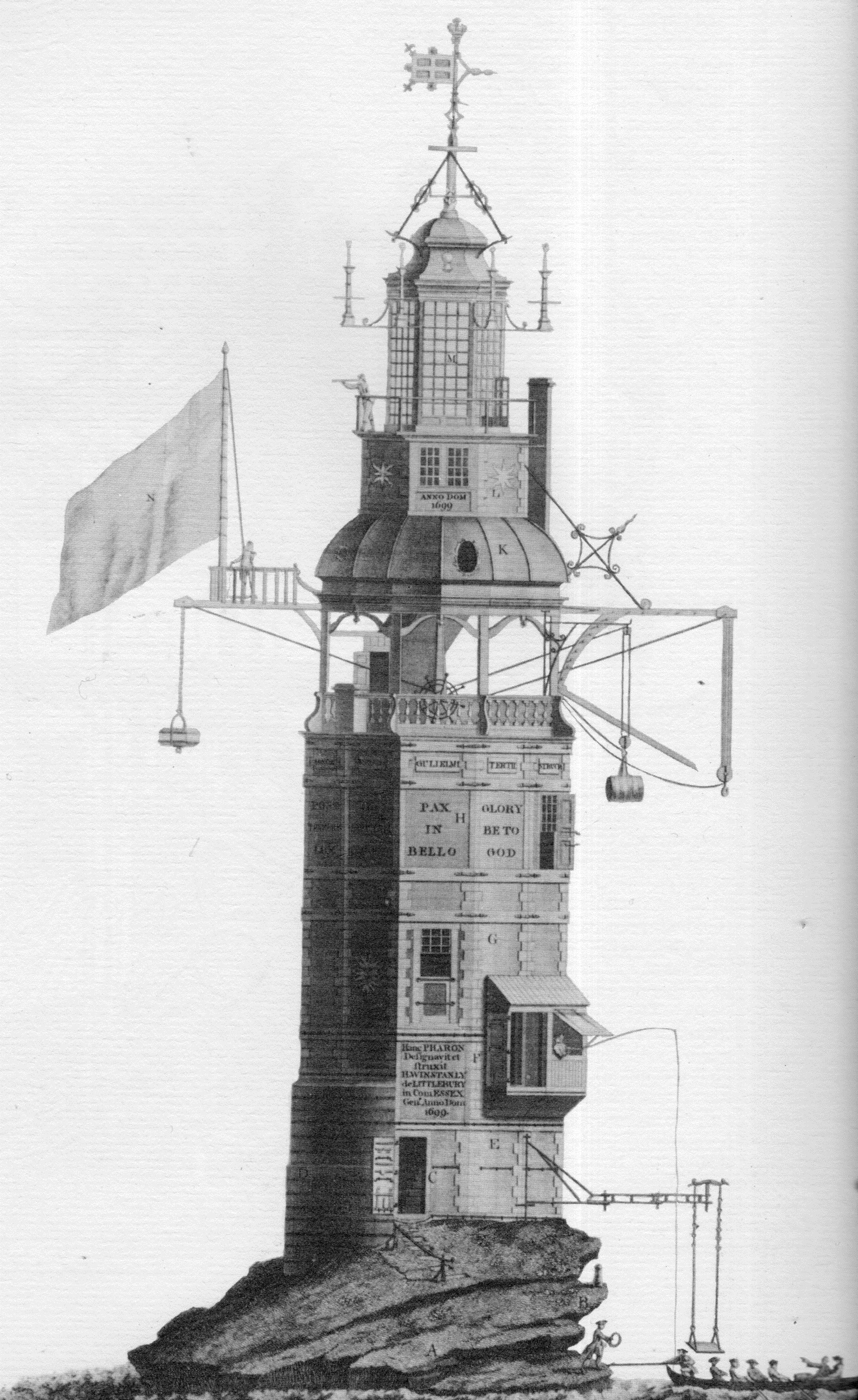
    Henry Wenstanley was an artisan and an engineer with a long interest in architecture who rose to sufficiently high rank to be considered and selected to build a lighthouse at Eddystone (14 miles from Plymouth, built on the Eddystone reef, south of Rame Head). He started in 1696 and was done by 1698, and had successfully constructed the world’s greatest lighthouse. He modified and reinforced it substantially in the next few years, winding up with a stout-looking if cabinet-of-curiosity appearance.  
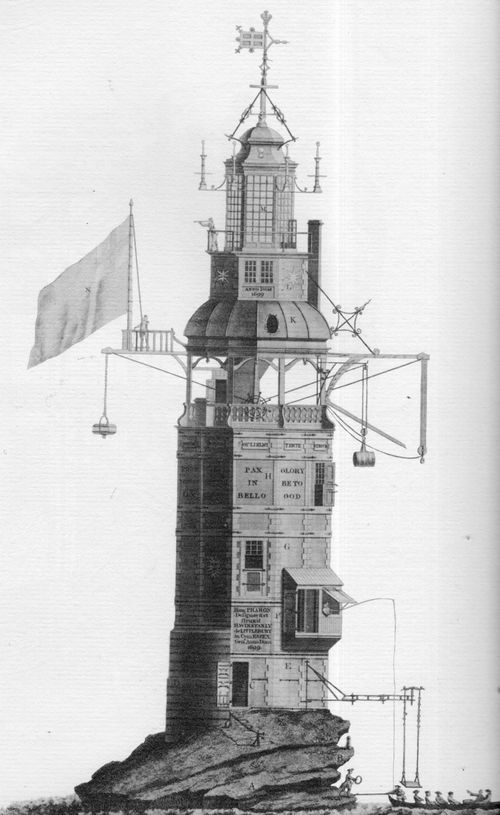
    Eddystone034

    [Image source: Derek Birdsall, Carlo Cipolla, The Technologies of Man, Pinehurst Press (UK), 1979, page 150.]

    The lighthouse was extraordinary, though it did not last for long, and neither did Wenstanley.

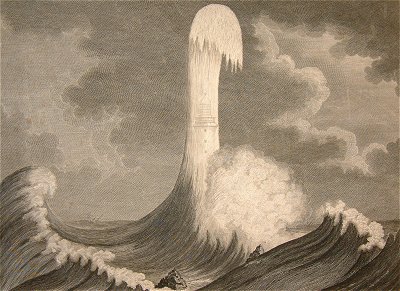
    In November 1703 Wenstanley was in the structure when it suffered a complete loss in a storm, the building swept away, along with everyone in it.  

    A depiction of the impossible wave–an image no doubt that launched a thousand nightmares–fighting the lighthouse is seen here:
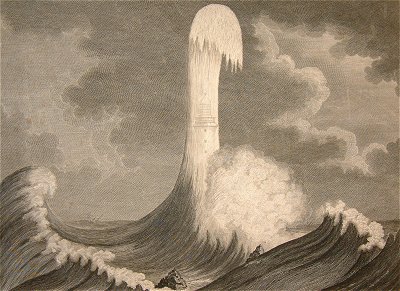
    Eddystone wave

    [Source: Dark Roasted Blend blog; original source unknown http://www.darkroastedblend.com/2006/10/amazing-lighthouse-of-henry-winstanley.html]

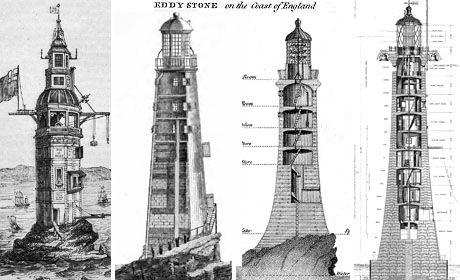
    It is another instance of an inventor/engineer being killed by his/her creation–there’s probably an easy effort to be made in constructing an alphabet of this unfortunate and unhappy crew. This was the first of five Eddystone lighthouses, all difficult building sbuilt ina very difficult location. The first two were built by Winstanley–the first he built in 1696 was damaged so substantially in a winter storm that it was rebuilt almost entirely, bringing to us the second lighthouse in 1698. As we have seen, that one last until the unfortunate 1703 storm, and was replaced by the third lighthouse built by John Rudyerd, constructed from 1708-9 and opened in that second year.  The third lighthouse was constructed by John Smeaton from 1756-9 and lasted for 127 years until it was replaced by James Douglass’ structure in 1882.  Actually, the Smeaton structure (pictured below) was dismantled and rebuilt further inland on the Plymouth Hoe, where it can be found today.  
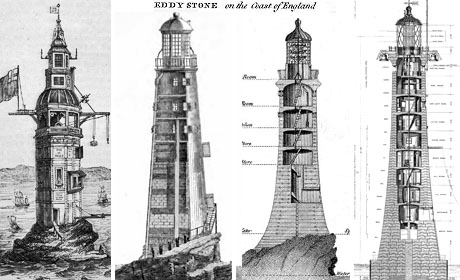
    Eddystone light houses[Image source: Geological Society (UK) via https://www.geolsoc.org.uk/GeositesEddystone]

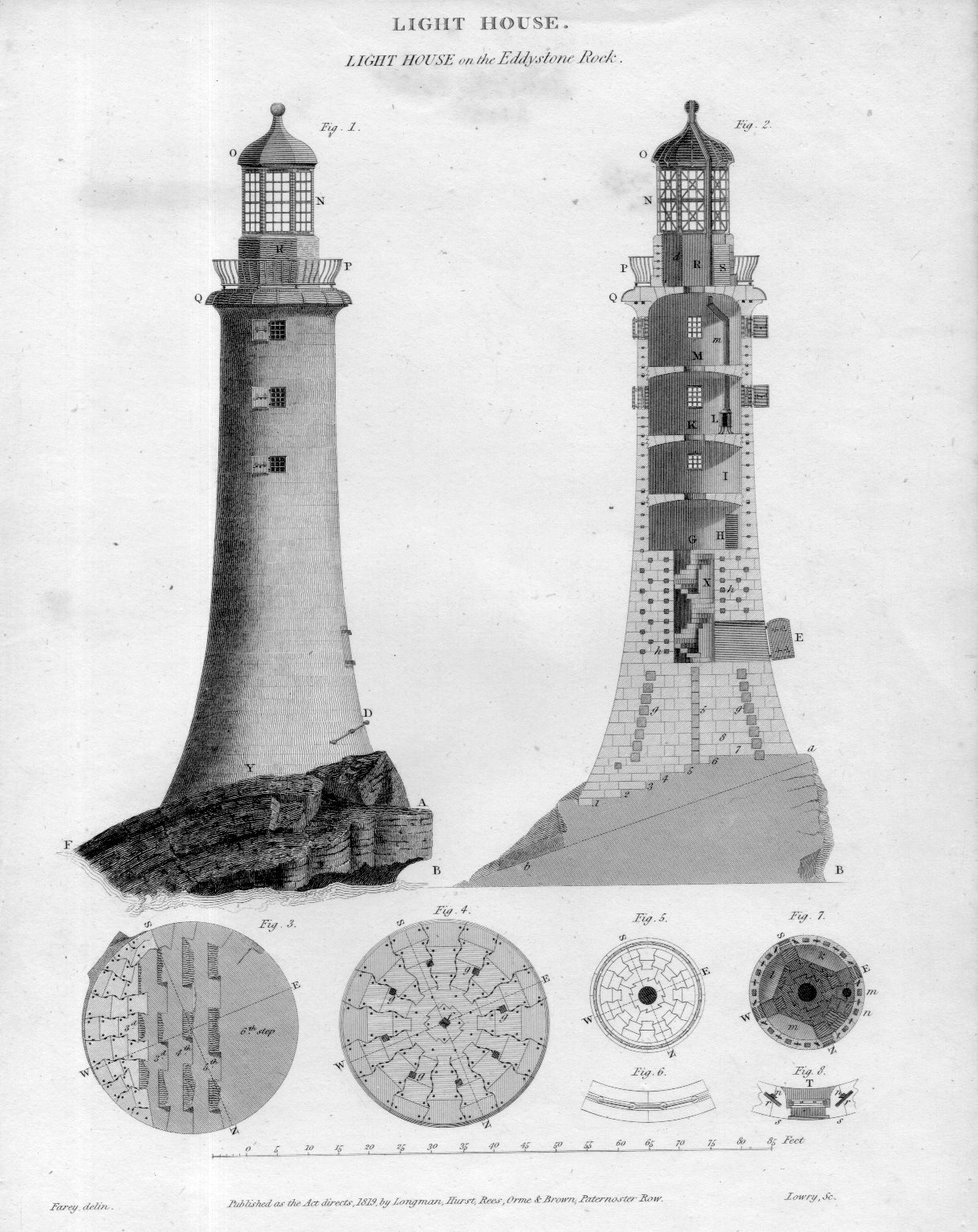
    The following cross section seems to be the third of the lighthouses:
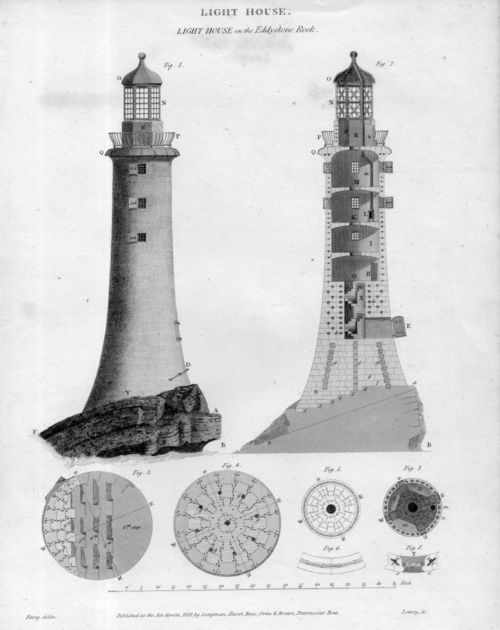
    Eddystone lighthouse050[Source: Abraham Rees Encyclopedia, printed in London in 1819]

    Notes:

    Here’s a charming re-enactment of the failure of the structure by the Parish of Littlebury Millennium Society/History (Junior) Group:  http://www.recordinguttlesfordhistory.org.uk/littlebury/eddystone.html
    ·Posted by :

    ·in:


  • Universal Spelling Board, 1889

    JF Ptak Science Books   Quick Post

    I think that this would be fairly straightforward if not a little time-consuming to fabricate–of course the beautiful weariness and worn factor of such a thing would not survive a new version of itself:

    [Found in The American Stationer, 17 October 1889, page 980.]  


      Univesal spelling


    ·Posted by :

    ·in: