A Daily History of Holes, Dots, Lines, Science, History, Math, Physics, Art, the Unintentional Absurd, Architecture, Maps, Data Visualization, Blank and Missing Things, and so on. |1.6 million words, 7500 images, 4.9 million hits| Press & appearances in The Times, Le Figaro, Mensa, The Economist, The Guardian, Discovery News, Slate, Le Monde, Sci American Blogs, Le Pont, and many other places… 5000+ total posts since 2008.

Category: Physics

  • On How Fast Things Were and Weren’t, including a Faster-than-Light Velocity (1885)

    JF Ptak Science Books  Post 2681

    Superman was (is?) as fast as .00005% of the speed of light, or thereabouts, if you gave him the benefit of the speeding bullet being a 50-cal round muzzle velocity. On the one hand, it is fast; on the other, well, not so. 
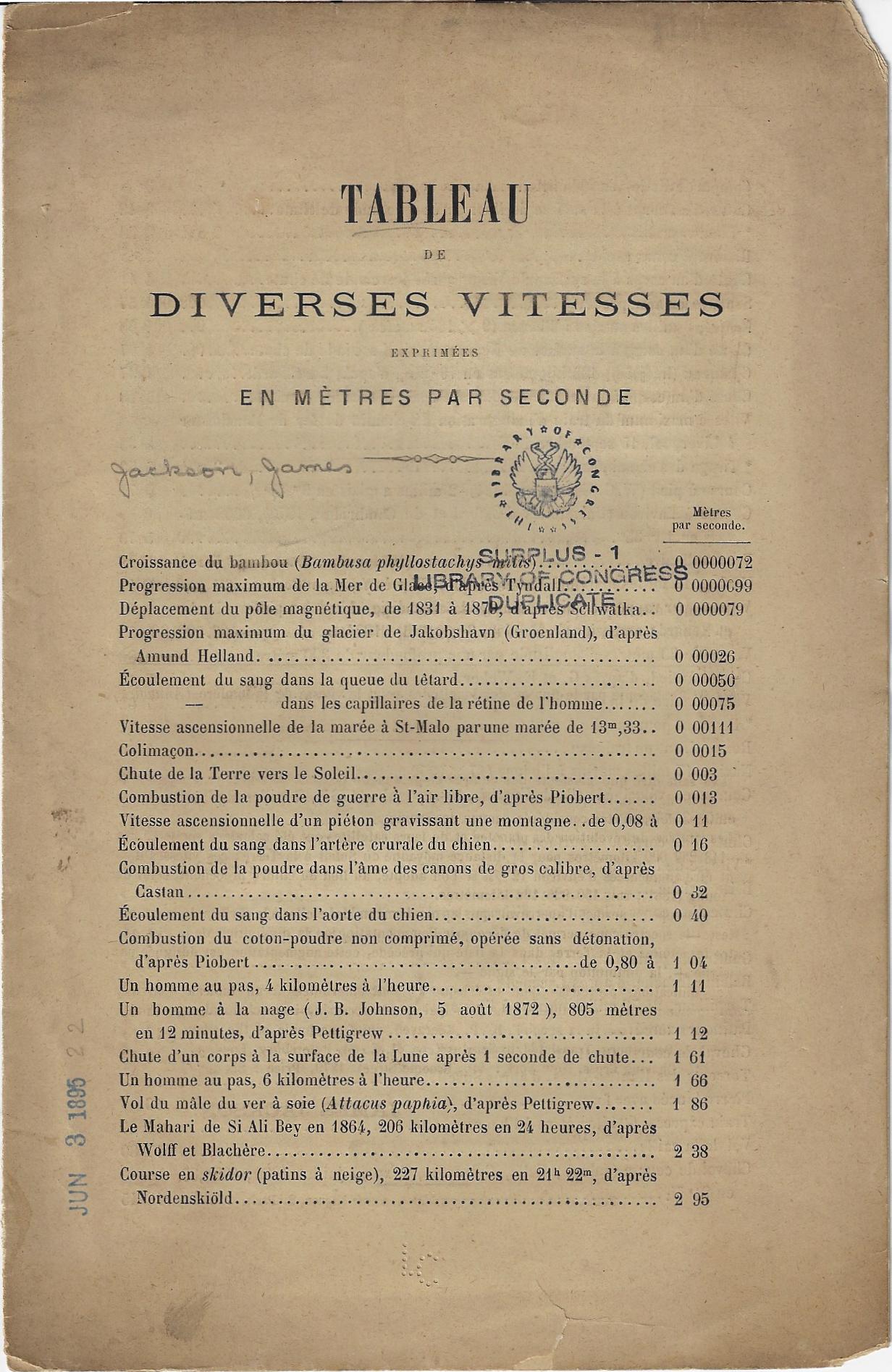
    Speed _1_That is what sort-of attracted me to this present pamphlet. I determined to simply scan the thing (James Jackson, Tableau de Diverses Vitesses exprimes en metres par seconde1, published in Paris in 1885)  for a quick blog post “On How Fast Stuff Is and Isn’t”. The slowest on the list was the “Corissance du bambou”/the growth of bamboo, which is actually a quickly-growing thing but not so when in comparison to how many meters it grows per second.  And that’s what this is, a little 8-page pamphlet listing about 350 things and how fast they are, all calculated in meters/second. The selections are actually pretty interesting in and of themselves.  So first to last, where I find several different calculations for the speed of light…and then something else, faster than the speed of light.  

    The last entry was this: “courant electrique provenant de la decharge d’une bouteille de Leyde dans un fil de cuivre de 0m,0017 de diametre” (“electric current from the discharge of a Leyden bottle into a copper wire of 1/16th of an inch”), with a velocity of 463,000,000 metres/second. No doubt Jackson is just talking about electron flow, which is about 1% of the velocity of the speed of light c along a wire or so (and far less along the wires in your kitchen appliances) while the flow of electromagnetic energy in a vacuum is exactly c–and what he is writing about here is warp 1.2 or a 50% increase in the velocity of electricity over light, when electricity and light are basically the same thing. I just don’t know what he is talking about.

    The Scientific American Supplement posts a notice of this bit, quoting the American Machinist in its review of Jackson’s work, and which also takes care to mention the faster-than-light speed as “the greatest rapidity so far measured”:

    “The American Machinist extracts from a contemporary a gamut of speeds per second beginning with that of the snail oil is half an inch and ending with the following Electric current on telegraph wires 7,000 miles induction current 11,040 miles electric current in copper wire armatures 21,000 miles light 180,000 miles discharge of a Leyden bottle through copper wire 1 16 inch in diameter 277,100 miles This last is the greatest rapidity so far measured. These figures might have more weight and more interest if the methods of calculating them or the authorities had also been given.”  Scientific American: Supplement, Volumes 43-44, July 31, 1897 p 17997. 

    Remember that we’re dealing with c twenty years before Einstein’s seminal year, when the fastest speed obtainable by anything was that of  light and which was considered to be infinite since in space there would be nothing to get in its way, at least according to Johannes Kepler (1571-1630), who imagined that no matter where the originating point of the light source was it would be seen instantaneously from any other point, no matter the location so long as there were no obstacles.  Estimates of light’s finite speed were proposed by scientists who were born at about the time that Kepler died by Ole Roemer and the everything-man, Christiaan Huygens (who estimated the speed of light at very near the present determination, which was 220k km/s. None of these names appears on Jackson’s list, though more recent additions like (Marie Alfred) Cornu (1878 using the not-named-here Fizeau instrument), (A.A.) Michelson (1879), Young, and Forbes (as in James Young and George Forbes in 1882) do. 

    Anyway the faster-than-light speed Jackson was referring to was for electricity, and no doubt came from the experiments in 1834 by Charles Wheatstone (thanks for the push, Dave Wenner!)

    I should make a note within this note of the work of Camille Flammarion (1842-1925), a very provocative and imaginative writer, who produced a small novel called Lumen (1887) in which the main character/souls move through the universe at what must be speeds way beyond the speed of light. His work in general looks like a collection of sci-religio-fiction, with creative writing on time travel (or observation, or viewer, I’m not sure), teeming extra-terrestrial life, transmigration of souls, and so on, filling and flying through the vastness of time and space, and I think collapsing the idea of time itself.  (“Lumen” is a recently-dead ET soul that dialogues with Questor, and they wind up moving through the universe at warp speed.)  So, there’s that.

    Anyway this sort of post calls for a lot more reading, which I’m sorry to say I haven’t done–I just don’t know yet how fast the fastest things were believed to be through the history of science. At least this post gets the ball rolling, if only for me.  

    Notes:

    1.  I found seven copies of this 1885 printing in WorldCat/OCLC, the holdings a stellar pedigree (LC, NYPL, Yale, Harvard, U Wisconsin/Madison, Oxford).
     

    ·Posted by :

    ·in:


  • What Electricity Tastes Like (1824)

    JF Ptak Science Books  Quick Post

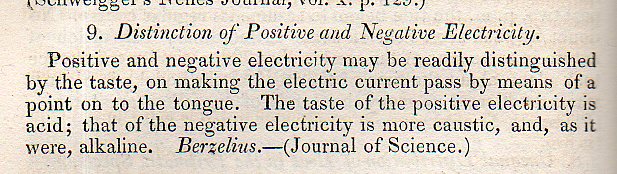
    So, while reading in the Annals of Philosophy–an interesting and curious journal with some important original contributions and a large selection of other interesting papers previously printed elsewhere and which was later absorbed by the more-prestigious Philosophical Magazine–for 1824, after finishing trying to figure out what Gay-Lussac was doing with lightning conductors, I stumbled my way through the journal’s monthly section of “scientific notices”.  The “notices” are usually very brief and give enough info so that the reader can make their way to the original source to read the report in-full.  This is how I came upon the great J.J. Berzelius and this note on the taste of positive and negative electricity, which I admit I’ve never thought of before–I was curious about what the “distinction” would be, and then was surprised by what he wrote:

    Electricity702

    By the way, it was determined in 1822 by some governing committee in France that all large churches in France needed to be protected by lightning conductors–the use of lightning conductors was established during Ben Franklin’s time. This evidently became an issue following a particularly bad bit of weather during which numerous churches were damaged, including the Rouen cathedral. Gay-Lussac notes elsewhere that the fear of thunder makes no sense, because the lightning event has already occurred, and that nothing can happen at this point. He points out that people struck by lightning never hear it coming, and have no idea what happened to them–small is that comfort.


    ·Posted by :

    ·in:


  • Details in Electricity, 1814

    JF Ptak Science Books   Quick Post

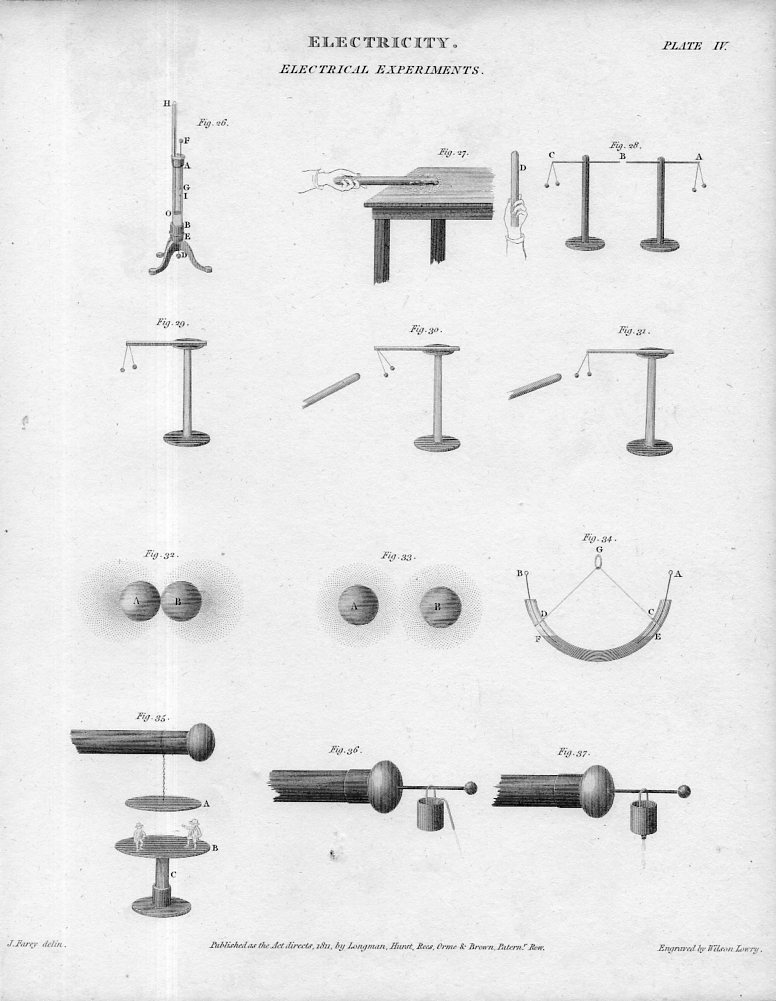
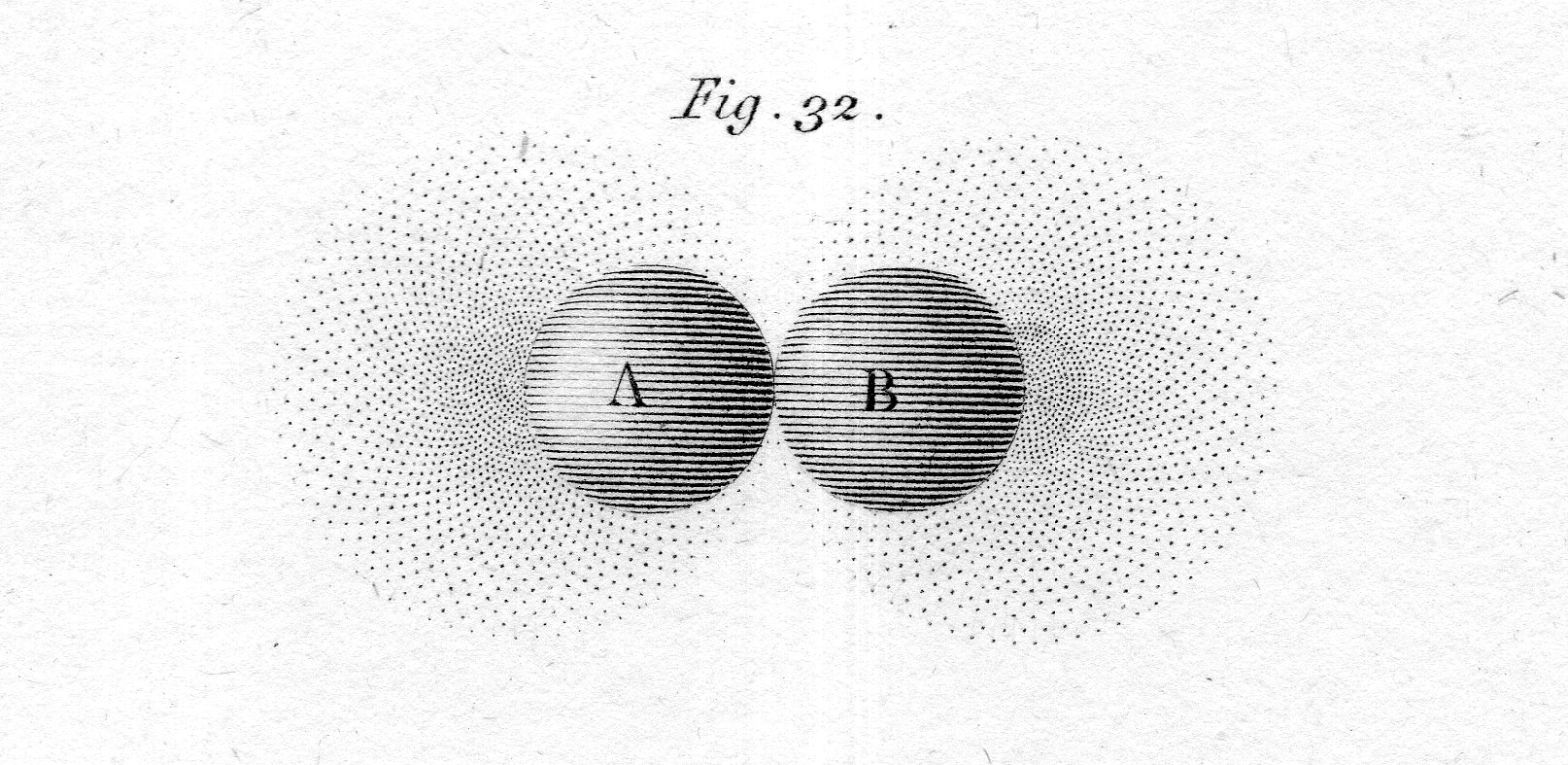
    The following images relating to chemistry were found in the illustration volumes of Abraham Rees’ (1743-1825) great work, Cyclopædia; or, Universal Dictionary of Arts, Sciences, and Literature. This was a massive undertaking for Rees, but his leadership and editorial skills were up to the task–in the end, 39 volumes were published containing nearly 40 million words, plus another six thick volumes contained the engraved illustrations to the monograph-length articles.  They are marvelous images, full of detail, and beautifully designed. This fine example on electricity contains several gorgeous tiny details, including the following:

    Electricity attraction489

    Which is a detail from:

    Electricity attraction488


  • What Did Einstein’s Revolutionary Years of 1905 and 1916 Look Like in Abstracts in English?

    JF Ptak Science Books  Quick Post 

    I’m pretty sure that we don’t need to establish here the intellectual history of Albert Einstein’s miracle year of 1905.  What I don’t normally see are the first mentions of the papers in English, and among the earliest reports there appear in Science Abstracts, Section A–it wasn’t until 1920 that the papers were first fully translated into English  by M. N. Saha and S. N. Bose as The principle of relativity : original papers by A. Einstein and H. Minkowski, and published by the University of Calcutta.  

    And so here they are–I only have the first three of the four papers from the Abstracts, as I don’t have the second 1905 volume in which the last paper appears.This series was published in London by E. & F.N. Spon (Ltd.) and is the physics volume for the abstracts of scientific papers published in dozens of the world’s leading journals, and was/is a standard reference tool.  ‘

    The photoelectric effect paper: A. Einstein, Annalen der Physik, volume 17, 132 (1905) [17 pp.]  “Über einen die Erzeugung und Verwandlung des Lichtes betreffenden  heuristischen Gesichtspunkt”, (“Generation and Transformation of Light”), abstract #1562, page 500:

    ·Posted by :

    ·in:


  • Colossus in the Colosseum (1820)

    JF Ptak Science Books   Quick Post

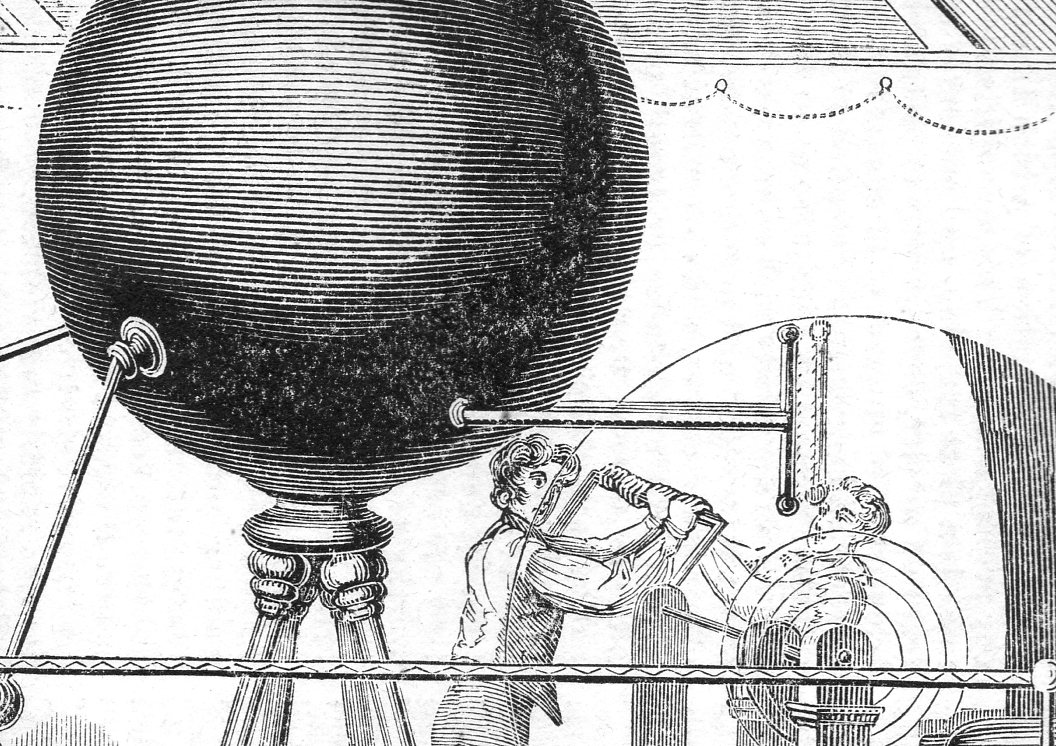
    Wimshurst machine205

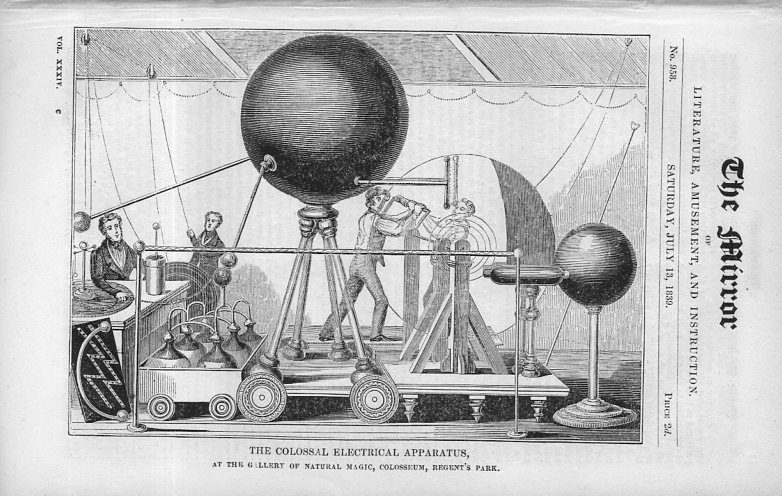
    Here’s an interesting combination of sweat and electricity–an enormous electrical device that was on display in an exhibit of “natural magic” at the Colosseum in Regent’s Park in 1839.  The large disk that the two guys are turning is actually larger in real life, being 7′ in diameter, the conductor being varnished copper, and the conducting balls being gilded–it must have been a very shiny experience, especially when they generated their electric spark.  In 1839 this was the largest electrical generating device in the world.  (I have a tiny version of that device here, something made out of old records coated with copper and found ball glasses acting as Leyden jars, all painted and varnished, the work of an 8 year old in 1925 who went on to a career in astronomy and became the most celebrated eclipse follower in the mid 20th century.)

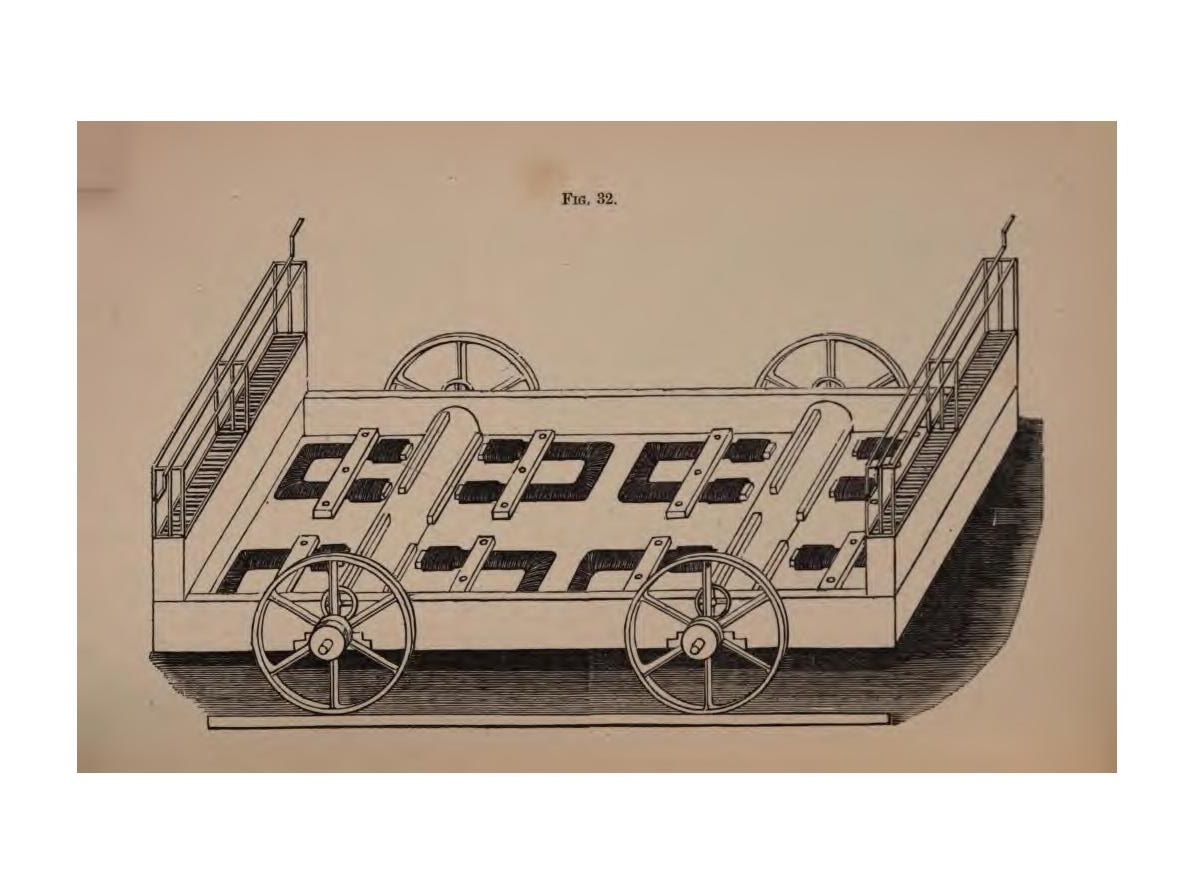
    This monster is made just 39 years after Volta’s first battery was made,  and not long after Oersted generated the first magnetic field from an electric current in 1820, the same year as Ampere’s solenoid. There were many quick and brilliant development from then to 1839 (also the year in which Daguerre perfected his collaborative work with Niepce to produce the photographic camera), not the least of which was the  Davidson’s creation of the first electric motor car/land locomotive, again in that same full year of 1839:

    Electric car

    [Image source: A. du Moncel Electricity as a Motive Power, 1883, page 55, full text from the Internet Archive, here.]


    Wimshurst machine204

    ·Posted by :

    ·in:


  • A Key to 20th Century Physics in Two Really Good Volumes

    JF Ptak Science Books   Post 2458

    It really is a rare thing to open a book and find it full of significant contributions by numerous people occurring in situ as it were–not an intentional collection of greats, but a “serendipitous one.  In this case the find occurred in one bound volume of the American Physical Society’s Review of Modern Physics–a single volume containing two years of papers for 1945 and 1946. I’ve seen this a number of times–as with bound volumes for The Physical Review for 1932, and 1939 and 1948, for example–and it is always a pleasure to watch the great epic of those years roll out as you leaf your way through the volume.  

    And so it happens with volume 17 and 18 of the Reviews1, the greatest interest in this volume is no doubt the multiple blockbuster of contributors for the commemoration of Niels Bohr’s birthday, in Volume 17/2, April-July 1945, pp 97-350, “In Commemoration of the Sixtieth Birthday of Niels Bohr, October Seventh, 1945”. The field is full of the major names (and Nobel Prize recipients) of physics in the 20th century. These include Bloch, Born, Chandrasekhar, Dirac, Einstein, Feynman, Gamow, Goudsmit, Heitler, Hevesy, London, Meitner, Pauli, Rabi, Van Vleck, Weisskopf, Wheeler, and others, a full-ish list of the papers is included below. (The Wheeler-Feynman paper is significant on its own and highly cited.)

    • This volume is available for purchase at the blog’s bookstore, here.

    ·Posted by :

    ·in:


  • A Great Letter-to-the-Editor, 1: a Fundamental Contribution to Particle Physics

    JF Ptak Science Books   Post 2433

    James Chadwick’s introduction of the existence of the neutron made a “sly” entry into the general/popular scientific world–if such things could have personalities, then it would certainly be “humble”.  Except of course “humble” has no place in this vocabulary, except for instance like this, interpreting the poetry of the moment. Chadwiock’s “Possible Existence of a Neutron” appeared in Nature, 27 February 1932. volume 129,   the revolutionary contribution appearing as a Letter to the Editor, in 1.25 columns, on page 312 of this issue of the journal. And in the “tradition” of the Alpher-Bethe-Gamow paper (the great paper on the Big Bang, appearing on April 1st 1948 in the Physical Review), it is another of very many instances of a major announcement being made as a “simple” letter to the editor. (Well, in the case of scientific letters, this is really just a shorter, quicker-to-publication avenue to publication, and not much at all like a letter-to-the-editor of the NYT. Still, the description has a nice ring to it.)  This was the description of the neutron made after only about two weeks of experimentation.

    “In 1932, Chadwick made a fundamental discovery in the domain of nuclear science: he proved the existence ofneutrons – elementary particles devoid of any electrical charge. In contrast with the helium nuclei (alpha rays) which are charged, and therefore repelled by the considerable electrical forces present in the nuclei of heavy atoms, this new tool in atomic disintegration need not overcome any electric barrier and is capable of penetrating and splitting the nuclei of even the heaviest elements. Chadwick in this way prepared the way towards the fission of uranium 235 and towards the creation of the atomic bomb.”–NobelPrize.org

    His next paper1–and perhaps the more famous of the two–appeared a few months later in May and contained the proof of the existence of the neutron, and was an epochal achievement int he understanding of the nucleus.

    For this epoch-making discovery he was awarded the Hughes Medal of the Royal Society in 1932, and then the Nobel Prize for Physics in 1935. I think he may be the only recipient of the award who was also at one time a POW. (1914-1918 in Chadwick’s case, going from there to a Ph.D. at Cambridge in 1921 and then to Rutherford’s assistant shortly thereafter.)

    Notes:

    1. Chadwick, J. (1932). “The Existence of a Neutron”. Proceedings of the Royal Society A: Mathematical, Physical and Engineering Sciences136 (830): 692. Another paper appeared int he next year, (1933). “Bakerian Lecture. The Neutron”. Proceedings of the Royal Society A: Mathematical, Physical and Engineering

    ·Posted by :

    ·in:


  • Einstein in Paris, 1922

    JF Ptak Science Books   Quick Post 

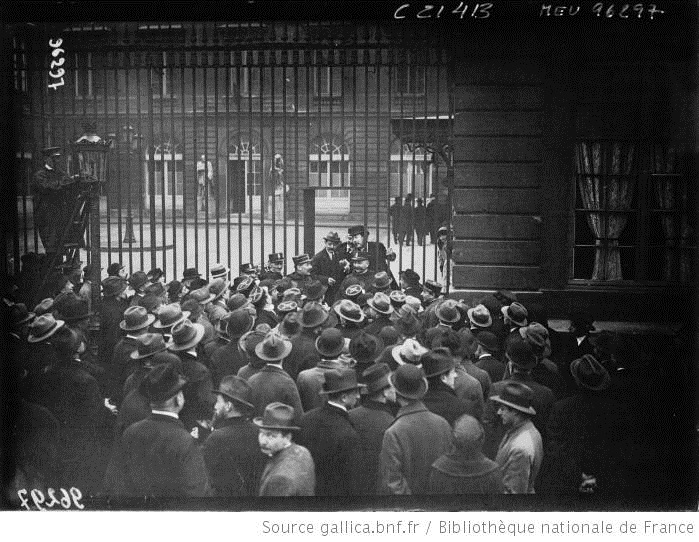
    Einstein Gallica crowd

    [Caption: “M. Painlevé fait lui-même la police afin d’empêcher l’entrée d’un public trop nombreux venu pour écouter M. Einstein : [photographie de presse] / Agence Meurisse” Source: http://gallica.bnf.fr/ark:/12148/btv1b90546608.r=einstein.langEN]

    Here’s a photo regarding Einstein that I’ve never seen before: an image showing a crowd evidently being turned away from the over-capacity lectures by Einstein in Paris. The photo is undated but it must be from when Einstein was invited to Paris by the College de France (under the guidance and leadership of physicist Paul Langevin (1872-1946)) to give lectures and talks beginning March 31, 1922. Einstein was at the Sorbonne just a week later, on the 6th of April, where he also lectured. The photograph mentions “M. Painleve” (1863-1933), who was Prime Minister of France very briefly on two occasions and also a professor at the Sorbonne, so I assume that it is at the Sorbonne where this picture was probably made. I know for certain that attendance at the lectures at the College de France was by ticket only and which were scarce and did not meet demand, and I assume that the same was possible at the Sorbonne. (Since I have no familiarity with the Sorbonne looks like I assume that anyone who did would be able to tell me exactly where this entrance is…) 

    The trip wasn’t just roses for Einstein or the French or the Germans (in general)–this was just four years after the war and there were certain “patriotic” factions within France that did not want Einstein (the German) there; conversely there were also some elements in Germany who did not want Einstein to go to France. Einstein certainly had a lot on his mind for this trip, not the least of which was lecturing in French–though in that regard I remember reading that he said that “equations helped’ or something along those lines.  

    In any event, it is a great photograph.

    ·Posted by :

    ·in:


  • When Albert Einstein Wasn’t “Albert”–a Considerable Typo (1931)

    JF Ptak Science Books  Quick Post    

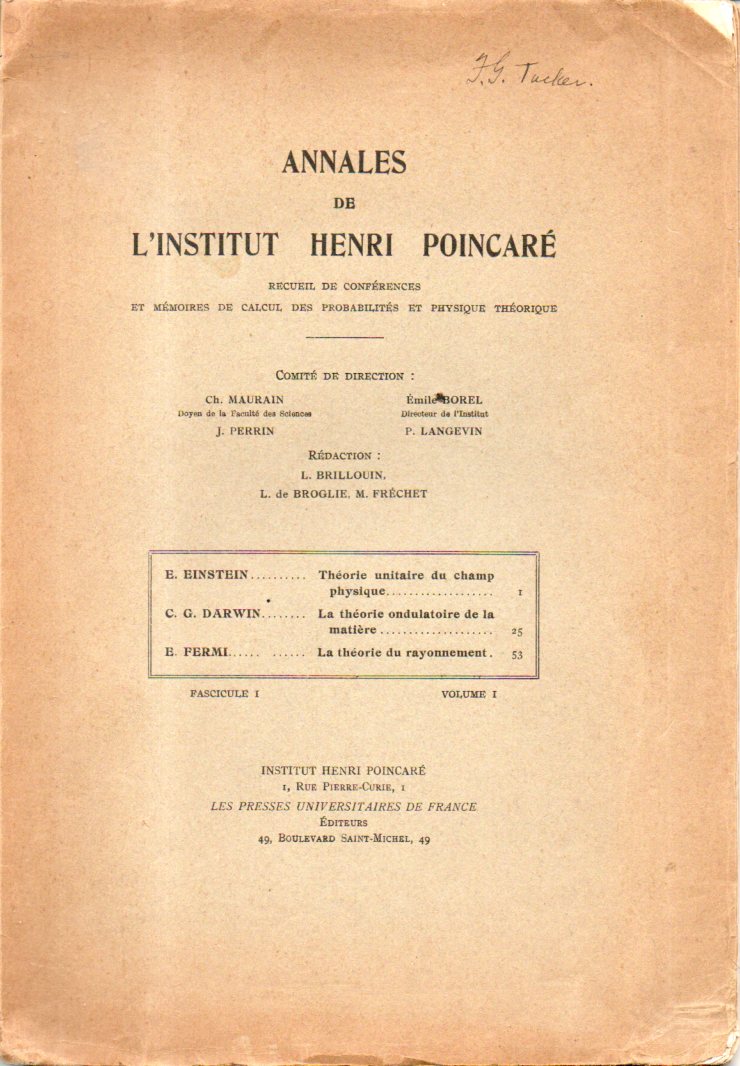
    Einstein, E777

    I admit to making some impressive typos and even though I’m pretty diligent about finding all of my reversed letters many will still slip through my broken and tangled editing nets–but this one, the typo I found above, is really a typo of Enormous Dignity.

    When I first saw this I thought, well, there were a couple of other published Einsteins at this time who were not our Albert, but I wasn’t aware of an “E.Einstein” writing in physics, and also writing in A. Einstein’s area. But then I opened the pamphlet and saw that, yes, indeed, in 1931 someone had goofed and the name of the world’s most famous physicist (and perhaps “person”) appeared on the cover of a physics journal in a not-quite-right manner.  Unfortunately, it was also the inaugural issue of Annales de L’Institut Henri Poincare (published in Paris in 1931). Perhaps it was the ghost of the great mathematician/physicist/everything man, Poincare himself, who ruled over the situation, as he and Einstein didn’t quite “get along”. after all there was very little that one had to do with the other, in spite of their standings. And even though Poincare died in 1912, Einstein had his monumental year seven years earlier and had a number of highly important publication in the following years. He was so wel though of in fact that Einstein was approached to write the great Poincare’s obituary (for a journal that I do not recall presently), but Einstein declined.  Perhaps it was the Dreyfus Affair and the underlying causes of it?  I don’t know.  But I do know that someone really got Einstein’s name wrong, somehow, on the cover of the journal’s first issue.  Fermi and Darwin appear with Einstein on the cover and their initials are correct.  But not Herr Einstein. 

    Einstein, E776


  • A Very Early Bibliography on the Theory of Special Relativity (1910)

    JF Ptak Science Books    Reference Tool series

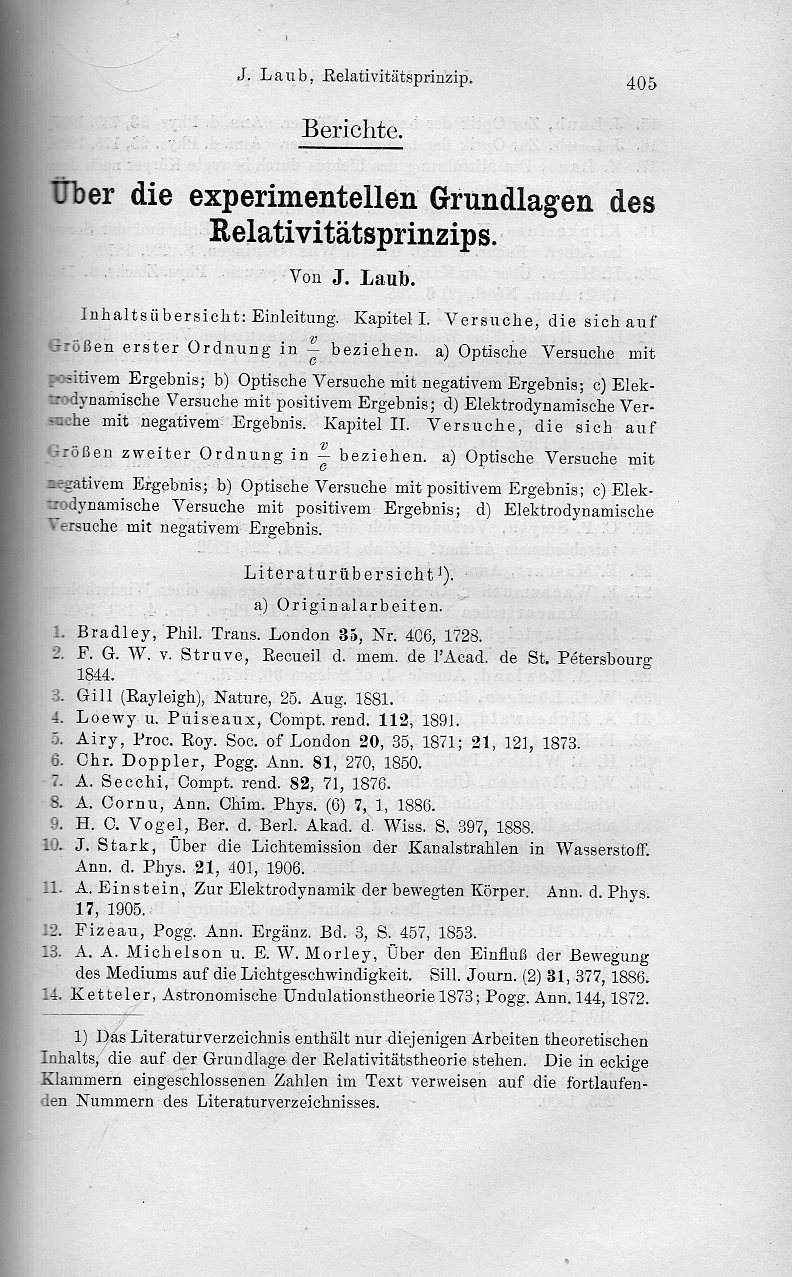
    Jakob Laub–the first collaborator of Albert Einstein–wrote one of the earliest histories/retrospectives of relativity theory for the Jahrbuch der Radioaktivitat und Electronik in volume 7 for 1910: “Uber die experimentellen Grundlagen des Relativitatsprinzips”, pp 405-463. (It seems that I don’t often see/notice references on this level citing the first German edition of an integral work in another language, which Laub does here for example in two articles by Fizeau that he found in Annalen when their original publication took place in the Comptes Rendus.)  (See the reference for Laub in Physics Before and After Einstein  edited by M. Mamone Cap; also The Scientist as Philosopher: Philosophical Consequences of Great Scientific ...by F. Weinert. 

    This paper also contains a 127-item bibliography, which I cannot find online and which I reproduce below.

    On Laub, from the Dictionary of Scientific Biography, volume 17:

    “Laub attended gymnasium in Rzeszόw. In 1902, after studying briefly at the universities of Cracow and Vienna, he entered the University of Göttingen as a student of mathematics and physics. There, taking courses and seminars with David Hilbert and Hermann Minkowski, he became interested in the electron theory. He turned to experiment, and in 1905 he decided to work with Wilhelm Wien at Würzburg. Laub’s doctoral dissertation (1907) concerned secondary cathode-ray emission. At his oral defense (1906), he introduced Einstein’s special theory of relativity, which Wien had recommended to him in September 1905. For the next several years Laub remained at Würzburg and concentrated on extending Einstein’s ideas.”

    “Although by early 1908 Einstein was attracting notice from distinguished physicists, he had not yet received a university appointment. It was an unusual step, then, when in February 1908 Laub wrote to Einstein to ask if he could visit Bern to study relativity with him. Laub became Einstein’s first scientific collaborator. Together they published articles criticizing Minkowski’s notion of electromagnetic force and suggesting an experiment to decide between Einstein’s special relativity and Hendrik Lorentz’s electron theory.”

    Laub764

    ·Posted by :

    ·in:

    —