A Daily History of Holes, Dots, Lines, Science, History, Math, Physics, Art, the Unintentional Absurd, Architecture, Maps, Data Visualization, Blank and Missing Things, and so on. |1.6 million words, 7500 images, 4.9 million hits| Press & appearances in The Times, Le Figaro, Mensa, The Economist, The Guardian, Discovery News, Slate, Le Monde, Sci American Blogs, Le Pont, and many other places… 5000+ total posts since 2008.

Category: Books–title pages, beautiful

  • A Comet’s Tail in Eden: the Great Comet of 1680

    JF Ptak Science Books LLC  Post 301
    1blog_oct_7_wegelin781

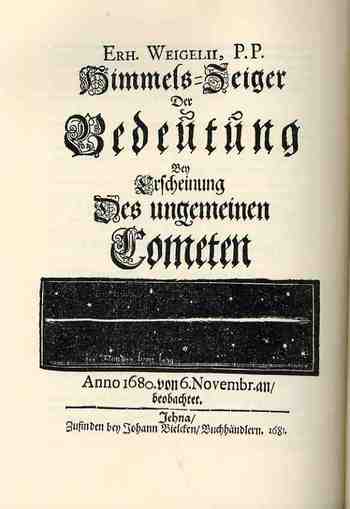
    The comet tail in this beautiful title page woodcut is
    hardly exaggerated—it was estimated that the tail was more than 30,000,000
    miles long, or better than 70 degrees, at its highest and brightest. It illustrates the work on the Great Comet of 1680 by Erhard Weigel entitled Himmels-Zeiger der Bedeutung bey Erscheinung des ungemeinen Cometen , published in Jena by Bielcke in 1681.  Weigel was a polymath (philosopher, astronomer, mathematician,  logician and teacher ) who made minute  and exact observations of  this very famous comet in a micro- and macro-cosmic framework.  He looked at the physical aspects of the comet (head and tail, brightness and shape, etc.) and described its path. He also wrote about the  philosophical and relational aspects of the comet as well, bearing on its influence upon the weather and man, as well as  its influence on the structure of astrology.

    The comet was actually discovered in November 1680 by Gottfried Kirch, and it was discovered in a novel, unique way: via the use of a telescope.  It was scientifically remarkable because it offered possibilities for the study of its path, which in turn could reveal the Larger Writ issues of teh clockwork universe in general.  .

    There were some earlier
    sources—including Edmund Halley (who was inaccurately described as the
    discoverer of the periodicity of comets)–that had this comet appearing in 44
    ACE, another time in the consulate of Lampaduis and Orestes, and another time
    in the reign of Henry I in 1106; that is, a period of 575 years. It was the
    unfortunate estimate, or opinion, of William Whiston (
    who was chosen by
    Isaac Newton to take over his chair of mathematics at Trinity College in
    Cambridge when Newton dedicated himself more fully to his role as president of
    the Royal Society**). that the
    1680 Comet had caused the flood of Noah and, perhaps more disastrously, brushed
    the Garden of Eden. Perhaps he was thinking of Cicero*,
    “from the remotest remembrance
    of antiquity it is known that comets have always presaged disasters.” (See Whiston’s “The
    Cause of the Deluge Demonstrated, being an Appendix to the 2nd edition of the New
    Theory of the Earth”
    (London,
    1708))

    The Great Comet of 1680 was the most extraordinary in the bright-comet-filled period of 1680-1682, and there’s certainly more to write about–I really just wanted to write on the comet woodcut because I think that it is odd and beautiful. 

    Notes:

    *Cicero, De Natura Deorum: “Ab ultima antiquitatis memoria notatum
    cometas semper calamitatum praenuntios fuisse.” The Pythagoreans
    believed that great comets appear at great intervals of time.

    ** For god only knows what reason(s) Whiston was later denied membership to
    the Royal Society, I guess with the knowledge of Newton; so he was good enough
    to teach in Newton’s eat but not good enough to be invited to the big boy table
    to eat.


    Descriptions from
    New York State and Manhattan of the Great Comet of 1680:

    Excerpt
    from The History of Kingston, by Marius Schoonmaker, 1888, at page 70
     

    “On the
    9th of December 1680, there appeared an extraordinary comet, which caused very great
    consternation throughout the province, with forebodings of dreadful happenings
    and divine punishments. It is described, in a letter dated January 1st, 1681,
    as having
    �appeared in the Southwest on the ninth of December last,
    about two o�clock in the afternoon, fair sunshine weather, a little above the
    sun, which takes its course more nort
    herly, and was seen the Sunday night, right after about
    twilight, with a very fiery tail or streamer in the west, to the great
    astonishment of all spectators, and is now seen every night with clear weather.
    Undoubtedly, God threatens us with dreadful punishments if we do not repent.
     The letter then suggested the
    propriety of proclaiming a day of humiliation and prayer. “

    An excerpt from The
    Encyclop
    edia of Geography
    , By Hugh Murray, Philadelphia., 1837, Vol 1 at page 115
    describes the visit of this comet also;

    “A
    very remarkable comet was seen in the end of 1680 and beginning of 1681. Its
    tail extended 70 degrees, and was very brilliant. This comet, of all those
    which have been observed, approaches nearest to the sun. Descending with
    immense velocity in a path almost perpendicular to his surface, it proceeded
    until its distance from his centre was only about 540,000 miles. Sir Isaac
    Newton computed that, in consequence of so near an approach to the sun, it must
    have received a heat 2000 times greater than that of iron almost going into
    fusion; and that if it was equal in magnitude to our earth, and cooled in the
    same manner as terrestrial bodies, its heat would not be expended in less than
    50,000 years.”
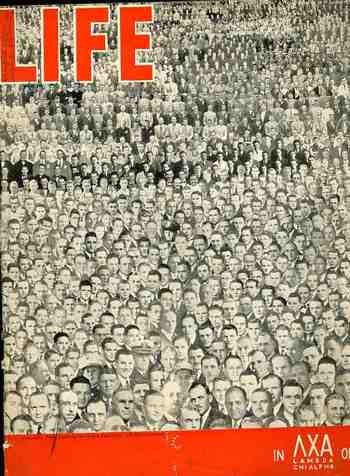


  • Book Design–The Weight of Humanity on Book Covers

    JF Ptak Science Books  Post 225

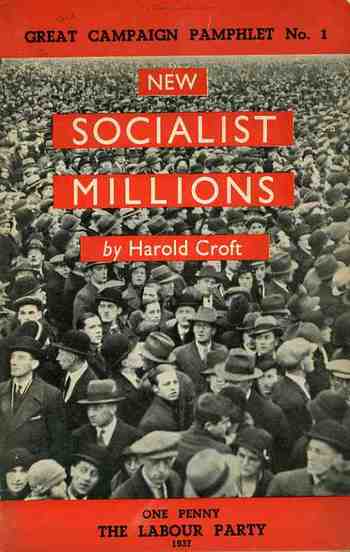
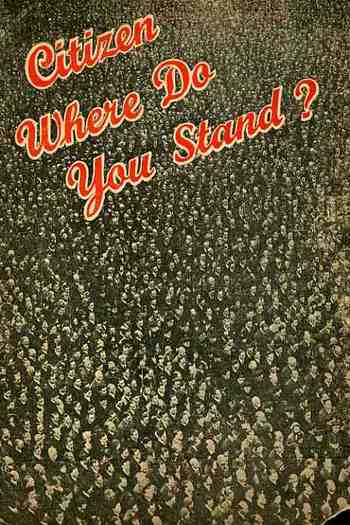
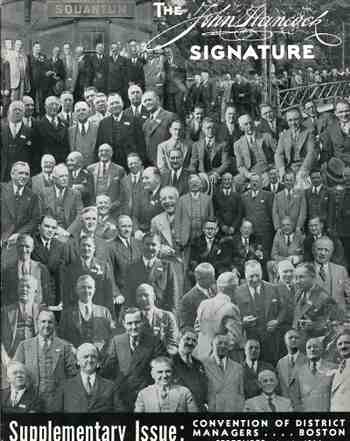
    I don’t often see covers of pamphlets featuring hundreds–or thousands–of people as a part of the design.  In my continuing role as finder and re-finder of things found I have re-surfaced four of these designs, and I feel I should post them before they’re captured in the un-finding process.  Again. Back to the design:  these are very striking, persuasive images, unavoidable in many ways, completely intriguing, beguiling.  People just have to look at these things.  Look:  I made a little experiment today placing ten  very interestingly-designed pamphlets on display, all with compelling and distinct merits, and including one with a big spread of humanity on the cover (the “Life” pamphlet. The very unscientific results is that people were generally first drawn to the complex people image, and stayed longer looking at it–by far–than any other image.  Perhaps its the same sort of reaction going on when you watch people walking in front of a mirror or reflective surface, with the vast majority of folks checking themselves out in it.  Maybe its just people looking for something familiar.  Maybe the faces are simply, strictly more interesting than just points o the page.  I’m not sure. 

    The first image is Life, the story of the fraternity lamda chi alpha, published around 1935; second, a one penny Labour Party publication coming from the National Executive Committee of the Labour Party, published in London in 1937; third, a program for the Liberal Party, published in London in c. 1938; lastly, fourth, a program for some course of semi-statistical study with the John Hancock life insurance company.  These beautiful designs were much more interesting than the very casual contents they covered. 

    Blogaugust_27_crowds_life459

    Blogaugust_27_crowds_socialist_mil4     

    Blogaugust_27_crowds_stand456


    Blogaugust_27_crowds_hancock460


  • Ships in Siege: Rhodes 4th Century BCE and Porphyrius 4th Century ACE

    JF Ptak Science Books LLC    Post 135
    Blogrhodes197
     

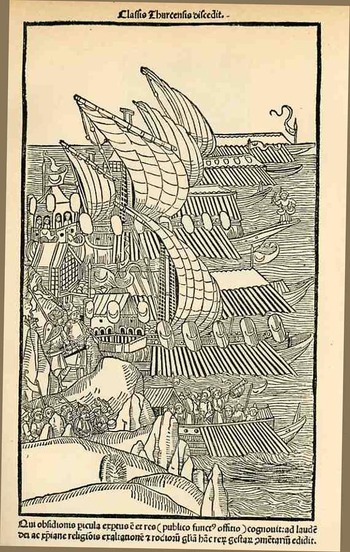
    We find this splendid woodcut in the book by Guilelmus Caorsin, Obsidionis
    Rhodiae urbis descriptio
    , printed in Ulm by Johann Reger in 1496—it is anonymous, identified only
    as by the Maitre de Caorsin. It depicts the
    siege of Rhodes (from 305 to 304 BCE), one of the best known and most famous
    sieges of antiquity, and the handiwork of Demetrius Poliocretes, when he tried
    to break the back and will of the city of Rhodes (which was a great mercantile
    center) in its alliance with Ptolemaic Egypt. It is a strong, simple scene, showing the ships of Demetrrus trying to
    lay siege to the harbor, all under full sail, the their rowers at ready (under
    protective canopies); the water of the harbor is symbolic and beautiful, and
    all of the action takes place under an absolutely neutral non-sky.

    Another entirely different sort of ship is found in the next
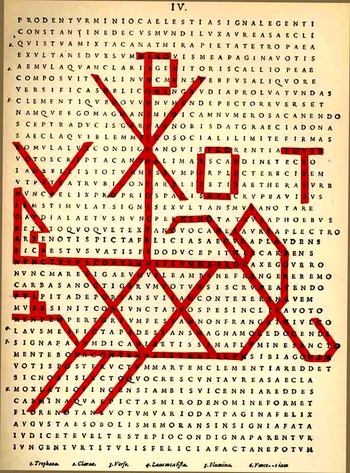
    image, its outline revealing the message in a faux-cryptographic siege. It is from a curious piece of complicated
    obsfucation by Porphyrius, and is entitled  Publillii Optatiani Porphorii panegyricus
    dictus Constantino Augusto, printed 99 years after the book above (1595, in Augsburg). It is a curious thing, being mainly a series
    of complex acrostics which, when pieced together or parsed out, revealed some
    very flattering pieces of poetry to Constnatine.

    In the Chronicles of Hieronymous we find the following
    observation on this effort: It is a most
    extraordinary aggregation of acrostics, pattern poems, and every possible
    device of useless, mechanical variety of form, of little value, excepting as a
    sort of dime-museum exhibition of patience and ingenuity…” Be that as it may, the found artforms in the
    acrostics and other bits is really quite arresting, and remind me more of twentieth century artwork than 4th century BCE  poetry.  Blogrhodes_2198


  • Not the War of the Worlds II—Ripping Off H.G. Wells

    JF Ptak Science Books  LLC   Post #109
    Blogwelllsgoble

    Herbert George Wells’ War of the Worlds was one of the very first efforts in modern history to reverse the outward-bound human trend of reaching out—he introduced aliens and the big idea of aliens (other than god or gods) coming to earth and doing us harm.  He wrote WOTW in the third year of a very rollicking decade-long intellectual purge that would change the face of science fiction writing in Western lit, changing the idea of fantasy science, replacing burnt brain stems with powerful, well-written ideas.  (In the period 1895-1905 Wells wrote The Time Machine (1895), Island of Dr. Moreau (1896), The Invisible Man (1897), WOTW (1898), The First Men in the Moon (1901), When the Sleeper Awakes (1899), Anticipations (1901), the Discovery of the Future (1902) , A Modern Utopia (1905), among others*.)

    Wells (born a year after the American Civil War ended and died a years after WWII ended) was a huge thinker and a gifted craftsman, with big ideas that he was able to put into simple, well constructed forms that were enormously popular.  (Orwell remarked that Wells was the most read person in English in the 1900-1920 period.)

    The prescient, observant futurist, Wells sought to also protect his own future in regards to his work, particularly with the WOTW—he secured all serial and reprint rights to the work in the United States, where it was being published in installments simultaneously by two different magazines.  But rights be damned, as the magazine editors changed the story to suit their regional needs, painting the work in putrid reds and mauves to such a degree that the enraged Wells—who could do nothing about any of the changes–paid it a salty goodbye in the U.S.

    But I think the major intellectual theft occurred in the weeks following the finale of the installments.  An American popular science writer, Garret P. Serviss, was contracted by the Hearst Newspaper group to pick up the WOTW story where Wells had ended it.  It would be continued—rather the story was stolen so that it could be twisted into another form—as a short novelette, problematic because of its interesting reach, but a problem nonetheless.  Serviss was a popular but modestly gifted writer, both rising and falling to the occasion in the wake of Wells.  His work, Edison’s Conquest of Mars, an intrepid journey in another man’s shoes, featured Thomas Edison raising an army in space ships, hell bent on getting to Mars to extract revenge for a dismembered, fractured earth, rendered nearly impotent by Wells’ Martians attacks.

    Edison et alia make it, and all sorts of first-time stuff happens—the first “phaser” weapons are introduced, mid-space attack and counter-attack, asteroid mining, and lots of other things of concern in the originality of science fiction ideas.  Unfortunately it was all borne on the back of a stolen series of ideas and story, and those happened to belong to Wells.

    Here’s something worth noting, though—Serviss’ work may be one of the only instances of employing Wilhelm Roentgen, (the discoverer of the X-Ray (in 1895) and recipient of the first Nobel Prize in physics) and Lord Kelvin (perhaps the most eminent of English physicists of the late 19th century) as heroic members of a Martian attack force.  Throw in the magnificent but moral incompetent Thomas Edison, and you have a unique real-life triumvirate employed in the telling of a stolen fantasy who, fortunately or not, come up with some really good, and early, ideas.

    *The full 1895-1905 list from the HG Wells Society is very impressive, as is the whole of his output:
    1895
    Select Conversations With an Uncle
    The Time Machine
    The Wonderful Visit
    The Stolen Bacillus, and Other Incidents
    1896
    The Red Room
    Island of Dr. Moreau
    The Wheels of Chance
    1897
    The Plattner Story, and Others
    The Invisible Man
    Certain Personal Matters
    1898
    War of the Worlds
    1899
    When the Sleeper Wakes
    Tales of Space and Time
    1900
    Love and Mr. Lewisham
    1901
    The First Men in the Moon
    Anticipations
    1902
    The Discovery of the Future
    The Sea Lady
    1903
    Mankind in the Making
    Twelve Stories and a Dream
    1904
    The Food of the Gods
    1905
    A Modern Utopia
    Kipps: The Story of a Simple Soul


  • Beautiful Title Pages 5: Chocolate, Morals and the Birth of the British Museum

    JF Ptak Science Books LLC   Post #89
    Blogtpchocolate095

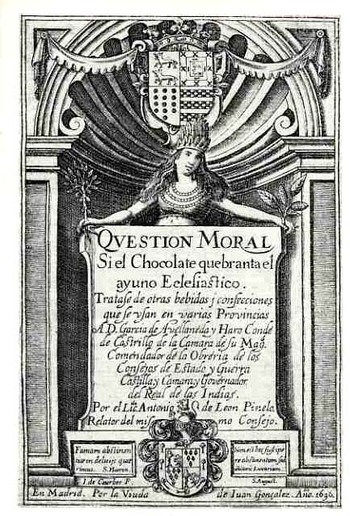
    This lovely title page is from the book Question Moral Si El Chocolate Quebranta El Ayuno Eclesiastico, (on the Moral Question of Chocolate…), printed in Madrid in 1636, and said to be the first book on American drinks.  León Pinelo. a Spanish-colonial historian (1589 – c. 1675), born in Cordova de Tucuman, (Argentina),  and educated in the College of the Jesuits of Lima (Peru), and then leaving for Spain by 1612, where he wrote this (and other) books.   HE was a significant scholar and an accomplished bibliographer, and compiled a very extensive dissertation upon the history, uses, preparation of chocolate, as well as other drinks in general of the Americas, touching on concoctions of Indians of New Spain, Peru, Nicaragua and Guatamala. 

    The title page is very dimensional, with the central figure, an Indian woman holding the scroll of the title, with a miniature coca tree in one hand and a four-leaved branch from the cocoa tree in the other. 

    Leon Pinelo in no way “created” the chocolate drink, but he was the first (and extensive reporter of it and certainly remained it most extensive annotator of the drink for centuries. Columbus was aware of the drink by his fourth voyage in 1502 but said relatively little about it.  The Aztecs had been using the cocoa been for a thousand years before that.  (It has been remarked that the drink was so extraordinary and special that it was served in one-serve golden goblets that were disposed of after the chocolate was consumed). 

    Perhaps the great King of Chocolate though was Sir Hans Sloane, who in addition to much else he did in his life traveled to Jamaica, where he assembled a fabulous plant collection for shipment back to England.  He also “discovered” chocolate there, improving the native presentation of the drink (which he evidently found to be nauseating) by perfecting a milky solution with it—and *that* it was brought great wealth to Sir Hans.  With that wealth Sloane continued to add to his extraordinary collection of natural artifacts, amassing one of the greatest cabinets of curiosity in England and the continent.  In addition to his own collecting and minor purchases Sloane used his chocolate money to purchase the fabulous collections of  William Courten (who, for example was an extremely wealthy Brit who financed the colonization of Barbadoes among other things before finally going bust), James Petiver, Nehemiah Grew, Leonard Plukenet, the Duchess of Beaufort, the rev. Adam Buddle, Paul Hermann, Franz Kiggelaer and Herman Boerhaave.  Death’s dance found Sloane in 1753, who left his entire collection to England, and it was this bequest that formed the opening, golden, sagacious nugget of the British Museum.