A Daily History of Holes, Dots, Lines, Science, History, Math, Physics, Art, the Unintentional Absurd, Architecture, Maps, Data Visualization, Blank and Missing Things, and so on. |1.6 million words, 7500 images, 4.9 million hits| Press & appearances in The Times, Le Figaro, Mensa, The Economist, The Guardian, Discovery News, Slate, Le Monde, Sci American Blogs, Le Pont, and many other places… 5000+ total posts since 2008.

Author: JF Ptak

  • Collect Call to Armageddon (ca. 1950)

    JF Ptak Science Books    Quick Post   The series on Atomic and Nuclear Weapons

    • [There have been 99 posts to this blog since June 1–check out other work via the “Archive” at left]
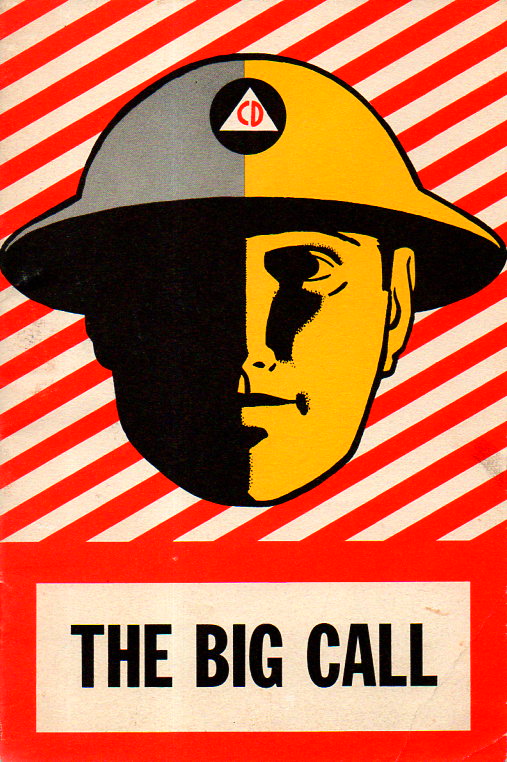
    Big Call197

    One thing is for certain–the design of this Civil Defense (“trained helpfulness”)  pamphlet issued by Bell Telephone of Pennsylvania was very determined, and obvious, and provocative, and it may have been the best thing about this publication. It is not clear to me how much of the plans for reacting to a nuclear attack (“an atomic Pearl Harbor”) were implemented or implementable when this work was printed (ca. 1950?), but the plans were certainly orderly–and so they seem in the maps of action.

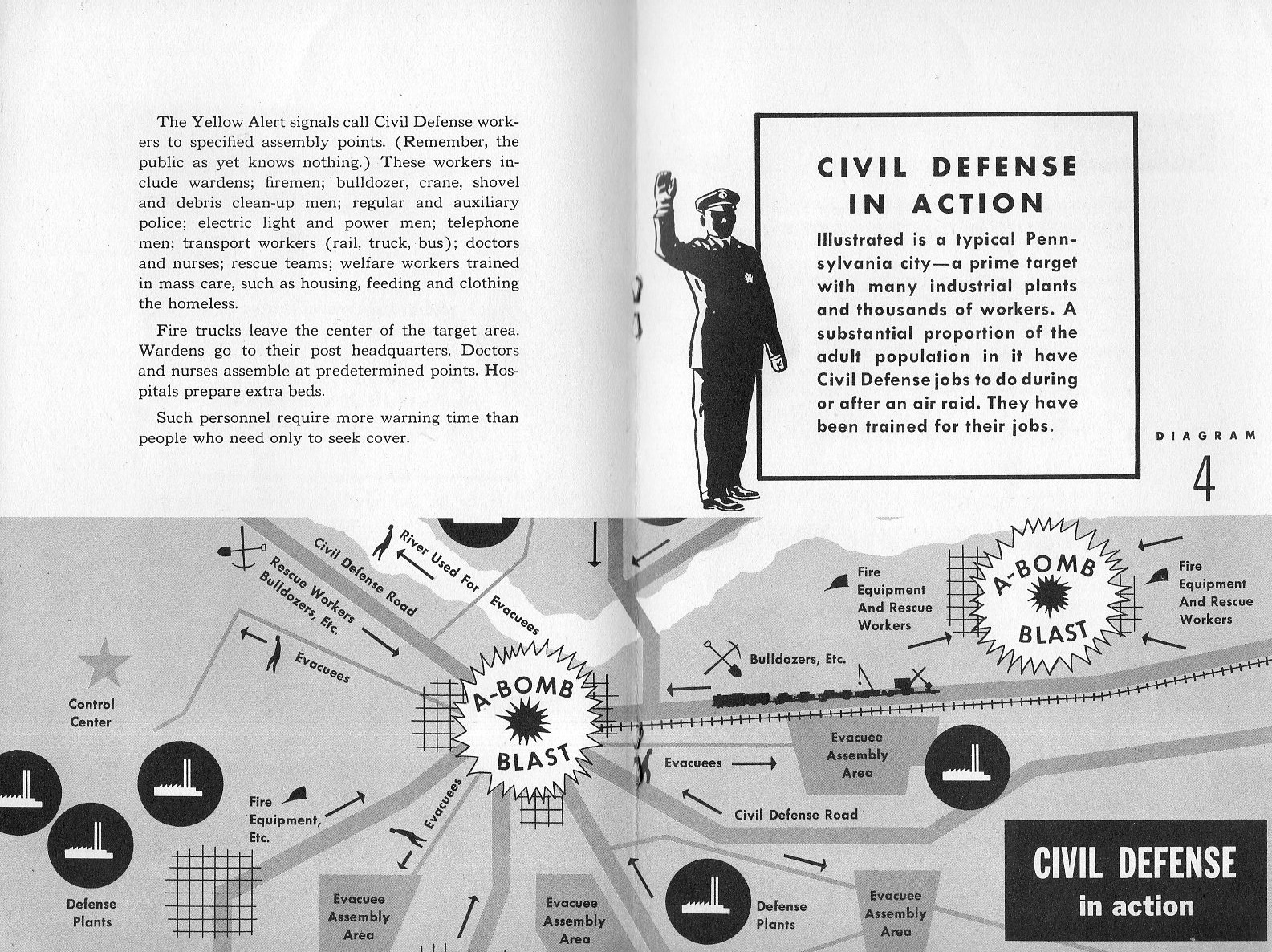
    Here’s one interpretation of an action plan for Armageddon in a large city–it is a bare-bones, comforting plan,even though it looks like half of the map is missing (though it isn’t); it is really just a suggestion about the course of action after an attack:
    Big Call199

    All it shows, really, is that something is going to happen.  

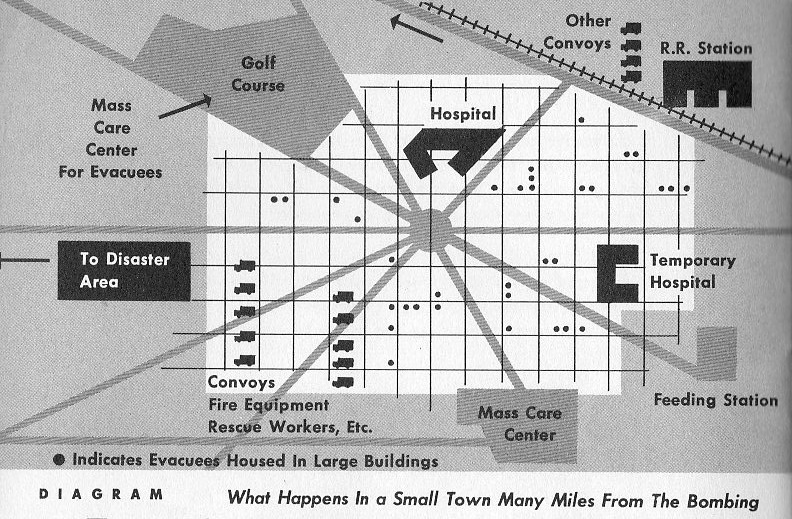
    Here’s another vision of action, this taking place in a small Pennsylvania town “100 miles away” from bombed centers:
    Big Call200

    There are no plans for the population to go anywhere, though there are plenty of plans for convoys going to the bombed areas. Also there’s plenty of expectation, what with a hospital, temporary hospital, mass care center, and a golf course dedicated to mass care for evacuees–there would be plenty of people being removed to the town (as hospitals “prepare(d) extra beds”).  

    There wasn’t much in this pamphlet about what to actually do in the event of an (ultra) emergency, though you were told that people would respond to calls–telephone calls. As a matter of fact the phone features largely in this pamphlet:
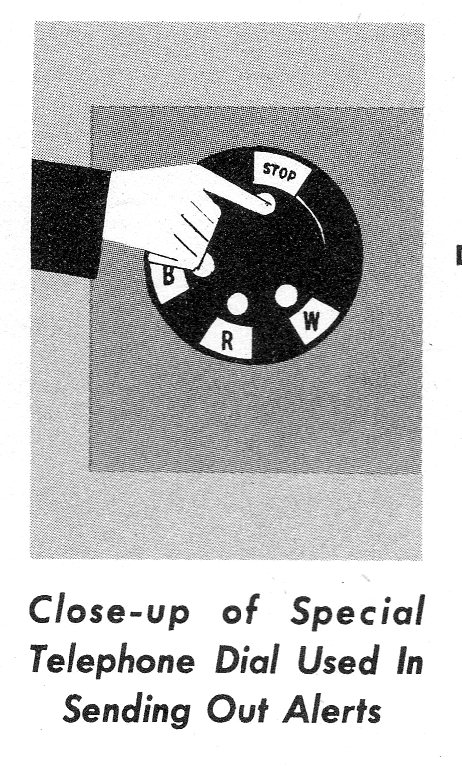
    Big Call201Maybe it was all about selling telephones–as in would you be ready to receive The Big Call if it was made?  
     

    ·Posted by :

    ·in:


  • “Seven Real Books”!

    JF Ptak Science Books    Quick Post   Daily Dose of Dr. Odd

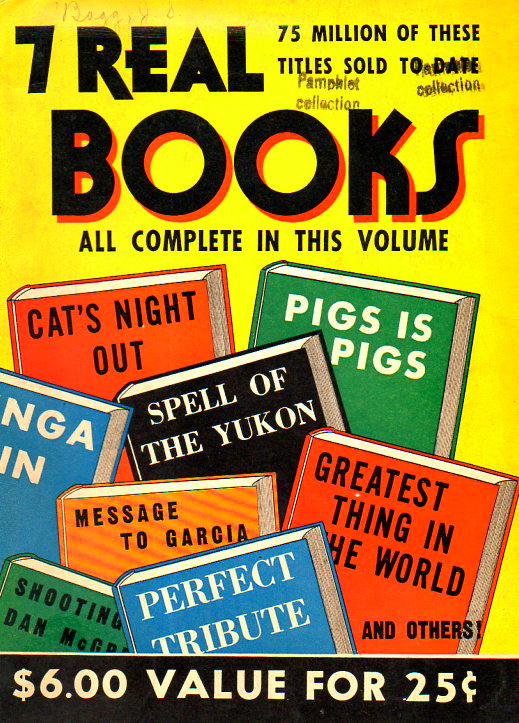
    7 real books196

    When can you get seven “complete books” into one volume…of 126pp?  And be printed in a legible font?  Well, you can’t, really, even when you scream it on your own book–unless those books of course are really short stories, or really short stories.  For example, Hubbard’s “Message for Garcia” is complete but it is hardly a book at 400 words or so.  How these short stories could have been offered for six bucks (in 1940) I don’t know.

    Actually the seven REAL books (“and others!” are reprinted in 105 pages–the last 21 pages are filled with psalms, the Gettysburg Address, “Gungda Din”, “The Battle Hymn of the Republic”, and ten others, to fill out the rest of the book.

    In any event, I liked this little pamphlet for its odd design, “special” typeface, book titles, and color.  Did I mention color?  


    ·Posted by :

    ·in:


  • Mind Your Stops! On Punctuation and an Abundance of Commas, 1855

    JF Ptak Science Books  Quick Post

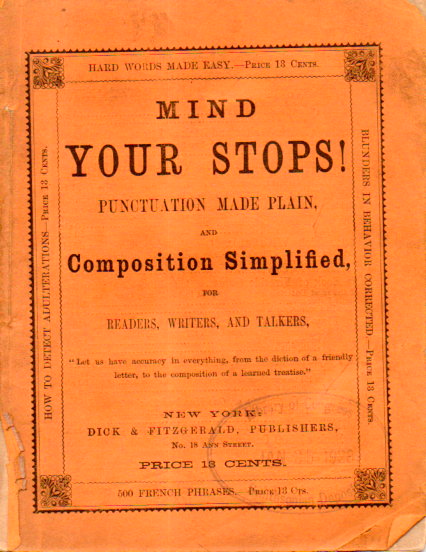
    Mind your stops!191

    Mind Your Stops! Punctuation Made Plain and Composition Simplified for Readers, Writers, and Talkers, was a slim volume produced in the U.S. version of the “Sixpenny Library” series, with this version published in New York City by Dick & Fitzgerald in 1855. (It cost 13 cents in the U.S.) It is small (5×4 inches or so) and 32 pages long, and promises a lot, (“Hard Words Made Easy”). There is nothing particularly eventual that takes place in this work, at least from what I can fast-read. The main concern here is the comma (pp 6-16), which takes up about a third of the work and is but one of ten punctuation marks.  (Here are a bunch of them in case I’ve forgotten to use some here–I know there are too many,but you may keep the others for a rainy day===> ,,,,,,,,,,,,,,,,,,,,,,,,,,,,,,,,,,,,,,,,,,,,,,,,,,,,,,,,,,,,,,,,,,,,,,,,,,,,,,,,,,,,,,,,,,,,,,,,,,,,,,,,,,,,,,,,,,,,,,,,,,,,,,,,,,,,,,,,,,,,,,,,,,,,,,,,,,,,,,,,,,,,,,,,,,,,,,,,,,,,,,,,,,,,,,,,,,,,,,,,,,,,,,,,,,,,,,,,,,,,,,,,,,,,,,,,,,,,,,,,,,,,,,,,,,,,,,,,,,,,,,,,,,,,,,,,,,,,,,,,,,,,,,,,,,,,,,,,,,,,,,,,,,

    Also included are the colon (pp 16-18), the period (18-20), the dash (20-25), the stopped-dash (25-26), the long dash (26-28), the hyphen (28-29), the note of interrogation (29-30), the note of admiration (30-31), the marks of quotation (31-32), and then all by it self in a lonely half-page or so, the parenthesis (on page 32). 

    I’m reproducing this mostly for the cover. Oh: and for some reason only two copies of this work are located in WorldCat, both at the British Library.

     A review from Mechanics Magazine, (Volume 63) edited  by John I Knight, Henry Lacey,, which appeared in 1855:

    ·Posted by :

    ·in:


  • Tired, Wounded, and Underground (1917)

    JF Ptak Science Books   Quick Post

    See the WWI Photography section for more images and for an explanation of the source of the photographs.

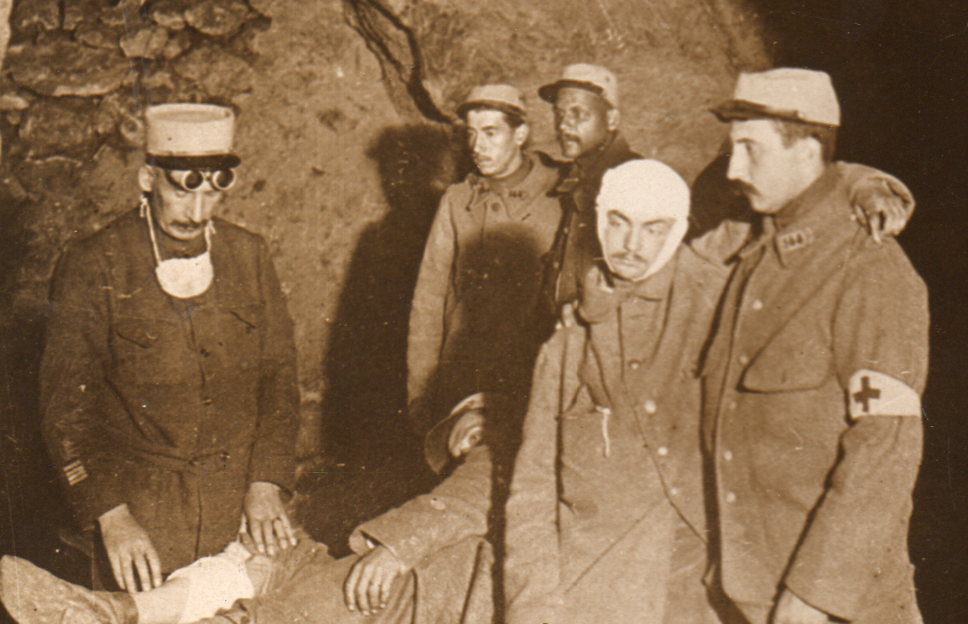
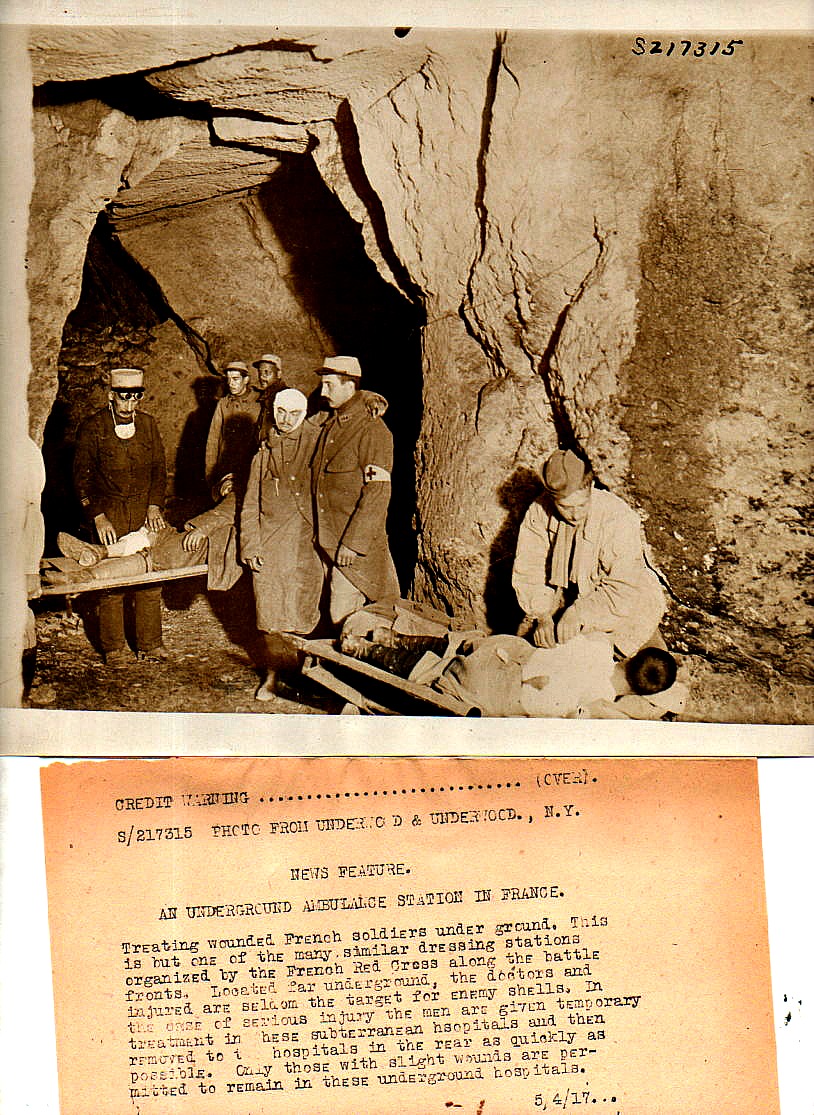
    This is a photograph of an aid station somewhere along the Western Front, 1917. Given the amount of digging going on throughout the course of the war, with the construction of hundreds of thousands of miles of trenches, and then the sapper war to tunnel underneath the tunnels and so on, it is quite possible that this underground shelter was dug out by hand. This is also an insight to the duration of some of those battles–to construct such a station impervious to possibly semi-continuous bombardment meant that the lines of battle were static, with many of the major engagements of hundreds of thousands of soldiers lasting for months, and in some cases, years. 

    The expressions here are difficult, and difficult to actually recognize as anything that isn’t exhaustion. There is a lot of “blankness” in the faces, a deep weariness.  

    WWI Photos--underground  hospital189

    This scene is a detail from the larger and full image (which is also for sale at the blog’s bookstore, here):

    WWI Photos--underground  hospital188

    ·Posted by :

    ·in:

    — —

  • What is Your Most Ardent Wish? (1825)

    JF Ptak Science Books   Post 2492

    Your Most Ardent Wish detail

    The list below is part of a workbook/artwork created in ca. 1820-1830 or so–it is a wishbook of sorts, a daydream collector.  There are a number of questions that the author asks of herself (wishes for a small and pretty foot and such are among the many hints) and provides 40 answers for each. The questions and answers are lovely, and revealing.

    The questions include:

    • “By Whom are You Beloved?”
    • “What is Your Disposition?”
    • “For What Are You Admired?”
    • “Will You Marry or Not, and Why?”
    • “What is Your Life’s Passion?”
    • “What Do You Most Figure Yourself Upon?”
    • What is Your Most Ardent Wish?”

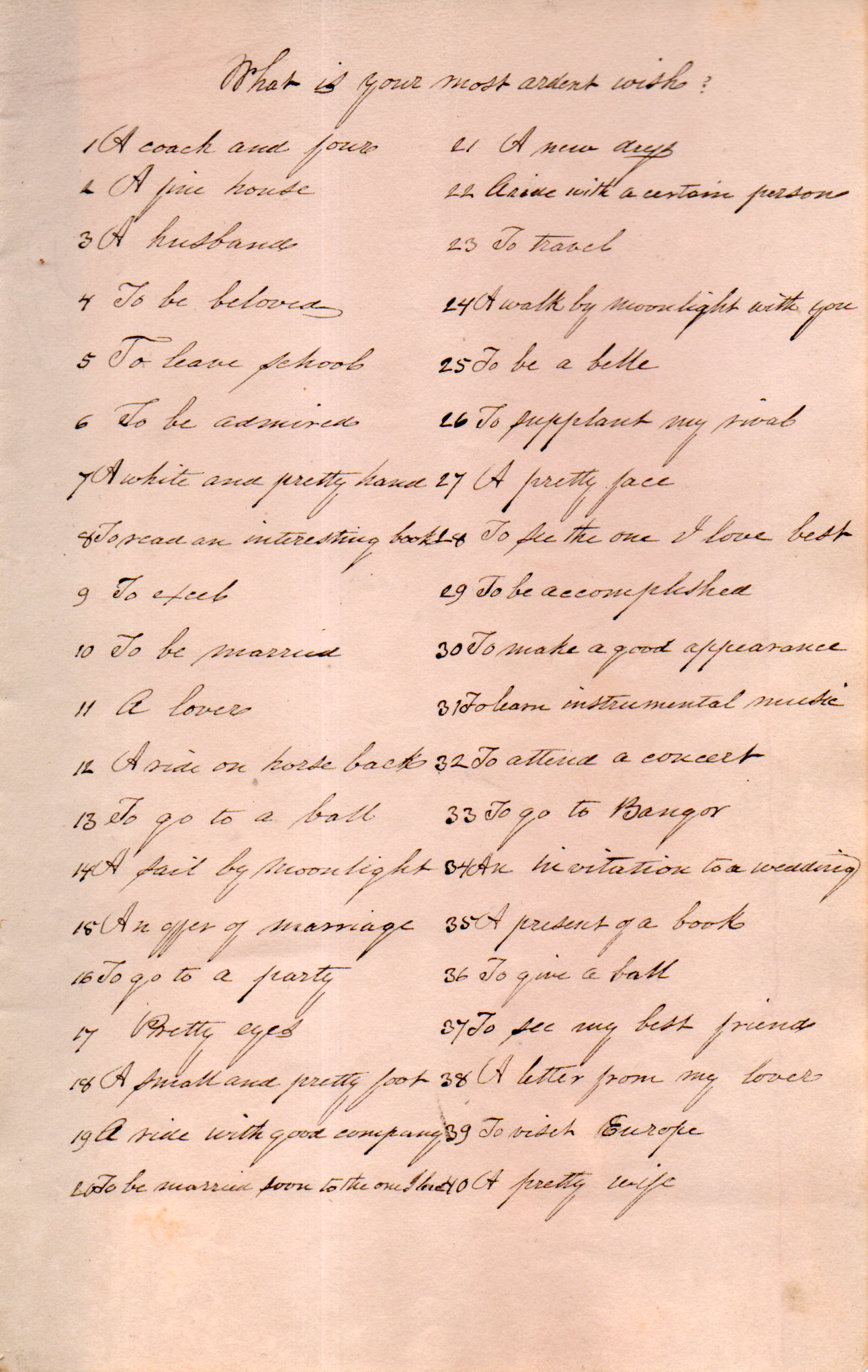
    Tonight though I would just like to look at one, the last question:

    Your Most Ardent Wish186

    And just in case you can’t quite make out the penmanship (rendered with a very finely-nibbed pen):

     The responses: (1) a coach and four (a coach pulled by four horses); (2) a fine house, (3) a husband, (4) to be beloved, (5) to leave school, (6) to be admired, (7) a white and pretty hand, (8) to read an interesting book [but not book-plural?], (9) to excel, (10) to be married, (11) a lover, (12) a ride on horse back, (13) to go to a ball, (14) a sail by moonlight, (15) an offer of marriage, (16) to go to a party, (17) pretty eyes, (18) a small and pretty foot, (19) a ride with good company, (20) to be married to the one I love, (21) a new dress, (22) a ride with a certain person, (23) to teach, (24) a walk by the moonlight with you, (25) to be a belle, (26) to supplant my rivals, (27) a pretty face, (28) to see the one I love best, (29) to be accomplished, (30) to make a good appearance, (31) to learn instrumental music, (32 )to attend a concert, (33) to go to Bangor, (34) an invitation to a wedding, (35) a present of a book, (36) to give a ball, (37) to see my best friend, (38) a letter from my lover, (39) to visit Europe, (40) a pretty wife. 

    In general, the things on the wish-list of ardent wishes were mostly about experiences (13 or 14 things), followed closely by wishes in relationship(s) with 9 or 10; physical attributes (6 hits), and other bits and pieces. It is interesting that of the 40 choices there are only four that deal with physical things. 

    It is an enchanting list, especially when you realize that it isn’t as antiquarian as it seems, with the overwhelming majority of the wishes being easily wishable today–probably as they have always been.  

    ·Posted by :

    ·in:


  • A Pretty Medusa

    JF Ptak Science Books Quick Post

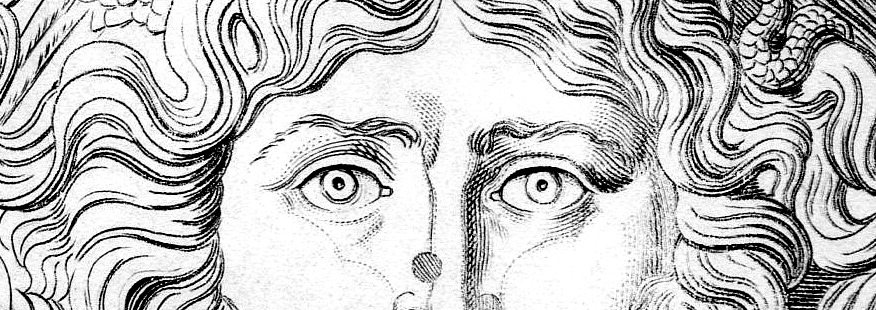
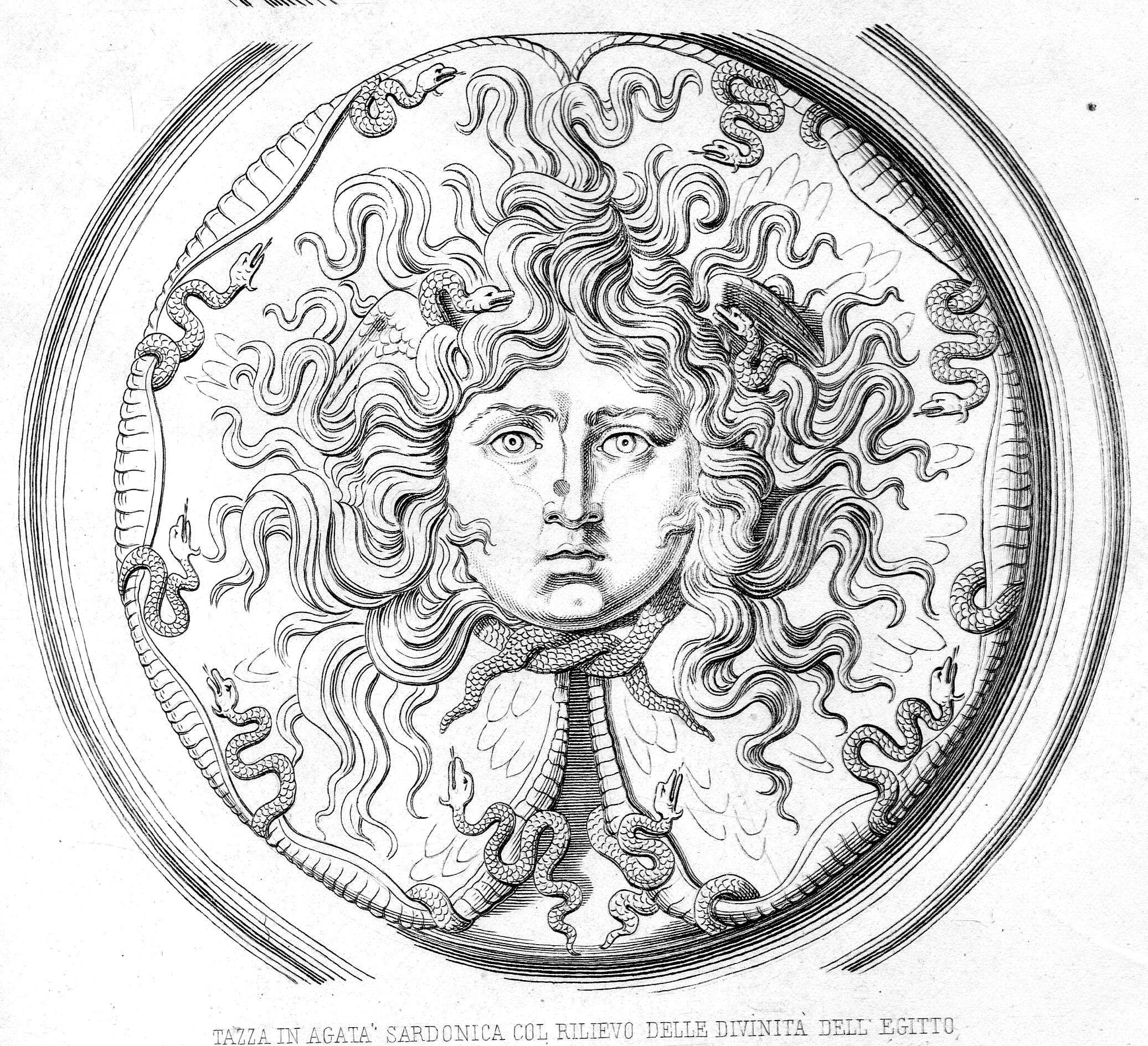
    Medusa was supposed to be hideous–scary, revolting.  Most of the time though the images I see of her make her look quite attractive–and very strong.  She was one of the gorgon sisters, child of Gaea and Oceanus, who in the short run feel for Poseidon and broke her rules of chastity, and for which was terrifically punished by Athena to the fate we know today. 

    Medusa detail

    This is a detail from the following engraving, which I can’t yet identify, though I reckon it to be early/mid-19th century:

    Medusa187It is a striking image, and if I translate the caption correctly it was one that you would see in the bottom of a glass/drinking vessel. 

    ·Posted by :

    ·in:


  • The Graduated Surrender, Philippines, September 1945

    JF Ptak Science Books  Quick Post

    Even though WWII in the Pacific was ended on 15 August 1945 (or at least the surrender was initiated then) and the surrender papers signed aboard the USS Missouri in Tokyo Bay on 2 September 1945 (“VJ Day”), there were many elements of the Japanese Army that took weeks and in some cases months to actually lay down their weapons and submit. (There are some rare cases of individual soldiers lasting for years and decades past the surrender, refusing to give in, living their lives in remote places.)

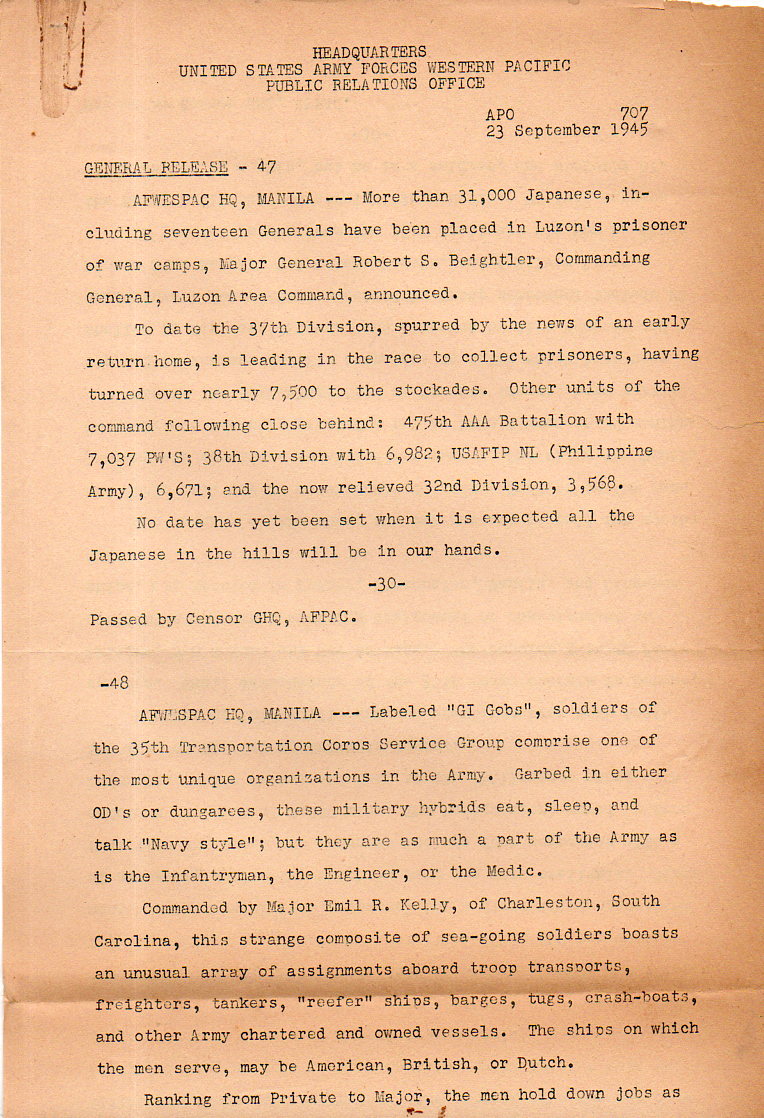
    This document–“Headquarter / United States Army Forces Western Pacific / Public Relations Office / General Release – 47, APO 707, 23 September 1945”–released by the propaganda/public relations office of the U.S. Army Force Western Pacific, details some of the process of large forces of Japanese forces in the Philippines coming in to surrender. 

    Stating that 31,000 Japanese soldiers (and 17 generals) had already been placed under guard in Luzon’s POW camps, the three-paragraph document ends with this interesting statement:

    “No date has yet been set when it is expected all the Japanese in the hills will be in our hands.”

    WWII--Japanese prinsoers surrender 23 Sept 1945150

    ·Posted by :

    ·in:


  • A Seldom Scene and Perhaps Influential Early Paper in Artificial Intelligence.

    JF Ptak Science Books   Quick Post

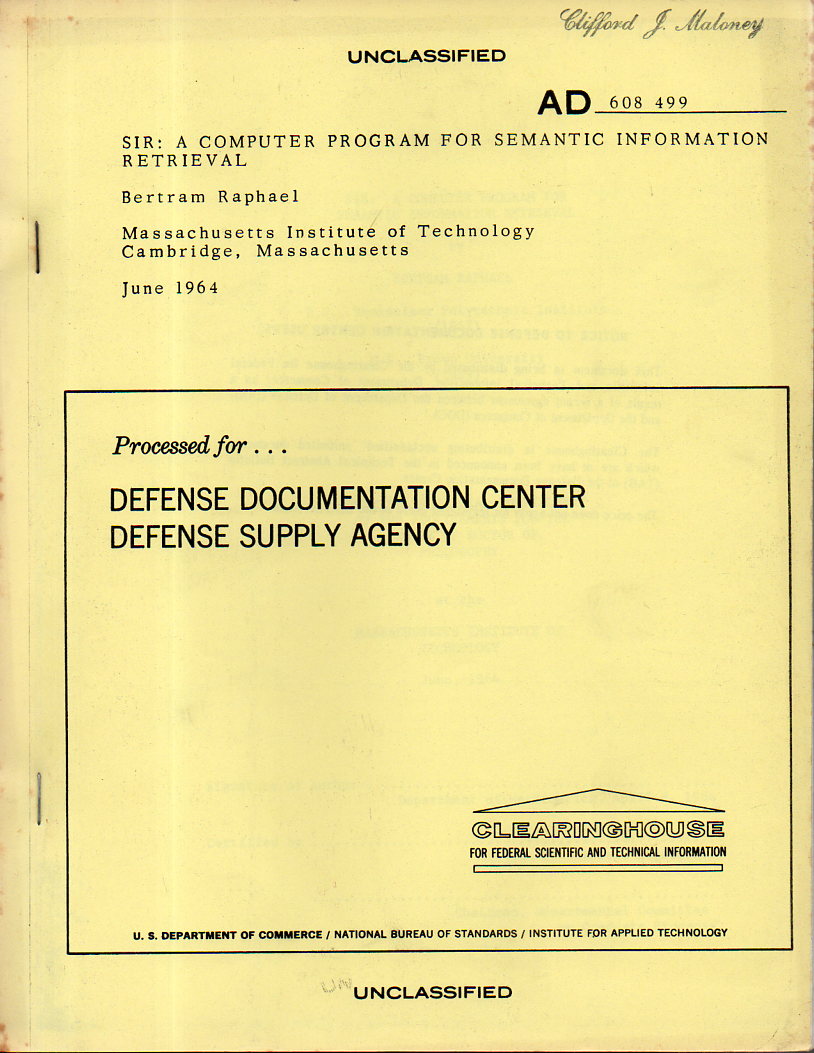
    Raphael, Bertram119Bertram Raphael’s  SIR: a Computer Program for Semantic Information Retrieval made a surprise appearance tonight. It was published/printed by the Clearinghouse for Federal Scientific and Technical Information, Defense Documentation Center, Defense Supply Agency, U.S. Dept. of Commerce, June 1964.  (156PP+12PP, plus one page of biographical information on Raphael with a bibliography including his work on LISP, the last entry dated May 1964). It is an oversized some-sort-of-photomechanical production, and may or may not be a very early and influential paper in artificial intelligence–it seems as though there are several approaches to that determination, none of which I can pass judgment on.

    This is the Ph.D. dissertation by Raphael (b. 1936), who had the great Marvin Minsky as thesis supervisor.

    ·Posted by :

    ·in:


  • The Mona Lisa of British Female Swimmers Photographed in an Awkward Moment (1918)

    JF Ptak Science Books  Quick Post

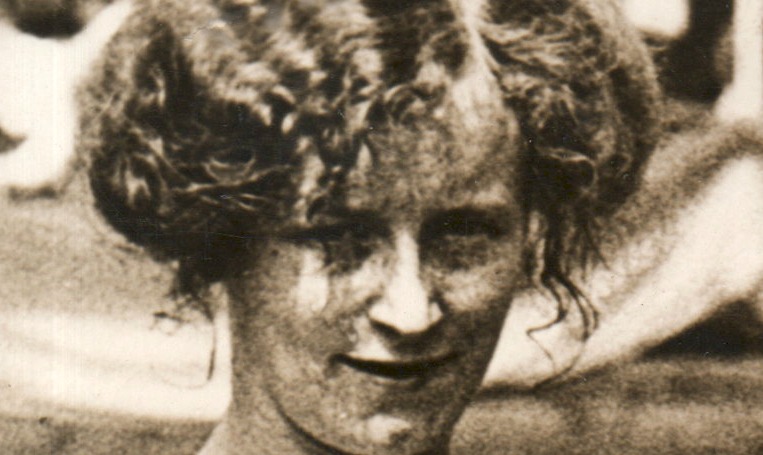
    WWI Photos--female swimmer detail

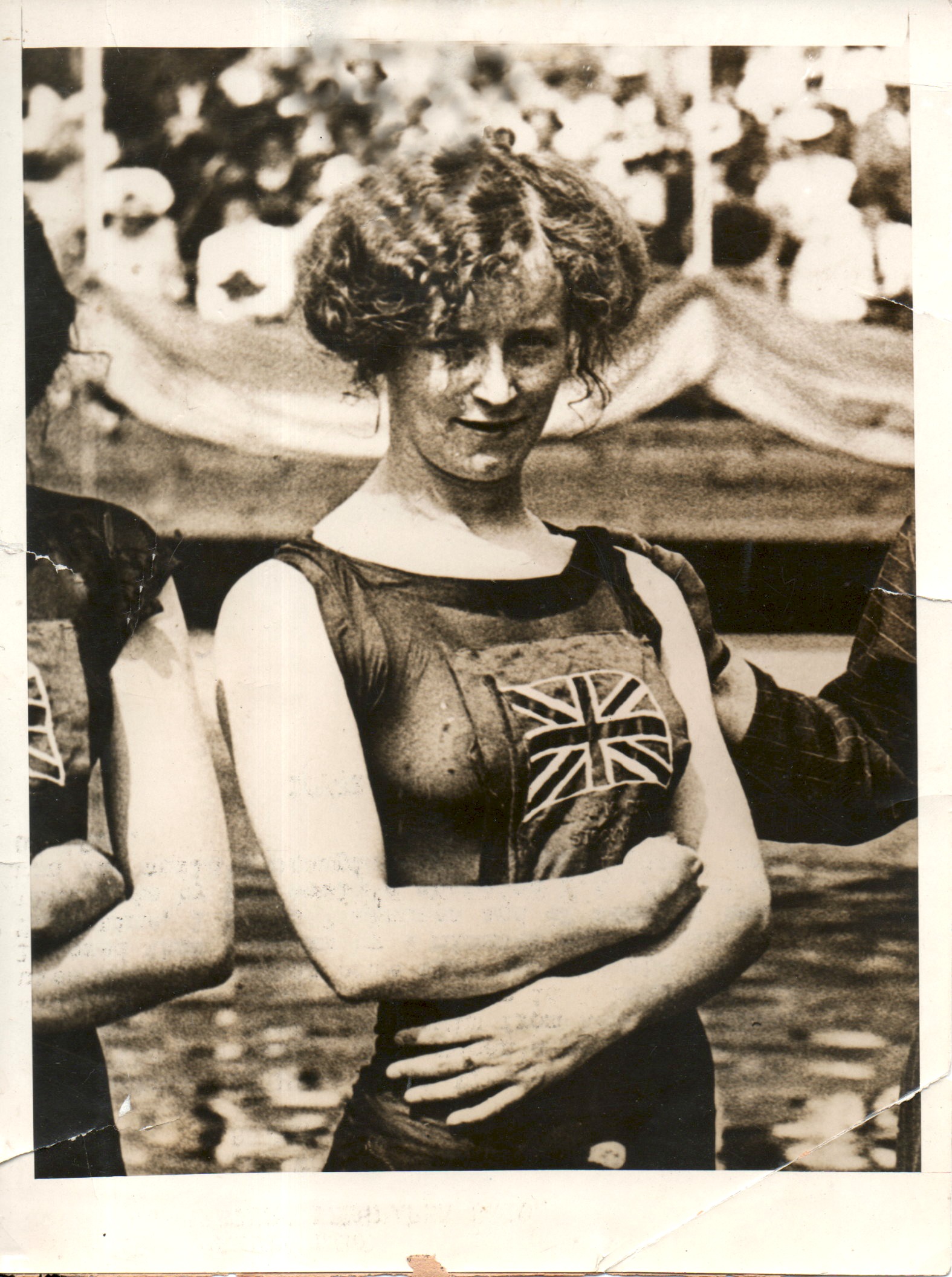
    I have made perhaps 100 posts on the images from a collection of WWI news photo service images that I have, and for quite some time this image  (below) has been one of he most captivating of the thousand or so that were in that collection.  Generally the images were accompanied by a suggested text that could appear alongside the picture when it was published (see here for the ins and outs of publishing photographs during WWI), but this one had no description at all, save for the copyright on the back belonging to Underwood and Underwood. 

    I thought that this photo was from 1918, as 1000 of its companions were, but I was corrected by on twitter about the Mona Lisa’s true name–Jennie Fletcher, (1890-1968), and the picture was at the 1912 Olympics.  It is nice to be able to put a name to the face.  (See the BBC for a good story: http://news.bbc.co.uk/2/hi/uk_news/wales/7554196.stm)

    The camera has caught her at an awkward time, especially given the sensitivities of showing skin in bathing attire. 

    What is she conveying? What is she saying with the attitude of her head and the look in her eyes?

    There have been Classic Attitudes among the photographs (like the Venus of the Tars, for example), and in all of these examples, she is the only Mona Lisa.

    WWI Photos--female swimmer185

    ·Posted by :

    ·in:

    —

  • A Fantastically-Lettered Letter, 1868

    JF Ptak Science Books   Quick Post

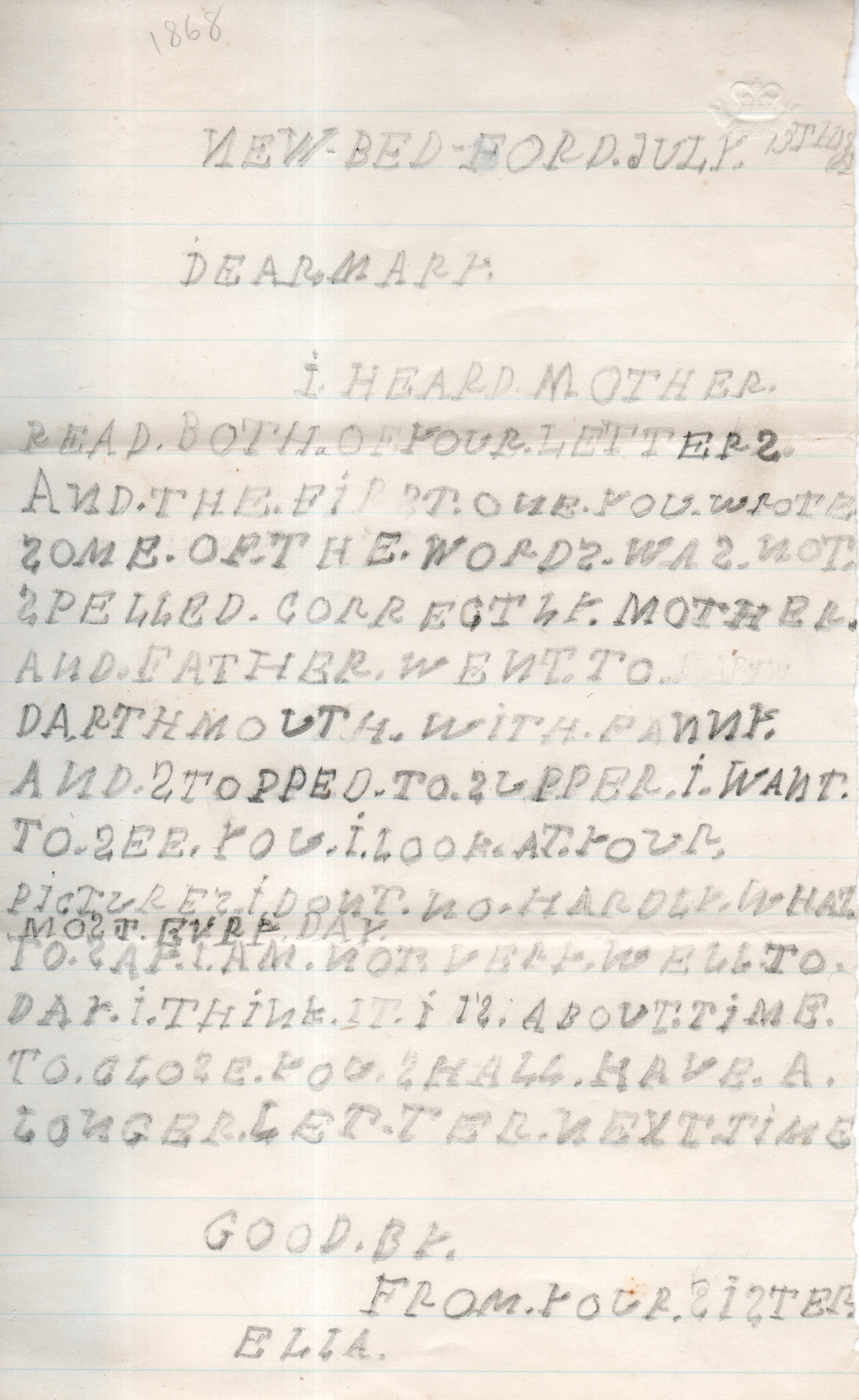
    CHild Art NEw Bedford184

    I’ve mentioned on this blog a number of times that I like to collect antique art done by children–art, doodles, letters, that sort, mostly from before 1900.  This material is difficult to find, mainly because it was difficult to produce when it was being done given the relative scarcity of paper and pencils/pens/etc., and then having to survive moves and cleanings and generational changes for 100 or 200 years, so from my experience not that much survived.

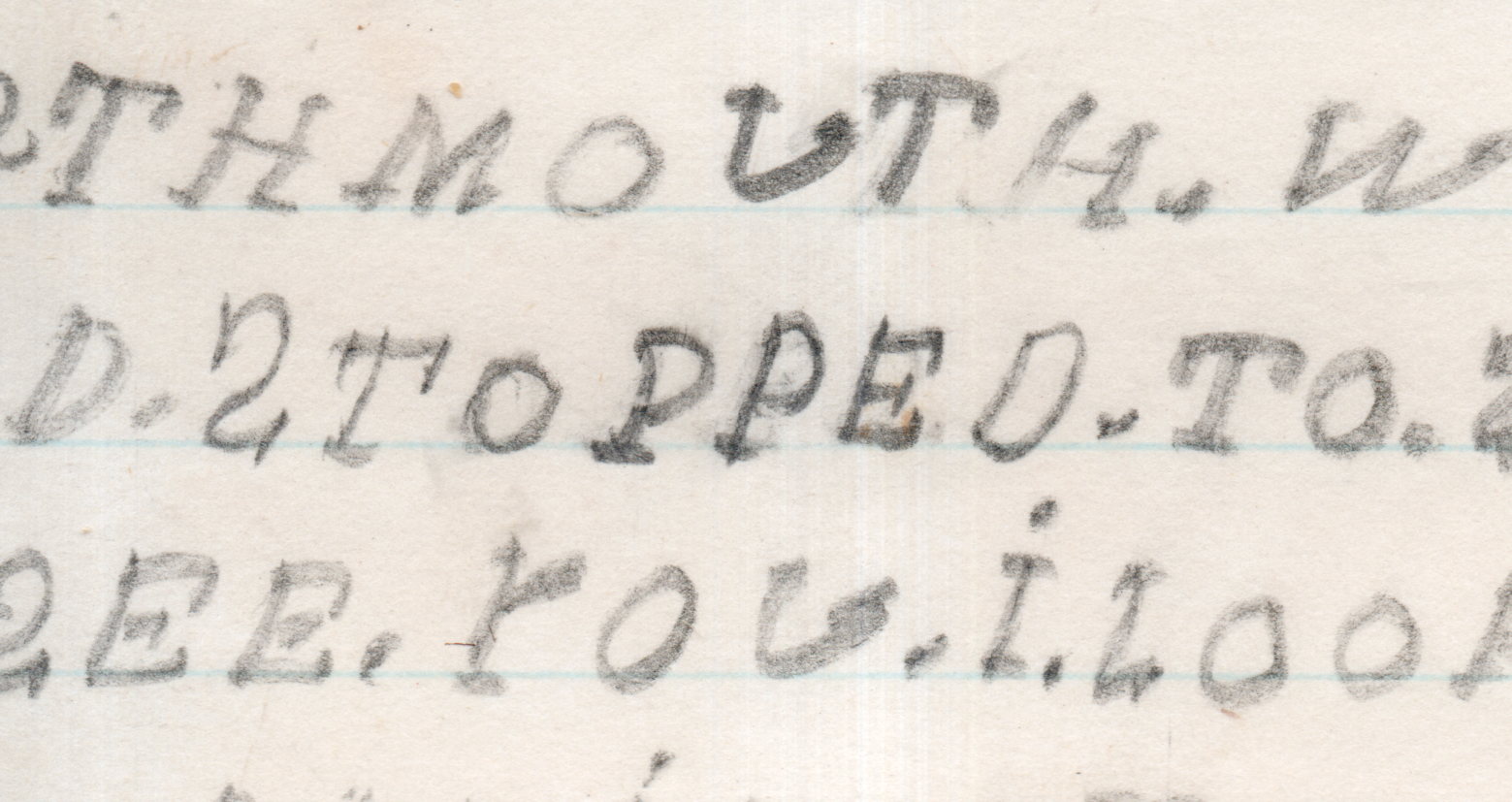
    CHild Art NEw Bedford183

    Today’s sample is a letter from 1868, and the lettering, the handwriting, is very intense, and labored, and very very deliberate while at the same time being written very slowly.  You can tell about the speed when looking at the lettering under magnification–there are a lot of twists and turns in the formation of the letters and words such that could not be made if you were writing fluidly or quickly.  This was slow going.  

    Ella, the writer, was probably quite young. She used the period quite a bit, mostly in-between words, but also used it as a mark to show beginning and ending points in some letters. She also used lines and slashes to help her form the letters that she had probably just learned not to long before she wrote this letter.

    The effort is superior, and no one could fault little Ella in her brave attempt.  

    ·Posted by :

    ·in: