A Daily History of Holes, Dots, Lines, Science, History, Math, Physics, Art, the Unintentional Absurd, Architecture, Maps, Data Visualization, Blank and Missing Things, and so on. |1.6 million words, 7500 images, 4.9 million hits| Press & appearances in The Times, Le Figaro, Mensa, The Economist, The Guardian, Discovery News, Slate, Le Monde, Sci American Blogs, Le Pont, and many other places… 5000+ total posts since 2008.

Category: Uncategorized

  • Captain Marvel vs Germany and Japan: American Comic Books 1941-1945.

    JF Ptak Science Books LLC  Post 684 Blog Bookstore

    Comics lightning
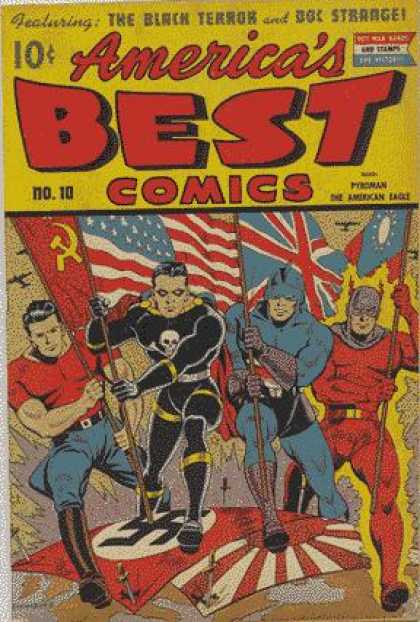
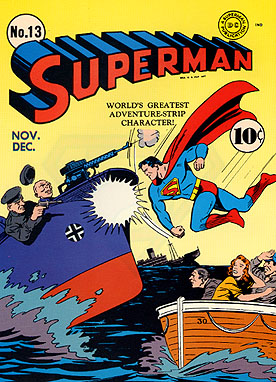
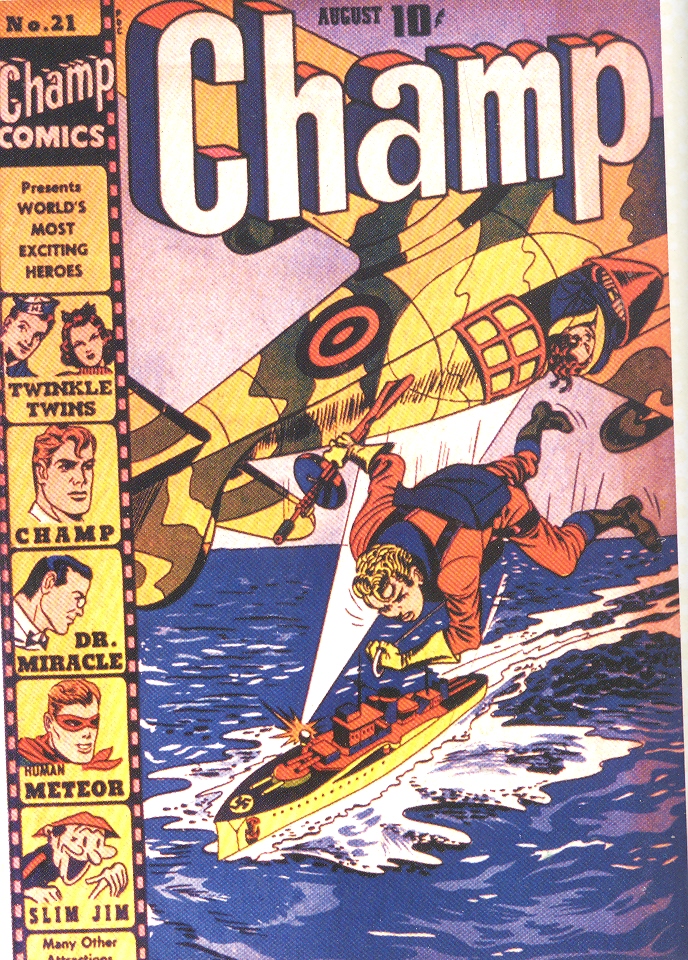
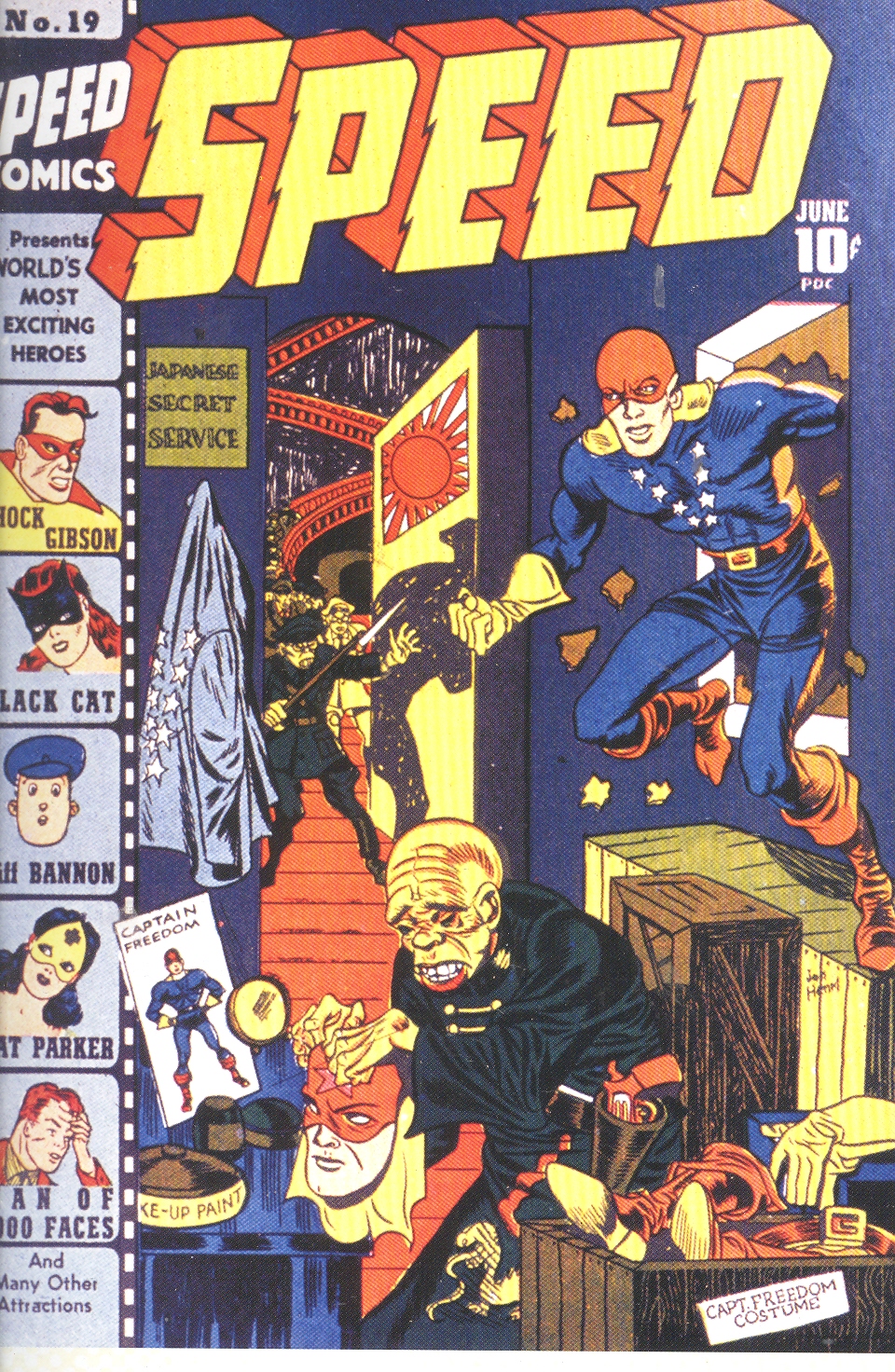
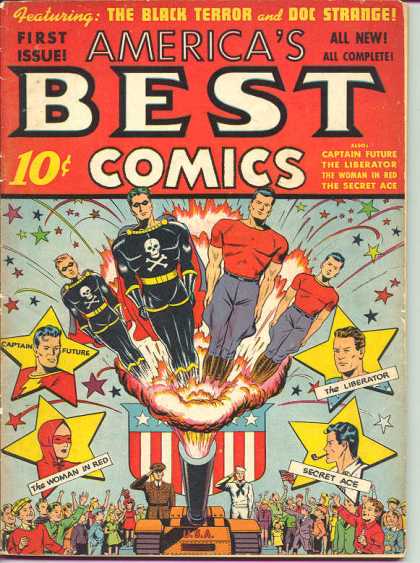
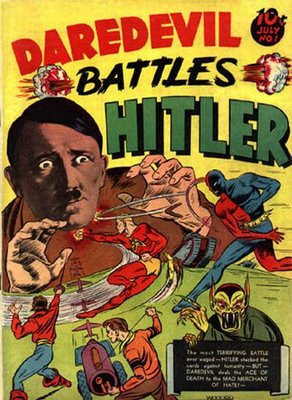
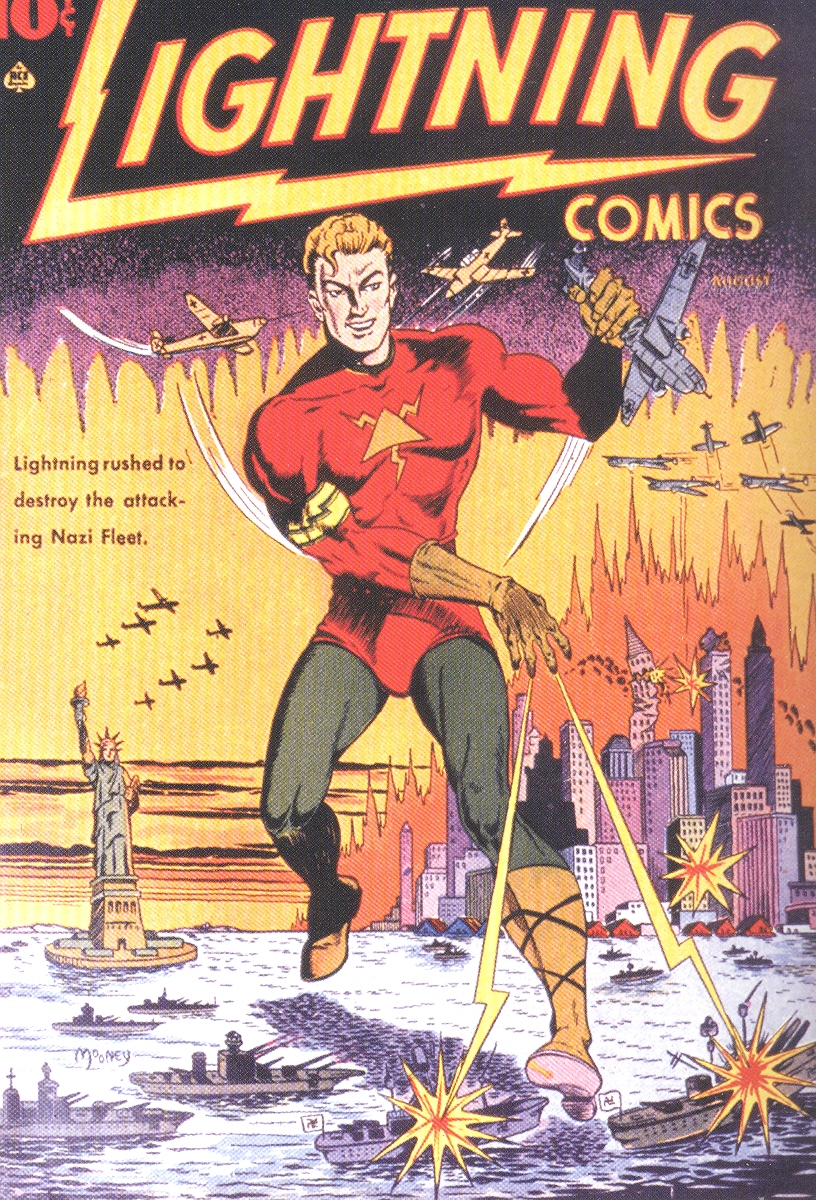
    The popular culture of WWII was–and continues to be–enormous, beyond that military interest in the Civil War, or so it seems. There were literally hundreds of World War II movies (among the Allies, here in the U.S., the U.K., Canada, The Soviet Union), tens of thousands of books, millions of articles and newspaper accounts–trillions and trillions (and perhaps an order or orders (?) of magnitude more)  of words (professionally)  spoken and written. In all of this I believe I’ve never considered the popular medium directed at children or very casual readers:  wartime comic books.  That’s why, I’m guessing, these American comic book covers registered as such a surprise with me–not only for their very graphic cover design (which seem to tell about the entire story with a single glance) but for their great numbers.  No doubt the great empowered heroes in these pages–who were single handedly defeating Japan and Germany–helped quiet many a child’s nerves back there in 1941-1945, and unsweattied many a night-time pillow.  The comics (all of which below were published during the American years of the war) have a calming effect even today.

    It was during the early part of the European War  (1939 and late 1941) that saw the introduction  of some of the great standard comic book heroes:   Batman and Robin, Wonder Woman, The Flash, Green Lantern, the Atom, Hawkman, Aquaman, Human Torch, the Sub-Mariner,  Captain America, and of course the most popular of them all at the time, Captain Marvel.  Superman, the soon-to-be crowned king, appeared just a little earlier, in 1938.  It seems that many myths were created in response to large forces pressing against a people, and I guess that these comic book heroes are no different.

    I have no idea offhand about this sort of publication appearing in the other countries at war. 

    Comics americas Best

    Comic superman

    Comics champ


    Comics speed comics 2Comics americas best

    Comics daredevil hitler

    ·Posted by :

    ·in:


  • Ho Chih Minh Dreams of Babe Ruth

    JF Ptak Science Books LLC  Post 673  Blog Bookstore

    Did Ho Chi Minh (Nguyen Tat Thahn,
    1890-1969) ever wonder why the Boston Red Sox turned down a trade of Shoeless Joe
    Jackson AND $60,000 for Babe Ruth and go for the Yankee’s 100k instead?  No, probably not. But Ho did actually live in
    NYC in 1912/13 and again, maybe, in Brooklyn in 1918/1919—he also lived in
    Boston at about the same time, and also saw some of the other major American ports
    during the same time, tramping as he was around the world—so at least the
    physical possibility exists, if nothing else.

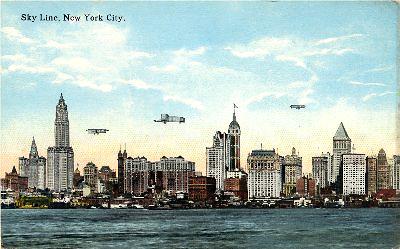
    Ho Chih--NYC

    I’d like to think that he somehow
    met up with George Herman Ruth, the boy from Pigtown, when he made an imaginary
    stop in Balto in 1912.  Ho would’ve been working
    scruffy food jobs and Ruth was a 17-year old scruffy food-aholic, Ho listening
    to the loud rants of the soon-to-be-great player, starting Ho’s lifetime
    interest in the sport. Ruth could’ve wondered why the league leader had 36 triples
    and incredulously asking to no one in particular  why they  “hadn’t just gone all the way for a home run?”.
     He could’ve been on hand to witness pistol-packing,
    money laden, socially-challenged and fantastically gifted Ty Cobb (batting
    .410) attack a heckler in the stands in NY and wind up suspended (for a bit)
    from the game. He could’ve marveled at how Walter Johnson achieved an impossibly
    heroic 33-12 with a 1.39 era (!) record for a lazy Washington Senators team..  Ho was in fact working at the Palmer House in
    Boston when that city’s team won the
    World Series, the same year that Fenway way opened.  So Ho was there,
    at least.

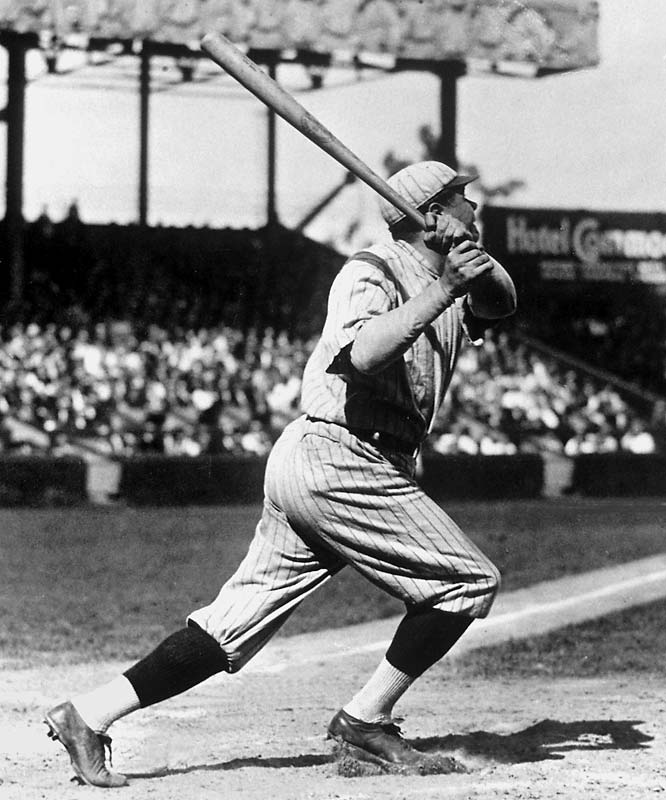
    Ho--BAbe

    But alas I can find no evidence that Ho was interested in baseball
    or had met Babe Ruth or dreamed any of this other fantastic and ephemeral stuff.—though
    it would certainly make for a good story. 
    As a matter of fact he was tooling around the world during the birth of
    most things modern in this traveling period of 1912 through the early 1930’s. In
    NYC and Boston in 1912/13, back in Brooklyn (maybe) in 1918/19, in and out of  London 1913-19, in France 1919-1923, then on
    to the Soviet Union and China.  Monumental
    happenings in literature, art, music were defining the new world; there was the
    World War, a revolution in Russia, the Depression, the birth of Chinese Communisum,
    the Japanese war in China,  and Ho was
    certainly around not only when but where
    all of the stuff was happening.  For the
    scant biographical materials at hand (albeit one is the fantastic biography by William
    J. Duiker Ho Chih Minh, a Life) I can’t
    see any reference to art or lit or music, not that this really matters, not
    really.  And  this can also be said of Einstein (and most
    other physicists) working during this same period—Einstein was surrounded by
    newness in the arts and would’ve been approached by every last strand of it but
    he remained unaffected by the great majority, preferring classical versions of
    whatever, instead.  Except for his
    politics.) 

    Ho was a busy, dedicated guy during this early period, trying
    as he was to come to a point where he could rid his country of the French and their
    repressive colonial ways.  He became a
    communist but before that wasn’t—he tried in unconvincing ways to interest Woodrow
    Wilson (employing the vocabulary and deep ideas of the American Constitution
    and Declaration) in helping the Vietnamese loosen the grip of the French, but
    to no avail. Later, as a dedicated and war-weary revolutionary he tried a
    similar tactic with FDR—and this after fighting the piggish Vichy and occupying
    Japanese forces in his country, waging an OSS-supported guerrilla campaign
    against them for years—with similar results, getting sold out (much like the
    Kurds were sold out by Bushs I and II) after the war was over. 

    Ho HArlem I wonder about those New York years, of working as a cook’s aide,
    a pot scrubber, a photo touch-up artist, a busboy-intellectual, and wonder what
    in the hell he was thinking about up there in Harlem in the summer of
    1912. 

    ·Posted by :

    ·in:


  • A History of Dots: Images of the Unbelievable, 1944

    JF Ptak Science Books LLC  Post 634  Blog Bookstore
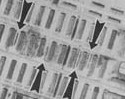
    Auschwitz dots 1The History of Dots, Part 12

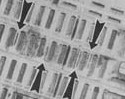
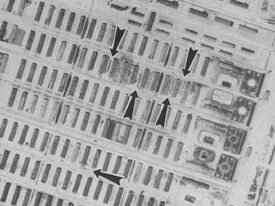
    This is a detail from an unintentionally
    astonishing photograph made in 1944—the last line of its caption forming the
    basis of the title of this post. (“Click on the dots below for photos from the
    Album depicting events which took place at those points.”)

    It is the ultimate insult to consider these dots to be dots–though to some analytical eyes this is all they were; in extreme and unutterable cases, this is what they remain. 
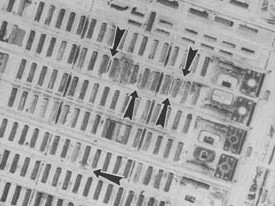
     Auschwitz dots 2As you scroll down through
    these four images their origin becomes clear.

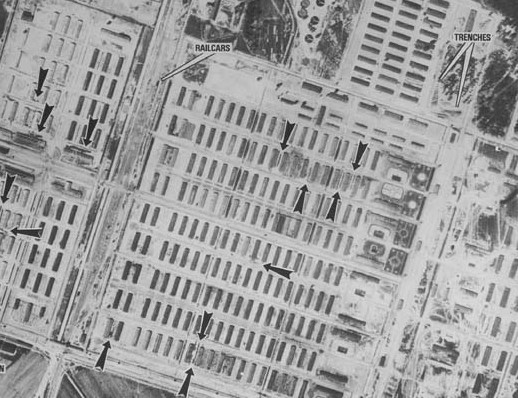
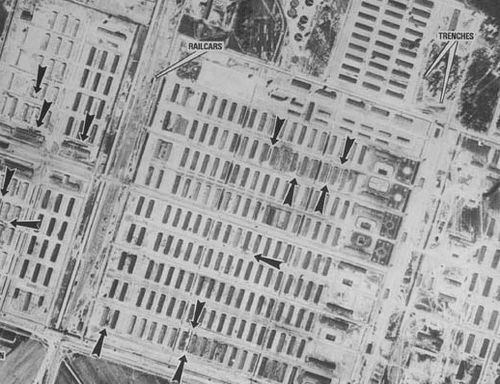
    This photograph was one of a series made on 31 May
    1944 by the 60 Photo-reconnaissance Squadron of the
    South African Air Force under the direction of the U.S. 
    Army
    Air Force–the purpose being to identify Nazi bombing targets, the principle object in this case being the
    IG Farben complex near the border town of Auschwitz.

     The base data reveals that sorties were flown and
    photographs made and presented from missions of 4 April, 31 May , 26 June, 25
    August, 14 September, 21 December (1944) and 14 January and 15 February 1945. (See
    HERE for the rest of the photographs.)
     The
    images were evidently captured as a result of the standard method of filming:
    taking pictures several minutes before and after reaching the target area to
    ensure that the primary objective is actually photographed; some of the sorties
    were executed to find the target, and others enabled to survey the damage done
    to the target (and to also see how quickly the targets were reconstructed). The
    “side” result is a record of the Auschwitz and Birkenau concentration camps, the
    significance of which seems to have escaped notice at the time, although the
    camp of Auschwitz III was indeed labeled as a “Concentration Camp” in the original. 
    Auschwitz dots 3

    IG
    (“Interessengemeinschaft”, 
    standing  for “Association of Common Interests”) Farben
    was a massive business concern composed of BASF, Bayer, Hoechst and other
    German pharmaceutical and chemical companies, 
    whose main political benefactor was the NSDAP and whose roots go back to
    the very formation of real Nazi power in 1932. 
    The basis for this mutual interest was principally the production of
    synthetic fuel and chemicals, but as the time pressed on that capacity expanded
    to many other roles essential for the functioning of the German military and
    the basis of Nazi power.  It is not
    possible to understate the importance of Farben to the production of the Nazi
    state and the waging of the war.

    After 20 years of back and forth historians have come to the
    conclusion that major industries/industrialist such as Farben didn’t actually
    “back” Hitler in the early days (1932/3/4) per se—that is to say that large
    amounts of capital didn’t flow into the NSDAP bank accounts from Big Money
    sources, though they (the every large majority) certainly did acquiesce to the
    social programs of Hitler.  Business in
    general certainly did well under the Nazi regime before 1938.  The giant bonuses for both the government and
    business/industry came after the attacks and conquests beginning gin 1938—it
    was at that time that these businesses rolled into the cities of the conquered
    land and took the tools of industry, the raw material and any else of value to
    expand themselves and to also help support the war effort.  The utilizeable means of production did not
    limit itself to goods:  the captured
    population was also put to work as slave laborers and worse.  And this is where Farben really makes its
    pact with the devil, as it was far and away the worst offender of putting
    humanity into its industrial oil can, making expendable people all together more
    so, using them as another piece of machinery; the prisoners were worked and
    starved to death, and once they no longer provided some sort of value to Farben
    (and etc.), they were sent to be eliminated at the extermination centers.

    Auschwitz


    These workers were generally “sold” by  the SS to private companies, though
    officially it was known as a “fee”. This practice broadened as the war grew on and
    the labor supply o these companies was drawn off by the army; by 1944 there
    were in fact millions of foreign workers doing labor in Germany itself, with
    companies like Volkswagen, Daimler-Benz, Krupp and Siemens taking solemn and
    completely lecherous advantage of the captured slave labor pool. 

    Back to the photograph: 
    these “dots” were the humans who were the expendable slave worker units
    who were burned up like an old rag once their utility had been maximized.  The official reason for this mission was to
    locate the Farben synthetic rubber works and petroleum plants, some 2k from the
    Auschwitz compound. 
    One of the last images shows the destruction to the camps by the Nazis who
    were trying to hide what had been going on there as they prepared for the inevitable arrival
    of the Soviets (who would arrive two weeks later).

    The arrows and annotations in these versions are the result of a reinterpretation of the images in 1978 by two photographic image analysts/interpreters at the DIA and did not appear of course n the originals of 1944. The arrows pointing at the “dots” were actually long lines of prisoners; there were arrows pointing to a rather long train heading off from a complex of tracks; there was the enormous barracks evidently housing a very large population within a town center; and there was the production of a fair amount of smoke from a not-small building.  It is a mystery why these images–one of which actually had Birkenau labeled as a concentration camp–didn’t produce a military reaction by the Allies, the question producing its own considerable amount of interpretation and study. remember now these annotations were made in 1978.)   The photo does show how nestled the camps were in the town and in the
    busy countryside; the main entrance to the camp was (and is today)
    located on a busy street.  The walls around the compounds remind me of
    the walls around the Warsaw Ghetto–if you needed not to see the obvious, you wouldn’t.  Except at the Auschwitz and Birkenau concentration camps there was also the smell….   Revisionist Holocaust deniers have actually employed these images to their own evil ends, using a feeble analysis to support the notion that the Allies didn’t act on the camps because the extermination and liquidation end of it didn’t exist.   This would be the extreme (gamma ray) end of the spectrum of interpretation, and an ultra-violent, criminal and instantly disposable way of reading history.  In Part II of this post I’ll have a look at some of the positions.

    [Reading list in the continued reading section, below]
    ·Posted by :

    ·in:


  • Oppressed Peoples and Social Movements Catalog Now Offered

    JF Ptak Science Books   Blog Bookstore

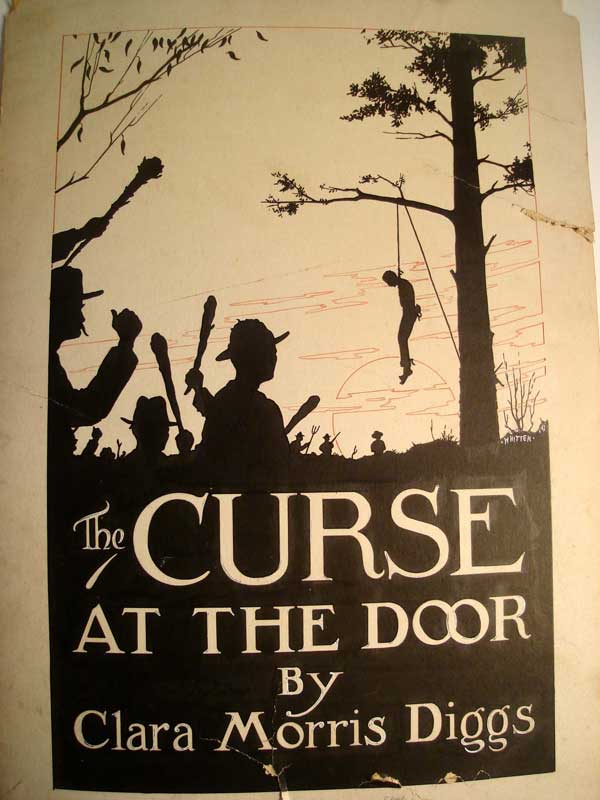
                   Lynching                                                                                                                                                                                             I’ve just started List 10  (located in the Blog Bookstore/Non-science section of this blog)  which will be an ongoing effort to catalog some of the 1,000 or so pamphlet in the store having to do with oppressed and disadvantaged people, as well as the social movements that were started to address those tragedies.  Material covers the American Black experience (1850-1940), the Holocaust and other aspects of antisemitism, Japanese-American internment camps, Labor Unions, anti-immigration policies, war propaganda, and other related areas.

    (An example of what I’ll be offering is above–this is the original artwork for the dust jacket for an anti-lynching book by Clara Morris Diggs, published in 1934.)

    ·Posted by :

    ·in:


  • What 4,890 B-17s Might’ve Looked Like, Flying Togther

    JF Ptak Science Books LLC    Post 608  Blog Bookstore

    I’ve long been interested in the history of the display of quantitative data, and have written about it here and there on this blog.  Yesterday’s post on Big Crowds touched on a display of parked B-17s, seen in an airfield in Munich right at the end of WWII.  My friend Jeff Donlan posted a comment on how cool the image of the B-17s looked when he used the scroll button on his mouse.  And voila–he was right and it moved me to fit together a series of these to get a slight idea of what a lot of these planes might’ve looked like, flying together. At one point in 1944, there were more than 4,890 B-17s flying, and so I pieced together 47 sheets to see what effect it would have to see all of these planes in one swing. Even though I knew what to expect–since I was making this little video–I still had  a “Holy bloody crap!” reaction to the display of the numbers. It is really difficult to try and get some sort of idea about what 4,890 planes might look like–this really doesn’t come close, and it doesn’t address the enormous sound involved, but it is a start. 

    ·Posted by :

    ·in:


  • A History of Dots 4: Durer, Viennese Kids, Dalton’s Chemistry Table, and Scrofula

    JF Ptak Science Books LLC  Post 525
    0 abay feb 25 dots scrofula627

    In a continuing series on the History of Dots I’d like to add the
    following, disconnected though they are, so I don’t lose them in the
    coming mix.  It is also one of my few chances to actually need to use
    the word “scrofula”–a lonely, ugly word, a word as unpretty as
    “Susquehanna” is pretty, a word that should be as timid, but isn’t, a
    word that really exercises all parts of your mouth when you say it out
    loud.  (Try it–there’s like five or six movements involved in getting
    that past your lips.)

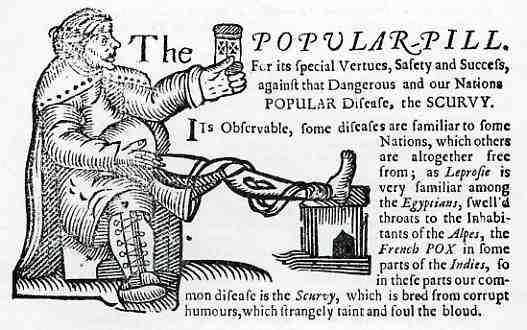
     To be truthful about it, it isn’t so much about scrofula as it is about the “curing ” of the disease with special little pills:  the Popular Pill!  This woodcut appears in a short sales treatise, published in London in 1675 or so, by Humphrey Nendick, (the delightfully titled)  A Compendium of the Operations Vertues and Use of Dr. Nendicks Applauded Pill, against all Chronick Diseases,m curing by the cleansing of the blood, That most successful medicine, which is so deservedly called, the Popular Pill.  For its Spcial vertues, safety and success, against the Dangerous and our Nations Popular Disease, the Scurvy.  I’m not so sure about what

    0 abay feb 25 dots durer628

    Dr. Nendick was up to with the pill, but I do know that is was obtainable from grocers, bakers, cutlers, gunsmiths and barbers all over England at three shillings for forty tiny dots of possible joy.  Its imaginary Galenical powers were supposed to bear against the tedium and insolence of all manners of scurvies and popular complaints–much like its contemporary dot/pill rivals like Pilulae Anti-Scurbuticae (sold at the Carv’d Posts in Stonecutter Street between Shoe Lane and Fleet Ditch (!)). 

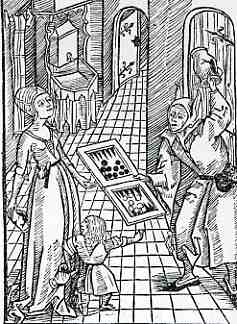
    Albrecht Durer doesn’t seem to have many dots at all in his works, though I did stumble upon this image from Sebastan Brant’s Navis Stultifera (Basle, 1497)–a fool interrupting a mother and daughter who were “discussing” their game of backgammon.

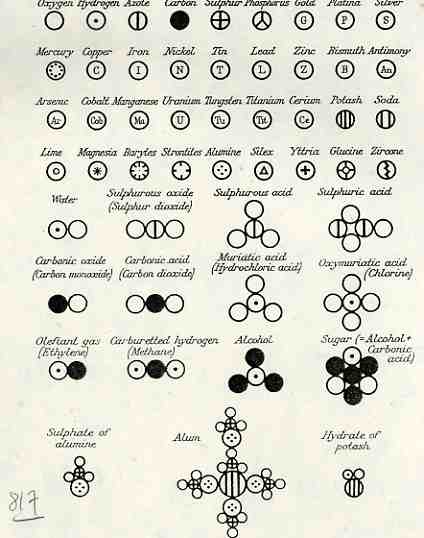
    On the other hand the history of the construction of the periodic table is necessarily filled with dots, as we see with the monarchical creation of John Dalton (1766-1844), in his New System of Chemical Philosophy (part II), and which was printed in 1810–these symbols were sued to visually represent the atomic structure of compounds, and were of vast importance and predictive powers, marking the true modernizing of chemistry.  It was in Part I of this work that Dalton first applied atomic theory to chemistry.

    0 abay feb 25 dots chem625

    0 abay feb 25 dots kids626

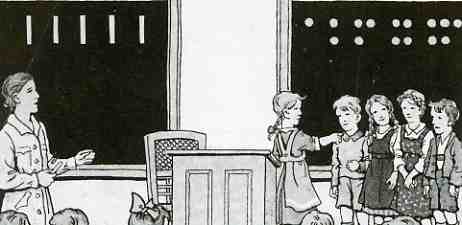
    This last element for this installment on dots simplifies things enormously, sort of, even though these dots represent the very building blocks of almost everything else.  They represent counting.  And they are beautifully present in this image from Franz Brauner’s Rechenbuch fuer osterreichische Volksschulen (published in 1953).  Funny that this “Rechenbuch” turns up again here in 1953–its been the major part of titles of books describing the laws of arithmetic for 450 years. 

    ·Posted by :

    ·in:


  • From the Man who Brought you Betty Boop and Popeye: Max Fleischer and Albert Einstein

    JF Ptak Science Books  LLC  Post 521

    Max Felischer (1883-1972) a
    nice Galician boy from Brownsville and employee of the Brooklyn Daily Eagle, the patentee of the rotoscope and
    arts editor of Popular Science, was an inventor, artist and writer who brought
    into being such iconic American creations as Popeye and Betty Boop.  (Fleischer’s cartooning efforts could hardly be
    confused with his later nemesis, Walt Disney. 
    Fleischer’s cartoons were almost always edgier, darker, surreal, and
    slightly hidden to young eyes.  Betty
    Boop, for example, was quite a dish until censors toned her down, way down,
    into her faded obscurity; Popeye on the other hand survived magnificently but
    was always saying something not quite intelligible that sounded a little blue.)
    He also made the first full-length documentary film in 1923 explaining to the
    great mass Einstein’s theory of relativity, the general theory coming into
    being in 1916 and the special theory in 1905.  
    The public reception of Einstein’s theory, in 1923, was mixed:  it was hallowed, and Einstein was
    ultra-famous, but the theory by and large was not understood.  That really didn’t matter, because it was
    important and it was proven and it worked; the taxonomy of the thing didn’t
    come into play in the daily grind.  
    (After bleeding fallow for 16 years, and that would be the length of
    time from his four epochal papers of 1905 of which the special theory was but
    one, Einstein was finally “given” the Nobel prize for physics in 1921—this was
    actually  awarded for his work on the
    photo-electric effect, which is an obvious manifestation of the quantum theory
    of light, brought into being by Max Planck in 1899/1900. The politics of the
    non-giving non-award in the meantime is simply not a pretty story.)

    The reception of the theory was still problematic in 1923, and
    Max Fleischer decided to have a stab at the story.  The result is the following 18-minute
    presentation—it isn’t as inspired as it is of historical peeping interest,
    basically a cartoon for adults that is now 86 years old, and its interesting
    enough just to know that it was done.

    ·Posted by :

    ·in:


  • First Anniversary

    January 26th  marked the end of the first year of this blog.  This has been the best writing exercise I’ve ever had–it has taught me a lot about the discipline of writing and how to arrange my bouncing thoughts.   I’ve made 488 posts public with 75 or so that are in various stages of completion or exasperation, and have written about 300k words. 

    My inspiration for all of this is found in my brilliant wife Patti Digh, who as usual is instrumental in pointing out new and interesting Things That Should Be Done, and then leads by example.  Thank you, Patti. 

    ·Posted by :

    ·in:


  • Blank & Missing People, XXVIII: Mustachioed Number People

    JF Ptak Science Books LLC  Post 448

    0 blog dec 29missing men326
    I have been surprised by the strength and endurance of this series on
    blank and missing people–astonished, really, that there would be so
    much that would present itself in such incidental ways.  I do not go
    out of my way to find these things, they just come to me in the course
    of daily living; perhaps if I looked for them I would see them less
    frequently.

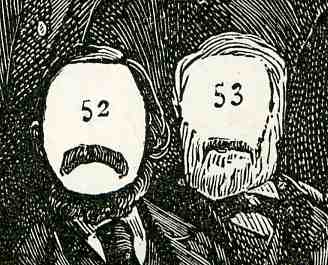
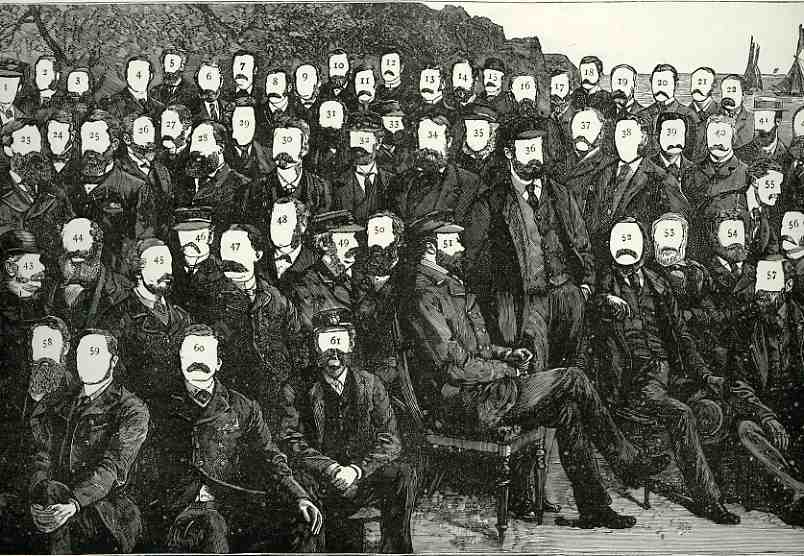
    Mr. 52 and Mr. 53 are part of a group picture of Esteemed British Yachtsmen in the 24 August 1884 issue of The Graphic magazine–it is actually a smartly-conceived thumbnail image index of a double-page photo, an easily-readable key to a complex photo.  The effect of taking it out of context, though, is remarkable, turning the index into a wood engraving of number-only-blank-faced people with facial hair attributes. 

    0 blog dec 29missing men325

    THis image a

    ·Posted by :

    ·in: