A Daily History of Holes, Dots, Lines, Science, History, Math, Physics, Art, the Unintentional Absurd, Architecture, Maps, Data Visualization, Blank and Missing Things, and so on. |1.6 million words, 7500 images, 4.9 million hits| Press & appearances in The Times, Le Figaro, Mensa, The Economist, The Guardian, Discovery News, Slate, Le Monde, Sci American Blogs, Le Pont, and many other places… 5000+ total posts since 2008.

Category: Technology, History of

  • A Great Ad for the Comptometer, 1894

    JF Ptak Science Books   Quick Post

    Earlier in this blog I posted a magnificent illustration of the fabulous new comptometer adding/calculating machine, here.  I wanted to include this unusually designed ad for the machine somewhere on the blog before I lost it (again), and so here it is:

    Comptometer379In my experience the use of diagonal black-and-white lines like this for illustration or advertisements was really very uncommon.  


  • Visionary and Imaginary Speed–and, of course, the Ice People

    JF Ptak Science Books                                                     

    The ‘twenties is know as the “speed” decade—everything was going faster, increasing its speed, expanding to the limit:  this was true for the ability to communicate via telephone, the appearance of commercial radio, the great increase in the speed of trains and planes and automobiles; the music was fast, the movies were talking. 

      Rocket german

    There are many iconic images relating speed and the roaring twenties—generally though this spectacular cover for Otto Willi Gail’s Mit Raketenkraft ins Weltenal…vom Feurerwagen zum Raumschiff (1928)is much less frequently seen, though it certainly does get the message across.  Otto Gail was a creative German science fact and science fiction writer with a strong background in following the scientific and technical accomplishment in rocketry of the age, especially the works of Max Valier1 and Hermann Oberth2. Raketenkraft was more a peek into the future and pop techy work for kids than a straight-out scifi novel like his The Moon Stone, which was a story that brought us Atlantis, space travel and hidden ancient culture in the underground Ice World.

    Gail, ott--stone moon

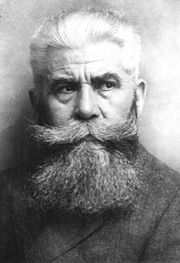
    It’s the unfortunate Ice World that attracts my attention around Gail, swimming around his interesting and tech-involved scifi world like a melting and failing Moon made of hundred-year NYC garbage scows, the idea of a good engineer-turned-trash cosmologist named Hans Horbiger, whose ideas wound up being whispered into the ears of many monsters. Horbiger had some sort of vision-dream about stuff in 1894 and spent the next 30+ years fleshing out the idea, which sounds bad from the very start when the author admits to finding “Newton wrong”.  Anyway without losing too many minutes thinking about this time-hole, Horbiger’s theory worked ice up to being the primary and primordial ingredient of all processes in the universe, with ice planets circled by ice moons, and some sort of gooey ice ether to make it all go ‘round. Oh yes: there were superior ice people living in the interior of the earth.  Horbiger died in 1931, but his many followers managed to work the theory into a presentable Jewish-baiting anti-relativity Deutsche Physik form for the new government of Adolph Hitler in 1933, and it was there that his ideas took hold in the cancerous Himmler and Hitler and others, a happy marriage at last, the ridiculous to the unspeakable. I’m not sure where the ice people are today, but I did saw some awful History Channel show that stated that Hitler never did die in the bunker and was removed by submarine to the interior ice people of earth, flying around the insides of our globe “in a UFO”.

    And so I associate poor Gail (1896-1956) with the Horbiger mess, and not his good work in science reporting and popularization.  So it goes.

    Gail, otto ice theory

    The other thing that you can say about Horbiger—he had a full-out behemothian mustache.  That’s about it.

    Notes

    1. Valier seems to have been the first person  killed in a rocket-related incident, blistered by his exploding rocket-car.

    2.  Oberth is another one of those Germans working at Peenemunde (along with Wernher von Braun and a great host of others)  trying to kill as many people in the UK as possible who wound up in Huntsville, working for our government.  It is all so problematic.  It is interesting that there is little in the Air and Space Museum (as part of the Smithsonian system)  that mentions von Braun.  He is burioed in a simple grave in a cemetery next door to a Jewish cemetery in Alexandria , Virginia.  I also remember going to some restaurant in the diamond district that, in very high bad taste, served up a beer called the Wernher von Brown–von Braun certainly had his hands covered in Jewish blood at least to the wrists, and to have a product so stupidly named as that in that place was just one of those impossible things that happen every day.

    ·Posted by :

    ·in:


  • Steampunk Air Travel, 1843

    JF Ptak Science Books   Quick Post

    “Let no man seek / Henceforth to be foretold what shall befall / Him or his children.Milton,” Paradise Lost XI, 770-72

    George Cruikshank–the gifted English cartoonist/satirist/caricaturist and social commentator–was readying his viewers to some hyperspeculative dreams on the possibilities of near-in-time powered flight.  Steampunk air travel is so commonplace in the near future that there are departure stations on building-tops   

    The etching in question, illustrating “Air-um Scare-um Travelling” appeared in the Comic Almanack (1843), and outlines a clear and hopeful image of future travel.  The ads show that there are frequent flights to far-away places, including Mont Blanc and Beijing.  

    It is interesting that the future is tempered somewhat by including an exploding airship at bottom left–so the future may be wondrous and exciting, though not without its dangers.  


  • How and Where Unwanted Fires Started in London,1836

    JF Ptak Science Books  Post 2334

     I’m pretty sure that I’ve not seen statistics on the origins and causes of fires in William IV’s London of 1836…probably the need for the numbers has never come up, nor has their serendipitous discovery.  I have been interested distantly in firefighting techniques in earlier times, especially in places like London and Amsterdam, (and especially in reaching upper floors of narrow tall buildings), but the occurrence and frequency part never came up out of the technical interest in the firefighting tools.  

    But in this article on firefighting gear (depicted in the previous post, referencing The Mechanics’ Magazine, Museum, Register, Journal, and Gazette, Volume 26, 1837) several pages in were these captivating numbers–they all seem to make sense, though overall seeing them together led to an overall feeling of surprise.

    For example, of the 564 recorded and responded-to fires the two top causes were chimney fires (72 cases of the 564) and “bed-curtains set on fire” with 71.  It is not clear to me what this means, but I’m guessing it had to do with having a bed too close to a fire, or perhaps coals were dropped somehow from a bedwarmer.  A related cause was incautiopusly hung linens in front of fires (31), gas (38), candles (51), stoves (28), and so on. 


    The list of the places that caught fire is fascinating in itself.  Most of the businesses no longer exist as sole entities, or if they do (for a business like ‘coach making”) they exist in very small numbers for a very specific and tiny niche market.  That said most of the fires were in private houses (211 of the 564 reported incidents) followed by victuallers (36, and I suppose in this case the word relates to anyone selling food, as in a pub or inn), lodging houses (35), carpenter shops (26), “shops, office &c.” (23), bakeries (20), bookshops and stationers (12), and so on down the list. 

    Then there are the other low-occasion fires in fascinating-sounding places, like straw-bonnet shops, feather merchants, cheesemongers, silk-weavers, oil-and-colourmen”, and others, not the least of which were the Lucifer-match-makers.  

    All fascinating, really. 


     And somehow there was only one case of fire caused by tobacco smoking–I mean cigarettes basically didn’t exist yet and especially so ion mass-produced form so there were no rolls of tobacco product enclosed with paper impregnated with chemicals to ensure that the ciggie will burn whether someone puffs or not–which is odd because it was still a fairly wide-spread habit in pipe-smoked form…still with the caveats it is a funny statistic. And I guess there was one case because so many others couldn’t be confirmed to point of origin because everything got burned up.  Or something along those lines.  


  • Fighting Fire with Fire, 1837

    JF Ptak Science Books   Quick Post

     [Image source:  Google Books, The Mechanics’ Magazine, Museum, Register, Journal, and Gazette, Volume 26, 1837.]

     This remarkable fire-fighting suit was present in an article in the prestigious Mechanics’ Magazine, and published in London in 1837.  It does seem impossible in its way to the modern reader, particularly for the eye-popping hood and lighted-candle-belt apparatus.  But it is very sobering to think that this would have been a vast step-up from what was available at the time–especially for the leader house of air into the jacket/hood.  Here’s the full text of the description of the apparel:


  • The Computational Future-World of 1902, a Dozen Years Old

    JF Ptak Science Books

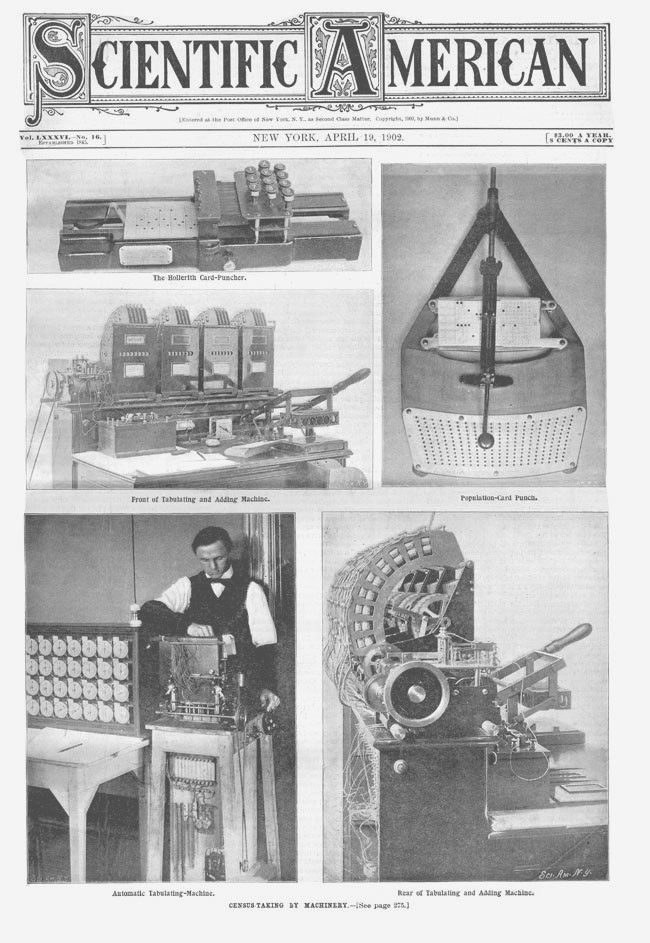
    This is sort of what the future of tabulation looked like in 1902–except that the people in this year were already living in this tabulating future, surprisingly already a dozen years old at this point. The cover illustrates an article on the machinery used in the production of statistics and tables and general data organization by the great work by Herman Hollerith, who had already performed this function for the U.S. Census of 1890.  (Hollerith had offices at Wisconsin Avenue and the C & O Canal, in Georgetown, D.C., about ten blocks from where my old store used to be at Volta & 33rd.)

    Hollerith 1902

    The 1880 census had cost about $6 million and took 9 years to tabulate; the 1890 census using the Hollerith machines cost $10 million and took seven years.  The main focus of many in government was the cost differential—not the incredible amounts of new controllable information.  The rent of the Hollerith machines was only $750,000 for the conduct of the entire census, so the differential must’ve been in the extra utility costs (for electricity, for example, which was used for the first time to run the tabulators) and for the small army of statisticians and data entry people.  Be that as it may, the government was not amused, particularly when Hollerith figured that he had actually saved the government $5 million.    The two parties left each other grumbling, though the roar of the trickle down from the Hollerith success drowned it out.  The tabulating system was quickly exported, and large private concerns in the U.S. saw a savior in the system that would soon rescue them from the sea of paper in which they were beginning to drown.   The Hollerith company did very, very well for itself, and soon merged with three other companies (in 1911) to ease the burden of success.  The resulting company was called the Computing-Tabulating-Research Company (CTR), which after a short while became the International Business Machine Corporation (IBM).   

    [Source of abstract: Publications Indexed for Engineering, PIE, volume 4.]

    And the article from the Scientific American, as follows. (It is worth pointing out that a few hundred pages following is an article about William Terrel’s fantastic tide-predicting machine, a beast of a sicentific instrument that weighed in at 2,500 pounds and functioned slendidly for 30+ years…)


  • The Hearing-Aid Chair, 1837

    JF Ptak Science Books   Quick Post


  • Misty Formaldehyde Cocoons, 1899

    JF Ptak Science Books  Post  2332 (expanding an earlier post from 2009)  Blog Bookstore


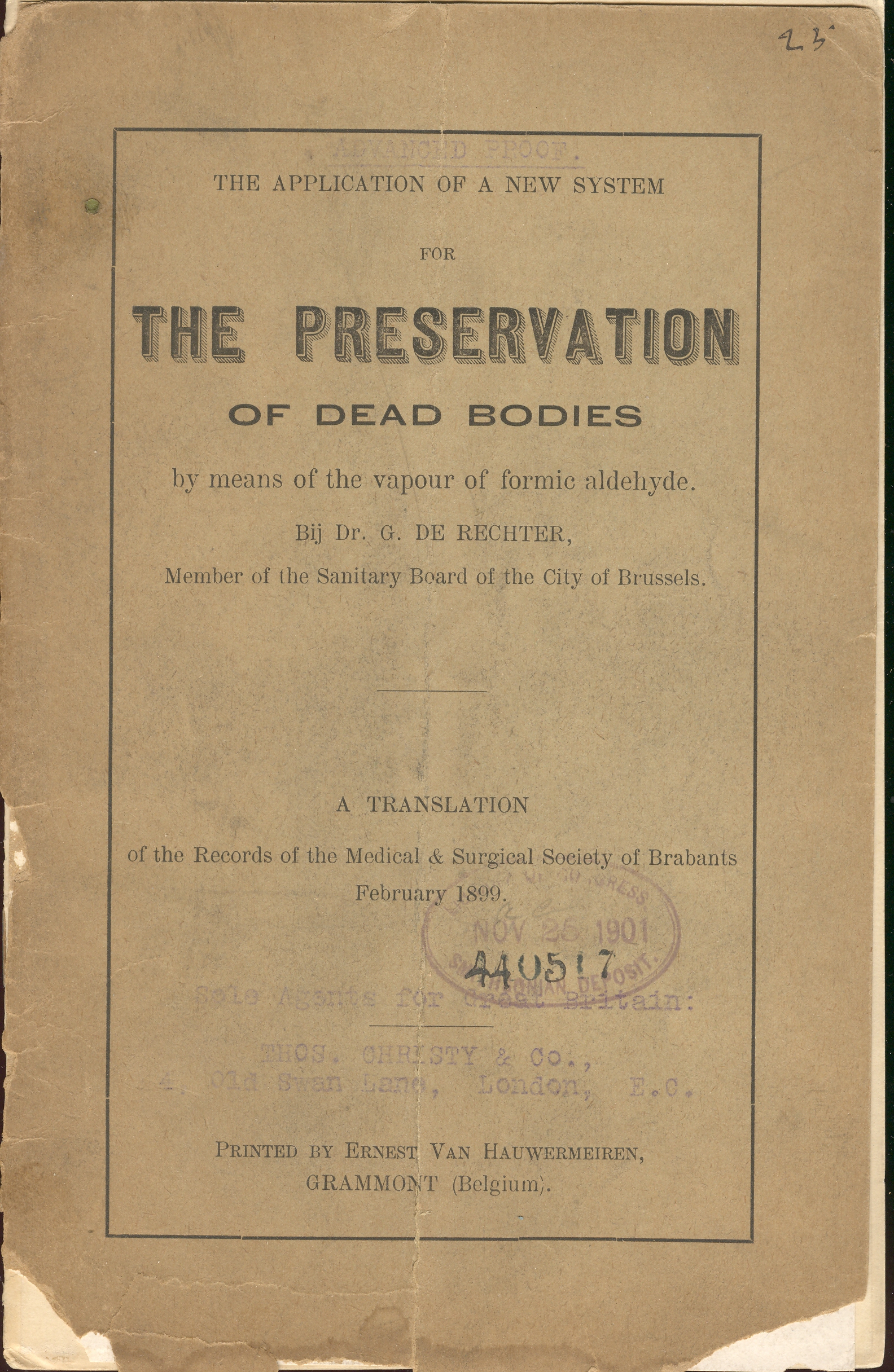
    Gustave de Rechter, the author of this pamphlet (The Application of a New System for the Preservation of Dead Bodies, Grammont, Belgium, 1899) had, as you might guess, a very specific reason for keeping the dead from being entirely, decomposedly, dead.  As the director of the School of Criminology and of Scientific Police of Belgium, Dr. de Rechter tried to find a way of preservation of bodies for forensic and legal purposes.

    +()+ebay dead bodies blog

    He  followed  in the footsteps of people like Alphonse Bertillon (France) and Hans Gross (Austria) in helping to establish a scientific basis for criminology in the late 19th century. In his case, the preservation of the dead would allow the bodies (of the murdered or suspiciously departed) to be re-examined at a much later date (at least months down the road) should the defense in a murder case challenge the original findings of the medical examiner. 

    +()+ebay dead bodies photo1

    As de Rechter points out, this was particularly true in the case of poisoning, where in 1899 the evidence would be all but dissipated
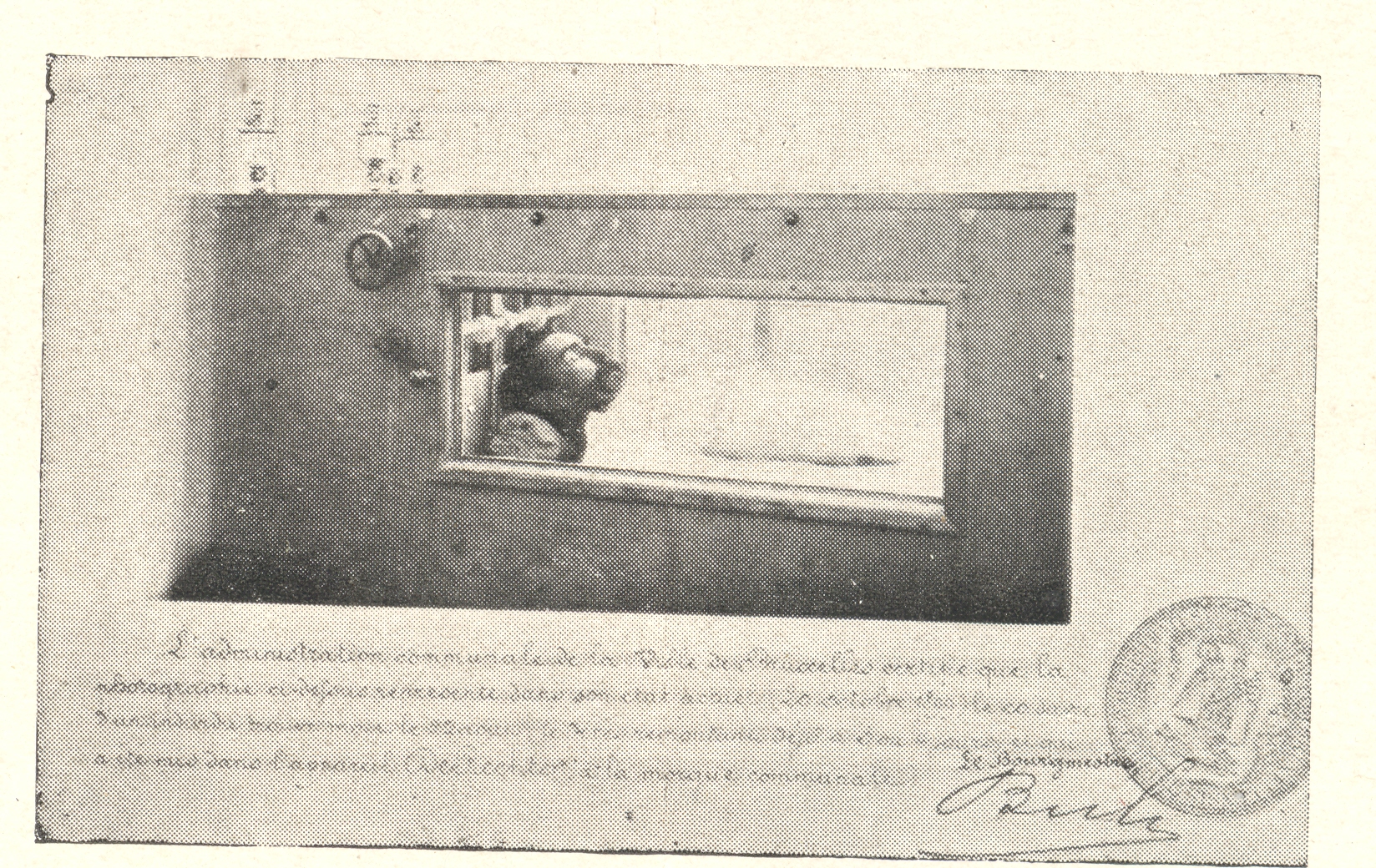
    from the body following even a week of death—he maintains that his new method of preservation (via an incubated spray of formic aldehyde, or formaldehyde) would enable further inspection even months after death. De Rechter manages to forestall the inevitable, the great crumbling that awaits everything, everyone, at some point, the “distinguished thing” of Henry James’ (last words), to return everything to the earth, to what Larry McMurtry (in Lonesome Dove) refers to as “nothing but a boneyard”. 

    +()+ebay dead bodies photo2

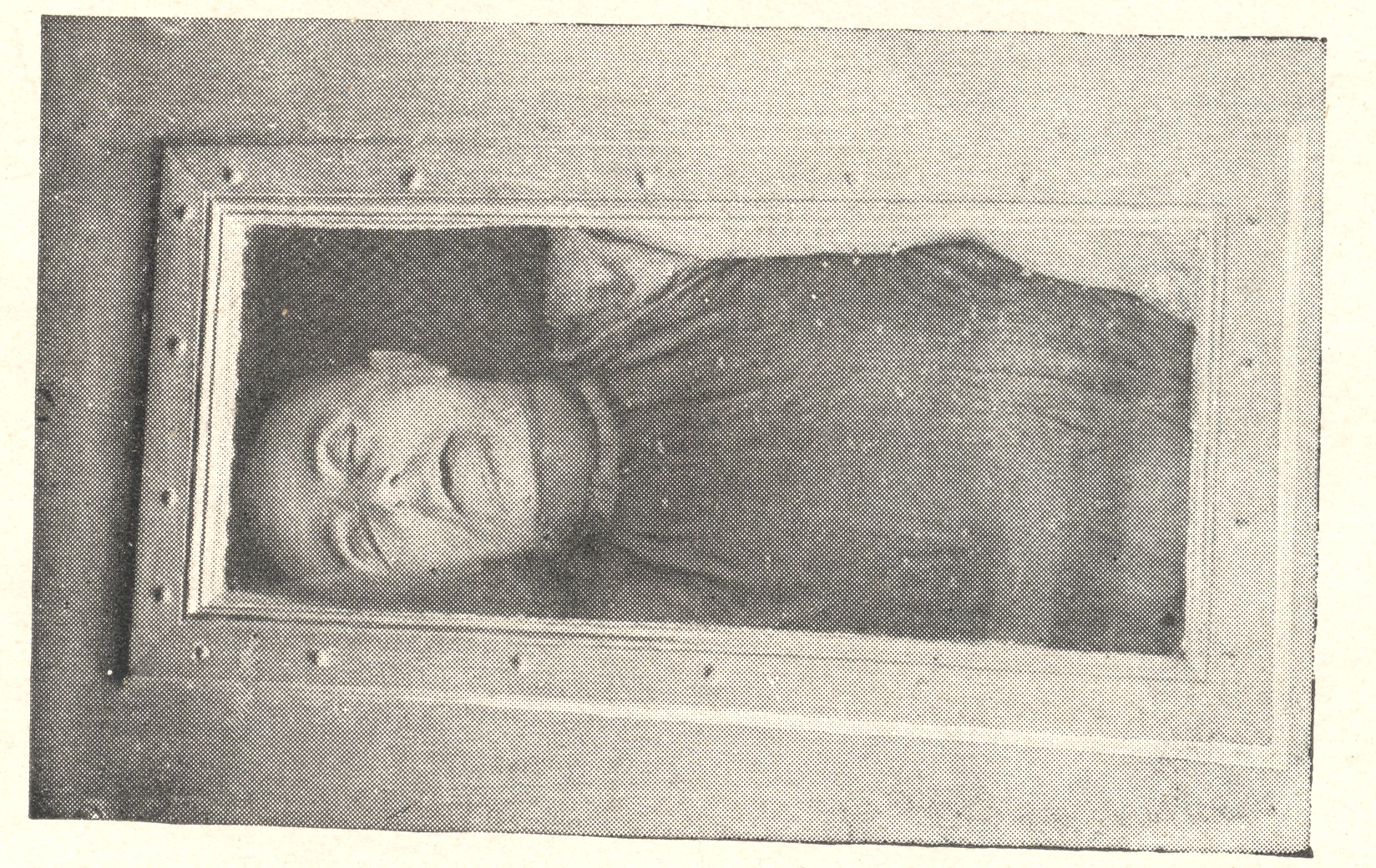
    (The images here are from the pamphlet, with de Rechter showing the effects of his nasty spray on corpses and what they looked like after some months sleeping in their formaldehyde cocoons.)


    ·Posted by :

    ·in:


  • Good Infographic: the Length and Footprint of Trans-Atlantic SHips, 1840-1900

    JF Ptak Science Books  Quick Post

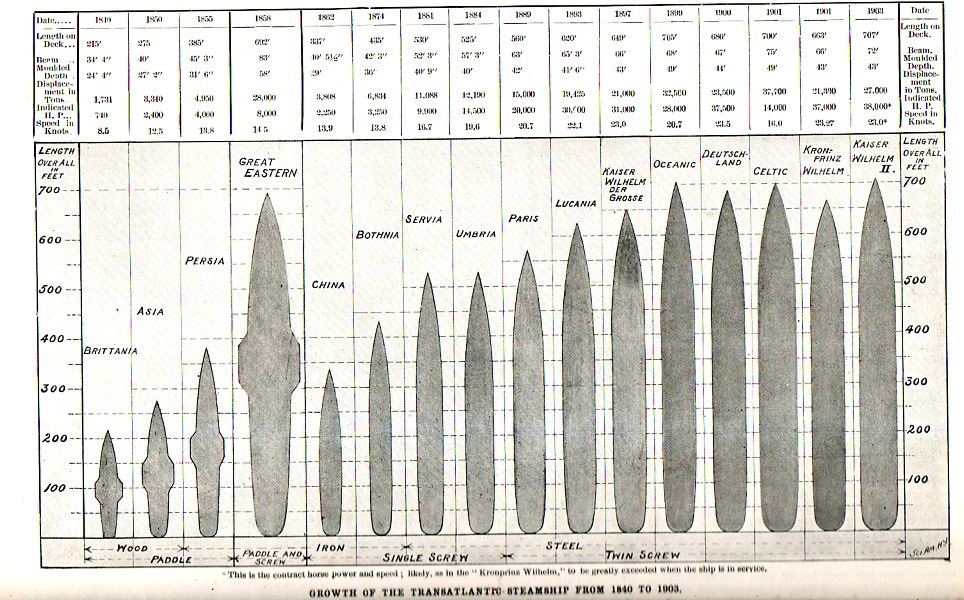
    This is just a very quick posting of an interesting bit of data that I stumbled across while looking for William Ferrel’s tide predicting machine in the May 3, 1902 issue of Scientific American.  I should say it it an unusual piece of info, showing the lengths of trans-oceanic ships and utilizing their plan to locate it on the graph: Ship plans349
      One thing is for certain:  the Great Eastern was a beast–the Titanic would be 192′ longer than this, and the QEII and USS Enterprise another 300′ longer than that.  

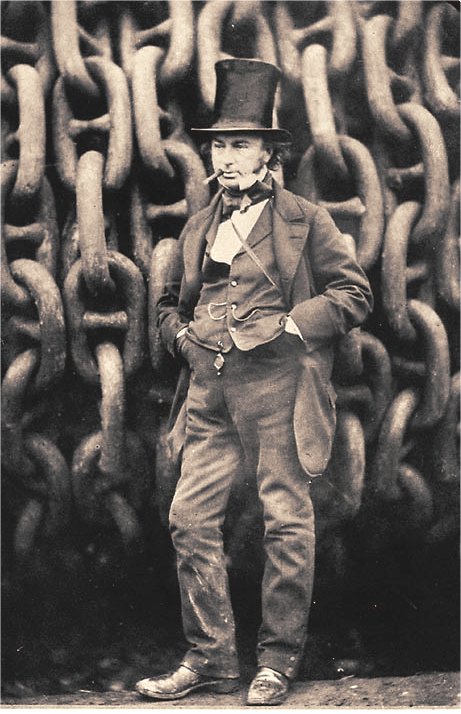
    The designer of the Great Eastern, Isambard Kingdon Brunel, was pictured against the very impressive launching chains of the ship, seen here in this iconic photograph by Robert Howlett in 1857. (Howlett tragically died at a very young 27 just at the beginning of a brilliant and innovating career.)

    SHip Bunel


  • The Phonic Graphing Phonograph of Fleeming Jenkin, 1878

    JF Ptak Science Books   Post 2331

    Fleeming Jenkin was a very considerable man with a huge range of interests and talents, along the lines of a William Thomson/Stanley Jevons.  His main deal though and the place where he earned his keep was in engineering, and here he was virtuosic.  I call him up now because of an article that appeared in the 1878 issue of Nature magazine, entitled “The Phonograph”.  The instrument was invented by Edison in 1877 (and patented in February 1878)–it was an extraordinary thing with great promise, though not so much in the ways we think of today. In any event, Jenkin was able to produce one for himself–to reverse engineer it–from descriptions he read of the machine in the newspapers, which is a big accomplishment.  

    What he set to do with it was impressive–he began to study the components of speech. And not just by audio comparison–he devised a method to make transverse sections of the recording wax so that they could be magnified and allow him to study the visual differentiations made by speech in the medium.  Now that is very good–making the phonograph into a phonic graphing machine.  

    Here’s the article, written by Alexander J. Ellis, as it appeared in the May 9, 1878 issue of Nature: