A Daily History of Holes, Dots, Lines, Science, History, Math, Physics, Art, the Unintentional Absurd, Architecture, Maps, Data Visualization, Blank and Missing Things, and so on. |1.6 million words, 7500 images, 4.9 million hits| Press & appearances in The Times, Le Figaro, Mensa, The Economist, The Guardian, Discovery News, Slate, Le Monde, Sci American Blogs, Le Pont, and many other places… 5000+ total posts since 2008.

Category: German Design

  • Design Bits from Germany, 1920

    JF Ptak Science Books   Quick Post

    (I should point out an earlier post on this blog on radium suppositories and toothpaste, here.)
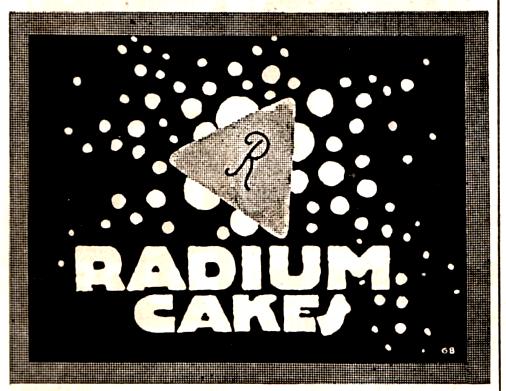
    German--radium560

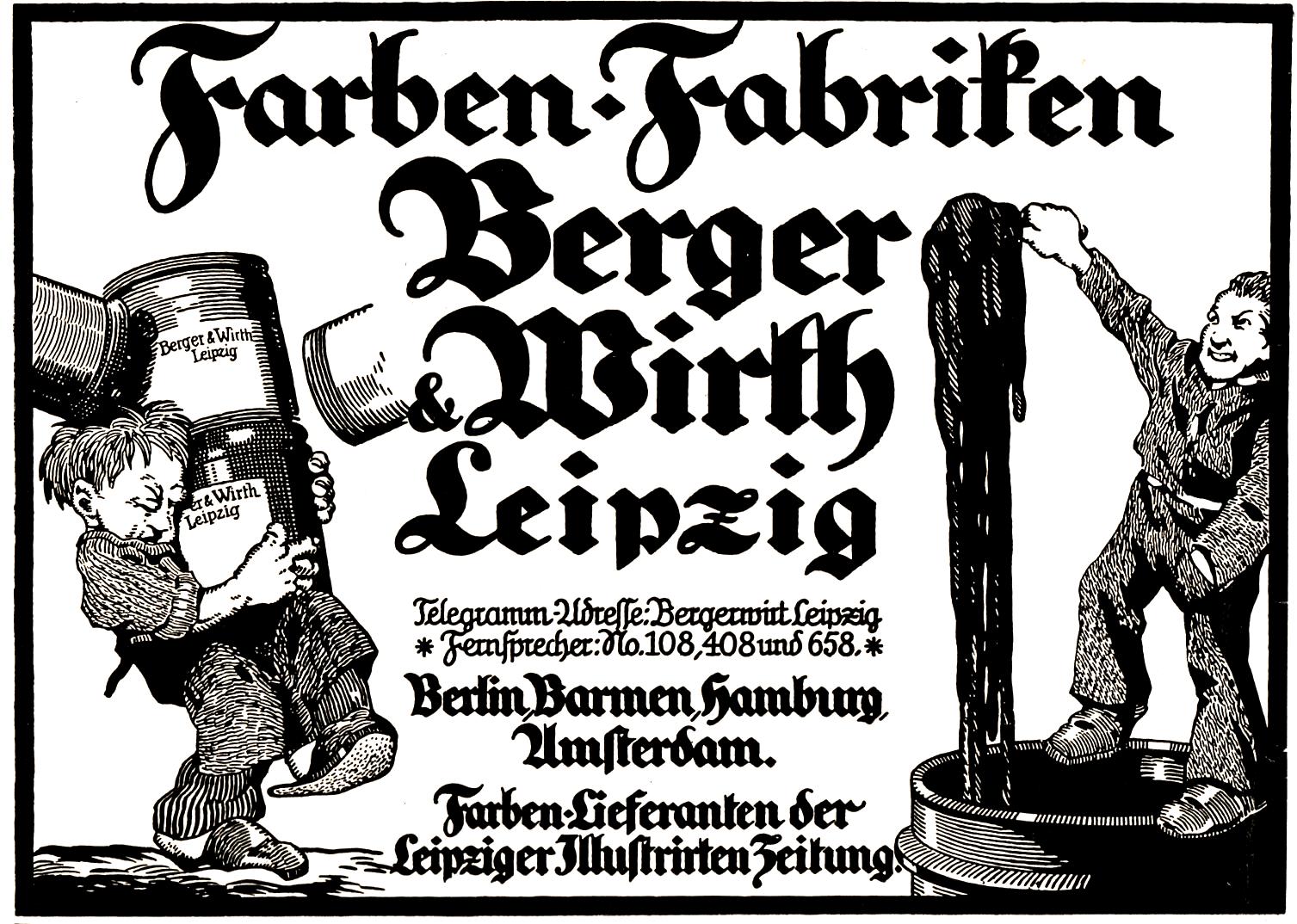
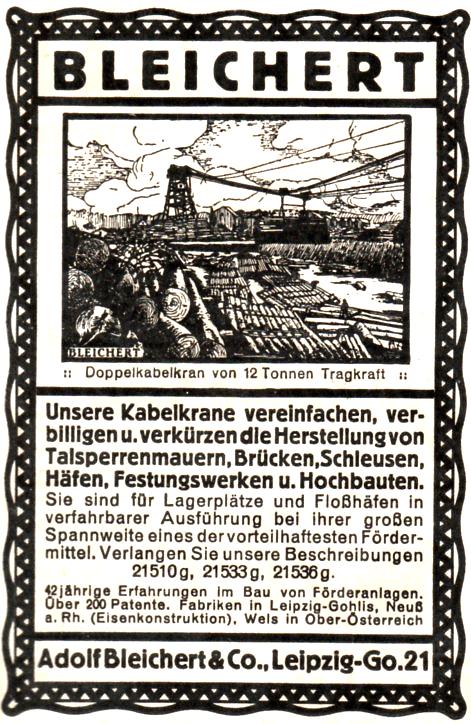
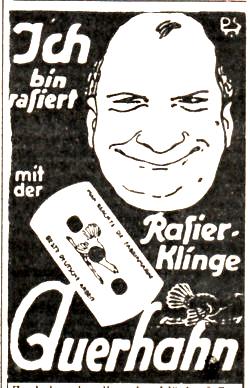
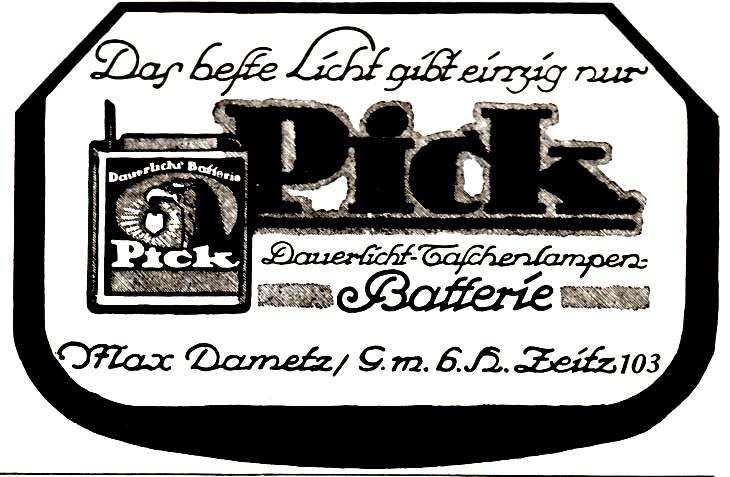
    These images come from one page of advertisements for issue 3991 of the Illustrirte Zeitung (Leipzig), for 1920. The page itself is about 15×10 inches, and is covered with a dozen or so ads, most of them pretty small.  There’s a lot of design going on in those small places, and a lot of it seems pretty “heavy” to me–that in spite of their size, they have a certain weight to them.  Perhaps its the big thick lines, or the very free use of deep black, or the obese typeface.  I’m not sure.  But I like them.

    The ad above is for the mystery product “Radium Cakes” that seems to be a quack something-or-other produced by Radium-Cakes-Werke of Berlin, and was recommended  for hte sick and convalescent, and highly approved by doctors, pharmacists and chemists.  I don’t have any idea if there was radium being ingested or not–and this 22 years after Mme. Curie discovered it.  The colors seem right, though…

    Ich bin Rafiert! 
    German--razor561

    An interesting and tiny (less than one inch tall in the original) illustration for an electrical vacuum “Waku”, sold from Chenmitz.
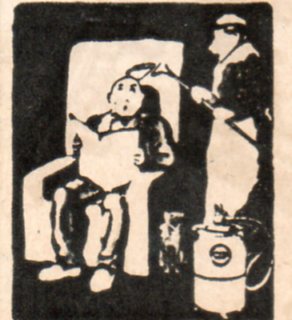
    German--razor562
      German--razor564


    German--razor565
      German--razor563

    ·Posted by :

    ·in:


  • German Art Between the Wars

    JF Ptak Science Books  Quick Post

    As it turns out there is a low-level significant assembly of published German art and book covers here in the Rancho Deluxe–its not a collection because that would imply too much order; it is barely an assembly.  There’s just a lot of it here, segregated, because I liked whatever it was/is.

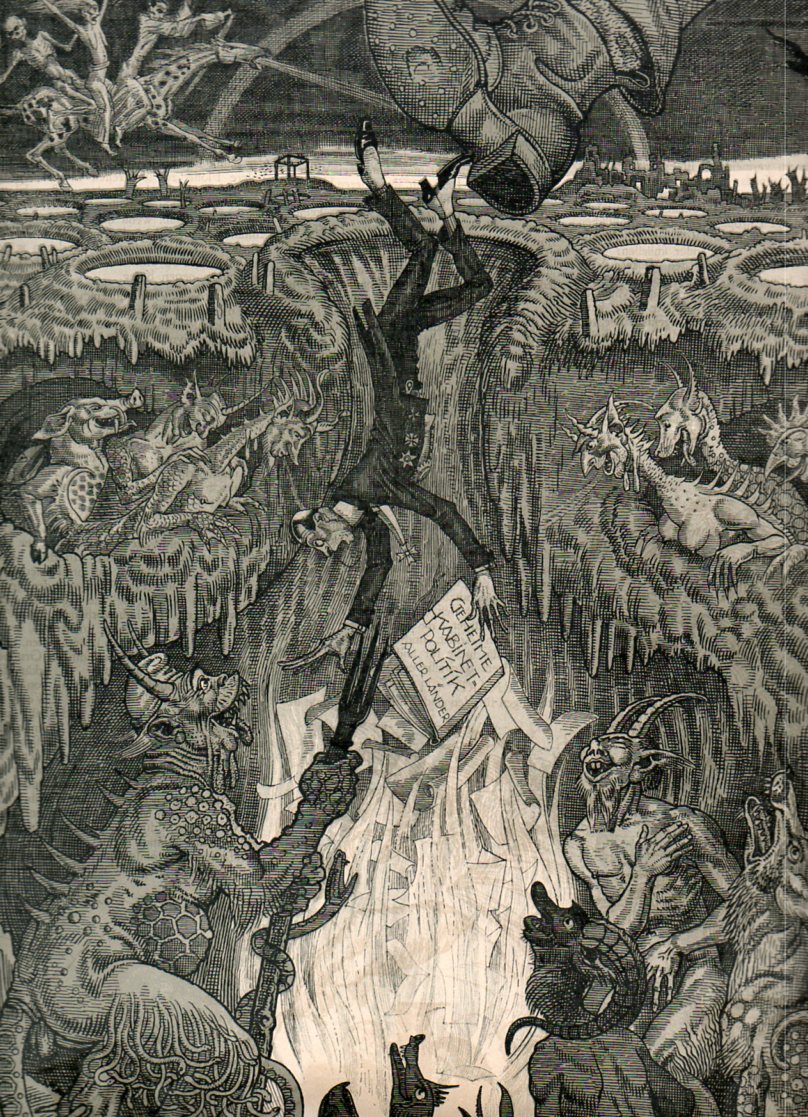
    These are some examples of a life-underground, or underground actions, that appeared in the pages of the great illustrated newspaper, the Illustrirte Zeitung.

    German between th ewaqrs526
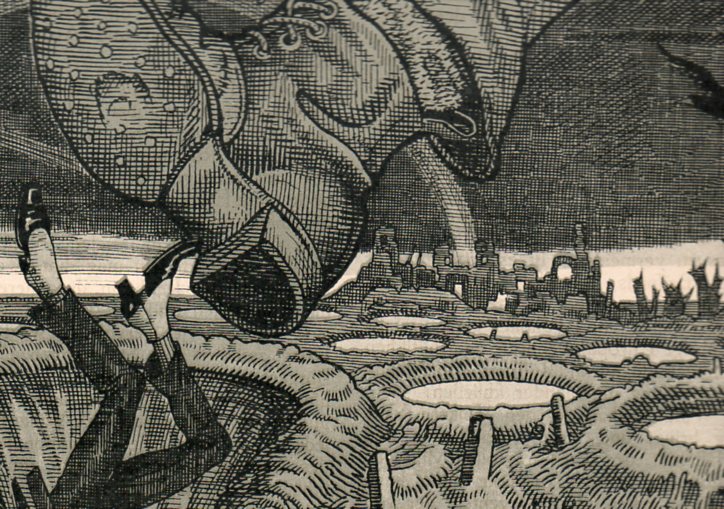
    The first is by Willi Munch(-khe), a Jugendstil artist (1885-1961), a very expressive, and dark, interpretation of what should be done with German politicians in the ripe days following the end of WWI.  This image, published aorund 1922/23, shows a decorated and fancy spats-wearing politician being booted into the hole of hell.  The book he is carrying (Geheme Kabinet-Politik Aller Landes/Secret Political Rules of Our Country or thereabouts), seems to be broken, its pages spilling out to feed the fires of the nasty inferno, lighting and heating the way for the failing pol as the devils and monsters await his arrival, much to the controlled agreement of the monster-y spectators in the hell galleries. 

    German between th ewaqrs527

    We can guess why the man/symbol is being sent to the ring of fire–the tattered, worn, hobnailed boot with the old patched pants above, the myriad of tombstones, the water-filled bomb craters,m the completely shattered trees, the bombed out cities, and of course the witches and death riding a speckled fire-breathing horse in a dark sky, pretty much round out the picture of “why”.  Several years after the end of the war and into a problematic realm of the democratic Weimar Republic, and just freshly into the hyperinflation that wiped out whatever the middle class had managed to save (banknote denominations climbing to literally astronomical levels, reaching 1×10¹⁴), there was a lot to complain about. 

    ·Posted by :

    ·in:

    — —

  • German Propaganda, 1929–a Call to Militarization

    JF Ptka Science Books  Post 1168

    [One of a long series of posts on propaganda–enter this term in the search box at left to see the listing.]

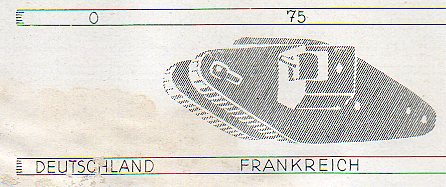
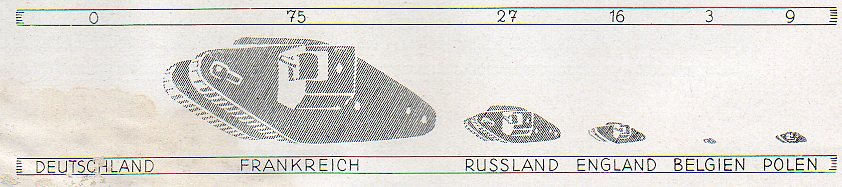
    Germany  1928 tanks det526

    Germany  1928 tanks525
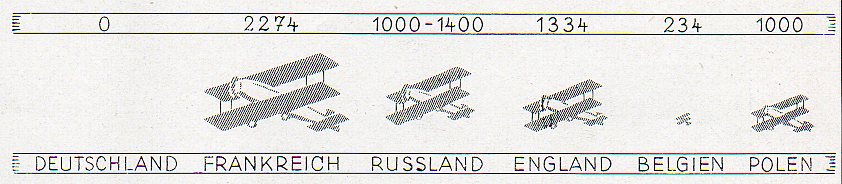
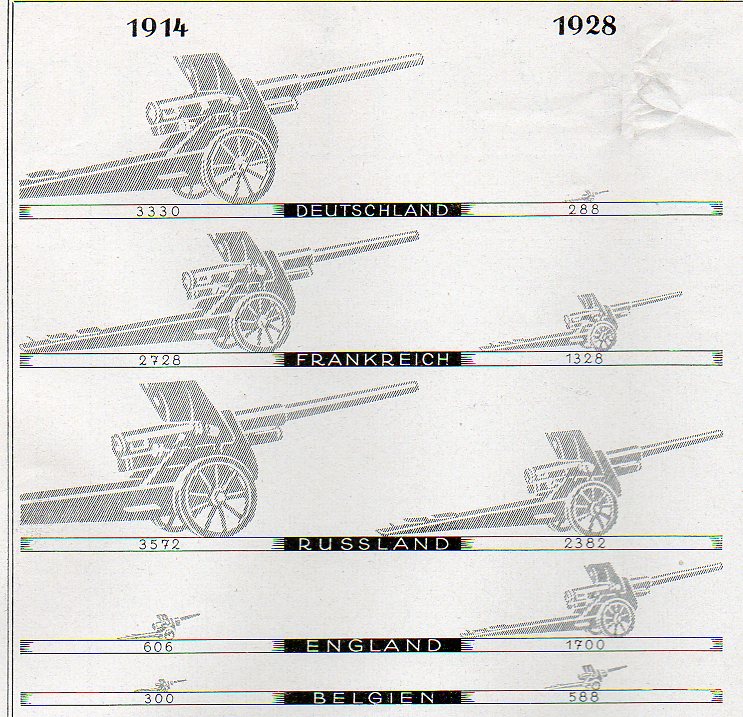
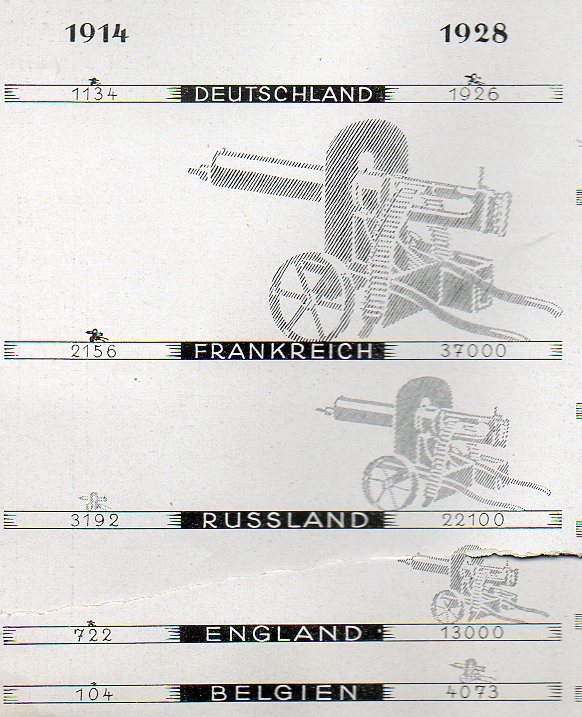
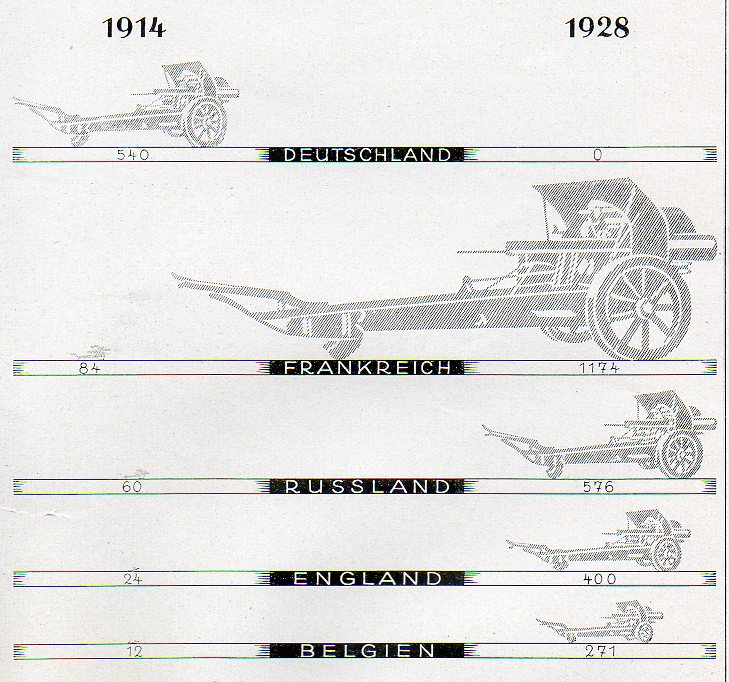
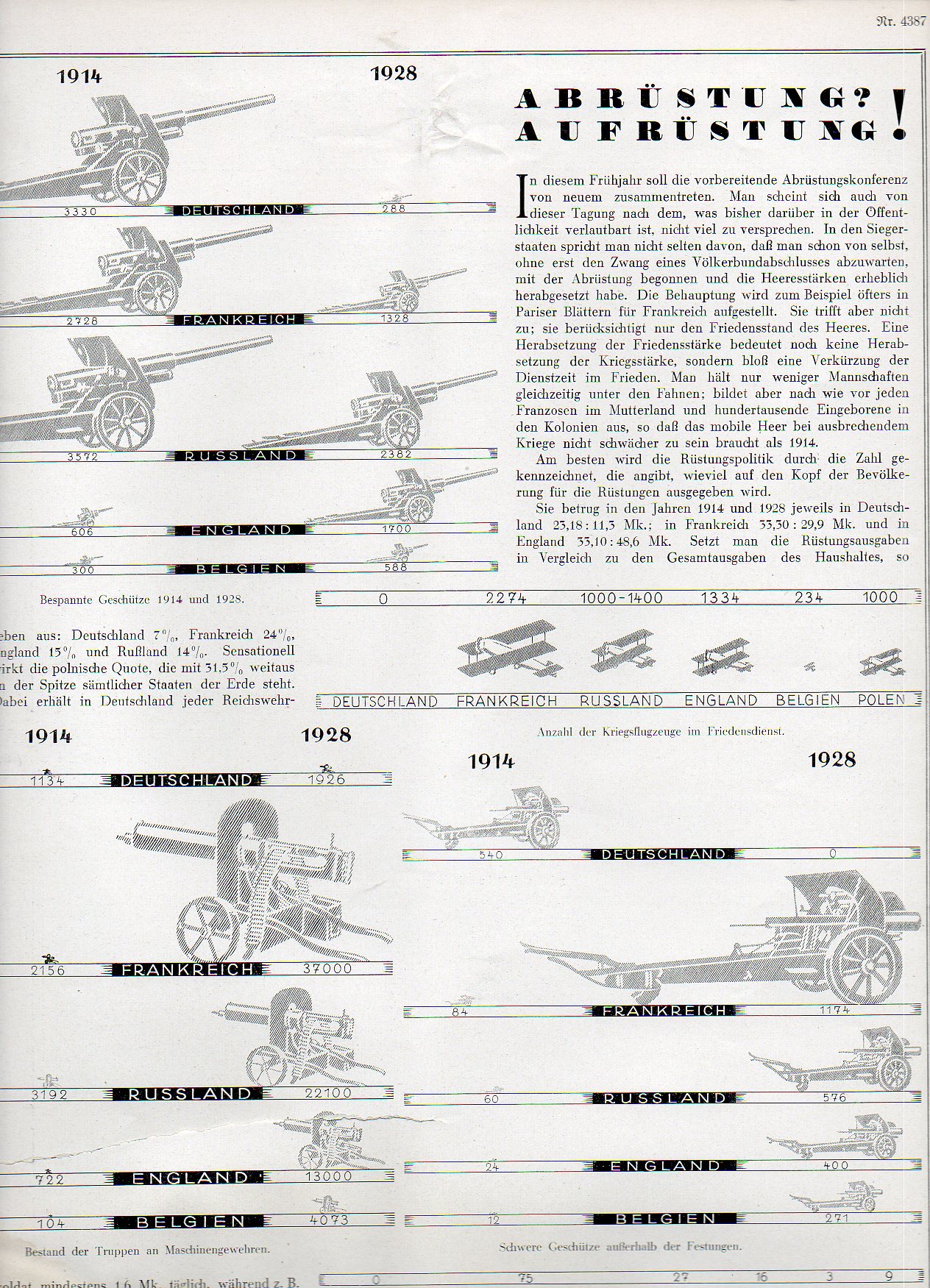
    In my “reading” of the Illustrirte Zeitung (Leipzig) I found this full-page illustrative representation of data (11 April 1929), one of the earliest propoagandist pieces (to my mind) in that magazine, showing the state–and great height–of militaristic weakeness in Germany, one of the lowest points that it reached in the breathing space between the two wars. It was really a picture of nothingness, a mention of the lost possibilities, and also what needed to be done–it was an early call to attention, to arms, to the reconsider of the Paris agreement, of doing “something”. Four years later the rearming business would be kicking into action, six years and five months later, the Second World War would start in earnest.

    Germany  1928  airforce523
    “Abruestung? Aufruestung!” is the name of the article-ette (roughly shouting Disarmament? ARMAMENT!, or Disarm? ARM!), basically stating that enough was enough, and that now was the time to start the process of having a military again.

    Every Germany (basically) would’ve known these facts, but seeing the representations of their zero-strength force of planes and tanks would’ve been an enormous blow.  And it was intended to be so.

    Germany  1928  cannons521
    Germany  1928  machine guns522
    Germany  1928 canon 2524
    Germany  1928520


  • German Design Elements: Miniature Advertising Art, 1880-1930

    JF Ptak Science Books LLC  Post 1006 April 16 mini german 15

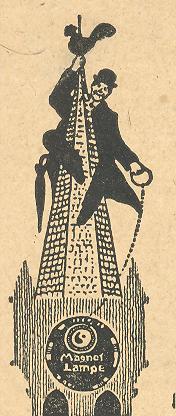
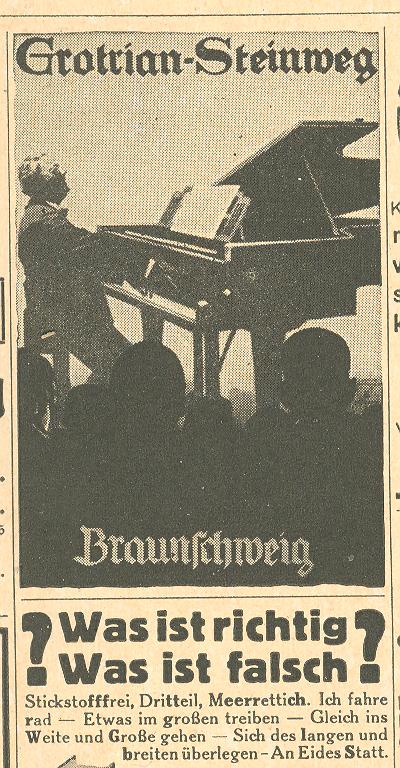
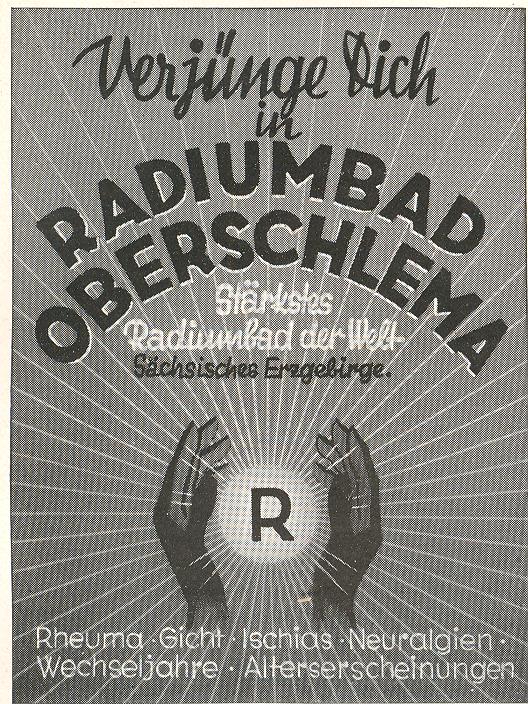
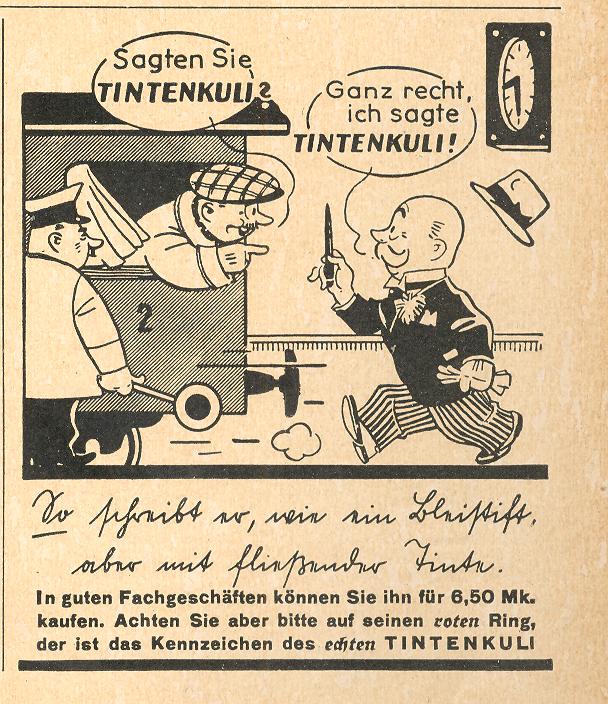
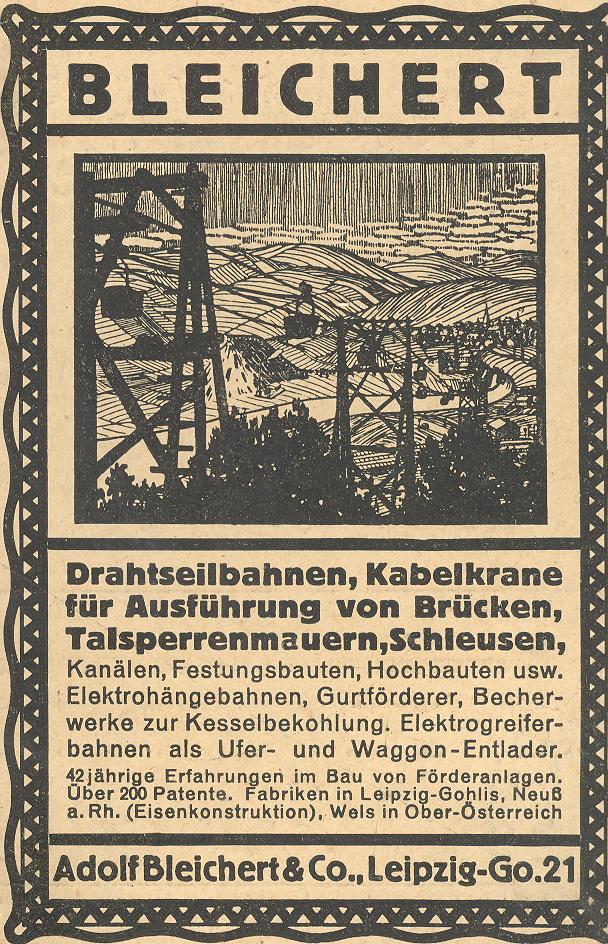
    April 16 mini german9 det The Illustriete Zeitung, published in Leipzig beginning in 1855,  was a popular, middle-road/middle-class Life-like
    magazine.  I have a long run of this big, well-written,
    sumptuously-illustrated journal, beginning about 1870 and extending
    though the end of the war in 1945, and at this point I’ve looked through just about every issue. It is fascinating on many levels,
    and has proved to be a valuable source of historical minutiae as well
    as an excellent  resource for images and graphical displays of
    quantitative data. One aspect that I’ve never looked at very
    closely though are the advertisements–actually, the miniature
    advertisements. There are thousands of them sprinkled throughout the magazine, the thyme on the rice, the za’tar on the bagel.  

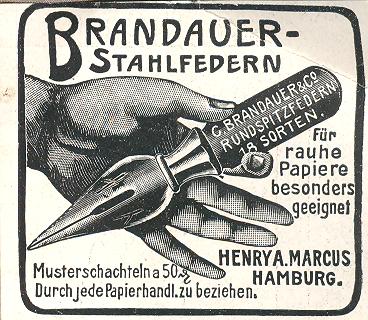
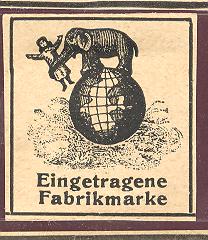
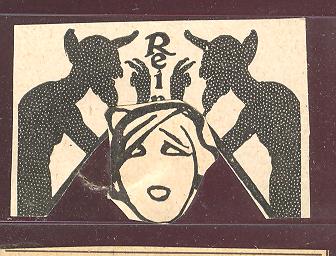
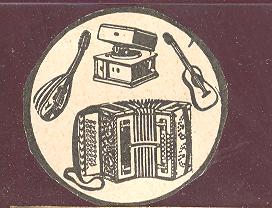
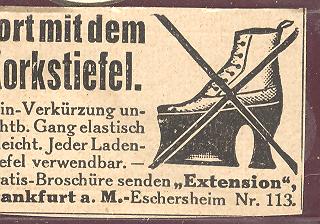
    April 16 mini german7 good det Here are three decent  examples showing the complexity and superior design of these little bits:  the top-right image is only an inch square, and was published in 1924;   the slim image just above is only an inch tall, while the example below-right is smaller yet, about a third (!) of an inch ’round.

    I’ve decided to begin to reproduce some of them here, mainly because
    so many of them are gorgeous design elements, many of which just don’t
    exist past the pages of this journal. 


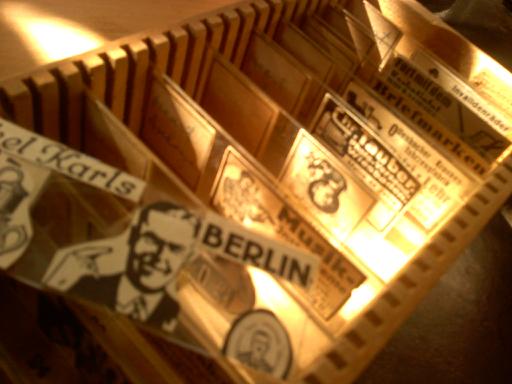
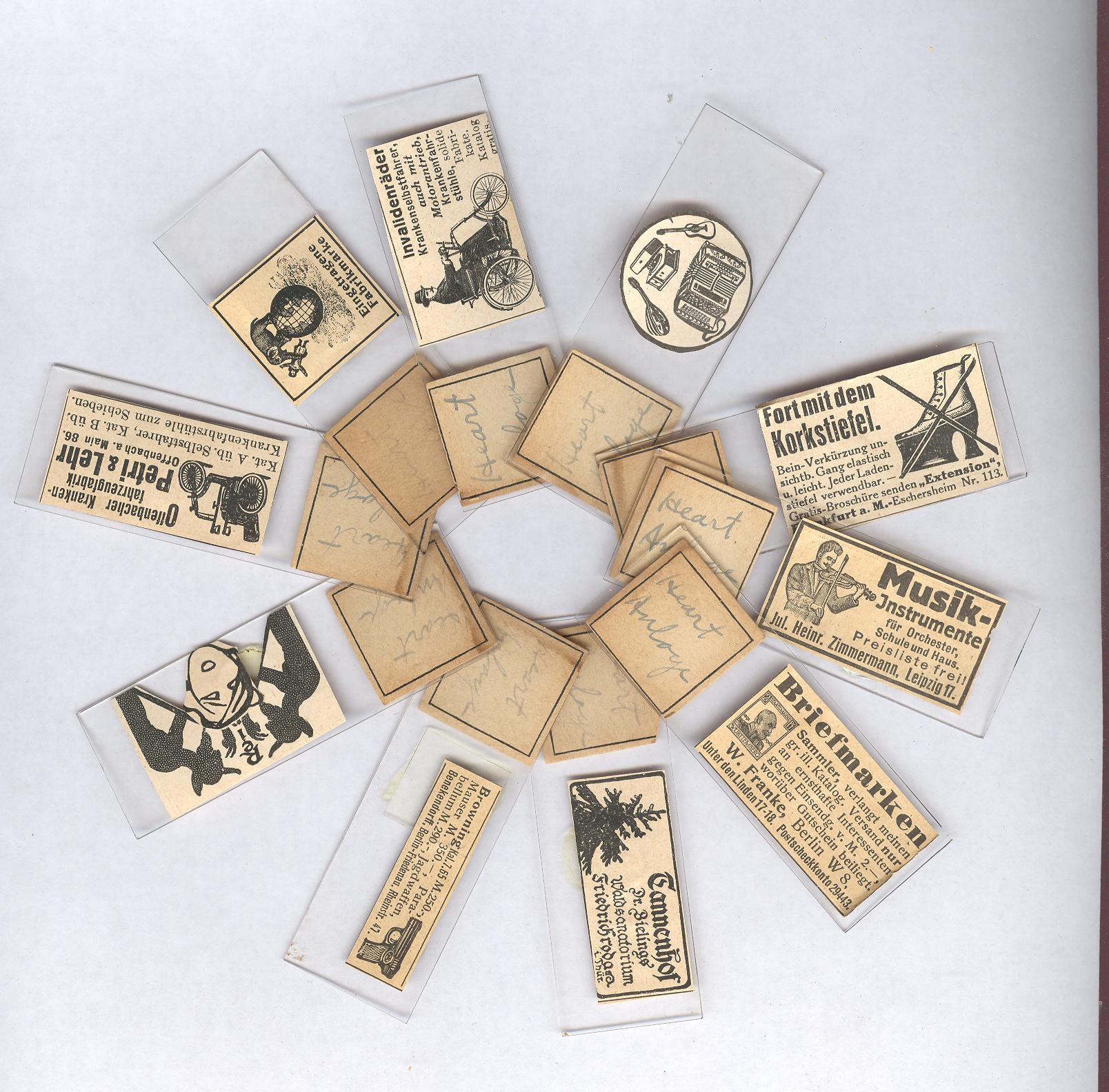
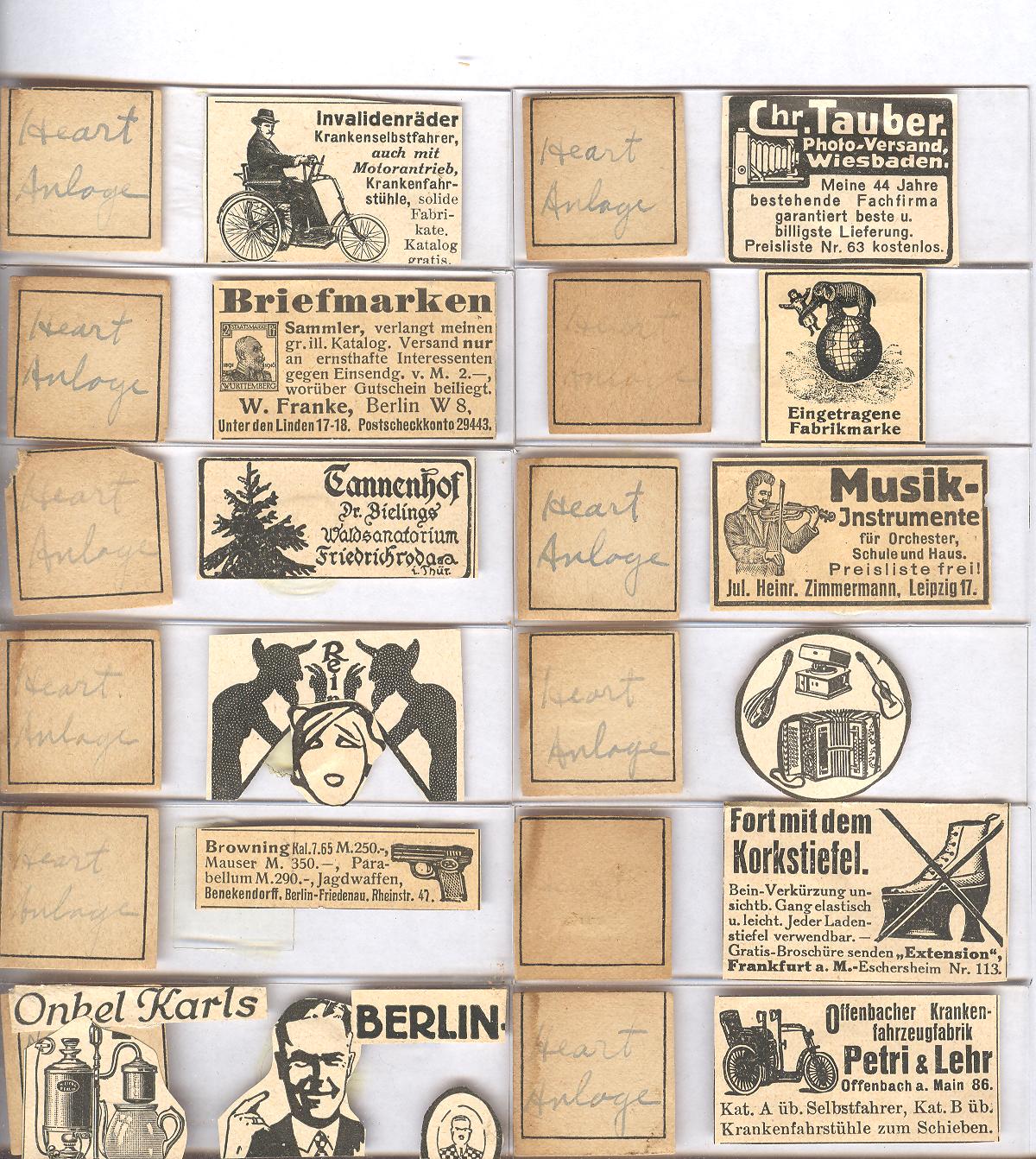
    April 16 box One thing that I’ve done with them is to construct “Onkel Karl’s Berlin Glass Diary”, a series of microscope slides with these small images as specimens illustrating the imaginary diary of Karl Muefler as he strolls the streets of Berlin in 1925 looking for “missing paper”.  The original images are all very small, generally smaller than an American penny, and can be fantastic: sometimes there are thirty of them clustered on one of the Illustriete Zeitung’s back advertising pages.

    I’ll return to this category from time to time and add more images, hopefully compiling several hundred or so examples.   

    April 16 mini german  

    Image is 1.5 inches tall and printed in 1930.

    April 16 mini german 13

    Image is 2 inches square, printed 1938.

    April 16 mini german 14 

    Image is 2 inches square and printed in 1938.

      April 16 mini german 12

    (This image is less than half-an-inch tall, printed 1919)

    April 16 mini german3 det

    This image measures about 1/3 inch, printed 1925.

    April 16 mini german4 det

    Image meaures about 1.5 inches tall, printed 1919.

      April 16 mini german8

    (This measures about 1/3 inch, printed 1882.)

    April 16 mini german6 det

    April 16 mini german2

    ·Posted by :

    ·in:

    —