A Daily History of Holes, Dots, Lines, Science, History, Math, Physics, Art, the Unintentional Absurd, Architecture, Maps, Data Visualization, Blank and Missing Things, and so on. |1.6 million words, 7500 images, 4.9 million hits| Press & appearances in The Times, Le Figaro, Mensa, The Economist, The Guardian, Discovery News, Slate, Le Monde, Sci American Blogs, Le Pont, and many other places… 5000+ total posts since 2008.

Category: Uncategorized

  • Save Baseball for the Youth of America

    JF Ptak Science Books  Quick Post

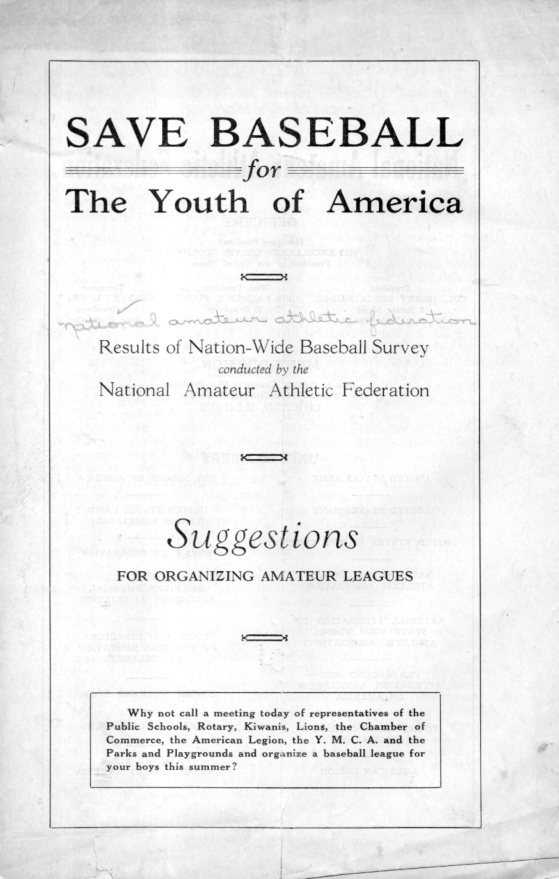
    Baseball, Save668The National Amateur Athletic Federation published this wonderfully-titled pamphlet, Save Baseball for the Youth of America, in 1925. in the attempt to bring some of baseball’s hurtful ways to public attention.  The pamphlet was in answer to the “results of a nation-wide baseball survey” sponsored by the Federation, which found, in short, that amateur and semi-pro baseball was in trouble, and it was hurting baseball in general. Most of the no-frills complaints had to do with stacking and overpaying semi-pro teams–evidently some were so strong that they could be beaten, sending many teams to disband. I’ve never heard of this before, but, then again, I’m not an historian of baseball.   In short, the positive response was found in kids, and for getting them involved in little league sports at a young age.  The “unit members” of the federation included the U.S. Army, Navy, Marines, NCAA, YMCA, BSA, Boys Club, Jewish Welfare Board, and the NRA.  (I’m posting this mostly because of the design and the title…)

    ·Posted by :

    ·in:


  • On the Superiority of Salvage

    JF Ptak Science Books     Post 2399

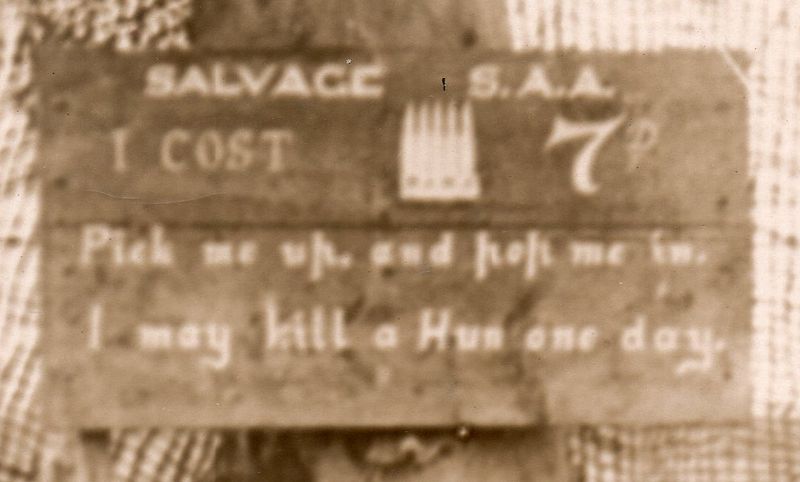
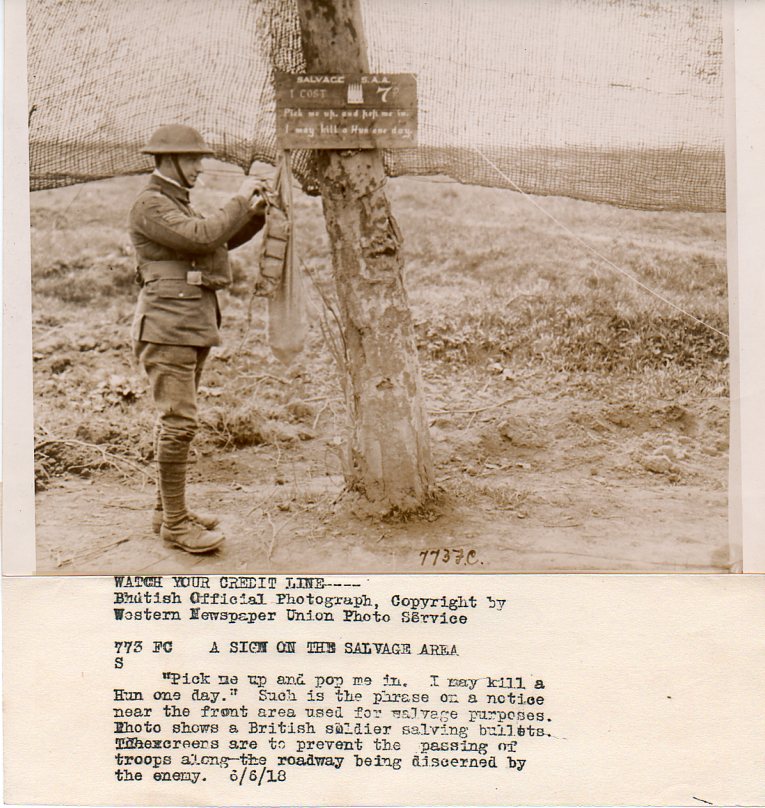
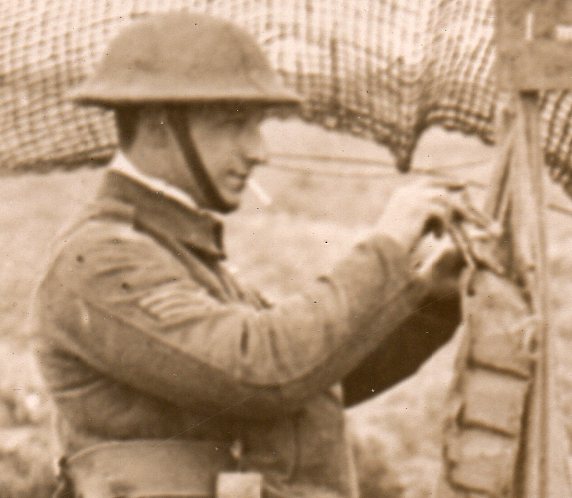
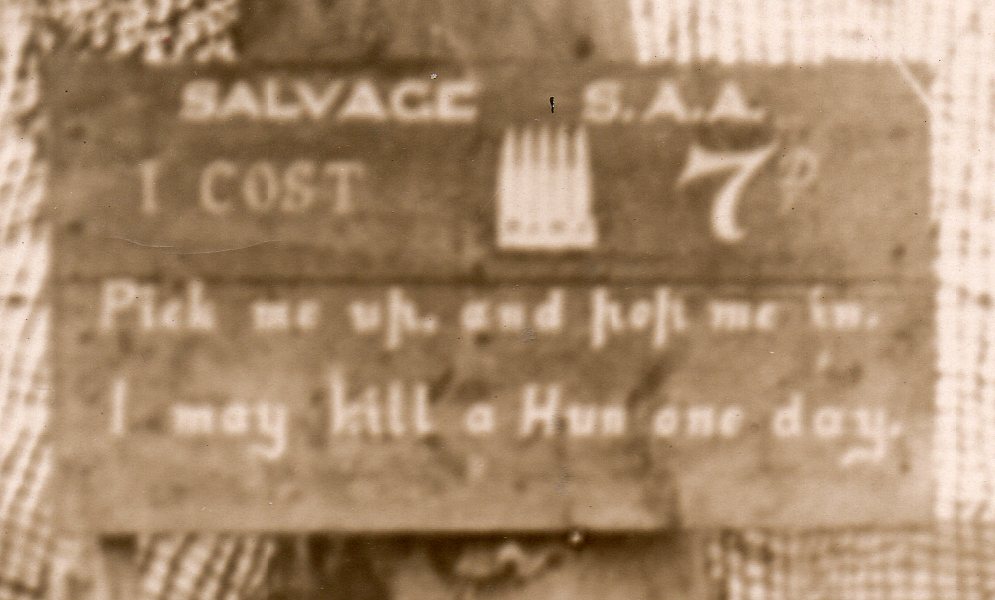
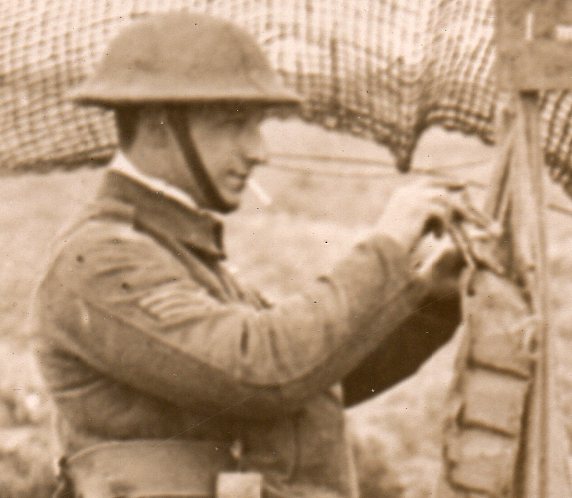
    A little went a long way, sometimes, in collecting the ends and bits of a campaign or a retiring column or from the attics and basements of village houses, or in scrapyards or dustbins or abandoned yards and buildings. Scrap has sometimes contributed greatly to major war efforts; and sometimes it has contributed just a few hundred rounds of ammunition, gathered from the sick or dying or forces on the move, that have told the tale of change in battle.  When you can only carry so much in a campaign where shooting can be an endless process, you can by definition never really carry enough bullets when you’re already carrying enough of everything else.
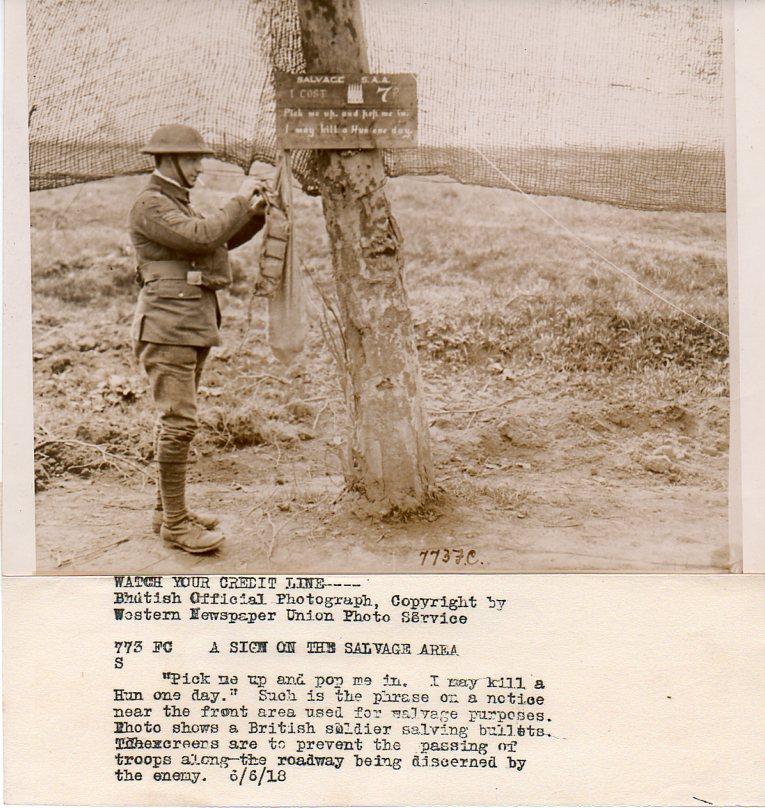
    WWI--salvage719
    WWI--salvageb720

    WWI--salvagec721

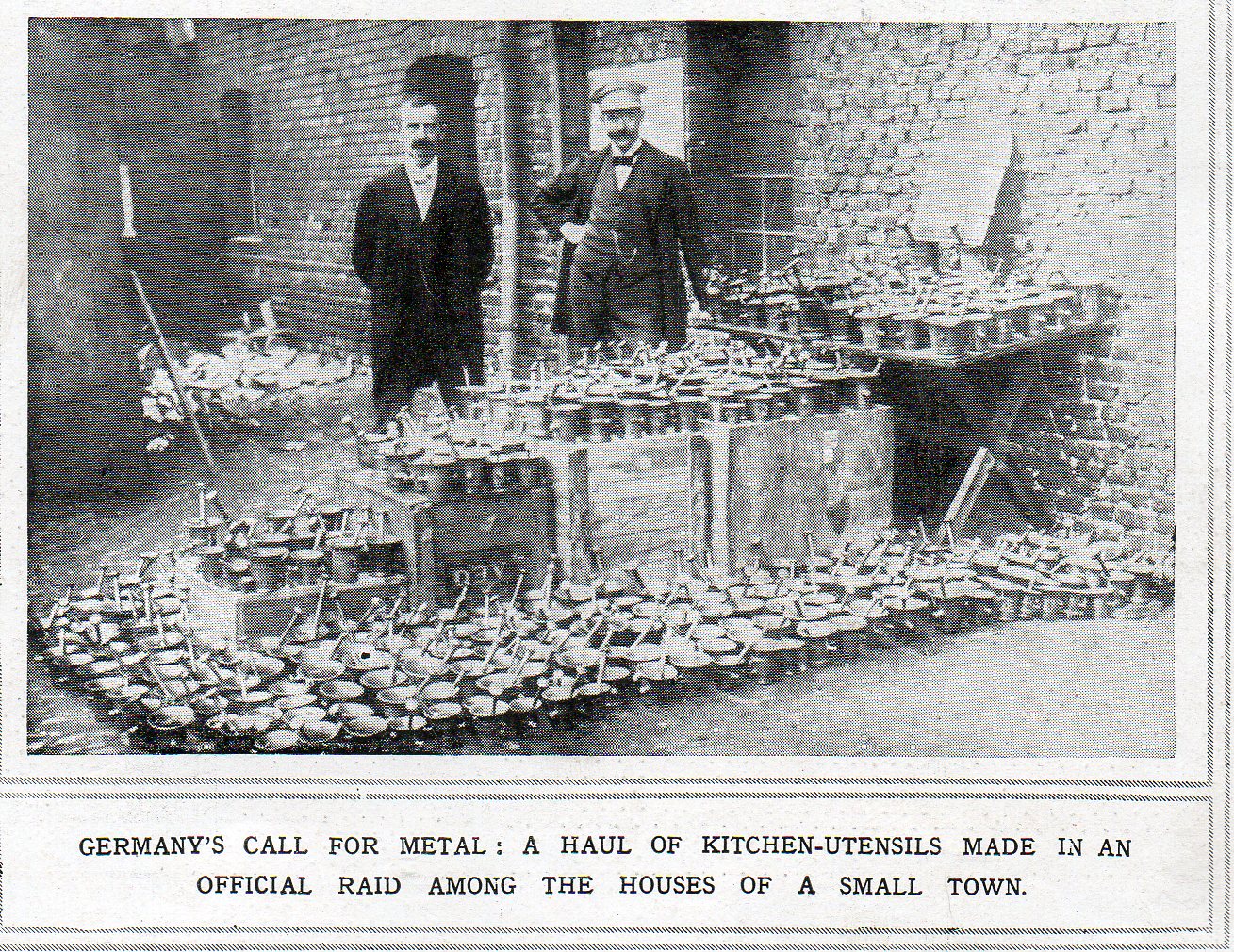
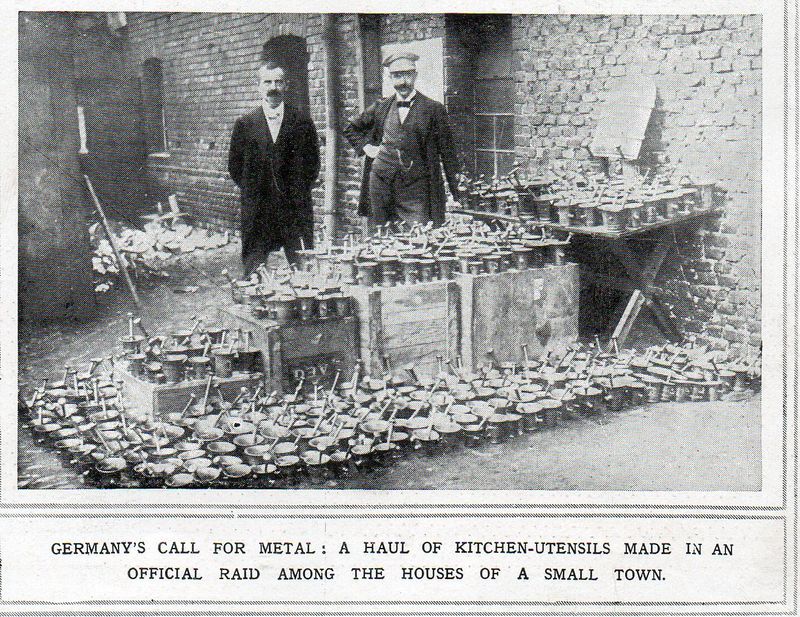
    On the other side of the line, the Germans were trying to utilize every bit possible for the war effort as well–here’s an example of a round-up of metal goods taken from the kitchens of a small town (looking mostly like mortar and pestel sets).  In towns throughout France, on the other hand, church bells were collected and stored away, hidden from possible capture and melting by German troops.
    WWI--raid on pots and pans694


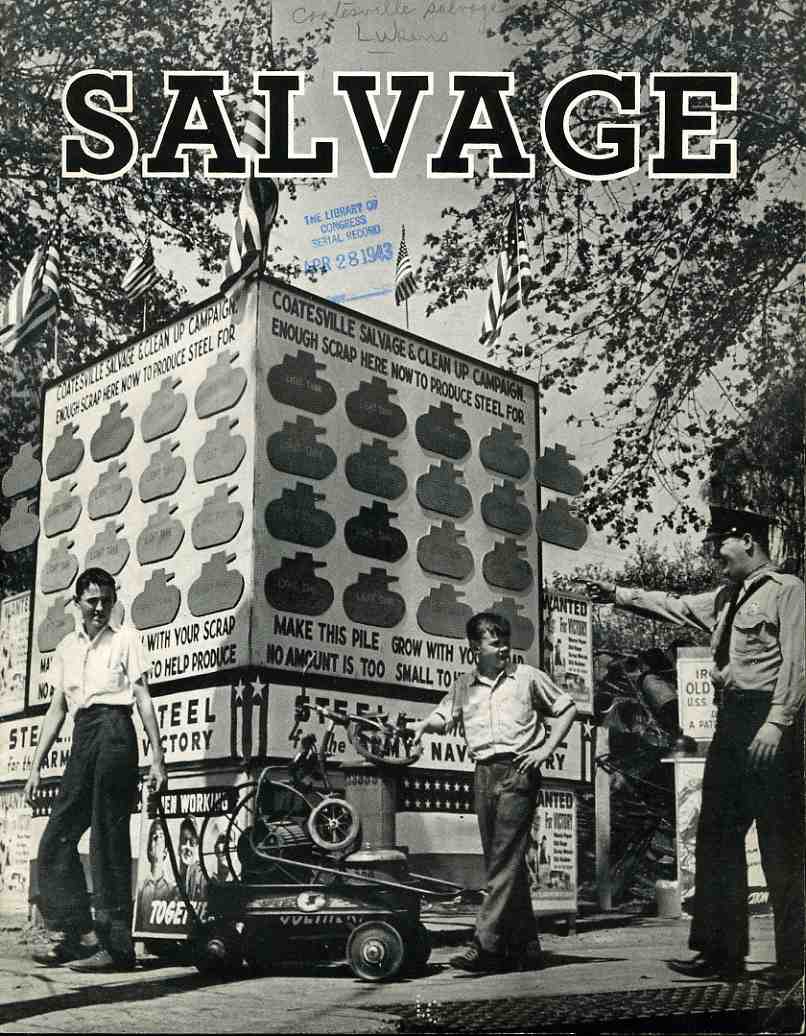
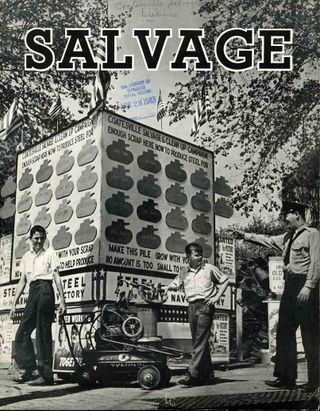
    Now for an example from WWII: Salvage (1943) is just simply brilliant!  It is a superb  design, getting its inelegant point elegantly across to the reader, making the collecting of junk  a bona fide war effort, triumphant, superior; it delivers the message gorgeously.  Who wouldn’t want to rush out and look for some metal scrap and bits and grow a neighborhood junk yard so that the community could build a tank?  Certainly these two boys–under the watchful guidance of a smiling cop in a black tie–couldn’t resist, and from the looks of the progress billboard behind them, nor could anybody else in the neighborhood, as the community collected enough metal junk for 14 tanks.  (Or at least pieces and chunks for fourteen tanks.)
    00-blog-Oct 25 salvage922

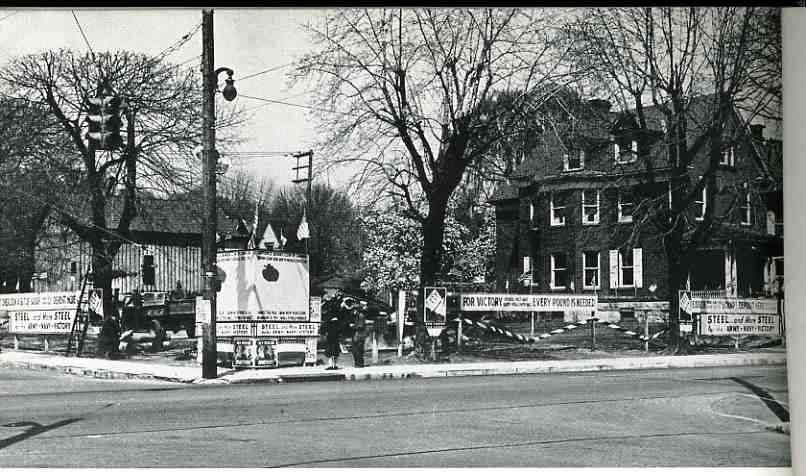
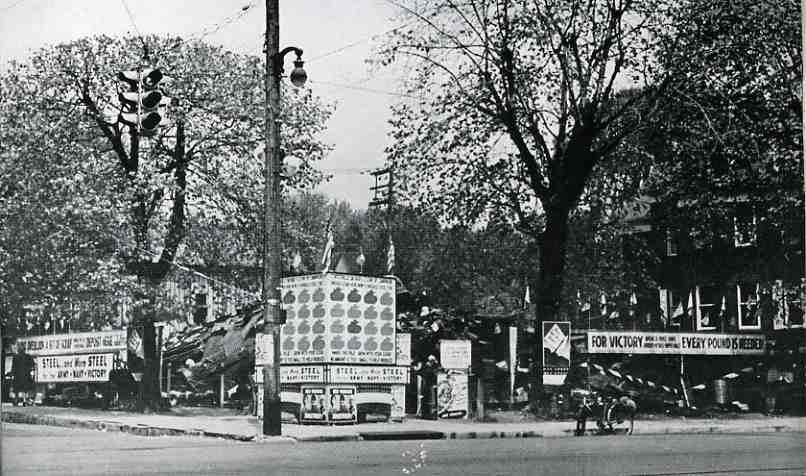
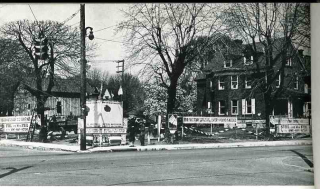
    The community was Coatesville, Pennsylvania, and they certainly did their collecting-best.  The two photos below show (top) the scrap yard after two days of collecting, and (bottom) the end of the campaign two months latter.
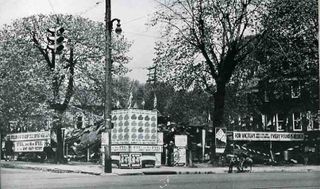
    00-blog-Oct 25 salvage before923

    00-blog-Oct 25 salvage after924


    00-blog-Oct 25 salvage before923


    “One pound of fat contained enough glycerin to make a pound of black powder, enough for six 75-mm shells. Twenty three hundred old nylon stockings contained enough nylon to make one parachute. Thirty thousand razor blades contained enough steel to make fifty 30-caliber machine guns.”   (Lingeman, Richard R. Don t You Know There Is a War On? The American Home Front, 1941-1945. New York: G.P. Putnam’s Sons 1970, 254-55).  When you have an entire town doing this, you can build tanks; when you have millions of people throwing together to collect this “junk”, then you get part of a war effort.  It is also part of a giant propaganda hearts/minds machine, especially for the U.S., which was (and I use this word with some hesitation) cushioned from the effects of the war by two oceans–it reminded people who hadn’t contributed a life to the war that there was actually something tangible going on, and that they could do something to help.  It kept peoples’ minds in the game.  Rubber was another big concern, as was silk (the controlling exporter of both coming largely from overseas, and in the case of silk, the exporter was Japan.)  Of course there was the introduction of synthetics for both silk and rubber, but the point in fact was that there was indeed a shortage, and the donated and salvaged stuff was necessary.                                                                                                            
    ·Posted by :

    ·in:


  • A Peek Behind the Curtain: Luis Alvarez, Cosmic Rays, and the Pyramids

    JF Ptak Science Books   Quick Post

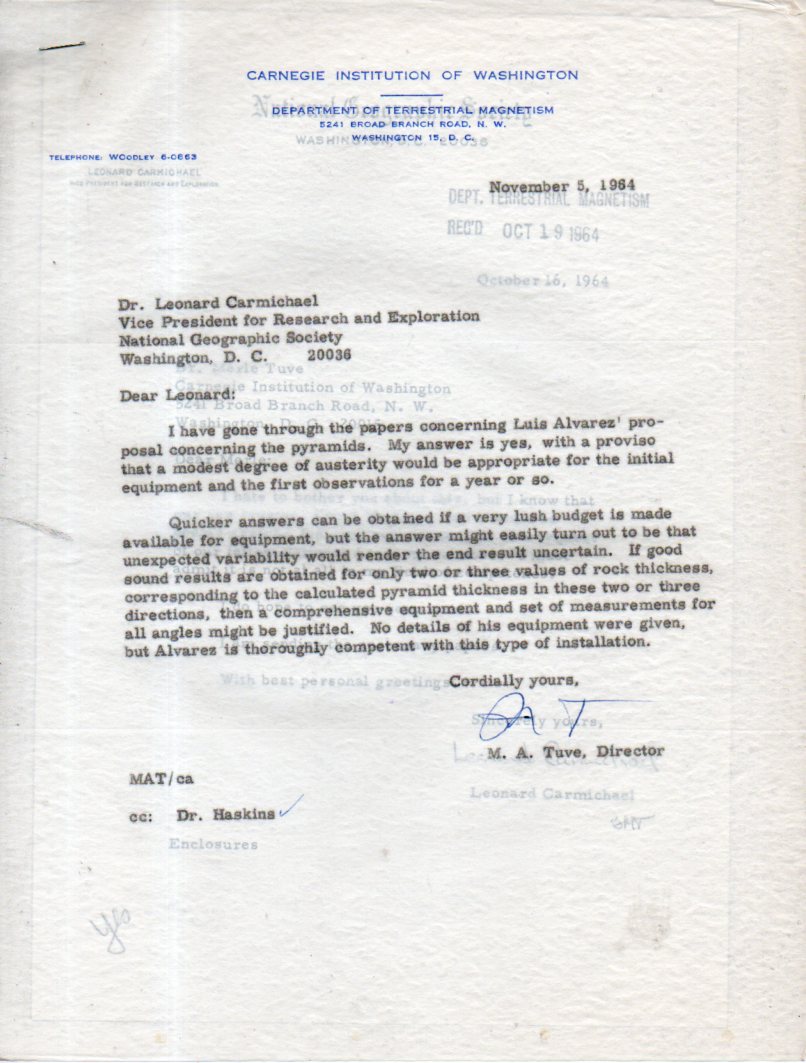
    This is a little peek behind the curtain, a tiny view into the process of funding an experiment using cosmic rays to look for hidden chambers in the pyramids by a Nobel Prize recipient. The letter is from Merle Tuve (a very major player in the development of RADAR and much else) when he was the director of the Department of Terrestrial Magnetism (part of the Carnegie Institution), writing from its beautiful campus in a leafy section of NW DC.  The letter was written in 1964–its actually a carbon of the letter that Tuve sent to Leonard Carmichael (VP at National Geographic who must’ve gone fishing for the money for the research), the copy being sent to Caryl Haskins, who was president of the Carnegie. 

    The Nobelist (’68) in question was Luis Alvarez, who charged ahead everywhere and was right about tons of stuff, in all sorts of different areas, not the least of which was with looking for hidden chambers in the Chephren pyramid by using cosmic rays.  His plan was to use a detector and search for discrepancies in the way cosmic rays might pass through the pyramid, that there would rate differences if the particles passed through empty areas in the other-wise solid limestone structure. Anyway, it was much more involved than that, but for our purposes here it is enough.  Tuve likes the idea, and says “yes”.  

    This document is available for purchase at the blog’s bookstore, here.  

    Alvarez Tuve617

    ·Posted by :

    ·in:


  • The Explosion of Papers Following the Announcement of the X-Ray, 1896

    JF Ptak Science Books   Post 2393

    Looking through a (massive, 20-pound!) volume of Electrical World1 I found that it  contains some of the earliest work published in the United States on Wilhelm Roentgen’s seminal discovery of the X-Ray, which he published on November 8, 1895. And there were a lot of papers–more than 100. One reason why the work was done by so many and so quickly is that Roentgen did not seek to patent his invention (much like the Curies would do so afterwards) and so there was a land-grab by hundreds of physicists and experimenters to do work in this astonishing new field. 

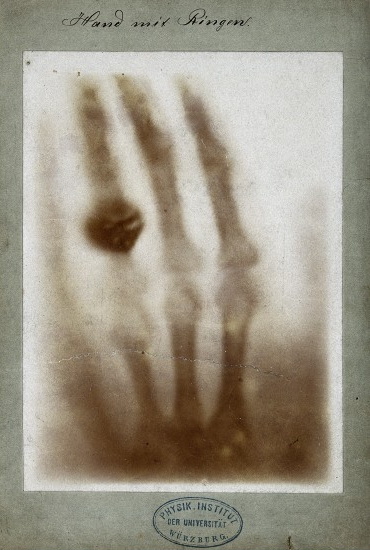
    The photograph (“Hand with Ring”)  below is Roentgen’s own, an x-ray of his wife Bertha’s hand–it is one of the iconic images in the history of modern science:

    Rontgen  bertha[Source: Wikimedia Commons]

    Electrical World is the third place that the Roentgen paper was reprinted, this time for the first time in an American journal, one day before the appearance of the The Electrician article, which was one day after the publication of the paper’s first appearance in English, in the journal Nature, on 23 January 1896.  (The Electrician would also publish Roentgen’s second article later in that same year, in March.) The Roentgen article does not seem to be reprinted in full anywhere else in 1896/1897. (See Charles Phillips, Bibliography of X-Ray Literature and Research, (1896-1897), published by The Electrician, 1898.)

    ·Posted by :

    ·in:


  • Draining for Profit, 1869

    JF Ptak Science Books   Quick Post

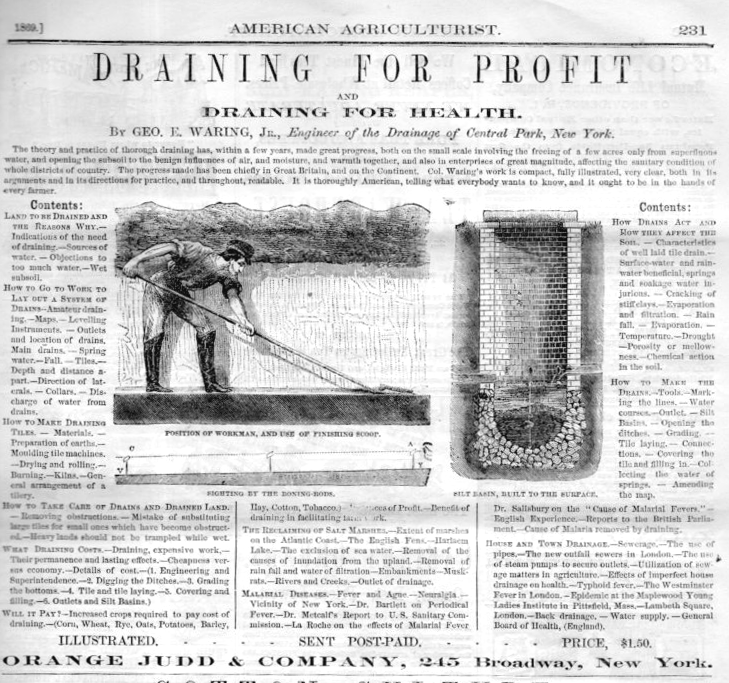
    This was an honest and very difficult job–it is a tough job in the present day, let alone 146 years ago:

    Draining597


    ·Posted by :

    ·in:


  • Relativity in the Remotest Heavens (1941)

    JF Ptak Science Books   Quick Post

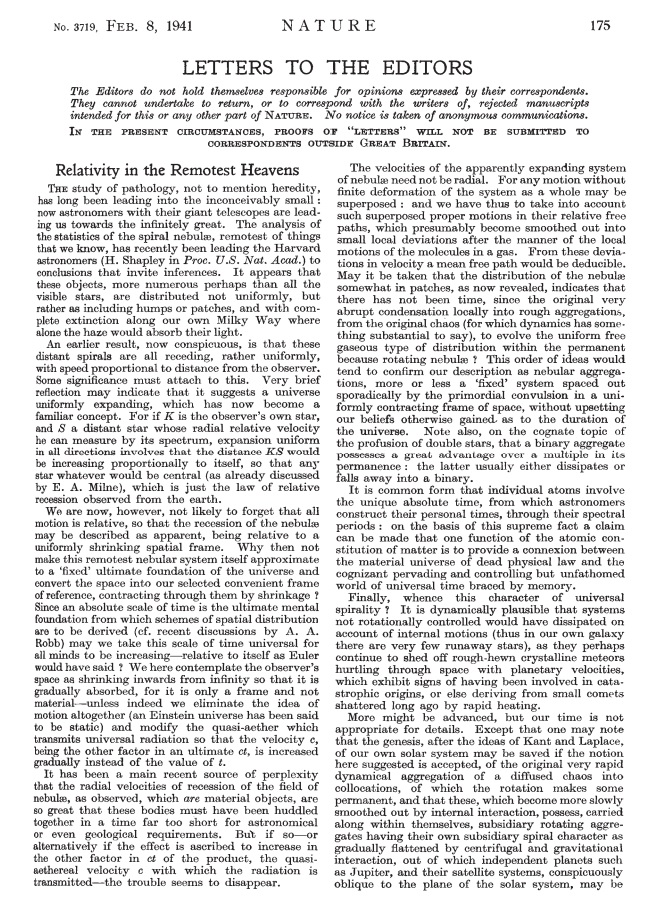
    I came upon this interesting paper by Joseph Larmor (1857-1942) while browsing a volume of Nature for January-June, 1941, and in researching it found a wonderful set of links for 80 papers written by Larmor from 1881-1941 (from PhDTree)  http://phdtree.org/scholar/larmor-joseph/publication/   See the St. Andrews site for a good biography of Larmor, here

    Larmor relativity


    ·Posted by :

    ·in:


  • An American Hobo in Europe (Well…Scotland) 1907

    JF Ptak Science Books  Quick Post

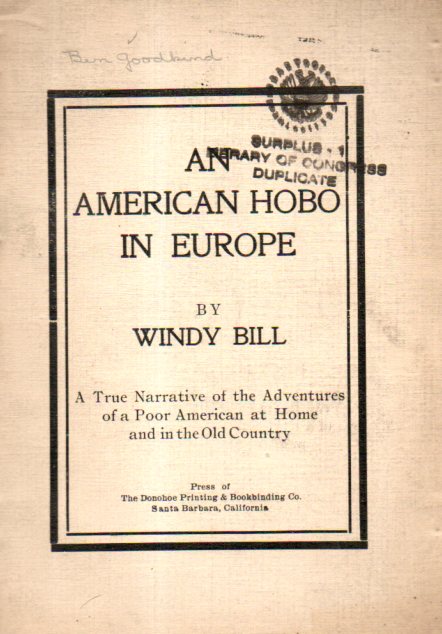
    American hobo575There’s plenty of European stuff and wind in this breezy recounting of a life on the road, but when I opened up this stubby pamphlet my eye feel by chance on his American travels, finding Windy Bill in Winnemucca, Nevada (a 550-mile drive north of Las Vegas).

    Windy does make some pretty interesting observation on Winnemucca, though:”Saloons are plentiful and all drinks are ten cents straight, with no discount for quantity. A pretty good meal can be had for two bits, but short orders and such things as life preservers, sinkers, or a bit of “mystery” with coffee, are all the same price—two bits. I found no place where I could get anything for less.There was a river or creek at the further end of town wherein I wished to bathe, but the water was so intolerably filthy that I deemed it wise to wait until I found a more suitable place along the route.”

    Windy takes more than half of the book to move himself from San Francisco to New York City, where he grabs a $27 ticket to Glasgow.  

    It really is a semi-interesting read, from what I can make of it, a U.S. vagabond vagabonding in Europe, though there are some unnecessary and inexplicably long quotations from Robert Burns that take up 40 pages or so. That said he does record some gems and pearls, like this:  

    “I drifted along Salt Market Street and then came upon a street which, for want of a better name, was called Sauchiehall Street, in the neighborhood of which I saw a restaurant called the “Workingman’s Restaurant,” on the side-wall of which was painted in large letters the following bill of fare:

    Tea, 2 cents.
    Coffee, 2 cents.
    Porridge and milk, 2 cents.
    Sandwiches, 2 and 4 cents.
    Eggs, 2 cents.
    Ham and eggs, 16 cents.
    Broth, 2 cents.
    Pea soup, 2 cents.
    Potato soup, 2 cents.
    Beefsteak pudding, 4 cents.
    Sausage, 2 cents.
    Collops, 4 and 6 cents.
    Dessert puddings, 2 cents.
    Fish suppers, 8 and 12 cents.
    Tripe suppers, 8 and 12 cents.

    Overall though his “European” trip isn’t much of one, unless people in the U.K. describe themselves as being “European”, which they are not wont to do. Windy Bill crosses the Atlantic and gets to Scotland, but doesn’t advance any further east. 

    ·Posted by :

    ·in:


  • German Design, 1922

    JF Ptak Science Books  Quick Post

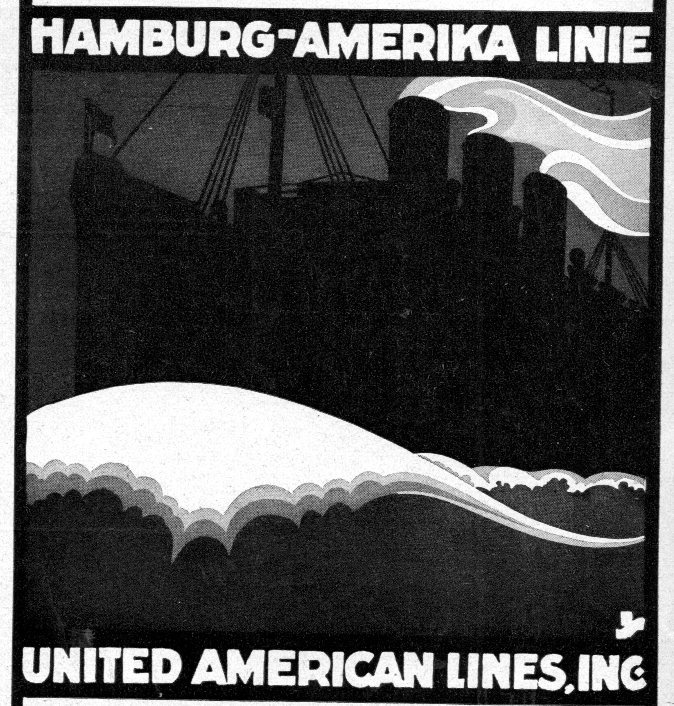
    Not every ad in the 1920’s  Illustrirte Zeitung was thick and black and heavy and beautifully designed–though there are plenty of them, and they do appeal to me.  This one appears in issue 4083 for May 1922.  

    German graphics Hamburg line556

    ·Posted by :

    ·in:


  • Ration Book, 1944: Tanks, Ships, Cannons, Planes.

    JF Ptak Science Books  Quick Post

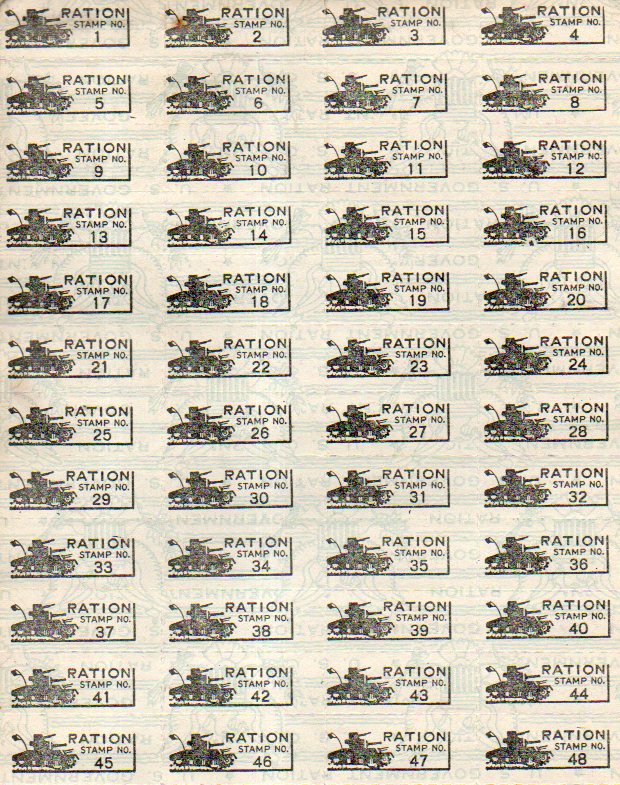
    There’s a lot to be said about the War Ration Books, but I’ll save that for another time. Right now, I just want to share their hope and beauty:

    WWII rations545

    WWII rations544

    ·Posted by :

    ·in:


  • The Crumbling Media is the Crumbling Message, 1939: a Decomposition of American Communism

    JF Ptak Science Books     Post 2363

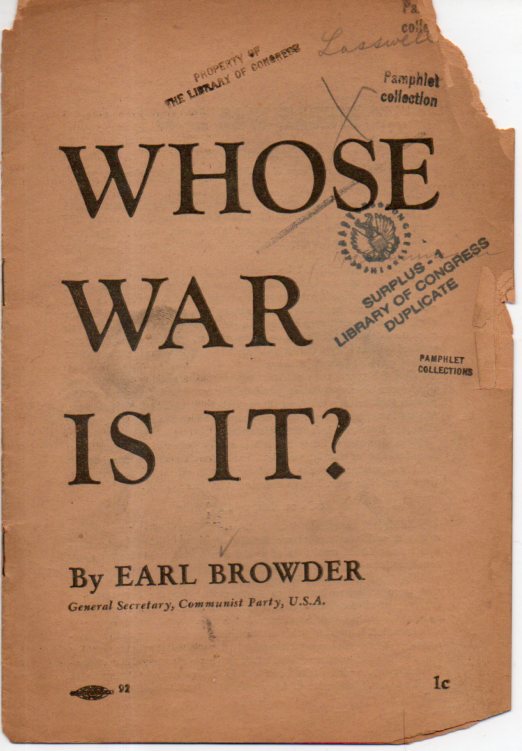
    Commie pamphlet decomposition476


    Commie pamphlet decomposition475 
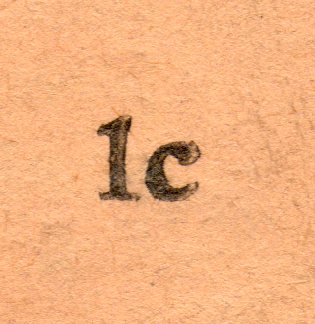
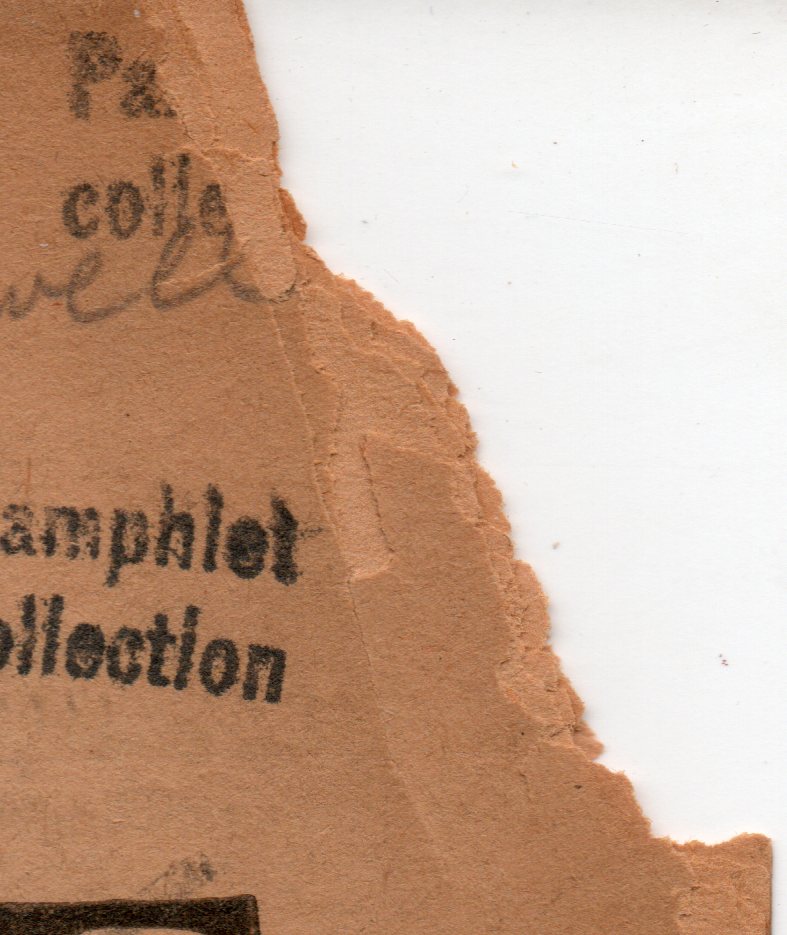
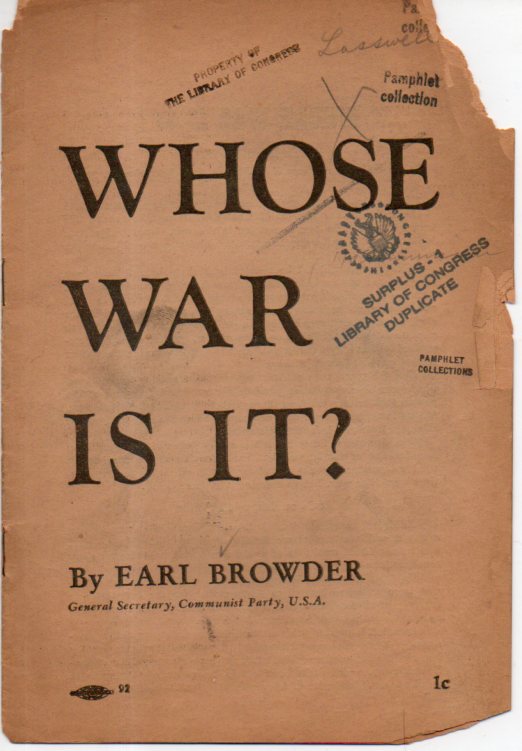
    Earl Browder was the General Secretary  of the Communist Party of the United States, this penny pamphlet (brown and brittle and crumbling today and smelling like a brown and crumbling and brittle Communist penny-pamphlet) is the text of a speech he delivered on the party’s anti-war stance on September 29, 1939–just a few weeks after the otubreak of WWII.  He called it an imperialist’s war, imperialists on both sides, both sides equally at fault.  The Soviet Union of course wants the war to stop-but-not-really, for both sides to cease and desist, sort of–the outcome would be the “brilliant Leninist doctrine” that would have both sides fighting each other to doom, so that the Soviet Union could succeed and replace the two vanquished imperialists. 

    Browder thought that the Communist Party in the USA wouls save the country, so long as the party wasn’t extinguished.

    In the dreamtime of Browder’s plans and hopes Joseph Stalin had this to say to Adolph Hitler in August 1939:

    “To the chancellor of the German Reich, Herr A. Hitler.

    I thank you for your letter. I hope that the German-Soviet Nonaggression Pact will mark a decisive turn for the better in the political relations between our two countries.

    J. Stalin”

    He had signed a Non-Aggression pact with the Nazis, as well as a Economic Agreement and a Secret Protocol, the last allowing the Soviets to gobble up much of Eastern Europe.  This all changed of course on June 22, 1941, the launch of the Nazi Barbarossa plan, a massive and bloody attack on the Soviet Union.  That is when the Communist plan of anti-intervention in the Imperialist war turned instantly into an all-out war of intervention against the formerly brother Fascists in an effort to save Mother Russia.  On June 21 the USSR was friendly with the Nazis and allowed a semi-passive Imperialist hand to swipe up and ruin countries in Eastern Europe; on June 22 the federation is forgotten and the ill-gained graces destroyed as if they had never existed, and the Communist Party stands for something else.  It all feels that way handling this pamphlet, a not-so-slow disintegration of words and deeds.  

    Advanced decomposition:

    Commie pamphlet decomposition477

    ·Posted by :

    ·in: