A Daily History of Holes, Dots, Lines, Science, History, Math, Physics, Art, the Unintentional Absurd, Architecture, Maps, Data Visualization, Blank and Missing Things, and so on. |1.6 million words, 7500 images, 4.9 million hits| Press & appearances in The Times, Le Figaro, Mensa, The Economist, The Guardian, Discovery News, Slate, Le Monde, Sci American Blogs, Le Pont, and many other places… 5000+ total posts since 2008.

Category: Uncategorized

  • Eastern Kentucky Moonshiners, 1929

    JF Ptak Science Books  Quick Post

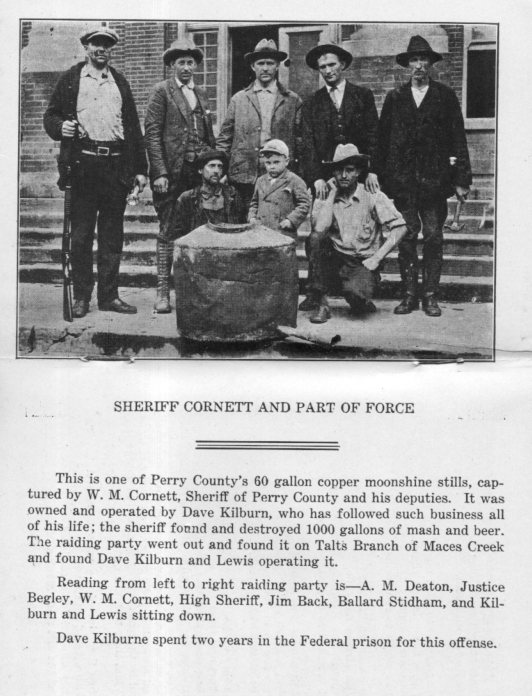
    This fine image comes from a small and scarce publication called The Kentucky Mountain Echo, a True Story of the Mountains, by Floyd D. Baker of Hazard, Kentucky, and printed in 1929.  Hazard–a town of about 5,000 in Appalachians in the far eastern part of the state–was evidently fairly secluded given its position in the hills and relative inaccessibility. That changed when the railroad was introduced in 1912 and which introduced the town to the rest of the region, establishing a short-lived “boom” period which soon went ‘bust” in the Depression.  

    Ky sheriff506

    This fine picture of Americana comes from the neighboring Perry county (“Hazard” and “Perry” both being named so for Commodore Matthew Hazard Perry) and shows a victory of the local constabulary over a pair of Moonshiners–two Mountain Men trying to make ends meet, no doubt. It seems as though the area has some history in this department, a piece of it surfacing in very popular culture in a television show called The Dukes of Hazzard, supposedly loosely based on this area (though the producers added an extra “z” and placing it in Georgia to avoid any legal issues with the town).  

    Another interesting story from this publication appears here in this blog, from the Alpha and Omega Department. 

    Ky sheriff505

    ·Posted by :

    ·in:


  • A Picture of a Dream, 1869

    JF Ptak Science Books   Quick Post

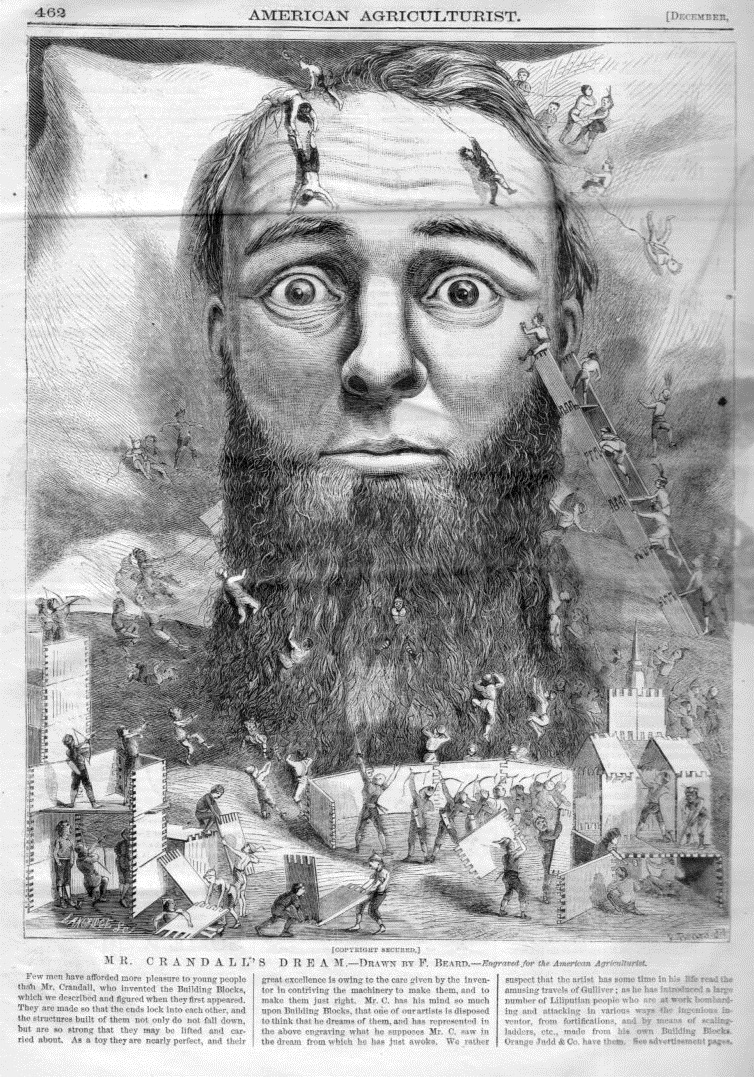
    I’ve been looking at antique images for thirty-five years and in that experience it is easier to recall things that I do not often see–the missing-bits absences seem to be easier to recall than the many categories of images that I do see regularly.  And one of those “missing” categories that was excited tonight by a serendipitous find is “dreaming”, or the representation of a dream, as found in The American Agriculturalist for the Farm, Garden, and Household for December, 1869.  It was an interesting appearance, being a good illustration wrapped around a product-placement ad, as the subject was a children’s block manufacturer, and that’s pretty much what the text was about. But the drawing was good and the imagination behind it was pretty nice, especially for 1869.

    Crandal dream502

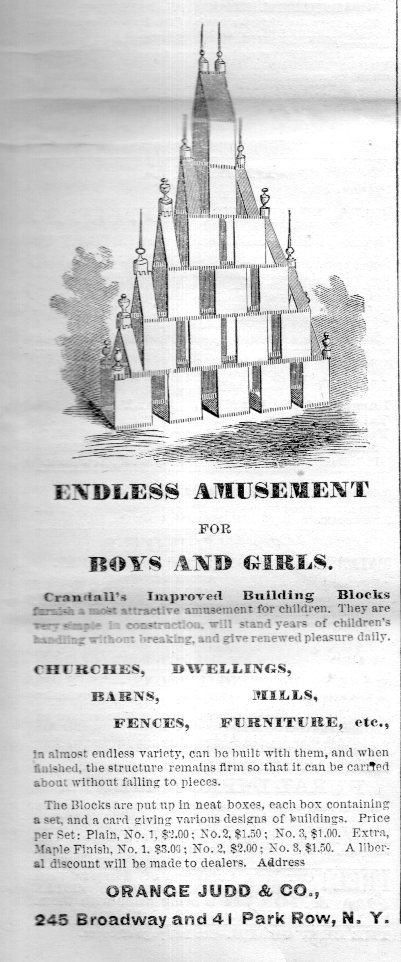
    And here’s an ad for the blocks (from the April 1869 issue):

    Crandal dream503

    ·Posted by :

    ·in:


  • The Crumbling Media is the Crumbling Message, 1939: a Decomposition of American Communism

    JF Ptak Science Books     Post 2363

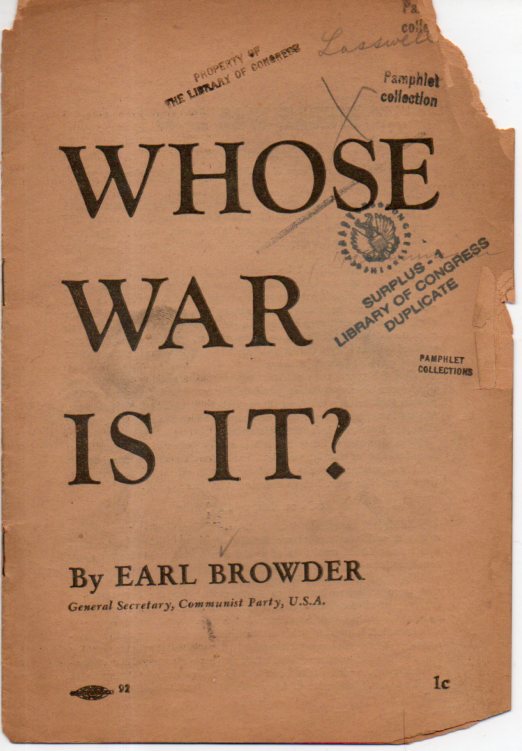
    Commie pamphlet decomposition476


    Commie pamphlet decomposition475 
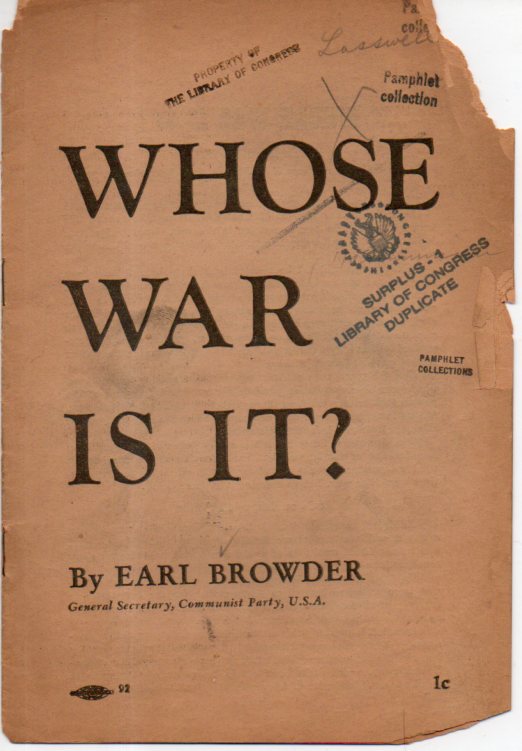
    Earl Browder was the General Secretary  of the Communist Party of the United States, this penny pamphlet (brown and brittle and crumbling today and smelling like a brown and crumbling and brittle Communist penny-pamphlet) is the text of a speech he delivered on the party’s anti-war stance on September 29, 1939–just a few weeks after the otubreak of WWII.  He called it an imperialist’s war, imperialists on both sides, both sides equally at fault.  The Soviet Union of course wants the war to stop-but-not-really, for both sides to cease and desist, sort of–the outcome would be the “brilliant Leninist doctrine” that would have both sides fighting each other to doom, so that the Soviet Union could succeed and replace the two vanquished imperialists. 

    Browder thought that the Communist Party in the USA wouls save the country, so long as the party wasn’t extinguished.

    In the dreamtime of Browder’s plans and hopes Joseph Stalin had this to say to Adolph Hitler in August 1939:

    “To the chancellor of the German Reich, Herr A. Hitler.

    I thank you for your letter. I hope that the German-Soviet Nonaggression Pact will mark a decisive turn for the better in the political relations between our two countries.

    J. Stalin”

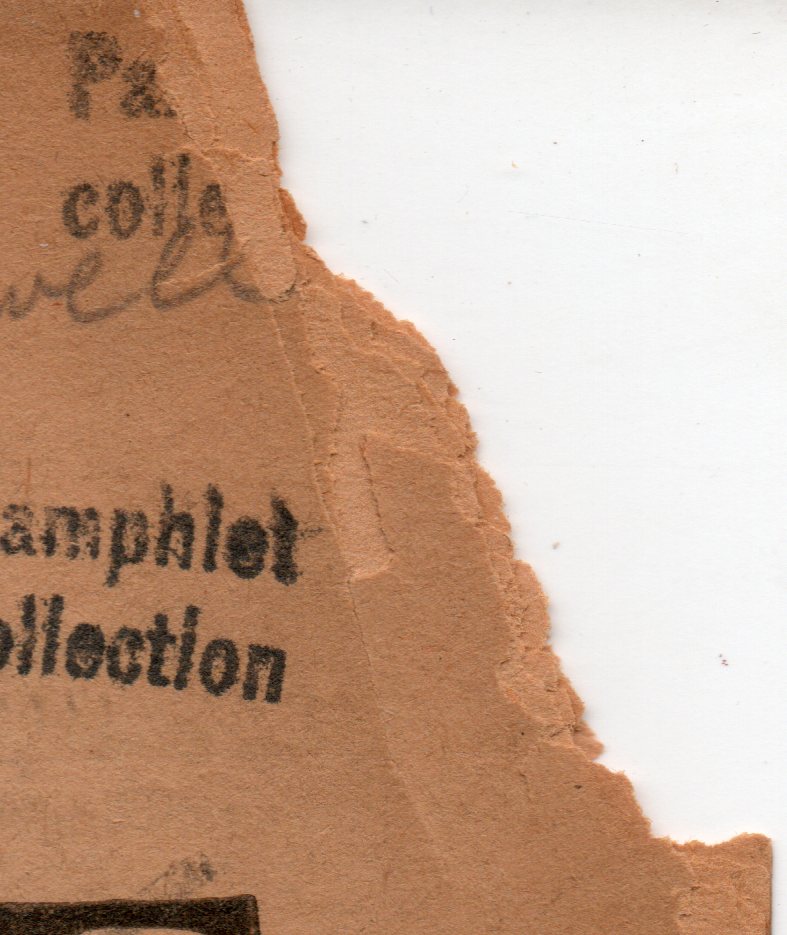
    He had signed a Non-Aggression pact with the Nazis, as well as a Economic Agreement and a Secret Protocol, the last allowing the Soviets to gobble up much of Eastern Europe.  This all changed of course on June 22, 1941, the launch of the Nazi Barbarossa plan, a massive and bloody attack on the Soviet Union.  That is when the Communist plan of anti-intervention in the Imperialist war turned instantly into an all-out war of intervention against the formerly brother Fascists in an effort to save Mother Russia.  On June 21 the USSR was friendly with the Nazis and allowed a semi-passive Imperialist hand to swipe up and ruin countries in Eastern Europe; on June 22 the federation is forgotten and the ill-gained graces destroyed as if they had never existed, and the Communist Party stands for something else.  It all feels that way handling this pamphlet, a not-so-slow disintegration of words and deeds.  

    Advanced decomposition:

    Commie pamphlet decomposition477

    ·Posted by :

    ·in:


  • A (Possibly) Famous Chair

    JF Ptak Science Books   Quick Post

    Chair detail

    This is actually part of the Tech Quiz series on this blog, though it should probably be in a Why-is-it-Famous series (if there was one) better yet.  It is a hard chair to identify byt itself, but as soon as you see it in context you’ll know what it is.

    And so:

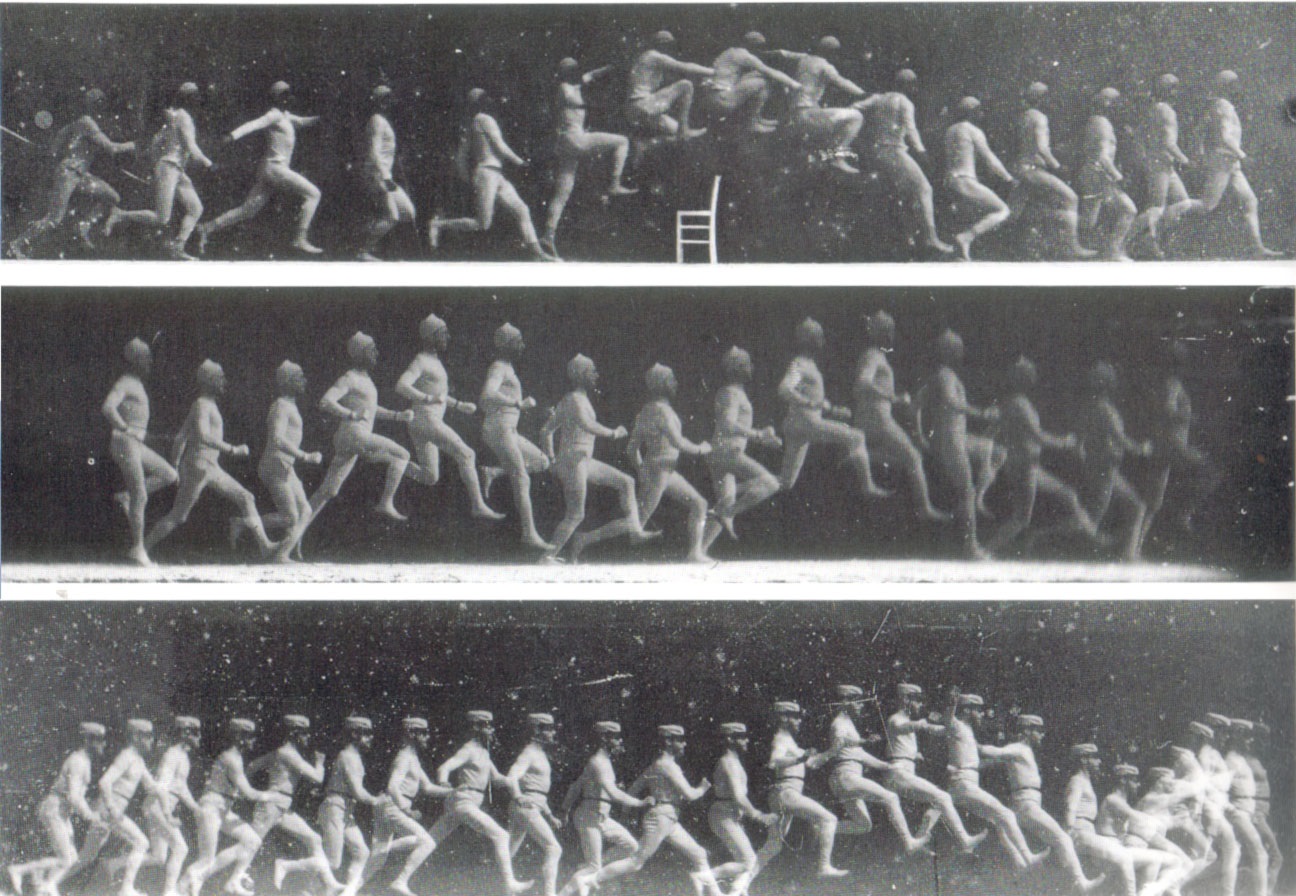
    Chair Muybridge

    Prior to the invention of photography, printed works on how humans should move in a given way and for a given task are uncommon and, generally, somewhat complex. The image I have in my head is the epochal work of the somewhat forgotten Etienne Marey who in the 1870’s created what was essentially the world’s first “slow motion” device. One iteration of Marey’s apparatus was basically a long series of ganged cameras recording a motion for a simple task at a given time frame and presented on a continuous strip of photographic paper, sort of like a motion picture with the camera speed set at three frames per second. The resulting images were phenomenal and showed people for the first time the exactness of all manners of simple motions–motions that no longer looked so “simple” once all of its aspects could be studied from captured photographic evidence.  Even the act of hopping over a small chair or bending to pick up a bucket of water were enormously revealing in a way like Robert Hooke’s Micrographia displayed the great detail and complexity of the seemingly simple fly.  Perhaps the most famous of Marey’s series of images was that of a galloping horse, which also for the first time revealed what exactly the horse’s legs were doing and proving that almost every painter in the history of art represented the galloping horse incorrectly. But Marey doesn’t actually fit the mold of directing the motions of people for a particular instructional purposes, though he does of course photographically reveal hundreds of actions that led to a revolutionary understanding of the body-in-motion.  

    Perhaps one of the most famous series of photographs was of the man jumping over a chair, and action so seemingly common that people wouldn’t pay too much attention to it.  But when there are 15 connected photographs of a 1.5 second event, there are entirely new worlds of motion revealed.  And the chair, that white chair, was at the heart of it, and may be one of the most iconoclastic props in Marey’s full cabinet.  Anyway in my mind it is a famous chair.  

    ·Posted by :

    ·in:


  • Newton, Tyson’s “Cosmos”, & Space Travel (1728)

    JF Ptak Science Books   Quick Post

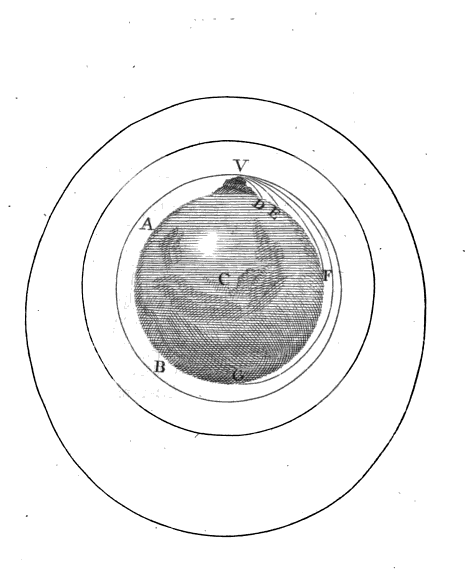
    Newton canon

    [Image source for the above and below: Google Books, here.]

    We’ve been enjoying the Neil deGrasse Tyson Cosmos and are just now finishing the episode dealing with Newton, and the Principia, Edmund Halley, and poor Robert Hooke. One thing I wanted to footnote to this production was to share the original–not shown in the series though something very close to it does appear–of an image for Newton’s “cannon”. Though he actually doesn’t use the word “cannon” he does write on the motion of projectiles and the forces at which they are projected and the possibility of such a thing reaching a velocity great enough to send the thing into orbit.  The idea/gedankenexperiment and image appears early on in Newton’s A Treatise of the System of the World, which is the English translation (with corrections and some changes) of what was to be book three (De mundi systemate) of the Principia, and which was published in 1728, a year after Newton’s death. (On the title page the book is announced as “translated into English” but does not mention a translator/s, unknown as a certainty to this day but is supposed to be Andrew Motte.) 

    ·Posted by :

    ·in:


  • Finding Unseen Things In and From the Air

    JF Ptak Science Books

    Seeing more deeply--air weather det853

    Finding the hard-to-find, the invisible, the “hidden”, is an essential aspect of, well, mostly everything.  Whether it is Newton separating light with a prism to find its constituents, or Hooke investigating the formerly quasi-real microscopical world to reveal worlds within worlds, or Galileo using his telescope to quash the ideas of the unaided-eye-visible night sky as an unaltering perfection of creation, or Roentgen seeing through his wife’s skin, or Fraunhoefer finding the complex spectrum, or Henry Draper determining a chemical constituent of the sun, or the invention of the zero or negative numbers or subtraction, of finding Black Holes or other planets or the remnants of the Big Bang, or (Kandinsky) finding the nonrepresentational aspect of art, or Duchamp finding in an upturned urinal that art had no boundaries…the list goes on and on.

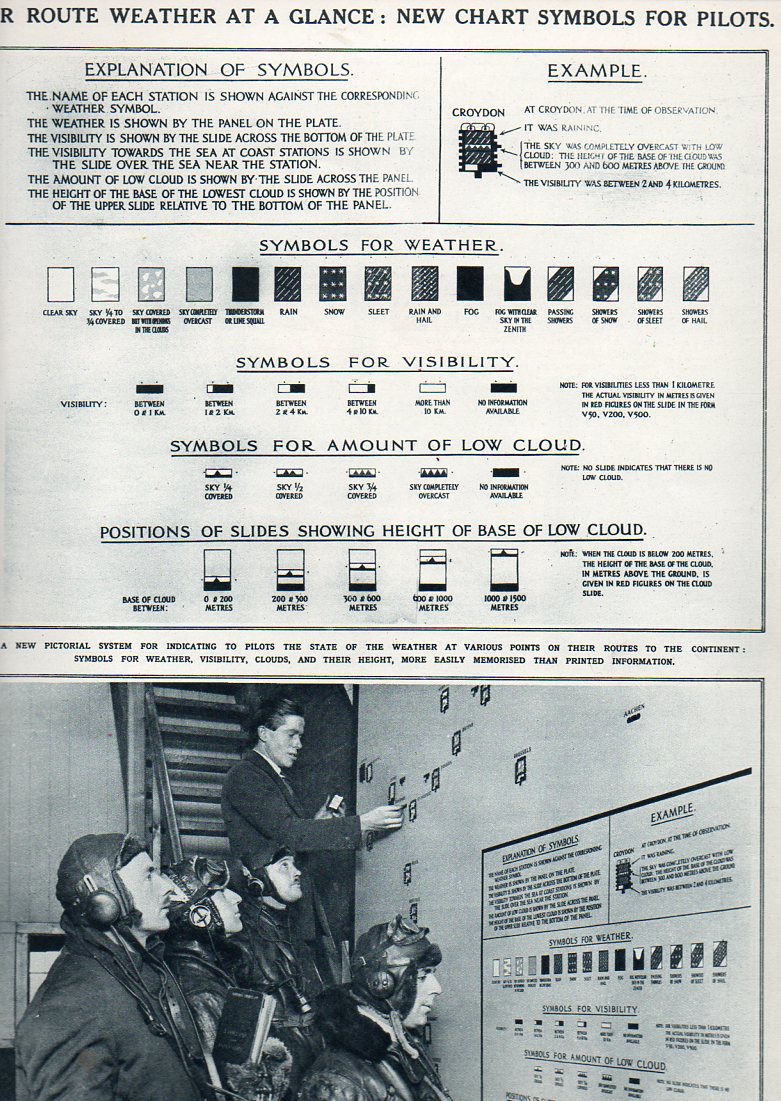
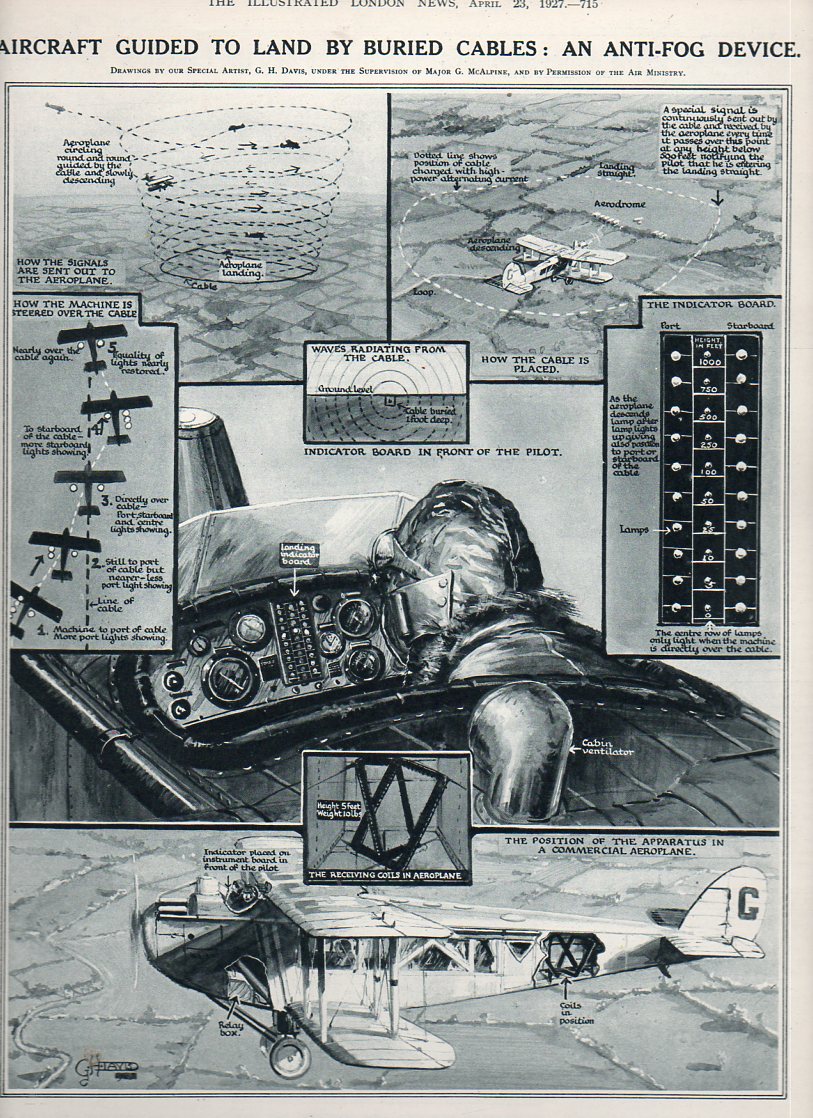
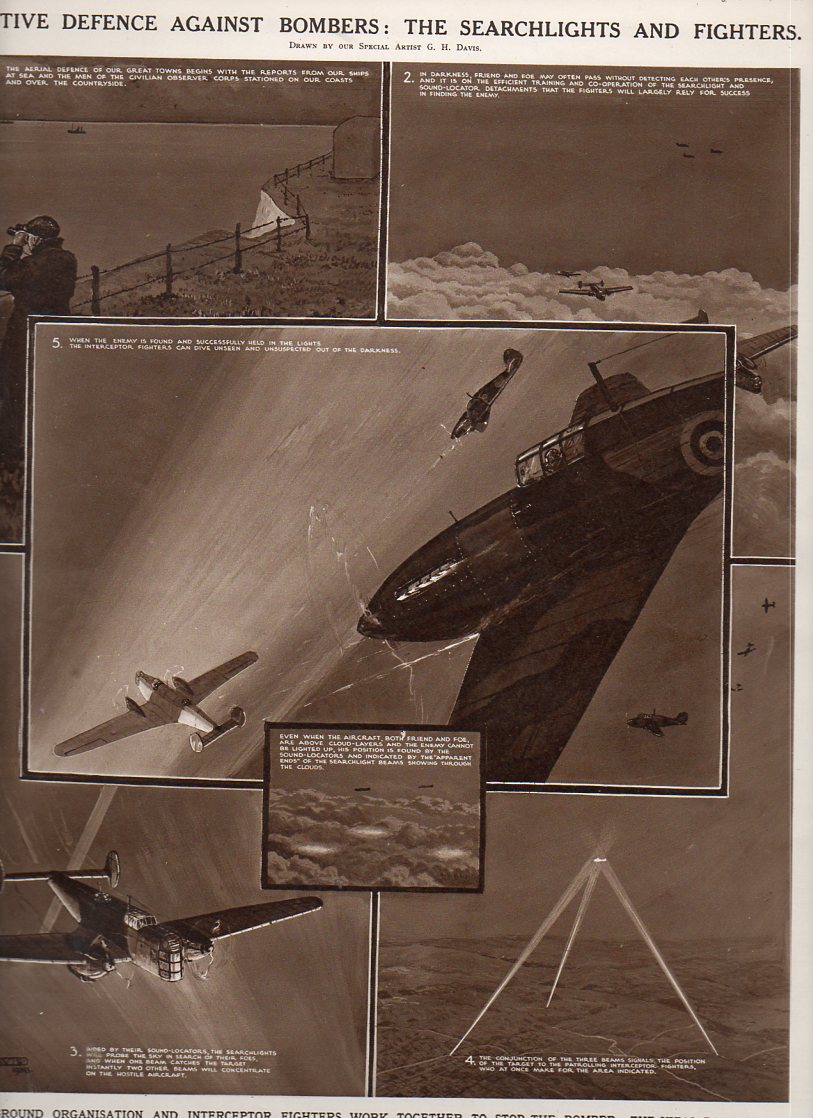
    One aspect of this “finding something in nothing” business that is interesting to look at because it is so local and discernible–and recent–is in air navigation and detection.  And I’ll do this using a series of excellent illustrations from The Illustrated London News, all of which are from the 1927-1938 period. 

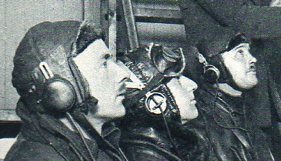
    The first is relatively simple, at least simple from here in the year 2014, which shows four pilots being briefed on weather conditions with a aerial chart for conditions along intercontinental routes.  The placement of these symbols represented a vast improvement over the earlier systems of readying pilots for what weather lay ahead, if indeed there were any communications at all.  This represents an early look at a codification of conditions and expectations for air travelers–a display of new and important data in 1927. 

    Seeing more deeply--air weather852
    Next is a brilliant device for assisting pilots to land in foggy and dark conditions–actually on how to find the ground safely.  In 1927 (again) a RADAR-like system was put into place on aircraft that involved receiving the signals of an ac-pulsed buried electrical cable that surrounded an airport.  The receiver (seen here on the flight panel of the pilot in an open-air cockpit) would be read to reveal proximity of the airport, the pilot making wider and then closer spirals in descent until his was basically within the buried airport cables and thus able to land.

    Seeing more deeply-anti-fog855
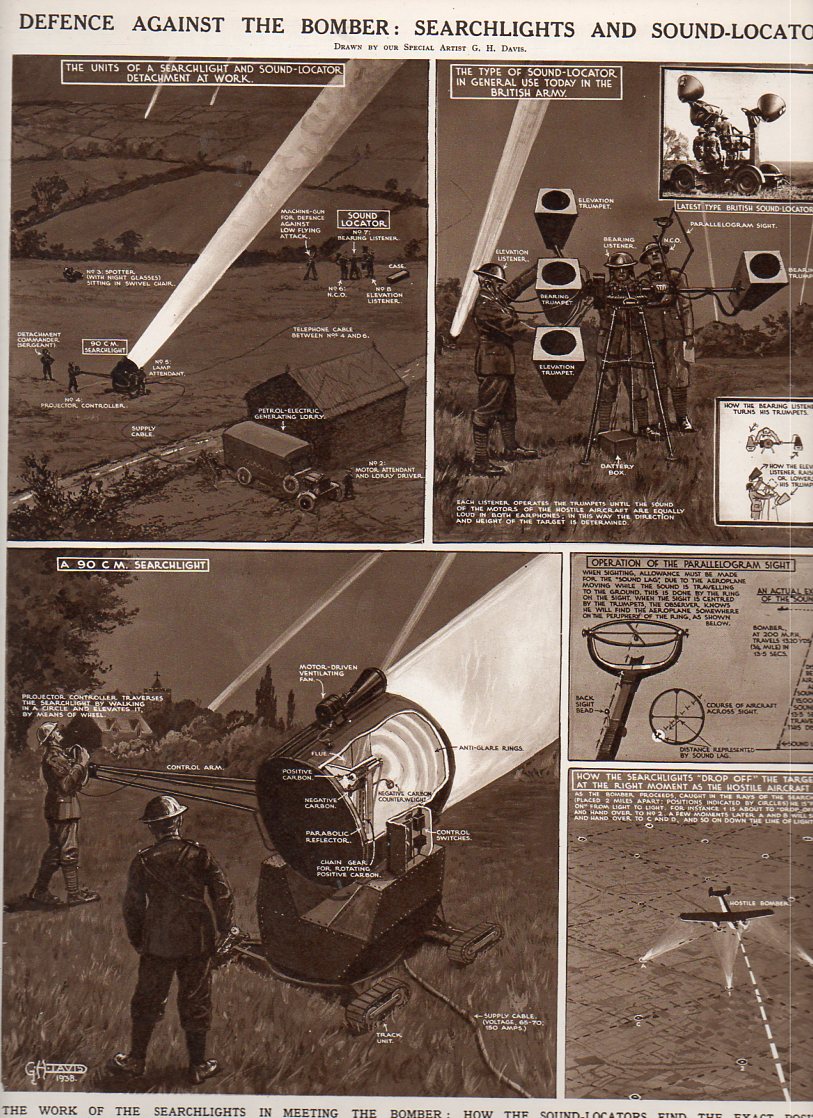
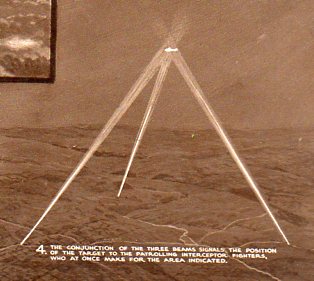
    Prior to WWII RADAR1 was somewhat functional but still in development, and as we see in this set of 16 July 1938 illustrations, the key methods for finding enemy aircraft at night (in order to shoot it down of course) was an audio-visual method, using “sound-locators” to find the approaching bombers and then spotlights to illuminate and track them to their destruction.  

    Seeing more deeply-searchlight856

    Seeing more deeply-defence against bomber854

    These images represent some idea of the state of the art of being able to find things–like the ground at night or approaching enemy aircraft–in the 1927-1938 period, all of which would be drastically changed in just the next two years.

    Seeing more deeply-searchligh detail857

    NOTES

    1. RADAR was coming very close to being developed in the early 1930’s–and in 1935 the process of experimentation and implementation was at a peak.  The development of this new technology was an international property, though perhaps no one owned it more in this period than the British, with Watson Watt giving his experimental ideas on RADAR to the Air Ministry on 12 February 1935 in a secret report titled “The Detection of Aircraft by Radio Methods”. Int his years alone there was feverish work being done by  Rudolf Kühnhold (Scientific Director at the ‘Kriegsmarine  Nachrichtenmittel-Versuchsanstalt) who in 1933-1935 established a RADAR-hunting company called Gesellschaft für Elektroakustische und Mechanische Apparate, or “GEMA”; there was also elements of the Royal Navy, Telefunken, Standard Elektrik Lorenz, Philips Company’s  (of Eindhoven, Netherlands) Natuurkundig Laboratorium, the Research Office of Nippon Electric Company, and even in the Soviet Union (until the key figures involved were murdered in Stalin’s purges–this one distinguished from others and referred to now as The Great Purge– of 1937), the French Compagnie Générale de Télégraphie Sans Fil (CSF), and  the Italian Regio Instituto Electrotecnico e delle Comunicazioni (RIEC, Royal Institute for Electro-technics and Communications) to name a few.  The United States of course had been long working on the project, at least since 1922 at the NRL, with considerable private (and federally funded) work done by RCA

    .
    Whipping ahead into WWII a very significant “battle of the beams” began between the U.K. and Germany, especially during the Battle of Britain, involving countermeasures, espionage, propaganda and false-positives in regards to the use and development of radio-based tracking and detection–the U.K. particularly making use of this technology in a wide-spread air defense system.  But it was in the United States in 1940 (and really by the U.S. Navy) that RADAR got its name (for RAdio Detection And Ranging) as well as its great impetus for development and deployment.

    ·Posted by :

    ·in:


  • A Painted Graffiti for the First Nuclear-Powered Electricity

    JF Ptak Science Books   Quick Post

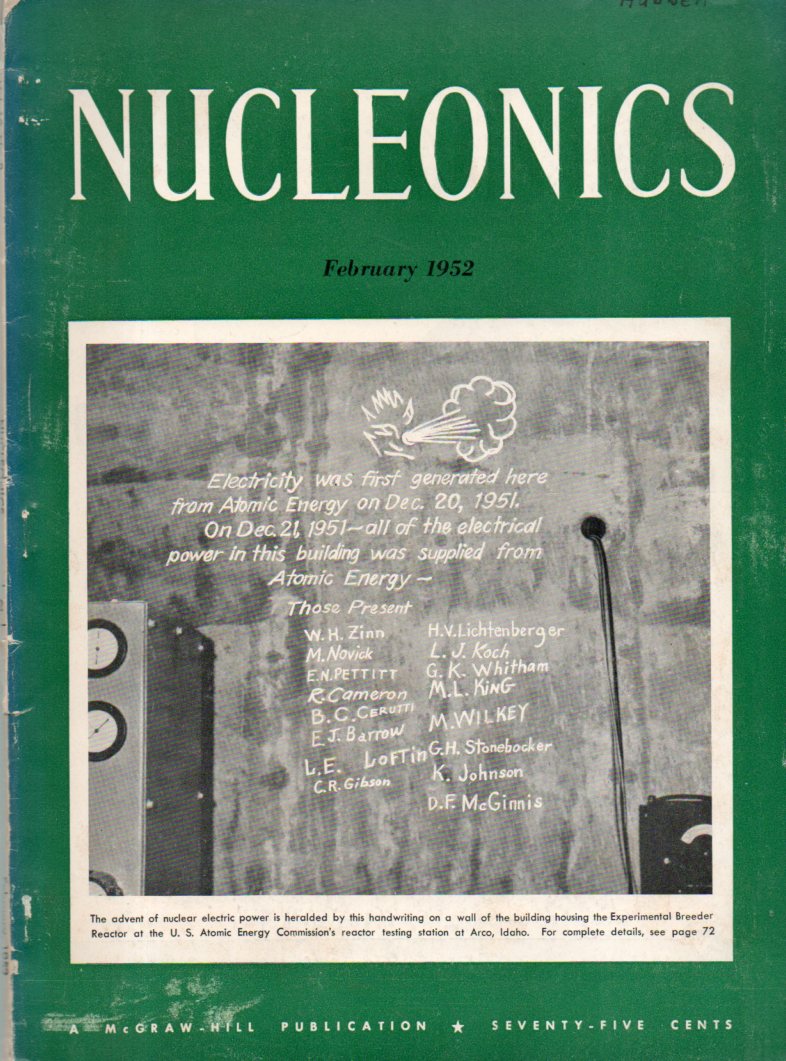
    This issue of Nucleonics (published by McGraw-Hill beginning in 1947) celebrates the very first production of electricity by nuclear power.  The simple and charming painted declaration on the side of the experimental breeder reactor (EBR-1) at the National Reactor Testing Station in Arco, Idaho (a National Laboratory) commemorates the occasion, which occurred two months earlier, on December 21, 1951.  This was research carried out to see if the breeder reactor was a feasible and workable possibility–and the team, lead by William H. Zinn who “signs” the document first, concludes that this was the case. This remained an experimental unit until it was deactivated in 1964–though it did suffer a partial meltdown in 1956.  In any event, I wanted to share this simple declaration of success for a major achievement. 

    Nucleonics382

    ·Posted by :

    ·in:


  • Yesterday’s Future, Yesterday–the Solar Home Prefab (1944)

    JF Ptak Science Books                                                                                          Follow Me on Pinterest

    About a mile from my house is a sign for a small housing development called “Solar Vista”–interestingly the road that leads to it is called “Shadow Lane”.

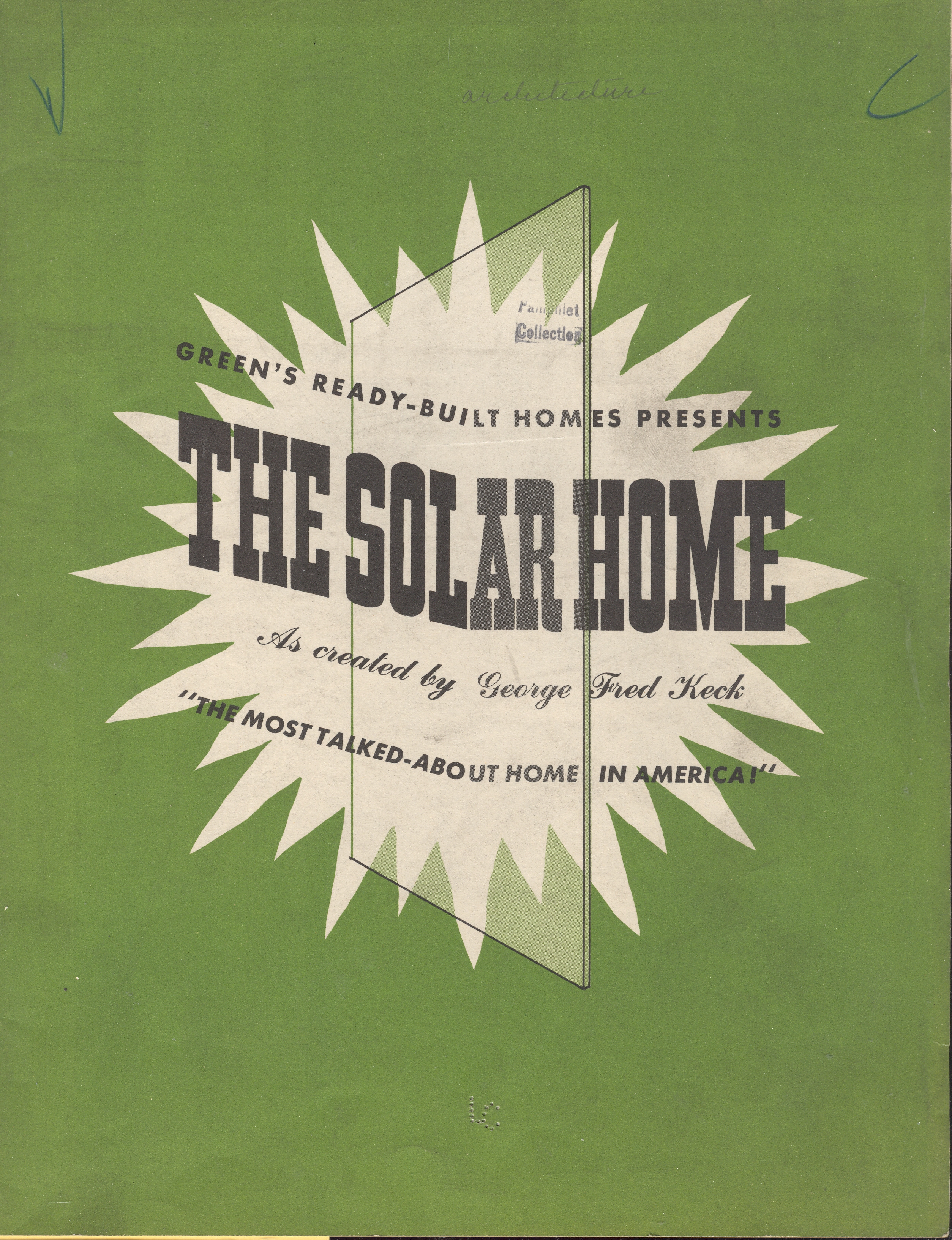
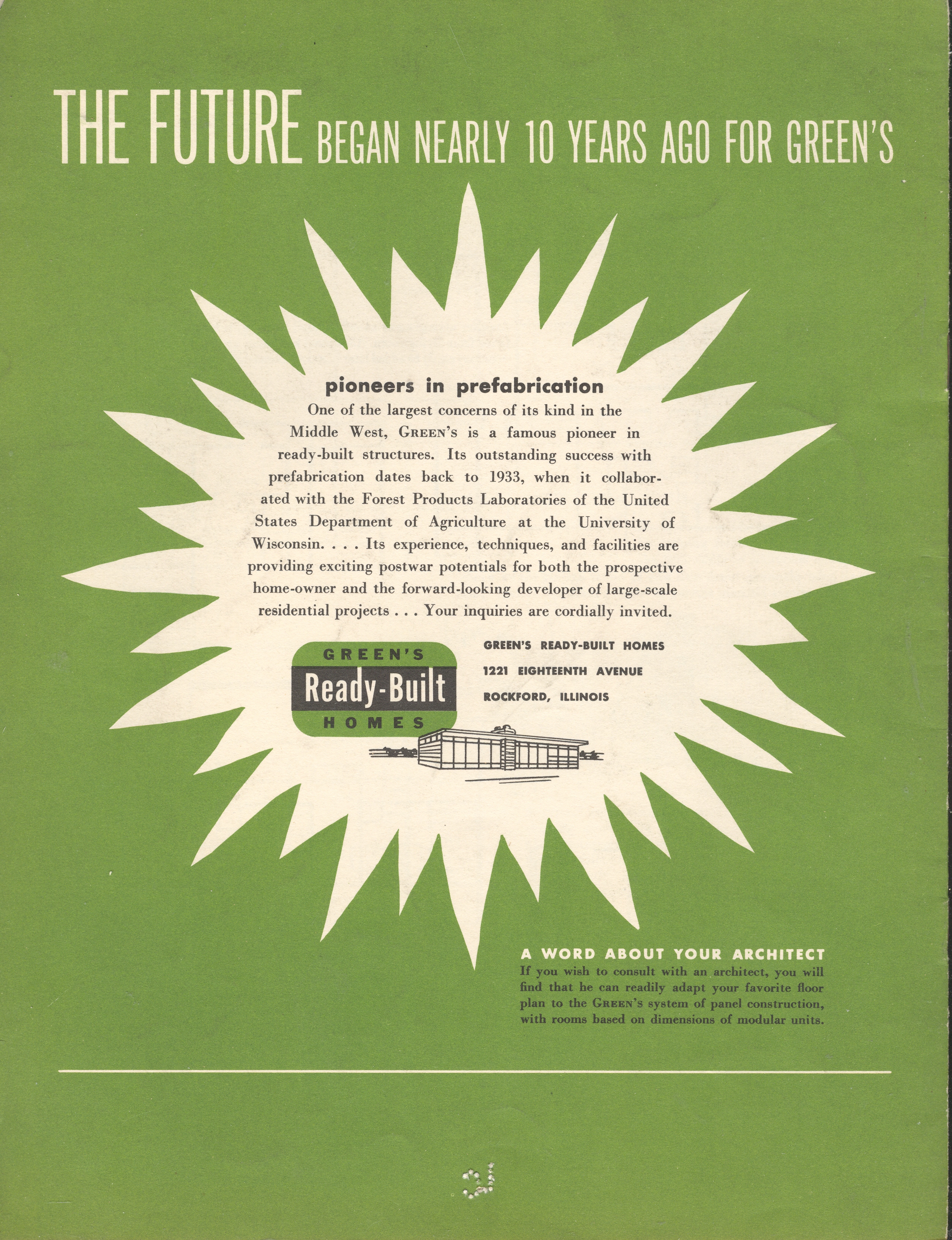
    ++blog++solar house This interesting and somewhat futuro-paleo 1944 pamphlet combines two modern interests in one package:  Green’s Ready-Built Homes Present the Solar Home1 presented both a prefabricated, well-designed house that was also passive solar friendly. The former is a long-established architectural state of achievement; the later, not so–at least on a popular, let’s-have-everyone-own-one level.  The architect and engineer was George Fred Keck (1895-1980) , a true modernist, and designer of one of the twelve “Homes of the Future” for the Chicago “Century of Progress” World’s Fair of 1933–this effort (which is also the copyright deposit copy) was published in 1944.

     Soalr panels such as we have known them over the last few decades were not available back in 1944. The “solar home” that he offered here used seasonal variations and house location to regulate heating/cooling, glazing and siding, air movement, and the storage of thermal energy in building materials—mostly, there were lots and lots of transfer-friend++blog++solar house 001ly double-paned windows, all of which were forward-thinking ideas for 1944.  In addition the house was prefabricated, making construction easier, simpler, and quicker than any of the stick-built houses being constructed at that time.  There was also an impetus for quick, good construction given the housing shortage caused by the returning WWII veterans. The prefab idea was also a relatively new one in architecture—though there are instances of bits and pieces of prefab architecture reaching back hundreds of years, the first earnest attempts at providing such housing on a mass scale dates only to the 1920’s. In any event, the double-effort here was a fairly early effort at combining these two ideas–and certainly something that seems to have been about 60 years too early.    


    ·Posted by :

    ·in:


  • An Expose on Chicago Jails, 1947

    JF Ptak Science Books   Quick Post

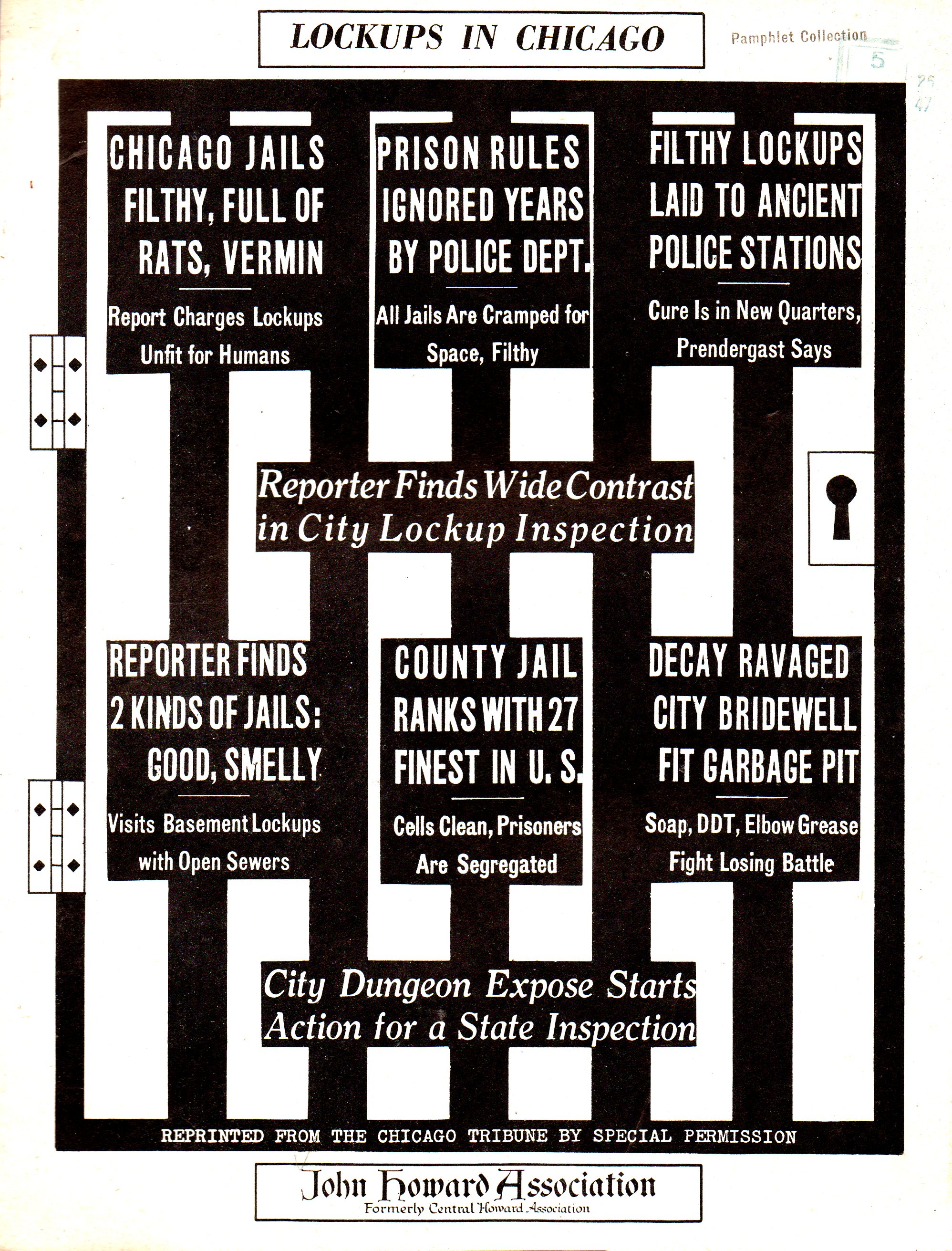
    Here’s a very striking (and please not “arresting”) pamphlet cover:

    Chicago jails374

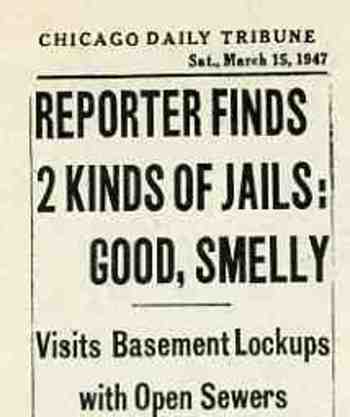
    The appearance and tenor of this pamphlet is very deceptive–my initial reaction was an eyebrow-raising surprise, followed by a humorous deception, all aroused by the incredible, screaming cover design and the somewhat bizarre stories and headlines in the text.  How can one refuse an article like this (seen below)? The “funny” part of the pamphlet was stopped dead cold when I started to actually read  the  stories accompanying  the  sub-title malaprops.Blogaugust_20_chciago_jails_clip4_2

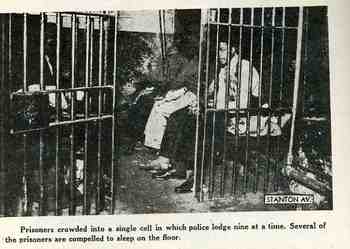
    The point underlying all of these design elements which seem so much sugar to my eyes was that the prisons in Chicago were horrific–especially for African Americans, a point which is not explicitly made but alluded to.  (Integration of jails and prisons was still a long way off–the Supreme Court would hear a case involving Alabama prisons and rule against their explicit segregation in March 1968.)  None of this seemed particularly surprising to me, except that there were just so many reports–the shear numbers of bad prison conditions was just staggering. 

    Blogaugust_20chciago_jails_photo420

    ·Posted by :

    ·in:


  • The Federal Minimum Wage–Past and Present (Present Passed)

    JF Ptak Science Books   (An extension of a post from 2010)
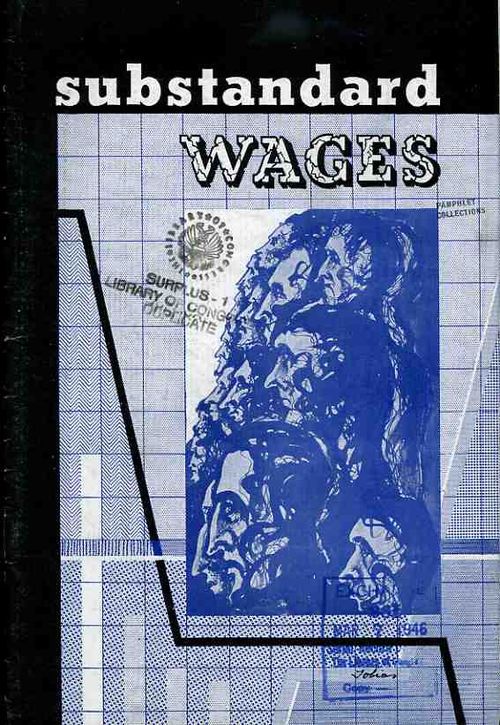
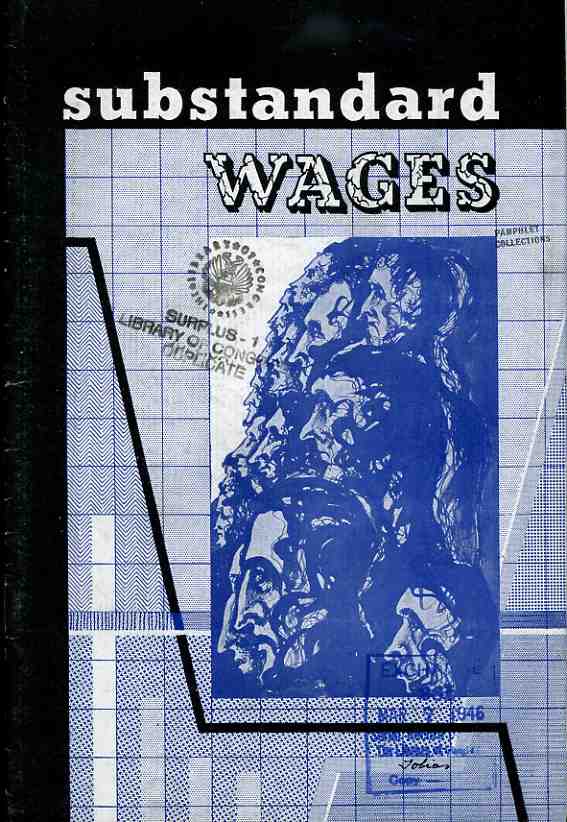
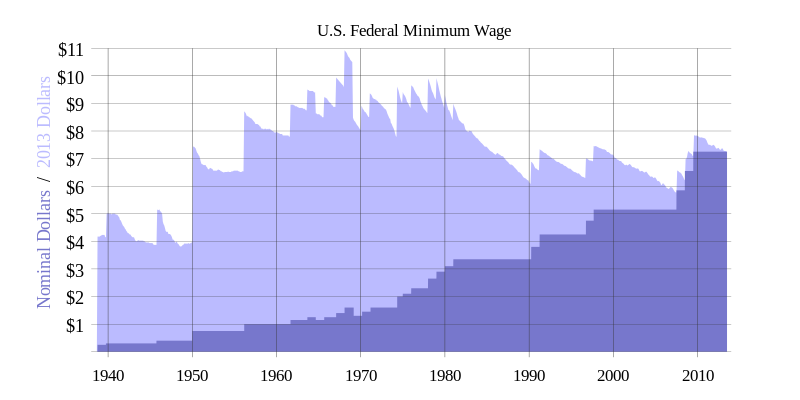
    0 blog jan 30 substandard489I’ve included this post in the Blank/Missing/Empty thread of this blog because the Federal minimum wage has been proportionally increased more so in th e last two years than at almost any time in its history, the increases really only get it up to what it niormally has been, maybe a little higher, with CPI-adjusted. This post is in response to an article in the New York Times today saying that the new minimum wage is equal to that of 1968, which is probably accurate.  The real point is that during the mid- Clinton years and the early Bush yeras the minimum wage languished during a time of tremendous growth for those who already had money–the poor for the years of 1992-2005  were left largely unprotected, unmolested by fortune.

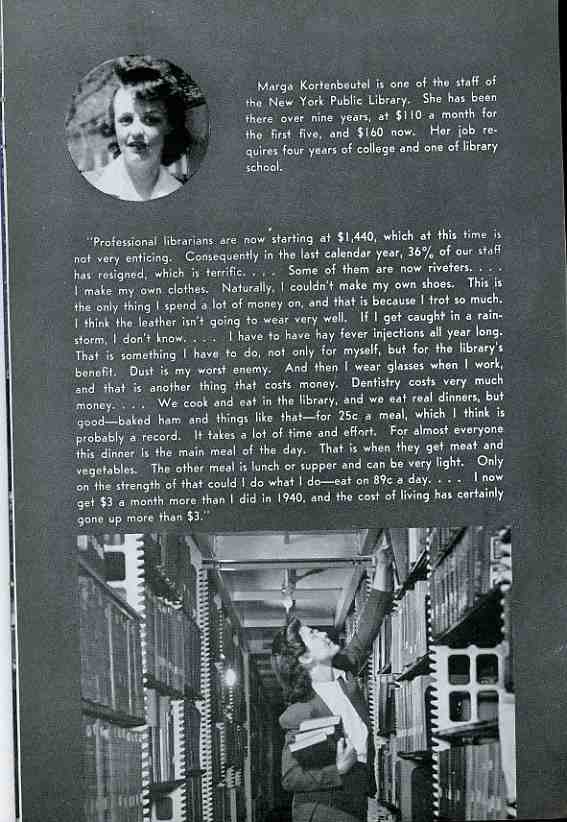
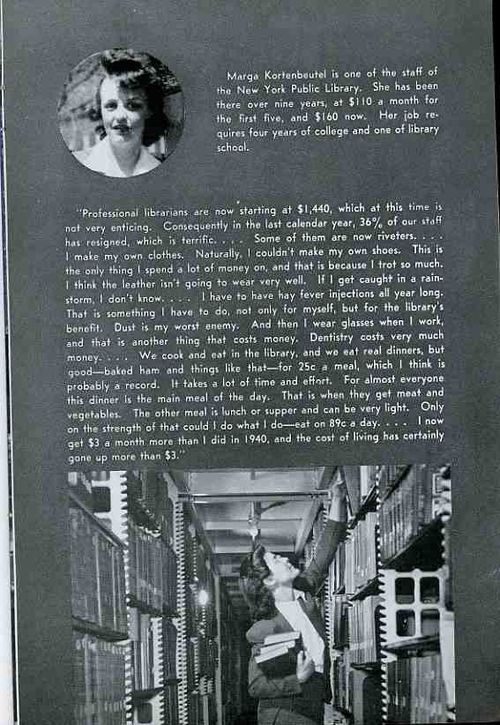
    Leafing my way through this interesting pamphlet, Substandard Wage, an Analysis of their Extent and Effect, and What Must be Done to Establish a Higher Wage Level, design “and presentation” by Abraham Joel Tobias for the Textile Workers Union of America, CIO, and for the Congress of Industrial Organizations, I found some very interesting bits.  First of all, the work was done to aid the working poor, people who were employed and making a wage, but the wage just wasn’t enough necessarily to being them out of poverty.  (The poverty line wasn’t invented as an economic bell weather until 1959.)  The first of the working poor that I read about was a librarian, Marga Kortenbeutel* (of the NYPL) who was working for $1,440.00 a year in 1945, which was just keeping her barely afloat, what with cutting out her 89-cent lunches and all.   That’s the equivalent (CPI adjusted) to about $17,500 a year in 2008 dollars.  Of course, the general economy was not doing well during the war, though it would rebound substantially by the late ‘40’s. The minimum wage, first established in 1938, was equal to about $3.50 2008n dollars in 1945. By 1950 this jumps to $6.25, and from there to about 1988 the minimum wage stays at at least that rate, with the period 1958-1978 soking aqt an average of about $8.hour.  From 1988 forward the minimum wage falls, winding up at about 5 dollars/hour in 2008, with the period 2003-2008 being the lowest level of real wages since World War II.0 blog jan 30 substandard490
    But what was this in terms of the rest of the population; what did these figures for minimum wages mean in the  society at large?  Was this a livable wage?  If we define “livable” as above what the government considered to be the “poverty level”, and “working” is a 40-hour work week and a 50-week working year, the answer is a quick “no”.  In 1959, when the poverty level was established, the minimum wage for the working person brought them to 67% of the income necessary to be “poor”; that left a gap of 33%, and that isn’t good.  That gap continued to close to 1968, when minimum wage go to within 10% of the poverty level, and then it began a slow and steady-ish decline.  The spiral down bottomed out for a bit in 1989, when it hit 52%,   building back up to just a touch over 60% in 1997.  From 1997 until the new minimum wage was instituted in 2006, the gap widened steadily, hitting 50%.  In 2008, with the new minimum wage in place , the gap is still at 41%, meaning that the new wage levels still only come to within 59% of what is supposed to be the poor line in the United States.  59% stops things from being a ridiculous slap in the face of American working poor, but not by much.  And it affects too few:  the minimum wage applied to a high of about 17% of the entire working population in the U.S. in 1979; today, the minimum wage which gets the working poor a little more than half-way to poor, applies to only 2.5% of the population. 

    *As it runs out, I found a little bit about Ms. Koretenbeutel; at the time of the publication of this pamphlet, Margathe was 35 years old.  She married someone named Voorhis in 1960, and died in 1971.  That’s all I’ve got.

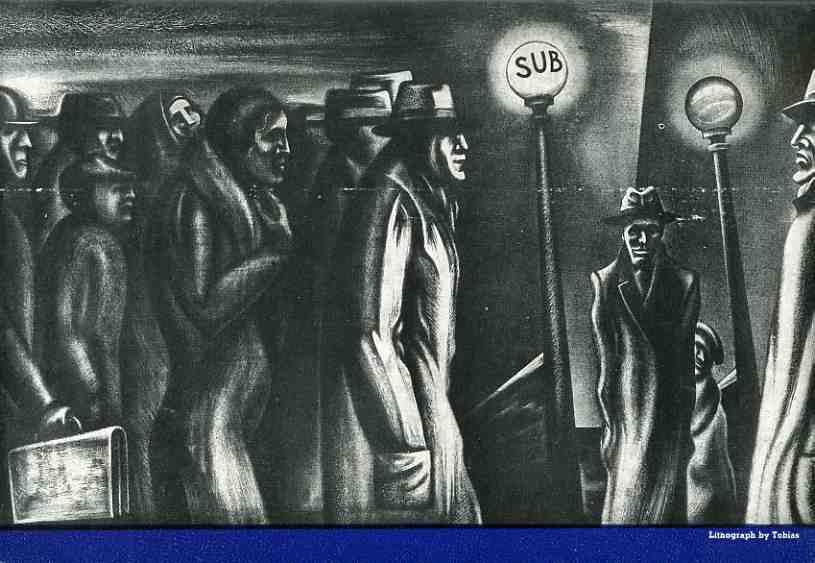
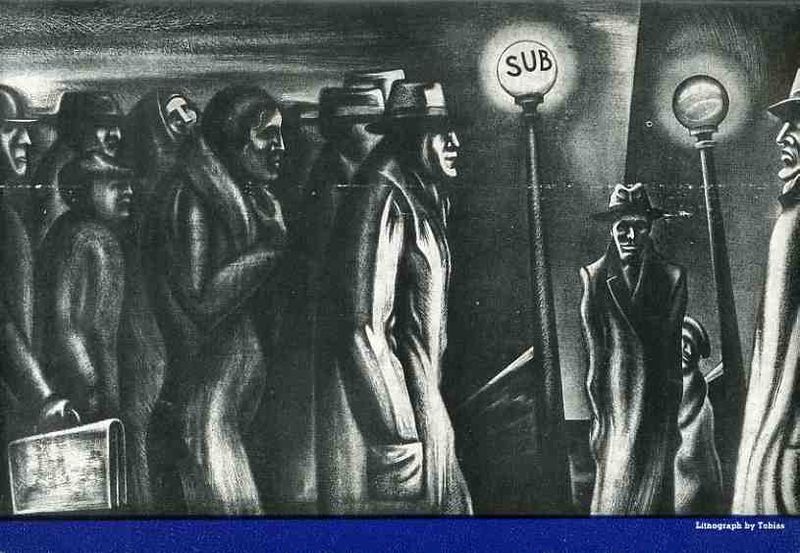
    The image below is from the back cover of the pamphlet, described as a “lithograph by Tobias”. 
    0 blog jan 30 substandard491


    A Timeline of Minimum Wage Levels, 1938-2009  (in continued reading section)
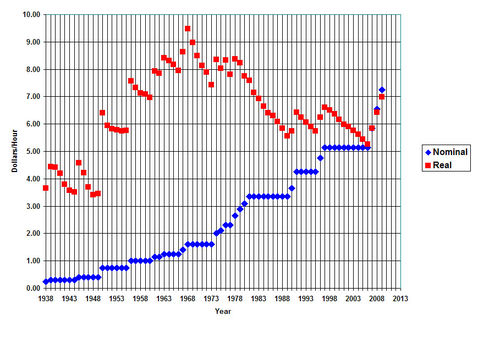
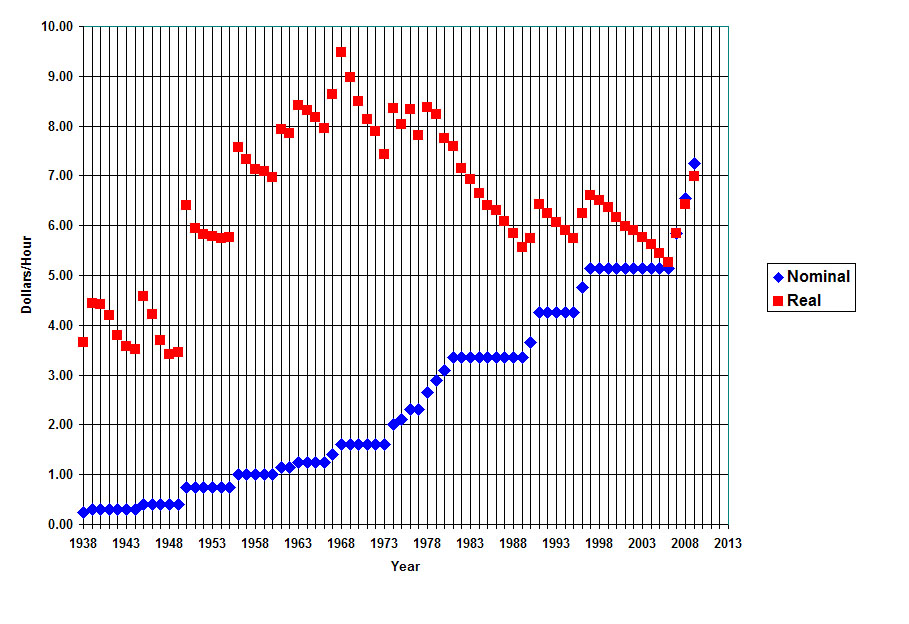
    Minwage The graph, above, is from Oregon State University website on the history of the minimum wage.  The accompanying text to it is also below.  The graph depicts “nominal” versus “real” minimum wages by year, the red dots (the nominal) showing what the original minimum wage translated to in 2008 dollars.

    A federal minimum wage was first set in 1938. The graph shows nominal (blue diamonds) and real (red squares) minimum wage values. Nominal values range from $0.25/hr in 1938 to $6.55/hr as of July 2008. The graph adjusts these wages to 2007 dollars (red squares) to show the real value of the minimum wage. Calculated in real 2007 dollars, the 1968 minimum wage was the highest at $9.47. The real dollar minimum wage (red squares) falls during periods Congress does not raise the minimum wage to keep up with inflation. The period 1997-2007, is the longest period during which the minimum wage has not been adjusted. The minimum wage increases in three $0.70 increments–to $5.85 in 2007, $6.55 in mid 2008, and to $7.25 in mid 2009. The real values after 2007 are projected for future decline in purchasing power. 
    Minimum wage History_of_US_federal_minimum_wage_increases


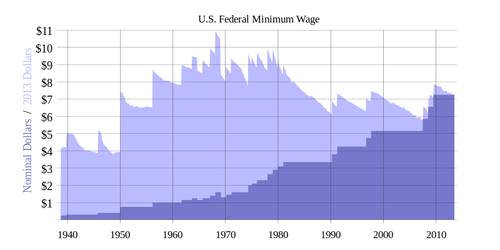
    [Graph from Wikipedia on the minimum wage, here]

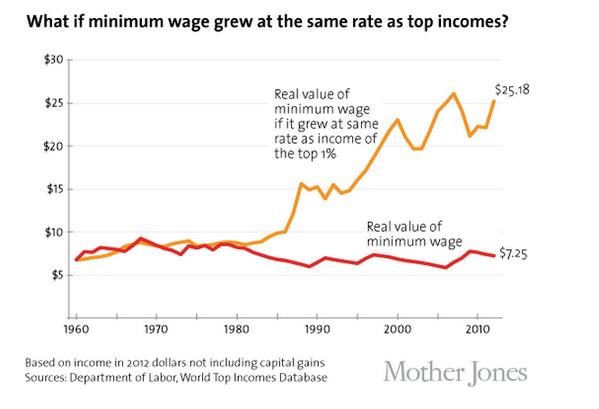
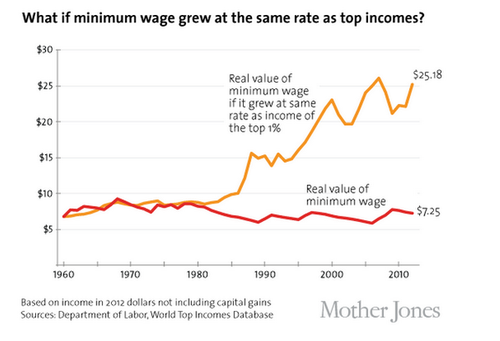
    And this interesting graph from MotherJones, showing what the minimum wage would look like if it had kept pace with the salary increases for the top one percent:
     

     Minimum wage top income

    ·Posted by :

    ·in: