A Daily History of Holes, Dots, Lines, Science, History, Math, Physics, Art, the Unintentional Absurd, Architecture, Maps, Data Visualization, Blank and Missing Things, and so on. |1.6 million words, 7500 images, 4.9 million hits| Press & appearances in The Times, Le Figaro, Mensa, The Economist, The Guardian, Discovery News, Slate, Le Monde, Sci American Blogs, Le Pont, and many other places… 5000+ total posts since 2008.

Category: Uncategorized

  • Images from A. Kircher’s “Mundus Subterraneus”, 1668

    JF Ptak Science Books  Post 2471

    In the bookstore section of this blog I’m offering for sale some engravings from Athanasius Kircher’s Mundus subterraneus… (1678) which, in spite of its title, explores/classifies/theorizes on the grand scheme of all creation, hardly limited to just the world going on underground.  Kircher (who has appeared on this blog numerous times, simply enter his name in the Google search box at left and you’ll find many entries) approaches the nature of terrestrial heat, volcanoes, the origins of lakes and rivers, optics, fossils/agates (in “de lapide philosopherum”), distillation, alchemy, ocean currents, insects, plant life, and so on, a real summa cum laude  tour de force, Kircher being the Renaissance man’s Renaissance man.

    • Follow this link to the blog’s bookstore post for these images.
    • https://historyofideasblog.com/books/2015/06/images-from-a-kirchers-mundus-subterraneus-1668.html

    All images are printed on 14 3/4 x 8 7/8″ sheets (375x220mm) and have been removed from a defeated and dead copy of the book, the full title of which is Athanasii Kircheri … Mundus subterraneus, in XII libros digestus: quo divinum subterrestris mundi opificium, mira ergasteriorum naturae in eo distributio … universae denique naturae maiestatis & divitiae summa rerum varietate exponuntur …   This copy (lacking the title page and much else) I believe was printed in Amsterdam in 1668 (I believe–the other somewhat later editions to 1678 that I have checked all seem to have added material and different and later pagination, leading me to believe that this is an earlier edition.) The pagination ran 346+487pp, being two volumes printed as one.

    For a later, full-text version of the 1678 edition, see the University of Heidelberg, here.

    • Please keep in mind that the scans leave off the top 1.5″ or so of each image–the paper was simply too long for the scanner bed. The pages are complete (in real life).

    And so the list (of 18), thus far:

    Fabrica Furnorum (pg 239, in the chapter “De Origine Alchymiae”)
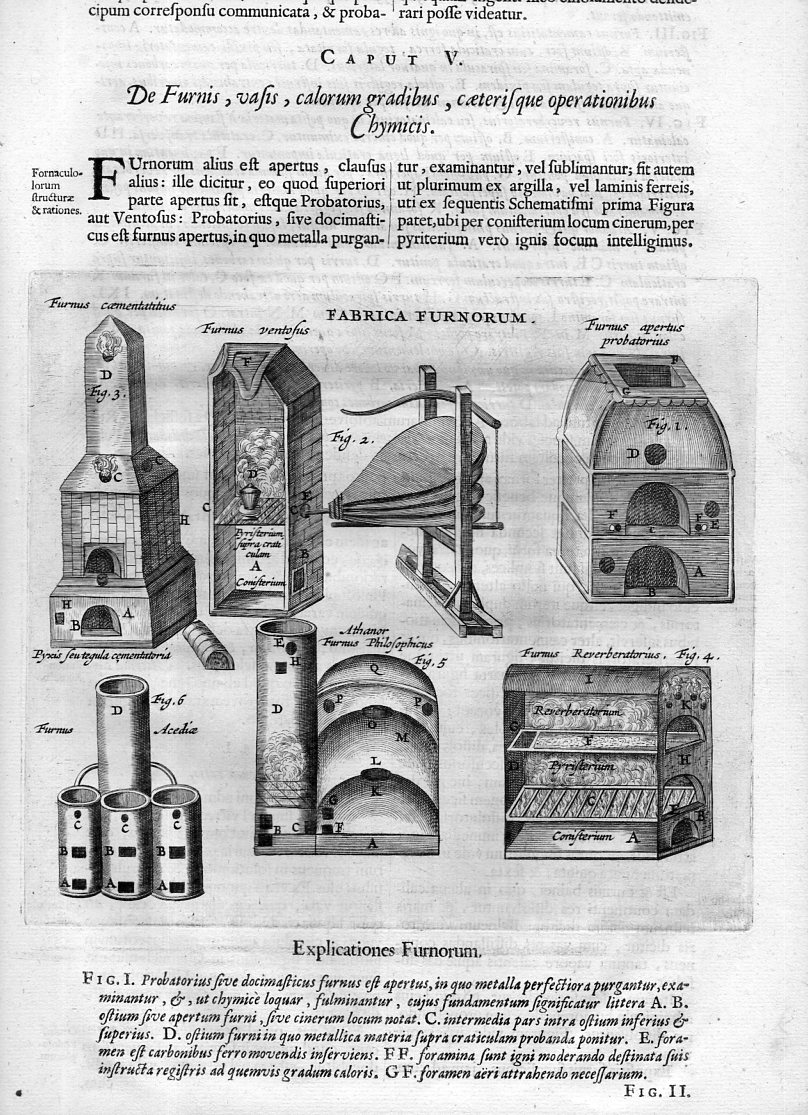
    Kircher 239029


    Ex Chymicis Manuscriptis Fraus detecta (in the chapter “De Alchymia Sophistica”, pg 293)
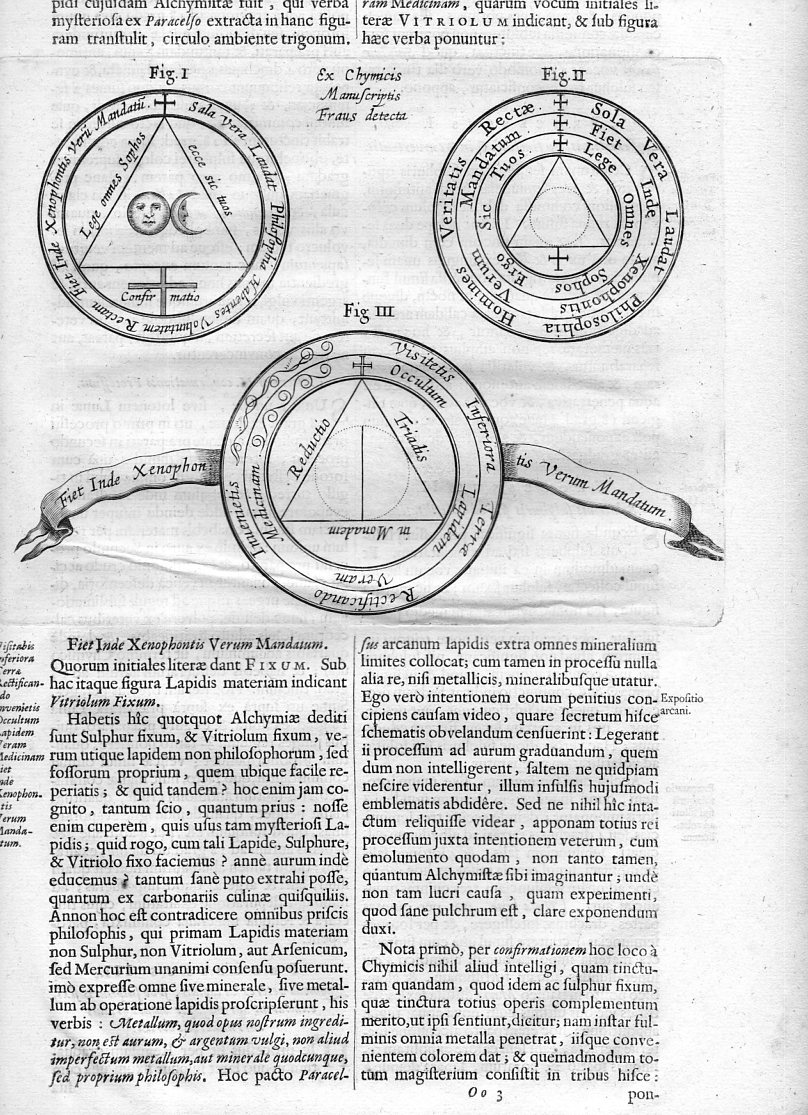
    Kircher 293030Image 6×7 1/2″, 150x195mm 

    (Alchemical Furnaces), opposite page 391, volume 2, in the chapter “Arte Stalactic sive Distillatoria”
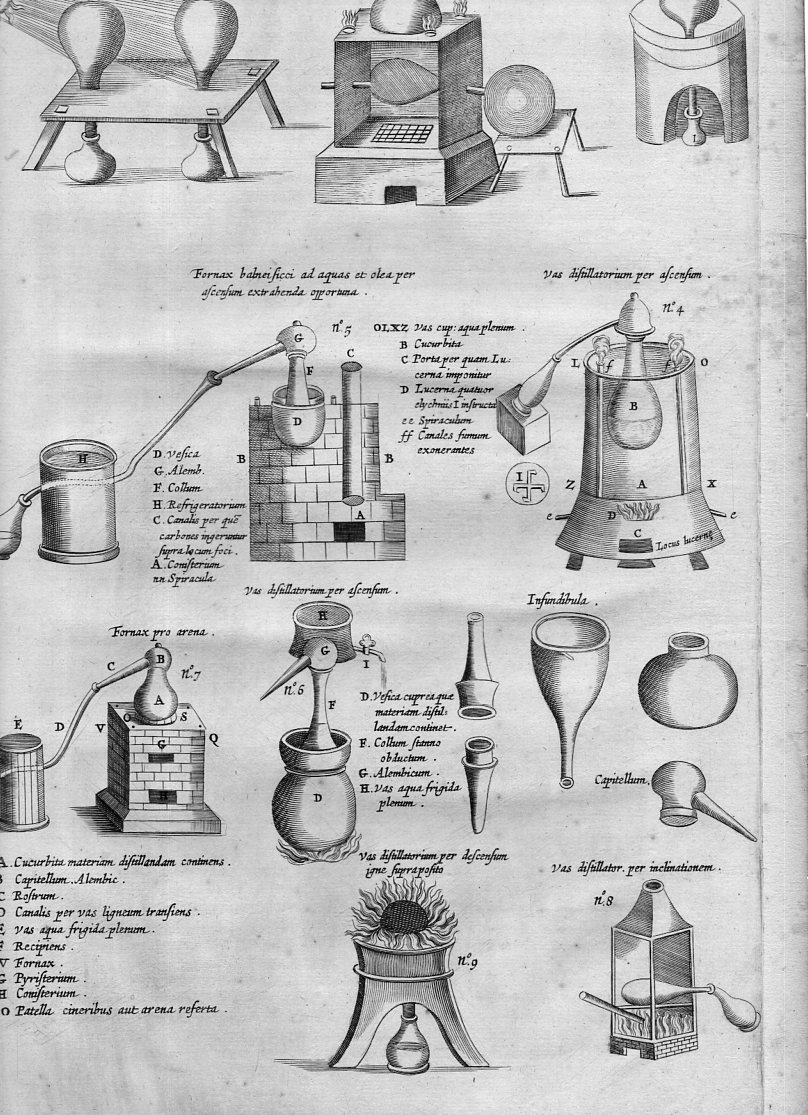
    Kircher 391031Image 13×8″, 335x205mm.

     (“Alchemical Furnaces”) in the chapter “De Fodinarum Conditionibus” (page 213):
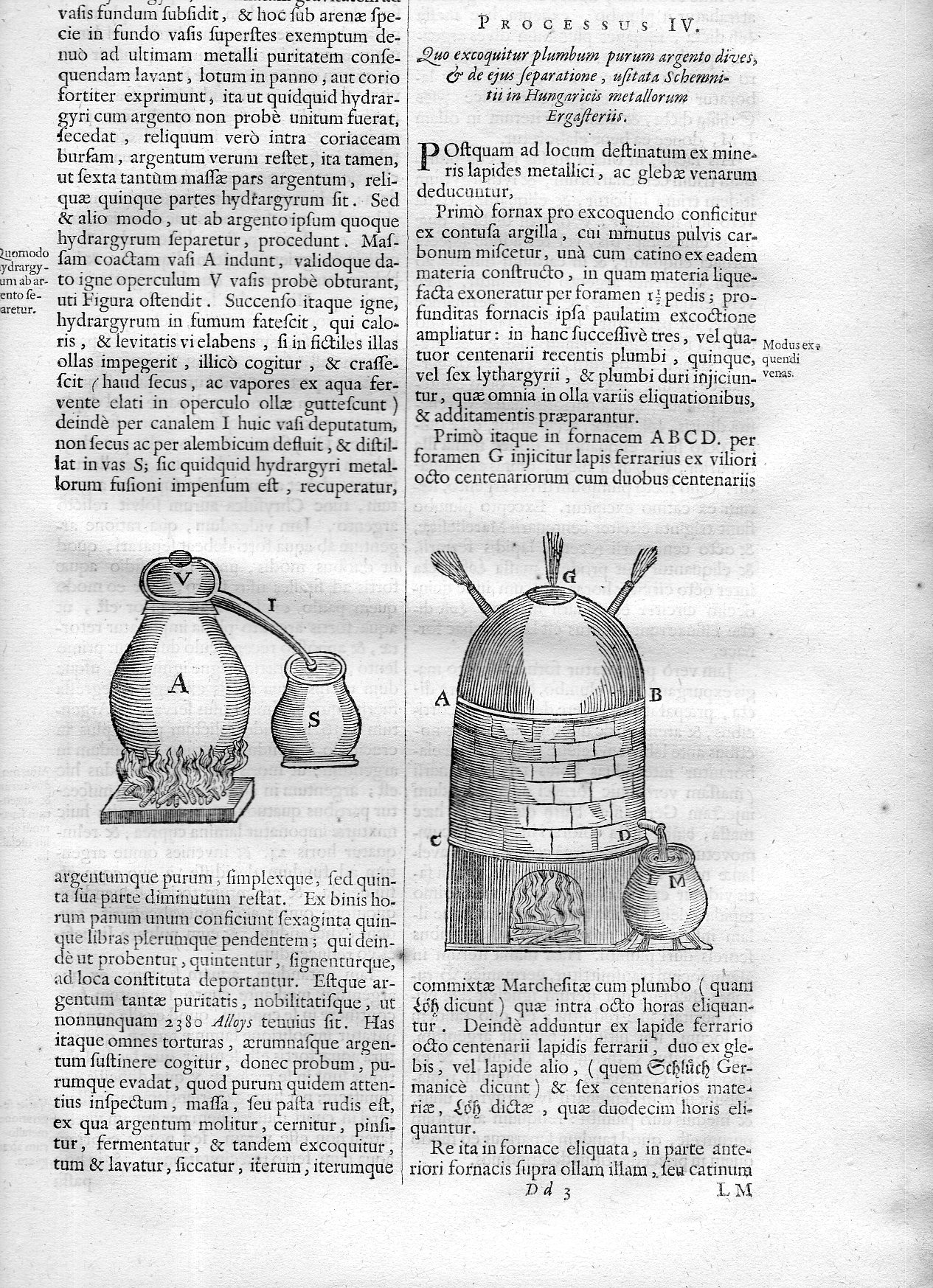
    Kircher 214047Image  4×7″. 

    ·Posted by :

    ·in:


  • Statue of Liberty/Death: Thomas Nast and the NYC Harbor

    JF Ptak Science Books  Post 2470

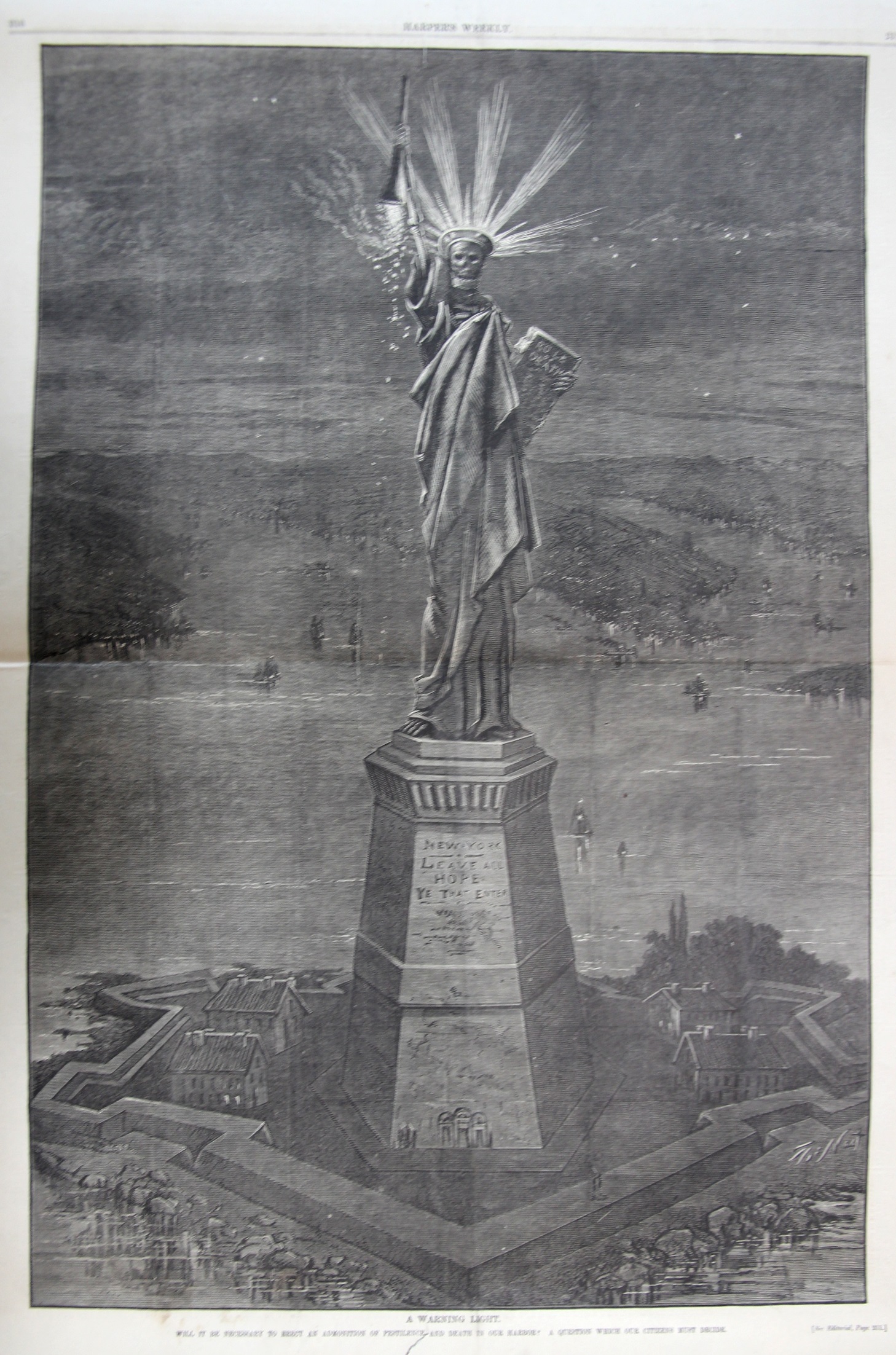
     Thomas Nast (1840-1902) was a very busy and very gifted social observer, working at Harper’s Weekly for decades, seemingly contributing about one large and one small image per week for more than a thousand weeks.  He created the iconic images that we know today: the Tammany Tiger, the popular image of Santa Claus, the Republican Elephant, and (though not entirely) the Democratic Donkey, and much else. When Boss Tweed famously declared that he didn’t care what newspapers wrote about him and his criminal triumphs because his constituency couldn’t read, Nast took him to task by portraying him in a visual way in which reading was not necessary, and which lead to Tweed’s downfall.  He had some weak spots (the Pope was a favorite target, as were the Irish and the Chinese), but he was a champion of equalities, depicting brutal treatment of African Americans, ranting against conglomerates, campaigning for public education, ripping nasty politicians, goring favoritism, spotlighting thew living and working conditions of the working poor, and the like.  The man had a huge following, and helped guide social reforms and popular opinion. 

    I have a collection of many hundreds of these images, and I must say that I do not recall seeing any work dedicated to the environment in general–save for this very striking image, depicting Lady Liberty as Lady Death, presiding over a cesspoolish NYC harbor.  It appeared as a double page spread in the April 2, 1881 issue of Harper’s Weekly, and it no doubt left an indelible impression on its viewers. 

    Statue Liberty Pollution

    • The original image is available here at the blog’s bookstore.

    ·Posted by :

    ·in:


  • A Beautiful Eclipse Print, 1859

    JF Ptak Science Books   Quick Post

    Eclipse913

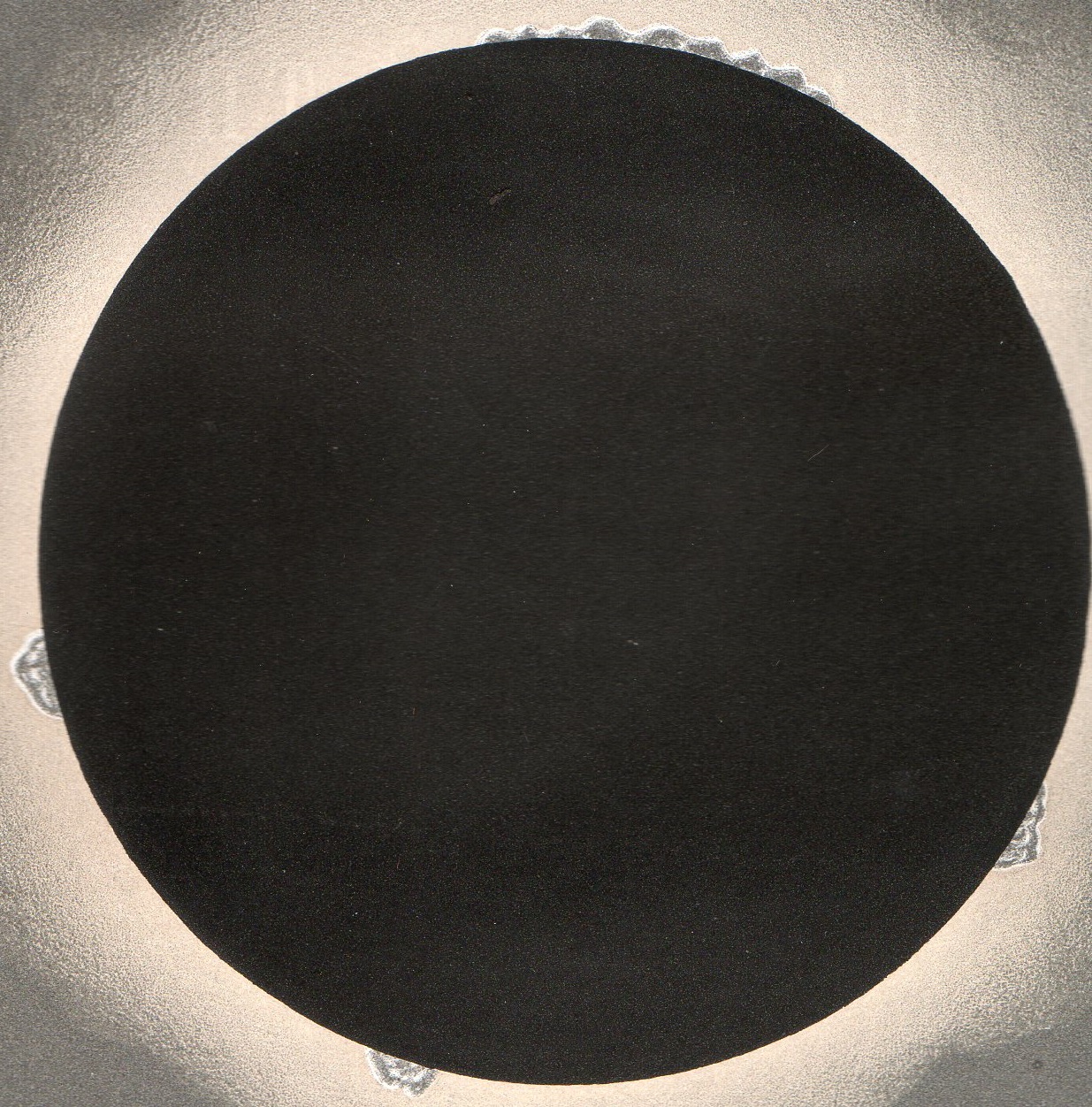
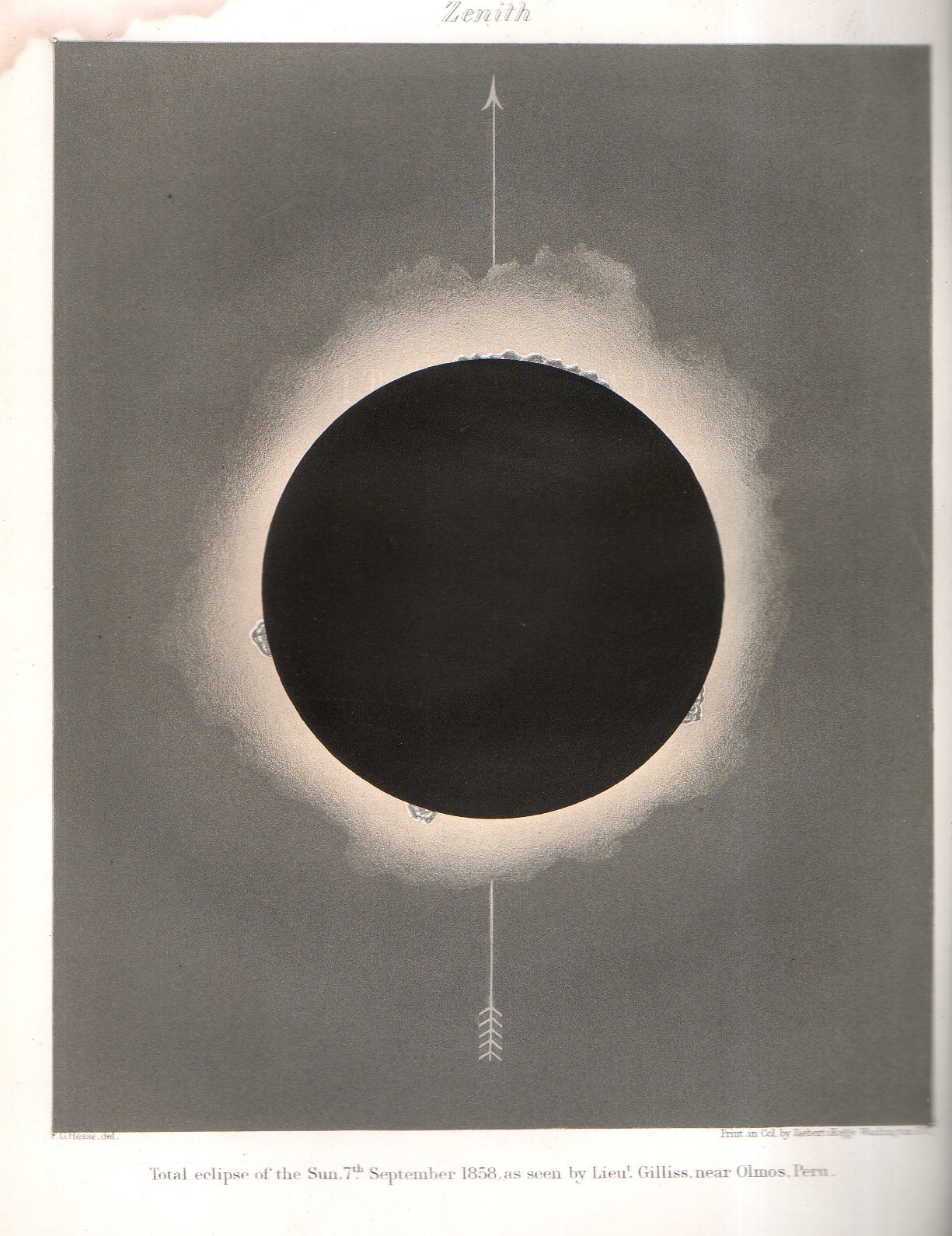
    F.G. Hesse captured this dramatic image of total eclipse at Olmos Peru for Lt. J.M. Gillis’ report of the event for the Smithsonian in 1858. Gilliss (1811-few months too short of the end of the Civil War in 1865) was a Georgetown boy who is buried in the beautiful Oak Hill Cemetery, and best known probably for being in charge of the Naval Observatory (previously the “National Observatory”). He took over that position from Matthew Fontaine Maury1 (as in “Maury Day” celebrations in Virginia and being the father of American Oceanography) a position he held until his death. The report in which the eclipse image appears is An Account of the Eclipse of the Sun, published in the Smithsonian Contributions to Knowledge series in 1859.

    • This report if available for purchase from the blog’s bookstore, here.

    Notes.

    1. Maury left the Observatory to become  a high-ranking official and overseas representative with the Confederacy at the outbreak of the war. The writeup for Gilliss in Wikipedia includes the coy and Victorian statement about Maury joining the Confederacy to fight for separation from the United States, with Gilliss promoted to the Maury position “when Maury responded to serve his state, kin and friends…” with no mention of the Civil War.  No dramatization there in Wikiland.  

    Eclipse912

    ·Posted by :

    ·in:


  • Cool Copyright Copy of a Significant Book in the History of Mathematics

    JF Ptak Science Books    Post 2432

    Comte144

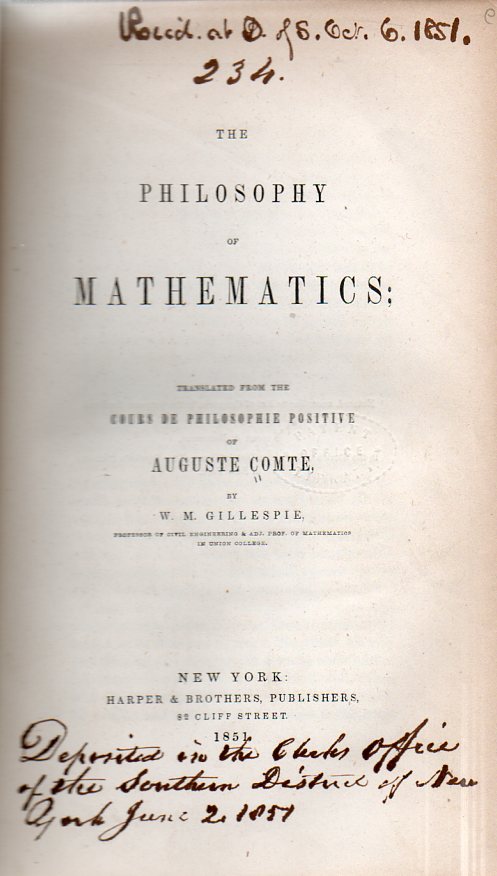
    Unusual marginalia in books is always interesting, especially when it is by the author, or from some official source. This example is a little more unusual in that it appears to a copy sent to assure copyright protection for the work–to me it gives the book a Bartleby-ian sense of place.  

    Isidore Auguste Marie François Xavier Comte wrote  The Philosophy of Mathematics, translated from the Cours de Philosophie Positive, which was translated by W.M. Gillespie and published in New York by the not-yet-venerable firm of  Harper & Brothers in 1851.  

    It just strikes me now that the “Bartlbey” reference above (from a Herman Melville short story) is even more appropriate than I thought, because just a few short months later, on November 15, 1851, Harper & Brothers would publish Melville’s Moby-Dick–which is a nice piece of serendipity.  I could say one other thing–I suspect that in the early stages the Comte might have sold more copies than the Melville.  

    • [Would you like to own the Comte? Just visit the blog bookstore and get in touch with us.]

    ·Posted by :

    ·in:


  • Episodes in the History of Cigarette Eyes

    JF Ptak Science Books  Expansion and Correction(s) of  Post 1638 (Thanks to Orion Pozo at NCSU for starting this off by outing the Marlboro baby.)

    Part of the series on the History of Blank, Missing and Empty Things, Part 77:  Promises.

          “The world is my dream.”– Sir Karl Popper

    In the History of Empty Promises advertisements for fulfilling experiences with safe/pleasant/not-addictive/sweet-smelling tobacco cigarettes would find a key position, if for no other very large reason than having killed so many millions of people.  Many of the lies told to the consuming public on the efficacy of cigarettes have come through billions of dollars worth of print advertisement, many of which featured the earnest eyes of someone famous (Babe Ruth, Lou Gehrig, the Duchess of Windsor), or authoritative (football referees, doctors, lawyers, airline pilots), or trustworthy (Santa, the family dog), or even innocent (teenagers and of course babies).  I’ve collected a few examples that I find particularly arresting–there are hundreds or thousands more to choose from.

    • Note–all images are drawn from the great resource at Stanford University on cigarette advertising, here.

    Cigarette Eyes of Babies (for Mommy–for Daddy, see below):

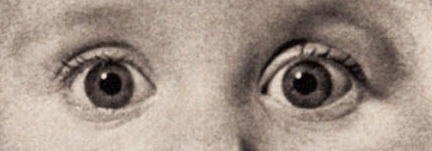
    Ciggie eyes baby
    In one of the high twisted occurrences in the history of Buying Things, Marlboro cigarettes started its life out as a smoke for women, a mild, feminine object for ladies.  And as we can see here an early appeal to the possible consumer came through the eyes of an infant.  The product didn’t sell well, and was repackaged for men, the baby eyes eventually being replaced by the iconic cowboy. This is one of the few times that an a consumer object that began its career as a sales vehicle for women crossed the gender barrier. 

    Ciggies--baby

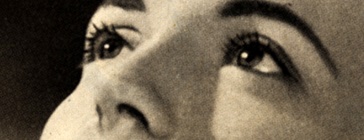
    Cigarette Eyes (and Nostrils) of self-knowledge and belief (because nothing quite spells out personal knowledge than blowing hot smoke through your nose holes):

    Ciggie belief detail

    Ciggie belief

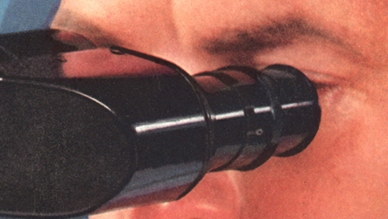
    Cigarette Eyes of the edification of pure scientific support for the glory of smoking:

    Ciggies--eyes w microscope det
    Chesterfield not only conquered the alphabet for cigarettes, but “science” as well.  Here we see Big Science affirming the ABC claim that there is no “aftertaste” in their cigarette.  (The ‘scope has no identifiers, probably taken away in the darkroom, but it looks like it might be a Spencer to me.  Maybe B&L.)

    Ciggies eyes of science

    ·Posted by :

    ·in:


  • A Nosey Trifling on the Wealth of Famous Dead Scientists

    JF Ptak Science Books    Post 2417

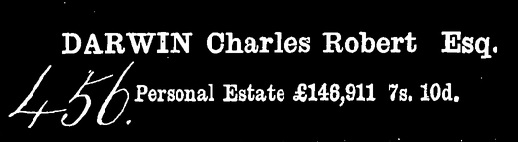
    I intended to write a small post about some ads that I found interesting in Nature in 1895–Epp’s cocaine remedies, mostly.  It was Holloway’s Pills that lead me astray, looking to see what it was that was in them, which lead me straightaway to an article about the wealth of Mr. Holloway derived from his tasty patent cures, and then on to a site that hosted wills for England and Wales from 1858 to just about the present. So, being curious, I picked up the biggest 19th century English scientist and found to no great surprise that Charles Darwin left an estate of some £146,000 pounds, no doubt part of the family fortune, which is today “worth” about £12 million (according to whatsthecost.com, which is about average I’d say from the other sites that figure out translating old money to new).  

    Darwin willhttps://probatesearch.service.gov.uk/#wills

    It seems that the only surprise for me is how surprising it was to find so many of these folks with considerable estates.  Theoretically some made a lot of money via patents and inventions, and many started out life with family money, but just about everyone I checked out left the planet leaving behind personal fortunes.  One surprise–Alexander Fleming, the penicillin man, left an estate of some £29,000  when he died in 1955. That’s about £1.1 million today, which is a fair amount of money and gave him a comfortable life, but it just seems a bit low considering his achievement–believe me I’m not measuring worth via money; it just seems to me that more money would have stuck to him, somehow.  

    I spent about an hour tooling around the site and came away with 20 examples (with 7 of the 27 I started out with having no record of a will in these files, which I don’t understand).  Well, it is actually 20 scientists and Winston Churchill, who I just had to look up. (He left an estate of £304,000  when he died in 1965, or about £4.2 million.) 

    Then I looked up Alan Turing, and found that he did okay–I’m not sure why I was expecting to find him in hard times, but he certainly wasn’t, with  effects at £4,600  (£90,000  today). 

    TURING WILL

    And a few other examples of some major-domos: 

    • William Crookes (d. 1919) £29,013 (£1,078,355.98 in 2014)
    • Thomas Huxley (d. 1895) £9,290 ( £885,159.87)
    • W. Stanley Jevons (d. 1882) £6,980 ( £609,391.10)
    • Michael Faraday  (d. 1867) £8,000 (£644,974.61)
    • Charles Babbage (d. 1871) £40,000 (£3,405,630.66)
    • James Prescott Joule (d. 1889)  £12,765 (£1,178,678.58)
    • John Couch Adams (d. 1892) £32,433 ( £2,977,170.05)
    • James Young Simpson (d.1870) £35,000 (£3,021,645.81)
    • Henry Grey (as in Grey’s Anatomy, who died very young, at 34, before his book came close to ever taking off) (d. 1861)  <£9,000 ( £769,769.94)
    • Alfred Russell Wallace (d. 1913) £5,823 (£482,347.46)
    • Joseph Lister (d. 1912) £67,996 (£5,609,910.24)
    • Charles Darwin (d. 1882) £146,000 (£12,746,576.00)
    • Francis Galton  (d.1911) £104,487 ( £8,872,364.77)
    • James Dewar (d. 1923) £ 129,995 (£5,669,078.76)
    • Frederick Soddy (d. 1956) £37,605 (£678,505.06)
    • William Bateson (d. 1926) £25,435 (£1,122,679.34)
    • Alexander Fleming (d. 1955) £29,321 (£554,960.10)
    • Alan Turing (d. 1954) £4,603 (£91,041.68)
    • John Herschel (d. 1871) <£30,000 ( £2,554,223.00)
    • James Chadwick (d.1974) £33,146 (£249,333.66)
    • C.V. Boys (d. 1944) £36,500 (£1,061,175.65)

    There’s another site run by the U.K. National Archives that presents wills from the 14th century to 1858, located here: http://www.nationalarchives.gov.uk/records/wills.htm

    I went right away to William Shakespeare and found him: http://discovery.nationalarchives.gov.uk/details/r/D898518#imageViewerLink

    All of this is interesting and good and represents an enormous time hole, so I’m going to end this post here with enough bits and pieces to interest and help anyone who wants to go down the rabbit hole.  Have fun!

    ·Posted by :

    ·in:


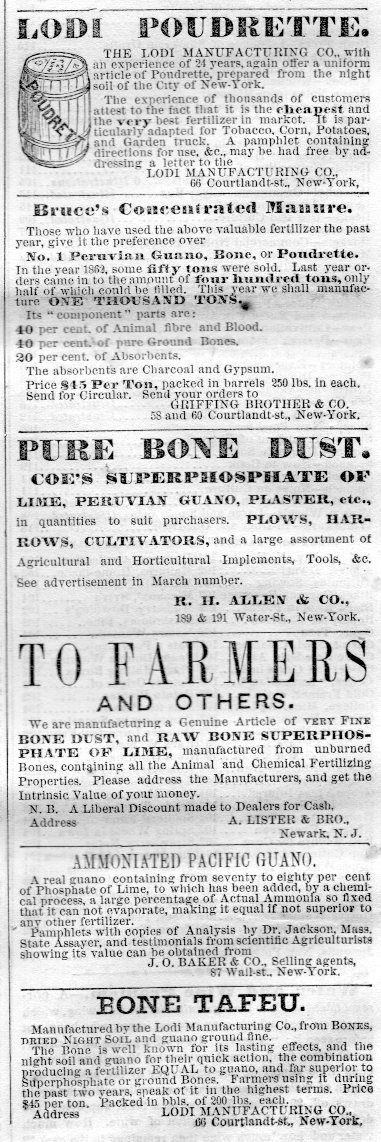
  • “Pure Bone Dust” a Found-Poem from 1864

    JF Ptak Science Books   Quick Post

    Bone dust751

    This is another in a series of found in situ archeo poetry, buried in true and great defined deepness in an advertisement in the American Agriculturalist for June 1864, just today (151 years into its future) unveiled and displayed in its poeticized glory. [All text is verbatim, and is found in the last ad, at bottom. Please read out loud in your head using the voice of Billy Collins.]

    Bone Tafeu

    Manu-factured by the 

    Lodi Manufacturing Co, from
    BONE, DRIED NIGHT SOIL
    and GUANO ground fine.
    The bone is well known 
    for its lasting effect
    and the night soil
    and guano
    for their  /  quick action,
    the combination  producing
    a fertilizer EQUAL to guano
    and far superior to
    Superphosphate
    or ground  /  bones.
    Farmers using it
    during the past two years
    speak of it in 
    highest
    terms.  


    –from The dictionary of trade products, manufacturing, and technical terms …by Peter Lund Simmonds, 1858, pg 370.

    Bone dust750

    ·Posted by :

    ·in:


  • 30 Interesting Typefaces, 1906

    JF Ptak Science Books   Quick Post

    The following are some of my favorite selections from the 210-page The Signist’s Book/Modern Alphabets, published in 1906.  

    Source: the Library of Congress, here.  (Thanks to Rebecca Onion at Slate Vault for surfacing this!)


    ·Posted by :

    ·in:


  • Bugs

    JF Ptak Science Books   Quick Post

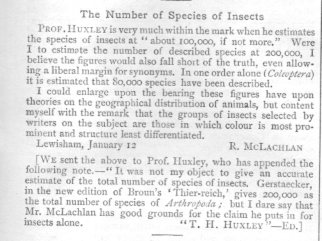
     “Insecte, an Insect; a small fleshlesse, and bloudlesse vermine, diuided (in some sort) betweene the head, bodie, and bellie, as an Ant, Fly, Bee, etc.; vnder which, the Earthworme, Caterpiller, etc. be also comprehended”.–1611   R. Cotgrave Dict. French & Eng. Tongues,  from the Oxford English Dictionary

    The “insect” has been around on Earth for a long time, but only in English since 1589. (The OED has an earlier use of the word, but the Cotgrave is the most poetic.) And there have been lots of them–and so my interest in this short Letter to the Editor in the January 25, 1877 issue of Nature, in which the number of species of insects is discussed.  Mr. McLachlan is the writer who questions the great Thomas Huxley on his round estimate, which is recorded at “about 100,000, if not more”.  Huxley responds and says that yes, the 100,000 is probably quite low.  And of course he was correct.  I suspect that then as now that insects were about the most varied groups if animals on Earth, and accounting for half of all organisms on the planet–today though the estimates of the number of species range above 10,000,000.  

    If there are 10 million species, I wonder about how many bugs there are, and about their combined weight compared to the biomass of the Earth?  I don’t have numbers for the big questions, though I do for the number of ants, which comes out to about 10 x 10^17–a big number, and just for ants.  

    Bugs716


    ·Posted by :

    ·in:


  • Note on Two Very Early Papers on Gravitational Lensing: Zwicky, 1937

    JF Ptak Science Books   Quick Post

    Zwicky PR 1937647

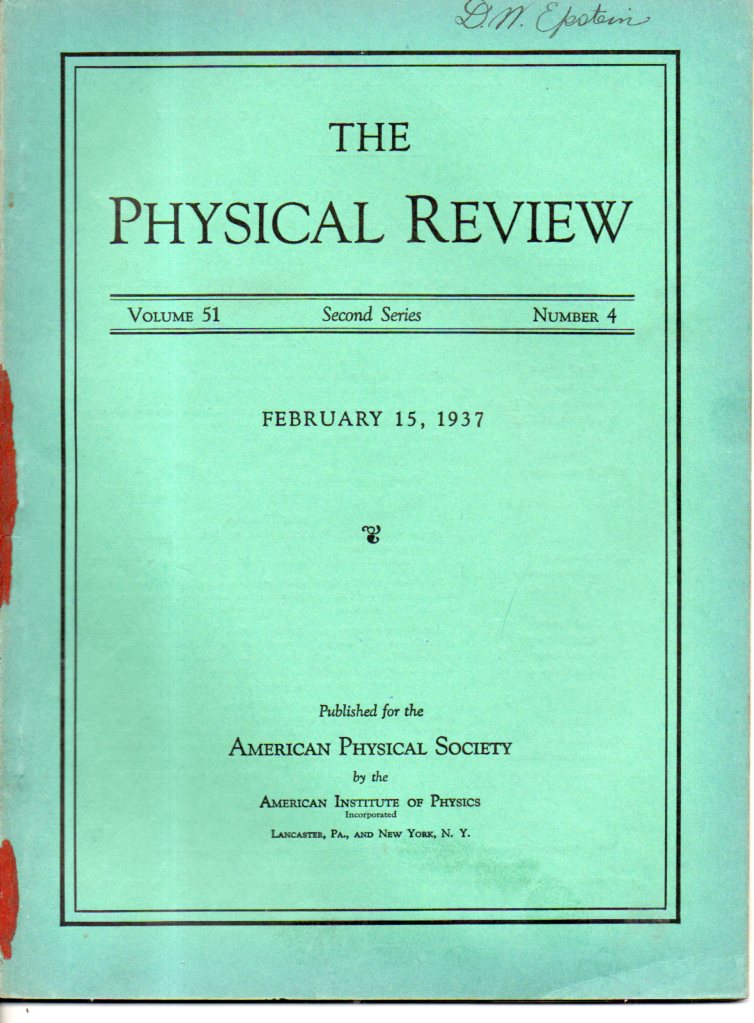
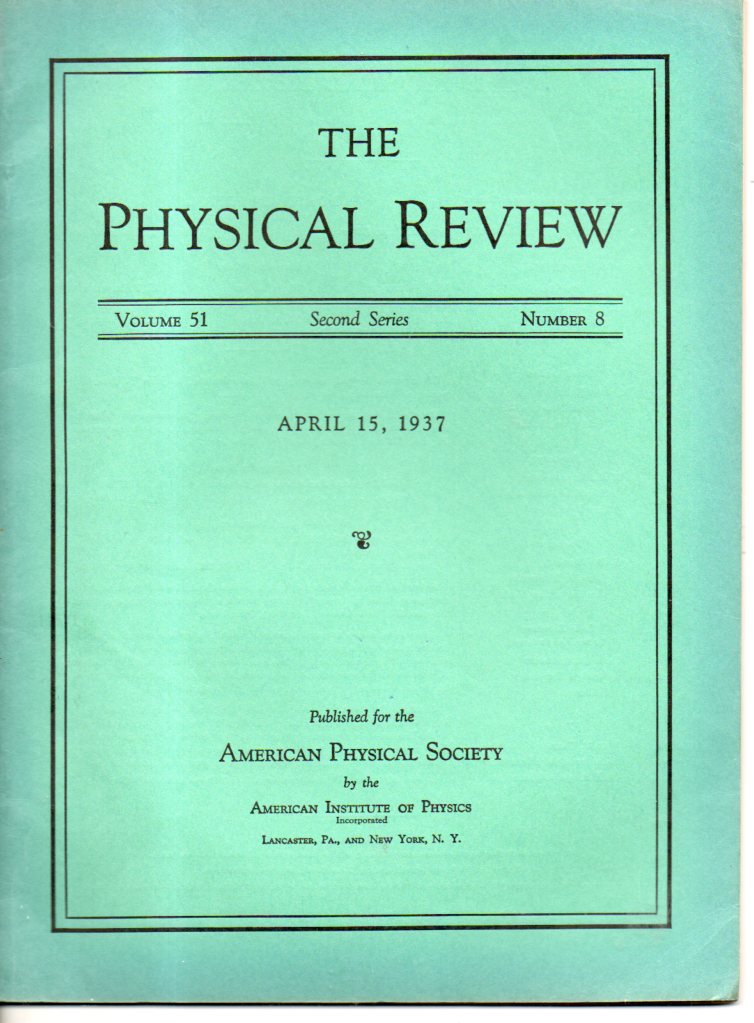
    These two papers by Fritz Zwicky constitute  among the earliest announcements on the use of gravitational lensing, and the first mention of the possibility of using galaxies as gravitational lenses. The  two letters to the editor followed the very brief notice that Einstein sent to Science magazine in 1936 (and which was a follow-up on some earlier thinking (24 years 


    earlier) he had done on the gravitational lens, this publishing as a result of “insistent prodding”1 by Rudi Mandl, a Czech engineer. Einstein all but disowned the idea, noting “of course, there is not much hope  of observing this phenomenon directly”2 The papers also follow a popular mention of the idea by Henry Norris Russell in Scientific American in 1936.  Aside from the appearance of the idea in Zwicky’s 1957 Morpholigical Astronomy, it is noted in Singularity Theory and Gravitational Lensing (see footnotes below) that there is a period of virtual silence on the subject for the next 25 years, and that from 1960 to 1980 there seem to have been fewer than two dozen additional papers. [ZWICKY, Fritz. “Nebulae as Gravitational Lenses”, 1937, in the Physical Review, 51(4), a one-page letter to the editor on page 290, and  ZWICKY,  Fritz. “On the Probability of Detecting Nebulae Which Act as Gravitational Lenses.”  American Physical Society,  1937, in  The Physical Review, 51 (8), April 15, 1937.]   

    Zwicky PR 1937646

    Zwicky lens

    Zwicky lens b

    Zwicky lens c

                                    Footnote 3, –Long quote from Gravitational Lenses, by P. Schneider, J. Ehlers, E.E. Falco

    ·Posted by :

    ·in: