A Daily History of Holes, Dots, Lines, Science, History, Math, Physics, Art, the Unintentional Absurd, Architecture, Maps, Data Visualization, Blank and Missing Things, and so on. |1.6 million words, 7500 images, 4.9 million hits| Press & appearances in The Times, Le Figaro, Mensa, The Economist, The Guardian, Discovery News, Slate, Le Monde, Sci American Blogs, Le Pont, and many other places… 5000+ total posts since 2008.

Category: Uncategorized

  • A Slightly Surreal Image from Mimbres Culture

    JF Ptak Science Books  Post 2497

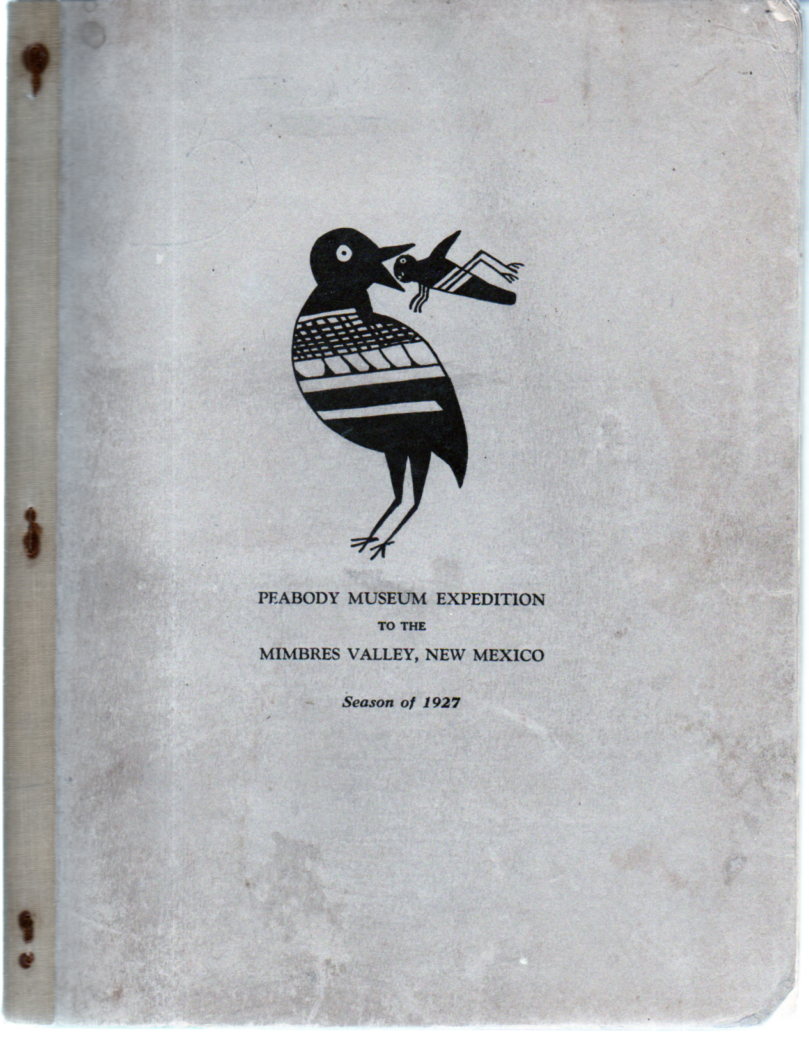
    Alfred V. Kidder’s  Peabody Museum expedition to the Mimbres Valley, New Mexico : Season of 1927 is a beautiful little production. Given that it is illustrated with 19 original pasted-in photographs and the offset text seems just to be type pages, I’d ay that it received a fairly tight distribution.  Kidder (1885-1963) was perhaps the leading U.S. expert on the Southwest and Mesoamerica, and led the Harvard-based Peabody Museum of Archaeology and Ethnology expeditions into the heart of the ancient lands in Arizona and New Mexico from 1915 to 1929 and published extensively on his excavations and observations.

    The present volume addresses the somewhat mysterious Mimbres peoples, a branch of the Mogolion culture who lived in the  southwestern New Mexico and northeastern Arizona area during the period of about 1000-1150 CE. Perhaps they are mostly mysterious to me, and that based on the hyper-ethereal nature of the pottery designs produced by those people–the pottery is enormously beautiful. 
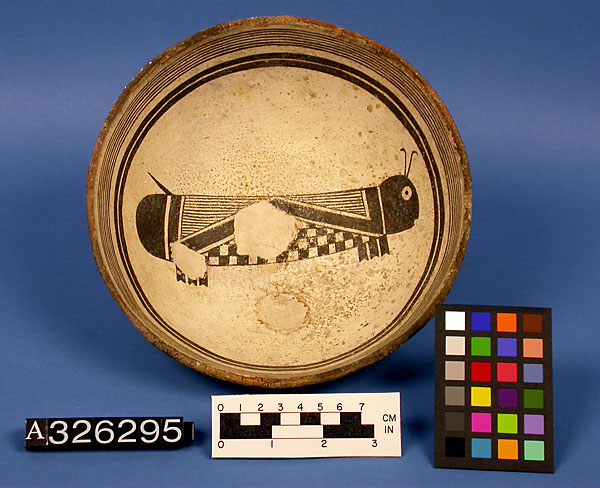
    Mimbres pottery

    [Source: National Museum of Natural History, Smithsonian Institution http://anthropology.si.edu/cm/images/mimbres-11-a326295.jpg]

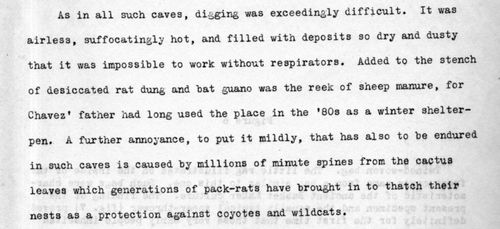
    Kidder has a very clear expository style, especially in describing the environment of the excavations.  His description of the caves in this area are very compelling and spot-on, and remind me somewhat of George Orwell’s observations on coals mines and mining conditions.

    Here he is:
    • Mimbres223[The original document is for sale at teh blog’s bookstore, here.]

    I apologize for concentrating off-topic here, but the illustration showing how a leather strap was used in aid of throwing a spear is really quite spectacular in its way, a bit of the unintentional surreal (even though the finding of the strap was very exciting, archaeologically-speaking):
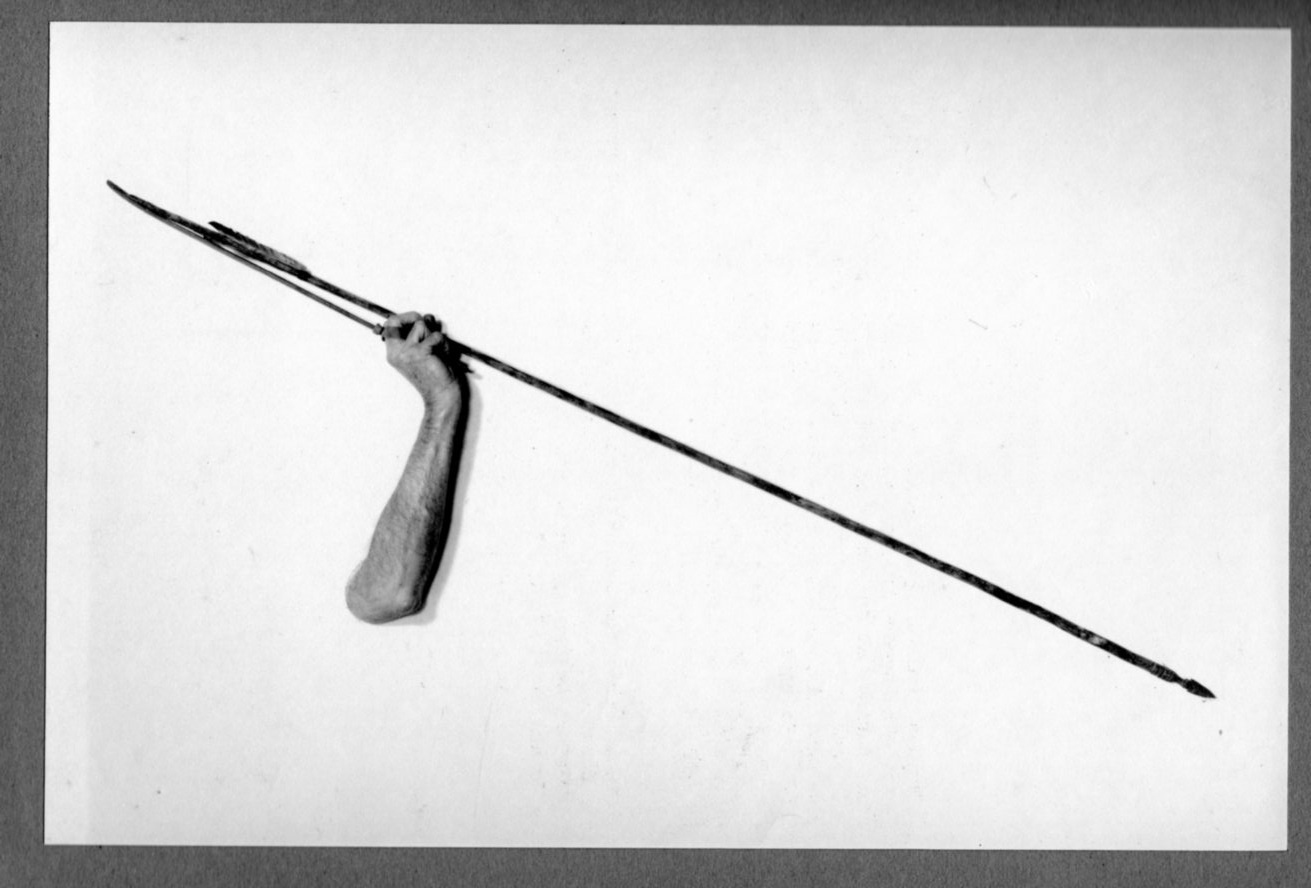
    Mimbres225

    Actually this sort of found articulation has something in common with the designs in the pots, which seem sometimes to have a definite modern 1920’s-30’s flavor rather than something from 12 centuries before. 

    And the cover:
    Mimbres226

    ·Posted by :

    ·in:


  • “Seven Real Books”!

    JF Ptak Science Books    Quick Post   Daily Dose of Dr. Odd

    7 real books196

    When can you get seven “complete books” into one volume…of 126pp?  And be printed in a legible font?  Well, you can’t, really, even when you scream it on your own book–unless those books of course are really short stories, or really short stories.  For example, Hubbard’s “Message for Garcia” is complete but it is hardly a book at 400 words or so.  How these short stories could have been offered for six bucks (in 1940) I don’t know.

    Actually the seven REAL books (“and others!” are reprinted in 105 pages–the last 21 pages are filled with psalms, the Gettysburg Address, “Gungda Din”, “The Battle Hymn of the Republic”, and ten others, to fill out the rest of the book.

    In any event, I liked this little pamphlet for its odd design, “special” typeface, book titles, and color.  Did I mention color?  


    ·Posted by :

    ·in:


  • A Pretty Medusa

    JF Ptak Science Books Quick Post

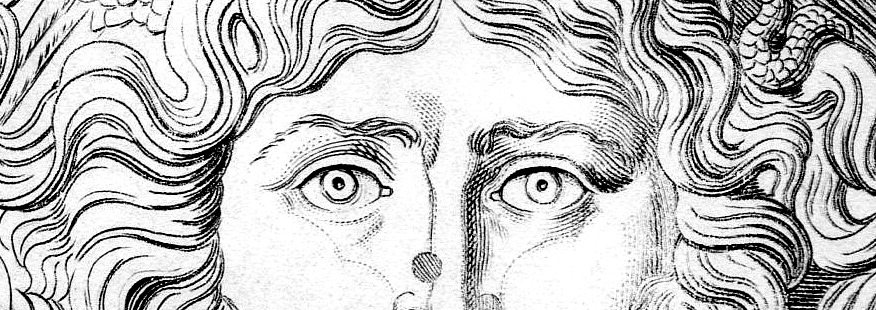
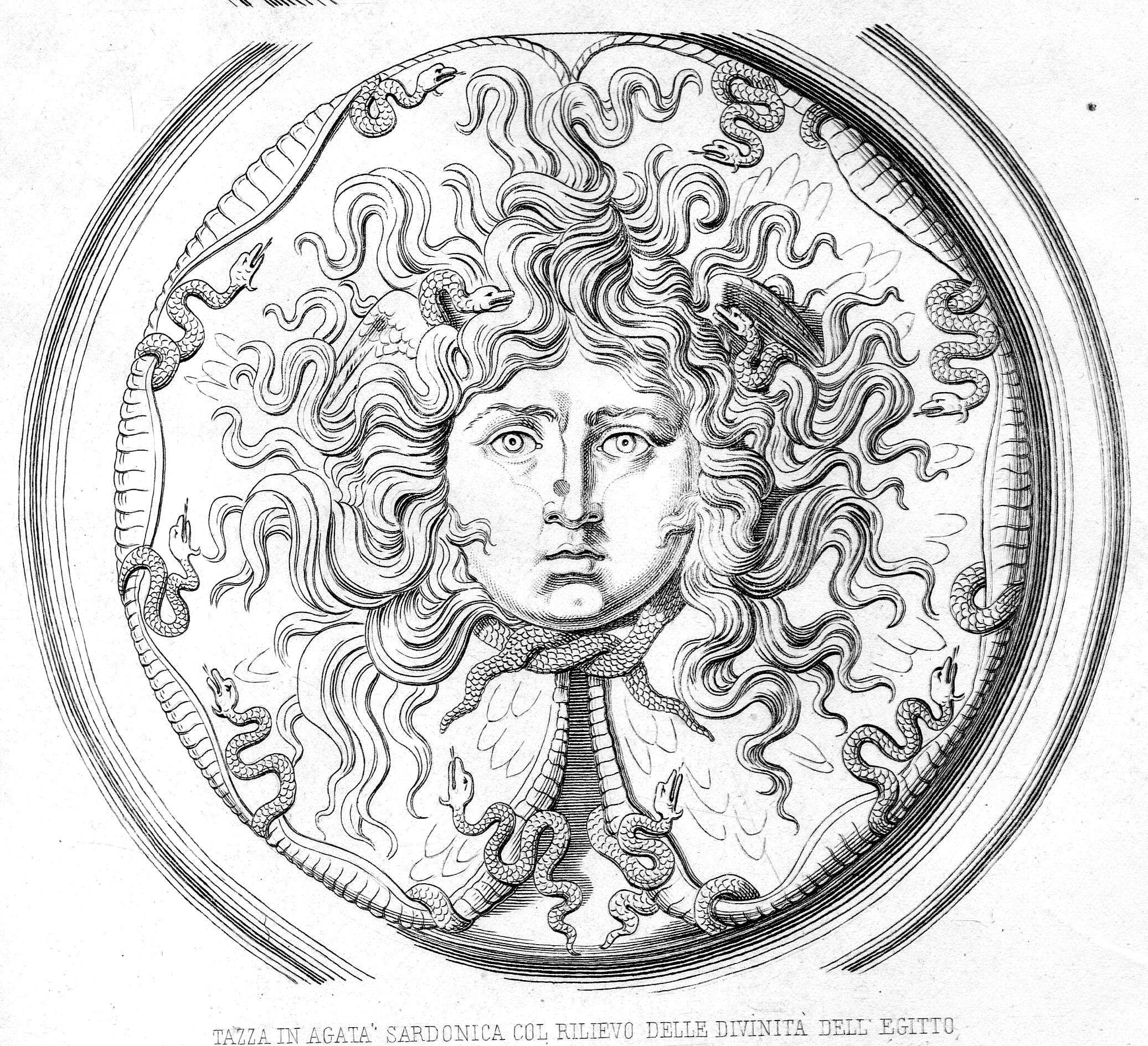
    Medusa was supposed to be hideous–scary, revolting.  Most of the time though the images I see of her make her look quite attractive–and very strong.  She was one of the gorgon sisters, child of Gaea and Oceanus, who in the short run feel for Poseidon and broke her rules of chastity, and for which was terrifically punished by Athena to the fate we know today. 

    Medusa detail

    This is a detail from the following engraving, which I can’t yet identify, though I reckon it to be early/mid-19th century:

    Medusa187It is a striking image, and if I translate the caption correctly it was one that you would see in the bottom of a glass/drinking vessel. 

    ·Posted by :

    ·in:


  • The Graduated Surrender, Philippines, September 1945

    JF Ptak Science Books  Quick Post

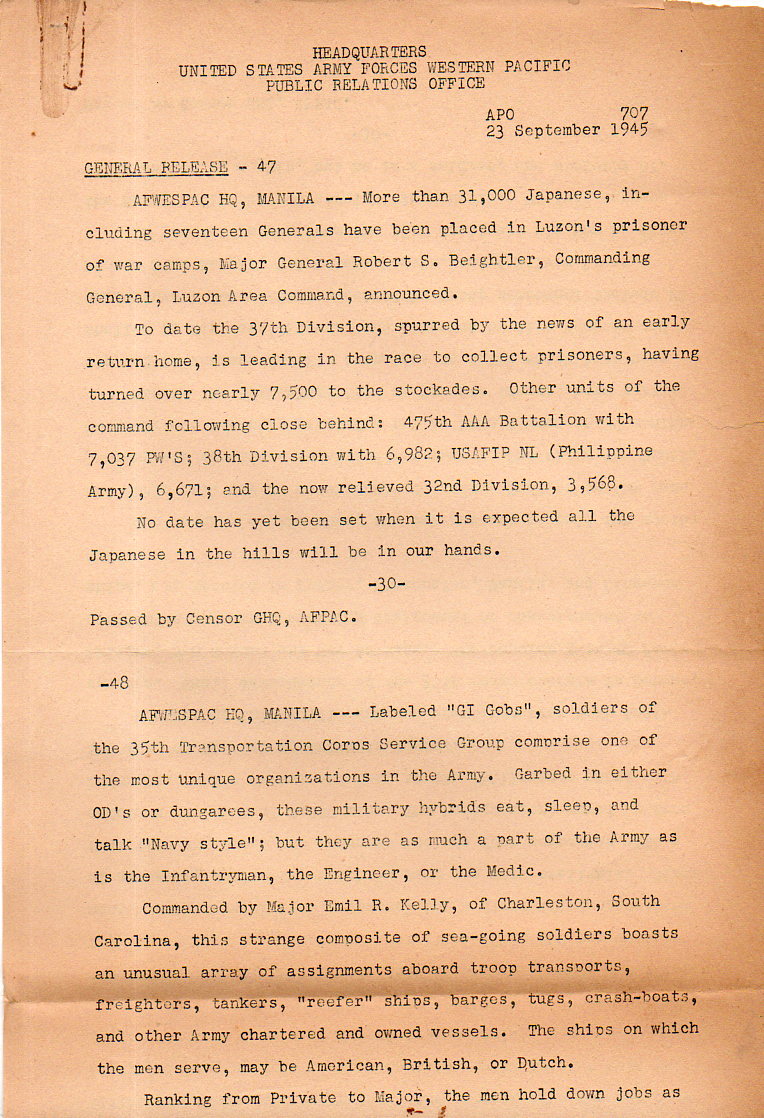
    Even though WWII in the Pacific was ended on 15 August 1945 (or at least the surrender was initiated then) and the surrender papers signed aboard the USS Missouri in Tokyo Bay on 2 September 1945 (“VJ Day”), there were many elements of the Japanese Army that took weeks and in some cases months to actually lay down their weapons and submit. (There are some rare cases of individual soldiers lasting for years and decades past the surrender, refusing to give in, living their lives in remote places.)

    This document–“Headquarter / United States Army Forces Western Pacific / Public Relations Office / General Release – 47, APO 707, 23 September 1945”–released by the propaganda/public relations office of the U.S. Army Force Western Pacific, details some of the process of large forces of Japanese forces in the Philippines coming in to surrender. 

    Stating that 31,000 Japanese soldiers (and 17 generals) had already been placed under guard in Luzon’s POW camps, the three-paragraph document ends with this interesting statement:

    “No date has yet been set when it is expected all the Japanese in the hills will be in our hands.”

    WWII--Japanese prinsoers surrender 23 Sept 1945150

    ·Posted by :

    ·in:


  • A Seldom Scene and Perhaps Influential Early Paper in Artificial Intelligence.

    JF Ptak Science Books   Quick Post

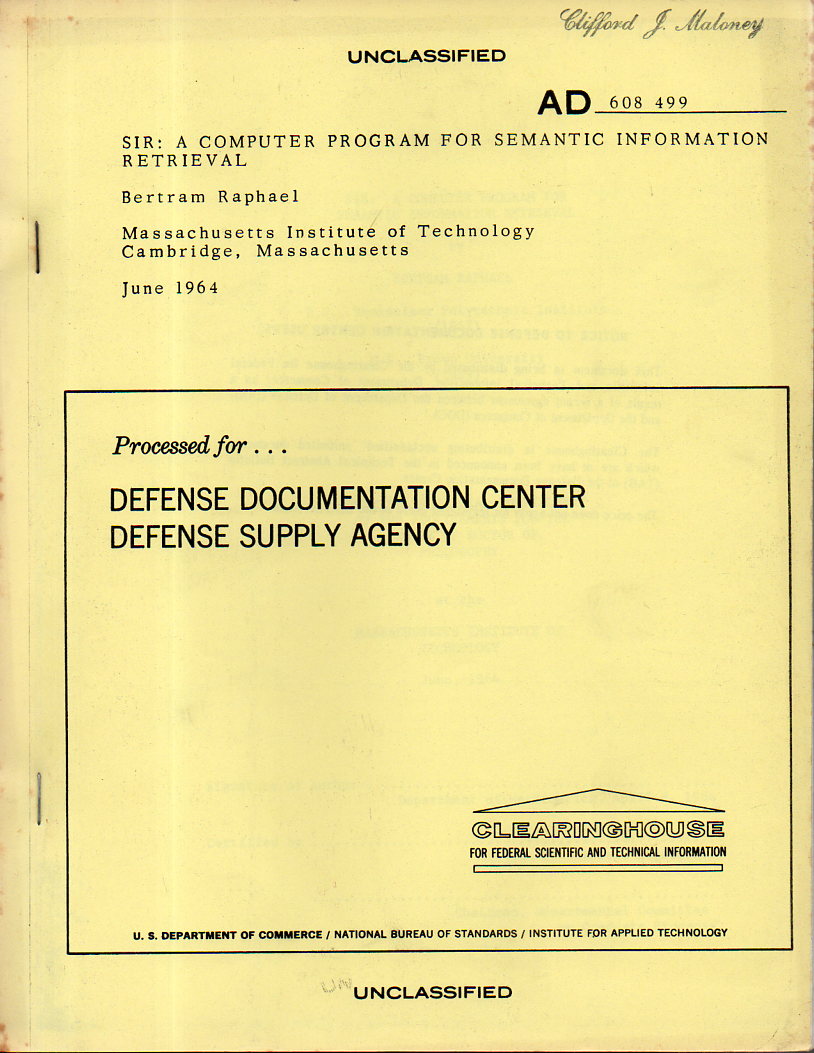
    Raphael, Bertram119Bertram Raphael’s  SIR: a Computer Program for Semantic Information Retrieval made a surprise appearance tonight. It was published/printed by the Clearinghouse for Federal Scientific and Technical Information, Defense Documentation Center, Defense Supply Agency, U.S. Dept. of Commerce, June 1964.  (156PP+12PP, plus one page of biographical information on Raphael with a bibliography including his work on LISP, the last entry dated May 1964). It is an oversized some-sort-of-photomechanical production, and may or may not be a very early and influential paper in artificial intelligence–it seems as though there are several approaches to that determination, none of which I can pass judgment on.

    This is the Ph.D. dissertation by Raphael (b. 1936), who had the great Marvin Minsky as thesis supervisor.

    ·Posted by :

    ·in:


  • When “Bombs” Became “Shells”, 1745

    JF Ptak Science Books  Quick Post

    “Bombing: An attacking with bombs; bombarding; the action or operation of throwing or dropping bombs.”—Oxford Enmglish Dictionary

    • 1691   N. Luttrell Diary in Brief Hist. Relation State Affairs (1857) II. 195   The bombing of which had cost them a good summ of money and men.
    • 1719   T. D’Urfey Wit & Mirth II. 129   The General would leave Bombing, Of Towns in hot Campaigns.
    • 1915   Daily Mail 18 May 6/4   Three Air Raids on Calais. Futile bombing by 3 Zeppelins.

    Technical print canon

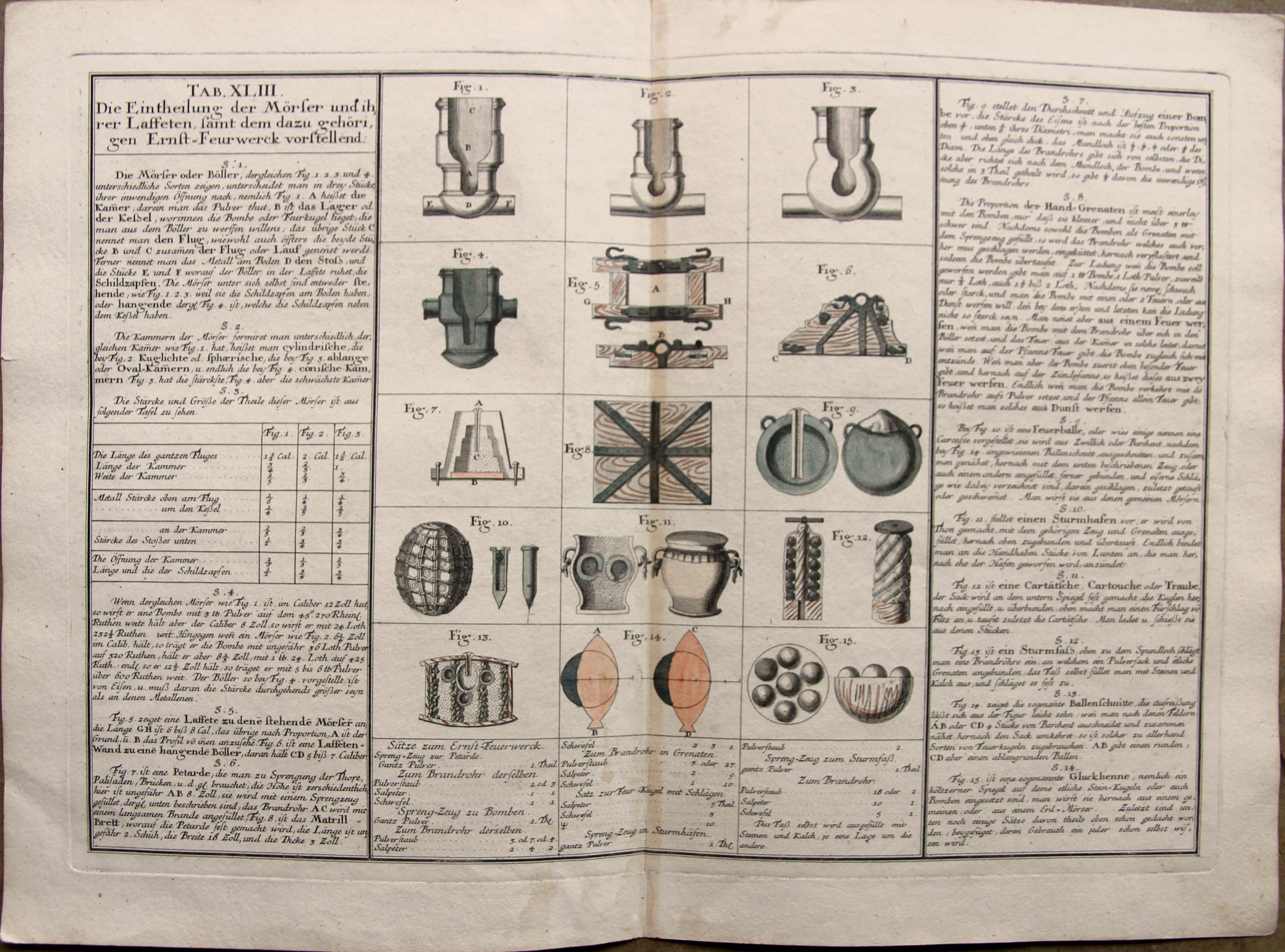
    What I had in my mind when seeing this hand-colored engraving was Sven Lindqvist’s History of Bombing–except that Lindqvist is much more interested in the modern history of bombing, and that mostly by airplane. But these are certainly ‘bombs” described here, shot from mortars. Some folks might not think of this action as “bombing”, but it certainly is according to the OED.  What is remarkable in this image is that there is a description and cross section for exploding and incendiary bombs, which at this point would probably be more accurately described as “shells”.  This is relatively early to see described in a general technical work in 1745, though the exploding shell itself goes back several centuries before this in the West and a little further in the East, so it is not a “first” description of the weapon, though it is a very young appearance of it.  (We’ll not include the flaming/diseased/etc animal carcasses that would sometimes be launched with unholy venom by trebucet or whatever in the centuries before these centuries-before.) 

    The print is entitled  “Die Eintheilung der Mörser und ihrer Laffeten, samt dem dazu gehörigen Ernst-Feuerwerck vorstellend” and is plate 43 in Mathematischer Atlas : in welchem auf 60 Tabellen alle Theile der Mathematic vorgestellet und nicht allein überhaupt zu bequemer Wiederholung, sondern auch den Anfängern besonders zur Aufmunterung durch deutliche Beschreibung u. Figuren entworfen werden, which was assembled by (Dr. Johann) Tobias Mayer (ca.1723-1762) and published in Augsburg in 1745.  

    • This is one of the plates from that work that are in the blogs’s bookstore (and buyable! here).

    Here’s a good link for the entire work, available from the German Digital Library via Goettingen.

    ·Posted by :

    ·in:


  • Lavish Chromolithographs of the Basilica San Marco (1886)

    JF Ptak Science Books  Quick Post

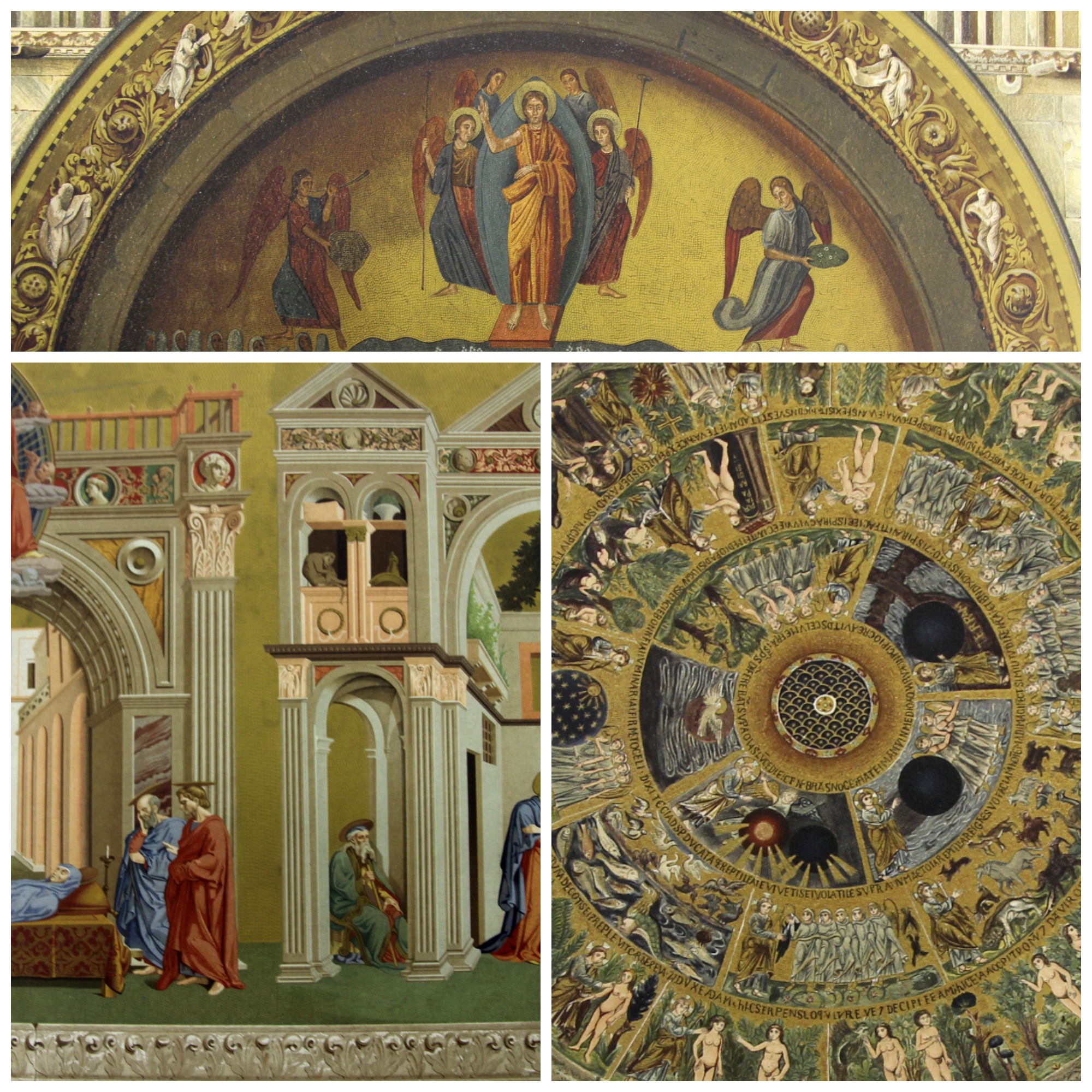
    So, these are just about here:

    Ongania montage

    (The rest the 25 images from Ongania’s massive and sumptuous work on the Basilica San Marco published in 1886 are just about ready for posting.  They are a real treat to work with, so large  (27″x21″) and jaw-dropping lovely.

    • Here’s a short bit on the “Creation” mosaic that I did a few days ago, here;
    • And then the tremendous black and white hyper geometry mosaics, here.

    ·Posted by :

    ·in:


  • WHen the Barbarians Were Big

    JF Ptak Science Books 

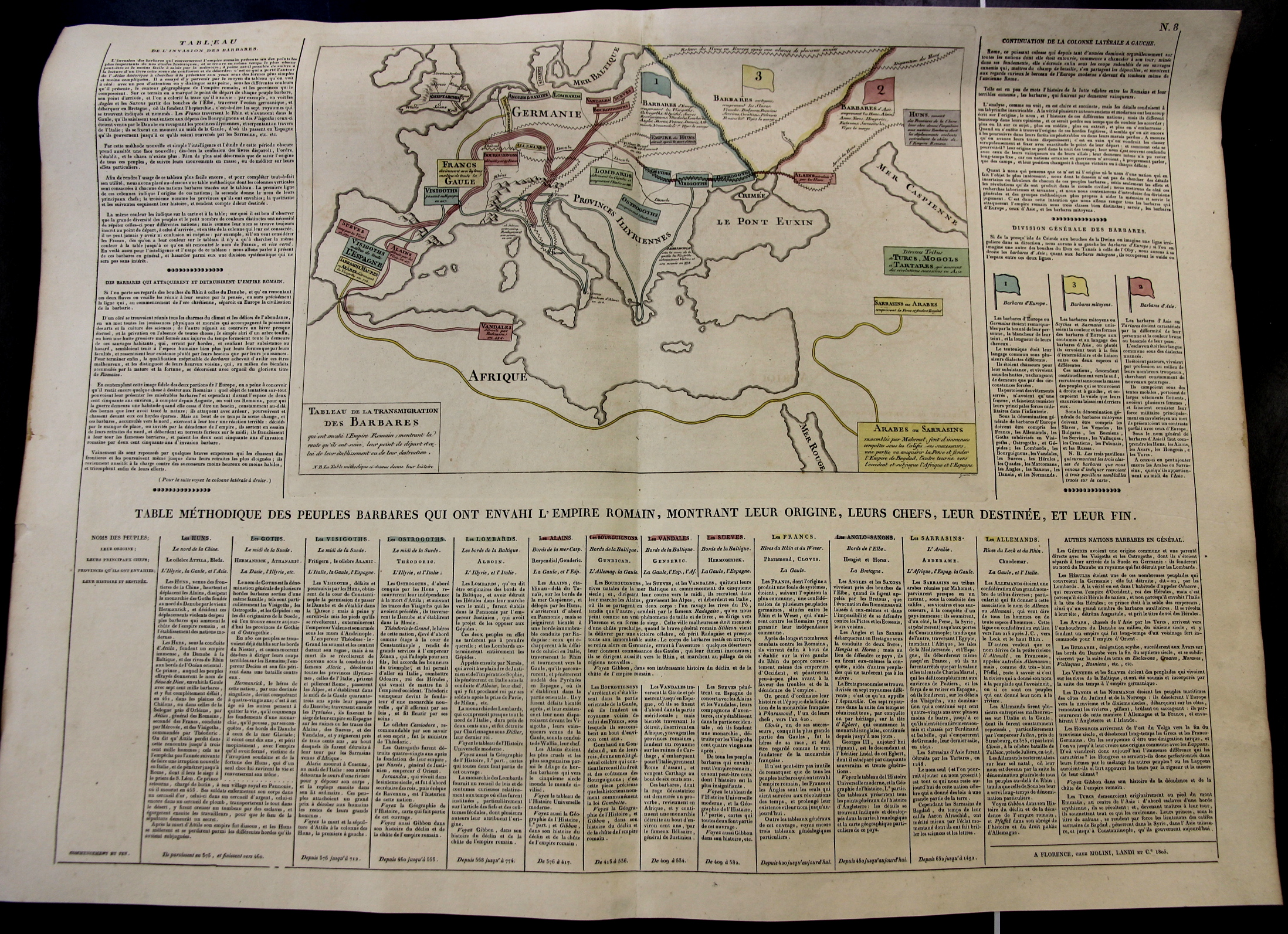
    It is interesting to look at the Roman Empire from “The Other Side”, seeing the world (extending from Ireland to the Caspian) of the surrounding and numerous Barbarians. This map was printed in 1808 and identifies the peoples at all points of the compass outside of the Empire:  Huns, Goths, Visigoths, Ostrogoths, Lombards, Vandals, Swedes, French, Anglo-Saxons, Sarrasins, Germans, Avars, Bulgarians, Danish, Hungarians, and others, all outlined in 14 columns beneath the central map.  This is a finely-designed, accurate, and attractive way of displaying a lot of data in a relatively small (27×21″) space. 

    [Note: the image below is very expandable and readable when enlarged.]

    • Also: the original may be purchased via the blog’s bookstore, here. 

    Maps_lesage_barbarian

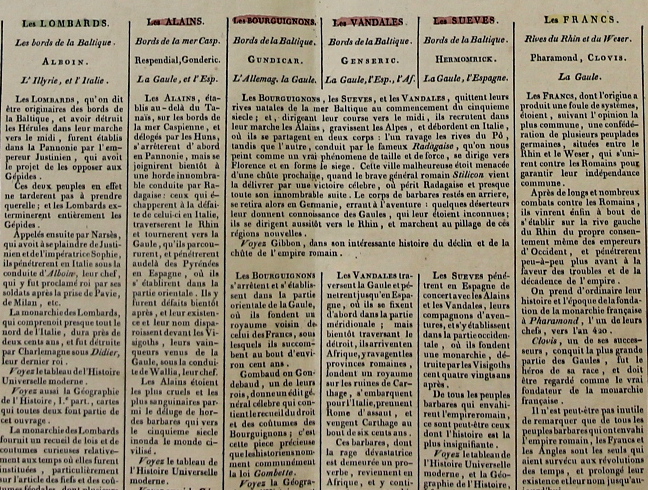
    And a detail:

    Maps_lesage_barbarian_b_

    ·Posted by :

    ·in:


  • Bloomsday: Davy Byrnes, Gorgonzola Cheese, and So On.

    JF Ptak Science Books 

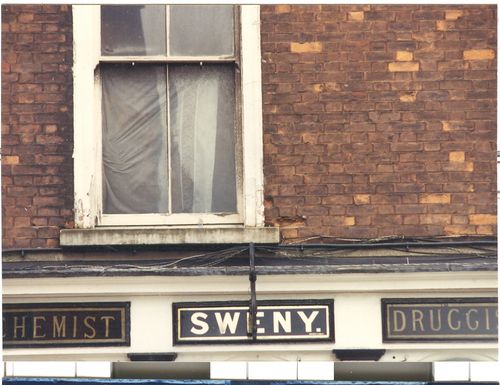
    I just came across these image that I made on a trip to Dublin some years ago.  Carrying the bags for my wife, Patti Digh, who was actually working there, I described my own work by going on a Ulysses tour. It was Sweny’s and Davy Byrnes (seems like two e’s are missing there, no?)  that I liked the most–particularly so for the chemists, because it looked as though nothing major had happened in there in  years, or at least that was the sense of the smallish creaking shop.  I wanted some lemon soap.

    See here for the rest: 

    [I am very happy to report that since this post was written in 2009 our daughter Emma Digh Ptak retrieved new lemon soaps for me from Sweny’s.]

      Sweny_1_

    ·Posted by :

    ·in: