A Daily History of Holes, Dots, Lines, Science, History, Math, Physics, Art, the Unintentional Absurd, Architecture, Maps, Data Visualization, Blank and Missing Things, and so on. |1.6 million words, 7500 images, 4.9 million hits| Press & appearances in The Times, Le Figaro, Mensa, The Economist, The Guardian, Discovery News, Slate, Le Monde, Sci American Blogs, Le Pont, and many other places… 5000+ total posts since 2008.

Category: Uncategorized

  • Faraday on Holding One’s Breath (and Surviving a Fall into a Cesspool)

    JF Ptak Science Books  Quick Post

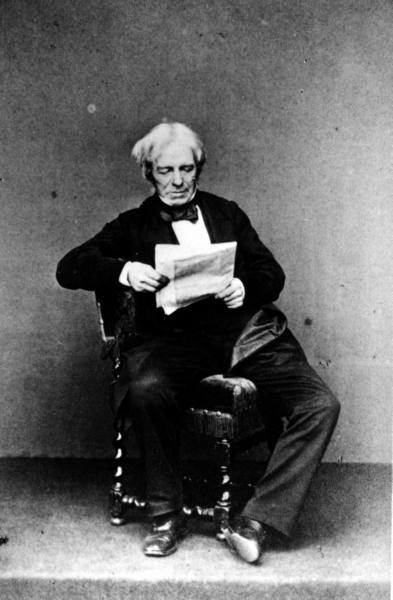
    FaradayIn trying to figure our a small/short stack of Michael Faraday offprints this morning I came across something that was very unusual.  I was hoping to find his great paper of 1833–a work that provided some of the basic gel that would start to hold together the great ideas of mass communication and the computer and the internet–but came up with something in that same year that was entirely different. And unexpected. 

    In addition to writing gobs of high and applicable importance, in theory and practice, in the history of electricity and magnetism and much else, Faraday published a work on how to expand your capacity to hold your breath. “Notice of a Means of Preparing the Organs of Respiration, so as Considerably to Extend the Time of Holding the Breath, with Remarks on its Application…”  found in the Philosophical Magazine (October, 1833, pp (241)-244) was exactly what it said it was, with bits on how best to expand your lungs to be able to not breathe for longer periods of time.  Just in case. 

    And what might that case be?  Or cases? The obvious is being able to hold your breath longer in the case of being in a fire or a building filled with smoke.  Then there’s the case of falling into “an open cesspool”, which I wouldn’t have thought of but which must have been far more common then that it is today.

    He writes:  “Now this effect may be rendered exceedingly valuable. There are many occasions on which a person who can hold breath for a minute or two minutes might save the life of another. If in a brewer’s fermenting vat or an opened cesspool one man sinks senseless and helpless from breathing the unsuspected noxious atmosphere within another man of cool mind would by means of this mode of preparation which requires nothing but what is always at hand have abundant time in most cases to descend by the ladder or the bucket chamber…”

    Faraday must’ve read/heard a story about someone drowning in a brewer’s vat, or cesspool, or perhaps someone had been killed trying to rescue the unfortunate stumbler, and so came to write about how best to survive in those circumstances.  It is just an interesting sidelight into a great mind. 

    ·Posted by :

    ·in:


  • On the Great Battles of Sitting and Spitting: Whitney, Texas, 1949

    JF Ptak Science Books  (Reposting a favorite, Post 953 from 2009)

    “Why, they must spit two or three gallons a day!  They ain’t died fast enough, these old men!”—Mrs. T.E. Bagley, Whitney, Texas, 1949
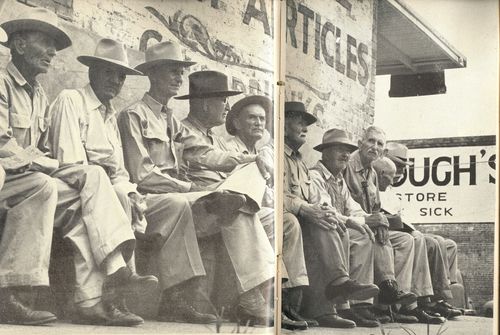
    0--whitney 01

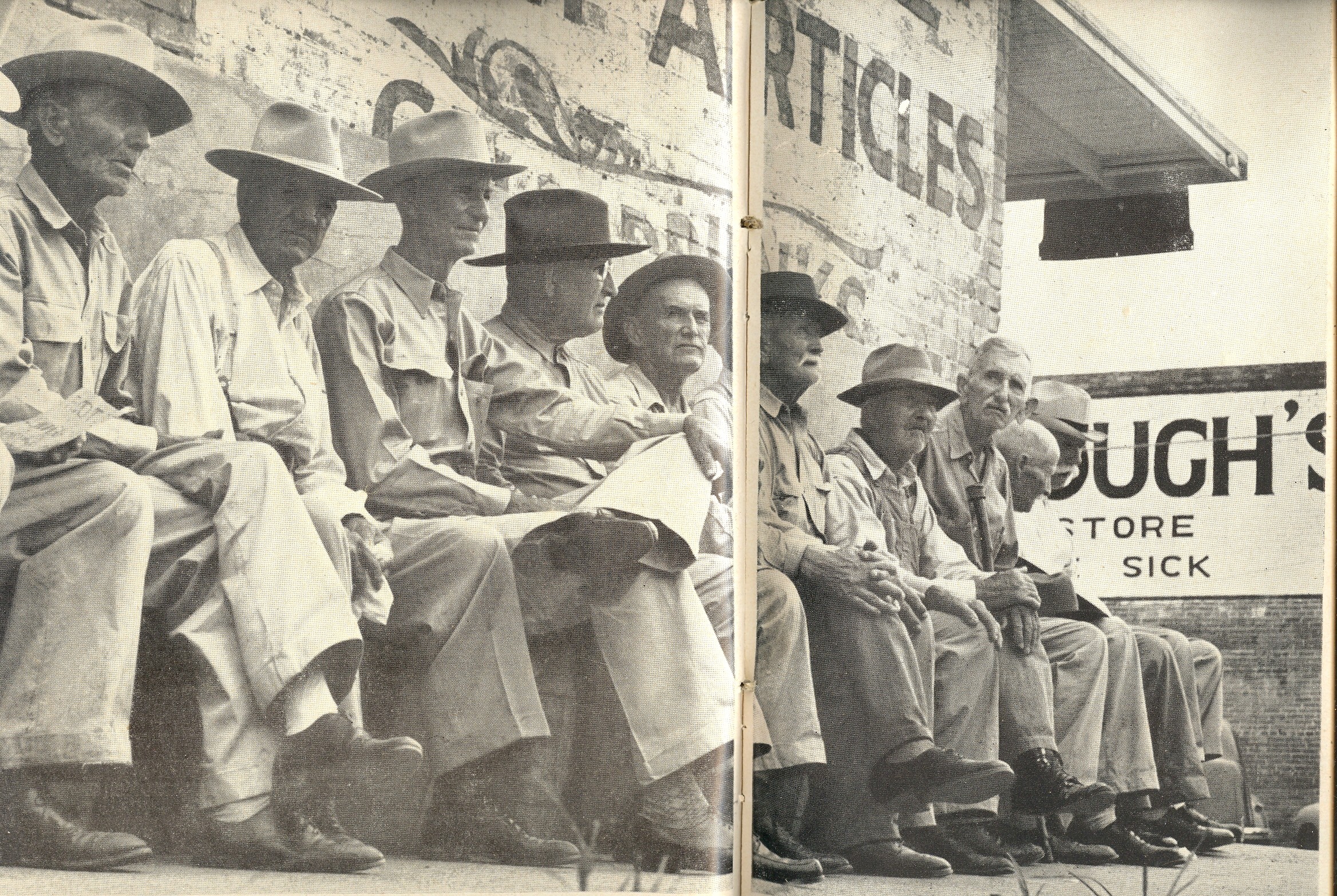
    This is a great small America story about sitting. Or old men sitting, and spitting.  Sitting and spitting on a long piece of thick timber outside a drug store, bricks and advertisements as back support, in Whitney, Texas (population ca. 1,500), in 1949.  I can just about hear them on a hot summer evening, right now, only probably I couldn’t—they’d probably’ve shut up until the stranger walked by, giving me their silence and keeping their confidences.  Or not.  Maybe I would’ve been invisible, and the whittled bits would’ve fallen to the street along with the tobacco juice, cusses and gossip, unabated.Maybe they surrounded themselves with a stained-moat of spittin’s across or close to which no one would stray. 

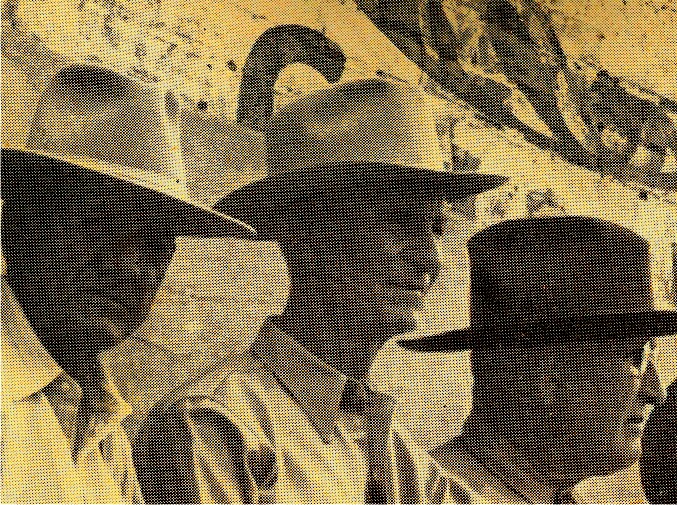
    It isn’t, I guess, so much a story about their sitting as it is a story about their not sitting, about how it came to be that their lumber was removed and the men forced to find another place to take in the sights and construct their great edifices of commentary and asides.0--whitneydetail 3 men 01
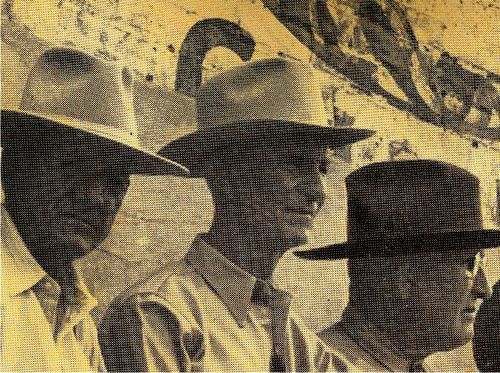
    The story appears in LIFE Magazine of 15 August 1949, and lays the whole drama out in two splash pages, with bare editorializing and some great photos.

    The story goes like this: “In 1922 D. (Doctor Dee) Scarborough, the druggist in Whitney, Texas, put up a bench outside his store, and immediately it became a loafing headquarters for the gaffers of .the Brazos River Valley. ‘Year after year they sat there looking like a jury of irritable terrapins, whittling, spitting and passing judgment on everything that passed. But finally reform caught up with them.” It caught up to them, even if everyone was wearing a collared shirt.
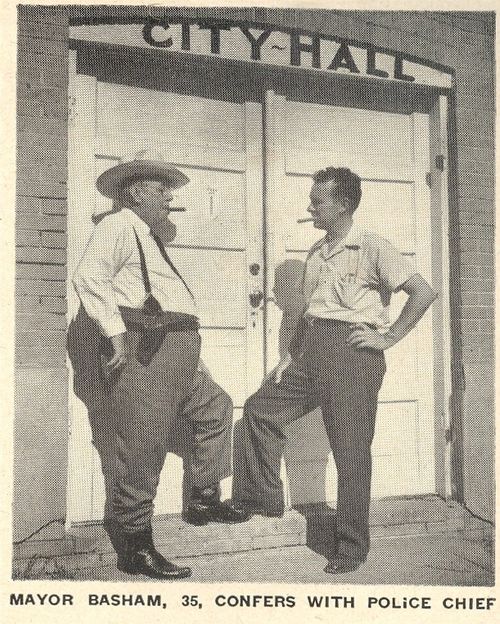
    0--whitney 02 sherrif

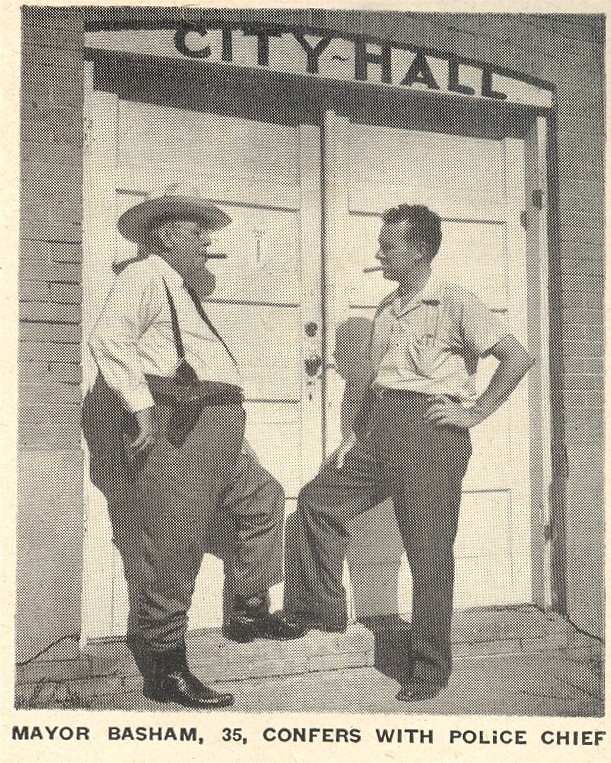
    It came to the mayor of Whitney, Frank Basham, to appease “a delegation of local housewives” who were fed up with the old men, and wanted the “unsightly bench” gone.  It was probably a lot more than the bench, as the quote above by Mrs. T.E. Bagley contends: “Why, they must spit two or three gallons a day!  They ain’t died fast enough, these old men!”.  Perhaps a dozen old farmers/ranchers/cowboys sitting on a bench all day long spitting and watching the world go by wasn’t the most attractive thing for downtown Whitney.

    And so it came to pass that the lumber was removed, but not the men—they returned with nail barrels and took up residence, unabated, “sitting wrathfully” on the kegs.  The police then threatened to confiscate the kegs, and then the men: tensions flared, and a special election was held, a referendum on whether or not to restore the bench.
    0--whitney 03 old lady

    “I’ve never heard of such foolishness”, ‘cried 97-year-old Tom Rose, dean of the bench sitters’. “Come here in ’77 from Tennessee. Been married 76 years, and my wife ain’t whipped me yet.”

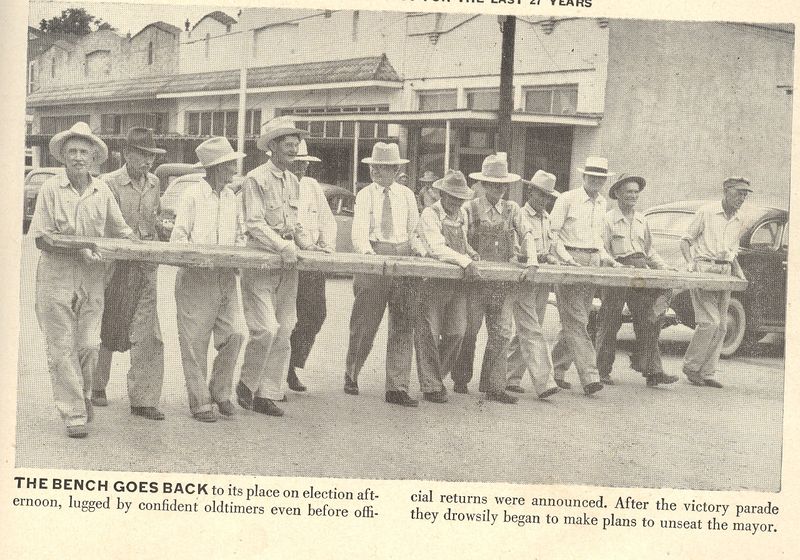
    The vote was held and the forces of bench-removal-evil were “horribly” beaten, the vote for favoring restoration coming in at a convincing 124 to 67.


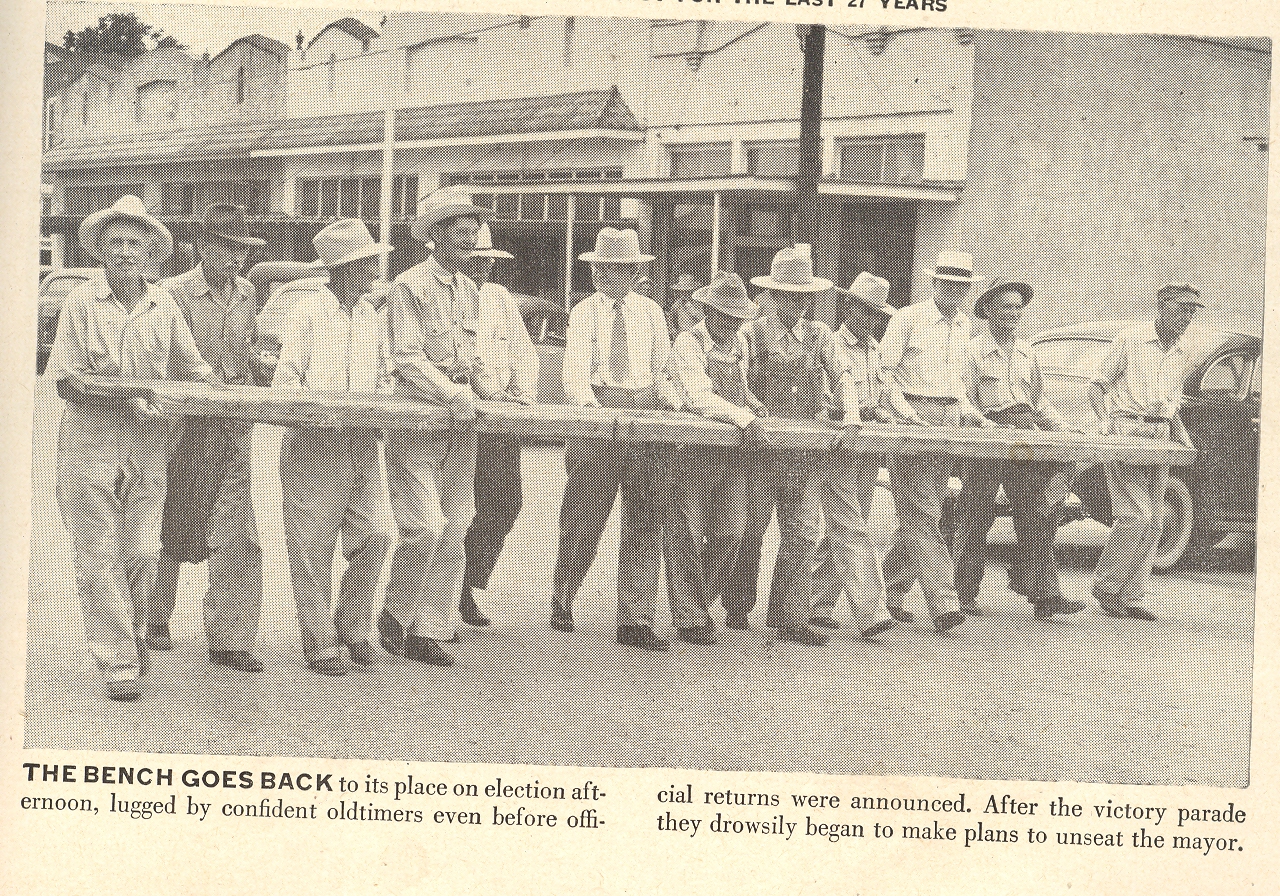
    The picture below shows the men “triumphantly” hauling the bench back into position, sitting back down once more, “loafing, whittling, spitting and passing judgment on everything that passed”.

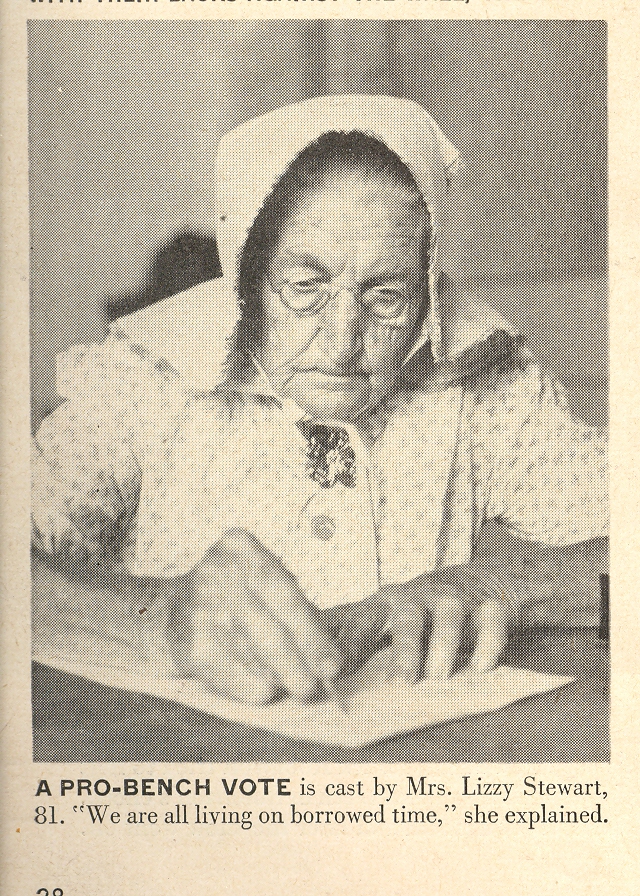
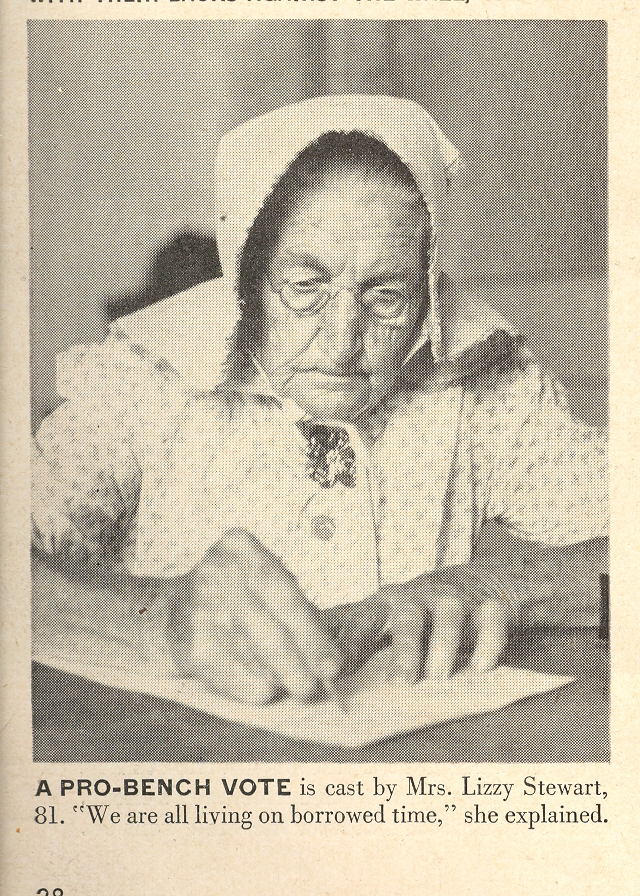
    As I said, this is a beautiful drama of high emotion, way-of-life-small-consequence played big, a heaping slice of American life witnessed in a small East Texas town just after World War II.  I would love to hear the voice of Mrs. Lizzy Smith (pictured here) as she was thinking-out-loud, casting her vote in this debate with a pencil no longer than a finger joint. (Where did that bonnet come from? Is it her mother’s? Mrs. Stewart’s  mother would’ve been born around 1850, which means that the sensibility for that head cover was at the very least of pioneer vintage, and possibly older. It looks like living history to me, a snapshot into something from the deep past, right there in the present. This doesn’t happen very often; but when it does, it is a celebration.)

    “We’re all living on borrowed time” she is quoted as saying, and I imagine that she voted for the men to be able to return to their bench to use what time they had left to holding up the walls of that pharmacy.  [I made a call to Whitney, this morning, and spoke with a gentleman about the Battle of the Bench.  He eloquently relayed the story, and the place that it holds in the town’s history, its small action carried into the future as a very large sensibility– I’m thankful for his insight.  I couldn’t resist asking what it was that was directly opposite the bench; what were these men looking at when they weren’t looking down.  “Not very much” he said. But the story isn’t in the looking, its in the talking; and as my wife Patti Digh finely points out, stories seem to be best told side-by-side.

    And in here is a great little play. Maybe not so little.
    0--whitney 03 carrying bench


    ·Posted by :

    ·in:


  • Art in the “Annalen der Physik”

    JF Ptak Science Books   Post 2144 

    Follow Me on Pinterest

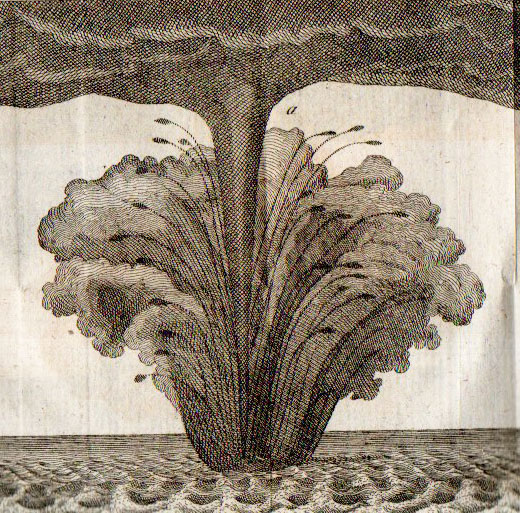
    Water spouts825det

    The Annalen der Physik, begun in 1799 and still going strong, is one of the foremost scientific periodicals ever published.  Over the years the debut of revolutionary and significant ideas have made their first appearances in the journal–Gauss, Clausius, von Helmholtz, Doppler, and many many others, perhaps most famously by the four spectacular papers in Einstein’s annus mirablis of 1905.  The Annalen also famously re-published significant contributions by foreign scientists, their work seen in German for the first time in these pages.  For many without French or English or Italian, it was the first time many German scientists read of Daguerre, Dalton, Cavendish, Volta, and so on–which was a big deal. [See this link for a collection of useful user’s guides to the Annalen that are published elsewhere on this site.]

    ·Posted by :

    ·in:


  • A Wonderful Double-A, Triple-S Word: Maasssysteme

    JF Ptak Science Books  Quick Post 
    Follow Me on Pinterest

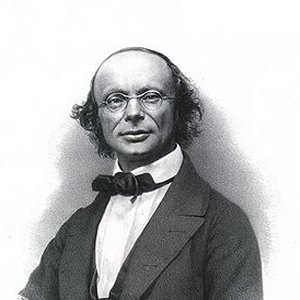
    Wilhelm_Eduard_Weber_III’ve been posting on some unusual words this month, first in the UN- words found in Joyce’s Ulysses, then another set of UN-s from Webster’s dictionary of 1828.  There were very many pleasant surprises in those lists, though most of what I was taking away as good clean entertainment really wasn’t the original intention, for the most part (especially so far as Mr. Webster is concerned).  Today’s entry in the Kingdom of Words is a lovely creation in German, something I found (for myself) today in a paper by the physicist Wilhelm Weber, printed in 1861. 

    The word is Maasssysteme, the only word I think I’ve ever come across with three S’s in a row, and those following two A’s in succession.  It seems as though there is a dim memory for examples of aass in Dutch, and maybe also in English, but I can’t pull them out of the memory right now.  For now, we’ll just enjoy Maasssysteme. 

    ·Posted by :

    ·in:


  • Yes, We Have No Bananas

    JF Ptak Science Books   Quick Post

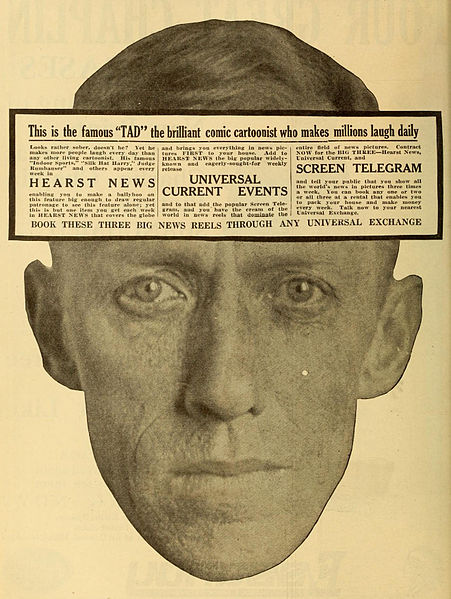
    This unusual promotional featured the perentially unsmiling and striking face of TAD (Thomas A. Drogan, 1877-1928), a cartoonist and sports writer and major contributor to the American slang vernacular. 

    TAD[Source: advertisement in Moving Picture World, January 1919]

    His contriubtions included such words/expressions as “appelsauce” (as an expression of hearing nonesense), “cake-eater”, “cat’s meow/pajamas (expressing high praise), “cheaters” (for eyeglasses), “dogs” (for feet),”dumbbell” (an unkind and slippy word for a not-smart person),  “dumb Dora”, “drugstore cowboy” (for a do-nothing/loafer), “finale hopper”, “hard boiled” (for a street- and ordinary-tough, or detective), “nickel nurse” (a great nickname for a miser/cheap person), “skimmer” (for a hat), and of course the immortal phrases “Yes, we have no bananas” and “You tell ’em!”

    ·Posted by :

    ·in:


  • 11 11 11 2013

    Veterans Day repost:
    I want to thank all Veterans today, all of our Veterans everywhere, for all of your sacrifices.
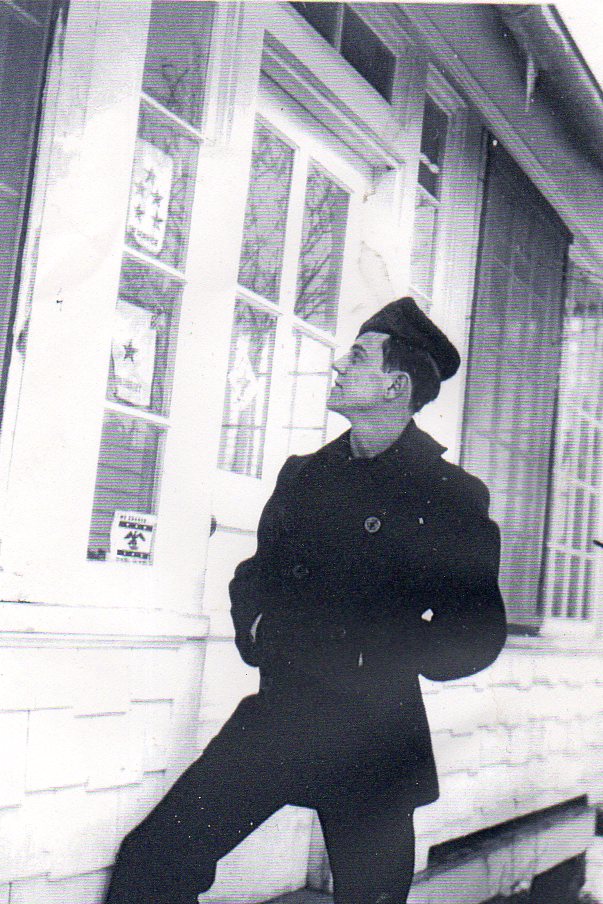
    I particularly want to say to say how much I appreciate the members of our family who have served: Uncle Pete (USMC, WWII), Uncle Ray (RCAF, RAF+USAAF, WWII), Uncle Stan (Navy, WWII), Uncle Alex (Army, WWII), Uncle Joe (Army, Korea), Uncle Jerry (Army, WWII), Uncle Frank (USAAF WWII), Uncle Walter (Navy WWII) and my other Uncle Stanley (Army, WWII), Uncle Francis (Army, WWII), Uncle Vincent (Army, WWII), cousin Billy (USMC, Vietnam) and Grandpa (Army, WWI); Patti’s father Melvin Lonnie (Navy, WWII) and stepfather Boyce (Army, 2nd US Cav WWII), Uncle Guy (USMC WWII), Uncle Max (Army WWII) and her four relatives in the CSA. Nearly everyone was in battle, and nearly everyone came home. [Image: Uncle Walter looking at the 5-star Blue Star flag, Housatonic, Mass, 1943.]

    Brothers 2990

    ·Posted by :

    ·in:


  • What John Ruskin Was Doing in the Fall of 1869

    JF Ptak Science Books   Quick Post

    Well, there’s busy and then there’s busy. Somehow Dickens and Shakespeare managed to produce dozens of superb works–enough for one great work by dozens of other writers–all in a surprisingly short period of time, like 25 concerted years each, before they gave in to the immortal anti-beloved of eternity.  John Ruskin–writer and art historian and critic–wrote a lot of books in his long life, and generally worked on many other things at the same time, all by hand, all hand-written, all stored in wooden files, all data fetched directly from books that he owned or had to make his way to. 

    I bring up Ruskin because of the letter I found that he wrote to Charles Eliot Norton outlining his activities.  It is an impressive list (pp 180-181):


    ·Posted by :

    ·in:


  • Old Word of the Day–Abcedarian

    Abcedarian n.s. [from the names of a, b, c, the three first letters of the alphabet.] He that teaches or learns the alphabet, or first rudiments of literature.
    Samuel-Johnson-37037-1-402 det
    This word is used by Wood in his Athenae Oxonienses, where mentioning Farnaby the critic, he relates, that, in some part of his life, he was reduced to follow the trade of an abecedarian by his misfortunes.

    –Johnson, Samuel. “Abecedarian.” A Dictionary of the English Language: A Digital Edition of the 1755 Classic by Samuel Johnson. Edited by Brandi Besalke. http://johnsonsdictionaryonline.com/?p=296.

    ·Posted by :

    ·in:


  • The Long and the Longer of It: a Fabulous Engraving of Trajan’s Column

    JF Ptak Science Books   Quick Post 

    Follow Me on Pinterest 

     I have a hard time resisting long and detailed engravings, and the great sculptural victory column with the enormous numbers of bas relief depicted by Giovanni Piranesi (“Trofeo o sia magnifica colonna … ove si veggono scolpite le due
    guerre daciche fatte da Trajano, inalzata nel mezzo del gran foro …” and printed in 1770) certainly takes a stellar position. It is of course a depiction of the epic victories of Roman Emperor Trajan’s campaigns against the Dacians (101-102 and 105-106 ACE), and is located at Trjan’s Forum, north of the Roman Forum.  The story of Trajan’s efforts on the 100′-high column (125′ with pedestal) wraps itself around 23 times, rendering a 625′-long storyline of defeat for the Dacians.

    It is a beautiful thing, even if Sixtus V (the Sixtus who came after Sixtus IV who commissioned the Sistine Chapel, or the chapel dedicated to the Sixtus popes) placed that statue of St. Peter on the top of it. 

    Here’s a fantastic site that interprets and presents all of the 500+ sculptures on the column: http://www.stoa.org/trajan/

    Trajan column

    ·Posted by :

    ·in:


  • What Poe Said about Dickens, 1841

    JF Ptak Science Books  Post 2120

    “Mr. Bulwer, through art, has almost created a genius. Mr.
    Dickens, through genius, has perfected a standard from which Art itself
    will derive its essence, in rules.”–
    E.A. Poe on Charles Dickens, 1841.


    Poe[Image source:  National Park Service]

    Edgar Allan Poe
    was a brilliant and insightful and more-than-occasionally a vicious/wicked surgeon as literary critic–in his collected works there is one entire volume dedicated to those works, and it is well worth a read.

    Poe reviewed Master Humphrey’s Clock and The Old Curiosity Shop for the May 1841 issue of Graham’s Magazine–that’s because they were written and published serially at about the same time, both ending in late 1841, and written by a man who was seemingly several brilliant writers at the same time. (fFor all that he wrote, he must have been several people, because he managed to do it all in a life-span of 58 years1.)

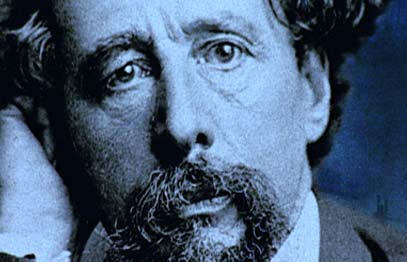
    Dickens
    He says
    something of Dickens that is pretty remarkable. To be sure he was not always this glowing, and not necessarily supportive, and was a razor-sharp critic when the need arose–that need seemingly being most of the time)–but this is what he had to say on Dickens, and it reads quite true to me:

    “The Art of Mr. Dickens, although elaborate and great, seems only a
    happy modification of Nature. In this respect he differs remarkably from
    the author [Edward Bulwer Lytton] of Night and Morning [1841]. The latter, by excessive care and by
    patient reflection, aided by much rhetorical knowledge, and general
    information, has arrived at the capability of producing books which be
    mistaken by ninety-nine readers out of a hundred for the genuine
    inspirations of genius. The former, by the promptings of .the truest
    genius itself, has been brought to compose, and evidently without
    effort, works which have effected a long-sought consummation- which have
    rendered him the idol of the people, while defying and enchanting the
    critics. Mr. Bulwer, through art, has almost created a genius. Mr.
    Dickens, through genius, has perfected a standard from which Art itself
    will derive its essence, in rules.”


    ·Posted by :

    ·in: