A Daily History of Holes, Dots, Lines, Science, History, Math, Physics, Art, the Unintentional Absurd, Architecture, Maps, Data Visualization, Blank and Missing Things, and so on. |1.6 million words, 7500 images, 4.9 million hits| Press & appearances in The Times, Le Figaro, Mensa, The Economist, The Guardian, Discovery News, Slate, Le Monde, Sci American Blogs, Le Pont, and many other places… 5000+ total posts since 2008.

Category: Uncategorized

  • “What the Frog’s Eye Tells the Frog’s Brain” and Walter Pitts

    JF Ptak Science Books  Post 2210

    I was walking around a 1959 issue of the Proceedings of the Institute of Radio Engineers I found this fantastic article by the great Walter Pitts.  What was Mr. Pitts and a frog’s brain article doing here?  Well, it all makes sense, really, and I was very happy to unexpectedly find Pitts here when I was looking for something else.  Walter Pitts (1923-1969) is one of those very important but now somewhat faded names in the history of American science.  He was a brilliant young man turned into a brilliant mature one, a logician/cognitive psychologist who corresponded with Russell on the Principia at age 15 and who went on to develop (with Warren McCulloch) some of the fundamental ideas in what would be known as neural networks.  The work was really much more far reaching, touching work in the fields of artificial intelligence, cybernetics, neuroscience(s), philosophy, cognitive sciences and of course computer science.

    https://historyofideasblog.com/a/6a00d83542d51e69e201156f67025e970c-piPitts was a genius I’m sure,  a sort of Matt Damon-type character from the movie Good Will Hunting1. He was offered a chance to study with Russell in the U.K. at 15, but refused and wound up running away from home to go to the University of Chicago to listen to Russell lecture, and where he stay on, finding another great logician, Rudolf Carnap (then at Chicago) and offering him critiques on his new work.  Pitts would blow like the wind in and out of Carnap’s office, the logician spending months trying to find out who and where Pitts was–and what he was was a homeless teenage boy.  Once found, Carnap got Pitts a low-level maintenance job.  I’m not sure what Pitts was doing before he switched ships and jumped (still homeless) to MIT in 1942, where he was introduced and was impressive to the not-to-be-impressed Norbert Wiener, and where he also met Warren McCulloch, with whom he would work on the Leinbizian idea of the nervous system as a sort of universal computer, publishing their outstanding “A Logical Calculus of Ideas Immanent in Nervous Activity” in September 1943.2

    Right before this paper–which is considered to be a founding effort in the field of neural networks–Pitts published three other papers of interest in this same area (and in the same journal)–all published when he was 19 years old. “Some observation on the simple neuron circuit”,    “The linear theory of neuron networks: The static problem”, and “Some Observations on the Simple Neuron Circuit” were all efforts leading up to his paper with McCulloch one year later.   Impressive work, especially for a 17-year-old, and particularly for a new, high entry point journal published by the University of Chicago, entertaining the logical structure of neural nets as coded circuitry, a new way of looking at the mechanistic view of philosophy of mind. 

    Things however really didn’t go well for Pitts: he was fiercely, probably tragically “shy” or demanding of his own attention, exceptionally modest, and with very few personal relationships.  Just a few years later, a rift developed between the wife of Norbert Wiener and McCulloch, and was of such vehemence that anyone maintaining a friendship with McCulloch would be shunned by Mrs. (and therefore, necessarily in this case, Dr. )Wiener.  And thus Pitts remained friends with McCulloch and lost contact with just about everyone else, making his working/contributing life quite difficult.  Little is known about what happens to Pitts in the 1960’s, but it wasn’t good, and he wound up dead, featuring symptoms indicative of severe alcohol abuse, in 1969.  He was 46, and his best work was already 25 years old. 

    _______

    Notes:

    1. We read in this  wonderful account of Pitts from Neil R. Smalheiser’s  appreciation, Walter Pitts ( found in: Perspectives in Biology and Medicine – Volume 43, Number 2, Winter 2000, pp. 217-226):
    [Introduction ] “The movie Forrest Gump made the point that the greatest, most heroic Americans are people of extraordinary character who flicker briefly into public consciousness and are quickly forgotten. Walter Pitts was pivotal in establishing the revolutionary notion of the brain as a computer, which was seminal in the development of computer design, cybernetics, artificial intelligence, and theoretical neuroscience. He was also a participant in a large number of key advances in 20th-century science. Yet while his contemporaries Alan Turing, Ludwig Wittgenstein, and John von Neumann entered the pantheon of fame, Pitts remains a shadowy folk hero. Stories about Pitts have circulated among the cognescenti for years, but almost nothing has been written about him. Here, I have collected reminiscences from his friends and associates to provide a unique insight into a remarkable life; if some exaggerations and embellishments have crept in, they only underscore the basic truth that Pitts was a man with Gumption ability…”

    2. Warren McCulloch remembers Pitts in this way:  “In 1941 I presented my notions on the flow of information through ranks of neurons to Rashevsky’s seminar in the Committee on Mathematical Biology of the University of Chicago and met Walter Pitts who then was about seventeen years old.  He was working on a mathematical theory of learning and I was much impressed.  He was interested in problems of circularity, how to handle regenerative nervous activity in closed loops. …   For two years Walter and I worked on these problems whose solution depended upon modular mathematics of which I knew nothing, but Walter did. “ (McCulloch, 1989, pp. 35-36, cf. McCulloch, 1965a, pp. 9-10).
     

    ·Posted by :

    ·in:


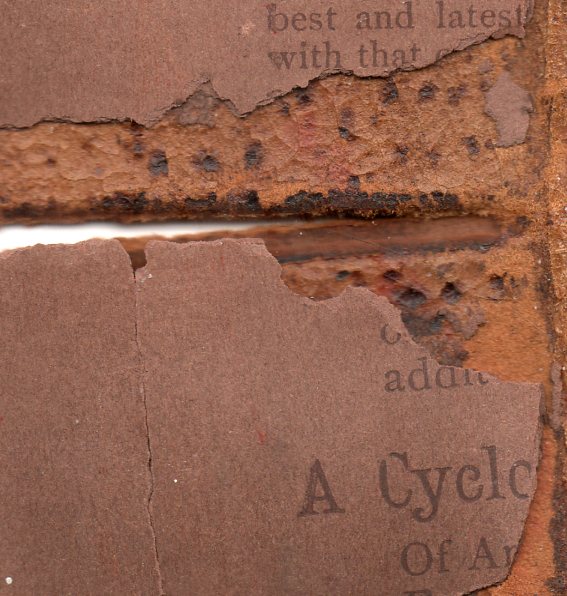
  • Found-Art in Book Fragments

    JF Ptak Science Books  Quick Post

    All art found in situ

    Book art found171

    Detail from:


    ·Posted by :

    ·in:


  • The (Really) Last Word in Skin Care: Lip Prep, Eye Sealing, Cavity Solidifiers and the Rubbery Chemical Appeals of Embalming Fashions

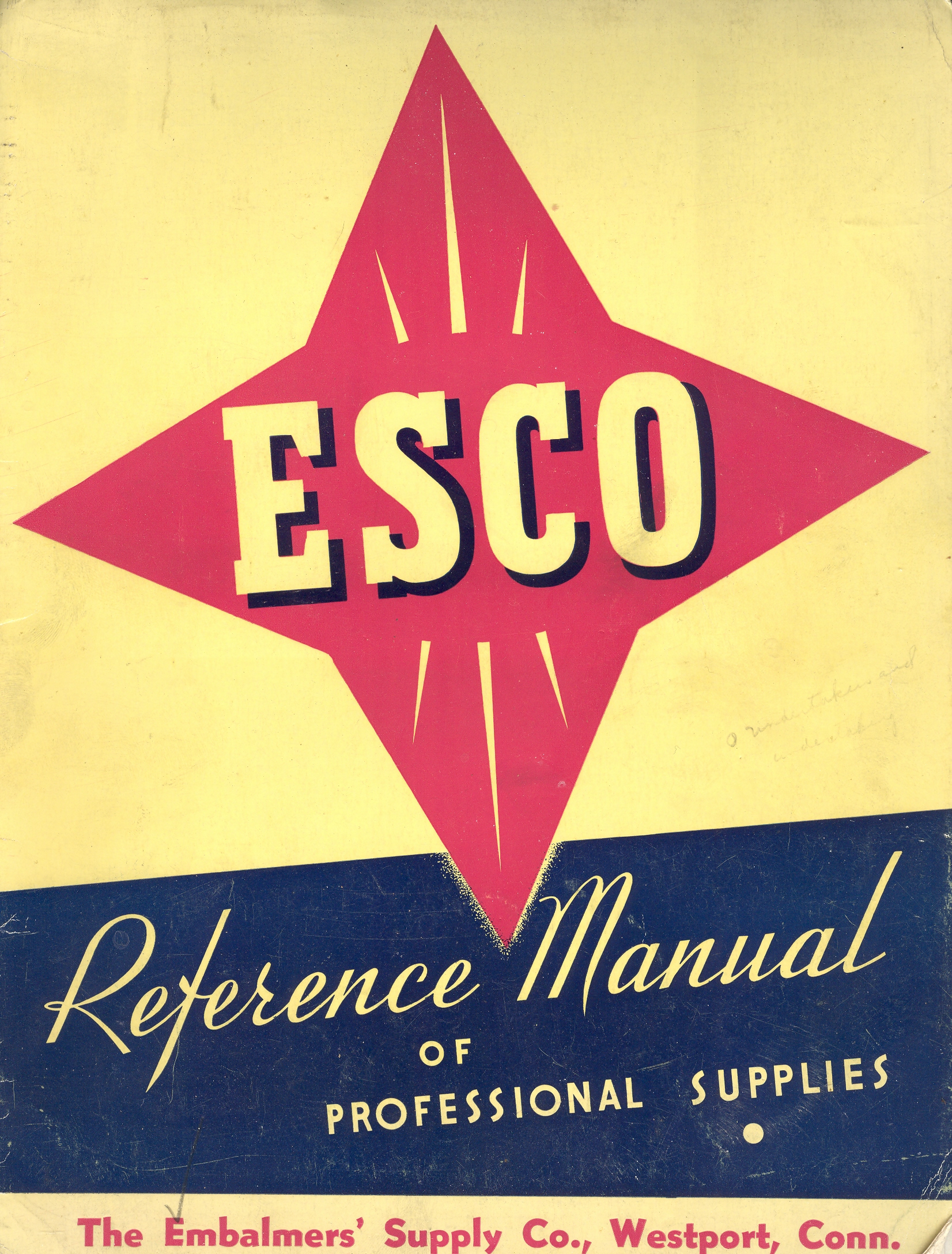
    JF Ptak Science Books    an expanded post (#975) from 2010Mar 13 esco cover

    This carefree stroll through the geology of death prep and care comes to us via the Embalmers’ Supply Company (ESCO) catalog, of 1941, serving and selling to members of the embalming profession since 1886.  It provides the Practioner with all means necessary to scrape away facial muscle, cement the jaw, seal the eyes, color “old age” eyebrows, fill cancerous cavities, mold over gaping wounds, position the arms, contour the chin, scoop out the brain, replace the blood, pull out the bowels, and all other manner of removal/drainage/fillup, and then apply makeup to cover all suture wounds and other “deficiencies”.

    Mar 13 eye sealer


    ·Posted by :

    ·in:


  • The Old is New Department: Refuting Darwin with Commas, Adjectives, and the Creator

    JF Ptak Science Books

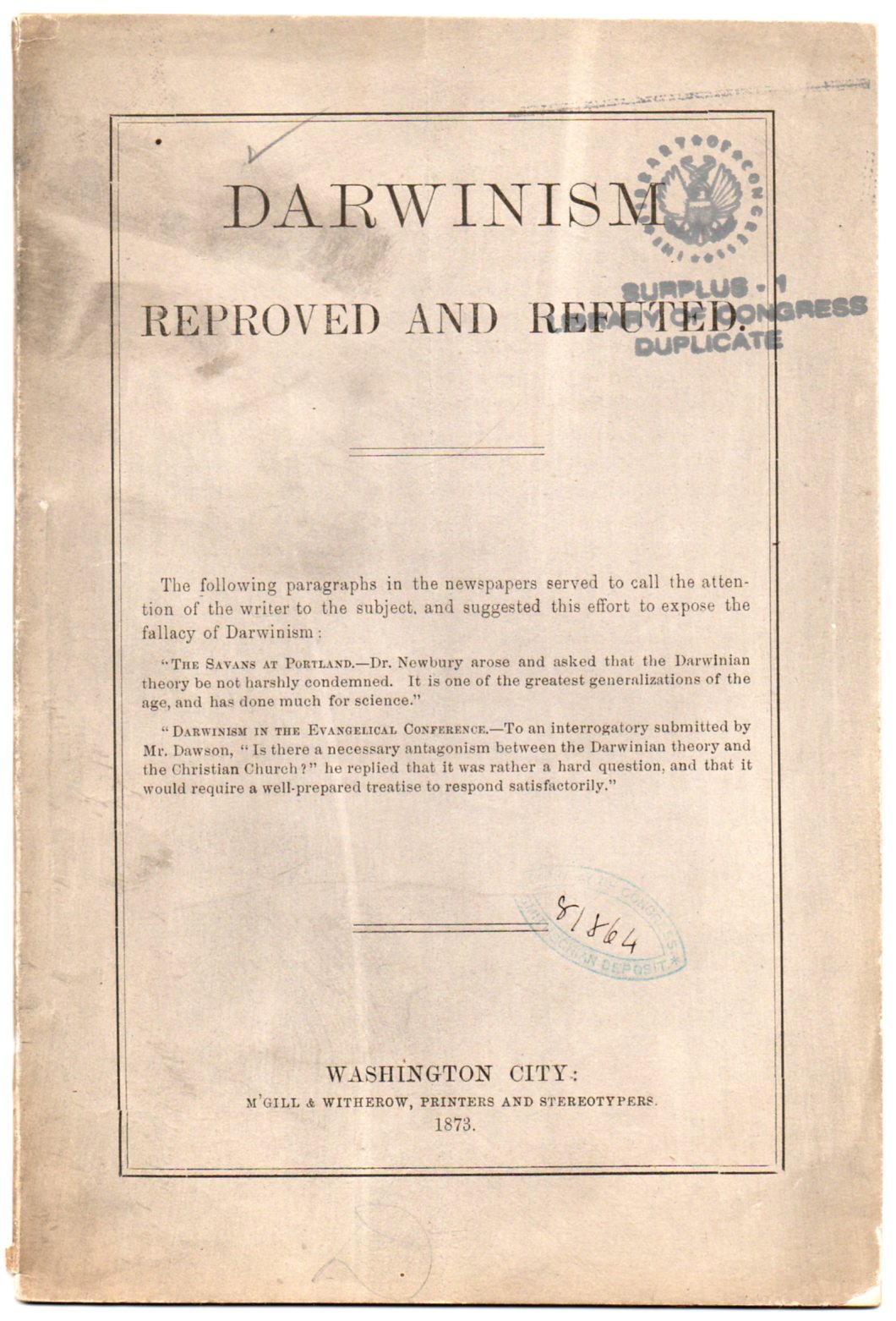
    Darwin refuted296

    [Darwinism Reproved and Refuted.  Washington, D.C., 1873.  7×5 inches, 25pp.] 

    I wasn’t going to write anything at all about this pamphlet, but the vocabulary was so strong and vehement, and reminded me so much of what we can read in today’s daily press, that I thought to at least pick out some of the choice morsels. 

    Darwinism Reproved and Refuted, published in Washington D.C. in 1873, is left without any attribution to the author, the writer not caring to sign his/her name, not even to use as the wood into which some shingle with a weak social sciences/psych/religious Ph.D could be nailed.  It is just left to the imagination or indignation that the writer didn’t or couldn’t feel confident enough to actually sign their work.  

    The author has little room for Mr. Darwin’s work1, clearly on a super-rant over The Descent… and on the theory of evolution, using such colorful words in runny purple prose like “\repugnant, revolting, unsophisticated, outrage, deadening influence, peculiar, fallacious, cunning”–and this coming from the first two paragraphs.  Needless to say, even though  the writer was too weak to sign their name, they did have some strong opinions. 

    “Utterly false, radically and fundamentally wrong, futile in the extreme, unreliable, ungrounded, false, short-sighted (in relation to god), ridiculous…” continues the author. The endowments of the Creator stuff doesn’t work its way in until the third page, when the adjectival and adverbial assault was already on it way, all without the assistance of any scientific counterexamples–but then the rest of the work is dedicated to proving the godless nature of Darwin’s work and its escape from scientific reality.

    We find this:  “Evolution is founded on materialism, which is another term for atheism”….”let this doctrine be compared with the Mosaic account of creation, and then the student of nature determine if he will choose for his progenitors Darwin’s pair of ring-tailled [sic] monkeys, or ‘Adam…’ “

    And so that’s what we get to in the refutation:  the Creator.  Old version of a contemporary complaint to get Darwin tossed out of classrooms to protect the youth of America, replacing it with divination.  The author writes:  “In the investigation of nature which is the proper province of the scientist, the most effectual method of studying it, in order to render this subject clearly intelligible to the human mind, is to regard the economy of nature as a form of government, having God for its founder, its Supreme Ruler, and Law-giver.”

    There’s not too much one can do with that, and even though it sounds antique, isn’t necessarily so, because the philosophy exists today, only with fewer commas. 

    Notes:

    1.  By 1873 Darwin already had produced an epochal body of work, including but not limited to On the Origin of Species by Means of Natural Selection, or the Preservation of Favoured Races in the Struggle for Life (1859),  On the various contrivances by which British and foreign orchids are fertilised by insects (1862), On the Movements and Habits of Climbing Plants  (1865), The Variation of Animals and Plants under Domestication (1868), The Descent of Man, and Selection in Relation to Sex (1871), and  The Expression of Emotions in Man and Animals (1873)

    ·Posted by :

    ·in:


  • Physical O’Review, 17 March 2014

    JF Ptak Science Books        St. Patrick’s Day entry

    We did a little decoration of the house today for our younger daughter, who as it turns out is very interested in St. Patrick’s Day.  So there were green pancakes, green milk, and a green pastry, surrounded by all of the green markers we could find in the house, plus cut-out shamrocks, and piles of books bound in green or with green dust jackets.  As it turns out, there are not many green books–just eyeballing it says low single digit percentage.  

    The funny thing is that the green books are so interesting:  for example, there’s Lewis Carroll, Sylvie and Bruno; Stafford Artful Science; Schwillinger The Mathematical Basis of the Arts; Johnson’s New Universal Cyclopedia, a Scientific and Popular Treasury of Useful Knowledge (in four massive volumes); The Working Classes of the United States (1867);  Ed. Guerard Dictionnaire Encyclopedique d’Anecdotes; Bynum Dictionary of the History of Science; A Natural History of American Birds of Eastern North America; J.A. Symond The Renaissance in Italy (6 vols!); Holmes The Age of Justinian and Theodora; Jenks The History of Australasian Colonies; Hall Color and Meaning; The Works of E.A. Poe; and The Works of Charles Dickens.

    The Dickens set is the so-called “Household Edition”, which is shorter than you’d expect, the size of an old-standard paperback, but very nicely bound in a dark green linen that feels great in your hand.  There’s also the Collected Works of George Orwell, except those dust jackets are half green and half white, and it doesn’t quite make it.  

    But the way I see it, this list of green books would make a Green Year Reading List and would really add up to something on day 365.  

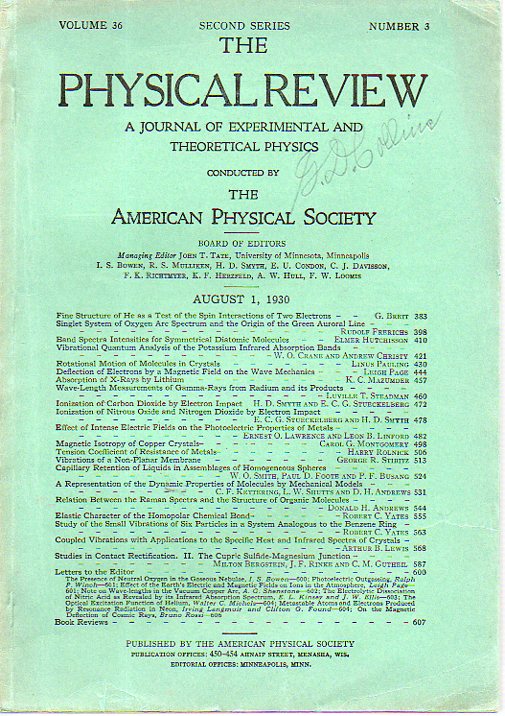
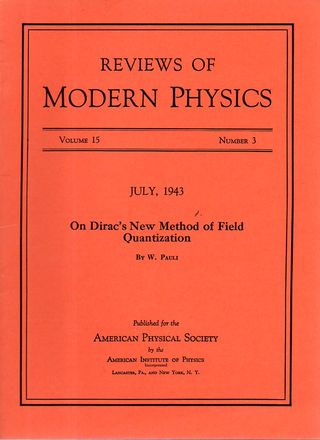
    I saved the biggest green for last:  The Physical Review.  There were a few odd copies up here in the house (with R.P. Feynman contributions), but down in the warehouse there are easily two very large bookcases filled with them, a good green wall.  The funny thing is that a younger sister publication, Review of Modern Physics, which is the same size and format as its older sister, is published with orange wrappers.  And yet the two sit happily side-by-side…so far as I know.  


    ·Posted by :

    ·in:


  • On American vs. Japanese Propaganda in Occupied Peking, Sino-Japanese/WWII

    JF Ptak Science Books     Post 2179  

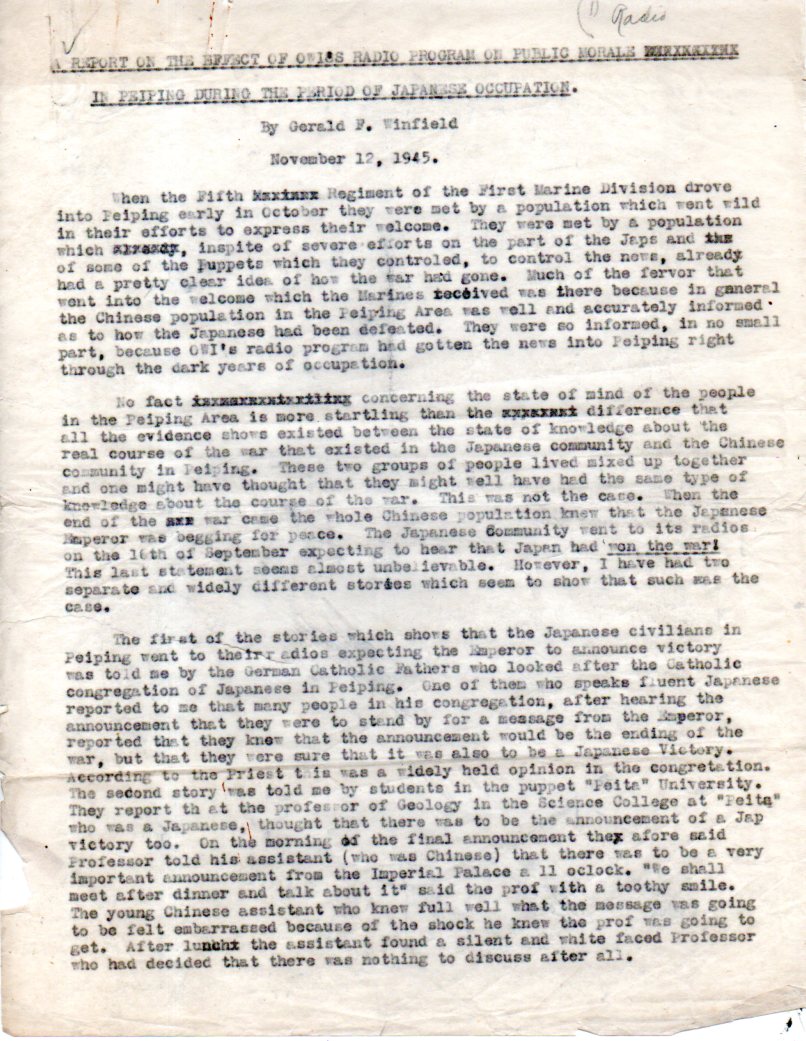
    I stumbled upon this very interesting bit of information in the hoard of materials I purchased of the Library of Congress years ago.  “Report on the Effect of OWI’S Radio Program on Public Moral in Peiping During the Period of Japanese Occupation”, by written by George F. Winfield (November 12, 1945) might sound fairly high and dry, but it brings out a very interesting series of points, one of which was that the Chinese of Peking were far more informed on the progress of the war than their Japanese occupiers.

    Japanese Prop117

    Japan began this second war (following the first Sino-Japanese War of 1894/5) in July 1937 (more than two years before the beginning of the European war in September 1939).  It followed decades of “incidents” between the two countries, revolving into pre-war (if there is such a thing) in the early 1930’s before the beginning of full out-and-out war in 1937.  The War of Resistance Against Japan (for the Chinese) and the Great Holy War and the Great War of East Asia (to the Japanese) was an enormous conflict, claiming three million KIA and WIA on teh Chinese sjide and about half that for the Japanese…plus between 15 and 25 million Chinese civilian deaths and untold numbers of wounded.  I don’t know if there is a figure for displaced people, children left parentless, and war rape.  

    There were nine years of brutal occupation by the Japanese, during which time the Chinese received some minimal if not risky help from the Allies.  It is interesting to see in this report that the occupied Chinese were expecting the announcement of surrender because they had been kept informed via the Office of War Information (OWI) radio broadcasts that were received without interference from the Japanese (“the OWI’s radio program had gotten the news into Peiping right through the dark years of occupation”).   Winfield writes that even though the two groups lived within each other’s spheres, they did not share the same information from radio broadcasts.  According to this report, when it was announced that there would be an announcement from the Emperor that the Japanese in Beijing thought it would be the announcement of the end of the war–but with a Japanese victory.  After years of propaganda from their own government, the Japanese in Beijing were in general totally surprised by the announcement of surrender, the occupiers occupied by the lies of their own government.  

    ·Posted by :

    ·in:


  • Bizarriana Logica: Japanese Nazis Stole the Lindbergh Baby (1944)

    Lindbergh kidnapping116JF Ptak Science Books             Daily Dose from Dr. Odd

    America was obsessed with the Lindbergh Baby for years after the case was decided and the kindapper executed. Decided or not, the crime captivated many, and people continued to debate the case; and as time progressed, the conspiracy theories regarding the kidnapping seemed to reach out to explanations further and deeper into the Deep and Far.  

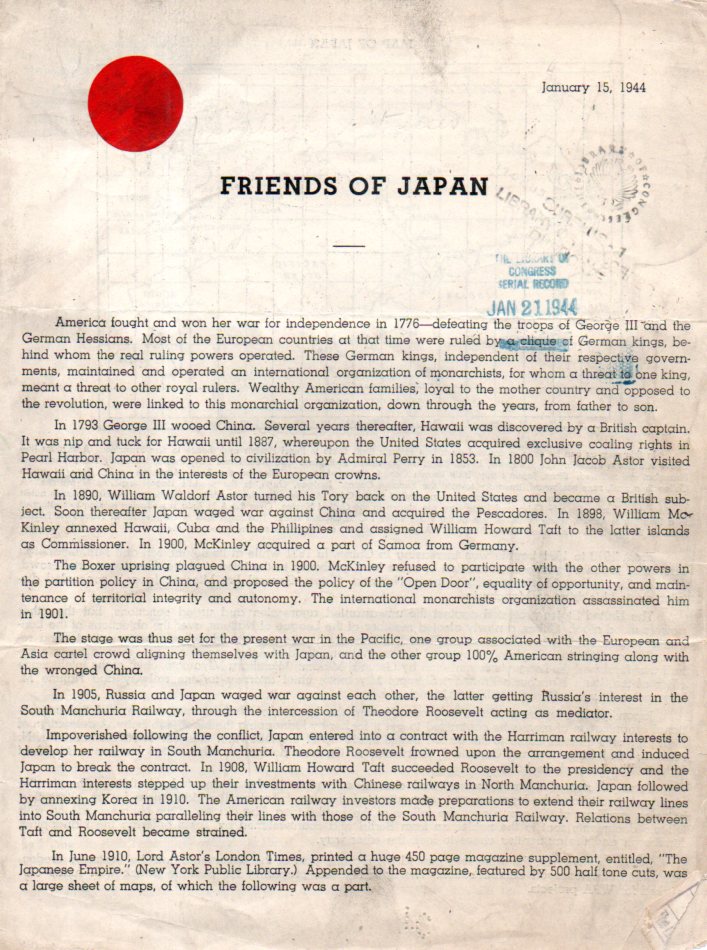
    This four-page pamphlet, published in 1944 by “The Lindbergh Witnesses”, a conspiracy group evidently stationed on hapless Staten Island, pushes the barriers a little further, contending that the Japanese Empire and the German Nazis and a secret church and even the Republicans orchestrated the crime.  

    The “friends” of Japan turn out to be co-conspirators in the case to what becomes the “barbarian Japs” and their Berlin counterparts.  This was easy stuff to believe, I guess, what with the world at war, even when most of their evidence seems to be exceptionally flimsy and invisible.  

    ·Posted by :

    ·in:


  • A Navajo Artist as a Reverse Outsider? (1889)

    JF Ptak Science Books   Post 2177

    Indian out083

    At first I though that this pamphlet was going to led us into a way-of-thinking, or sensibility, about aboriginal non-technical people thinking and relating mechanical and technical ideas.  I also thought it might relate in some way to the absence of the advanced Chinese civilization in the 17-19th centuries (for example) of drawing technical ideas in a standardized fashion, in perspective, which I thought was so well done in the West and which helped lead to the great scientific and industrial revolutions to come.  

    It relates to neither, but it does in a way tell us the story of an American Indian  artist from the 1880’s responding to outside influences in the Navajo world.    

    The paper is “A Navajo Artist and his Notions of Mechanical Drawing” by R.W. Shufeldt (1850-1934), which was published in the Annual Reports of the Smithsonian Institution for 1886 in 1889, and it tells the story of a remarkable artist who seems to have rendered great tech details from scant experience and deep memory. (Shufeldt, an Army surgeon ornithologist, and osteologist and some sort of highly questionable ethnologist, published this just before he was relseased from his Smithsonian duties for disgraceful behavior.  He abandoned wives, was an Indian graverobber, and other unsavory things, even while being the curator of the U.S. Amry Medical Museum.  He lost much of his vaguely-tempered appeal for what he regarded as “savage races” over the next decades, publishing The Negro, Menace to American Civilization in 1907 and America’s Greatest Problem, the Negro, in 1915. This in effect sums him up, and makes hm an early American version of Alfred Rosenberg-light, or at the very possibly least, a published racist of high order.1)

    The paper–coming right at the end of the Plains Wars and just a few years before the Massacre of Wounded Knee–treats it subject with great distance and superiority. The artist’s name is “Choh”, the son of Esta-yeshi, who was the older sister of “one of the best-known sub-chiefs of the Navajo Indians”, Mariano, who lived in “crudely constructed habitations” on the hillsides near Fort Wingate.  (The Fort was established near Gallup, New Mexico, in the early 1860’s to help control the Navajos to its north; from 1873-1886 it was used in actions to its south in the Apache Wars. At about the time the author of this pamphlet visited the Fort Douglas MacArthur was taking his first breaths.) 

    Choh’s face was disfigured by an incident when an infant, though as a young man of 22 or 23 in 1886 “he (was) by no means a stupid clown we would take him to be”.  


    ·Posted by :

    ·in:


  • Kolberg and Sachsenhausen, 1945–Visions of Harsh Fantasy and Harsher Reality

    JF Ptak Science Books 

    At the end of WWII there was a tale of two battles, both by the name of Kolberg.  One was a propaganda tool filmed in Agfacolor at the demand of Josef Goebbels, a movie begun in 1944 about the mythically-endowed victory of Germany over Napoleon at Kolberg.  It was an epic, costly movie made at a time when the 180,000 “extras” composed of Wehrmacht troops could not be spared, but it was seen by Hitler and whoever was around to agree with him that a movie selling selflessness and sacrifice (blood sacrifice) was more valuable than a military victory1. When it was finally put to bed, the movie “opened” virtually nowhere in Berlin in January 1945, as  the city was becoming a bombed-away shambles–much more so in the next three month.  The visions of resistance-to-the-last-breath played in few places outside of Hitler’s bunker, where the dictator professed the qualities of sacrifice and the fight-to-the-death messages in the movie, though not applying those necessaries to himself.  

    The other Kolberg battle was the Battle of Kolberg (a Baltic seaport city in Pomeria located about halfway between Berlin and Koenigsberg), which took place in real life from 4-18 March 1945.  It was a fight between the Germans and combined forces of the Soviet and Polish armies–it ended in Polish hands on the 18th following the retreat of the Germans and he destruction of most of the city.

    It is ironic that the defeat of the Nazi forces in the real city of Kolberg occurred at nearly the same time as the wasteful film of the 1807 battle extolling the virtues of heroism and sacrifice was released.

    It is interesting too that the  actor depicting the leading German hero in the movie Kolberg (directed Veit Harlan and Wolfgang Liebeneiner)  Heinrich George–who acted in a number of Nazi propaganda films after finding ways to get back into favor following his pre-Nazi pro-Communist politics–found himself arrested and imprisoned in Sachsenhausen concentration camp, where he died of “complications” in 1946.

    Sachsenhausen was one of the longest-lived concentration camps, being in operation from 1936 to 1950.  From its beginning to May 1945 it was of course a Nazi concentration camp (Konzentrationslager Sachsenhausen), where from 1943 until the fall of Nazi Germany it was also an extermination camp.  As many as 200,000 people were seized and sent through Sachsenhausen and its satellite/tributary camps. From the end of 1945 to 1950 it was operated by the Soviet Union, where another 15,000-30,000 people were imprisoned, Heinrich George being one of them. 

    In addition to the many horrors of Sachsenhausen, there was also this–it was the center of a plot to destroy the British economy with the production and distribution of a hundred million pounds worth of counterfeit British currency.  The lead counterfeiter at Sachsenhausen, Salomon Smolianoff (a gifted artist who once said “why make art when you can make money?”) was an inmate with exceptional skills and who basically headed the team of workers responsible for this effort,  For good work in his part of pulling down the economy of Great Britain, Smolianoff was rewarded with an occasional go at a ping pong table, as well as less-rancid pieces of meat. 

    File:Forgednote.jpg[One of the forged Sachsenhausen notes.]

    This was operation Bernhard, named for its director, SS Major Bernhard Kruger (the leader of the VI F 4a Unit in theReichssicherheitshauptamt (Reich Main Security Office) or RSHA), who was responsible for the operation from 1942, and which eventually extended from Sachsenhausen to other camps, most notably a major operation at Auschwitz.  More than 134,000,000 pounds of what the Brits considered to be the most perfect counterfeits ever were produced, but for various reasons–not the least of which was sabotage instigated by extraordinarily brave concentration camp internees–the vast part of the plan was never implemented. 

    As it turns out, Smolianoff survived Sachsenhausen, survived the war, and then became a puff of smoke. He was a wanted-but-not-found fugitive, and spent his last days in Brazil, painting.  And creating toys.  He died in 1976.

    Bernhard Kruger (born in 1904), also survived the war.  When the pound-forging plan was scuttled in 1944, he moved the idea over to American currency, which he worked on until the end of the wat.  Although he was kept by the British for two years, and then by teh French for one year, he was eventually released, and faced no charges until a Denazification court ordered him to trial, where he was somehow acquitted.  He died an old man, aged 85, in 1989, in his bed. 

    Notes:

    1.  At least this is so as reported by Sir Ian Kershaw in his biography, Hitler, 1936-1945.

    ·Posted by :

    ·in:


  • Mr. Mencken, Unterrified Jeffersonism, and the Anarchist

    JF Ptak Science Books    Quick Post

    Tucker mencken605

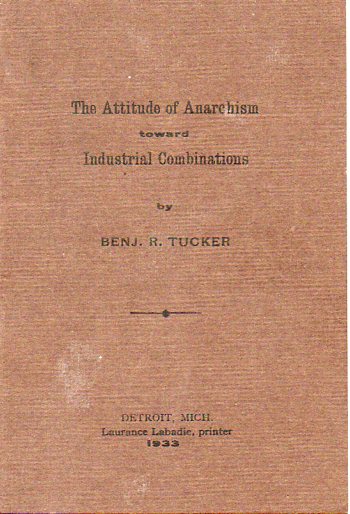
    The long-spirit anarchist (and “Unterrified Jeffersonian”) Benjamin R. Tucker (1854-1939) wrote  “The Attitude of Anarchism toward Industrial Combination” in 1926, but we see it here printed in Detroit (by Lawrence Labadie) in 1933.

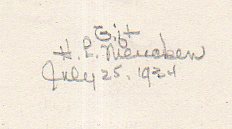
    It is interesting to see on the inside of this tiny pamphlet that the anarchist Tucker’s work was sent to H.L. Mencken, as a gift from the printer.  It wouldn’t stay long in Mr. Mencken’s possession, as he sent it (along with a number of other works by Tucker that I can’t lay my hands on at the moment) to the Library of Congress in July 1934 (and coming into my possession as part of a purchase of “the Pamphlet Collection” 65 years later.).  I’m  not so sure about what Mr. Mencken would have thought of most of it, only that he didn’t keep it for long.  Despite what might seem to be his “Tory Anarchism” and general oppositionist stances, left and right, whatever they might have meant at the time, it looks like he received the pamphlet and sent it on its merry way to join its brethren in Mr. Jefferson’s library. 

    The full text of the pamphlet in an earlier version is found here.

    Tucker mencken607


    ·Posted by :

    ·in: