A Daily History of Holes, Dots, Lines, Science, History, Math, Physics, Art, the Unintentional Absurd, Architecture, Maps, Data Visualization, Blank and Missing Things, and so on. |1.6 million words, 7500 images, 4.9 million hits| Press & appearances in The Times, Le Figaro, Mensa, The Economist, The Guardian, Discovery News, Slate, Le Monde, Sci American Blogs, Le Pont, and many other places… 5000+ total posts since 2008.

Category: Chemistry, history of

  • History of Anticipation: Waiting for Everything

    JF Ptak Science Books     Quick Post   Part of the History of Anticipation series and the History of Blank, Empty and Missing Things series.

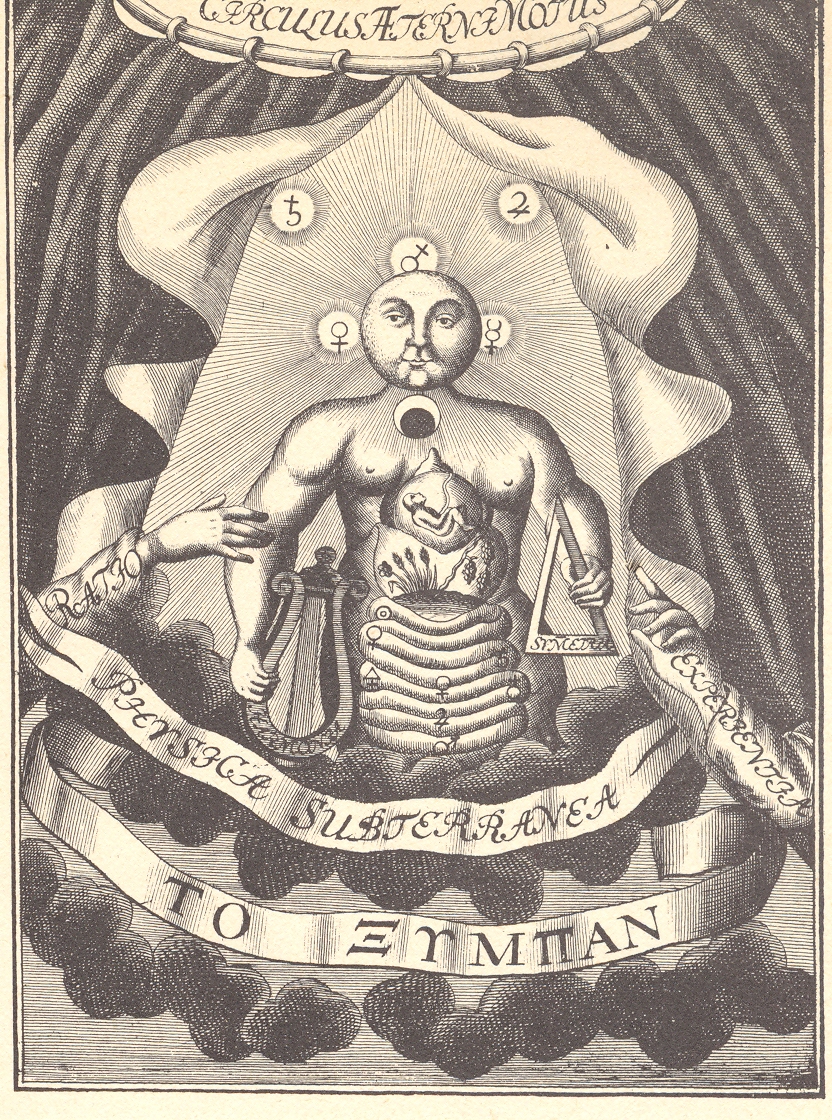
    Alchemy is far from my strong suit (or even a weak suit), but I was intrigued by this engraving found in Annibel Barlet’s Le Vray Et Methodiqve Covrs de La Physiqve Resolvtive, Vvlgairement Dite Chymie: Represent Par Figures Generales & Particulieres. Povr Connoistre La Theotechnie Ergocosmiqve, C’Est Dire, L’Art de Diev, En L’Ovvrage de L’Vnivers…, which was ostensibly a work on alchemy, the second edition (used here) published in 1657.  Taking  a quick tour through the book it looks far more applied, far more medically-oriented, than a standard work on alchemy.  (And by “medical” I’m really meaning “pharmaceutical.)  I don’t have the knowledge really to say  much about the application of the Paracelsian alchemical chemistry and how much the various human natures/humors/metals etc. come into play with the prescription–I’d say offhand that the Rxs would be necessarily a little suspect. 

    [Images courtesy of the Beinecke Library, Yale University].
    I’m visiting the book here though because of the image above, showing the hands of the Primum Mobile (or god) about to see themselves busy with the job of creating everything.  Or almost everything, as the shape of the container of All Things seems to be in place, held by the creating influence in an existence outside of the existence of existence.   Perhaps the artist was just depicting the local existence, with the hands and etc. located in the space beyond the known solar system of 1657, showing the alchemical creation of order in the vast sea of chaos.  It is curious to me how many concentric circles there are in the suggestive orb of possibilities, especially since the following image in Barlet’s book shows considerably fewer place-holders.  Perhaps this is all easily explained with a little knowledge of alchemical history, which is something that I do not possess–but for the time being, I’m very entertained by what might be an excitement in that first engraving of the things-to-come. 
    Later in the book is found this interestingdiagram bringing together some of the complicated alchemical beliefs of elemental relationships, this showing the coming-together/convergence of elements, humors and geocosmic bits
    A diagram of a square divided into four triangles within a larger circle illustrating the convergence of elements, humors, and geocosmic factors in the thinking of Paracelsian chemical physicians.
    Le vray et methodique cours de la physique resolutiue, vulgairement dite chymie by Annibal Barlet

  • Newton and his 351st Trinity Anniversary: a Note on Ending his Research in Alchemy.

    JF Ptak Science Books  Post 1505

    http://www.rebeccastott.co.uk/webimages/trinity.jpg

    I’ve made a number of posts on this blog regarding the anniversaries of the Trinity atomic test explosion on 16 July 1945, out there in the desert–actually in the Jornada del Muerto, the Journey of the Dead Man/Dead Man’s Walk, near Socorro,  New Mexico.  Its a bad piece of land if you wanted to cross it, especially if you went north-to-south, a hundred mile bit of an unrelenting waterless world.

    But that’s not the Trinity I want to talk about now–today’s Trinity is about as far removed from the flat piece of dry New Mexican earth as you can get, being the beautifully maintained Renaissance grasses of Trinity College at Cambridge. The call to this Trinity, today, is in observation of the 351st anniversary of the arrival of Issac Newton (1642-1727) at that college.  1660 is not an auspicious year in Newton’s history, necessarily, but it is the beginning–Newton’s enormous years would come in just a little bit, getting well underway during the Plague Years in 1665/1666, when he left the school to ride out the nasties in his native Woolsthorpe1.

    Myk favorite image of Trinity is the one above, printed not too long after Newton’s return2, and after he had set up his own alchemy lab in a lean-to shack against the wall of the school (slightly visible here in the lower right corner.). Newton’s decades-long run in the alchemy turnstile is well known, but what I’d like to know is why he gave it up.

    My feeling is that Newton believed he was missing a big something in his way of looking at and understnanding, expressing, the world.  I think that he recognized the failing of physics and math to explain the vitalism (in the alchemical sense) of the world, and that alchemy might provide it.  Thinking that this vital agent was in a way divine, in a way a product of divine interaction and participation, Newton may have used  alchemy in the hopes that this area of study .would get him closer to that cause of all spontaneous processes that would explain all of the varieties and vagaries of living stuff.  He might have viewed this creative process in the Old Testament sense of god using light at the beginning of the world, activity life in nothingness; Newton may have actually thought of this process as alchemical in nature.

    There has been much written on Newton and alchemy, and I  know almost nothing about it. Knowing the anniversary was upon us, and seeing the print of Trinity, and seeing again that little shack where Newton spent so much concentrated effort, all conspired to make me think about what led Newton to give it all up.  He stopped just as he was leaving the school for London to become director of the Mint, undertaking a big change in his life.  His superhuman insight was about done by this point, even though his Optics would come a little later on, in 1704–most of that work was already completed, with Newton waiting, perhaps, for any troubles that he felt he was going to have upon the book’s publication to fade away.  And in this case, the problematic part did fade away, into dust, with the death of his long-worn enemy, Robert Hooke, in 1703.  And its not that Newton faded away over the next few decades, he was still an exceptional powerhouse of an intellect to the very last, molding the new Scientific Revolution from his position as president of the Royal Society.  And hen there was the oversight of the Mint.

    But he pretty much gave up alchemy around 1697, and that, as they say, was that.  I wonder what it was that he found or didn’t find; whatever it was, it wasn’t among the million or so very chosen/careful/hidden/coded words in his (very) private (and not-intended-to-be-published) writings on the subject.  What was in that final dot at the end of the last recorded sentence on alchemy, I wonder?

    The other part of this print of Trinity that I so love is in the foreground, where the artist–or engraver–decided for whatever reason to include a tiny scene of two fighting/playing dogs.  Dogs and the shack, and the rest of the grandeur. 

    Notes:

    1. Newton graduated in 1665 without any particularly noted academic achievement.   Of the plague years, Newton wrote:  “All this was in the two plague years of 1665 and 1666, for in those days I was in my prime of age for invention, and minded mathematics and philosophy more than at any time since.”

    Newton returned to the school in 1667 and was made a (minor) fellow; he took his masters in 1668, and in 1669, by the appearance and promise of his great genius, Newton was named Lucasian professor, filling the seat of Isaac Barrow.  Newton was 27 years old. 

    “The more Newton’s theological and alchemical, chronological and mythological work is examined as a whole corpus, set by the side of his science, the more apparent it becomes that in his moments of grandeur he saw himself as the last of the interpreters of God’s will in actions, living on the fulfillment of times.”–F.E. Manuel, The Religion of Isaac Newton (1974).


  • On the Under- , Partial and Full Discoveries of Oxygen

    JF Ptak Science Books LLC  Post 574

    Oxygen
    Our sea of air is composed of atoms, and the atoms are
    mostly nitrogen (78%) and oxygen (21%), and the atoms are of course all around us; though
    as obvious as it is, as present as it is, the most active component of air, oxygen,
    remained under-discovered until relatively late in human history.  Oxygen is present in all major classes of
    structural molecules in living organisms and in all manner of inorganic
    compounds, and is   When it was
    discovered, it really wasn’t; or it wasn’t discovered and recognized until the
    second time around.  But the stuff that
    was whirling around its near discoveries were important in themselves for their
    constituent parts. 

    Johann Joachim Becher (born in 1635 and dead at 47 in 1682)
    got part of the way there, though he didn’t discover oxygen—he discovered the
    thing that oxygen wasn’t: 
    phlogiston.  But the phlogiston
    theory worked a little, but not a lot. 
    The theory appeared in his book Physica
    subterranean profundam subterraneorum genesin e principiis bucusque ignotis…
    and
    was published in 1669. (Actually, his Subterranean book was published just a
    few years after our old friend Athanasius Kircher’s masterpiece Mundus Subterreaneus. Just a tired note
    from the small-world category.)  Actually
    what the phlogiston theory “did” was explain the process of fire and
    oxidation—phlogiston was the colorless/odorless/undetectable stuff that was released
    from the combustibles of the four elements of the Greeks when they rusted or
    caught on fire. Once the phlogiston was released, the true nature of the
    material that once held it was then revealed. 
    As James Conant wrote in. The Overthrow of Phlogiston Theory: The
    Chemical Revolution of 1775–1789
    . Cambridge :
    Harvard University Press (1950, page 14):

    “…in general, substances that burned in air were said to be
    rich in phlogiston; the fact that combustion soon ceased in an enclosed space
    was taken as clear-cut evidence that air had the capacity to absorb only a
    definite amount of phlogiston. When air had become completely phlogisticated it
    would no longer serve to support combustion of any material, nor would a metal
    heated in it yield a calx; nor could phlogisticated air support life, for the
    role of air in respiration was to remove the phlogiston from the body.”

    The other thing that happened was that the phlogiston
    released into the air could not on its own support life.  That meant it wasn’t not oxygen, it was the
    opposite of oxygen:  anti-oxygen.  Anti-oxygen is an interesting, very science
    fiction-y topic, a very cool brick for 
    the edifice of contracting imaginary worlds.  But in the world of the late 17th
    century and for another hundred years, it as the material of theory. 

    Becber’s
    Physica was actually not that at all,
    either:  it was a work on chemistry, and
    alchemy, and addressed itself too to the positive possibilities of
    transmutation.  On the other hand, Becher
    was the very first to attempt to construct a theory of chemistry.  As stated by Thompson in his history of
    chemistry:  “(Becher) was the first
    person who can with propriety be said to have attempted to construct a theory
    of chemistry; Boyle, who was responsible for hastening the downfall of
    alchemical and other onions, did not attempt to set out (such a theory)…”

    Joseph
    Priestly on the other hand did actually discover oxygen in 1774—or at the very
    least was the first to get into print about the discovery, establishing priority
    over 
    Carl Wilhelm Scheele who seems to have
    discovered oxygen first in 1773 but was second in print on the matter–but he couldn’t believe
    his own results enough to dislodge phlogiston, and went to his grave an
    unredeemed phlogistonist. ((I admit to being pretty flippant here, as Priestly
    was an enormously talented man, at high rank in part of the great panoply of
    scientists; he was also a great political observer and pamphleteer who paid dearly
     for his morality.)  It took Antoine Lavoisier’s beautiful
    experiment in 1777 that established the work of Priestly and Boyle beyond
    question, killing phlogiston once and for all. 
    As a matter of fact Lavoisier also published his account along with a
    general treatise on chemistry in his
    Traité élémentaire de chemie—a book that looks remarkably fresh for being
    printed in 1789—completely it at age 47, just four years before he was
    guillotined for being seen as an enemy to the people of France.  But that (along with the exceptional Mme.
    Lavoisier, is another story).
     

    _____

    The illustration above is actually from the 1738 edition of Becher.


  • Locating Chaos: Giovanni Della Porta’s Natural Magic and Chaos in the Sky

    JF Ptak Science Books LLC  Post 571
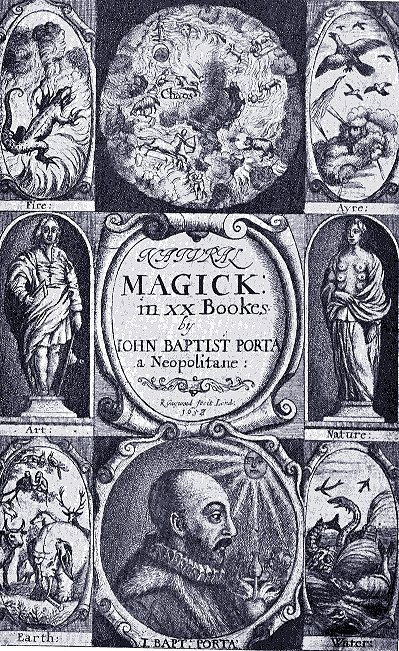
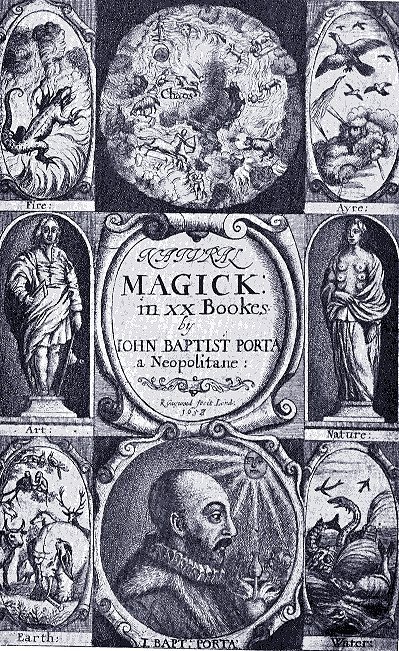
    Porta title page
    Giovani Baptista della Porta was a magus, or a natural
    magician*, who searched nature for similarities that would serve to build a
    broad template of forced  understanding of seeming likenesses, looking for the great connector
    in the exceptional and the unusual, the stuff outside of the formerly
    Aristotlean world.   Natural Magic is his magnum opus, an expansion of  its earlier
    version (Magna naturalis)  published in Latin in 1558, which Porta expanded to twenty sections in 1589. It was an encyclopedic work of vast proportions, a
    gold-mine of information and clever wishfulness, and very accessible due to
    Porta’s  wide inter-personal travel**,
    very wide reading and critical abilities, clear reasoning and deep vision:  the book was hugely successful, going into at
    least twelve Latin, four Italian, seven French, two German, and two English
    editions in the early modern era. Natural
    Magic
    , which first appeared in English in 1658, concerned itself with
    magic, alchemy, optics, geometry, cryptography, magnetism, agriculture, the art
    of memory, munitions, and many other topics, all grouped together and refined,
    distilled, into a cloudy assemblage of natural knowledge—it would end up that the magical
    whole was worth far less than the sum of its parts. 

    But the parts were pretty considerable, and much of the
    information was spot-on for the time, not the least of which was a very capable
    demonstration and explanation of a lensed camera obscura. 

    What I’m interested in right now though is the title page of
    the book.
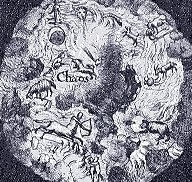
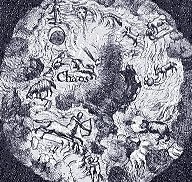
    Porta title page detailIt turns out and as we can see in the top image of the
    title page, Chaos is not some subspace trajectory of cellular automata, or in
    Dr. Brown’s/Einstein’s dancing dust—it is right above us.  This recognition of its regular, localizable structure
    probably does not support parameterization, or anything else for that matter,
    except to say that it is definitely “pretty”. 
    The title page has nine illustrated compartments:  the four corners depict the four elements,
    the two opposing middles show art and nature; the bottom shows the author,
    illuminated by the knowing sun.  The top
    center image is the element showing “chaos”, which I’ve chosen to use a map,
    identifying where exactly chaos might be. 
    I’ve not seen an antiquarian map identifying chaos, though I have seen a
    number showing lots of other non-existent places, like heaven and hell and
    purgatory and Eden and the Kingdom of Prester John, to name a few.  But not chaos.
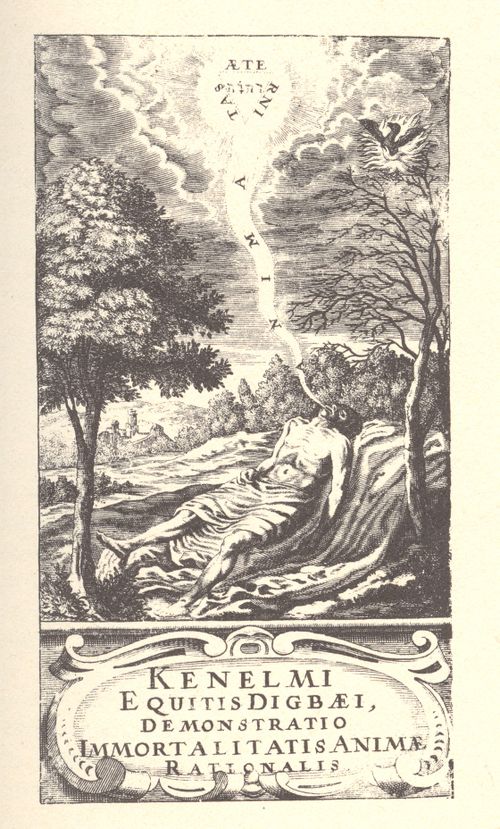
    Porta sky

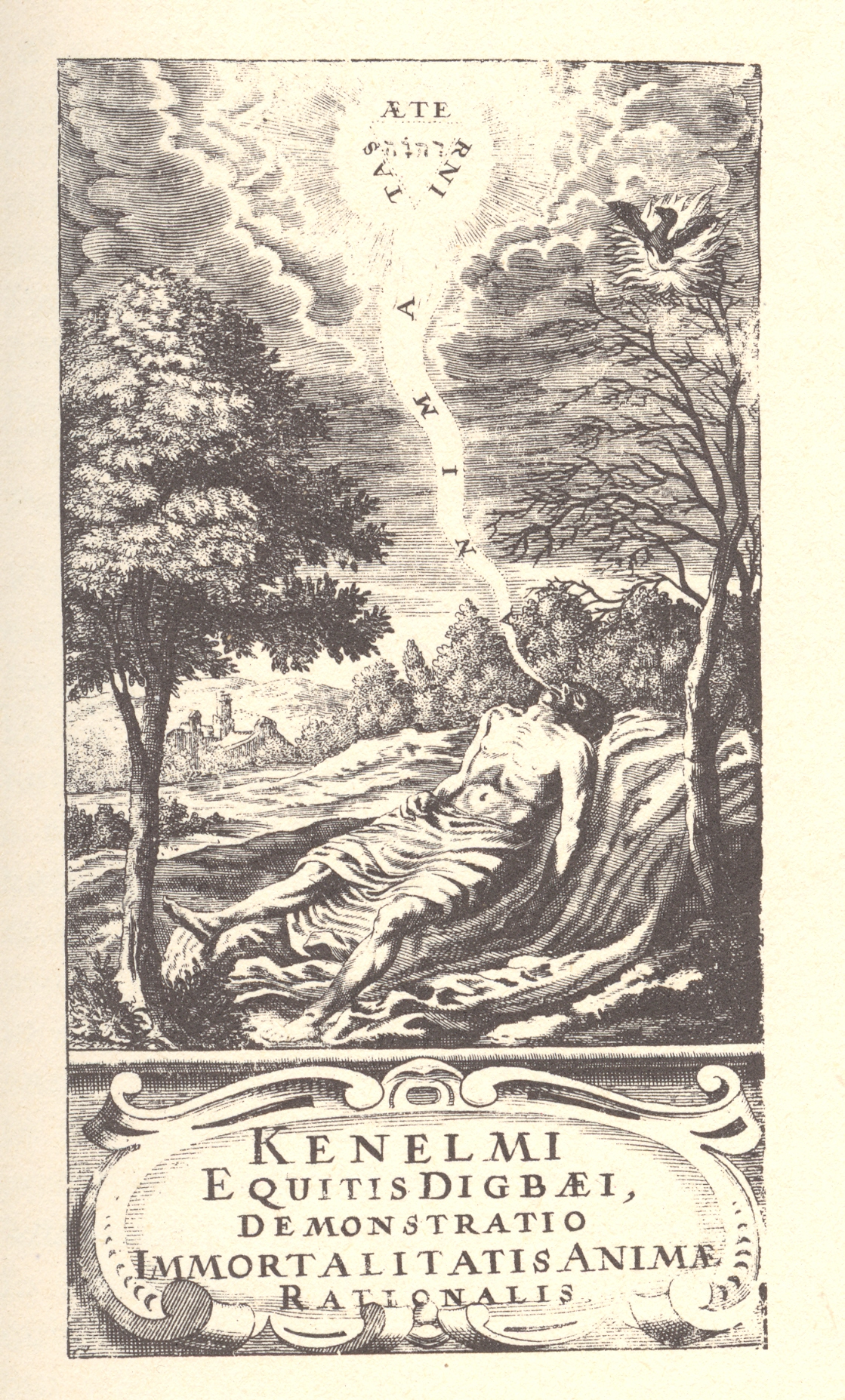
    On the other hand there are many different, substantiated, anthropomorphic objects that wind up in the sky in antiquarian images: there haven’t yet been anything spelling out chaos,  though there are many Hebrew names for the g*d incised and cut into plates of wood and metal.   There are all manners of hands-of-the-creator, gearworks for the Primum Mobile, eyes, doves, geometric shapes, blazing fires, blazing iconic people, multiple worlds, flying people, and so on. But no chaos.

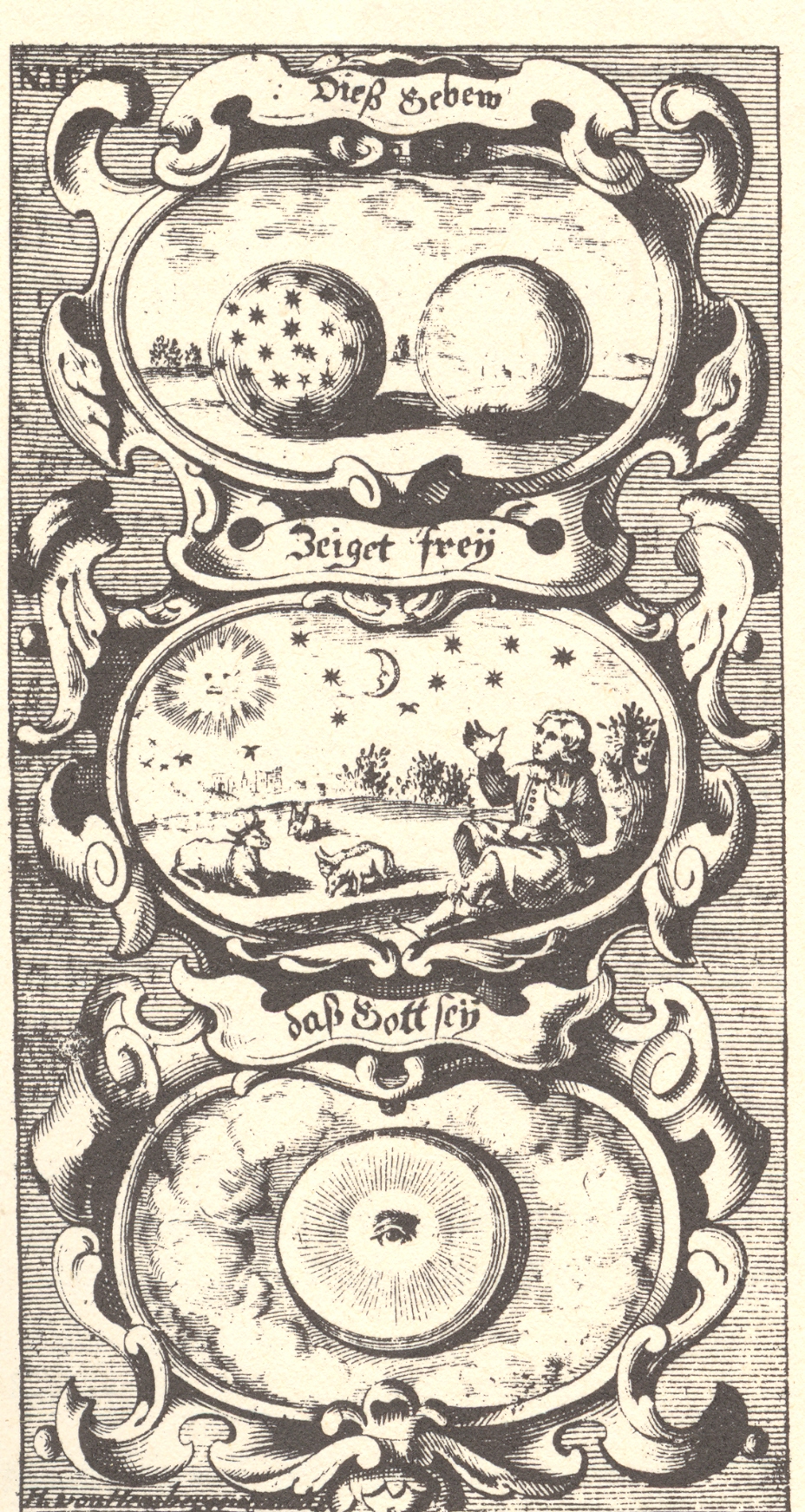
    These are just two examples of the alternative-to-the-sun-in-the-sky category, a wonderful image from Kenelem Digby’s Demonstratio immortabiliitatis animae rationalis, printed in 1664.  The other is a very striking example from J.B.von Helmont’s surviving and prodigal (and prodigiously brilliant) son Franciscus Mercurius’  Das Geheimnuess der Schoepflung.  Printed in 1701, two years after FM’s death (and years after his other brothers succumbed to the Plague), the book was a bit of an amalgamation of the author’s vast and undisciplined interests, which sloshed over into the areas of magic, conjuring, Kaballa and astrology. 
    He had more success editing and translating his father’s works. 
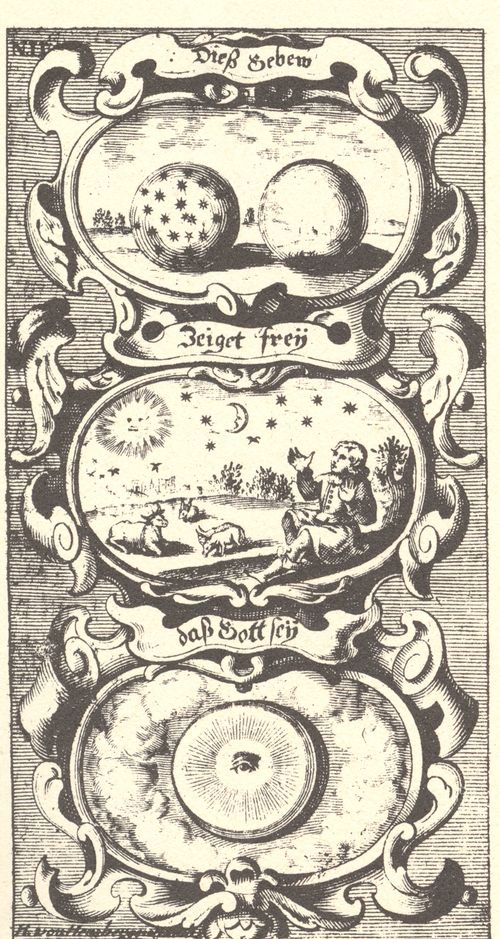
    Porta sky 2
    I admit I’m taking a wide liberty with “chaos”, and that the the first image could simply be the creator stepping in to rid the heavens of chaos, but I liked the idea of chaos being located on a map better.  Mea culpa. 

    * Porta writes in the first chapter, defining the word “magic”:  Magic took her name and original [sic] from

    Persia.
    . . . In the Persian language, a Magician is nothing else but one that expounds
    and studies divine things; and it is the general name of wise-men in that
    country. . . . Magic was begun in Persia by Zoroastres.”

    ** A fair amount of information in this book was derived
    from his own house-bound Academia de
    Secret
    i—a name I now love!—a society of friends and scholars who discussed
    topics ranging from physiognomy to optics to cosmology to conjuring. 

    The Chapters/books of Natural
    Magick
    are shown here below to give an idea of what the book is about:

    The First Book of Natural
    Magick
     “Of the Causes of Wonderful Things.”
     “Wherein are searched out the
    causes of things which produce wonderful effects”

    The Second Book of Natural Magick  “Of the Generation of Animals.”
     “Showing how living creatures of
    diverse kinds, may be mingled and coupled together, that from them, new and yet
    profitable kinds of living creatures may be generated.”

    The Third Book Of Natural Magick  “Of the Production of New Plants.”
     Which delivers certain precepts of
    Husbandry, and shows how to intermingle sundry kinds of Plants and how to
    produce new kinds.

    The Fourth Book Of Natural Magick  “Of Increasing Household-Stuff.”
     Which teaches things belonging to
    house-keeping; How to prepare domestic necessities with a small cost; And how
    to keep them when they are procured.

    The Fifth Book Of Natural Magick  “Of Changing Metals.”  “Which treateth of Alchemy, showing how
    metals may be altered and transformed, one into another”

    The Sixth Book Of Natural
    Magick
     “Of Counterfeiting
    Glorious Stones.
    “

    The Seventh Book Of
    Natural Magick
     “Of the Wonders of
    the Load-Stone.
    “

    The Eighth Book Of Natural
    Magick
     “Of Physical
    Experiments”

    The Ninth Book Of Natural
    Magick
     “Of Beautifiying
    Women.”

    The Tenth Book Of Natural
    Magick
     “Of Distillation.“

    The Eleventh Book Of
    Natural Magick
     “Of Perfuming.
    “

    The Twelveth Book Of
    Natural Magick
    “Of Artificial
    Fires.
    “

    The Thirteenth Book Of
    Natural Magick
    “Of Tempering Steel.
    “

    The Fourteenth Book Of
    Natural Magick
    “Of Cookery.“

    The Fifteenth Book Of Natural Magick “Of Fishing, Fowling, Hunting, etc. ”
    (Complete)

    The Sixteenth Book Of
    Natural Magick
     “Of Invisible Writing.“

    The Seventeenth Book Of
    Natural Magick
    “Of Strange Glasses.“

    The Eighteenth Book Of
    Natural Magick
     “Of Static Experiments.“

    The Nineteenth Book Of
    Natural Magick
     “Of Pneumatic
    Experiments.
    “

    The Twentyth Book Of
    Natural Magick
     “Of the Chaos. “

  • Blank and Empty Things: Disembodied Celestial Hands and Arms, Part 3.

    JF Ptak Science Books LLC    Post 538

    0 blog march 5 missing arm656
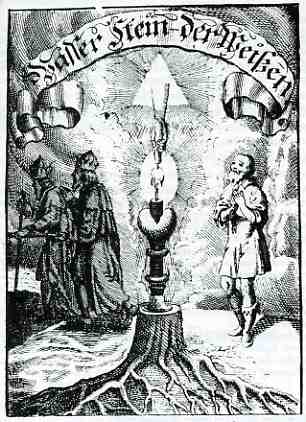
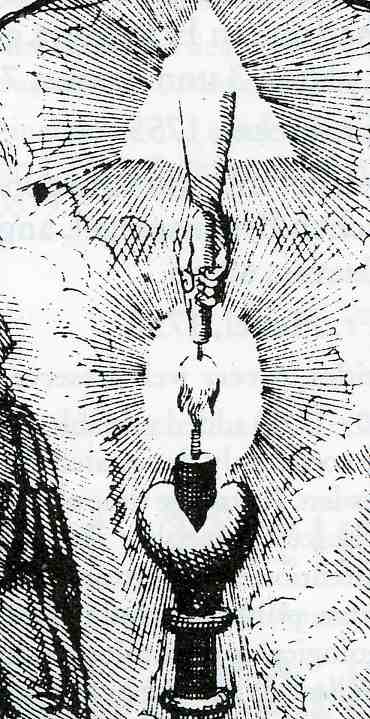
    This wonderful and dimly provocative image from Johann Siebacher’s Wasserstein der Weisen, oder chymisches Tractaetlein…. *, a curious alchemy book of obscured pubom Johann Ambrosius  Siebmacher’lishing heritage, printed around 1660, is a sort of standard celestially-disembodied standard, though in this case the torch-holding hand may be coming through a trinitarian window/hole in the sky, straight from the body of the Der Herr Gott.  Or perhaps not: perhaps this is an illustration of alchemical genius emerging from a Biblical interruption in the sky, igniting a heart-held philosopher’s stone fixed to a well-rooted sepulchre, the very tree of life.  The religiously-robed folks are retreating into the deeper shadow without the sight of the gloriously-enlightened lump, plainly visible to the plain observer.  

    Or not.  Siebacher uses an epigram at the end of his book calling the whole chymical art into question:  “It is an easy matter to prepare gold in the furnace out of metals:
    at times there is found a man to whom the secret is revealed. Why is not
    every alchemist rich? The reason is that one thing is wanting which many
    seek with anxious care. Common gold is not fixed, and, when brought to
    the test of fire, quickly disappears and perishes. But he who knows the
    tired gold, which at all times remains the same, and from which nothing
    is lost, he is the possessor of the true Art, and may be called a good
    and practical Sage and Chemist.” Rich in vision, and in spirit, with holes in the pockets.

    0 blog march 5 missing arm657

    *Johann Ambrosius Siebmacher.
    Wasserstein
    der Weysen, das ist, ein chymisch Tractätlein, darin der Weg gezeiget,
    die Materia genennet, und der Process beschrieben wird, zu dem hohen geheymnuss
    der Universal Tinctur zukommen, vor diesem niemalen gesehen. Darbey auch
    zwey sehr nutzliche andere Büchlein der Gleichformigkeit und Concordantz
    wegen angehenckt, nemlich, 1. Iohan von Mesung. 2. Via veritatis der einigen
    Warheit…
    , Frankfurt, 1619, 1661, 1703, 1704, 1709, 1710, 1743, 1762.

    Or,

    The Sophic Hydrolith; or Water Stone of the Wise, That is, a chymical work, in which the way is shewn, the matter named, and the process described;
    namely, the method of obtaining the
    universal tincture. Chapter
    One:  A BRIEF EXPOSITION OF THE WONDERFUL WATER STONE OF THE WISE, COMMONLY
    CALLED THE PHILOSOPHER’S STONE.


  • Chemistry History under the Cover of Alchemy: William Cooper’s Philosophical Epitaph, 1673.

    JF Ptak Science Books LLC   Post #131
    Blogalchemy_chemistry_catalogue189
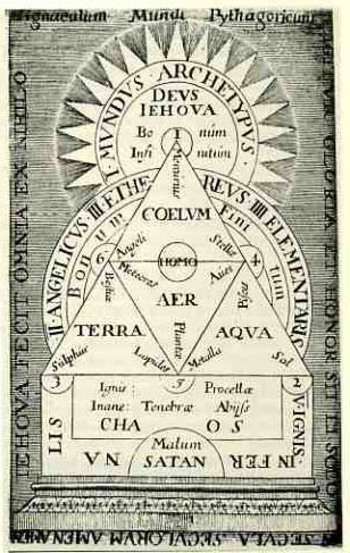
    This lovely and relatively simple Pythagorian organizational chart of “all things” (from the Mundus Archetypus to the layering of chaos upon the Inferno of Satan) appears in William Cooper’s work  The Philosophical epitaph of W.C. Esquire : for a memento mori on his tomb-stone, vvith three hieroglyphical scutcheons and their philosophical motto’s and explanation : with the philosophical Mercury, nature of seed and life, and growth of metalls,and a discovery of the immortal liquor alchahest : the salt of tartar volatized and other elixirs with their differences. Also, A brief of the golden calf, the worlds idol : discovering the rarest miracle in nature… With a catalogue of chymical books (and printed in 1673).

    If we look beyond this pretty organizational fons pietatis we find, under the bulk of this usually-unusable book, a great source for the history of chemistry.  William Cooper, a true believer in the philosopher’s stone and all things alchemical, and a rather accomplished scholar in these early fields (the “Esquire” at the end of his name comes from nothing at all, though the man did translate a number of alchemical texts from the Latin into English), tacked the most important element of his book on at the very end of its long title.  The “catalogue of chymical books” as it turns out is the earliest bibliography of English-language works in chemistry, as well as works relating to chemistry that were published in the monumentally important Philosophical Transaction of the Royal Society. 

    At first blush it would seem that the section must’ve come as an afterthought, as the section did not have any pagination, but I think it was simply an early form of bibliography attempted by Cooper.  He’d know about such things as Cooper was one of the earliest people to introduce the sale of books by auction into England.  He held sales for about 15 years and so was familiar with the importance of representing the continuum of scholarship—plus the fact of course that the man was an advanced scholar, and produce (even for his time) a very good approximation of a modern scholarly work.

    ·Posted by :

    ·in: