A Daily History of Holes, Dots, Lines, Science, History, Math, Physics, Art, the Unintentional Absurd, Architecture, Maps, Data Visualization, Blank and Missing Things, and so on. |1.6 million words, 7500 images, 4.9 million hits| Press & appearances in The Times, Le Figaro, Mensa, The Economist, The Guardian, Discovery News, Slate, Le Monde, Sci American Blogs, Le Pont, and many other places… 5000+ total posts since 2008.

Book Category: Technology, History of

  • The First Microscopical Images of Captured-and-Reproducible Sound? (1878)

    Persifer Frazer,   “Examination of the Phonograph record under the Microscope”,  an abstract of a paper presented at the Franklin Institute April 17, 1878, by Persifor Frazer, Nature, May 23, 1878, p. 102, in the weekly issue.  (Persifor Frazer was of the Philadelphia Frazers, of long and interesting lineage. A Gettysburg vet, he was in professional life mainly a geologist; he did become expert in handwriting and the detection of forgeries using photographic means.)  Detached from a larger bound volume, but accompanied by its original wrappers (totaling 11pp of ads).  Very Good condition. $300

    Only months into the invention of the phonograph by Thomas Edison (at Menlo Park in December of 1877 and patented in January 1878) Alexander J. Ellis reviewed a version of it constructed in London by Mr. Stroh, and found it, well, wanting.  Ellis (1814-1890) was a product of Eton, Cambridge, Trinity, and was a gifted mathematician, philologist, and a groundbreaking ethnomusicologist, and did see some limited utility of the machine to restricted areas of his research. In the short note he wrote for Nature in their April 18, 1878 issue1, he mostly found that the phonograph was generally flawed in its reproductive capacity, and did not venture far from this interpretation so far as the possible applications of the machine was concerned, which seems iconically short-sighted from my perch here in the future. Even though Ellis recognized that “the effects produced are sometimes startling (as in cries, coughs, laughter, music), the philosophy of the process (making a permanent impression of a very complex compound vibration, and using it as a mould to reproduce that vibration is exceedingly attractive, but at present the instrument–at least the one that I saw…” he concludes that the status of the invention “…has not risen beyond a lecture illustration or a philosophical toy”.  
    Nature 1878 Perifser Frazer

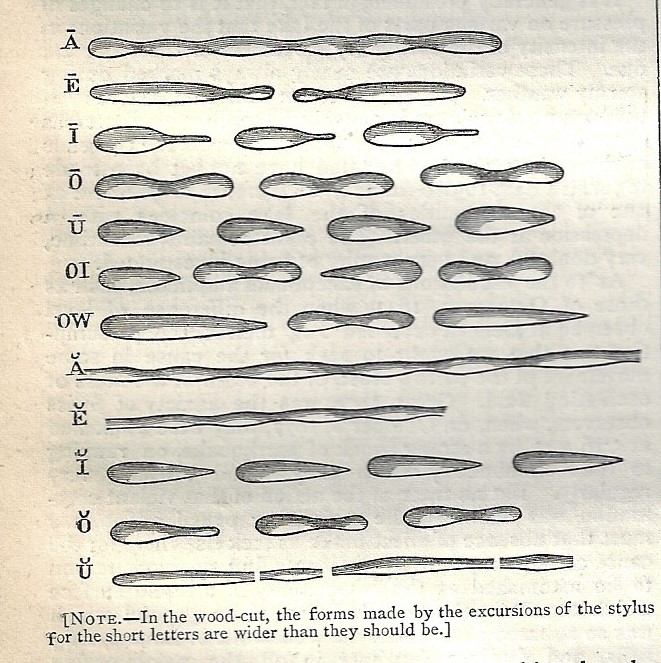
    Five weeks after this article and about four months following the patenting a visually-arresting article appeared in Nature2 which contains what I am assuming to be the first microscopic images of recorded and reproducible sound. I know that is a pretty deep qualification, but I think that’s its accurate. The article appeared as “Examination of the Phonograph Record under the Microscope” by Persifor Frazer3, who investigated what the impression of the stylus looked like as known sounds are recorded on tin foil. And so this remarkable image, showing what vowel and some dipthongs “look like”.  

    ALSO in this issue:

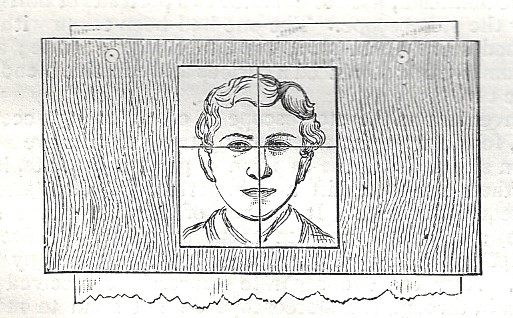
    Francis Galton, “Composite Portraits”, same issue, pp 97-101, with several text illustrations. Galton”s work came early on in the prehistory of cognitive and computational aspects of face recognition, though more like an analog development in a later digital environment. In this paper he discusses his attempts to see the face of criminality before crimes. Galton uses a collection of criminals convicted of murder, manslaughter, and crimes of violence, creating amalgams of portraits, and stating that the “special irregularities” of each individual criminal face “disappeared and the common humanity that underlies them prevailed”, and so the images represent not the criminal “but the man who is likely to fall into crime”.  See for long background:  George Pavlich, “The Subject of Criminal Identification”, in Punishment and Society, Vol 11 (2), 171-190. There are many articles referencing this early work by Galton.
    DocFile (3)

    ·Posted by :

    ·in:


  • Georges Meslin Calculating Machine, 1900

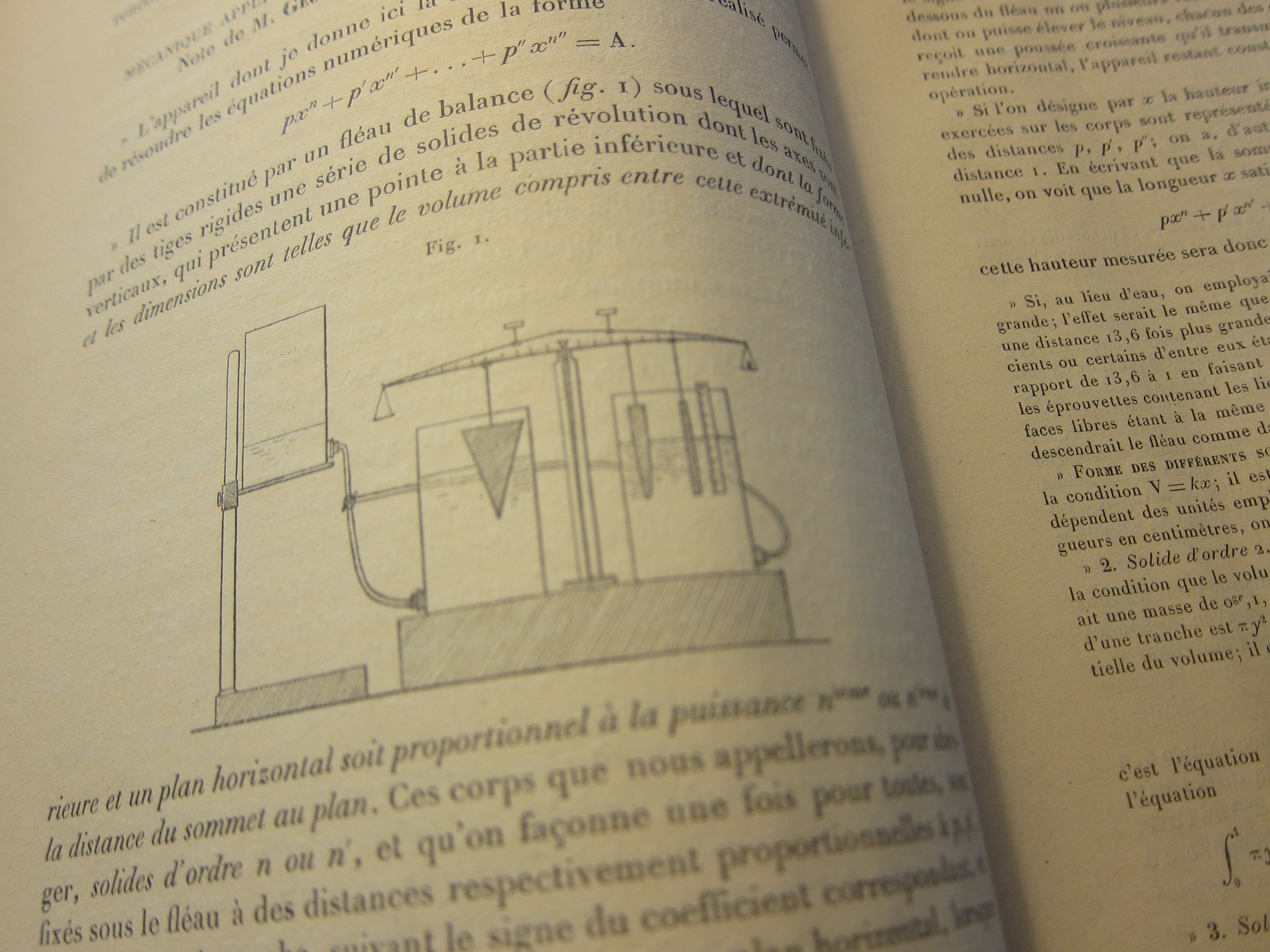
    Georges Meslin (1862-1918), “Sur une machine a resoudre les equations”, in Comptes Rendus des Seances de l’Academie des Sciences, 2 April 1900, the weekly issue comprising pp 865-960, with the Meslin article on pp 888-891.

    This issue is removed from a larger bound volume. VERY GOOD condition. $145

    ” ‘On a machine for solving equations’, by M. Georges Meslin. The machine consists of a balance carrying upon its beams at  varying distances from the point of support a series of solids of revolution, partially immersed in a liquid….”–Nature, June 14, 1900, p 579. (Interesting to note here that two thermo papers by Meslin are reviewed by Einstein in his big year of 1905.)

    CR 1900 Meslin computer

    ·Posted by :

    ·in:


  • Filling Up the Harbor: NYC, 1935

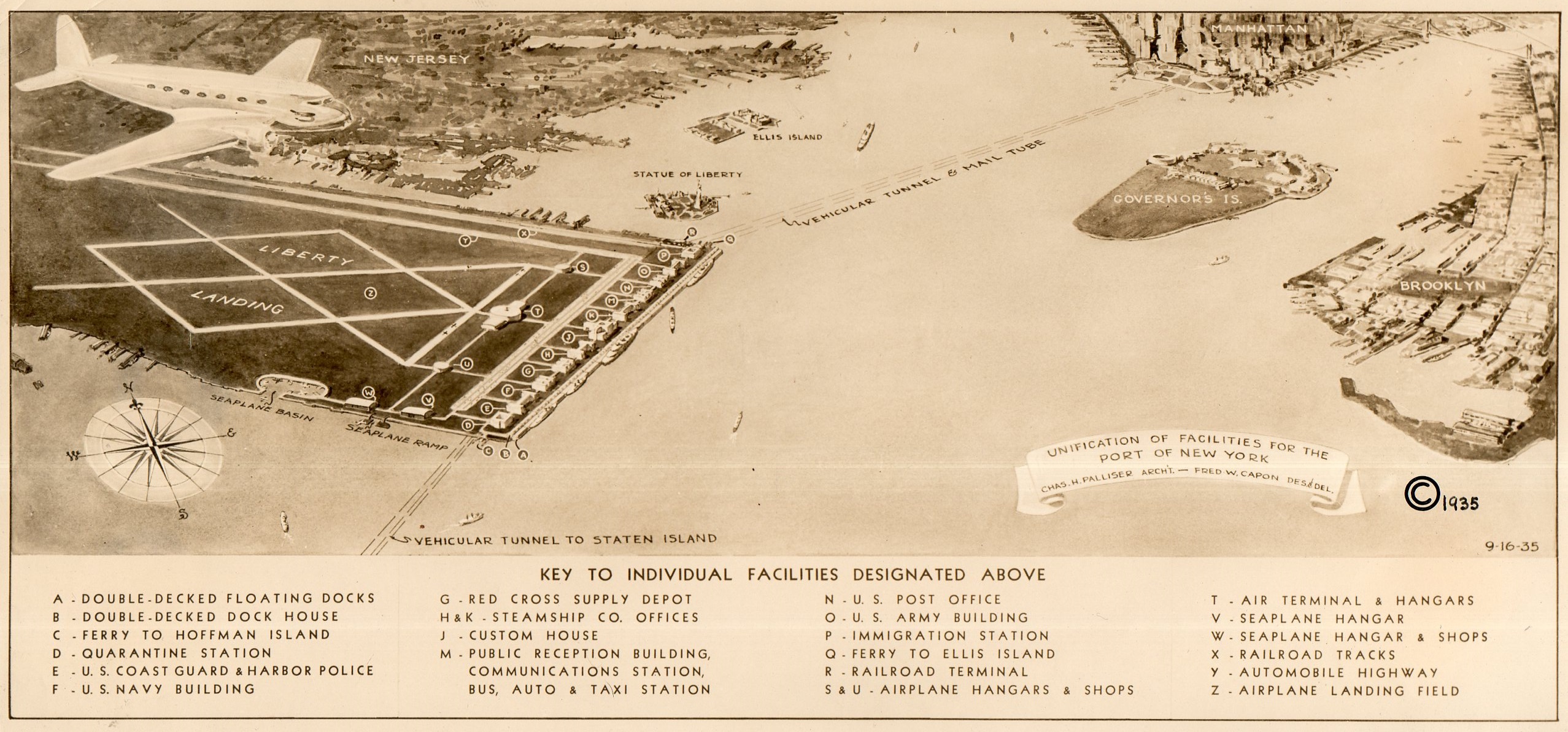
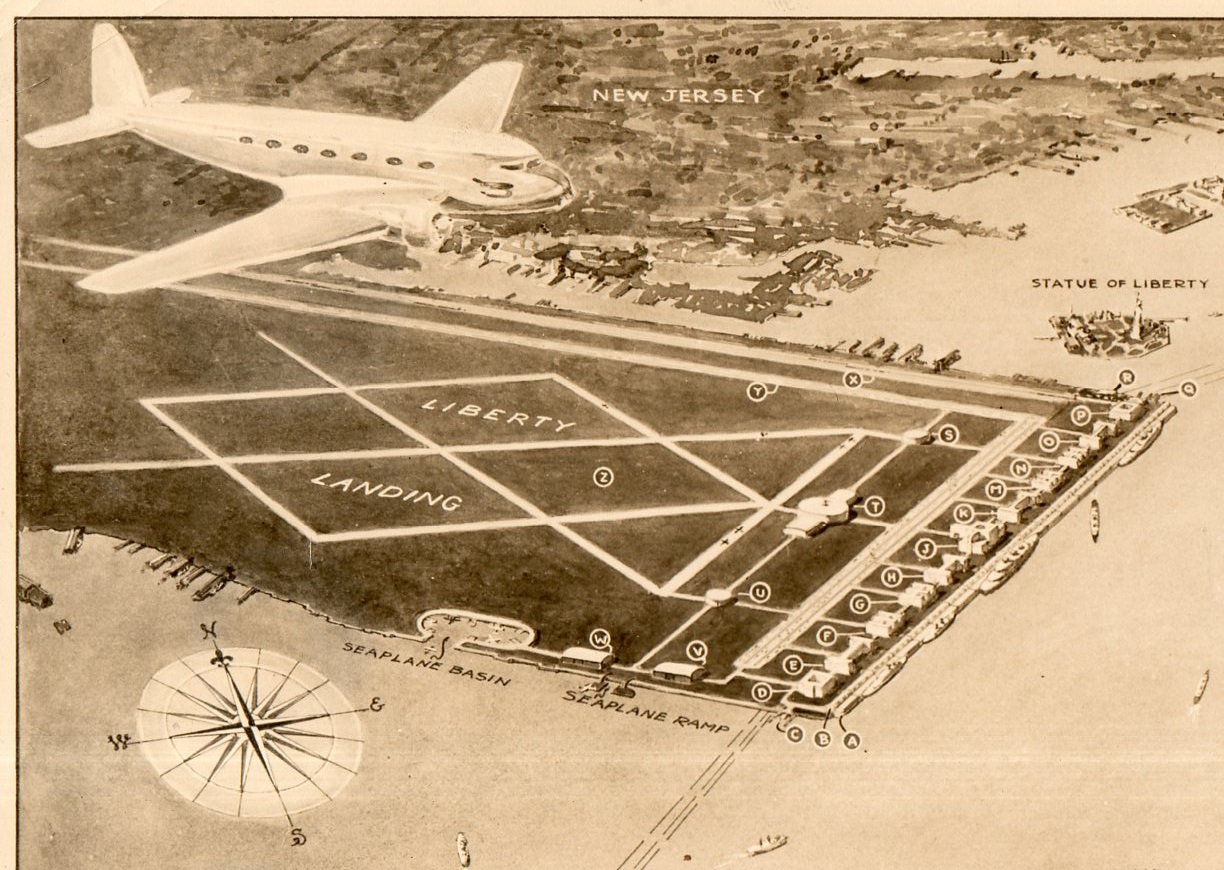
    Liberty Landing, by Charles E. Palliser (architect) and Frederick W. Capon (Designer and Delineator), Jackson Heights, NYC, September 16, 1935. Offset printed from typed originals. 13×8.5″, 5 leaves, with one original photograph (4×11″). With original wrappers (detached).  Provenance: Library of Congress, with their surplus/duplicate stamp on title page.  Good condition. $750

    ·Posted by :

    ·in:


  • Expanding the IRT, 1911

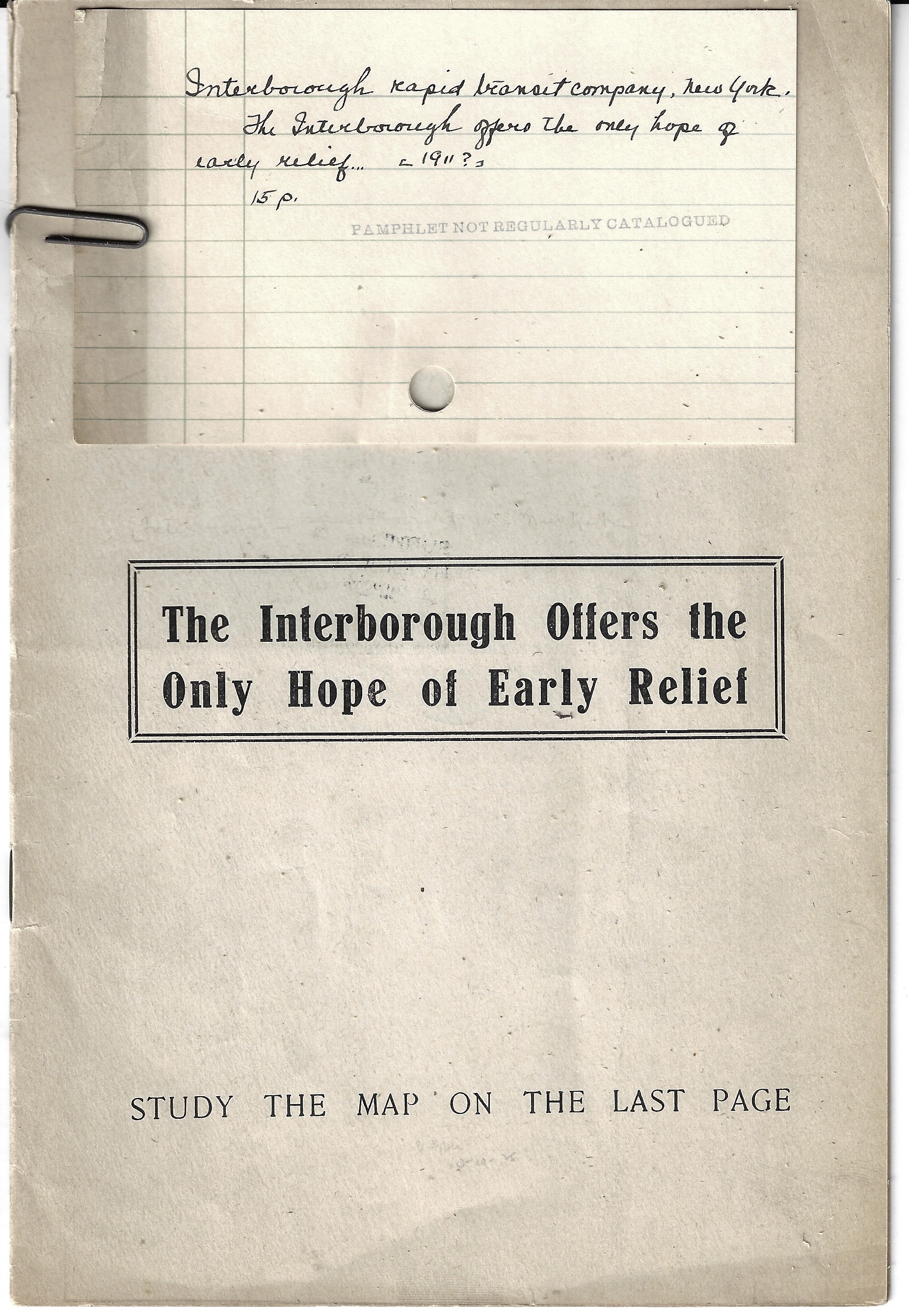
    The Interborough Offers the Only Hope of Early Relief.  Published by the Interborough Transit Company, printed by M.B. Brown Printing, NY. 1911, 8×5″, 15pp, map on the rear wrapper.  Original wrappers. This is a look at the upcoming expansion of the realtively-newly opened IRT that would come two years after the publication of this pamphlet, in 1913. 

    Provenance: Library of Congress, with their original hand-written LC card for the card catalog.  

    Condition:  nice copy. There is a LC surplus/duplicate stamp on the rear cover, in the middle of the full-page map. (The stamp doesn’t obscure, anything, really…it just isn’t “pretty”.)  Scarce: only four copies located in WorldCat: Hagley, Yale, NYPL, NY State Archives.   $125

    DocFile (2)

    “The first IRT subway ran between City Hall and 145th Street at Broadway, opening on October 27, 1904. It opened following more than twenty years of public debate on the merits of subways versus the existing elevated rail system and on various proposed routes.

    Founded on May 6, 1902, by August Belmont, Jr., the IRT’s mission was to operate New York City’s initial underground rapid transit system after Belmont’s and John B. McDonald’s Rapid Transit Construction Company was awarded the rights to build the railway line in 1900, outbidding Andrew Onderdonk. On April 1, 1903, over a year before its first subway line opened, the IRT acquired the pre-existing elevated Manhattan Railway by lease, gaining a monopoly on rapid transit in Manhattan. The Manhattan EL was the operator of four elevated railways in Manhattan with an extension into the Bronx. The IRT coordinated some services between what became its subway and elevated divisions, but all the lines of the former Manhattan EL have since been dismantled. In 1913, as a result of massive expansion in the city, the IRT signed the Dual Contracts with Brooklyn Rapid Transit (BRT) in order to expand the subway.  The agreement also locked the subway fare at 5 cents for forty-nine years. The IRT unsuccessfully attempted to raise the fare to seven cents in 1929, in a case that went to the United States Supreme Court.”–Wikipedia (on the IRT)

    ·Posted by :

    ·in:


  • Financial Report on Engineering in the Orleans Levee District, 1935

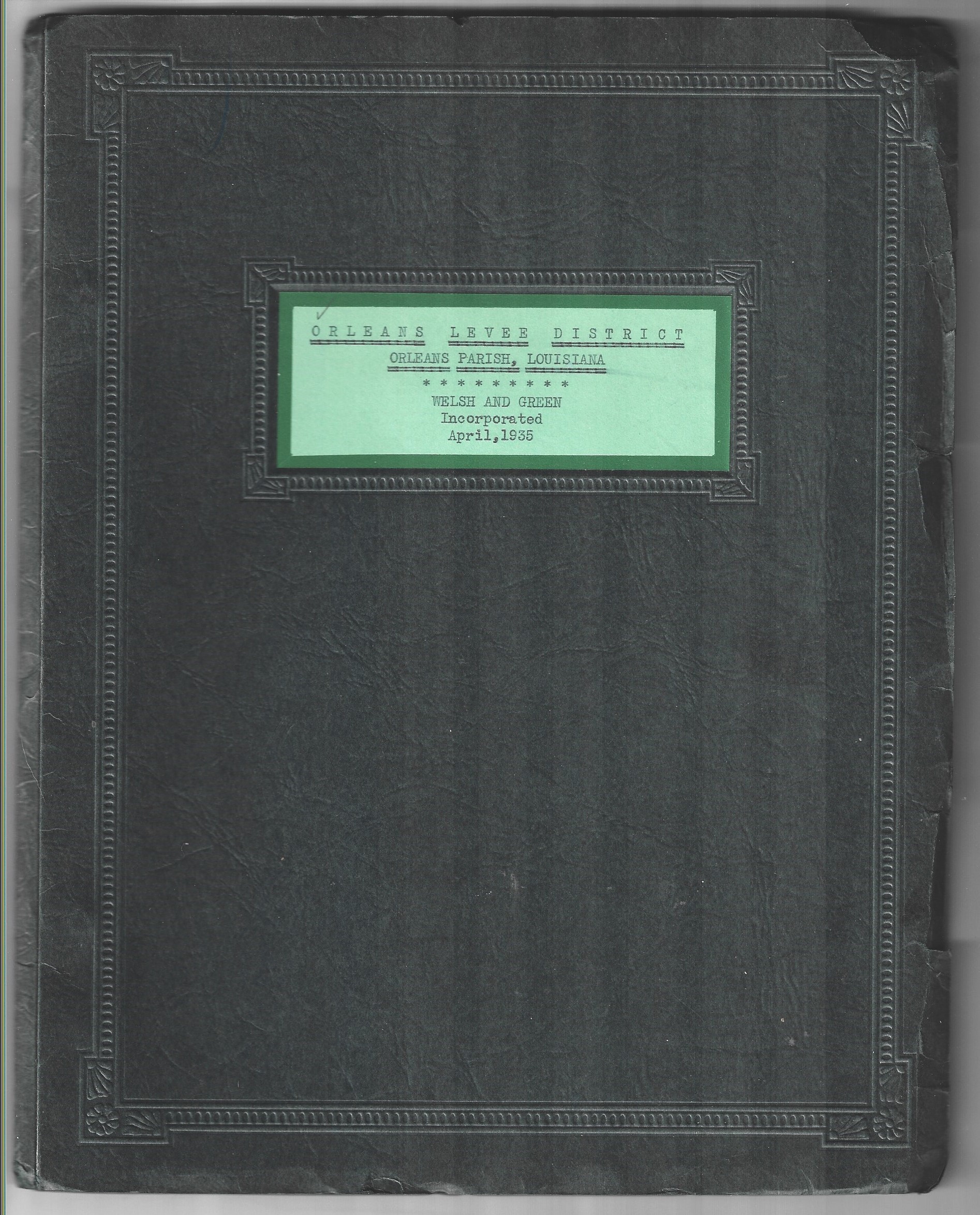
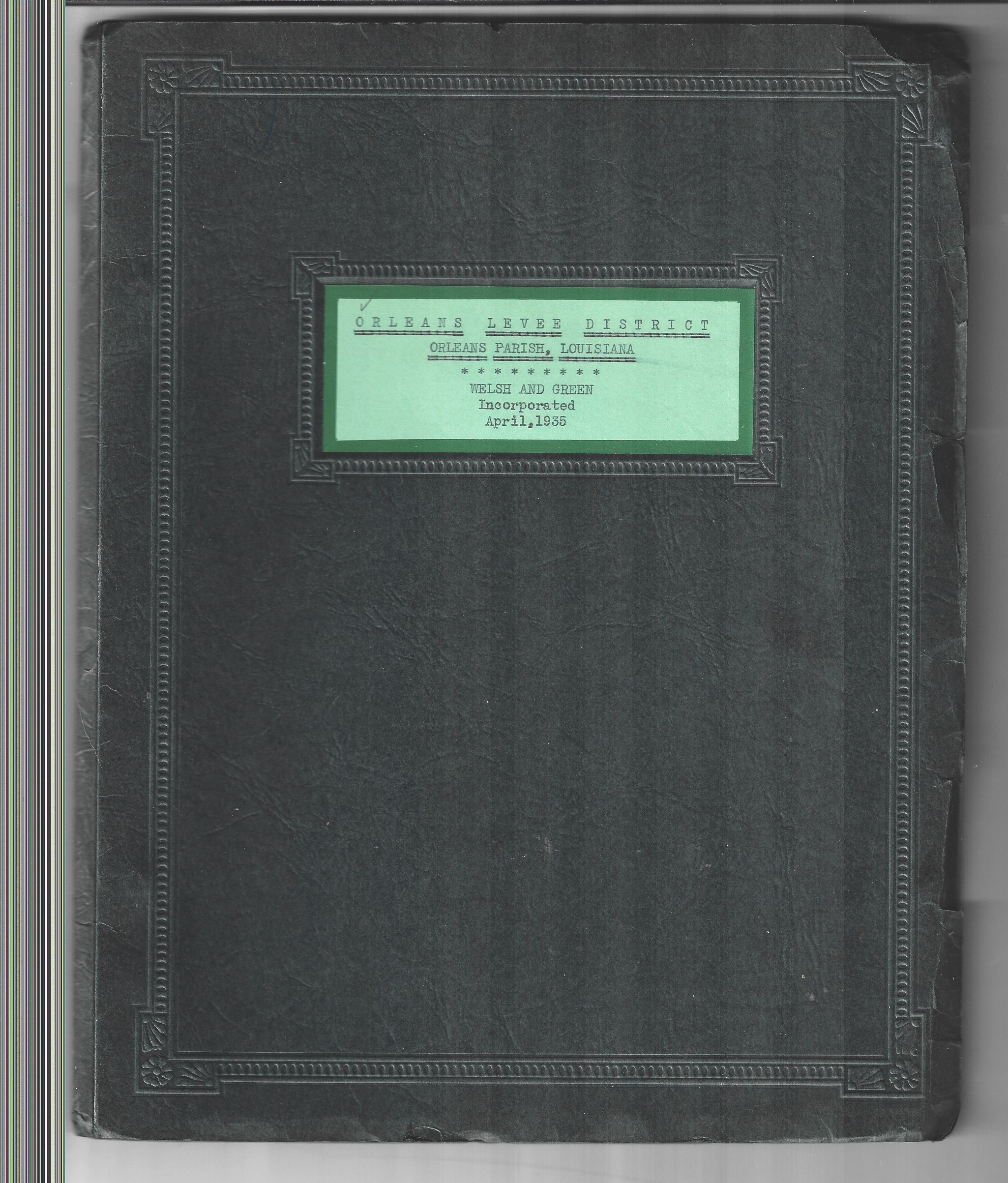
    Welsh & Green, Inc (Chicago).   Orleans Levee District, Orleans Parish, Louisiana.   No publisher, no place of printing, April 1935.  11.5×8″, 31 leaves, plus (20) leaves, including 5 folding plates of tables and one map.  This is a offset type-printed document, presumably done so in very small numbers, for a presentation made by the firm of Welsh & Green before the Orleans Levee District Board, recommending ways of financing the various improvements to the levees and the airport. 

    This report is bound in a stiff manila folder with brass punches and has a hand-made typed label pasted onto the front cover.  The cover has some bumps and tears along the edges but is in generally Very Good condition; the text is Fine. Provenance: the Library of Congress, with their surplus/duplicate stamp on the rear page. $300

    Levee Report

    “Welsh & Green was retained by Newman, Harris & Co., of New Orleans, to investigate the financial conditions of the district, and to devise ways and means for remedying the (financial) situation.” In effect it seems as though this presentation looked at different ways to legislate and issue bonds to fund a 7 million dollar public debt for the work.

    The report was issued in April 1935, just a few months ahead of the “other” storm of the century, the Labor Day Storm of 1935. NOT LOCATED in the OCLC/WorldCat. I can’t locate this anywhere, so far, except for the Catalog of Copyright Entries for 1935. (I did find something that looked similar to this report by Welsh & Green on the financial status of Chicago, 1934.)

    ·Posted by :

    ·in:


  • Floating Transoceanic Airport Network, 1936–from the White House Library

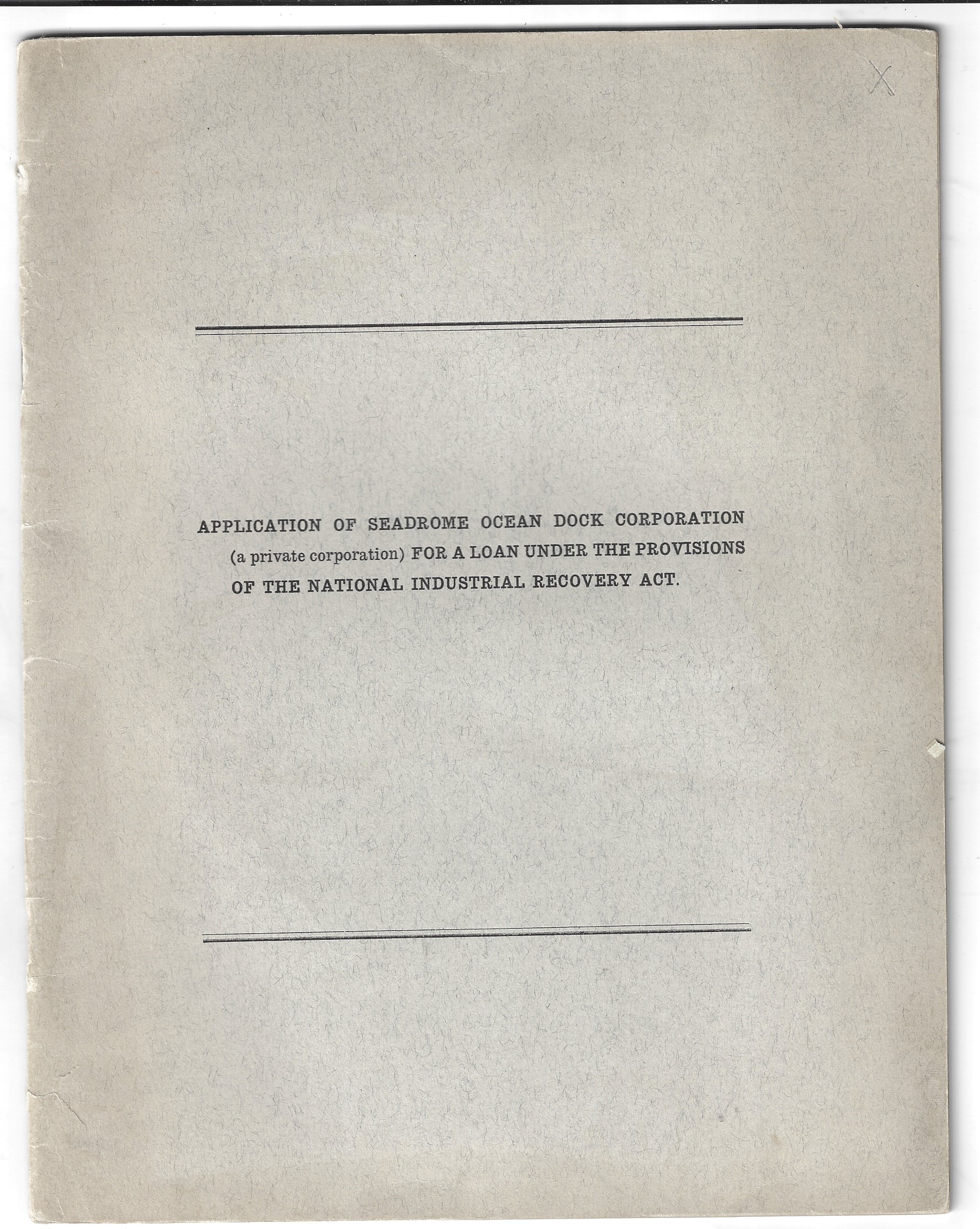
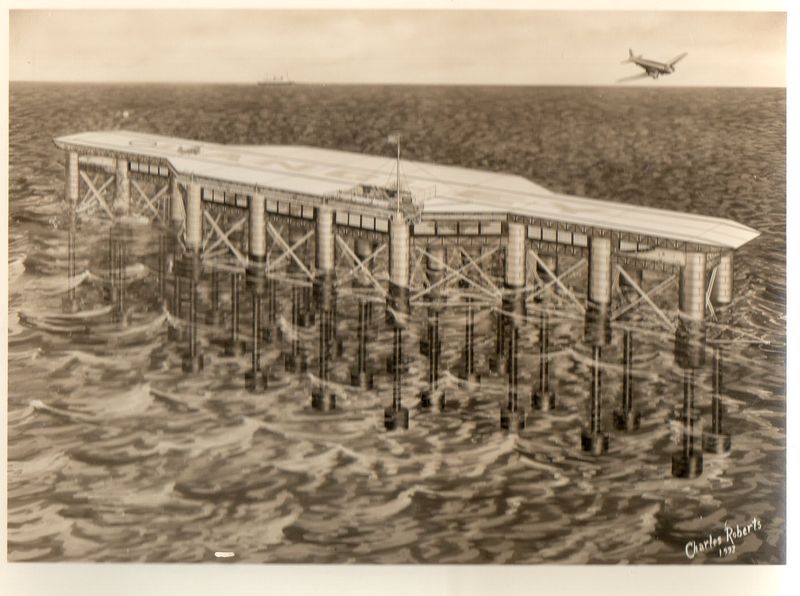
    DocFile (5)Edward R. Armstrong (1880-1955). Application of Seadrome Ocean Dock Corporation (a private corporation) for a Loan Under the Provisions of the National Industrial Recovery Act, printed ca. 1933.  11×8 inches, 34pp.  With two original photographs one of the floating airports, and a map.  This copy comes from the White House Library, transferred to the Library of Congress in 1933. Printed wrappers. There is a Library of Congress surplus stamp on the rear cover, ans a tiny “LC” perforated stamp at the bottom of page one. Very nice copy.  $500 

    The outline for this plan asks the federal government for a loan of $30 million (Depression) dollars to undertake the construction of a five floating airports transoceanic network.  “It will require the work of approximately 10,000 men per month for a period of twenty-four to thirty months”.  The labor figures did not include was what necessary to produce all of the material necessary for the project ( for reasons unknown).  Once finished the network would enable aircraft  to make it across the ocean in 18 to 36 hours.

    The members of the Seadrome Corporation estimated that the entire 30 million would be paid back by 1945,  and that the corporation would be completely debt-free.  Perhaps all of  this made sense when Armstrong first developed the plan in 1913, just ten years after the Wright brothers’ successful first in North Carolina. The idea of the floating airport girding the Atlantic was a pretty interesting idea, seeing as how the world record for sustained non-stop flight in 1913 was 11 hours (in a Maurice Farman MF-2), and that was under more-or-less optimal conditions; the speed record was 120mph, and again, optimal conditions and not sustained for hours on end.  By 1933 it seems to me that it had become obvious that non-stop transoceanic flight was coming, and coming soon.  That would of course make an investment in the Seadrome project superfluous, like building an antique, though an unnecessary one. The first transatlantic non-stop flight was made by John Alcock and Arthur W. Brown in 1919, averaging about 100mph; Lindbergh would come later to accomplish the first solo non-stop in 1927–by the early 1950’s jet aircraft would be making the trip with regularity, which means that  for most of the life of the completed Seadrome it would have been unnecessary.  I feel certain that the Seadrome–which was supposed to be paid off by 1945, though in 1933 there was no inkling on the part of the Corporation members who wrote the request for the money that a war was looming and that there would have been almost no way for them to have been made at any time between 1939 and 1945–would never have been paid for.Armstrong’s idea would get major play in the popular press from time-to-time, and discussed as a series of floating islands.  Armstrong himself would organize the Seadrome Ocean Dock Corp. in the late 1930’s, his pretty but  impractical idea (reported by Time Magazine1 in 1933 as little more than “a perennial gift to Sunday feature editors”)  finally grinding to a salty end with greater fuel capacity and efficiency in transatlantic aircraft. 
    Seadrome152

    Notes:
     

    ·Posted by :

    ·in:


  • Scientific Instruments: Gyroscopes, 1883

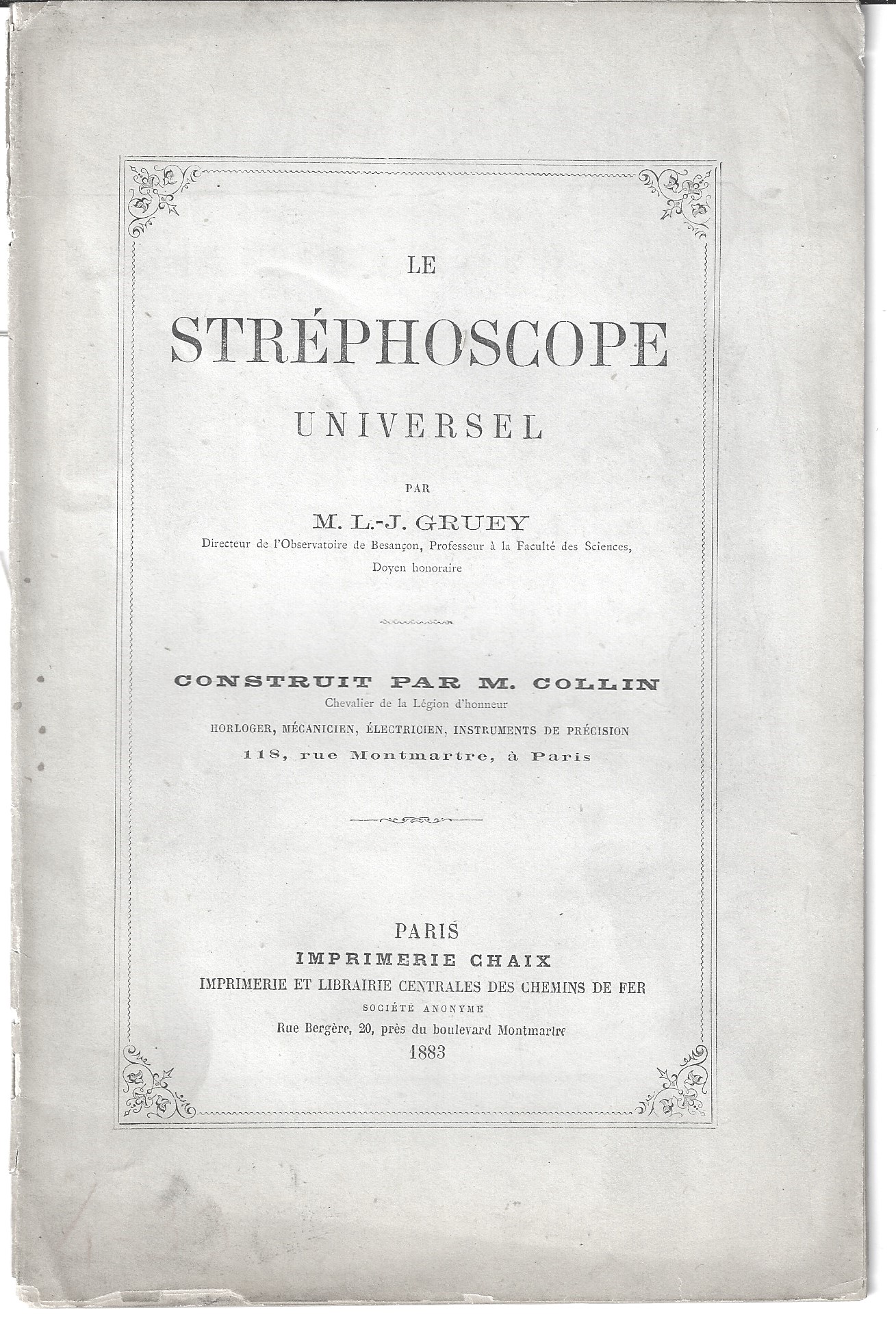
    DocFile (12)L.-J. Gruey, Le Strephoscope Universel…Construit par M. Collin… Paris, Imprimerie Chaix, 1883.  9.5×6″, 32pp, with descriptions of 14 devices, each with a small text illustration. In the original wrappers, with the text block becoming loose in the wrappers. Also includes a double-page illustration of the Gruey machine.  GOOD copy of a scarce title.  $125

    A description of this gyroscope demonstration device:

    “This device is nothing more than a new Gyroscopic box, of a particular composition…to highlight, for all, important and curious events in general mechanics or celestial mechanics, which were known only to scientists. The essential part of a gyroscopic apparatus is a bronze torus, with a cylindrical steel shaft. The ends of the shaft, cut into very thin points…fixed on a ring metallic, in two diametrically opposite points…We will briefly describe how to compare put each device with the pieces of our box, and that of executing experiments. We will not reproduce here the complete theory and rigorous of these devices exposed elsewhere, but we will give at the end of the description of each of them, under the heading ‘Explanation’…”

    ·Posted by :

    ·in:


  • A Serialized History of the Electro-Magnetic Telegraph (1848)

    [Telegraphy] “The Electric Telegraph”, appearing in 7 issues of the Scientific American, October 21, 1848 to December 9, 1848, volume 4 #s 6-12.  Each issue is 8pp long, stands 15″high, and is detached from a larger bound volume, with signs of that on the spine. 

    Each article is only about one column long, but the columns are dense, printed in 6pt type (!), and run about 750 words each, so the overall length is 11 columns, or about 4500 words.  The articles appear as follows: #1, vol 4/5, Oct 21, p. 35;  #2, 4/6, October 28, p 43; #3, 4/7, Nov 11, p. 51; #4, 4/8, Nov 11, p. 59; #5, 4/10, Nov. 25m p. 75; #6, 4/11, Dec 2, p 83; #7, 4/12, Dec 9, p. 92. 

    There is also much else of interest, as is normal with the Scientific American. These are some seldom seen early issues–in my experience issues of the SciAm are pretty uncommon before 1855.   7 issues: $150

    ·Posted by :

    ·in:


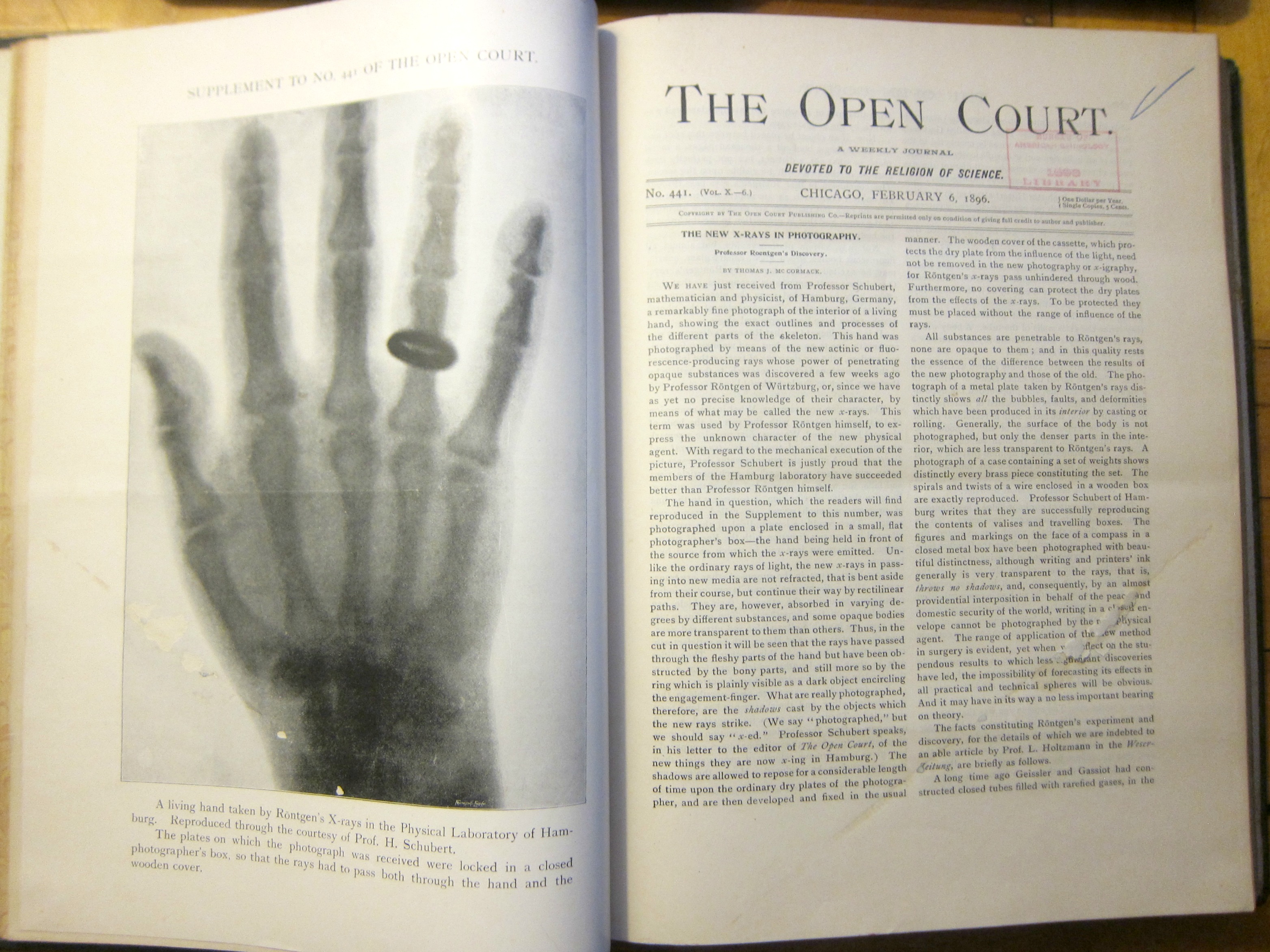
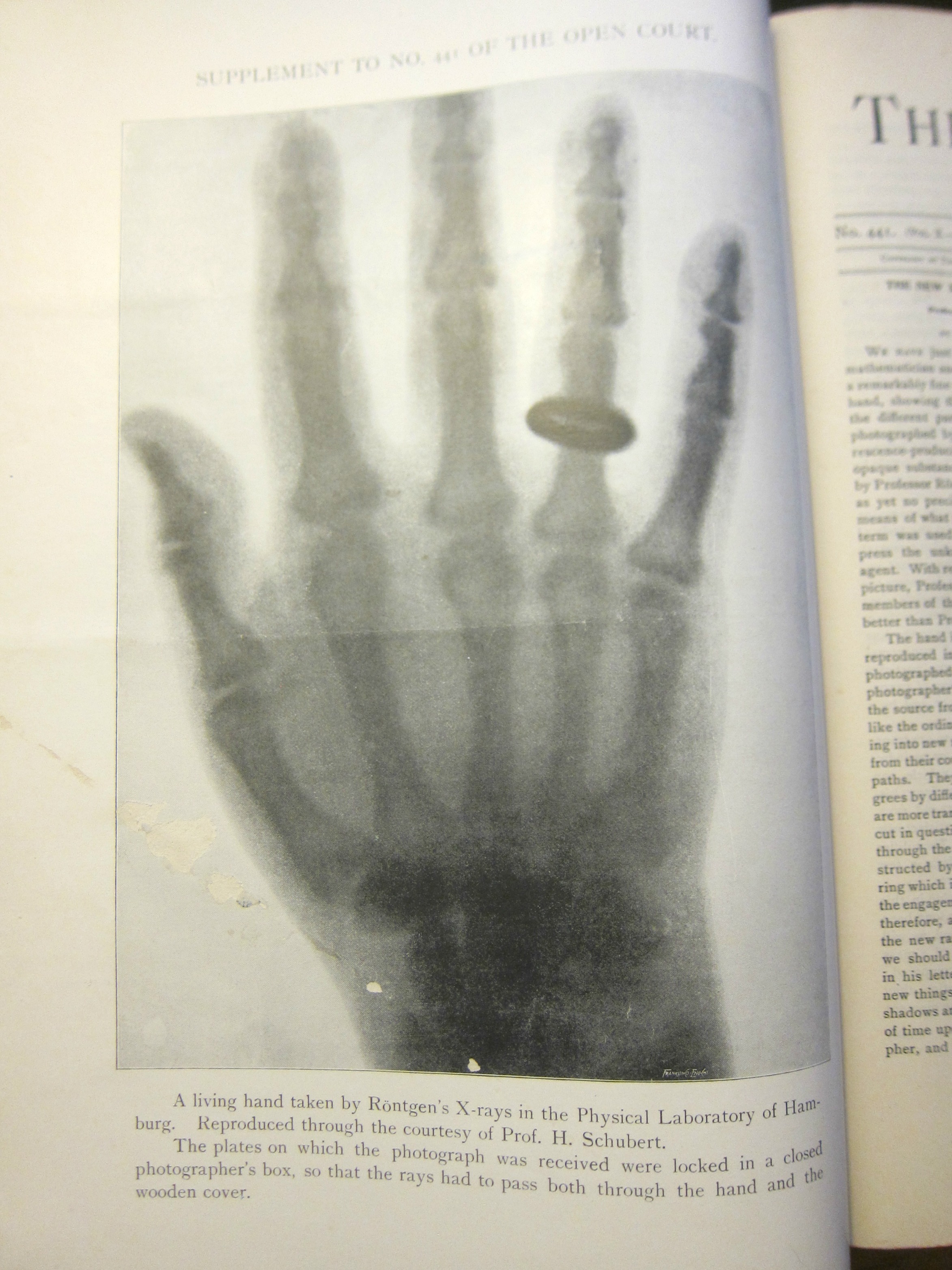
  • One of the Earliest X-Ray Photos Published in a U.S. Journal (6 February, 1896)

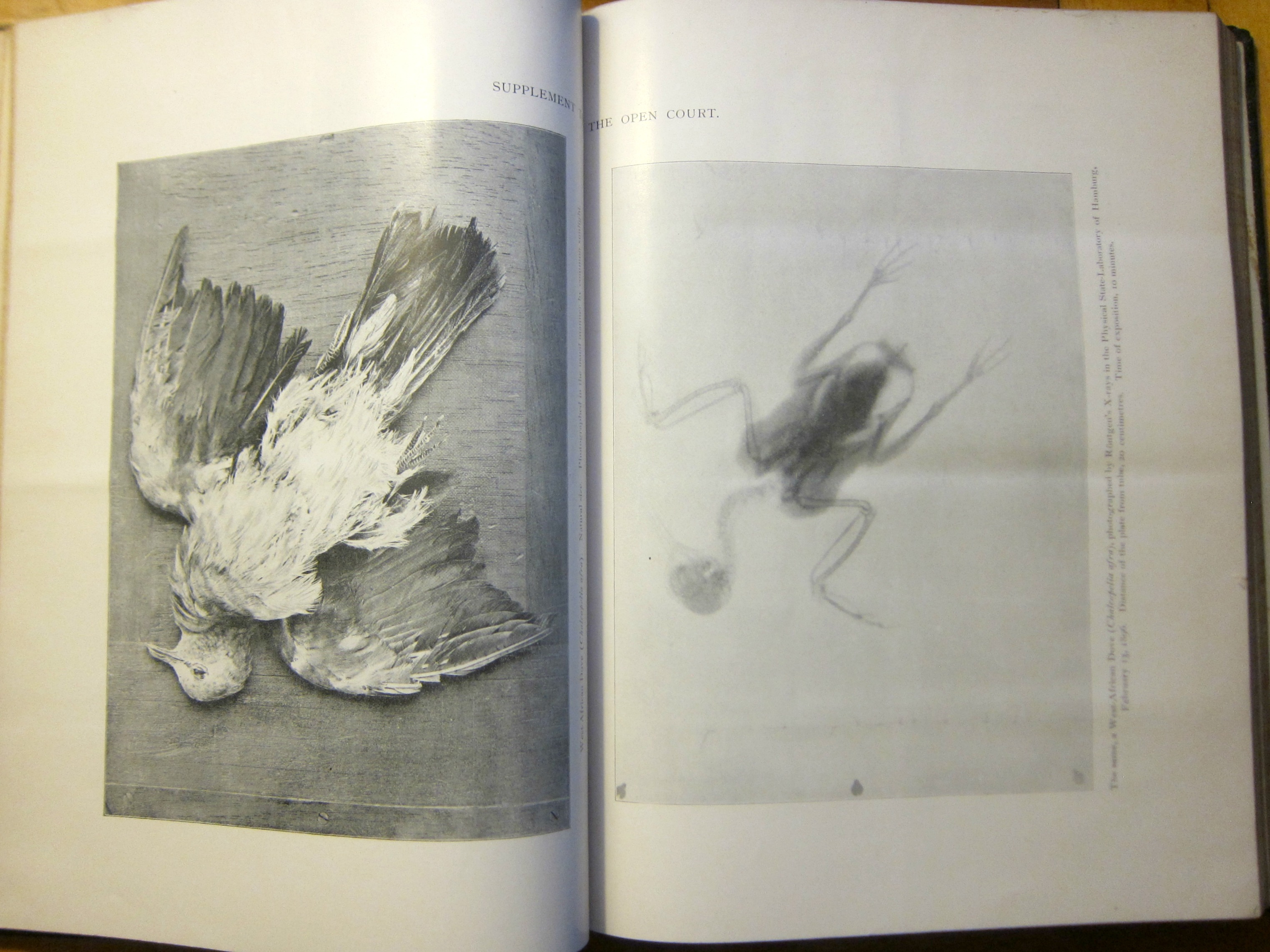
    Thomas J. McCormack, “The New X-Rays in Photography”, in a bound volume of The Open Court, a Weekly Journal Devoted to the Religion of Science, February 6, 1896, no. 441, volume x-6, pp 4799-4801.  With a very large photographic image (12×9.25″ 31x24cm).
    Also appearing in this volume: 

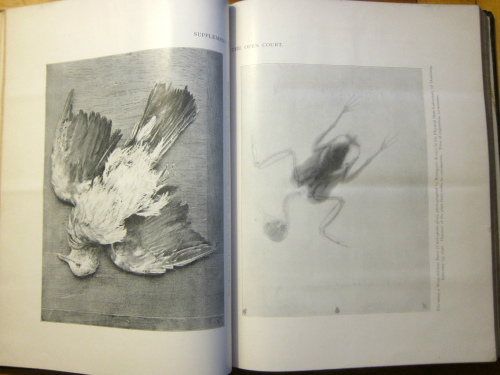
    _____. “Roentgen’s Rays Again”, no. 446 vol X-11, March 12, 1896, pp 4483-4844, illustrated with a double-page photographic image. 

    X-ray _3_

    This is offered in the full bound volume of pp 4759-5174. Bound in modern black cloth with a call number gilt stamped on spine bottom. Each weekly section title has a small rubber stamp from the former library. PROVENANCE: interesting Federal history of ownership on this volume, belonging to the Bureau of American Ethnology, the Smithsonian Institution, and then dispensed by the Library of Congress (with their surplus stamp on the front free endpaper). Also, the major issue is a little bit of damage to the text on the first page of text of the first x-ray paper; also, there is some scuffing to the photo plate of the x-ray, removing a 10x10mm section from the face of the background, which is really a shame. In any event, the price for this item takes this bits into account: $200

    This is a very early appearance in the U.S. of the weeks-old Roentgen discovery of the x-ray. The first journal edition in English appears to be 23 January 1896 in Nature (vol 53), and the first in a U.S. journal in Science on 31 January, though that is not illustrated.  (The Science article, written by Hugo Muinsterberg of Harvard, notes that this was a good thing for the reassurance of German stature in physics as they had in the last year lost Kundt, Hertz, and von Helmholtz, but now they had Wilhelm Roentgen to take their places in living greatness.)


    X-ray _2_

    A close-up of the 12″ tall image

    The illustrated article by McCormack, in the Taoist-historico-scientific journal Open Court, shares an example of x-ray photography by H(ermann). Schubert (1848-1911, and who would have his paper on the Rontgen rays translated for the Monist in April) ) of the Physical Laboratory in Hamburg which is very large, more than 12″ tall, and by far the largest of these famous photos that I have seen. There is a short discussion on what exactly to call the “photograph”, since it really wasn’t a photo by general standards, and the term “x-ed” is suggested…I’m not sure when the “X-Ray” as a term for the product of being exposed to x-rays and photographic film was, but it wasn’t long after this.)  There is a bit of history of the discovery of the x-ray, and a discussion on the idea of chance and discovery in scientific progress. 

    There would be an enormous wave of publications on the x-ray over the course of the next year–in fact, the Bibliography of X-ray Literature and Research (1896-1897) by Charles Phillips (published in 1906) is 68pp long and finds more than 1500 books and articles published over just two years. Oddly, the Open Court papers are not to be found in the Phillips bibliography, and I’m not sure why.  

    It seems to me that Open Court publishes on the of the first photographs of an x-ray in a U.S. journal. 

    McCormack (1865-1932) had an interesting career, translating Lagrange, Weismann, Mach, as well as the photographer and mathematician  Hermann Schubert’s books on recreational mathematics), and wrote several books in disparate disciplines.  

    X-ray _1_

    ·Posted by :

    ·in:


  • Uncommon Document Relating to an EE Pioneer (1913)

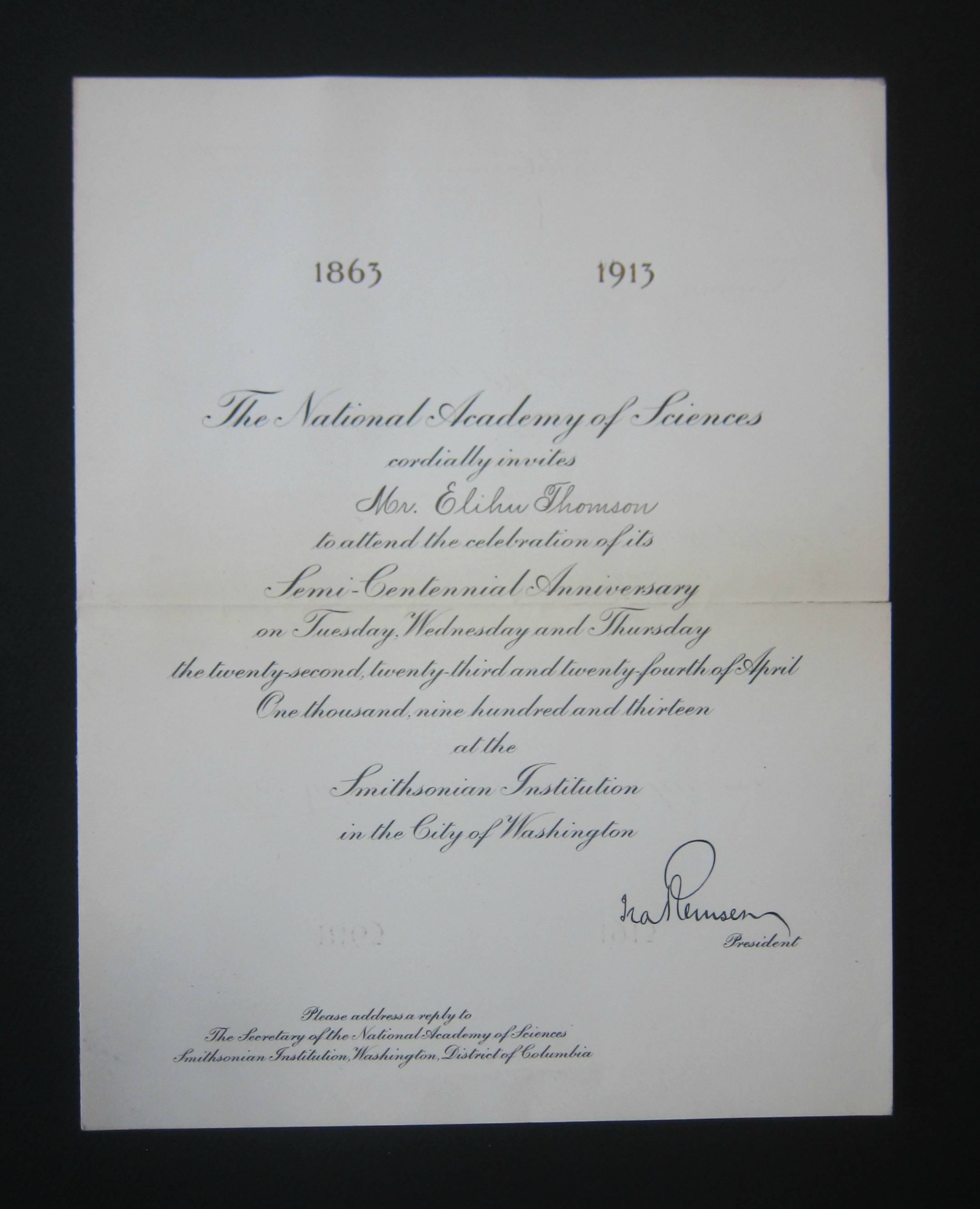
    Elihu ThomsonElihu Thomson. Engraved invitation to attend the National Academy of Sciences semi-centennial anniversary at the Smithsonian Institution, April 1913, “signed” by the Academy president, Ira Remsen.  

    10×8″, heavy paper, with an old horizontal fold at the center.  Thomson’s name is written by hand, but I’m pretty sure that Ira Remsen’s signature is printed. 

    This is an unusual piece of U.S. scientific ephemera.  $100

    “Elihu Thomson (March 29, 1853 – March 13, 1937) was an English-born American engineer and inventor who was instrumental in the founding of major electrical companies in the United States, the United Kingdom and France…with Edwin J. Houston…founded the Thomson-Houston Electric Company. Notable inventions created by Thomson during this period include an arc-lighting system, an automatically regulated three-coil dynamo, a magnetic lightning arrester, and a local power transformer.In 1892 the Thomson-Houston Electric Company merged with the Edison General Electric Company to become the General Electric Company…Thomson was the first recipient of the American Institute of Electrical Engineers AIEE (now Institute of Electrical and Electronics Engineers (IEEE)) Edison Medal, bestowed upon him in 1909 “For meritorious achievement in electrical science, engineering and arts as exemplified in his contributions thereto during the past thirty years’.”–Wikipedia

    ·Posted by :

    ·in: