A Daily History of Holes, Dots, Lines, Science, History, Math, Physics, Art, the Unintentional Absurd, Architecture, Maps, Data Visualization, Blank and Missing Things, and so on. |1.6 million words, 7500 images, 4.9 million hits| Press & appearances in The Times, Le Figaro, Mensa, The Economist, The Guardian, Discovery News, Slate, Le Monde, Sci American Blogs, Le Pont, and many other places… 5000+ total posts since 2008.

Book Category: Technology, History of

  • Bessemer, “On the Manufacture of Malleable Iron and Steel”

    Henry Bessemer, “On the Manufacture of Malleable Iron and Steel”, In: Journal of the Franklin Institute, edited by Thomas P. Jones, volume 69, third series, vol 39; 444pp, 4 plates. The Bessemer is on pp 193-198, with two two plates. It further states the case of Bessemer’s groundbreaking paper of 1856 of nearly the same name. Half-calf, with attractive marbled boards, raised bands, gitld entelles. Condition: ex-library though faintly, with a ghost of a call slip on the spine bottom, bookplate, and stamps on the title page. The book was very little used. Very solid, crisp, and clean copy. VG $150

    Also in this volume:

    William Fairbairn, “Experimental Researches to Determine the Density of Steam at All Temperatures”, pp 17-20.

    “Locomotives on Common Roads”, pp 370-377. (Interestingly the article ends on the discussion of tolls on such vehicles based on number of wheels, speed, and “general construction”).

    Samuel McElroy. “On the Brooklyn Pumping Engine”, pp 361-370;

    Alexander Stephen Wilson, “On a System of Moving Bodies”, pp 342-345;

    Piarron de Mondesir, “The Sewerage of Algiers”, pp 145-155, 217-226 (with folding plan), and 289-296;

    J. Bennett, “Aerometry. Translated from the Hydraulics of D’Aubuisson de Voisins”, pp 124-132, 186-192, 234-241;

    Alexander Allen, “An Improved Method of Retarding and Stopping Railway Trains”, pp 78-80, with a small inset woodcut of the braking system).
     

    ·Posted by :

    ·in:


  • Papers on Electricity, Railroads, and Bridges (1848)

    Robert Hare, “Objections to the Theories Severally of Franklin, Dufay, and Ampere, with an Effort to Explain Electrical Phenomena, by Statistical, Undulatory, Polarization”. In: Journal of the Franklin Institute, edited by Thomas P. Jones, volume 45, third series, vol 15, 1848; 474pp, 2 plates, pp 188-199 and 264-277. Half-calf, with attractive marbled boards, raised bands, gilt dentelles. Condition: ex-library though faintly, with a ghost of a call slip on the spine bottom, bookplate, and stamps on the title page. The book was very little used. Very solid, crisp, and clean copy. VG $175

    From the summary of the concluding half: “The theories of Franklin Du Fay and Ampere are irreconcilable with the premises on which they are founded and with facts on all sides admitted. A charge of frictional electricity or that species of electric excitement which is produced by friction is not due to any accumulation nor to any deficiency either of one or of two fluids but to the opposite polarities induced in imponderable ethereal matter existing throughout space however otherwise void and likewise condensed more or less within ponderable bodies so as to enter into combination with their particles forming atoms which may be designated as ethereo ponderable.”

    Also included:

    “A Description of Col. Long’s Composite Bridge…” pp 202-206, with a plate and pp 258-264.

    Staite, “New Mode of Lighting by Electricity”, pp 445-6;

    Faraday, Michael. “On the Use of Gutta Percha in Electrical insulation”, pp 446-8;

    “On the Theory of Dew” (translated elements of two papers from Melloni and Arago from October 1847), pp 52-60.

    …and numerous other papers.


    ·Posted by :

    ·in:


  • Photography, Southern Railroads, and an Artificial Hand (1845)

    Claudet, Antoine.  “The Progress and Present State of the Daguerreotype Art”, pp 45-51, 113-118. In: Journal of the Franklin Institute, edited by Thomas P. Jones, volume 12, third series, vol 12; 441pp, 2 plates. Half-calf, with attractive marbled boards, raised bands, gilt dentelles. Condition: ex-library though faintly, with a ghost of a call slip on the spine bottom, bookplate, and stamps on the title page. The book was very little used. Very solid, crisp, and clean copy. VG $250

    ”If the daguerreotype had been invented before the art of painting, then we should have never doubted its accuracy, and we should not have thought we were deceived or taken by delusion. The daguerreotype plate is etched by nature, exactly (though in a more perfect manner), as is the plate of copper…by the ingenuity of the engraver.” (p 48)

    George Cayley, “Description of an Artificial Hand” with “Method of Making an Artificial Hand, that will forcibly grab substances of various sizes…” pp 57-63, with three woodcut illustrations of the device.

    Report of the Engineer in Chief of the Georgia Railroad and Banking Company…” p 85-91, 149-153;

    “Report on the Atmospheric Railway” 153-156;

    “First Annual Report of the Directors of the South Carolina Railroad Company…”p 156-164, 231-236.

    Faraday, “Anastatic Printing”, pp 143-144 (and “Anastic Printing”, pp 63-64, 2 plates).

    Thomas Guffy, “Description of the Great Britain Iron Steam Ship, with Screw Propeller; with an Account of the Trial Voyage”, pp 289-296, 361-366.

    ·Posted by :

    ·in:


  • Four-Part report on the Proposed Panama Canal, 1846

    “Extracts from the Report of Napoleon Garella, an Engineer appointed by the French Government to survey the Isthmus of Panama…”, (“Line and Principal Features of the Proposed Canal”), pp 18-24, (“Survey of the Isthmus of Panama”) 73-85, 143-154, 217-225. In: Journal of the Franklin Institute, edited by Thomas P. Jones, volume 12, third series, vol 12; 441pp, 2 plates. Half-calf, with attractive marbled boards, raised bands, gilt dentelles. Condition: ex-library though faintly, with a ghost of a call slip on the spine bottom, bookplate, and stamps on the title page. The book was very little used. Very solid, crisp, and clean copy. VG $200

    People were thinking big thoughts about a canal in Panama even in the first half of the 19th century, as we can see in this series of four papers. No doubt the information was useful to those who completed the famous and infamous Panama Railway, which spanned the isthmus at 47 miles and connected the oceans, and was completed in 1855 (about a half-century before the canal). The cost in human lives of this undertaking was incredible: anywhere between 5,000 and 20,000 workers lost their lives, making it one of the deadliest of modern tech projects.

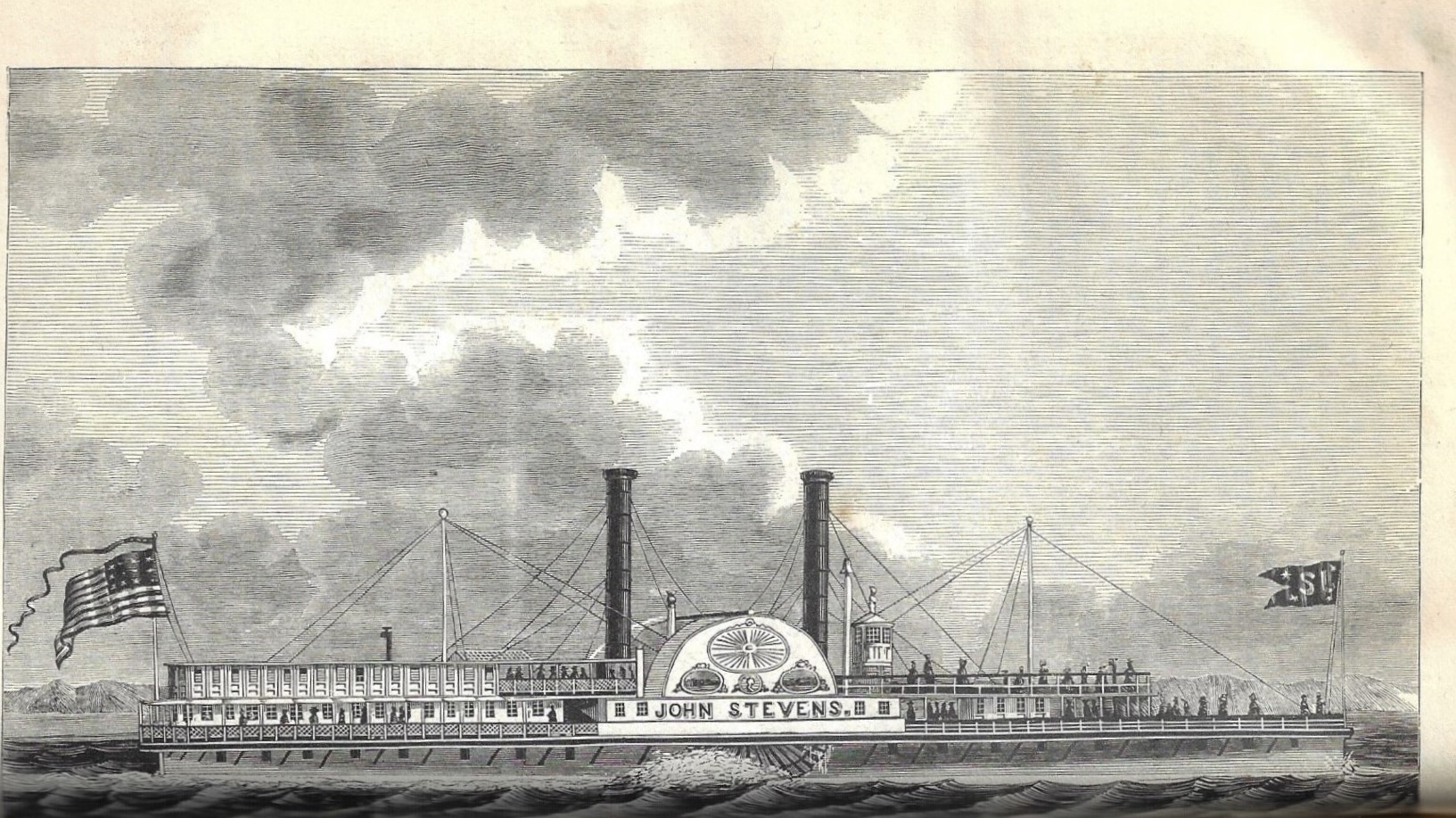
    JFI 1846 John Stevens

    Also of interest in this volume:

    “Description of the Iron Steamer “John Stevens”, 334-336, with a lovely full page plate of the 245′ ship;

    Morse, S(amuel) and B.R. Stevens, description of a patent for an improvement in Daguerreotype Impressions (one para), page 258;

    (Saxton, Joseph). “Description of an Automatic Dividing Machine, arranged for use in the Coast Survey Office”, pp 258-261, with a double-page plate showing the plan and elevation of the machine;

    “On some Products of Chinese Manufacture collected by Jules Itier, Chief Inspector of customs” pp 281-284;

    “Biram’s patent Anemometer, for Measuring the Velocity of the Wind, the Current of Air in Mines, &c.”, pp 143-144, with a small woodcut of the device.

    …and many dozens of other papers.


    ·Posted by :

    ·in:


  • Very Early Railroading Papers (1830)

    (Early Railroading) Journal of the Franklin Institute, Philadelphia, published by the Franklin, 1830. Vol 6, 430, 8pp. Half calf, marbled boards. Some amount of scuffing on the spine, though the gilt impressions are very legible. Ex-library copy, with stamps on the title page, and a remnant of a paper label on spine bottom. Near-VG copy. $200

    “Account of the Liverpool and Manchester Railway”, December 1830, pp 409-419. Also: a map of the railway is misbound (I suspect) in the November issue, 1830, appering opposite pg 305. Longish report on the “first locomotive-hauled railway to connect two major cities, and the first to provide a scheduled passenger service”. Part of the paper is a description of a run on he L+M, which had made its inaugural run on 15 September, just months earlier. (The first run was an enormous event, the PM there for great festivities. 10 years later there would be 1775 miles of track, and then by 1850 a total of 6200 miles in Britain.)

    “(T)he world is a branch line of the pioneering Liverpool–Manchester run.”– former British Rail chairman Peter Parker.

    And:

    S.H. Long. “On the Principles which should govern the location and construction of Rail-roads”, pp 178-193.
    Also in this volume these two fascinating reports:

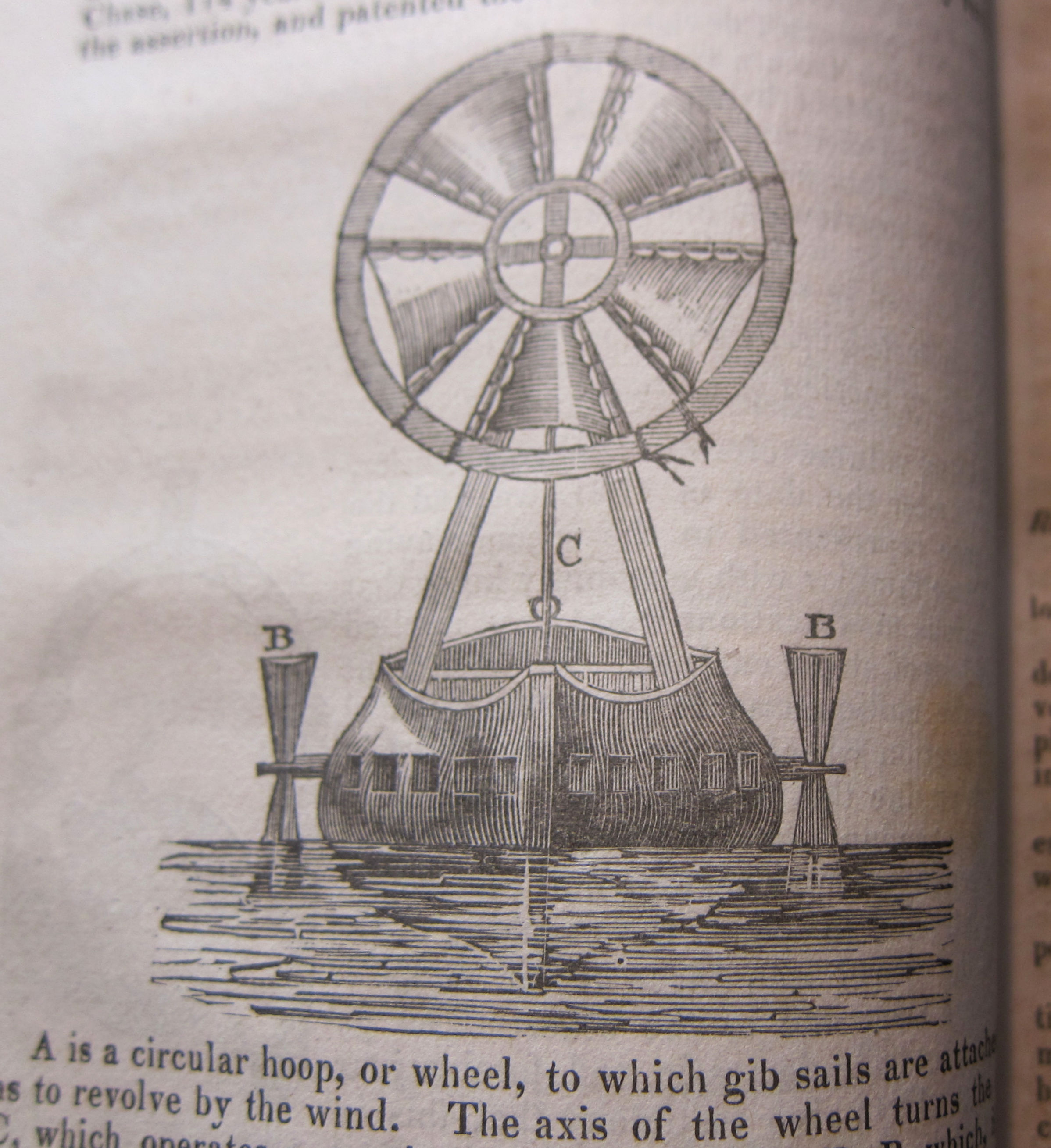
    “On the Construction of a vessel moved by the force of wind, and propelled directly against it”, July, page 40, with an inset woodcut.

    JFI 1830 circular fan sail

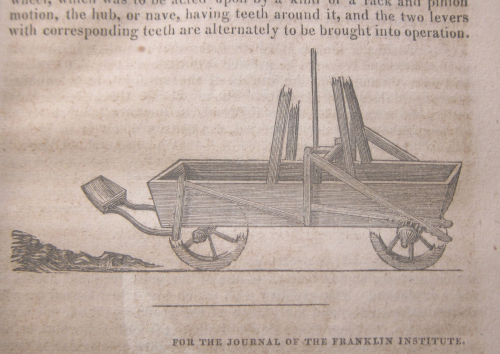
    “A self-loading cart propelled by wind”, p 40-1, with small woodcut illustration.

    JFI 1830 self shovel wagon

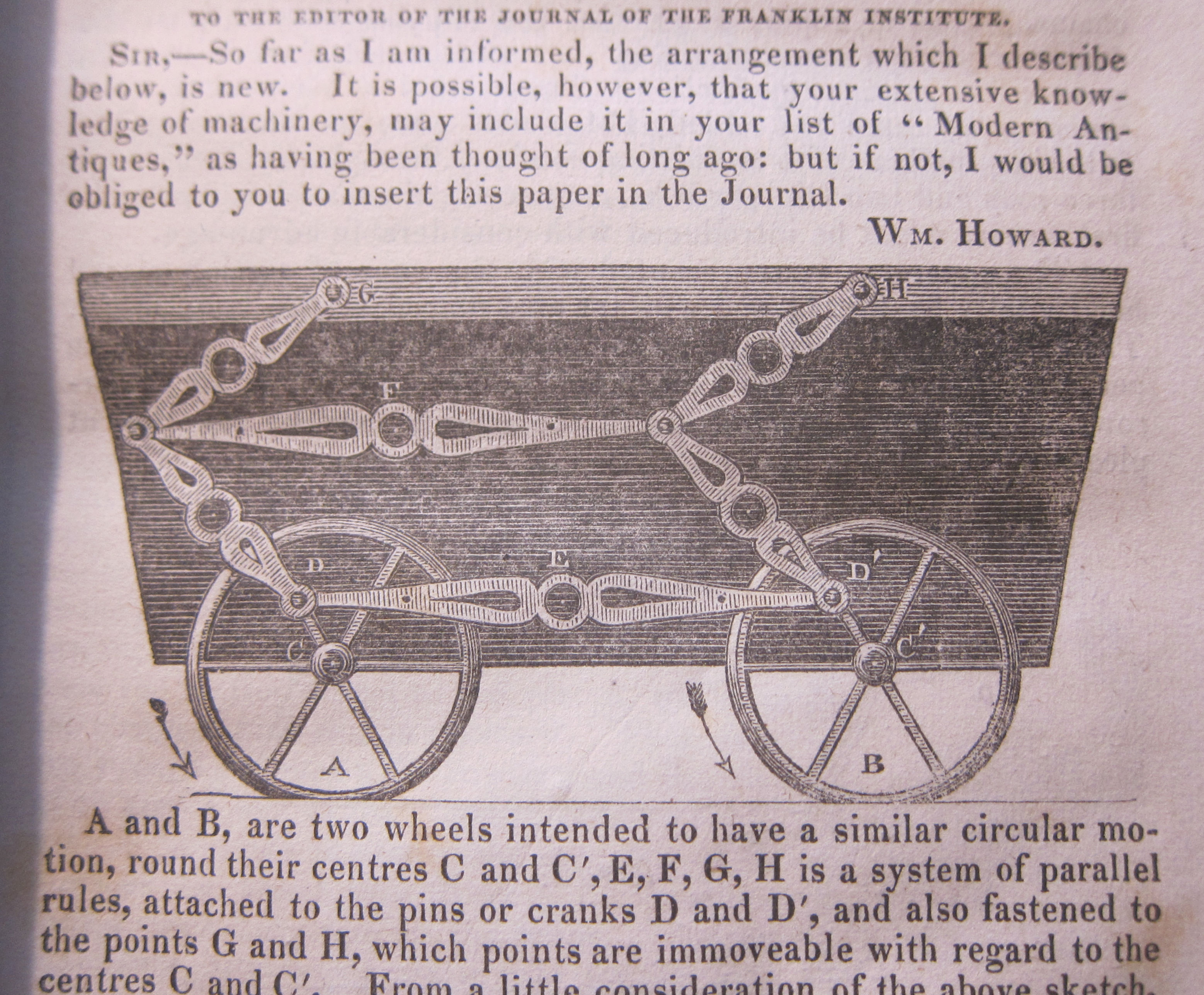
    Howard, William. “New method of communicating circular motion in a lateral direction”, pp 37-38, with small woodcut;

    JFI 1830 Wagon circular motion

    McDowell, John. “Economical mode of transmitting motion”, pp 38-9, with small woodcut.  

    There are many dozens of other papers plus a hundred or so patent reports (with sort comments by the editor).


    ·Posted by :

    ·in:


  • A Pre-Marconi (?) Plan for Wireless Communication (1893)

    Nikola Tesla, “On light and other high frequency phenomena”, in Journal of the Franklin Institute, vol 136 #1, July-December 1893. The Tesla article appearing in six sections” pp 1-19, 81-98, 161-177, 259-279, 351-360, and 401-412. Altogether 93pp with 34 text illustrations. Offered in the full volume of 482pp (plus a number of folding maps and tables at the end for Pennsylvania weather records. Condition: bound in half-calf with considerable scuffing to the spine; also, the rear board is nearly detached. This is an ex-library copy, with stamps on the title page as well as a bookplate. Good, sturdy copy, with some good and attractive life left in the binding. $650

    • “This was a lecture delivered before the Franklin Institute, Philadelphia, February 24, 1893, and before the National Electric Light Association, St. Louis, March 12, 1893, republished many times after publication in the Journal of the Franklin Institute, July, Aug., Sept., Oct., Nov., Dec. 1893.”

    “What Tesla described in this lecture should be taken to be the foundation of radio engineering, since it embodied the following principles and ideas of fundamental importance, namely: the principle of adjusting for resonance to get the maximum sensitivity in a selective reception, inductive link between the driver and the tank circuit, an antenna circuit in which the antenna appears as a capacitive load…”–“Nikola Tesla and his Contributions to Radio Development”, in History of Wireless, by Tapan K. Sarkar, Robert J. Mailloux, Arthur A. Oliner, 2006; chapter 5. Wiley-IEEE Press.

    “In February 1893 Tesla delivered a third lecture on high-frequency currents before the Franklin Institute in Philadelphia and repeated it in March at the National Electric Light Association in St. Louis. In the first part of the lecture he described a ‘method of conversion of low fiequency AC or DC current into high-frequency currents, all based on using spark gap discharge’. Just as in the previous two lectures he performed again many experiments with high frequency currents and various resonant circuits, illustrating that the current can pass through an open circuit consisting of a coil connected to a terminal of a generator and an insulated plate. Today specialists can easily build circuits used in these experiments but in 1893 they were fascinating and novel. The most significant part of this lecture refers to a system for “transmitting intelligence or perhaps power, to any distance through the earth or intervening medium”.

    Sarkar then quotes Tesla from the lectures:

    “On wireless energy transmission, Tesla made the following remark in the demonstration of high frequency driven motors by a single wire:

    • ‘It is quite possible, that such ‘hot wire” motors, as they might be called, could be operated by conduction through the rarefied air at considerable distances. Alternate currents, especially of high frequencies, pass with astonishing freedom through even slightly rarefied gases. The upper strata of air are rarefied, To reach a number of miles into space requires the overcoming of difficulties of a merely mechanical nature. There is no doubt that with the enormous potentials obtainable by the use of high frequencies and oil insulation luminous discharges might be passed through many miles of rarefied air, and that, by thus directing the energy of many hundreds or thousands of horse-power, motors or lamps might be operated at considerable distances from stationary sources’.”

    “Before passing on to consider the final phase of wireless communication, as represented by Marconi, mention must be made of one other pioneer, Tesla, who worked perhaps in a less spectacular manner than those who gained a certain amount of publicity. Tesla ’s early efforts are often overlooked, and it is only fair that his name should be mentioned so that he may share in the credit due to the early investigators. TesIa experimented early in the problem of transmitting energy without wires. In February 1893 he advanced a plan of wireless transmission and expressed his conviction in a lecture at the Franklin Institution that “it certainly is possible to produce some electrical disturbance sufficiently powerful to be perceptible by suitable instruments, at any point of the earth’s surface” –Ellison Hawks, Pioneers of Wireless, London: Methuen & Co. Ltd, 1927, found in Sarkar “Nikola Tesla and his Contributions to Radio Development”, in History of Wireless.

    ·Posted by :

    ·in:


  • A Pre-Foucault Gyroscope (1852) in 1818

    Johann Gottlieb Bohnenberger, “Beschreibung einer Maschine, welche die Gesetze der Umdrehung der Erde um ihre Axe, und der Veranderung der Lage der Erdaze zu erlautern dient”, in Annalen der Physik, series I volume 60, 9th section, article V, 1818 last quarter 1818.  The paper occupies pp 60-71, and is illustrated with one small figure on plate 1.  (There was an earlier publication of this article in 1817 in a very obscure journal, otherwise this is the first appearance of the invention in a major publication.) 

    Offered in the full volume 60 of the Annalen, 475pp, with three plates (including a hand-colored map). Bound together with the very scarce (pinkish) outer wrappers. Bound in half cloth and marbled boards (ca. 1935). Ex-libris Deutsche Akademie der Luftfahrtforschung, then Wright Patterson Field Library (USAF), then Library of Congress.  Library markings:  small gilt-stamped “Akademie der Luftfahrtforschung”, page edges stamped “Wright Field Library/Dayton, Ohio” on top and bottom.  Scarce item. $350

    “Johann Gottlieb Bohnenberger (1765-1831) was a Professor of physics, mathematics, and astronomy at the University of Tübingen, Germany, as well as the scientific head surveying officer of the Kingdom of Württemberg. He made not only significant contributions to introducing modern geodesy in Germany but also constructed various physical instruments. The “Machine of Bohnenberger” is considered to be the first gyro with cardanic suspension and forms the precursor of J.B.L. Foucault’s Gyroscope of 1852…”, Jörg Friedrich Wagner (University of Stuttgart), in “The Origin of the Gyroscope: The Machine of Bohnenberger”.

    And this description of the apparatus from Pike’s illustrated descriptive catalogue of optical, mathematical and philosophical instruments: 

    • “Bohnenberger’s Machine. — This apparatus (see figure 146 below) consists of three movable rings,A,B,C, mounted on a stout base. The two inner rings are mounted on pivots; those on the smallest ring at right angles to the middle one; in the smallest ring is supported a metal ball, having a roller on one of its pivots; around the roller a string may be wound, and when pulled off a rapid rotary motion may be given to the ball. This motion may be given with the axis in any position required, and when communicated, the ring supporting the ball will resist considerable effort to alter its position, and whatever way the instrument may be turned, its axis will continue to maintain the position it had when set in motion, illustrating the inertia, or that property of matter which resists any change of state, whether of rest or motion.” —Benjamin Pike, Jr. Pike’s illustrated descriptive catalogue of optical, mathematical and philosophical instruments : manufactured, imported, and sold by the author, with the prices affixed at which they are offered in 1856. Found on page 142, illustrated by figure 146 and sold for 5 bucks, which could’ve bought you a month of lodging at a decent hotel in Manhattan in 1850.


    • This volume also contains: Friedrich Stromeyer (1776-1835), “Ueber das Kadmium”, pp 193-210. This is a report on cadmium, a discovery he made at the same time as C.S. Hermann, who reported his results in the preceding volume (though in the same year) of the Annalen, in “Noch ein schreiben über das neue Metall”. Annalen der Physik, volume 59, 1818.


    ·Posted by :

    ·in:


  • Pioneering Electrical Engineering Effort (1855)

    J. M. Gaugain, “Notes sur un appareil electrique qui fait fonction de soupage”, in Comptes Rendus, Paris, vol. 40, #12, p. 640-2; 19 March, 1855. Removed from a larger bound volume, containing the full weekly issue of pp 597-648. Lacks the original outer wrappers.

    Offered with: “Note sur la stratification de la lumiere electrique”, same volume, pp 1036-7, offered in the original weekly issue, removed from a larger bound volume, lacking the original wrappers.  The two: $150

    On the first paper: “Experiments with low-pressure glow discharges started very early in the electrical art. Most of them were in small diameter glow tubes, often in the form called Geissler tubes. The first recognition of the fact that such a glow tube having its two electrodes of different size was capable of rectifying the oscillating current from an induction coil appears to have been that of Gaugain in 1855.”–”Development of Gas Discharge Tubes”, J.D. Cobine, in Proceedings of the IRE, May 1962.

    Also see GWA Dummer, Electronic Inventions 1745-1976, pg 40, 1855. “Experiments with low-pressure glow discharges started very early in the electrical art…the first recognition of the fact that such a glow tube having its two electrodes of different size was capable of rectifying the oscillating current from an induction coil appears to have been that of Gaugain in 1855…”

    ·Posted by :

    ·in:


  • Superior Single-Sheet Guide to Major Characteristics of Leading Computers, 1956

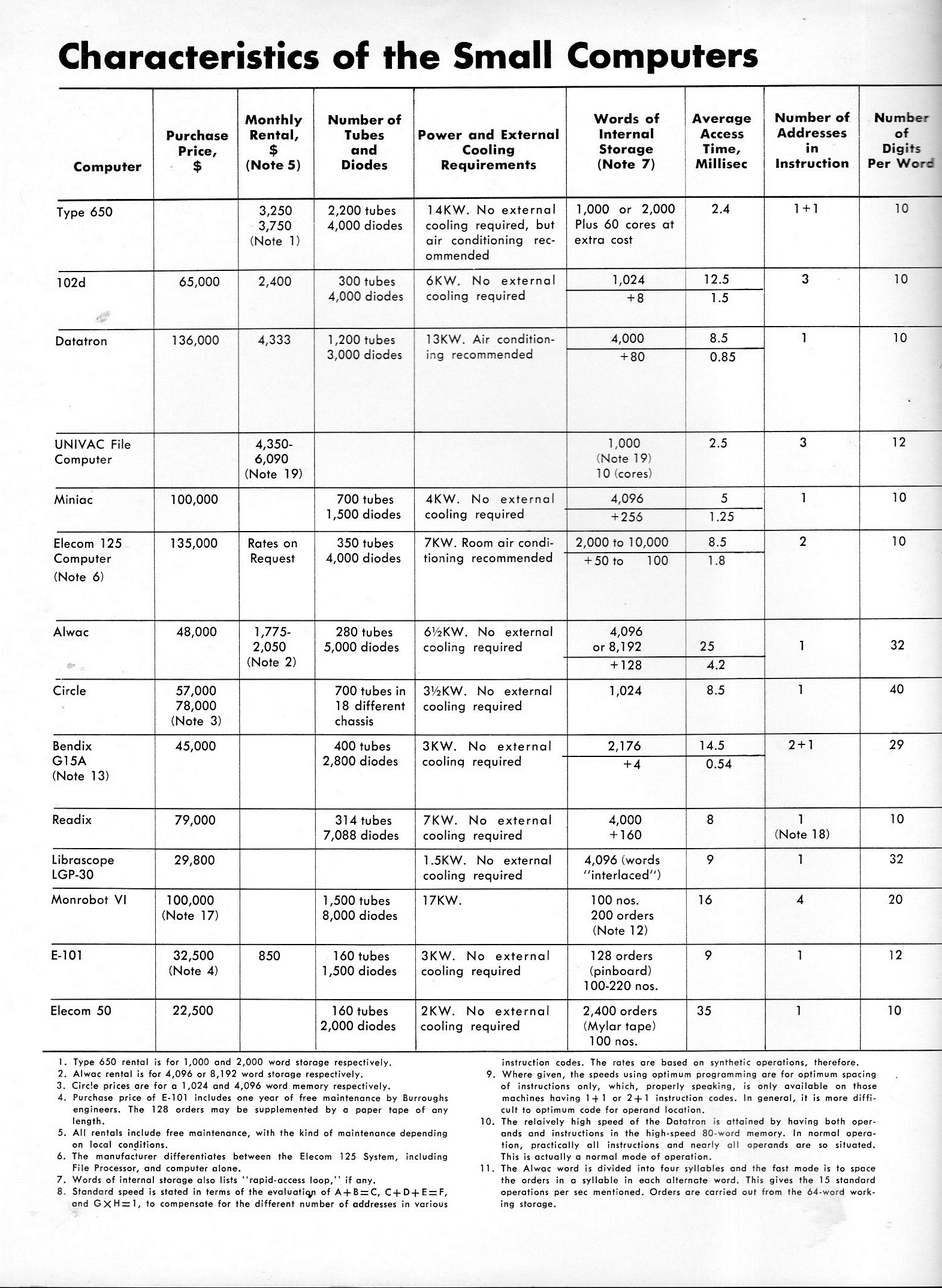
    A.J. Perlis and John Carrs  Characteristics of the Small-Scale Computers. 11×8”, 4pp. Product Engineering-Project Design Digest, offprint, “Mid-October”, 1956. The article first appeared in Control Engineering, March 1956. 

    This pamphlet looked innocent enough, 12″ tall and one folded piece of paper, and published in 1956, but there was a lot more to the simple publication than you’d expect from something so modest. The authors–John W. Carr III and Alan J. Perlis–were heavy hitters, and so I really wasn’t very surprised to see what they had done “inside”, though I was impressed and happy to see the data. Displayed on the 11″x16″ sheet of paper are 15 data points on 14 computers, many of them classic/famous:  the 650 IBM, UNIVAC, Elecom, Alawac.  (Remember that when you’re looking at purchase price and monthly rental amounts that the 1956 dollar is equal to about $8.70 in 2015 dollars, so that $3275/month for the 650 would be about $30k.  The $136k for the Datatron is about a million today.)   

       Perlis794

    ·Posted by :

    ·in:


  • An Early and Very Fast Cinematograph

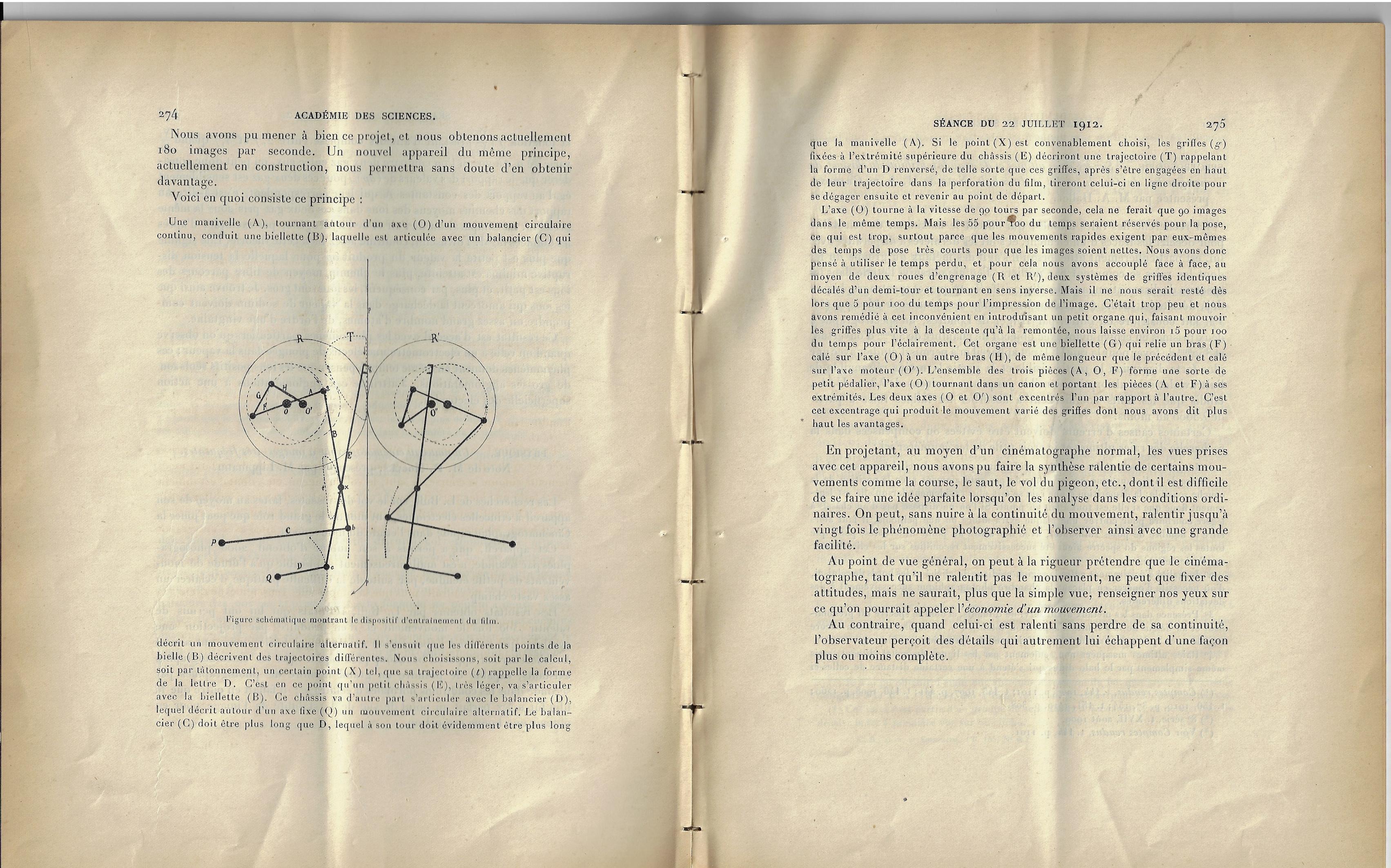
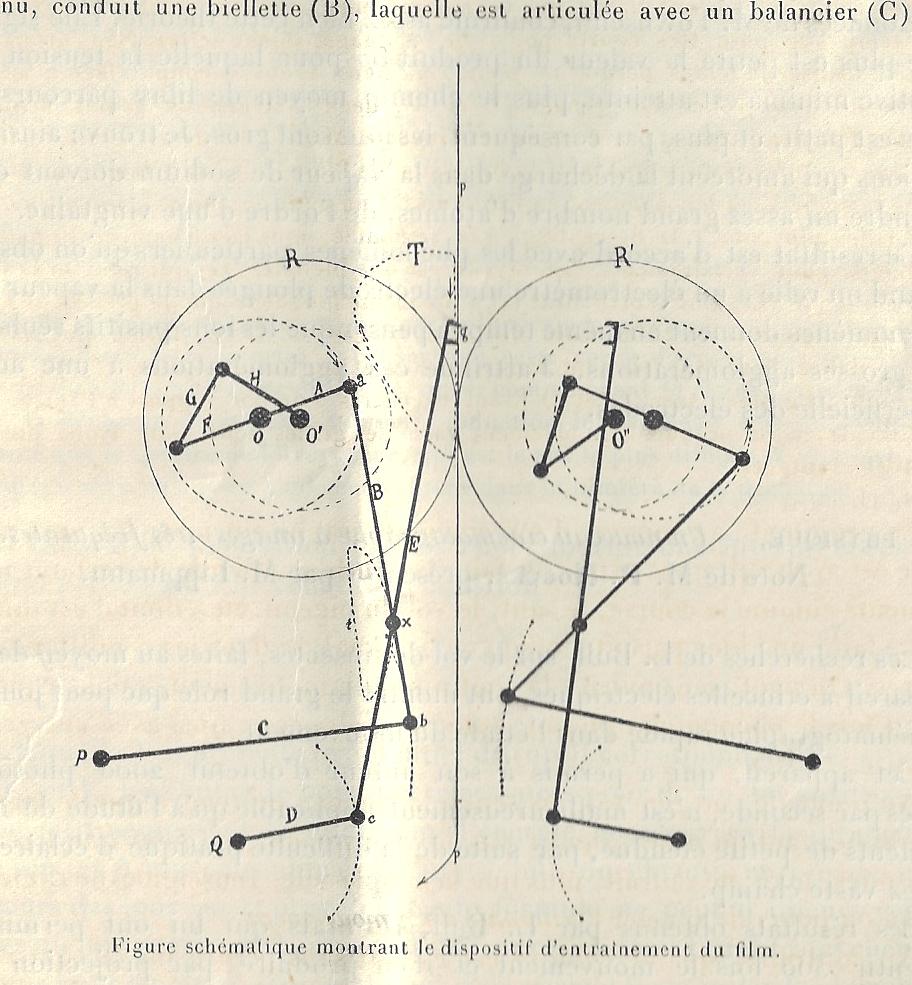
    P(ierre) Nogues (1878-1971), “Un nouveau cinematographe a images tres frequentes”, in Comptes Rendus de l’Academie des Sciences, Paris, 22 July 1912, pp 273-275 in the weekly issue of pp 253-336.  Offered with the original front wrapper. The issue is removed from a larger bound volume. Also, there is an old vertical fold running through and through. Provenance: Library, U.S. Weather Bureau, with their rubber stamp on the front page.  Good condition.  $200

    CR 1912 Nogues kinematographThis is one of those posts where I was looking for something in the Comptes Rendus and then found something completely different. The what-it-was was something about Poincare1, at this point dead for just a week, the second titanic to disappear this year–it is really impossible to understand how he was able to do what he did in a lifespan of 58 years…of course he was a master of nearly every field, and was able to work his math problems out in his head first before writing them out, so it helped to be a multi-genius–and while not finding a notice on his death in the weekly issue I did “discover” an intriguing (and unrelated to Poincare) illustration. 

    At first I thought it would be related to an article on the depiction of motion as the drawing seemed to represent the anatomy of two dancers, and have some sort of fourth dimension/art/science relation, or whathaveyou, but then I saw it was a schematic for a part of motion picture camera–a kinematograph/cinematograph–that made 180 images per second, and would be just the sort of instrument used to study fast-moving objects in minute detail. So the schematic really did portray the essence of what the machine did, exploring the designs of motion.  

    CR 1912 Nogues _detail_

    ____________

    Notes:

    1. Poincare knew basically everything…here’s a toss-off from him that has stuck with me: “To doubt everything, or, to believe everything, are two equally convenient solutions; both dispense with the necessity of reflection.
    2. P. Nogues, “Un nouveau cinematographe a images tres frequentes”, in Comptes Rendus de l’Academie des Sciences, 22 July 1912, pp 273-275.  

    ·Posted by :

    ·in: