A Daily History of Holes, Dots, Lines, Science, History, Math, Physics, Art, the Unintentional Absurd, Architecture, Maps, Data Visualization, Blank and Missing Things, and so on. |1.6 million words, 7500 images, 4.9 million hits| Press & appearances in The Times, Le Figaro, Mensa, The Economist, The Guardian, Discovery News, Slate, Le Monde, Sci American Blogs, Le Pont, and many other places… 5000+ total posts since 2008.

Book Category: Technology, History of

  • Rare Early Paper on Instrument Flying (1931)

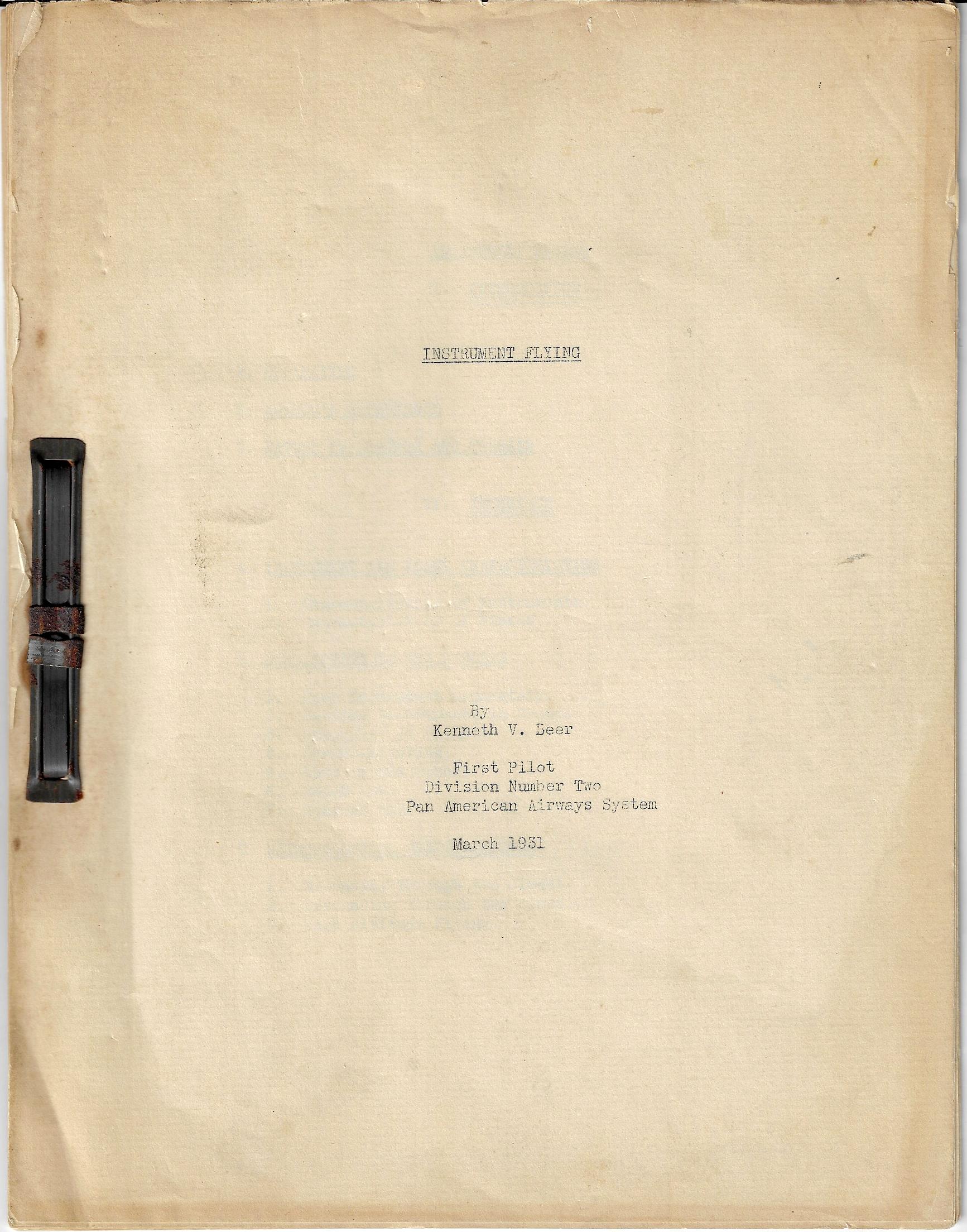
    BEER, Kenneth V.  Instrument Flying.  (Pan American Airways System) March 1931, 11×8.5″, 19 leaves, offset printing.  Two-hole punch at the left margin, bound with metal flexible clasps.   Between Good and Very Good condition.  Not located in the OCLC/WorldCat.  $750  

    Beer was “First Pilot, Division Number Two, Pan American Airways System”) and was evidently testing systems out for PanAm–and had in fact been doing so for two years at this point. He states in the introduction that “because (instrument flying) is important…and there doesn’t seem much known about it, and still less written concerning it…” as the reasons why he undertook to gather his thoughts on the subject. He then gives a broad overview of the subject, looking at “technique” (including characteristics of instruments), “description of the process” (“each instrument separately”, “reading instruments in groups”, “synchronization”, “rough air”, “loss of one engine”), “meteorological considerations” (“ascending through clouds”, “high altitude flying” for example). A third section is “tests with instrument flying/instruction plane”, looking at the methods of conducting tests (for various types of turns and dives, glides, tight spiral, spins); a fourth on “psychology” (“at first pilot has erroneous feelings”) and then a fifth and final section on dangers and advantages.  All in all a very interesting, concise, and broad review of the earliest days of instrument flying, and gives a real taste for the difficulties in flight when discussing how useful instrument flying would prove in conditions of low visibility/clouds/fogs and that sort of now-easily-surmountable early flight troubles.
    Beer instrument flying

    It is interesting to note that Beer writes about seven instruments–one more than the RAF established as their basic instrumentation. Included in this report are the unnamed turn indicator, bank indicator, climb indicator, and then the airspeed meter, compass, and altimeter. (No mention of Jimmy Doolittle’s historic first take/off and landing by instruments in 1929!) 

    “CAPTAIN KENNETH V. BEER has flown 27 years for Pan American. He has 23,000 pilot hours and is PAA’s senior captain in the Pacific Division. He was the 26th pilot to join Pan American.” –Pan American’s “Meet Your Captain” brochure, 1952

    “Forming the nucleus for expanded operations, veteran Pan American pilots piled up thousands of additional hours of wartime flying. Capt. Kenneth V. Beer now in charge of flight training, added some 1,340 hours of wartime flying to a 13,ooo-odd peacetime log which included the first passenger flight to New Zealand. Incidentally, he was one of three Coronado pilots who rushed :Marine torpedo bomber ground crews to Midway during the crucial hours of that decisive battle in 1942.”–Aircraft Yearbook, 1945
     

    ·Posted by :

    ·in:


  • Early Paper on the Use of Commercial Calculators to Scientific Computing (1946)

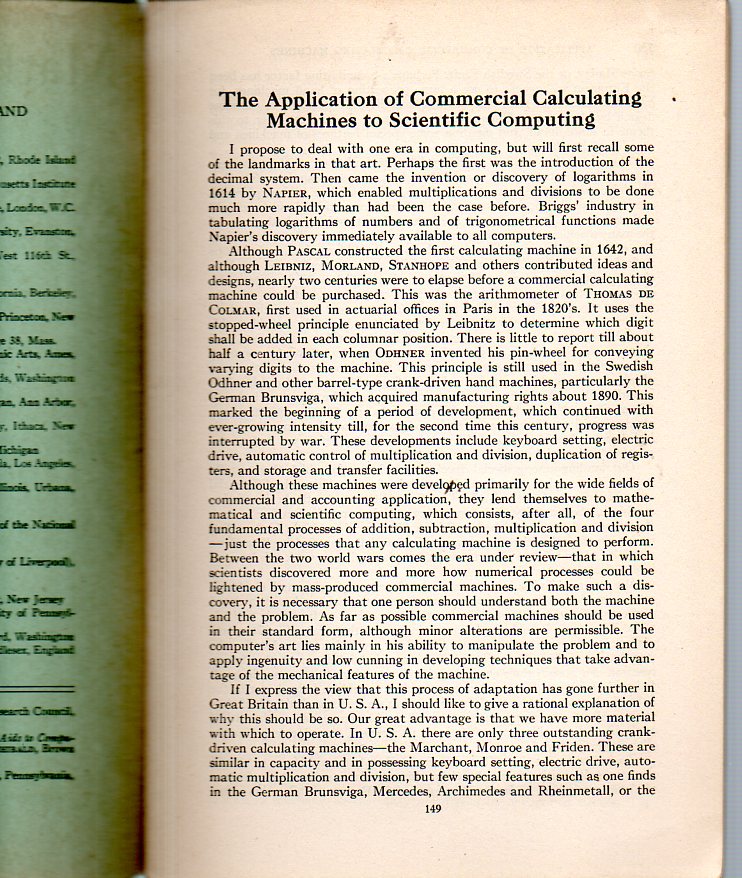
    COMRIE,  Leslie.  “The Application of Commercial Calculating Machines to Scientific Computing”.  Washington DC:  National Research Council,  1946.  1st edition.  Mathematical Tables and other Aids to Computation, II/16  Pp 149-196  8vo.  Original printed wrappers.  Very good condition.  Original owner’s name has been rubber stamped twice on the cover.  $250

    Comrie MTAC449

    This pamphlet is offered in its original green wrappers for the month of October 1946.  “Comrie pioneered the use of commercial accounting machines in scientific applications, especially in the production of mathematical tables. The above article describes the first use of a punched-card tabulating system in a purely scientific application. The following on Comrie from Columbia University: Leslie J. Comrie, Ph.D, (1893-1950): astronomer and pioneer in mechanical computation, born in Pukekohe, New Zealand, and educated at Auckland University College, University College London, and Cambridge University, where he received a Ph.D. in astronomy.  Like his American contemporary, Columbia University Astronomy Professor Wallace Eckert, Comrie was a pioneer in the application of punched-card machinery to astronomical calculations and the production of astronomical and mathematical tables: the first scientific use of these machines, which had been designed purely for business use.”

    ·Posted by :

    ·in:


  • Hopkinsonjohnoriginal Papers By The Late John Hopkinson Volume I Technical Papers Volume Ii Scientific Papers Cambri

    HOPKINSON,  John.  Original papers by the Late John Hopkinson . Volume I: Technical Papers; volume II, Scientific Papers. 

    Cambridge:  Cambridge University Press,  1901.  294+390pp  8vo.  Cloth.  Very fine condition.  But for a small smudge on the spine of volume one, this is a superior set. $200

    “In addition to having been elected fellow of the Royal Society at twenty-nine, he was twice president of the Institution of Electrical Engineers. At the age of forty-nine Hopkinson, with three of his children [another, Bertram, wrote the 58-page Biography in this volume], was killed in a mountain climbing accident in the Alps” –Bern Dibner in D. S. B. VI: 504). Some of the contents of interest: On Electric Lighthouses, pp 6-33; On Electric Lighting, pp 33-56; and Dynamo-Electric Machinery pp 84-121.  

    ·Posted by :

    ·in:


  • Early paper on his educational/interactive machines (1964)

    PASK, Gordon.  “Adaptive Teaching Systems and a Minima, Cybernetic Model for Designing Them”, in Cybernetica, vol 7 #2, Namur, 1964, pp 125-143 (with numerous illustrations) in the issue of pp (73)-143. Nice sharp copy, with the original wrappers, this removed from a larger bound volume, and so there is no cover to the spine. Very good copy.  $150  Early paper on his educational/interactive machines.   

    “Dr. Pask received his M.A. in Natural Sciences at Cambridge in 1952, and his Ph.D. in Psychology from London University in 1964. He founded System Research Ltd. in Richmond, Surrey, England, an institute devoted to the study of adaptive teaching machines and self-organized learning systems. He has held a number of positions including Research Director of System Research Ltd.; Professor in the Institute of Cybernetics, Brunel University; Associate Professor: University of Illinois, University of Mexico, Georgia Institute of Technology, University of Oregon, and Open University. He has also served as Consultant, Solartron Electron Ltd.; and Member of Editorial Board, International Journal of Man-Machine Studies.”–Cybnerticians, from the George Washington University website, here.

    ·Posted by :

    ·in:


  • Sound Mills (Phonometers) 1884

    Sylvanus P. Thompson. “Sound-Mills”  in Nature, February 14, 1884, pp 363-364, in the weekly issue of pp 353-376, and with several text illustrations. Nice copy, the weekly issue removed from a larger bound volume. Very Good.  $45

    Nature 1884 SOund mills

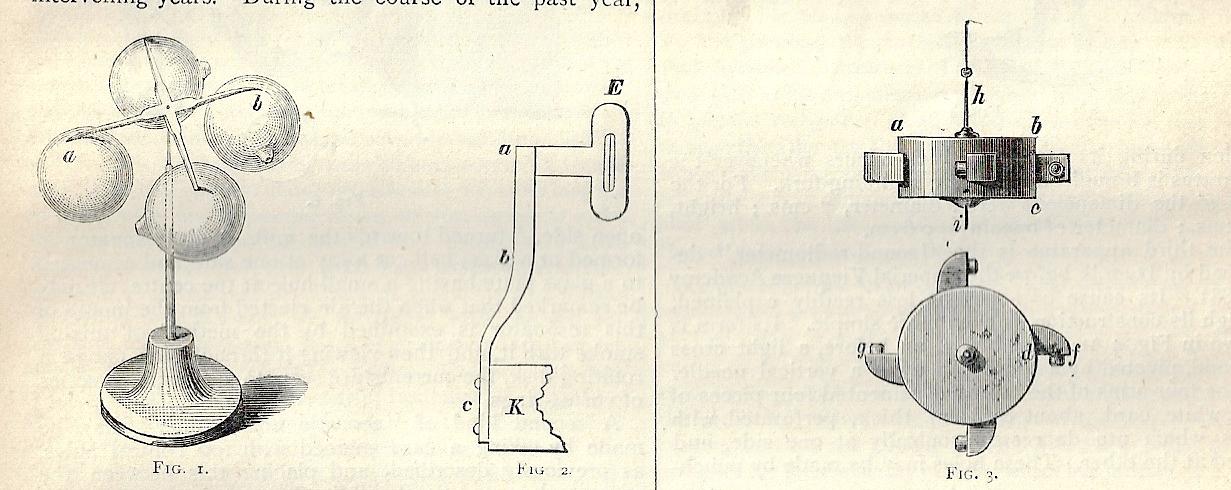
    The opening paragraph of the Thompson paper describes the instrument in general, and introduces the work of Dvorak:

    “After the notable researches of [Sir William] Crookes on radiation, which culminated in the discovery of the radiometer, or lightmill, it was a natural transition of thought which suggested to several minds almost simultaneously the possibility of devising an apparatus which should rotate under the influence of sound waves as does the radiometer under the influence of the rays of light and heat. Such instruments were indeed devised independently about six years ago by Lord Rayleigh, by Prof Alfred M. Mayer of Hoboken, by Mr Edison, the well-known inventor, by Prof Mach of Prague, by Dr A. Haberditzel of Vienna, and by Prof Dvorak of the University of Agram (in Croatia). These researches, though of great scientific interest, have been somewhat overlooked in the rush of scientific inventions during the intervening years. During the course of the past year, however, Dvorak has given to the world, in the pages of the Zeitschrift der Instrumentenkunde (vol. iii, Heft 4), a detailed account of his experiments, together with figures of various piece of apparatus hitherto undescribed. We propose to give a resume of the principal points of Dvorak’s researches…”

    Much of the rest of the paper describes four different Dvorak instruments.  

    ·Posted by :

    ·in:


  • An Outstanding Manufacturer’s Catalog for Lightning Protection (1937)

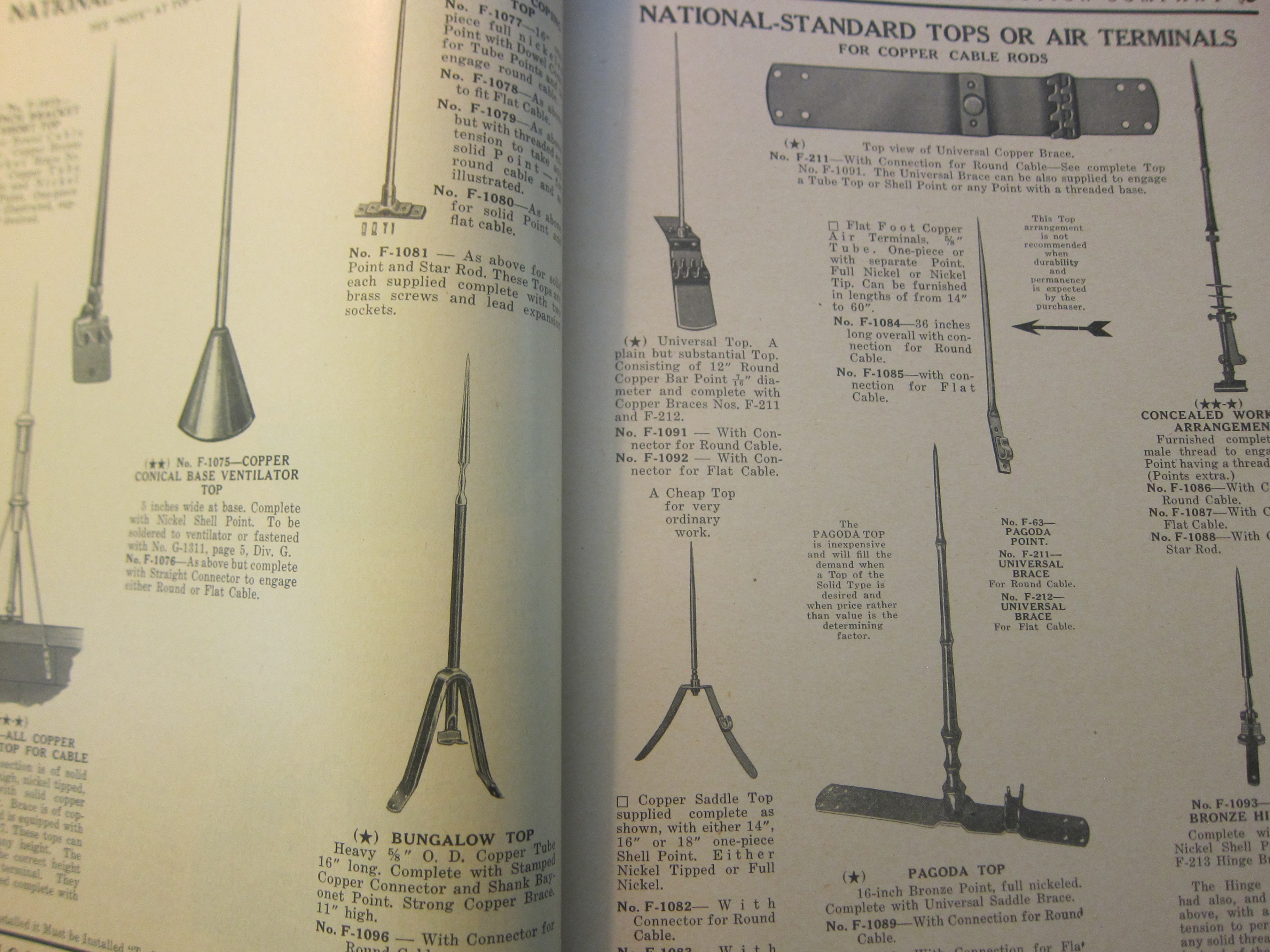
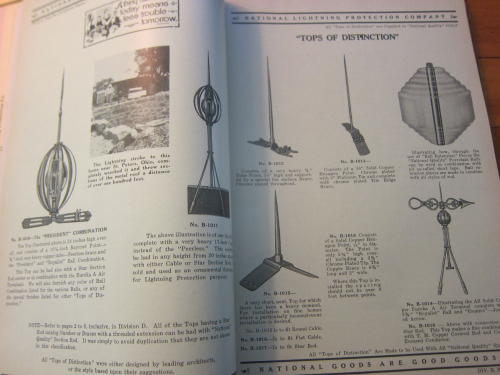
    Text Book, Sales Manual, And Catalog. National Lightning Protection Company. Manufacturers of Quality Lightning Protection Systems, Fixtures, Ornaments and Accessories. St. Louis, Mo. 1937. 11.5 x 9″, 13 sections, 286pp, with hundreds of illustrations. Scarce. 

    IMG_8802

    Heavy paper wrappers decorated with a lightning strike,  bound in a 3 brass screw binding. Lovely copy. Provenance: Library of Congress via the copyright office. There are just a few, small Library marks in the pamphlet, including a 6mm “LC” perforated stamp on the title page, and a very faded LC surplus rubber stamp on the rear cover.  Fine copy. $350   

    IMG_8803

    • Division A: introductory explanation, 14pp;
    • Division B, Star Selection Lighting Rod and Special Equipment, 17pp;
    • Division C, National-Standard Section Rods, 2pp;
    • Division D, Copper Cable conductors and Special fixtures, including Rods, 10pp;
    • Division E, Copper Cable Conductors, 2pp;
    • Division F, Fixtures and Ornaments, including weather vanes, 38pp; 
    • Division G, Accessories, 8pp;
    • Division H, sundries, including fire alarms, 6pp;
    • Division I, lightning protection systems for heavy duty chimneys, 14pp;
    • Division J, National tree protection systems, 6pp;
    • Division K, Lightning protection against oil, gas, and petroleum storage, Tank and Dust Explosion Hazards, 6pp;
    • Division L, Installation requirements and instructions, (incl perhaps 100+ architectural plans), 62pp;
    • Division M, General information. numerous photos of different installations, including Washington Monument, 97pp.

    ·Posted by :

    ·in:


  • Earbuds, 1891

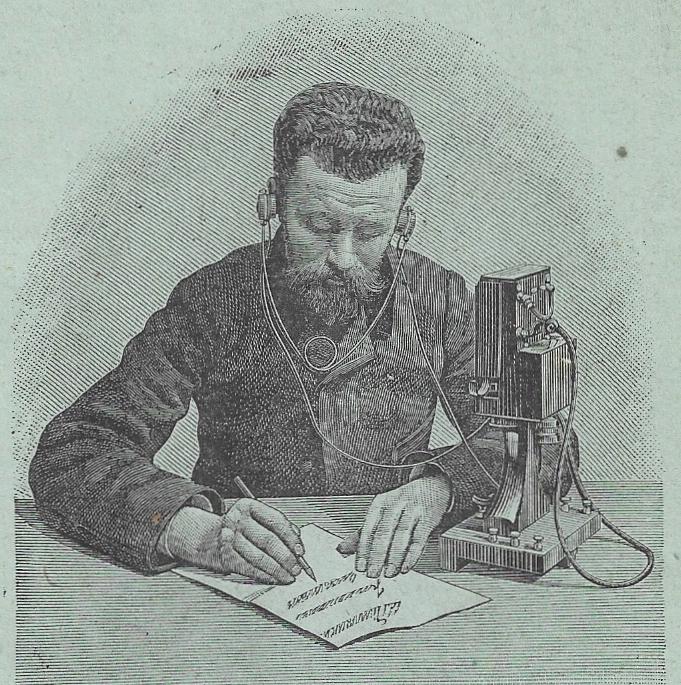
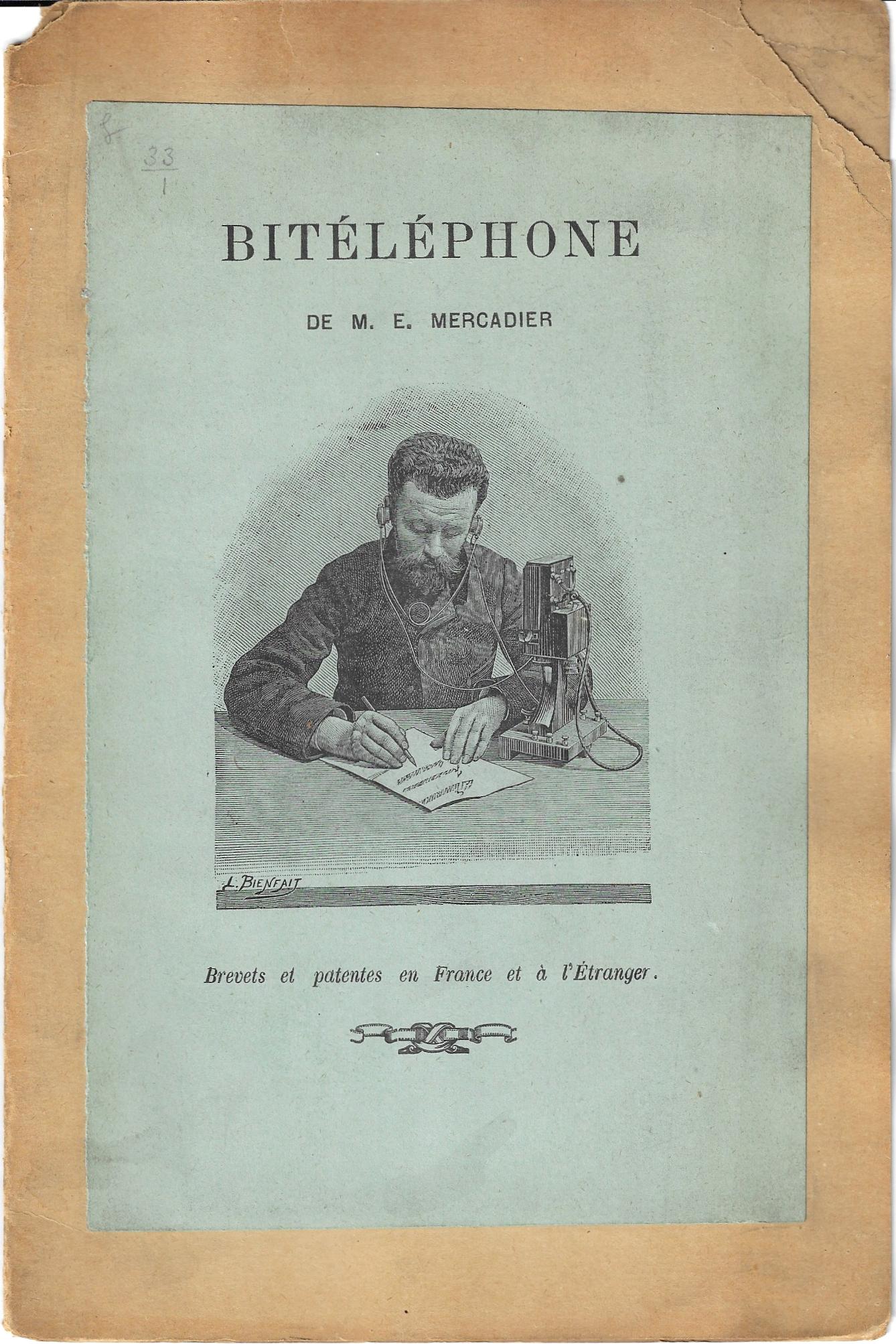
    Ernest Jules Pierre Mercadier, Bitelephone.  Printed by Jamin in Laval, ca. 1891-3 (though no later than 1893). 21×13.5cm, 15pp, 6 text illustrations showing the device. The author announces that there are patents for his invention at home and abroad: “Brevets et patents en France et a l’Etranger”. This is the original pamphlet in wrappers, though at some very early point the pamphlet was bound into a larger manila-folder-like paper cover measuring 25x17cm; the front wrapper of the pamphlet was removed and pasted on the front cover of the new binding. The rear cover is intact. SO, that said, this is a not-perfect copy of the pamphlet, though the much-reproduced and striking cover is present. PROVENANCE: Library of Congress Smithsonian Deposit, accessed in October 1893. Also, the LC surplus rubber stamp is on the back cover.  Good copy. There are NO copies located in WorldCat/OCLC  Rare. $1250

    Bitelephone _2_


    BitelephoneMercadier (1836-1911, electrical engineer and director at Ecole Polytechnique) may well have introduced the first “ear buds1” into the technical world. His apparatus–small listening devices of 1.752 ounces that were padded and fit into the ear–was made for the operator of a telephone so that they could listen and speak and have free use of their hands for notes and such, as pictured on the front cover of this pamphlet. This would have been a shocking thing to see, I think, back there in 1891, only 15 years into the age of the telephone and about half of that for the time in which the still-a-luxury telephone could be accessed by relatively upper-middle-class folks. (In 1881 there were approximately 50,000 Bell telephone stations; in 1885, the year ATT was formed, there were about 150,000; in 1890, 200k and then 600k in 1900. It was in the first decade of the new century where telephone rental/ownership/accessibility really began to spread, with 2.2 million in 1905 and 5.8 million in 1910. Remember that the telephone was only one aspect of communication–all of the massive amount of infrastructure to connect thousands of telephones wasn’t yet created.) 

    Mercadier was well acquainted with the new device (having written Etudes Sur La Theorie Du Telephone five years earlier in 1886, plus other works on the telegraph and associated beginning in 1881), though what made his instrument so softly revolutionary was that it was one of the first entries into the world of communications microminiaturization–a concept we normally associate with computer development in the middle/late 1950’s. As a “headphone” this device is also extremely early though not the first3, though to my eye it is certainly the most elegant, at least that suited to its purpose. The earbud, even though it appears here in 1891, really takes another ten decades to come into its own.

    Notes:

    1. “Who Made that Earbud?”, NYT, May 16, 2014 https://www.nytimes.com/2014/05/18/magazine/who-made-that-earbud.html
    2.  From the Smithsonian Magazine on Mercadier’s invnetion:  “…improvements in telephone-receivers…which shall be light enough to be carried while in use on the head of the operator.” After extensive testing and optimization of telephone receivers, Mercadier was able to produce miniature receivers that weighed less than 1 3/4 ounces and were “adapted for insertion into the ear.” His design is an incredible feat of miniaturization and is remarkably similar to contemporary earbud headphones, down to the use of a rubber cover “to lessen the friction against the orifice of the ear… effectually close the ear to external sounds.”  : http://www.smithsonianmag.com/arts-culture/a-partial-history-of-headphones-4693742/#4c4flaaUUVCDrfVX.99  Also a nice notice in an article by The Guardian, “10 Most Influential Headphones”.  
       
    3. An interesting article in the SVG blog by Mark Schubin (http://www.sportsvideo.org/blogs/?blog=schubin-cafe&news=headphones-history-hysteria) points to the Mercadier device for being perhaps the third earliest headphone, following some others (issuing beginning in 1881) that were earlier but a lot more cumbersome. The Mercadier really were much smaller, more elegant, and a lot lighter than its 19th century companions. That said, the Mercadier device was more a candidate for the earliest earbuds more so than a straightforward headphone.  

    For a good timeline on the development of the telephone/telephone system, see: http://www.telephonetribute.com/timeline.html

    ·Posted by :

    ·in: