A Daily History of Holes, Dots, Lines, Science, History, Math, Physics, Art, the Unintentional Absurd, Architecture, Maps, Data Visualization, Blank and Missing Things, and so on. |1.6 million words, 7500 images, 4.9 million hits| Press & appearances in The Times, Le Figaro, Mensa, The Economist, The Guardian, Discovery News, Slate, Le Monde, Sci American Blogs, Le Pont, and many other places… 5000+ total posts since 2008.

Book Category: Technology, History of

  • A 1936 Large-Scale Tidal Power Plant

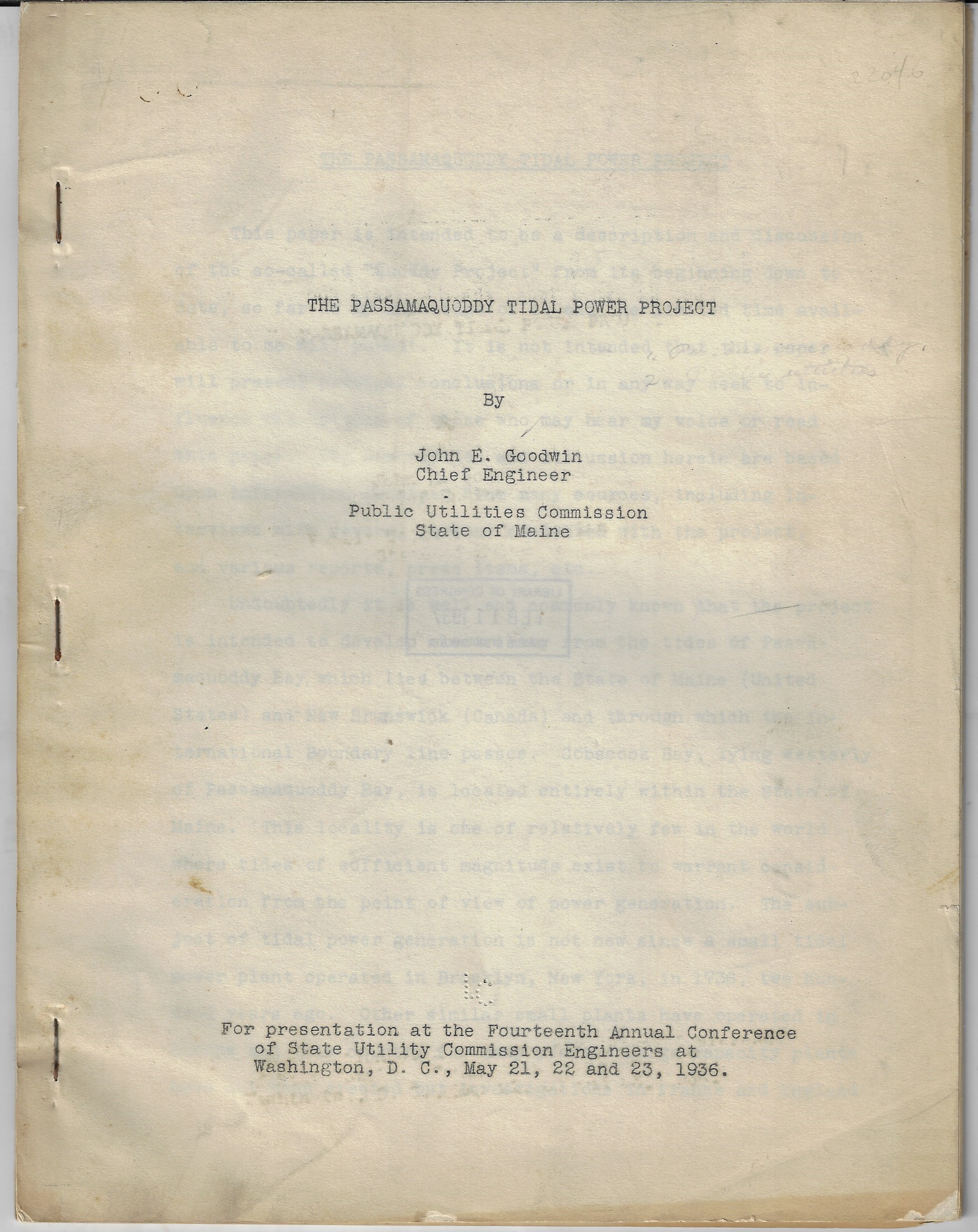
    Passamaquoddy tidalGoodwin, John E.  The Passamaquoddy Tidal Power Project, paper presented at the 14th Annual Conference of State Utility Commission Engineers, Washington DC, 1936. 11″x 8.5″, 24 leaves. Offset printed from typed originals.  Staple-bound. Wrappers. Provenance: Library of Congress, with their tiny (6mm) perforated stamp on the front cover and the surplus rubber stamp on rear cover.  VG copy. $125

    “Tide mills – submerged water wheels that run machinery – have been used in Maine at least since the 18th century.  But tide mills are small-scale projects. For nearly 90 years, the idea of harnessing ocean tides on a larger scale, to generate electricity, has been debated in Maine. The most prominent – and often controversial – plan has been the Passamaquoddy Tidal Power Project….Discussion of reviving the Passamaquoddy Tidal Power Project has surfaced every few years, with studies undertaken and debates renewed. Each time, most people agree that the engineering plan is sound: the project could be built and it would work. Other considerations, however, have kept the project from being resumed.”—Maine History Online. The project—funded for 1936—was not renewed the following year, and construction was halted.  The first large scale tidal power generating plant was not made operational until 1966, in France. 


    ·Posted by :

    ·in:


  • A Report on an Inter-Oceanic Canal (1854)

    Trautwine, John C. “Rough Notes of an Exploration for an inter-Oceanic Canal Route by ways of the Rivers Atrato and San Juan, in New Granada, South America”, 145-154 (folding map), 217-231 (with folding map, split in the middle), 289—299 (with four chromolithographic views), 361-373. Continued in vol 28: pp 1-11 (with 7 lovely lithographic views), 73-84, 145-155, 217-226, 289-299 (concluded). (“John Cresson Trautwine (March 30, 1810, Philadelphia, Pennsylvania – September 14, 1883, Philadelphia) was an American civil engineer, architect, and engineering writer. A consultant on numerous canal projects in North and South America, he was later remembered for reporting in 1852 that a canal through Panama would be impossible.”—Wiki)

    In: Journal of the Franklin Institute, Philadelphia, Vol 27 and Vol 28 (third series), volume 57&58 (overall), January-December 1854, 442+444 pp.,with text illustrations, and three plates, including one folding.. Half-calf, with raised bands. Ex-library, with some scuffing on the spine; also a few stamps on the title page. Nice copy.  Two volumes:  $300

    • Included in vol 27 are:

    “Ocean Steamers”, -pp 64-68, 177-182;

    “On the Progress and Present State of the Electric Telegraphs”, pp 61-64;

    Faraday, Michael. “Identity of Dynamic or Voltaic Electricity with Static or Frictional Electricity”, pp 276-278.

    “Report of the Directors of the Panama Railroad Company” (on of the most most dangerous railroading efforts of the 19th c.), pp 9-15;

    Also, there are a number of separate reports on steamers such as the “San Francisco”, “Charlemagne”, “Tennessee”, “Ericsson” “Himalaya”, “Jos. Johnson”, “Princeton” (2d);

    And of course, a lovely short article, “Soap as a Means of Art”.

    • Included in vol 28:

    Thomas Ewbank, “Thoughts on the Caloric Engine”, pp 178-184, 282-285,

    L. Turnbull, “Observations on a Telegraph Line between Europe and America”, pp 58-62; Cresson, “Remarks upon the Use of Phonic Signals in Navigation”, pp 397-400, with a lovely plate.

    ·Posted by :

    ·in:


  • A Map of the Slender Aspects of Transoceanic Broadcasting (1935)

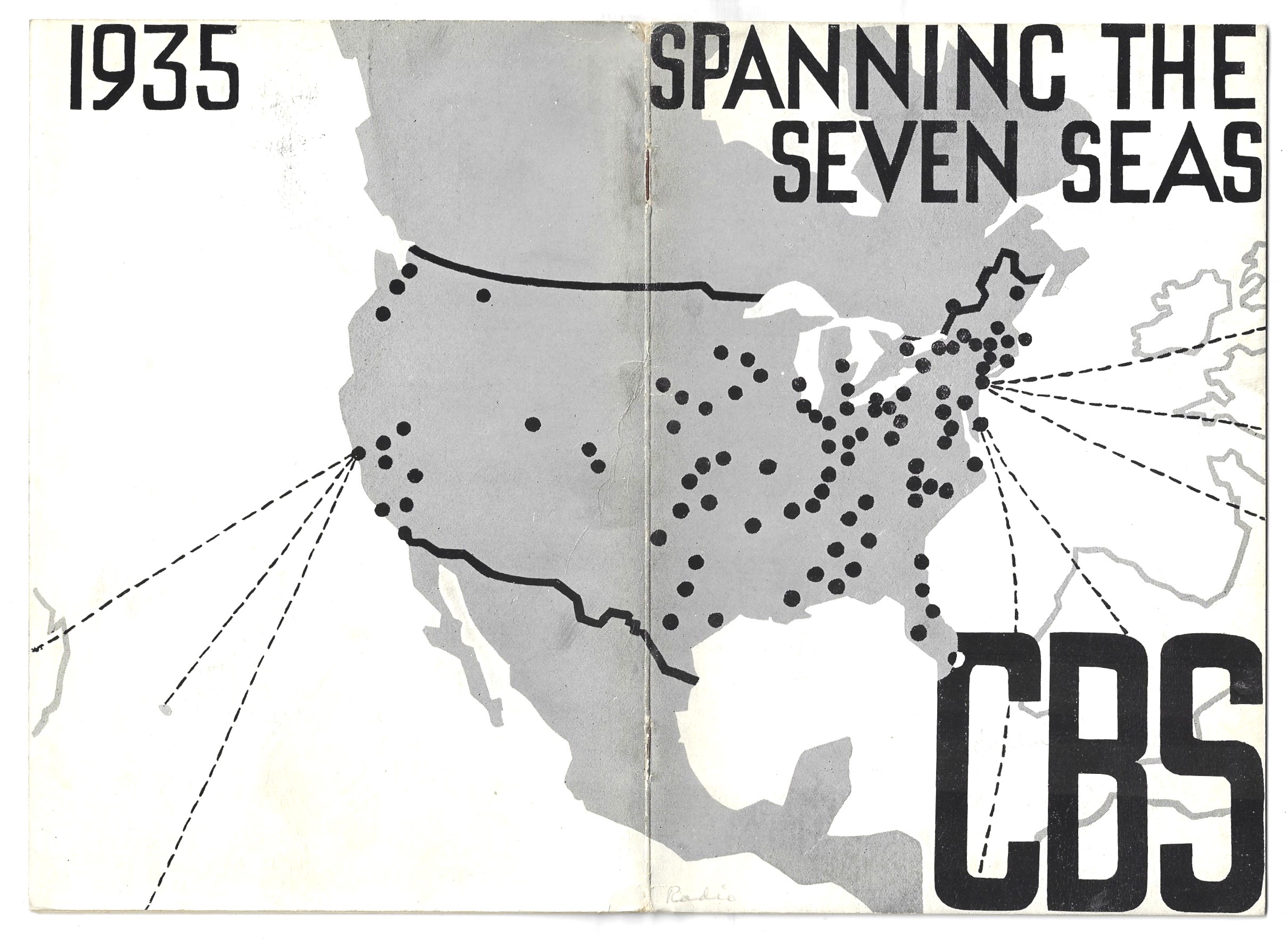
    RADIO, Intercontinental. CBS. Spanning the Seven Seas, a resume of Inter-Continental Broadcasting in 1935. Published by the Central Broadcasting System, London, 1935. 8” x 5”, 11pp. Original decorated wrappers. VG condition. Provenance: Library of Congress with their stamp. $75 

    Books covers CBS map

    Curiously there is only ONE copy located by WorldCat (Bibliothek der Stiftung Deutsches Technikmuseum,Berlin).

    This pamphlet discusses the CBS (at that time the world’s largest radio network)”affiliates and partners, and the new increase in transoceanic relays (with the “result that all five [sic] of the continents have at various times been linked to each other”). At this point CBS was only about eight years old, starting with 22 station in 1928 and then going over the 100 mark by the late 1930’s.

    The cover (front and back) is a revealing insight into the early days of transoceanic radio communication.


    ·Posted by :

    ·in:


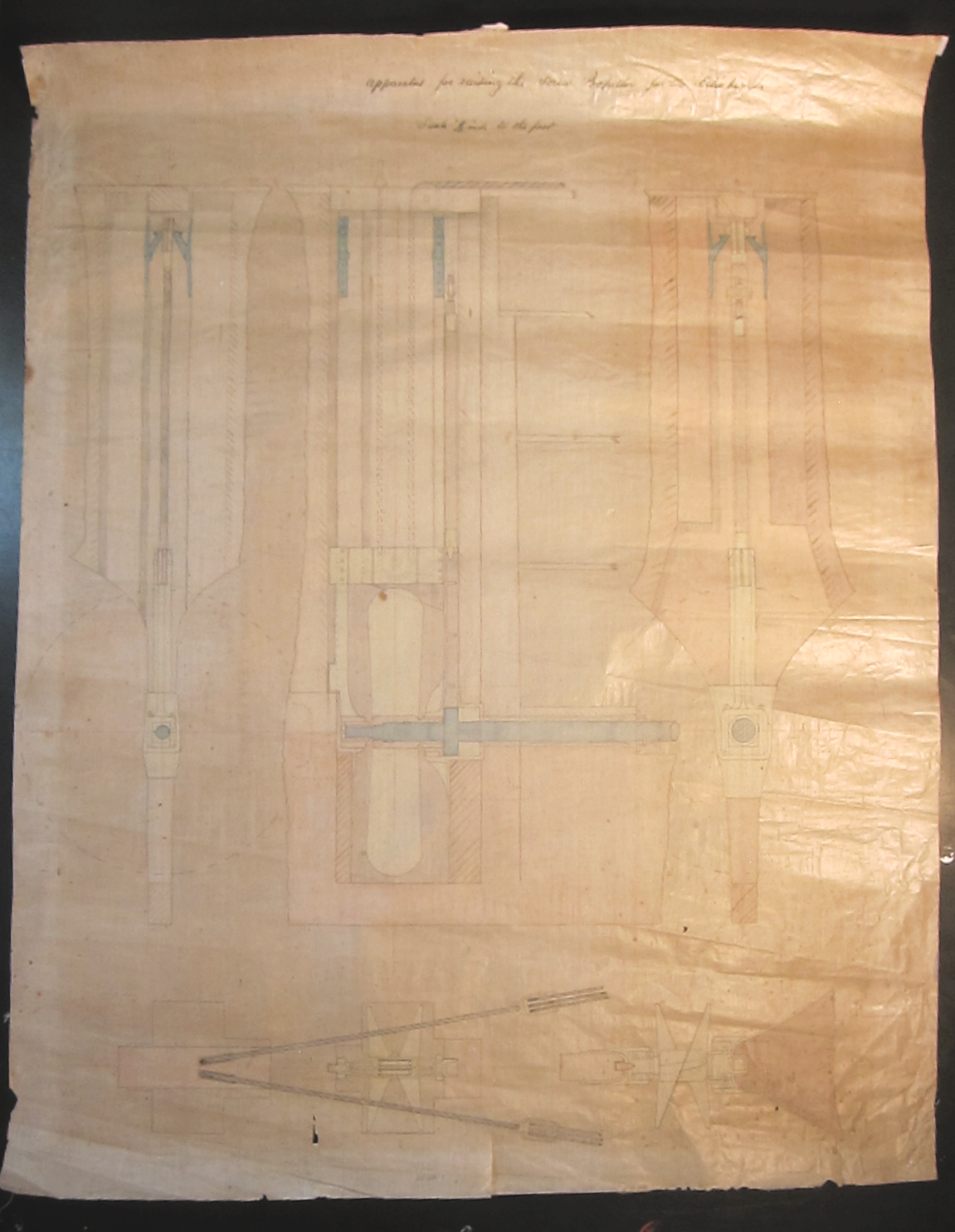
  • Original Drawing for Raising a Screw Propeller of the HMS Esk (1854)

    Original drawing on oilskin of a device used to raise the propeller of the HMS Esk, an early-use example of a modern screw propeller, 1854. 

    32×24″, in original color. There are some nicks and short tears, but in overall GOOD (or better) condition. $2250

    Esk full“HMS Esk was a 21-gun Highflyer-class screw corvette launched on 12 June 1854 from J. Scott Russell & Co., Millwall…She served in the Mediterranean Station between 1854 until 1856 and was in the Black Sea during the Crimean War. She was part of the East Indies Station between 1856 until 1863, where she participated in Second Opium War at Canton. Afterwards she went to the Australia Station, where she participated in the attack on Gate Pā during the Tauranga Campaign in New Zealand. Her commanding officer Captain John Fane Charles Hamilton was killed in the attack. She left the Australia Station on 2 July 1867.”–wikipedia

    The words of the Admiralty Order stated she should be “a wood screw vessel complete of Highflyer’s… In common with other screw corvettes of the time, she was envisaged as a steam auxiliary, intended to cruise under sail with the steam engine available for assistance. Commensurately she was provided with a full square sailing rig. Her oscillating two-cylinder inclined single-expansion steam engine…drove a single screw.”

    –28 October 1854-25 February 1856: commanded  by Captain Thomas Francis Birch in the Baltic during the Russian War.
    –1 March 1856-26 June 1861: commanded by Captain Robert John le Mesurier McClure, East Indies and China (Pacific).
    –22 May 1863-29 April 1864: commanded by Captain John Fane Charles Hamilton, New Zealand.


    ·Posted by :

    ·in:


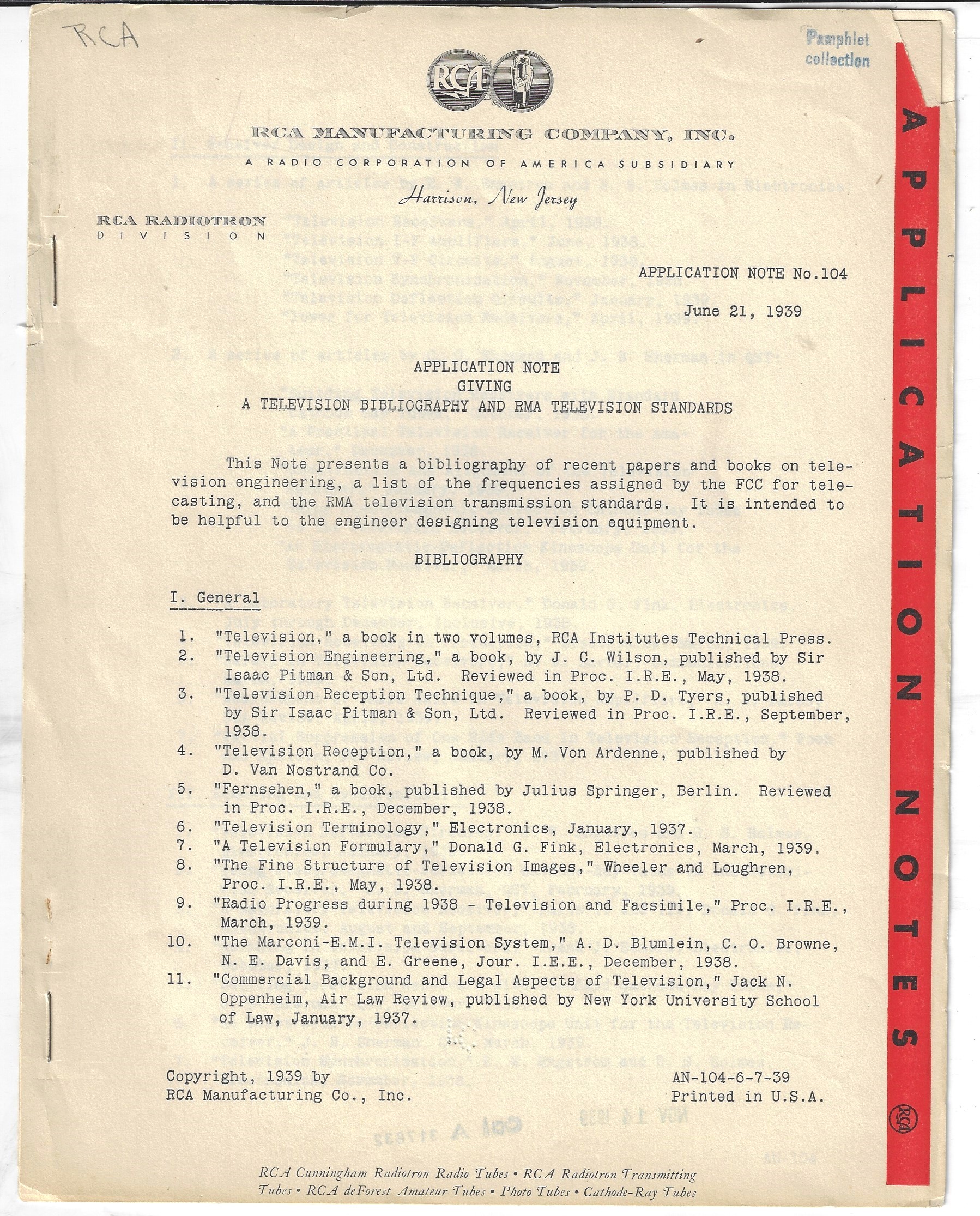
  • Early Television Bibliography, 1939


    Application Note Giving a Television Bibliography and RMA Television Standards. RCA Manufacturing Company, RCA Radiotron Division, Application Note No. 104, June 21, 1939.  11” x 8”, 7 leaves. Wrappers, staple bound. VG condition.  Very early bibliography for television. $95

    Tv bibliography

    ·Posted by :

    ·in:


  • Spaceflight and Rocketry Material

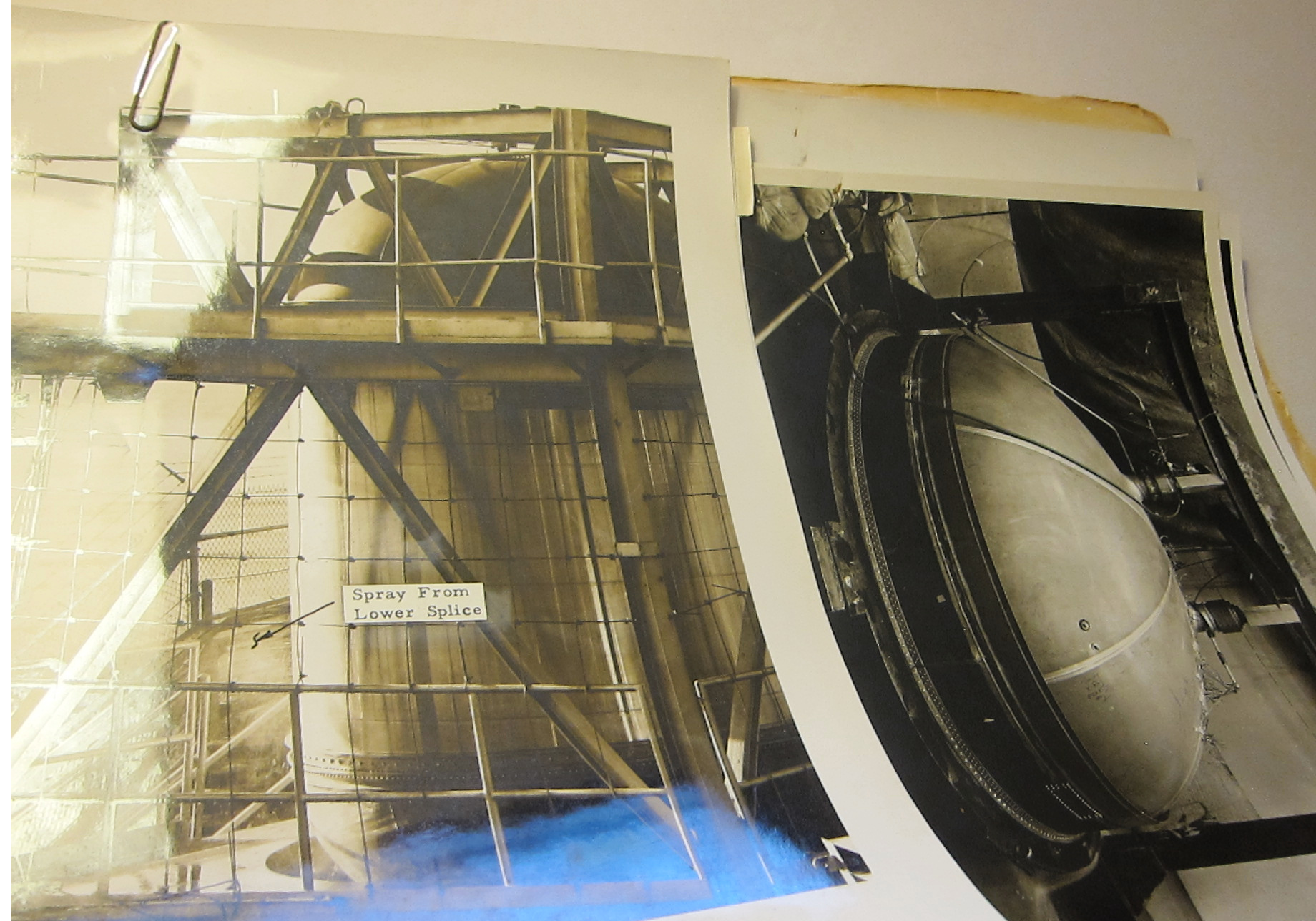
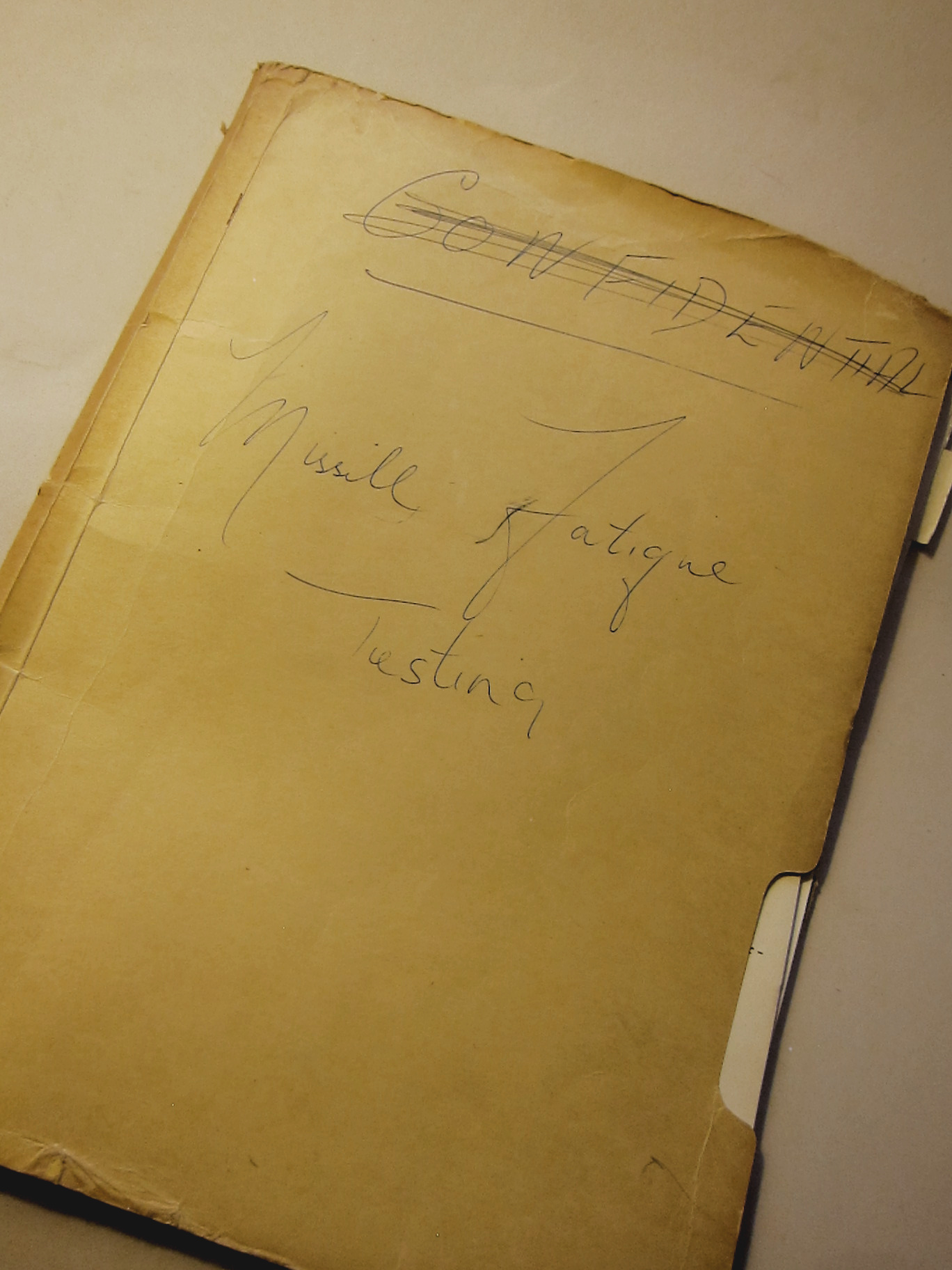
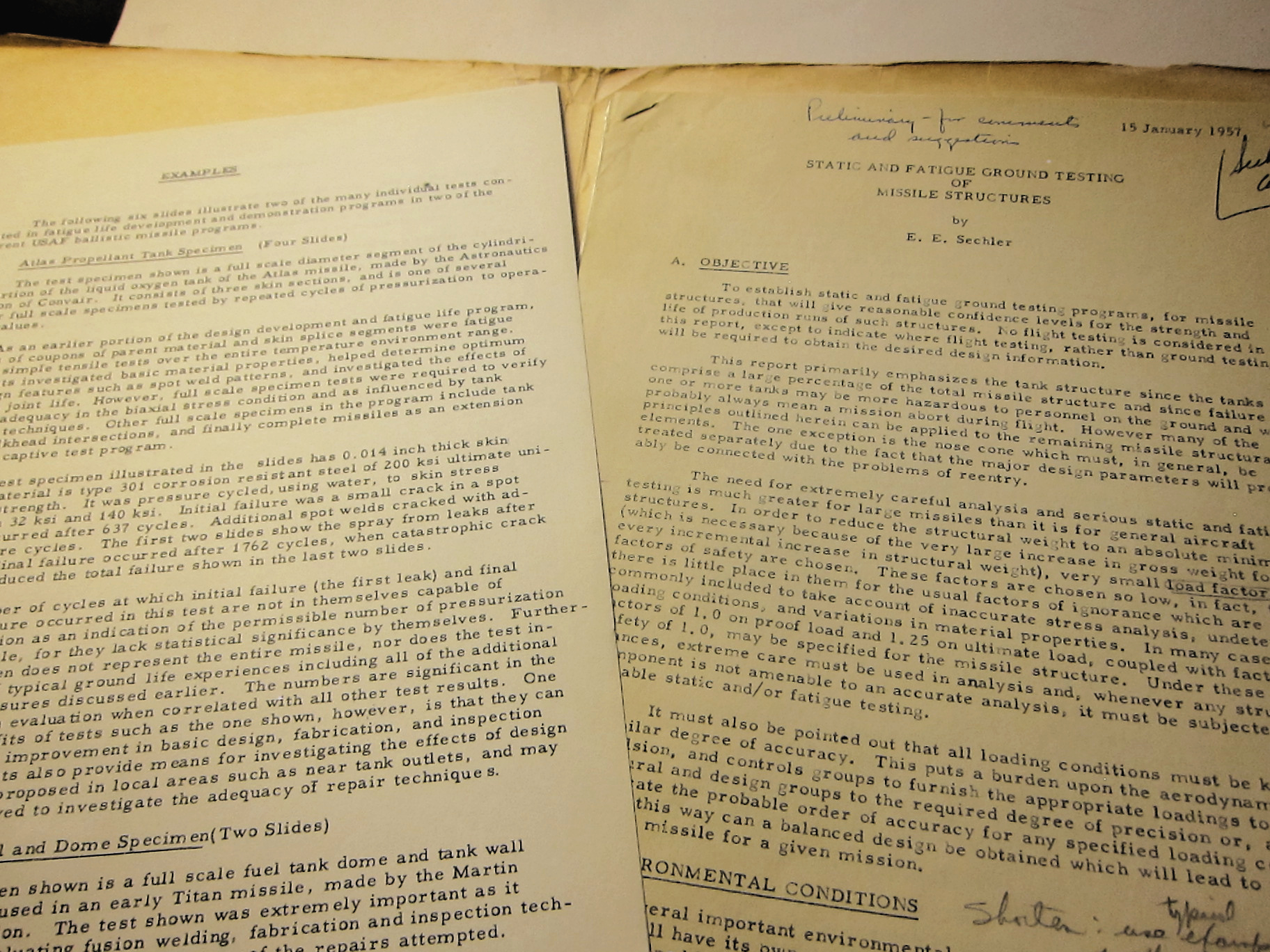
    Sechler, E.E.  Static and Fatigue Ground Testing of Missile Structures.  (“Preliminary–for comments and suggestions” written in ink at top of cover page. Also: “Sechler copy”.) 15 January 1957, 11″x 8.5″, 18 leaves. This is some sort of photomechanical reproduction, I think, with many additions and corrections in manuscript. With six original glossy photos, each 11″x 8″.  Housed in an old manila folder, with “CONFIDENTIAL” crossed out in pen. Very good condition.  $125

    “Ernest Edwin Sechler (1905-1975) was an aerospace engineer and scientist who specialized in thin-shell structures. He earned his doctorate in 1934 at Caltech as one of the early students of Theodore von Kármán with a dissertation on the mechanics of thin-plate compression. ‘A graduate student named Ernest E. Sechler (now a professor of aeronautics at Caltech) was reviewing research in the strength of thin metal plates which had been carried out by the National Bureau of Standards. Sechler reported that the engineers didn’t think that sheet metal could be used to make structural elements in an airplane because the metal would give way…Sechler’s report intrigued me.’—T von Karman, ‘The Wind Beyond’.  Von Kármán showed that by stiffening with re-enforcing strips the “effective width” of metal sheets could be increased to withstand the load aloft. In 1934 Sechler wrote his thesis, The ultimate compressive strength of thin sheet metal panels, under von Karman’s supervision. Development of light, fail-safe structure became the main theme of his professional life.”[1] His thin-wall structures included missiles, booster rockets, and a movable dome for Palomar Observatory. This work was performed as consultant to NASA and industry.”—Wikipedia

    Missile fatigue _3_
    Missile fatigue _3_
    Missile fatigue _3_


    Lewis H. Abraham (in collaboration with the NASA Research Advisory Committee on Missile and Space Vehicle Structures). Important structural research problems for the support of future space missions, prepared by Lewis H. Abraham in collaboration with the NASA Research Advisory Committee on Missile and Space Vehicle Structures. NASA, August 1963. NASA TN D-2059

    10”x 8”, 16pp. Original wrappers. Fine. $50


    M.V. Barton, Important research problems in missile and spacecraft structural dynamics. NASA, TN D-1298, May 1962.  10″ x 8″, 57pp.  Original wrappers. Fine condition.  $50


    J.D. Wood, Factors Affecting the Response of Missiles Excited by Rigid Shock. Space Technology Laboratories, 1960.  STL/TN-60-0000-09031. 11″ x 8.5″, 16pp. Original wrappers. Fine. $25


    John H. Boeckel, The Purposes of Environmental Testing for Scientific Satellites. NASA, Technical Note D-1900, TN D-1900. 1963. 11″ x 8″, 24pp.  Original wrappers. Fine.. $25


    ·Posted by :

    ·in:


  • An Early U.S. Effort on Lunar Exploration: the Able-5 Rocket (1960)

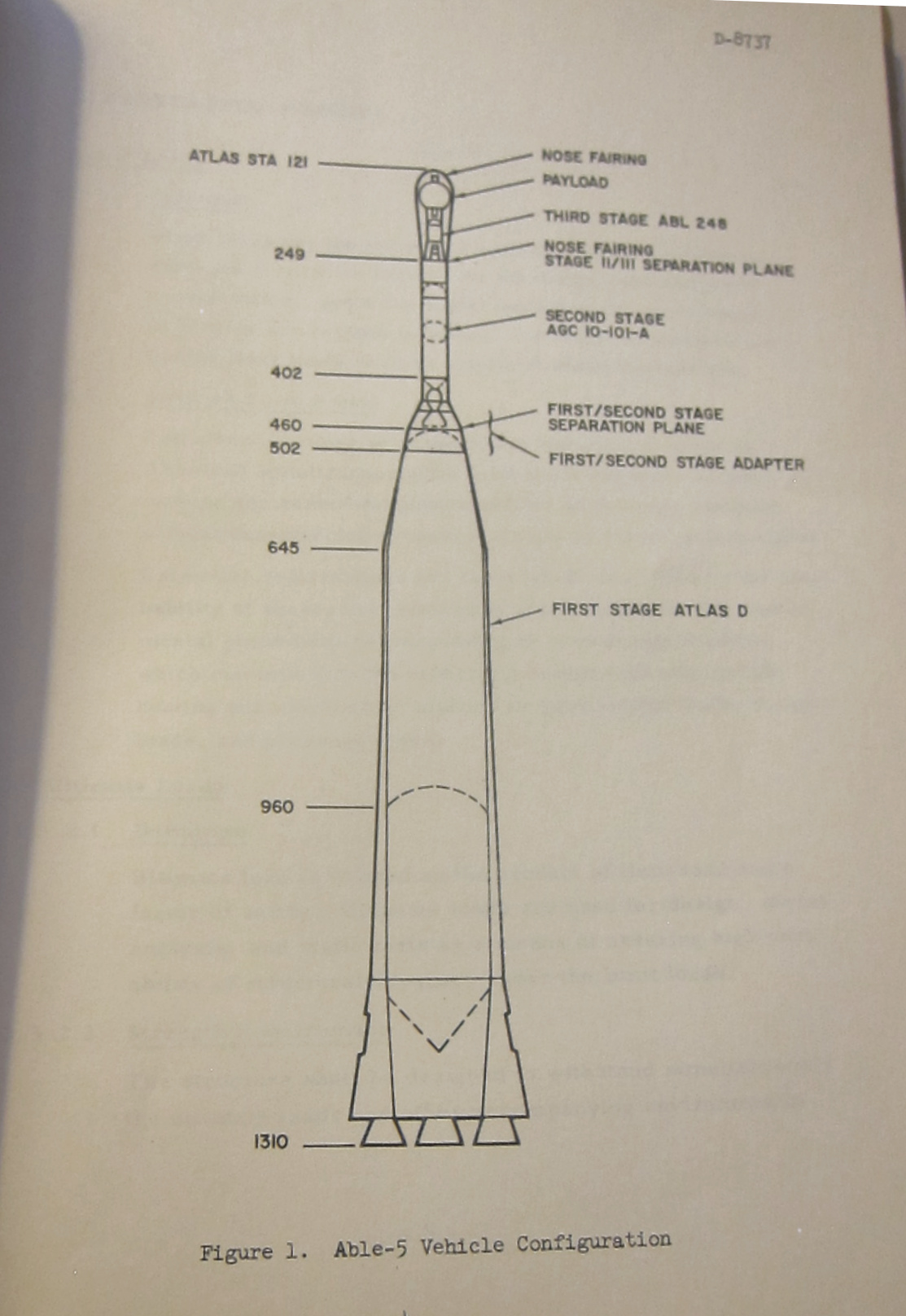
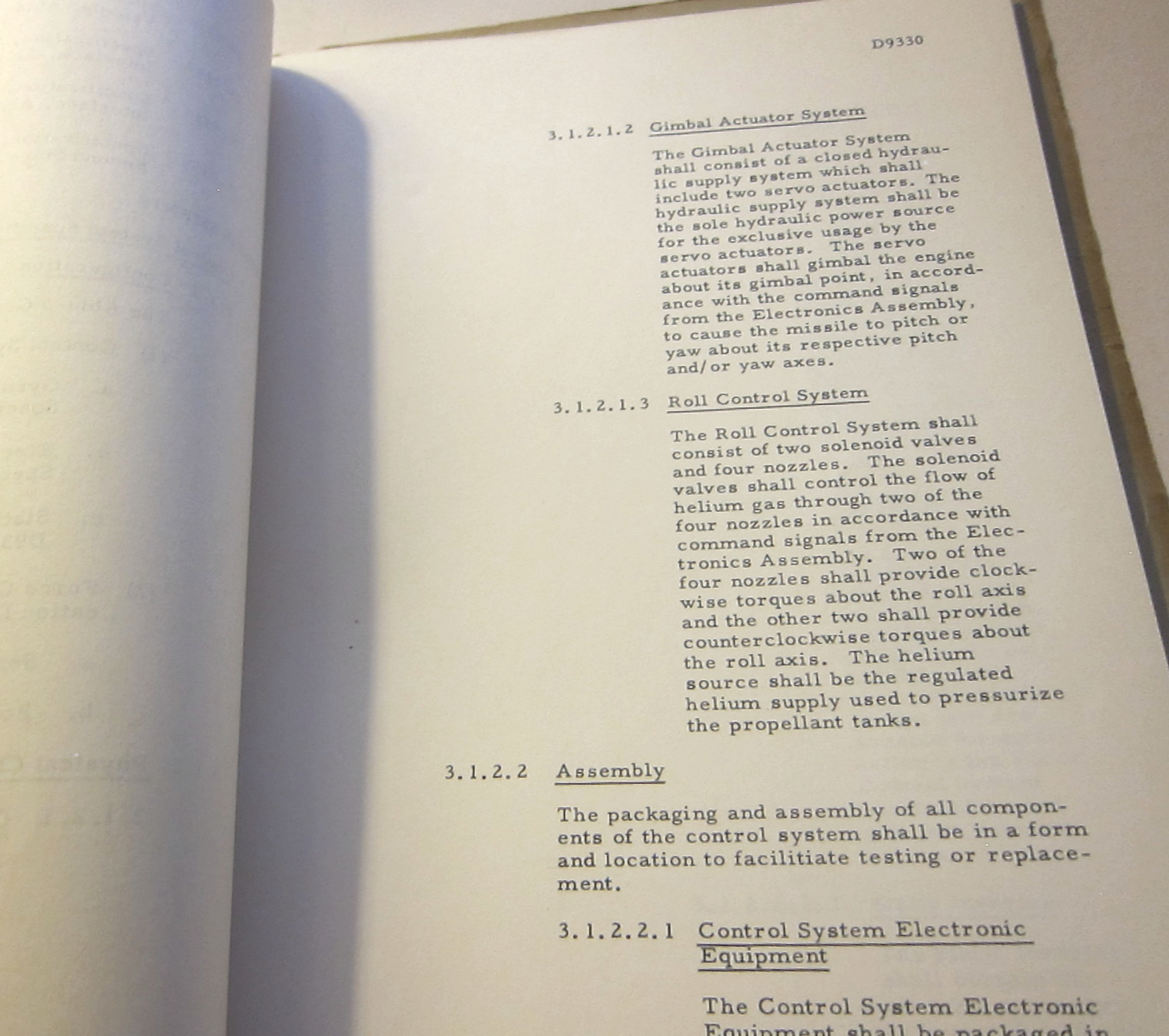
    Selected Specs _4_Selected Structural Design Criteria Able-5.  Space Technologies Laboratories, Los Angeles, 1960. 

    Printed on 11″x8.5″ sheets (on one side only), (2), 65pp, folding table. This is seems not to be published but distributed internally to Space Technology Laboratories (Ramo-Wooldridge Corp subsidiary), bound in a two-hole punch STL binding. Very Good condition.  $175

    Includes the following sections: Specifications on Structural Design Criteria (35pp); Specifications for Control System Second Stages  (16pp); Specification for Force Control System, Second Stage Vehicle (16pp); Specifications for Third Stage ((5pp); Specifications for Temperature Control, Payload (3pp). 

    “The first step beyond Earth orbit for the USAF, called Project Able-1, was a series of attempts to place a small spacecraft into orbit around the Moon. These orbiters, along with a pair of small US Army-JPL lunar flyby probes, were part of the ARPA-sponsored Operation Mona, which was approved by President Dwight Eisenhower on March 27, 1958. Three launch attempts made by the USAF between August and November of 1958, now called Pioneers 0, 1, and 2, all failed to reach the …But even before these missions flew, the USAF, in conjunction with the builders of their first lunar orbiters, STL (Space Technology Laboratory, a division of TRW), began to study follow-on missions not only to lunar orbit but also to Venus to be launched during the 1959 launch window…”—Andrew LePage, from his Drew Ex Machina site, “NASA’s Forgotten Lunar Project”

    Selected Specs _2_

    ·Posted by :

    ·in:


  • Interplanetary Navigation in Regards to Space Flight (1960)

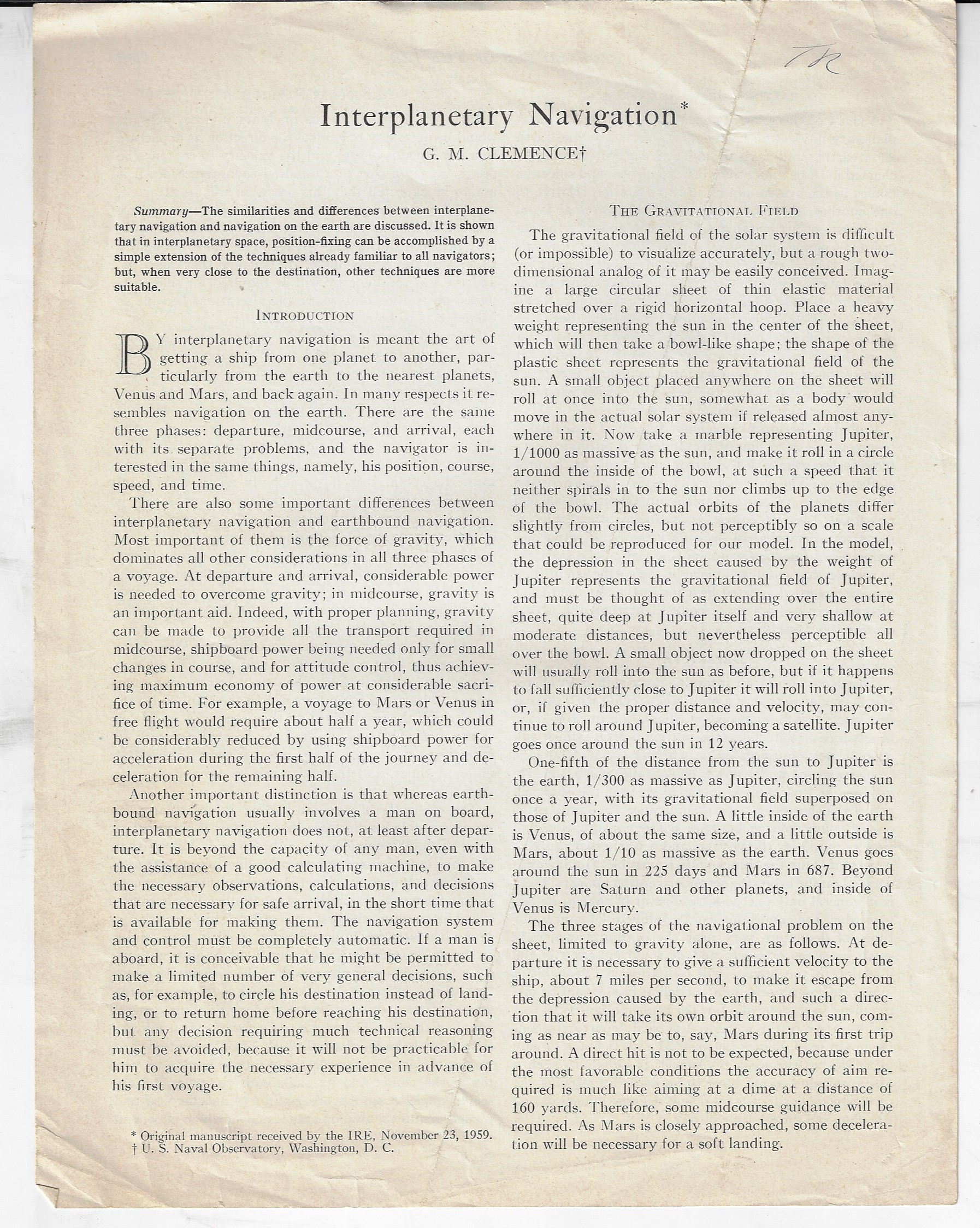
    Clemence Interplanetary G.M. Clemence, “Interplanetary Navigation”, an offprint from Proceedings of the IRE ( Volume: 48 , Issue: 4 , April 1960 ), pp [497]-499

    “Summary: The similarities and differences between interplanetary navigation and navigation on the earth are discussed. It is shown that in interplanetary space, position-fixing can be accomplished by a simple extension of the techniques already familiar to all navigators; but, when very close to the destination, other techniques are more suitable.”

    Original self wrappers. Old fold running vertically across the pamphlet. VG copy, and scarce.  $95 

    ·Posted by :

    ·in:


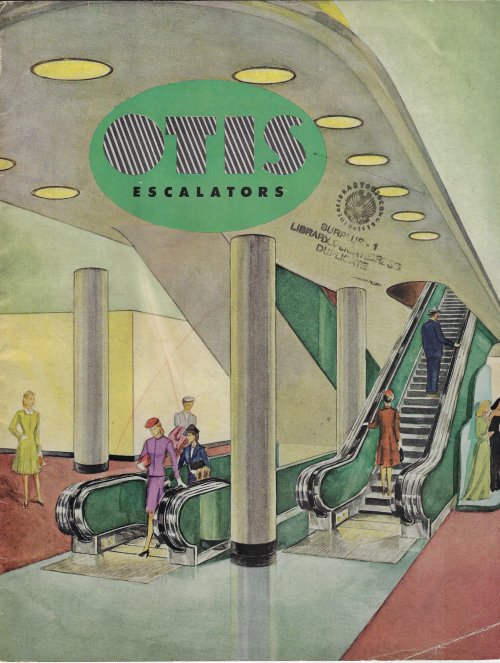
  • Otis Escalator Catalog, 1947

    Otis Escalators, 1947.  11″x8.5″, 24pp, illustrations throughout. Original wrappers. Provenance: Librry of Congress, with their rubber stamp on front cover. VG condition.  SOLD

    An interior note describes the cover illustration was “based upon original design by Raymond Loewy and Associates for the Stix, Baer and Fuller Department Store, St. Louis, Missouri”. 

    Books covers otis _2_


    ·Posted by :

    ·in:


  • Announcing the Chicago Subway (October, 1943)

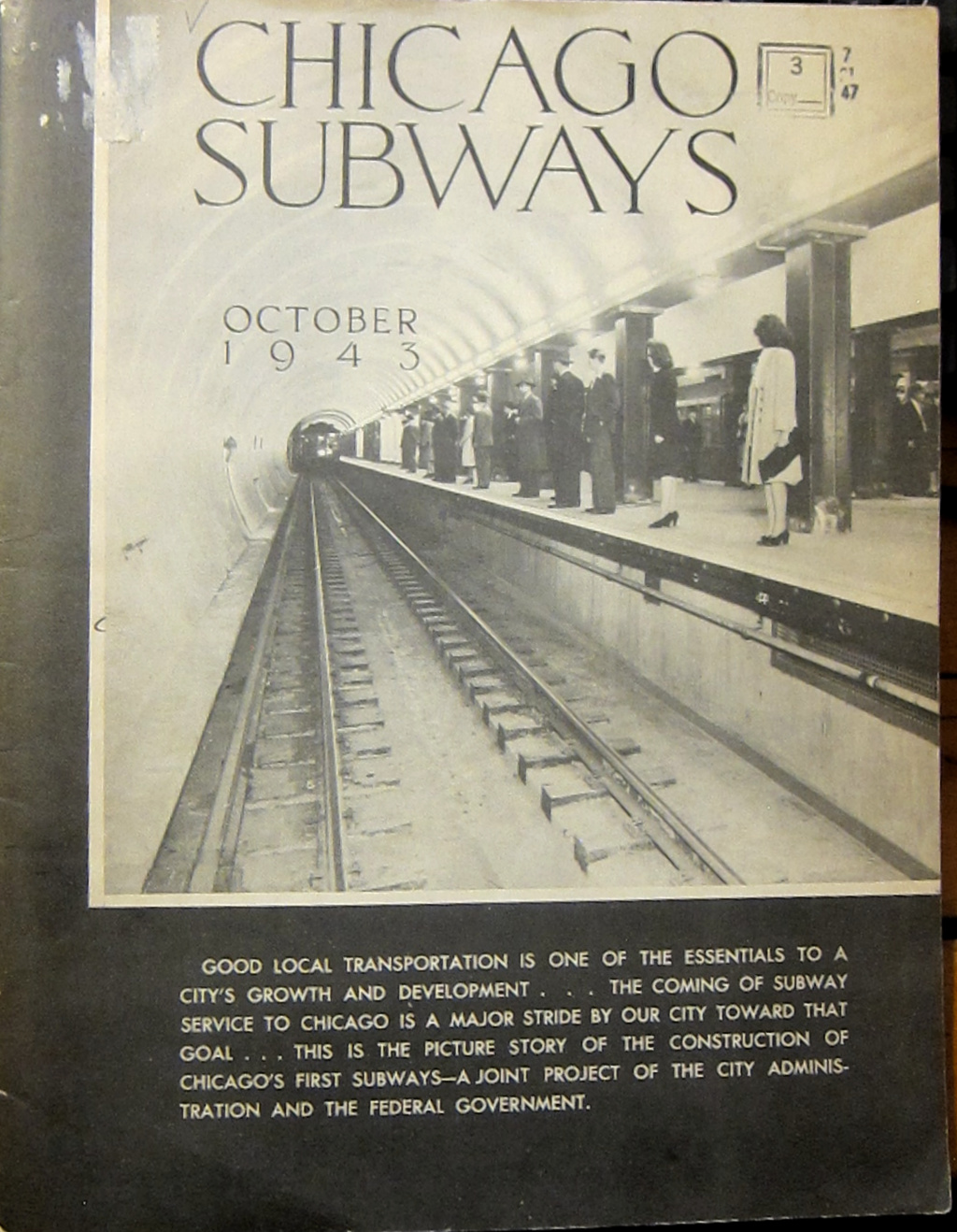
    Chicago subways 1943 coverChicago Subways, October, 1943.

    10″x8″, 31pp, illustrated throughout. Original printed wrappers, very lightly ex-library (U.S. Census). very nice condition.

    Scarce! It seemed unlikely, but there are no copies of this publication located in WorldCat/OCLC, even after some creative searches. SOLD

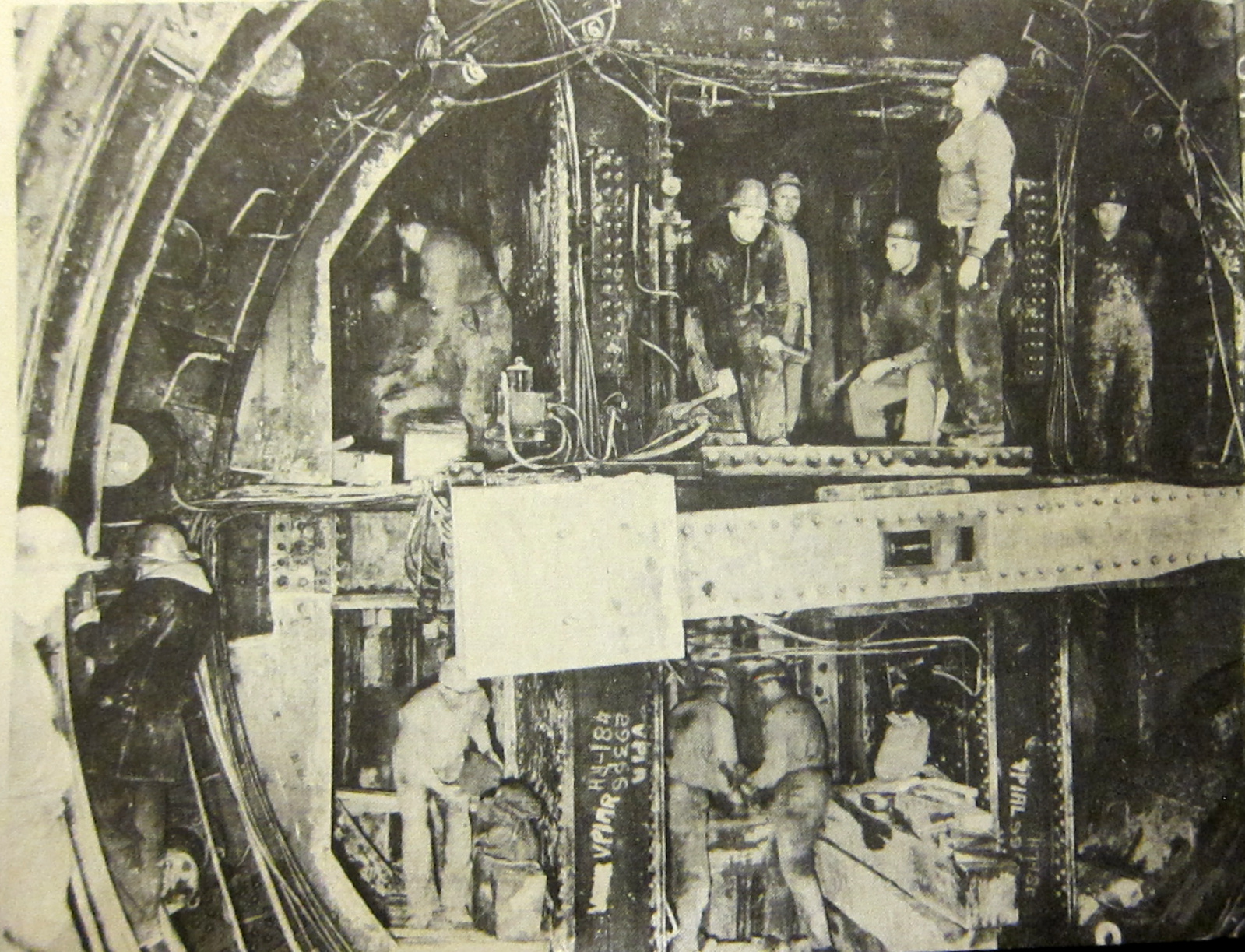
    Following a few pages of photos of the movers and shakers of this project (begun in 1938), the rest of the publication is devoted to the subway itself: 30 photos of construction and some of the finished parts, plus 3pp of maps. The photos have a surprising documentary style to them, not of a simple laudatory style. (Except for the front cover, which is a little bizarre in the way the riders are featured so evenly spaced apart.)

    Chicago Subways in tunnel _1_

    ·Posted by :

    ·in: