A Daily History of Holes, Dots, Lines, Science, History, Math, Physics, Art, the Unintentional Absurd, Architecture, Maps, Data Visualization, Blank and Missing Things, and so on. |1.6 million words, 7500 images, 4.9 million hits| Press & appearances in The Times, Le Figaro, Mensa, The Economist, The Guardian, Discovery News, Slate, Le Monde, Sci American Blogs, Le Pont, and many other places… 5000+ total posts since 2008.

Book Category: Technology, History of

  • Dm Stauffer The Use Of Compressed Air In Tubular Foundations And Its Employment At The South St Bridge Philadelphia Pp 3 1

    D.M. Stauffer, “The Use of Compressed Air in Tubular Foundations and its Employment at the South St Bridge, Philadelphia”, pp 320-334 (with two fine folding plates of the apparatus). In: Journal of the Franklin Institute, July-December 1872, vol 64 (third series) and vol 94 (whole series), 426 (vi)pp. Ex-library, with just a few odd stamps on the title page. VG condition, except for one page being detached. $150

    Edwin J. Houston, On the Nature of White Light, pp 184-197;

    David Brooks, Lightning and Lightning Rods, pp 132-143;

    I.A. Lapham, List of the Great Storms, Hurricanes and Tornadoes of the United States, pp 210-216, with a list of these occurrences dating from 1635 and numbering about 200 entries;

    Coleman Sellers, Transmission of Motion, pp 233-243, 305-319;

    Alex L. Holley, Bessemer Machinery, pp 252-265 (with three folding plates), 391-399 (with two folding plates).

    ·Posted by :

    ·in:


  • Longish Report on NYC Central Park by the Chief Engineer (1867)

    William H. Grant, “The New York Central Park”, in: Journal of the Franklin Institute, 1867, third series vol 53 (vol 73 all together), 426+vpp. Half calf and marbled boards; ex-library (with some ghost remnants of a spine label, and that’s about it save for a few stamps on the title page and a bookplate). Very nice copy. $135  The Grant article occupies pp 11-14, 100-107, 153-161, 233-238, 297-304, 390-397.

    Also in this volume (among many other contributions) are:

    • Fleeming Jenkin, “Submarine Telegraphy”, pp 42-46, 122-180,
    • Henry Morton, “Lectures on Electricity and Light”, pp 48-54, 200-203, 356-358; 413-414
    • “The Magic Lantern as a Means of Demonstration”, pp 47-58, 204-206, 282-284, 354-356, 409-412,
    • “The USS Armored Frigate New Ironsides”, pp 73-81;
    • George A. Parker, “The Susquehanna Bridge”, pp 239-249, with two folding plates, one being a map and the other a long profile of the bridge.
    • The Electric Light, pp 289-294;
    • John Tyndall, “On Sounding and Sensitive Waves”, pp 260-263, 346-349.

    ·Posted by :

    ·in:


  • Classic and Significant Paper in the History of Helicopters

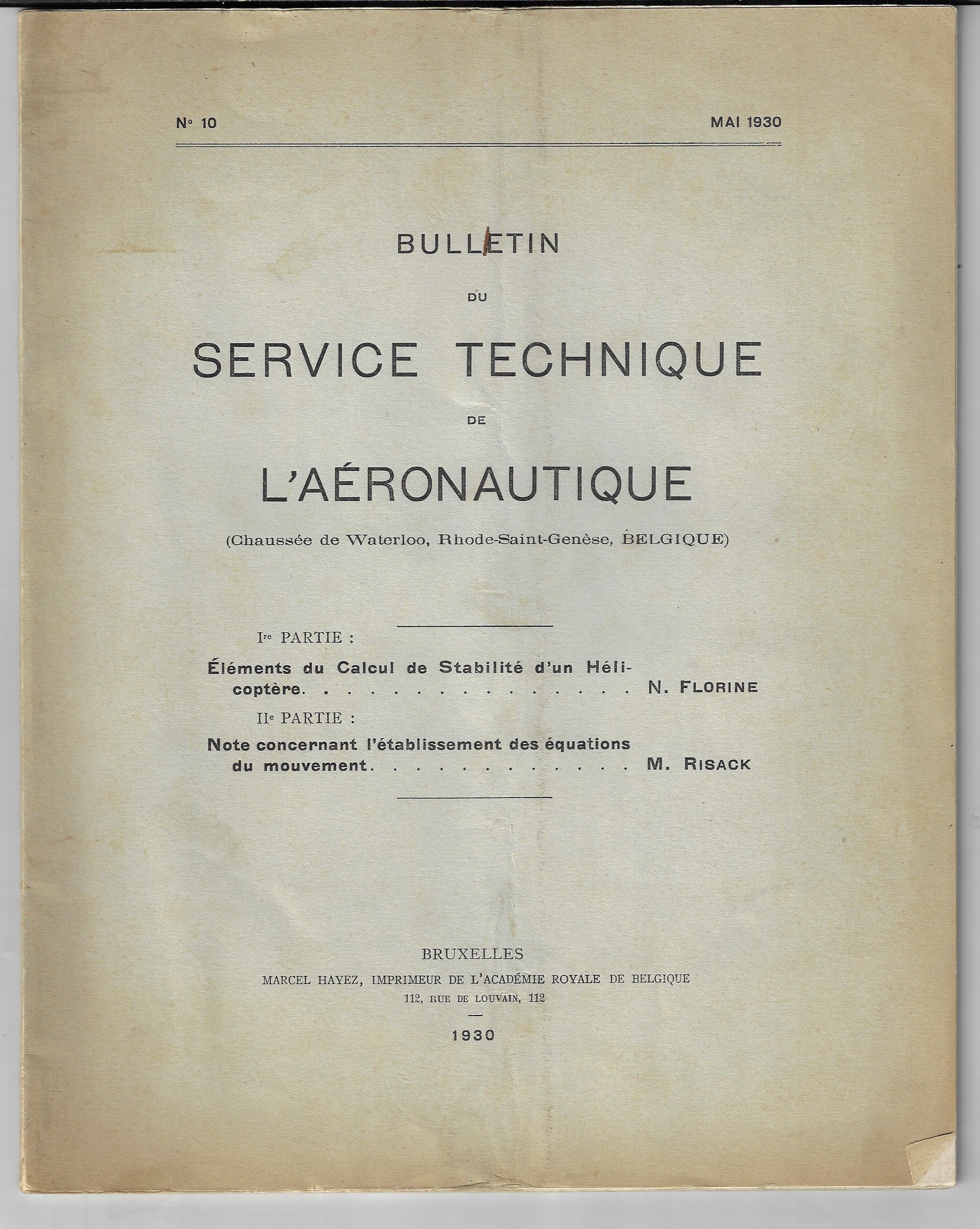
    Florine, N. “Elements du Calcul de Stabilite d’un Helicoptre” in Bulletin du Service de l’Aeronautique. No. 10, May 1930, pp 1-50. Also with M. Risack, “Note Concernant de l’Etablissement des Equations du Mouvement” on pp 51-55. Original wrappers. There’s an old fold going through the center vertically through the publication, otherwise the publication is a solid VG. Scarce. $200

    • “Nicolas Florine worked at l’Administration de l’aéronautique, based in the buildings of the Hotel des Monnaies in Saint-Gilles (Brussels). In 1926 he was responsible for initiating the Centre d’aérodynamisme …He was involved in the creation of Belgium’s first wind tunnel…The studies Florine performed…in 1926 led to patents related to helicopter control and in particular how to counteract the torque resulting from using two rotors. The results of the studies were published in the article “Eléments du calcul de stabilité d’un hélicoptère”. Herein, the principle was described of a helicopter with two rotors. These rotors turned in the same direction, in contrast to the current tandem helicopters…This publication formed the basis of all his designs that would follow.”—Wikipedia

    Helicopter florine stability 1930


    ·Posted by :

    ·in:


  • Papers by Arthur C. Clarke, 1946-1950

    CLARKE, Arthur C. “The Challenge of the Spaceship”, in Journal of the Interplanetary Society”, December 1946, vol 6 no. 3, this paper occupying pp 66-78 in the issue of pp 65-94. In the original wrappers. VG copy. $250.00

    “Arthur C. Clarke’s 1946 essay on ‘The Challenge of the Spaceship’ was one of the founding manifestoes of the Space Age, and helped to establish him as the West’s leading techno-prophet. Restating his ideas in subsequent factual and fictional works, Clarke successfully propagated the belief that man’s destiny lay in space and that the process was already underway. On the surface Clarke’s oeuvre offers a classic astrofuturist model of progress as technology-driven, but on closer examination it also incorporates a more pessimistic, historically based strand of philosophy, British rather than American. This essay traces the genesis of Clarke’s early work and the influence upon him of the historian Arnold J. Toynbee and the moral philosophers Olaf Stapledon and C.S. Lewis. Toynbee was essentially a Christian pessimist who believed that western civilization was on the way out; his long historical perspectives were an important source of inspiration for Clarke, leading him to a cyclical rather than a simply progressive model of history which contemplated both the beginning and the end of civilizations. The concerns of Stapledon and Lewis with grand narratives of decline and redemption were also influences on Clarke. All this needs to be understood in relation to both the European experience of World War I and to the coming of the atomic bomb, the latter a profound influence on Clarke’s generation. Such perspectives gave European astroculture a more modulated vision of the human future in space than the technologically based astrofuturism which dominated in the USA.”–Robert Poole, “The challenge of the spaceship: Arthur C. Clarke and the history of the future, 1930–1970” History and Technology, Volume 28, 2012 – Issue 3: Rethinking the Space Age: Astroculture and Technoscience.

    • Also: “Discussion of Mr. Clarke’s Paper”, PP 79-81.
    • Also in this issue: E. Burgess, “Thermodynamics of the Rocket Motor”, pp 82-89.

    CLARKE, Arthur C. “Electromagnetic Launching as a Major Contribution to Space-Flight”, in Journal of the Interplanetary Society, November 1950, vol 9 no. 6, the article occupying pp 261-266 in the issue of pp 261-304. Original wrappers. One-line penned annotation on the top of the front wrapper, otherwise a fine copy. $75

    • Also with: Hermann Oberth, “Three Equations for the Rapid Calculation of Rocket Motor Thrust”, pp 275-278.

    CLARKE, Arthur C. “Astronautics and Poetry”, in Bulletin of the British Interplanetary Society, February 1947, vol 2 no. 2, the article occupying pp 21-24 in the issue of pp 21-40. Original wrappers. Fine copy. $75

    • Also with: L.R. Shepherd, “Le Moteur Nucleare”, pp 28-29.
    • And with: “German Industrial Developments (Reports)”, pp 33-34.

    CLARKE, A.C. “Space-Travel in Fact and Fiction”, in Journal of the British Interplanetary Society, September 1950, vol 9 no 5, the article occupying pp 213-230 in the issue of pp 213-260. Original wrappers. One old rubber stamp for “Osterreichische Gesellschaft fuer Weltraumforschung” (or Austrian Society for Space Research), with a penned annotation for “GFW Bibliothek” in a neat hand on cover top-left. Save for these issues, this is a FINE copy. $75
    ·Posted by :

    ·in:


  • Early Papers on the Hughes Microphone, 1878

    Early appearances of David Hughes’s microphone (invented in 1878), in Nature: (1) “The Microphone”, pp 57-8,   May 16, 1878.  (2) AND WITH Hughes, “Hughes’s Microphone”, in July 11, 1878 Nature, on pp 277-8. (3) AND WITH: “On the Physical Action of the Microphone”, in Nature, June 27, 1878, pp 239-240, by David Hughes. This is offered with the original wrappers.  All offered in the weekly issues, removed from a larger bound volume.”Hughes’s microphone, invented in 1878, was the forerunner of the various carbon microphones that were used in most telephones produced in the 20th century. From 1879 to 1886 Hughes performed a series of experiments in which his equipment transmitted wireless signals up to 500 yards.”–Britannica dot com  The three issues: $95.00

    ·Posted by :

    ·in:


  • Rare Work on the NYC Subway System (1906)

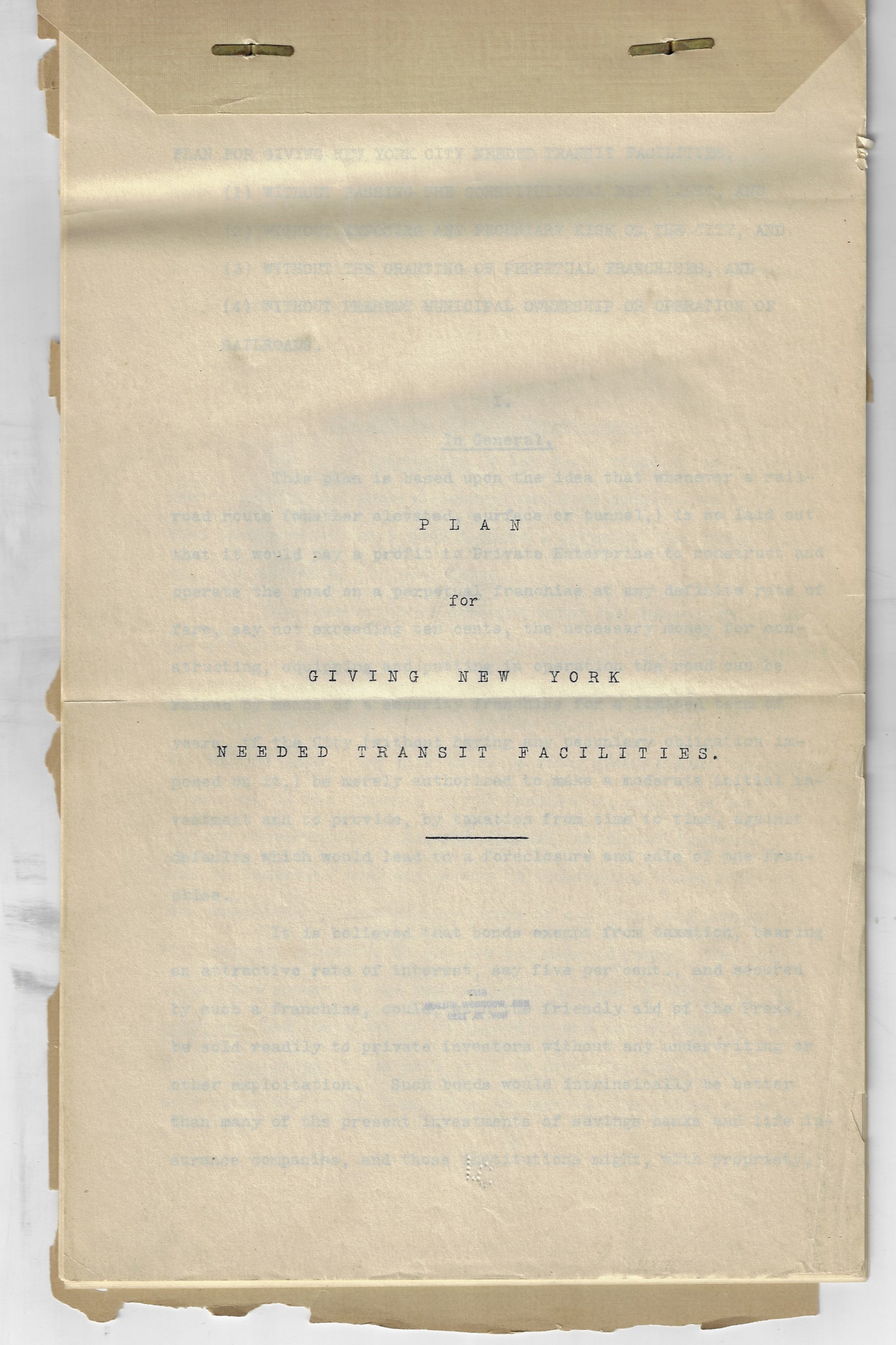
    New York City SUbway Rapid transCLARKE, Samuel B(elcher). With Francis Lynde Stetson. Plan for Giving New York Needed Transit Facilities. Offset (?) or some early reproduction process, the document dated as series of latters for 1906. 13” x8”, bound with brass clasps at top, printed from typed originals on one side only. There’s a bit of short tears and such here and there as well as a fold along the top vertical inch of the work. VG condition. No copies are located in WorldCat/OCLC.

    Provenance: Library of Congress (Pamphlet Collection), via a gift by “Mrs. Woodrow Wilson” in 1959. $500

    Discussion of the constitutional and other governmental concerns in funding a railroad (subway) proposal. A version of this work appeared in American Law Review, vol 42 p 692, July 1908.

    • Clarke (1852-1929, Harvard Law 1874) was a very well-established lawyer with highly prominent partners (John C. Breckenridge and Henry L. Stimson). His correspondents were perhaps even better connected: Stetson’s firm (“…represented J. P. Morgan’s United States Steel Corporation; he was also Morgan’s personal attorney. President Grover Cleveland was a partner in the firm between his two terms as President, and a close friend. Stetson also served as counsel for Samuel J. Tilden in the controversy over the 1876 presidential election. He was president of the New York City Bar Association from 1910-1911. “–Wikipedia.)

    ·Posted by :

    ·in:


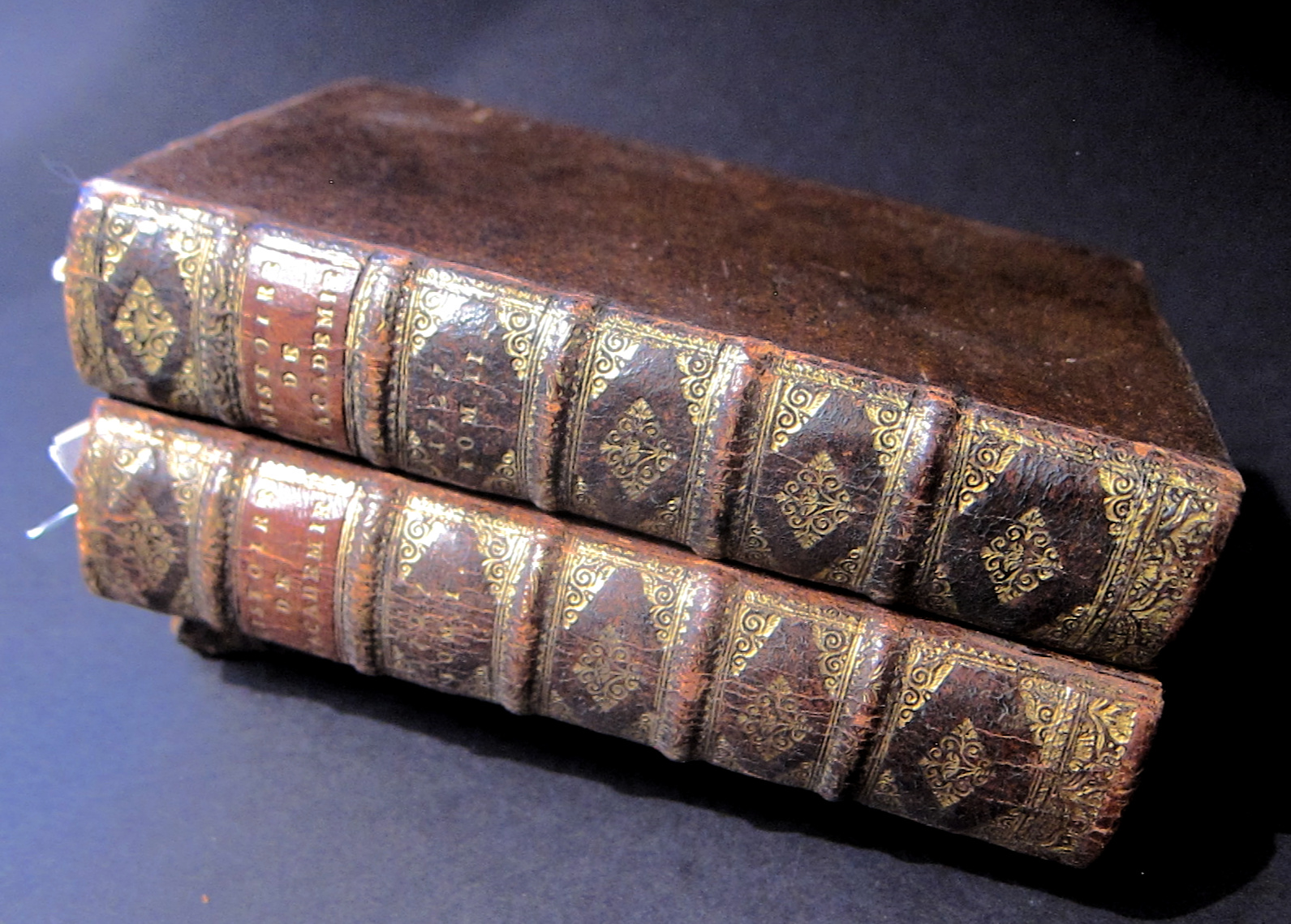
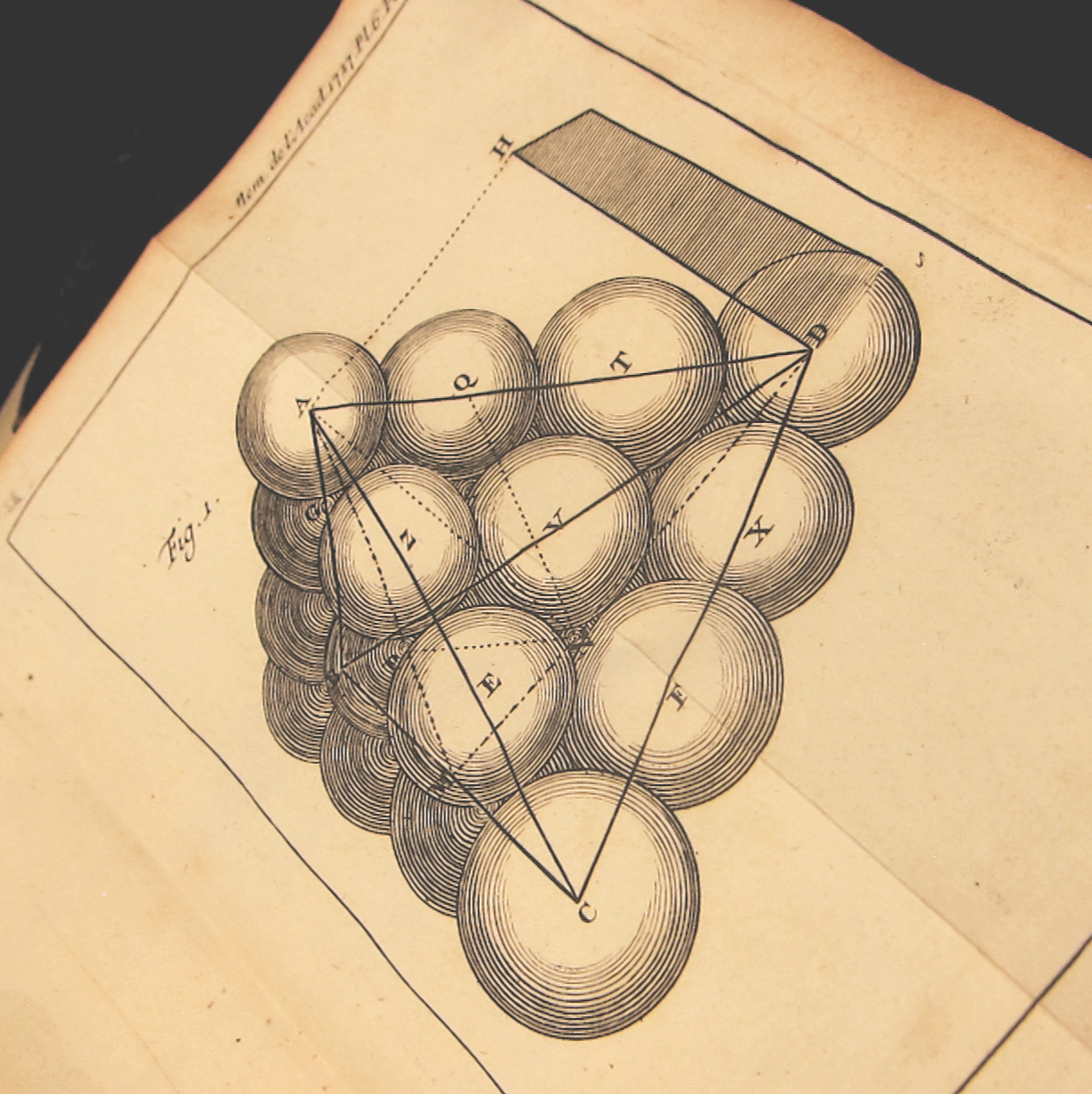
  • Histoire De L Academie Royale Des Sciences Annee M Dccxxii Avec Le Memoires De Mathematique De Physique Pour La Meme Ann

    Histoire de l’ Academie Royale des Sciences. Annee M. DCCXXII. Avec le memoires de mathematique & de physique, pour la meme annee. Tires des registres de cette academie. Printed in Amsterdam by Pierre Coup, 1727, three years after the first French edition (Paris 1724, which is 4to and 439pp compared to this 12mo and 204+526pp). [Histoire de l’ Academie Royale des Sciences] vii, 204pp; [Memoires de mathematique & de physique] 526pp, plus 18 folding engraved plates.
    Lovely copy, bound in full leather, with decorated spine and raised bands. Very Good. $300
    Includes work by Maraldi, Mairan, Cassini, Reamur, Morand, and several others:
    Giacomo Maraldi, “Observations sur differents Meteors de l’Annee 1721, pp 1-7;
    Jean-Jacques Dortous de Mairan (1678-1771,”was a mathematician and an enthusiastic experimenter whose major works were on the formation of ice and on the aurora borealis. However, he was also interested in all the important topics addressed the scientific community in the eighteenth century, among them, the shape of Earth, light, colors, sound, the composition of matter, and vis viva (the debate around the force of moving bodies and the conservation of matter).”–DSB  “Recherches Physico-Mathematiques sur la Reflexion des Corps”, pp 8-68;
    Giovanni Cassini, “Reflexions sur les Observations Astronomiques faites par le P. Feuillee, pp 68-76; 
    Saurin, “Eclaireissement sur une difficulte proposee aux Mathematiciens par M. le Cheavlier de Louville…”, pp 94-129;
    Louvlle, le Chevalier (Jacques d’Allonville, 1671-1732, mathematician and astronomer), “Eclaircissement sur une difficulte de Statitque propossee a l’Academie”, pp 174-194; 
    Morand, “Observations sur des Sacs membraneux pleins d’Hydatides sans nombre, attachés à plusieurs Visceres du bas Ventre, et découverts par l’ouverture d’un Cadavre”, pp 215-224;
    De Lagny, “Traité des progressions arithmetiques de tous les degrés à l’infinii”; 
    Maraldi and Cassini, “Observation de l’Eclipse de Soleil du 8. Decembre 1722. faite en presence du Roy”, pp 453-456; 
    Winslow, “Explication de l’enfoncement apparent d’un grand Clou dans le Cerveau par les narines. Conformation particuliere du Crane d’un Sauvage de l’Amerique Septentrionale. Observations Osteologiques. Avertissement sur un Memoire de 1720″, pp 411-453; 
    Vaillant, “Suite de l’Establissement de nouveaux caracteres de Plantes”, pp 233-293.


    ·Posted by :

    ·in:


  • British Interplanetary Society—selections (a developing list)

    Journal of the British Interplanetary Society. Vol 3/2, June 1936. 9”x6”, pp 16-34. Original wrappers. VG copy. $35

    Featuring articles on the Thunderstorm Census Organization (!); Cleator’s “Can Rockets Escape the Earth?” (half page); Cleveland Rocket Society experiments (with photo, half page); “Airmail by Rocket?” (full page).

    Journal of the British Interplanetary Society. Vol 3/1, February 1936, pp 1-11. Original wrappers. VG. $35

    Included are reviews and notices, plus articles, including:

    • Peter van Dresser, “The 1935 Research Programme of the American Rocket Society”, pp 3-6;
    • Werner Brugel, “An International Bureau of Information on Rocketry” (full page);
    • Cleator, Weisberger Moon”, pp 7-9

    ·Posted by :

    ·in:


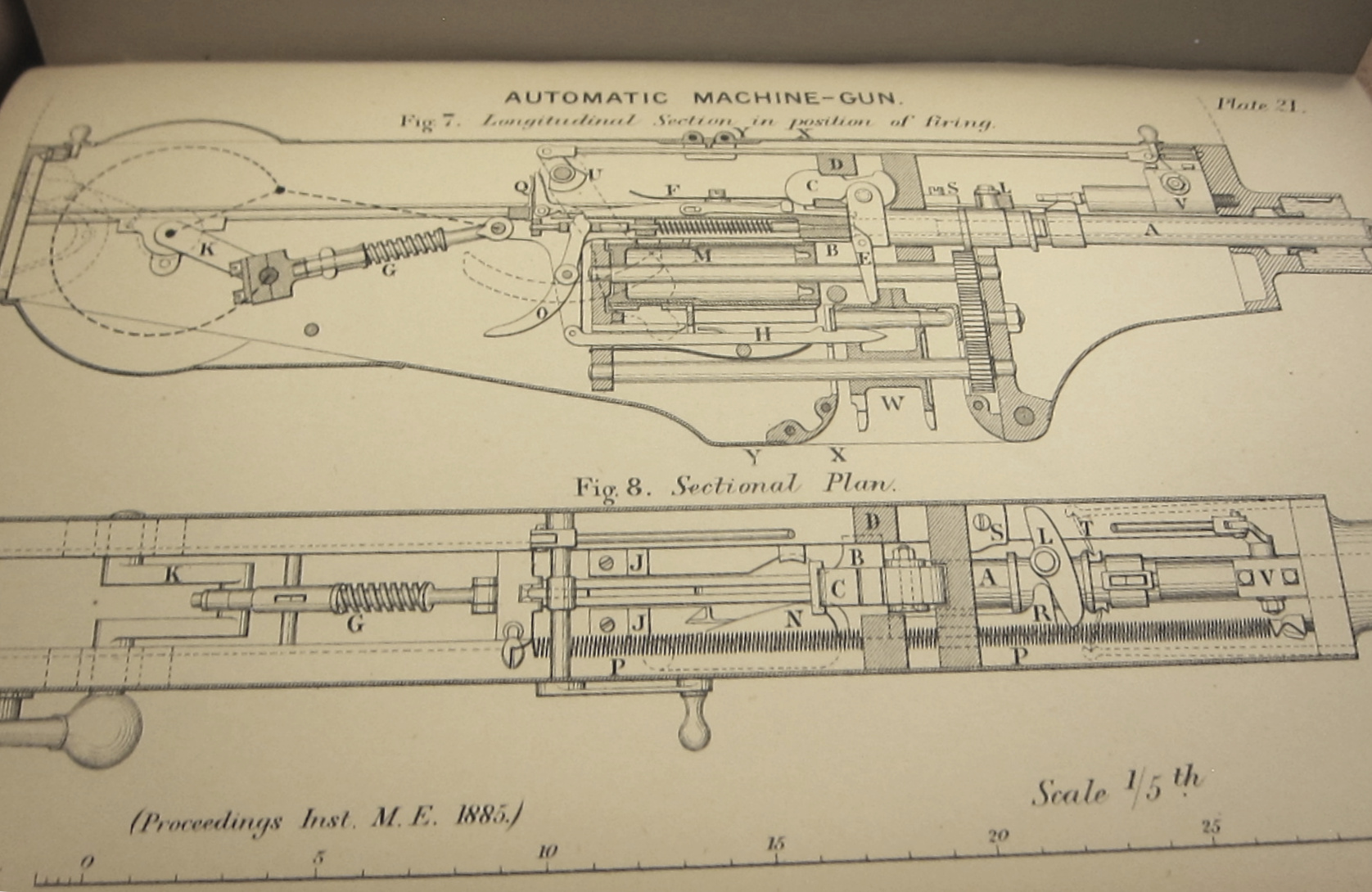
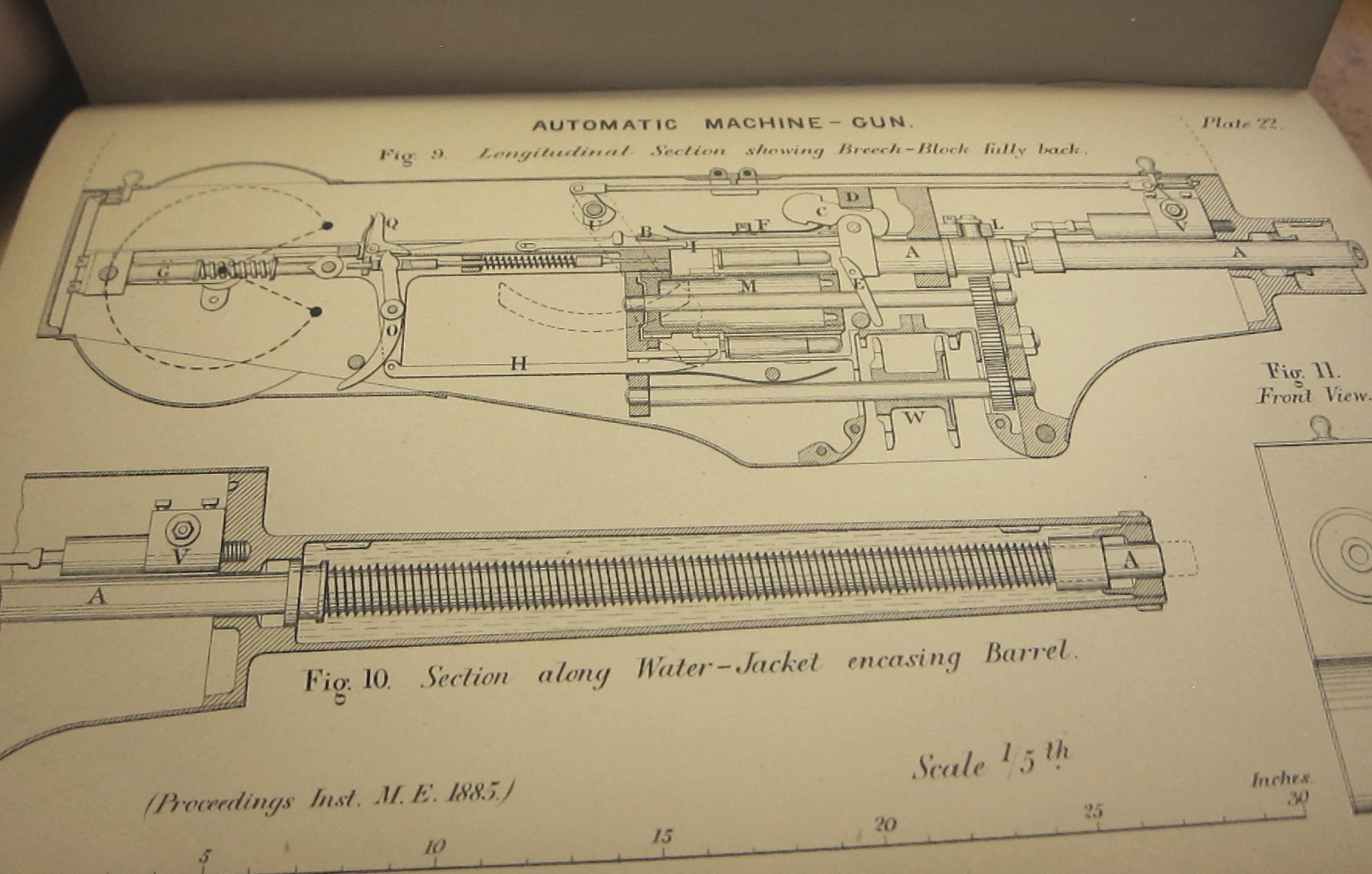
  • One of the Earliest Technical Reports on Maxi’s Automatic Gun (1885)

    MAXIM, Hiram S. “Description of the Maxim Automatic Machine Gun.” In: Institution of Mechanical Engineers, Proceedings, published by the Institution, 1885.

    This article appears on pp 167-197 in the April 1885 issue (of pp 167-302), with this article illustrated with plates 20-26. This paper appears very shortly after Maxim introduced his revolutionary gun in 1884—the first recoil-powered automatic weapon in production, a vast improvement over the hand-cranked weapons like Hotchkiss, Nordenfelt, and Gardner. This paper is illustrated with 7 very detailed plates, including longitudinal schematics of the gun, with 35 figures of varying complexity. Fine production.

    This is article appears in the quarterly issue of April for 1885, removed/detached from a larger bound volume. VG condition. $250

    Maxim gun _2_
    Maxim gun _2_

    ·Posted by :

    ·in:


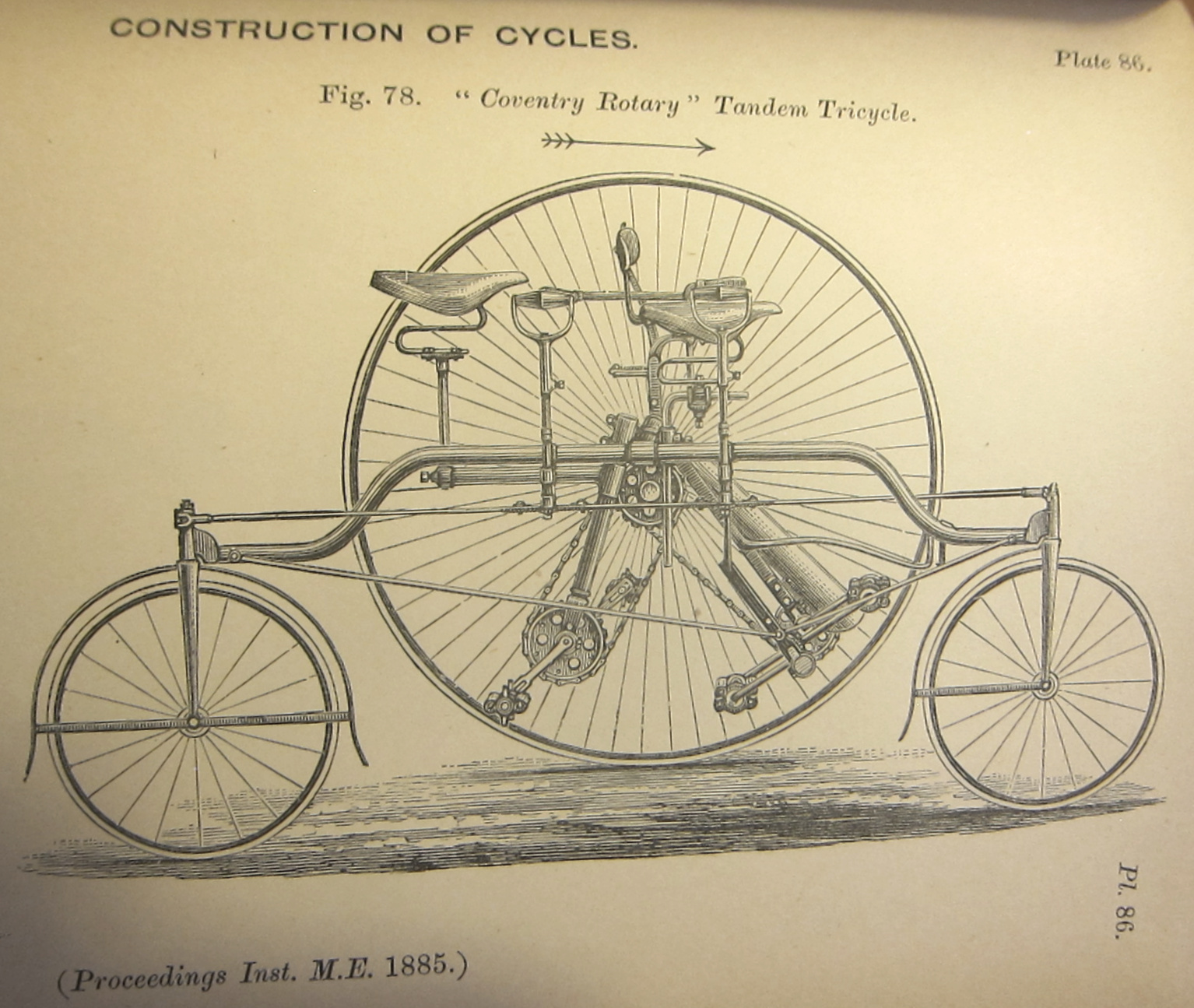
  • Beautiful Report on the State of the Bicycle, 1885

    JF Ptak Science Books  Quick Post

    PHILLIPS, Robert Ed. “On the Construction of Modern Cycles”, in Institution of Mechanical Engineers, Proceedings. Published by the Institution, October 1885. This paper appears in the issue of pp 461-552, occupying pp 467-521, fantastically well-illustrated with 39 engraved plates (numbered 62-100). The illustrations are beautifully detailed and feature all manner of technical aspects of bicycles. (Two years hence, in 1887, Phillips would published a lovely book, The Pleasures, Objects, and Advantages of Cycling (London, by Simpkins). $125

    Bicycles 1885 _1_

    ·Posted by :

    ·in: