I just wanted to pass along this very highly interesting exhibit::


A Daily History of Holes, Dots, Lines, Science, History, Math, Physics, Art, the Unintentional Absurd, Architecture, Maps, Data Visualization, Blank and Missing Things, and so on. |1.6 million words, 7500 images, 4.9 million hits| Press & appearances in The Times, Le Figaro, Mensa, The Economist, The Guardian, Discovery News, Slate, Le Monde, Sci American Blogs, Le Pont, and many other places… 5000+ total posts since 2008.
Contact johnfptak at gmail dot com
JF Ptak Science Books Quick Post
Found this in the “to do” list and am not sure if I posted it ever, or not. Anyway, its a nice light way to start this Monday:
JF Ptak Science Books
For my history of physics readers who work with the Annalen der Physik I reproduce a useful little key to the two-tier numbering system for the Annalen‘s first and second series. The tables come from Sachregister zu den Annalen der Physik und Chemie Poggendorr’sche Folge… published in Leipzig in 1888. Up to this point the physics journal had been published since 1799 in two series for a total of 160 volumes (plus a Jubelband and eight volumes of Erganzungsbaende); some people reference the appearance of articles via the total volume number, while others (myself included) reference the series (as series “I volume whatever” or series “II, volume _____”. There is a handy table at the very end of the Sachregister that correlates the two “systems”. Follow this link for the key.
JF Ptak Science Books Quick (Fun) Post

Curiously, this gives Einstein’s home address.
Source: PSPrint Blog

JF Ptak Science Books Quick Post
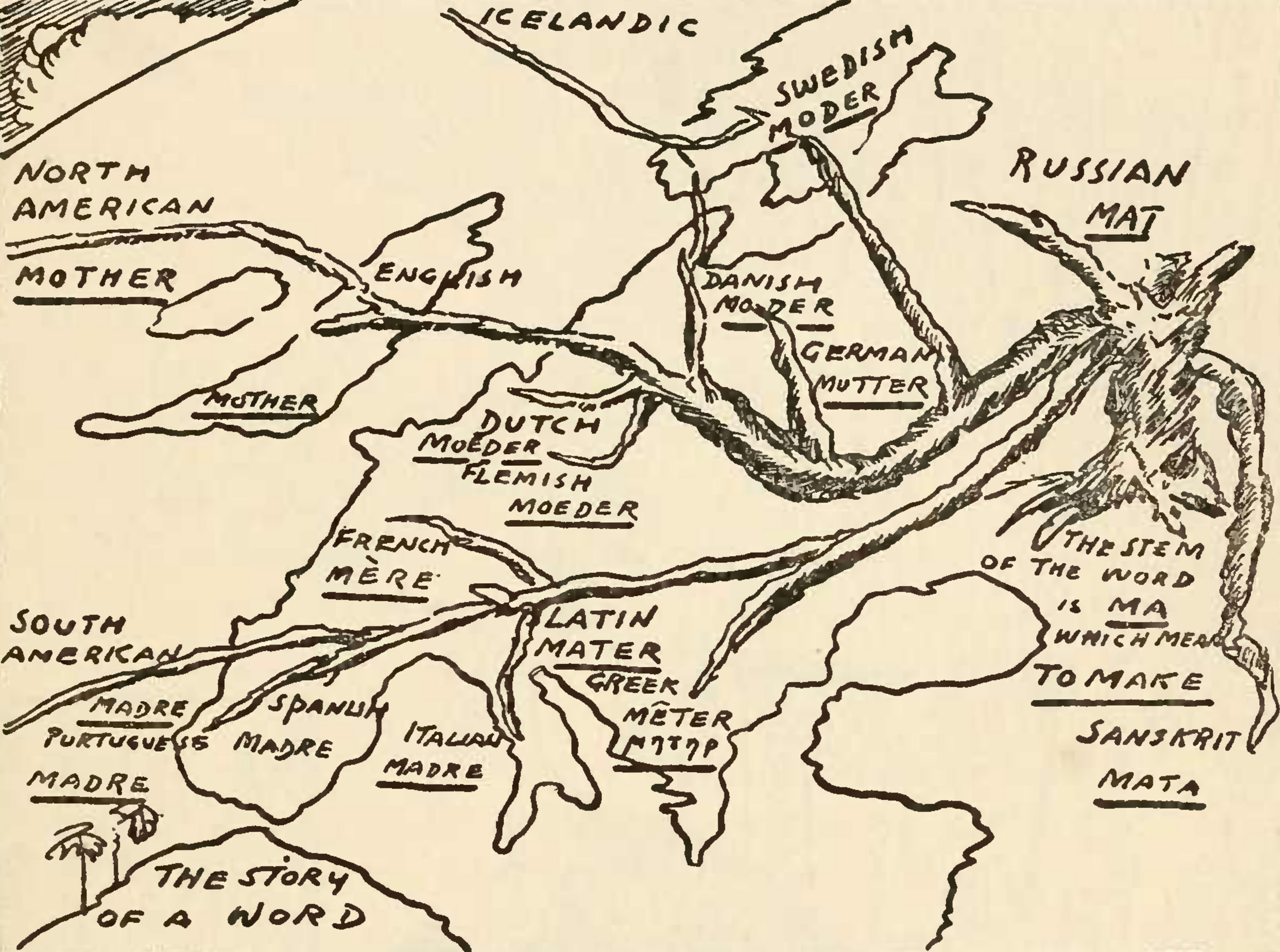
Mother tongue, earth, lode…but the appearance of “mother” as “Mother” looks so pervasive, so wide-spread, that perhaps the reason for its worldwide similar appearance might be because it is so easy to say when an infant is learning to speak. The “m” and the “a” sounds are not challenging, and it might even be related to the sounds that an infant makes when being breast fed.
Map source: Hendrik van Loon (1882-1944), The Story of Mankind (1931, by Bon & Liveright). In all of this time, over all these years, I believe that I’ve never once referenced this once-popular book.
Others appearances of “mother” in different languages:
<
JF Ptak Science Books Post 1636
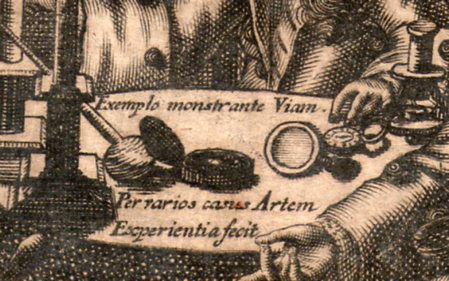
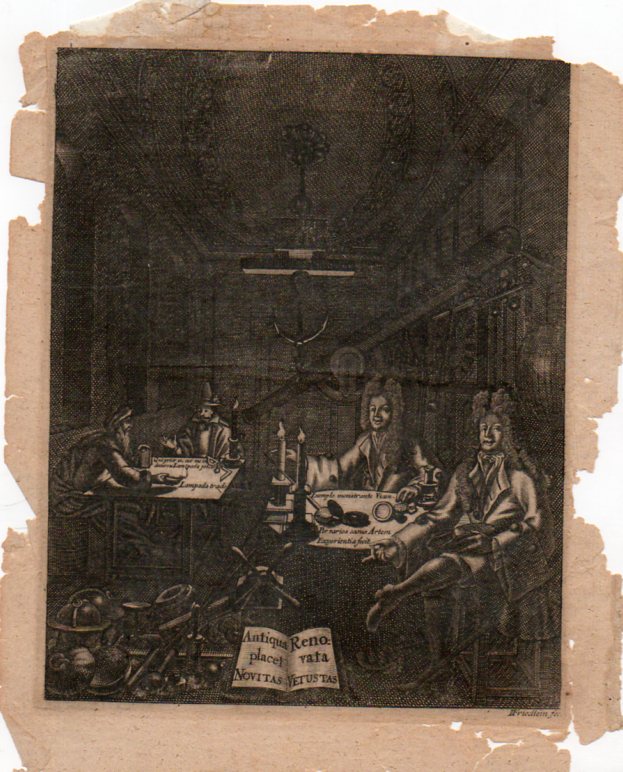
This is an image of a philosopher’s cabinet, engraving (on copper?) by “I. Friedlein fec”, who was actually Johnann Friedlein, an emigree from North Germany to Denmark, and who worked ca. 1680-1705. It shows the tools of the trade for someone working in natural philosophy (the name “scientist” would not come into use for another 150+ years or so) and is an interesting insight into a small, polite gentleman’s club for experiment and investigation. [The original may be purchased via our bolog bookstore, here.]
JF Ptak Science Books Post 1625
There are 5601geographic names in this country starting with the word “Negro”. Since “Negro” wasn’t really recognized widely as having a capital “N”–that a whole race of people weren’t deserving of a capital letter–until the late 1930’s, these place names didn’t start out this way, using the word “Negro”. They used something else. And I think that it is a safe bet that in 1962, when offensive names were removed from designating geographical places in the U.S., that almost all of these “Negro” places had been changed from “Nigger”. And that wasn’t all of them, either.
I think that this is just a small percentage of the changed titles. For example, I own a very large (30 sq ft) map of the place I live, Buncombe County (NC), that contains at least 25 place names using the word “Nigger”. Today in the state there are 12 names using the word “Negro”. It is possible that at one time then there could have been hundreds of place names printed on county maps for the state of North Carolina designated “Nigger” that have simply been replaced or erased or changed in some way.
Among many other things, language is a bomb, a land mine, a virus, a means to an end–and sometimes it is just not pretty as a signifier, or classifier. Sometimes it is an oppressive thing, an offensive weapon, a prison. We are reminded of that today as we see with the recent business with presidential candidate Rick Perry’s family hunting patch near Paint Creek, Texas. The place was called “Niggerhead”, the name painted on a rock at one of the place’s gates, and had been there for years–it may have been there as recently as 2008, though Gov. Perry says the word was painted over in 1983 or ’84. When the name was painted over seems to be open for discussion. It shouldn’t be.
The fact of the matter is that the word “Nigger’ was used in thousands of geographic designations in printed maps, and still used in large numbers up to 1962.
As I pointed out, the capitalization of the word “Negro” was hotly debated up until the late 1930’s, when most anti-capital forces gave in. Even though “Negro” had not been recognized as being worthy of a capital “N”, “Nigger” was, and appeared so on countless maps and other published and official (and federally printed) documents. In this instance the use of the offensive word along with using the small “n” in “negro” proved to be another very effective means of controlling a people by controlling the language in which they were discussed. Using words as weapons like this has come with an incalculable cost, and the Rick Perry episode of slowly dealing with one of those words is a good reminder of this long and indoctrinated legacy of repression and hate, and how not-far away it all is.
Notes:
There are places today called “Negro Jim”, and Andy, and Bob, Bill, Jake, Jack, James, Joe and so on, and you know for certain that “Negro James Landing” wasn’t named so 50 years ago. Squint your eyes and you can well imagine the original name: Negro Ditch, Cut, Island, Jump, Canyon, Branch, Lake, Head, Heads, River, Hollow, Knob, Hill, Prong and of course “Negro Jumpoff” could hardly have started out their lives using “Negro”.
Currently, of the 560 place names using “Negro”, 8 are in New England and 54 are in the Middle Atlantic states. The distribution is as follows: AL, 17; AK, 7; AZ, 21; AR, 18; CA, 55; CO, 19; CT, 2; DE, 1; DC, 0; FL, 13; GA, 7; HI, 0; ID, 11; IL, 12; IN, 3; IA, 1; KS, 7; LA, 10; KY, 22; ME, 1; MD, 6; MA, 2; MI,1; MN, 1; MS, 1; MO, 18; MT, 10; NE, 3; NV, 14; NH, 0; NJ, 2; NM, 44; NY, 22; NC, 12; ND, 0; OH, 6; OK, 19; OR, 29; PA, 15; RI, 1; SC, 7; SD, 9; TN, 37; TX, 30; UT, 7; VT, 2; VA, 17; WA, 6; WVa, 6; WI, 3; WY 15.
I should note that there are still 10 places in the U.S. using the name “Redskin”. Not including a football team for the Nation’s Capital.
JF Ptak Science Books Post 1591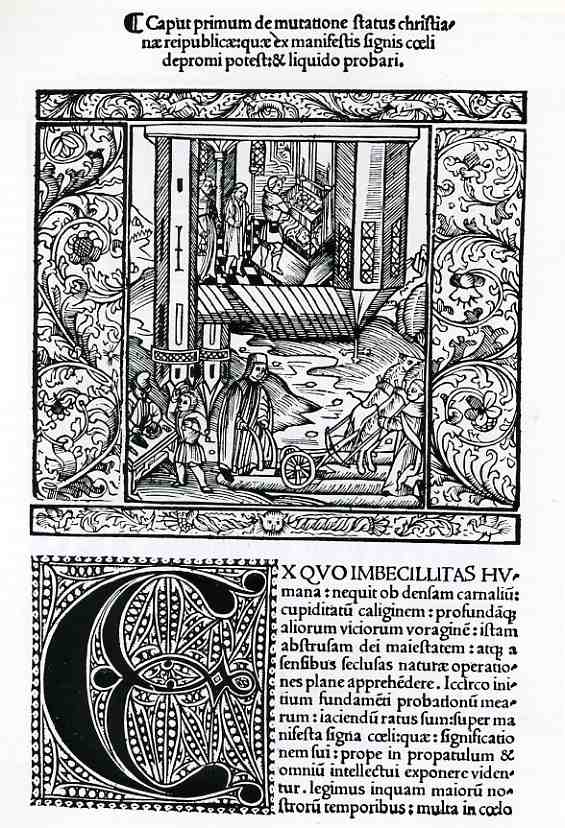 –
–
Newton did not intend notes like these to be published during his lifetime—as was the case with more than one million words that he dedicated to his very close and scientific research in the fields of alchemy and alchemical chemistry. It is interesting to think of what sort of censorship went on with this work and long, deep interest of Newton’s—fully one-third of all of the scientific books that were in his library were dedicated to alchemy, and great gobs of his time was spent in alchemical pursuit, but most of this did not come to light until John Maynard Keynes purchase most of the this manuscript material at auction (!!) in 1936.
Newton was trying to find something that he thought only he might be able to see, trying to press his ear closer to god’s lips in whatever way possible—but for other scientists and non-modern historians of science, these pursuits seemed cumbersome, an embarrassment.
I bring all of this up to get at what must’ve looked like a very anti-mechanical, discordant, and very non-rational set of images used to quickly convey a philosophy.
The great illustrator and social watchdog Thomas Nast discovered the power of the image in the 1860’s and 1870’s, when he was able to convey a message to readers and illiterates alike by creating very graphic displays of public corruptions and (some) social imbalances. Of course this approach has been used for thousands of years, and is time-honored, but the spread of ideas via image in published media is not terrifically old. (And by this media I mean by books or broadside, and not by paintings, which were generally intended for an incredibly small audience in the pre-museum days. Messages were certainly displayed in this way for thousands of years, and most of these were messages of fear and loathing of unacceptable behaviors. The Renaissance is beautiful but left little doubt about who was in control and what was deemed appropriate ways of acting and thinking—the church was the major patron of the arts, and its not for nothing that we see mostly passionate genuflectorial praise for the supreme being and his associates.)
And this brings us, I guess, to where I was trying to get all along—the superb images found in Joseph Gruenpeck’s (1473-1532) Speculum Naturalis Coelestis & Visionis…, a small folio published in Nurnberg in 1508 and illustrated with 13 fantastic woodcuts by the artist Wolf Traut (1486-1520). Gruenpeck, who gave up his office as astrologer to Emperor Maximillian II to become a priest and to undertake the writing of this book, produced a pre-Reformation masterpiece, whose very sharp criticism of the church helped fuel the revolutionary fires among the peasants which eventually led to the Peasants’ Revolt of 1523-1525. What is remarkable to me about the illustrations in this book are their head-butting discordant nature—one sees instantly that something is defiantly skewed, demanding the viewer’s attention—from there a very quick and generally acerbic message is delivered with great ease. These were messages that were instantly understandable and translatable across language and culture, and it is perhaps for these reasons that this work was so important in helping to form a new social consciousness—much in the same way as more popular mass-communicators like Thomas Nast would do hundreds of years hence.
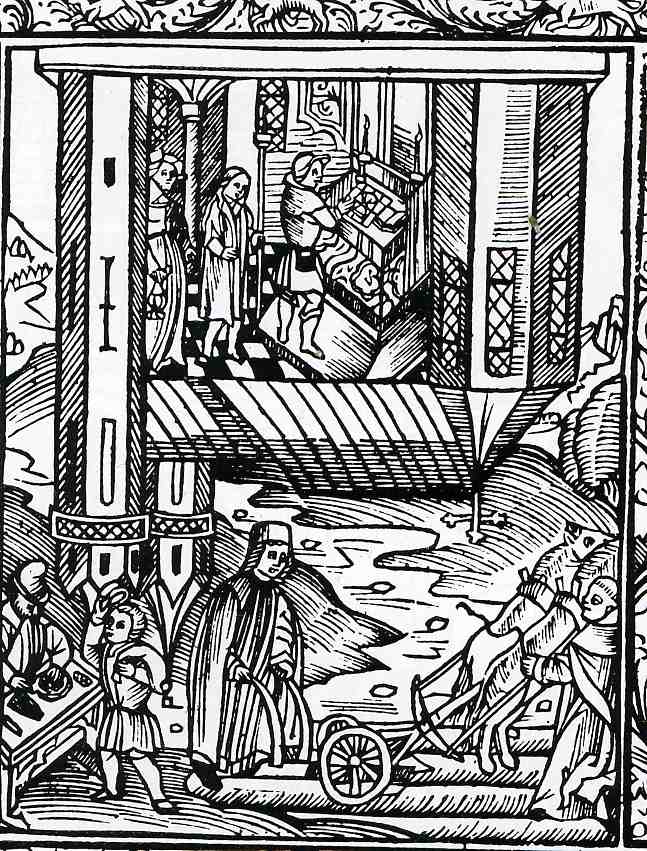
Now, the Traut woodcut: this is one of those very uncommon occurrences when a familiar object is place in it “opposite”, out-of-place position to attract the viewer’s attention—in this case, it is an upside-down church. Not only is the allegorical church placed on its head, we see too that its clerics are outside tilling the soil, while the peasants and field workers are inside the church celebrating Mass, their positions in society switched It is unlikely that such a book would’ve been in the hands of someone who couldn’t read, but, nonetheless, the image is still very powerful and must’ve made a big impact on any observer, it being such a strong attack on the foundation of the church.
Recognition comes in many forms and flavors, as in the superb mechanical universe of Sir Isaac or the beautiful and melodious music of the spheres of Johannes Kepler; it sometimes comes via opposites and discordant methods, with the logic of Kurt Goedel, or with the images of Wolf Traut–either end pulls equally at opposite tails of the labyrinth, and a much-improved choice over a lottery in Babel.
JF Ptak Science Books Post 797 (Sept 2009) Extended.
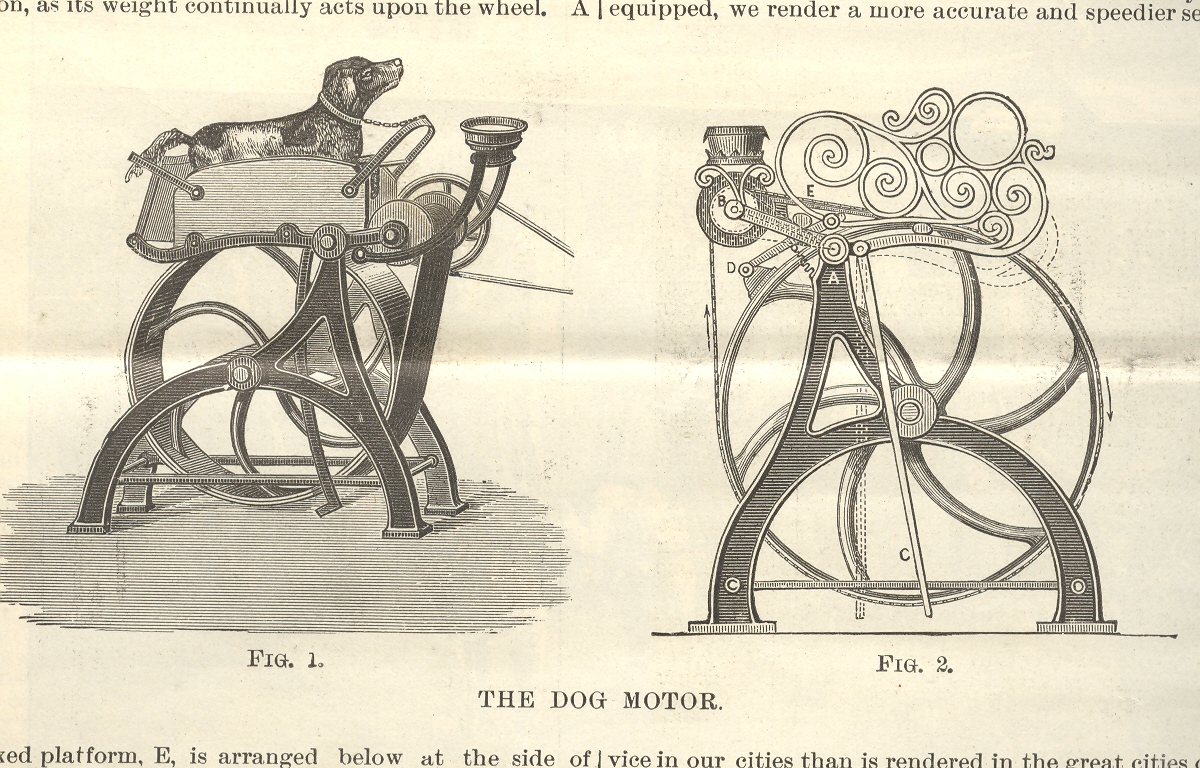
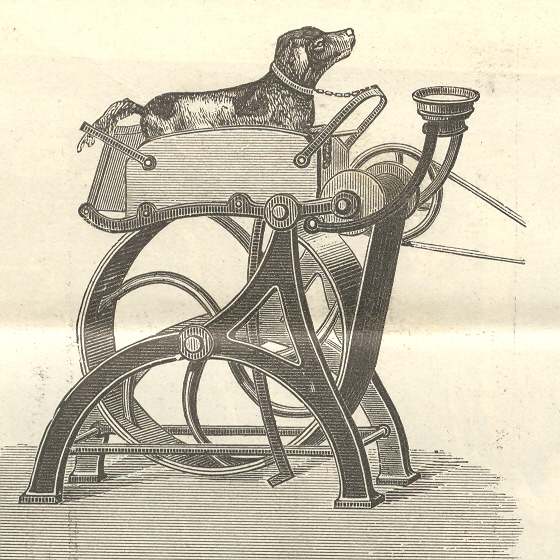
In 1702, at the beginnings of the Industrial Revolution, Thomas Savery (c.1650 – 1715) began the idea of calculating the work done by steam engines over that done by horses, writing in his book, The Miner’s Friend:
“So that an engine which will raise as much water as two horses, working together at one time in such a work, can do, and for which there must be constantly kept ten or twelve horses for doing the same. Then I say, such an engine may be made large enough to do the work required in employing eight, ten, fifteen, or twenty horses to be constantly maintained and kept for doing such a work…” But it was James Watt who first introduced the term ”horsepower” while trying to advertise and place forever the idea of his steam engine over than of the earlier Newcombe engine and, of course, horses.”

See the full post here
JF Ptak Science Books Quick Post
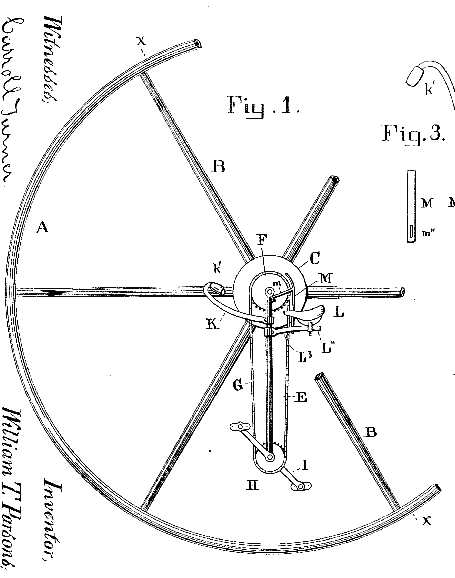
I found this patent for a rather extraordinary bicycle–a unicycle, actually, and a massively-wheeled one, at that. Looks to me as though the wheel of the unicycle might be eight feet tall, with the rider seated at just below the center of the wheel. Its utility as a utility is a little suspect…
And the detail: