A Daily History of Holes, Dots, Lines, Science, History, Math, Physics, Art, the Unintentional Absurd, Architecture, Maps, Data Visualization, Blank and Missing Things, and so on. |1.6 million words, 7500 images, 4.9 million hits| Press & appearances in The Times, Le Figaro, Mensa, The Economist, The Guardian, Discovery News, Slate, Le Monde, Sci American Blogs, Le Pont, and many other places… 5000+ total posts since 2008.

Category: Uncategorized

  • Bloomday Memory: Lemon Soap and Gorgonzola Cheese

    Here’s the lead on a short post I made a few years ago on a Dublin tour:

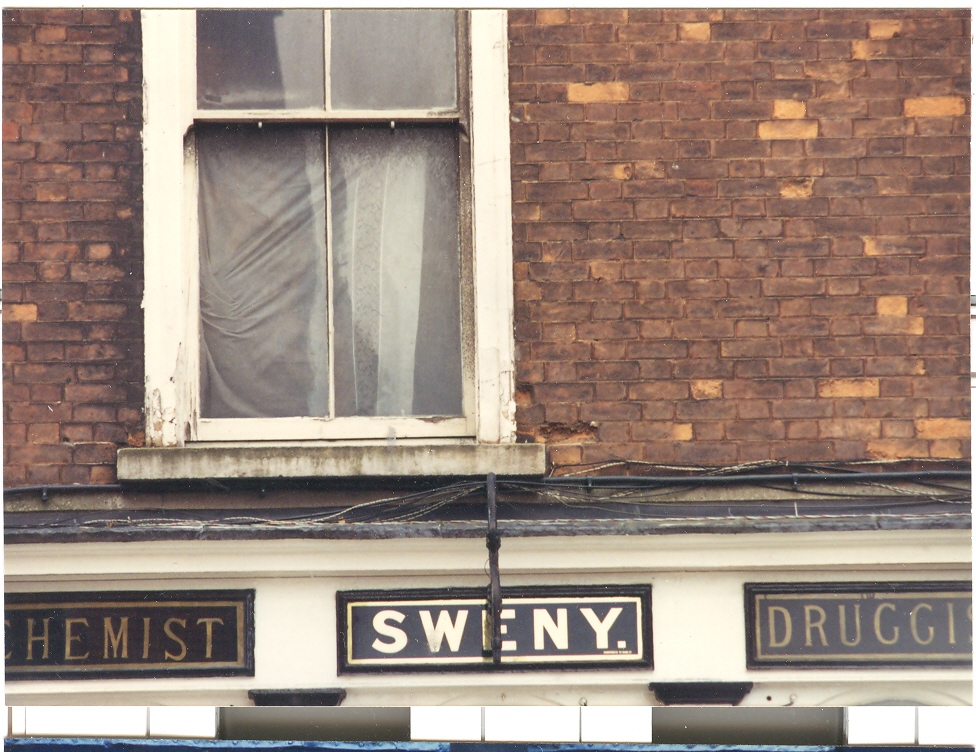
    I just came across these image that I made on a trip to Dublin some years ago.  Carrying the bags for my wife, Patti Digh, who was actually working there, I described my own work by going on a Ulysses tour. It was Sweny’s and Davy Byrnes (seems like two e’s are missing there, no?)  that I liked the most–particularly so for the chemists, because it looked as though nothing major had happened in there in a hundred years, or at least that was the sense of the smalish creaking shop…===blog==aug 13==barynes

    ·Posted by :

    ·in:


  • Hangman–the Game and the Not-Game

    JF Ptak Science Books  Post 1507

    “Ring around the rosy, a pocketful of posies, Ashes, ashes, we all fall down”

     In the history of killing in the United States, the segment that is most documented and recorded is the killing done by the Colonial governments and by the representatives of the United States federal and state institutions.  Since 1608 when the first person (brought to North America from Europe) was executed there have been some 20,000 executions.  The earliest part of this procedure was accomplished by crushing, breaking on the wheel, firing squad, and bludgeoning, and then occasionally by burning at the stake (the last of these unfortunates perishing in 1825 in this manner).  In the modern era, most executions were accomplished by hanging, and then the electric chair, though now almost all executions are done by lethal injection.  People are executed now mainly for committing crimes of  aggravated murder and, occasionally, for felony murder.  Earlier on, people were done in for far less: arson, burglary, criminal assault, conspiracy to commit murder, counterfeiting, desertion, espionage, robbery, theft, train robbing and witchcraft all had their day, though most of these offenses ceased being capital punishment cases long ago. 

    Hanging hung on, so to speak, for a long time, and became part of our culture, to one degree or another–so much so that it became a part of a toy and game for children:  the game “Hangman”.  In this game a player would be given x-chances to determine a hidden word; each miss of a letter would result in adding a feature to an already-drawn gallows; after adding the head, torso, arms, legs, feet, hat or whatever without resolution of the hidden word, the player would be hanged,  dead.  A weird game, and something that I’ve played many times, without really thinking about the consequences. 

    Its a little similar to the old nursery rhyme (above), which may or may not come from the plague years in England (1664/5), the words referring to the marks around the red spots appearing on the bodies of the infected; the posies being a sweet smelling bit that was supposed to ward off the disease which was believed to be brought on by breathing bad smells; and the ashes, of course, are our own at death. 

    Somehow these things enter our heads without any real connection to the real thing, and we pass it down to our kids.  Its a small bit, I think, but I don’t think we’ll be using a gallows to play our next hidden-word game. 

    This is what started this post: a 1977 Patent Office report on a 3-D gallows to be used with the word guessing game.  Drawing the figure out is bad enough; having the gallows, complete with an articulated victim, is, well, another matter entirely. 

    “A hangman game comprising: a miniature three dimensional gallows having a platform including an operable trap door and a noose pendently suspended over the trap door; component means for constructing a representation of a human figure to be suspended from said noose, said component means including separate head, torso, arm and leg components; said components carrying mutually engageable magnetic buttons for removably engaging said components to each other to construct said representation in steps starting with said head component; said head component being proportioned to be carried in said noose.”

    Here’s another, and more recent, example, though this one is digitally displayed:

    This last example from 1976 does away with the gallows but keeps the articulated condemned, while adding a rather complex electrical board for the guessing part. 

    Then there’s the real thing. 

    The next patent drawing offers a novel idea–turning the gallows into a strangulation machine.  This patent specifically attempts to prevent the neck of the convicted from being broken, the machine instead raising the person slowly, so that they suffocate under their own weight.  The thing about the old-time executioners was to do their jobs cleanly, efficiently, and without any unnecessary struggles to the condemned.  That said, it was the aim of most of them–at least for the public executions in England, the only parts of this gory history that I’ve read about–to kill the condemned by snapping the neck without ripping off the head or tearing open the neck, so that the person is basically dead as soon as he or she makes the drop.  The only thing left there in the body would be a beating heart, or so that is what the executioners aimed for. 


    Here’s another gallows changed into a strangulation contrivance of great complexity:

    This one was designed so that there would be no stairs to climb, the condemned being strangled to death by raising the roof to which the neck was attached.  Also in this way no one touches the condemned, making it a hands-off approach to an excruciating act of vengeance and punishment. 
    

    ·Posted by :

    ·in:


  • Postcards from the Edge: Picture Postcards featuring Insane Asylums

    JF Ptak Science Books   Post  1475   

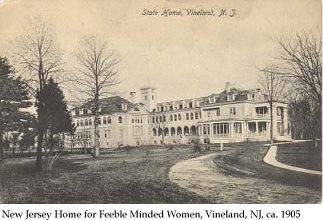
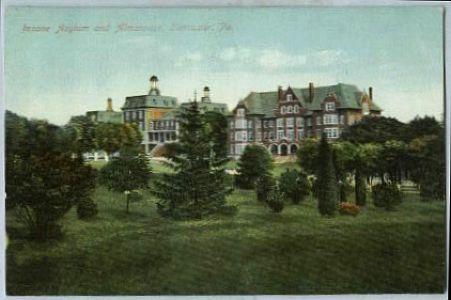
    Following up on yesterday’s post on the Architecture of Insanity is this selection of postcards featuring insane asylums.  They are all American, and all manufactured ca. 1900-1920, when the thirst for picture postcards depicting local history and structural vignettes was in its heyday.  I am uncertain why these images were appealing enough for people to use and send through the mail, but there certainly seems to have been a lot of them–a quick pursuit of them found these in a hurry, and I suspect that there may be hundreds more. 

    The content certainly would have been interesting to read.  And now that I think about it a little, there is material enough to create a version of Wisconsin Death Trip with these images. 

    New Jersey Hospital for Feeble-Minded Women:

    Lunatic feeble

    Insane Asylum and Almshouse, Lancaster, Pennsylvania:

    Insane asylum postcard  pennsylvania

    ·Posted by :

    ·in:


  • Very, very Heavy Metal–the Woolwich Infant, 1876

    JF Ptak Science Books    Post 1436

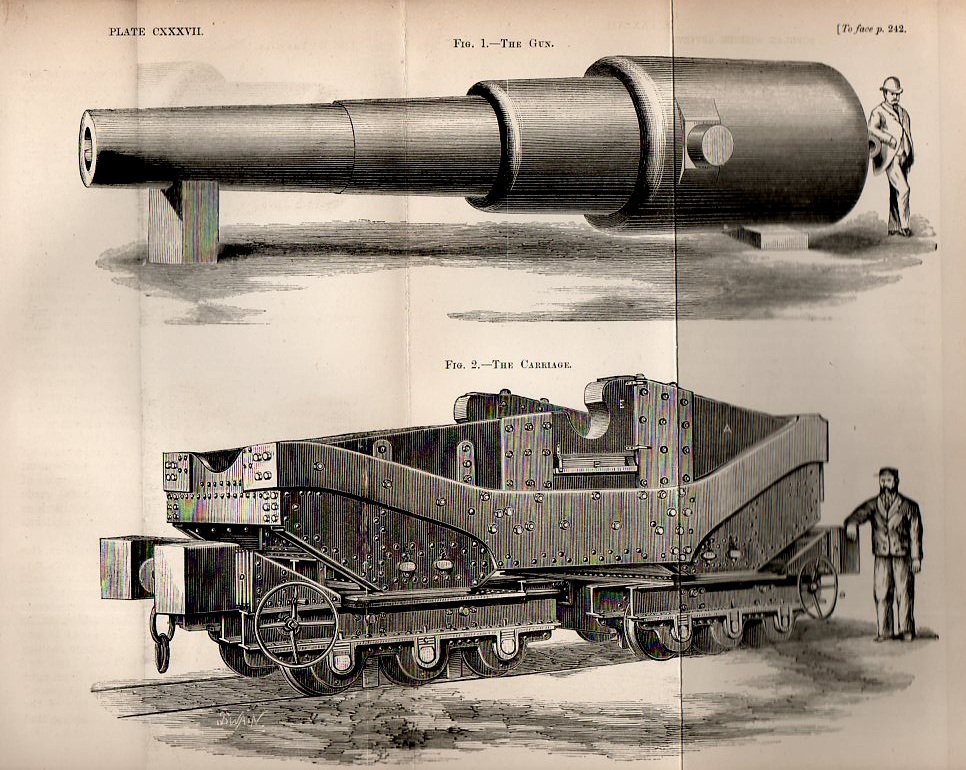
    One very controlling interest of the naval metal arms race of the 19th century was the thickness of metal armor being carried by a ship of war.  The thicker plate on ships made it extremely important to develop cannons that were powerful enough to throw a projectile with enough weight and velocity so that an armored ship could be pierced and sunk.

    Woolwich infant374

    And such a beast is what is described here in the 1876 issue of the Popular Science Review, addressing  “The Eighty-Ton Gun, or Woolwich Infant” (a copy of the original of which is found at our blog bookstore).  The first armored ships starting appearing around 1860, and things progressed rapidly enough so that by the time this gun was made in 1876 it was capable of penetrating 20 inches of iron from a distance of 1,000 yards.  It was a beast, taking a 240-pound charge to throw a 1,200 pound projectile.  It was actually (at least) the second Woolwich Infant, coming after an earlier version of the gun that was 35 tons. 

    Of course this weapon looked puny in comparison to the Mars Canon, but this didn’t exist.

    Strange things in sky--martian guns

    This is the cover art by the fabulous Frank R. Paul for Stanley D. Bell’s “Martian Guns” found in the January 1932 issue of Wonder Stories.  There’s really no way to determine how big the gun is except to say that it is probably “big”–there’s just nothing to place the thing in perspective, as the figures in the foreground, being Martian, don’t have a specific height.  They could be 6′ tall, or 60′–perhaps they’re only 1/10 of an inch tale, and the projectile they’re firing to the earth is so devastatingly powerful that size doesn’t matter.

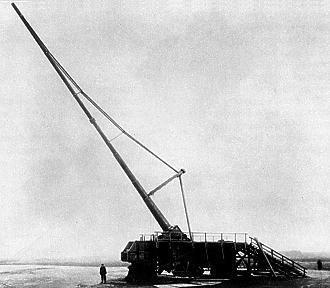
      Back here on Earth and in the real world,  the Kaiser Wilhelm gun (or “Paris Gun”, the Kaiser Wilhelm Geshutz) was

    http://farm4.static.flickr.com/3169/2951816593_c2d2e5c875_o.jpg


    a long-barreled, light shelled monster: its 92′ long barrel (plus a 20′ extension) launched a 94kg shell about 130 km, reaching a maximum height of 40km (about 25 miles) high. For all of its mass (the gun weighed 256 tons without the railway cars) the shell that it fired didn’t weigh much at all….though the shell did reach an extreme height.

    The Schwerer Gustav was a 1350 ton beast which fired a 14,000 pound shell (!) about 20 miles. A  little later came the Nazi V-3 (the lesser known of the V-weapons), the Vergeltungsewaffe 3, a 130 metre (!) long, 150mm gun built along the side of a hill, launching a 140 kg shell. The Iraqi Big Babylon gun was sort of like this one, though never built–it was to have a 500′ barrel and would be supported by a hillside. Then there was the Nuclear Tube: the Atomic Annie (M65) cannon, which was another bruiser, being an enormous 85′ cannon that delivered the worst punch of all cannons, a nuclear warhead.  The weapon was test-fired in 1953 at Frenchman Flat at the Nevada Test Site and delivered a 15kt explosive device to a target seven miles away. There were 20 of these made, but given their difficult-to-deploy-and-keep-secret status, and the nature of the shells, and the development of more sophisticated weapons, the M65 was obsolete almost as quickly as it was introduced, but was removed from the front line only in 1963.

    But this is all getting ahead of ourselves, all in the future.  I really just wanted to address the Woolwich Infant and its anti-metal-armor capacity. 


    ·Posted by :

    ·in:


  • Ancient Motion Pictures, Part III: Street Scenes and Human Urban Landscapes, 1902–Belfast, Wigan, Bradford, Manchester

    JF Ptak Science Books  Quick Post

    Again from the BFI comes a series of absolutely super urban motion picture landscapes showing bits and pieces of ordinary city life at the turn of the century–I find them exquisite.  The first is a movie taken from the front of a horse drawn tram in Belfast, 1901, along Royal Street:

    Another glorious motion picture of street scenes in a major city at the turn of the century:  Manchester, 1902. 

    Electric tram rides from Forster Square, Bradford, in 1902:

    This street scene at Wigan is remarkable for the pure joy of the people who have gathered to be int he film–I particularly like man with his broad-brimmed-hatted daughter on his shoulder towards the end of the film, the father following the camera trying to get his daughter into the film.  Just lovely. 

    cvcv

    ·Posted by :

    ·in:


  • Ancient Motion Pictures, Part II: India, England, France, 1898-1899

    JF Ptak Science Books   Quick Post

    The first segment here is a collection of Lumiere brothers films, the first of which (made in 1896) shows the release of factory workers at their shift’s end–included are a large number of women:

    Another lovely film called “Santa Claus”, which may well be the first movie of Santa ever made (1896):

    Even though this 1899 film is entitled “Panorama of Calcutta” it is actually of Varanasi, India:

    View from the front of a locomotive, coming into Barnstaple, 1898:

    From the great BFI (British Film Institute), a lush moving picture of the launch of the HMS Albion, which actually shows the front end of the making of an enormous Thames River tragedy.

    From the BFI channel:  “E.P. Prestwich’s footage of the launch of the battleship HMS Albion on 21 June 1898 looks deceptively serene and gentle. What it doesn’t show is that when the ship hit the water for the first time, it created a wave that swept away a jetty, drowning an estimated 39 people in the process, one of the worst peacetime disasters in the Thames’s history.”


    ·Posted by :

    ·in:


  • The Architecture of 13,000,000 Pounds of Opium Production

    JF Ptak Science Books   Post 1407

    These images present an excellent invitation to understanding the size and scope of one section of the opium industry in India.  I found these pictures in the 29 July 1882 issue of the Scientific American, which in turn had reproduced them from the Bengal Commissioner Lt. Col. Walter S. Sherwill, who published them as color lithographs in 1850 and which (again) found their way into print in The Truth about Opium Smoking by Benjamin Broomhill1(1882).  They are iconic images of a devastating trade and were frequently reproduced over many decades–mostly not for the “devastating” part of what I just wrote, but more for the industrial/business appreciation end, as was the case with this article in SciAmerican.   The British interest in the trade stretched back two cneturies earlier, and of course the use of opium bends far back into Neolithic times.

    Sherill’s scenes are all from the opium receiving/production/distribution center in Patna, India, which claimed to produce some 13,000,000 pounds of opium juice annually, shipping the stuff out to Bengal and then on to China. 

    There is a hint of abrasion about this trade in the article, noting that there was nothing that could be done to stem the tide of Chinese demand for the product, and that “if the government monopoly of opium were abandoned, India would not only lose a revenue which would have to be made up by some tax, but the extent of the poppy cultivation would almost certainly be largely increased  in the hands of private growers.”  Also, if the British government gave up the trade altogether, the article notes that the Chinese demand would be supplied “by inferior quantities of Persian and native Chinese growth”. 

    The first image shows a cavernous hall for examining the incoming opium, “brought in in earthen pans…tested…by touch, or by thrusting a scoop into the mass”, after which a sample is sent to “the chemical test room”.  As it turns out, the text in the Scientific American article describing the various halls quotes the London Graphic  which was  reproduced almost verbatim from The Truth About Opium Smoking, but without quotations and without attribution. 


    MIT Visualizing Cultures

    Next, in image #2, is the mixing room, where, yes, the opium is mixed.  According to the Opium/Sci American: “In the Mixing Room the contents of the earthen pans are thrown into vats and stirred with blind rakes until the whole mass becomes a homogeneous paste.”
     
         
    MIT Visualizing Cultures
      Image #3 is the Balling Room: “From the mixing room the crude opium is conveyed to the Balling Room, where it is made into balls. Each ball-maker is furnished with a small table, a stool, and a brass cup to shape the ball in a certain quantity of opium and water called ‘Lewa,’ and an allowance of poppy petals, in which the opium balls are rolled. Every man is required to make a certain number of balls, all weighing alike. An expert workman will turn out upwards of a hundred balls a day.”  

    MIT Visualizing Cultures


    Image #4 is the drying room,  where “the balls are placed to dry before being stacked. Each ball is placed in a small earthenware cup. Men examine the balls, and puncture with a sharp style those in which gas, arising from fermentation, may be forming.”


    MIT Visualizing Cultures
     
    The stacking room is image #5, where “the balls are stacked before being packed in boxes for Calcutta en route to China. A number of boys are constantly engaged in stacking, turning, airing, and examining the balls. To clear them of mildew, moths or insects, they are rubbed with dried and crushed poppy petal dust.”
     

    MIT Visualizing Cultures


    The Chinese really weren’t able to resist this trade (which they had fought over a period of hundreds of years, not to mention in two opium wars in the 19th century) until about 1916. 

    Notes:

    1.  As it turns out, Broomhill was writing against the opium trade in his book.  See also this MIT page on the First Opium War.

    ·Posted by :

    ·in:


  • “What the Frog’s Eye Tells the Frog’s Brain” and Walter Pitts

    JF Ptak Science Books  Post 1373

    I was walking around a 1959 issue of the Proceedings of the Institute of Radio Engineers I found this fantastic article byt he great Walter Pitts.  What was Mr. Pitts and a frog’s brain article doing here?  Well, it all makes sense, really, and I was very happy to unexpectedly find Pitts here when I was looking for something else.  Walter Pitts (1923-1969) is one of those very important but now somewhat faded names in the history of American science.  He was a brilliant young man turned into a brilliant mature one, a logician/cognitive psychologist who corresponded with Russell on the Principia at age 15 and who went on to develop (with Warren McCulloch) some of the fundamental ideas in what would be known as neural networks.  The work was really much more far reaching, touching work in the fields of artificial intelligence, cybernetics, neuroscience(s), philosophy, cognitive sciences and of course computer science.

    https://historyofideasblog.com/a/6a00d83542d51e69e201156f67025e970c-piPitts was a genius I’m sure,  a sort of Matt Damon-type character from the movie Good Will Hunting1. He was offered a chance to study with Russell in the U.K. at 15, but refused and wound up running away from home to go to the University of Chicago to listen to Russell lecture, and where he stay on, finding another great logician, Rudolf Carnap (then at Chicago) and offering him critiques on his new work.  Pitts would blow like the wind in and out of Carnap’s office, the logician spending months trying to find out who and where Pitts was–and what he was was a homeless teenage boy.  Once found, Carnap got Pitts a low-level maintenance job.  I’m not sure what Pitts was doing before he switched ships and jumped (still homeless) to MIT in 1942, where he was introduced and was impressive to the not-to-be-impressed Norbert Wiener, and where he also met Warren McCulloch, with whom he would work on the Leinbizian idea of the nervous system as a sort of universal computer, publishing their outstanding “A Logical Calculus of Ideas Immanent in Nervous Activity” in September 1943.2

    Right before this paper–which is considered to be a founding effort in the field of neural networks–Pitts published three other papers of interest in this same area (and in the same journal)–all published when he was 19 years old. “Some observation on the simple neuron circuit”,    “The linear theory of neuron networks: The static problem”, and “Some Observations on the Simple Neuron Circuit” were all efforts leading up to his paper with McCulloch one year later.  {These three original papers are all available for purchase on our blog bookstore site.] Impressive work, especially for a 17-year-old, and particularly for a new, high entry point journal published by the University of Chicago, entertaining the logical structure of neural nets as coded circuitry, a new way of looking at the mechanistic view of philosophy of mind. 

    Things however really didn’t go well for Pitts: he was fiercely, probably tragically “shy” or demanding of his own attention, exceptionally modest, and with very few personal relationships.  Just a few years later, a rift developed between the wife of Norbert Wiener and McCulloch, and was of such vehemence that anyone maintaining a friendship with McCulloch would be shunned by Mrs. (and therefore, necessarily in this case, Dr. )Wiener.  And thus Pitts remained friends with McCulloch and lost contact with just about everyone else, making his working/contributing life quite difficult.  Little is known about what happens to Pitts in the 1960’s, but it wasn’t good, and he wound up dead, featuring symptoms indicative of severe alcohol abuse, in 1969.  He was 46, and his best work was already 25 years old. 

    _______

    Notes:

    1. We read in this  wonderful account of Pitts from Neil R. Smalheiser’s  appreciation, Walter Pitts ( found in:  Perspectives in Biology and Medicine – Volume 43, Number 2, Winter 2000, pp. 217-226):
    [Introduction ] “The movie Forrest Gump made the point that the greatest, most heroic Americans are people of extraordinary character who flicker briefly into public consciousness and are quickly forgotten. Walter Pitts was pivotal in establishing the revolutionary notion of the brain as a computer, which was seminal in the development of computer design, cybernetics, artificial intelligence, and theoretical neuroscience. He was also a participant in a large number of key advances in 20th-century science. Yet while his contemporaries Alan Turing, Ludwig Wittgenstein, and John von Neumann entered the pantheon of fame, Pitts remains a shadowy folk hero. Stories about Pitts have circulated among the cognescenti for years, but almost nothing has been written about him. Here, I have collected reminiscences from his friends and associates to provide a unique insight into a remarkable life; if some exaggerations and embellishments have crept in, they only underscore the basic truth that Pitts was a man with Gumption ability…”

    2. Warren McCulloch remembers Pitts in this way:  “In 1941 I presented my notions on the flow of information through ranks of neurons to Rashevsky’s seminar in the Committee on Mathematical Biology of the University of Chicago and met Walter Pitts who then was about seventeen years old.  He was working on a mathematical theory of learning and I was much impressed.  He was interested in problems of circularity, how to handle regenerative nervous activity in closed loops. …   For two years Walter and I worked on these problems whose solution depended upon modular mathematics of which I knew nothing, but Walter did. “ (McCulloch, 1989, pp. 35-36, cf. McCulloch, 1965a, pp. 9-10).


    ·Posted by :

    ·in:


  • World War I Photographs–Parade of Military Snow

    JF Ptak Science Books  Quick Post

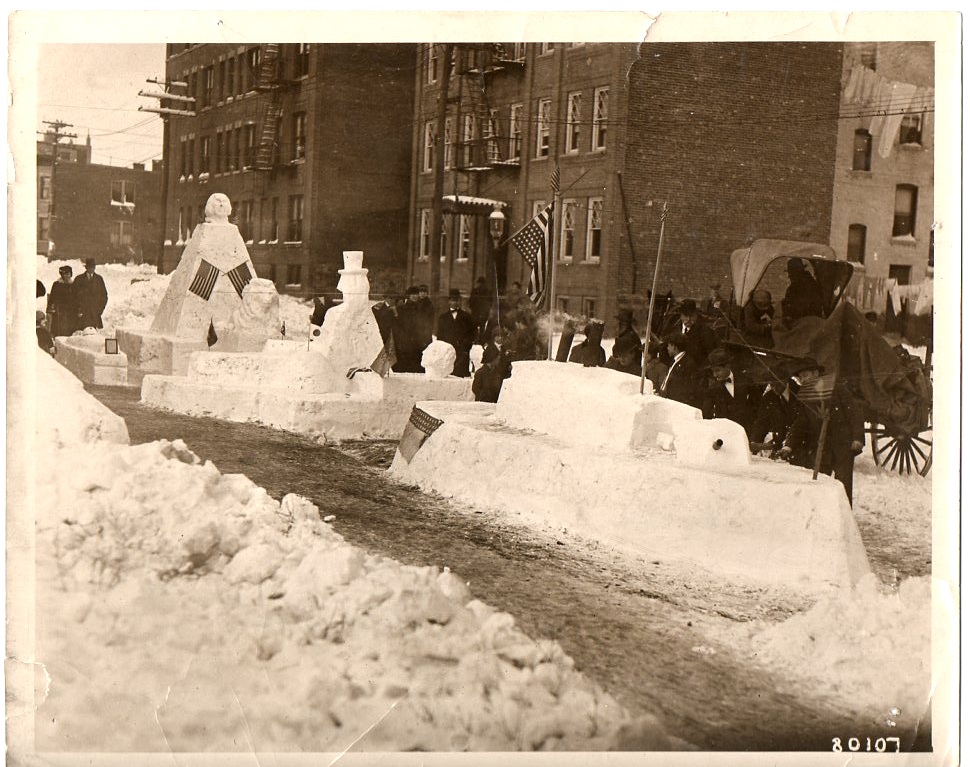
    WWI--great imagessnow parade059

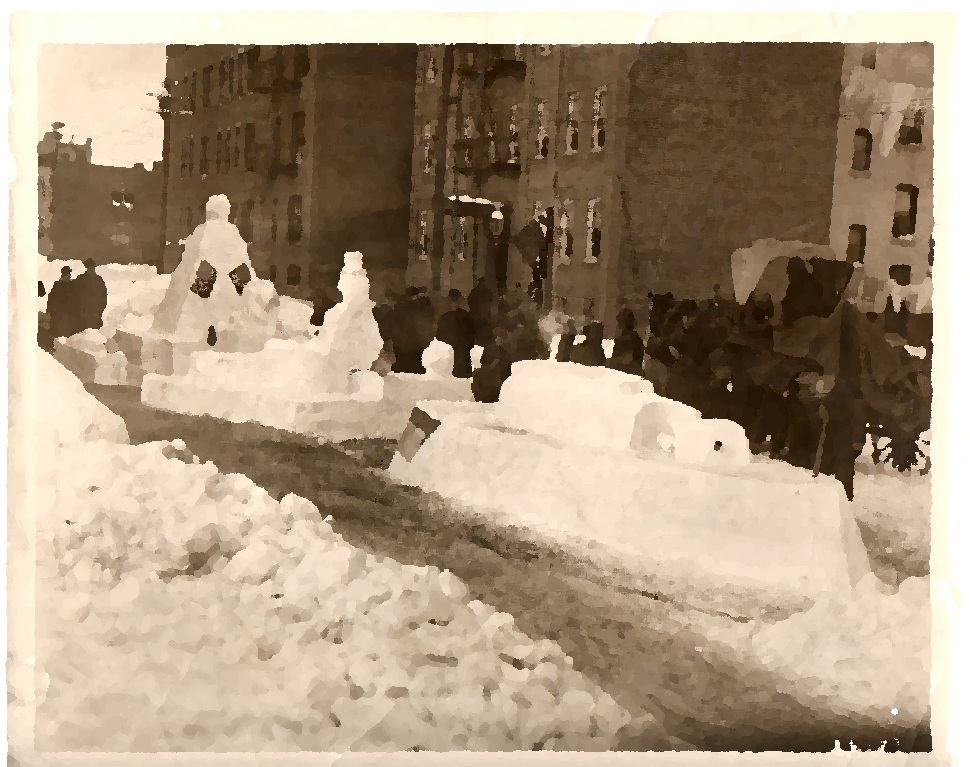
    This news photo service image–stamped “Hearst-Pathe News Agency” on the back–is frm the winter of 1917/1918 and shows a patriotic snow parade somewhere in the United States.  The snow looks prodigious, judging from the piles in the foreground and also the accumulated snow on the windowsills, and I imagine that all of the snow floats were sculpted mainly out of exiting snow in the street.  It is a delightful scene, to me, and hosts a variety of smaller, lovely images in vignette. (The original is available from our blog bookstore.) For example:

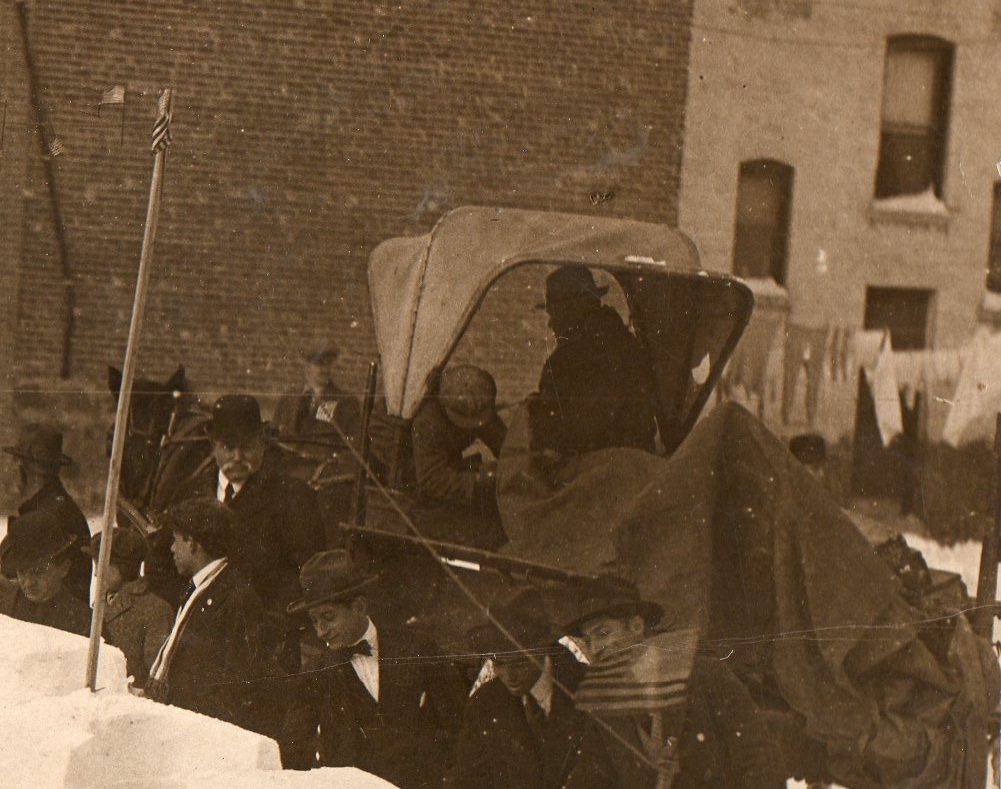
    WWI--great imagessnow parade060

    The man in shadow and sleeping figure (boy) in the buggy complement the white-mustachioed bowler-wearing man to the left; the men looking on in the foreground are interesting, too–plus there’s that laundry in the background.  Given that the laundry is out (and wasn’t just left out during the storm) and that no one seems to be particularly bundled up against cold, I’m going to guess that there was a break in the weather that pushed the temperature higher than normal, with almost everyone taking advantage of the warm snap, as people do everywhere, all the time.  I also like the tiny American flag on the tall pole at left.

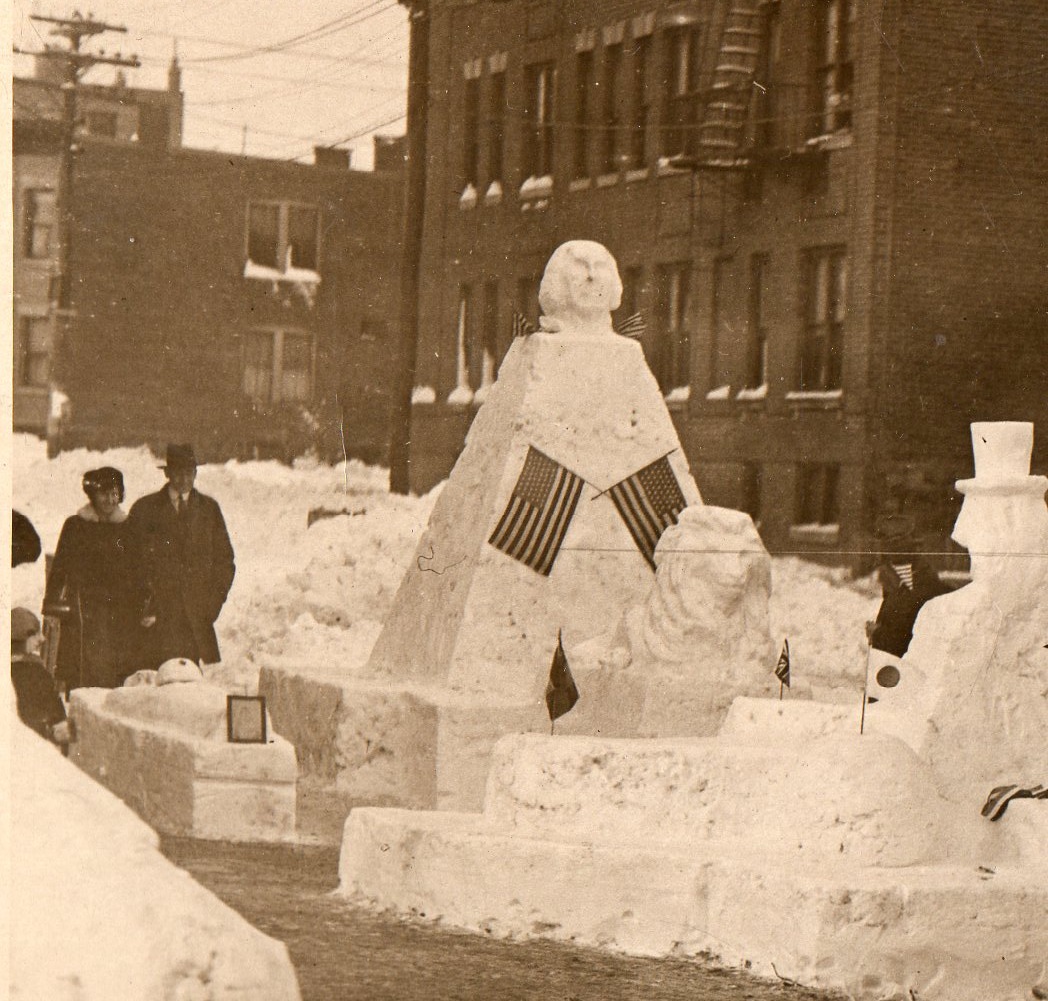
    And so:

    WWI--great imagessnow parade061

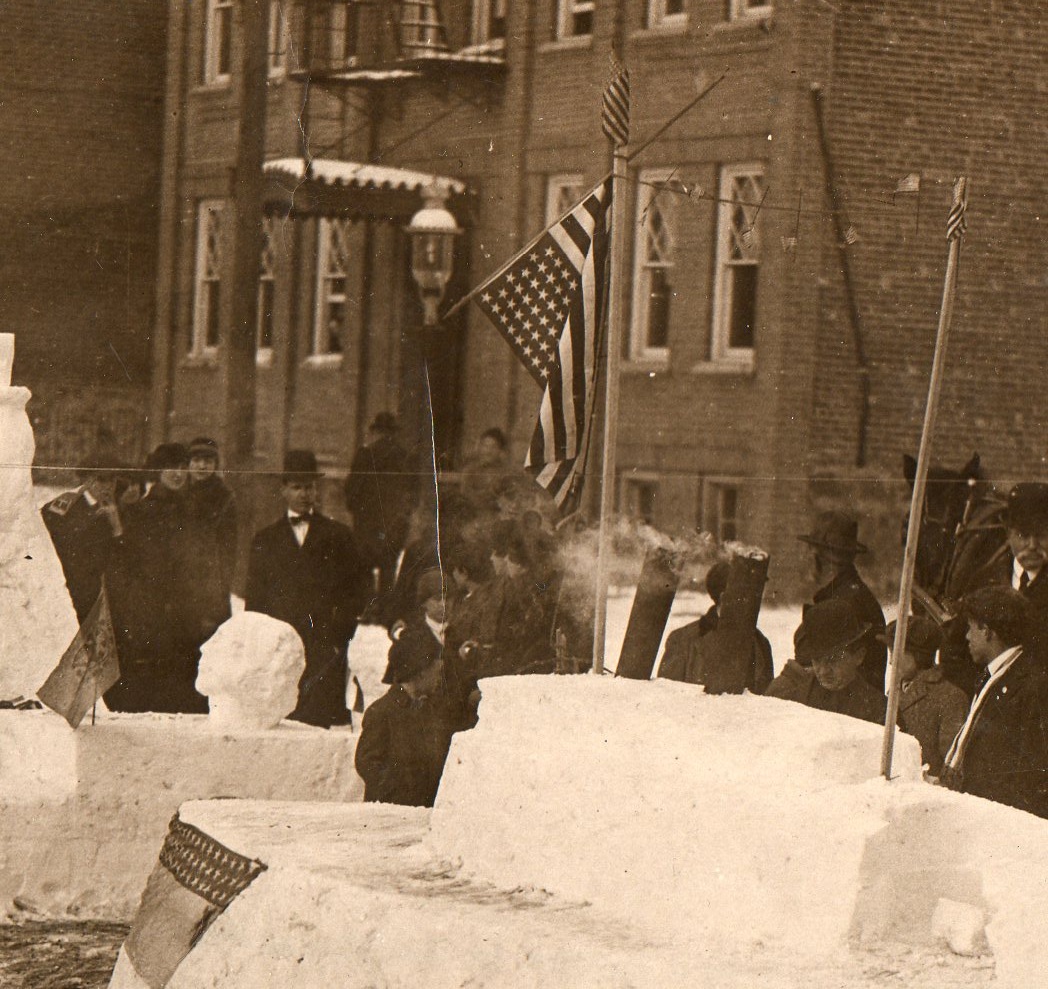
    And again:

    WWI--great imagessnow parade062
    I’m not sure what the flag is on the side of the Dreadnought, and it seems as though someone has stoked a small smoking fire in the metal tubes functioning as the ship’s smokestacks–a nice touch!

    Also I like this quickly-produced oil painting version of the photo–I knew that there was a very nice overall composition to the image, but really couldn’t find it until I did this:

    WWI--great imagessnow parade  OIL 059

    ·Posted by :

    ·in:


  • Blank, Missing & Empty Things: Band Members

    JF Ptak Science Books   Quick Post

    Blank band533

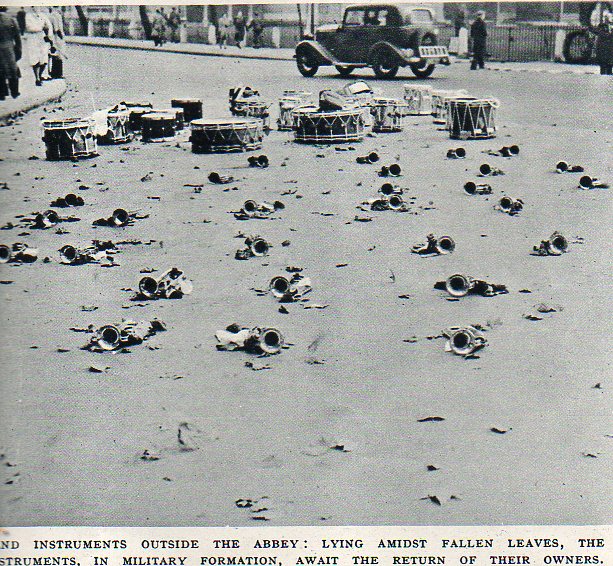
    This image–a part of this blog’s longish series of posts on The History of  Blank, Missing and Empty Things–shows military band instruments left where their players last put them.  I’m uncertain if the instruments were left as a (perhaps) temporary monument to the band members going off to war, or if it was more permanent (judging from the fallen leaves), or, well, I’m not sure.  The picture comes from The Illustrated London News for November  1941, at perhaps one of the lowest points in the war.  It is a stark photograph which strongly drives the point of sacrifice and possible loss. 

    ·Posted by :

    ·in: