A Daily History of Holes, Dots, Lines, Science, History, Math, Physics, Art, the Unintentional Absurd, Architecture, Maps, Data Visualization, Blank and Missing Things, and so on. |1.6 million words, 7500 images, 4.9 million hits| Press & appearances in The Times, Le Figaro, Mensa, The Economist, The Guardian, Discovery News, Slate, Le Monde, Sci American Blogs, Le Pont, and many other places… 5000+ total posts since 2008.

Category: Uncategorized

  • A Map of the Kingdom of Corsets or of Lost Laughter?

    I’ve revisited an older post on this blog, from October 2009, on a pamphlet about selling corsets.  It has a beautiful map of a corset department:

    In part:

    I should think that I would like to make a Kingdom Map for his image, some day.  It looks to me ready to accept the responsibilities of landforms or ideas or statistics or changes or comparisons in place of its plain nature of counters and countertops and display cases, empty boxes waiting for something a little more invigorating to depict.  Or maybe not, maybe the chance of display of transformations is enough to suit its peculiar, perhaps singular, needs.

    Or maybe on the Corset Map  instead of  substituting land and sea for corsets and boxes, one could substitute the noises of a quiet house at night, or the sound of heavy boots in a brittle-dry snow in the deep cold.  Or maybe a map of the discovery of children’s laughter, or inconvenient pauses in conversations through the history of human speaking…or a map of lost ways.

    Continue reading here.

    ·Posted by :

    ·in:


  • Dictionaries as Cookbooks of Lexigraphic Taste: Comparing Bierce & Johnson, #1 “Art”

    I’m making semi-daily posts comparing words defined by the great collectors of ideas, Ambrose Bierce and Samuel Johnson.  Bierce wrote a scathing, cynical book in which he defined things for his own needs, feeling like a firey, filling, sumptuous soup.  Johnson’s effort was a spectacular effort of a novelesque-dictionary–its almost a cookbook for the lexi-gourmand, the ultimate descriptions of savories by one of English’s great chefs. I thought it would be interesting to compare words that they defined in common.  Try it here.

    ·Posted by :

    ·in:


  • When a Portrait is Portraits: Found Portraits in a Group Photo, WWI, 1918

    JF Ptak Science Books

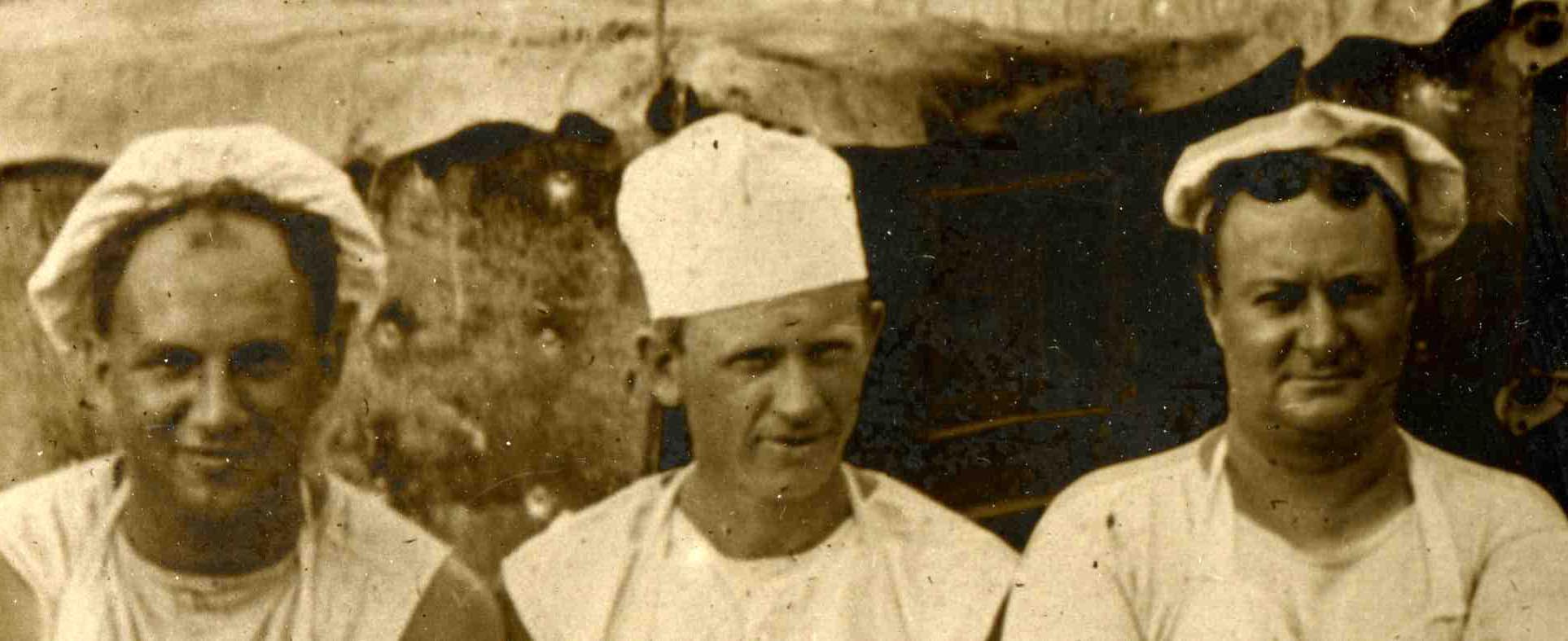
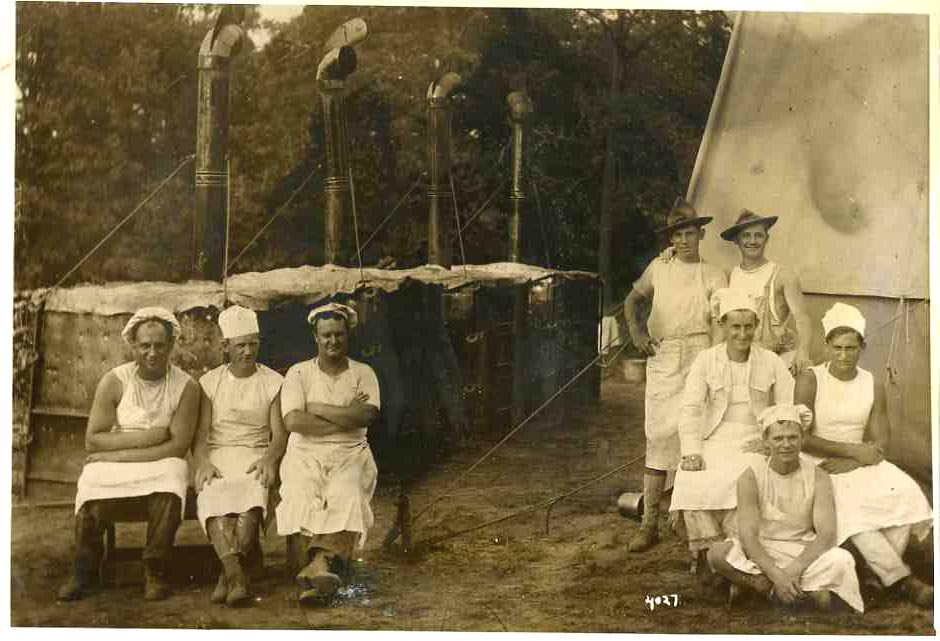
    0 blog jan 12baker374In my collection of WWI News Photo Service Agency photographs I would say that half or so of them show  scenes like this–semi-informal group portraits of military support groups.  500 portraits like this seem to be a lot, and I’m not sure why these images are so well represented. Except of course that there weren’t that many images (overall) of active-battle scenes. [This image is available for purchase at our blog bookstore, here.]

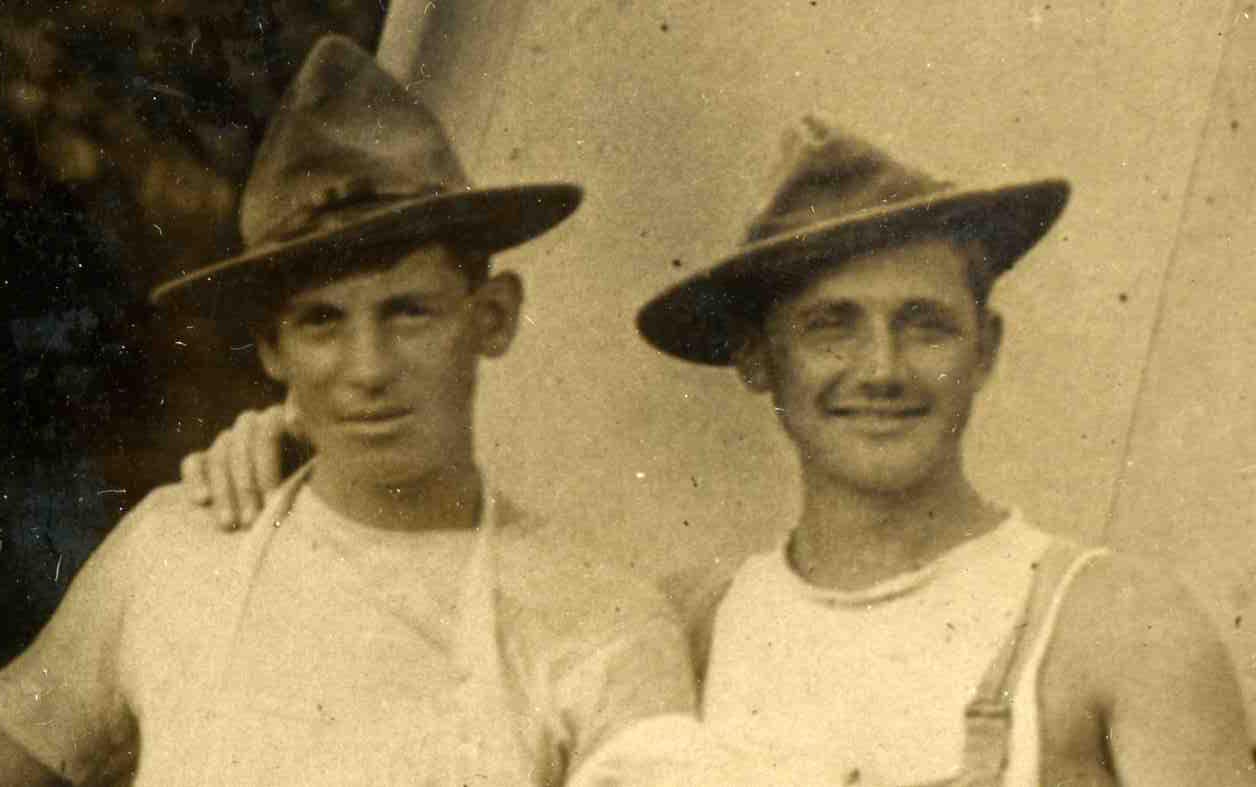
    These bakers, working at a front-line support station, from my read were probably taking a break, and the photographer took the opportunity to draw them together for the portrait.  I don’t know why they’re separated so, but they do look as though they have a real camaraderie–it is just a wonderful picture, full of friendship and loyalty, and I’m sure it has never been published before.  

    0 blog jan 12baker375

    0 blog jan 12baker376

    ·Posted by :

    ·in:


  • WWI Photographs–Uncle Sam’s Metal Drive, June 1918

    JF Ptak Science Books  Post 1264

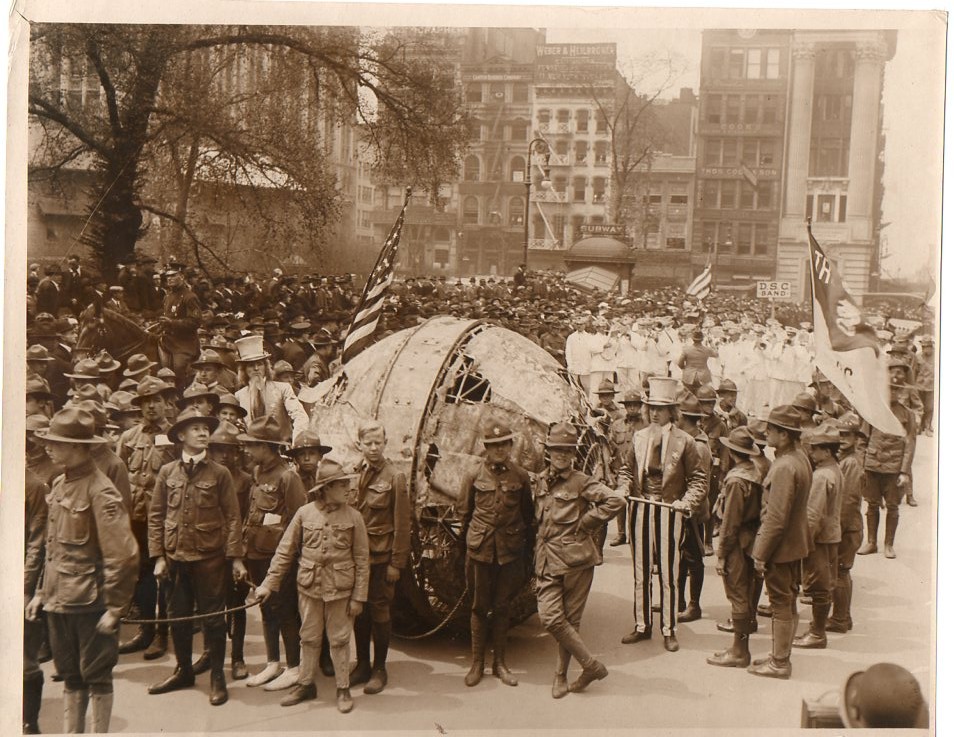
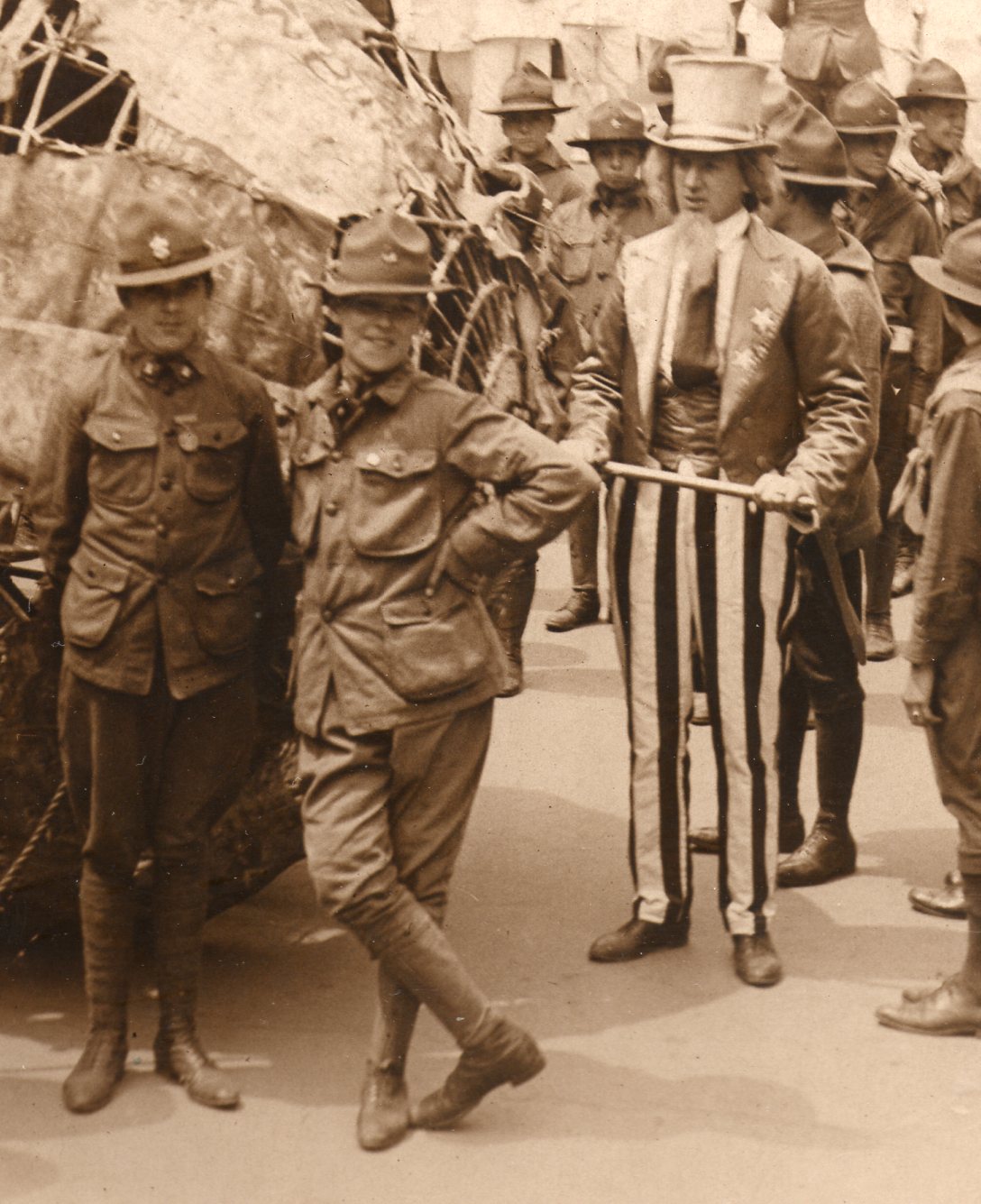
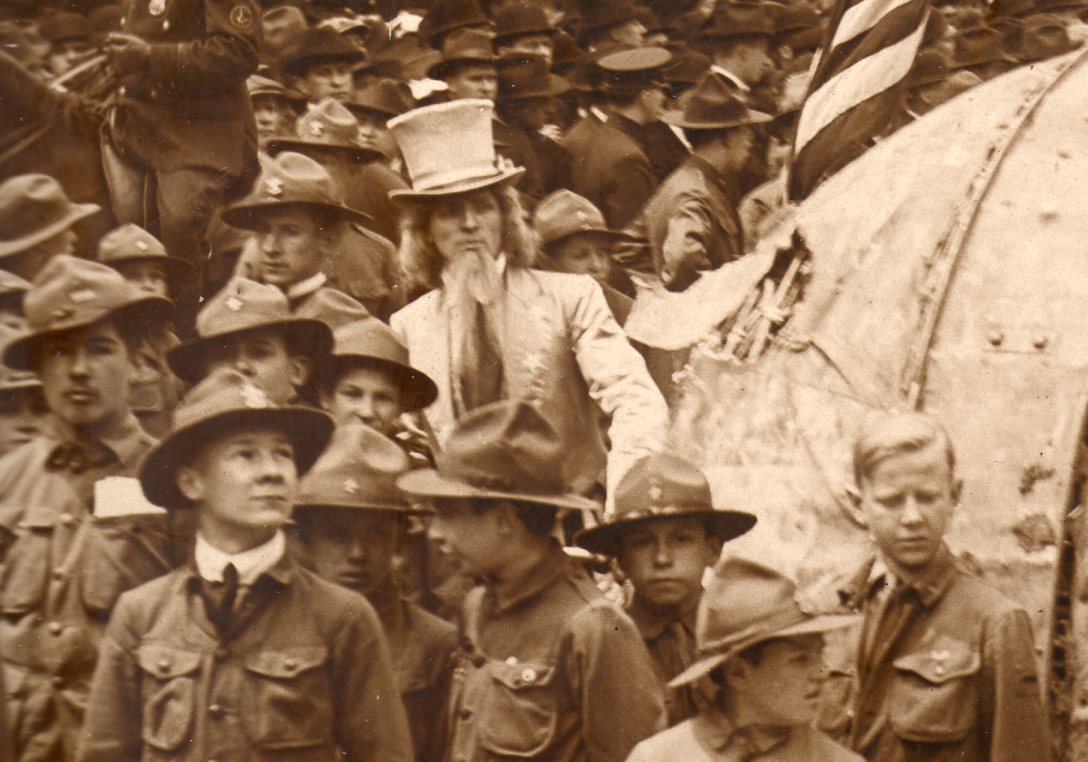
    Like its more-famous WWII counterpart, scrap drives during The Great War were also frequently conducted.  This is an original photograph showing just such a thing, depicting two Uncle Sams surrounded by Boy Scouts pulling a large hollow metal sphere–I believe that thin metal scrap would be hammered flat and then molded onto the sphere’s frame, though I’m not terribly sure.  I am sure that this is a great photograph. 

    Another post on scrap drives (with original photographs) is located here on this blog.

         WwI--photos--flags parade039
    (The original is available from our blog bookstore.)

    and the detail:

    WwI--photos--flags parade b040


    WwI--photos--flags parade c041

    ·Posted by :

    ·in:


  • Eisenhower at Ohrduf Concentration Camp April 1945 and his May 1945 Report

    JF Ptak Science Books   Post 1259 (Continuing Post 273)

    [On General Eisenhower in the Ohrduf  concentration camp, April 1945, and the report that came from that visit, Atrocities and Other Conditions in Concentration Camps in Germany…May 1945.]
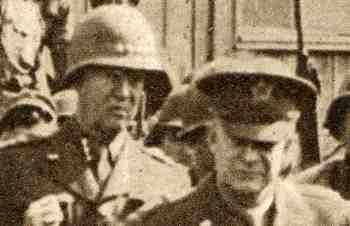
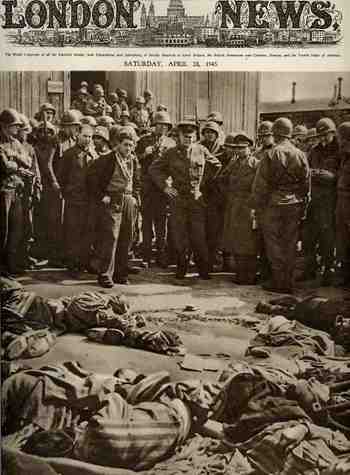
    Blogsept22_holocust_eisenhowerd_d_4 This picture Generals Eisenhower and Patton pretty much says it all–I’m not a scholar or expert on these two men, but I cannot recall seeing any photos of them with a look of utter seething repulsion. (Eisenhower would say that it was important for him to bear witness himself to all of the horrors of the camp so that there would be absolutely no question in the interpretation as to what went on there.)     This detail is taken from the photo on the front cover of the 28 April 1945 issue of The Illustrated London News.  The caption:  “The usually genial General Eisenhower shows by his grim aspect his horror of German brutality:  the macabre scene of victims murdered by S.S. guards at Ohdfruf camp”.  There are six more pages of photos inside this issue; describing the horrors of the “torture camps” (nowhere in this issue is the word “Holocaust” employed, though there is one mention of Buchenwald being a “concentration camp”.  The pictures are from Nordhausen, Belsen, Buchenwald and Langenstein, and for the record are brutal. There is an Amry movie of this scene available at youtube HERE.  (It is quite graphic.)  Ohrdrup, a “sub-camp” of Buchenwald, was the first camp to be liberated by the Allies in which there were survivors, and the first camp to be liberated by the U.S. Army ( 4th Armored Division and the 89th Infantry Division, U.S. Third Army). 
    There were 11,600 or so people in Ohrdruf as late as the beginning of April, when the vast majority death-marched to Buchenwald, with those to weak or ill to make the march to death in Buchenwald were killed right there. 
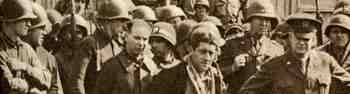
    Blogsept22_holocust_eisenhowerd_det

    Blogsept22_holocust_eisenhower613  

    Eisenhower related his experience at the camp to George Marshall, as follows:  “. . .the most interesting–although horrible–sight that I encountered during the trip was a visit to a German internment camp near Gotha [Ohrdruf]. The things I saw beggar description. While I was touring the camp I encountered three men who had been inmates and by one ruse or another had made their escape. I interviewed them through an interpreter. The visual evidence and the verbal testimony of starvation, cruelty and bestiality were so overpowering as to leave me a bit sick. In one room, where they were piled up twenty or thirty naked men, killed by starvation, George Patton would not even enter. He said that he would get sick if he did so. I made the visit deliberately, in order to be in a position to give first-hand evidence of these things if ever, in the future, there develops a tendency to charge these allegations merely to ‘propaganda’.   

    General George S. Patton described it as “one of the most appalling sights that I have ever seen.” He recorded in his diary that In a shed . . . was a pile of about 40 completely naked human bodies in the last stages of emaciation. These bodies were lightly sprinkled with lime, not for the purposes of destroying them, but for the purpose of removing the stench. When the shed was full–I presume its capacity to be about 200, the bodies were taken to a pit a mile from the camp where they were buried. The inmates claimed that 3,000 men, who had been either shot in the head or who had died of starvation, had been so buried since the 1st of January. When we began to approach with our troops, the Germans thought it expedient to remove the evidence of their crime. Therefore, they had some of the slaves exhume the bodies and place them on a mammoth griddle composed of 60-centimeter railway tracks laid on brick foundations. They poured pitch on the bodies and then built a fire of pinewood and coal under them. They were not very successful in their operations because there was a pile of human bones, skulls, charred torsos on or under the griddle which must have accounted for many hundreds.” 

    An interesting and very moving account of two of the inmates at the concentration camp being liberated is found HERE. 
    Eisenhower014

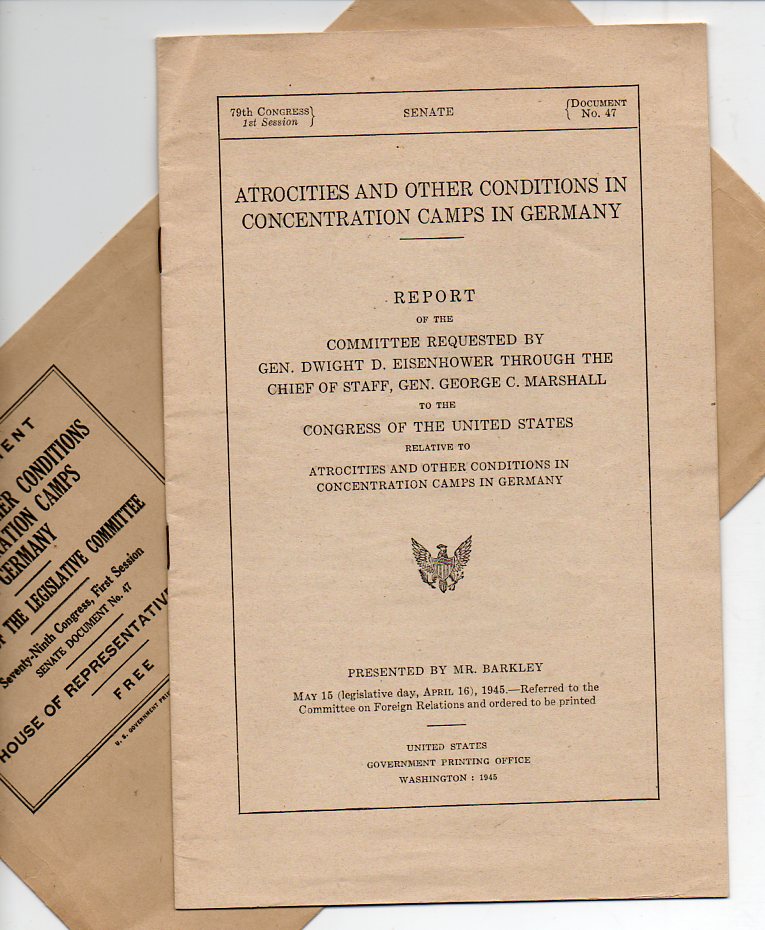
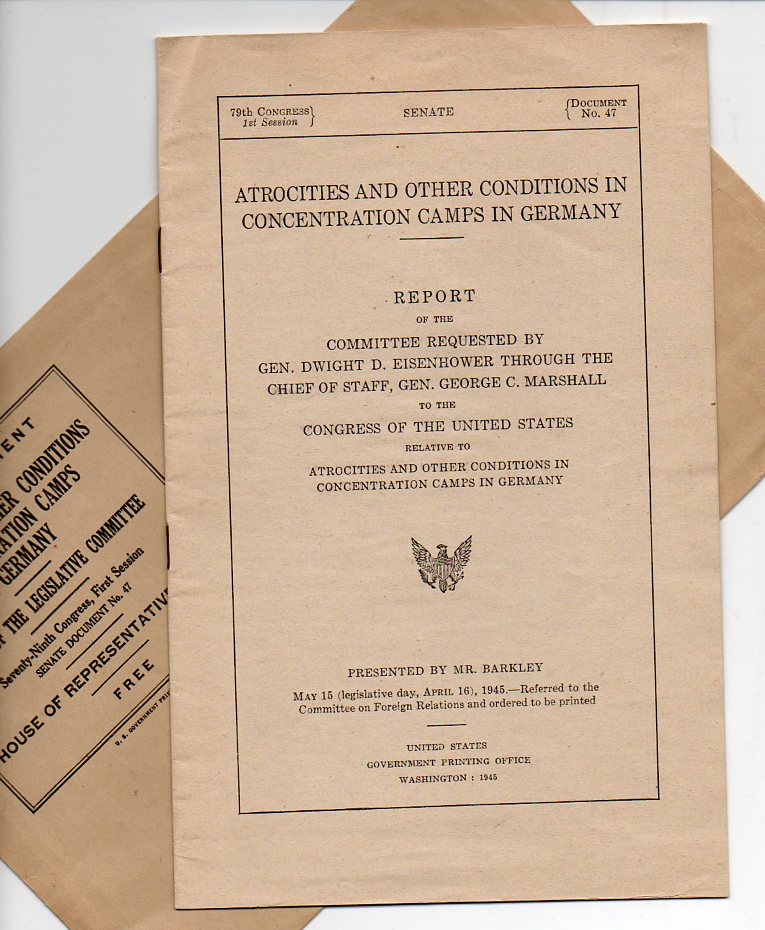
    Two weeks later came the famous report instigated by General Eisenhower, Atrocities and Other Conditions in Concentration Camps in Germany, (the full text of which is found HERE) published 15 May 1945.  In sixteen quick pages it began the process of realization for the general public about what smaller groups knew what was happening in the extermination and concentration camps.  There was at this time just a scant mention of the crematoria, or the gas “showers”, or for that matter, the suspected vast extermination of the Jews.  (There are three mentions of Jews in the report, none of which single them out for any particular treatment, necessarily.  One mention describes that there were 4,000 Jews among the 20,000 survivors at Dachau, and another statung that the “Jews, Russians and Poles were treated with a greater degree of severity…”

    As Andy Moursund3 (of the Georgetown Bookshop) points out, it was a shining moment for Eisenhower in his visit to the concentration camp, his revulsion, and his prescient insistence that it was all documented and at the highest levels, so that the unbelievable nature of the places could be believed by people in the future. 

    [This pamphlet is available through our blog bookstore, here.]

    NOTES

    1. The full title of the pamphlet reads: Report of the Committee requested by Gen. Dwight D. Eisenhower through the Chief of Staff Gen. George C. Marshall to the Congress of the United States relative to atrocities and other conditions in concentration camps in Germany … It is signed by the 12-member committee, the lead taken by Alben Barkley.

    2. Eisenhower cabled George C. Marshall of his experience at Ohrduf:

        . . .the most interesting–although horrible–sight that I encountered during the trip was a visit to a German internment camp near Gotha. The things I saw beggar description. While I was touring the camp I encountered three men who had been inmates and by one ruse or another had made their escape. I interviewed them through an interpreter. The visual evidence and the verbal testimony of starvation, cruelty and bestiality were so overpowering as to leave me a bit sick. In one room, where they were piled up twenty or thirty naked men, killed by starvation, George Patton would not even enter. He said that he would get sick if he did so. I made the visit deliberately, in order to be in a position to give first-hand evidence of these things if ever, in the future, there develops a tendency to charge these allegations merely to ‘propaganda.’

    3. Andy Moursund (of the Georgetown Bookshop)–who has had a four-decade-long interest in this area and who has been a wide collector in Holocaust material–writes: “In one of Eisenhower’s finer moments, on April 20, 1945, with the allies sweeping through Germany and encountering corpses in every concentration camp along the way, he sent a cablegram to General George C. Marshall, which read: ‘WE ARE CONSTANTLY FINDING GERMAN CAMPS IN WHICH THEY HAVE PLACED POLITICAL PRISONERS WHERE UNSPEAKABLE CONDITIONS EXIST. FROM MY OWN PERSONAL OBSERVATION, I CAN STATE UNEQUIVOCALLY THAT ALL WRITTEN STATEMENTS UP TO NOW DO NOT PAINT THE FULL HORRORS. IN VIEW OF THESE FACTS, YOU MAY THINK IT ADVISABLE TO INVITE ABOUT 12 CONGRESSIONAL LEADERS AND 12 LEADING EDITORS TO SEE THESE CAMPS. IF SO, I SHALL BE GLAD TO TAKE THESE GROUPS TO ONE OF THESE CAMPS. SUCH A VISIT WILL SHOW THEM WITHOUT ANY TRACE OF DOUBT THE FULL EVIDENCE OF THE CRUELTY PRACTICED BY THE NAZIS IN SUCH PLACES AS NORMAL PROCEDURE. A SIMILAR INVITATION IS BEING SENT TO SIMILAR REPRESENTATIVE BRITISH GROUPS.’ “
    ·Posted by :

    ·in:


  • Empty Memory: Telephone Number 20080 (Warsaw); Nazis, Poland and the Holocaust, 1941–continued

    JF Ptak Science Books 

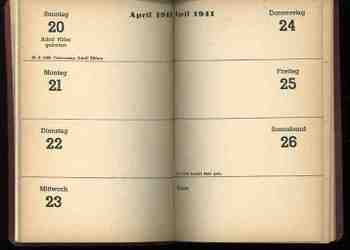
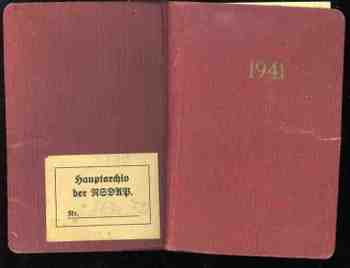
    I’ve made some additions to an earlier  post that I wrote  (“Empty Memory: Telephone Number 20080 (Warsaw, Nazi Occupied Poland and the Holocaust, 1941”) on this blog based on an unused soldier’s diary and telephone directory for Nazi-controlled Warsaw.

    1ebay_oct_3_1941_diary735

    It is a shocking to see this thing, such a simple bit of orderliness representing such gigantic cruelty. 

    1ebay_oct_3_1941_diary736

    Please follow this link to read the extended  post.

    ·Posted by :

    ·in:


  • Virtuosic Apocalypticism: Maps and Charts of Nuclear Exchange, 1964

    JF Ptak Science Books LLC  Post 1214

    “…our choice of path may be delayed too long… “  Dante, Divine Comedy, Inferno, Canto XII, line XIII, 2nd level of Hell (envy).

    [This item is available for purchase from our blog bookstore, here.]

    March 3--cvr

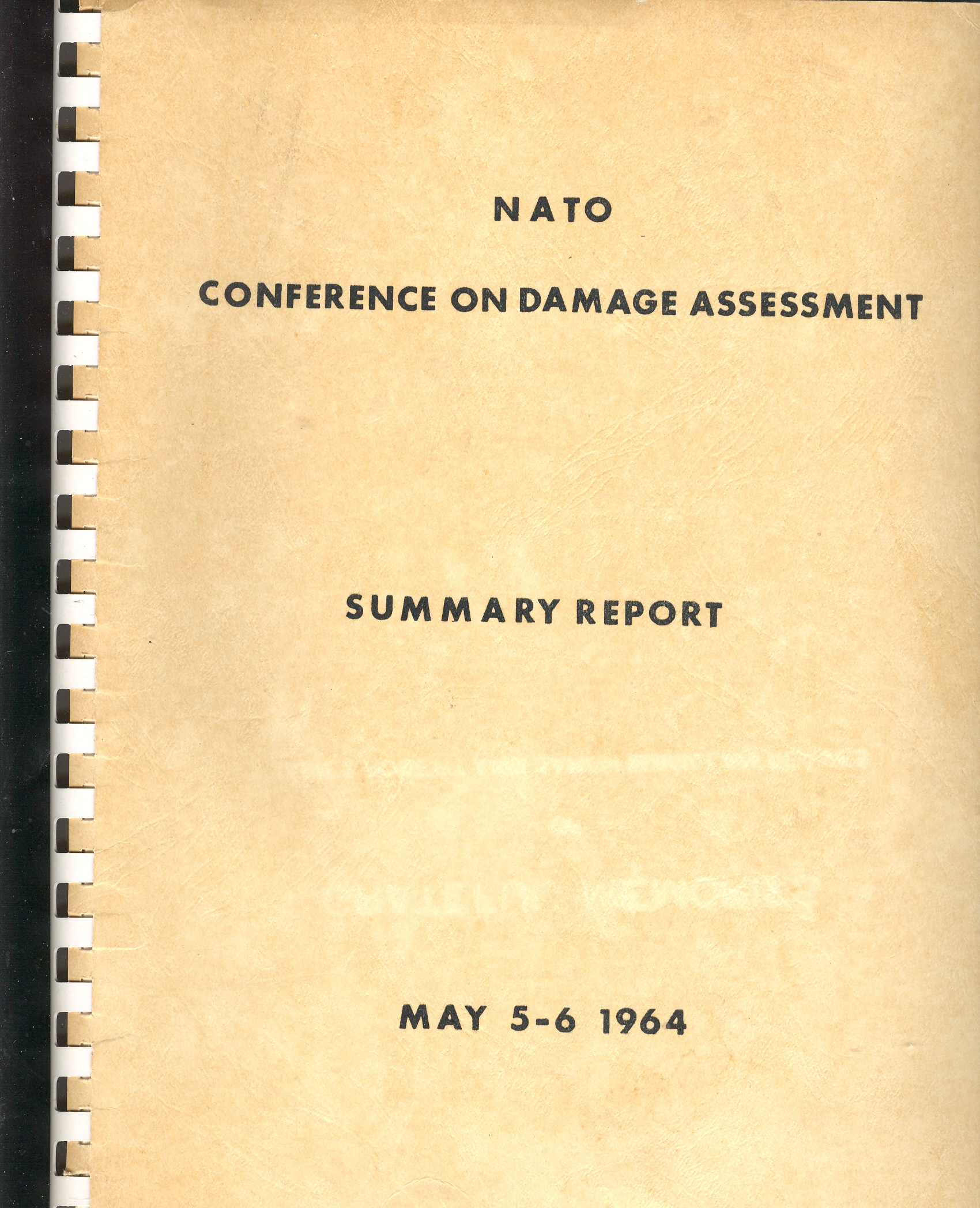
    The NATO Conference on Damage Assessment Summary Report (May 5-6, 1964) was not one written for its outcome, necessarily, but the means of getting there. The outcomes were highly differentiated levels of sameness, a strategic tour of Dante’s creation cataloging the layers of deep destruction like those of his funneling pit.

    Professionally  the paper dealt with several different ways of computing nuclear exchange scenarios (given names of understated inelegance like Jumbo, Brisk, Frisky, Dart and Dusk) with lots of smokily mirrored hocus pocus, the necessary ingredient of the philosophical technology of Mutually Assured Destruction. MAD.  Somehow it all worked out without any exchange ever happening. (The principal contributor here was James Coker, chief of the National resource Evaluation Center, Office of Emergency Planning, Executive off of the President, who I wrote earlier about here.)

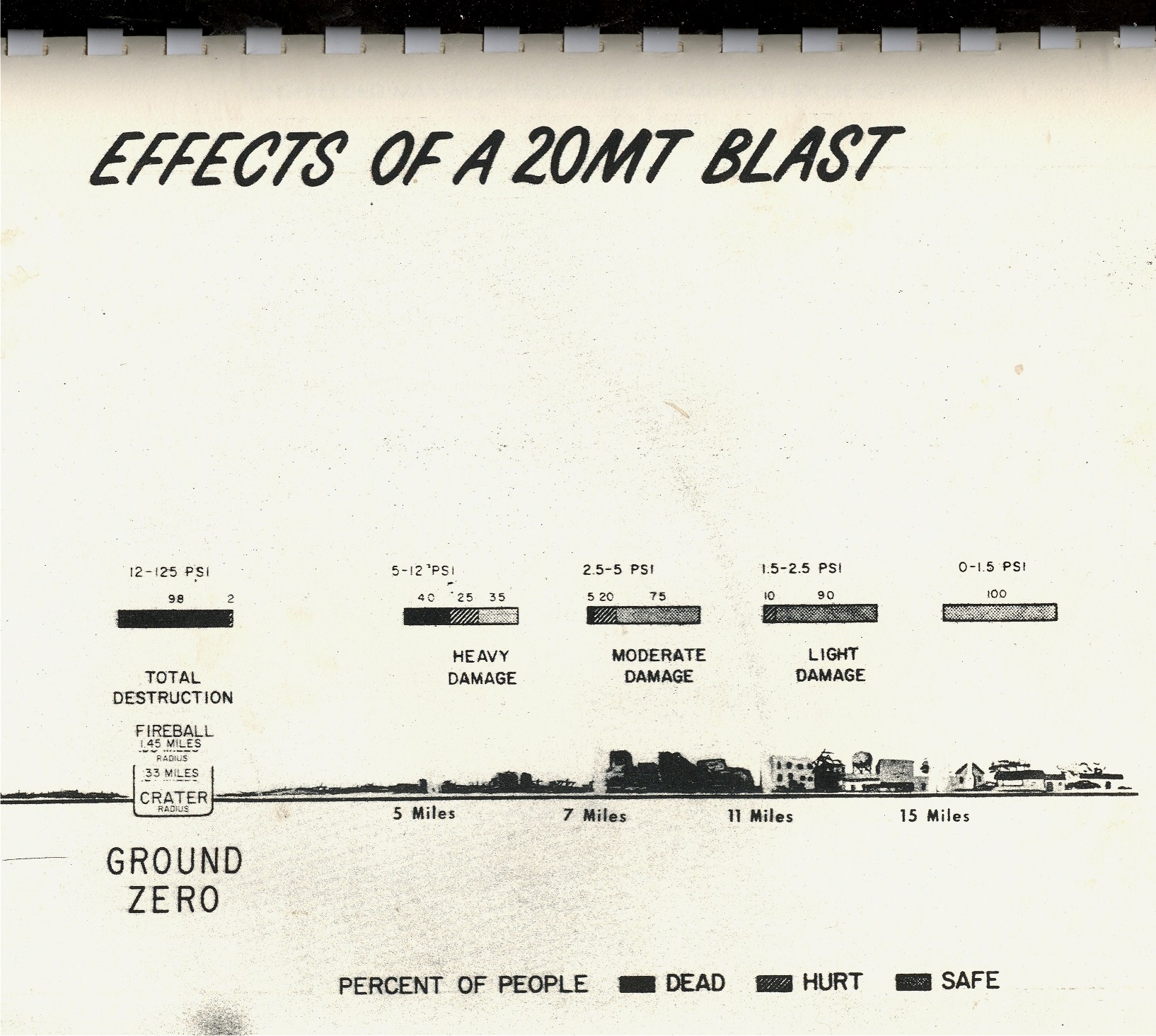
      March 3--20 mt blast“Which utterly with sadness had confused me,  New torments I behold, and new tormented Around me, whichsoever way I move,  And whichsoever way I turn, and gaze.”  Dante, Divine Comedy, Inferno, Canto VI, third circle, gluttony.

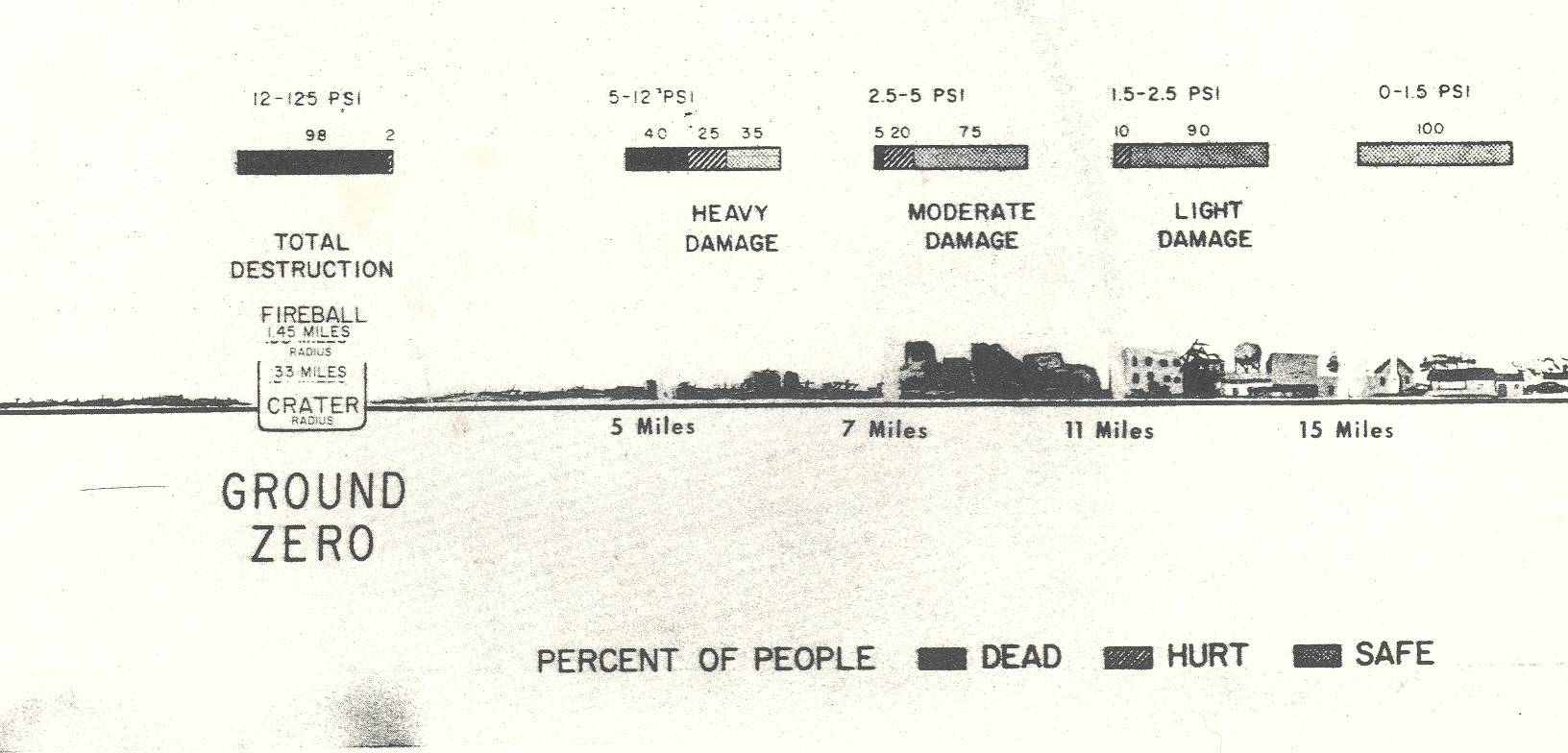
    The first image shows the effects of a 20 megaton nuclear blast detonated in in a city, presenting an incredible picture of absolute destruction, reaching out from ground zero for more than 11 miles.    

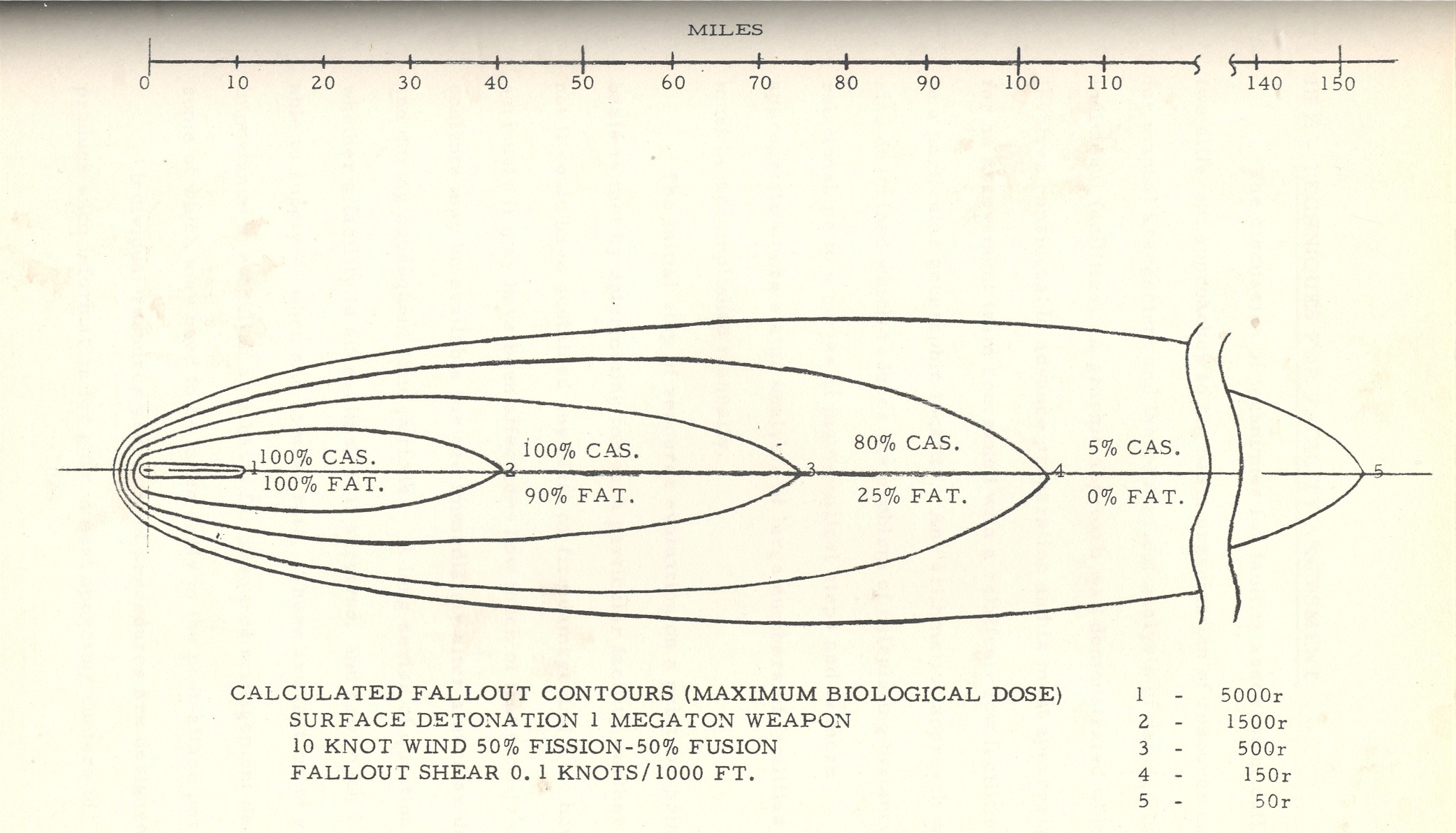
    This doesn’t begin to measure the overall damage inflicted by radiation, which is deeply, extraordinarily, severe.  This again is the effect of one weapon, the 100%  fatality rate eventually reaching out 12 miles; 90% reaching over 40 miles.  General casualties extend to 80% up to 70 miles from ground zero. 

    March 3--20 mt det blast
    March 3--spear


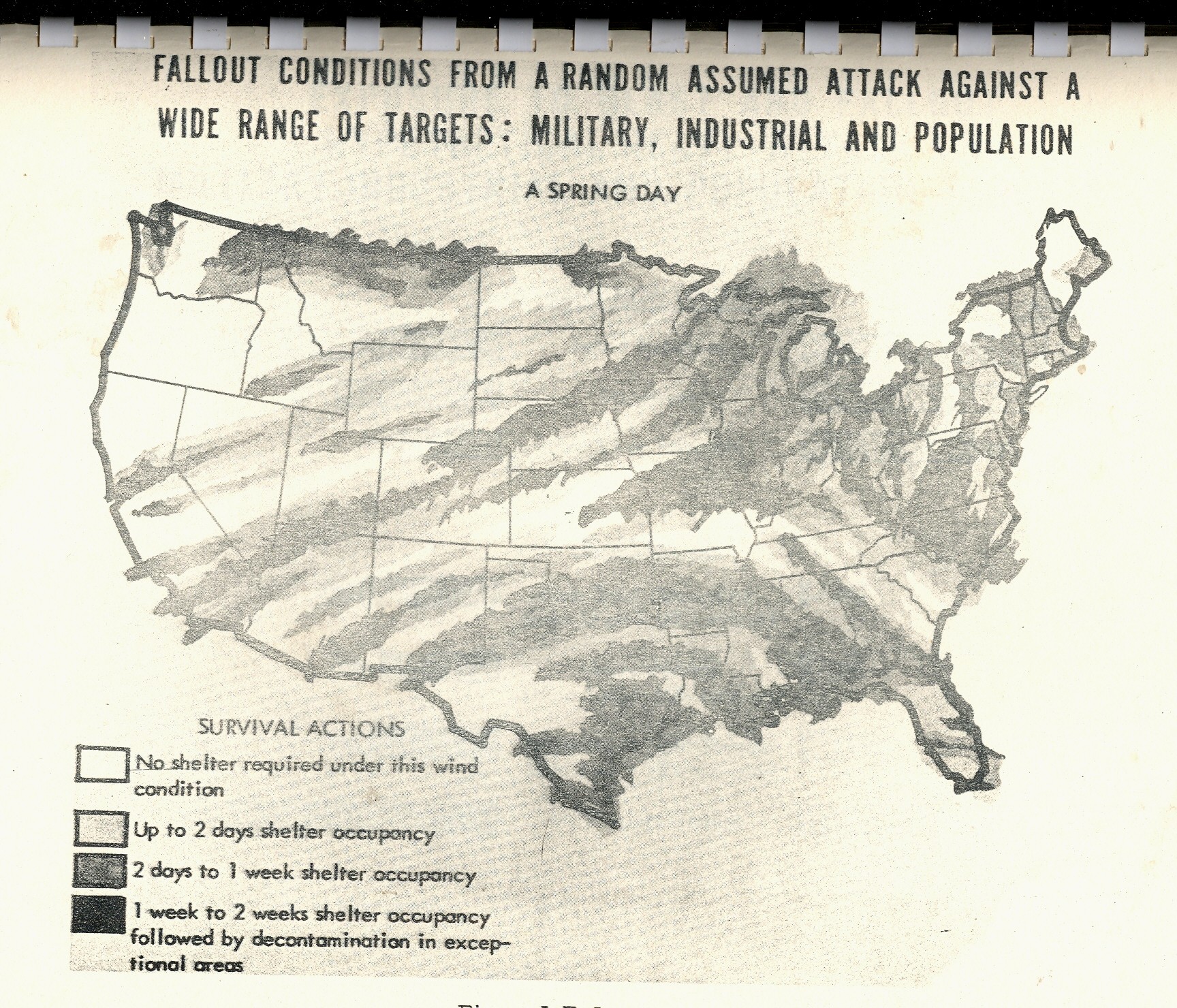
    The emergency planning end of the paper comes in at about this point.The fallout map of the U.S. shows a possible situation of an unspecified (though wide-ranging) attack (on a “spring day”) and its effects on the population as it is housed in various shelters and bunkers, suggesting the amount of time needed to “survive” the attack by staying inside the fail safe habitation.

    March 3--spring day

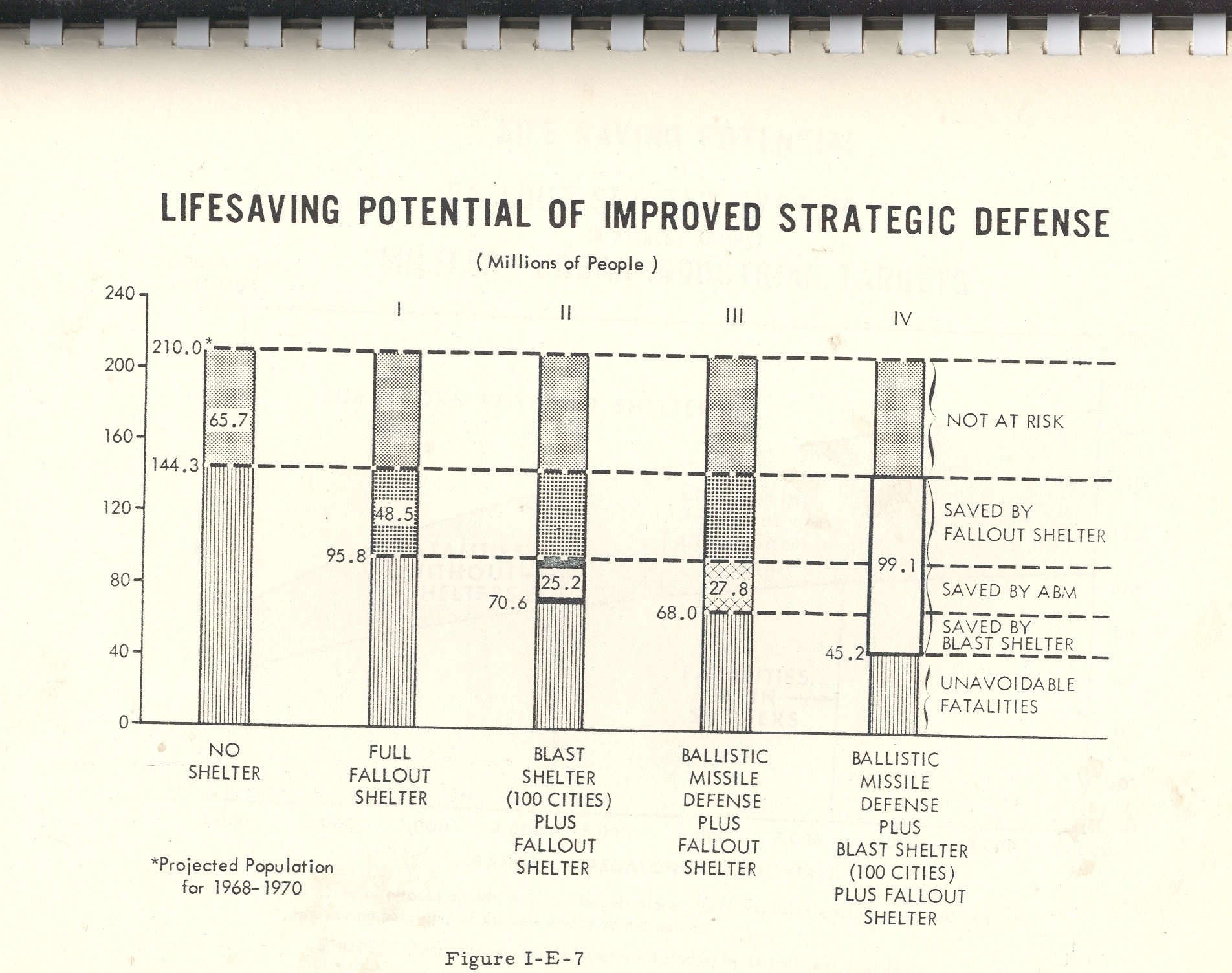
    The following chart, “Lifesaving Potential of Improved Strategic Defense” (in millions of people) shows the effect of the installation of the shelters and bunkers.  In this scenario, in  a massive strike, the fatality rate in the U.S. of an unprotected population was 65%, or 144 million.  On the other end of the extreme was “ballistic missile defense plus blast shelters plus fallout shelters”, or a massively- protected population of fictional expanse shows that in spite of all precautions 45.2 million people would die (as “unavoidable fatalities”). 

    “These have no longer any hope of death;  And this blind life of theirs is so debased,    They envious are of every other fate.” Canto III, Vestibule of Hell, the Opportunists.
    This document is nothing if not a death sentence had the massive strike ever been launched.  In the dozens of such reports that I’ve seen, there hasn’t been one with the Really Big One with thousands of euphemistically-named “exchanges”, which I assume would make all  of these others pale by comparison.

    March 3--life saving potential

    ·Posted by :

    ·in:


  • Badly Written but Pretty Atomic Death Ray Steampunk, 1935

    JF Ptak Science Books  Post 1206

    Mar 29 vooa big

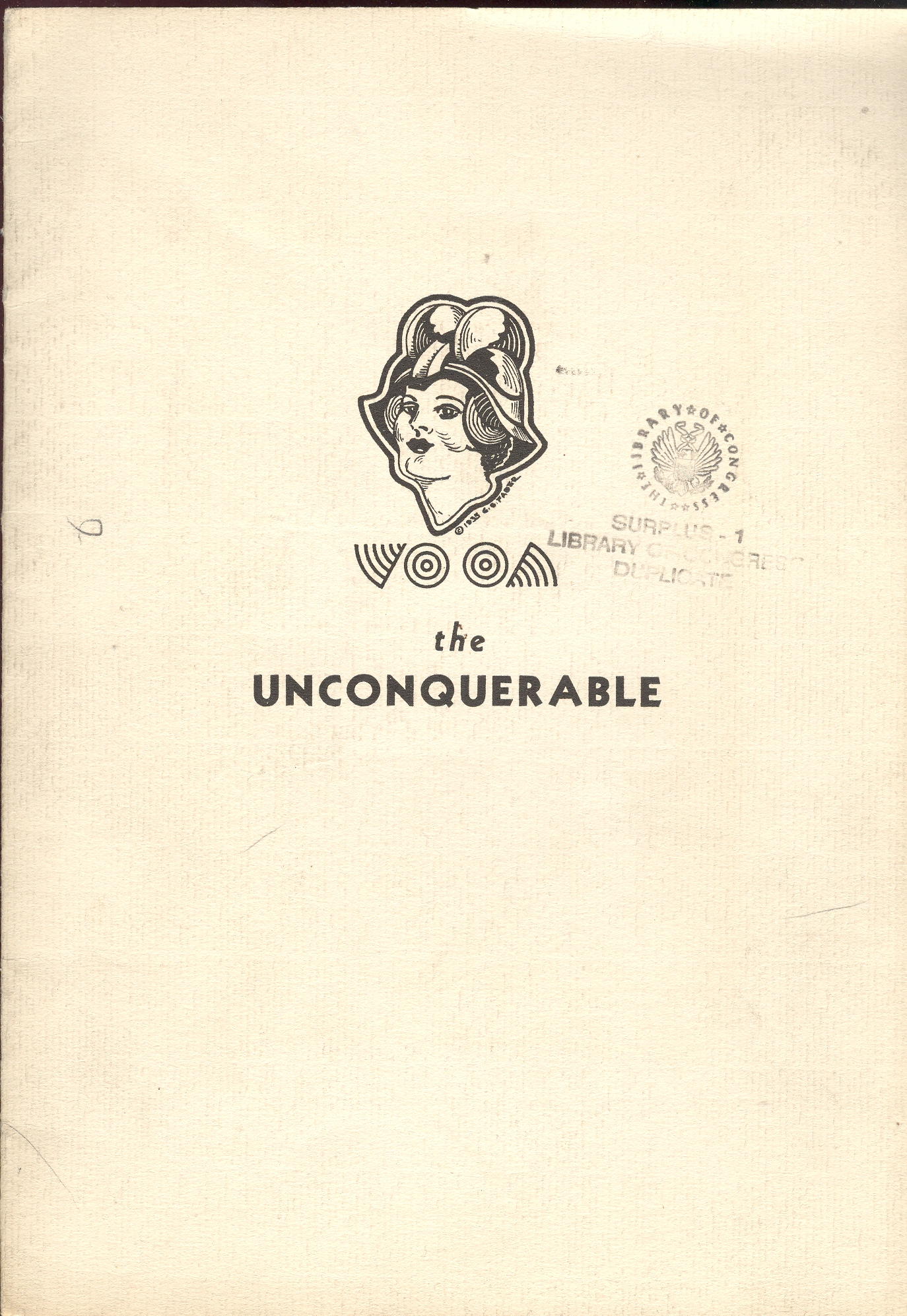
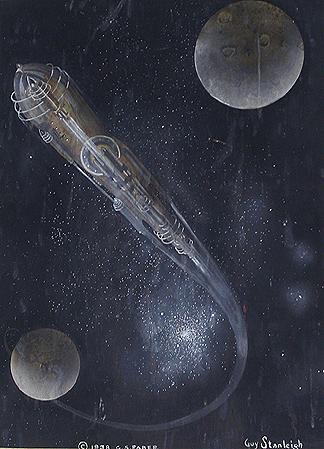
    Sonos the Conqueror and Vooa the Unconquerable were two sorts of a sort, two flits in a fit, the products of the mumbley imagination of Guy Stanleigh.  Actually Stanleigh (not “Stan Lee”) was an interesting scifi artist if not a writer. Well, he was really nowhere near being a writer, if writing had anything to do with writing and not drawing.  His written word was the sort that vicious litcrit folks wait for in the bushes for on Friday nights so that they can catch and chew on them over the weekend before Monday’s deconstructionist deadline.   I’m surprised that after 72 years the letters on the pages of his work haven’t yet slipped off.  

    Mar 29 vooa big det[Both items are available for purchase at our blog bookstore.] His drawings though are an entirely different matter–they are accomplished in a naive way, and are big, and Botero-esque/bulbous, and unusual, and filled with a fair amount of imagination.

    Stanleigh

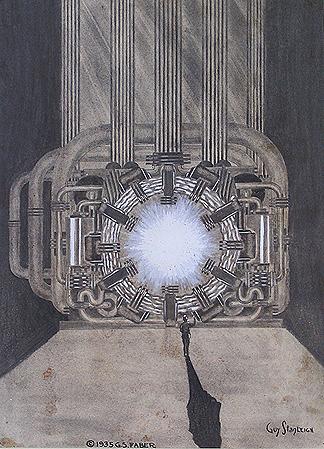
    My favorites in his novelettes (Sonos the Conqueror and Vooa the Unconquerable, both of which stretch out to 16 pages, combined, which were undoubtedly vehicles for his artwork, if nothing else) were of a machine called the Atronic Ray energizer (“a concentrated collection of teh rays given off by the planets of the universe, a few of which (were) absorbed…circulating over the universe via inductive and repulsed forces….the primary or positive induced force emanating between and from an anode and biode…” Anyway, it was a terminus of fantastically great power that could either engender universal peace or destroy humanity. Life/death aside, its a pretty picture, and figure’s long and very sharp shadow relates a visceral feeling of hot energy.  

    Stanleigh 2


    ·Posted by :

    ·in:


  • Veterans Day

    Remembering.

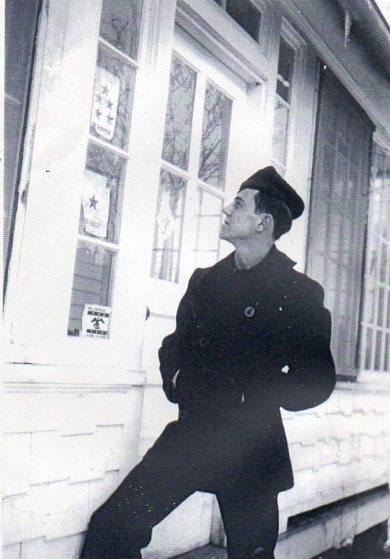
    This is my great uncle Stanley, my father’s uncle, one of six brothers who served (USA, USAAF, USMC, USN) in WWII. And Uncle Pete, 1942-1945, USMC.

    Veterans day772

    Veterans day773

    ·Posted by :

    ·in:


  • Japanese-American Response to Removal and Internment, April 1942. The Tolan Report.

    “We Are Americans”: Japanese American Citizens Respond to Internment and Removal, April, 1942. 

    [Original document available for purchase at our blog bookstore site.]

    “….there must be a point beyond which there may be no abridgement of civil liberties and we feel that whatever the emergency, that persons must be judged, so long as we have a Bill of Rights, because of what they do as persons We feel that treating persons, because they are members of a race, constitutes illegal discrimination, which is forbidden by the fourteenth amendment whether we are at war or peace.”– A. L. Wirin, Counsel for the Southern California Branch of the American Civil Liberties Union, speaking on the internment of Japanese-Americans, 1942

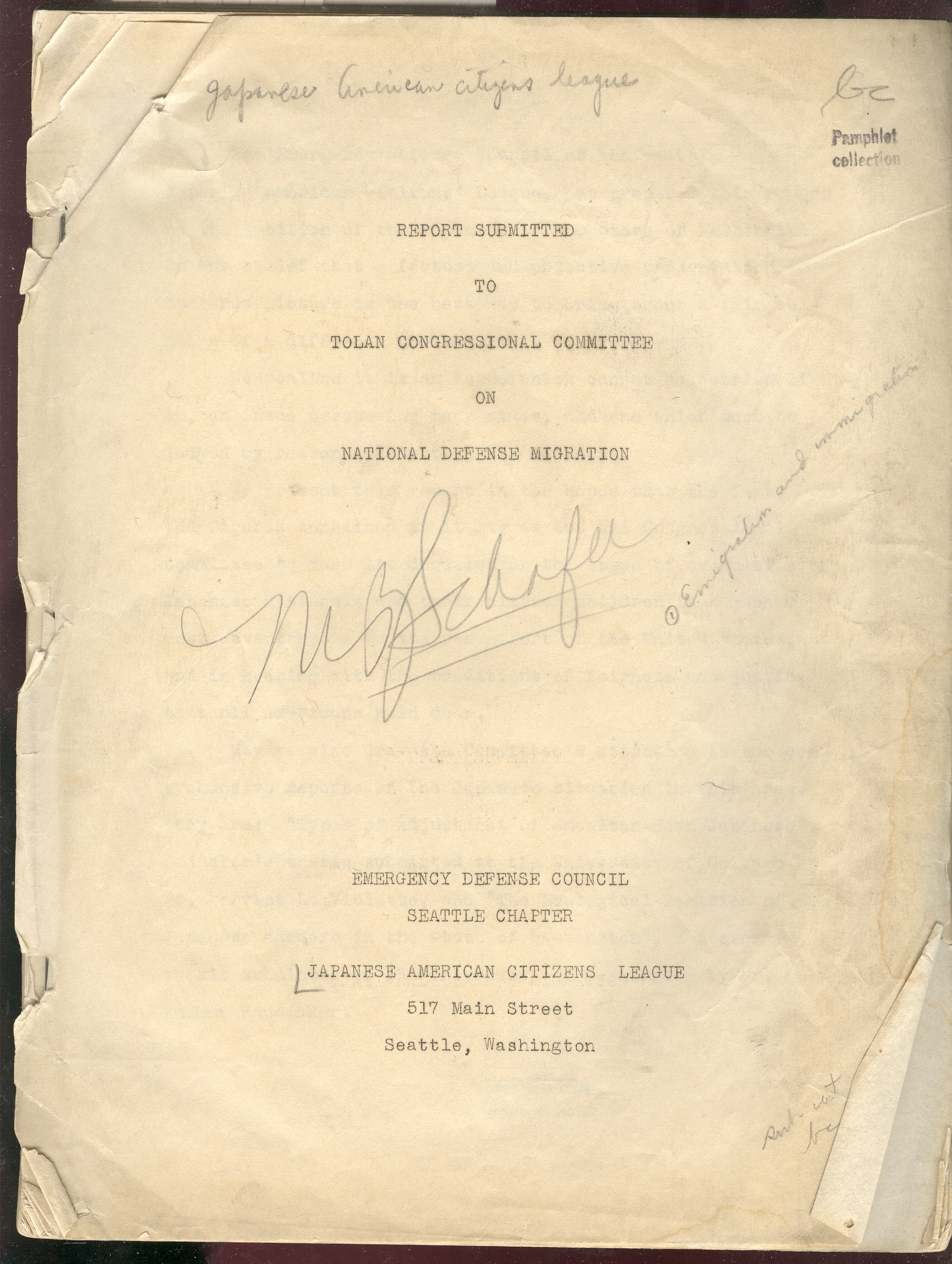
    000--tolan

    “We make these statements, not because we fear evacuation, but because we believe, to the bottom of our hearts, that the best interests of the United States, our nation are to be served by being permitted to stay, work, fight, and die for our country if necessary here where we belong.“–Response by the Japanese American Citizens League to Internment Camps, 1942

    This excruciating, heart-rending 1942 document was submitted by the Japanese American Citizens League (of Seattle, Washington) to the Tolan Congressional Committee with recommendations, proposals and requests in the event of the removal of Japanese citizens from “sensitive” areas in western America  It is an exceptional report, a well-reasoned response to the developing and calamitous American fear of Japanese fellow-citizens; a fear which was swiftly leading itself to xenophobic actions the result of which was the internment of 120,000 American citizens in non-lethal concentration camps…

    Continue reading at bookstore link.

    ·Posted by :

    ·in: