A Daily History of Holes, Dots, Lines, Science, History, Math, Physics, Art, the Unintentional Absurd, Architecture, Maps, Data Visualization, Blank and Missing Things, and so on. |1.6 million words, 7500 images, 4.9 million hits| Press & appearances in The Times, Le Figaro, Mensa, The Economist, The Guardian, Discovery News, Slate, Le Monde, Sci American Blogs, Le Pont, and many other places… 5000+ total posts since 2008.

Category: Uncategorized

  • IronPunk Neurology: Brain Nails, Bolts, Screws, and Hammers

    JF Ptak Science Books   Quick Post

    Follow Me on Pinterest


    This is the beginning of a set of patent drawings images of not-so-terribly-antiquarian approaches to neurosurgery. The materials include the nuts and bolts of surgery–literally–as well as head clamps and boring devices.  This will concentrate on the more modern era (1880-1925) so that some of the equipment–as archaic as it may seem–was used within living memory. 

    The boring-end of a trepanning device:

    This is a detail from the full-page patent drawing:

    ·Posted by :

    ·in:


  • Telephone Cowgirl

    JF Ptak Science Books   Quick Post

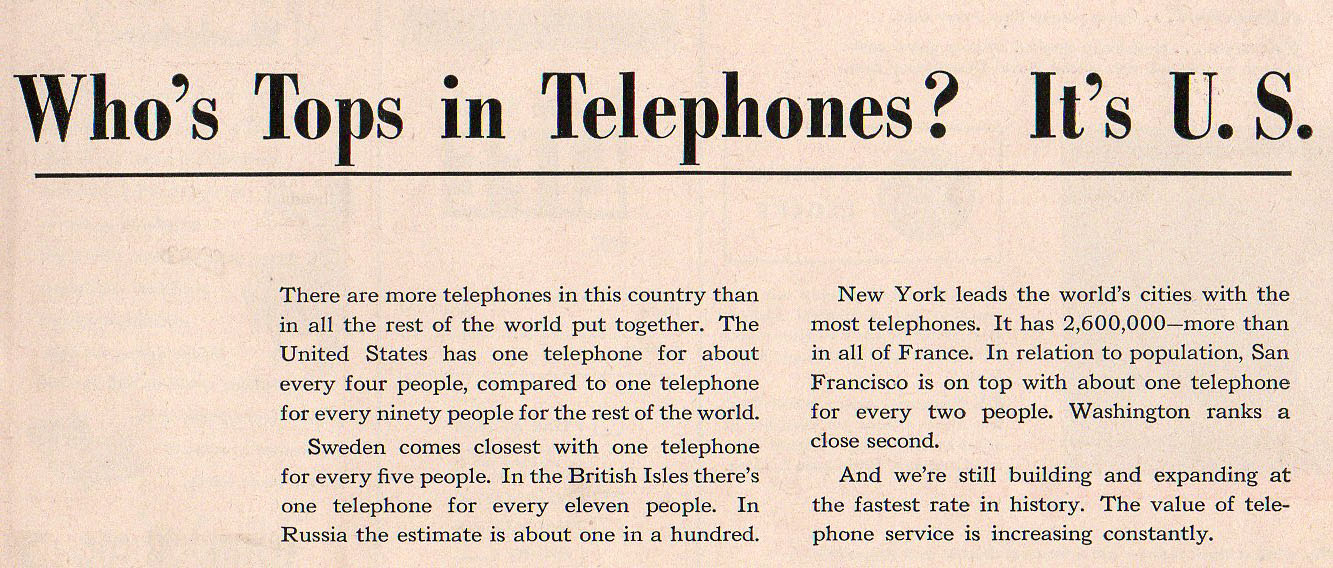
    Telephone girl969
    Telephone girl970

    For an interesting side-bit on introducing the telephone for popular
    use, see my earlier post, The Magnificent Mundane: an Instructional With
    Prop on How to Use the telephone, 1946, here. 

    ·Posted by :

    ·in:


  • On an Unexpected Discovery in Santa’s Correspondence, 1871

    Blogsanta121
     

    (Revisiting  an earlier post from 2008)

    I do love Santa. 

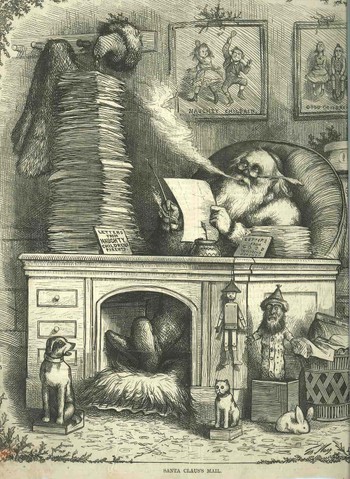
    And I know a little about him; but when I looked closely at this wood engraving of the man hard at work something struck me as very unusual to my Santa experience.

    The image is from 31 December 1871–coming after Christmas for some reason–and it is one of the very earliest depictions of the most universally recognized form of Santa. It was created (his image that is,  of course) by the incredibly prolific and almost-entirely socially responsible (except for Catholics and the Irish) Thomas Nast.  Nast created this standard, iconic image of Santa–plus the Republican elephant, the Democratic donkey, the Tammany Tiger, and many more iconic public images. 

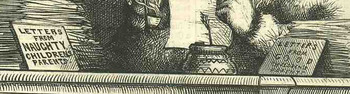
    In fairly famous and often used images I had never noticed that the letters that Santa is reading are being taken from the piles on his desk–but the letters are not written by children, but rather were sent by the parents.

    Is this end-of-the-year grading? Were the “naughty” children being ratted out by their parents?  Does Santa really need to be told all of this?  And who on earth really is deserving of a lump of coal, anyway?  I’m guessing though that this was simply a warning cartoon to children, saying to them that they’d better well be good or a letter will be going out from Mom and Dad to Santa in the afternoon mail

    This might make more make more sense if the cartoon wasn’t published five days after Christmas but appeared before the holiday. Perhaps it is perfectly placed–tis would’ve been the first issue of the weekly magazine after the holiday, so reminding children to be good after a Christmas in which they might not have received what they wanted may have been caused by their behavior.  And since part of Nast’s social power came from depicting events that were of interest to the working class and the poor and making them intelligible to the illiterate, where the cartoon/caricature could speak without words and make themselves understood, it might’ve been the case where parents would show the image of Santa to the kids and then tell them about the letter part to try and codify a different behavior in the new-coming-Christmas season. 

    Blogsanta121detail

    These questions aside, the lesson yet again for me is to look very closely when looking at complex images like this—especially when you think that you already know what you’re looking at…

    Continue reading here.


    ·Posted by :

    ·in:


  • The Eyes of Dr. John Dee, Mathematician and Astrologer

    Dee480

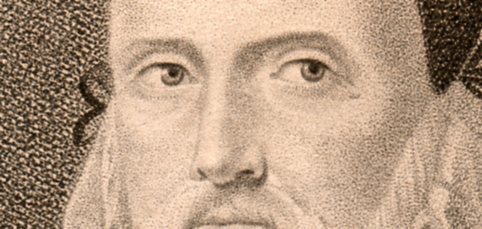
    Above is a detail of a stipple engraving of the great mathematician and astrologer,  John Dee.  It is simply titled “Dr. John Dee” (1527-1600), and was published and printed in  London by  T. Cadell,  1798. This is a very fine portrait (5×4″ on a 7×5″ sheet) undertaken in an accomplished/naive style after the painting by George Perfect Harding (d. 1868) and engraved by Nicolas Schenker (1760-1848).  [We offer the original (pictured below) at our blog bookstore, here.]

    ·Posted by :

    ·in:


  • Veterans Day 2012 11/11/11

    Veterans Day repost:
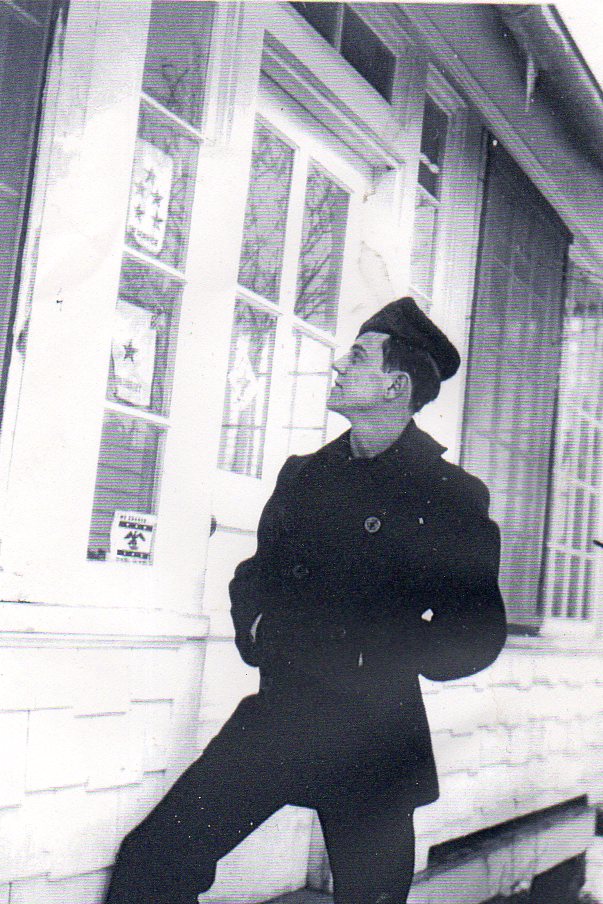
    I want to thank all Veterans today, all of our Veterans everywhere, for all of your sacrifices. I particularly want to say to say how much I appreciate the members of our family who have served: Uncle Pete (USMC, WWII), Uncle Ray (RCAF, RAF+USAAF, WWII), Uncle Stan (Navy, WWII), Uncle Alex (Army, WWII), Uncle Joe (Army, Korea), Uncle Jerry (Army, WWII), Uncle Frank (USAAF WWII), Uncle Walter (Navy WWII) and my other Uncle Stanley (Army, WWII), Uncle Francis (Army, WWII), Uncle Vincent (Army, WWII), cousin Billy (USMC, Vietnam) and Grandpa (Army, WWI); Patti’s father Melvin Lonnie (Navy, WWII) and stepfather Boyce (Army, 2nd US Cav WWII), Uncle Guy (USMC WWII), Uncle Max (Army WWII) and her four relatives in the CSA. Nearly everyone was in battle, and nearly everyone came home. [Image: Uncle Walter looking at the 5-star Blue Star flag, Housatonic, Mass, 1943.]

    Brothers 2990

    ·Posted by :

    ·in:


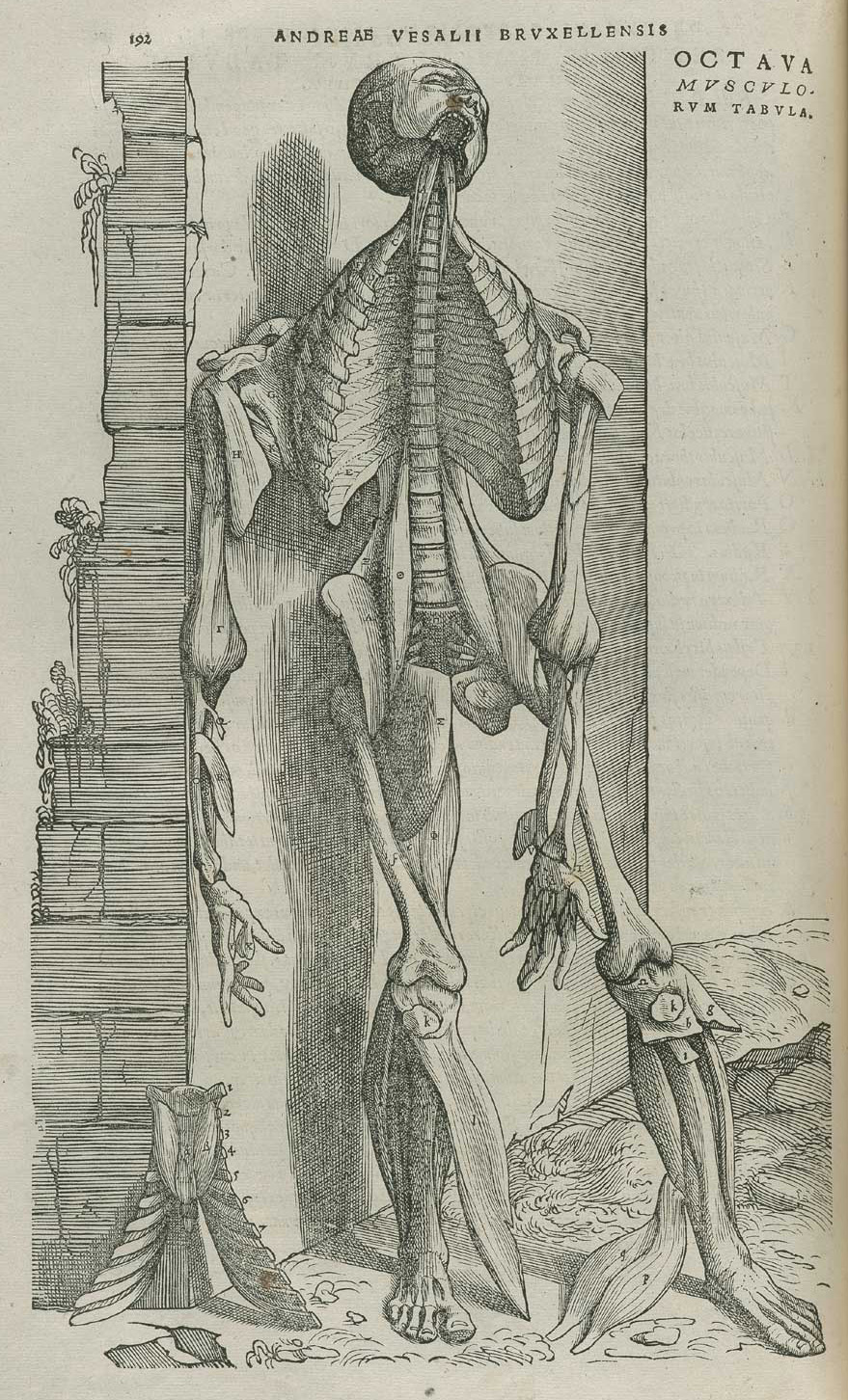
  • Anatomy–35 Great Antiquarian Works on Anatomy: 1390-1899 (Huge Image Base)

    JF Ptak Science Books    Quick Post

    This table is adapted directly from the National Library of Medicine pages for anatomies on the web–all I did was place the records in a table so that they could be listed chronologically.  The references in the first left-hand column are clickable and will take you directly to the images of the work at the NLM site.  This is just a sampling of anatomies, though it may prove to be highly useful for folks in the science and the arts.  Enjoy. 

    Chronoloigcal list.

    Vesalius_Pg_192
    [Vesalius, 1543]

    ·Posted by :

    ·in:


  • Solomon Butcher, Part II: Pictures of 19th C Lonesomeness

    JF Ptak Science Books  Post 1914   

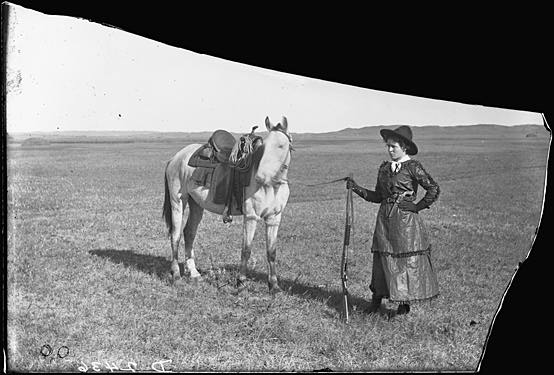
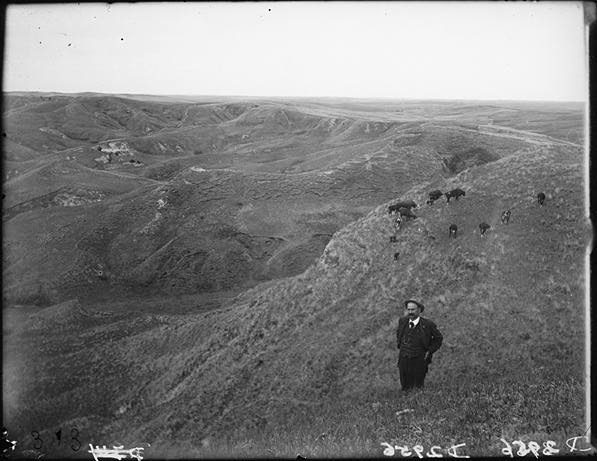
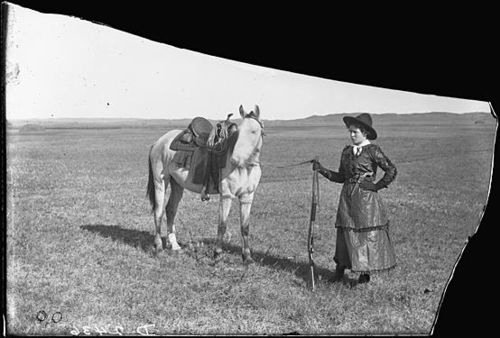
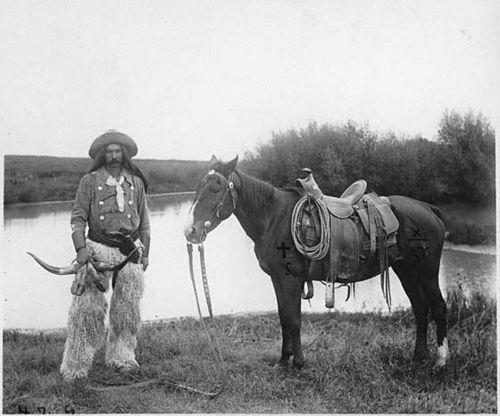
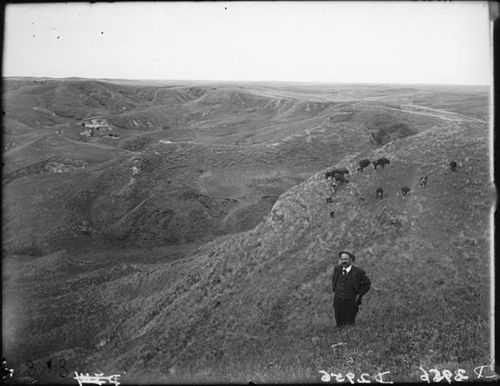
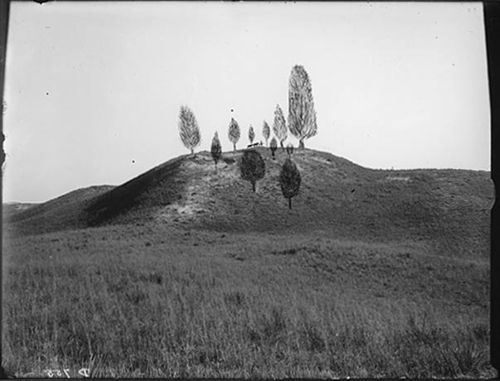
    I’m sure that Solomon Butcher’s (see a post on him earlier today)  lonely pictures of life in the great prairie lands of Nebraska were lonely just for an instant.  The captured images of vast semi-rolling lands swallowing their subjects were only momentarily.  I’m sure that once the photo as made, Ms Austin (below) simply mounted her horse and loped away towards the beautiful horizon, enjoying the day.  The lonesomeness I’m fairly well certain was a creation of the moment. Except in winter, when the lonesomeness was real. (All images live at the interesting Nebraska State Historical archives, here.)
    Butcher sadie austin
    Sadie Austin, “the best known cowgirl in Cherry County”.   (“…the daughter of Cherry County rancher Charles
    Austin, was a woman of many talents. She was well educated and
    noted for her refinement, including her accomplishments as a
    pianist. But, when needed, she was also able to put on a split
    skirt and help the cowhands. She could sit a horse well and was
    noted for her shooting ability. She was the best known cowgirl
    in Cherry County.”
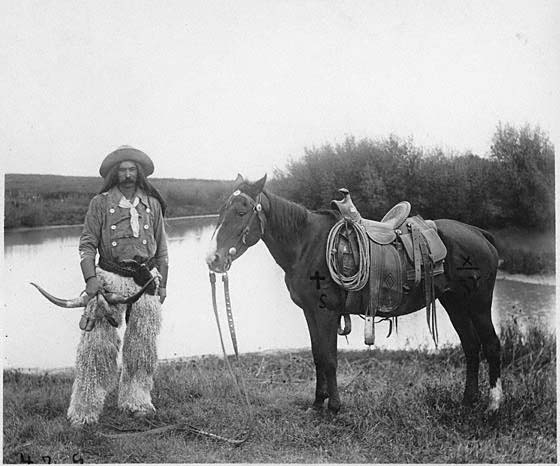
    Butcher dunlap
    A different Ned–not Buntline, but Dunlap. Ned Dunlap. The caption said he (“foreman on the Watson Ranch near Kearney”) was outfitted for a parade of Old Timers in 1902, and is done-up Old School cowboy. 

    Butcher devils gap

    This fantastic image of clarity and potential cold is a portrait of “John Bridges at Devil’s Gap”, and as the Nebraska Historical Society tells us, it was the site of a true-to-life 1878 hanging-and-burning, a low and dirty affair perpetuated by the Olive Gang.  The Olives (I.P. and his brother Robert) were wanted men of Texas taken flight to Nebraska where at least I.P. did very well, coming into hi sown as a cattle rancher. In spite of wealth and land and luck in escaping prosecution and/or vengeance for murder in his former state, he was still highly exercised about losing some cattle to rustlers and had therefore taken a very dim view of Homesteaders in his (and adjoining) counties, fearing that they represented rustling risks as well.  And so it came for him to loathe the existence of two homesteaders, Mitchell and Ketchum, who lived in tiny dwellings in this gigantic landscape. The Olives feared fear, no doubt, and after a while it became clear that the two men could not be scared away, and so the Olives set the legal machinery in motion, accusing the men of rustling, and stoking a $700 reward on their capture,which was quickly accomplished.  Mitchell and Ketchum were brought in but then were taken by the Olives and their minions, who rode the men off to their ends.  They were handcuffed together, ropes tied around their necks (not in a noose, but in a foul and ugly and very painful tied knot), and were hoisted up, one after the other.  They were then burned like animals over a fire set at their feet.  There was legal procedure against the Olives, but long story short is that I.P. soon won release of his second degree murder charge and lived with his son in Colorado, still in fear of reprisal, finally meeting vengeance in 1884. Its just a bad story. 
    Butcher lookout
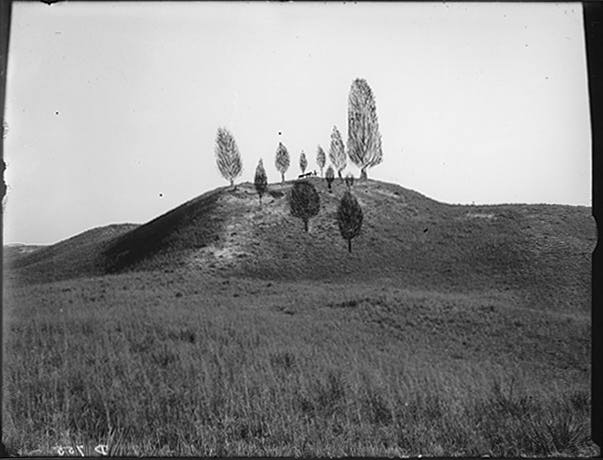
    Image near the Snake River, Cherry County, Nebraska: “Lookout Point”.  “This promontory in the near-mountainous sand hills of Cherry
    County used to be covered with cedar trees, and was allegedly
    a spot favored by horse thieves who could hide their booty in
    the blowout at the top and shinny up a tree to keep a lookout
    for the law. ”  Evidently, the rise was completely bare when Butcher came to it in the 1890’s, finding not a tree on the site that the former horse thieves could hide behind. So, if you look (not even very) closely, it is clear that Mr. Butcher simply drew in the missing trees. 
    Butcher vigilantes

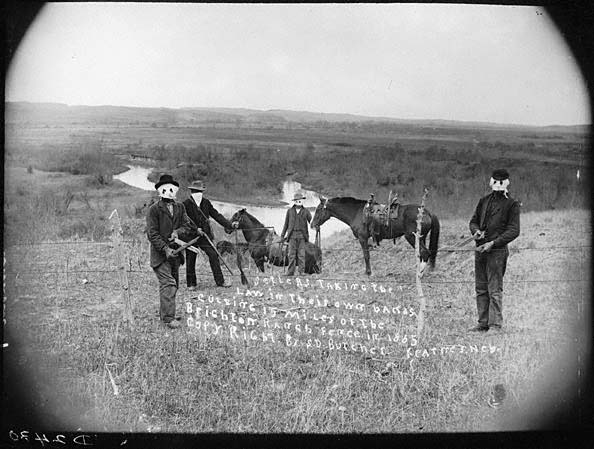
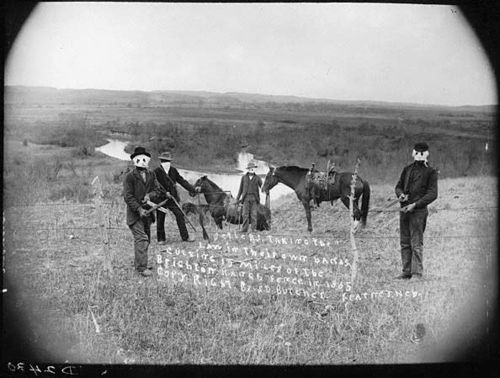
    In another instance of re-creation, Butcher made a photo of ranch hands in the throes of destroying a barbwire fence.  The fence would have belonged to a settler/homesteader, and represented nothing but a threat to the rancher’s way of life.  The parceling of land in such a manner, when in the years previous the country had been nothing but millions of acres of free-to-the-horizon’s-next-horizon land, was a blasphemy to the rancher.  But since making a photograph of a crime in progress was so rare and difficult (given the circumstances of, well, a crime being committed and the physical limitations of the photographic equipment), Butcher simply made the scene up, with wooden wire cutters and masks that no rancher or cowboy would wear.

     

    ·Posted by :

    ·in:


  • Francis Bacon on the Making of Gold. And Beauty.

    JF Ptak Science Books   Quick Post

    http://blogs.ub-filosofie.ro/pce/wp-content/uploads/sylva1.jpg

    The following extract is from the section “Century IV” of Francis Bacon’s Sylva Sylvarum, or a Naturall
    Historie in ten Centuries, published in London in 1627, and which was part of Bacon’s unfinished Instauratio Magna. Experiment Solitary, touching the Making of Gold.  The books was published just after Bacon’s death in 1626, and was as it turns out quite well-received, a best-seller even, going through ten editions to 1670.

    This section on the making of gold is included Century IV of Francis Bacon’s Sylva Sylvarum, or a Naturall Historie in ten Centuries… London, 1627, which was part of Bacon’s unfinished Instauratio Magna.

    ·Posted by :

    ·in:


  • Aristotle’s PHYSICS

    PHYSICS  by Aristotle translated by R. P. Hardie and R.K. Gaye, appearing as a part of The Works of Aristotle, volume I; printed at Oxford by the  Clarendon Press in 1930.

    “The Physics is a lecture in which he seeks to determine beings that arise on their own, τὰ φύσει ὄντα, with regard to their being. Aristotelian “physics” is different from what we mean today by this word, not only to the extent that it belongs to antiquity whereas the modern physical sciences belong to modernity, rather above all it is different by virtue of the fact that Aristotle’s “physics” is philosophy, whereas modern physics is a positive science that presupposes a philosophy…. This book determines the warp and woof of the whole of Western thinking, even at that place where it, as modern thinking, appears to think at odds with ancient thinking. But opposition is invariably comprised of a decisive, and often even perilous, dependence. Without Aristotle’s Physics there would have been no Galileo.”–Martin Heidegger, The Principle of Reason, trans. Reginald Lilly, (Indiana University Press, 1991), pp 62-63.

    The Physics of Aristotle is one of the great foundation stones of Western scientific thought.  This version of the work was on my website for many years and was the most-downloaded item on the menu there, with more than 20,000 downloads over a decade.  It was shcoking to me that there was that much interest in the work, but, well, there it was.  For some reason I’ve neglected to place it on this blog, and so I’ve done so today–it is posted in the “pages” section of this blog.  Enjoy. 

    ·Posted by :

    ·in: