A Daily History of Holes, Dots, Lines, Science, History, Math, Physics, Art, the Unintentional Absurd, Architecture, Maps, Data Visualization, Blank and Missing Things, and so on. |1.6 million words, 7500 images, 4.9 million hits| Press & appearances in The Times, Le Figaro, Mensa, The Economist, The Guardian, Discovery News, Slate, Le Monde, Sci American Blogs, Le Pont, and many other places… 5000+ total posts since 2008.

Book Category: Social History

  • Tear Gas for Peace, 1934

    JF Ptak Science Books   Quick Post

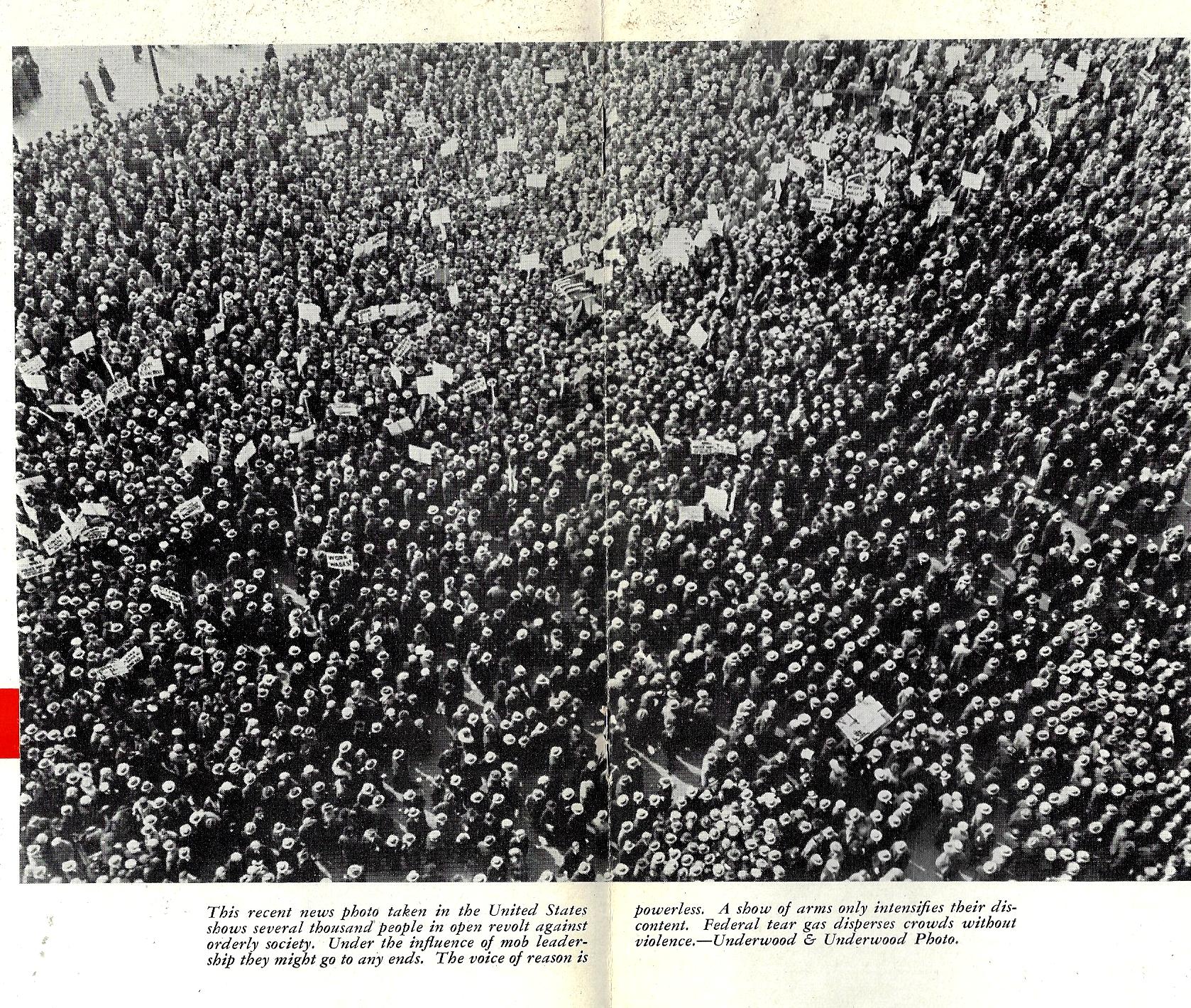
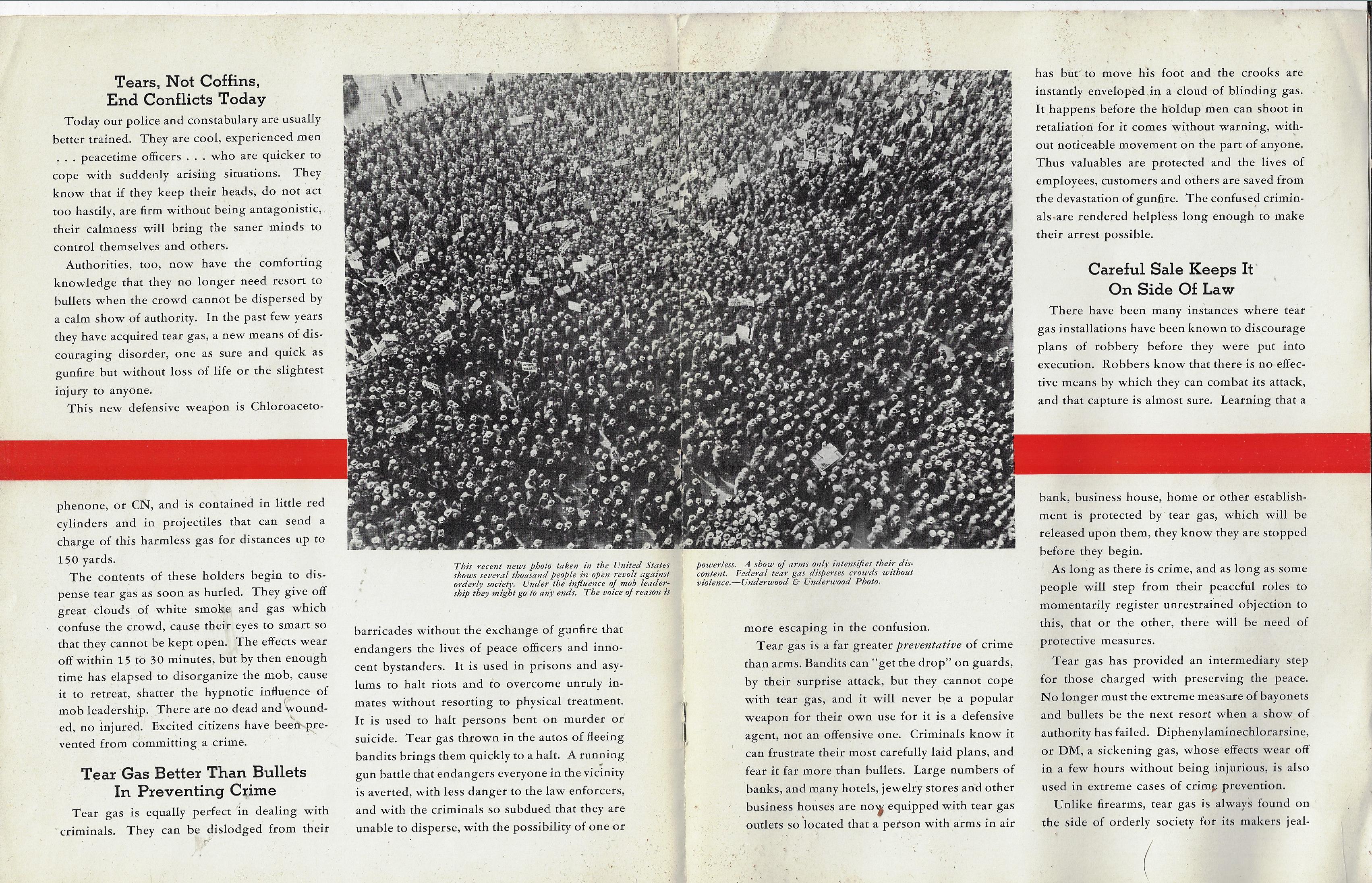
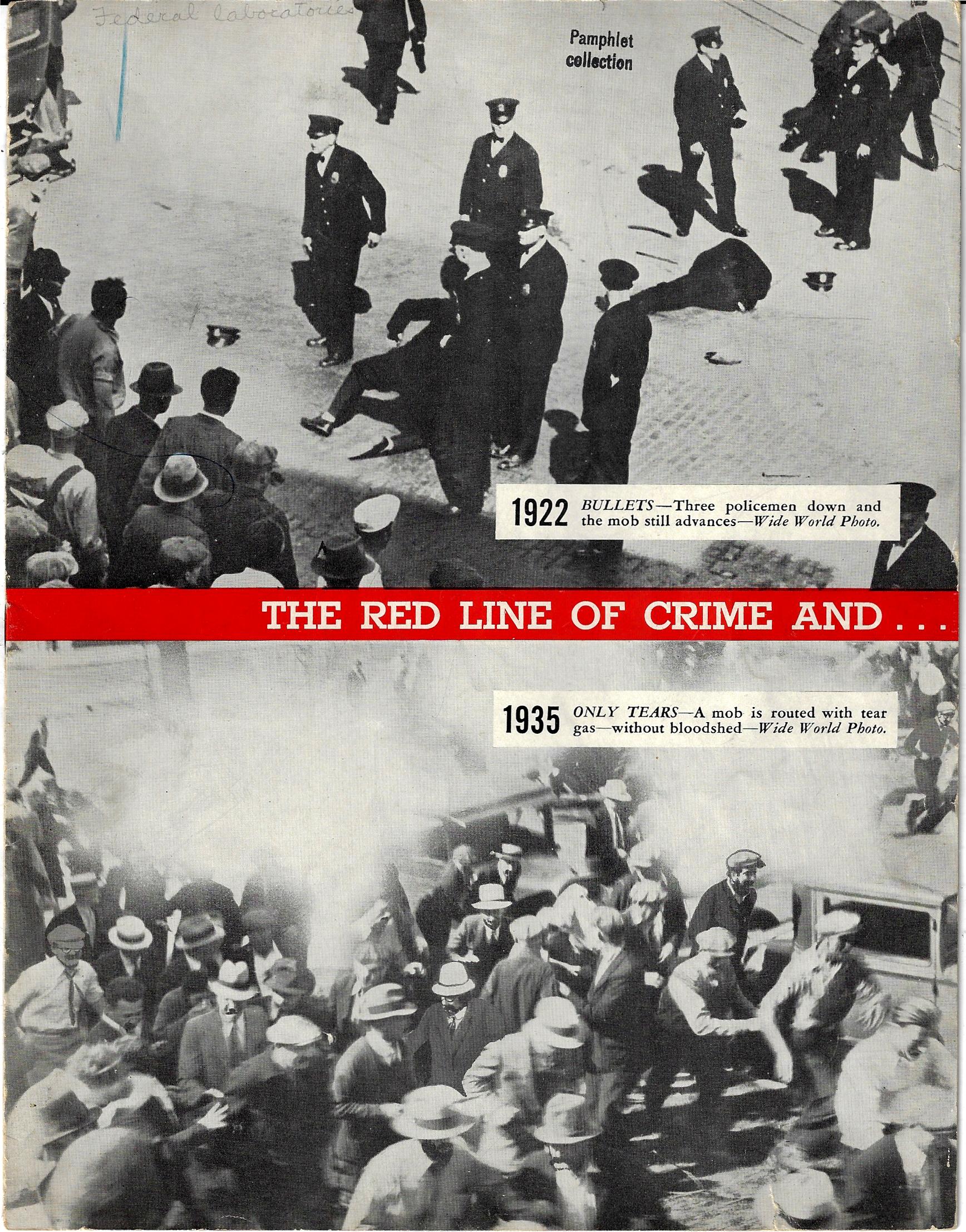
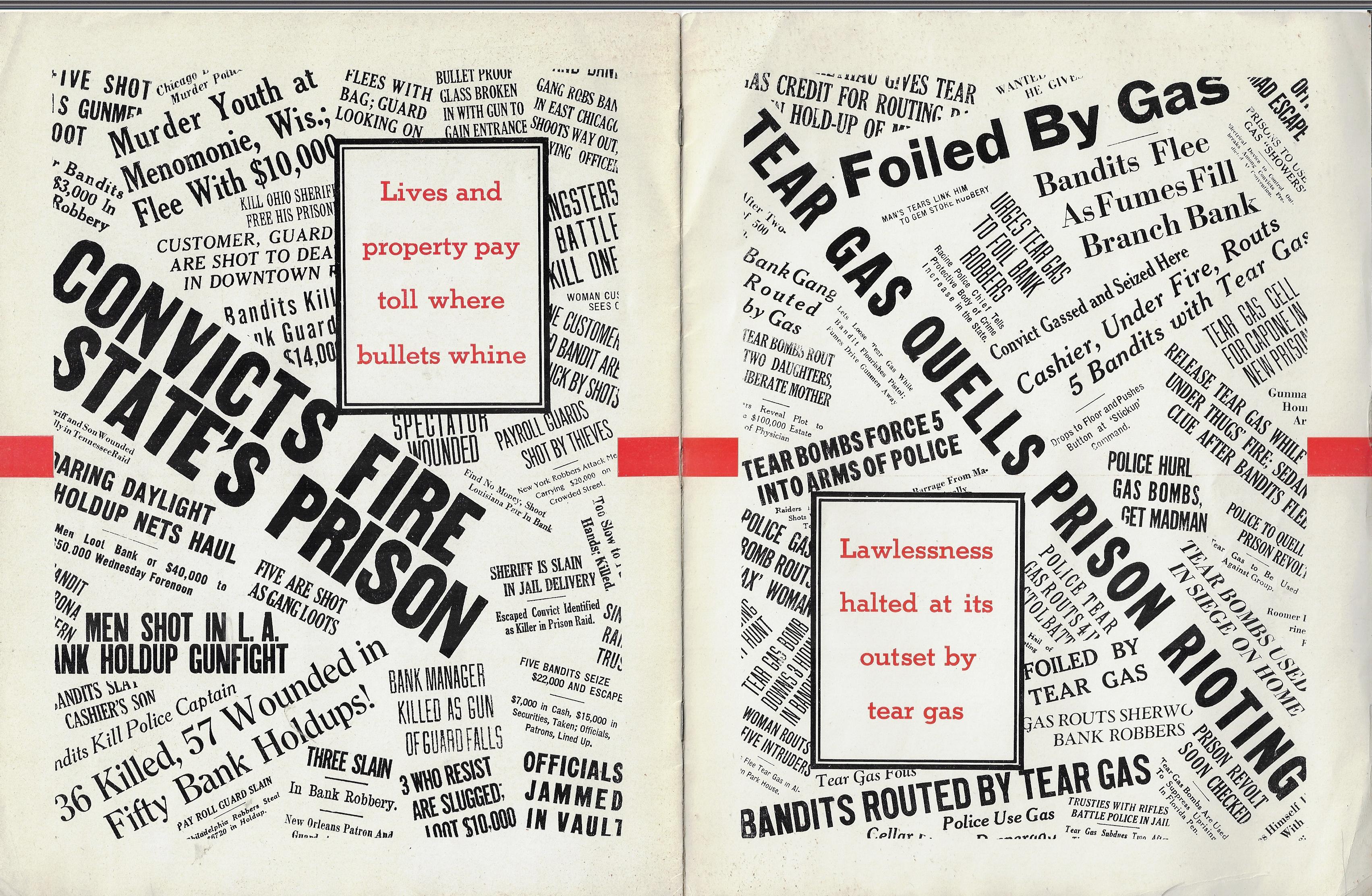
    The Red Line of Crime and…Civil Disorder. Pittsburgh, Pa., printed by Federal Laboratories, 1934. 11×8.5″, 12pp, illustrated with photos. Photo-printed wrappers. $75

    Books covers red line _1_

    A description of Federal Laboratories from Wiki:  “In the 1930s, custom gas guns by FedLabs were adopted by the New York Prison department, following a sales pitch made before the APA by the president of FedLabs in Baltimore in 1931. Also in the 1930s, Federal Laboratories actively worked to sell gas guns for the purpose of strikebreaking, with one FedLabs representative firing a tear gas grenade during the 1934 West Coast waterfront strike, resulting in the death of a striker due to skull fracture. Auerbach notes, however, that despite FedLabs stated opposition to “communist” strikers, the firm continued to sell tear gas to the Soviet Union even during 1933.”

    Books covers red line _2__0001

    Books covers red line _4_ detail


    Books covers red line _3_

    ·Posted by :

    ·in:


  • The World’s Most Beautiful 1930’s Work on Traffic Signals (?)

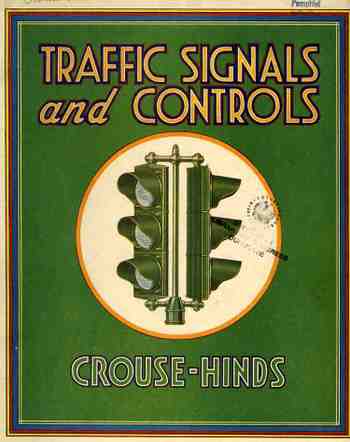
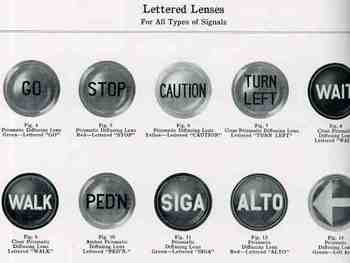
    • Is this *really* the most beautiful traffic signal catalog of the 1930’s? I don’t know, but it is (1) beautiful and (2) the only traffic signal catalog that I have ever seen.

    Crouse-Hinds Company, Syracuse, NY: Traffic Signals and Controls. Catalog 226, December 1, 1936. 27x21cm, 130pp.

    Profusely illustrated. Includes the following section, each with a printed tab divider: traffic signals, 26pp; Beacons and Flashers, 6pp; timing switches, 16pp; traffic controls, 10pp; traffic flow regulator, 10pp; accessories, 12pp; ornamental poles, 10pp; signal replacement parts, 8pp; color sequences, 12pp;and two other sections for pricing.

    Heavy stiff decorated wrapper, brass tack bound, printed on glossy papers. Very Good condition. Provenance: Library of Congress, with their surplus rubber stamp on the front cover. Scarce: WorldCat locates 2 copies of this catalog; the next iteration (#227) has 14 listings in WorldCat; after this, there are no other listings for any other editions from Crouse-Hinds. Lovely! $250

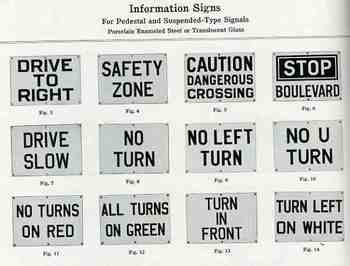
    • These images are about as basic as it gets for the common, everyday, overlooked objects from the disappeared past. They come from the Course-Hinds manufacturer’s catalog for traffic lights and other control systems called, yes, Traffic Signals and Controls, published in Syracuse (NY) in 1936. It is a beautifully designed catalog—excellent illustrations laid out perfectly on their pages, with all of the data you’d ever need to order these things for your municipality. What I find so fascinating about the images here is that they depict ubiquitous objects that today would today—given their ephemeral nature—be exceptionally difficult to find. Given this catalog, today they are not. 

    Traffic signals

    Traffic signals _2_

    Traffic signals _3_

    ·Posted by :

    ·in:


  • Gilbreth on Making U.S. Hospitals More Efficient: “the entire structure upon which hospital management is built is wrong” (1914)

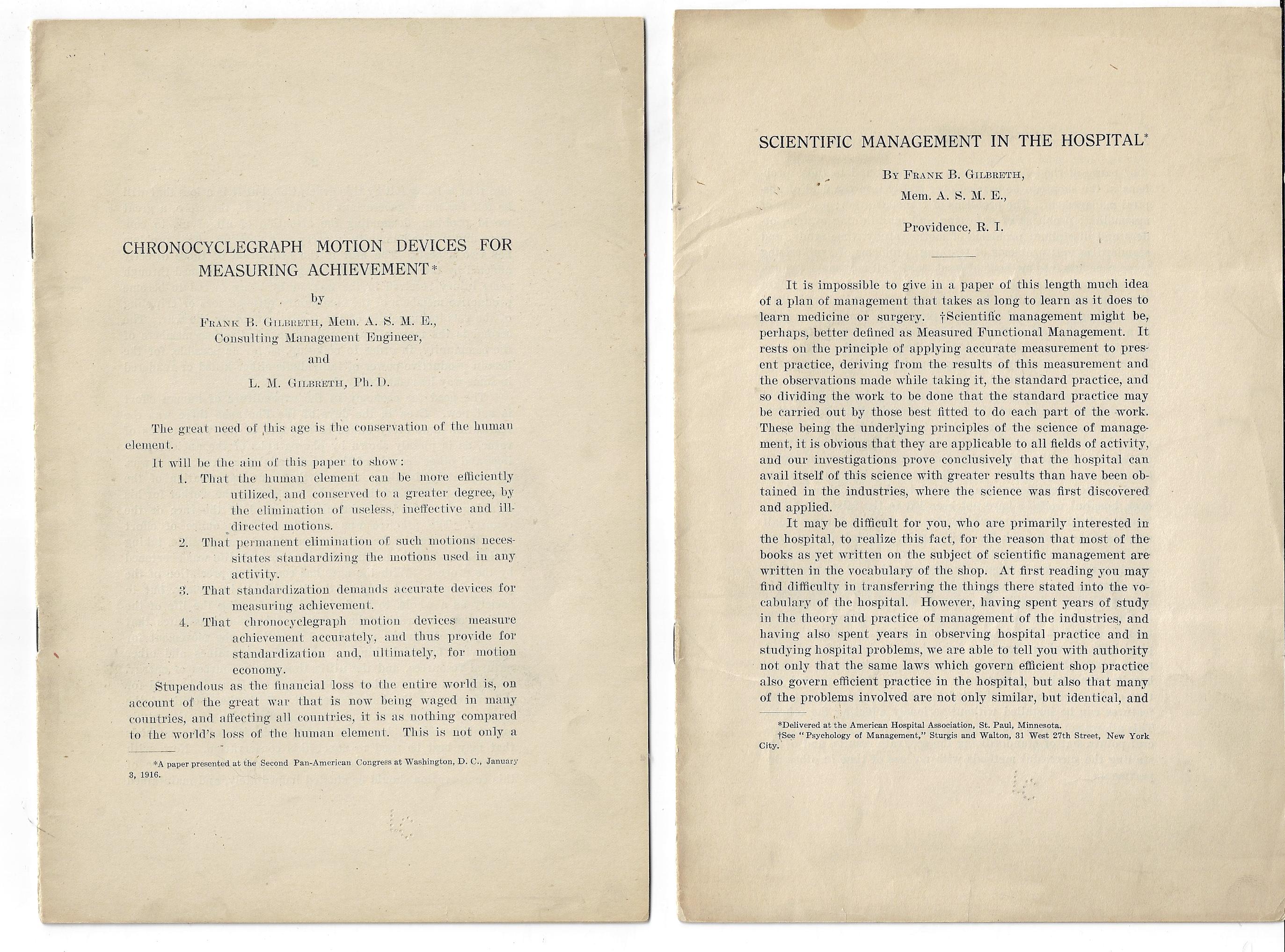
    Three rare papers by Frank Gilbreth and (the second) Gilbreth and his wife, Lillian .M. Gilbreth (Ph.D.). The three papers: $800

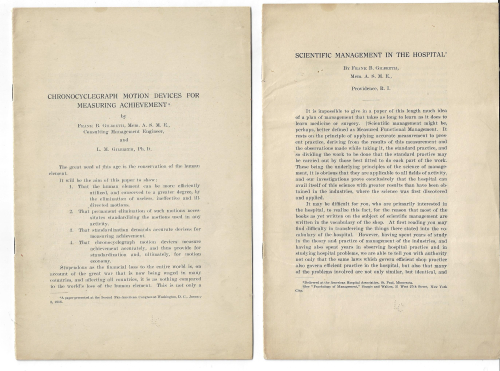
    First paper:

    Frank B. Gilbreth, “Scientific management in the hospital.” (“Delivered at the American Hospital Association, St. Paul, Minnesota”). 1914  (Scott Goodwin, in Mapping the Path to 21st Century Healthcare: The Ten Transitions Workbook, notes this paper as being published in 1914),  9.75 x 6.5″ , 10pp, paginated (1)-10. Original self-wrappers , with no “cover” per se. Condition:  There are two very old horizontal folds in the pamphlet, the indentation from which are almost indiscernible. Provenance: Library of Congress, with their 6mm “LC” perforated stamp on the front page, and the LC surplus/duplicate rubber stamp on the rear page. here is also a very faint and small rubber stamp on the bottom of page 2 stipulating “Gift/Author/[illegible]/191(6?)   There is no indication as to who published this paper, though I suspect it was by the Transactions of the American Hospital Association, vol. 16, for their Sixteenth Annual Conference, and printed on pp 483-492. This offprint version is mostly the same as the version that would be printed in the journal, except that the journal version has an organizational chart, and this paper does not. Overall, near-Very Good.  Scarce. 
    Gilbreth paper

    Frank Gilbreth was a pioneer in scientific management–some think of him (and later, Gilbreth and his wife) along similar lines as F.W. Taylor, though the major difference that I can see is that Taylor would measure efficiency differently, using his methods to make the worker more effective by controlling his action; Gilbreth looked more at the methods and materials, and tried to achieve more or less the same results in efficiency though in a more worker-friendly attitude. 

    In this paper, Gilbreth makes a very very wide statement on how U.S. hospitals could benefit from his motion and materials analysis. His assertion was sort of remarkable, made in the closing sentences of the paper: 

    “Scientific Management will cause elimination not only of waste of materials, but of waste of human effort, which is, in the final analysis, the most pitiful waste of all.
    When your management becomes a science, there will result greater efficiency in you as individuals, and in the great work of the hospitals to which you all devote your lives.”

    “We have been very fortunate in obtaining the attention and interest of such well-known leaders as your President, Dr. Howell, and some of the other leading surgeons of this and other countries; but we have not, as yet, been able to obtain any action to amount to anything, because of the fact that the entire structure upon which hospital management is built is wrong. As the incentive, so will the result be, sooner or later. The incentive necessary to adopt the best from the industries does not exist at present.”

    Also from the Gilbreth paper:

    • ‘There are several concessions you must make at the outset before you can expect to do any valuable work in introducing the science of management into the hospitals. The first is you must submit to having accurate measurement applied to your present methods and practices. The second concession that must be made is the willingness to allow a man not trained in surgery to apply the measurement and determine the resulting standard. We can show you pictures which illustrate plainly the fact that standardization such as used under scientific management is today practically unknown…especially in the operating room.”
    • ‘When your management becomes a science there will result greater efficiency in you as individuals and in the great work of the hospitals to which you devote your lives’’.

    “The Gilbreths’ primary focus was on work performance and worker satisfaction. They conducted pioneering research in the fields of time and motion study. This covered the livelong search for ‘‘The One Best Way’’ in organising and executing work flows and processes…”  See: Frank and Lillian Gilbreth: scientific management in the operating room A Baumgart,1 D Neuhauser2 http://citeseerx.ist.psu.edu/viewdoc/download?doi=10.1.1.1023.2409&rep=rep1&type=pdf

    Second Paper:

    Frank B. Gilbreth and L.M. Gilbreth, “Chronocyclegraph Motion devices for Measuring Achievement” (“A Paper presented at the Second Pan-American Congress at Washington, D.C.m January 3, 1916″). 9.75 x 6.5”, 14pp.  Original self wraps (as above). This paper was written with Gilbreth’s wife, Lillian, who had just been awarded a doctorate in psychology and who was also one of the first women to practice in the U.S. with a doctorate in that field.) Condition:  There are two very old horizontal folds in the pamphlet, the indentation from which are almost indiscernible. Provenance: Library of Congress, with their 6mm “LC” perforated stamp on the front page, and the LC surplus/duplicate rubber stamp on the rear page. here is also a very faint and small rubber stamp on the bottom of page 2 stipulating “Gift/Author/[illegible]/1916”. 
    • “In the early 20th century, efficiency expert Frank Gilbreth used still and motion-picture cameras in place of a stopwatch to try to improve the efficiency, and thereby the effectiveness, of surgery.
    • “ One of its key figures was the industrial efficiency expert Frank Gilbreth (who) employed still and motion-picture cameras in his measurements, and he expanded his visual efficiency services — dubbed “motion study” — from industrial settings to the medical profession in the early 1910s. When he gained access to hospitals, Gilbreth transformed their operating rooms into efficiency laboratories, covering all available surfaces with gridded lines, and requiring the masked surgeons and nurses to don numbered or lettered caps to aid in his analysis of their movements across the axes of the surgical space…”
    • “Surgeons saw in motion-based efficiency study the potential to reduce, through faster operating procedures, their patients’ exposure to what was at the time a leading cause of patient deaths: ether. Furthermore, they found in the process both the challenge and assurance that the outcome of a surgical intervention lay quite literally in their hands. Improving the efficiency and precision of the surgeon was as important as ensuring the quality of the tools he held.”
    • Quotes from: Gainty, Caitjan, “Mr. Gilbreth’s Motion Pictures — The Evolution of Medical Efficiency”.The New England Journal of Medicine; Boston Vol. 374, Iss. 2,  (Jan 14, 2016): 109-111. 

    Third paper:

    Frank Gilbreth and Lillian Moller Gilbreth, “Motion Study and Time Study Instruments of Precision”. 9×6″, with 11 illustrations of the equipment and film samples. Printed 1915. Provenance: Library of Congress, with their 6mm “LC” perforated stamp on the front page, and the LC surplus/duplicate rubber stamp on the rear page. here is also a very faint and small rubber stamp on the bottom of page 2 stipulating “Gift/Author/[illegible]/1916”. 
    ·Posted by :

    ·in:


  • On the Creation of the NYC Subway System and the Urban Blight it was Supposed to Relieve (1884)

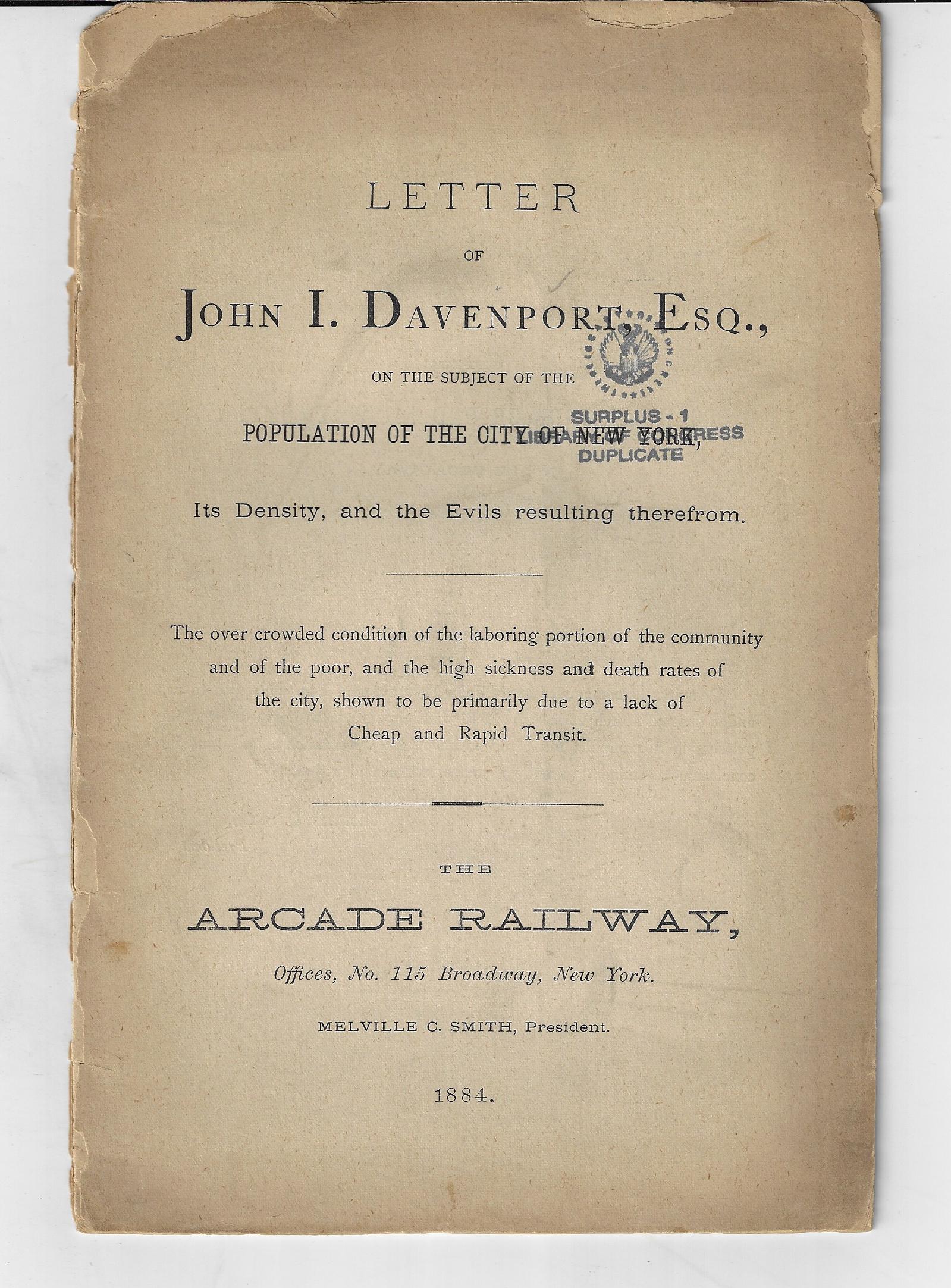
    Letter of John I. Davenport, Esq. : on the subject of the population of the city of New York, its density, and the evils resulting therefrom : the over crowded condition of the laboring portion of the community and of the poor, and the high sickness and death rates of the city, shown to be primarily due to a lack of cheap and rapid transit. The Arcade Railway, Melville C. Smith, President, 1884. 26x17cm, 23pp. Original wrapper. FAIR copy only, nearly disbound, with chips and browning, and some frailty to the text. On the other hand, this title does not show up very much at all, and is held  by only five WorldCat member libraries worldwide (LC, NYPL, NYHS, Columbia, Yale, Wisconsin Historical).  This document is interesting in its reporting of slum conditions in NYC (below 14th St., where almost half of the 1 million people of Manhattan lived), as well as being significant for its impact on urban planning. Again, this is a problematic pamphlet of some scarcity, so pricing is a little difficult–this is mind, I reckon $150.  

    Books davenport subway“Like almost all reformers of his time and social class, Davenport’s concern with the problem of the slums, creditable as it was, belied an even greater anxiety, indeed a fear, about the possible effects on the moral, social, and political character of American life of the “social disease” of the slum. As someone who devoted much of his life to the study and control of political corruption…And yet, in spite of his ideology, Davenport made a very good argument for a rapid transit underground railroad. In part, this was because he filled his pamphlet with a multitude of facts and figures about slum life… He knew all about the beginnings of the tenement-house slum in the early nineteenth century. He described how old single-family dwellings were converted into “tenant houses” for three or more families, and how, once landlords discovered that these converted houses yielded substantial profit in rent, they began to erect new houses designed especially as tenements — “buildings upon small lots, frequently two buildings, one in front and one in the rear of the lot, without the slightest attention being paid to the most simple and ordinary sanitary measures.” https://www.nycsubway.org/wiki/The_New_York_Rapid_Transit_Decision_of_1900_(Katz)

    “All of Davenport’s facts and figures were directed to the promotion of a subway. His thesis was both simple and true: that in New York public transit facilities always came too late to do any good. By the time they made their appearance — he had in mind the horsecars in the 1850’s, and the “els” in the 1870’s and 1880’s — rising land values, a further expansion of the business center, and a new and even more massive stream of immigration rendered these “improvements” useless with respect to the problem of the slums in the lower East Side. In the year he wrote, 1884, a subway was urgently needed, not only because the elevated trains did not provide true rapid transit, but also because a subway, if not built now but later, would be ineffective…”–Katz, again as above.

    ·Posted by :

    ·in:


  • Outline for a Course in Union Methods (1938, Arkansas)

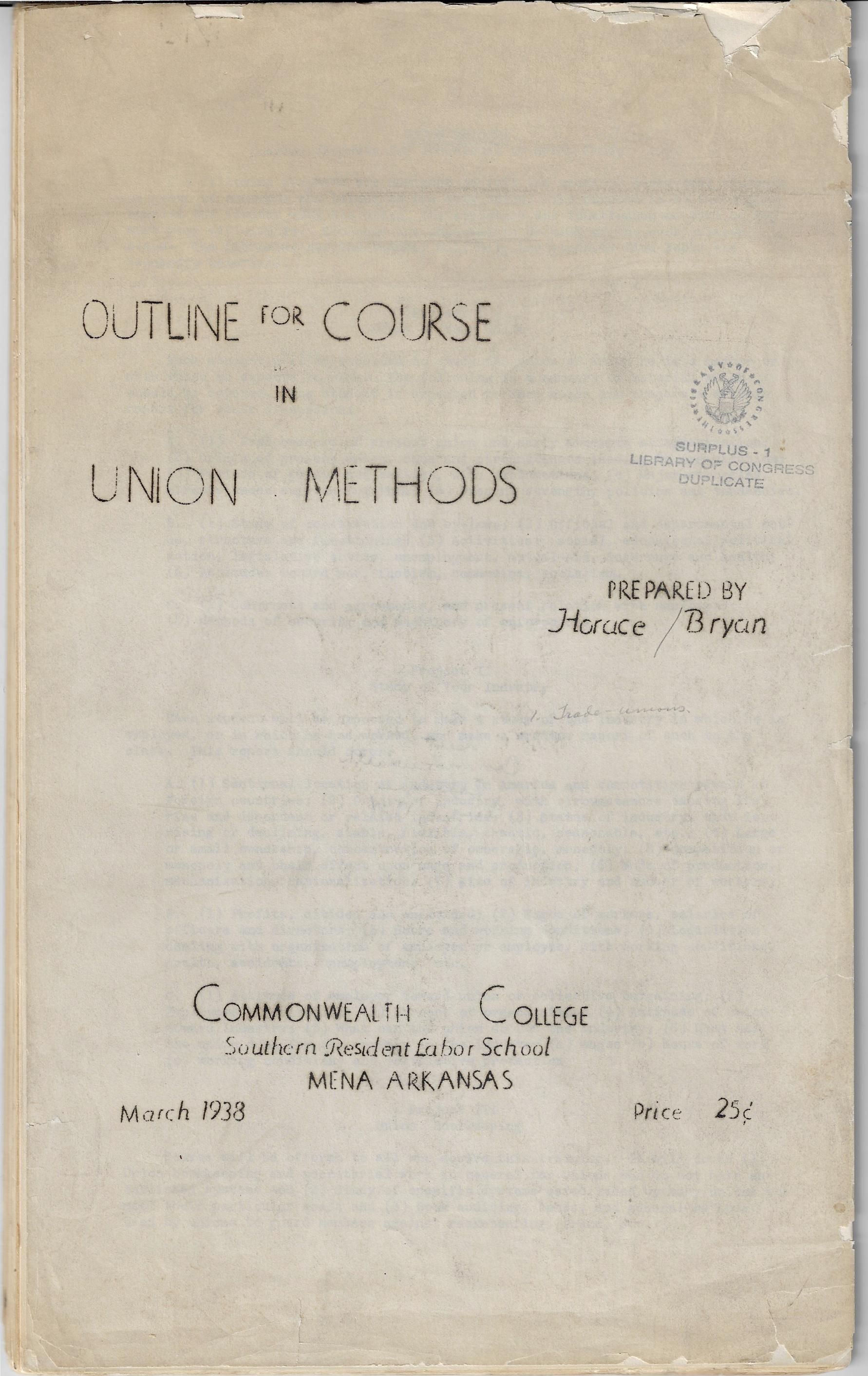
    Books  commonwealth CollegeHorace Bryan, Outline for Course in Union Methods.  Printed at Commonwealth College (Southern Resident Labor School, Mena, Arkansas, March 1938. 13.5×8.5″, 35 mimeographed sheets, staple bound at top. Each sheet runs about 600 words, or 20,000 words or so for the document.   There are six sections: Union Methods, Craft and Industrial Unionism, Job Organization, Organization and Conduct of Strikes (the longest section), Collective Bargaining, and Union Activity and Law.  Condition: Good, overall. The title page is dusty and has been detached; there are several short tears here and there in the text, and the last section (each section being stapled together) is detached from the whole. Provenance: Library of Congress, with their rubber stamp surplus/duplicate on the cover, as well as the tiny “LC” perforated stamp on the bottom of page 1.   Rare–only one copy listed in WorldCat/OCLC.  $250

    “Commonwealth College was started in 1923 to recruit and train people to take the lead in socio-economic reform and prepare them for unconventional roles in a new and different society.”–Wiki It ceased operations in 1940, and was a labor studies school in a similar standing of the Highlander Folk School, Work People’s College, Brookwood Labor College, and others. “Christian socialist the Reverend Claude Williams, “the preaching hillbilly”, then served as director from 1937 until 1940. Several people identified with Commonwealth were actively involved during this period in organizing the Southern Tenant Farmers’ Union, which aimed to unite the economic interests of tenant farmers, both black and white, and with the Congress of Industrial Organizations (CIO).”–Wiki, again. 

    ·Posted by :

    ·in:


  • Early Electrical Transmission of Fingerprints in Crime Fighting (1921)

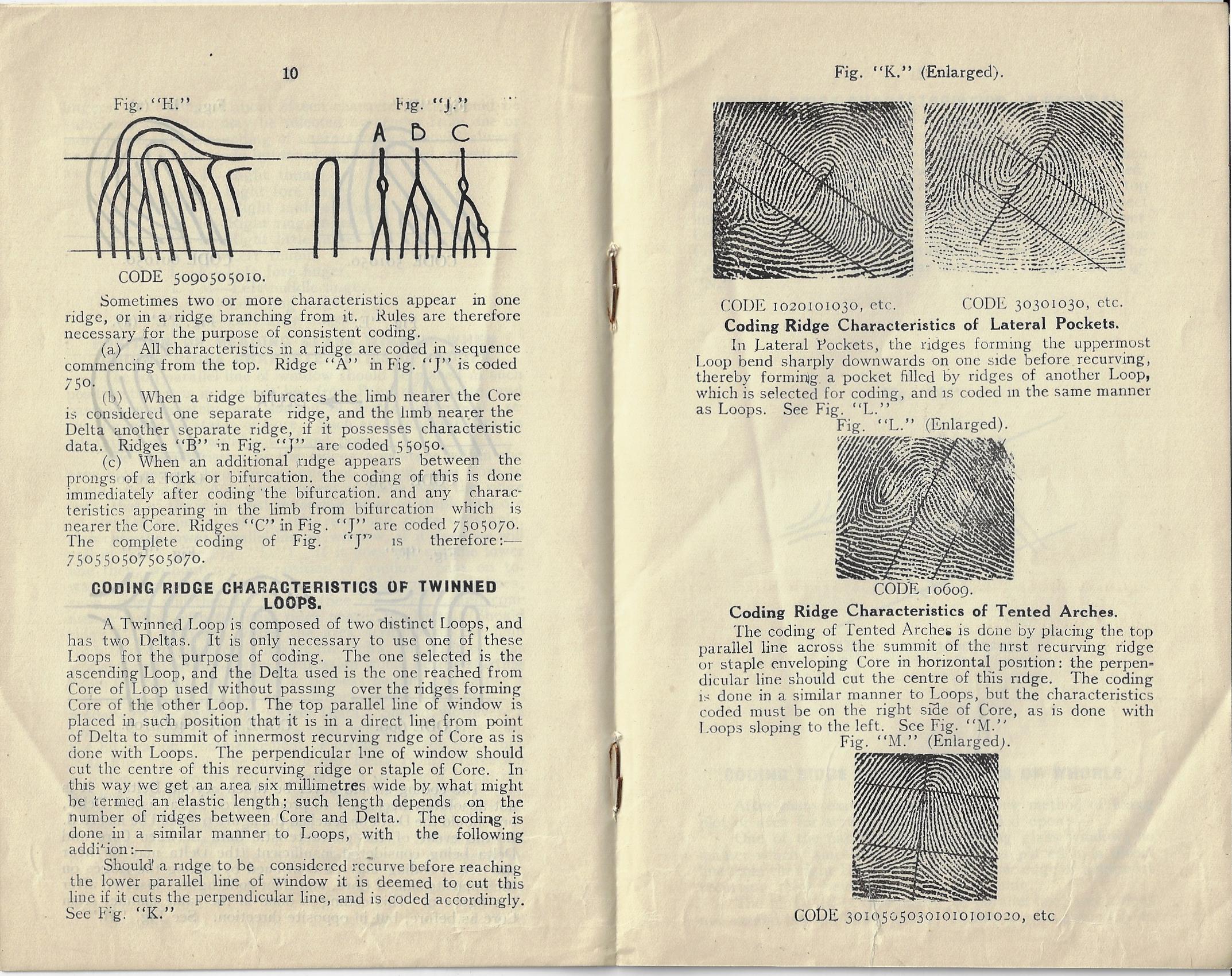
    Charles Stockley Collins. A Telegraphic Code for Finger-Print Formulae and a System for Sub-Classification of Single Digit Impressions. Published at the Office of the Police Chronicle, London, (1921).  9×6″, 17pp, with two plates and 15 illustrations/drawings in text.  Original wrappers. Provenance: Library of Congress, with their rubber stamp surplus/duplicate on the front cover, and their tiny 6mm perforated stamp on the title page.  A Very Good, crisp copy. 

    • There are only two copies of this work located in WorldCat/OCLC (Cornell and the British Museum); for all of what Mr. Collins accomplished, this seems to be his only publication outside of journals. $300

    The use of finger prints in identification is fairly old, used in Asia and India long before it became a popular practice in the West.  Also it seems that finger prints as forensic instruments occurs in literature before it occurred in actual police work. Mark Twain uses finger prints as essential legal elements (as well as comic relief) in his novels Life on the Mississippi (1893) and Puddn’head Wilson (1894), no doubt inspired by Francis Galton’s pioneering work on the subject (Finger Prints, published in 1892). Conan Doyle takes things a step further and describes the forging of finger prints, which I think was a brilliant idea.  All of this takes place before finger prints were more or less firmly established as an identifying tool, as the first conviction based on finger print evidence did not occur (in Great Britain) until 1902, while its weight in the conviction of murderers wasn’t felt until a first conviction was made using them in 1905 (and then 1910 in the U.S.). 

    Finger prints _1_

    Which brings us to these fascinating images of finger prints and their enumeration and transmission by wire,  which was the brainchild of the foremost finger print expert in the U.K., Detective Chief Inspector Charles Stockley Collins (M.B.E.), chief of the Finger Print Bureau at the New Scotland Yard.  I cannot determine how long in advance of this publication that he employed the idea of transmitting finger print data by telegraph, but it seems to be an excellent idea, sending important information relatively instantly over distances to help in conducting criminal investigation. It may be that this idea–far in advance of modern transmission practices, even though Arthur Korn’s first “facsimile” images were made as early as 1902–was seen at the time as both fantastic and obvious, the second impression coming almost immediately on the heals of the first, like one of those terrific ideas that seemed “obvious” once it was first stated. 


    ·Posted by :

    ·in:


  • “The Labor Revolt in India” (1920)


    Basanta Koomar Roy, “The Labor Revolt in India” (1920), published in New York by the Friends of Freedom for India. 9×6″, 23pp, original wrappers. Provenance: Library of Congress, with thei rsurplus/duplicate rubber stamp on front cover.  Very crisp and bright copy.  VG  $75 

    Basanta Roy (d.1949) was the first Indian-American journalist, “author, political activist for the Friends of Freedom for India, editor of the India News Service.”–Wikisource

    “The (b)ooklet titled “The Labor Revolt in India” by Basanta Koomar Roy, published by the Friends of Freedom for India in 1920… is statistics-heavy, and asserts that “the entire world seems to be aflame with the fire of labor unrest […] [a]nd India is only playing her part in this great drama of Humanity.” Includes a list of the board of directors, national council, executive committee, and Hindusthanee advisory board of the Friends of Freedom for India organization. “–from the South Asian American Digital Archive

    ·Posted by :

    ·in:


  • A Very Early Treatment on Psychodrama by its Founder (1939)

    Julius Levy Moreno. Psychodramatic Shock Therapy, a Sociometric Approach to the Problem of Mental Disorders.  Offprint: Sociometry, a Journal of Inter-personal relations, volume II, No. 1, January 1939. 8.25×5.5″, pp (1)-30. Original wrappers. Very Good copy. Scarce.  $350

    “Jacob Levy Moreno (born Iacob Levy; May 18, 1889 – May 14, 1974) was an Austrian-American psychiatrist, psychosociologist, and educator, the founder of psychodrama, and the foremost pioneer of group psychotherapy.”–Wikipedia

    “While living in Vienna in the early 1900s Moreno started an improvisational theater company, Stegreiftheater, the Theater of Spontaneity where he formulated a form of psychotherapy he called psychodrama, which employed improvised dramatizations, role-plays and other therapeutic, spontaneous dramatic expressions that utilized and unleashed the spontaneity and creativity of the group and its individual members  Moreno saw “psychodrama as the next logical step beyond psychoanalysis.” It was “an opportunity to get into action instead of just talking, to take the role of the important people in our lives to understand them better, to confront them imaginatively in the safety of the therapeutic theater, and most of all to become more creative and spotantaneous human beings.”–Wikipedia

    “J. L. Moreno, M.D., is recognized as the originator of sociometry and psychodrama, and was a prodigious creator of methods and theories of creativity, society, and human behavior. The methods and techniques he authored have been widely adopted…”–John Nolte, The Philosophy, Theory and Methods of J. L. Moreno, Routledge, 2014, preface

    “Moreno was among the first to recognise the healing power of a group, including the importance of self-help groups, where each person becomes the healing agent of the other, without any special training or knowledge other than his or her own experience. Moreno later coined the phrase “group psychotherapy” to recognise this particular form of treatment.”–“A Brief History of Psychodrama”, Birmingham Institute for Pscyhodrama.

    ·Posted by :

    ·in:


  • Mayor LaGuardia’s Report on the Progress of the WPA in NYC (1938)

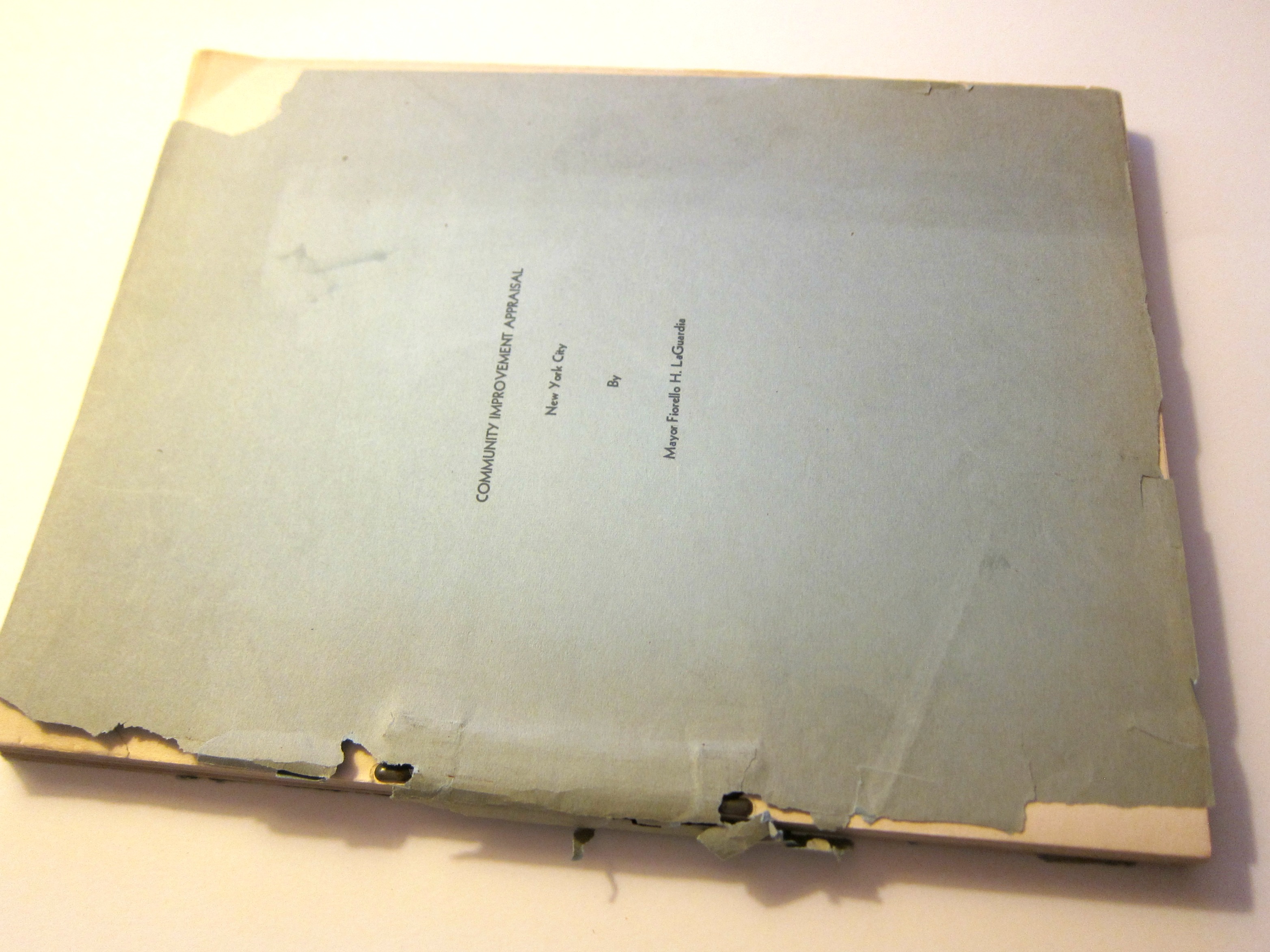
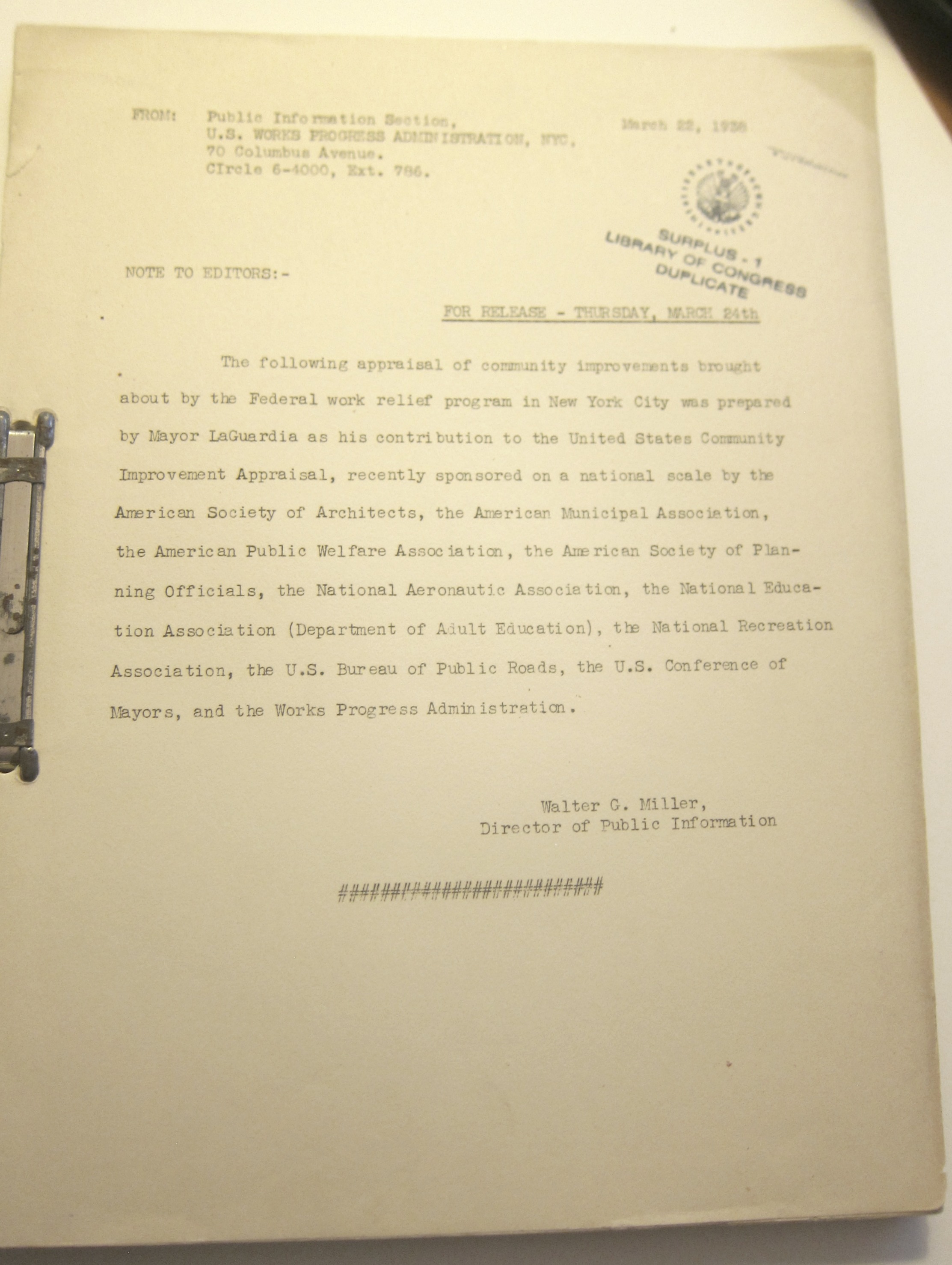
    Fiorello LaGuardia, Community Improvement Appraisal, New York City. Published by the Public Information Section, U.S. Works Progress Administration, NYC, March 22, 1938.  11×8.5″, 103 leaves, offset from typed originals.  Punch-bound with flexible metallic clasps. Provenance: Library of Congress. Condition: the original wrappers are somewhat chipped and in two pieces; the text, however, is still crisp and bright and in great condition. Also, there is a Library of Congress surplus stamp on the first page.  Raritythere are four copies of the printed version found in WorldCat/OCLC (opposed to holdings for a digital version), making this a scarce WPA collectible and an interesting document about the new public works in NYC constructed during the 1930’s.  $250

    LaGuardia improvement

    This document reviews new construction and improvements to existing structures  in the following areas: buildings (58 new large structures, 379 new buildings, 1,740 reconditionings) n schools and colleges, hospital, health centers, public libraries, public markets, prisons; parks (including 287 rehabilitate and 197 new playgrounds built); highways, sewers, water supply, bridges, tunnels, piers, “demolition and slum clearing”, marsh drainage, airports, police traffic signals, ferries, boardwalks, free lunches for schools, and educational programs.  

    LaGuardia improvement _2_

    ·Posted by :

    ·in:


  • Poster Advertising in Switzerland

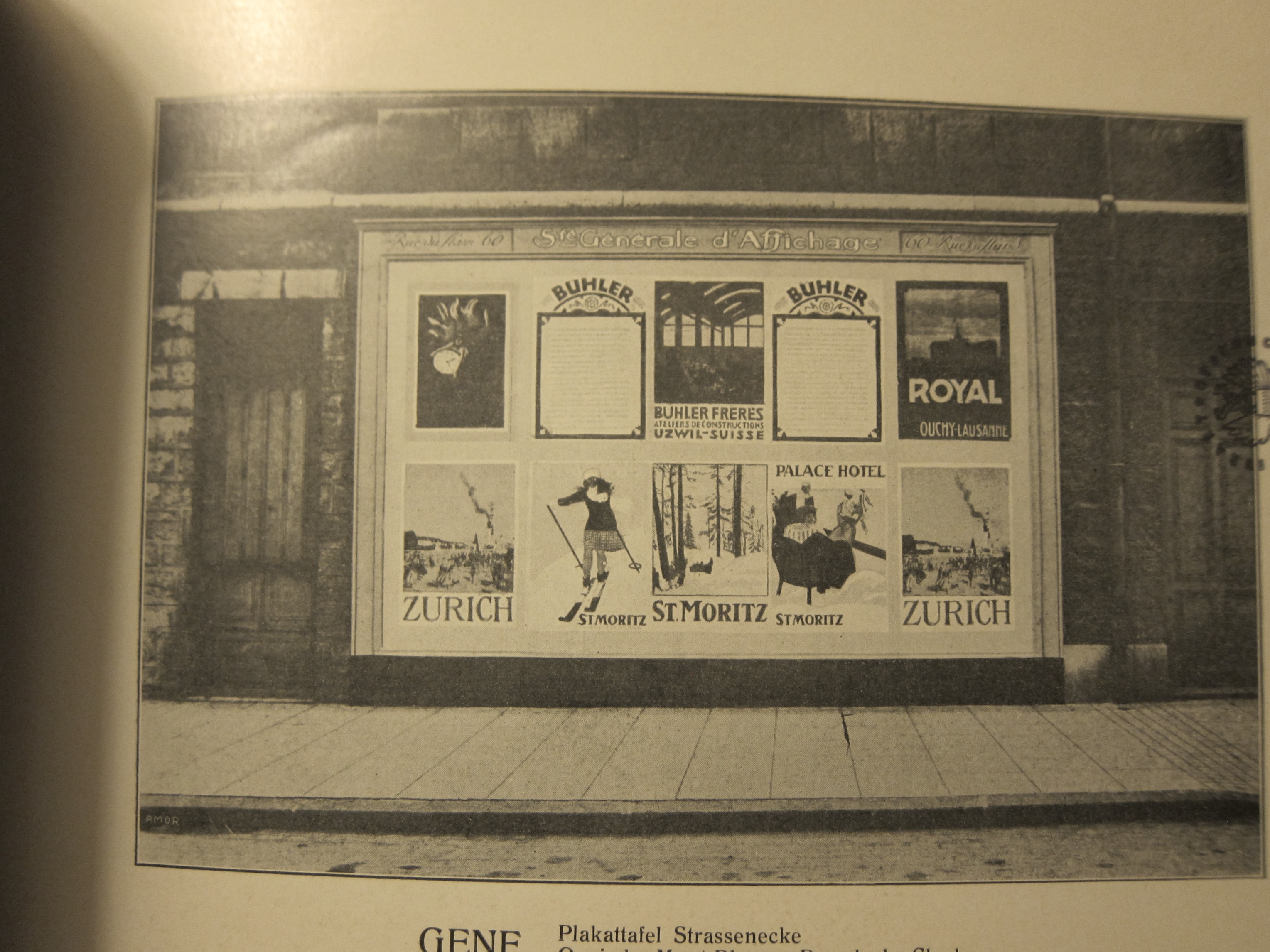
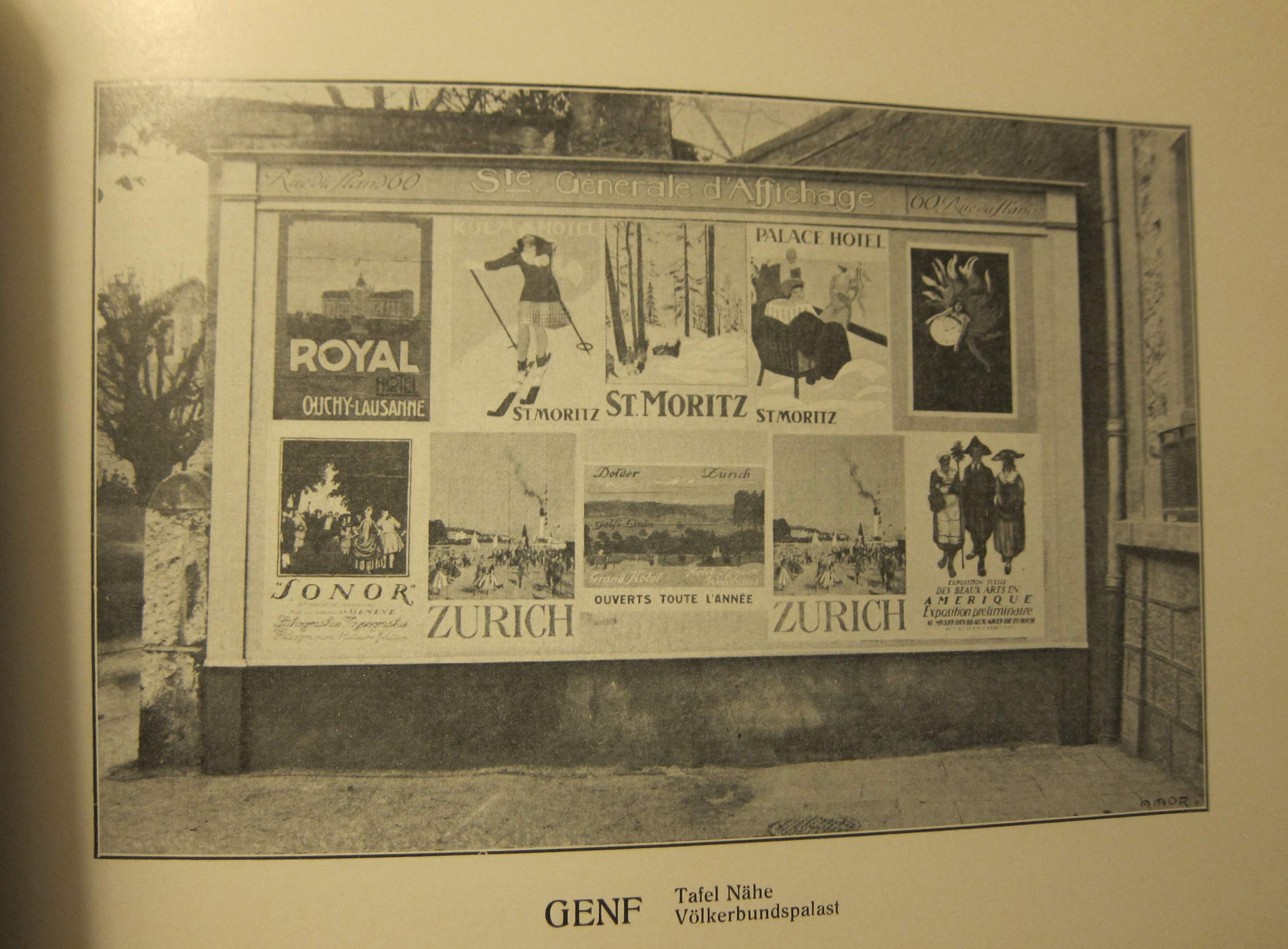
    Das Plakatwesen in der Schweiz. Allgemeine Plakatgesellschaft.  Printed by Sonor in Geneva, circa 1928-1932 (?).  17x24cm, 16 leaves, all of which are photos of outdoor poster advertising (as seen in the examples here). Bound in paper wrappers with a cord tie.  $250 

    Provenance: Library of Congress, with their 6mm perforated “LC” on the front wrapper and their rubber stamp “surplus duplicate” on the first page/photo

    Condition: the wrappers were made to fail, I think, being made to overhang the text block by a few millimeters, and so ensuring that most of the edges have gotten dinged and banged up. The spine cover has come away, leaving two pieces for the cover, though those are held in place by the binding.  Overall, still a GOOD copy.__+__

    This is an unusual work showing examples of Swiss poster advertising.  So far as I can determine, there are NO copies of this work in the OCLC/WorldCat.  Curious and scarce. 

    Swiss advertising _1_ cover

    Swiss advertising _2_

    Swiss advertising _3_


    ·Posted by :

    ·in: