A Daily History of Holes, Dots, Lines, Science, History, Math, Physics, Art, the Unintentional Absurd, Architecture, Maps, Data Visualization, Blank and Missing Things, and so on. |1.6 million words, 7500 images, 4.9 million hits| Press & appearances in The Times, Le Figaro, Mensa, The Economist, The Guardian, Discovery News, Slate, Le Monde, Sci American Blogs, Le Pont, and many other places… 5000+ total posts since 2008.

Book Category: Social History

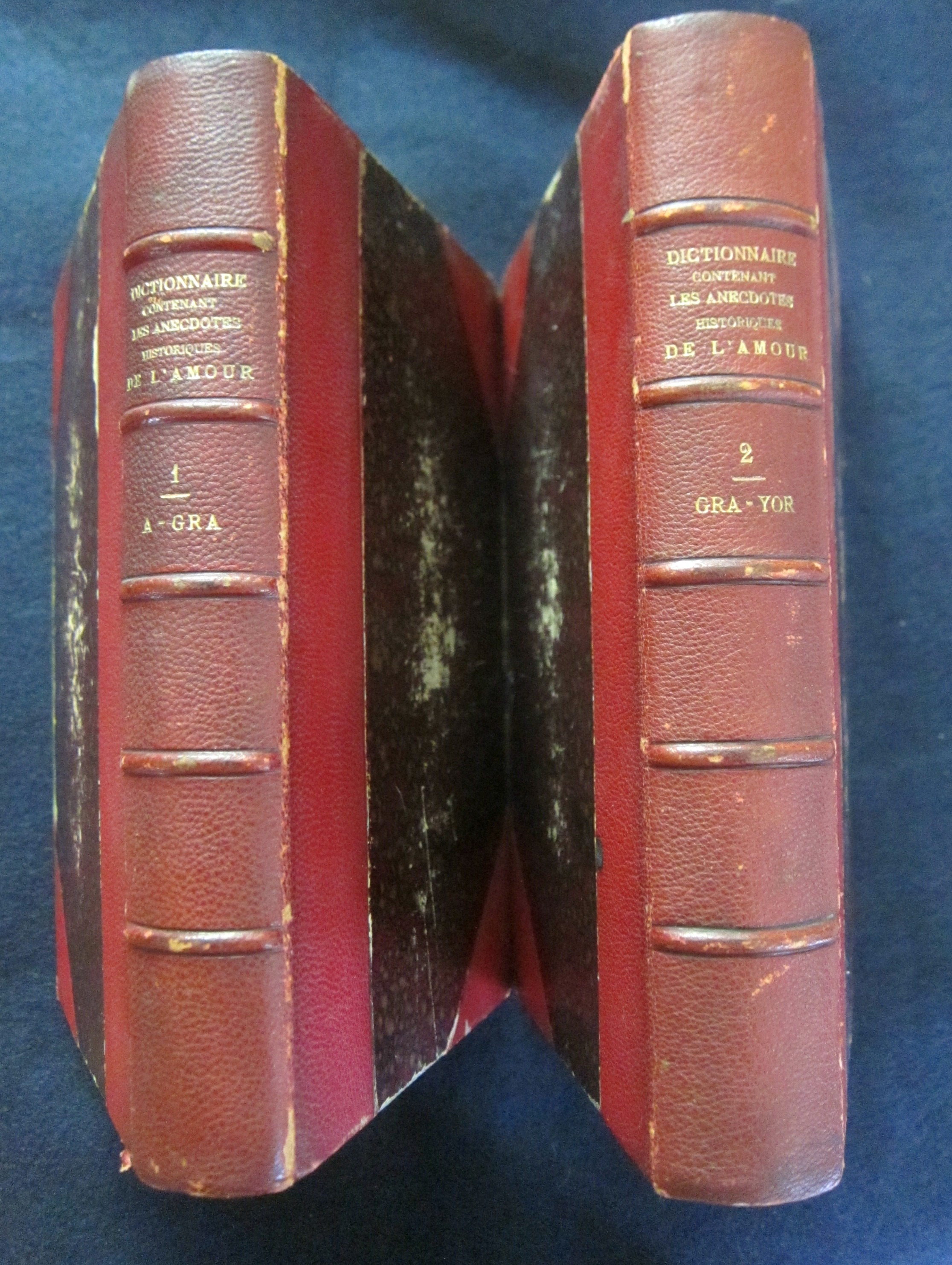
  • A Dictionary of Love, 1788

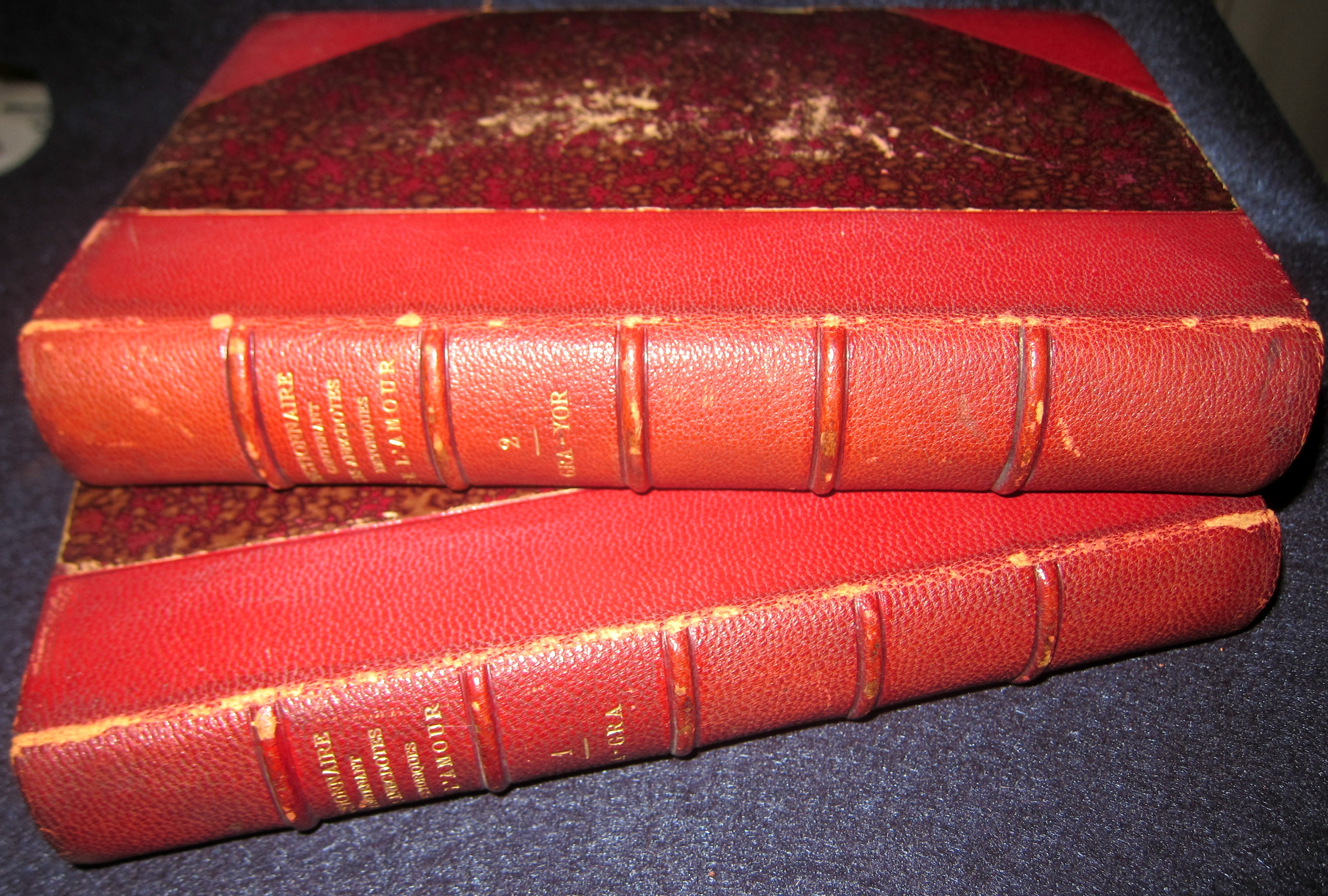
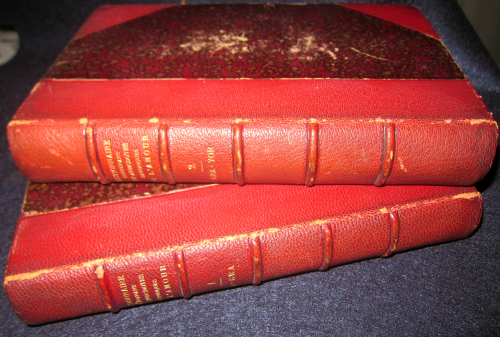
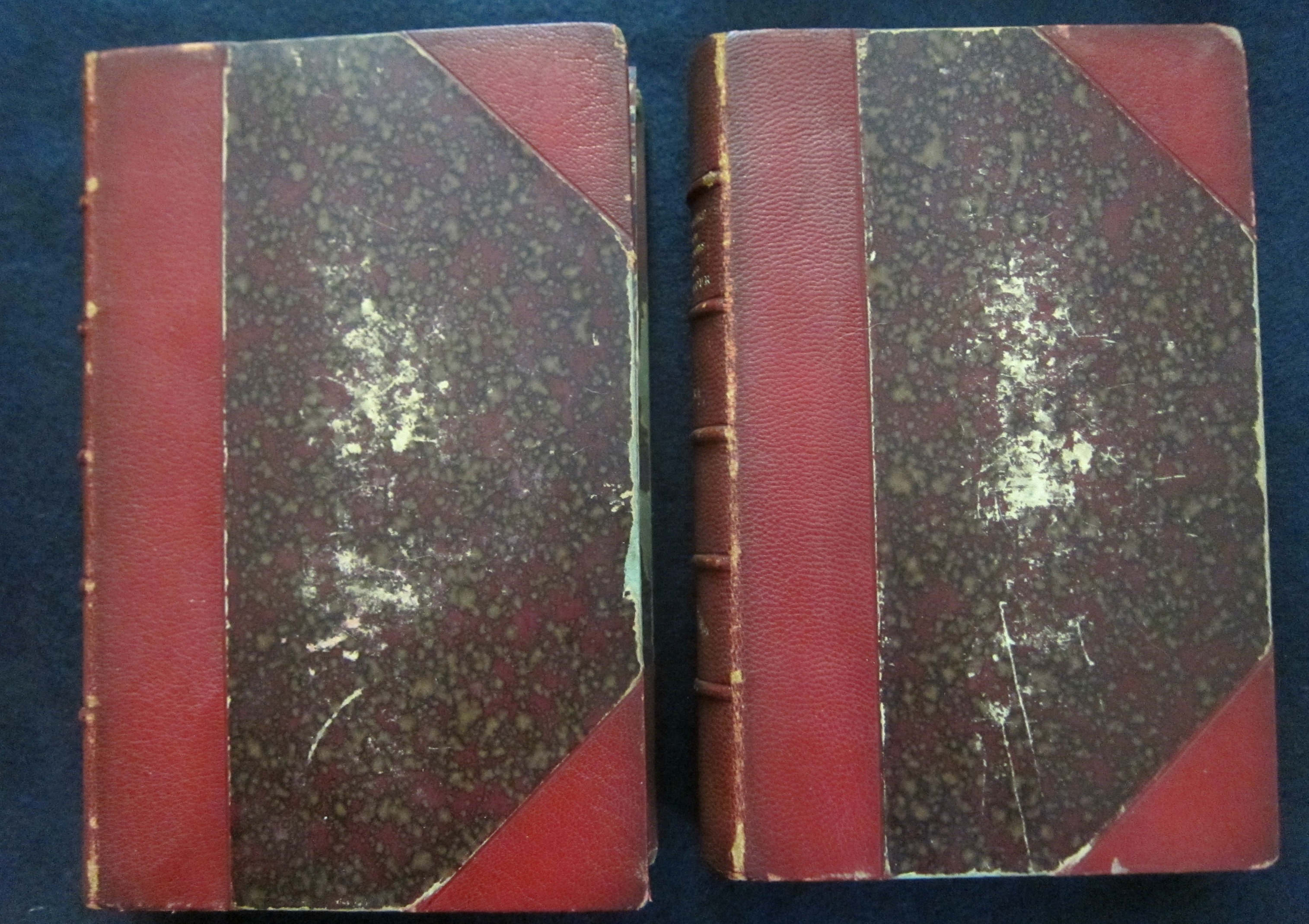
    (Mouchet) Dictionnaire Portatif, Contenant Les Anecdotes Historiques De L’Amour, Depuis Le Commencement Du Monde Jusqu’ À Ce Jour.  Chez Buisson, Paris, 1788. Two volumes, iv, 564; 600, (ii)pp. Rebound in the mid-19th century in half calf and marbled boards, with raised bands, marbled endpapers and paste downs, and mostly untrimmed. Faults: the marbled boards are a little scuffed in the middle, and there are a few small scuffs to the spine and board edges. Also, a few of the en
    ding leaves and beginning leaves have some very good and old repairs where the leaves were unevenly worn and replaced with appropriate paper edging–really a very good repair job, none of which affects the text on the few pages of repair.  $300  Brunet 17891; Barbier 1, 3849. There was a third volume added in 1811, and by 1832 there were five volumes, all together.  

    L'armour _1_

    Altogether there are somewhere in the vicinity of 400 entries in the two volumes, covering l’amour in its many varieties, flavors, and avenues.  

    • “Oui Amour Amour quand tu nous tiens, on peut bieu dire; adieu prudence.” La Fontaine (from the title page)

    The American Bibliopolist, Volume 3, 1871, calls it “very scarce” and is offered for sale at $15, which is about $400 in 2017 according to the BLS CPI calculator.


    L'armour_3_

    L'armour_3_                                                        


    ·Posted by :

    ·in:


  • H.L. Mencken’s Copy of a Stone Catalog for the Big Sleep

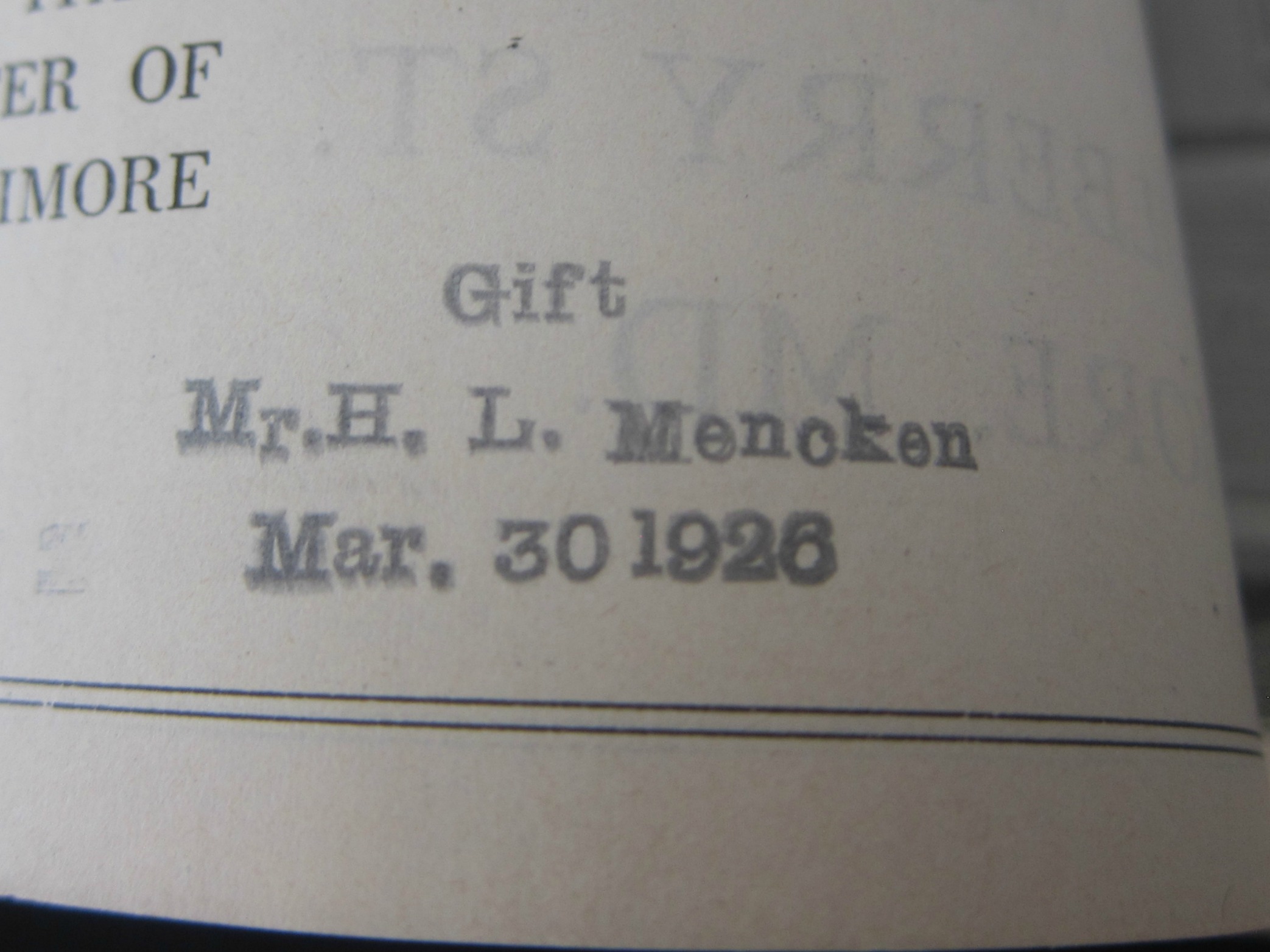
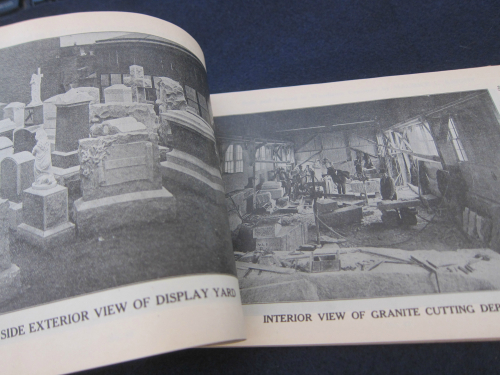
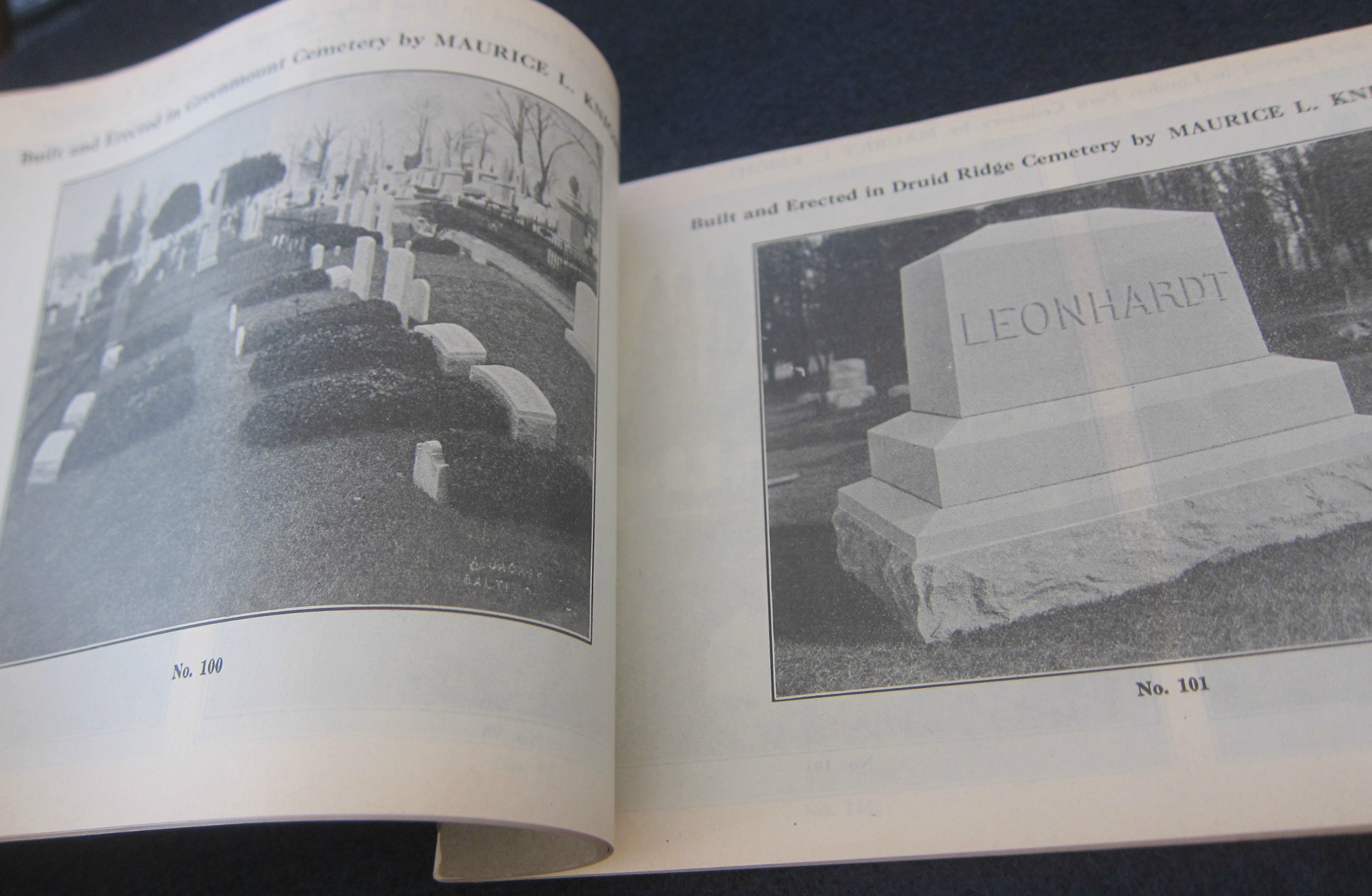
    Mencken tomb _5_ I came upon this curious pamphlet1 by Maurice Knight, curious in itself, being a manufacturer’s catalog for gravestones/markers/monuments, which was something I knew must have existed in dozens of different incantations through the years, though I had never actually seen one. Opening the catalog I saw at the bottom the small and distinctive rubber stamp stating that this was once the property of H.L. Mencken, who had given it to the Library of Congress in 1926, and which later was sold to me in the library’s Exchange Program for surplus and duplicate material. 

    Knight was a Baltimore man and firm, and as it turns out there are numerous examples of  Knight’s work pictured (“in use”) in a number of Baltimore cemeteries, but most interestingly in Loudon Park Cemetery, where the Mencken family plot is located. I cannot tell if the Mencken stones have any connection to Knight, or if Mencken was planning something else. (There are no annotations by Mencken in the text nor I guess should there be–I just state this because if I don’t I imagine that someone will ask.). Mencken’s family plot was already well-established, so I’m really not sure why he would have this prospectus.  

    Anyway, here it is. The title of the catalog tells the reader to “Consult the Master”–with Mecnken, I wonder who that master might have been? 

    Notes:

    1. Consult the Master, Maurice L. Knight, for your Monument-Tomb-Vault. Office and Works, 1025 West Mulberry St., Baltimore, MD. 9×6″, ca. 75pp, with 150+ illustrations of the work of the stone master. Title printed vertically though the book opens horizontally. Original wrappers. The wrappers are scuffed and bumped a bit around the edges, though the text is bright and clean.  Provenance: stamped on the reverse of the title page “Gift/Mr. H.L. Mencken/March 30, 1926”, being a gift to the Library of Congress, with their surplus stamp on the rear cover. 

    Mencken tomb _2

    Mencken tomb _2

    ·Posted by :

    ·in:


  • Rare Broadside Calling for Support, Food, and Clothing for Striking Miners, 1922

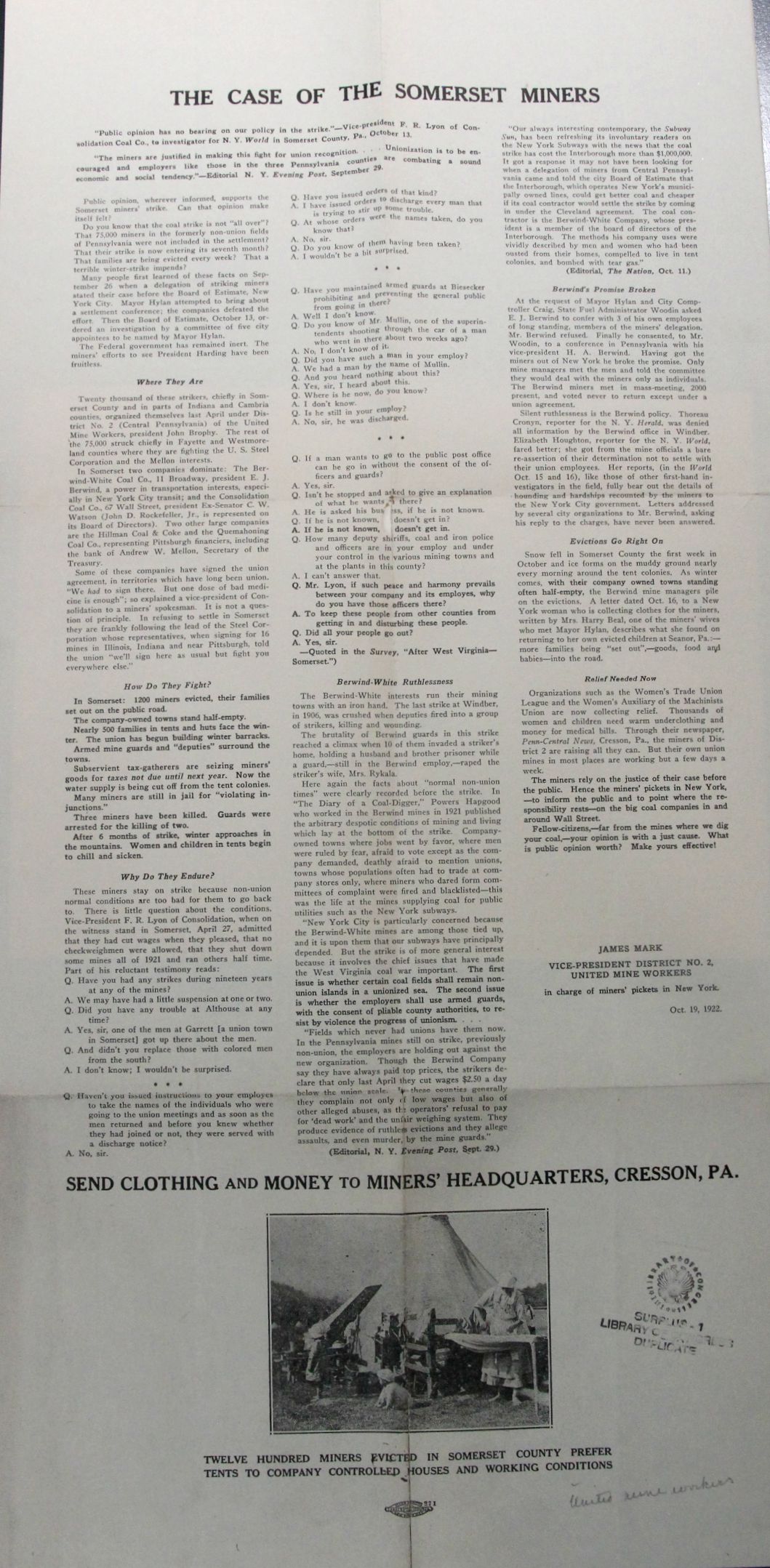
    The Case of the Somerset Miners / Send Clothing and Money to Miners’ Headquarters, “Cresson, PA. James Mark (VP District No. 2., United Mine Workers…in charge if miners’ pickets in New York, October 19, 1922”.  24×12″ Several old folds; 5 inch tear in the middle fold at bottom; two inch-long tears in the margins of the top horizontal fold; one chip in he top middle fold, missing a 1/20inch x 1/8 inch piece, affecting four words. Provenance: Library of Congress, with their surplus rubber stamp at bottom right. Good/Very Good condition. $500

    This is a rare broadside seeking household items and money for the relief of the striking miners of the hard/tough/brutal Somerset Mine strike of 1922-3.  The miners struck for union representation from the United Mine Workers against the Berwind-White Company, which ran a very tight ship, evidently. The miners for Somerset lived in a classical company-town existence, with their pay being mostly entirely absorbed by the company via rent for company-owned houses, stores, food, water, and so on, all aspects of life controlled by the employer who/which retrieved the salary of its underpaid workers by controlling all aspects of the workers’ lives. So the miners struck for representation from the union for more money and management resisted, especially since it would cost them profit during a year that saw coal production falling by a third.  So the strike began and lasted from 1922 to 1923, during which Berwind-White employed scabs and security and thugs to intimidate and control their workers, evicting 1200, sending hundreds of families into a Pennsylvania tent life for the winter, stopping the flow of water, and general thuggery.  The strike ended unsuccessfully in 1923, though the union came in by 1933. It was reported by union officials that “all was not in vein”, as wages paid were now union scale, conditions weren’t nearly as bleak, and the company towns/stores were not as ruthless-https://www.iup.edu/archives/coal/unions-and-mining/that-magnificent-fight-for-unionism/

    Reading this summation and plea is a heartbreaker, and will no doubt make a person appreciate the idea of unions, especially in the U.S.A. of the 1920’s/1930’s.  


    Coal strike somerset

    I did find a copy of the broadside at the University of Pittsburgh https://www.library.pitt.edu/labor_legacy/SomersetCoalStrike.htm

    ·Posted by :

    ·in:


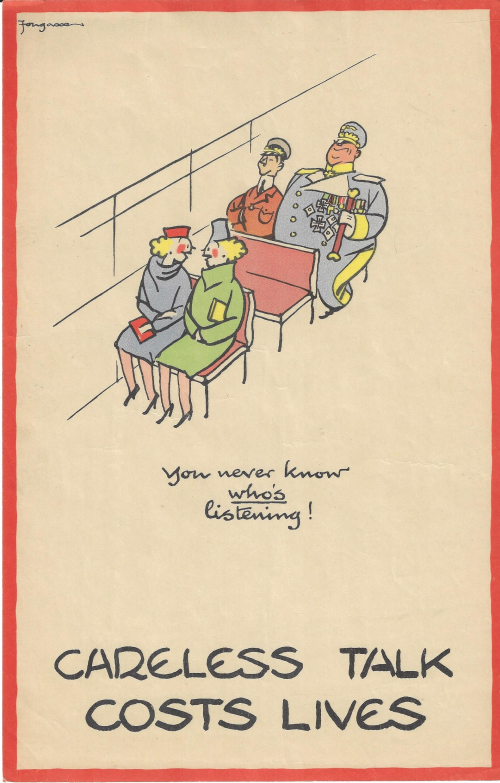
  • Iconic WWII Propaganda Posters–the United Kingdom, 1940

    “Original WWII Poster by “Fougasse”

    Fougasse – Cyril Kenneth Bird, (1887-1965), illustrator for Punch (from 1937 to 1949, and a wounded vet of Gallipoli in the First War)” “Careless Talk Costs Lives”.

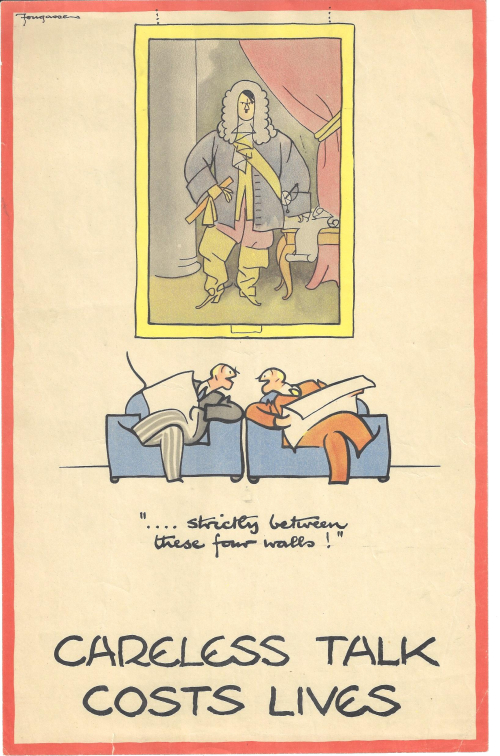
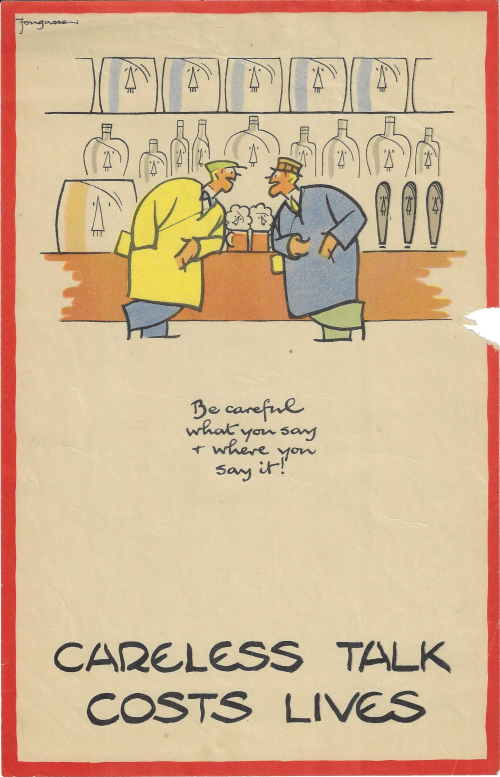
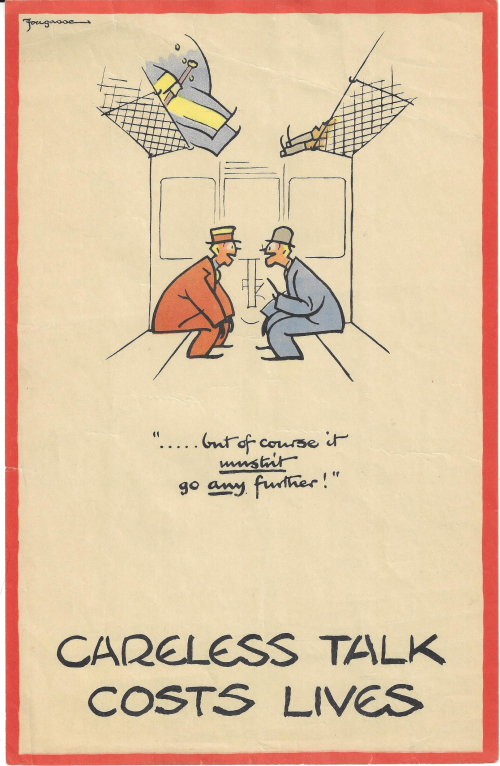
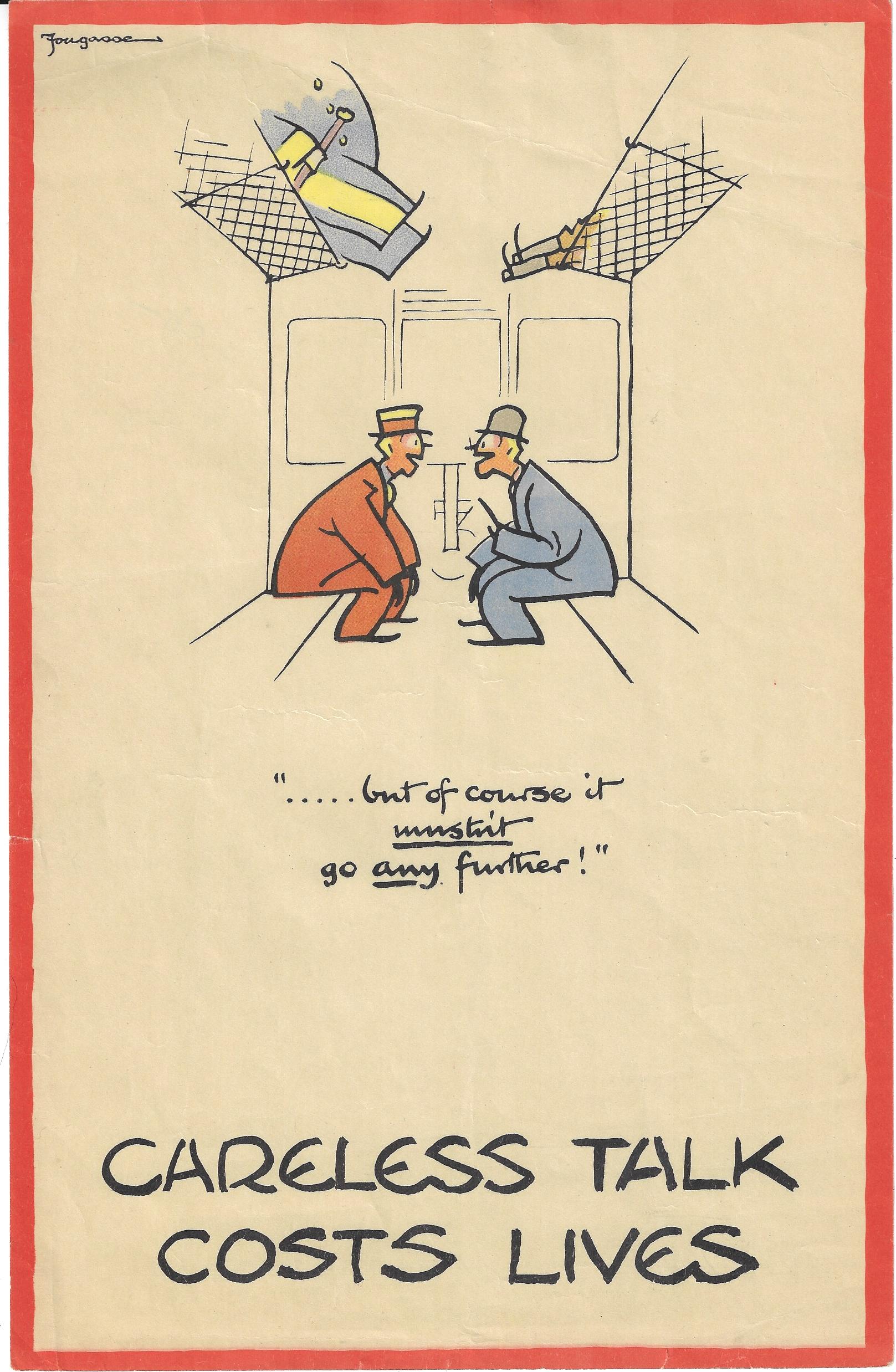
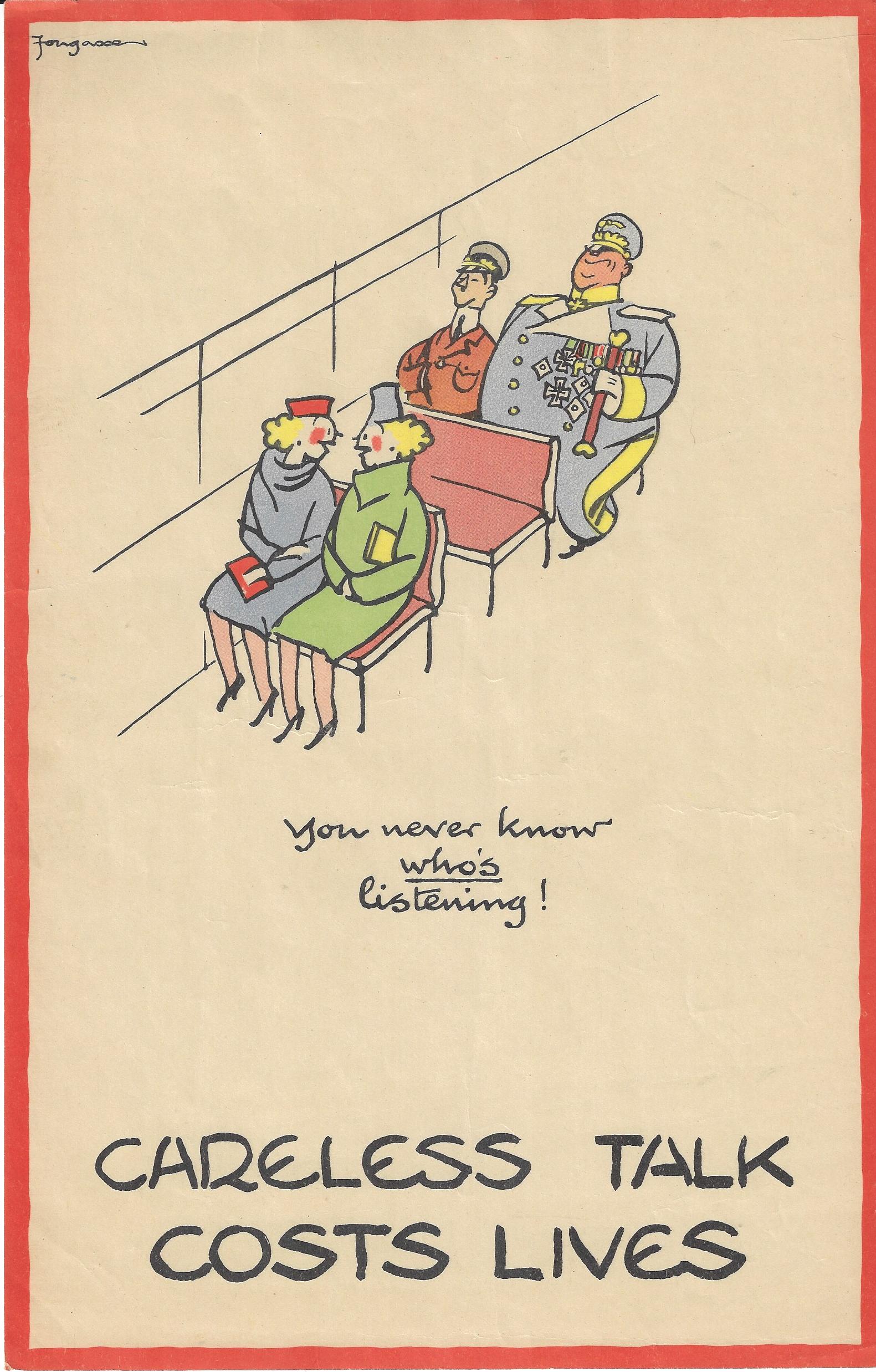
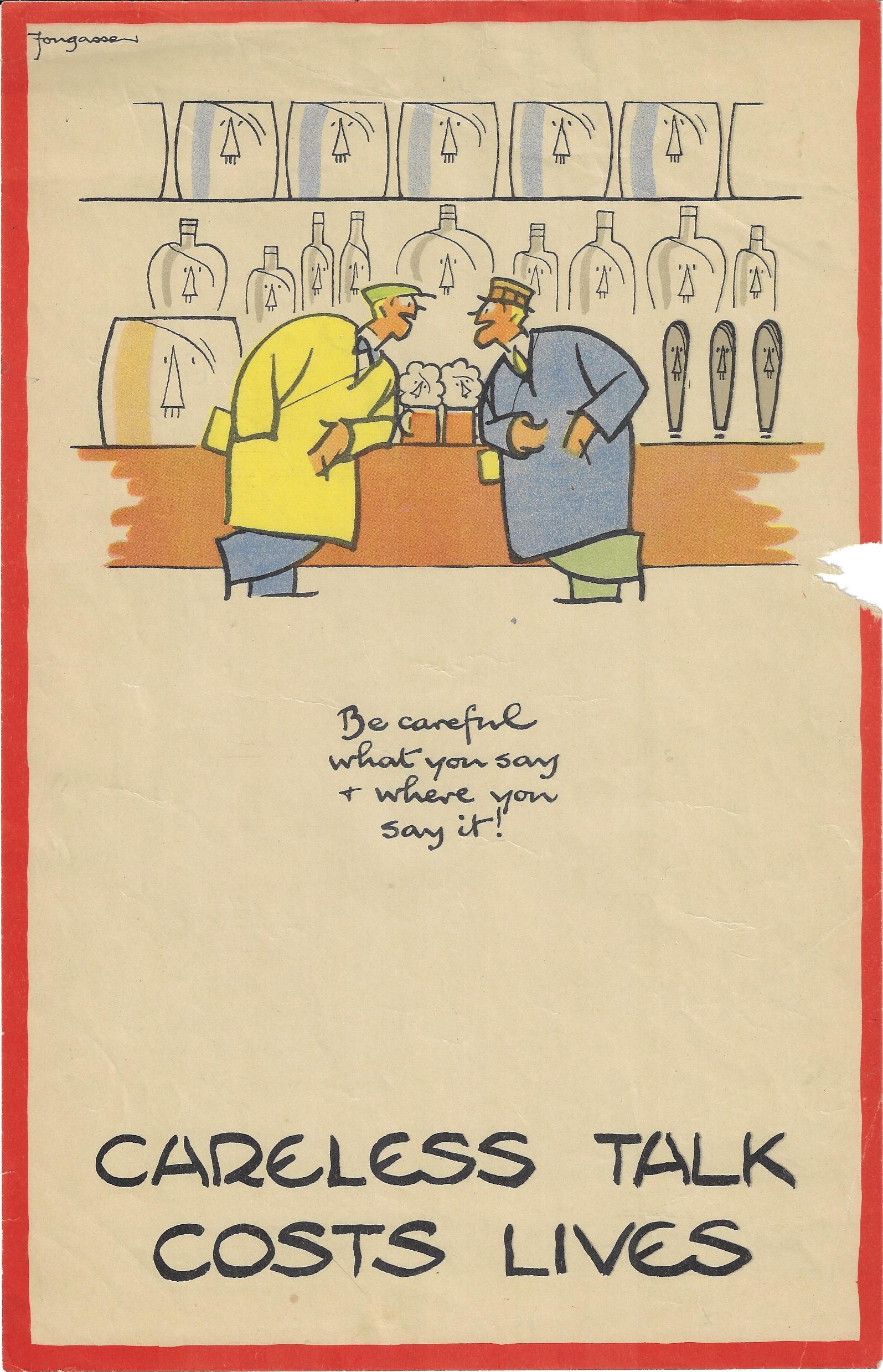
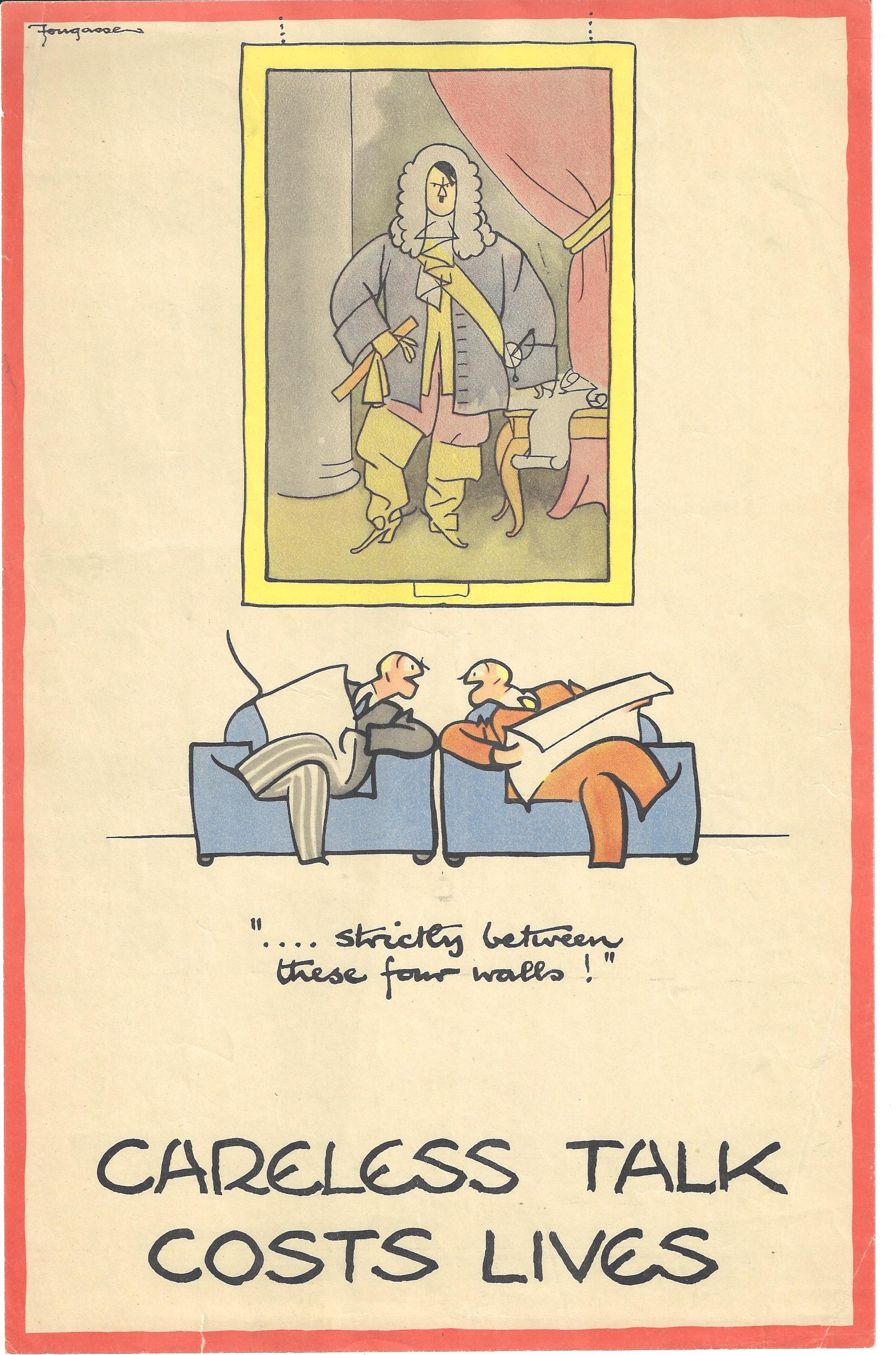
    This is one of eight posters in the very popular “Careless Talk Costs Lives” wartime propaganda series issued by the Ministry of Information and printed in the year of terrible and great struggle in Great Britain, 1940. 32x22cm, color lithograph, and printed on paper (though some were originally issued affixed to cardboard or another stiffer board).

    The series in general depicts people sharing a piece of possibly sensitive information that in the wrong hands and together with other pieces of info could reveal devastating secrets—and in each case there are figures lurking/loitering/disguised in the background waiting to collect the data, and generally a poorly disguised Hitler or Goering or both. Fougasse was able to make his message immediately memorable and understood because I think of his understated over-the-top visual humor. The images were funny, but the message was deadly serious. Also, you really didn’t even need to read the text to understand the message. (This is in the same vein as some of Thomas Nast’s finest work, conveying social content and a political message to the illiterate, making his devastating (and usually highly textual) cartoons understandable without needing to read them.) 

    (1) “Strictly Between Four Walls”.  In this poster (made a convenient size to be useful in virtually any small area and also abiding the wartime paper shortage) we see two men in big club chairs about to share some bit while the artwork-ensconced Hitler waits to hear the interesting parts. Fine condition. 1940. 32x22cm, color lithograph, and printed on paper $175

    Fougasse but of course it mustnt


    (2) “Be Careful What You Say and Where You Say It!” 1940. 32x22cm, color lithograph, and printed on paper. Here two chaps share suds in a Hitler-infused pub. Unfortunately there is a 15x15mm chip out of the image at middle-right edge, otherwise this is a nice crisp image.  $100

    Fougasse but of course it mustnt

    (3) “But of Course it Mustn’t Go Any Further!”, say two blokes in a 2nd class railway cabin, the feet and legs of Goering and Hitler dangling over them as they share their unsharable war information. Fine copy.  1940. 32x22cm, color lithograph, and printed on paper.  $200

    Fougasse but of course it mustnt

    (4) “You Never Know Who’s Listening!”. Two ladies on a bus share some wartime news while Hitler and Goering sit aloof and patient, absorbing all.  1940. 32x22cm, color lithograph, and printed on paper. Fine condition.  $200

     Fougasse but of course it mustnt

    ·Posted by :

    ·in:


  • Pledge Sheet for a Communist Organization Helping Political Prisoners. ca. 1925

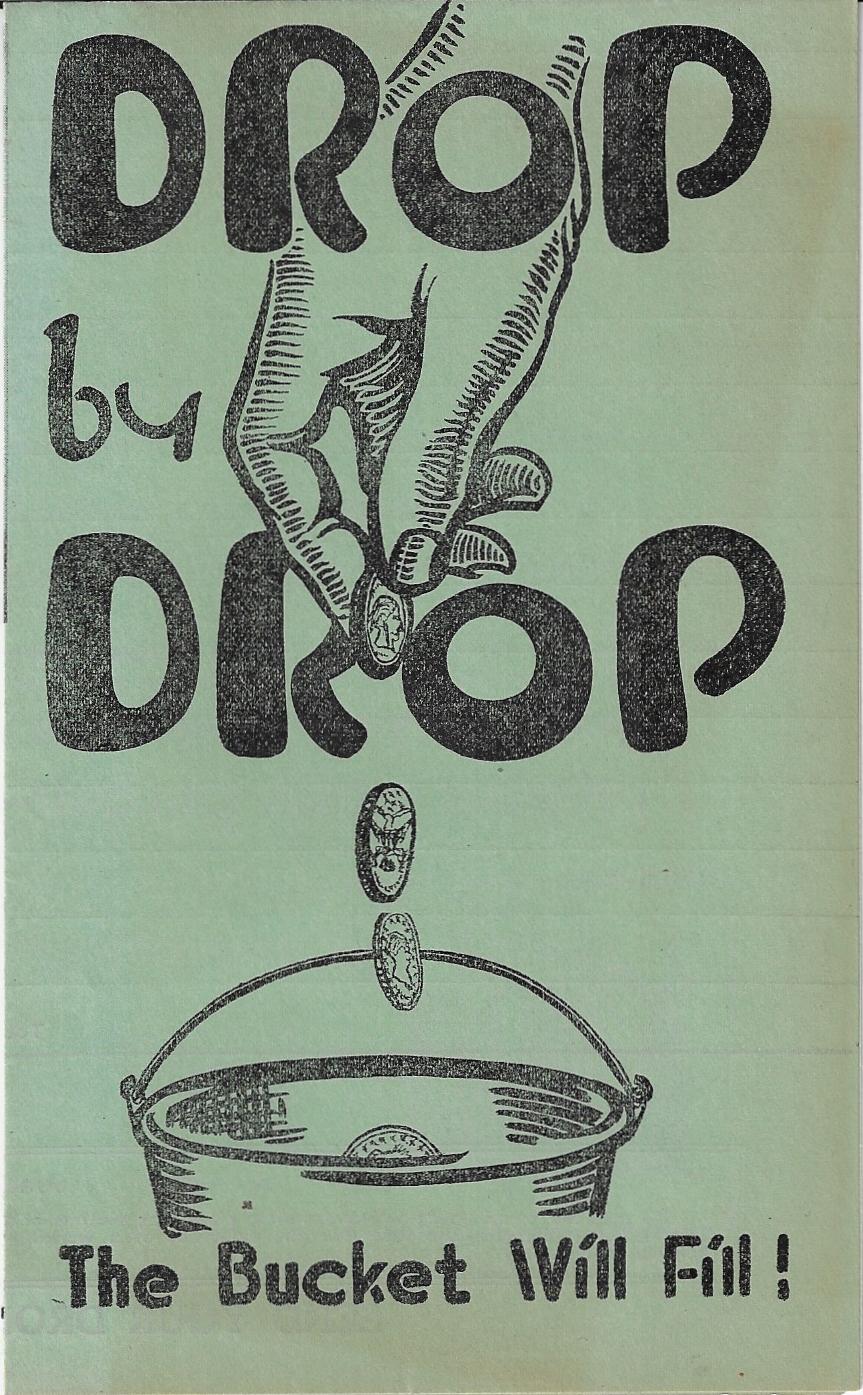
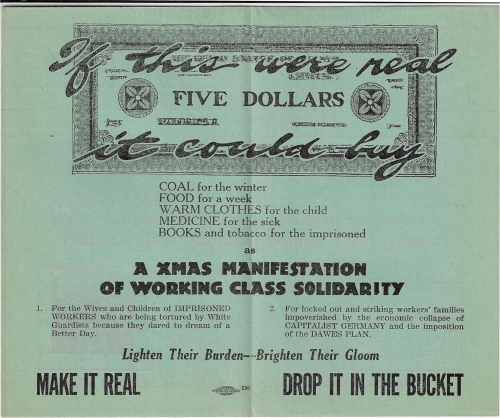
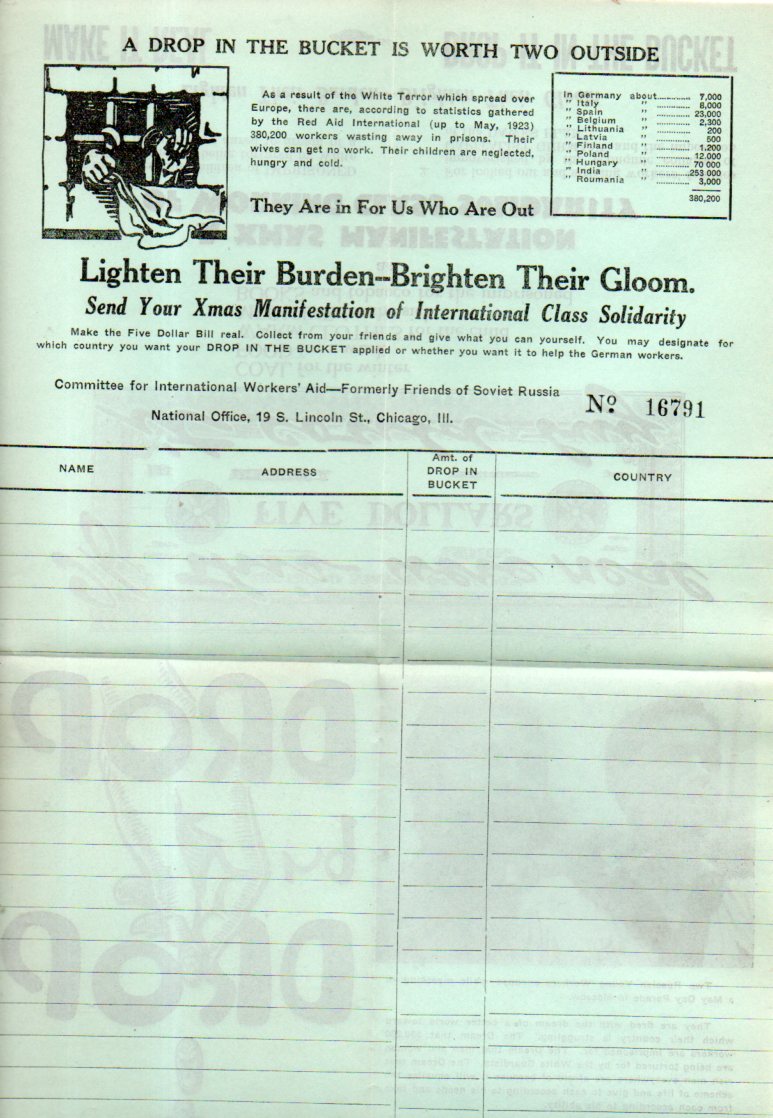
    Drop by drop _2_ JF Ptak Science Books  Quick Post

    Committee for International Workers Aid (formerly “Friends of Soviet Russia”) was a Communist organization created in Berlin in 1921 (as the International Arbeiter-Hilfe) to help raise money for famine and drought victims in Russia. It was evidently expanded to include collecting money to help victims and prisoner of Fascism, which seems to be the major target of this folding broadside. $200


    Drop by drop _3_

    The bucket here is a paper one, the pamphlet unfolding to be a broadside or broadsheet onto which you’d record peoples’ names and addresses and the amount of their contribution to help “class war victims of the laboring masses”, to help the imprisoned and their families (“they are in for us who are out”.  12.5×8 sheet folded into quarters. Fine condition save for a tear that I just made at the bottom center fold.  

    This is a scarce item–I could only find two copies (Yale and UC Davis) in WorldCat.  

    Drop by drop _4_

    ·Posted by :

    ·in:


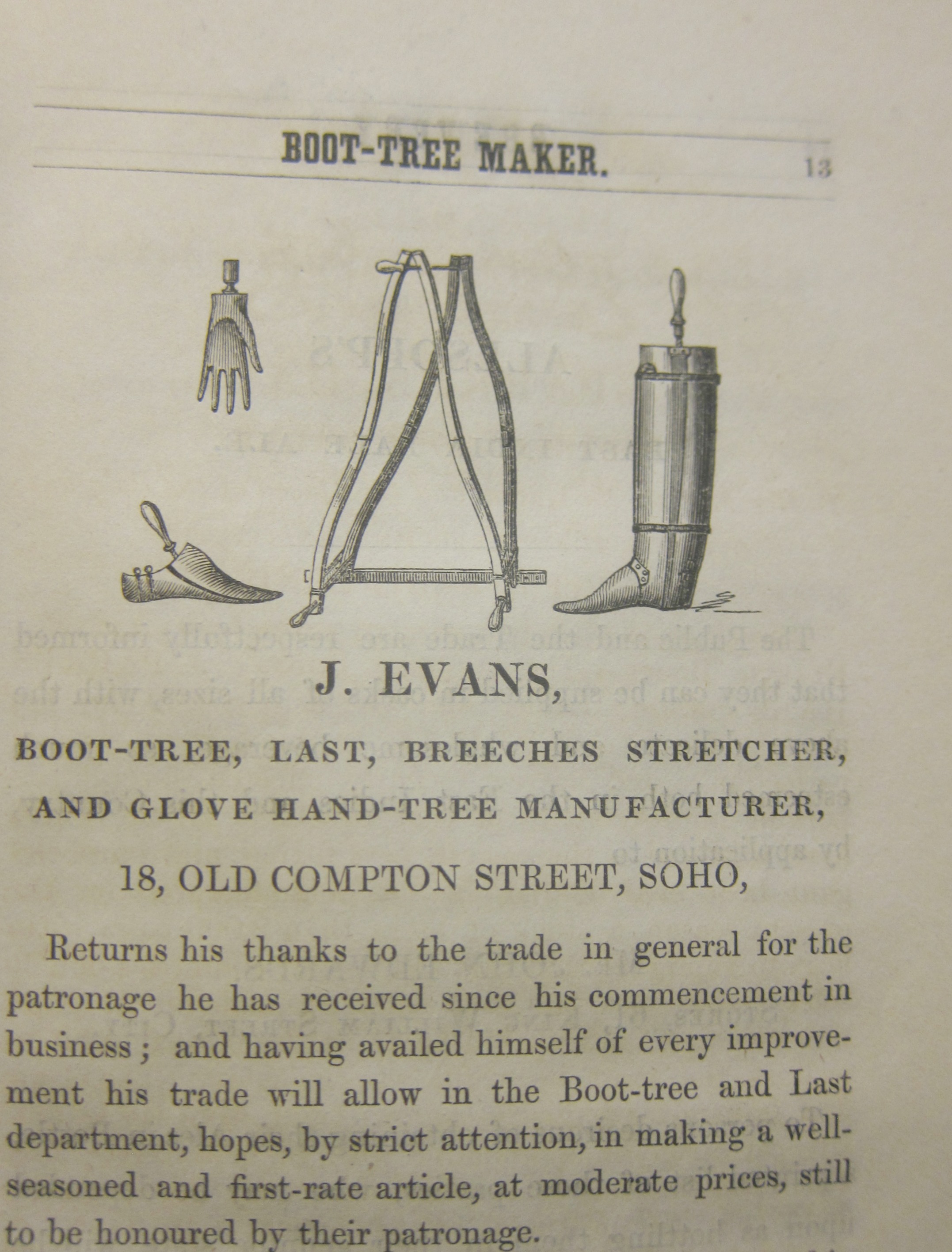
  • Some of the Minor and Major Businesses of London, 1845

    JF Ptak Science Books


    Panorama of Industry; or the Merchants’ and Shippers’ Guide; containing an account of only one of the principal houses, manufactories, or warehouses, in nearly every branch of industry in London. To which are subjoined, Useful Information and references for strangers.
     

    Published under the direction of Messrs. Brunswick and Dollingen, first year, at the offices of the Panorama of Industry…Cavendish Square, London. Brewster & West, printers, London: 1845.  Original wrappers. 8.5×5″, iv, 135pp, with an occasional trade illustration here and there. Delightfully presented and written.  Provenance: from the Boston Athenaeum, to the Library of Congress, with scant markings on the rear of the title page, and with the LC surplus/duplicate stamp on the interior of the front cover.  There is a 2″ tear at the top joint, and the flat spine’s printed title is only about 50% visible. Still, a nice copy (solid GOOD).  $150

    Panorama of Industry _4_

    This panorama of industry contains a splendid account of some integral businesses and industries in the London vicinity at mid-19th century which are now  and now nearly all entirely changed, with many of them being non-existent.Reading pamphlet like this, and city directories and such, looking at the listing of businesses, gives you an excellent feel for the essence of the business life of a city–businesses that are there because they are filling a need/demand. And so we see a big ads for

    • “artist’s colourman”–selling artists’ supplies 
    • blacking manufacturers,
    • razor manufacturers
    • cosmorama–essentially a large and sprawling perspective view that could be hundreds of feet long, utilizing “lenses” and creative lighting to give greater depth to the images)
    • coach builders
    • drilled needle manufacturers
    • dock builders
    • dyer and scourer
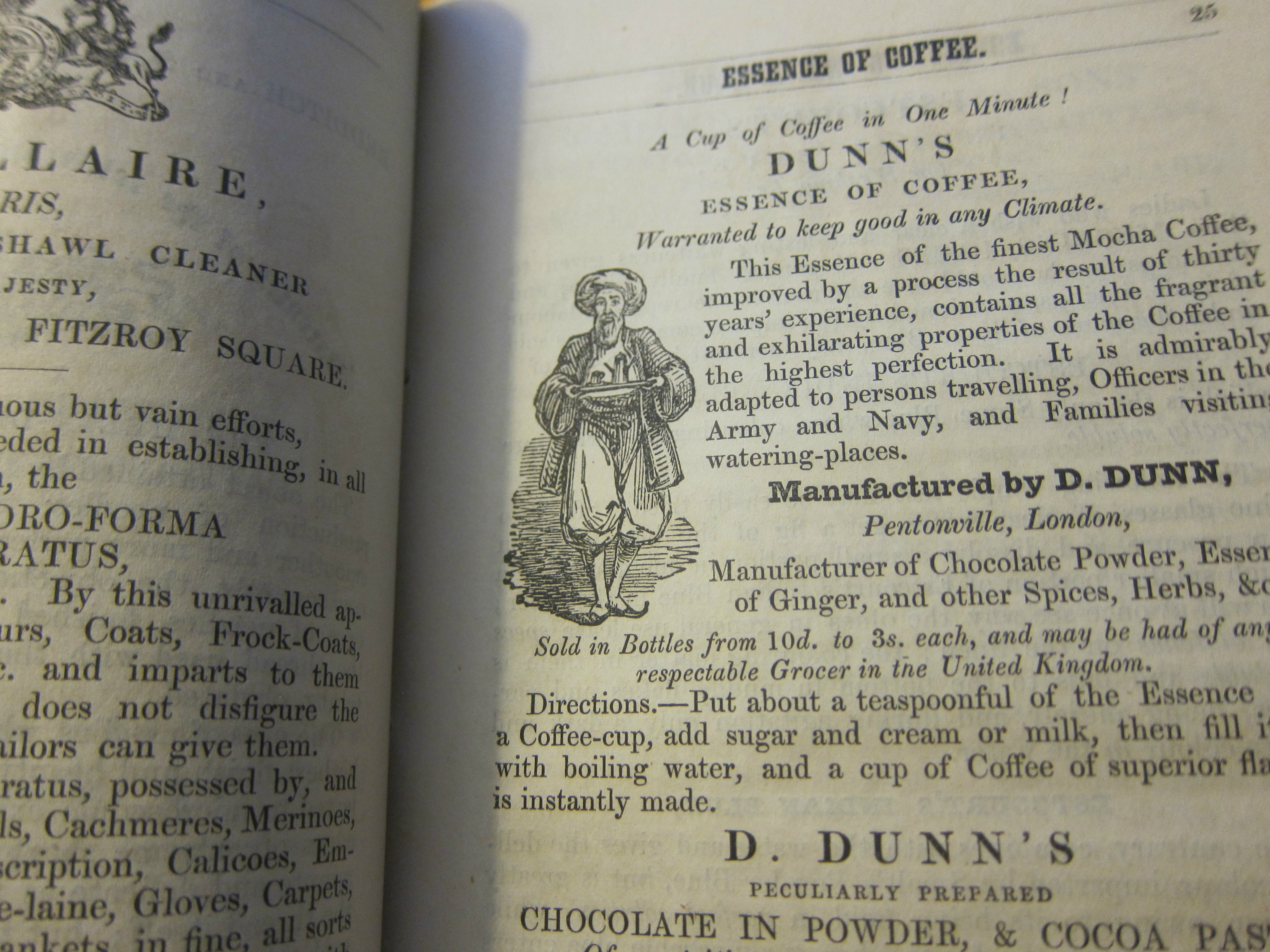
    • essence of coffee
    • floor cloth manufacturers
    • “French fancy goods”
    • “gold beater”
    • perforating machinery
    • preserved potato provisions
    • Sealing wax
    • stream engine boilers
    • straw hats
    • stay and corset makers
    • tea tray (papier mache) dealers
    • umbrella maker
    • water gilder
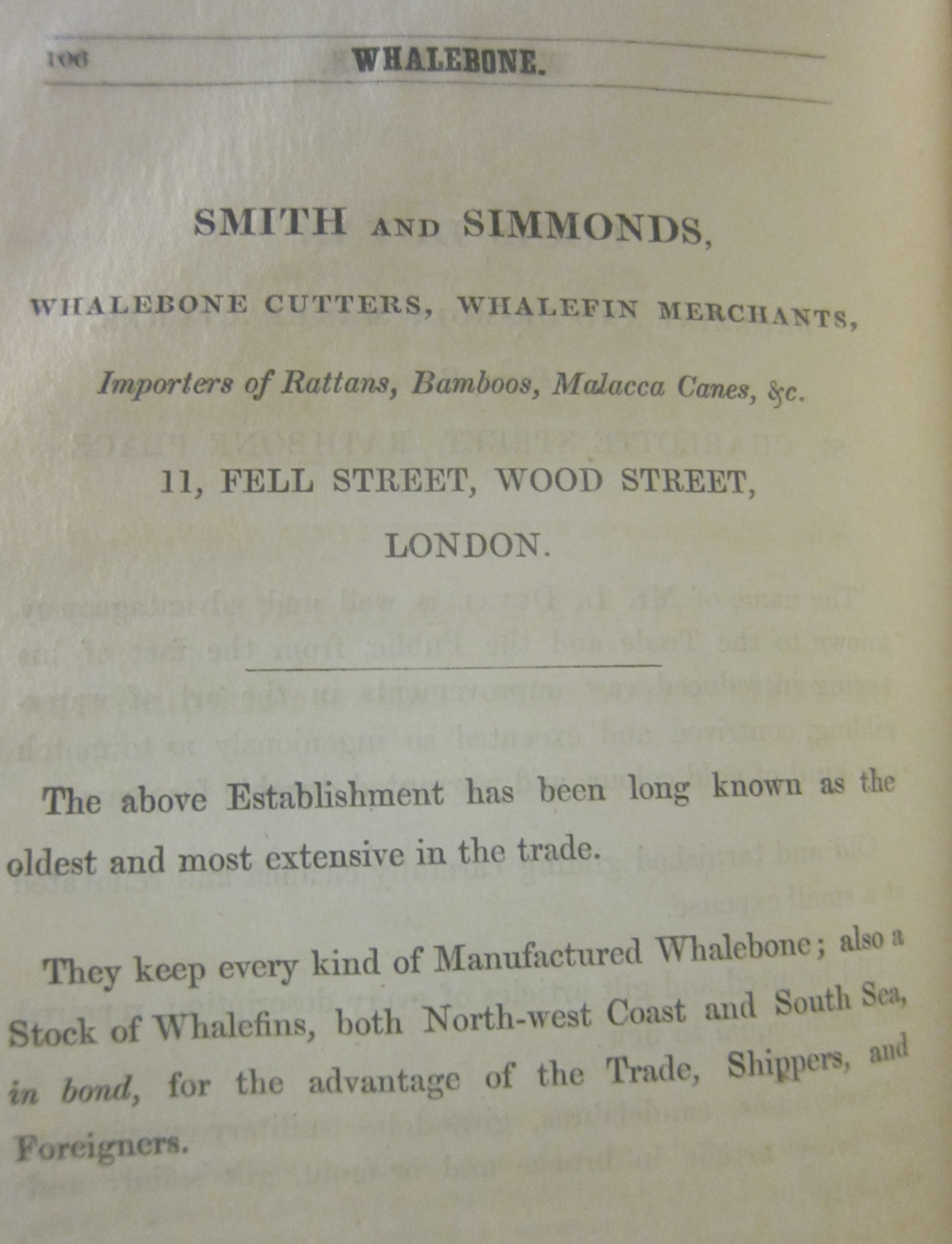
    • whalebone cutters
    • whalefin merchants
    • whip manufacturers

    ·Posted by :

    ·in:


  • Indicting Documents on Conditions in the Soviet Union, 1933/4

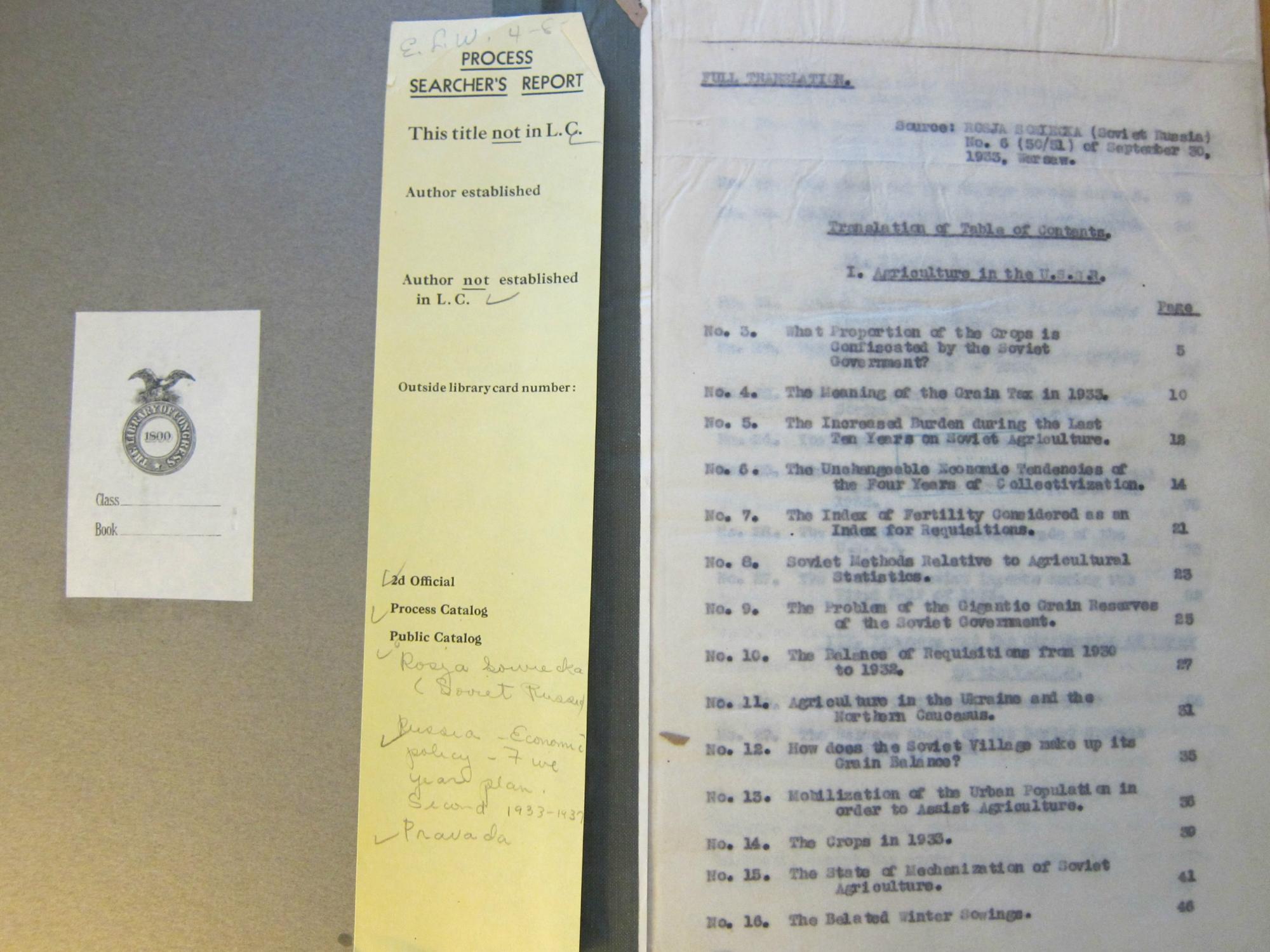
    Rosja Sowieka. 3 documents, September 1933, February 1934, March 1934. The three documents uniformly bound. SOLD

     (1) Rosja Sowieka (“Soviet Russia”, printed originally in Warsaw) No. 6 (50/51) of September 30, 1933.

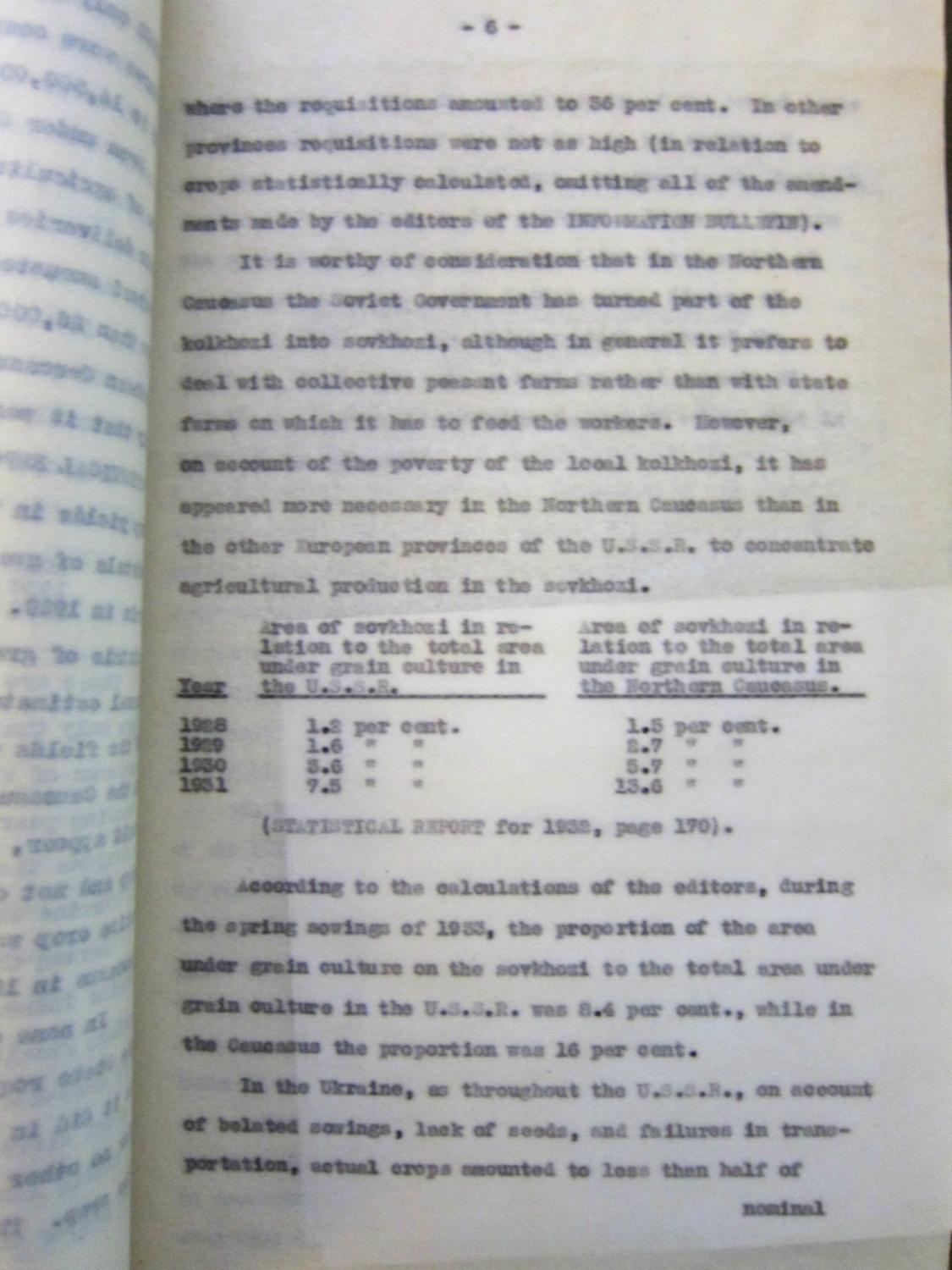
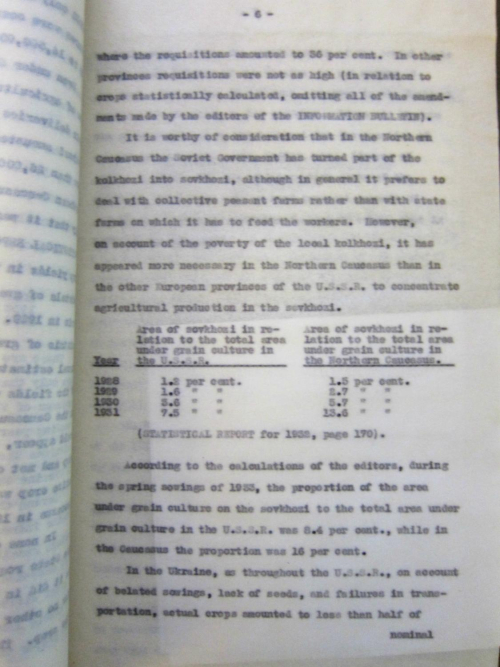
    The publication was produced at the U.S. Embassy in Warsaw, a translation from the Polish journal, as referenced by Kris Dietrich in his Taboo Genocide: Holodomor 1933 & the Extermination of Ukraine. There are definite and numerous statements in this journal that—even for the limited amount that I have read in it—are very critical of the Soviet leadership, particularly in regard to the grain tax and the effect of collectivization in Ukraine and the Northern Caucasus. This comes at the time of massive political and social repression, manipulating the criminal code, establishing a new constitution, and the beginning of the next wave of extermination by starvation in Ukraine (the Holodomor). For example, in the chapter on agriculture in the Ukraine (on page 7 of that section) we read the summary of the extent of the “participation of the Soviet State in the grain balance” by the kolkozi was at least 70% in Ukraine and about 100% in the Norther Caucasus, meaning that there there would be no food left for those farming it, with this particular paragraph ending “what is left for the peasants?
    Rosja

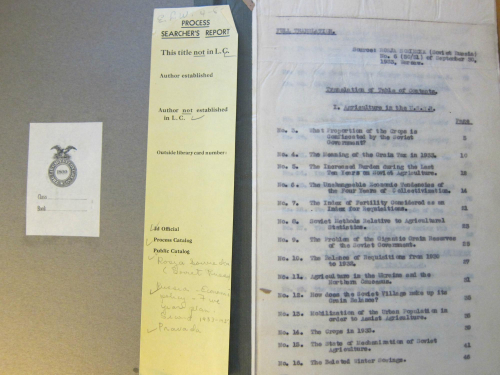
    This seems to be a some-generation carbon copy of typed sheets, made on very thin or onion paper. 12.25×7.5”, 126 leaves (printed on one side only). Bound in a work-a-day cardboard binding. Provenance: the Library of Congress, w/their surplus duplicate stamp rear cover. Condition: the binding (with cloth spine) a bit brittle, as it is made of 80-year-old cardboard; the text, however, is clean and bright. The typed imprint is a little clear on some page than others, meaning that there may be more than one particular generation of carbon that makes up the publication. Overall, a solid Good, and probably Very Good. Rare
    Rosja _2_

    • I. “Agriculture in the U.S.S.R.” Includes the following sections: “What proportion of the crops is confiscated by the Soviet Government?”, 9pp;“The Meaning of the Grain Tax in 1933”, 3pp;“The Increased Burden during the Last Ten Years on Soviet Agriculture”, 4pp; “The Unchangeable Economic Tendencies of the Four Years of Collectivization”, 12pp; “Soviet Methods Relative to Agricultural Statistics”, 2pp; “The Problem of the Gigantic Grain Reserves of the Soviet Government”, 4pp; “Agriculture in the Ukraine and the Northern Caucasus”, 7pp; “How Does the Soviet Village Make Up Its Grain Balance?”, 3pp; “Mobilization of the Urban Population to Assist Agriculture”, 4pp; “The State of Mechanization of Soviet Agriculture”, 8pp; “The State and the Village in the U.S.S.R.”, 11pp; “Signs of the Weakness of Soviet Agriculture”, 8pp; “Soviet Economic Diplomacy in the United States”, 9pp, “Concealed Inflation, or Deflation”, 5pp Plus 42. leaves. ”

    (2) Rosja Sowiecka (Soviet Russia) No. 11 (60/61), February 28, 1934, Warsaw. 12.5×8.5” (onion skin-like sheets), the text seeming to be some-generation of carbon copy.
    Three sections, 93 leaves, ca. 18,000 words.

    • I. Political-Social Record of the USSR (10 sections, 43pp). Including: “Remarks on the 15th and 17th Congresses of the Communist Party”, 4pp “Stalin and Lenin”, 2pp; “Changes in the Communist Party”, 5pp; “The Solidarity of Stalin’s new Staff”, 2pp; “Historical Sources of the Worship of Stalin”, 7pp; “Decisive Effects of the 1927 depression Upon the Evolution of the Communist Party”, 7pp; “The struggle for power and the fight for a program for 1927-1935”, 4pp; “The theory of the leader as a result of internal Bolshevik conflicts”, 3pp; “The problems of collectivization…” 5pp; “The progress of ‘socialism in only one country’ at the 17th Congress”, 5pp.
    • II. The Treaty Policy of the U.S.S.R. (5 sections, 27pp)

    • “Imperial debts and the Franco-Soviet Commercial treaty”, 5pp, plus four other sections on trade, for a total of 27pp.
    • III. Soviet Railways (6 sections 23pp.)

    Leafing through this volume I came upon a rusty paper clip secured at the bottom of a single page. I’m a fan of found book art, so I read a bit of what it was that it was possibly marking for attention. There was a word that jumped right out at me just above the metal dog ear–“liquidation”. This one was volume and published February 28, 1934, which would place it in the thick of a particularly brutal period of Soviet history: there was the Soviet famine of 1932-33 (just ten years after the last great famine there), the Holomodor of 1932-3 (in which 10 million Ukrainians were murdered via famine), a completely oppressive police state of massive suspicion that would lead to the deportation and death of millions, the Great Purge, and much more that would nearly cause a collapse of the Soviet Union come 1941. The “liquidation” here though was being used in reference to dismantling the farm collectivization scheme that lead to the destruction of so many millions of people, and was coming at the suggestion of ‘rightist” (meaning more liberal) leadership in the Soviet government. In this particular case, the suggestion was that of Martemyan Nikitich Ryutin, a high-level political functionary who was pro-peasant and definitely anti-Stalin, a stance that would lead in 1937 to his arrest and execution (all in a 24-hour period, like so many of them). Even though I really only know the highlights of Soviet history in the 1930’s, reading this section of the document definitely left me with a sad admiration for this man and his allies, because nobody was allowed to survive under Stalin who was not a believer in his removed self. 

    This was the path of following a simple paper clip. 

    (3) Rosja Sowiecka (Soviet Russia) No. 12, (62/63), March 30, 1934, Warsaw. 13×8”, 99pp altogether. Provenance: the Library of Congress. Sturdy if not somewhat worn. Contents:

    • I: Social-Economic Record of the U.S.S.R. 1. Reform of the Central Soviet Offices 4pp 2. Contributions in the Organization of Soviet Economy (Laws of September 9, 1929, and March 15, 1934).__+__”(3) Rosja Sowiecka (Soviet Russia)” No. 11 (60/61), February 28, 1934, Warsaw. 12.5×8.5” Three sections, 93 leaves, ca. 18,000 words. Including: Political-Social Record of the USSR (10 sections, 43pp); “Remarks on the 15th and 17th Congresses of the Communist Party”, 4pp “Stalin and Lenin”, 2pp; “Changes in the Communist Party”, 5pp; “The Solidarity of Stalin’s new Staff”, 2pp; “Historical Sources of the Worship of Stalin”, 7pp; “Decisive Effects of the 1927 Depression Upon the Evolution of the Communist Party”, 7pp; “The struggle for power and the fight for a program for 1927-1935”, 4pp; “The theory of the leader as a result of internal Bolshevik conflicts.


    ·Posted by :

    ·in:


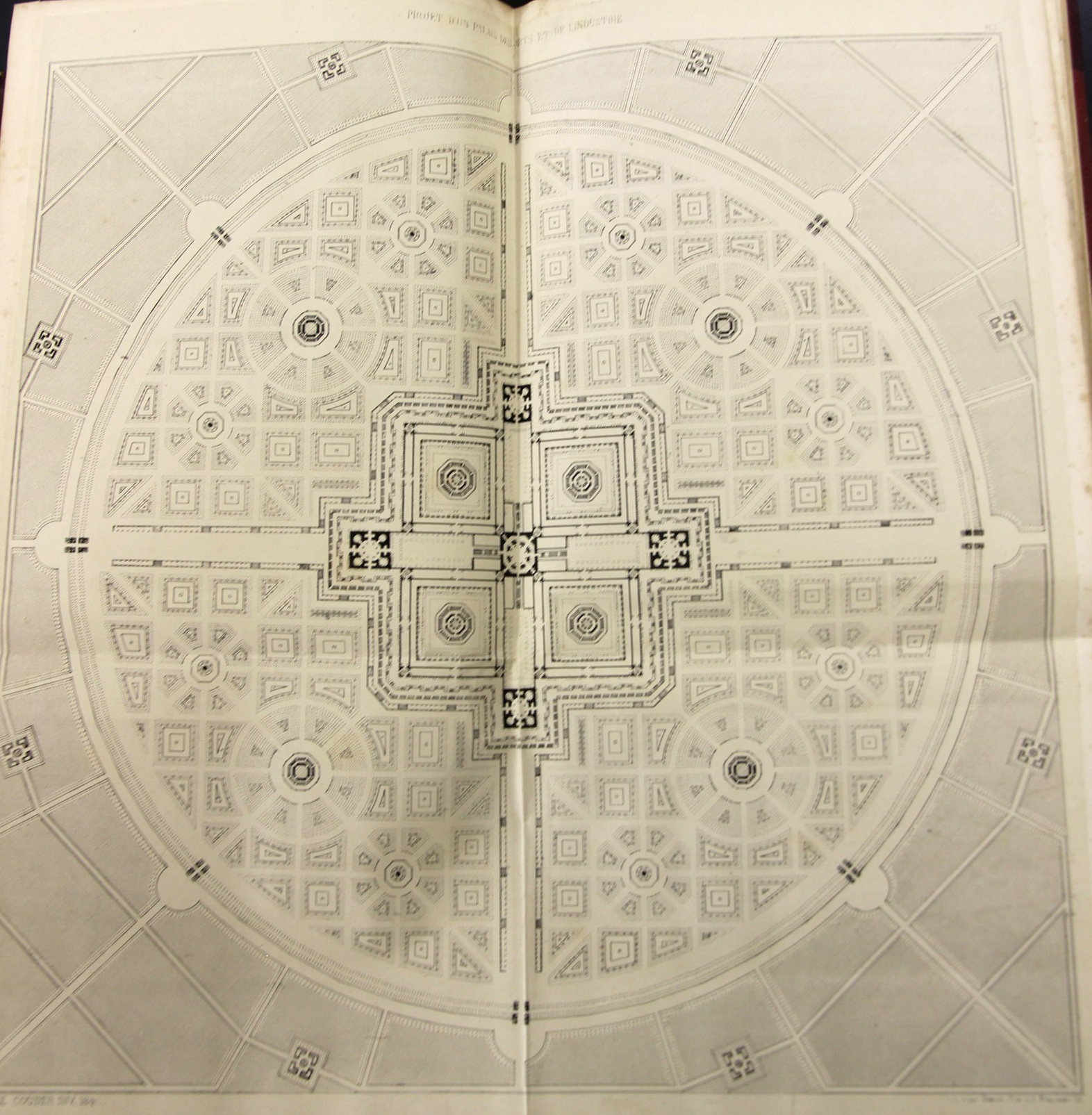
  • A Scientific/Industrial Vision of the Future City (1842)

    JF Ptak Science Books  

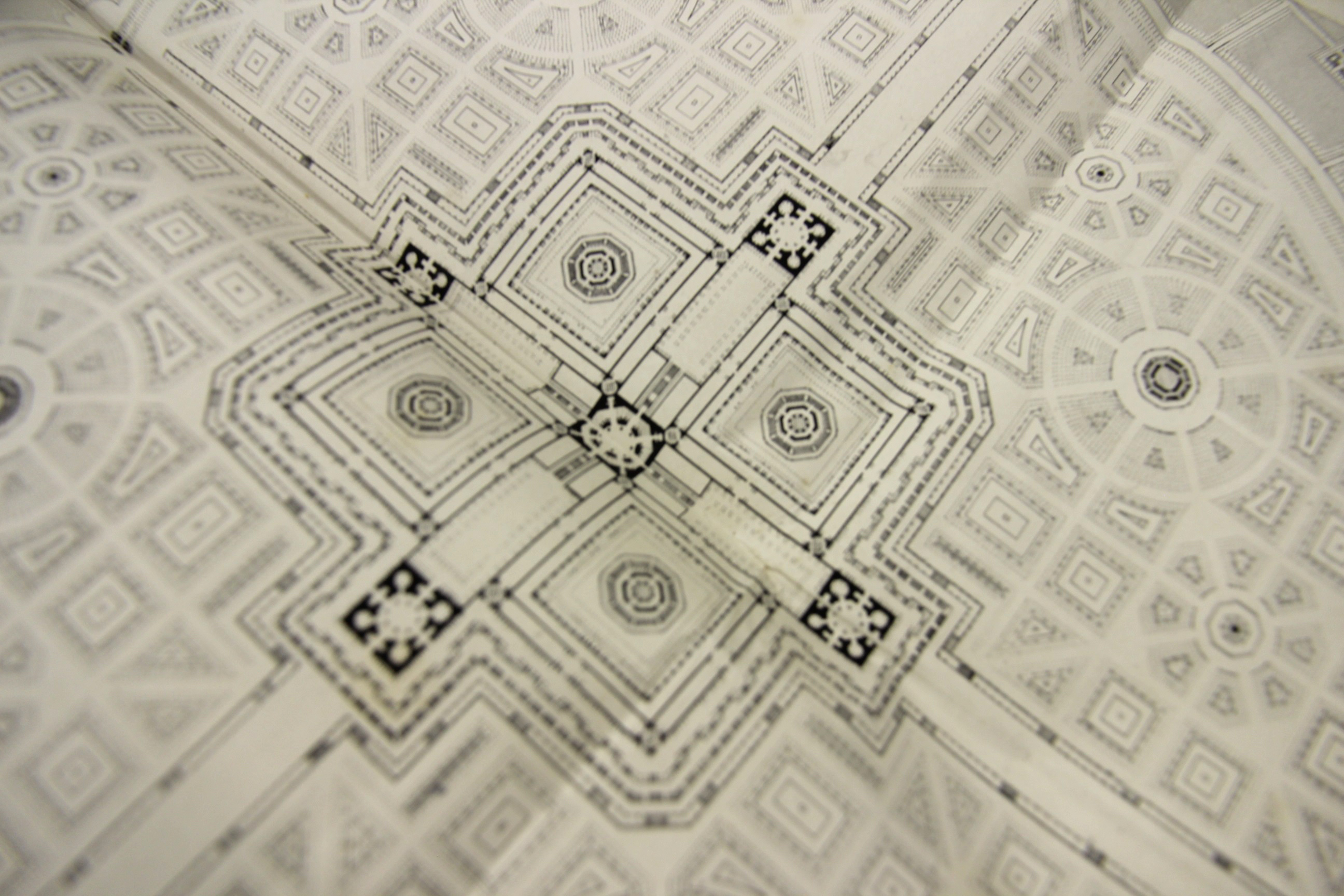
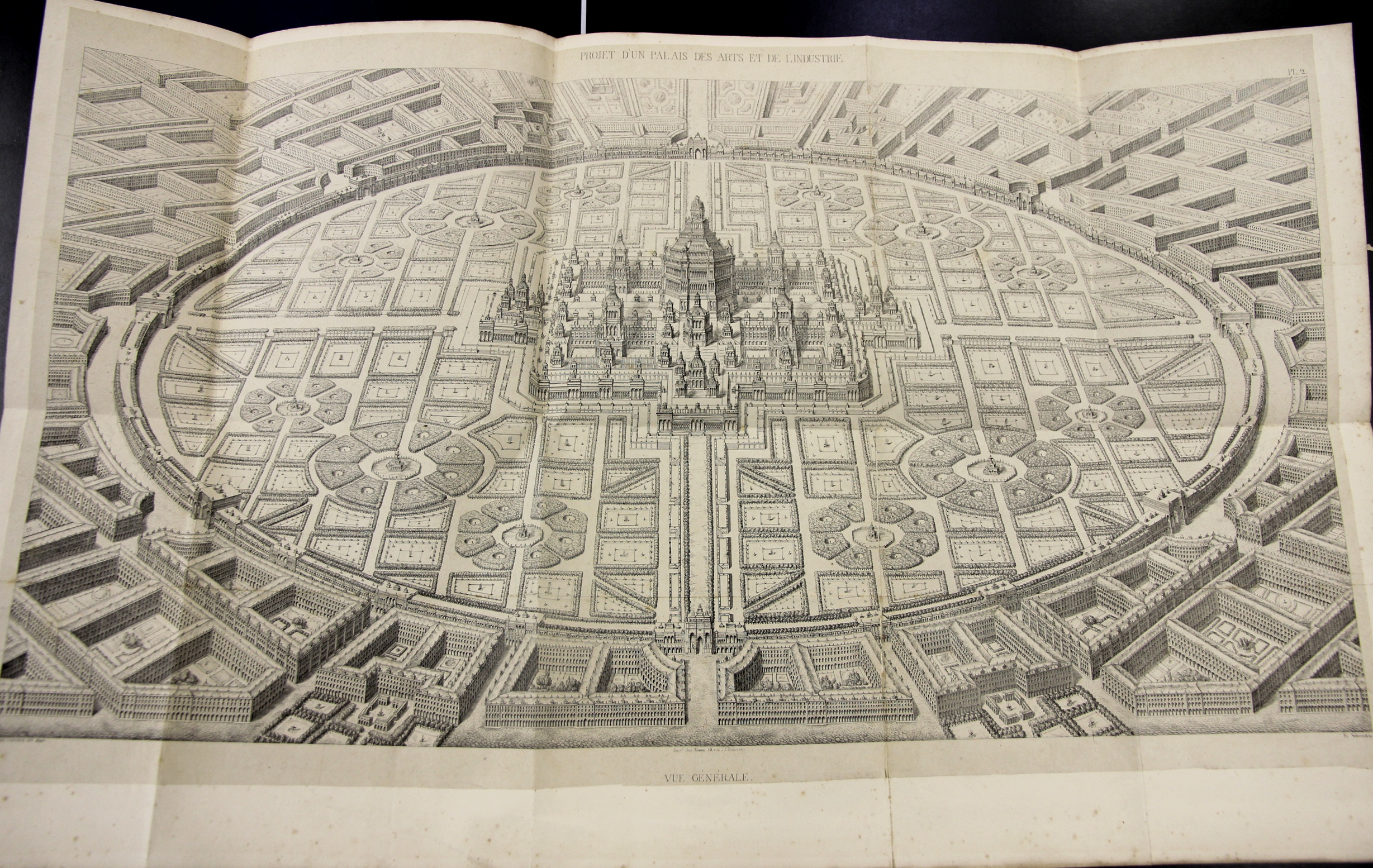
    Amedee Couder, L’architecture et l’industrie comme moyen de perfection sociale, published by Brockhaus and Avenarius in Paris, 1842.   13 x 10 inches, 52 pp, 9 plates, including 4 large folding architectural plans.  Large-margin copy, signed presentation by Couder on the title page.  Bound with a decorated calf spine, pebbled cloth boards with tips.  From the Julius Frank library, given to the Brooklyn Public Library, and then deaccessioned.  There are a few old library markings on the title page, as well as two bookplates, plus an old (19th c) card holder at back.  A nice, solid copy, with beautiful images. Scarce. $325

     Amedee Couder wrote L’Architecture et l’industrie comme moyen de perfection sociale, a fine work that was published in Paris (by Brockhaus et Avenarius) in 1842.  The work presents Couder’s rather stroing visionary plans for a perfect city of industrial and scientific harmony, laid out in suggestively-fractal harmony, with the suggestions of a Renaissance-laden snowflake design. Whatever it was, it was beautiful to look at, at least on paper, though I’m not so certain that I’d care to live in the canyonlands of stone and shadow on the other side of the garden wall of the perfect scientific-industrial conclave. 

    Couder 1

    Couder 2 detail

    Couder 5

    ·Posted by :

    ·in:


  • Courses for Union Organizers (1938)

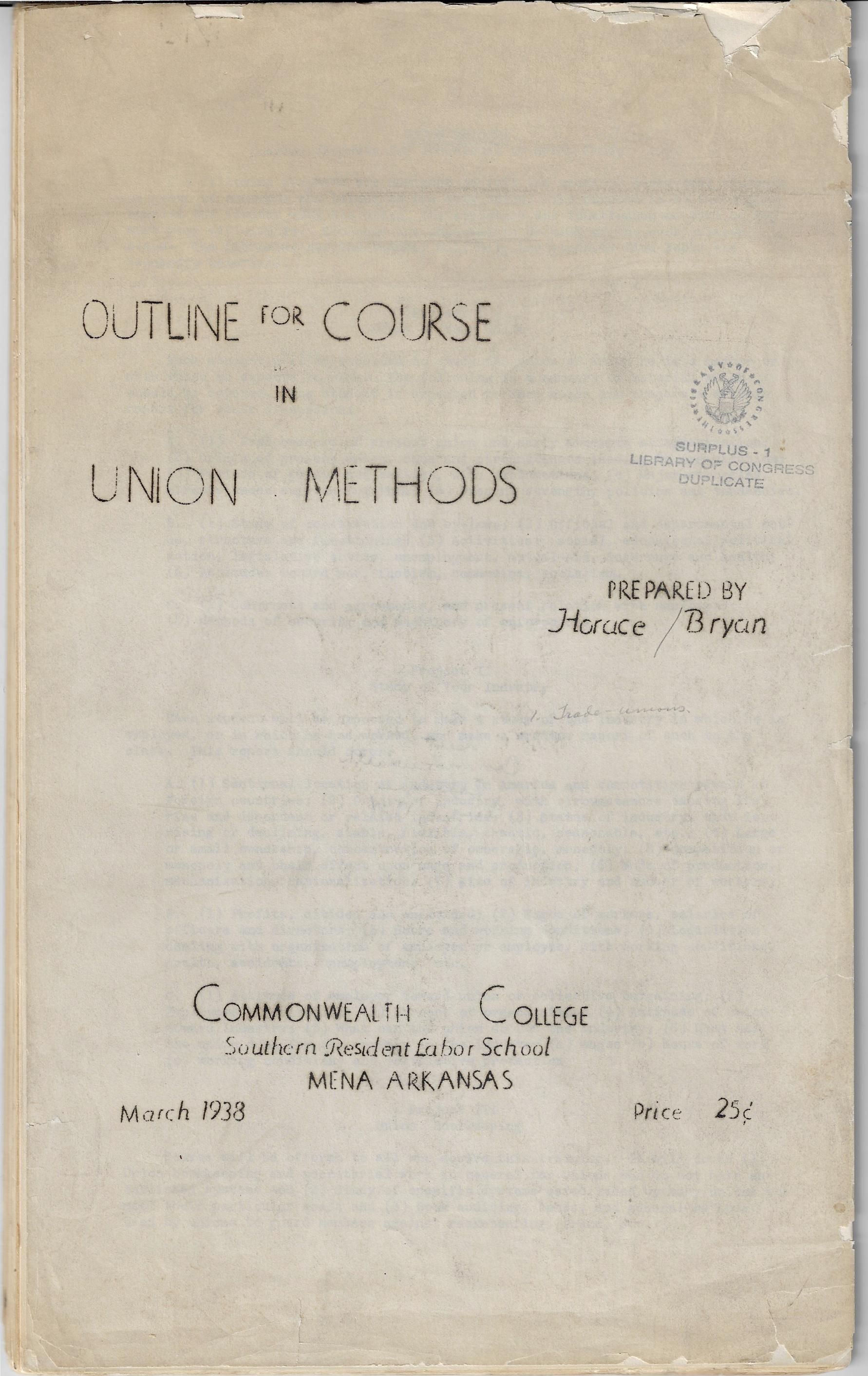
    Books  commonwealth CollegeHorace Bryan, Outline for Course in Union Methods. Printed at Commonwealth College (Southern Resident Labor School, Mena, Arkansas, March 1938. 13.5×8.5″, 35 mimeographed sheets, staple bound at top. Each sheet runs about 600 words, or 20,000 words or so for the document.   There are six sections: Union Methods, Craft and Industrial Unionism, Job Organization, Organization and Conduct of Strikes (the longest section), Collective Bargaining, and Union Activity and Law.  Condition: Good, overall. The title page is dusty and has been detached; there are several short tears here and there in the text, and the last section (each section being stapled together) is detached from the whole. Provenance: Library of Congress, with their rubber stamp surplus/duplicate on the cover, as well as the tiny “LC” perforated stamp on the bottom of page 1.   Rare–only one copy listed in WorldCat/OCLC.  250.00

    “Commonwealth College was started in 1923 to recruit and train people to take the lead in socio-economic reform and prepare them for unconventional roles in a new and different society.”–Wiki It ceased operations in 1940, and was a labor studies school in a similar standing of the Highlander Folk School, Work People’s College, Brookwood Labor College, and others. “Christian socialist the Reverend Claude Williams, “the preaching hillbilly”, then served as director from 1937 until 1940. Several people identified with Commonwealth were actively involved during this period in organizing the Southern Tenant Farmers’ Union, which aimed to unite the economic interests of tenant farmers, both black and white, and with the Congress of Industrial Organizations (CIO).”–Wiki, again. 

    ·Posted by :

    ·in:


  • William H Smyth Was An Engineer And Social Outsider Y Visionary Who Broadly Outlined An Ideal Society Governed By Scienti

    Two contributions by William H. Smyth, who was an engineer and social (outsider-y?) visionary who broadly outlined an ideal society governed by scientists and somehow via a democratic means. Perhaps the only thing remembered about his proposal was the word he coined (in 1919) to refer to this new form of government, “Technocracy”.–(noted by Beverly H. Burris, Technocracy at Work, p. 27)

    • Technocracy, National Industrial Management, Practical Suggestions for National Reconstruction. (1931/2) 9×6, 7pp. Signed presentation copy to Miss Belle Sherwin, who at the time was president of the League of Women Voters
    • Technocracy, First and Second Series. Social Universals, 1921. 9X6”, 67pp.

    Provenance: first title, League of Women Voters and then to the Library of Congress; second title, Carnegie Institution, and then Library of Congress. Both copies are similarly bound. They each have a 6mm “LC” perforated stamp at the bottom of the front cover, and the LC surplus stamp on the rear cover. Both are Good/VG.  $195/pair

    “The technocratic movement has its origins with the progressive engineers of the early twentieth century and the writings of Edward Bellamy,[15] along with some of the later works of Thorstein Veblen such as Engineers And The Price System written in 1921. William H. Smyth, a Californian engineer, invented the word “technocracy” in 1919 to describe “the rule of the people made effective through the agency of their servants, the scientists and engineers”, and in the 1920s it was used to describe the works of Thorstein Veblen.”

    ·Posted by :

    ·in: