A Daily History of Holes, Dots, Lines, Science, History, Math, Physics, Art, the Unintentional Absurd, Architecture, Maps, Data Visualization, Blank and Missing Things, and so on. |1.6 million words, 7500 images, 4.9 million hits| Press & appearances in The Times, Le Figaro, Mensa, The Economist, The Guardian, Discovery News, Slate, Le Monde, Sci American Blogs, Le Pont, and many other places… 5000+ total posts since 2008.

Book Category: Social History

  • 10,000 Windows Filled with Cigarettes (1937)

    American tobacco _3_Riggio, Vincent. American Tobacco Company, Sales Organization. Printed by ATC on fine laid paper. 7”x5”, 61pp. Embossed cloth. FINE copy. (Provenance: few scant small internal stamps from the Library of Congress.) I can’t find this in WorldCat/OCLC.  $95

    Riggio (1878-1960) was a classic rags-to-riches story: Sicilian-born, lower East Side, quit school to work, opened barber shop on 117th, etc., and by 1947 was one of the highest paid execs in the country at $484k/yr. (Its hard to translate this wealth, even after fiddling with CPI—at the time though 30 million of the 39 million families in the US Census for 1950 made less than $5k/yr.)

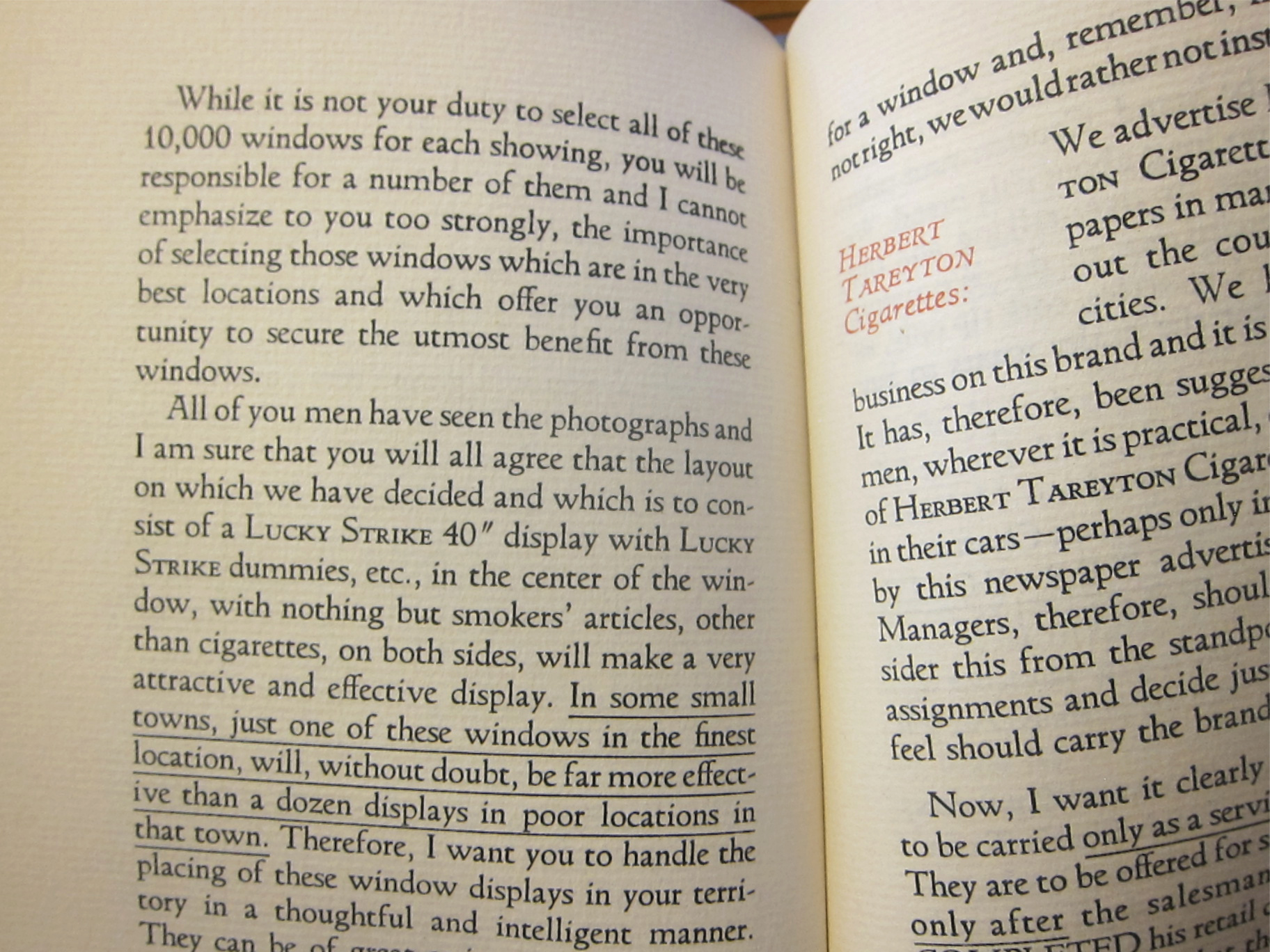
    Anyway Riggio’s book was boosterism and a how-to for sales. The one part that stopped me was the instruction on filling “10,000” windows in high-traffic areas with ciggie displays.  There were 93 cities in the US with 100k or more population in 1930 (105 in 1940, 50 in 1910, and 68 in 1920) so even if the windows concentrated on the big cities that’s 100 big windows (think classic giant window displays busy intersection) per each of the 100 cities. That’s in addition to massive amount of print ads and radio/sporting event sponsorships. (And remember the print ads used movie stars, doctors, lawyers, Santa, sports figures, and so on, plus the combination of the cigarette with the possibility of expressive manhood AND sexual allure.) These folks got their message across, which was too bad. 

    And for the record ATC was founded in 1890 by Buck Duke, and was one of the original 12 companies1 comprising the first index for the Dow Jones averages (1896). ATC was busted2 in 1911 as a monopoly, after which it became a simple oligopoly.

    Notes:

    1. The twelve companies included American Cotton Oil, American Sugar, American Tobacco, Chicago Gas, Distilling & Cattle Feeding, General Electric, Laclede Gas, National Lead, North American, Tennessee Coal & Iron, U.S. Leather preferred, and U.S. Rubber.

    2. United States v. American Tobacco Company, 221 U.S. 106 (1911), “…which held that the combination in this case is one in restraint of trade and an attempt to monopolize the business of tobacco in interstate commerce within the prohibitions of the Sherman Antitrust Act of 1890.”–Wikipedia
    ·Posted by :

    ·in:


  • 105 Dont’s from NYPD, 1937

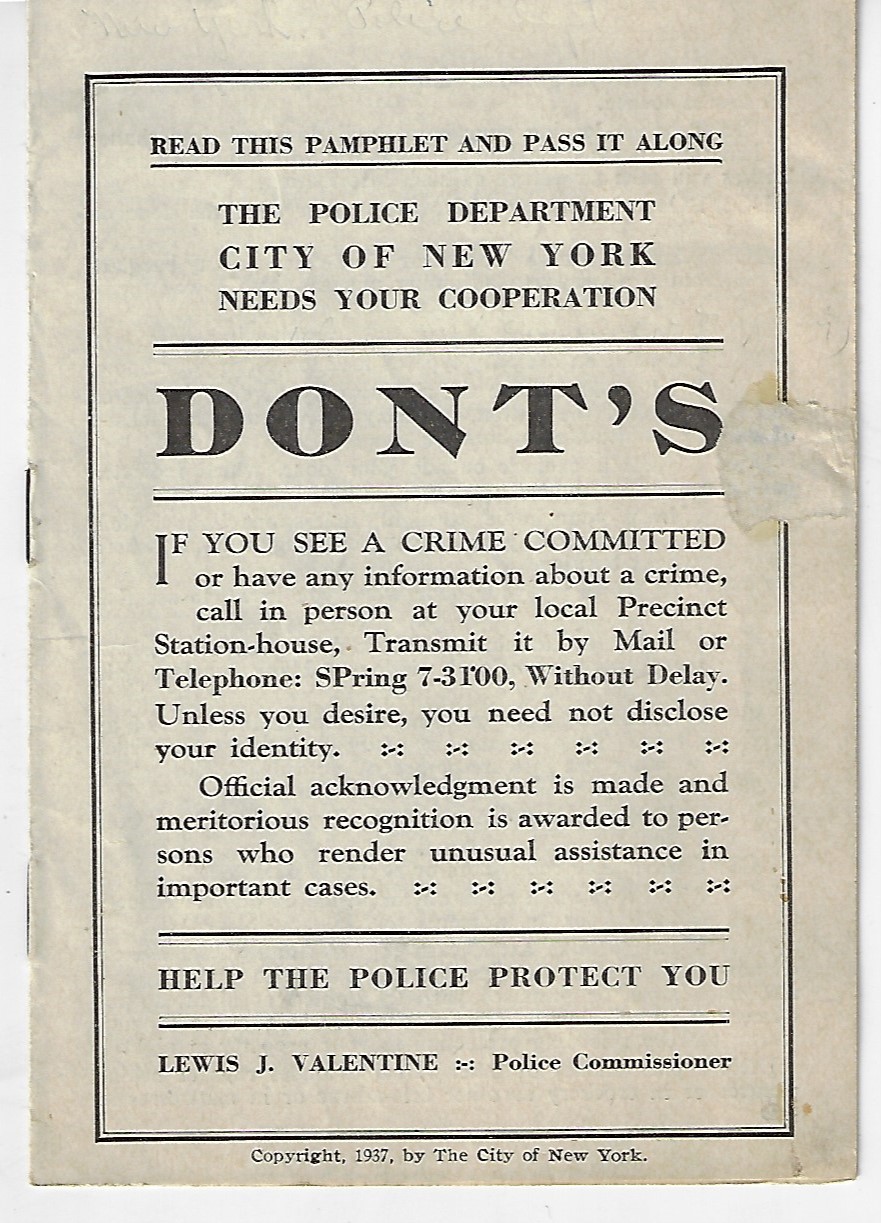
    Police dontsLewis J. Valentine, Dont’s. The Police Department City of New York Needs Your Cooperation…Help the Police Protect You.  Published by the City of New York, and written by the Police Commissioner. 6″x4″, 7pp. Original self wrappers. Very nice copy, though there is a smidge of the right margin rubbed away on teh front corner, affecting no text, and measuring about 15x20mm. I cannot find it in WorldCat/OCLC, under various attempts at different titles.  $35

       Commissioner Valentine offers the reader of this little tract a list of about 105 different DONT’S (“DON’T leave your rings in the wardrobe” and “DON’T leave your handbagin the baby carriage under teh pillow” and other such nuggets from Depression-era NYC.  

    ·Posted by :

    ·in:


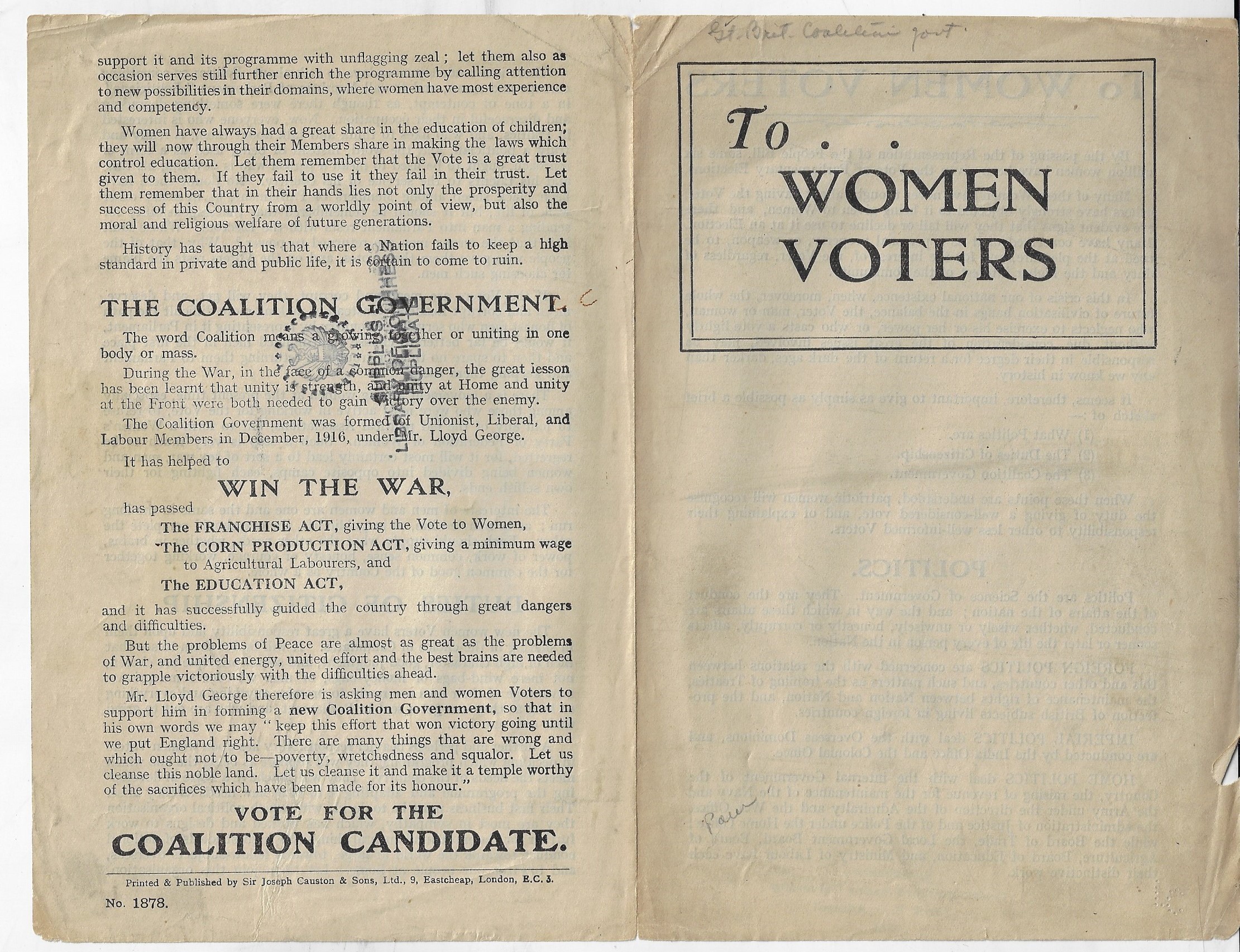
  • To Women Voters (1918)

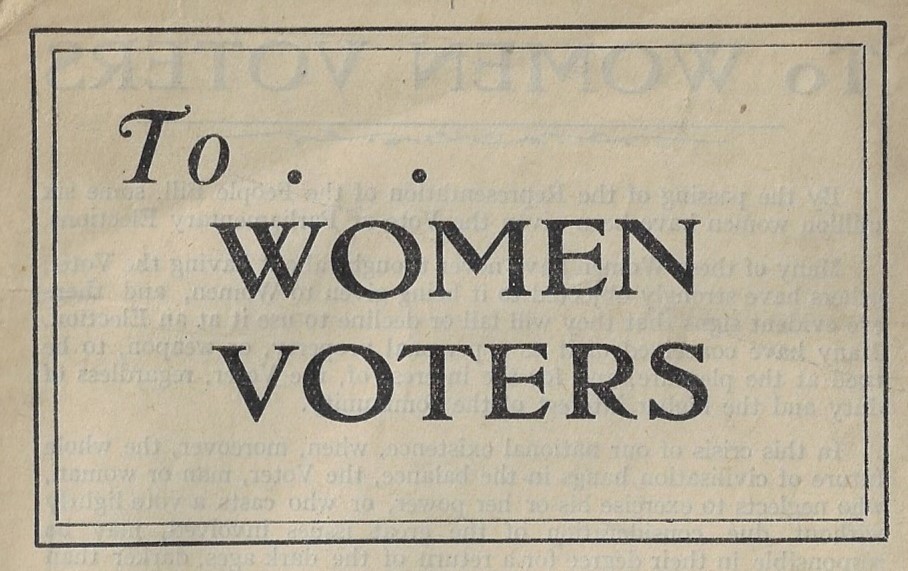
    Books covers to women voters detailTo Women Voters. Printed by Sir Joseph Causton (viz Midsomer!) of London for the Lloyd George U.K. Coalition Government, 1918.  8.5” x 5.5”, 4pp (one sheet folded in half.  Provenance: from the collection of Prof. E.D. Adams to Leland Stanford Jr University, and then the Library of Congress. The LC surplus stamp is on back cover, while the small Stanford stamp is at the bottom of page 2.  Good condition, with some bumps and short tears around edges. Printed on very thin paper. $125

    The coalition government of Lloyd George lasted until 1922 when it was replaced by that of Bonar Law. 

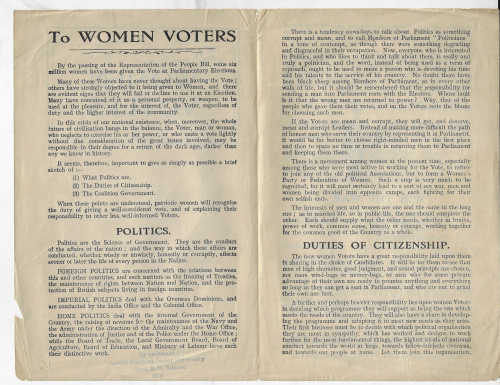
    This pamphlet was a very remedial introduction to women, defining the subjects of “Politics”, “Duties of Citizenship”, and the “Coalition Government”, mostly in the service of having the women who could vote and would do so to vote for the Lloyd George ministry. 

    “The Representation of the People Act 1918 widened suffrage by abolishing practically all property qualifications for men and by enfranchising women over 30 who met minimum property qualifications. The enfranchisement of this latter group was accepted as recognition of the contribution made by women defence workers. However, women were still not politically equal to men (who could vote from the age of 21); full electoral equality was achieved in Ireland in 1922, but did not occur in Britain until the Representation of the People (Equal Franchise) Act 1928.”–Wikipedia

    Books covers women voters inside


    Books covers women voters inside

    ·Posted by :

    ·in:


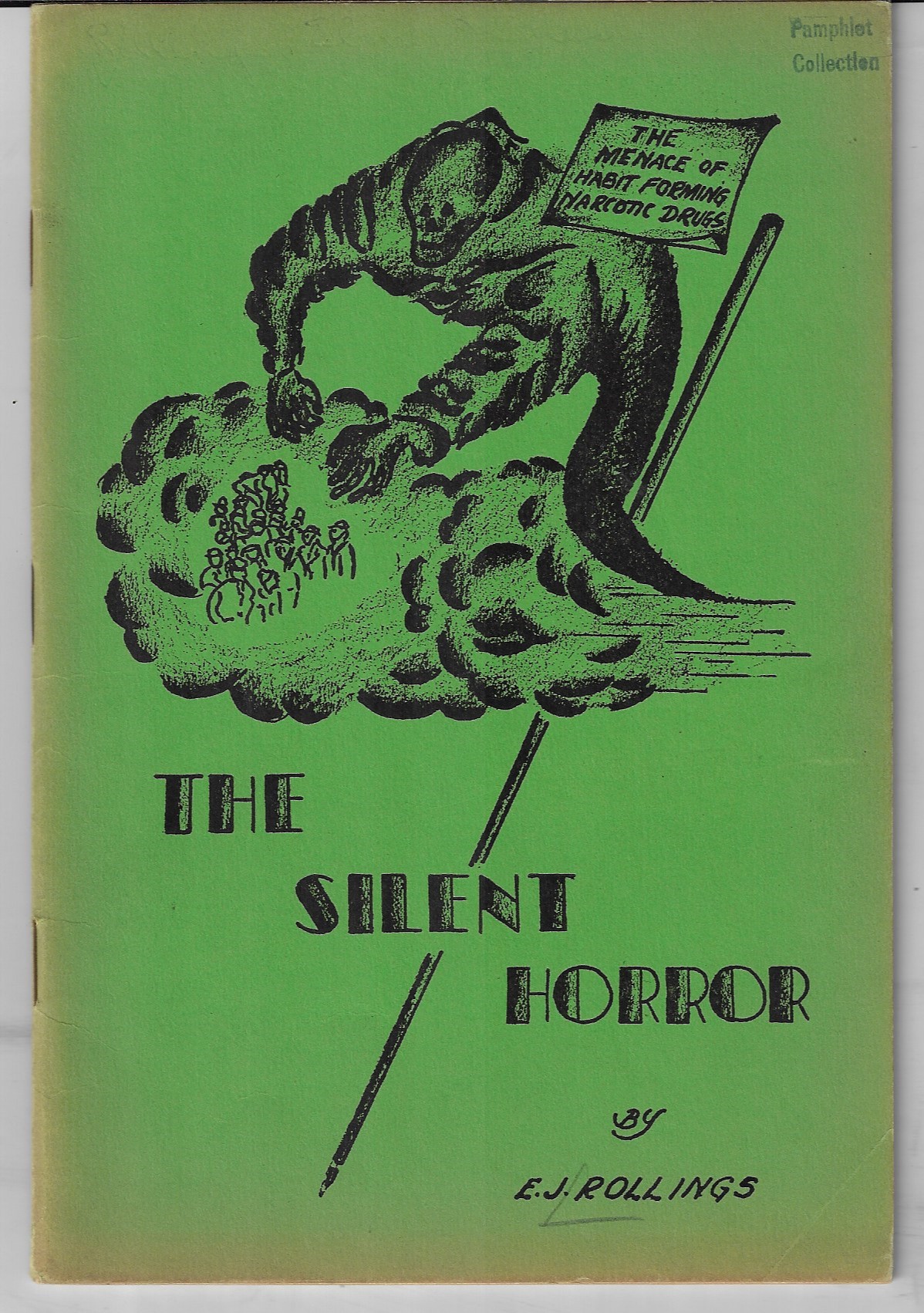
  • “Each Marijuana Cigarette is Capable of Producing Destruction, Disaster and Death!” (1939)

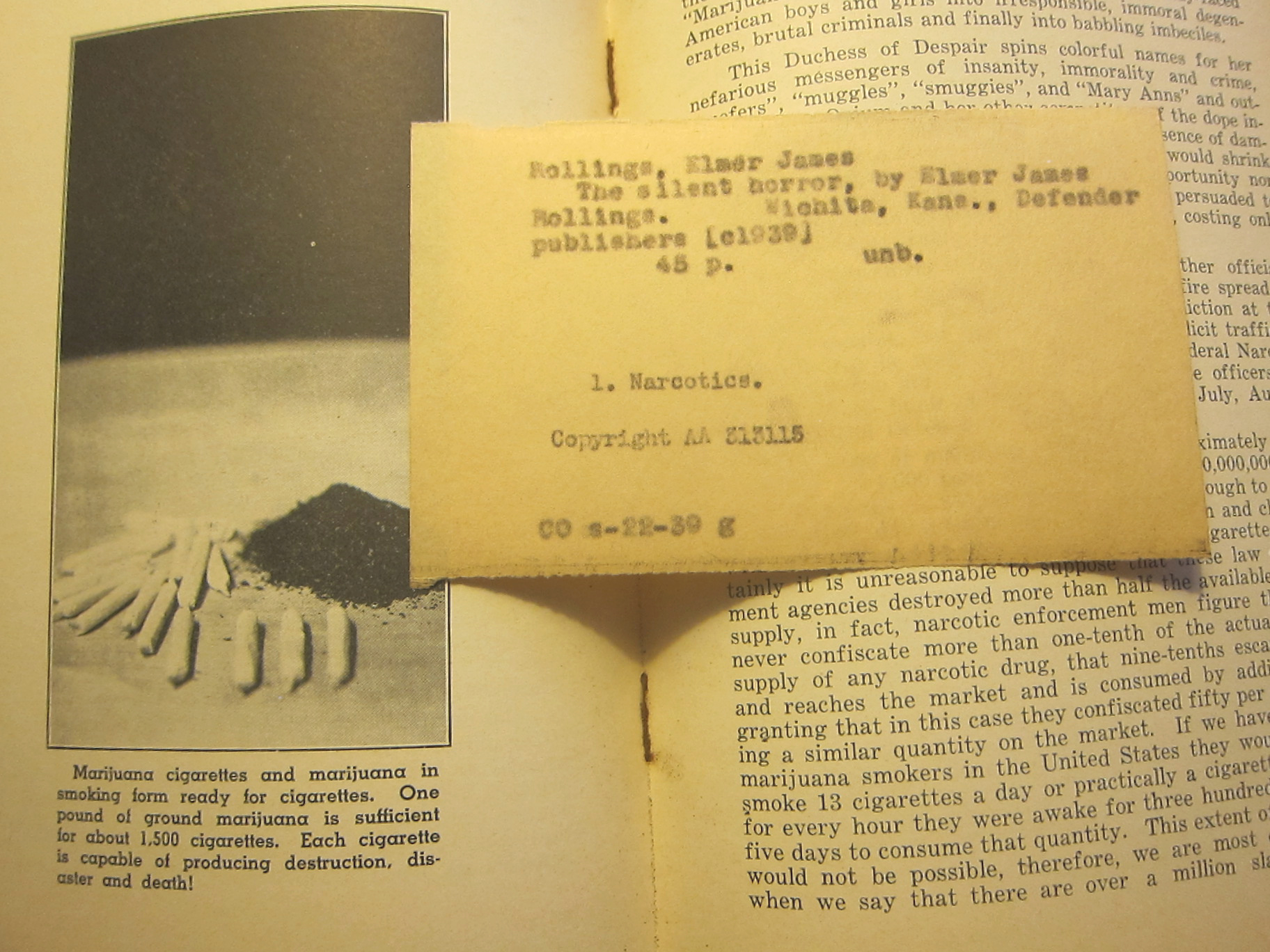
    Books silent horror(Rev.) E.J. Rollings, The Silent Horror. Defender Publishers, Witchita, Kansas. 1939. 9”x6”, 45pp. Original decorated wrappers. Inexpensive production, printed on not-very-good paper, though still in nice shape, but with browning around the edges of the very green wrappers. $250

    Provenance: Library of Congress, with their stamp on the rear cover. Also: there is a carbon copy of the entry for the original LC card catalog card. Quite nice.

    • WorldCat locates only ONE copy, oddly enough.

    The major chapters deal with the shades of narcotics: Opium, the King of Dope; Crown Prince, Morphine; Cocaine, the Princess of Perdition; Marijuana, the Dutchess of Dispair; the Dope Peddlers; and Addicts.

    Other books by Elmer James Rollings: Marijuana, the weed of woe:The peril of the poppy; The world today in the light of Bible prophecy.

    The book is very highly inflamatory, and includes stories and languages such as this:

    “An eighteen-year-old boy in a Midwestern “city smoked two “reefers” and an hour later choked his sweetheart to death because she refused his shocking, lustful advances, born in a marijuana-crazed brain. He later testified that he loved her and had intended to marry her and when normal would never have dreamed of an improper suggestion, let alone the horrible murder” 

    “A sixteen-year-old boy shot his mother and father to death with his father’s shotgun after smoking several “Mary Anns” given to him by a new friend whose acquaintance he made by chance. He could neither explain nor remember the killing when the effects of the drug had worn off and sobbed himself into hysterical grief when told of his crime. And so, on and on, runs the record of thievery, forgery, banditry, kidnapping, brutal murder, degeneracy, and rape, all chargeable to this paralyzer of conscience and inflamer of depravity — Marijuana! “

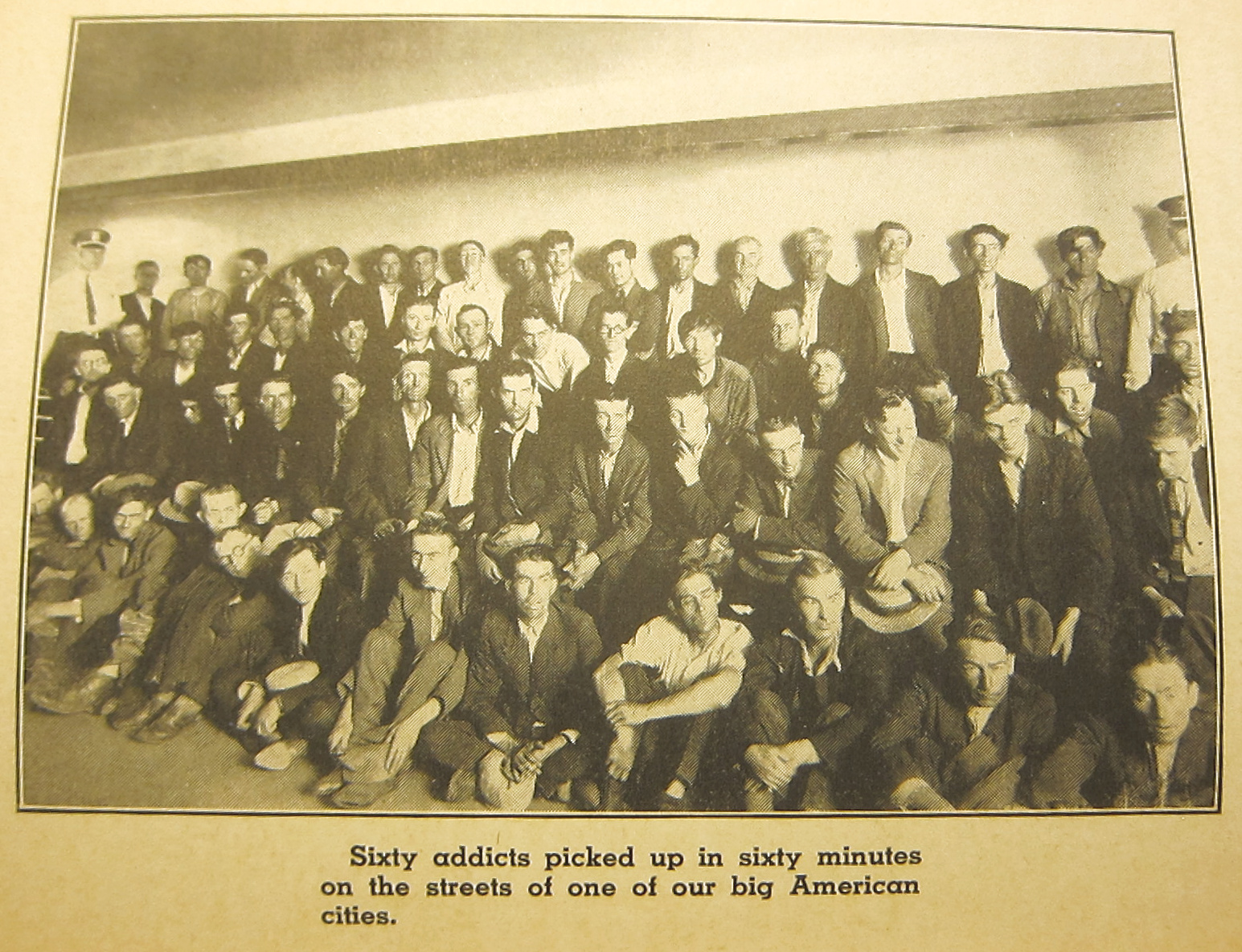
    There are several provocative photos, as well.

    Books silent horror addicts

    Books SIlent Horror (1)

    ·Posted by :

    ·in:


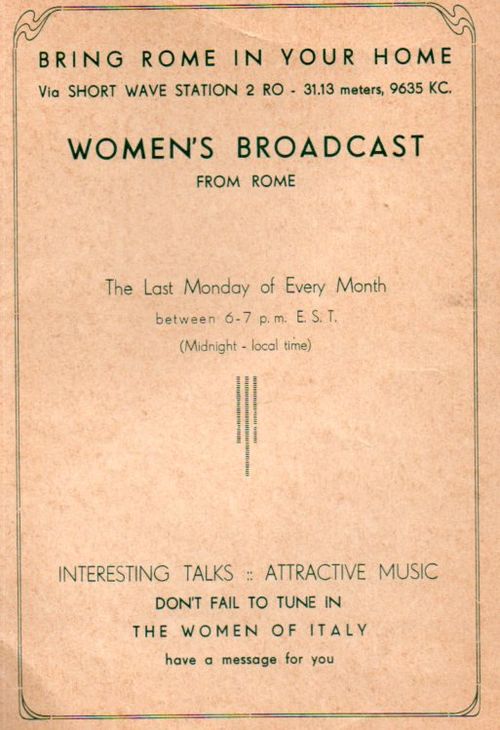
  • “Bring Rome in Your Home”–Fascist Women of Italy Radio Broadcasts, 1937

    Women of facism103

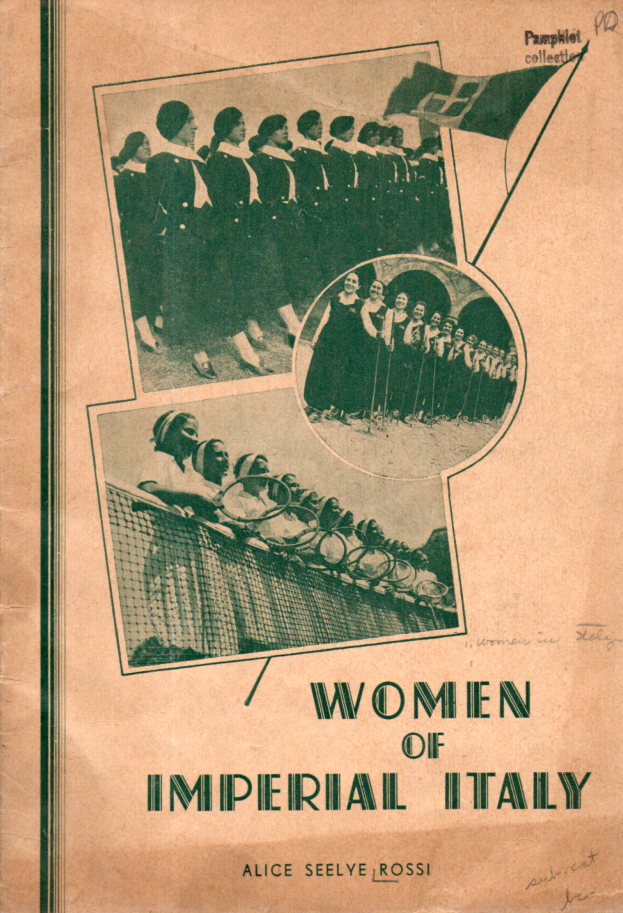
    Women of Imperial Italy, by Alice Seelye Rossi; printed in Rome, 1937, by Stamperia Romana. 8″x5″, 20pp, numerous photo illustration. Printed wrappers somewhat dusty. Ex-libris stamp on rear cover. Scarce title: WORLDCAT locates only 2 copies.  $120

    In regards to the answer to the question above: not anymore. Probably not so much in 1937, though I am sure that the picture of the “fascist” in the “fascist Woman” was prettier and rosier than what people would come to know by 1942.  In 1937, when this pamphlet was published, the “women” were broadcasting far and wide–one aspect of radio propaganda from the Fascists in Italy, a hearts-and-minds attempt at a part of the coercion of Italia imperiale that occupied the years 1935 until the end of the war. By 1937 Mussolini’s National Fascist Party (in power since 1922) had extended itself by occupying Libya and by invading Ethiopia; Albania, Greece, and Yugoslavia would come between 1939-1941, as would France, when Italy entered the war in 1940 and entered into the country at the tail-end of the German invasion. So the broadcast heard here in 1937 was the beginning of Italy looking for the “Fourth Shore”, and deep into Mussolini’s Fascist state. (Ezra Pound would also do his level best to look the part of traitor that he was, lobbying the Italians for years before being allowed to get on the air to broadcast to the Allies on his misunderstood and inscrutable economics, vicious and virulent anti-Semitism (offhandedly addressing the U.S. president as “Franklin Delano Jewfeld/Jewsevelt”), and general attempts to tell the U.S. population to not support the war effort against the Fascists and that instead they should be down on their knees praising Mussolini, who he saw as another Thomas Jefferson. And so on.)  

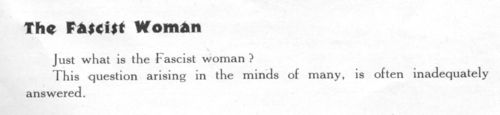
    I’ve shared the few pages in this brief pamphlet on the Fascist Woman as it appears in the pamphlet. For the great majority of people living in the U.S., Europe, Great Britain,  Australia, New Zealand, Canada, and many other places, the idea of the “fascist” would change dramatically in about a year, and then spin its grinding way downward until the start of the war in 1939. 


    Women of facism102


    Women of facism101

    ·Posted by :

    ·in:


  • A Tale of Massive Deceit and Corruption in the Coroner’s Office, NYC (1915)

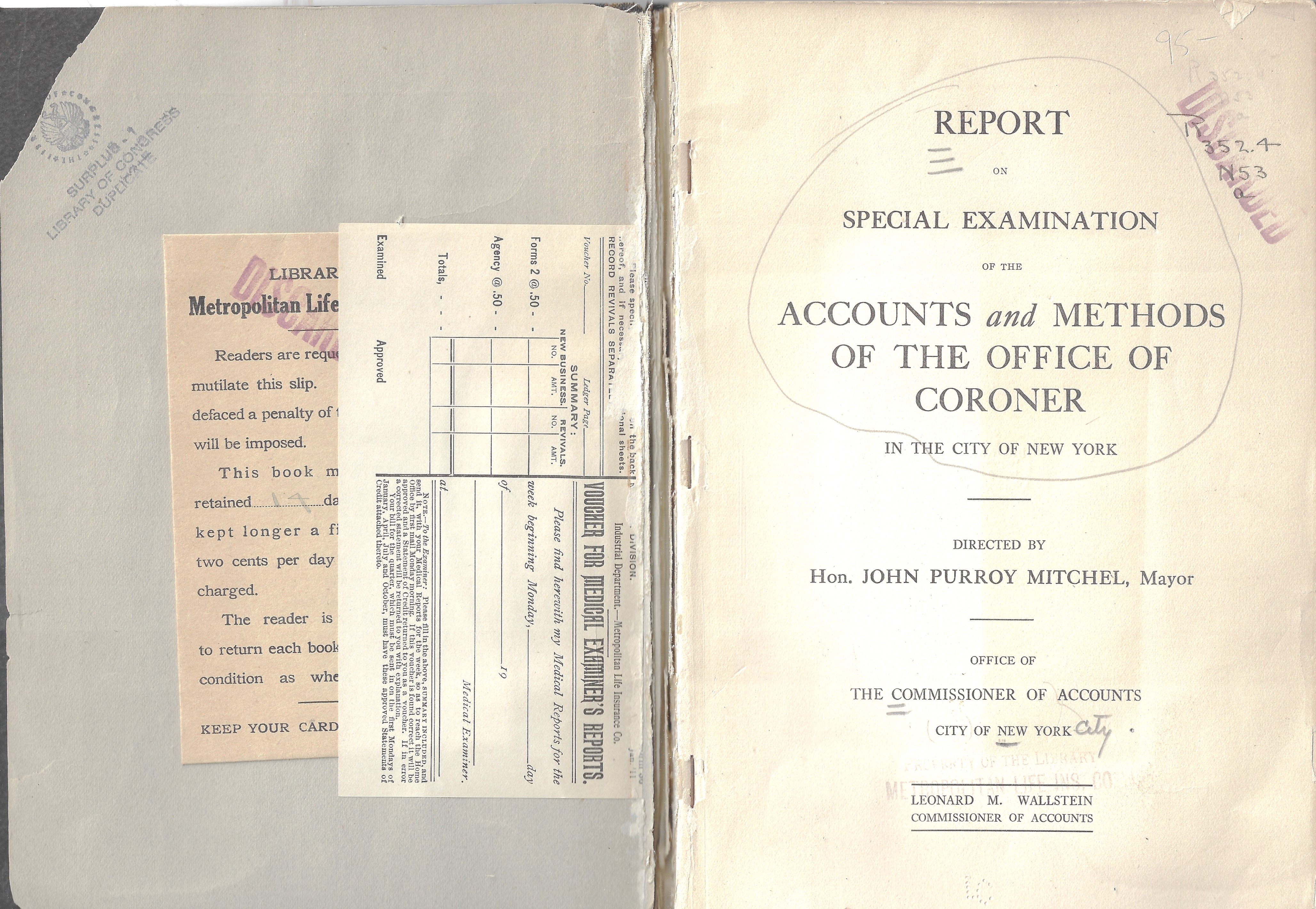
    Report on Special Examination of the Accounts and Methods of the Office of Coroner in the City of New York…Office of the Commissioner of Accounts, City of New York; Leonard M. Wallstein, Commissioner of Accounts. 1915, 10″ x 7″, 82pp. Original wrappers, bound in a workaday black cloth-like cardboard. Bookplate of the library of the Metropolitan Life Insurance Co., and also the NY Public Library, which sent the book to the Library of Congress in 1933. With a pasted-in “voucher for medical examiner’s reports” on the front pastedown. The book is staple bound, and the paper in some areas is becoming brittle. Overall, only a fair copy, but intact. $150

    • WorldCat locates 10 copies, including: Columbia, Cornell, Yale, University of Illinois Urbana, Harvard, U Missouri, U Chicago. It seems as though there is only one copy in NYC. 

    Coroner rept

    If you ever had any interest—known and unknown—in reading about very impressive amounts of corruption and its constituents in the coroner’s office for NYC 104 years ago, here’s your chance to satisfy it. I’ve found a scarce report documenting the extraordinary conditions of that agency.

    You don’t want to be on the other end of this paper—it is scathing, and angry, and well-written and documented. From a quick read of it the office of the coroner of NYC was simply a fantastic mess of incompetent work and very highly competent corruption.

    The report starts at the end, with a summary of findings, and then goes downhill from there:

    • “The elective coroner in New York City represents a combination of power, obscurity and irresponsibility which has resulted in inefficiency and malfeasance in the administration of the office. With constant temptation and easy opportunity for favoritism and even extortion, with utter lack of supervision and control, and without the slightest preparation and training to create in the coroner’s mind a scientific and professional interest in the performance of his duties, the present system could not have been better devised intentionally to render improbable, if not impossible, the honest and efficient performance of the important public function entrusted to his office.

    Of the 65 men who have held the office of coroner since consolidation, not one was thoroughly qualified by training or experience for the adequate performance of his duties….”

    ·Posted by :

    ·in:


  • McCulloch on Economics; Mill and Bentham on Utilitarianism; and Basil Hall in America (1829)

    Edinburgh Review, or Critical Journal for March 1829….June 1829.  Edinburgh, printed Ballantyne for Longmans Rees, etc.,  iv, 544pp, volume 49, nos. 97+98, 1829.  8.25×5.5”. Rebound in modern cloth. Very tidy, in FINE condition. The Edinburgh Review was a sort of TLS and NYTBR for its day, with very long and penetrating articles reviewing books and reports on a very wide range of topics. It was also one of the most popular journals for the 1800-1830 period. $150

    This volume contains the following articles of interest:

    James Mill, “Utilitarian Logic And Politics Essays On Government Jurisprudence The Liberty Of The Press And Prison Discipline Colonies The Law Of Nations And Education By James Mill Reprinted By Permission Of The Encyclopaedia Britannica (Not For Sale )”, pp 159-189. Long and highly regarded work by one of the founders of Utilitarianism.  “James Mill was a Scottish historian, economist, political theorist, and philosopher. He is counted among the founders of the Ricardian school of economics. His son, John Stuart Mill, was also a noted philosopher of liberalism, utilitarianism and the civilizing mission of the British Empire”—Wiki

    With: (Jeremy Bentham, defense of Mr. Mill), “Article on Mill’s Essay on Government &c.”, pp 273-299.

    (J.R. McCulloch), “Maltster and Brewer’s Guide”, pp 362-388.

     “John Ramsay McCulloch (1789 –1864) was a Scottish economist, author and editor, widely regarded as the leader of the Ricardian school of economists after the death of David Ricardo in 1823. He was appointed the first professor of political economy at University College London in 1828. He wrote extensively on economic policy, and was a pioneer in the collection, statistical analysis and publication of economic data. McCulloch was a co-founder, and one of the first editors, of The Scotsman newspaper, and worked on the Edinburgh Review. He edited the 1828 edition of The Wealth of Nations.”—Wiki  

    And a very long piece on travelling in the U.S.:

    “Notions of the Americans, by a Travelling Bachelor…Travels in North America, by Captain Basil Hall” (published in 1829), pp 473-525.

    Clapperton, “Journal of a Second Expedition into the Interior of Africa, from the Bight of Benin to Sacatoo.   Also: “The Journal of Richard Lander to the Sea Coast, Partly by a more Eastern Route”,  pp127-149.

    Henry Steuart, “The Planter’s Guide, or a Practical Essay on the best Method of giving immediate Effect to Wood”…An interesting and somewhat early piece on arborculture. Pp 102-127.

    ·Posted by :

    ·in:


  • Very Early Papers on Railroads, Including an Illustration of “The Rocket” (1830)

    JFI 1830 the RocketJournal of the Franklin Institute, Philadelphia, 1830; volume 5 (new series) and volume 9 overall, with text illustrations and five plates. Half-calf, with raised bands. Ex-library, with some scuffing on the spine; also a few stamps on the title page, and a library card pocket at the rear endpaper. Very Good copy.  $225 

    This volumes includes many articles of interest, including a longish early article on railroads:

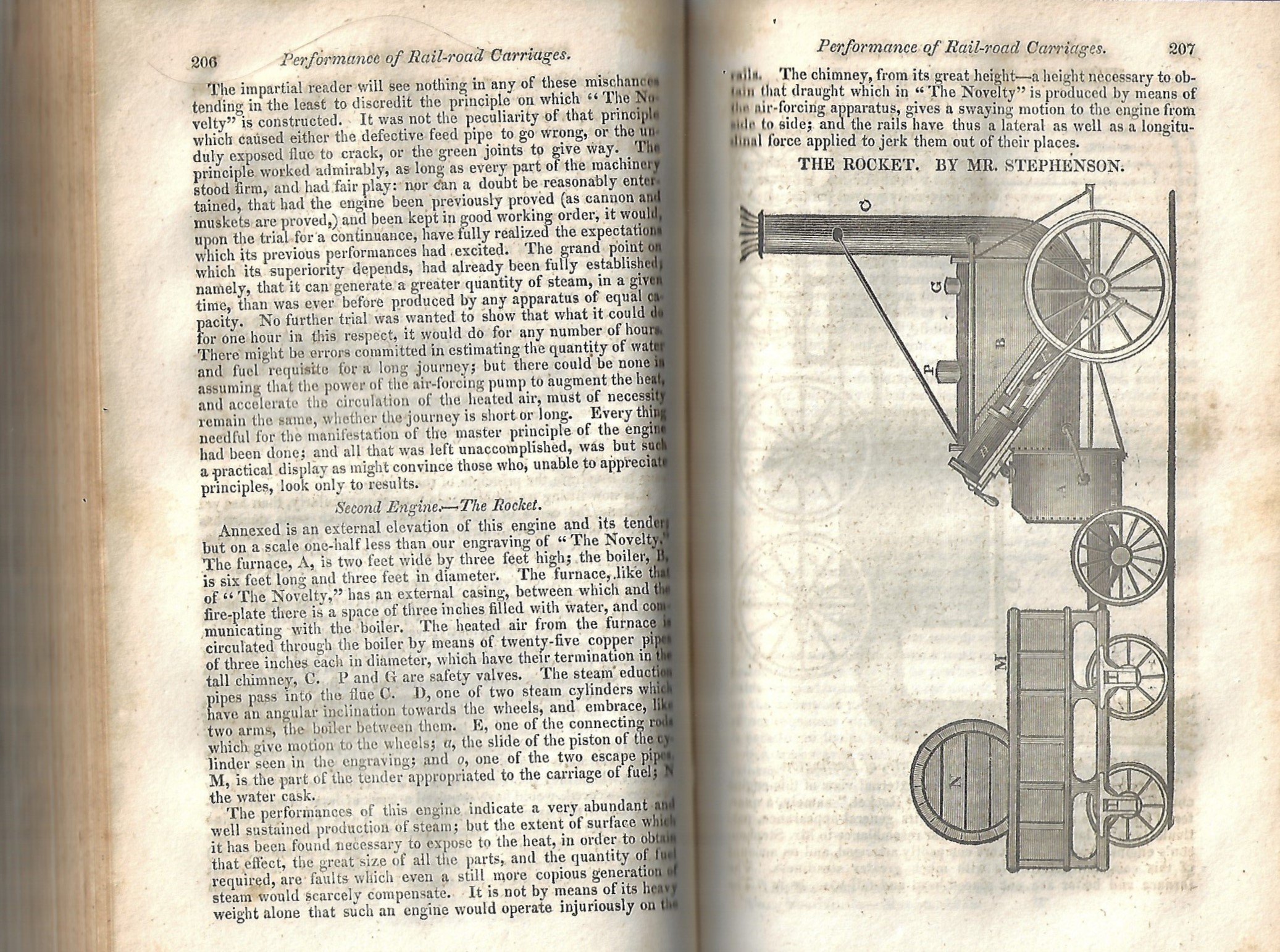
    “Account of the Performance of Various Rail-road Carriages on the Liverpool and Manchester Rail-road”, pp 186-210 and pp 257-267; featuring nearly full-page illustrations of (William) Stephenson’s “The Rocket”, “Novelty No. 1” of Braithwaite & Ericsson (along with a schematic for “Novelty No 2”, and the Sans Pareil”. Note: “The Rocket” was designed by Stephenson only a year earlier, the very early locomotive appearing in 1829 (in England). The “Sans Pareil” was design by Timothy Hackworth and was first presented in that same year of 1829.

    Also the following railroad papers:

    “On the Power required to Propel Carriages on Rail-roads, compared with that for moving boats in Canals”, pp 140-141;

    “Modes of Adopting Rail-way Cars to Roads &c.” pp 151-154;

    “Remarks on the Pendulous Rail-road Car, and on the adapting Railway Cars to run on common roads”, pp 237-239;

    Also:

    Walter Johnson, “On the Relation between Rolling and Dragging Friction”, pp 57-69;

    This piece is followed by the first in what was intended to be a series by the editor called “Modern Antiques”, (pp 69-70)where the journal would “furnish, occasionally, some palpable evidences of the forestalling disposition of remote answers…who have deprived us….off the honor of being the true and original inventors, or discoverers, of various improvements in mechanics, and other useful arts; and who even peep from their graves to dispute the rights of those who have issued to the world their new born projects in the forms of letter patents…”

    And:

    “On the Preparation of Crayons, or Pastels”, pp 94-99; ;

    [Henry M. Western], “Specification of a Patent for a Tide Power…for the Purpose of Applying Power to Machinery…”, pp 154-155;

    ·Posted by :

    ·in:


  • David On Natural Magic and Automata; Lumber for Ship Masts, Hydrostatic Beds, and other Articles (1833)

    JONES, Thomas P., editor.  Journal of the Franklin Institute, Philadelphia, 1829. Volume 11 (new series), volume 15 overall. 8.5″x5.5″, 4301, 12pp.. Bound in half-calf, with gilt stamping and raised bands. Ex-library, with evidence of spine label removal on spine bottom, scuffing on the spine edges, and a few stamps on title page, plus a call slip envelope at the rear pastedown and endpaper–other than some foxing, the book is very tight and crisp, a very nice copy.  Good copy.  $175.00  Some of the articles in the volume include:

    David Brewster, “Selections from Letters on Natural Magic…Illusions of the Eye”, pp 138-144 and continued for “Spectral Illusions”, pp 210–215 and  “deceptions with the Concave Mirror” pp 282-287, and “Acoustic Mechanism–Automata”, pp 354-359, and “decomposition of Light by Absorption” pp 417-420. 

    Robert Hare, “Apparatus for evolving Silicon from Fluo-silic Acid Gas”, pp 289-296 (with illustrations of the instruments). Robert Hare, “remarks on the error of supposing that a communication with the Earth, is necessary to the efficacy of Electrical Machines”, pp 297-299;  “Practical Observations on the Power Expended in Driving the Machinery of a Cotton Manufactory at Lowell”, pp 6-15; “W. Baddeley, (Alfred)Cannings Life Raft”, pp 59-61 (published months earlier in London); “Dr. Arnott’s Hydrostatic Bed for Invalids”, pp 61-66; “(W) Symington’s Steam-Boat”, with a full page cross section, pp 68-9; “Effects of Trades on Health and Morals” (full title being “Are there any trades so injurious to health, or so hazardous to morals, that they ought, for that reason, to be discouraged, or abandoned?”, pp 78-84; John Fincham, “On the timber used for the Masts of Ships”, pp 135-137 and pp 196-200; Lafonde, “On the Art of Glass Blowing”, pp 254-260 and 327-336; Robert Eastman, “Specification of a patent for an improvement in the Reacting Water Wheel…” with two copperplates, pp 320-322.

    Also: full page engraving with a short description of “Mr. Symington’s Steam Carriage, 1784-6”.

    ·Posted by :

    ·in:


  • Social Planning and the Great Depression (1929-1932)

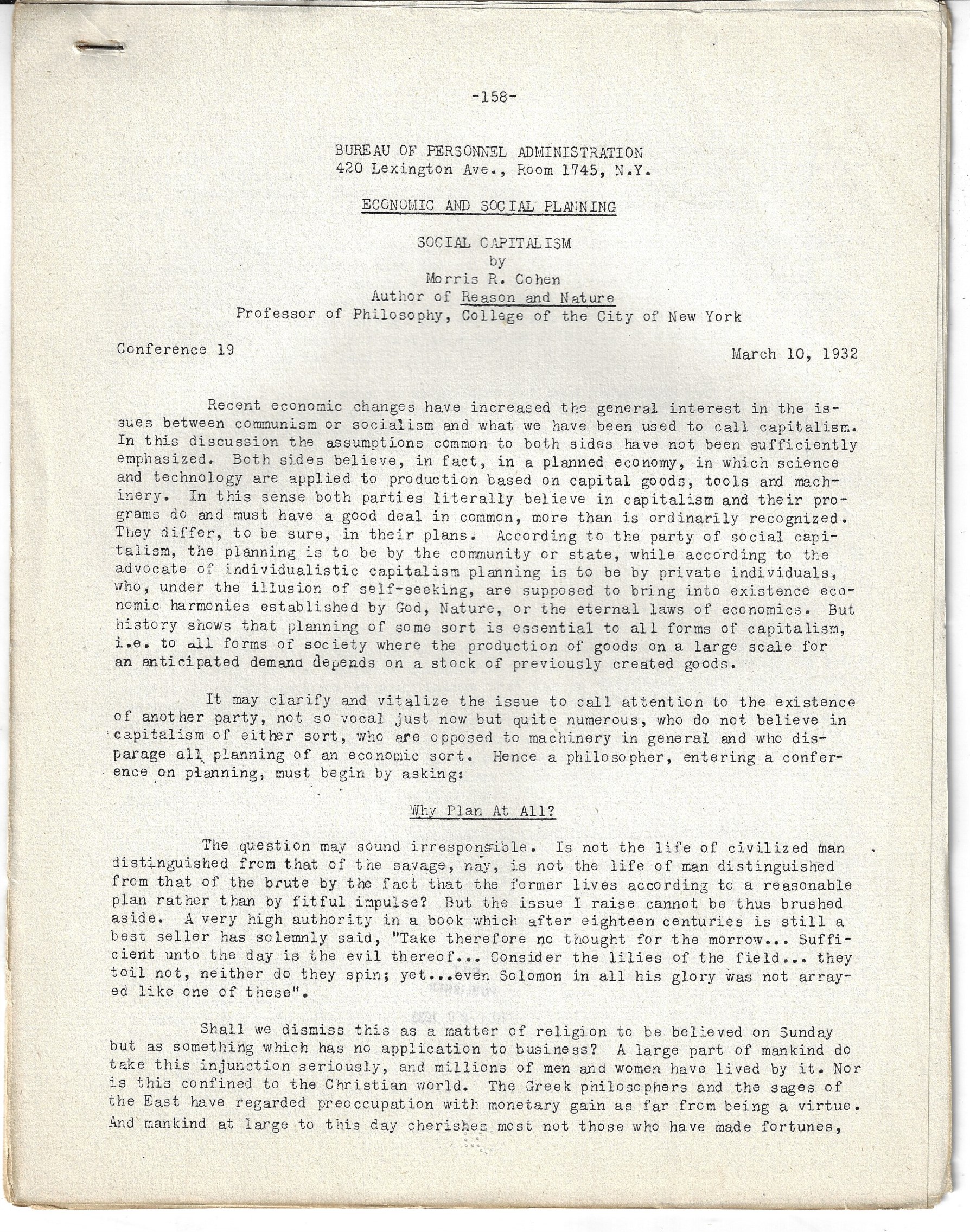
    Bureau PersonnelConferences on Economic, Social, Ethical Planning, presented by the Bureau of Personnel Administration (420 Lexington Ave, Room 1745, NY). Offset printed, staple bound. 11X8.5” sheets. Four sections. 67 parts, about 450 leaves.

    Provenance: Library of Congress, being a gift from the publisher. Very Good condition with two LC “surplus duplicate” stamps on two of the sections’ opening page.

    Note on availability: I can find a number of entries for the individual papers in this series, though usually only one or two institutions listed as having them; I cannot find a collection of the papers anywhere in WorldCat/OCLC. Given the way these were produced and printed, and the absence of any collected form of them, I believe that this collection is pretty scarce. $1250

    At first blush the titles for the components of this series look a bit deadly-boring. Looking just a bit deeper, what we have here is some of the intellectual background for the recovery from the just-begun Great Depression. The very first conference listed below falls nearly on Black Tuesday (October 29, 1929), the beginning of the Stock Market crash and the Depression (which took a few years to become the “Great” Depression”). The second series spans much of the presidential campaign period for 1932 and the deepening of the Depression; the third series takes place during that incredible period between the end of the election and the inauguration of FDR and about two thirds of the incredible Hundred Days (as well as the new threat to Europe from the newly-ensconced Hitler, and Japan in China); and the fourth series covers the newly-introduced “New Deal”. Several of FDR’s “Brain Trust are among the contributors (Berle and Tugwell), as well as many others who would have major roles in the administration. The great majority of the contributors were leading thinkers of the 1930’s (for example, Morris R. Cohen, whose name may not be remembered now but who was  professor of philosophy at CCNY from 1912 to 1938 and who helped make that place “the Proletarian Harvard”, .and who taught at U Chic, Columbia, Cornell, Stanford, Yale, and Harvard, and widely acknowledged as a leading thinker).

    ·Posted by :

    ·in: