A Daily History of Holes, Dots, Lines, Science, History, Math, Physics, Art, the Unintentional Absurd, Architecture, Maps, Data Visualization, Blank and Missing Things, and so on. |1.6 million words, 7500 images, 4.9 million hits| Press & appearances in The Times, Le Figaro, Mensa, The Economist, The Guardian, Discovery News, Slate, Le Monde, Sci American Blogs, Le Pont, and many other places… 5000+ total posts since 2008.

Category: Memory, Historry of

  • The Children’s Battalion–Santa and Guns, 1916

    JF Ptak Science Books   Quick Post
    Children battalion006
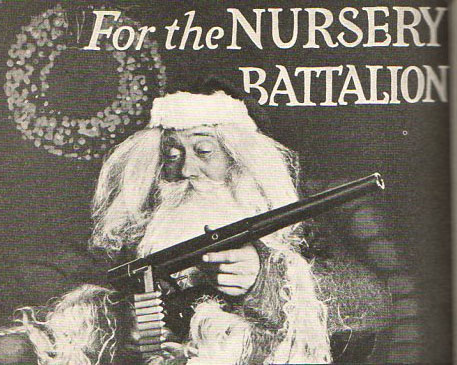
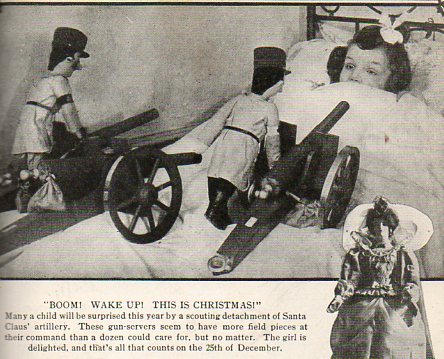
    I don’t know the Illustrated History of Santa and Gun Gifts, but I guess that a book could be written if one already doesn’t exist.  Well, that or something associating Santa with unusual, or questionable, gifts in his bags of joy could be made into something, something disappointing.  I’m not that person to collect those sorts of images because I have always held Santa in very high esteem, and I don’t care to have too many of those images floating in my mind, exploiting some dark corners of unknown memories, disturbing the happy bits with unneeded and unwanted visual info.  But, well, these pictures below, found in the December 1916 issue of the uncommonly-seen journal, Illustrated World, provides a little glimpse into the manufactured desires of kid-wishes for toys during wartime, and so I’ll pass them along.  These things do tell us something about the period–like the famous multiple images of Santa hanging cigarette carton Christmas ornaments (seen here in the post on Gift Porn, 1954), or a smoking Santa stuff a stocking with a box of Lucky Strikes–so it makes sense to make sense of them.
      Children battalion008

    I guess kids have fairly well always wanted toys (or not) guns for Christmas,  gifts from Santa, or at least so long as Santa has been around or identified as so, and to see Santa with a rifle would not be so unusual, especially given that this was deep into the second year of the bloody Great War.  (I have another interesting image here, somewhere, showing Santa distributing presents to British troops in trenches, riding a tank, but presently I can’t find its stack in a stack of stacks.)

    Perhaps the issue of playing with guns and cannons and so on was a way of easing fear and distress during wartime; perhaps it meant something soothing for the developing mind of a child.  I don’t know.

  • A Store of Memory to a Memory Itself: the First Image of a Bookstore?

    JF Ptak Science Books   Quick Post on the History of Memory

    Bookstore628
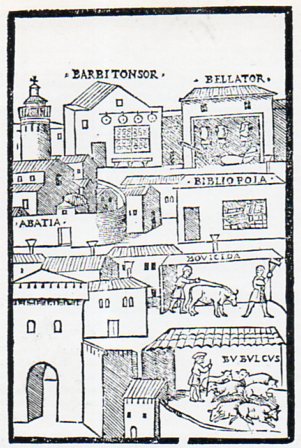
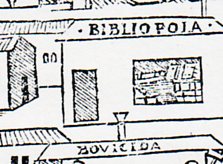
    About a hundred years after the invention of moveable type printing, there appeared–in 1562–this woodcut in Lodovico Dolce’s Dialogo nel quale si ragiona del mondo di accrescere e consertvar la memoria, showing a number of different sorts of high-Renaissance businesses/shops, including one of teh earliest images of a bookstore. 

    This sort of business has survived for 450-odd years, and longer, without momentous change for 95% of that time.  The store of memory is giving place to another memory machine, a digital one that exists mostly in the clouds and electrical aether, growing more accessible by leaps and bounds, become less and less bound to cumbersome end-user machines, growing into what must be a biological interface. 

    It is somewhat ironic that the first-ish appearance of a bookstore takes place in a book on memory/mnemonics  written by a poet. The replacement of the bookstore and of the book itself as the principal storehouse of knowledge is hardly a poetic matter, in spite of what the poet-izers in charge of this restoration might say. 

    Bookstore627

    It will be a maatter of debate regarding what the last bookstore will look like.

    I suppose the larger issue is the future of the history of memory.