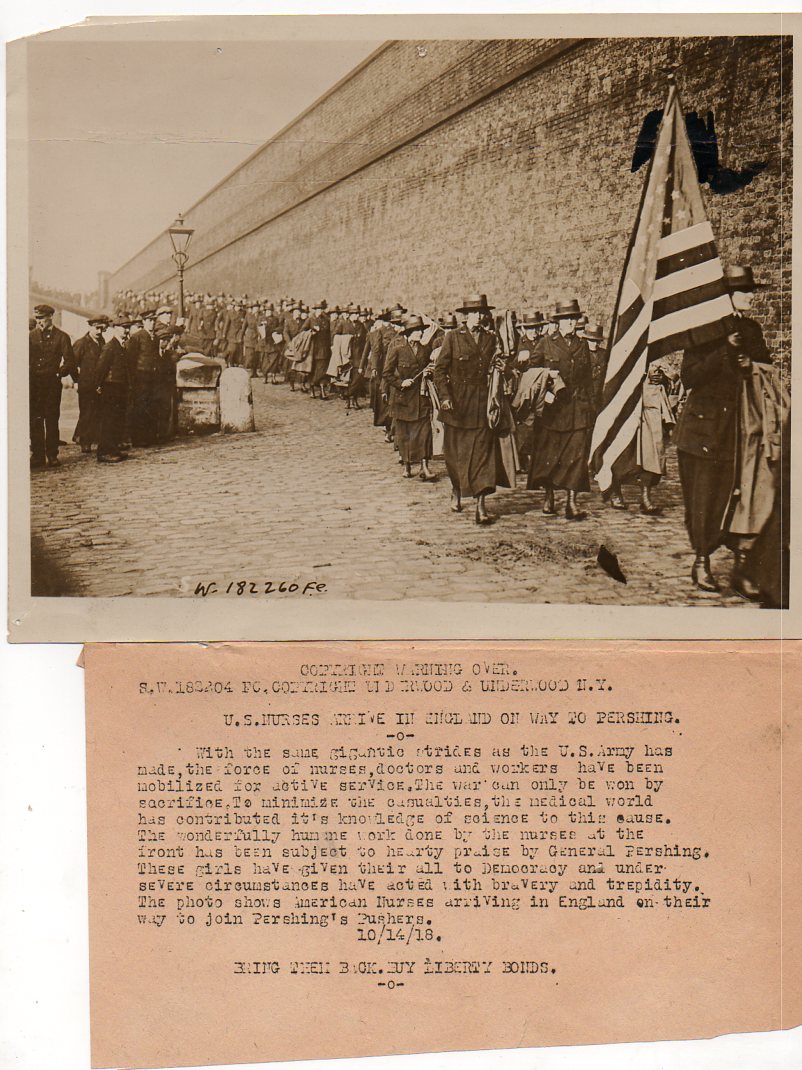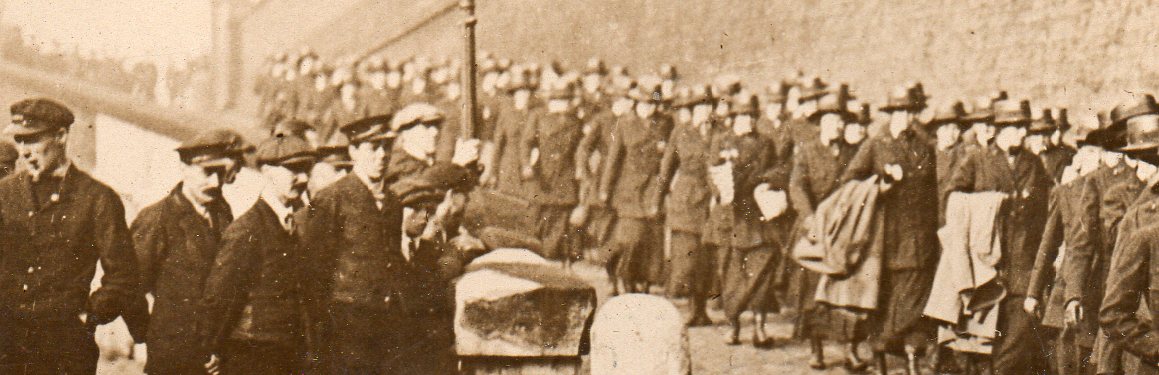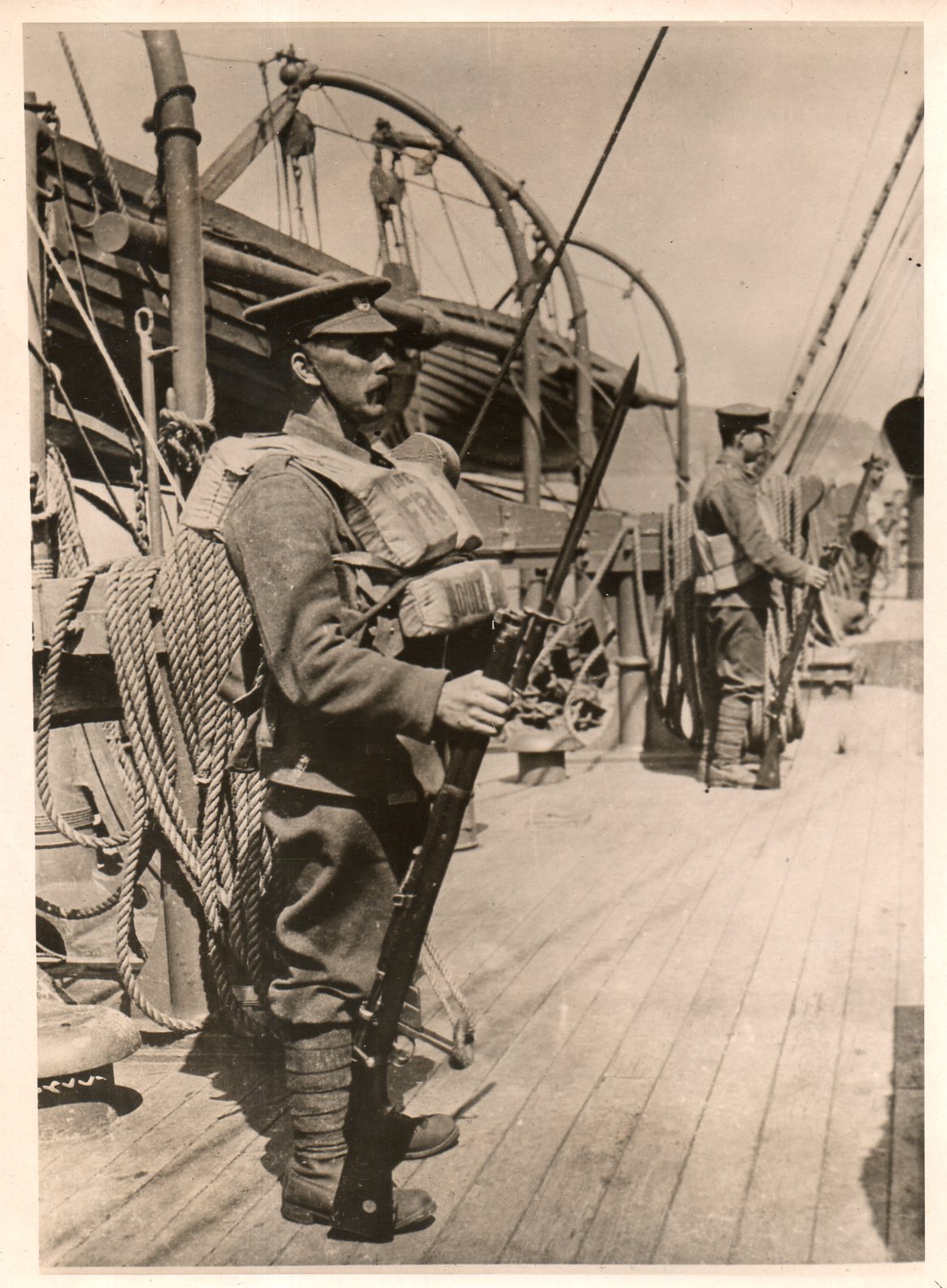
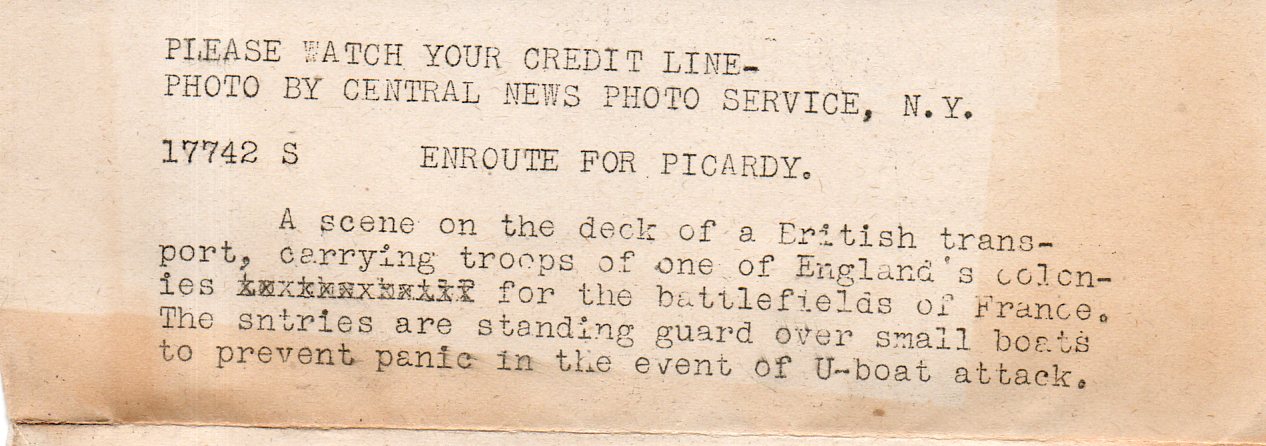
7.5×5.5 inches, with printed caption. Original photograph, ca. 1917/18. Fine condition. $125
A Daily History of Holes, Dots, Lines, Science, History, Math, Physics, Art, the Unintentional Absurd, Architecture, Maps, Data Visualization, Blank and Missing Things, and so on. |1.6 million words, 7500 images, 4.9 million hits| Press & appearances in The Times, Le Figaro, Mensa, The Economist, The Guardian, Discovery News, Slate, Le Monde, Sci American Blogs, Le Pont, and many other places… 5000+ total posts since 2008.
Contact johnfptak at gmail dot com
7.5×5.5 inches, with printed caption. Original photograph, ca. 1917/18. Fine condition. $125
·Posted by :
JF Ptak Science Books WWI Photo #82
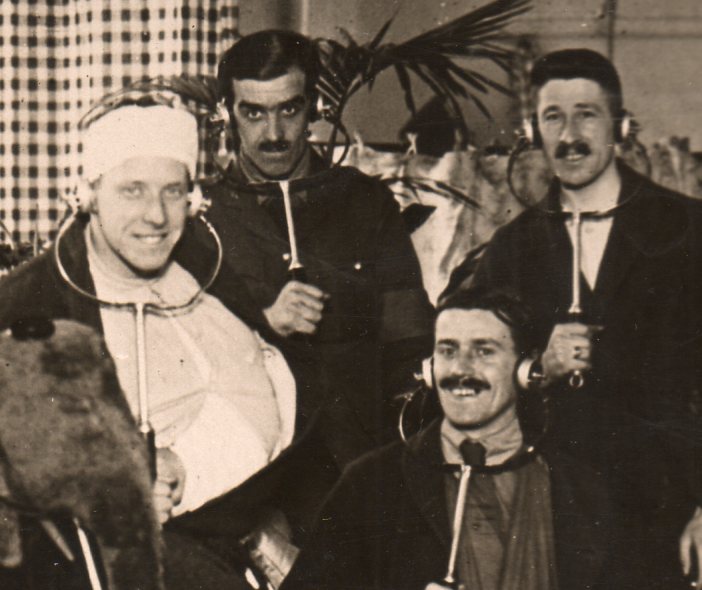
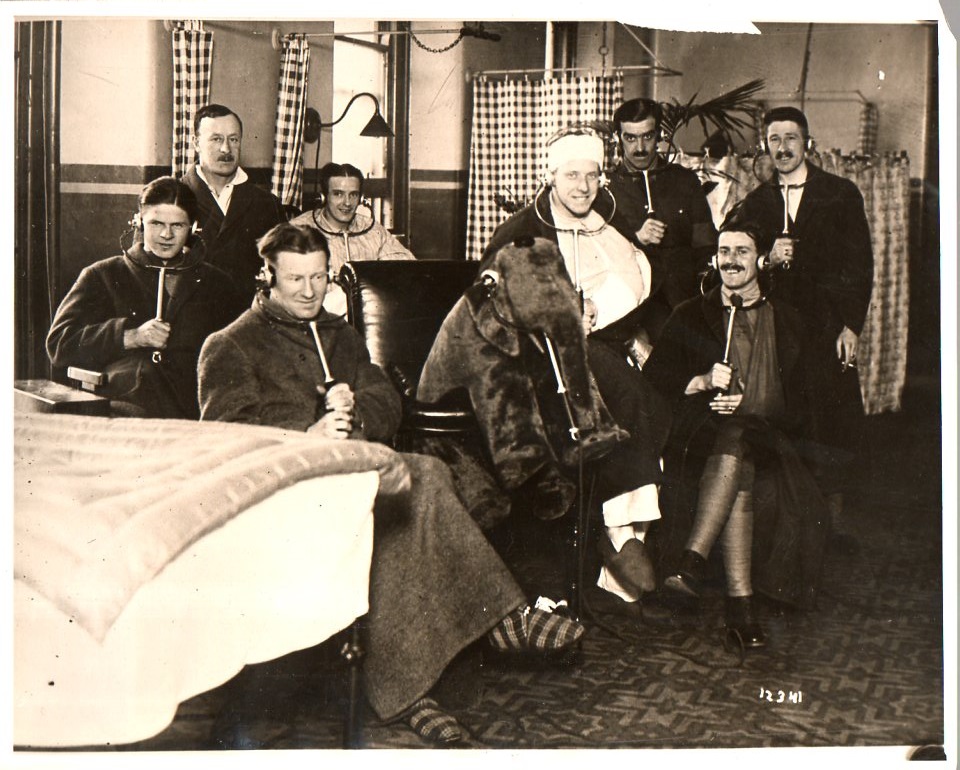
Overall, these soldiers look to be in pretty good spirits, even if they were told to be so, they still looked fairly genuine. And who wouldn’t be, at least to some degree? They were a few of the millions of soldiers who were wounded in WWI, which means at least that they were among the millions of the dead.
10×8″, with small printed caption card, pasted to the back of image and folded. Fine image. $225
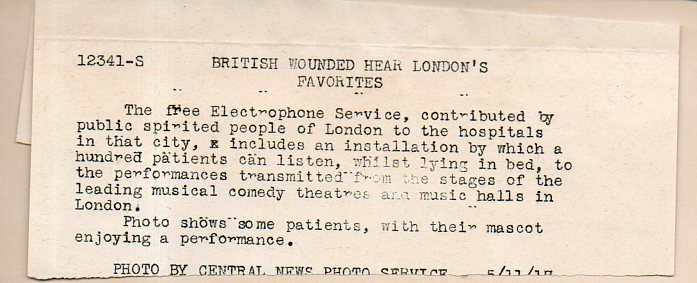
The caption that accompanies these News Photo Service image (made by the Central News Photo Service and dated May 11, 1917, says that they were enjoying the donated headsets–Electrophones–and represented a few of the hundreds that received them. This device was basically a telephone receiver, and years after Bell and Edison dreamed of social integration and advancement and wide-ranging culture, of delivery literature and music to people flung near and far, these soldiers were enjoying the benefit of limited concerts and other entertainments via telephone lines.
Here’s a very good quote on the electrophone from the highly interesting The Cat’s Meat Shop, written by Lee Jackson, author of Dirty Old London, the Victorian Campaign Against Filth. (It is an interesting topic–filth and its control–because you really can’t have an Industrial Revolution without lots of workers living close to their jobs, which means that lots of people live close together, and you can’t have that unless you somehow control for good sanitary conditions, which means you’ve got to take care of filth.)
“The most picturesque and entertaining adjunct of Telephone London is the electrophone. There is not a leading theatre, concert-room, or music-hall but has the electrophone transmitters – in shape like cigar-boxes – installed before the footlights, out of sight of the audience. They are at the Royal Opera, Covent Garden; and in many of the principal places of worship a wooden dummy Bible in the pulpit bears the preacher’s words, by means of the N.T.C. telephone lines, to thousands of invalid or crippled listeners in bed or chair in their homes or hospitals. It was thus that Queen Victoria, seated at Windsor Castle, heard 2,000 school children in Her Majesty’s Theatre, in the Haymarket, cheer her and sing “God Save the Queen” on her last birthday. King Edward was likewise relieved from ennui at Buckingham Palace during his illness, for the brightest music, mirth, and song of London were ever on tap at his side. Queen Alexandra is also a devotee of the electrophone, more especially throughout the opera season. On the other hand, the cruel lot of certain hospital patients, of the blind, and even the deaf – for the micro-phonic capacity of the electrophone enables all but the stone-deaf to hear – is thus greatly brightened by science. The sadness of the bedridden, the incurable, or the sufferer from contagious disease is enlivened by sacred or secular song and story, and, as a much-to-be-welcomed addition to the alleviations of London’s strenuous life, the benefits of the electrophone are innumerable. It may be added that in the imposingly decorated salon in Gerrard Street from time to time fashionable parties assemble and “taste” the whole of London’s entertainments in one evening. Thus, over mammoth aerial and subterranean wire-webs does London, annihilating distance, work and play by the aid of Science.–George R. Sims (ed.), Living London, 1902
·Posted by :
JF Ptak Science Books Quick Post
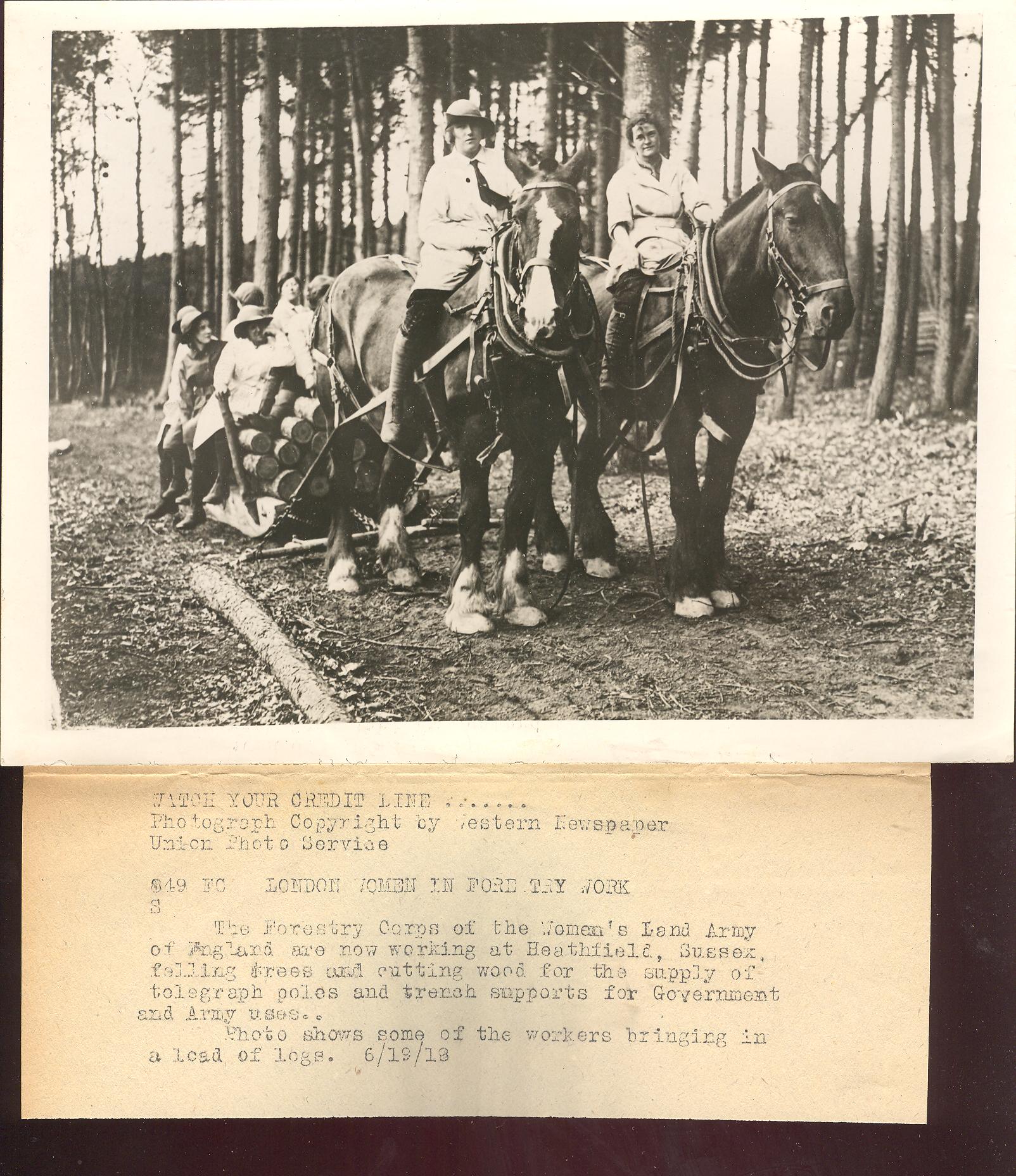
What a great name–the Women’s Land Army of England. This was a voluntary service that recruited women to work in jobs (generally in agriculture and forestry and such) that were left unfilled by men going into military service. The “Land Girls” performed a huge variety of work and were a very necessary part of the economic and social structure of the U.K., a Florence the Farmer response to Rosie the Riveter.
Image7x5″, original; photograph, with the original text/caption attached. Very good condition. $150
The image below is of a continent of the Forestry Corps of the Women’s Land Army of England, working at cutting telegraph poles, and commanding some great-looking draft horses. (The horse on the right–ears back–looks big and perhaps a little sensitive.) The horses are pulling a land sled filled with at least five other women and a load of telegraph poles that don’t look particularly long…
I love that the women are wearing ties.
·Posted by :
Belgian sniper. Original photograph, 9 3/4 x 7 3/4 inches.
Good condition. $350
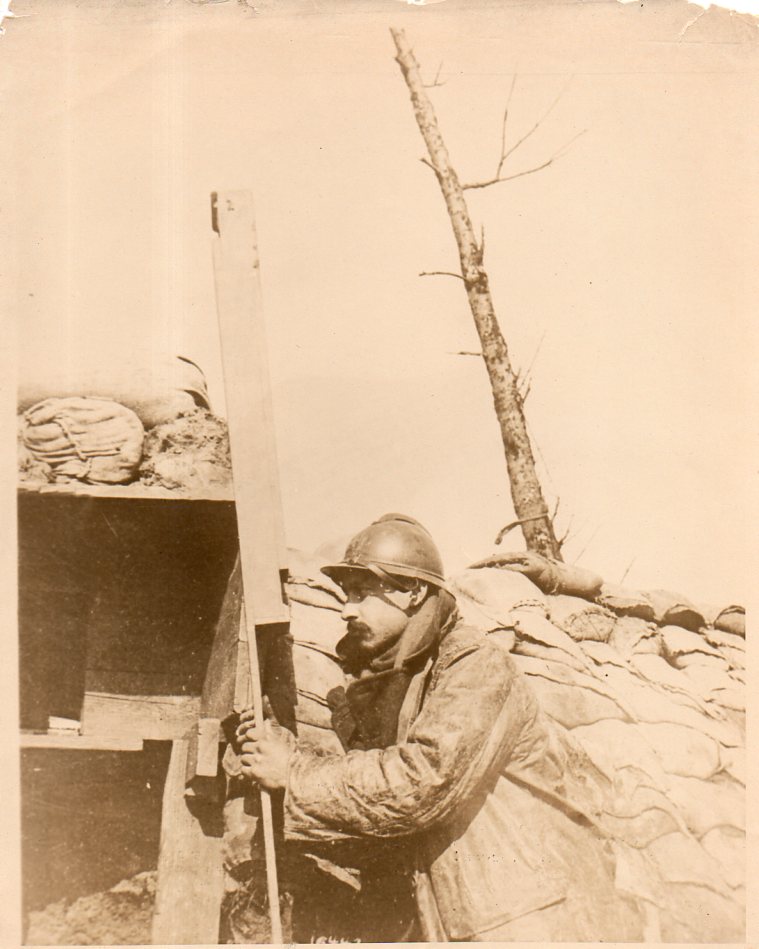
This is an excellent example of appreciating images in context. The photograph seemed line an ordinary image of a soldier peering through a periscope on action ahead of his trench, in some miserable battlefield, somewhere in Europe, 1918. The image is the product of a photographic pool, the photographers working in semi-unison to produce acceptable images to be used in publications illustrating the war. The images could not be too terribly graphic, and must not relate any useful military intelligence–they would pass through the hands of very active censors whose job it was to slightly inform the reading public and to also keep morale high, a difficult balancing act.
And so I thought my thoughts. Until I turned the image over–it was stamped “Photo by Central News Photo Service”. It was also accompanied by a typed caption, the bit of text that was to be the standardized caption for this photograph when and if it was used by a magazine or newspaper.
The title is “The Belgian Collector”.
The Belgian collector was a sharpshooter. He would scan the field looking for any unfortunate who might have left themselves exposed. Then he would shoot at them. Collect them.
In a sense, “collect” like “John Fowles The Collector, only killing them with a rifle.
But that was his job. And it was war. And if he was on your side, then you’d want him there.
I found “the collector” name to be poetical, and chilling.
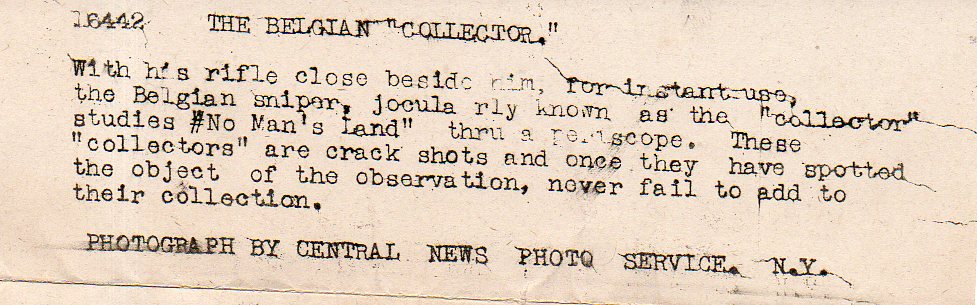
So, combining the context with the image in this case was a truly sensational thing.
·Posted by :
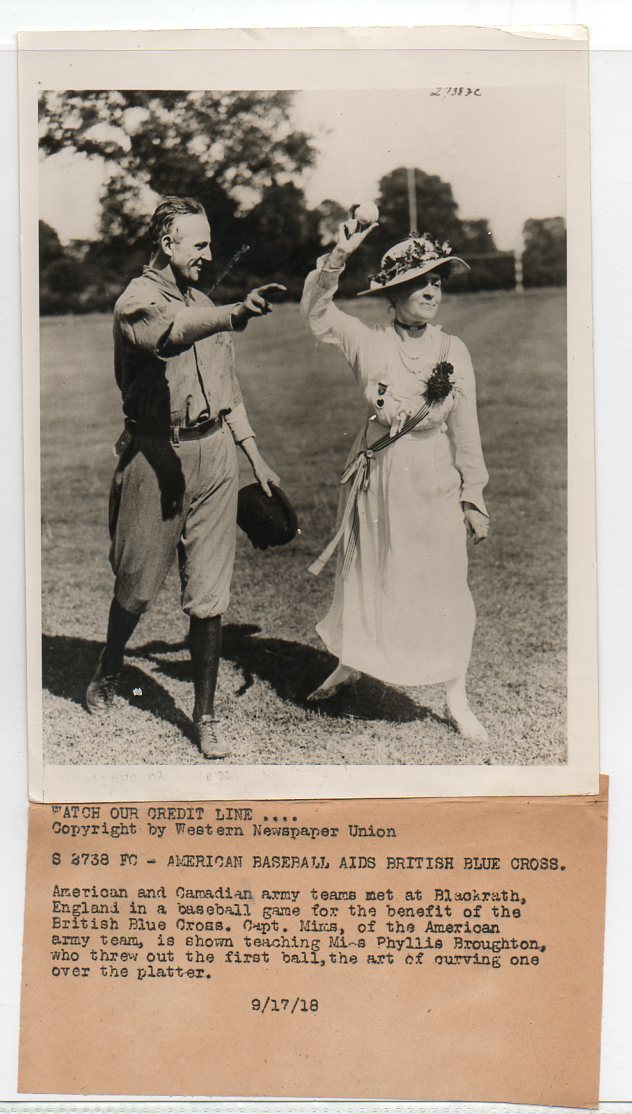
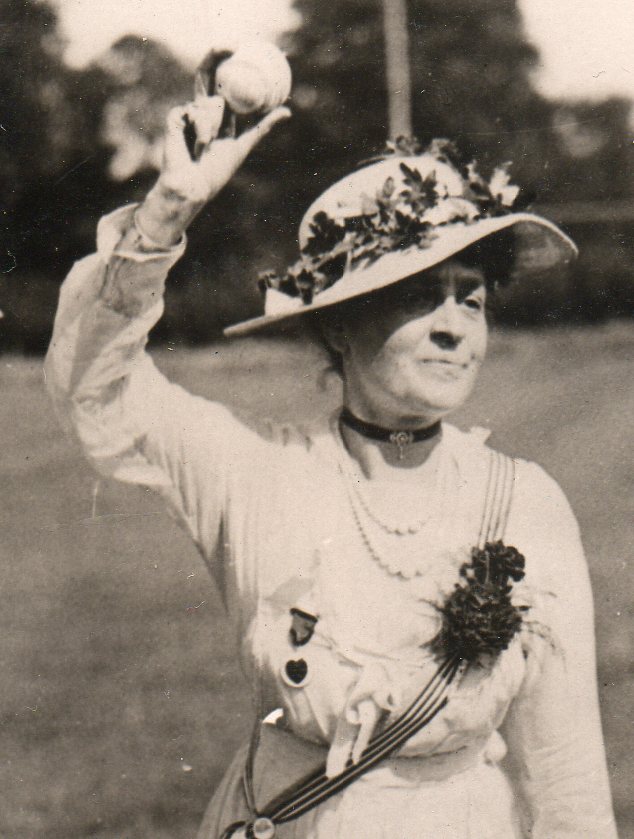
ORIGINAL Photograph, 1918. 8×6 inches.
Very good condition. $150
All in fun and all for the charity of the British Blue Cross, Ms. Phylis Broughton joins the festivities, though whether see is entirely reluctant or determined, we’ll never know. Perhaps both.
·Posted by :
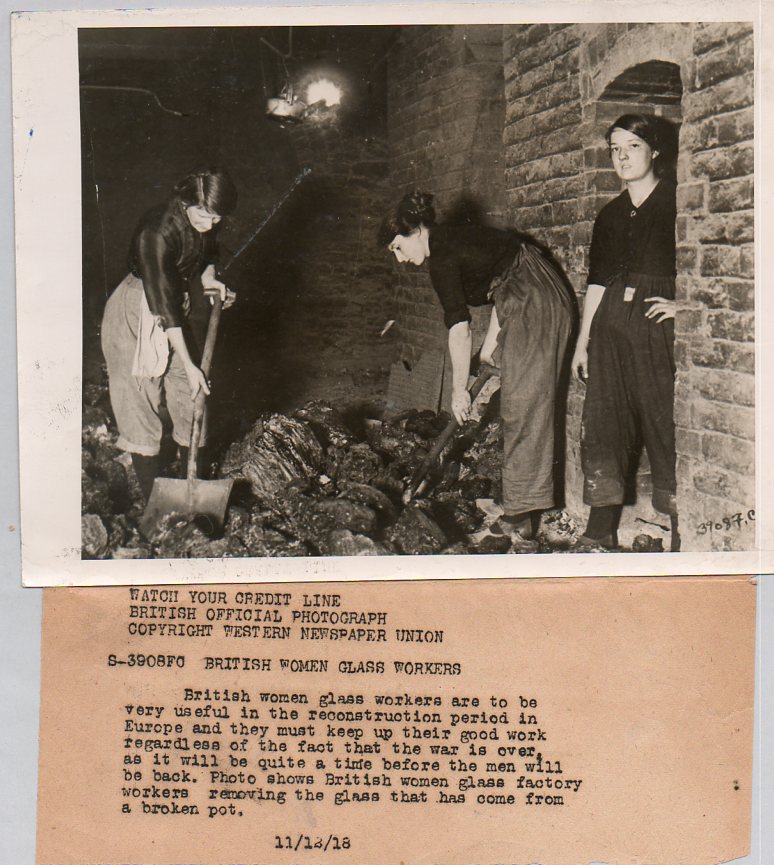
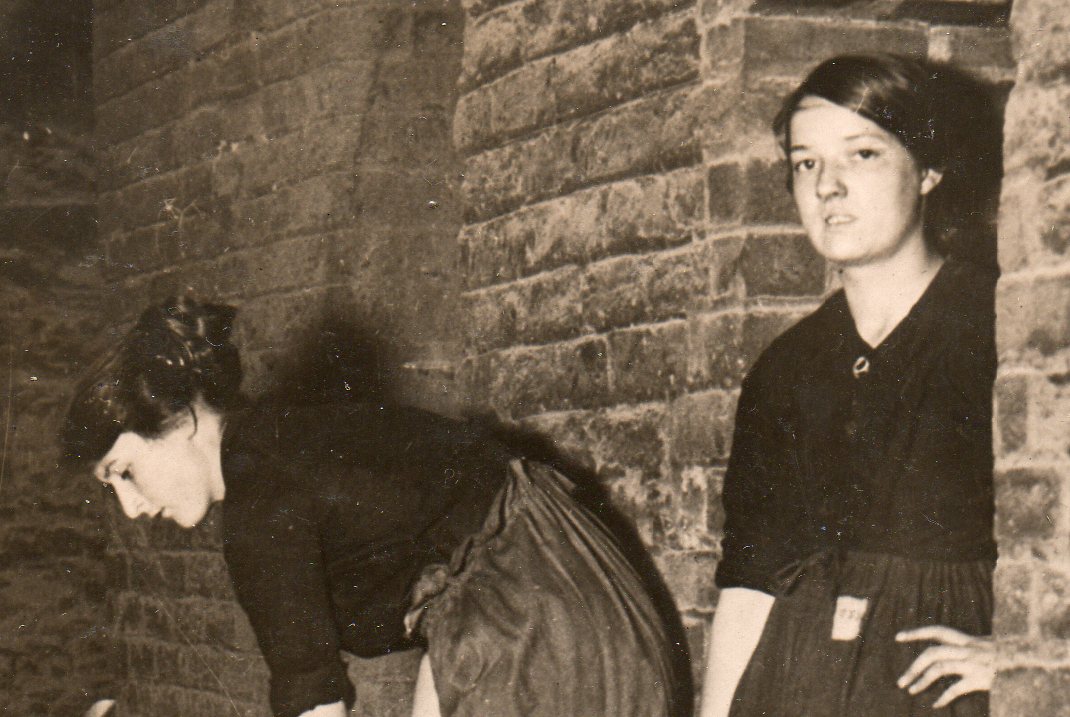
ORIGINAL Photograph, 1918. British women at work in glass factory. 8×5 inches. Good condition. $250
·Posted by :
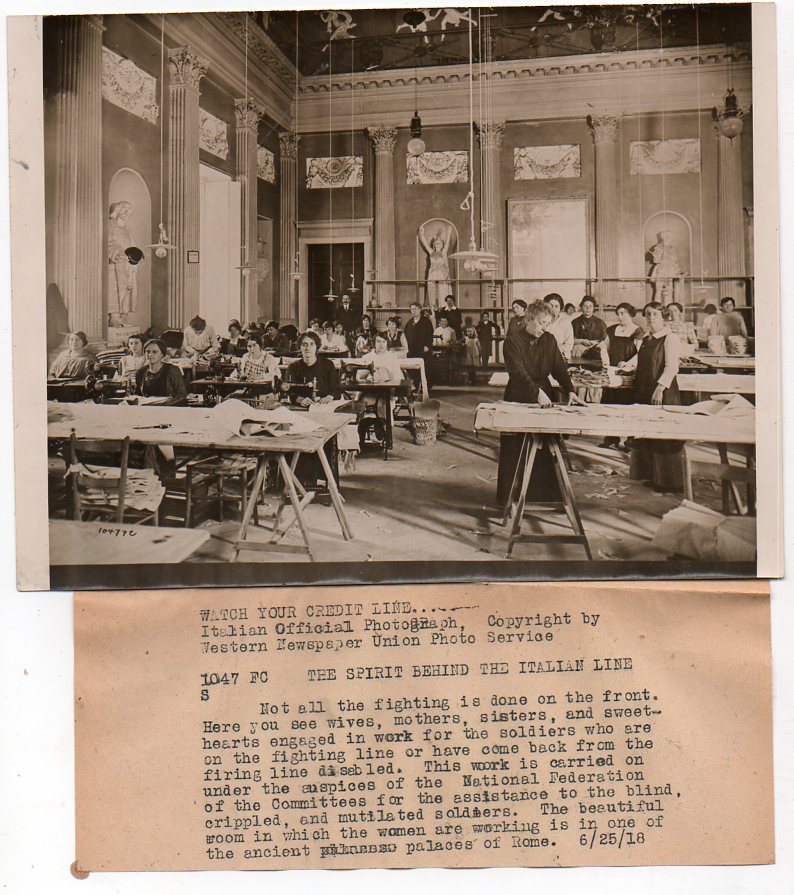
ORIGINAL Photograph, 1918. Workers in Italy. 8×5 inches. Good condition. $150

·Posted by :
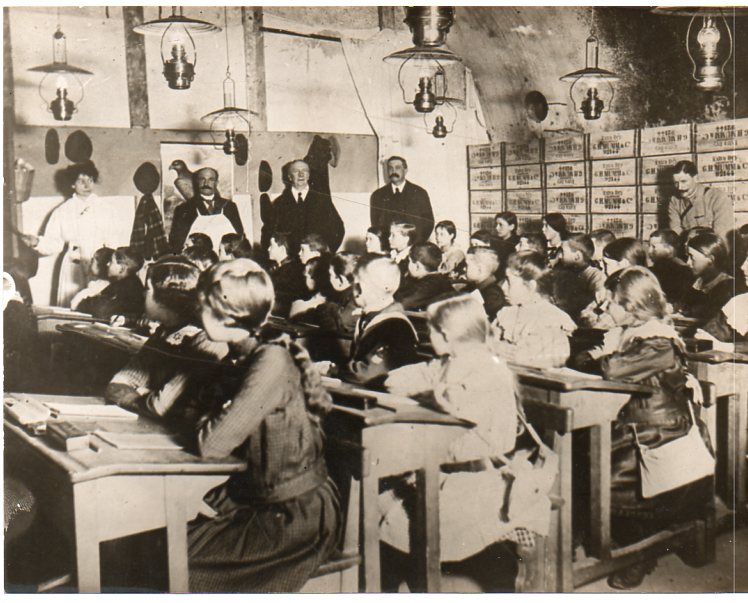
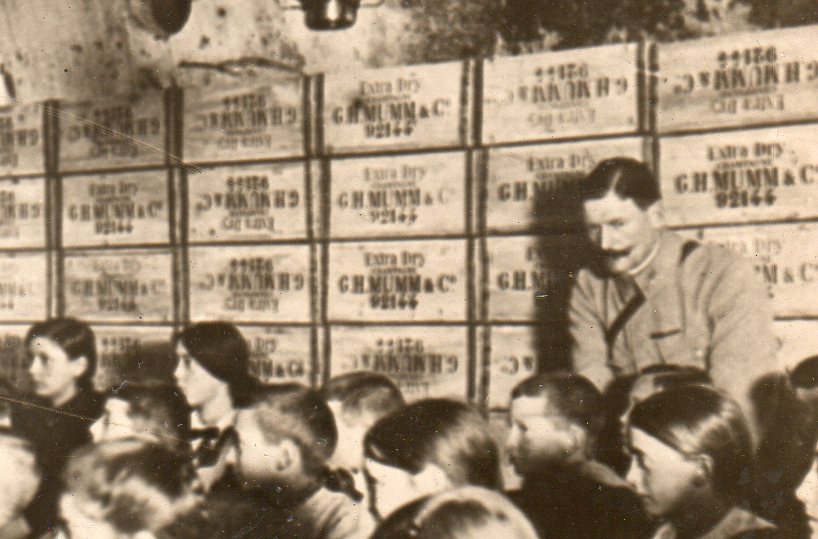
ORIGINAL Photograph, 1918. Children getting school instruction in wine cellar, Rheims. 8×6 inches. Good condition. $150
·Posted by :
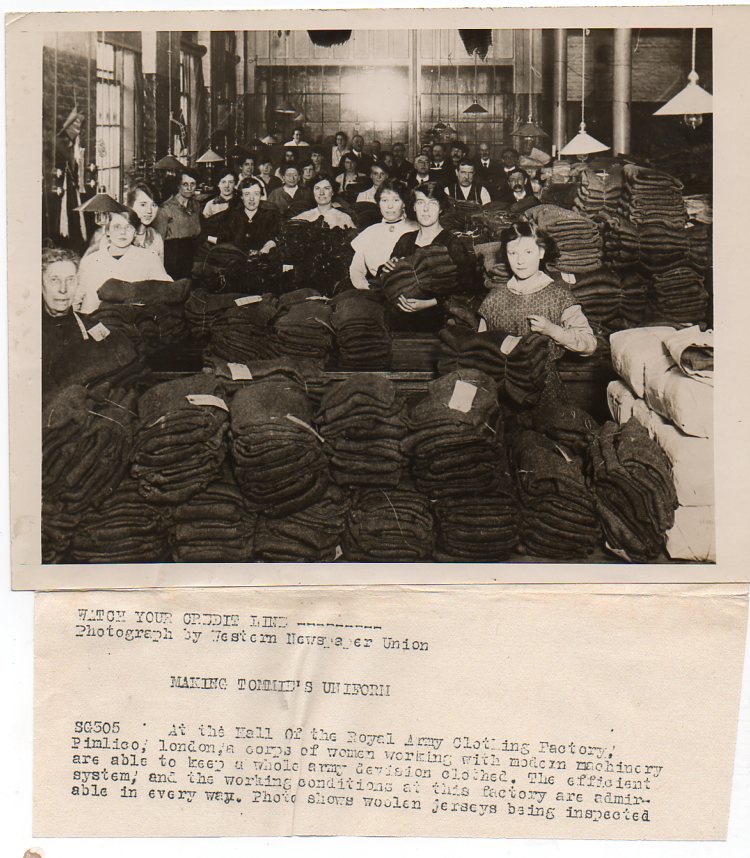
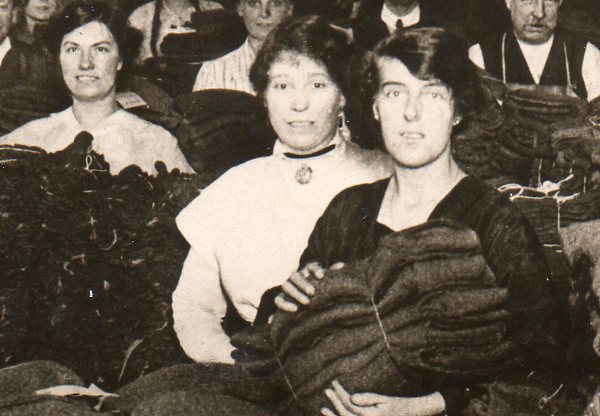
ORIGINAL Photograph, 1918.WOmen folding in the Pants Kingdom. 8×6 inches, good condition. $250
·Posted by :
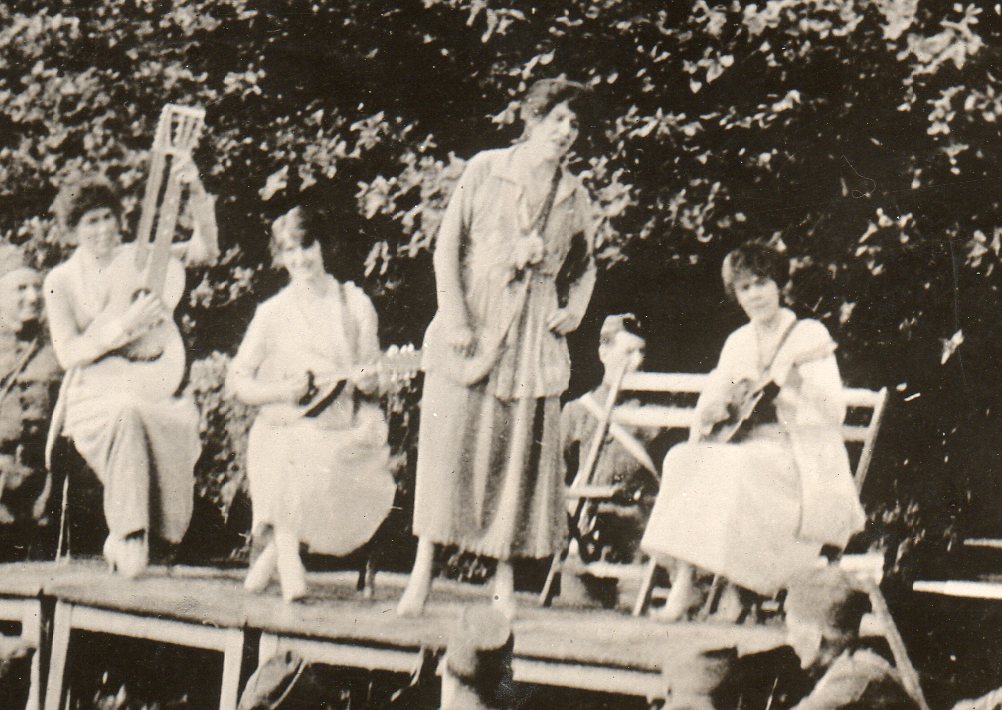
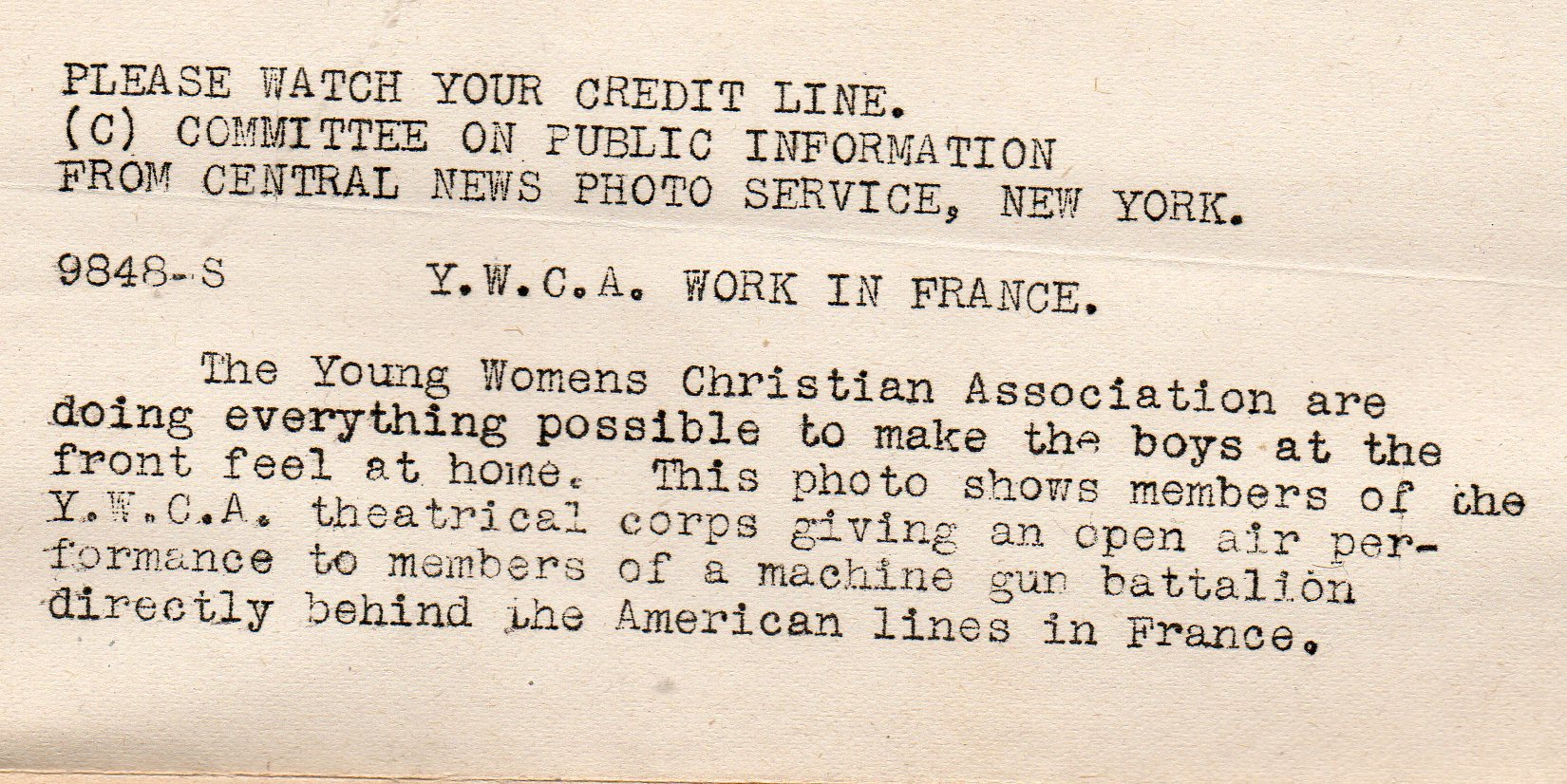
ORIGINAL Photograph, 1918. American YWCA entertainers, France. 7×5 inches. Good condition. SOLD
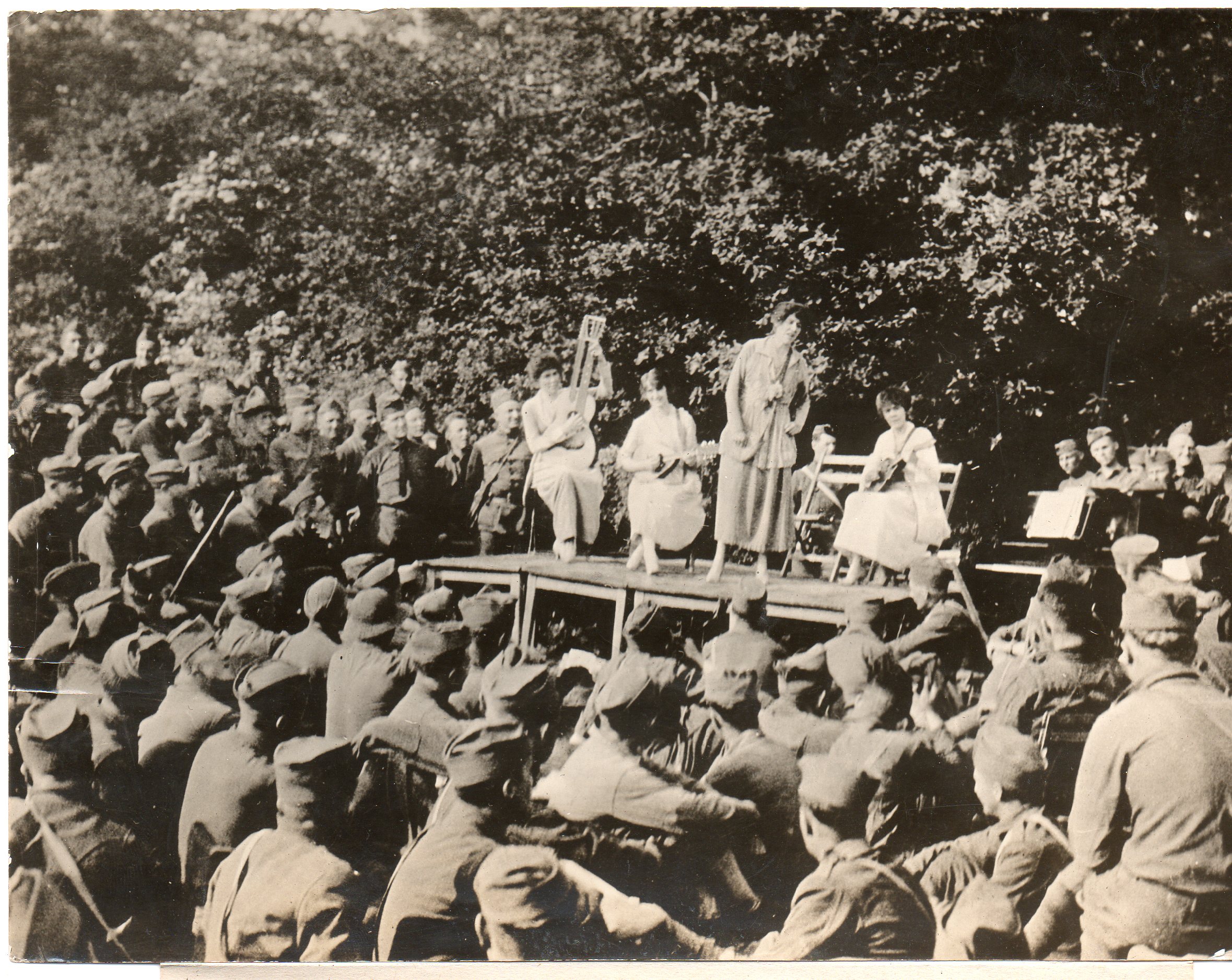
Thanks to John McKay (Anchorage, Alaska) for providing the background and foreground for who these women were–the Hearons sisters, as in “The Hearons Sisters Concert Company”. They were evidently quite an attraction, performing coast-to-coast, with a European tour, as well. I assume that they performed popular songs, as there seems to be no mention of the sort of music they played. See the University of Iowa (here) for more details.
“The woman on the left is actually playing a double necked “harp guitar,” an instrument that was popular in America during the time of the First World War. People could pluck out bass notes on the “harp” half while simultaneously strumming a melody on the guitar half.”–Christinablack.com
·Posted by :