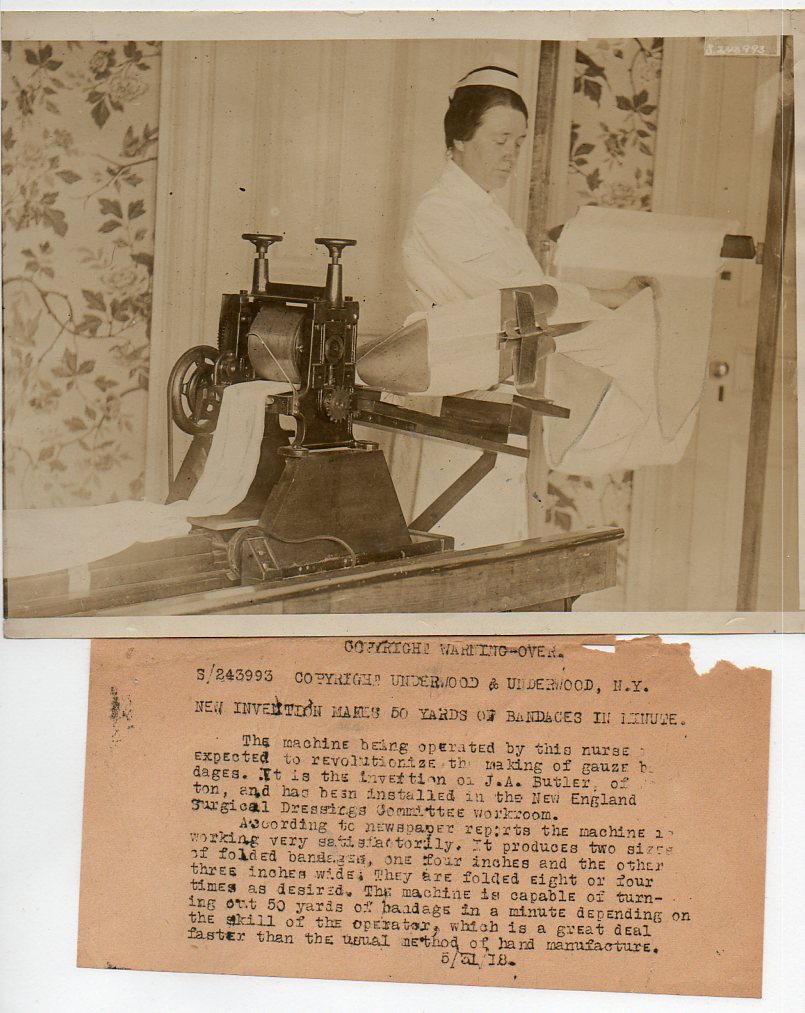
ORIGINAL Photograph, 1918. 7×5 inches, good condition. $75
A Daily History of Holes, Dots, Lines, Science, History, Math, Physics, Art, the Unintentional Absurd, Architecture, Maps, Data Visualization, Blank and Missing Things, and so on. |1.6 million words, 7500 images, 4.9 million hits| Press & appearances in The Times, Le Figaro, Mensa, The Economist, The Guardian, Discovery News, Slate, Le Monde, Sci American Blogs, Le Pont, and many other places… 5000+ total posts since 2008.
Contact johnfptak at gmail dot com
ORIGINAL Photograph, 1918. 7×5 inches, good condition. $75
·Posted by :
Original photograph, News Photo Service agency, 1918. $125
·Posted by :
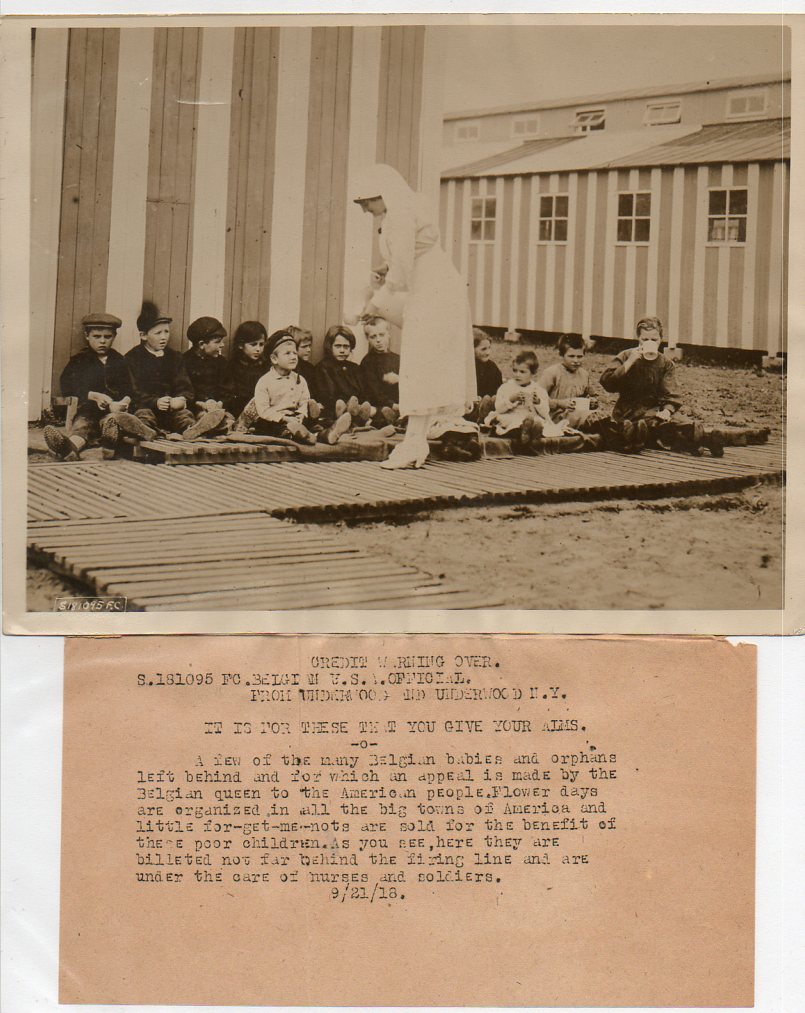
ORIGINAL Photograph, 1918. 7×5 inches, very good condition. $95
·Posted by :
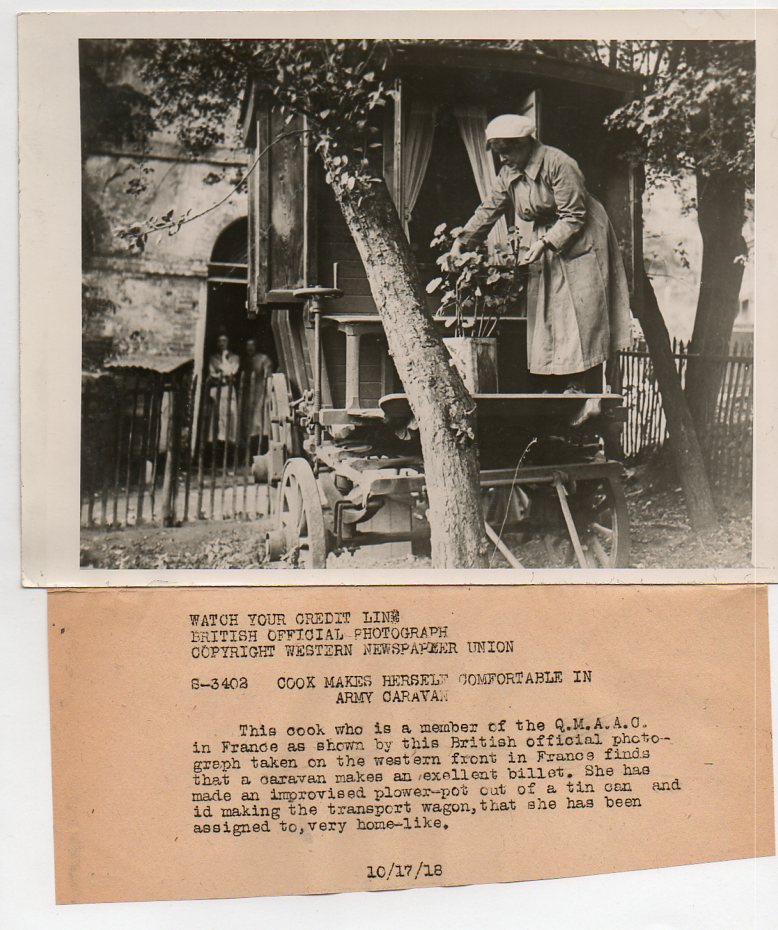
ORIGINAL Photograph. 1918. Size 7×5 inches. Very good condition. $125
·Posted by :
ORIGINAL Photograph, 1918. 7×5 inches. Very good condition. $135
·Posted by :
ORIGINAL Photograph, 1918. $125
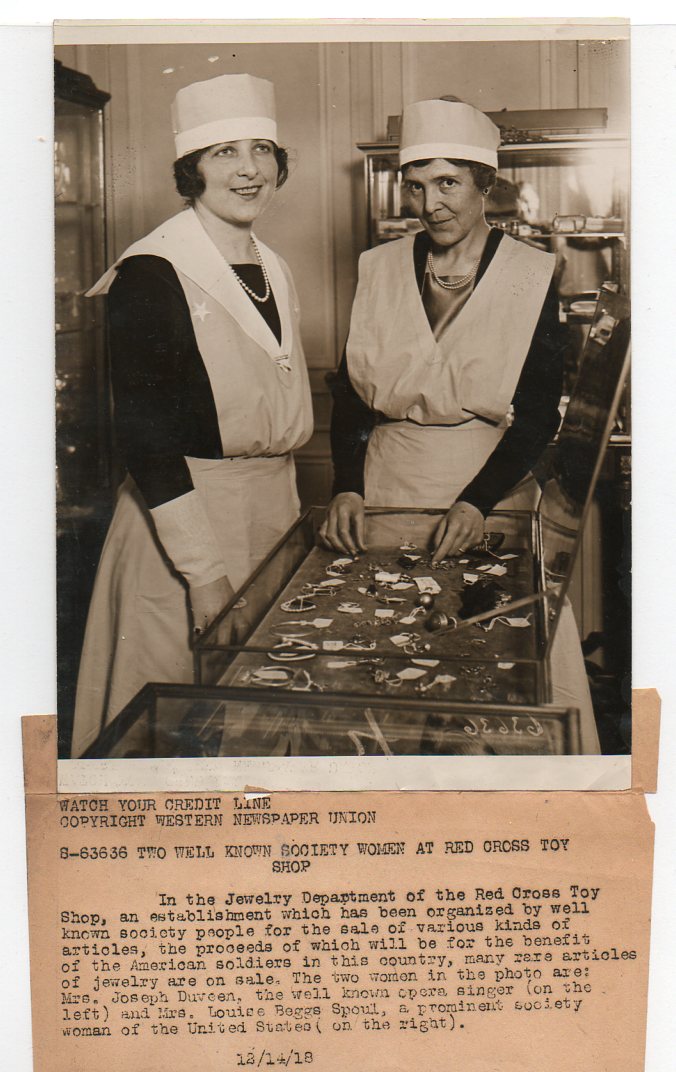
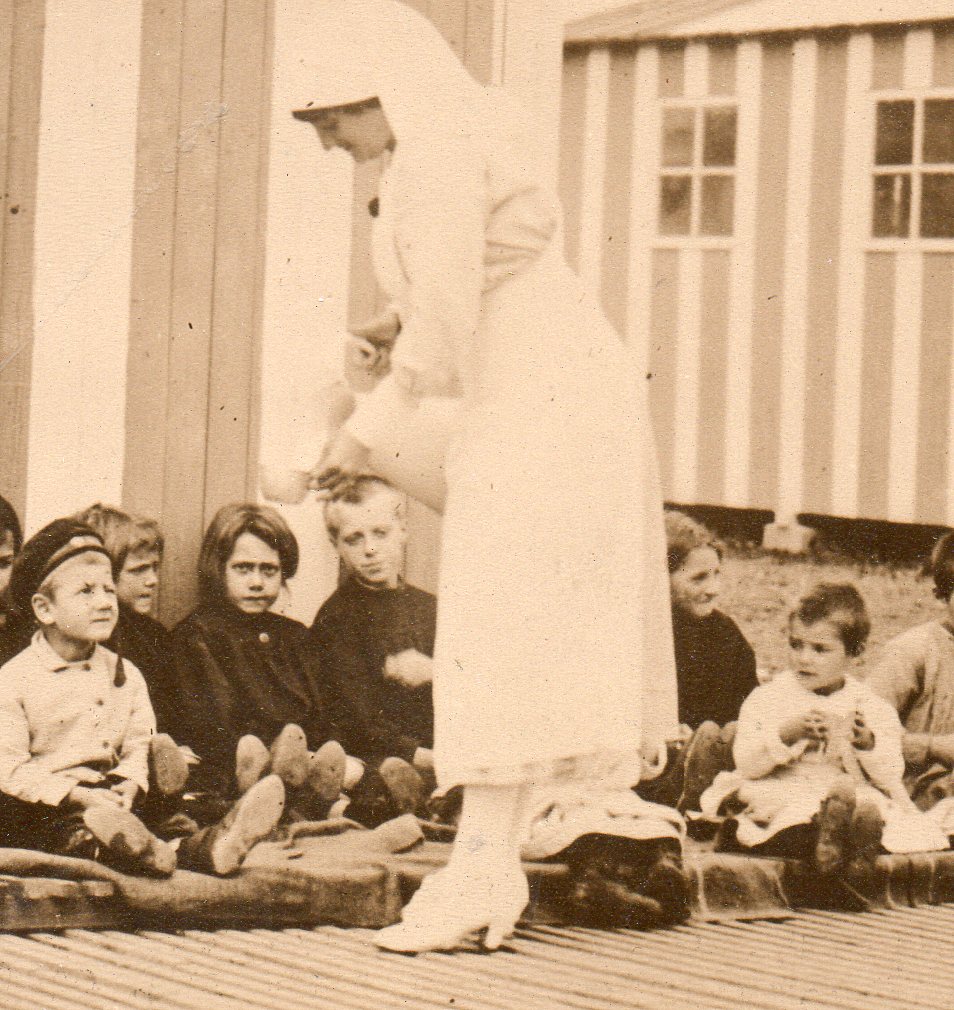
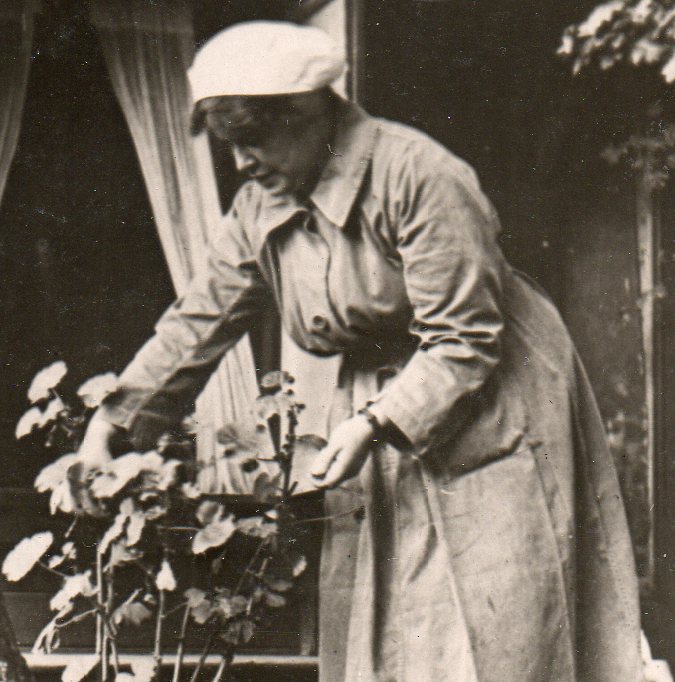
And the good detail of a kind-hearted-looking person:

·Posted by :
Ref: JF Ptak Science Books Post 1306
Its a little difficult to think of Ellsworth Kelly, Jacques Villon, Grant Wood, Laslo Moholy-Nagy and Thomas Hart Benton as painters-for-war. But its true, and true for many of hundreds of other artists in the 1915-1918 era. Its not as though they were in the trenches gunning down the enemy or lobbing hand grenades into the swirling gunsmoke. They werecamofleurs, camouflage1 experts, artists employed as magicians, Wartime Magi, employed/drafted to make ships and such disappear.
Ever since it was (sort of) first noticed in 1915 that designs odd to the environment, stark geometric patterns and such, were capable of fooling the eye, people with design capacity were pressed into service, rendering offensive and defensive instruments of war optically semi-impervious with variations of the then-five-year-old modern nonrepresentational art. That must’ve been a very odd position to wake up to every morning.
Of course the idea of camouflage in the animal world is probably 250 million years old–animals and insects have been blending into their environment for eons, and I’m sure too that early hominids did their fair share of walking behind brush. But the idea of hiding great amalgamations of very heavy metal with paint is really quite modern.
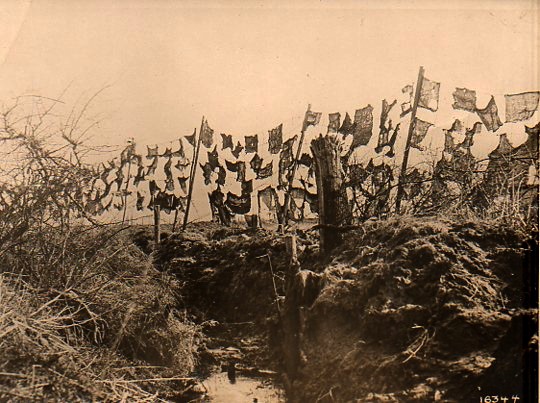
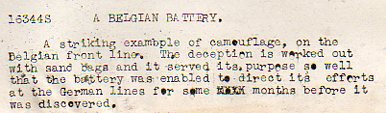
In this photograph, the camouflage is more a more futuristic conception of art than the abstract and cubist approaches that were taken during the war, this looking more like assemblages of found material more than anything else. And, according to the text that accompanied the photograph (which comes from 1918, from the Underwood & Underwood news photo service agency), the camouflage–empty sandbags thrown on a barbed wire fence) successfully concealed a gunnery emplacement for months on end.
Notes
1. A fine bibliography on camouflage appears here, at Leonardo Online.
·Posted by :
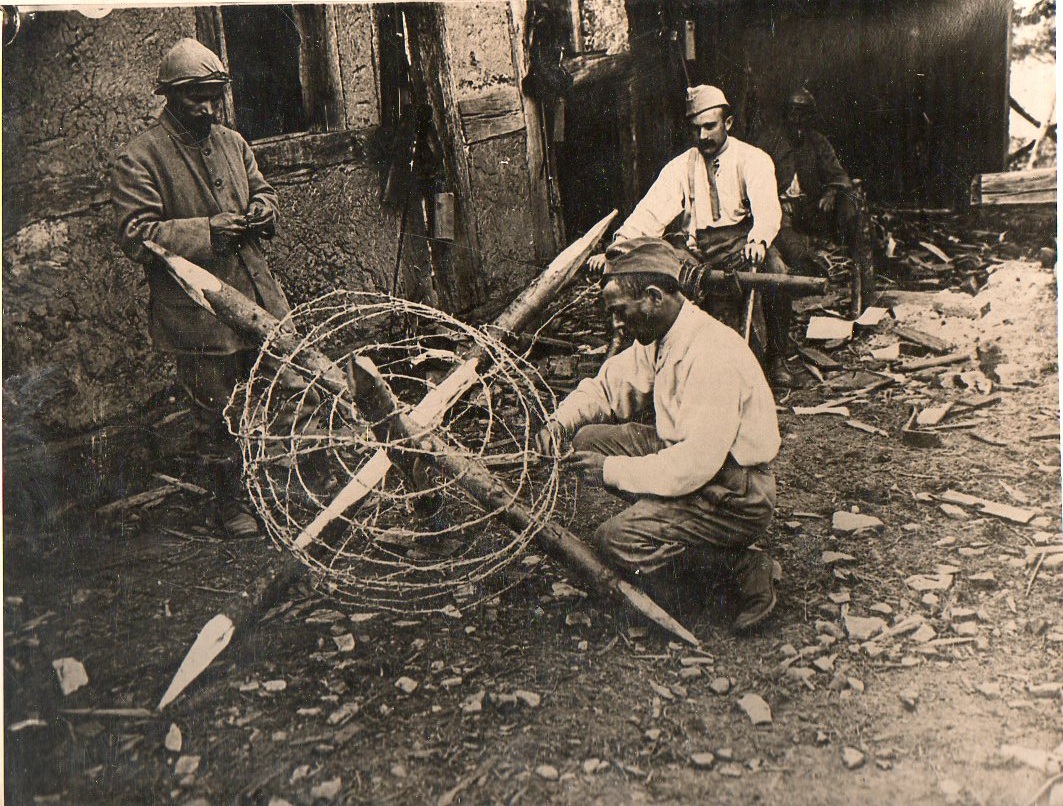
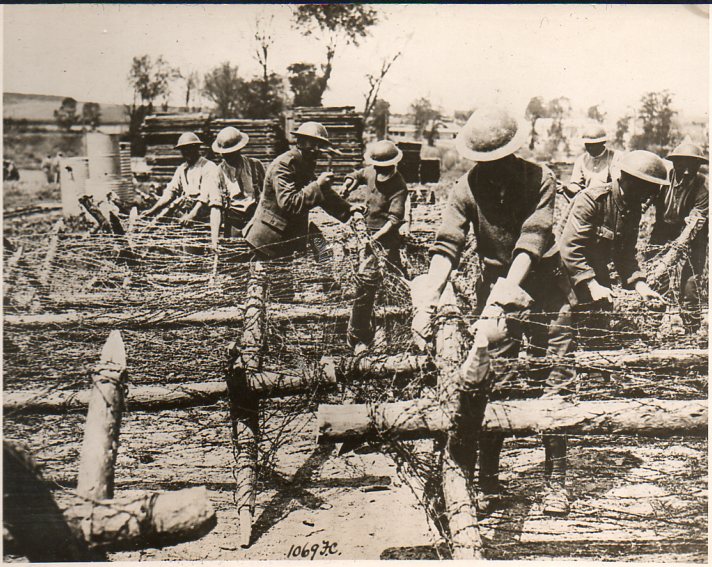
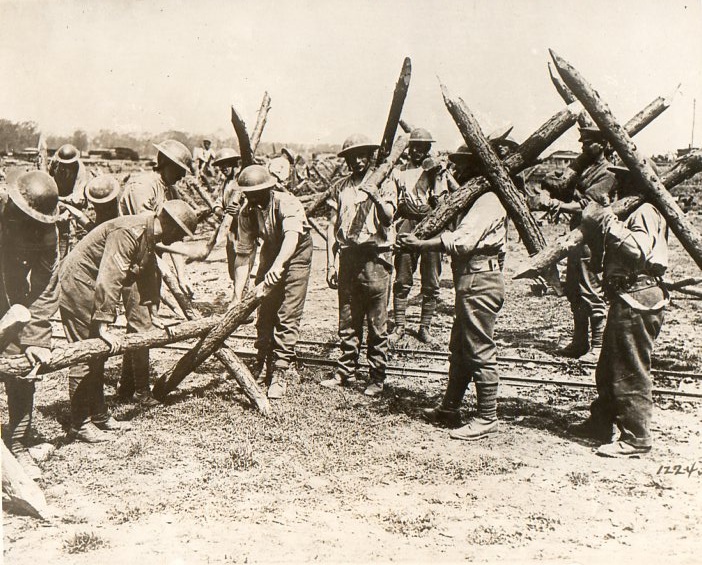
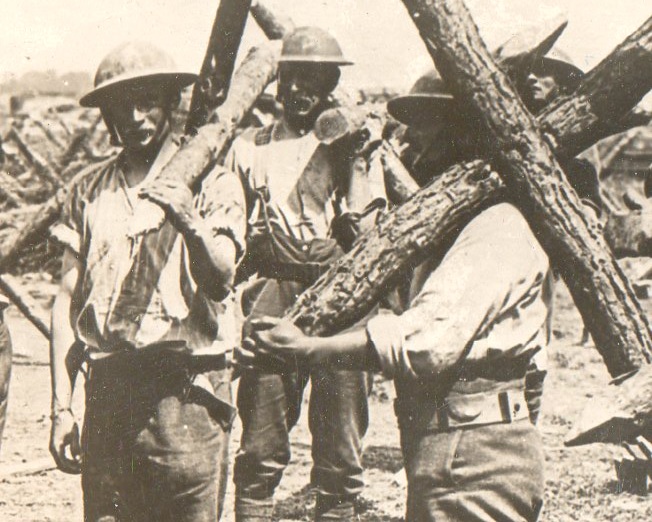
The following photos were found in my small collection of World War I news photo service images, all of which were made in 1918. They show the preparation of barbed wire entanglements–these were devilish things, made to grab a soldier and suck them in into a deeper hold when resisted, like a sort of sharp, metallic quicksand. Since there were something like 12-25,000 miles of trenches dug during WWI, I think that it might be a safe bet to say that there were a million miles of barbed wire fencing laid down–that would be equal to about 75 feet of wiring for every soldier who served, or about 200 feet for every person killed. Given the tactics, the trenches, the barbed wire, the machine guns, the gas, and so on, it is no wonder that there was very little advancement over battlefields that stretched for miles and involved hundreds of thousands of troops, costing (sometimes) hundreds of thousands of casualties. It would have been just insane-nasty to have to charge through fields of this stuff while being bombed and shot at by people in holes.
No gloves, here, not for the soldier weaving the wire or for the spinner in the background:
$175
I notice that in this photograph the only person wearing gloves is the lead model, front-and-center:
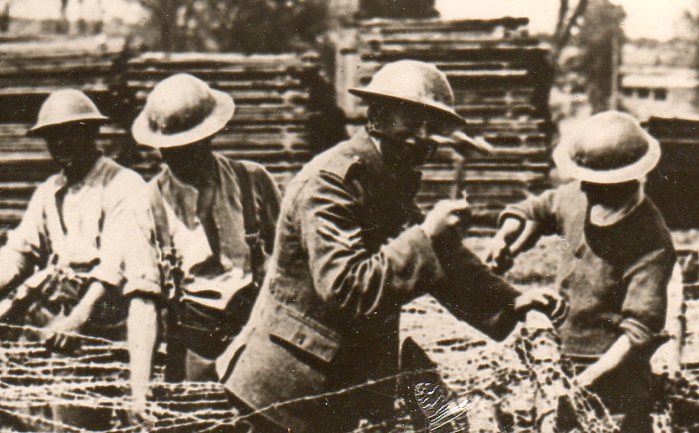
$125
Here’s the support staff assembling the
·Posted by :
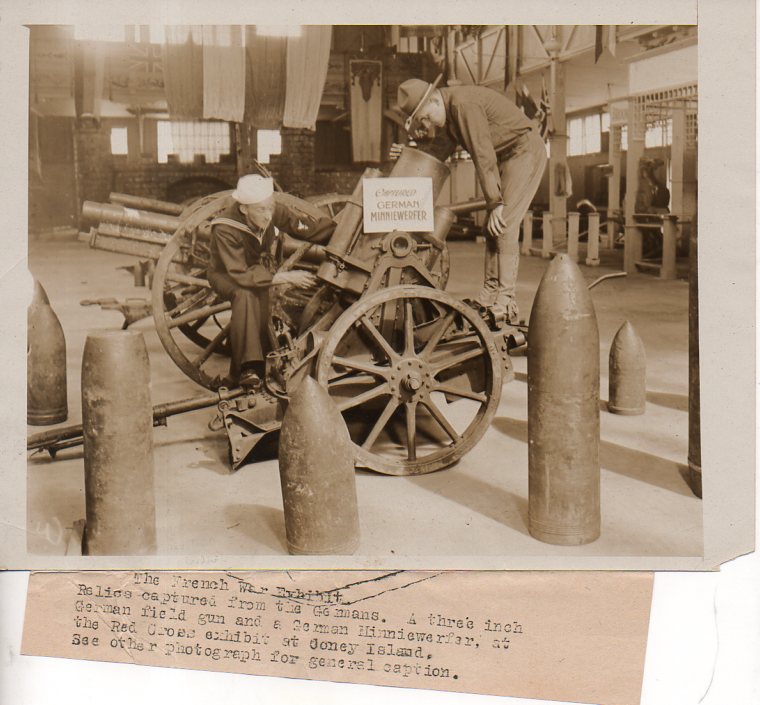
The American soldier in this new service photo is having a good hard look at the business end of a captured German Hinniewerfer, a three-inch field guin used to devastating effects throughout the war. We are told via the supplied typed caption that the display was installed on Coney Island (Brooklyn) as part of a Red Cross fund-raising exhibit.
8×5″, fine condition. $125
·Posted by :
JF Ptak Science Books
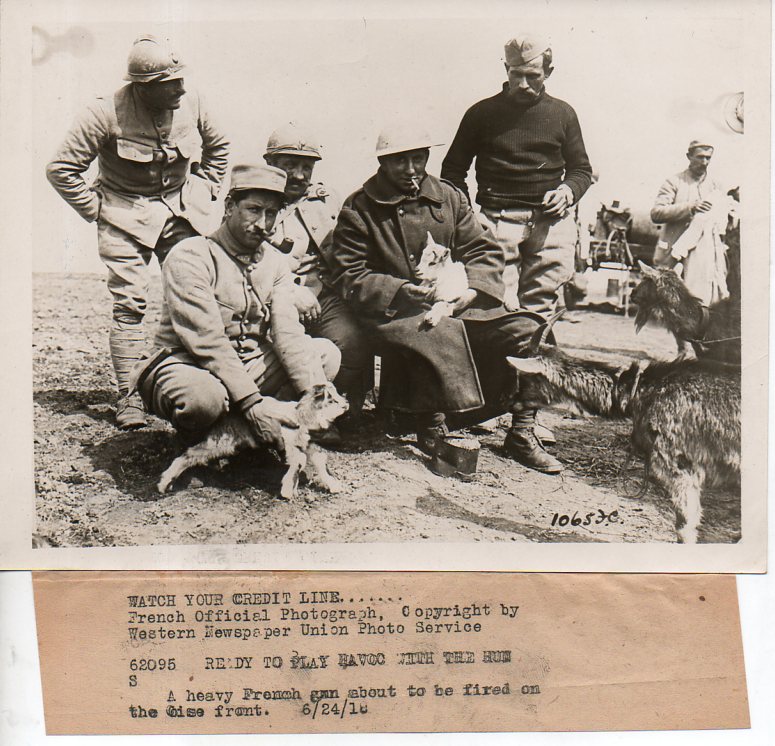
News photo service photograph, stamped “British Official Photograph/Copyright by/Western Newspaper Union Photo Service”, ca. 1918. Nice condition, 5.5×7″. $150
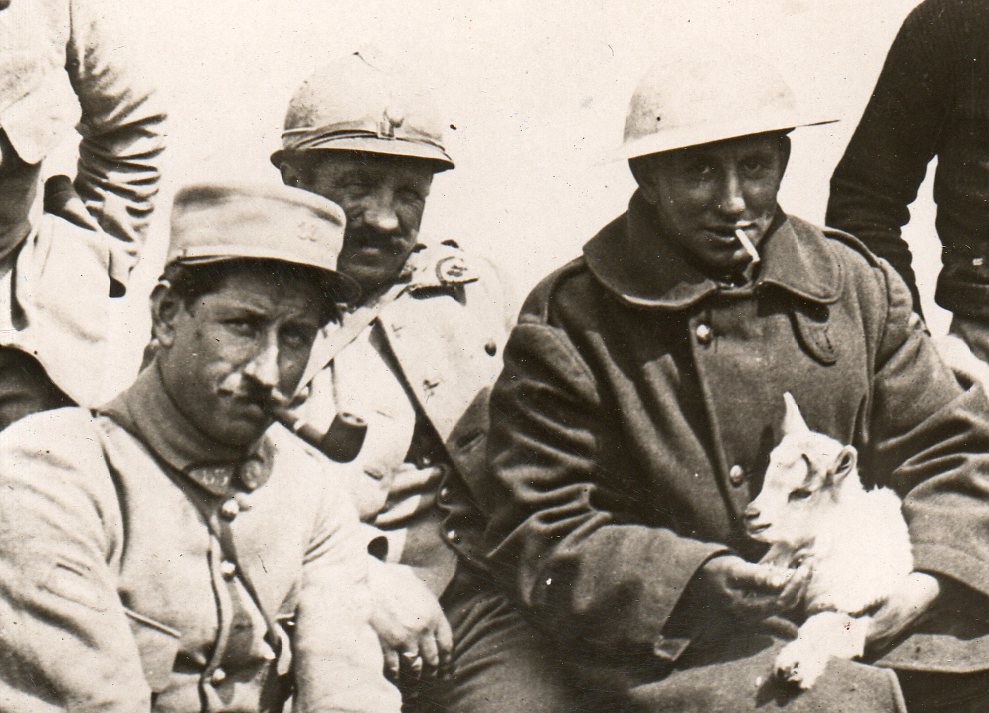
Which is a detail from:
·Posted by :
JF Ptak Science Books Quick Post
During World War I battlefields that began as forests ended as plains. And since telephonic communications depended upon wires, and since the wires needed to go somewhere, anything that survived that was head-and-shoulders above the ground was of particular use, especially to the telephone corps and especially for the use of telephone wires. This news service photo (provided by the Western Newspaper Union) shows a rather desolate scene, with Canadian engineers working the wreck of a lone tree for all it was worth…as is plainly visible, there is nothing else like it in the near or remote vicinity.
7×5.5 inches. Very good condition. $150
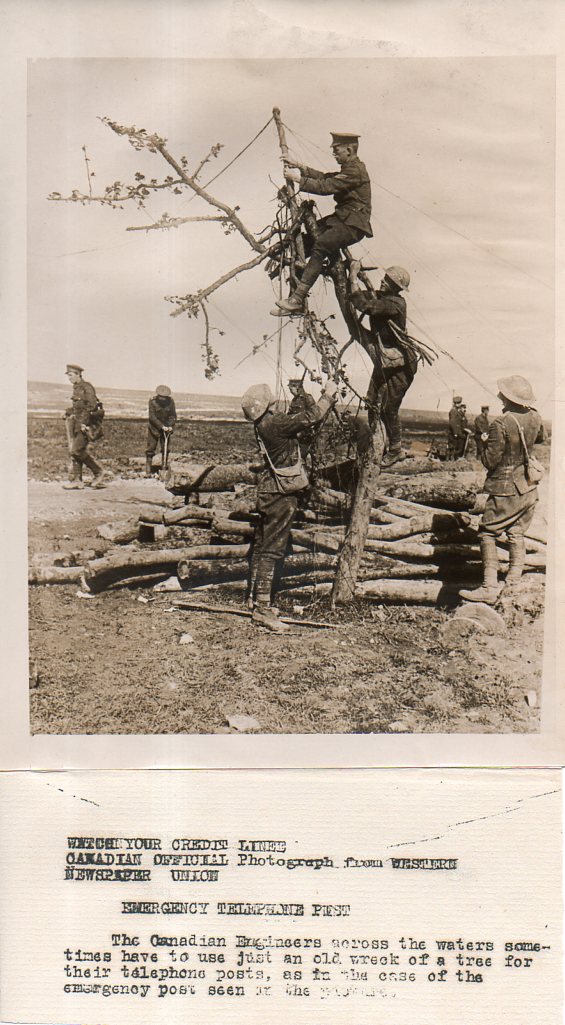 It was the practice of the agencies providing these images for worldwide distribution to also include typed captions for the photographs.
·Posted by :