A Daily History of Holes, Dots, Lines, Science, History, Math, Physics, Art, the Unintentional Absurd, Architecture, Maps, Data Visualization, Blank and Missing Things, and so on. |1.6 million words, 7500 images, 4.9 million hits| Press & appearances in The Times, Le Figaro, Mensa, The Economist, The Guardian, Discovery News, Slate, Le Monde, Sci American Blogs, Le Pont, and many other places… 5000+ total posts since 2008.

  • World War I Press Photographs This Section Of The Blog Is Dedicated To Photographs Made During World War I The Official Photograhy

    Information/sales contact:  jfptak AT thesciencebookstore DOT com 828.989.8326

    Inro to the World War I Press Photographs Collection
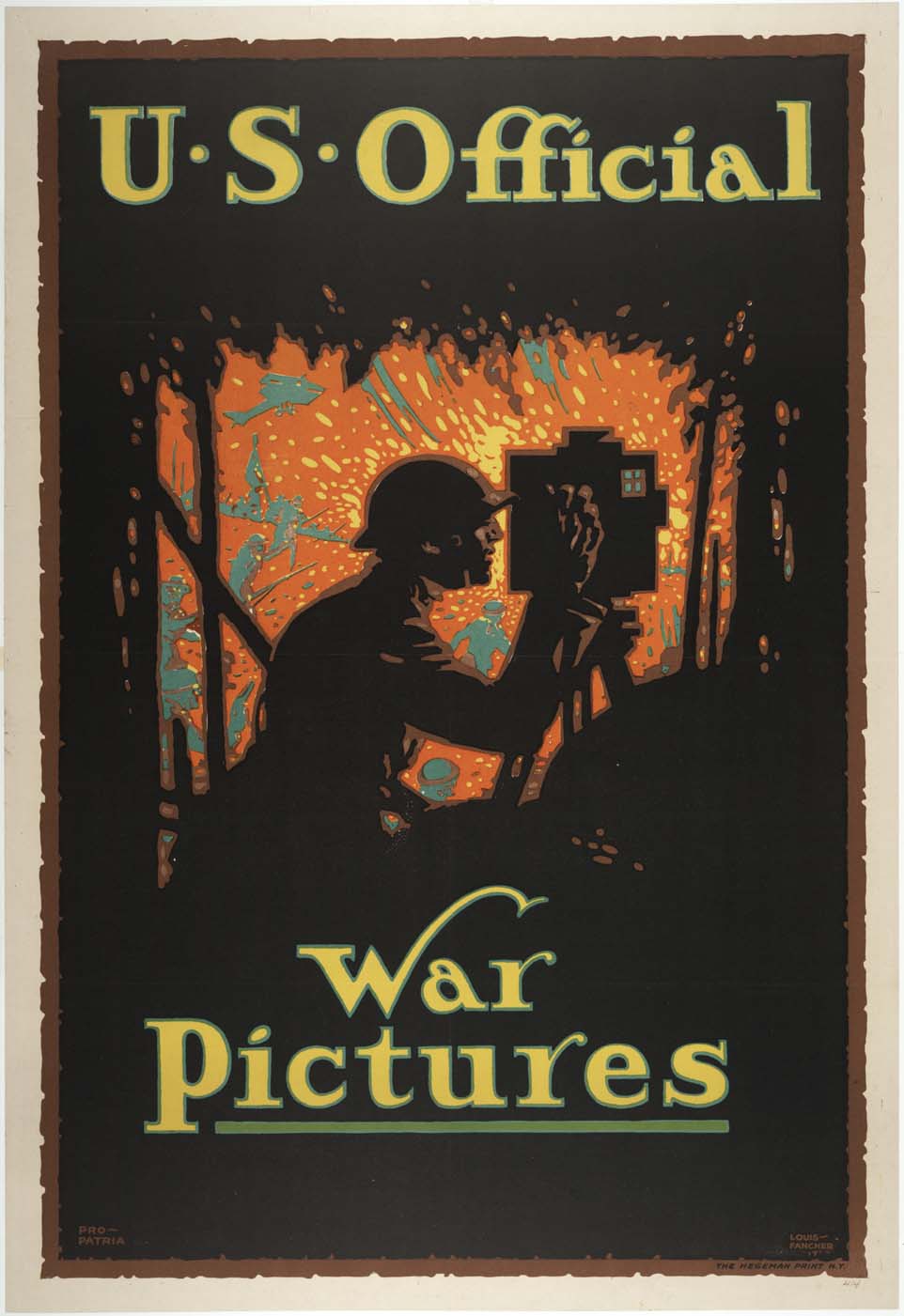
    WWI Photos Posters

    This section of the blog is dedicated to photographs made during World War I–the official photographs, because the control of military images during the 1914-1919 period was very nearly complete.  

    Photographs were made by pools of photographers working for several different photographic news agencies. The content of the images were generally secured and approved by the Committee for Public Information (CPI), which came into existence by executive order under President Woodrow Wilson on April 13, 1917, and which was charged with the task of wining the hearts and minds of the people of the U.S., to gain public support for the war and for American participation.  

    It is somewhat both ironic and not terribly uncommon for Wilson to have run for the presidency for one thing and then doing exactly the opposite, as he did with his 1916 re-election campaign slogan “He Kept Us out of War”.  

    The way that many newspapers obtained the war images that they published in their papers was via a semi-centralized pool of war images.  The newspaper would request, say, a photo of German prisoners, and would contact one of these photographic agencies—for example, say, the Central News Photo Service of 26-28 Beaver Street, NYC—and purchase the rights for republication, and then print it in the newspaper along with the story.  In almost every case the photo would be accompanied by a caption mimeographed onto an attached piece of cheap paper, or have the information stamped on the reverse.

    Photography was just one aspect of the information distribution and control by CPI–there were also thousands of Newspaper articles, public speakers (the famous “Four Minute Men” who would give some 7 million pepper talks at the beginnings of movies and public events), radio broadcasts, films, posters, demonstrations and anti-demonstrations, and other public displays.  
     

    ·Posted by :

  • Relaxed Time at a Sentry Post, 1918

    JF Ptak Science Books

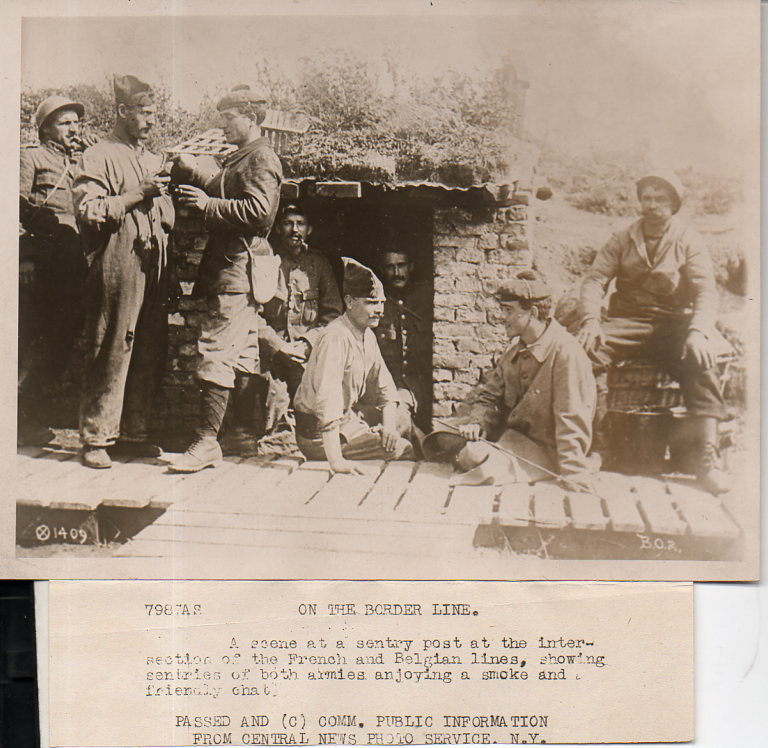
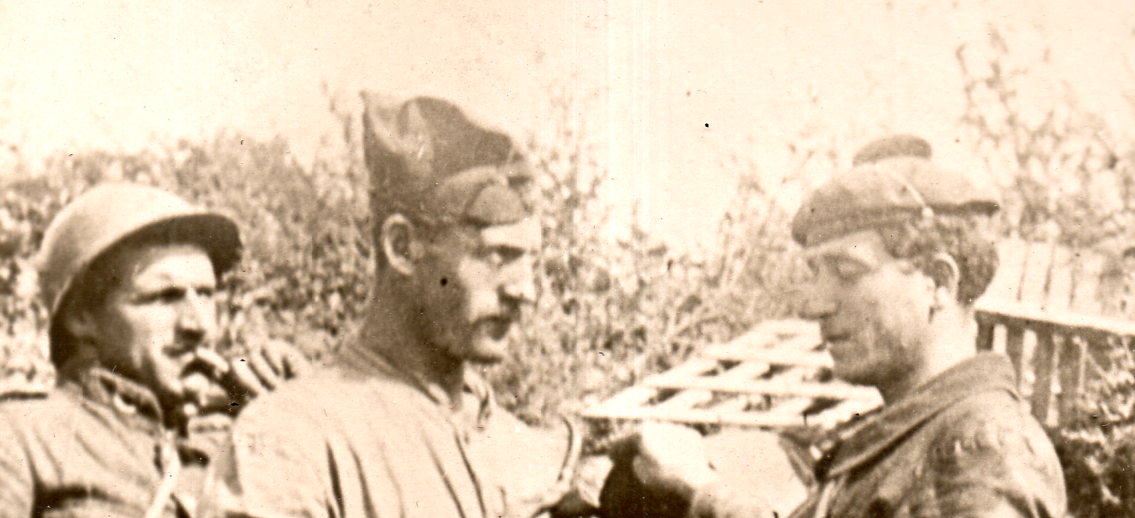
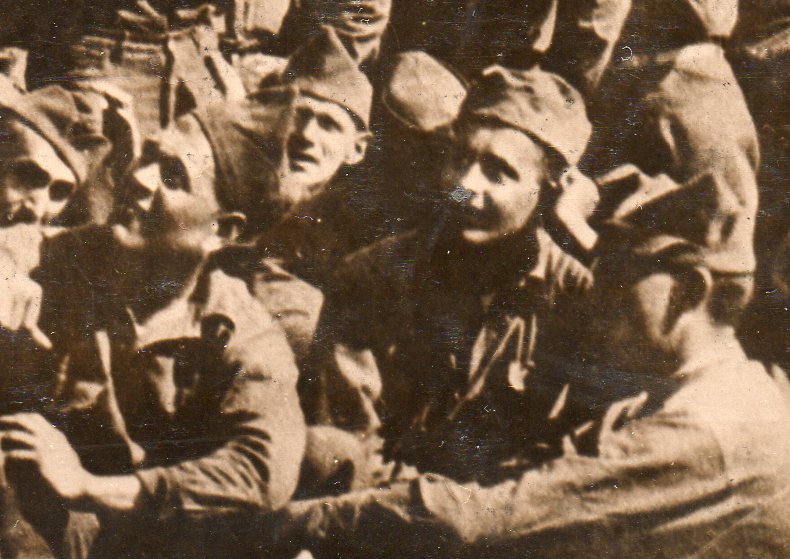
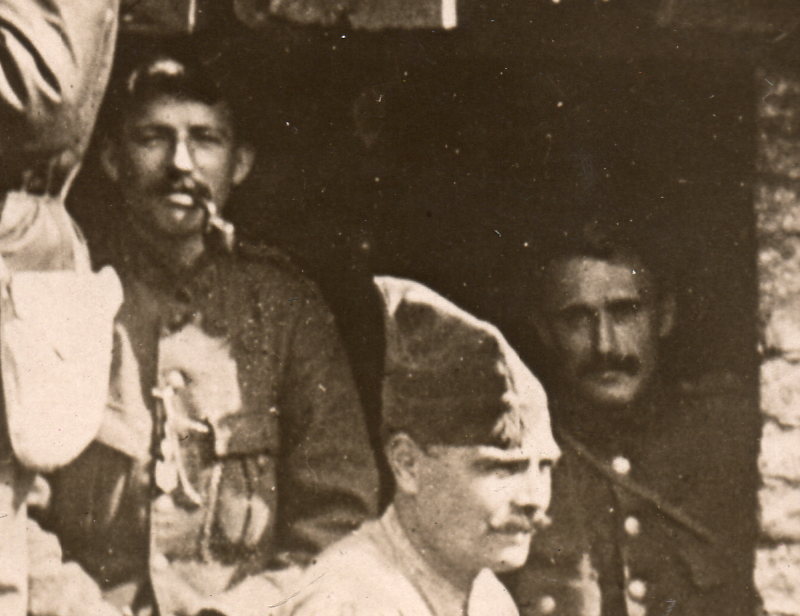
    Another interesting portrait within a photograph–this is one in a long series of images from the blog’s WWI News Photo Service Photography section, which can be found here and which will explain the purpose of pool photography during the War.  This image (explained in the original paper caption below) was made somewhere along the front at the intersection of French and Belgian lines.  The soldiers are gathered around a sentry post, enjoying some light time.  

    WWI--Photos--Border Line214


    WWI--Photos--Border Line212

    •  WWI News Photo Service Photograph, 1918. 5.5×7.75″, with the original paper caption.  Good condition.  $125

    And another detail: 

    WWI--Photos--Border Line213


    ·Posted by :

  • The French Blue Devils at West Point, 1918

    JF Ptak Science Books  

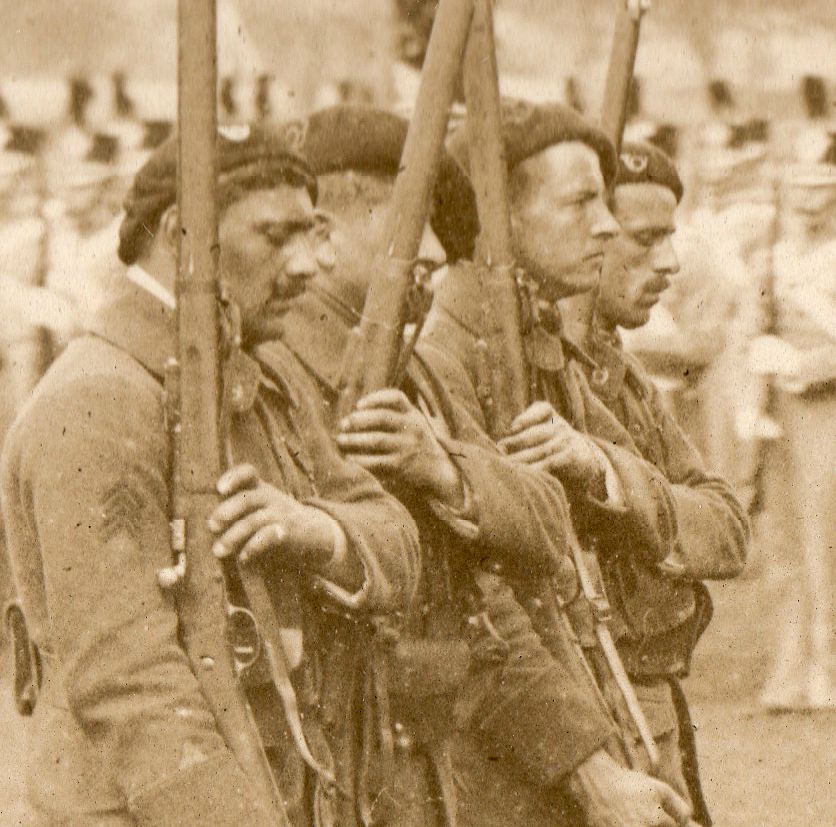
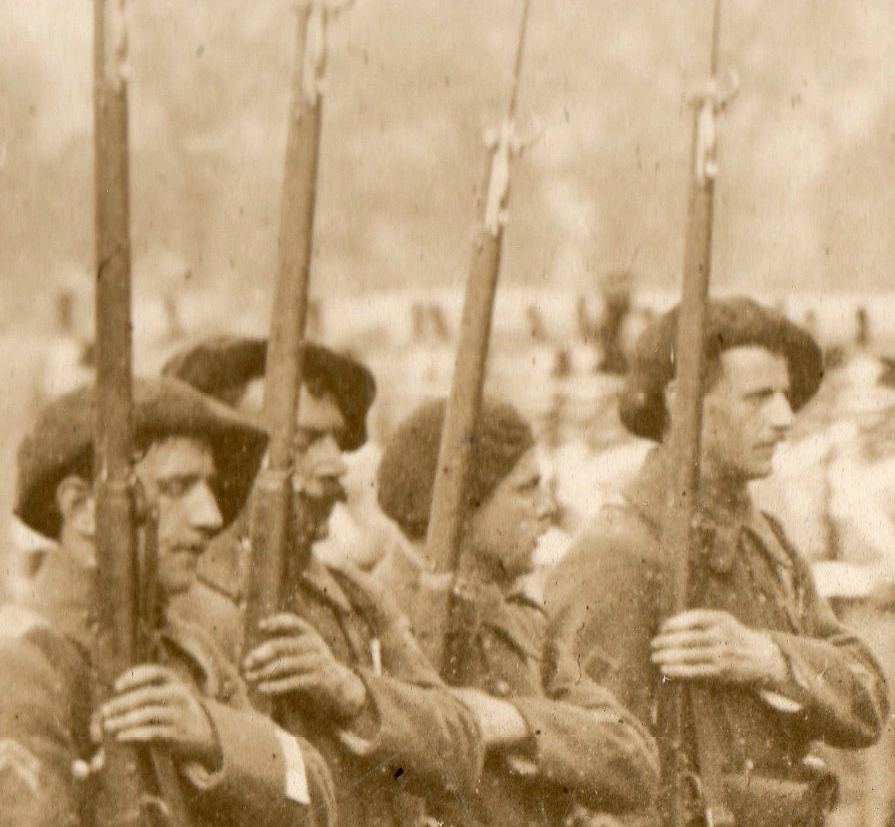
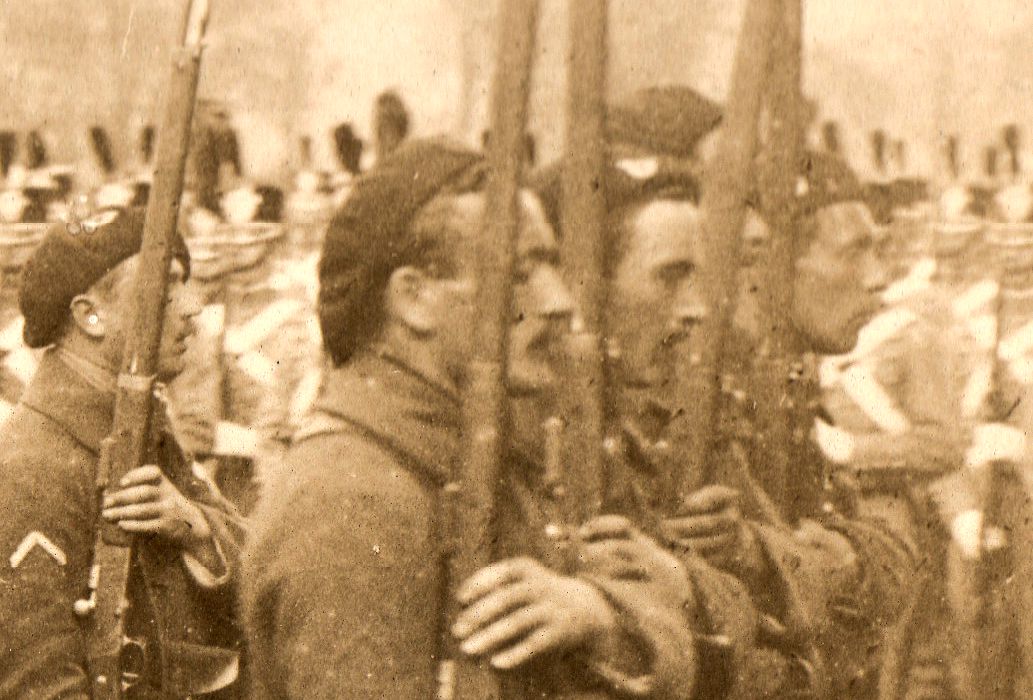
    I really enjoy looking at old photos with a magnifying glass, finding the pictures within the picture, until it is micro-images all the way down. It is odd “coming out” of them, sometimes, and then looking at the full image, and in some sense feeling utterly at a loss to try and find where you had just been in great detail.  

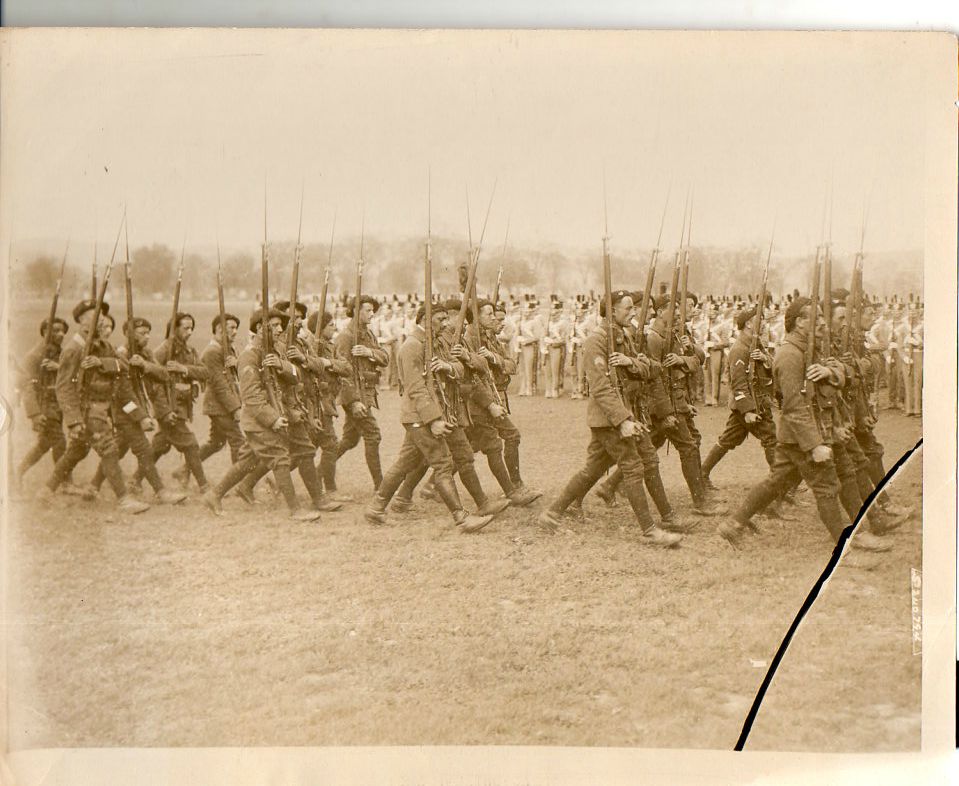
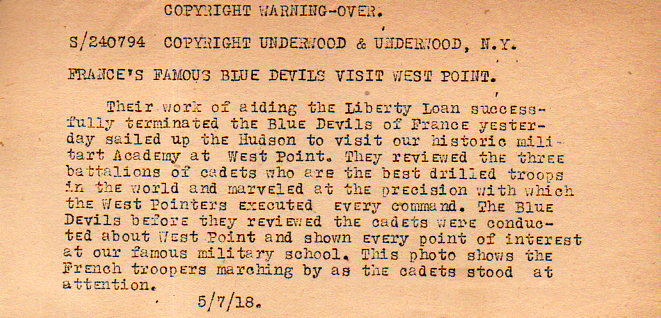
    Here’s an example with this great photo of the French Blue Devils on parade at the U.S. Military Academy at West Point.  These soldiers were and are elite mountain infantry, the Chassons Alpins, “Alpine Hunters”, and nicknamed “the Blue Devils”, and who saw their fair share of combat during WWI.  They made a tour of the U.S.at the beginning of the War in a fund raising drive, and evidently did so again, at least in this instance, showing up in New York in May 1918.  

    WWI--Photos--Blue Devils207

    WWI--Photos--Blue Devils206


    • Image 7.5×9.5″. The black mark/tear appears int he photographic negative itself and no tint he paper print. The photo is accompanied by the text sheet (below). $250

    This is a news photo service photograph (see here for the story) and is accompanied by this text which was supposed to be used along with the image when purchased for publication in a newspaper or magazine.  

    WWI--Photos--Blue Devils210

    WWI--Photos--Blue Devils208

    WWI--Photos--Blue Devils209

    ·Posted by :

  • Tired, Wounded, and Underground, 1917.

    JF Ptak Science Books  

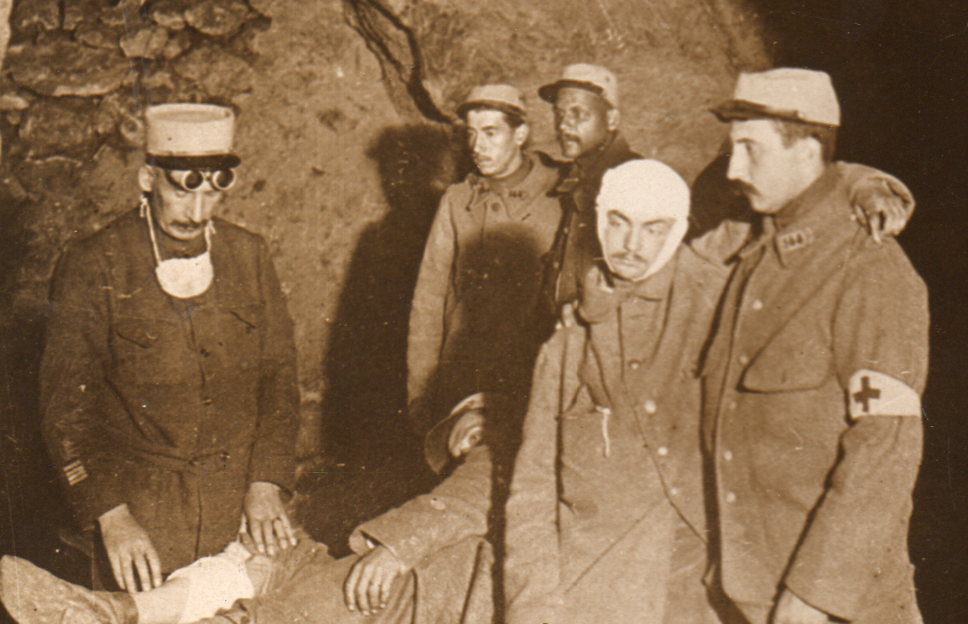
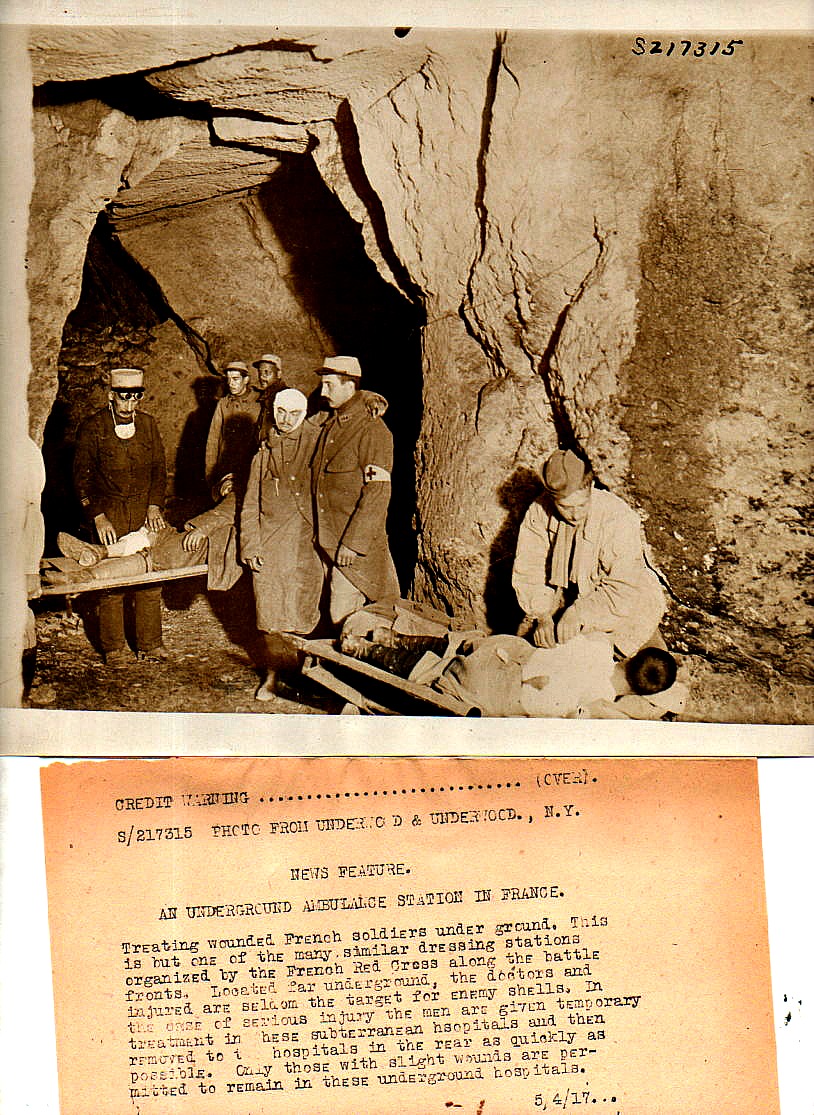
    This is a photograph of an aid station somewhere along the Western Front, 1917. Given the amount of digging going on throughout the course of the war, with the construction of hundreds of thousands of miles of trenches, and then the sapper war to tunnel underneath the tunnels and so on, it is quite possible that this underground shelter was dug out by hand. This is also an insight to the duration of some of those battles–to construct such a station impervious to possibly semi-continuous bombardment meant that the lines of battle were static, with many of the major engagements of hundreds of thousands of soldiers lasting for months, and in some cases, years. 

    The expressions here are difficult, and difficult to actually recognize as anything that isn’t exhaustion. There is a lot of “blankness” in the faces, a deep weariness.  

    WWI Photos--underground  hospital189

    This scene is a detail from the larger and full image: 

    WWI Photos--underground  hospital188


    WWI News Photo Service photograph, 9×7 inches, with the accompanying caption text.  $150

    ·Posted by :

  • WWI Snow Parade, 1917/1918

    JF Ptak Science Books

    WWI--great imagessnow parade059

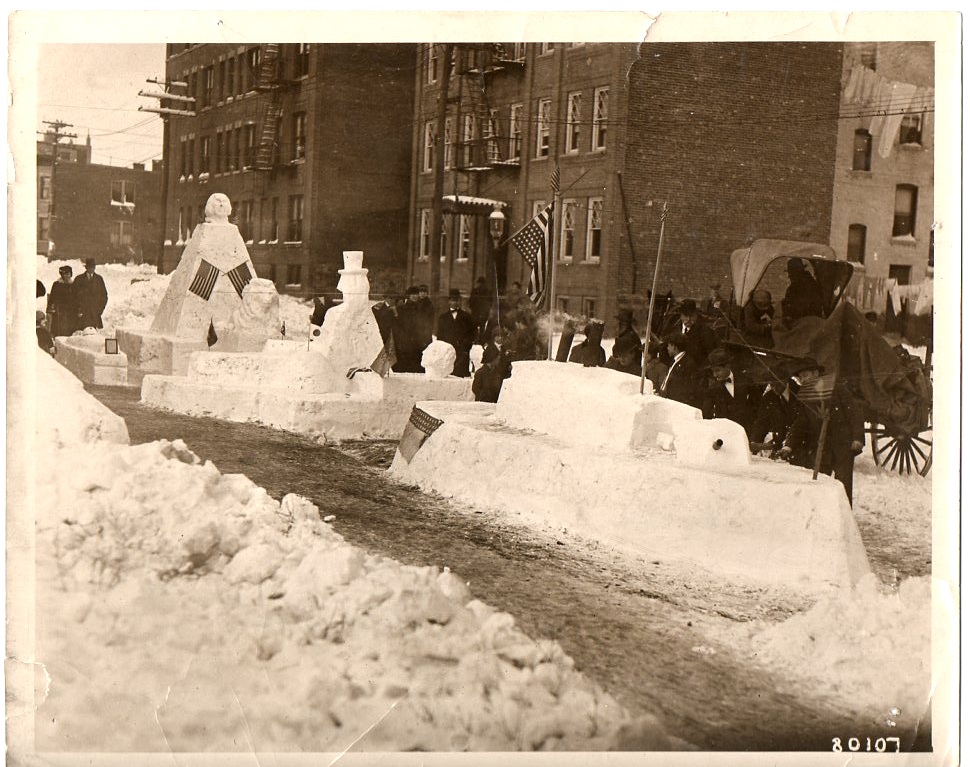
    • Original news photo service photographic image, 8×10 inches, ca. 1917/1918.  $500

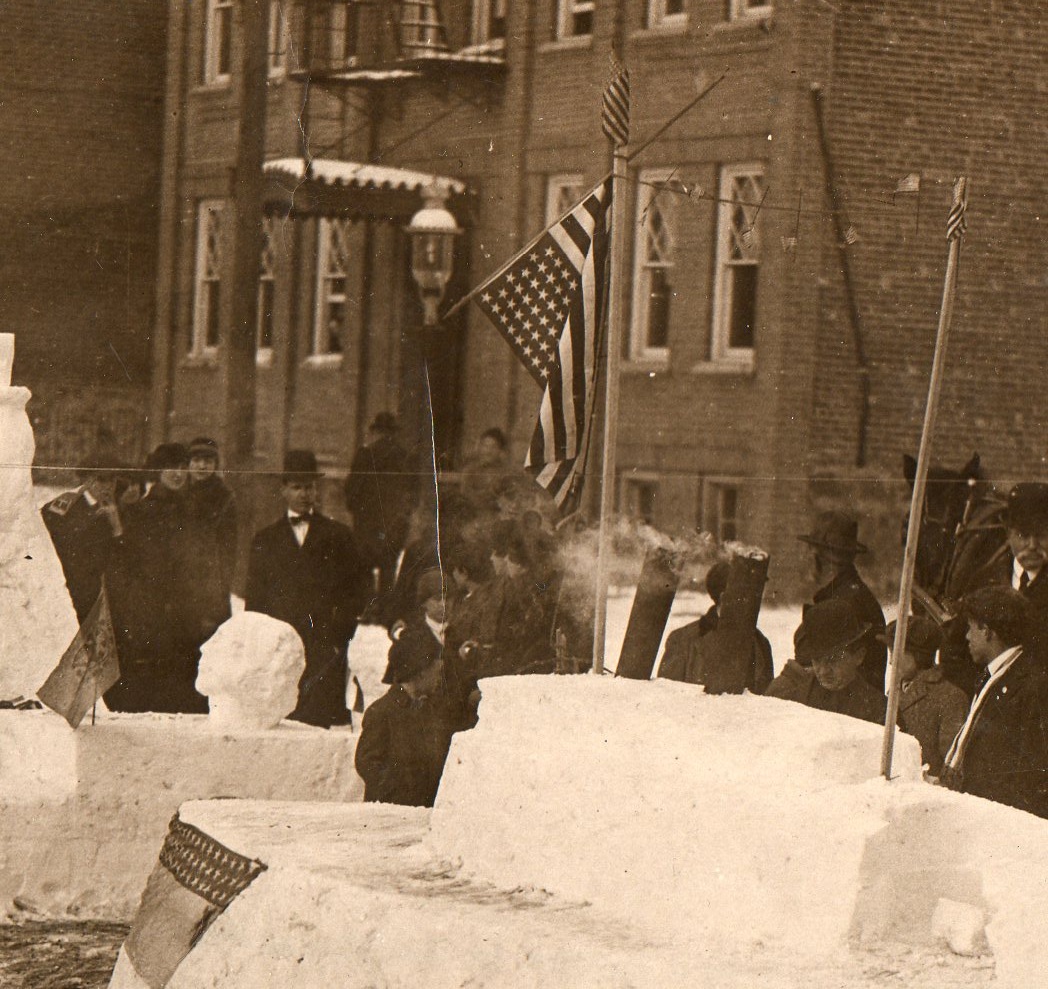
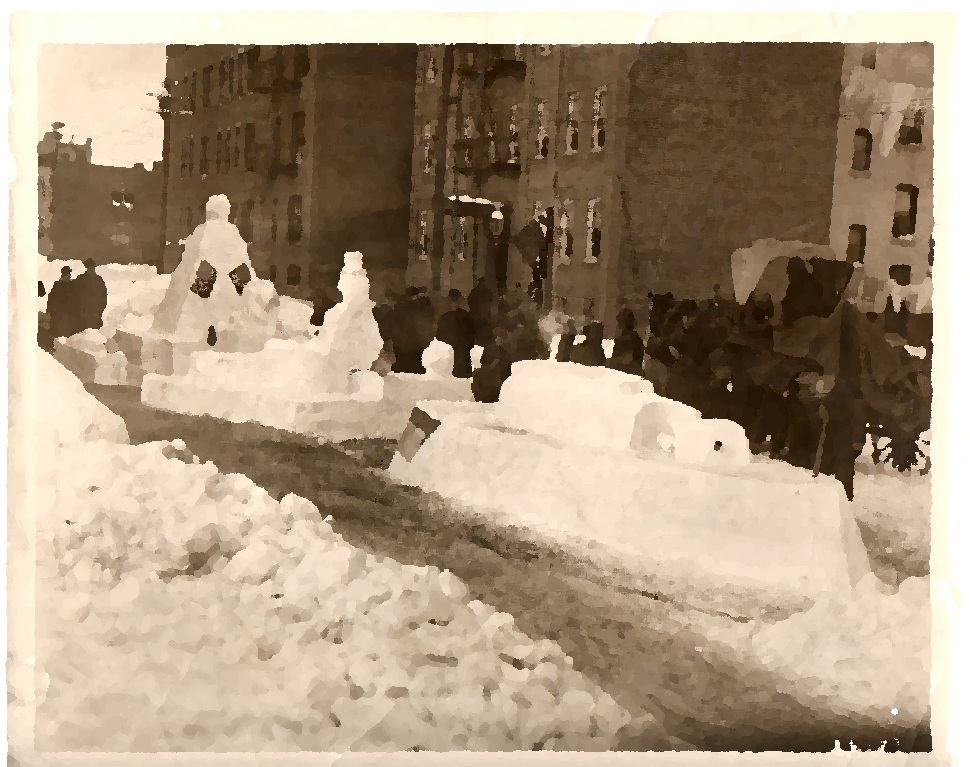
    This news photo service image–stamped “Hearst-Pathe News Agency” on the back–is frm the winter of 1917/1918 and shows a patriotic snow parade somewhere in the United States.  The snow looks prodigious, judging from the piles in the foreground and also the accumulated snow on the windowsills, and I imagine that all of the snow floats were sculpted mainly out of exiting snow in the street.  It is a delightful scene, to me, and hosts a variety of smaller, lovely images in vignette. For example:

    WWI--great imagessnow parade060

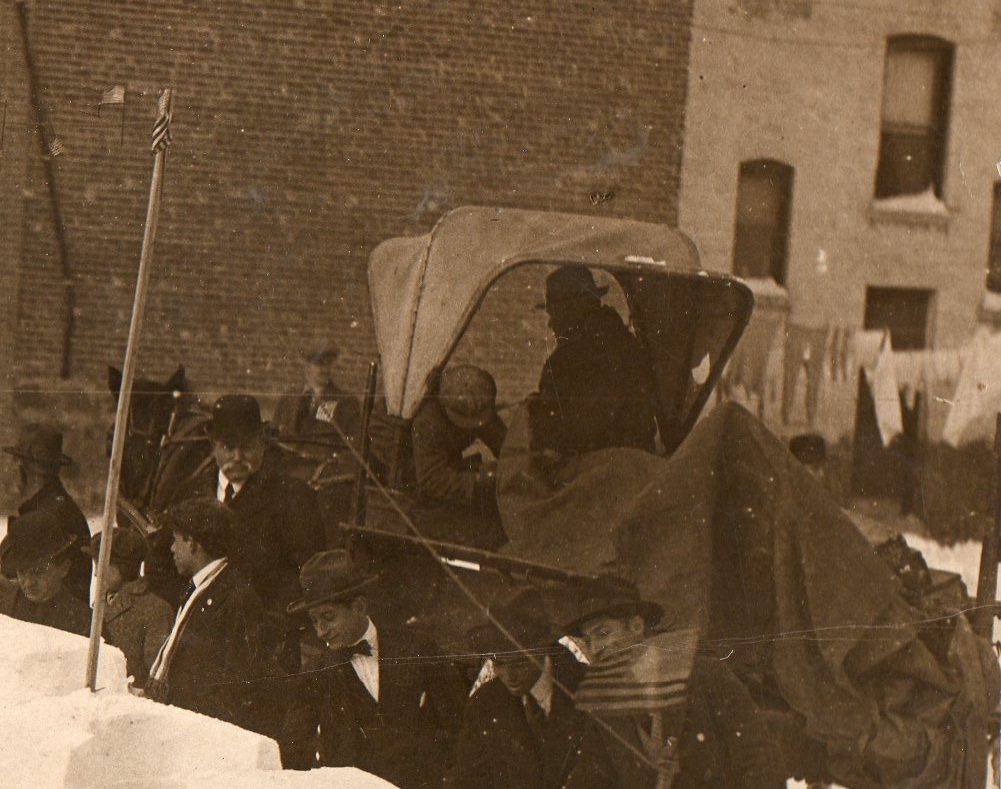
    The man in shadow and sleeping figure (boy) in the buggy complement the white-mustachioed bowler-wearing man to the left; the men looking on in the foreground are interesting, too–plus there’s that laundry in the background.  Given that the laundry is out (and wasn’t just left out during the storm) and that no one seems to be particularly bundled up against cold, I’m going to guess that there was a break in the weather that pushed the temperature higher than normal, with almost everyone taking advantage of the warm snap, as people do everywhere, all the time.  I also like the tiny American flag on the tall pole at left.

    And so:

    WWI--great imagessnow parade061

    And again:

    WWI--great imagessnow parade062
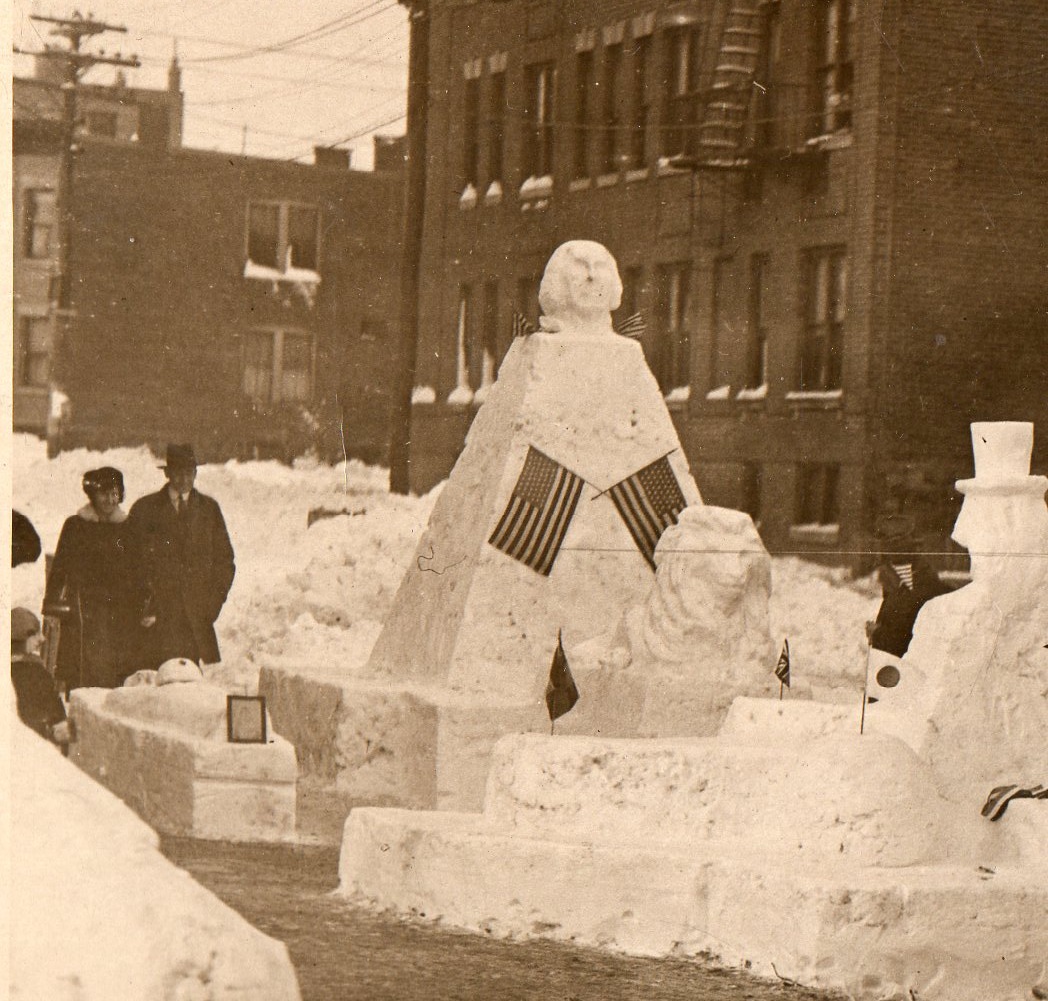
    I’m not sure what the flag is on the side of the Dreadnought, and it seems as though someone has stoked a small smoking fire in the metal tubes functioning as the ship’s smokestacks–a nice touch!

    Also I like this quickly-produced oil painting version of the photo–I knew that there was a very nice overall composition to the image, but really couldn’t find it until I did this:

    WWI--great imagessnow parade  OIL 059

    ·Posted by :

  • German Soldier, Worn and Worked, November 18, 1918

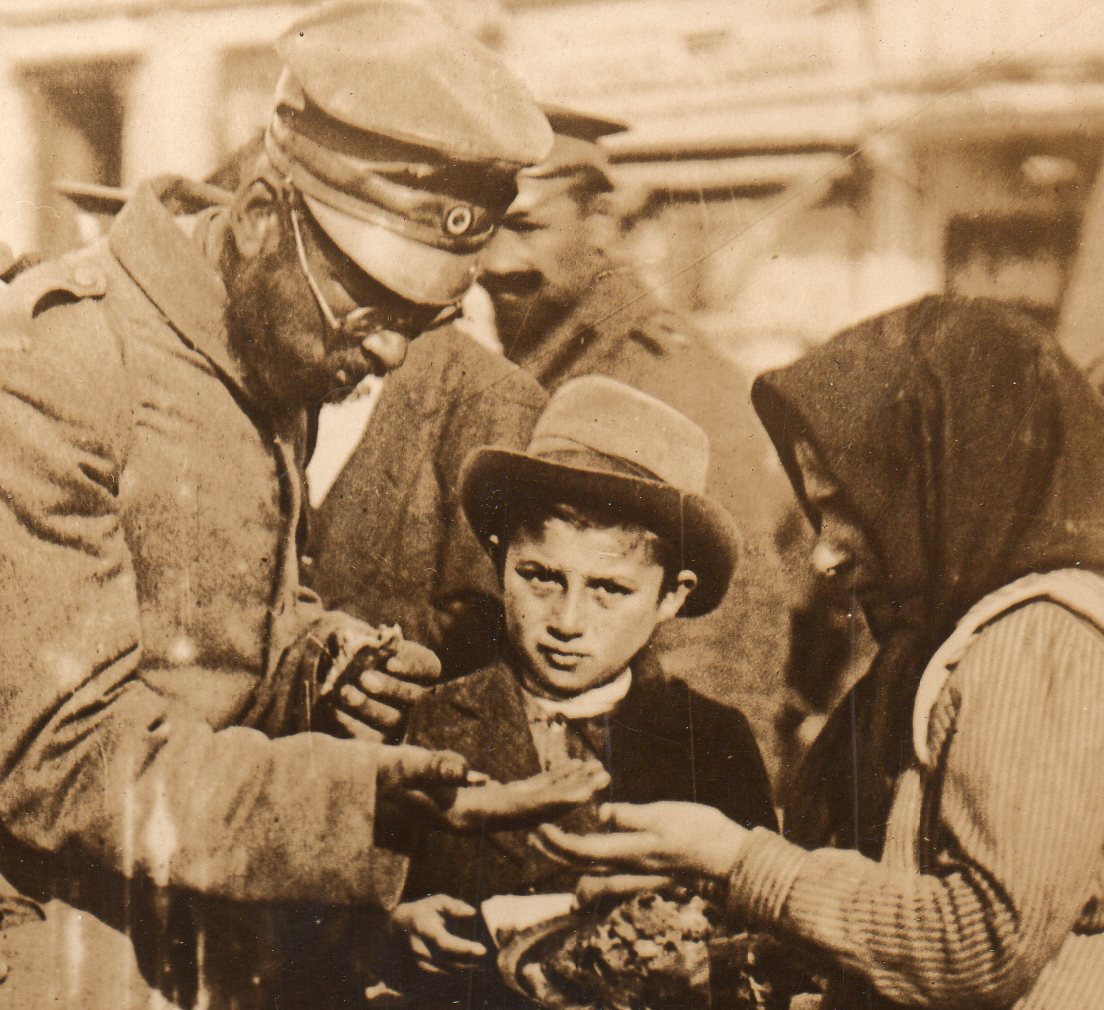
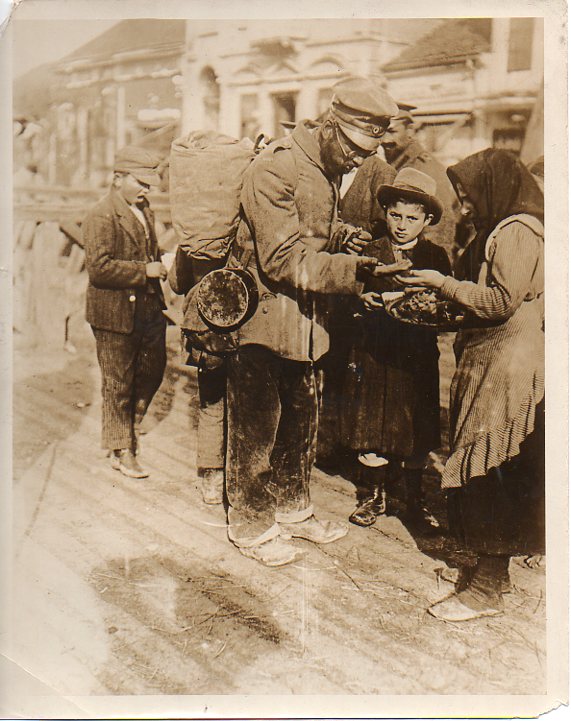
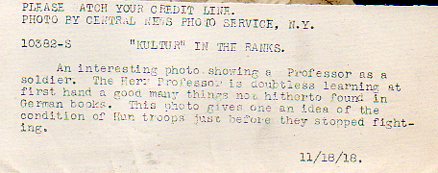
    It is unknown what this  photo depicts specifically but in general it sends an image of exhaustion and wear.  The caption for the image says that it shows “the condition of the Hun troops” and that the subject “Herr Professor” is learning “a good many things not hitheroto found in books”.  Maybe he was a teacher, maybe not.  Macht nichts. His pants looks velour-like and his boots (if that’s what his footwear was) look very thin.  He is ragged, his double-fold glasses look like they’re at their limit, his face looks swollen behind his beard, and he just looks “done”, in general. 

    WWI--german--beggar det326

    I’m not sure what he is doing, or where he is.  He may be trying to figure out local currency to purchase whatever it is the vendor-woman has on the tray at her hip–she os holding out her hand, and looking at his.  The soldier definitely has something there, and he looks basically too weary to comprehend it.  the hand language is ambiguous to me.  He may have received something already, some sort of food, and he is staring at it now, thinking perhaps how little of it there was.  He’s eating, and already has taken a bite of whatever bread-like thing is in his left hand.  I’m not sure what attracted the attention  of the boy in the center–perhaps it is simply the camera, and he wanted to be in the shot. 

    WWI--german--beggar325

    Original photograph, good condition, 5×8″.  1918.  $300

    There’s a shadow in the foreground-left of what looks like someone making a photograph of the scene–probably not our photographer, but another, with a brownie or some such smaller camera.

    At the end of years of fighting every general soldier deserves respect and, at least, some free food–I hope this guy got his.

    And the accompanying text to the news photo service image, to be used if published:

    WWI--german--beggar text327

    ·Posted by :

  • Camouflage on the Belgian Front, 1918

    World War I photos--Camouflage291

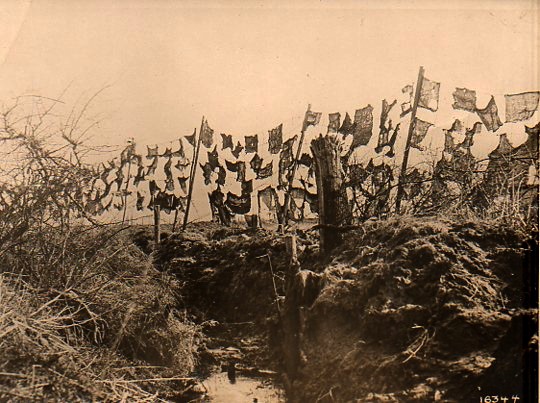
    • Item:  7×5 inch original photograph, 1918. Camouflage on the Belgian Front.  With original text.  Very good condition.  $125

    Its a little difficult to think of Ellsworth Kelly, Jacques Villon, Grant Wood, Laslo Moholy-Nagy and Thomas Hart Benton as painters-for-war.  But its true, and true for many of hundreds of other artists in the 1915-1918 era. Its not as though they were in the trenches gunning down the enemy or lobbing hand grenades into the swirling gunsmoke. They were camofleurs, camouflage1 experts, artists employed as magicians, Wartime Magi, employed/drafted to make ships and such disappear. 

    Ever since it was (sort of) first noticed in 1915 that designs odd to the environment, stark geometric patterns and such, were capable of fooling the eye, people with  design capacity were pressed into service, rendering offensive and defensive instruments of war optically semi-impervious with variations of the then-five-year-old modern nonrepresentational art. That must’ve been a very odd position to wake up to every morning. 

    Of course the idea of camouflage in the animal world is probably 250 million years old–animals and insects have been blending into their environment for eons, and I’m sure too that early hominids did their fair share of walking behind brush.  But the idea of hiding great amalgamations of very heavy metal with paint is really quite modern.

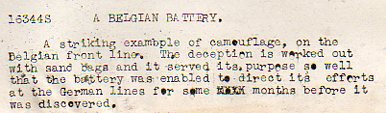
    In this photograph the camouflage is more a more futuristic conception of art than the abstract and cubist approaches that were taken during the war, this looking more like assemblages of found material more than anything else.  And, according to the text that accompanied the photograph (which comes from 1918, from the Underwood & Underwood news photo service agency), the camouflage–empty sandbags thrown on a barbed wire fence) successfully concealed a gunnery emplacement for months on end. 

    World War I photos--Camouflage det292 

    Notes

    1. A fine bibliography on camouflage appears here, at Leonardo Online.

    The definition of “camouflage” from the Oxford English Dictionary shows that it is a young word, in English:
    “(n) The disguising of any objects used in war, such as camps, guns, ships, by means of paint, smoke-screens, shrubbery, etc., in such a way as to conceal it from the enemy; also, the disguise used in this way; freq. attrib.


    1917    Daily Mail 25 May 4/4   The act of hiding anything from your enemy is termed ‘camouflage’.
    1917    Daily Mail 16 July 5/3   The King paid a visit to what is called a camouflage factory.
    1922    C. E. Montague Disenchantment viii. 108   A French aerodrome across which the French camouflage painters had simply painted a great white high-road.


    ·Posted by :

  • American Entertainer At The Front July 17 1918 5X7Inches Original Photograph Good Condition 100

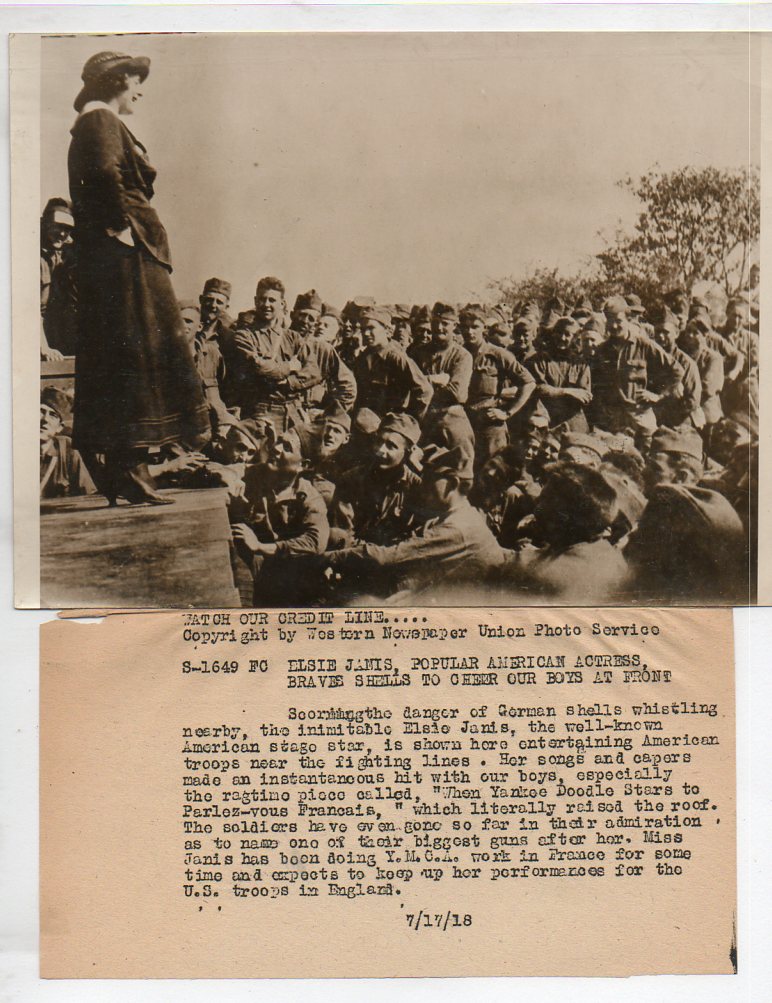
    American entertainer at the front, July 17, 1918.

    5x7inches, original photograph., Good condition. $100
    WWI--e--women american actress692
    WWI--e--women american actress det693


    ·Posted by :

  • Vertical and Anticipation at Reims

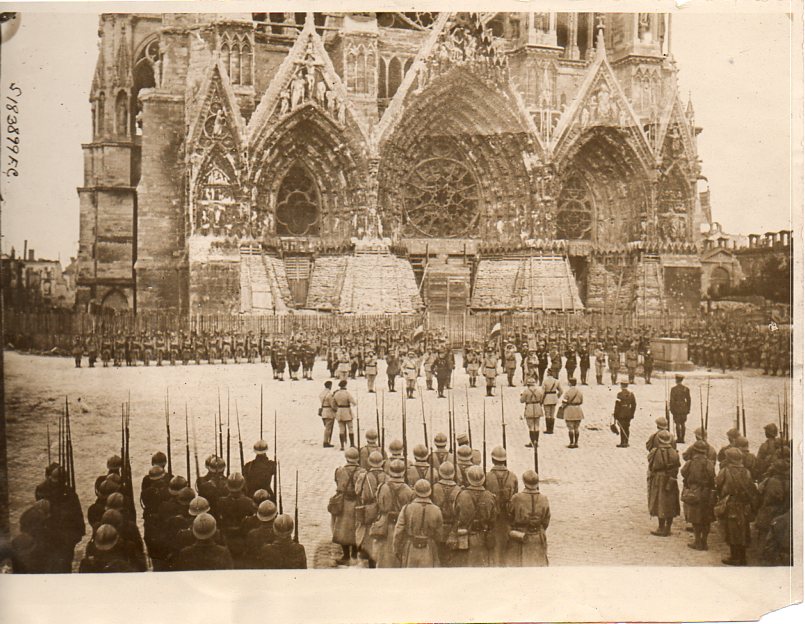
    ITEM:  original photograph, 8×6 inches, printed 1918.  Good condition.  SOLD

    Verticals and Anticipation after Four Grueling Years

    In developing a history of vertical lines I thought that I would look at single image of a collection of vertical lines, but having just stumbled across this in our WWI News Photo Service archive, I just could not resist.  There is of course plenty of vertical arrangement here–just orders of magnitude more than what I was setting out to find.  So it goes.

    WWI photograph--spires071

    (The image is available from our blog bookstore, here.) And the detail:

    WWI photograph--spires det072
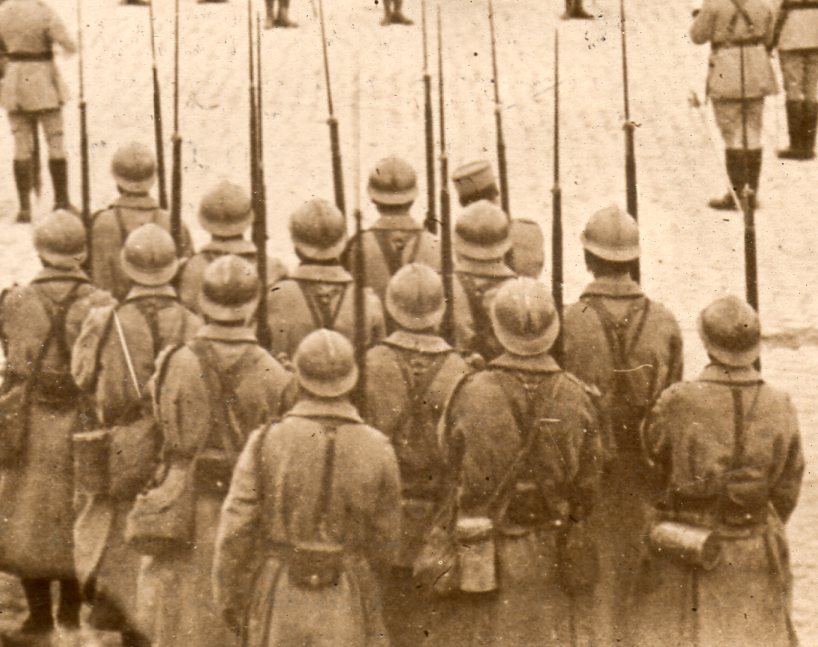
     And another:

    WWI photograph--spires det073

    I find this a soaring image, in its own odd way–this is a celebration scene, after,all, a decoration exercise, a military display of French forces that liberated the town of Reims, all taking place in front of the battered cathedral. Notre-Dame de Reims was the place of the coronation of French kings, and was a spectacular 13th century structure built on top of other buildings stretching back the site’s inhabitation to at least the 5th century.  

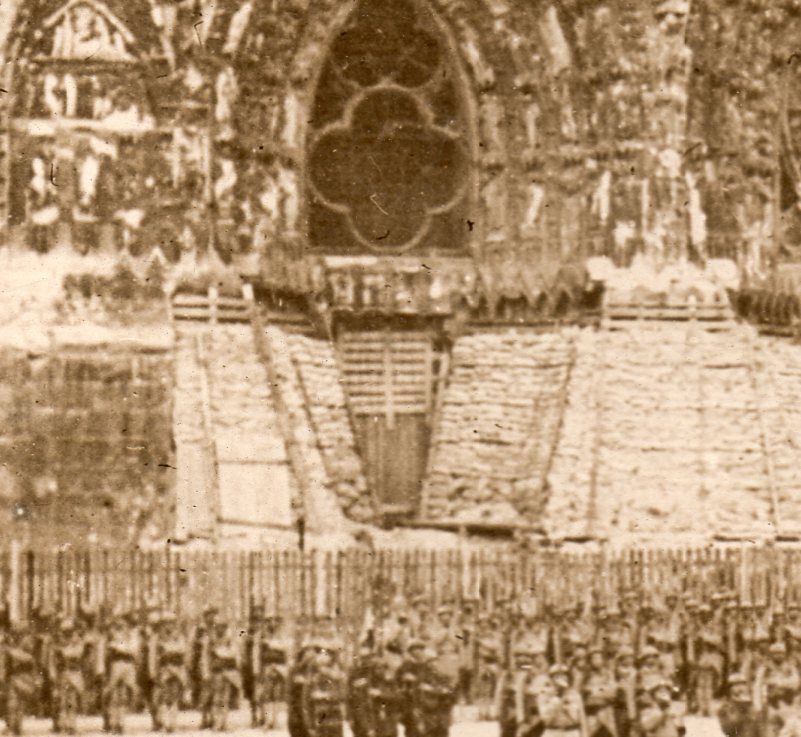
    But German artillery shelling caught the cathedral right at the beginning of the war and very nearly wrecked it.  The building was badly damaged by fire, a fire caused by the Germans, which spread along the scaffolding on the building which fed the wooden supports and superstructures, the flames finding its way throughout the building.  The fire was hot enough to melt the lead in the roof, which poured down as molten rain and out of the mouth-spouts of the building’s gargoyles. 

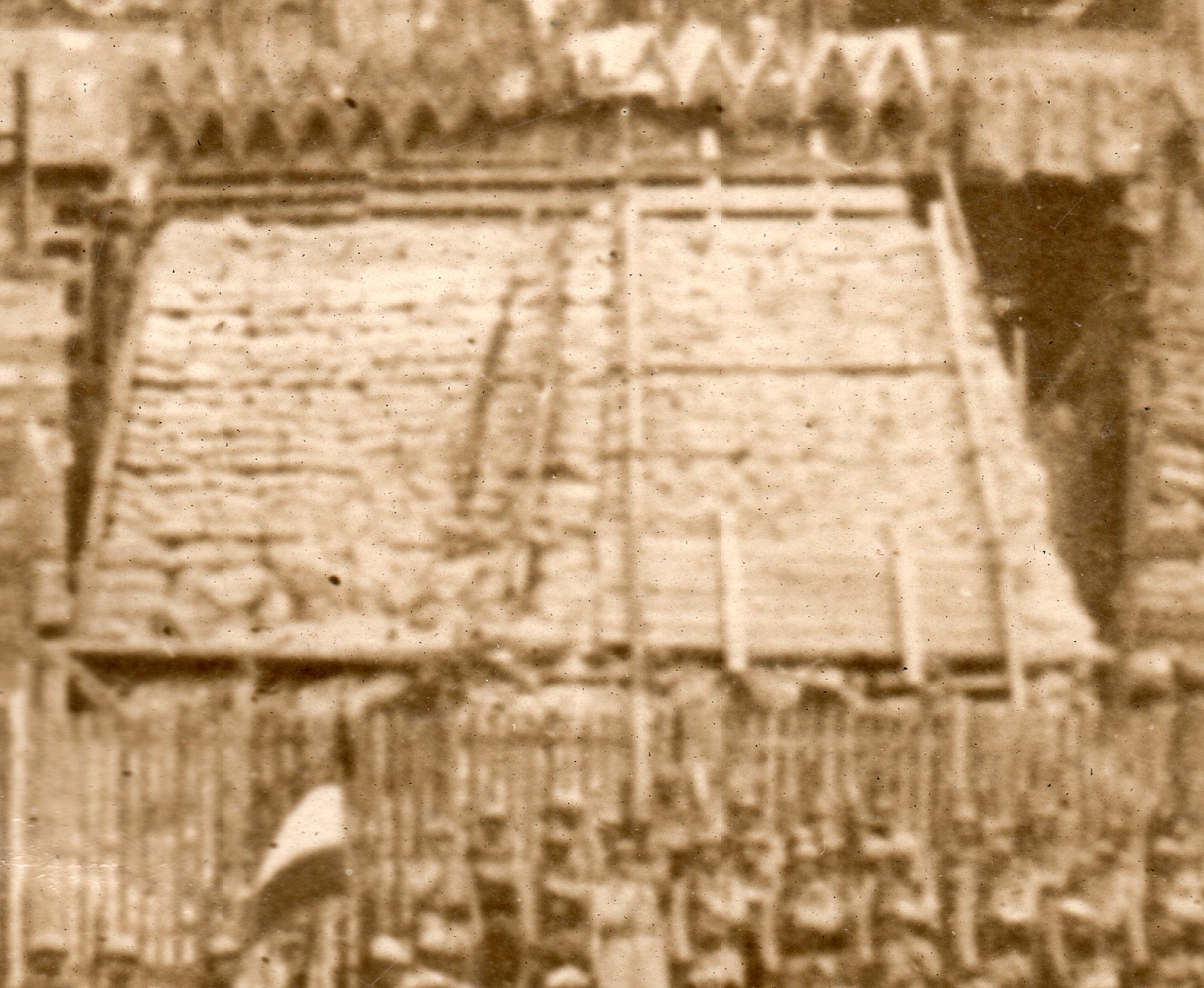
    As I brought out the further figures against the base of the cathedral one can clearly see the enormous stands of sandbags, the piles stacked up twenty feet or so behind the makeshift wooden fence.  IT was some sort of protection for the building, but not muc. 

    WWI photograph--spires det074

    This was yet another battle for the city, this one taking place 1550 years or so after the first, the Alemanni defending against the Romans; and then 104 years after the next major encounter, this between Napoleon and a Russian/Prussian force.  The liberating battle (the Battle of Reims, or the Second Battle of the Marne) took place 15 July 1918 to 6 August 1918, and it was a major failure for the German army, and spelled the collapse of the Spring Offensive, opening the door to the end of the war.  There were more than 135,000 Allies killed or wounded in this campaign (including 95,000 french troops), plus another 130,000 German troops.

    The process of victory in front of the wounded church seems exhausting and exhilarating, but not without a good sense of anticipation.

    ·Posted by :

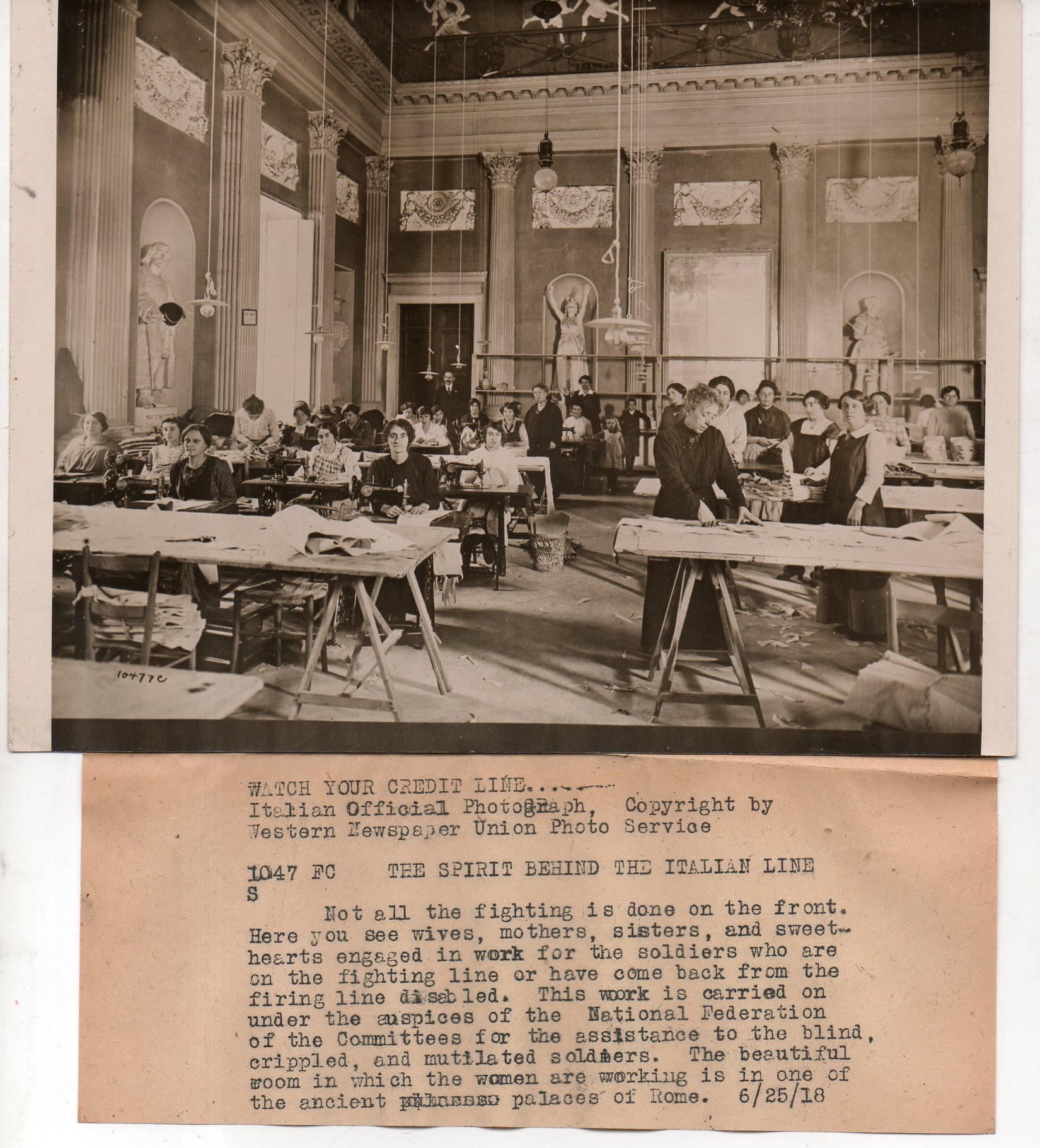
  • On the Home Front: Italy


    WWI Behind the Lines, Italy271

    Original photograph, 5.5×7.5 inches, with original printed caption. WEstern Newspaper Union Photo Service.   $125

    June 25, 1918.

    ·Posted by :

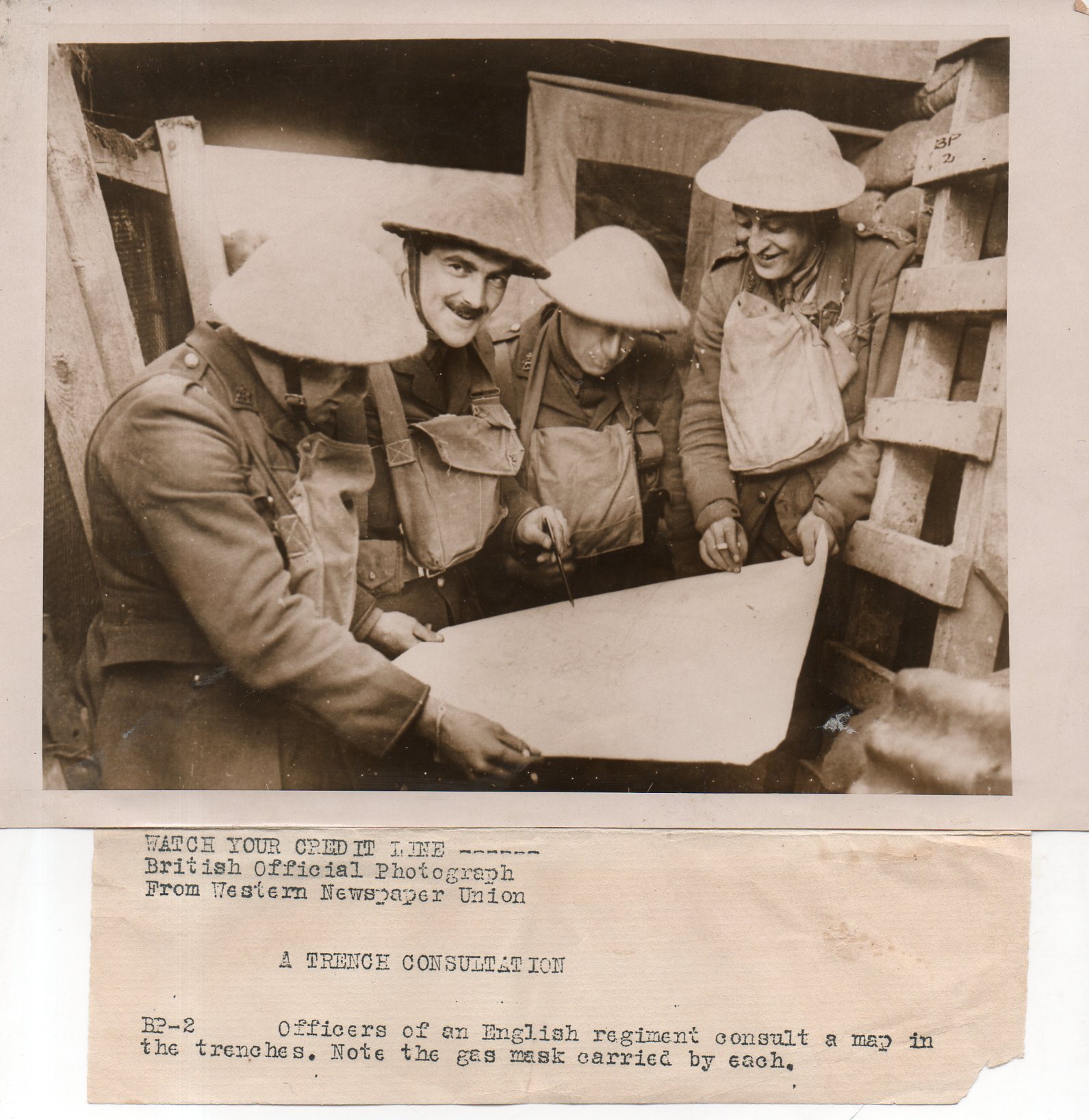
  • Trench Consultation

    WWI Trench Consultation270

    A Trench Consultation, 5.5×7 inches.  Original News Photo Service photograph, a British Official Photo, from the Western Newspaper Union.  $150

    ·Posted by :