JF Ptak Science Books Quick Fanciful Post
On a recent reading graze I found this most interesting image and thought that it could be a number of things besides the thing that it really was:
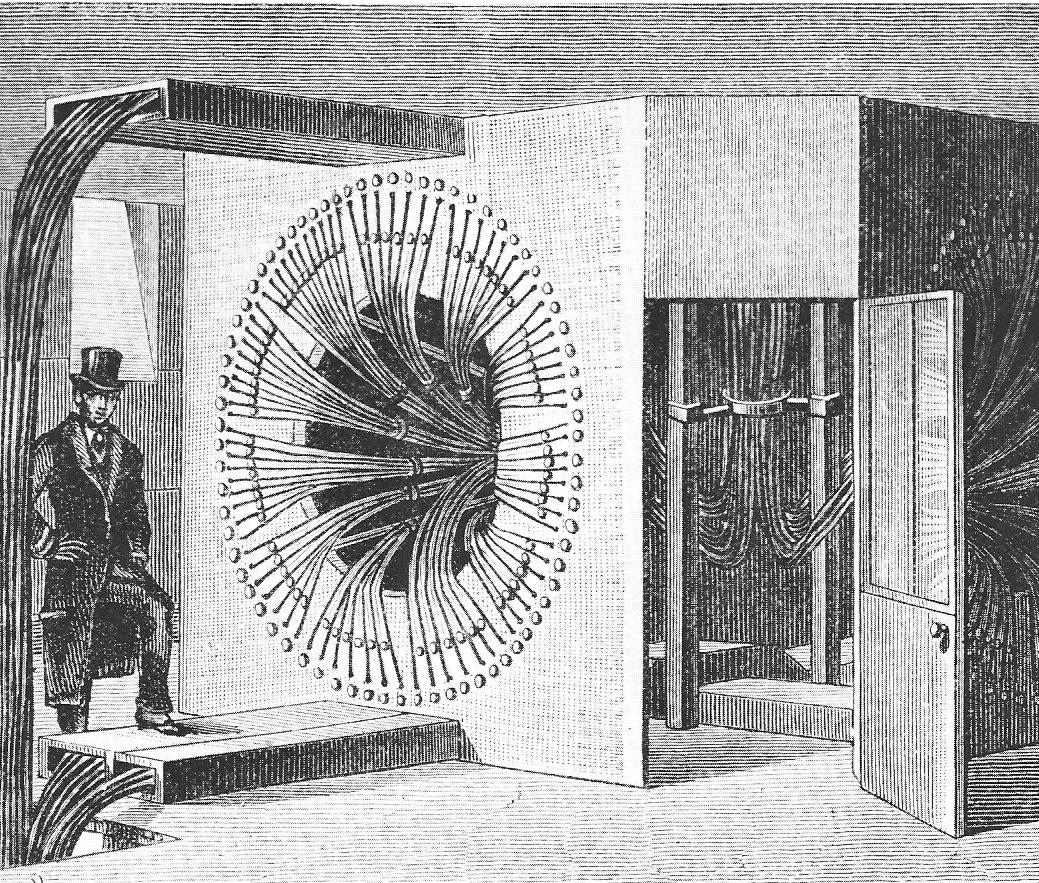
So, what is it?
A) An attempt at a Time Machine. (Stephen Hawking said “[i]t seems there is a chronology protection agency, which prevents the appearance of closed timelike curves and so makes the universe safe for historians”. Feh for our story line and image! We’ll let this stand and say that this would be a Wellsian vs. Thornian time machine.)
B) A Victorian listening device for extreme and well-to-do introverts that allows for the home dweller to stay inside and listen to everything that is going on in the immediate vicinity of their house. The remarkable bit here is that it was discussed that a retired physician, Manbot Fettle Dolp had one of these devices installed at his house in Kensington and actually recorded some 100 Edison cylinders worth of found sounds, an acoustical portrait of high Victorian London that without his effort would have been completely lost.
C) A tailoring device that would automatically record all physical attributes of a customer when they passed through the thing–it turns out that physical anthropologists used the device first to record all body aspect of criminals for a database of “what criminality looks like”, but the results and tests were abandoned after it was determined that the author of the study, Rev. Fitzwilliam Fitz William, was the perfect average of the criminals he measured. Rev. Fitz William said the results were obviously “deeply and irretrievably wrong”, though he did have some thoughts on the redemption of the project when writing from his prison cell twenty years later in Reading Goal.
D) The terminal of a central telegraphic station. (“The requirements of telegraphic communication on a large scale created widespread telegraphic networks. The “nodes” of a network, shown here, involved a respectably large number of circuits.”)
Answer below the “Note”:
Note: