A Daily History of Holes, Dots, Lines, Science, History, Math, Physics, Art, the Unintentional Absurd, Architecture, Maps, Data Visualization, Blank and Missing Things, and so on. |1.6 million words, 7500 images, 4.9 million hits| Press & appearances in The Times, Le Figaro, Mensa, The Economist, The Guardian, Discovery News, Slate, Le Monde, Sci American Blogs, Le Pont, and many other places… 5000+ total posts since 2008.

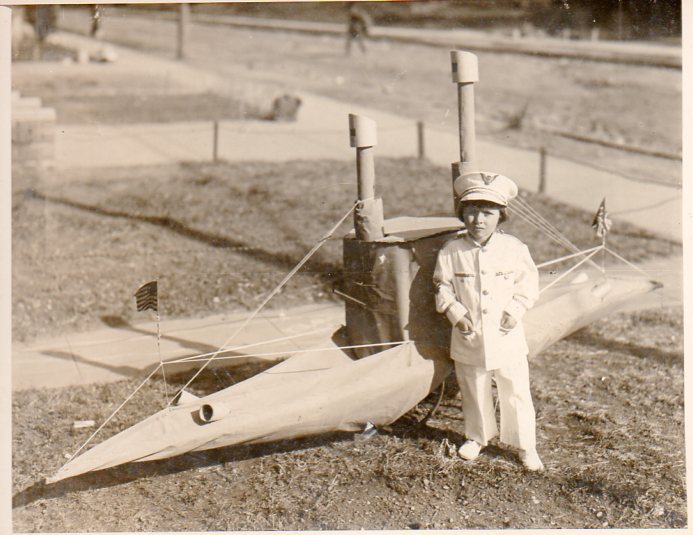
  • A Girl and Her Submarine, 1918

     World War I news service photo, made 1918.  8×6 inches.  Good condition.  $450

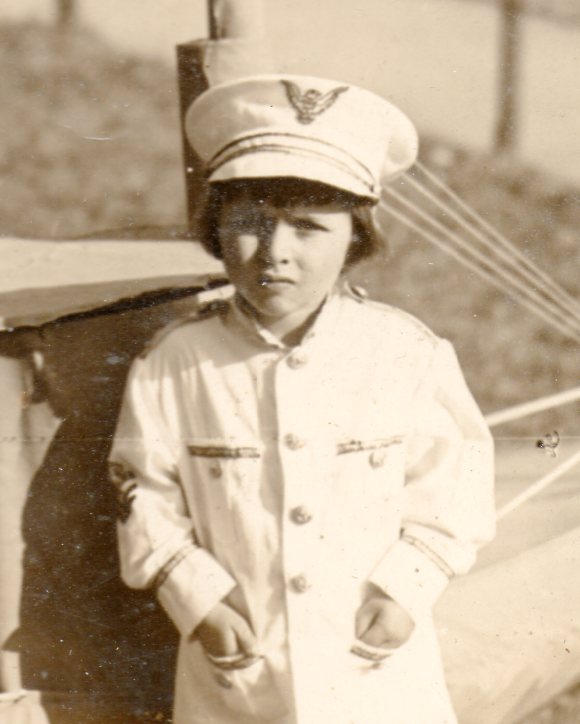
    I could hardly resist this 1918 image:  the young girl, the hands in her pockets, the ribbons on her chest, her submarine fashioned over a tricycle, the two flags (Stars and Stripes and the Union Jack).
    WWI photo--girl submarine249

    The sun is low, rising or setting, and it is catching the girl in the face, the home-fashioned cardboard visor of her home-grown officer’s headgear doing nohing to shade her eyes.  She’s in her dress whites, maybe proud of someone else’s handiwork on her ten foot long submarine. 

    The image comes from a small archive of WWI  news service photos, this one no doubt intended to stir some home fires to help raise money or spirits.  I have no idea of the image was ever published. 

    And of course the details:
    WWI photo--girl submarine250

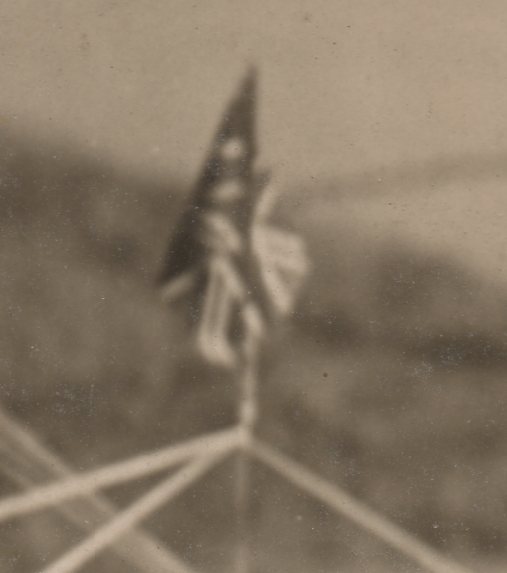
    And this of the stern flag, the Union Jack:
    WWI photo--girl submarine251

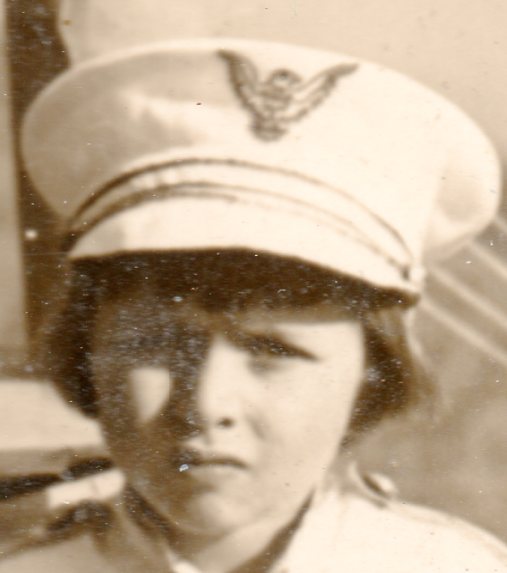
    And this, with the hand-sewn eagle on the hand-made jacket, with all of the trimmings a creation of mom, or someone else as kind:
    WWI photo--girl submarine252 

    ·Posted by :

  • World War I Photographs–Parade of Military Snow, 1917/1918

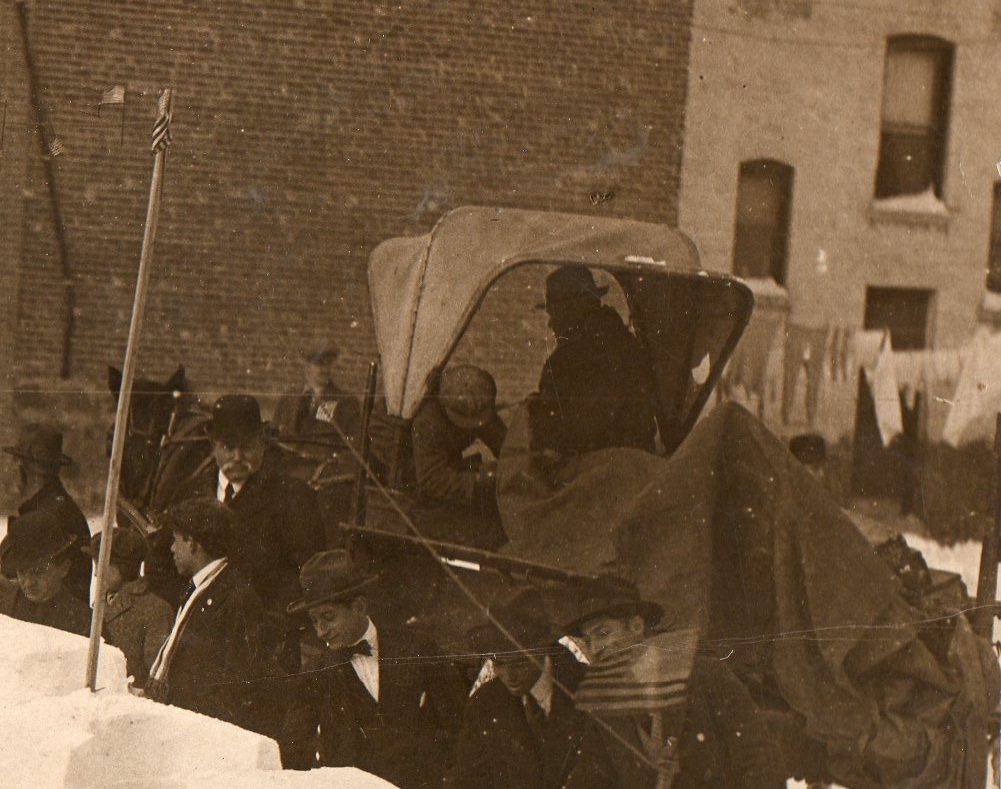
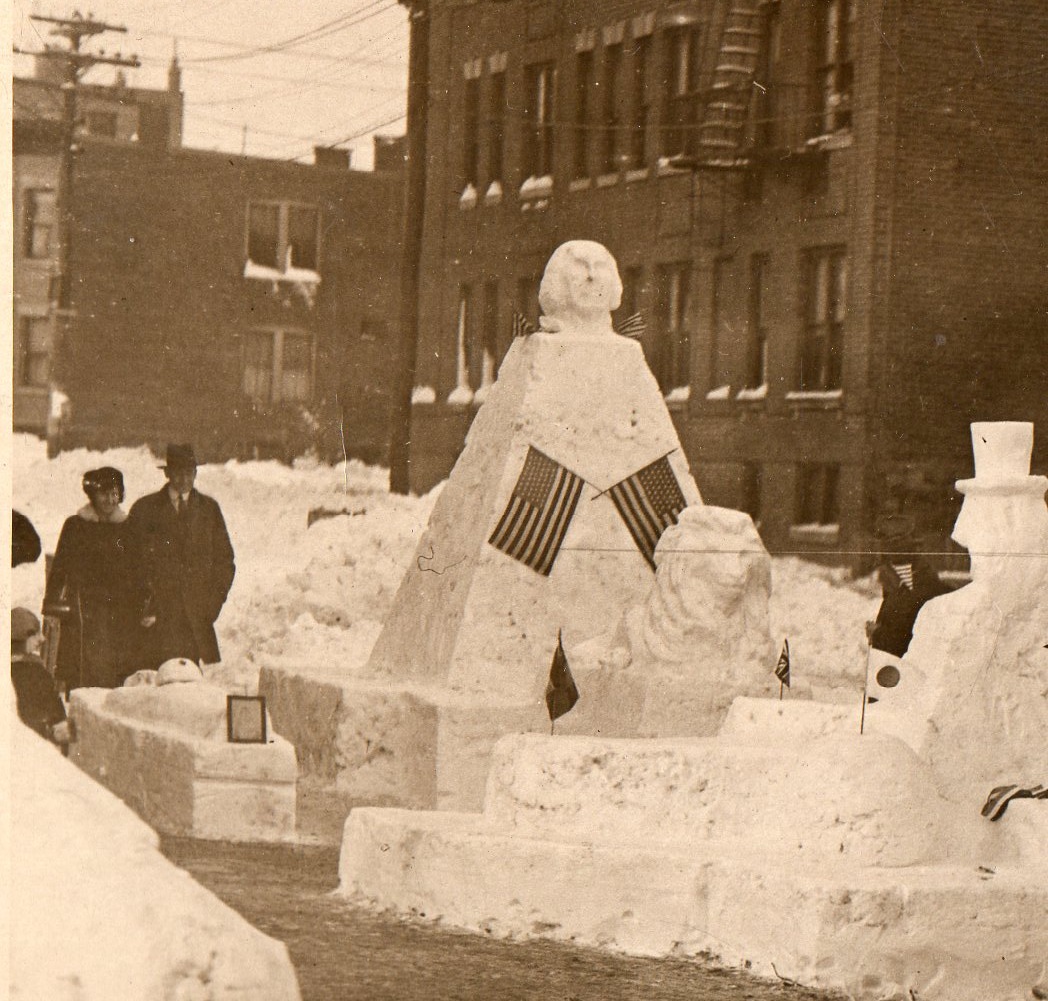
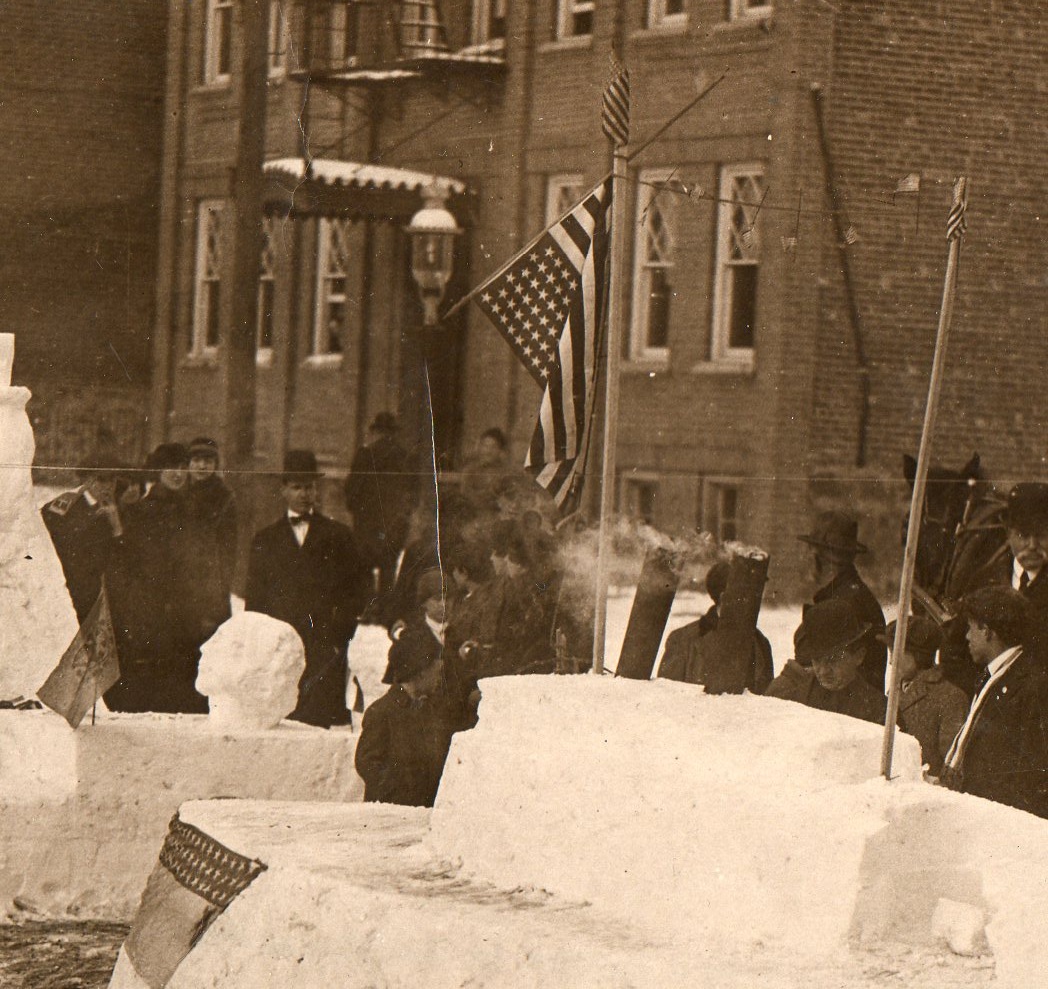
    Original news photo service photographic image, 8×10 inches, ca. 1917/1918. $500  

    WWI--great imagessnow parade059

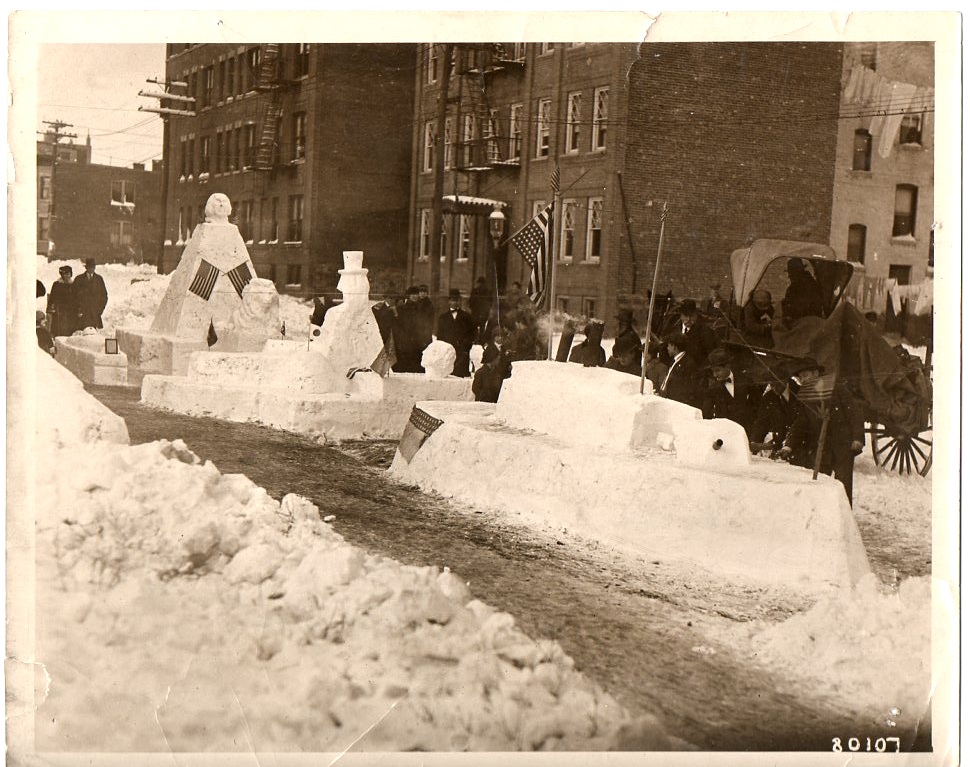
    This news photo service image–stamped “Hearst-Pathe News Agency” on the back–is frm the winter of 1917/1918 and shows a patriotic snow parade somewhere in the United States.  The snow looks prodigious, judging from the piles in the foreground and also the accumulated snow on the windowsills, and I imagine that all of the snow floats were sculpted mainly out of exiting snow in the street.  It is a delightful scene, to me, and hosts a variety of smaller, lovely images in vignette. For example:

    WWI--great imagessnow parade060

    The man in shadow and sleeping figure (boy) in the buggy complement the white-mustachioed bowler-wearing man to the left; the men looking on in the foreground are interesting, too–plus there’s that laundry in the background.  Given that the laundry is out (and wasn’t just left out during the storm) and that no one seems to be particularly bundled up against cold, I’m going to guess that there was a break in the weather that pushed the temperature higher than normal, with almost everyone taking advantage of the warm snap, as people do everywhere, all the time.  I also like the tiny American flag on the tall pole at left.

    And so:

    WWI--great imagessnow parade061

    And again:

    WWI--great imagessnow parade062
    I’m not sure what the flag is on the side of the Dreadnought, and it seems as though someone has stoked a small smoking fire in the metal tubes functioning as the ship’s smokestacks–a nice touch!


    ·Posted by :

  • WWI Battlefield Panorama–an Iconic Image

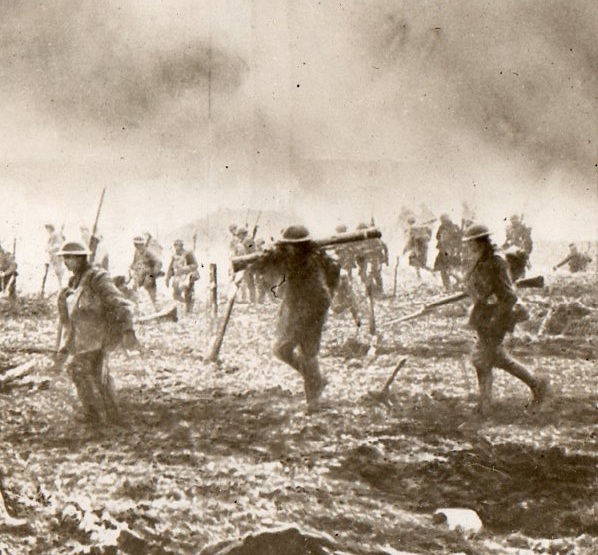
    Original news photo service photograph, 10×8 inches, printed 1918.  Good condition.  $350


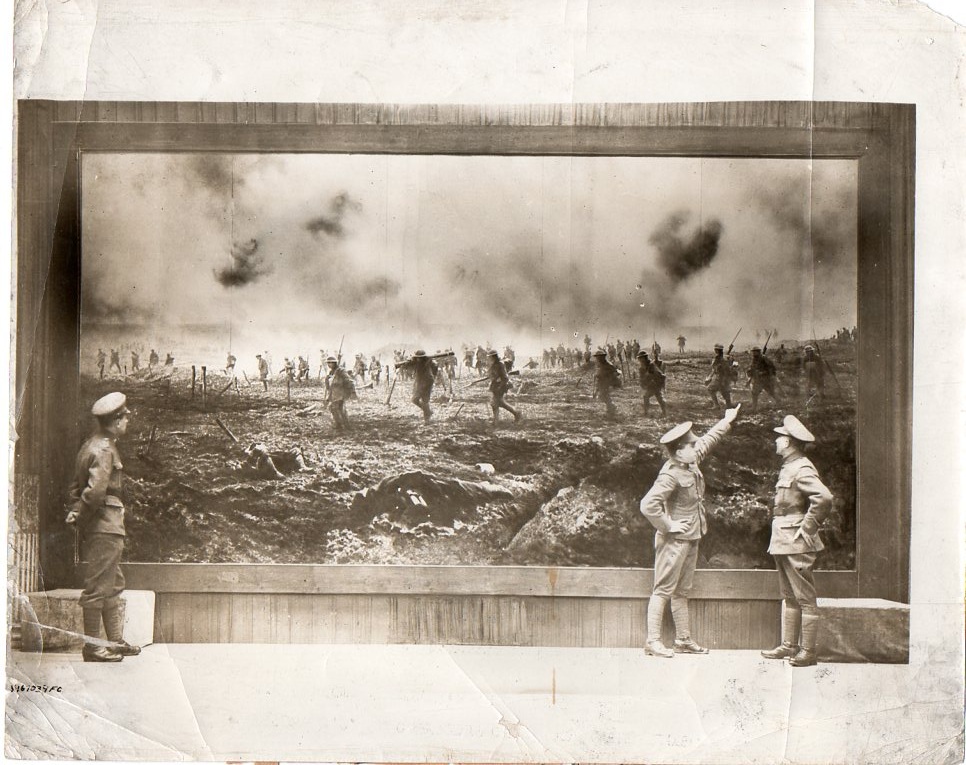
    It is often the case in this collection that the images have very seldom been seen–this is not the case for the present example, as I’ve seen it reproduced a number of times in compilations of classic images of the war:

    WWI Photos Big Pano075

    I recall, I think, that this was the largest photograph of war printed during World War I, looking to be something on the order of 8×16 feet or so.  This photo of the photo was printed by Underwood & Underwood, and stamped “British Official Photograph”, printed sometime in 1918.  It seems that this is an actual battle scene, which was a very uncommon thing among war photographs for the Great War–more so for this group of photographs(News Photo Service)  produced by pool photographers for equal distribution among subscribing newspapers and periodicals. Actual combat photos distributed by the News Photo Service agencies were not a high priority, unless they depicted routed or retreating or being-defeated Germans–it was not a popularly-disributed subject, mainly for propagandist purposes.

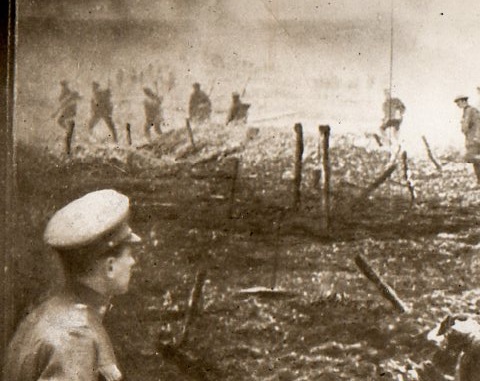
    WWI Photos Big Pano074

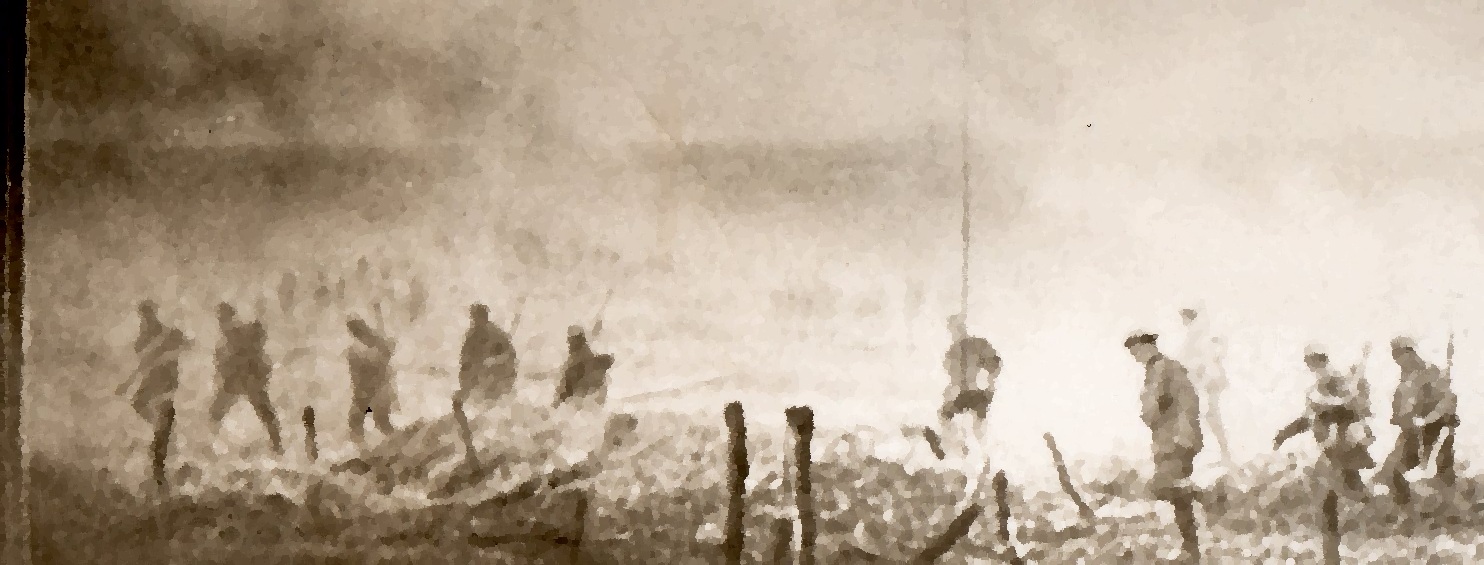
    I expect that this photo would’ve given the view a you-are-there effect, as the main characters in the composition were about life-sized–an attempt of slice-of-life experience.  There is a surprising amount of foreground in this picture, though.

    WWI Photos Big Pano076

    WWI Photos Victory Drive081artistic

    ·Posted by :

  • A Field of Artillery Shells–a Miniscule Sample of the 40,000,000 Shells Fired at Verdun, 1916

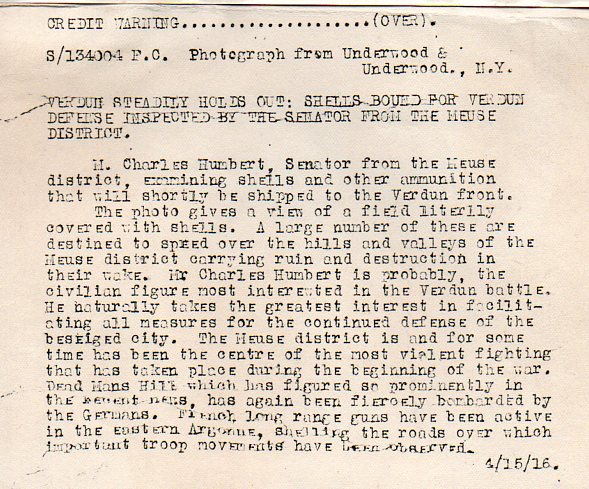
     World War I news photo service photograph, dated 15 April 1916, by Underwood and Underwood.  9×6  inches, with the original catpion on an attached paper.  Good condition.  $225

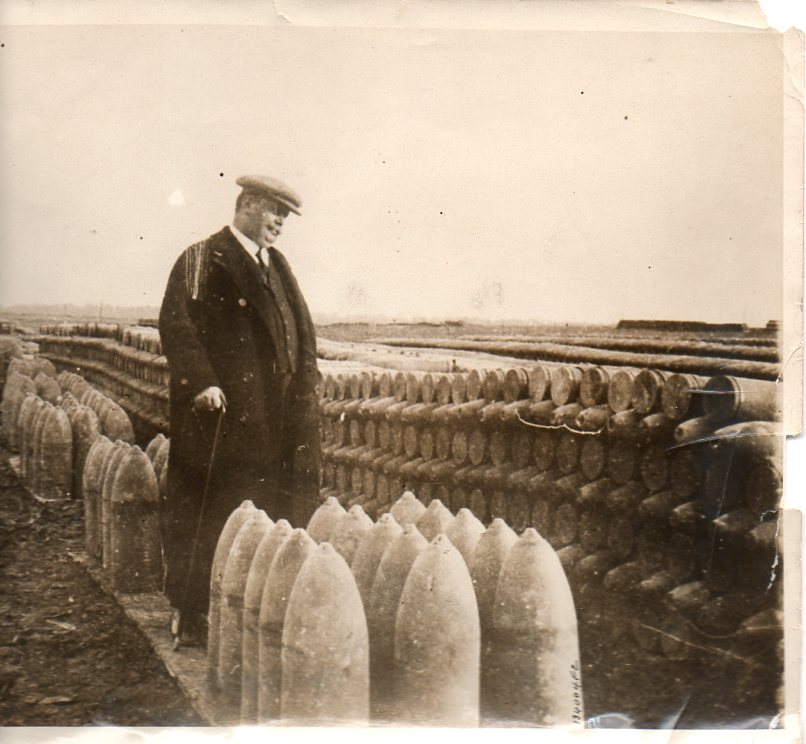
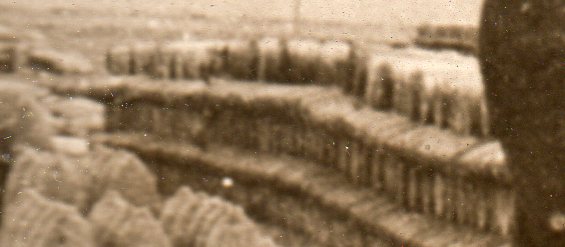
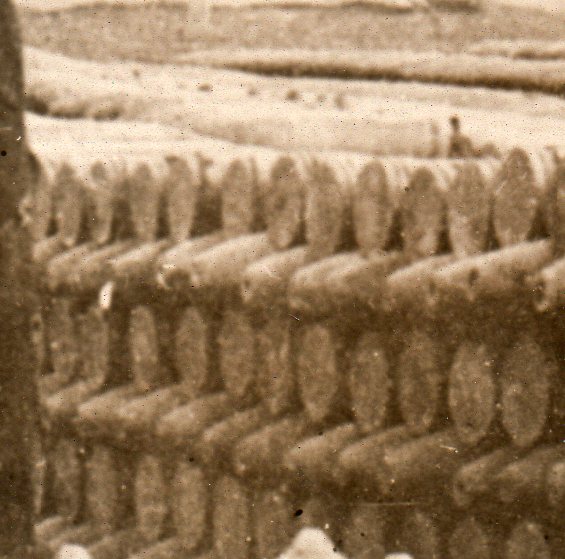
    I just finished posting this from yesterday on a sea of shells and what those explosives meant in terms of overall destructive firepower for WWI.  This explosives image is a little easier, in a way, just showing hints of the vastness of what might be an acre of large ammunition.  

    This photo (dated 15 April 1916 by the news photo service of Underwood and Underwood) shows a French senator–H. Charles Humbert–viewing “a field literally covered with shells”,  the photo really only giving some glimpse of the extent of the palleted shells, which fade into the distance behind M. Humbert and extend deeply into the field in front of him.

    WWI shells162

    M. Humbert (1866-1927) would’ve had more of an interest in this scene than most, as he represented the Meuse district, and at this point int he war the shells were headed to a part of that area, Verdun. Verdun of course was one of the major battles of WWI, fought from  21 February to 18 December 1916, in the hills and dales of north-eastern France, at Verdun-sur-Meuse. There were 306,000 battlefield deaths at Verdun, plus another 500,000 wounded, in what may have been one of the most gruesome battles of modern times. 

    Humbert was also an Army veteran and wrote on the military, and as it turns out, as the war approached he adopted a call to arms for more canons and more shells for the defense of France the inadequacy of the defenses of the French Army, and the insufficiency of officers and munitions  (“Des canons, des munitions!”).  He certainly would’ve been relieved with what he saw here.  Of course this is photo would represent a percentage well to the right of the decimal place of all those shells used at Verdun, which numbered an inconceivable 40 million.  When this photo was made in April the battle was already wicked and had been fought for two months–there were still eight months of gore to go. 

    WWI shells163
    WWI shells164

    WWI shells165

    ·Posted by :

  • Leaving for War, with One Lone Wave, 1917

    Original photograph, 10×7 inches, 1917.  Good condition, only, save for some damage to the right-lower corner of the image.  $150.00

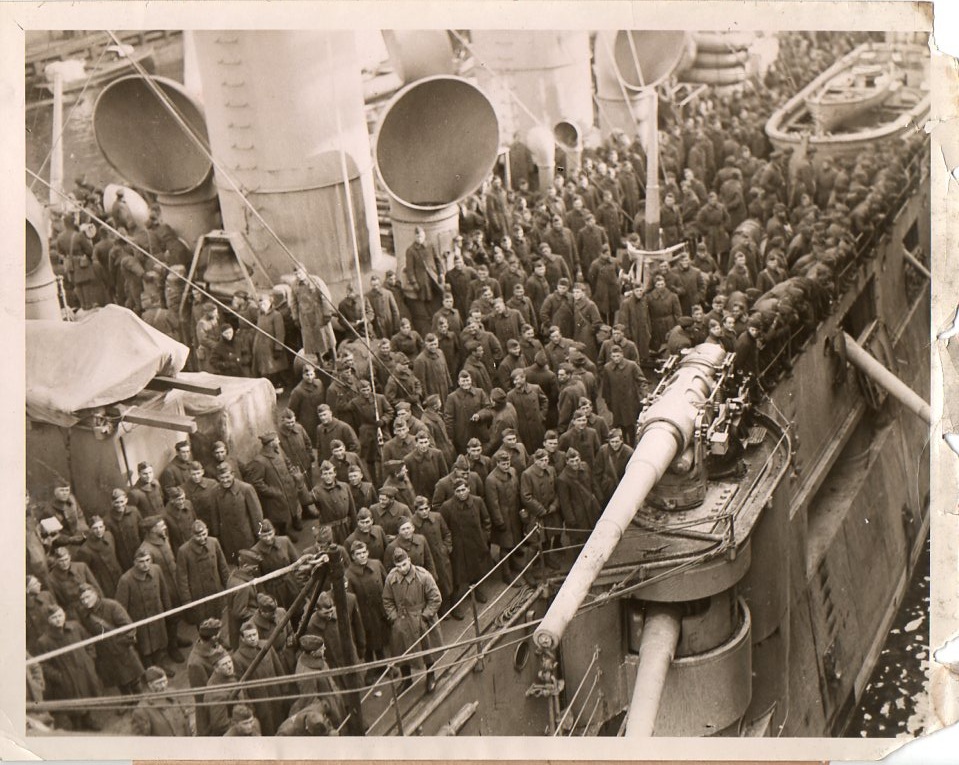
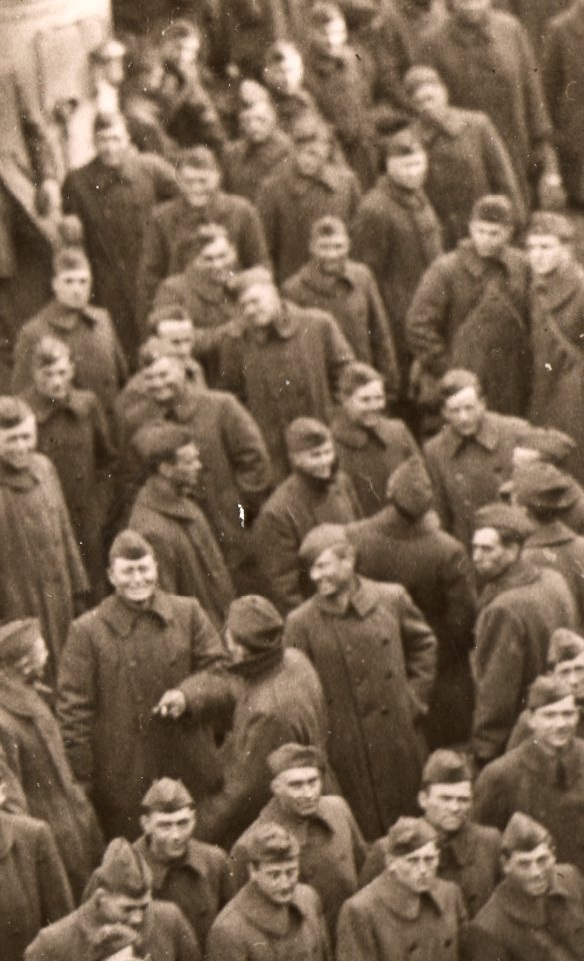
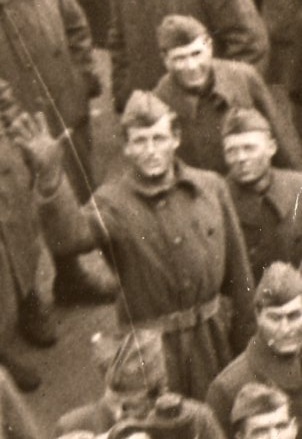
    This fine photograph depicts hundreds of soldiers waiting to leave Hoboken, New Jersey, for the fight in Europe, 1917.  Most are pulling themselves inside their coats as much as possible; I suspect being right there on the harbor–and seeing the floating bits of ice in the water–that it was wet and very cold.  Our one adventurous Doughboy gives the camera a spread-fingered wave….he also seems to be quite tall, or he is standing on a box.  He is the lone waver.  There also seem to be a lot of smiles in the crowd. 

     WWI troops ship166

    WWI troops ship168

     
    WWI troops ship167

    ·Posted by :

  • Ephemeral Uniqueness in Large Crowds, 1917

    WWI  news photo service original photograph, 6×9″, as follows:

    $200 


    WWI troops ship169

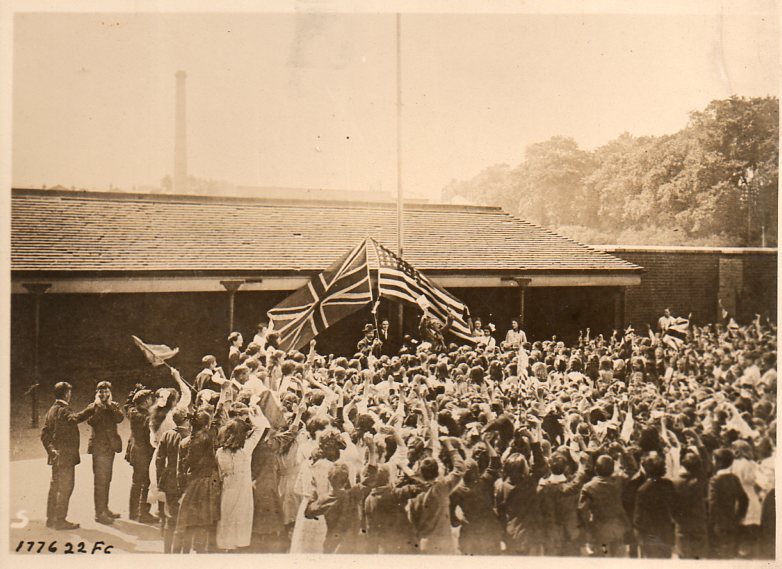
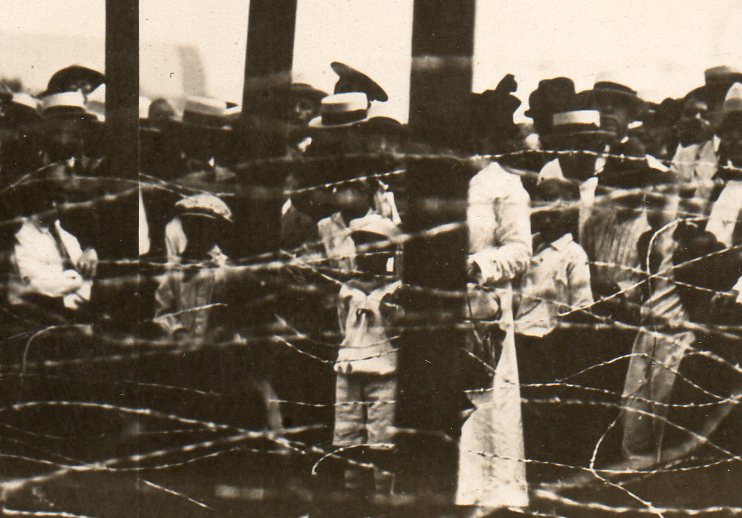
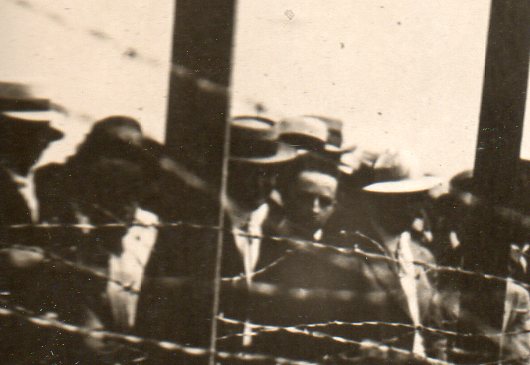
    There are 1500 or so of these news service war photographs here, and one of the remarkable things that I’ve discovered about them–trivial things to be sure compared with their overall message, ephemeral bits of semi-nothing–is that in many of the very-large-group images that there is sometimes just a single person who is doing something that no one else is doing, and it has been captured almost forever in the photo.  There are photos of thousands of troops, all facing east, with on solitary soldier facing west; there’s the solitary waver; there’s the one bare-headed man in  a sea of a thousand men with hats; there’s the one person raising his hat to the photographer in a sea of people looking at the camera but not raising their arms.  Then of course there’s the group photo of a mass of German WWI POWs, with only one soldier without a hat or helmet, and he looks just like me. 

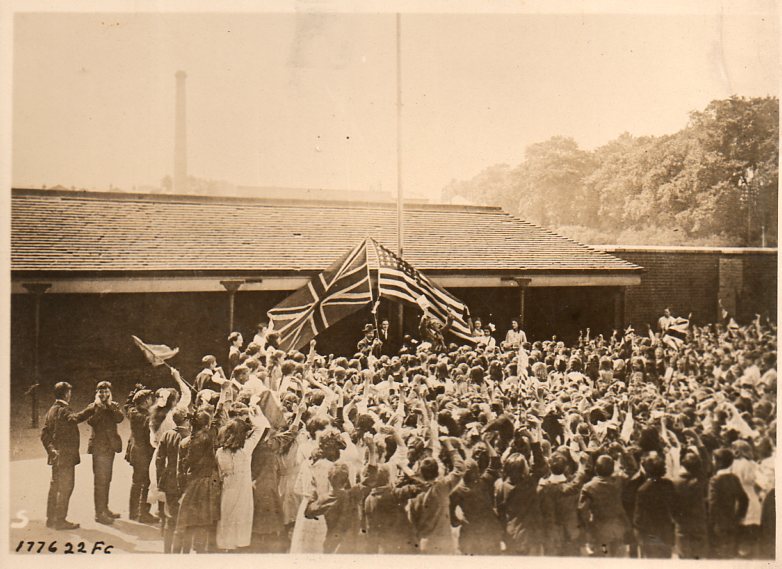
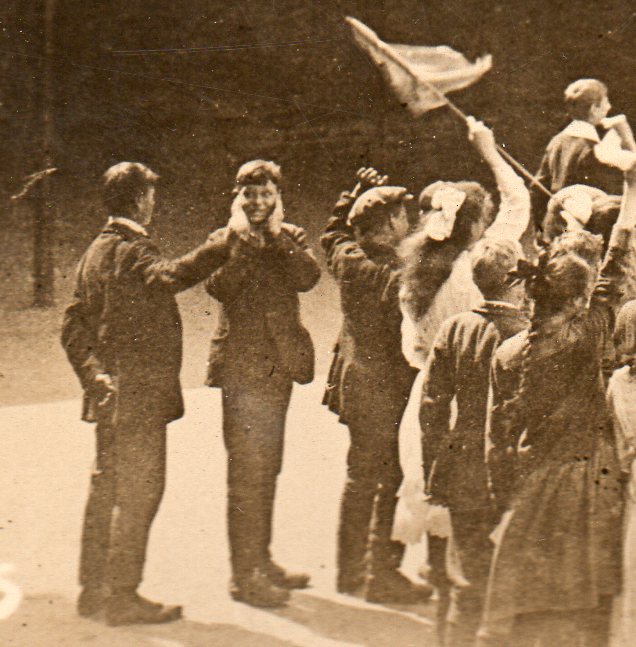
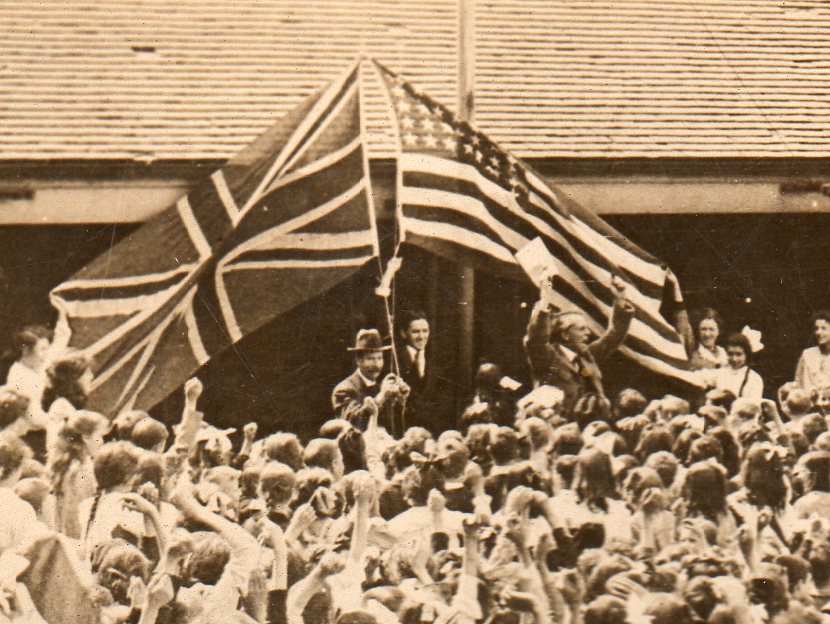
    Here’s an interesting detail:this image shows children cheering their American allies in 1917, showing one man clearly reacting to the hundreds of screams by covering his ears.  And is the only one doing so.  

    WWI troops ship171

    The entire first image, showing the children cheering the raising of the two flags:

    WWI troops ship169

    And this:

    WWI troops ship170


    ·Posted by :

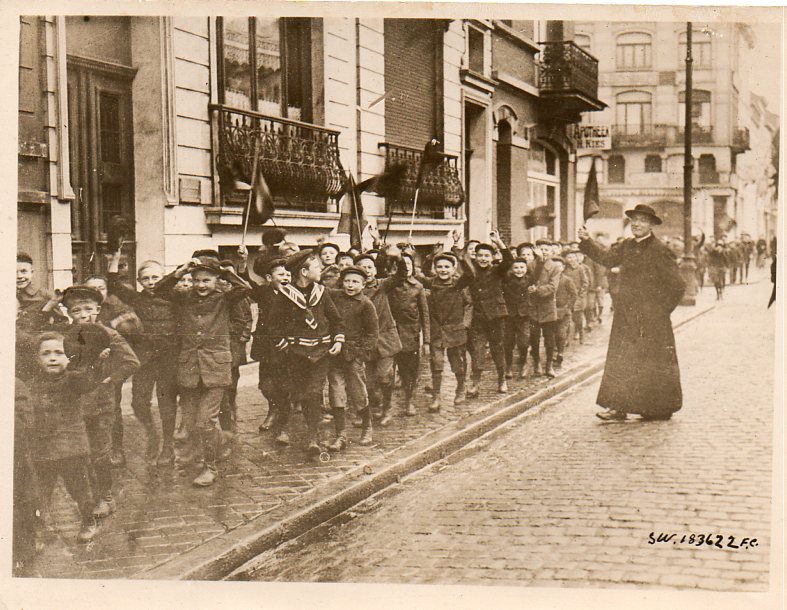
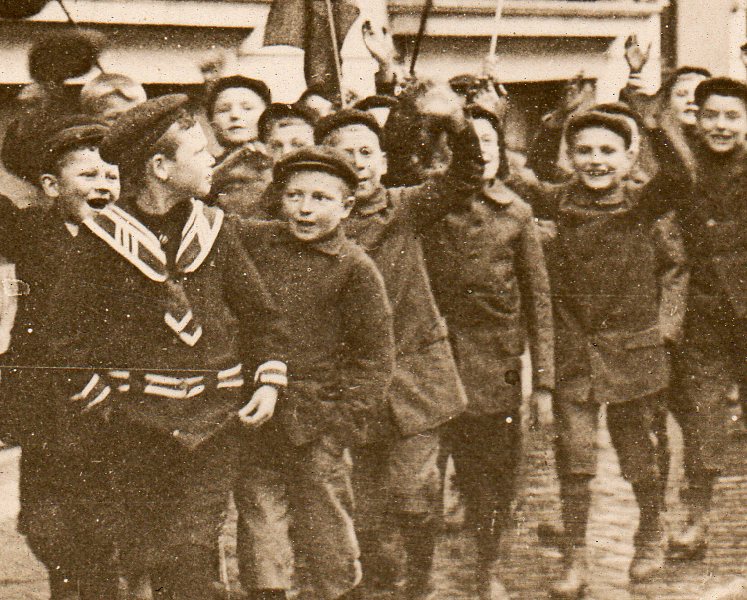
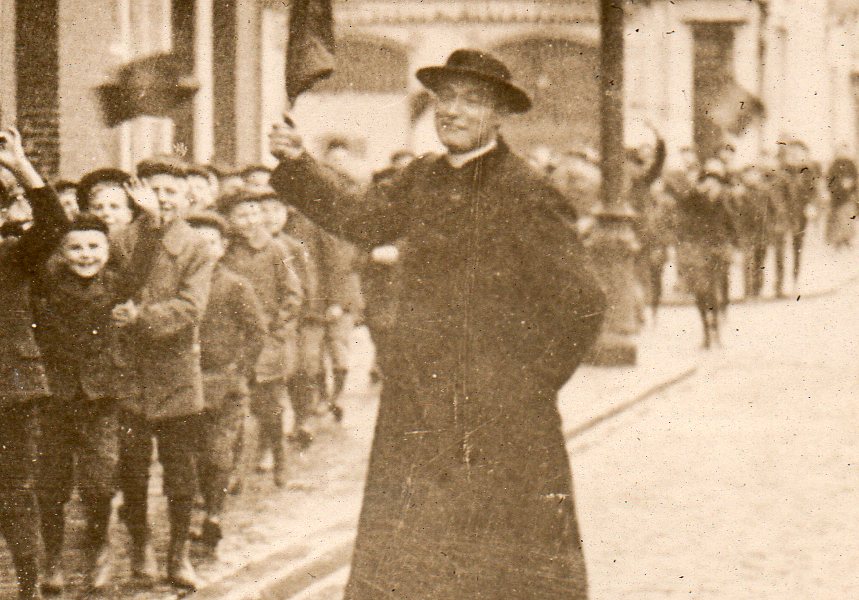
  • The Children’s Parade, the Liberation of Ostende, 1918.

    Original news photo service photograph, Underwood and Underwood, 1918.  7×9 inches.  Very good condition.  $250   

    WWI children's parade175

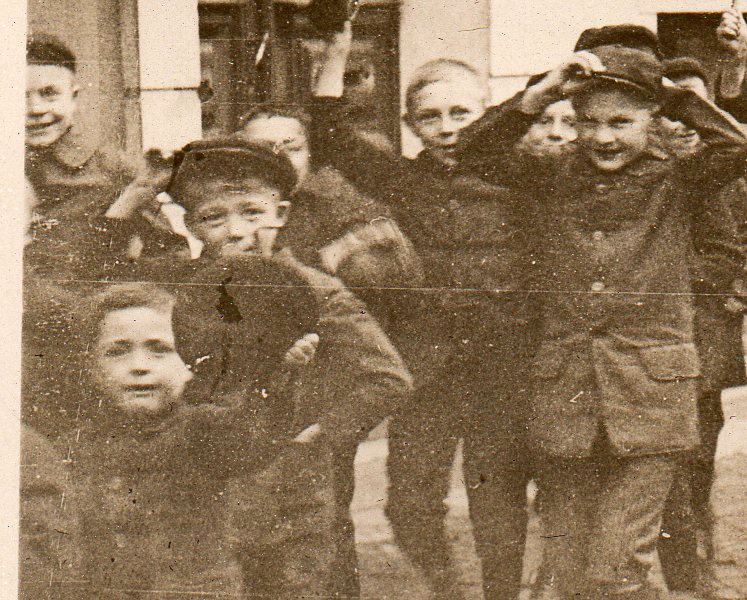
    Ostende, a port city of West Flanders on the North Sea in  northwestern  Belgium, was an important stronghold and also a  key to holding the inland port of Bruges, which is something that the Germany Army was able to do until the very end of World War I.  Under constant occupation by an invading force, the city was only liberated by the armistice signed two days before this photo was made, on the eleventh hour of the eleventh day of the eleventh month of 1918. 

    Some of these children might still be alive, though all but two of the soldiers of this war are all dead.  I remember talking to my grandmother ten years or so ago, asking her about what she did to celebrate the end of the war.  She laughed, and then told me that she and her sisters and brothers went out to the street (in their small town of Housatonic, Massachusetts) and danced and danced.  She then said that a few other children went to their kitchens to come out with pots to bang with wooden spoons–and then it struck me, taking away my breath, that what she was talking about was celebrating the end of WWI, not WWII, which is what I thought she was going to talk about. 

    WWI children's parade176
    WWI children's parade177
    WWI children's parade178


    ·Posted by :

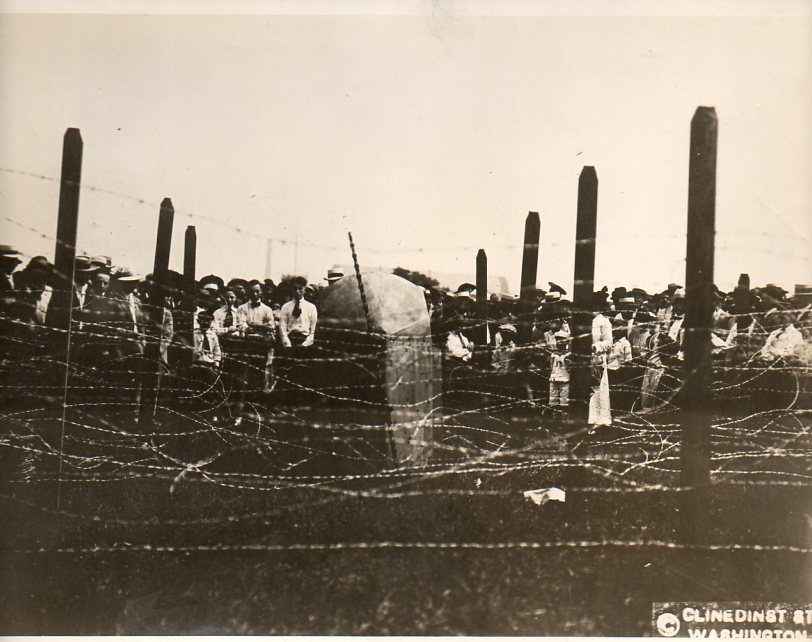
  • Barbed Wire Land-Sub, 1918

    Original news photo service photograph, by Clinedinst studios (of Washington DC).  7×9 inches.  Very good condition.  1918.  $350


    WWI barf wire cutter179
    “Will Cut its Way Through Hun Entanglements” reads the header to the caption for this new photo service war photo from the Central News Photo Service, published nearly at the end of 1918, just a few months before the end of the war. The inventor, John E. Logan, was demonstrating his invention “before senators and representatives of Congress” on a “miniature tank wire entanglement”.  The “entanglement” wire was much nastier than what you’d think of as the “barbed wire” of today–not concertina wire, but something small and nasty that was meant to catch soldiers, to pin them more deeply in the wire like a sharp metallic quicksand, stopping their advance and making them meat bait for machine gunners and everyone else. 

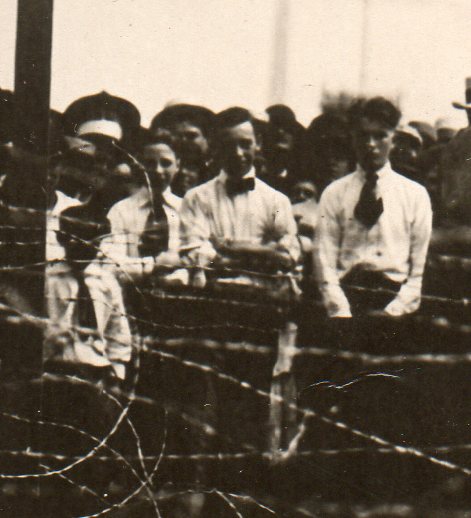
    Logan attracted a fair size crowd for his demonstration in the vicinity of the Capitol.  His machine seemed to work well, too, cutting through 72 strands of wire in about a half minute.  I’m not sure how many of these machines were produced (can’t find anything on them offhand)  but there would’ve been a need for a great number of them, given that since there was something like 12-25,000 miles of trenches dug during the war that there must’ve been millions of miles of barbed wire produced.  (That’s an off-hand guess, but it probably isn’t horribly wrong.)

    WWI barf wire cutter180
    WWI barf wire cutter181
    WWI barf wire cutter182

    ·Posted by :

  • Pianos in the Field, 1918

    Original photograph. 6×9 inches. Good condition. $400


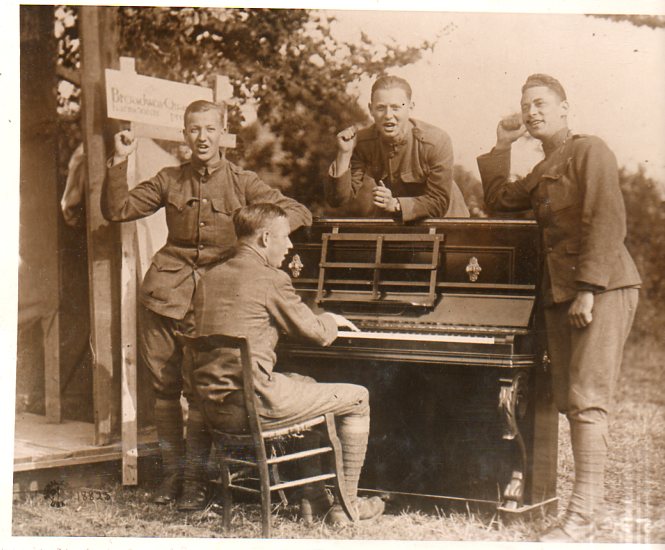
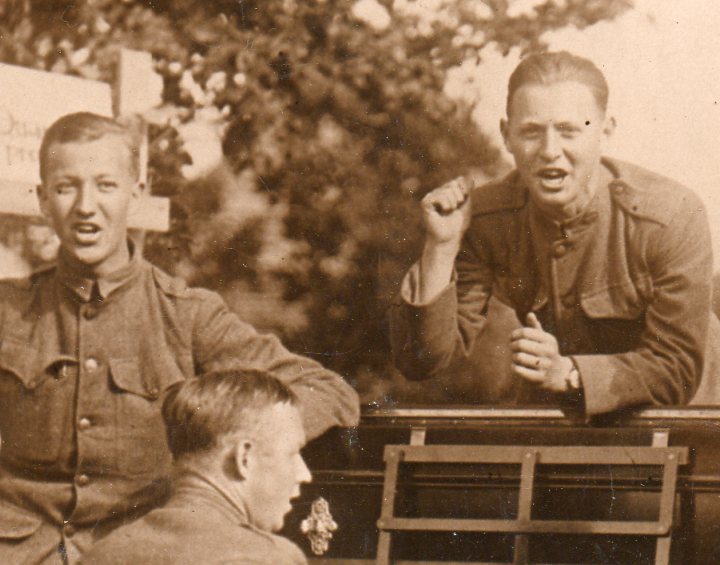
    This fine image was made for distribution to newspapers and magazines, and was printed 2 November 1918–just nine days before the armistice–and shows the “Broadway Quartet” as they rehearse “I’m Only a Buck Private” for a behind-the-lines show for U.S. servicemen, somewhere in France.  The note with the image (from the Western Newspaper Union) says that the staging used for their shows came from found wood, bits of flooring, and camouflage netting torn into pieces.  

    WWI  piano250
    WWI  piano251


    ·Posted by :

  • Pianos and the Wounded: Recovery, 1918

    Original 1918 photograph, 6×8 inches, piano playing for U.S. soldiers in hospital.  $650.00

    WWI  piano246

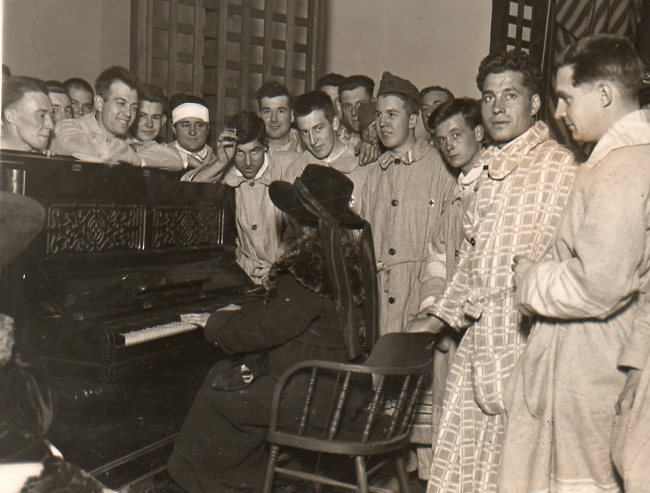
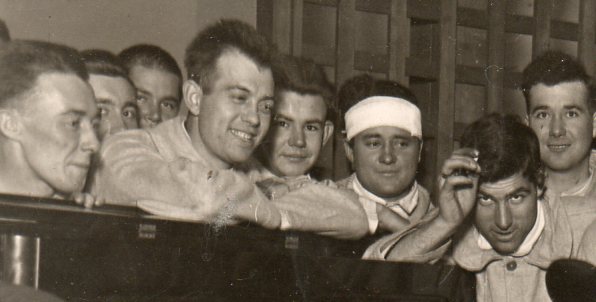
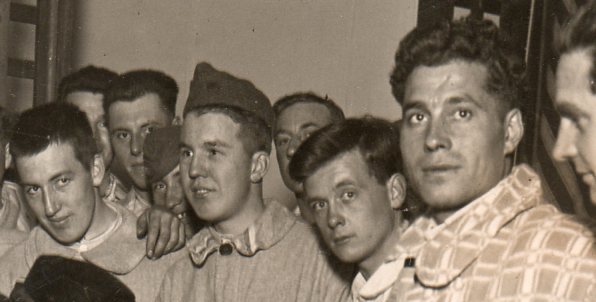
    This image come from my collection of World War I news photo service photographs, and is one of a minority that show even momentary happiness.  The emotion resolves itself in song and in the piano, and takes place in a U.S. overseas hospitals for wounded soldiers–they seem genuinely relieved to have the attention and the entertainment. 

    WWI  piano247
    WWI  piano248

    ·Posted by :

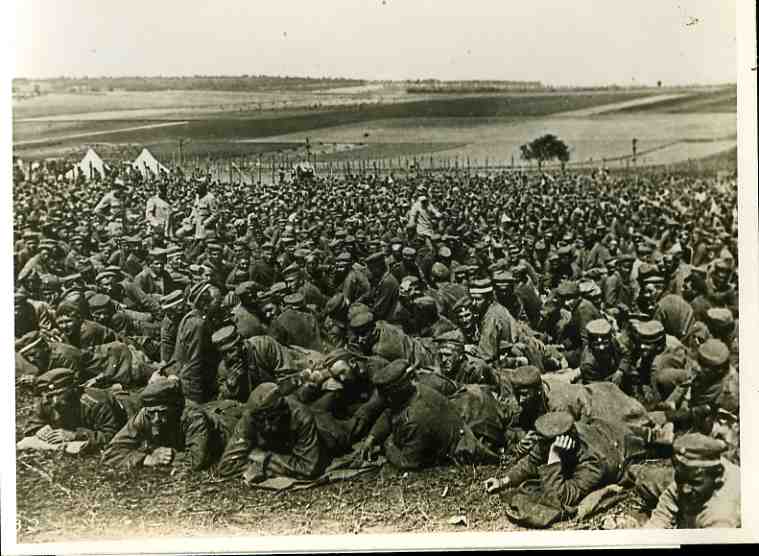
  • Making Things Disappear: German POWs, 1918

     Original News Photo Service photograph, 1918.  8×9 inches.  Very good condition.  $275.00


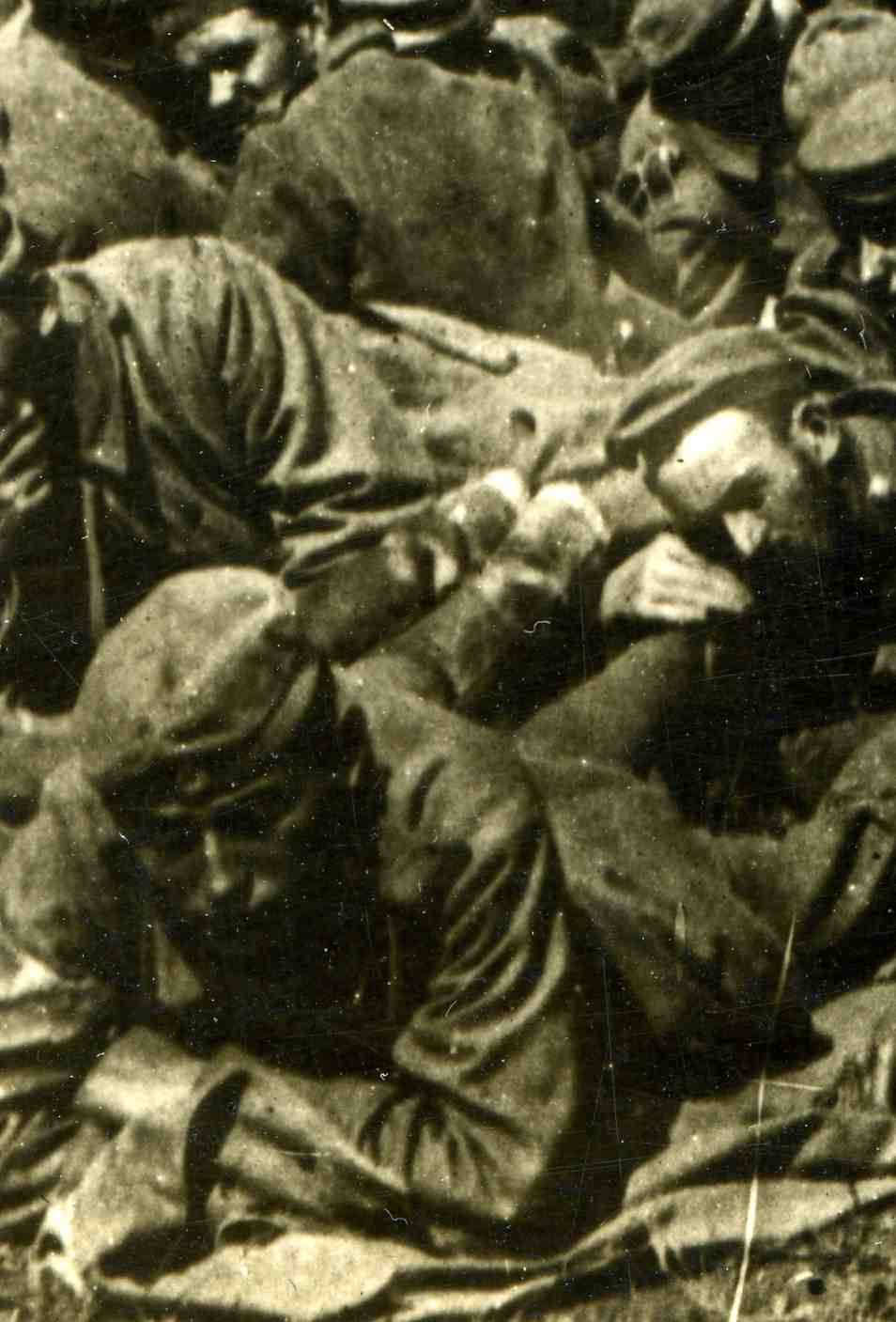
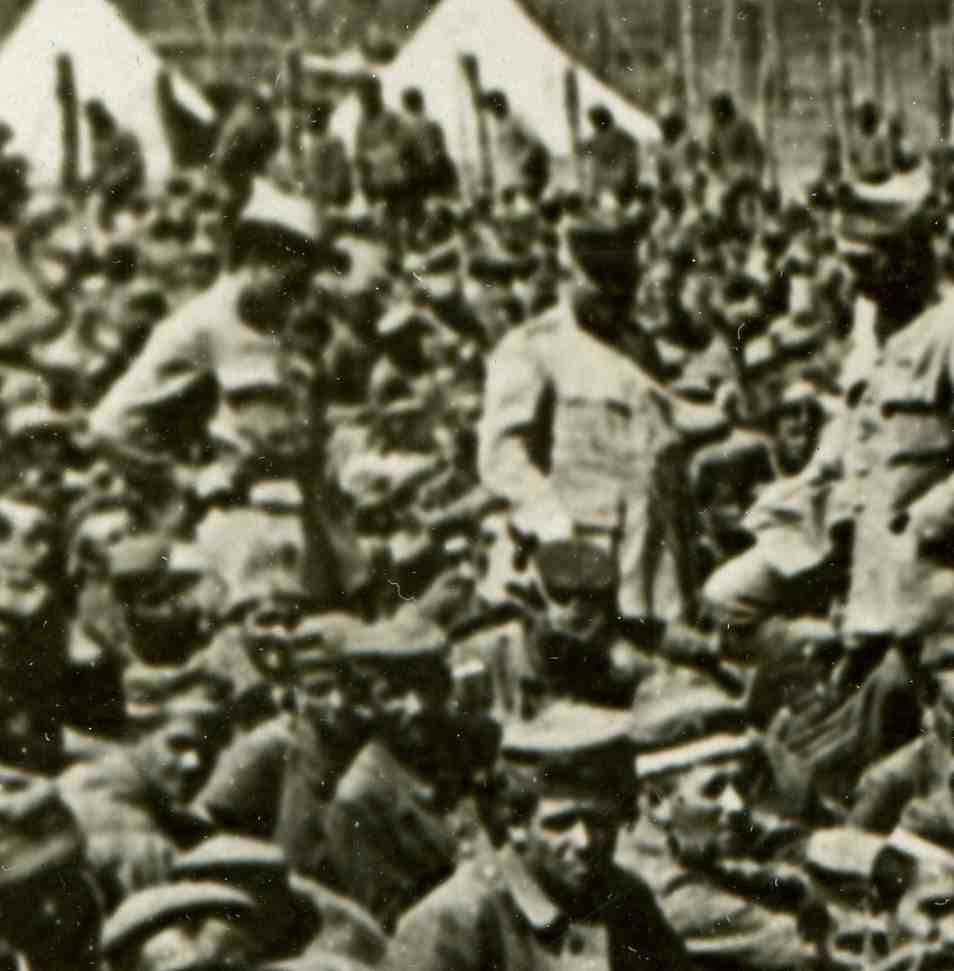
    In continuing series of posts on Blank and Empty Things  from ou rmai9n blogging site is this image on fading, disappearing German prisoners of war.  The French had been pounding them in western France in the summer of 1918, and Germans were surrendering and being captured by the thousands.  This news service photograph shows one of the assembly camps with about 10,000 POWs–I made a heavy scan of the group of soldiers in the distance and was  a little taken aback to see that the men had lost their human forms,  looking like bacteria, fading into their future.  

    000-ebay--Nov 8 pows018

    000-ebay--Nov 8 pows017

    The full image is impressive, and shows just a small fraction of the men taken prisoner during 1918; and it shows even a lesser percentage of those killed.

    000-ebay--Nov 8 pows019

    This detail of the foreground shows the familiarity necessitated by the men being pressed so closely together–there was little free ground.

    Also, I thought that the French soldiers in the midst of the prisoner might’ve been feeding them, but it seems as though they were just walking in their midst.

    000-ebay--Nov 8 pows022

    ·Posted by :