A Daily History of Holes, Dots, Lines, Science, History, Math, Physics, Art, the Unintentional Absurd, Architecture, Maps, Data Visualization, Blank and Missing Things, and so on. |1.6 million words, 7500 images, 4.9 million hits| Press & appearances in The Times, Le Figaro, Mensa, The Economist, The Guardian, Discovery News, Slate, Le Monde, Sci American Blogs, Le Pont, and many other places… 5000+ total posts since 2008.

  • Needles and Threads; Sewing in Battle, 1918.

     Original photograph, November 1918,  7×5 inches, Western Newspaper Union.   $200


    World War I photos--sewing in field297

    World War I photos--sewing in field298
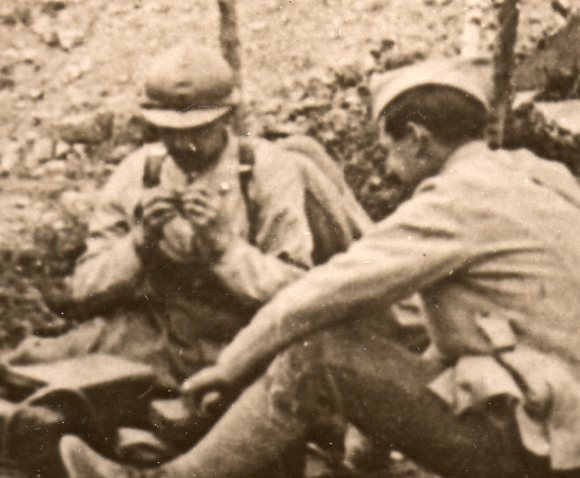
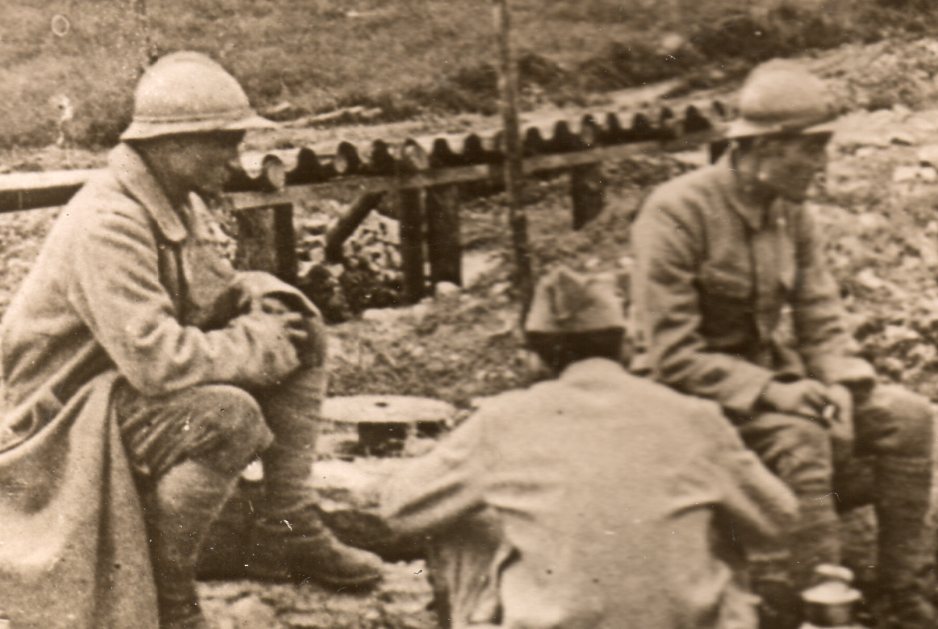
    This fantastic photograph calls to mind the importance of the little things of battle–dry socks, headgear, water, food, scissors.  And of course a good coat in the winter–a good coat that can be kept closed to allow the body to stay warm, or dry.  I mentioned in a post here just yesterday that it was a small thing that may have led to the demise of Napoleon’s army in Russia in 1812–the buttons on the overcoats of the soldiers were made of tin, and as tin becomes brittle in severe cold, it is conceivable that the buttons failed and therefore allowed the jackets to blow open much more easily than normal.  Little change that has an enormous impact.  

    World War I photos--sewing in field299

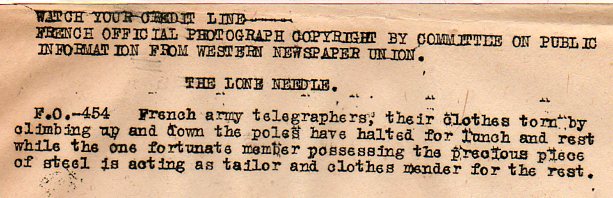
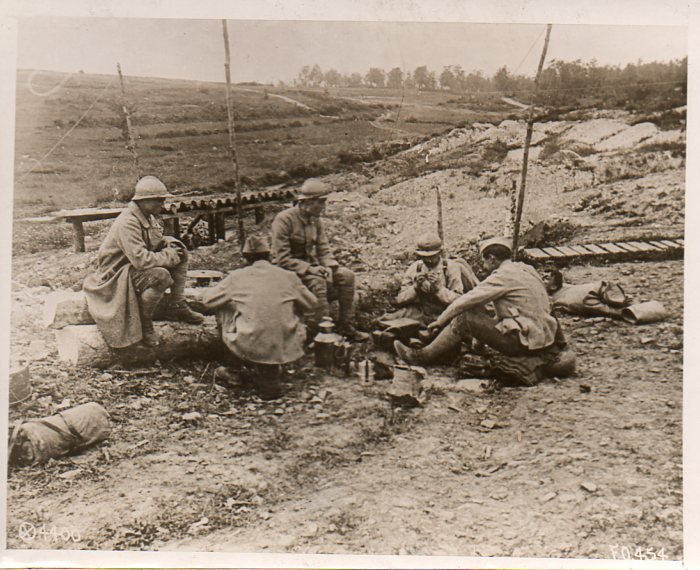
    This photograph–an official French photo published by the Western Newspaper Union in November 1918–shows a group of French telegraphic soldiers, taking a break, and mending their clothes.  The original text for the photograph (below) points out that their uniforms were torn and made shabby by continuously running themselves up and down telegraph poles.  It is important to keep yourself fit and fed and your uniform in good order, so they calmly awaited the repair of their uniforms y the one man with a needle and thread. 

    World War I photos--sewing in field txt300


    ·Posted by :

  • Exhausted and Captured–an Extraordinary Photograph, 1918

    Original news photo service image, 8×6 inches, 1918.  Good condition. $950

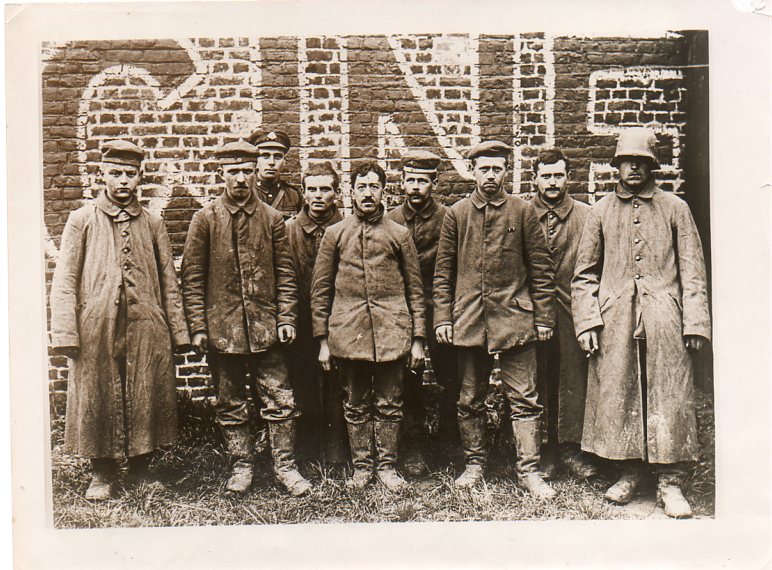
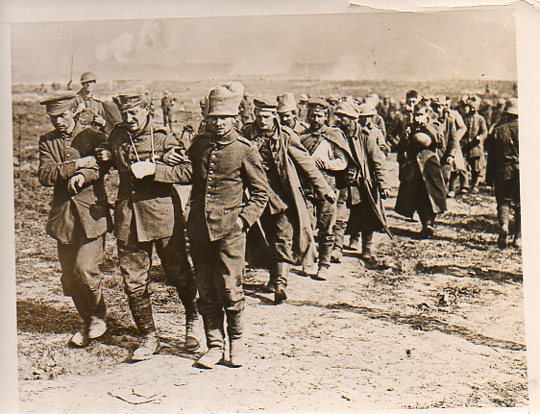
    In this image here we are introduced to a small group of captured German soldiers displaying a wide range of emotions over a wide range of faces. 

    There were over 8 million soldiers taken prisoner during WWI, that in addition to the 21 million who were wounded and the 9.7 million killed:  38 million.  Plus 6.8 million civilians who were killed: 45 million.  And the numbers for civilians wounded are just, well, not reliable, as they were not really collected, or collectible.  At the end of it all, there were probably between 50 to 75 million soldiers and civilians killed or wounded or taken captive during the war…not including civilians who were killed by the hardships or starvation caused by the conflict.  Big, big numbers. (AN earlier post here looked at the population/percentages of these losses, here). 


    WWI photograph--german prisoners066
    Detail:
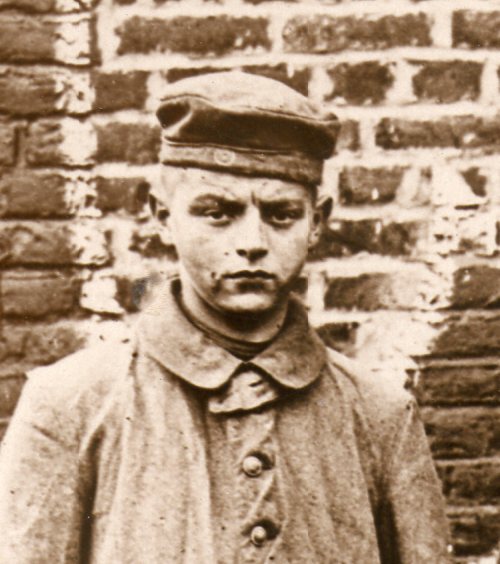
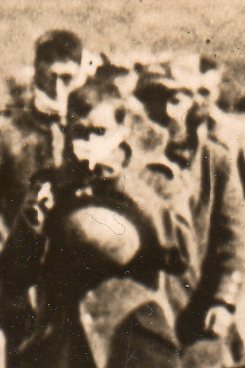
     this shows struggle and age in a face that I reckon to be a mid-teen’s, a child’s face, hardened baby fat.

    WWI photograph--german prisoners boy067

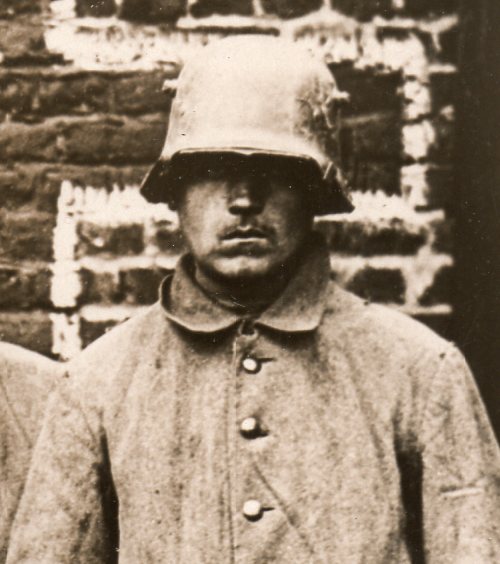
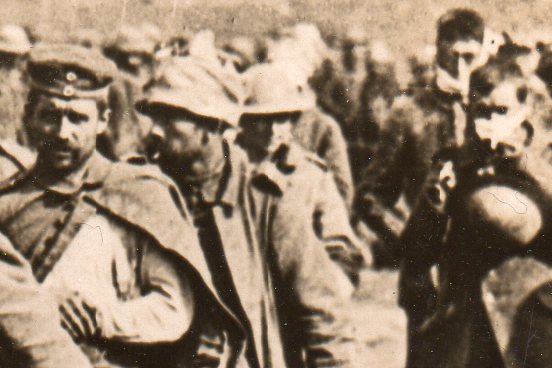
    Detail:the older man isn’t much more so, just beaten, exhaustion.

    WWI photograph--german prisoners old068
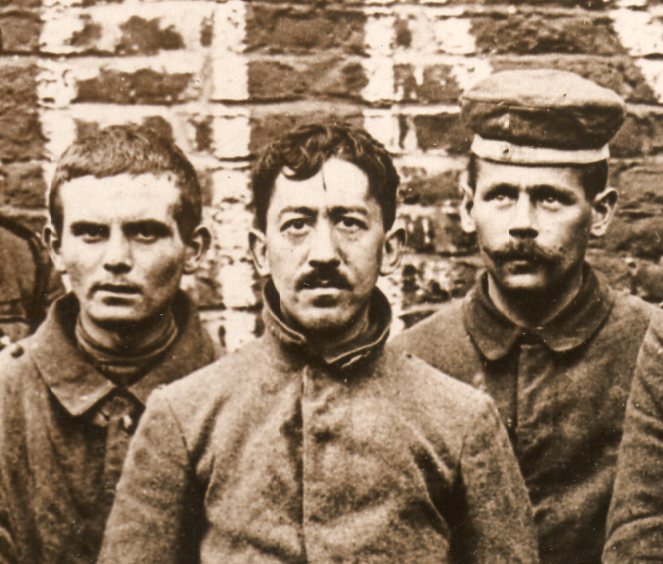
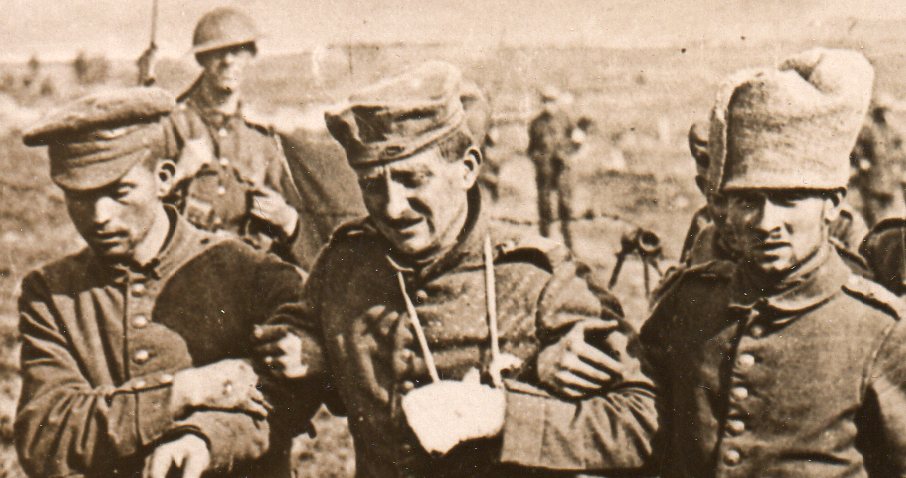
    Detail:
    they look defeated and concerned, though the middle guy (who doesn’t seem to quite fit in with the rest) looks as though he may be relieved. Maybe not.

    WWI photograph--german prisoners middle069


    ·Posted by :

  • In a Trench, in the Damp and Cold, at the Front, 1918

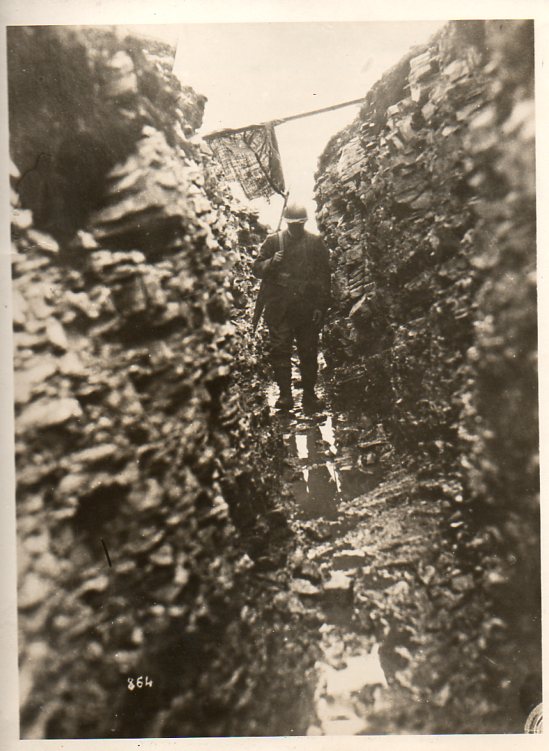
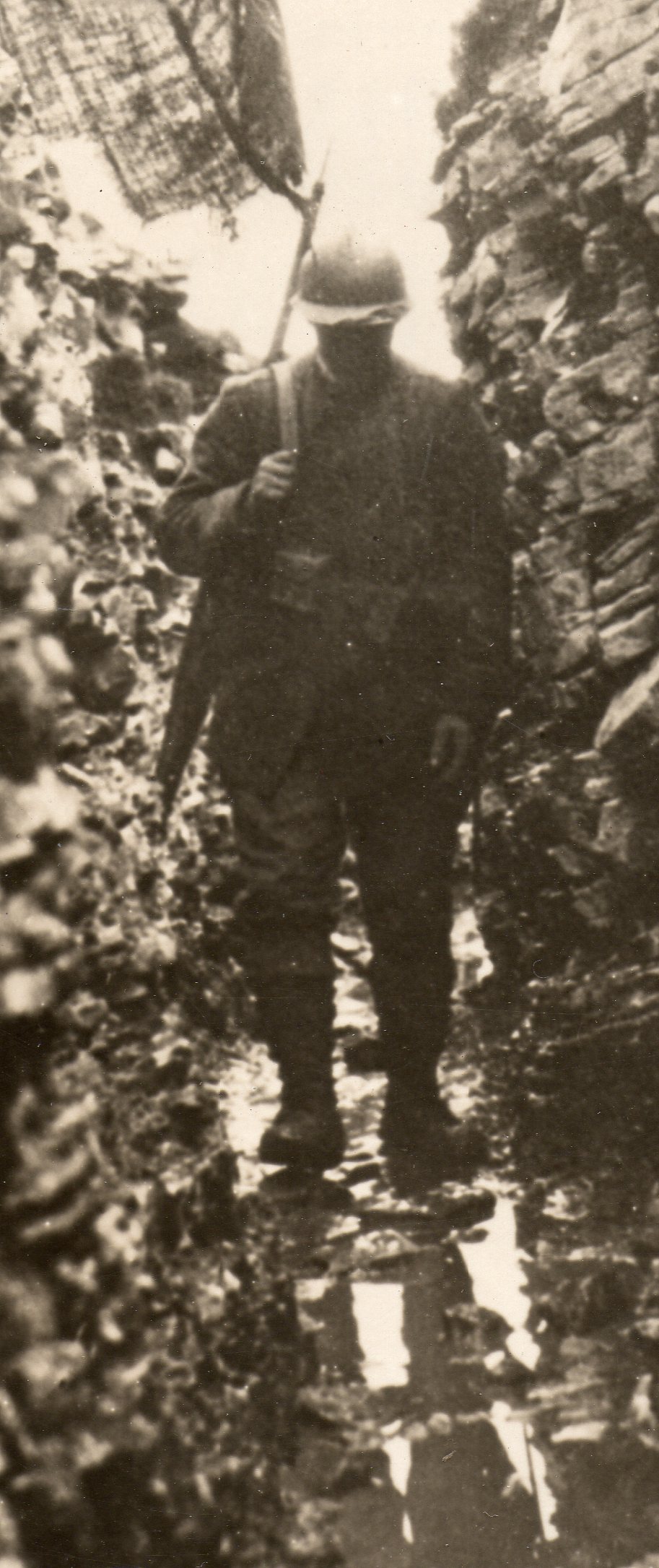
    Soldier in trench, walking, damp and cold.  1918. 7×5 inches.  Original image from a new photo service agency.  Very good condition.  $500

    Perhaps one of the worst inventions in the history of warfare was The Trench. Millions of men were wounded or met their ends while defending one, or attacking one, or being in-between two of them.  Hundreds of thousands of troops spent months charging back and forth between opposing lines, the ground over which they fought made uninhabitable for almost any form of life. Cold, wet, bad.


    WWI photo--trench045 
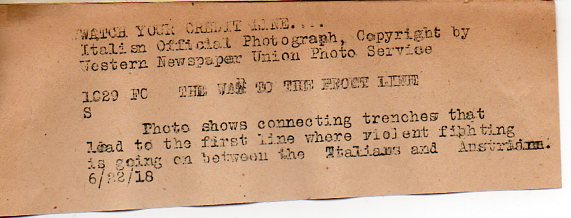
    Here’s another original photograph made by the Western Newspaper Union Photo Service, as a “British Official Photograph”  (with the “British” part penciled out and replaced by an unknown hand, “Italian”),  The photo agency supplied a caption for the image (that was supposed to have been used by the newspaper or magazine that published the picture) as follows:


    WWI photo--trench note046


    And the detail:


    WWI photo--trench note detail047


    ·Posted by :

  • Cold, Cramped, in a Ditch and Under Fire: France, 1918

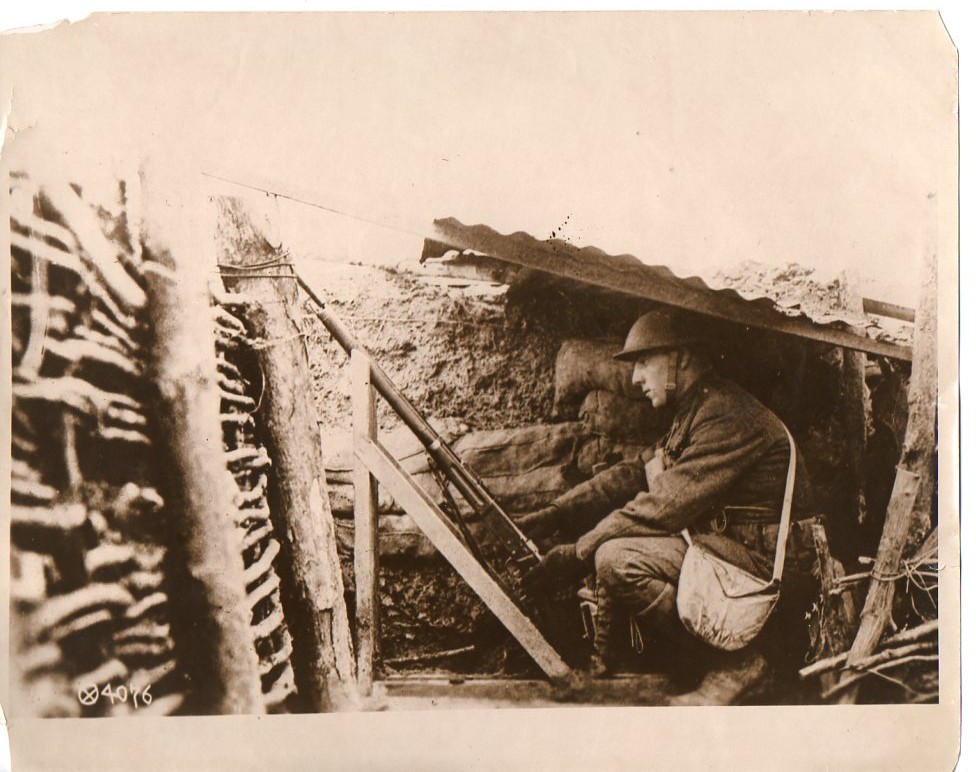
    Original news photo service photograph, Doughboy at flare gun. 1918. 8×6 inches.  $350 

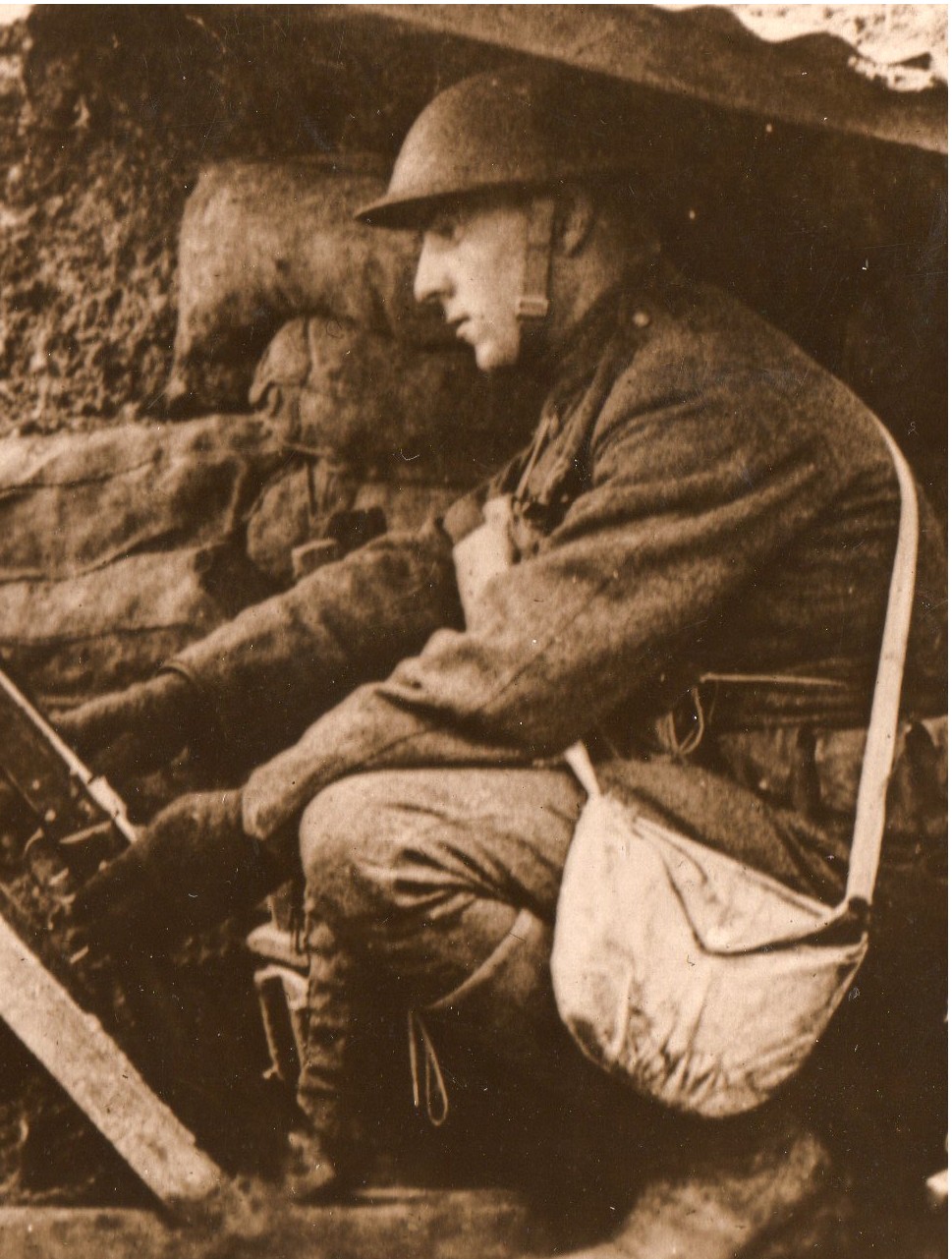
    If I was in a time machine, stepping back through a wormhole and into another segment of another reality, one of the places I’d least want to step into would be a cramped, cold, wet, dirty and dangerous place.  Like this American soldier, waiting for a German attack to begin so that he could launch a warning flare to the rest of the soldiers, hunkered down in a cold wet place in the front line along the Lorraine section in France, mid-way through 1918 and almost all-the-way-through WWI. 

    World War I photos--Cold in trench306

    There are of course much worse places to be, but I think if I limited my time travel to include what I would be on the other end–a U.S. soldier–one of the places at te top of te list would be a generic trench in the front line of a battle late in the fighting in WWI.  Sitting there, watchful, waiting for the advance of thousands of German troops, charging over a ruined and sulfurous landscape, waiting for the ruination to begin as it churned its way through  No Man’s Land.  Of course it could be worse–one could be going “over the top”, charging across the Desolate Place towards a line of thousands of entrenched soldiers all of whom were trying to kill. you. 

    World War I photos--Cold in trench307

    Or of course you could be in a blue coat marching in a straight line towards a series of long lines of men in red coats, everyone getting ready to get close enough to discharge an 69-calibre (or thereabouts) ball across an open plane of hundreds of feet into the ranks of the opponent.  Or being in a Marine uniform in Tarawa, in the Gilberts, in November 1943. Or being in Butternut, crossing the Emmitsburg Road on the way up Cemetery Ridge on 3 July, or being in any uniform whatsoever at Antietam.

    The places and times get worse I think once you allow yourself to be any other solider in any other uniform.  A French soldier, for example, sitting in a similar spot in the same battle along a front line as our American Doughboy, above, would’ve been worse.  A Belgian soldier virtually anywhere also would have fared worse, statistically, than just about anyone else in WWI.  Being a newly-minted soldier wearing the uniform of the Soviet Socialist Republics in the Summer of 1941 would probably have been half-a-death-sentence.  Of course the list goes on, and on. 

    ·Posted by :

  • World War I Photography–German Prisoners, France, 1916

    Western Newspaper Union Official Canadian Photograph showing German prisoners at Courcelette, France, 1916.  5×7 inches.  Includes attached description of the image from the service.  Very good.  $200


    This news service photograph (a Canadian Official Photograph from the Western Newspaper Union) shows a line of German prisoners of war in the Canadian lines at the battle of Courcelette, France.

    WWI--German prisoners--marching328

    It was a battle that took place within a battle,  in the last third of the enormous 18-week series of battles and actions known as the Somme Offensive. The photograph was made between early September and mid-November 1918, which is when the Canadians joined the British offensive.

    The landscape is bleak, the soldiers worn.  I rarely see expressions of pain in this series of 1500 photographs from a collection of war images that I purchased.  This is one of a very slim minority.

    WWI--German prisoners--marching 330

    WWI--German prisoners--marching 331
    WWI--German prisoners--marching 332

    WWI--German prisoners--marching text329

    ·Posted by :

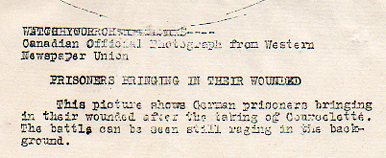
  • World War I Photography–Heavy and Stuck

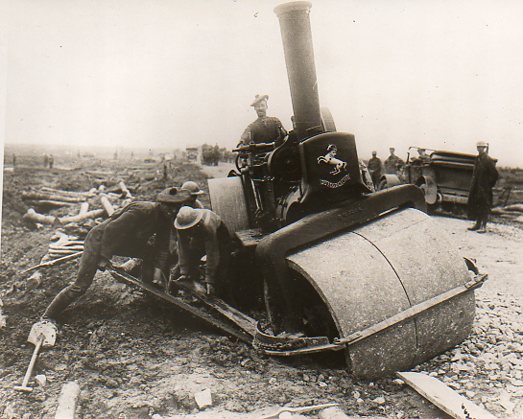
    Original Western Newspaper Union news service photo image.  6×7 iches.  Fine.  With the original text sheet.  $175


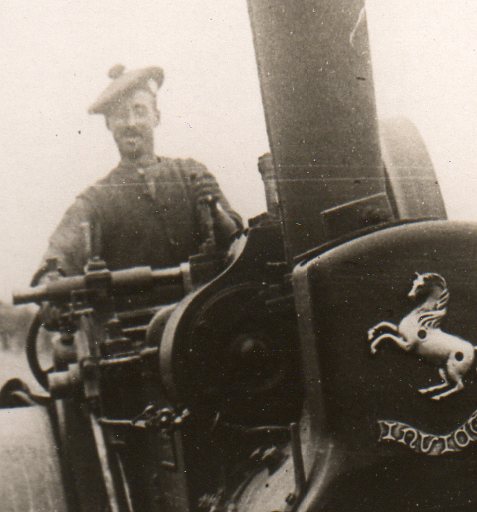
    What is this man smiling about?

    WWI--steamroller detail smile336

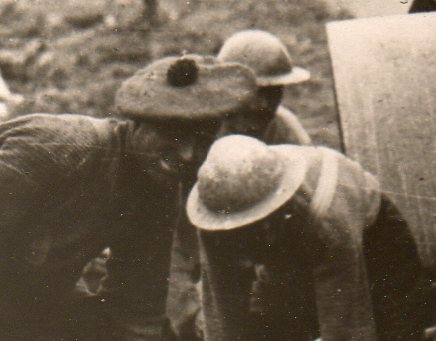
    He’s satisfied with his place there in the tractor, rather than his soldier brothers whop were trying (impossibly) to leverage the beast out of a shell-made muck hole. At least the guys on foot had a comic sense of what their task was supposed to be. 

     WWI--steamroller detail smile338

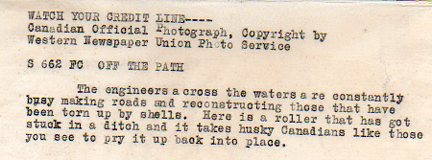
    WWI--steamroller334

    WWI--steamroller text335

    ·Posted by :

  • Ghost March–Doughboys in London and Four Years of Mist, 1918

    Western Newspaper Union original photograph.  5/25 x 7 inches.  Includes the attached printed description on a separate piece of paper, affixed at image bottom.  Fine copy.  $300.00

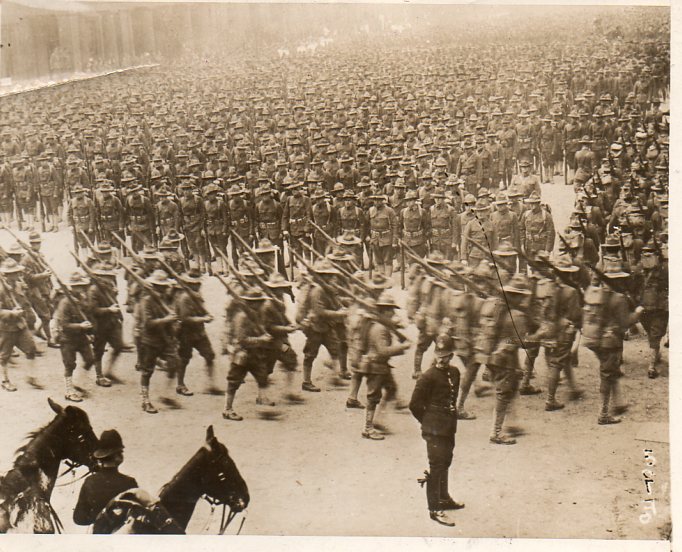
    • .003%  That’s what I reckon this column of soldiers would represent of the total casualties of WWI.

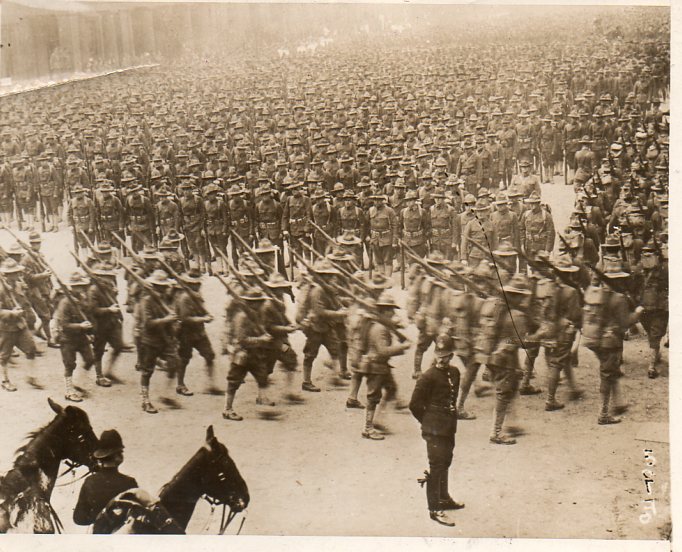
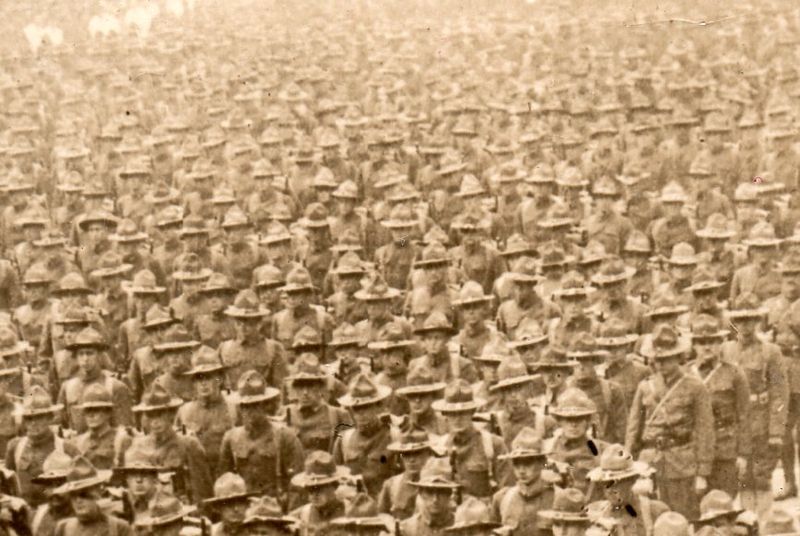
    Generally images like this are a virtual image-host for me, a bucket of ice cold water thrown onto a sizzling summer sidewalk, all sorts of ideas steaming from it.  But for photographs of Doughboys1 marching, especially assembling for parade, this one struck me a little more oddly than most, giving instant pause, making me concentrate on the haze, or dust, that allowed the columns of soldiers to blend into one another and fade, losing their boundaries with their mass receding into a dull blur. 
    Marching london 350

    The Western Newspaper Union was selling this image for insertion in newspaper or journal stories about the war, for a small use fee.  There were a few American organizations like Western Newspaper that were created to photographically cover the war, using pools of photographers who would distribute their work anonymously and which was available for common, general use for a small charge.  The photographs allowed out were certainly restricted and censored, though in my stash of these of objects (numbering about a thousand) I’d say that 10% of them look pretty edgy to my eyes.  Most of the action of war was not covered, but then again this aspect was still fairly technically difficult in 1918.  Images of pain were almost never allowed, and certainly not pain of Allied troops.  Aid stations were almost never covered as well, as were dead bodies, or at least those again of Americans or Brits or French or Canadian.  The imaging of the war was certainly under a fair amount of supervision and control. (The original is available for purchase through our blog bookstore. here.)
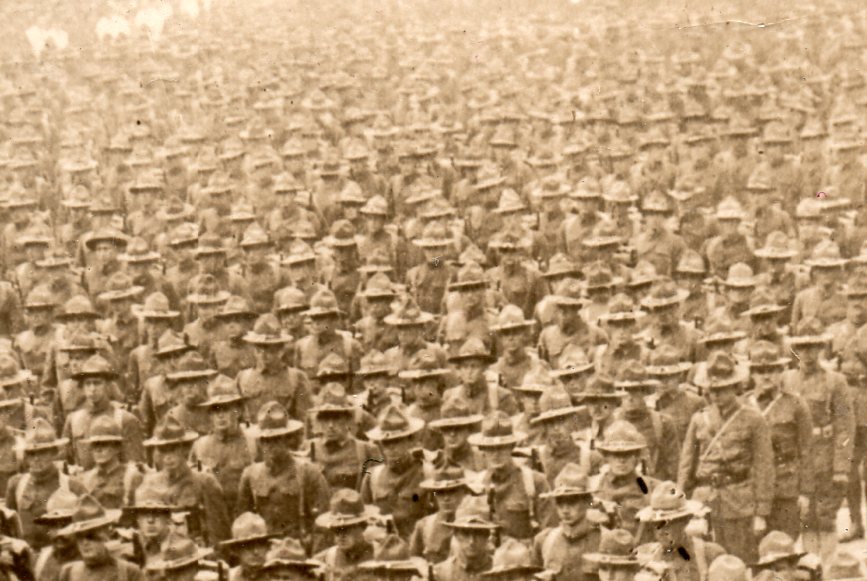
    Marching london det352

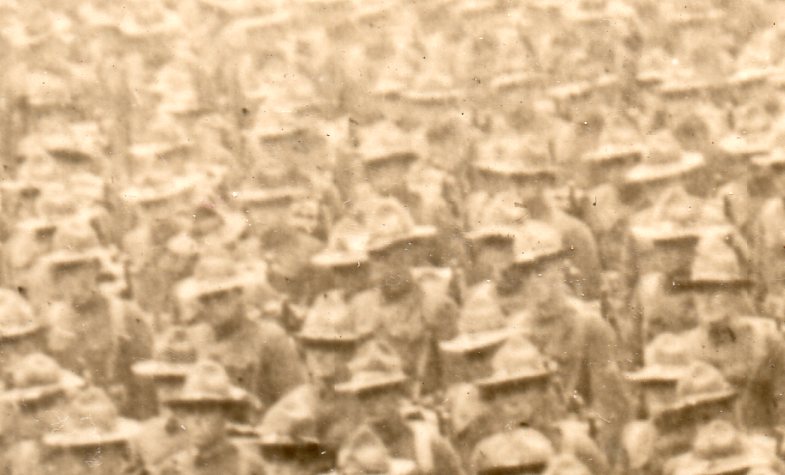
    The image shows American troops assembling for a parade through the streets of London before being deployed.  The mistiness of the composition looks like a statistic to me, these men standing for those who had come before and fallen.
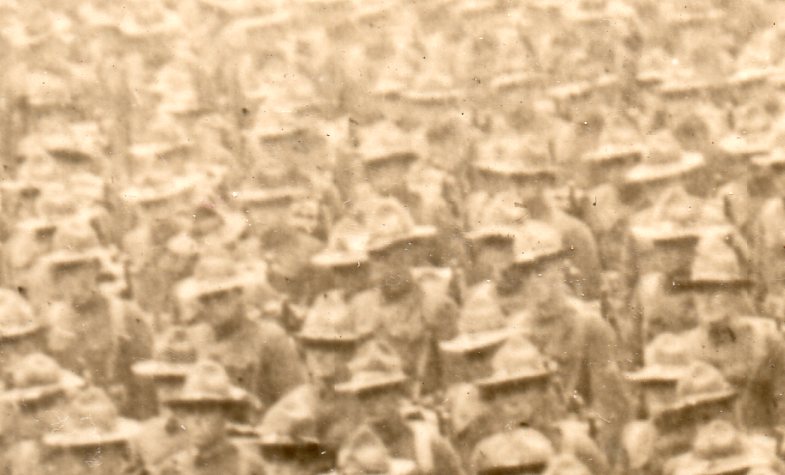
    Marching london det353

     The U.S. lost .13%  of its population to casualties (125,000 killed and 205,000 wounded) during the war–a war which by the time America got here had already been visciously fought for three years, costing dozens of millions of lives.  The figures for everyone else weren’t nearly so “fortunate” as the U.S.:  New Zealand’s 18,000/41,312 killed/wounded amounted to 1.6% of its population.  The U.K. lost 2.19% (964,000/1,663,000), Italy was 3.48% (650,000/953,000 plus 650,000 civilian casualties), while France suffered a 4.29% (1.4 million/4.27 mil) blow of its total population to war.  Things were worse on the other side:  Germany 3.82% (2 mil/2.4 mil plus 426,000 civilian deaths, and the Ottoman Empire 12% (400,000/771,000 plus 2.1 million civilian deaths.   Worst of all was the Ally  Serbia, suffering a catastrophic 16% loss of its population to war, including 275,000/725,000 plus 426,000 civilian casualties.  As gruesome as the numbers were, the Americans felt only a small percentage of the total sting of war–by 11 November, more than 21 million soldiers would have been wounded, with 9.7 million soldiers and 6.8 million civilians killed.  It was an enormous price.

    And that’s what I see in the mist of what may be something like 10,000 soldiers on display n this photograph.  .003%  That’s two of these columns every day, twice a day, for the entire 1550 or so days of the war.   

    Notes

    1.  The origin of the term “Doughboy” is unclear, or varied, or rich, but it is at least pretty oldm beginning around the time of the Mexican American War in 1846-1848–evidently when the soldiers marched through dry, tough terrain they wound up being covered by earth with the color of dough.  Doughboy.
    ·Posted by :

  • Survivors on the Little Train to Hot Showers–WWI Photographs, 1918

    Original news photo service photograph from the Western Newspaper Union,  1918.  5×7 inches.  Fine condition.  With original typed caption, on attached paper.  $175.00

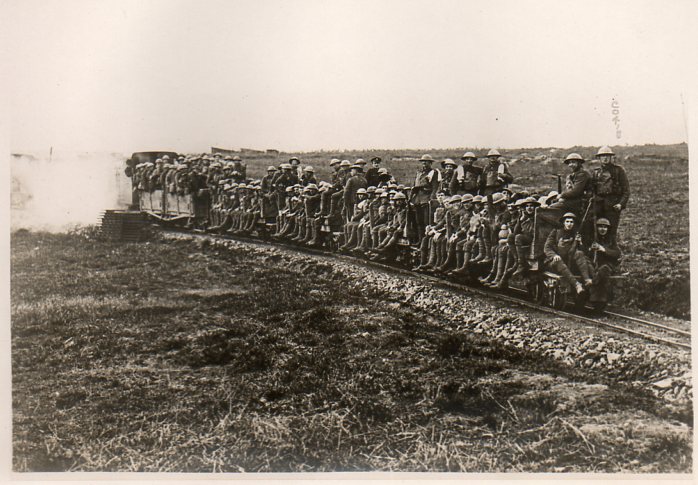
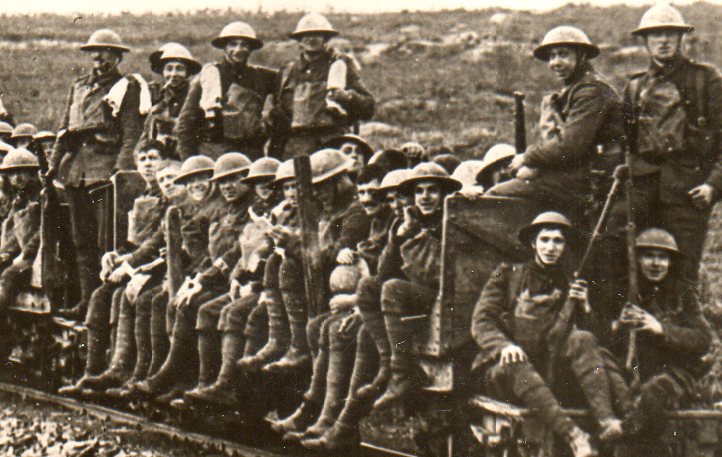
    I suppose there there was little to lift morale more than to have troops return to divisional from the front line to enjoy a hot shower–outside of course than to be brought home away form the fighting, entirely.  These soldiers were about to enjoy what I am sure was a well worn break from the action.
    Marching railway car355
    The soldiers were riding a narrow gauge railroad, brought to France from Canada, headed back to safety and “the baths”. 

    Marching railway car356

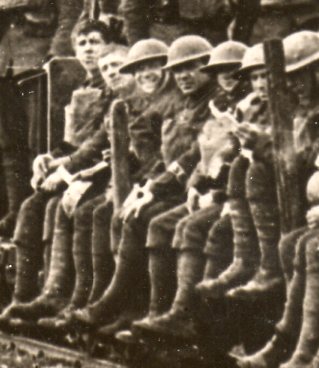
    And this, below–I see the soldier at the far right is reading a letter, I’m guessing a letter from home, as he has his knees tucked up maybe trying to protect its contents from prying eyes.  The soldier to his right is engaging in the age-old custom of reading someone else’s mail over their shoulder, desperate for any news from anywhere.  Who knows–maybe the guy was sharing. 

    Marching railway car357

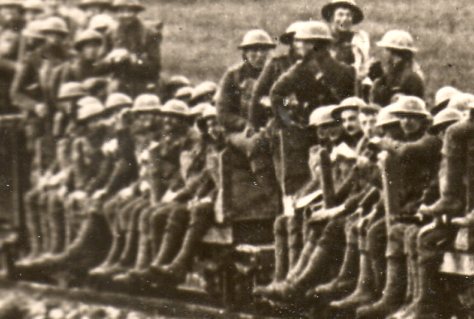
    And then–as we are told in the caption for the photograph–they were given as much time in hot water as they wanted. And then:

    Marching railway car txt361

    I think the return trip would’ve looked much different.

    Marching railway car358

    Marching railway car txt360


    ·Posted by :

  • Inverted Iwo–Sappers and Blowing Up Trees, 1918

    Original British Official Photograph distributed by Western Newspaper Union Photo Service, 1918.  5×8 inches.  Fine condition.  $175.00

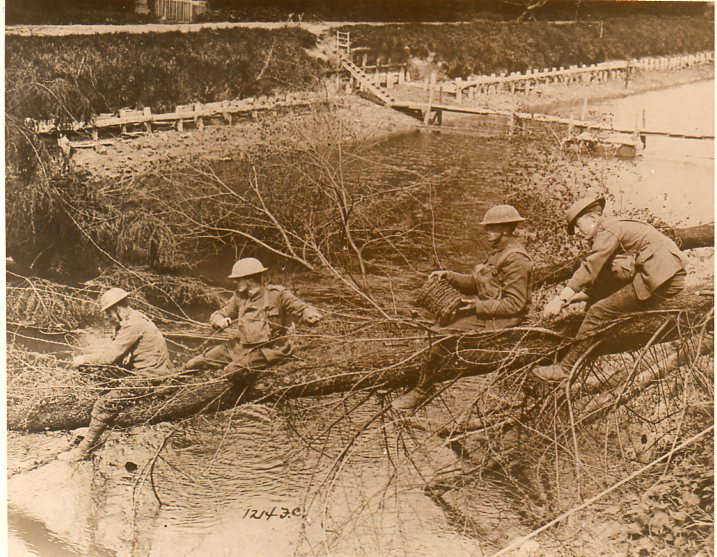
    Most of the stuff that was blown up in WWI was an end  result of explosive shells being fired from canons–only a miniscule amount of the percentage of all bombing done during WWI  was from airplanes, and another very slight percentage from tanks.  On the other hand sappers played a much larger role in WWI than in just about any other war, placing explosives by hand and then detonating them.  (I wrote earlier in this blog about the extensive underground trench fighting that went on with sappers tunneling under No Man’s Land and placing explosives underneath an enemy’s trenches.  And I guess you could tunnel under the tunnel, and so on. This sort of warfare is extremely old, though the name is not, being about 150 years old. These soldiers were forward combat engineers, and had training across a number of different areas—they were responsible for many technical chores, like building (and blowing up) bridges, laying/clearing minefields, general demolition, defense construction, and, of course, fighting.  It could be a tremendously difficult job, unimaginable.) 

    This photograph reminds me in some odd way of Arthur Rothstein’s iconic photograph of Marines raising the flag on Mount Suribachi, Iwo Jima, but only a little.

    WWI photos--blowing up trees364

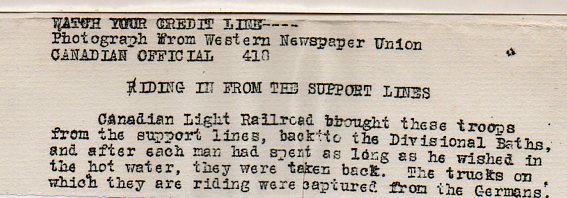
    The caption of this news photo service image identified these soldiers for blowing up trees to obstruct the canal in the background.  If you land enough trees in a canal like this you are definitely going to cause corruption and heart attacks for anyone trying to move men or ordnance down the canal. 

    WWI photos--blowing up trees365
    And this detail:

    WWI photos--blowing up trees366

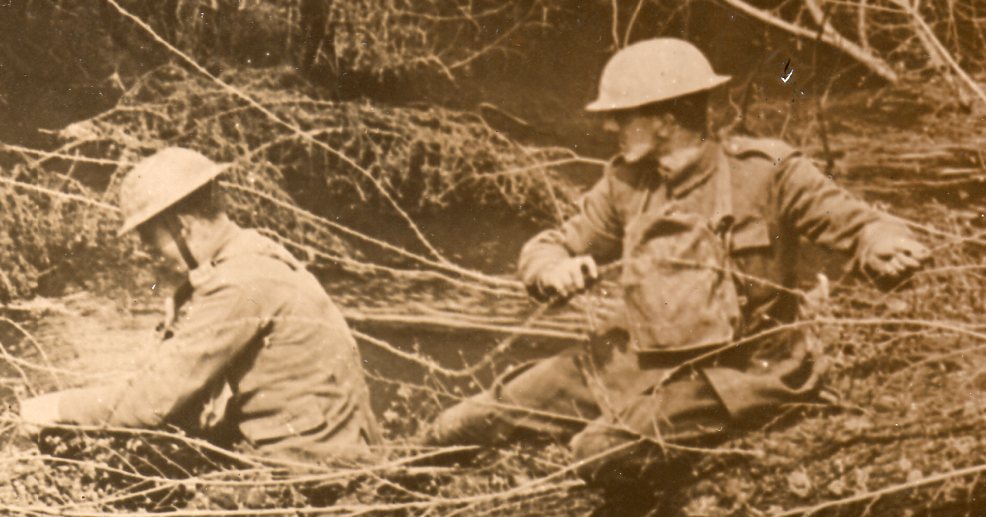
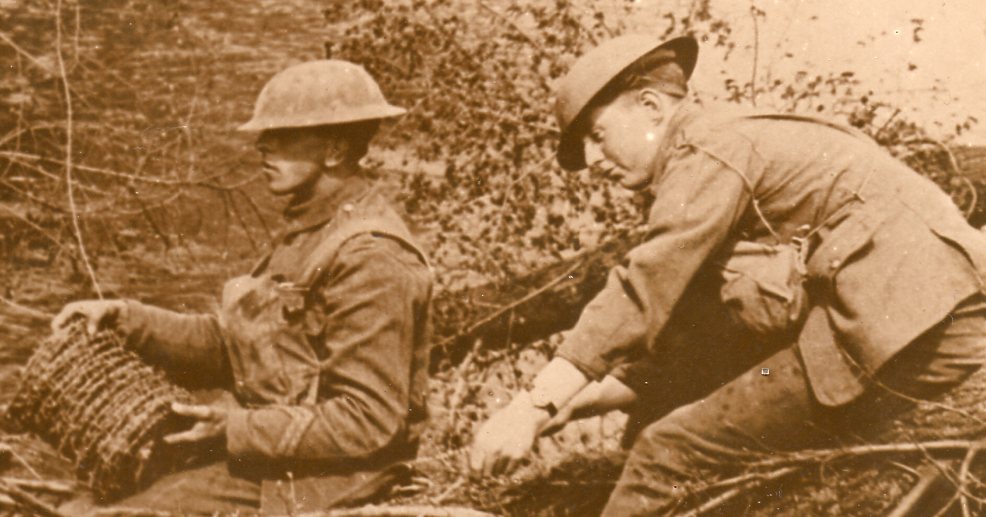
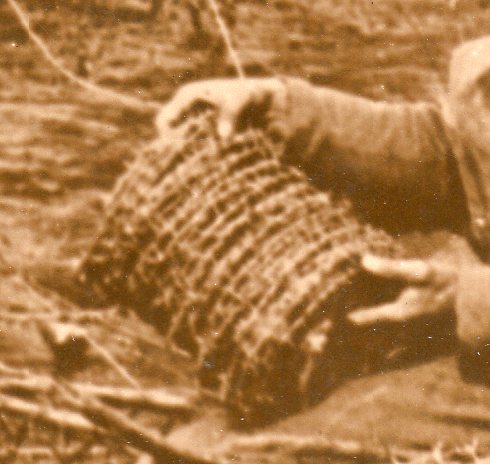
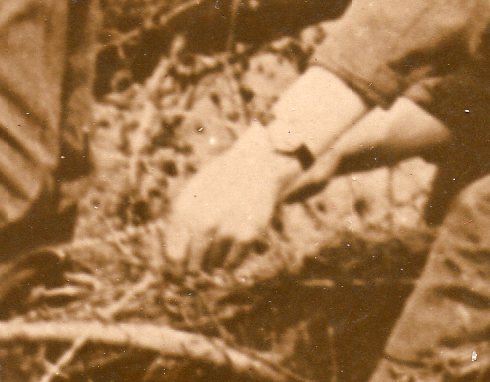
    I thought for a bit that these men might actually be threading barbed wire through the trees to make the job of removing that even more heinous.  But there’s no way that you could lay hundreds of yards of barbed wire without gloves and without slicing your hands up–maybe you could do it carefully for  a little bit, but not for long. 

    WWI photos--blowing up trees368

    But I’ve got to say that this really doesn’t look like demolition materiel….

    WWI photos--blowing up trees369

    ·Posted by :

  • War on the Home Front: American Aid Station, Venice, 1918

    Western News Service photograph, 9×6 inches, 1918. $125

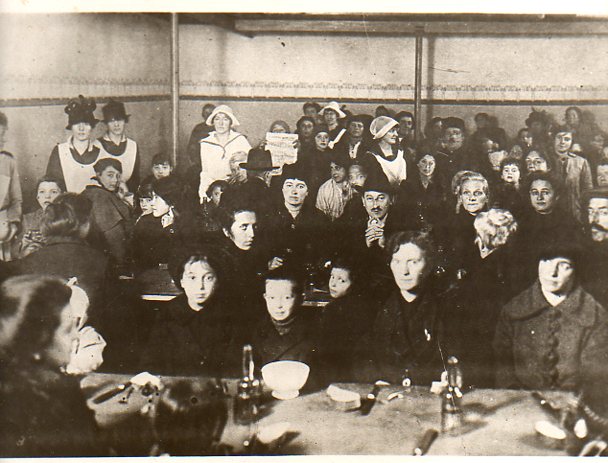
    This is a photograph of an American aid distribution center established in Venice, an action as a direct result of the recent invasion by Autro-German forces.  The Venetians look remarkably composed. 

    WWI photo--American aid Italy398
    WWI photo--American aid Italy399WWI photo--American aid Italy400
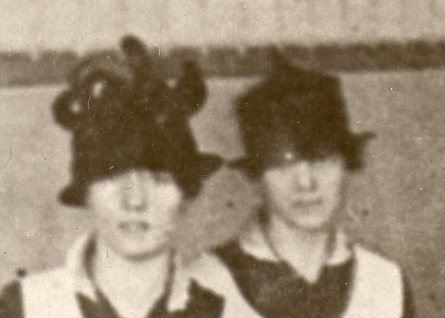
    And the aid workers:

    WWI photo--American aid Italy401

    Elsewhere in this blog I’ve written a short paragraph on the casualties of WWI–Italy suffered 3.48% of its total population being wounded or killed, including over 650,000 civilian casualties.   

    Note

    The U.S. lost .13%  of its population to casualties (125,000 killed and 205,000 wounded) during the war–a war which by the time America got here had already been visciously fought for three years, costing dozens of millions of lives.  The figures for everyone else weren’t nearly so “fortunate” as the U.S.:  New Zealand’s 18,000/41,312 killed/wounded amounted to 1.6% of its population.  The U.K. lost 2.19% (964,000/1,663,000), Italy was 3.48% (650,000/953,000 plus 650,000 civilian casualties), while France suffered a 4.29% (1.4 million/4.27 mil) blow of its total population to war.  Things were worse on the other side:  Germany 3.82% (2 mil/2.4 mil plus 426,000 civilian deaths, and the Ottoman Empire 12% (400,000/771,000 plus 2.1 million civilian deaths.   Worst of all was the Ally  Serbia, suffering a catastrophic 16% loss of its population to war, including 275,000/725,000 plus 426,000 civilian casualties.  As gruesome as the numbers were, the Americans felt only a small percentage of the total sting of war–by 11 November, more than 21 million soldiers would have been wounded, with 9.7 million soldiers and 6.8 million civilians killed.  It was an enormous price

    ·Posted by :

  • World War I Photographs–Fifth Avenue and Not Fifth Avenue, 1918

    Original news photo service photograph, Underwood & Underwood, July 1918, with original paper caption text.  8×6 inches, very good condition.  $225.00


    WWI--great images--traffic control053
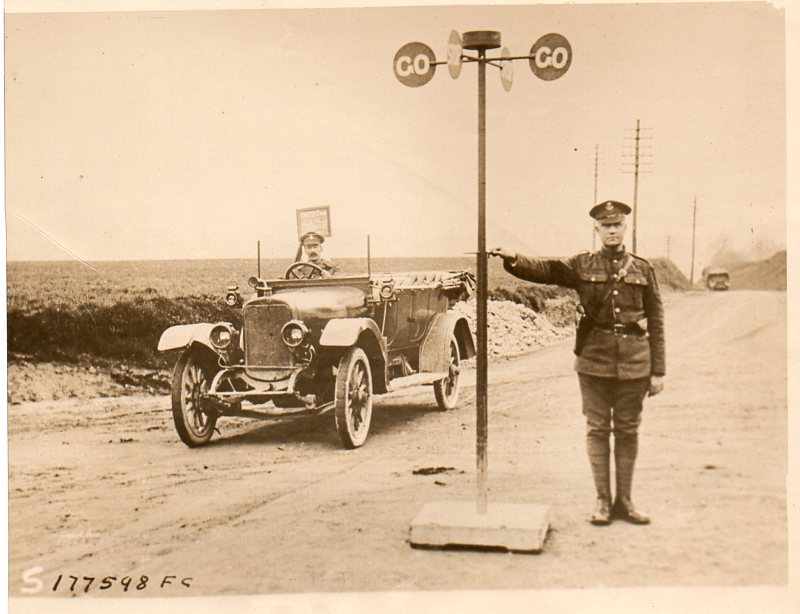
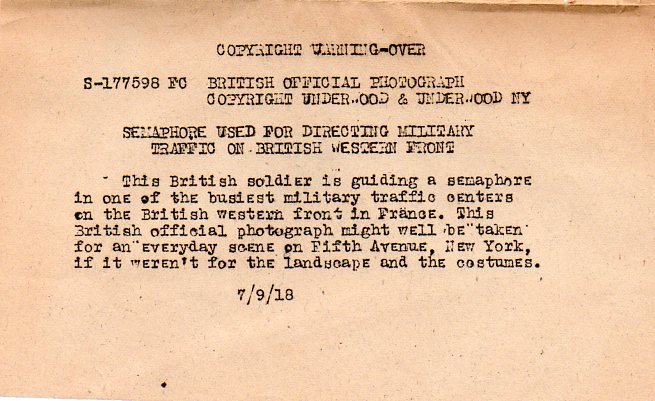
    This news photo service image (available from our blog bookstore) shows the action in “one of the busiest military centers on the British Western Front in France”, with a British soldier using a traffic semaphore to take care of the hustle and bustle.  The caption–almost always supplied with these photos as they were made by a pool of uncredited photographers covering the war for a consortium of newspapers and paid subscribers providing images and content for paying media–reads that the picture “might well be taken for an everyday scene on Fifth Avenue, New York, if it weren’t for the landscaping and the costumes”. 

    WWI--great images--traffic control054
    Indeed.  Actually, if you removed the landscaping, the vehicles, the background and the uniforms (clearly whoever wrote this copy had no feel for the fact that actors wear “costumes” and soldiers wear “uniforms”), and replaced it with paved roads, buildings on all sides, crowds of people and packed it all with automobiles and placed the scene on Fifth Avenue, then the scene would have looked like Fifth Avenue. 

    On the other hand, even if it were never to look at all like Fifth Avenue this intersection would have been exceptionally busy from time to time; I’m sure it could have seen thousands of troops per day, particularly since the Brits fielded probably a million troops in this region alone, and those troops needed to be fed and cared for, which means there would’ve been a constant flow of people, and machines, and materiel. 

    This is a fantastic photograph,though, though the captioning folks did it little justice. 

    WWI--great images--traffic control055

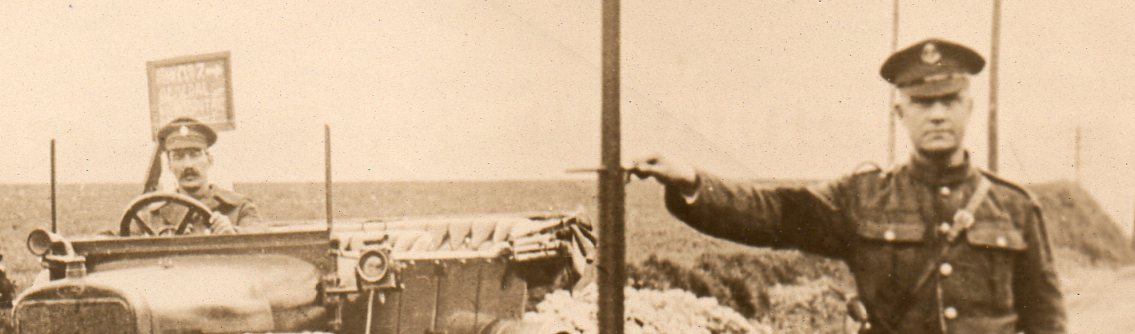
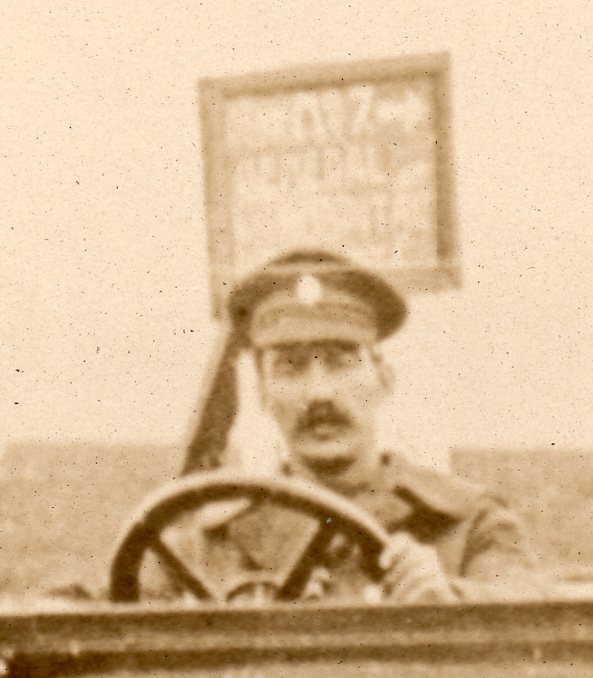
    I can’t quite make out the BEF-made sign in the background, placed for the use of the troops. 

    WWI--great images--traffic control056

    ·Posted by :